Watch the Recorded Video of the MxM Google Hangout session on the Media Coverage of General Elections 2014. MxMIndia columnists Ranjona Banerji, Shailesh Kapoor and Amith Prabhu participated in the discussion moderated by Pradyuman Maheshwari
Watch the Recorded Video of the MxM Google Hangout session on the Media Coverage of General Elections 2014. MxMIndia columnists Ranjona Banerji, Shailesh Kapoor and Amith Prabhu participated in the discussion moderated by Pradyuman Maheshwari
It’s All Fool’s Day and we present you a link to Pradyuman Maheshwari’s column in mid-day on the 10 stories he hopes would happen to the world of news television in India.
Some of these are headlined:
More meaningful talk on Arnab’s show.
Majority foreign stake allowed in news
NewsX gets more relevant
The Minister of I&B ensures a free news media
Suggest you visit the column at: http://www.mid-day.com/articles/10-april-fool-stories-i-wish-were-true/15197059
Links to earlier columns: http://www.mid-day.com/news/pradyuman-maheshwari
By Pradyuman Maheshwari
I write this more in response to Anant Rangaswami’s article on Firstbiz and his Facebook posts. What I like about Anant’s writing is his definite views on issues, many of which I agree with.
But on Goafest, he’s been unduly harsh. His point on Facebook: Goafest has lost the plot. It’s press release offered a programme with just time slots and no mention of speakers and topics.
I received the communique too, and chose to not carry a report on it because it didn’t say anything at all. It was an advance intimation of the programme, but could have been held back for a few days with some names.
I also agree with Anant that Goafest in the summer is a nightmare (my descriptor, not his). Since I sweat a lot, I can say that it’s terrible even in the aircon. So, even though the event is indoors, the walk or buggy ride to your rooms could see you drenched in sweat. Your eyes could be burning all day and even the world’s best coolants wouldn’t work.
Last year’s Goafest could best be described as forgettable. It had loads of negatives. The Creative Abby was a disaster (albeit for a fault that wasn’t of the organising committee). First a controversy about the Ford Figo scam ads saw the exits of some high profile staff at JWT and Ford, then the Tata Chemicals scam ads that were eventually pulled out of the competition and later the controversy around scam ads and plagiarism.
Somewhere along this was the decision by Ogilvy to not participate in the Abby. Ogilvy had huge misgivings about the awards, and Ad Club prez Shashi Sinha tried his damnedest to get them back. But Messrs Piyush Pandey & Co didn’t budge.
When Pratap Bose took charge as Ad Club president last year, he resolved to ensure a buy-in from all towards the Creative Abby. That doesn’t seem to have happened thus far.
To add to the confusion, the AAAI delayed the Goafest announcement and later found the elections as reason to postpone the dates. Then came the news that Nakul Chopra had opted out of the Goafest chair position.
Finally Srinivasan K Swamy, better known in the frat as Sundar, took charge. I’ve interacted with Sundar a fair deal in the recent past, especially as head of the International Advertising Association India Chapter of which he is the head. I believe if there’s one person from the AAAI who can pull it off, it’s him. The IAA is supremely active thanks to Sundar’s leadership. I find him exceedingly keen on doing things and he knows the art of getting things done.
I am not sure how Goafest 2014 will be. I have heard people say that some regular sponsors have declined to be associated this year. But Sundar is confident of a turnaround and I think he ought to be given a chance.
Yes, I do think Rajesh Kejriwal’s Kyoorius Awards with the coveted D&AD partnership, has stolen the thunder from the Abby, but there’s space for multiple awards. We’ve seen how other disciplines – radio, digital, outdoor and PR, for instance – have multiple awards and they are all doing well. So ditto with creative.
I have heard some angry comments amongst industry elders about Anant’s Firstbiz piece and I was told that some pressure may be exerted on Network18 via the media agencies asking him to refrain from writing nasties against Goafest. I hope that doesn’t happen, that wouldn’t be right.
Sadly, Anant’s views are echoed by many in the industry. Before Sundar’s name was announced, even I wasn’t sure whether there was any point in conducting this year’s edition.
Sundar & Co have an uphill task ahead of them. But I think they need to be given a chance.
The industry deserves a good, celebratory Goafest. The format, the timing and the awards are a problem. Perhaps the organising committee and AAAI need some younger blood taking the lead on Goafest. Perhaps it may be a good idea to get a professional body to conduct the show – Kyoorius, e4m, Campaign/Haymarket… whosoever.
I know what I am going to do: have MxM support Goafest until before the event happens. The coverage of the conference (and the awards and the fun element) will then take over. And on that, we’ll be brutally honest about how it is.

|
Ranjona Banerji: Kejriwal’s threat to democracy?
The media, willy-nilly, has become part of these elections. Not as the “fourth estate” of democracy but more like a “fifth column” which is out to destroy institutions – that is, if you listen to our politicians of all colours and persuasions and try to assess the anger on social media. But why blame politicians or Twitter and trolls alone? The media itself – and here most fingers will have to point to television – has behaved in extremely irrational and even unprofessional ways when it comes to bread and butter journalism.
Starting from the extraordinary coverage of the India Against Corruption movement in 2011, television decided to become a player rather than an observer. Even I got taken in by the exhortations of TV anchors in 2011 when they talked about millions of people taking to the streets in support of the Anna Hazare-led movement to clean up public life. Alas, when I arrived at Azad Maidan, there were less than 500 people present. Not the hundreds of thousands promised by well-positioned TV cameras.
But once India Against Corruption transformed itself into a political party – the Aam Aadmi Party – and Anna Hazare was replaced as the movement’s leader by Arvind Kejriwal, TV started to change its tune. The tide was now against the movement. None of the surveys running up to the Delhi state elections could predict what AAP would do. The Congress would be struck down and the BJP would win is what we were told. Instead, we had the AAP forming a very close second. So much for election surveys, psephology and astrology.
Once the AAP formed the government, the wrath of television knew no bounds. Of the English channels, Headlines Today and Times Now were the angriest. Every hand gesture of AAP members was dissected and denigrated. This is not to suggest that the AAP had a perfect month in power – far from it. Indeed, their law minister Somnath Bharti’s unconscionable midnight raid looking for sex workers in Khirki Extension deserved the strong condemnation it received. But the poor AAP did not even have the short “honeymoon” period accorded to everyone else by the media.
Since then, some TV news channels of all languages have abandoned all objectivity and decided that the AAP has to be their primary target. The fact that some journalists have joined this party has enraged them even further. The AAP has reacted with matching bile and Kejriwal has decided that he will arrest mediapersons if he comes to power. What a wonderful circus of democracy. Enter the clowns, exit all good sense.
Some mediapersons have now had additional tantrums about the threat to democracy promised by Kejriwal. All this is sans irony, especially of the threat to journalism as practised by them. Never mind.
Here are some other media views: Senior journalists question the overreaction to Kejriwal:Â http://www.thehindu.com/news/ national/why-overreact-to-kejriwals-criticism-ask-journalists/article5789153.ece
And Shekhar Gupta speaks as an “aam patrakar” in The Indian Express:Â http://indianexpress.com/article /opinion /columns/national-interest- main-hoon-aam-patrakar/
**
The upshot is that the AAP has to be treated as one more political party. Neither angel nor devil. And that ought to hold true for all of them.
Ranjona Banerji, senior journalist and columnist, is Contributing Editor, MxMIndia. The views expressed here are her own. Twitter: @ranjona
|
Mediaah!: Time media shows Kejriwal his place
Not many moons ago, Arnab Goswami could be seen screaming at anyone who didn’t agree with him that there was an Arvind Kejriwal wave sweeping the country.
Arnab isn’t too kind with anyone who disagrees with him. His body language changes and his head shakes in denial the moment the guest with an opposing view opens his or her mouth.
In fact, even before a guest finishes his first two or three words, Arnab opens his mouth and the two can be seen to be talking together. But that’s his style, and people love the Times Now editor-in-chief for that.
The problem for Kejriwal is that soon after his party’s great showing at the Delhi elections, he started negating the highfalutin statements he made before the polls and after them.
Many in the media – and this writer included – had then regarded Kejriwal as the messiah who God had sent to cleanse the country’s political system. And as it often happens, it propelled him to dizzying heights.
Some of my friends and colleagues in the profession didn’t think too much of Anna Hazare and Arvind Kejriwal. I thought they would come around the man and his ways soon enough. After all, weren’t there many who thought a certain Mohandas Karamchand Gandhi was nuts with his satyagraha and non-violence movement?
I was proved wrong and to my dismay – quite like the disillusionment I had with the BJP post L K Advani’s Rath Yatra and the Babri Masjid desecration in 1992 – Kejriwal made a mockery of himself and all that he stood for.
In fact things have gotten so bad now that even though the AAP leader could well be speaking the truth, no one really trusts him. Â The media at least doesn’t.
We know the media isn’t above board. There is corruption in many newsrooms. Paid news is rampant, and despite all of the Election Commission’s efforts, the smart ones still get away. There is paid news even for non-political content, but I don’t think Kejriwal will be too bothered about the other kind of parties.
But is it right for him to question the integrity of news channels just because they are now treating him the way they treat all others? Just because they are questioning every act of his, which they wouldn’t just six months back?
I have found Arnab Goswami unduly harsh on Kejriwal (see: Is Arnab being too harsh on Kejriwal, mid-day, March 13:Â http://www.mid-day.com/articles/is-arnab- being-too-harsh-on-kejriwal/15156104), but that’s no reason for anyone to rubbish him (Arnab) and suggest that he and other newsroom bosses are on the take from Narendra Modi or Rahul Gandhi.
The News Broadcasters Association acted on it a few days after the utterance and his issued a warning to the AAP leader. The message from the NBA: stop the trash, Mr Kejriwal, or our members will stop covering you.
While Arnab Goswami was pretty scathing on his News Hour, the real blow came from Rajat Sharma on his show ‘Aaj Ki Baat’ on Times Now. Coming on air when he was down with fever and a bad throat, Mr Sharma was scathing in his criticism of Kejriwal and exposed his doublespeak in a one-hour show.
Meanwhile, Arvind Kejriwal and AAP would’ve been taught a lesson not to subject the media to their loose talk. Damn the media, and be ready to get damned.
Although Pradyuman Maheshwari is Editor-in-Chief and co-founder of MxMIndia.com, the views expressed here are his own. Twitter: @pmahesh
|

By Pradyuman Maheshwari
It’s perhaps unfair to damn only Information and Broadcasting Minister Manish Tewari for his performance. Successive occupants of that office – under various regimes – have made a mess of things over the years. Right from the time of BV Keskar, the first mantri who banned Hindi film songs on Vividh Bharati to occupants such as LK Advani, IK Gujral and Sushma Swaraj who didn’t do much for the sector. Ministers like Priyaranjan Dasmunshi and Anand Sharma were on war with many broadcasters and Ambika Soni was by far the best of them all though the digitization execution process was messed up when she was at the helm.
Earlier this week, as part of the Bharat Nirman series of ads, the DAVP inserted an ad making several claims under the headline “Empowering People Through A Liberal Information Order”.
I think it’s important that someone were to call the minister and ministry’s bluff. The text in italics is my response to the points made in the ad.
Is it? Like? Save appeasing the sector with DAVP ad hikes, there’s precious little doneÂ
This would have happened any which way. No marks for the UPAÂ
Again no credit to UPA for this. In fact, the government has been sitting on many applications and approvals over the last few monthsÂ
Yes, Digitization is an achievement of the government. But look at what happened with it? Chennai is not fully digitized. Kolkata faced several hiccups. Phase 2 is nearly 90 percent, which is hearteningÂ
One is not very sure whether the government should be getting into policing television audience measurement. That should be left for the industry. Thankfully, the government hasn’t got into IRS or advising ad duration on radio and column centimetres/ad-edit ratio in printÂ
It is fine to issue guidelines, but an IPTV, for instance, has been a non-starter. And HITS is just about a nice acronymÂ
Would’ve grown more had news been allowed. Isn’t it ironic that all and sundry can start news channels – on satellite and cable – and our radio folks aren’t trusted?Â
Phase III? Ha ha ha ha ha ha ha ha ha ha ha ha ha ha. Phase III has become a joke. We’ve heard about it just so often. Even the Mumbai Metro would’ve started, but our government would be sitting on the papers.Â
For a country of a billion-plus people, 163 community radio stations is an apology. Not enough done to evangelise it.
And what about news? So FDI can be upped in critical segments like telecom, but not so in news. Just why?
Some welcome steps here? Implemented?Â
No point having just one in Central Delhi. The Central Telegraph Offices in various cities which had press rooms should’ve been upgraded too. News journalists exist in other parts of the country too, Mr Minsiter!Â
Better late than never… but would’ve been nicer to coincide with 100 years of cinema.
What the ad doesn’t tell us is the several things the government hasn’t been able to achieve. Make Doordarshan an independent and top quality pubcaster like the BBC, for instance. Some attempts to improve DD News were nullified by interference in newsroom operations.
Ever since Manish Tewari has taken charge as the Minister, he has waxed eloquent on the paradoxes of the industry qua (his favourite word) exigencies of the business. He has even tried to police the cable trade on ownership issues since the networks in his home state of Punjab are managed by his political rivals.
The government has tried its best to keep the issue of self-regulation issues alive by scaring the news media on and off. Under the pretext of protecting the interests of consumers, the 10+2 ad cap was introduced which saw much resistance from news broadcasters.
The government hasn’t been able to do much on Paid News. Newspapers still carry paid content with or without disclaimers in fine print.
So how would you rate the last 10 years of the UPA-run I&B Ministry? I would give it a 6 on 10. Okay, let’s make it 6.5, because it could’ve even gotten worse.
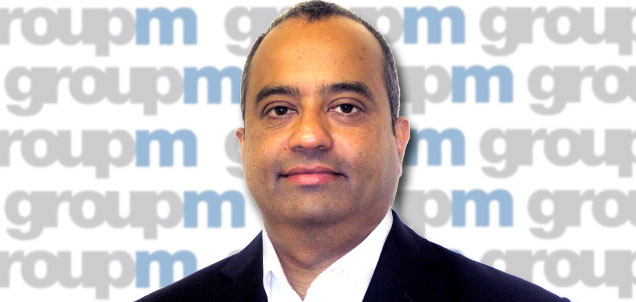
When CVL Srinivas’s name was announced as successor to Vikram Sakhuja as CEO of GroupM South Asia, not many were surprised. Srini, as he’s known in the industry, had worked in GroupM before and had established himself as a seasoned media agency captain. While his tenure required him to ensure GroupM business was as usual, he took measures to steadily get the media services group to reinvent itself, without disturbing the status quo.
In a free-wheeling chat with Pradyuman Maheshwari of MxMIndia, Mr Srinivas talks of his year at the helm of GroupM South Asia , how 2013 was for the business, his plans for 2014 and how he misses being a media planner/buyer in the digital age.
Excerpts from the interview:
As you look back at 2013 which has just passed us, how would you describe it? Annus Horribilis, as Queen Elizabeth had termed the year 1992 in a speech? Was it a good year, or a year that could’ve been worse?
It was the year of the perfect storm. On the one hand there were structural and policy-level changes especially in the broadcast sector. On the other hand, we had a bit of a yo-yo year in terms of ad spends, up in the first six months, a slowdown post-July and a minor blip towards the year-end. Having said that, it could have been far worse. Given the fundamental strengths of the economy, advertisers continue to invest in brands and media organizations continue to innovate and diversify. Things continue to keep happening in India, no matter what the economic or political scenario is. I am just back from a long overseas trip and I can definitely say that the most exciting market to be in today, at least from a media industry perspective is India.
It’s also been a year for you as head of GroupM. How has it been for you, personally?
Its been a satisfying year for me personally. All our agency brands and specialist units did extremely well in a challenging year. We won several new businesses, retained all our key clients who came up for a review and continued to innovate in terms of our offerings. We launched a few interesting tools in 2013 to help our agencies manage the transition from offline to online and for sharper planning in smaller towns. GroupM agencies and specialist units continued to dominate all industry awards. We won the coveted Porter Prize for leveraging unique activities, the first for any media or ad agency. Its also been a year where we launched several initiatives on the Talent front. Including Y-co, our Youth Executive Committee. We’ve had our lowest attrition compared to earlier years. None of this could have happened without great team work – GroupM is a fantastic example of how team work can deliver great value.
The digital media agency has become a full-service business. Are you also offering that at GroupM?
GroupM has been an early mover in the digital space and we have scaled up our practice over the years. So while most of our competitors are acquiring digital agencies to build scale, we are taking our digital practice to the next level by integrating it a lot more with our core product and moving to the next level of sophistication in content, analytics and activation, thereby providing a lot more value to our clients.
You mentioned that digital is the centre of everything you do and if indeed digital will become the centre of most advertising, does it worry you that you will also have various players also doing media kind of work – including those from agencies within the WPP network?
The ecosystem is extremely fragmented. Increasingly we get this feeling from our clients that they are looking for  integrated solutions. Clients are looking for ideas that can explode across multiple touch points with scale and measurability . Ultimately it boils down to a deep consumer understanding and therefore the need to analyse data which is going to sit at the heart of the advertising product. I believe media agencies have an even greater role to play going forward. In fact with so much of expertise built in areas like consumer understanding, data management, analytics, experiential marketing, digital and content, I think the term ‘media agency’ is a bit outdated.
But, digital continues to be a low-spending sector.
Relative to TV and print, digital is still small, but it has been growing at 30-40% year after year. We have just crossed 200 million internet consumers in India and by end of next year could be hitting double that number. With improvement in digital infrastructure and growth of video advertising on the internet, we are bound to see digital hitting a double digit contribution of the AdEx very soon. Also, digital as we have known it (internet and mobile) is expanding into many more platforms including TV with convergence technologies.
As someone who’s seen the business for a long time, do you think the reason for this is that the best creative work is not done in digital? And what fuels creative agencies is TV commercials which are more expensive to make and hence generate more commissions.
That was a problem some years ago, but I think it’s changing. We have a whole new generation of fresh young creative minds who are born in the digital era. GroupM is attracting talent in this area and we have done good creative work for some of our clients.
One of the key highlights that everyone’s made a note has been the creation of the Y-Co. How’s it doing? But, first, tell us how it happened?
While working on our ‘New Me’ vision, one of the things that came out very clearly was in a digital era, if knowledge is equal to power, most of the power rests with the younger lot in the agency. So we felt that the ExCo (Executive Committee), which is the senior leadership team at GroupM, needed to have a closer connect with what’s happening on ground and needed to have better insights and better input when it came to areas like digital. That actually led to the creation of Y-Co: we got 15 of our brightest stars who’re all in their 20s to get together and form this body to actually complement the ExCo.Y-Co worked on several strategic initiatives through the year, in the areas of digital, talent retention, profiling, etc.
Looking back, any key learnings for you from Year 1? Â Any key differences that you’ve managed to bring in to the successful structure you inherited?
Having worked in smaller outfits, including start ups, I realise the need to be constantly restless about the future, no matter how big or strong you are, in order to stay relevant for our clients. A key learning from last year was the need to bring in a lot of focus starting with a clear articulation of where the organization needs to be three years from now. And then aligning everything to this vision, the organization structure, talent, investment priorities, day-to-day processes, etc
At the start of the year, GroupM senior leadership along with several of our key team members worked on creating a ‘New Me’ vision and a roadmap for the next three years, given the opportunities and challenges in the market place. We did an organization-wide cascade of ‘New Me’ that has helped bring focus and purpose into everyone’s day job. We simplified our organisation structure, embedded more specialist resources (digital, content, data experts) into agencies and built several partnerships, all tying in with our ‘New Me’ vision.
On a very personal level, has it been a fulfilling experience?
Yes, indeed.
You were of course very familiar with the GroupM structure and the people…
The best part about my job is that I work with a fantastic team. I have great support from our global and regional leadership. Having been a part of GroupM India during its formative years I am quite aware of the system and that really helps.
From whatever one has seen of you, you’ve been exceedingly hands-on everything yourself… including receiving the media communiqués directly from you… until you had a full-time person heading that function. Do you prefer a federal structure where you have individual business heads doing their own thing or a more hands-on approach for yourself?
I obviously got a lot more involved in some of the activities which I thought I had to personally drive last year like digital initiatives, talent, internal and external communications. At the same time, I don’t interfere in the day-to-day running of any of our agencies or specialist units.
Do you miss getting your hands dirty with client acquisitions, servicing and all of that?
I really miss being a media planner/buyer (laughs). Especially in the digital age, when there are so many fascinating opportunities you have in front of you and you’re sitting and working on a media plan… In fact, just the other day I was trying to strike a deal with one of my media planner colleagues to see if we can swap seats for a day. And I’m seriously planning to do that soon.
You’re joking, aren’t you?!
No, I am not.
As you look at 2014, other than the routine things, could you tell us of a few key activities you plan to undertake this year?
At a GroupM level, the focus on digital and the new core is going to continue in 2014. We could see a few more partnerships happening across areas of the new core, be it in digital, content and analytics. We’ll continue to focus on talent. In fact, on the talent front, we’ve started broad basing our profile and today we attract talent from different streams. For example, we are hiring a lot of people who have expertise in content, technology, data management etc
More partnerships lead to more acquisitions?
We’re not into acquiring for scale because that’s something we already have. We’re more into acquiring to be able to give our clients a more relevant and solid product.
If you had to play soothsayer, is there any one new thing you think will happen this year?
I think it’s going to be the year for digital video. We’ve seen a fair amount of traction last year especially from large FMCG players who are very heavy on television. A lot of them are moving up the learning curve and it’s only a matter of time before it gains a larger share of the media pie.
And is there one thing that you wish had happened in 2013 which did not happen?
I wish as an industry we could have better handled the regulatory and structural changes that happened last year.
Any other pan-industry issues which you think should be tackled this year…
We need to work a lot more closely across all industry bodies to be able to grow the industry. I think we’ve spent a lot of time trying to manage environmental issues and we hardly have time for constructive discussion in terms of what we should be doing as an industry, how do we ride the digital wave, how do we bring in more accountability and so on.
I think a lot more of that needs to happen and I wish 2014 is the year when some of that starts happening.
 It was a kinda Annus Horribilis for us MxMIndia. At many times in the year, we thought it was better to shut shop. The folks who owe us monies didn’t pay us. Some haven’t paid up since last year. We’ve sent them umpteen duplicates, sent reminders. Etc, etc.
Adverse cash flows are killers.
Like the Pandavas in the Mahabharat, we’ve put in our life’s savings. But the money wasn’t squandered, it was invested.
We’ve done a few course corrections. Like shift our office from a prime location in suburban Santacruz to closer home in Andheri. It saves us some dollars in rent as well as in the commute.
We chose to not replace some of the prized staff who left us.
All of this has had some impact on our work. Our newsletters often get delayed. The Annual issue which should’ve been out this month will now be released next month. We weren’t able to send someone to Cannes Lions or some of the national and international events as we would’ve liked to cover. We’ve also not been able to pay some of our staff, contributors and service providers on time. They understand our predicament and have backed us up so far. Some, understandably, are peeved.
Twenty-thirteen has been a very active year on the news front. Ask any journalist and she/he will tell you that planning a ‘big story’ or lead/cover story is tough. For us at MxM, including the days when a scheduled report fell through at the last minute, we’ve had a Big Story every single day of our working year.
We didn’t spread ourselves too thin by organizing standalone events. We curated two sessions at the Social Media Week Mumbai. We were exclusive media partners for the Kyoorius Designyatra and the Awards and the Social Media Week Mumbai. We partnered a few FICCI events and turned down many offers from people who had tied up with all and sundry.
We’re also proud of the fact that we are possibly the only media neutral website tracking the media and advertising trade. So when a BusinessWorld was sold to a group of unnamed individuals fronted by Anurag Batra of exchange4media, we wrote about Batra’s rise and rise. We covered the IAA debates even though they were sponsored by Campaign India. We wrote about an all-new website launched by former IndianTelevision staffers. We also analysed the Impact Person of the Year nominees… We couldn’t of course cover the various e4m industry functions or the Campaign Agency of the Year awards or the afaqs Unmetro events or the IndianTelevision distribution summit… not because we didn’t want to, but because we weren’t invited to them.
It’s an unfortunate trait in the Indian media. Competition is treated like your ‘jaani dushman’. A Filmfare Awards will not be covered by rival media groups. Ditto with the (now) Life OK Screen Awards. A DNA women’s marathon winner may not be profiled by a rival newspaper. Â HT for Mumbai awards are blanked out by most others. Sad.
In all of this, our sincere thanks and gratitude to all those who stood by us. To our benefactors, to our advertisers. To all those who’ve counselled us. And those who’ve recognized our work and appreciate that we are credible… that we are the only ones who don’t mind asking the tough questions or raising the red flag when it needs. Because our allegiance is first to you, our readers. Even our advertisers know that.
Cheers and wishing you our choicest shubhkaamnayein for 2014!
Pradyuman Maheshwari
Editor-in-chief and CEO
pradyumanm [at] mxmindia.com
By Pradyuman Maheshwari
As I write this, I have been inundated with calls and smses asking me who the Impact Person of the Year is for this year. I was associated with the exchange4media group for nearly three years, but I am not much in touch with people from the group. So I don’t really know.
And I am not invited for the IPOY event ever since I quit. Nothing alarming about it. This is how things work in the media. You will not find the Filmfare editor at the Screen awards or vice versa. You will not find the Overdrive boss at the Auto Car India awards. This isn’t how it works in advertising… many of Lowe’s competitors assembled for its internal awards earlier this year. And you can be sure to find rival film-makers at each other’s film release.
But that’s not the reason for writing this. The question is who will win the Impact Person of the Year to be presented this evening (Friday, Dec 6). Since IPOY is based on voting monitored by IMRB, the award-winner is selected as per voting from the fraternity. There have been rumours that it is Vineet Jain, Vice-Chairman of Bennett, Coleman & Co, and a little birdie has told me who the winner is, but let’s look at the nominees (in alphabetical order of their last names):
Rajan Anandan Managing Director, Google India
Punit Goenka, MD and CEO, Zee Entertainment Enterprises Limited (ZEEL)
Vineet Jain Managing Director, Times Group
Bharat Patel, Former Chairman, ISA and Hemant Bakshi, Chairman, ISA
Rahul Sharma, Co-founder, Micromax Informatics
CVL Srinivas, CEO, GroupM South Asia
Sameer Suneja, Global CEO, Perfetti Van Melle
Let’s start with the process of elimination. Messrs Patel and Bakshi have done some splendid work in their own professional lives and they need to be commended for the ISA to the stand up to the IBF in the controversy on the television measurement boycott, but I am not very sure whether they would quality for the IPOY.
Sameer Suneja goes out next. His ascent is noteworthy, but he’s not the first Indian corporate honcho to go overseas. Rahul Sharma’s rise is well-known, but 2013 was not the year of Micromax. In fact, Nokia has been shining high.
The four nominees in balance are Rajan Anandan, Punit Goenka, Vineet Jain and CVL Srinivas. Google has done great work for the last few years, but nothing buzz-creating in 2013. So the choice has to be from amongst Punit Goenka, Vineet Jain and CVL Srinivas.
All three are good contenders, but the buzz around the time the voting is done was maximum for Vineet Jain, especially since The Times of India is celebrating 175 years.
My vote though for the Person of the Year who created maximum impact in 2013 is Uday Shankar. The year has been clearly his – given Star’s major foray in sports, consolidating Star Plus, the rise of Life OK, his own stature as an industry leader and every thing else that Star India has been doing. Aaj ki tareekh mein, Uday Shankar is the man with the midas touch. Unfortunately, Impact magazine doesn’t repeat Person of the Year winners, which many think is unfair, but then that’s their rule. Uday was IPOY 2010.
Next year, assuming the successful implementation of a BARC-administered television measurement system, I would think Punit Goenka and Shashi Sinha will be Persons of the Year. Both deserve huge accolades for the rapid strides being taken on measurement. Yes, it took BARC a huge amount of time to take off, but then building a consensus amongst three sets of stakeholders isn’t easy. The buy-in has to be complete because they all need to pay for the new service.

By Pradyuman Maheshwari
It was early 2000. It was a Saturday, I had to drop by at my Chartered Accountant’s office on Bhawani Shankar Road in Central Mumbai. I took the 201 bus which wormed its way through this road on to Shivaji Park where my car was parked. As the bus started, the conductor shouted out a stop or two later: Shardashram School Sachin Tendulkar.
I was familiar with the area, a batchmate lived in the building across the school as did former Finance Minister Madhu Dandavate. The bus stop was named after ‘Shardashram School’. A few of us peered out of the bus window, to check if the wonderboys Sachin and (then?) buddy Vinod Kambli were around. The newspapers then were full of their exploits.
Sachin Tendulkar was always destined for bigger things, and the media adulation for the boy has been unparalleled. In 2005, I remember wanting a story done on whether he should retire given his lean patch. None of the journalists in my team or the few accomplished writers I spoke to agreed to write. They refused, citing other commitments. In fact until the social media arrived, one could hardly read any criticism of the man.
Others could get out to a rash shot, but for Sachin it would be being bowled on a brilliant delivery. It’s not that journalists were not being true to their jobs, but it’s possibly because we believed that #10 could do no wrong. It was perhaps his commitment to the game. Even on the Ferrari episode, while there are many who still haven’t forgotten how he sought a duty waiver which he could’ve easily paid, Tendulkar came out with just a few bruises.
So what does the master blaster do post-retirement? Having been hot on the endorsement circuit for over two decades, surely the taps wouldn’t turn dry overnight. But his various interviews over the last year and his farewell speech on Saturday have me convinced that there will be more than one opportunities coming his way. Television, for one. Given the way sports broadcast is growing, channels will surely be eager to cash in on the Sachin wave. Motivational speaker, is the second. I am sure large corporations would like to have him speak to employees, premium clients etc.
While the Bharat Ratna award is welcome, it could make things difficult on the business front. Bharat Ratna awardees come #7 in the Order of Precedence in the Government of India’s protocol list, way ahead of the three chiefs of the armed forces. He will need to get that wee bit more discerning and careful with his endorsements and commercial ventures.
The Member of Parliament tag is also going to raise some expectations from Tendulkar as he will now not have excuses of being busy with the game. There will be pressure on him to cleanse the administration of sports bodies he has no connection with, make BCCI more accountable, ensure India wins more at the Olympics, take cricket to the Olympics and ensure there are more facilities for sports across the country.
Sachin’s source of monies – from the contract he has with the Board of Control of Cricket – ended with the second Test against the West Indies. This meter officially stops ticking after today, the scheduled last day of the match. But, of course, the older endorsement deals will continue for a while. I am sure his manager -Vinod Naidu and his firm WSG – will ensure that the Bharat Ratna continues to rake in the moolah just as Kapil Dev is even 20 years after he bowed out (1994).
> Visit www.starsports.com or the numerous Youtube pages for his speech and his press conference address.
> Full text of Sachin Tendulkar’s ‘Thank you’ speech at the Wankhede Stadium:
http://www.dnaindia.com/sport/report-full-text-of-sachin-tendulkar-s-farewell-speech-at-wankhede-stadium-1920240moolah just as Kapil Dev does even after two decades post retirement (1994).
Photograph: Fotocorp.com
By Pradyuman Maheshwari
The I&B ministry has invited suggestions to the amendments it has proposed to the Press and Registration of Books Act (PRB Act), 1867. While many of these are welcome, among the changes that the MIB has made, there are two significant ones that still need some detailing.  Here are the changes I think should be added and I have taken the liberty of adding one more element that will cleanse the system:
1. The definition of a newspaper: While it’s good that the online editions of newspapers are now under the purview of the PRB Act, what about standalone online news entities? What about online entities that curate news from various online sources including newspapers? The PRB Act must also clearly include non-news entities like magazines and their websites. These magazines could be of the non-political variety (say: realty or business or films or even media)
2. Paid news:  The government is concerned about paid political news, but it should actually be having all forms of it under its scanner. Brands, parties, marriages, community/club news… whatever. Any news (text, pictures, video) that is published for reasons beyond an editorial discretion and because it’s paid for. Fine print placed next to the masthead of a supplement or tucked into the corner of a supplement’s front-page are not enough to label a part of the newspaper as a legitimate paid news offering. Since the paid news component is a part of the main paper and the average reader believes that content in the paid news section is selected in the same way as it gets done for the main paper, the undertaking/declaration must be prominently displayed on the Front Page of the main paper in a point size larger than what is used for the rest of the body matter on the page, in bold and boxed. All articles/reports/photographs/graphics must individually be clearly tagged ‘This report/pic/graphic/whatever is paid for by the advertiser’
3. Group news: One of the big problems that many media firms face is when their news gets blanked out by the big papers because their group has a similar entity. For instance, Newspaper X and Y don’t carry the news of Radio Station Z because X and Y also own radio stations. And ditto with events etc. Will Times of India carry news of the Star Screen or IIFA awards when it has its own Filmfare and TOIFA? It was heartening to see TOI, HT and DNA carry the news of the India Today group conclave on Sachin and mention the India Today name in it, but these instances are few and far between. Failure to give fair coverage to news just because it belongs to competition should be referred to whosoever is policing complaints on fall-out of cross-ownership.
There are some more changes in the PRB Act that the ministry is mulling – like a declaration on advertisements received as well as on the registration of an entity’s title. The last of these has relevance given the dispute between The Times of India and Financial Times over the Financial Times title.
The revised bill has been uploaded in the website of Ministry of Information & Broadcasting (home page – What’s new) on November 8, 2013. Suggestions have been invited by the ministry which may be sent to the Under Secretary (MUC), Room No.749, Ministry of Information and Broadcasting, ‘A’ Wing, Shastri Bhavan, New Delhi 110 001, Fax No 011-2338 7240, Email : mediaunitcell@yahoo.in by November 19. In case no suggestions are received within the stipulated time, it will be presumed that the stakeholders are in agreement with the amendments of the bill.
Mediaah!’s view is that the government should not get into the business and conduct of news entities. However, in the absence of a self-regulator and given that the Press Council of India is toothless and often regressive, the government needs to step in to cleanse some of the ills in the system. The government can of course police the media since it grants various favours like cheaper land, DAVP ads and a variety of other concessions.
By Pradyuman Maheshwari
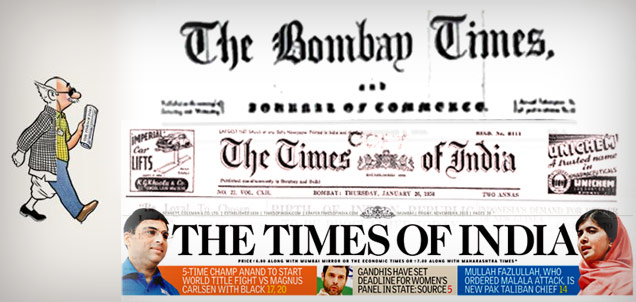
I am often accused of being obsessed about The Times of India. That the previous, blog-only avatars of Mediaah! (2001-03, 2004-05) would only dwell on the affairs of Bennett, Coleman & Company.
|
Times @ 175
CVL Srinivas | What makes TOI a formidable brand
Sangita P Menon Malhan | Rediscovering… The Times of India
Sidharth Bhatia | Times have changed, so has the Times
Ranjona Banerji | Times@175: The Good, The Bad & The Ugly
Shailesh Kapoor | BCCL 2.0: The Integrated Media Organization
|
That’s not right. The Times of India only threatened to take me to court, yet another (leading, if I may add) daily actually did that. The matter was settled later via respective lawyers, and hence I wouldn’t like to name the media group.
There were many other news media entities I’ve written not-so-nice things about. And continue to do so. And even if I don’t write them myself, some of our columnists do that on MxMIndia. There is no malice whatsoever. We may nail Channel X one day and gush about it on another.
There are people who ask me why I single out BCCL for paid content, when scores of others do the same. Yes, I agree, and I don’t do that any longer since TOI isn’t the only national daily doing charging for content in the open. In fact it pains me to see Hindustan Times and Mid-Day, two newspapers which wrote a fair bit about BCCL’s regressive act and I admire much, also succumbing to the lures of paid content. Both papers carry disclaimers as do Times of India’s supplements, but that’s not good enough.
It’s got to have the conviction of this other newspaper’s publisher who has issued a diktat to his editors to not mask names of hotels , restaurants and brands… not over his dead body!
However, even though I hate the group for Medianet, I admire The Times of India a great deal. Since 2005, the year when Hindustan Times and DNA entered Mumbai, TOI has leapfrogged in editorial quality. No other news organisation spends as much energy, effort and dosh on its media products.
My big peeve with BCCL is that it has squandered the opportunity with the web avatar of the newspaper. Sadly most newspaper managements don’t have their web act together.
So is The Times of India our country’s #1 Newspaper? Yes, it is better than the others. It’s a better-produced, better-marketed, better-distributed and better-sold paper. However, in many ways, it stands for many of the ills that afflict our news media. Paid content, diminishing value to human capital and a desire to achieve revenues at any cost.
I understand many top executives of The Times of India agree that Medianet should be dispensed with even though it earns the company revenues of Rs 100-150 crore. But they are too scared to tell the bosses that.
Heck, this is celebration time. The MxMIndia special package is not to damn the Times, but to celebrate the birthday of the country’s biggest media brand.
Here’s to The Times of India at 175. Happy 175th. Â (Hey guys, just axe Medianet, will you? 🙂 )
By Pradyuman Maheshwari
I was delighted with the news that Soli Sorabjee was to be the Ombudsman of NDTV, the news-to-cookery information network. Sorabjee is one of India’s best legal eagles, is a former Solicitor and Attorney General and is known to be a wise man. He’s frequently on television, his views are much sought after by people who matter. He’s not a Ram Jethmalani.
NDTV is one of India’s best known news vehicles, although just 25 years in the business. And it’s well-respected too.
However, the last five years has seen question marks being raised about the network. And this goes beyond its performance in the stockmarket, its decision to get into entertainment television and then exit it, staff cuts and more recently the trimming of operations of business channel NDTV Profit.
What has caused considerable loss of face for the channel’s reputation goes beyond its business decisions. After the Mumbai terror siege, there was an uproar against the coverage of some news channels and consequently there was a vicious online attack on Barkha Dutt. Yes, it was vicious, but as I look back, Barkha and NDTV should’ve just let it be. Instead they took legal action against techie Chaitanya Kunte. They may have won the battle and silenced Kunte, but there was much anger building against them.
And then there was the Niira Radia controversy. While journalists do often indulge their sources and help them with info (and even fix stuff), what happened in the Barkha Dutt episode was unfortunate. Especially the way she and NDTV handled the issue. She should’ve apologized on camera rather than defend herself on the show where questions were posed to her by a few top editors. NDTV, a channel until then known to have a squeaky clean reputation, too ought to have handled the crisis better and should’ve instituted an internal enquiry (headed by an outsider and asked Barkha to go off the newsroom or at least off air in that period). It didn’t, and went down several notches in the eyes of its core viewer – the Indian intelligentsia.
However, that’s not the reason for writing this. When I heard about Soli Sorabjee being appointed Ombudsman, I wondered how he would’ve handled the Barkha Dutt-Niira Radia issue. That was reflected in the report we carried on his announced (see link: http://www.mxmindia.com/2013/09/ndtv-appoints-soli-sorabjee-as-ombudsman-now-will-he-clear-air-on-barkha-dutt-episode/ ).
I wrote two letters to the Ombudsman. The first was on my name getting exposed to NDTV, to which Sorabjee responded writing: “I do not appreciate the need for anonymity.”
I found this a little weird. If a corporate’s name gets exposed to a journalist who he/she is complaining about, there’s bound to be a backlash.
But it’s the second exchange that has had me shocked and surprised.
Here goes the mail I received from Sorabjee’s Ombudsman id (See letter image).
QUERY
Hello, Mr Sorabjee. Thank you for accepting NDTV’s invitation to be the media group’s Ombudsman.
I would like to bring to your notice the controversy around Barkha Dutt and her telephone conversation with lobbyist Niira Radia. While Ms Dutt’s defence was subjected to a cross-exmination on television by eminent journalists, there is a view that her act brought disrepute to the profession and the NDTV group. There is also a view that Ms Dutt’s services or appearance on television should’ve been suspended pending investigation. It would be good to have an eminent jurist like you to comment and give your ‘verdict’ on the issue/episode. Your views may well clear Ms Dutt’s name once and for all. Or we may have you aver that Ms Dutt was incorrect by doing what she did and she deserves a stiff reprimand. In both cases, it will be a great service to Indian journalism. Sir, since this episode happened, many have questioned the ethical standards that prevail in the Indian news media and have even gone on to say that our news entities do not have the moral authority to question others on inefficiencies/corruption etc since their own houses may not be in order.
Your comment on the matter will help clear the air on this.
Thanks, Pradyuman Maheshwari
Â
RESPONSE
The role of the Ombudsman is not judgmental but to ensure that dissemination of news is fair, accurate and balanced. However, Ms. Barkha Dutt should not participate in any programme concerning her and the Radia Tapes. I have advised NDTV to inform Ms. Barkha Dutt accordingly.
Soli Sorabjee,
Ombudsman, NDTV
Is Soli Sorabjee refusing to take a stand on an issue that has a strong linkage with the “role of the Ombudsman to ensure that dissemination of news is fair, accurate and balanced”. And what’s this bit about “However, Ms Barkha Dutt should not participate in any programme concerning her and the Radia Tapes. I have advised NDTV to inform Ms Barkha Dutt accordingly.”???
Mr Sorabjee is a wise man, but why is he sitting on the fence on the issue? Has NDTV asked him to not comment on the controversy? We don’t have the answers, but at the time of writing on October 9, 2013, when we tried visiting the Ombudsman’s page/corner/whatever on the NDTV.com site, we couldn’t find any label/tag on the homepage. Perhaps, viewers are expected to remember the ndtv.com/soli url. Or perhaps the network doesn’t want us to go complaining to Soli Sorabjee.
The views expressed by Pradyuman Maheshwari, Editor-in-Chief and CEO, MxMIndia in Mediaah! are his own and not necessarily those of MxMIndia Private Limited. Email him at pradyumanm (at) mxmindia.com
 By Ranjona Banerji