Tag: Pradyuman Maheshwari

  • Wish Us Luck. We’re 13!

    Wish Us Luck. We’re 13!

    As we mark our 13th year, I feel it’s only right to begin with a note I often sign off with: Thank you for keeping the faith.

    These are turbulent times, and the challenges facing the media industry are more real than ever before. For some of us, the struggle is not just words on this page — it’s staring us in the face, in our offices and in our daily lives. It’s about survival.

    Yes, survival.

    But here’s the paradox: there has never been a better time for the media to prove its worth. There is a pressing need for honest, unflinching journalism to survive, thrive and continue doing what it was meant to do — hold up a mirror to society and to those in power.

    At MxMIndia, we’ve faced our share of financial pressures, but despite them, we’ve held firm. We continue to practise the kind of journalism we believe in.

    Let me give you an example. A well-known conglomerate once offered us monies to write a feature on them. We declined. We lost the business. Then, others suggested we exploit the challenges we face to gain sympathy. Again, we didn’t.

    We’ve also been told to stay away from critical stories — to focus only on positive ones. But that’s not who we are. That’s not why we set up MxMIndia on September 9, 2011 — Onam Day.

    From that day to this one, it has been an incredible journey. And I am immensely grateful to all who have walked this path with me.

    To the MxM team — past and present, our columnists, industry professionals, readers, advertisers, and shareholders — thank you for your continued support.

    Of course, revenues matter. But our primary allegiance will always be to our readers. Only when we produce high-quality, credible content, will everything else follow.

    Over the years, I’ve made a few promises in my annual anniversary notes — I’ll admit, not all of them have panned out. But we’ve made progress. We revamped the look of our website, and for that (and standing by me over the last 13 years), a heartfelt thanks to Manish Dhingra and his incredible team at Mediology Software.

    I’d also like to take a moment to thank Rafiq Barak, Kishor Kate, and our CA Nishant Soni, Shripal Kavad, and their teams, who keep the gears of this organisation running smoothly every single day. And to my friend, Prashant Basrur, for showing me the light whenever needed.

    And finally, a special thank you to my family. Over these 13 years, they deserved better materially, but they’ve stood by my belief in what MxMIndia should be and the value of independent journalism, especially in the B2B space, where quid pro quos are most often not frowned upon.

    To all of you who’ve been with us on this journey — thank you once again. I couldn’t have done it without you.

    Best,

    Pradyuman Maheshwari

  • From the Editor: We need to change!

    From the Editor: We need to change!

    When I watched the Exit Poll results over the weekend, I was dismayed. How can the masses be such asses, I wonder. Should I go in for a Vipassana-like self-exile for a week after the results and figure what I should be doing in life, and with MxM?


    Yes, I am a Hindu, and am proud of my religion, but I am of the firm belief that majoritarianism sucks. Especially of the form that has existed over the last three decades and that reached a crescendo in the last five years. I have seen some close friends and even members of my family turn aggressive (if not rabid) Hindutva propagators. That India or Hindustan is meant for Hindus. I have seen a vulgar exchange of trash in many WhatsApp groups.


    Over the years, MxM has paid a very heavy price for its journalism. We’ve been castigated just because we believe in commenting on the editorial policies of media entities. Even now – and the absence of any ads on our homepage is testimony to this, we don’t get too many ads, because we refuse to call a spade a rose.


    But this article is not about MxM. It’s about how the Indian media catapulted. MxMIndia was the first to flag off a clear bias that was creeping into the narrative of our news channels. Senior journalist and friend Ranjona Banerji has been at it – scanning the print, television and digital media. Her columns are an integral part of MxM, and are by far the most read on our website and across the media spectrum. Some of our other columnists have also been fairly critical of the news media.


    There have been times when I’ve been embarrassed when they have written about someone known to me, or a channel with whom I am set to close an advertising deal. But I have never disagreed with them, and I’ve never ever asked them to change their views.


    The election results have been amazing. Amazing in the way the BJP fared, and the margins in many of their wins – including that of Prime Minister Narendra Modi in Varanasi – have dipped. That despite all the frenzy around the building of the Ram temple, the BJP lost in Ayodhya indicates a clear anti-BJP wave. Yes, a wave, just as there was one in 2014 for the BJP.

    Coalition politics can be quite a bitch. Be ready for a fair bit of action over the next few years.

    So what do we do now: We will continue the way we are. Applaud and Damn. Offer bouquets and brickbats, wherever necessary. The election results have given us hope that despite the negatives of various political formations, there is hope in Indian democracy.

    The masses aren’t; asses after all.

    Meanwhile, MxM will change. Our business model is advertiser-dependant. That can’t continue given the kind of journalism we love to practise. In the next few months, we will move to a platform that will only be available if you pay for our content.

    Thank you for keeping the faith,

    Pradyuman Maheshwari

    Editor-in-Chief

  • MxMLive with Rana Barua

    MxMLive with Rana Barua

    In early January 2024, it was announced that Rana will extend his remit to include South East and North Asia. The expansion of Barua’s scope adds nine additional markets under his leadership in his new role as Group CEO India, South East and North Asia. His new titled reads: Group CEO, Havas India, South East Asia and North Asia

    Over the last few weeks, he has met with the media, talking about his new role and vision for his agency network.

    As part of a new season of MxMLive, Pradyuman Maheshwari, Editor-in-Chief spoke with Rana Barua over an interview via Zoom.

    Watch. Enjoy. Like.

  • Two views on the I.N.D.I.A. boycott of 14 news anchors


    By Ranjona Banerji


    Ranjona BanerjiThe decision not to speak to certain TV anchors by the opposition coalition, I.N.D.I.A., is not an easy one to parse. On the one hand, you might think it’s a good comeuppance for these anchors. In their less offensive – relatively speaking – avatars, these anchors have been propaganda voices for the BJP and for Prime Minister Narendra Modi. In their more sinister personas, they have actively created social divisions and fanned the flames of hatred against Muslims, other religious minorities and Dalits.

    In between they have consistently flayed the Opposition as one entity as well as their individual party components. While giving the BJP-led Government at the Centre, various BJP state governments and the BJP, the RSS and all its attendant organisations a free pass, the opposition has always been placed on the “losing” side of these so-called “debates”. They are not time to put forward their case, BJP spokespersons are allowed to speak over them and so on.

    Several fans and followers of opposition parties have begged them not to appear on these channels, where night after night they are humiliated, their voices cut off and they are put under greater and nastier scrutiny than BJP participants.

    It has taken more than nine years for the Opposition to become a cohesive coalition, and then to make this decision and make it public. According to their statement, they will not attend shows held by 14 anchors. They have not however refused to appear on the channels where these anchors work. So it is not a boycott of television so much as avoidance of certain people.

    Should they have then made this list public?

    They could have done the same thing behind the scenes. Refused to appear on X’s show but agreed to appear on Y’s and so on. Possibly they want to make a point.

    Within the journalists’ communities, opinions are varied and contradictory. When I use the word journalists here, I mean journalists. Not TV anchors who are hate-mongers and BJP propagandists. Many of us – myself included – believe that these TV anchors have long surrendered the right to be called journalists. They do not even qualify as the worst of the ambulance-chasing bottom feeders our profession has specialised in. And any person has the right to decide who they want to speak to.

    Other journalists take the high ground and feel that one should give everyone a fair chance. A boycott does nothing for democracy and the future of a free press. This is an honourable position, and one to be admired. Even if it does ignore the sort of nonsense that goes on in Indian television.

    But most importantly, it ignores the massive elephant in the room when it comes to politicians and the Indian media. The refusal of Prime Minister Narendra Modi to take questions from the media.

    The Indian PM does not interact with the Indian media. He does not take questions. He tries to avoid the media when he travels abroad. And at the recently concluded G20 Summit in New Delhi, he did not allow US President Joe Biden to address a press conference either.

    In functioning democracies, press conferences are part of the process. As is media scrutiny of government actions and decisions. India is a rare democracy where all the questions are asked of opposition politicians but few, if any, of the party in power. You might consider than under such circumstances, India is not a democracy at all in the traditional sense.

    In the light of Modi’s refusal to be held accountable for the actions of his government and his party, and his own actions as well, in the light of the sustained harassment of journalists and media houses who show truth to power, what is the weight exactly of a list of 14 anchors who have no connection to journalism?

    Further, we have the defence of Modi’s position by these anchors and propagandists masquerading as journalists. The hypocrisy is stark: when Modi does it, we’re happy. If anyone else does it, how dare!!

    In the end, here’s a “both sides” story, that bad journalists confuse with objectivity, to keep “both sides” happy. At the height of his career as “the angry young man” of Indian cinema, superstar Amitabh Bachchan boycotted the gossipy, spicy film media. It made no difference to his career, which reached amazing heights of stardom never seen until then. It made no difference to film magazines who wrote what they wanted anyway.

    Make of that what you want!


    Ranjona Banerji is a senior journalist and commentator. She writes on MxMIndia on Tuesdays and Fridays. Her views here are personal.


    By Pradyuman Maheshwari


    Pradyuman MaheshwariAt the outset, we must admit that we are appalled that the I.N.D.I.A. alliance of Opposition political parties has decided to boycott shows and events hosted by certain journalists and anchors on Indian news television. Even though they may have enough reason to be peeved about the way they conduct themselves on television.

    For a political grouping that aspires to be forming the next central government, this is unfortunate. There are ways and means to counter journalists who are biased, and we are certain that the various political parties have enough veterans in their fold who can take on even the most biased and toxic of anchors.

    I am sure a Sanjay Raut of the Uddhav Thackeray wing of the Shiv Sena or Mani Shankar Aiyer can take on the mightiest. Or the DMK former finance, now IT minister. Or a variety of other Congresspersons. Or Derek O’brien or Mahua Moitra. Why not field them?

    There’s also the judiciary, and the Supreme Court under Chief Justice DY Chandrachud can be trusted to be, well, provide justice.

    Also to be noted is that the ban is only on anchors and editors, and not the entire channel or network. Obviously it would’ve been a bit much to ban an entire channel, but why isn’t I.N.D.I.A. doing that? For, the fact is that if Channel X accords a primetime/prominent slot to a Anchor Y, then it is equally responsible for the views that are aired. Unless of course it has an equally unbiased show or anchor leaning against the other side just before or after the journalist who the Opposition considers biased..

    But let’s leave the argument of questioning the I.N.D.I.A. alliance’s decision for now. The vote-casting masses are not as uninformed as some people may think. Else, the people of Karnataka and West Bengal wouldn’t have voted for Congress and TMC respectively. The anchors named by the I.N.D.I.A. alliance (and their ways) existed even when these states went to the polls.

    What has triggered this comment from me, and pulled Mediaah! out of its slumber is the statement issued by the News Broadcasters & Digital Association (NBDA).

    Let’s read the statement first:

    “News Broadcasters & Digital Association (NBDA) is deeply anguished and concerned by the decision taken by the I.N.D.I.A. Media Committee not to send their representatives on the shows and events hosted by certain journalists/anchors. The decision taken by the I.N.D.I.A. Media Committee sets a dangerous precedent.

    “The ban on representatives of the opposition alliance from participating in TV news shows anchored by some of India’s top TV news personalities goes against the ethos of democracy. It betokens intolerance and imperils press freedom. The opposition alliance claims to be the champion of pluralism and a free press, but its decision betrays callous disregard for democracy’s most fundamental tenet – the inalienable right to openly express ideas and opinions.

    “The boycott of certain journalists/anchors takes the nation back to the Emergency era, when the press was gagged, and independent opinions and voices were crushed. NBDA urges the opposition alliance to withdraw its decision of boycotting certain journalists and anchors as such a decision would amount to browbeating journalists and stifling freedom of speech and expression of the media.”

    I am not sure that the comment “The boycott of certain journalists/anchors takes the nation back to the Emergency era, when the press was gagged, and independent opinions and voices were crushed” is correct. The I~~ alliance isn’t doing that. There is no censorship being imposed here.

    My issue with the NBDA is that why doesn’t it issue similar statements against biases that exist in some of the news channels. Why doesn’t it call out the toxicity amongst its member channels. Why doesn’t it damn the fake news dished out?

    Also, why doesn’t it make a statement on the reluctance of the Prime Minister to address a press conference, as most Prime Ministers have done in the past.

    Why is the NBDA shying away from all of this?

    Some of the ‘banned’ anchors listed are leading lights of the NBDA member channels. Am sure they will not be impacted with this boycott. They may even put an empty chair there for effect, as has been done in the past by one or more channels.

    But there is a larger problem which the channels could face. There is a fresh move to  campaign against toxicity of news channels, and this may find a shrill in states ruled by I.N.D.I.A.-affiliated parties.

    I must also add here that the ruling BJP too has a reluctance of some of its top leaders being interviewed by senior editors like Rajdeep Sardesai. It may not be a boycott, but when was the last time you saw Sardesai interviewing the two Big Boys, one-on-one for television or for the various India Today/Aaj Tak conclaves? It’s not a ban for sure, but there is a clear hesitation to be subjected to an interaction.

    While I am glad that the NBDA has issued a statement on the I.N.D.I.A. boycott, it must also look at issues on bias, toxicity and the like with enough speed, even if it is nothing new and needs to done retrospectively.

    Pradyuman Maheshwari is Editor-in-Chief, MxMIndia. His views here are personal.


  • 12, going on 13. Wish us luck


    Those of you who have followed our journey know this: when we embarked on delivering MxMIndia on September 9, 2011, we were way too idealistic. To run a B2B publication sans any quid pro quo. Dropping the sales function in a publication that survives on advertising revenues. Critiquing a community which loves critiquing the world, but hates going under the scanner.


    The good (or bad) thing is that we continue to be way too idealistic.


    How do we think we’ve done over the last 12 years? Revenue-wise: it’s a 2/10. Even the most outrageously biased and compromised entity in our business is evangelised by the industry more than we are. But I guess that’s the way of the world.


    But integrity-wise: it’s a 10/10. When we started out and to this day, our primary allegiance is to solely to our readers. Everyone else comes second.


    Content-wise: it’s a 5/10. We consider our readers to be a mature lot. So we’ve stayed away from the pulls and pressures of breaking news – announcements of people movements or account/client wins/losses. We don’t carry pop analyses: take a topic, ask five people for their views. Despite having some of the best commentary in the business, we score ourselves low, because we haven’t been able to leapfrog to content that we think is really needed. We want to be able to have content that people are willing to pay for. Just as they are happy to pay for their vada pavs and kathi rolls.


    Outreach: it’s a 4/10. We don’t conduct events. Because we think the way in which they are conducted by some others has a problem. The decision-making process from amongst marketers and media agencies is taken by the footsoldiers and their team leaders, not the CEOs who attend them. Frankly, we haven’t been able to look at a new model to achieve this outreach to the real decision-makers. And only after we are able to do it, will we embark on ground-level events.


    As we go forward, we need monies and investments. But that’s easier said. Ad revenues keep going up and down. An advertiser can pull the rug off pre-determined deals, and we just need to grin and bear it. Or there are some who don’t advertise with us because we don’t carry every communique they send. That’s not going to deter us though.


    In our 13th year of operation, we are determined to better ourselves. And stay on course with how we would like to conduct ourselves.


    If you think you can help MxM in her journey, please feel free to write to me – pradyumanm {at} mxmindia.com. If you have my personal coordinates, just call/WhatsApp.


    And even if you can’t turn a benefactor – in terms of monies, connects or ideas, just be there for us. Applaud us when you find us doing the right things. Damn us if you think we are erring. But please be there with us. For us.


    Thanks,

    Pradyuman Maheshwari


  • The Importance of being Sivakumar Sundaram


    By Pradyuman Maheshwari


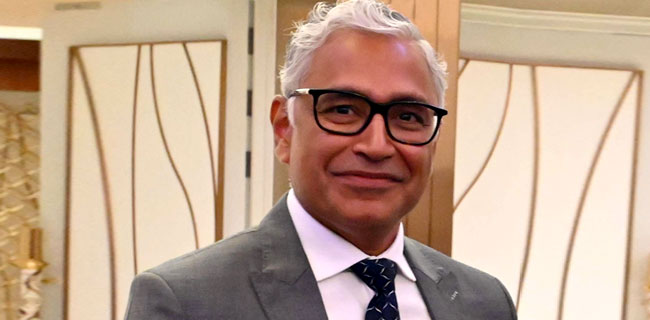
    The photograph doing the rounds of brothers Samir and Vineet Jain signing on the dotted line on the terms of dividing the vast media empire had three gentlemen in the background. One of them was a silver-haired bespectacled gentlemen with his wrists bearing a near-new red holy thread who is, as they say, is Samir Jain’s blue-eyed boy.


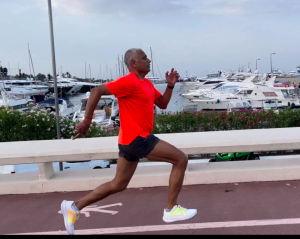
    Sivakumar Sundaram at his morning run at Cannes. Photograph source: Facebook
    Sivakumar Sundaram at his morning run at Cannes. Photograph source: Facebook

    Boy, well, a 55-year-old one. Delhiwallah, from Vijayawada in Andhra Pradesh. Non-MBA, but a Chartered and Cost Accountant, he joined Bennett, Coleman and Company Ltd (BCCL) in 1990 as a Management Trainee – an Assistant Manager in the accounts department, to be precise. Spiritually inclined, he’s an early riser and loves the run. Even at Cannes in France, where is attending an international advertising festival, he was spotted in his running shoes. Proof: Check his Facebook page.


    His credo, as per a LinkedIn post: “There are no right or wrong decisions in life. Any decision taken in compliance to one’s own values is the right decision. Be reliable and invest in yourself because success is the by- product of the well-being of body, mind, and soul.”


    We’re referring to Sivakumar Sundaram, the newly appointed Chief Executive Officer – Publishing. This is after being Chairman of the Executive Committee of Bennett Coleman & Company (BCCL) and a member of the BCCL Board as Executive Director. May appear to be comedown but CEO – Publishing is of course a key executive role, and he naturally becomes decidedly the most powerful professional in print and digital news in the country.


    As per his profile on LinkedIn (LI), Siva, as he is known in the fraternity, has worked across various corporate functions including finance, taxation, M&A, group strategy and innovation, response (BCCL’s sales department) and Brand Capital, the group’s ads-against-equity investment arm.


    Reads the LI note: “During this period, he  has been closely involved in the setting up of every new business of the group – from Times Internet to radio to TV and partnerships/joint ventures with international media houses,” and it continues: “In his immediate prior role, Siva was President – Revenue, responsible for leading response and Brand Capital, which generated nearly 85 percent of BCCL’s revenues. He was instrumental in setting up Brand Capital in 2005, a significant innovation in the global media industry, which now has assets under management of nearly US$ 2 billion and an ecosystem of 800-plus clients. The 1800-plus sales team of Response manages relationships with over 50,000 advertisers in India and abroad.”


    An article in a CA journal notes Sundaram last made his CV in 1994. No-brainer that. He had no reason to. He is Vice-Chairman Samir Jain’s eyes and ears in the organisation. And more.


    Sundaram runs marathons, not just a jog around Lodhi Garden or Shivaji Park. Which needs careful planning, long-term thinking and strong execution. And most importantly: Ironman-like endurance.


    Which Jain (VC, as he’s called) knows Siva has in plenty.


    Hence: the decision to appoint him as incharge of the publishing business was natural.


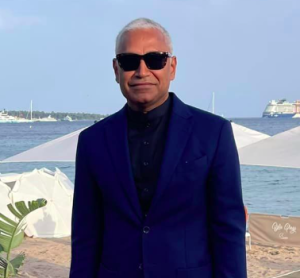
    Sivakumar Sundaram wearing dark glasses
    The Boss. Sivakumar Sundaram at Cannes. Photograph source: Facebook

    Sundaram though has quite a job ahead of him. At first a shrinking readership, and circulation numbers. The post-1990-born prefers tracking news via notifications, Instagram reels or at most Twitter. Newspaper these days are used more to line cupboard shelves or ripen papayas and mangoes.


    There is a fair amount of mediocrity that has set in and circulation numbers have fallen. The numbers for even Tier-2 cities like Pune where the edition was very strong have gone south. In Goa, the edition is a distant #3. Overall, while the advertising revenues are bright enough for company seniors to go to Cannes, the buzz that the paper once had has diminished.


    And if there’s anyone to blame for this, it’s the leadership at many levels.


    Sundaram knows that. Since he is a numbers person, he knows that they tell a story like a few other things can. He knows where there exists a wastage. And what needs to be propped up.


    Remember, an accounts job can also entail creative thinking.


    The road ahead could be like one of those potholed roads of Mumbai after that first major downpour.


    We spoke with at least a dozen former and current Times of India staffers to get a view on Sundaram’s ascent. And the tasks ahead of him. While most of them spoke with us off the record, there was only one person we spoke with who was willing to be quoted.


    Jaisurya Das
    Jaisurya Das

    Said Jaisurya Das (JD), a senior industry person, advisor and commentator (also a former MxMIndia columnist): “Sivakumar does have a tough mile to walk and I do hope he will as always start with a due diligence of the core departments. This may just be what will make the difference!”


    But we are being naughty. We’ve used a quote from JD to suit our story.


    This is what Das said before: “To be honest, I think this was long overdue and am truly happy to see these changes! The true ‘stars’ all figure in these movements and each one of them are the kind who can do immense justice to their new roles. For me, a clear indication of Samir Jain in the saddle.”


    And he continued: “As for Sivakumar as the CEO, it comes as no surprise since there really is no one better. He is an astute professional whose razor-sharp financial acumen, inclusive management style and unquestionable loyalty to purpose is well-established in the industry, be it BCCL or beyond. And yes, contrary to what anyone may assume, I do not curry favour. This is what it is and no one can refute it, no matter what they think.”


    Das knows BCCL like few others. As not only has he worked in key functions, his brothers Monu (MD Nalapat) and Chinnen have been BCCL veterans.


    As Sivakumar Sundaram returns to India from Southern France, he will certainly set things in motion. Some changes in the top deck have been effected. Some more are likely to happen. Some souls who have been under-performing or misbehaving will see the wrath of Siva’s Third Eye.


    Watch this space. The times, as they say, are surely a-changin’


  • MxMLive with Manisha Kapoor, CEO & Secretary General, ASCI


    Readers of MxMIndia and folks in the advertising, marketing and media ecosystem know all about the Advertising Standards Council of India (ASCI, in short). Over the last few years, the self-regulatory body has reinvented itself with a slew of guidelines issued (including one on celebrity endorsement), tightened its guidelines on surrogate advertising, and embraced the ever-growing world of influencer-led advertising.


    Pradyuman Maheshwari, Editor-in-chief and Founder, MxMIndia caught up with Manisha Kapoor, Chief Executive Officer and Secretary General of ASCI, via an interview conducted over Zoom a few days after the conclusion of the 2023 edition of the Indian Premier League, which typically sees a large number of surrogate advertisements surfacing.


    Watch. Like. Enjoy.


  • Will ChatGPT see the end of journalism as we know it?


    There has been much discussion and fear about the impact of artificial intelligence (AI) and various tools like ChatGPT on journalism. So we decided to do a Q&A with ChatGPT and asked it some leading questions. Here goes. Our first question is what this feature is headlined: will ChatGPT see the end of journalism as we know it?


    No, ChatGPT will not see the end of journalism as we know it. While AI language models like ChatGPT can assist with certain functions in a newsroom, such as fact-checking and content curation, they cannot replace the role of human journalists and editors entirely.

    Journalism is a multifaceted field that requires skills, experience, and critical thinking that go beyond just language proficiency. Journalists conduct interviews, investigate stories, and provide context and analysis, all of which require a deep understanding of the subject matter and the ability to make editorial judgments. Additionally, journalists are responsible for upholding ethical standards and ensuring that their reporting is fair, accurate, and balanced.


    While AI can automate some tasks in the newsroom, it cannot replicate the human element of journalism. Journalists bring a unique perspective, creativity, and storytelling ability to their reporting that AI cannot replicate. Furthermore, AI-generated content lacks the context and analysis that human journalists can provide, and it is not always able to capture the nuances of language, culture, and social context.


    In summary, while AI can assist with some functions in the newsroom, journalism will continue to rely on human reporters, editors, and analysts to provide context, analysis, and storytelling that AI cannot replicate.


    And here are a few more questions we asked:


    What kind of media professionals should be worried about losing their jobs thanks to ChatGPT?


    While AI-powered tools like ChatGPT can assist with some aspects of media production, it is unlikely that they will lead to widespread job losses in the industry. Instead, AI is more likely to augment the work of media professionals, freeing them up to focus on higher-level tasks that require human expertise.


    That said, certain types of media professionals may be more susceptible to job displacement than others. For example, journalists who specialize in writing routine news stories, such as earnings reports or sports recaps, may find that their work can be automated to some degree using AI tools. Similarly, content creators who produce large volumes of similar content, such as social media posts or product descriptions, may also be at risk of automation.


    However, media professionals who bring a unique perspective, voice, or set of skills to their work are less likely to be displaced by AI. This includes journalists who specialize in investigative reporting, opinion writing, or feature writing, as well as creative professionals like graphic designers, video producers, and photographers. These professionals bring a level of creativity, nuance, and human connection to their work that AI cannot replicate.


    Overall, while AI is likely to transform certain aspects of media production, it is unlikely to lead to widespread job losses in the industry. Instead, AI is more likely to augment the work of media professionals, enabling them to be more productive and efficient in their work.


    What are the functions in news media that ChatGPT can never ever replace or make redundant? 

    While AI language models like ChatGPT can assist with many aspects of news media production, there are certain functions that are unlikely to ever be fully replaced or made redundant by technology. Here are a few examples:

    1. Investigative reporting: Investigative journalism often involves digging deep into complex issues, tracking down sources, and following leads that require a high degree of human intuition, empathy, and persistence. While AI can assist with data analysis and other tasks, it is unlikely to be able to replicate the depth of human research and analysis that is required for investigative reporting.

    2. Ethical decision-making: News media professionals are often called upon to make ethical decisions, such as deciding whether to publish sensitive information, protecting the privacy of sources, or ensuring that reporting is fair and accurate. These decisions require a high degree of human judgment, empathy, and understanding of ethical principles and codes of conduct.

    3. Creative expression: Journalism and other forms of media production often involve creative expression, such as writing compelling narratives, capturing powerful images, or producing engaging multimedia content. While AI can assist with tasks like language translation or generating data visualizations, it is unlikely to be able to replicate the full range of human creativity and expression that is required for successful media production.

    4. Audience engagement: Finally, news media professionals play an important role in engaging with audiences, building trust, and fostering a sense of community around media content. While AI can assist with tasks like social media monitoring or audience analytics, it is unlikely to be able to replace the human connections and relationships that are built through effective audience engagement.


    Can ChatGPT replace sub-editors in newsrooms? 

    As an AI language model, I can assist in automating some of the tasks that sub-editors perform in newsrooms, such as grammar and spelling checks, fact-checking, and basic copy editing. However, I cannot entirely replace the role of sub-editors.

    Sub-editors perform a range of critical functions in a newsroom that requires a combination of skills and experience that go beyond just language proficiency. They make editorial judgments, ensure that stories are accurate, balanced, and ethical, and maintain the overall tone and style of the publication. Sub-editors also have a deep understanding of their publication’s brand, voice, and audience, which allows them to craft headlines, subheadings, and captions that are both informative and engaging.

    While AI can assist with certain tasks, it is not yet advanced enough to replace sub-editors fully. Sub-editors bring a human touch to the editorial process that AI cannot replicate. They provide context, critical thinking, and creativity that are essential in the editorial decision-making process. Therefore, it is more likely that AI will be used to support sub-editors, rather than to replace them completely.


    What are the other newsroom functions that ChatGPT can help with?

    As an AI language model, ChatGPT can assist with various functions in a newsroom beyond basic language editing. Here are some examples:

    1. Generating news articles: ChatGPT can generate news articles based on a given topic or prompt. However, it is important to note that these articles would need to be reviewed and edited by a human editor before publishing.

    2. Content curation: ChatGPT can assist with content curation by recommending articles or stories that are relevant to a specific topic or theme. It can also help identify sources for research or data gathering.

    3. Translation: ChatGPT can help translate articles or stories from one language to another. However, it is essential to note that AI translation is not always perfect and may require a human translator to ensure accuracy.

    4. Fact-checking: ChatGPT can assist with fact-checking by verifying claims made in articles against reliable sources. However, final verification should be performed by a human editor to ensure accuracy.

    5. Social media management: ChatGPT can assist with managing social media accounts by suggesting topics for posts, drafting social media updates, and identifying trending topics.


    Overall, while ChatGPT can assist with various tasks in a newsroom, it is essential to note that AI should not replace the human element entirely. Instead, it should be used as a tool to support and enhance the work of human editors and journalists.


    Can ChatGPT also do newsroom production tasks like pagemaking?

    While ChatGPT is an advanced language model that can generate text, it is not designed to perform newsroom production tasks such as pagemaking. Pagemaking involves the design and layout of a publication’s pages, including the placement of articles, photos, and advertisements. This requires skills in graphic design and layout, which are beyond the scope of ChatGPT’s capabilities.


    However, there are other AI tools and software available that can assist with pagemaking, such as Adobe InDesign, QuarkXPress, and other desktop publishing software. These tools can help automate the layout process, provide design templates and suggestions, and allow for easy collaboration between editors and designers.


    Overall, while AI can assist with some tasks in the newsroom, it cannot replace the skills and expertise of human editors, journalists, and designers. Newsroom production requires a combination of technical skills, creativity, and editorial judgment that go beyond what AI can currently provide.


    Can ChatGPT also replace talking heads or news anchors on television? 

    As an AI language model, ChatGPT is not designed to replace talking heads or news anchors on television. While AI-powered digital assistants and avatars can be used to simulate human interaction, they lack the expressiveness, emotional intelligence, and physical presence of human beings.


    Television news anchors and talking heads play a critical role in communicating news and information to audiences. They bring a personal touch and emotional resonance to news reporting, which is difficult to replicate with AI. News anchors and talking heads also bring a level of authority, credibility, and trust to their reporting, which is essential for news organisations to maintain their reputations.


    While AI can be used to automate some aspects of news reporting, such as generating news articles or providing real-time language translation, it cannot replace the human element entirely. News anchors and talking heads play an essential role in building connections with audiences, providing commentary and analysis, and guiding viewers through complex news stories.


    In summary, while AI can assist with certain tasks in news reporting, it cannot replace the role of news anchors or talking heads on television. The human element of news reporting is critical in building trust, credibility, and emotional resonance with audiences.


    So ChatGPT will not replace an Arnab Goswami? 

    As an AI language model, ChatGPT is not designed to replace Arnab Goswami or any other news anchor. While AI can assist with certain tasks in news reporting, it cannot replace the unique skills and abilities that human anchors bring to the job.


    News anchors like Arnab Goswami play a critical role in delivering news and information to audiences. They bring a level of authority, credibility, and trust to their reporting, which is essential for news organisations to maintain their reputations. They also provide commentary, analysis, and context to news stories, helping audiences understand complex issues.


    Furthermore, news anchors are skilled communicators who can engage with audiences, ask insightful questions, and respond to breaking news in real-time. They bring a level of emotional intelligence, expressiveness, and physical presence that AI cannot replicate.


    In summary, while AI can assist with certain tasks in news reporting, it cannot replace the unique skills and abilities of human news anchors like Arnab Goswami. The human element of news reporting is critical in building trust, credibility, and emotional resonance with audiences.


    Can ChatGPT do video production work? 

    ChatGPT, as an AI language model, is not designed to perform video production work. Video production involves a range of tasks, including shooting video footage, editing, special effects, and sound design, which require a combination of technical skills, creativity, and editorial judgment. While AI tools can assist with some aspects of video production, such as automating tasks like video editing or color correction, they cannot replace the skills and expertise of human video producers and editors.


    There are some AI-powered tools available that can assist with video production tasks, such as Adobe Premiere Pro, which has integrated AI-powered features that can analyze footage, perform colour correction, and suggest edits. Additionally, some AI-powered tools can create video content automatically from text-based sources or other data, but these videos lack the nuance and creativity of human-produced content.


    Overall, while AI can assist with some aspects of video production, it cannot replace the skills and expertise of human video producers and editors. Video production requires a combination of technical skills, creativity, and editorial judgment that go beyond what AI can currently provide.


    Any recommendations for journalists to brace themselves for the new post-ChatGPT world order? 

    As AI technology continues to advance and transform the media industry, journalists can take steps to prepare themselves for the new post-ChatGPT world order. Here are some recommendations:


    1. Embrace new technologies and tools: Rather than viewing AI as a threat, journalists can learn to use new technologies and tools to enhance their work. This includes using AI-powered tools to assist with tasks like data analysis, language translation, and fact-checking.

    2. Focus on unique skills and perspectives: To differentiate themselves from AI-powered content, journalists can focus on bringing a unique perspective, voice, or set of skills to their work. This might include specializing in investigative reporting, opinion writing, or feature writing, or developing expertise in a particular topic or beat.

    3. Build a personal brand: In a world where AI-generated content is becoming more prevalent, journalists can build a personal brand that connects with audiences and builds trust. This might include building a social media following, creating a personal website or blog, or developing a strong presence on multimedia platforms like podcasts or video channels.

    4. Develop multimedia skills: As AI technology enables new forms of multimedia content, journalists can develop skills in areas like video production, podcasting, and interactive media. This can help them create engaging, immersive content that connects with audiences in new ways.

    5. Stay informed about AI developments: Finally, journalists can stay informed about the latest AI developments in the media industry, including new tools, applications, and use cases. By staying informed, journalists can adapt their skills and strategies to stay ahead of the curve and remain competitive in the new post-ChatGPT world order.

    We edited this question a bit for publishing here…


    On a lighter note, how can I ensure that some obnoxious news anchors can be replaced or are made redundant?

    As an AI language model, I cannot make specific recommendations about replacing or making individuals redundant. It’s important to remember that media professionals, including journalists and news anchors, play an important role in informing and engaging audiences, and they bring unique perspectives and expertise to their work. While AI-powered tools like ChatGPT can assist with some aspects of media production, they cannot replace the skills and expertise of human media professionals.


    If you have concerns about the work or behaviour of a particular media professional, the best course of action is to express your views through channels like social media, letters to the editor, or other forms of public feedback. Additionally, supporting and promoting media outlets and journalists who produce high-quality, accurate, and engaging content can help to ensure a healthy and vibrant media ecosystem that serves the needs of audiences.


    We asked this question again, a few days after we asked the first set of questions…


    One final question: are you saying that journalists needn’t worry about ChatGPT

    Journalists should not worry about ChatGPT or AI language models replacing their role or rendering them redundant. AI language models like ChatGPT are tools that can assist with information retrieval, generate text, and engage in conversations, but they do not possess the skills, expertise, and contextual understanding that human journalists bring to their work.


    Journalism is a multifaceted profession that involves investigative research, interviewing, analysis, and critical thinking. Journalists play a crucial role in fact-checking, verifying information, providing context, and delivering nuanced reporting. These are skills and qualities that AI models do not possess.


    While AI can support journalists in tasks like data analysis, research, or generating initial drafts, human judgment, ethics, and interpretation are still essential components of journalism. Journalists bring their experience, storytelling abilities, and deep understanding of societal and cultural nuances, which are critical for accurate and impactful reporting.


    Instead of being a threat, AI tools can be seen as valuable resources that journalists can utilise to enhance their work, streamline certain processes, and focus on more complex and creative aspects of their profession.


    In summary, journalists should view AI language models as tools to augment their work rather than replacements for their expertise and essential role in the field of journalism.


  • Ranjona Banerji: Total collapse of journalism in the last 11 years

    By Ranjona Banerji


    Ranjona BanerjiCongratulations MxMIndia and to Pradyuman Maheshwari!

    It’s been 11 years of this website and for 11 years, it has covered almost every aspect of the media – journalism, advertising, branding, promotion, public relations, marketing with gusto.

    Little did I know when Pradyuman asked me to write for MxM 11 years ago, that I would be first witness to the total collapse of Indian journalism.

    What innocent days those were.

    I trawled through newspapers. I was forced to watch TV news. I listened to “debates”. I could identify one anchor from another. I was amazed at the crowds that apparently showed up at India Against Corruption rallies until I went to one of those rallies and realised there was no one there.

    There was a UPA government at the Centre and journalists assiduously did their thing. They criticised, they analysed and many worked very hard to build up the opposition as an effective counter.

    And really, that’s what it all began.

    It’s not easy to remember, but social media in 2011 was not quite what it is now. Digital publications were not our only solace against bad journalism. A few print publications stood out. FirstPost was the big English language digital thing. The Ambanis had not yet bought News18. And the BJP funded Right Wing digital sites like Niti Central were introduced to pretend that the BJP was interested in news and not propaganda. Arnab Goswami still worked for Times Now.

    And TV, well TV was all gaga-googoo for India Against Corruption. But it still tried to bring us a little reporting, and tried to keep objectivity the cornerstone of their prime time debates rather than bogus “bothsidesism”.

    Increasingly, however, although not totally evident that the time, the media played a massive role in the projection of Narendra Modi as the saviour of a new India. From 2012 to 2014, the use of the media and organisations like APCO was masterful. Political organiser and manipulator Prashant Kishor’s work in Modi’s re-election as Gujarat chief minister passed under the radar. But his CAG (later rebranded I-PAC) outwitted the media in building Modi’s image.

    Those who were outwitted then are now fully paid up members of the Modi media club.

    A few significant moments stand out in these past 11 years. Some before and some after the BJP and Narendra Modi swept into the Union government in 2014. In 2011, India Spend was formed, and although many in journalism have not yet understood the importance of data journalism, we do see more and more of it.

    The arrival of Scroll and The Wire in 2014 and 2015 both brought the basics of ethical journalism back to a beleaguered profession. Several others followed, all of which opened employment opportunities for young people as well gave those interested in the news a number of options.

    Alt News arrived at the end of 2011 and with it, came Boom and Twitter account Hoax Slayer. This started the trend of fact-checkers, people who exposed lies told by a compromised media. And the enormous amount of fake news which spreads around the world on social media.

    Fact checking is a winner for the consumer, without a doubt. It is also a massive shame for a media which is no longer capable of doing a basic job: assessing the information it puts out in the public domain for accuracy.

    Many media outlets claim to have their own fact-checking departments. But they cannot compete with independent checkers like Alt News which are quicker and more accurate. They have paid a heavy price for their work, but have carried on relentlessly.

    Some hope has also come from independent journalists who have bucked the trend of genuflection and tried to speak truth to power. Many were in evidence during the farmers protests, which much of mainstream media blanked out.

    But these are but small sparks of home in a vast sea of misery as far as the media is concerned. In the past 11 years, we have collapsed in the press freedom rankings, we have seen journalists killed and jailed for taking on the powers that be, we have seen almost no solidarity for our targeted colleagues. Spaces for independent critical voices are shrinking. And so is our covenant with our reader and viewer.

    And there is almost no sign of anything getting better as far as the mainstream media is concerned.

    I must therefore thank MxM and Pradyuman for giving me this opportunity. For standing by my unpopular comments in spite of the potential threat to the website and the organisation. It takes courage and conviction and I know MxM has that in spades!

    Here’s to many more years!


  • 11 and how!


    By Pradyuman Maheshwari


    Pradyuman MaheshwariMxM is 11. Thank you all very, very much. To our readers, our team of inhouse staff, columnists and writers, and our advertisers. And mustn’t forget all the people who provide us the news, and speak with us.
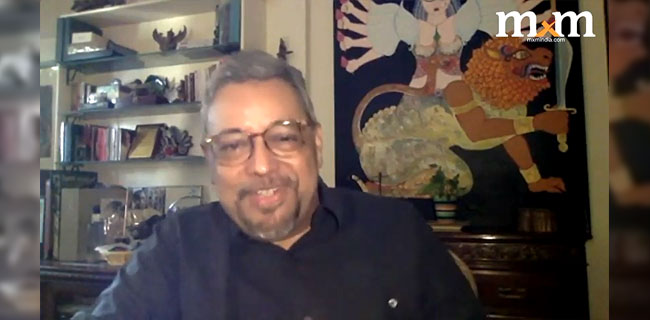
     

    At every annual milestone that we complete, we heave a sigh of relief. That we managed to survive. Albeit with a few nicks here and there.


    We started out on September 9, 2011 (Onam Day!) with a mission to concentrate on opinion and research. Somewhere soon after that, we figured that research was going to be an uphill task, exceedingly expensive and with industry folk never really happy with what we come up with. We realised soon that opinion was going to be even tougher because much as the media loves to comment on all and sundry, it doesn’t like anyone to critique it. Especially the newswallahs.


    We stuck on to our opinions agenda.


    Thankfully, we’ve managed to stay afloat despite all of the angst against our critiques. Even those criticised realise that we do not have any specific agenda against them.


    We consider ourselves as a platform for free exchange of information and commentary. Constructive criticism.


    Ideally, we should be going in for a subscription model and not depend on advertisers. But even though the likes of Ken and Morning Context exist, in India people are happy to pay Rs 20 for a vada pav or Rs 150 for a roll, they don’t want to pay for content.


    The volume of ads on our site versus the others is indicative of how many advertisers love us. We wouldn’t blame them. We don’t promise unlimited coverage of even news that’s slightly dubious. We don’t report on weekly ratings any longer. Simply because we don’t trust them entirely, esp when it concerns news.


    Many have counselled us saying that we should be kinder to our annadaatas, the people who advertise with us. But our allegiance is first and foremost to our readers.


    What does a completion of 11 years mean? Well, it’s a quiet assertion that even in the hypercompetitive B2B media, independent journalism can survive.


    Thank you for your faith.


    PS:

    A special thanks to all those who write for us, without any expectation of been compensated monetarily.

    Thanks also to those who have worked with MxM through these years. Delayed salaries, cuts at the time of 2012-13 liquidity crunch, the Covid-led lockdown, etc.

    And last, but not the least, thanks to my family. If I had continued to work somewhere, I would’ve (possibly) been able to afford many more comforts and luxuries. Spent more time with them. By indulging me, I know what they’ve sacrificed (and keep doing so). Thank you!


  • MxM Live with Kaushik Roy/Roy Phoenix on ‘Alphabetica’


    By Our Staff


    Veteran mediaperson Kaushik Roy needs no introduction in the marketing services domain. But the media professional was not content with resting on his past laurels. Last month, he launched his debut novel ‘Alphabetica’ with a subtext saying ‘A Satire On Majoritarianism’ written with the pseudonym of Roy Phoenix.


    In an extended interview with MxMIndia founder and editor-in-chief Pradyuman Maheshwari, Roy talks about this book, why he wrote under a pseudonym and what’s coming next. As a bonus, watch and hear both Roy and Maheshwari read passages from the book.


    Watch. Like. Enjoy


  • The Road to Being Killer-Diller


    By Our Staff


    Some five-and-a-half years back, when he had just taken charge as CEO of the FCB Group in India, our editor-in-chief Pradyuman Maheshwari  had asked Rohit Ohri about a general perception of FCB Ulka/India being an efficient, successful but a fuddy-duddy agency. We followed it with a similar question to Global CEO Carter Murray a few months later on the sidelines of Goafest.


    As he tells us in this interview, Messrs Murray and Ohri took this comment rather seriously and were determined to purge this perception. Fast and furiously. Which they did. From being considered a servicing- and planning-centric network, creative has gotten centerstage, which is what creative agencies are meant to be.


    After having asked this horribly rude question in 2016, Pradyuman Maheshwari interviews Rohit Ohri, Chairman and CEO, FCB Group India, on the road from to being a, as Ohri calls it, a killer-diller agency. It’s a looooong, 54-minuter, so bring along that cup of chai. Or coffee, if you are a trueblue adperson.


    Watch. Enjoy. Like.