Is Bennett, Coleman & Company Limited (BCCL) right in registering a copyright infringement complaint against Arnab Goswami? Yes, it is. I am not sure how legally tenable the complaint is, but in my limited view, it was unethical. When the story was first aired on Republic TV on May 8, one couldn’t help sitting up and take notice. But then along with the various questions that Goswami raised in his ‘super exclusive’, there were some questions that I had.
The Economic Times report (Page 3, May 17, Mumbai edition)
See report in Economic Times on the complaint: link
In fact, I tweeted about it (see link).
The fact that it was only retweeted twice indicates that copyright and editorial ethics aren’t considered very critical and holy to many (or most?) in India. Copyright, it’s often joked, is the right to copy!
But this isn’t about copyright. That’s something for Times Network owners to take up with the Courts.
It’s an issue of ethics.
The recordings of the conversation between Prema Sridevi, the reporter and Shashi Tharoor or Sunanda Pushkar’s Man Friday was done when the reporter reportedly worked with Times Now. Unless her terms expressly stated it, or she was just a freelancer with the channel, the recordings belong to work done when the reporter was an employee.I am not sure what is the legal view on it, but it’s not ethical.
I am not even raising issues of why Goswami and Sridevi, now Editor-News at Repulic,  didn’t air the recording when they were in Times Now, but that’s not really my concern though it’s a question that must be answered.
The Nation wants to know…
**
All eyes are now on the BARC India numbers that will be out tomorrow (Thursday, May 18). Given all the promotions and distribution via multiple frequencies, it’s quite likely that Republic will be #1, but the question is that it’s not a play over one week. Republic can’t be spending so much monies on distribution as it’s today, so the real story will emerge after a few weeks when it opts of taking multiple frequencies.
To Goswami’s credit, his equity with viewers is huger than all the other anchors. The MxMIndia-MRSSINDIA poll earlier this week indicated that Rajdeep Sardesai is a close second and not a distant one in the trust factor, but it’s for India Today to use this to their advantage. Possibly promote Sardesai a little more.
We’re going to see some interesting times over the next few weeks or months. And we aren’t complaining
Pradyuman Maheshwari is Editor-in-Chief and founder, MxMIndia. The views expressed here are his own.
Coming back to India this week after a month away in the UK, I see that I have Republic TV’s commitment to nationalism to look forward to. Or, in another way of putting it, more of the same but this time, with a great leap backwards to Arnab Goswami.
Advertising appears to suggest that Goswami and his news channel will be “Pakistan’s migraine†and that the mantle of nationalism that has been lying forgotten will now be won with pride. That India’s borders will defended to the last shout in Indian TV studios. Where else, you may ask, should India’s borders be defended?
However, given the make-up of Republic TV and much of Indian news television, almost no one is likely to question how and why India’s borders have been breached quite so often in recent times or how terrorists from Pakistan have walked into armed areas with so much apparent ease. Perhaps it is unfair of me to suggest that no one has been questioned. Over and again, India’s first Prime Minister, Jawaharlal Nehru, who died in 1964 has been questioned. His great grandson Rahul Gandhi, who has not held any constitutional administrative post has also been questioned. No one currently in power has been found responsible in any way.
My fellow columnist Jaisurya Das was asked recently if “decorum was dead in the news mediaâ€, after a news anchor told a studio guest from Pakistan to “shut upâ€. Jaisurya commented: “This is typical of the immature arrogance of anchors who often forget where to draw the line in their effort to build TRPs. Little do they realise that such language and demeanour only turns people off and they stand to lose more in the bargain.â€
That people are writing in to complain about such behaviour is small comfort when you know the immense reach and influence that TV has on the public. Adulation, stardom, hatred, familiarity all allow TV journalists to become bigger than they are. The result is that they lose all semblance of being journalists, of being observers, reporters and editors. Sadly, TV has brought out the worst in us.
Goswami in his interview to Pradyuman Maheshwari before the launch of Republic TV declared that he was proud of his nationalism and that he held no truck with “Aman ki Ashaâ€, an initiative towards dialogue with Pakistan started by his former employer, the Times of India.
This makes for an intriguing position – would any attempt at peace with Pakistan be stopped by Goswami? If the current Indian government tried it, would he fight them? Is diplomacy to him a lost cause already? Because Goswami operates only within the confines of one news show, it is hard to grasp his intellectual position on such matters. Is humankind doomed to never make peace in his mind?
Interestingly and perhaps expectedly, Republic TV’s big “scoop†on launch day was some expose on former Bihar chief minister Lalu Yadav. As anyone with any smattering of political knowledge is aware, Yadav is already debarred from standing for elections because of corruption cases. The target for Goswami and his backers is never likely to be the BJP government or the Prime Minister or indeed any minister in the BJP.
Once you know that, it makes life and choices much easier. As Maheshwari pointed out in a column here last week, “Or is it that a country which is not too fussed on ethics and corruption, passage of time ensures things are forgotten and condoned. We all know of some entities indulging in unethical practices, but do we really shun them? On the contrary, we embrace them. We allow them to flourish. We read or watch them, we attend or speak at their events, we accept their awards.
Perhaps we deserve such a media.â€
Do wee?
Ranjona Banerji is a senior journalist and commentator and Consulting Editor, MxMIndia. The views expressed here are personal
This comment wouldn’t have been written had it not been for a half-hour show on NDTV last evening and a comment on the same on the Swarajya website.
There’s a fair bit of noise on the political influence on the media. There are fears that those who don’t support Prime Minister NarendraModi could face a hard time from his government. Or how the PM and his team reportedly didn’t attend a conference organised by a newspaper because of unhappiness over its coverage of the elections coverage in UP.
It’s very clear that there is a large section of the television news media that is politically biased. Watch a leading English news channel, and it’s evident that it’s pro-BJP. The anchor just doesn’t listen to an opposing view. There’s another which is clearly anti-BJP. And there are a few which offer a mixed bag of views, but there are very few television networks are that editorially neutral.
The story may be slightly different in the case of newspapers, but there’s no doubting the immense influence that political forces and the governments in power have over the news media, which depends a fair bit on the government for revenues and access.
The key worry for those who care about the news media is not the fear of the government but the huge influence that advertisers, big business and the non-media interests of owners have on their functioning.
A mention of this was made by former BJP IT cell head Arvind Gupta on the NDTV show, but given constraints of time, it wasn’t discussed further.
The media which depends almost entirely on revenues from advertisers doesn’t want to take on anyone.
There have been many cases – some from even the most trusted names in the country – where advertising has been pulled out because of adverse coverage in a newspaper.
Then there’s the issue of news organisations getting into organising events – conferences and awards where the presence of industry, political, sports and entertainment biggies is critical. Entites which hold film awards functions face a huge problem of stars backing out if they have stuff written/aired against them. They simply don’t turn up, even though performances at these events earn them top dollars. Some news organisations are known to give away awards to people/ entities in lieu of favours or monies.
Is there a way out of the mess the news media is in? Newspapers and channels are finally a business and owners will do whatever it takes to stay afloat and not harm their interests. What happens in the bargain is a significant erosion of independence and credibility.
In the late 1980s, industrialist VijaypatSinghania chose to sell The Indian Post, a well-produced English daily because its reportage was harming his business. He was very candid when he admitted the conflict of interest.
It would do much good to those owners who are facing the same predicament to just opt out of the news media than let the world know they can be compromised.
Or is it that a country which is not too fussed on ethics and corruption, passage of time ensures things are forgotten and condoned. We all know of some entities indulging in unethical practices, but do we really shun them? On the contrary, we embrace them. We allow them to flourish. We read or watch them, we attend or speak at their events, we accept their awards.
Perhaps we deserve such a media.
And if you think you don’t want such media entities to survive, make a start, and do what you should do.
Pradyuman Maheshwari is Editor-in-Chief, MxMIndia. The views expressed here are his own.
As you read this, ArnabGoswami would be in his state-of-the-art news floor, putting finishing touches to his launch plans for Republic TV. The billboards are out, and the ‘coming soon’ has made way for the final pitch.
But not far from the editorial headquarters of Republic is the Times Now newsroom. The brains trust there has been working overtime for a few months so that their former main man’s new venture doesn’t steal the thunder.
In many ways, Goswami has already done that. And despite all the savvy mediaminds that it has in its fold, Times Now has actually contributed to the buzz around the Republic TV launch. The sending of legal notices may have been standard practice, but it gave enough ammunition to Goswami.
Launching a channel is possibly the easiest of the tasks on hand. Ensuring that it thrives and hence survives are the tougher things to do. Goswami should know. Despite the moneypower of The Times of India group behind it, Times Now was floundering at launch in early 2006. It was almost like what NewsX is today.
It took some effort and reorientation for the Times Now primetime to stand out and although the world says that its star was on the ascendant post November 26, 2008, Â I thought Goswami was looking good from around a year earlier.
In fact friends at CNN-IBN were mighty upset when I wrote that Arnab was better than RajdeepSardesaiat primetime. But he was… he asked the tough questions.
Before one delves further on Republic and Times Now, let’s look at the rest.
First WION, the newest English news channel. Zee Group chief Subhash Chandra’s intent of starting an international news channel with an Indian POV was great, but it sadly appears to be going nowhere. The only good contribution is that it’s creating some employment for newswallahs. WION made a disastrous start with Rohit Gandhi as editor. Now, with Sudhir Chaudhary at the helm, the man who anchors the most watched primetime show on Hindi News TV, it’s possibly trying to earn some stripes, but will it make a difference to the fortunes of Republic TV?Will it change the rankings of its tribe? No way.
And what about NewsX? From what I understand, even though it’s not perceived to among an English news channel that matters, given that it’s got the India News backing and a media group that has fair muscle, it may not be entirely inconsequential. Also, it does have some good people working for it. But not again in the Top 3. Not even in the Top 5.
So, who’s left now:
NDTV 24×7, CNN-IBN, ah well, CNN-News18 Â and India Today.
Hey, before that, one must not forget DD News, DD Lok Sabha and DD Rajya Sabha. All are doing their bit given the constraints of being government/Parliament-owned. The primetime DD News bulletin has an excellent round-up capsule at 9.45pm, but that’s only good for those who dislike the talking heads brand of television journalism, or are taking the Civil Services or entrances where GK is tested.
Getting back to the threesome.
NDTV 24×7: I was worried about how the channel would do minus BarkhaDutt, but I must say that she isn’t being missed much. Sreenivasan Jain is still no answer to Dutt, but I quite like the new primetime format that the channel has adopted. My worry is that it’s happened five years late. The final view: unless the others flounder, Dr Prannoy Roy will still be counted as the pioneer of the English News TV business, but his channel has lost out. And this time, his executives can’t even crib about the ratings.
CNN-News18: The channel could’ve been in the dumps after RajdeepSardesai quit in 2014, but it’s commendable to see it make a comeback with a brand new leadership team and primetime faces. Zakka Jacob is excellent, and very confident of himself. Andif last night was any indication, he can shout at Pakistan defence analysts louder than Goswami and Navika Kumar put together. And he can rubbish them (the Pakistanis) to their face. I also found bossman Rahul Joshi excellent in his interviews with the Prime Minister, Amit Shah and a few others, but what CNN-News18 needs is a little something that it’s not taking it to the top slot. Loads more than just new shows clearly.
India Today: Part of the India Today stable, it lost Karan Thapar recently who is by far one of the best interviewers on English News Television. But the rest of star cast exists – RajdeepSardesai, Rahul Kanwal and a recent addition being Anjana Om Kashyap, the leading AajTak anchor, who has just started her innings at 7pm. From what one learns, her show is supposed to match the noise factor of Republic, but if that was the yardstick, then perhaps having it closer to 9pm would’ve been better. While it was the Republic-Times Now war for viewership that was to be the focus of attention, it was interesting to see an India Today billboard right next to Republic’s. If nothing else, it helped create a buzz, though it won’t be right to compare the Kashyap show with Goswami’s primetime act.
Times Now: It’s got itself to blame for the mess it finds itself in. Look at NDTV 24×7, CNN-News18 and India Today. None of them are dependant on just one face, and that’s the only reason why they’ve survived despite leading lights exiting the channel in recent years. But despite several CEOs and marketing heads helming the channel, they weren’t able to get a face who could match that ofGoswami’s. Or be a strong second-in-command. Sad. But now that what shouldn’t have happened has happened, Times Now is trying its best to counterArnabGoswami’s Republic. Can Navika Kumar’s Newshour kill Goswami’s primetime act? No way! Times Now ought to have reinvented itself like NDTV 24×7 has done rather than pursue the path of nationalistic belligerence where it clearly won’t be able to match Goswami. Times Now’s attempt to launch a flanking channel in the form of Mirror Now is a non-starter as of now, and I would’ve thought its editor and primetime face Faye D’Souza would’ve made for a good Newshour presenter.
Republic TV:From the interview he gave me last week, it’s clear that Republic TV won’t be dramatically different from Times Now. It will of course sharpen the offering and with new shows and anchors. Goswami says he will have a clear second and third line, but there’s no denying that the present and future of the channel depends entirely on its founder and editor-in-chief. Does it have a future? Of course it does. But sadly content alone doesn’t make a channel successful. Distribution and other marketing dynamics are crucial, and that’s where it will need really big monies. Goswami is known to be a keen student of viewership analytics, he’ll surely be pouring over numbers to check what works and what doesn’t. What’s also interesting is that the orchestration with digital will be seamless (or so he promises), something that the others haven’t done well, even though the web entities of CNN-News18 and NDTV24x7 are very popular.
So will Republic TV kill Times Now?Tough to do that in Week #1. And even if it does, it’s too early to predict how it will be six weeks later. However, if after all the excitement that has been built up over the last few months, it doesn’t get the right numbers, Goswami and Republic will need to re-examine their proposition. Ditto for Times Now which must relook at its offering any which way. And where does this leave India Today, CNN-News 18 and NDTV 24×7? As of now, I don’t see much of a change at NDTV. The other two will do their best to win a battle being fought essentially between Times Now and Republic. India Today says it’s got the most democratic newsroom, CNN-News18 has fashioned itself as non-aligned even though it’s owned by MukeshAmbani.
The next few weeks/months are going to be exciting. And we’ll be watching and evaluating. Beyond just the numbers.
PS: Interestingly, over the last few weeks, or months actually, the channel that’s knocking at the #1 slot is CNBC-TV18. But then that works well for only revenues. The war is still among the eight, or seven, or five, or four…
He was just 73. And had a heart attack as he descended at Ahmedabad airport on work yesterday (Wednesday, April 12).Ramesh Chandra Agarwal, who co-founded the Dainik Bhaskar group with his father, was a mediaperson who believed in his dreams. Not content to be leader in Madhya Pradesh, he launched his newspaper in Rajasthan, fought Rajasthan Patrika fiercely and later entered Gujarat and eventually Mumbai in the English market.
Now a diversified group – with interests in real estate, power and education, Agarwal was a firm believer in being hands-on in everything he did. Something he instilled in his sons – Sudhir, Girish and Pawan. So, for instance, when he launched Divya Bhaskar in Gujarat, he ensured the leadership team not only understands the state and the aspirations of the people there, but also learn the language and its nuances.
Although the group entered cable television in a limited way, he chose to stay away from television broadcast. Though his group’s forays in radio and digital have grown in a big way.
That Dainik Bhaskar is not just India’s but one of the world’s largest and most successful newspaper-led media groups speaks a lot for Ramesh Chandra Agarwal’s vision and all that he stood for.
While we will all remember him for being one of India’s most successful media barons, there are many who remember him for his journalism. At the time of the Bhopal gas tragedy, his newspapers were the first to expose the mismanagement and the sufferings of the people. Even later, while he was close to many governments, he also ensured that his papers were perceived to be fiercely independent.
Many in the ad and media fraternity may not be familiar with Ramesh Chandra Agarwal, but the fact that he was the chief promoter of one of India’s largest media-led conglomerates is testimony to his influence and contribution to the world of media.
While his passing is a huge loss for the closely knit Agarwal family, it is a great loss for the country of a pragmatic and successful media owner.
Our condolences to the Bhaskar family. And may we all help realise Ramesh Chandra Agarwal’s dream of a powerful media.
 – Pradyuman Maheshwari Editor-in-Chief, Founder and CEO, MxMIndia
Presenting tributes to Ramesh Chandra Agarwal by Bharat Kapadia and Sanjeev Kotnala
Tribute by Sanjeev Kotnala: The Man who Accelerated Dainik Bhaskar ride with Escape Velocity
By Sanjeev Kotnala
Ramesh Chandra Agarwal, the patriarch of the successful Dainik Bhaskar Group, left us yesterday. It is a great loss to Indian journalism and media as a whole. As news of his sudden demise spread amongst friends and former colleagues, it brought back some fond memories and reflections on him.I worked with Dainik Bhaskar for 10 years (2004-2014) and in that period, I had a few opportunities to interact with Rameshji. Each short interaction was a masterclass in smart thinking, a rich experience that led to new learning. I bow my head in respect to him.
Rameshji was a simple man with a sharp analytical business mind. He had an uncanny ability to go through the whole slide deck, flipping through the pages and catch a discrepancy in data. He was of the school where raw data and direct experience and impression counted more than any external inputs. While on one hand, he raised the most pragmatic practical questions and on the other, he refused to accept the impossible as an answer.
He believed in the belief of ‘ULTA SOCH’ (think inversely) and ‘WHY NOT’ and also felt that it’s vital to find the barrier that is stopping you and then break it down, which the industry called the Bhaskar Way … that came from him.
When you see a large vision and decide to build on it, many friendly and not-so friendly relationships are created. In the early 1980s, he seeded the vision of expanding the footprint rather than living in the glory of being the #1 newspaper of Madhya Pradesh.
Amply supported by a collective force of divergent expertise of his sons, Sudhir, Girish and Pawan, he pushed the boundaries and found ways to realise the dream.
Knowing Rameshji’s constant devotion to think and plan, I am sure there will be some unfulfilled dreams that his sons and the group will look forward to realising them as planned. The concept of sooner or later was never a part of his vocabulary. He just wished a date on a project and then went about ensuring the successful completion. He knew when and where the right triggers and levers had to be pushed for the project to get the escape velocity or to get to the orbit.
He harboured no political ambition. He dedicated his life to the group and ensured there was no political alignment that placed constraints on the newspaper delivering on ts promise. He wanted to be in control – and not controlled by the external forces. You naturally respect a person for such passionate dedication to a cause.
There is a story I must share. I am not sure how much of it is true; but it represents Rameshji in many ways. I have heard different versions but here is what I know.
It was in the early 80s when he called his sons to check if they were happy being the #1 in MP or they had the dream of being India’s largest. The young sons wanted more success and dreamt big too. Rameshji then told them that success would not come easy. It will mean fighting against all odds. Nevertheless, if they were sure and ready to work relentlessly and dedicate themselves to the dream, success will be theirs. This is when he is supposed to have said you have to think differently and may need to make social sacrifices because to go to heaven, you should be willing to die. Something that is ingrained as a work culture in Bhaskar.
Ever-smiling and looking for ways to expand, to grow and consolidate at the same time, he was always willing to converse and spend time over a thought that smelled of any new opportunity. He was a perfect optimist who believed in his own capabilities to realize the dreams.
Sanjeev Kotnala, Contributing Editor, MxMIndia, is a senior media industry strategist and consultant. He is also an accomplished trainer. He writes for MxMIndia every Wednesday.
When the whole world was predicting doom for the newspaper industry, here was a man who saw a boom and saw to it that his vision comes true.
Rameshji, as he was known, came across as a simple, ever smiling, unpretentious newspaper publisher but once you started talking to him you could see an entrepreneur, a visionary and a go-getter media believer.
What set him apart from the other media owners is that he believed in creating a market rather than worrying about how much share one can get from the existing players. His vision, ably supported for fine execution by his sons Sudhir and Girish (joined later by Pawan), was to enter a new market as a leader. “#1 from Day 1” was his goal and would leave no stone unturned. Door-to-door survey supported by huge outdoor campaign in a target city of a new launch was a very unique idea which actually did pre-selling in the guise of a survey.
In  half a century post-independence there was hardly any case where an established #1 newspaper was overtaken by any other competitor. Eenadu, probably became the first major newspaper to do so. Limitations of printing technology and physical distribution made it difficult for publishers to think beyond their established territory.
Although Ramesh Agarwal was not very tech savvy but he knew how to deploy the changing technology and create an impactful entry into a new market. He created modern printing presses, gathered a team and aggressively went to become a market leader in almost everywhere he entered.
What surprised many is after MP and Rajasthan, he set eyes on Gujarat. It was an unknown territory and a language for him and other Bhaskarites.
Gujarat was a lucrative market which had been suffering from biased reporting, very poor production values and poor working conditions for the journalists and the management staff.
With Divya Bhaskar launch, things changed dramatically. I had first hand experience to interact with him when I joined as the Executive Director. He would carefully listen to you and would give you full freedom to implement any idea if he saw confidence and conviction in you.
He was a workoholic and would not take a no for an answer if he was convicted about his plans. He would not spare anyone, including his own sons if things were not moving according to the plan and targets set. He can be credited to create an unprecedented growth in the Print industry and make India as the only growth market when the world showed a continuous decline in circulation and readership.
Ramesh Agarwal has left a ray of hope to believe in oneself and work relentlessly to achieve what others think as impossible. He has given this mantra to us: Vision + Aggression + Hardwork = Success
Bharat Kapadia is a veteran mediaperson and a former publisher. He had known Ramesh Agarwal before the joined the Bhaskar group as Executive Director and Publisher.Â
See Also:
DB Post: Some images
http://epaper.dbpost.com/bhopal/12/13042017/3/
Business Standard: A booklover who created a media empire
It’s that time of the year when the industry folk get set for Goafest and the Abby awards. And some don’t. But despite the demonetisation and a tightening of budgetary belts, this year’s edition has, say Organising Committee chair Ashish Bhasin, Awards Governing Council chair Ramesh Narayan and Ad Club president Raj Nayak, garnered a record amount of sponsorships and number of entries. For the first time, the organisers fear they may have to say no to delegates with a ‘housefull’ board. In a no-holds-barred discussion over lunch last week, Messrs Bhasin, Narayan and Nayak speak to Pradyuman Maheshwari on this year’s edition, the participation (and non-participation) of some agencies in the Abby, and how Goafest and the Abby are now a lot more than just for creative agencies and awards. Excerpts:
Let’s start with you, Mr Ashish Bhasin. Given all the pressures, would you say being Chair of the Organising Committee is a thankless job. Is it really?Â
Ashish Bhasin (ABhasin): I wouldn’t say thankless. Actually it’s very gratifying because once the thing is done, you feel good about it. But people often underestimate the logistics of it. It’s like having a ‘baraat’ of 2,500 people come over for three days, and the logistics that go into making that happen — the quality of speakers, the funds that have to be organised and the very organising of the event and the awards — are a task. It’s like [working with] 10,000 moving parts. The thing that you are always aware of is that about 9,999 times you will do right and no one will remember that. But the one or two things that may not go as expected, are the things that throw you off.
And all of this alongside your day job…
ABhasin: Is taxing, but it all comes together. This is the time that it all starts bunching up. This year we started well in time, and because of that, I think we have a much better speaker line-up than we’ve ever had.
So to get straight to the point: What’s special this year?
ABhasin: This year’s Goafest, to my mind, is going to be like never before. We already have a record number of creative entries and a record number of media entries, and therefore a record number of total entries. I also think we will have some of the best speakers that we’ve had in a long, long time…
People whom one hasn’t heard or seen before?
ABhasin: Yes. Some you haven’t seen and heard, and to an extent less incestuous, but because it’s not only going to be advertising people talking to advertising people, there is a lot of learning to be had from related industries and from people who have achieved a lot in other areas, like people from Bollywood or spiritual leaders. The Phogat sisters, for example. I think there is a lot to learn from their story.
We are also going to have Masterclasses which will be ‘By Invitation’ and conducted by a very senior [industry leader from] Israel. There will also be one day on innovation, and one on creativity. This will be for a select group, on a first come-first served basis among those who have applied for it. There are a lot of other things planned. You know about the Champions of Excellence award, which Mr Ramesh Narayan will talk more about. Also, this time Goafest is going green in part because we have to be responsible about the environment. So for the first time, we are taking baby steps in water conservation because when there are 2,500 people, it is sometimes painful to see people take three swigs from a bottle of water and then discard it. If you consider this could happen eight hours a day over three days, you can imagine how much wastage of water actually happens. So we are trying to make [Goafest] a little more sustainable. Also the element of fun..
You aren’t returning to make Goafest 2017 more outdoorsy…
ABhasin: Obviously [moving it indoors] works better in terms of both timing and control, and the new technology we are now using, probably won’t work outdoors. But this year, we’ll have sundowners with the sea as a backdrop.
Okay, let’s move onto the awards, and to you Mr Ramesh Narayan, as Chairman of Awards Governing Council. How have the entries and judging been? Other than the Champions of Excellence category, what’s new this year?
Ramesh Narayan (RNarayan): The Abby Awards are now over 65 years old. They’re a brand that everybody knowsand loves. Everyone said that in a year like this, with demonetisation and a slow economy, it’s good even if we get 20% fewer entries. But, as you know, we’ve got more entries than last time, and it’s the highest ever — despite an increase in the rate…
Will you be able to share some details with us?
RNarayan: [It’s more] in terms of numbers. But I see anincreaseacross categories too, especially in digital. Digital and publishers have led — as far as the numbers go. Another thing to note is that when it comes to awards, historically you’ve had the Big Five of print, film, outdoors and such. Today, throughout the world (and here as well) you have broadcasters and publishers, and now there is an all-new category called Mobile. This was not there before…
Last year, the response from publishers was not very good… they had not entered their best work. How has it been this year?
RNarayan: It has been very good this year. We made it a point to reach out to all the publishers, and even involved the INS (Indian Newspaper Society). We asked them to circulate our mails in the industry. Everybody has cooperated, and the quality has been good. We’ve got very good jury members too. So the whole experience had been quite gratifying. This time, we also had our annual Town Hall very early, sometime in November, so it gave us the opportunity to listen to all voices from our industry and on-board their ideas and suggestions.
Who were the people who attended it?
RNarayan: Creative people
From across agencies?
RNarayan: Yes.
Including those who were not participating?
RNarayan: Yes, at that time they were not aware that they were not participating. So they did come. I can state, for the record, that as far as processes and systems go, we are now ‘super’. I don’t think anybody can have anything to say about it — and I am willing to debate it out with anyone who does!
There has been a charge that it’s not held at the right time. One of the leading lights of your industry, Bobby Pawar, mentioned this during a panel discussion on ET Now. When asked a question, he said that the meeting with creative folk should be held immediately after Goafest.
RNarayan: That’s too early. November, I think, is the ideal time. If you have it in June or something like that, that would be like giving a brief to your advertising agency six months in advance, and asking them to deliver the campaign and no one will remember it.
Mr Bhasin, as someone associated with both creative agencies and advertising agencies, how do you view Goafest in terms of your agency’s participation? We do know that Taproot participates in a big way. I remember the other Dentsu creative agencies participating in large numbers last year. So how do your folks look at it? You are also an active member of the Ad Club …
ABhasin: I wear two distinctly separate hats, my industry hat and my agency hat. When I am sitting with my agency people, they are least bothered about the fact that I am the chairman of Goafest. They want to see what’s in it for them, as any industry agency would do. But as a group, we view this in two or three ways.
First, we see it as a great learning opportunity for youngsters, so we encourage more youngsters, rather than the seniormost guys, to attend. We have a lot of incentives and a lot of facilitation for some of the youngsters because during these three days, you get to see and hear the best of the best. This year, for example, we are concentrating on digital trends.
What about the participating in the Abbys?
ABhasin: I am separating the two. You said going to Goafest. So we encourage people, particularly the youngsters, to hear from the best of the best speakers which they otherwise won’t get an opportunity to do. As far as the awards are concerned, Dentsu, I have to confess, wasn’t very focused on awards until maybe a year ago. It just wasn’t on our radar, apart from Taproot Dentsu, who have always have been very good at it and done brilliantly. Last year, we tried it as an experiment, and it was very encouraging because as a group, we got the highest number of creative awards, and among the Top 10 agencies, three were ours.
What was it that led you to participate in the Abbys when you weren’t earlier?
ABhasin: It’s not that Dentsu wasn’t participating. It was just that we were not taking it seriously enough. When you go and make your creds presentation, when you go out and talk about your creative reputation and go out to recruit youngsters, there is a big high for campaigns that have done well. In the Indian context, there isn’t a bigger awards show than Goafest. So we just decided to dip our toes in it last year. Not just dip our toes, but go in a more serious way. But when three of our agencies made it to the Top 10, we decided to build on that this year.
Selfie time! From Right: Ramesh Narayan, Raj Nayak, Ashish Bhasin and Pradyuman Maheshwari
ABhasin: Absolutely, and that’s why they continue to participate. This is also a good time of the year because after this comes Cannes and various other international award festivals
Do you participate at Kyoorius?
ABhasin: One or two of our agencies have…
Taproot doesn’t?
ABhasin: It’s not that we don’t participate, but how many awards shows can you focus on? It’s a huge investment as well, so you have to balance it out. Last year, we focussed on Goafest. Besides Taproot, this is a relatively new thing [for our other agencies]. So you’ve got to ace the sysem, start learning to present your work, and learning to encourage your team to come up with good work. Once we do consistently well in the local awards, we will start looking at the international ones.
So we have a plan whereby we hope that at the end of three or four years, we will dominate, not just pan-India, but also the international circuit. But I think we’re still on a learning curve with some of our agencies, so that’s where we are.
We have seen that while many creative agencies stay away from awards, media agencies participate in large numbers. I’m not referring to digital and outdoor, since they are slightly different, but creative and media are the two traditional players. Why do you think this happens?
RNarayan: First, the fact that media agencies from all the big groups do, in fact, take part, validates the point that none of them has anything against either the Ad Club, Goafest or the Abby judging… Because if they did, they might be split in their decision even within the group, with one arm participating and the other staying away…
Sorry to interrupt, in the case of WPP you have one part agency participating in all its might like JWT as it is not participating so…
RNarayan: True, so all the more reason to say that this one thing is absolutely clear to all people now, and I’m glad that the organisers of the Abbys don’t need to defend themselves anymore. That age is gone now, as we can see with all the networks and all the agencies participating in some way or the other….
Pardon my saying this, but does this mean you are showing the finger to those who don’t participate?
RNarayan: No it’s not, certainly not. I have always said this, and I say this on record that I will be the happiest man if all the agencies participate. However, I can appreciate that each one has some reason [to stay away], and that this has nothing to do with processes or the way this whole thing is organised. Each one has its unique reason. For some it could be budgets; for some it could be [the condition that if they] enter, they have to win big. Sometimes it may not be a very healthy bag of entries they can send in, so they won’t enter at all.
Are you saying that one of the reasons people may not participate is that they don’t have good work?
RNarayan: Adequate good work. All of them will have [to have] some excellent work to show. Or enough numbers to be able to rank among the Top 3 or even the Top 5. It’s a cultural issue where they might feel this is an important thing for them.
There are charges that the judging quality is not right. [Some agencies] don’t think it’s right for people from their own industry to do the judging. And also the fact that the views of the industry are not taken in time…
RNarayan: As to the views of the industry not being taken, we have a Town Hall for this and it was held early this time, in November. Many people attended it. But for those who did not vote, I’d say if you didn’t vote, keep your mouth shut.
ABhasin: I will add to that. This is the first year in which I actually said that we want to crowdsource Goafest. The speakers, the awards, we wanted to crowdsource it all.
Were Ogilvy and Lowe invited for this meeting?
RNarayan: Everybody was invited. All our members were invited from the Ad Club as well as AAAI. May I say two more things which are my like my hobby horses? First, that the Champion of Excellence award is not an Abby. It is an award, and it goes to those advertisers who have nurtured brands or who have taken that leap of faith and ought to be celebrated. So that is a new thing. Second, as Ashish mentioned, the Abbys have gone green this time, but they’ve also gone good. For the first time we have an industry initiative to start a campaign to mitigate violence against women.
Which you kind of introduced last year in a smaller way…
RNarayan: That was an Abby, in gender-sensitive advertising. This is an industry initiative where we have invited entries, and the winning entry will be funded by the industry to turn into a campaign that will then run for a month, across the country and across media. For example, we had FCB creating the call for entries; and we’ll have GroupM running the campaign for us afterwards. We have MullenLowe Lintas’ chairperson judging it… in the chair, so we’ve got the entire industry on board for this, and I think that speaks volumes for today’s leadership of Goafest — the Ad Club and AAAI– who have been able to pull this off.
Sorry to push on this question: Participation in this proposed campaign is from across agencies, even those who are not participating in the Abbys?
RNarayan: So Goafest has now evolved into a thing that is bigger than the Abbys. We have all these agencies participating to mitigate violence against women, so I don’t want to distinguish between those who are a part of this campaign and those who will participate in the Abbys. Though it is a fact of life that yes, those who have judged an Abby have not judged here. I don’t want to say, but it’s true; Lintas is there, so that makes everybody.
Having discussed the nitty-gritty of Goafest and the Abby with Messrs Bhasin and Narayan, I am going to turn to you, Mr Raj Nayak.
Raj Nayak (RNayak): I won’t go politically correct, so don’t worry.
Sodoes it upset you that you’re still not able to get the growing number who choose to stay away from the Abbys, to participate in the awards?
RNayak: Let me pick it up from where Ashish left off. I don’t know if you’ve noticed, but over the last two or three years, there has been a strategic shift in the way we view Goafest, both as an industry body and at AAAI. The Abbys are not just about creative awards anymore. It’s a place for networking, for showcasing work, yes, and it is one place where we bring all parts of the industry under one roof – broadcasters, publishers and even digital. I think you can’t find another award [that has all of this put together].
And, of course, the speakers. Year on year, we have over 3,000 or 4,000 people come together for a three-day festival. First, there is no entity or body that brings all this together for three days in one place. More importantly, the way to look at this is there is no agency which has not participated. You say my right hand has participated or my left leg has not participated, but the fact is that taken collectively, there is no agency that has not participated.
Can you elaborate?
RNayak: You name an agency.
Lowe Lintas?
RNayak: Yes, but their media has participated.
I’m talking about the creative agencies
RNayak: My friends will be politically correct. But I have spoken to a lot of media people and a lot of agency heads I don’t wish to name, and they’ve clearly told me this is about one or two people not participating, though nobody wants to assign any reasons for it. But I think sometimes when you take a stand, it becomes difficult for you to do a U-turn from that stand without a valid reason. Then there are those who don’t want to lose if don’t have enough good work. One person told me that they did not have enough good work this year, and didn’t want to send an entry just for the sake of it. If I don’t participate, it doesn’t matter if I don’t win. But if I do participate, and I don’t win — or don’t make it to the Top 5 at least – that makes me look bad. It’s like the countries who stay away from the Olympics.
All these agencies who tell you that we don’t listen to the industry and we don’t take feedback from them [are not being entirely honest]. Last year, I personally invited them to the Town Hall, where you were also present. We had a media meet last year where we said ‘forget about feedback, we welcome you to come, and be part of the event.’ But you have no right to be an armchair critic and say this is bad or that is bad, if you don’t involve yourself. Why are Ashish, who runs his full-fledged agency, and Ramesh Narayan, who’s got his own business, giving up their time for this? Why am I, with my full-time job, doing it? It’s not for personal benefit, it’s for the industry.
Does it worry or anger you when people from your own business — as you might have seen on a recent TV show – and just stop short of damning the awards?
RNayak: I don’t know which show this is, but I’m sure that there was no representation from AAAI or Ad Clubthere.
The anchor, Sonali Krishna , said she reached out [to you’ll]. She didn’t quite use the word boycott, but she almost said that.
RNayak: Of course. I will go on record to tell you that we chose not go on that show.
Why?
RNayak: Because this has been going on for the last five years, and it’s time to move on. Goafest has become bigger, is getting more entries and more delegates. Goafest is getting better. So you have to move on. As an industry body, you can’t pander to one or two individuals.
Why do you think some in the A&M media are being unfair? Because you have chosen not to participate in one event, in one panel discussion now, another anchor of another show has been openly critical of Goafest and the Abby? Do you think it matters?
RNayak: It doesn’t matter. You have to do what you believe is in the best interests of the industry. We are all practising professionals. We have full-time jobs to do and yet everybody is giving their time, pro bono, for the sake of the industry and that is something that must be recognised and appreciated.
The happening thing is, of course, that all of them — including the Big 2 or the Big 5 – do participate in the Effies. So it’s not that they have something against the Ad Club…
RNayak: Let me tell you that it’s the same process that we follow for Effies and the Emvies. We have 150 or 200 jury members even for the Goafest Abbys in different phases. Everything is online. It is transparent and we even upload the shortlist. How much more transparent can one get? Be upfront. I have no hesitation if you to say: ‘listen, I don’t want to participate’. This is the first time — and I’m saying this on record – that we did not reach out to anybody asking them to participate. We said Goafest will continue, irrespective of someone’s participation (or not). You can’t be saying the same thing every year. You have to move on, and that’s what I am saying.
Given the fact that people are saying they don’t have enough good work — and some of these are big agencies — do you think there’s a way out where you can still attract some really good work? I know you don’t have a ranking system, but whatever it is, one does to look at ranking eventually…Â
RNayak: But even if you have one good work, and if you believe it to be good, you can get you an award. You don’t necessarily have to get the Grand Prix. I mean, if India were to participate in the Olympics only if we are to get all the medals, that won’t work. You may be good in shooting or you may be good in wrestling, but you are still bringing honour for your country. You are still bringing honour for your agency.
ABhasin: And even the sad part is, most of the guys who are part of the non-participating agencies, have built their careers on the Abbys.
RNayak: Very true. Did you see the campaign ‘Made of Abbys’? Did you see agency after agency, some of whom are not participating, featured in our campaign?
Yes, I saw one with Piyush Pandey or Ogilvy
Let me tell you something very interesting. We released a set of eight agencies and obviously we would want to show every agency who has won in the Abbys, but it’s not possible because we don’t have the campaign or the resources to do that. So we decided we will pick out eight agencies and we will put it in order. We chose strategically to showcase first those agencies who are participating. The head of an agency which is not participating – I will not name the agency – asked: ‘How come we are not featured in your campaign?’ And I said: ‘You are being featured, my friend. It’s just that we will put you later’. We actually included their campaign after the entries were closed, and it was a strategic decision to demonstrate that we are not canvassing for entries. And also to demonstrate that as an industry body, we will always continue to be inclusive. It’s not a mom-and-pop show.
After attending various Goafests and Abbys, I can say that last year’s was a stupendous show. Does it really upset all of you, having spent so much time and pro-bono effort, that people who should be participating in the event, are not participating?
RNayak: It used to upset me – I’d be lying if I said that it didn’t — probably next year, I may not be there. Ramesh may not be there. Ashish may be there for a year or two. We will pass the baton to somebody else. But I believe that Goafest, given the way it’s going, will only get bigger and better. [So as an agency] you may choose to stay away today, but there will come a stage when you will want to be a part of it.
You do, however, also recognise people who are not participating, like Balki or Piyush….
RNayak: Of course. We are an industry body and we have no personal agenda. We will always be inclusive, no matter who participates or doesn’t. It is a stated rule for AAAI and the Ad Club that as an industry body, irrespective of participation, we will be continue to be inclusive. If there are good suggestions, we will always welcome them. We may make a mistake, but you should look at the intent behind everything that we do. As president of the Ad Club and on behalf of president of AAAI and my colleagues, the intent is to give it our best. Let’s put on a great show, and let’s do it for the industry.
I’m going to ask you a question, you can choose not to answer it…
RNayak: No, I will answer it.
As the CEO of Colors, you are also associated with the Kyoorius Awards. What is your experience with that? Even that doesn’t get the participation of all.
RNayak: See, I could have been petty and not sponsored Kyoorius, right? But for us, every awards event is mutually exclusive. That’s a private show. Some other media publication may host another one. We are a part of everything. We are a part of the Ad Club as well, and continue to be. For me as Colors CEO, if I see value in an event — whether or not it is an industry event, though there must be some RoI because I am answerable to my organisation — we may decide to either sponsor it or be associated with it. But there is a big difference between an event for profit and an industry event. Made in India…
Let me ask you a naughty question. Which gives better RoI?
RNayak: Definitely Goafest, for the simple reason that there is no other event that brings all the different constituents under one roof for three days. If there was something that you could compare it with, maybe it would have been difficult for me to say. But right now, every other event is a smaller one.
RNarayan: I would like to add that I’d also like everybody to keep in mind that Goafest and the Abbys are probably the only industry-organised awards show in the world may be. So it’s in our interest to get together and to cherish it.
There is a feeling that privately managed shows are better…
ABhasin: What is your opinion?
Two or three years ago, I felt the same. But since the tenure of Shashi Sinha, the Abbys have been very well-organised.
RNarayan: Without naming any shows abroad, it’s true you don’t have any kind of right to appeal there. Here you can pick up the phone and speak to Ramesh Narayan, and ask, ‘What the hell is going on, guys?’ That happens only in India. So, in fact, we must celebrate it.
Any last word from the Goafest chairman?
ABhasin: I think this might be the first year when we may have to say no to delegates. When we started off, we did so with trepidation. We started marketing Goafest from the morning of November 8 and you know what happened that day. and I’m happy to go on record to say that we’ve received record sponsorships than ever before.
Then we feared that we might get 20-35% fewer entries this year, because everyone was on a tight budget. But we got a record number of entries and now it’s looking like I might have physical, space constraints because the hall only has a certain capacity. Already, it looks like it may be over-packed. So much as we would not like to, this might be the first year when we have to close the delegates list on the date we say we will. This year, we might have to put up a ‘housefull’ board.
One thing that we do not talk enough about is the treatment of journalists and media employees by managements. It can be argued that the reason is obvious – people are scared for their own jobs. Certainly, that is a factor. But what does it make of us, who expose the wrongdoings of others and various injustices in the world, if we live by the Mafia’s omerta code when it comes to ourselves?
It makes us hypocrites and cowards.
A letter by Biswajit Roy, put up by the website PGurus.com, outlines in great detail the suffering inflicted on staff by the Ananda Bazaar Patrika Group – over 700 have been summararily dismissed as part of some downsizing programme. The act itself is one thing but the manner in which this was done was both heartless and shameful.
Says Roy: “The ABP management did not allow me to write my resignation letter but got me signed on a one line format that had no mention of the company’s current culling of its workforce. Instead, it pretended that I left out of my free will. Neither had I received a written assurance on the details of the ‘special package’ and statutory dues when I had to sign another format about payments. One of editorial bosses countersigned the latter as I asked for a promissory note from the management. My HR handler told that the company would not commit formally to an individual (even if the job contract was between the company and me as individual) but no reason was offered. I had to insist for the photocopies of the two papers. The pressure on me to put in my resignation at the earliest was aimed at accomplishing the management’s mission by this month.
Although I would be released on March 1, my access to the office computer system was deactivated even before I tendered my resignation. It was meant to make me feel completely unwanted.
Also I was asked to surrender my entry swipe card. The arm-twisting tactics was evident as I was told that the processing of my dues would not begin unless I comply with. I became an outsider effectively on the very day. Now I would have to call or meet HR/accounts or editorial nodal men and meet them at the reception, if they want, to get my dues cleared. So I am at the mercy of the management to receive the fruits of its benevolence after serving the house for20 plus years.
I am told to trust the company which did not think twice before humiliating and firing 700 odd men and women in the name of financial crisis but never bother to explain or discuss with the staffs on ways to overcome it. It did not bother to offer us an honorable exit or an amicable separation except a unilateral but informal assurance of a soothing package. Instead, a piece of paper handed over to the victims revealed the Orwellian absurdity of the world of ABP’s HR mandarins. It offered us help from career counselors, psychiatrists and tax consultants except an audience with the top guns or some exchange of parting messages, not even the corporate niceties like the exit interviews.â€
Some media commentators feel that four months’ severance pay is “generousâ€. This is being unnecessarily kind if nothing else. They believe the promise that the ABP offering to give senior staff who have been with the group for over 20 years their basic salary for life is sufficient. I feel it is fair to remain sceptical. All it takes is one swaggering new CEO to change that offer. Also, Roy’s letter belies that claim. The small print – something that journalists are no good at when it comes to employment contracts – needs to be read clearly. Further, no matter how media salaries have increased recently, print does not compare to television and journalists are still worse paid than managers. The humiliation heaped on long-time ABP staffers is clear in Roy’s letter.
~~
The Times of India has expressed its own case in print – that demonetisation has hurt the industry badly. But it has held firm so far. The Hindustan Times however has been like the ABP Group – mass sackings, closing of bureaus and editions across India. However, in Mumbai at least, journalists’ unions have made their anger clear. Public protests have been held and a memorandum sent to ShobhnaBhartiya, owner of HT Media.
Some sections read:
1. It is clear that you have decided to close down these editions in other to avoid the implementation of the Supreme Court order and the Majithia Wage Board award.
2. Your action led to untold misery and disrupted the lives of scores of employees, besides leading to the tragic and untimely death of a senior staffer of Hindustan Times — soon after his illegal termination by the company. Your callousness and cynical apathy only shows how much you are only concerned with the maximisation of profits.
3. We do not accept your excuse that demonetisation has forced you to take this step because, although it is only a three month old process, you have evaded the process of implementation for more than three years.
The JAC demanded the restoration of editions with reinstatement of all employees and implement the Majithia Wage Board Award in toto, thereby maintaining the spirit and letter of the Supreme Court verdict in this regard.â€
The crux of the matter remains the old, well-known media management ploy: cut down on journalists and try to run a newspaper with trainees and a few overpaid high-level toadies. We all know what rubbish will emerge out of that plan. Besides, when a trainee journalists earns Rs 15,000 a month and you think that’s a lot, remember the fat, bloated useless CEO who earns in crores and sits with accountants to cut costs. One newspaper I worked in had a man from the oil industry as CEO. What he understood about the media could be written on an old-style bus ticket.
And then there’s demonetisation. We should think a bit before we toe the government’s bogus line on this one. Most of India and our fellow journalists and media staff are being burned by it. If we care, that is.
Ranjona Banerji is a senior journalist and columnist, former editor and Consulting Editor with MxMIndia since 2011. The views here are her own
‘Time we smell the coffee’
By Pradyuman Maheshwari
Ask any one outside of the traditional news media in this country, and you’ll be told that the process of hire-and-fire is nothing unusual. Gone are the days of government organisations and large business groups offering you the luxury of planning your post-retirement holiday on the day of joining.
There are cases of even a group like the Tatas showing the pink slip to people where and when it’s needed. I know of at least one newspaper CEO’s exit announcement dished out to him and the rest of the organisation on his birthday.
For long, journalists have been subjected to a work environment that’s privileged. And as I am out of the system now, I can say that the privilege wasn’t based on much logic.
The only comfort that journalists had was – as it may still exist in some business empires, is that there is no way in which you could be sacked. But managements found ways to deal with the lot who were governed by the wage boards and didn’t want to switch to the contractual system. Their access to the paper – the very reason for working as journalists – was stopped and at least one large newspaper group ensured that they were near-shamed in full view of colleagues who accepted the management line.
But are newspaper groups who believe in hire-and-fire regime cruel and indulging in unethical and illegal practices? On the legalities, one would think a lot would depend on what the contracts spell out for each employee, but otherwise one needs to accept this: that while the term of the contract is good to have on a piece of paper – stamped or otherwise, the maximum duration of any employment is effectively the notice period that exists from either side. So if my contract is for three years with a 30- or 90-day notice period, then the notice period is my minimum term of employment. And my services can be dispensed with just a 30- or 90-day notice and since I am a signatory to the contract – on stamped or unstamped paper, I can do sweet nothing if my employer terminates the contract. Hence one could well say that my employment is not of three years, but 30 or 90 days.
The problem in the news media is a little different, especially in newspaper companies. Employee remuneration is pathetic in many publications but journalists are happy to take up employment despite the abysmally low salaries. Also, many newspaper companies are run more on emotions and intangibles than business arithmetic and scientific forecasting. For instance, if Reporter X gets Rs 30k in Mumbai, it’s possible that s/he will get just Rs 12k in a Tier 3 city. And lower in a Tier 4 city. Many newspapers continue to run editions in centres despite losses. I can understand that if the edition is of strategic importance, but more importantly these things work purely on the whim of a senior business or editorial executive or the owners.
What’s more while progressive employers always think twice before processing the sack, many in the news media aren’t worried about their reputation. They know despite having a bad HR record, prospective employees will happily accept all the s**t they are subjected to.
Unless we have a fair number of journalists who refuse employment in organisations which have treated their tribe unfairly, employers will do whatever they feel like.
But newspaper employees – journalists especially – need to be ready for a hire-and-fire regime in their place of work.
Demonetisation or the impact of it has hit all media as it has most business sectors, but that’s not enough reason for businesses to be shut or people to be sacked. Some rationalisation is fine, but the process is only to make these organisations leaner, with healthier financial books. And if any employer can’t take six months of financial stress, it mustn’t be in business.
The wage board is something newspaper owners need to live with thanks to the excesses of some of their tribe in the past. If drivers are getting paid 60k when all that they deserve is 15, then it’s out of a logic that is rooted in the underpayment of employees by newspaper groups, especially outside of the metros.
Clearly, if our news media wants the benefit of receiving the largesse from government in the form of DAVP advertising, then it will need to toe the government line to some extent… so the wage board recommendations can’t be wished away.
All in all, the rules of business in newspapers has changed. It’s sad that someone from a progressive publishing group like ABP has reasons to feel aggrieved. But that’s the way modern business is run. Haven’t we haven’t heard of stories where financial institution employees were taken out by lunch by their bosses and on their return after the news was broken to them, the contents of their drawers and laptops were just handed out to them. The sack intimations handed out to dotcom employees in 2000-01 were similar. Did anyone shed a tear for them?
Perhaps they did. But that’s sadly the way many businesses are. And journalists can no longer be insulated from this new normal.
Pradyuman Maheshwari is a senior journalist and academic. Although he is Editor-in-Chief with MxMIndia, the views expressed here are his own and not necessarily that of the website.
It’s been around six months that UmangBedi joined Facebook India and South Asia as Managing Director. While the world’s largest social networking platform doesn’t need any introduction, it’s not being embraced in right earnest in India by advertisers. And that’s the mandate Bedi has as he interfaces aggressively with the A&M fraternity. In Mumbai last week for some client meets, UmangBedi took time for this first extensive video and text interview with Pradyuman Maheshwari (Video production by Santosh Jangid)
Six months into the job. How has it been going?
It’s been fantastic. It’s been probably the best decision of my life joining Facebook and the last six months have been really categorised and focused on doing three things — the first is meeting our teams, literally every single employee within the India business, our entire team in Asia Pacific and our leaders in Menlo Park, getting a good idea of the business and meeting our Top 200 clients and our Top 20 agency partners. So that’s been on a big focus. The second big focus has really been pivoting on growth and literally focused on the fact that Facebook moves business outcomes for the biggest brands whether it’s helping them move their brand efficiencies or having them drive sales both in the online world and driving sales in the offline world. We are moving product off-shelves and that’s been a big narrative in the boardroom trying to really talk to CXOs and how we could help them move business metrics that matter. The third big focus area has been on building the ecosystem. When I say ecosystem it’s really focusing on the foundation for Facebook on our creative strategy, on our measurement strategy, on our agency partner strategy and our creative agency strategy which we think is going to be the fundamental pivot for growth going forward. So all and all, phenomenonal six months, really enjoyed the pace of it, been on an airplane most of the time but we have seen outstanding outcomes in the business as well. We have seen both growth on the user side and despite demonetisation we have seen healthy growth on the business because we have been able to pivot ourselves on being world class efficient marketing platform ad driving value for advertisers.
And we thought that Facebook was a networking platform, right? You’re obviously making money on us.
Well, I don’t know if I’d frame it that way but I think of Facebook as a discovery platform and I think it’s a platform that helps harness human attention and goes back to the philosophy of the company of giving people the power to share which is our mission and help make the world more open and connected. So it’s that platform which helps consumers discover content that is relevant, personalised and meaningful for them and give them the power to share and that’s how we think about Facebook. What drives it is we firmly believe that we wanna help the world get more open and connected. So drive more user growth on the platform and as on today we are 1.9 billion people on Facebook.
And the second largest number of people from India…
Yes, second largest number of people from India. More than 166 million MAUs or monthly active users and as we grow, what we are very focused on is driving engagement and we measure that by the amount of time an individual spends on the platform and the amount of content that he/she consumes.
As somebody who meets a lot of people, one of the worries is that people spend all of the time on Facebook.
Well, I don’t know if I would say that but what we are seeing is we have got a fair amount of penetration both on the user growth side. We are seeing that index forward, we are seeing timespent engagement index as well and when you have a large target audience who is engaged then its about connecting businesses to the people that matter and that’s the strategy.
You know it all sounds very good but actually it’s very scary because if I am on Facebook, you obviously know my profile and the kind of people I interact with. So you’ve actually got me covered and scanned and tracked through. You know what I do, you know what time I get up, you know what kind of people I interact with. So you have me covered inside out?
We take user privacy very seriously. So one thing you will find even in our ad policies is, for instance I would allow an ad for a builder, you’re into real estate and you’re selling a flat on Facebook and it’s true. Today Tata Homes sold 250 homes in a single day on Facebook and that happens but we wouldn’t allow you to target an ad to me that says, ‘Hey Umang you’re a Facebook employee so here’s 15% off’ because that would scare me because you just used personally identifiable information to give me an offer and that’s something we are very careful about. I was speaking at a client meeting today and they said, ‘Hey LinkedInallowed me to target CHROs or directors of product management and you have all my information. Why don’t you allow me to do that?’ and I think the answer for us and the answer I gave is the same thing I’m reeling now is we do not allow personally identifiable information
I thought the entire thing of tracking makes Facebook so powerful. You can actually figure that you want to target your ads through people who are from a certain college or a certain school or from a certain city or live in a certain area.
So you’re right, targeting is what makes personalisation really powerful on Facebook but it’s targeting to non personally identifiable variable. For instance, I would allow you to target, you wanna reach men between the age of 18 to 25 in a sub-section of Bombay in a certain area who has a device which is running 4G, that’s the level of targeting you would do. You would not go down to say black hair or brown hair or something which is very personal….
But there is a very thin dividing line between personalisation and privacy
Not really, because today if you look at the controls that we have given into the hands of the users, the users can decide what they want to be visible on their profile literally to down to the most ground level. So today I can share on Facebook and not share with anyone, it would just be with me. It goes down to that level. So, one is we have given control, two is we are being very careful. Our ad farm policy or our policy around blocking stuff that is using personally identifiable information is very strict… It’s built on trust and that’s the testimony to how we are building the business.
Over the last few months, we’ve heard you speak a fair bit of the advertising options that Facebook offers and you’ve all been meeting various stakeholders, clients and agencies. Infant you’ve partnered with WPP for something and you’ve partnered with Nielsen and Millward brown. So talk to us about what you’ve been doing engaging the industry?
Awesome, so that’s the most fun part about my job. So here’s what happening in the market….
Fun and tough or fun and easy?
Fun and fun. Fun and really engaging, really amazing, ill tell you why. When you think about let’s say the CPG[consumer packaged goods] segment. The CPG segment [marketers] are masters at brand advertising and they’ve always gone out and done stuff to increase brand awareness, recall, consideration whereas if you look at the commerce segment [marketers] for instance, they are very indexed on perform driven marketing but what we are seeing is lines between brand and performance are blurring. So the marketing funnel from awareness consideration down to purchase is actually collapsing. We are working on what we also know as the full funnel of solutions. It starts for us with creative, great marketing starts with great creative and we have indexed to set up something which is known as Facebook creative shops, these are creative strategies that we have hired who all have won Cannes Lions who really help creative agencies and our partners understand how do you build new feel friendly, mobile thumb stopping creative.
And this creative service is available for people in India?Â
Yeah, in India. It’s located at this office where we are sitting.
Could you name some of the people?
We have JuhiKalia, we have Dan Coben, we have Parul Arora, we’ve got a whole bunch of really strong creative partners who joined us and they are a part of Facebook. Fergus O’Hare who has been fantastic in this business and they really lean on creating the right creative strategy. The second piece once we do that is measurement and on the measurement side we’ve partnered with Millward brown, we’ve partnered with Nielsen and our and are driving some amazing outcomes. So when you think about the kind of outcomes we are driving, there are audience outcomes, there are brand lift outcomes and sales lift outcomes. On the audience side, what we have found is on an average when we are using a region frequency to reach out our target, we are giving a five-point incremental lift over television at a cost which is 1/7th that of TV. On the brand side, we have found that today when we are targeting brand consideration or brand motivation or purchase intent lift, we are today 1/3rd the cost of TV and half the cost of any other competing video platforms and the most exciting part about this is how we are driving sales outcomes and these are measured by cross media studies with milliard brown and match market test from Nielsen. I will give you an example, Garnier went and launched and did Facebook-only media in a high penetration cluster and a low penetration cluster city and we got a 26% and 19% sales rift respectively. Durex did this advertising campaign with us which helped drive a 29% increase in sales during the period of campaign resulting in 9% increase over the year and this is moving product off shelf. Tanishq went and did advertising beautiful, creative and absolutely stunning giving you a code making users walk into stores and then drive a 30% sales and all these examples are brick and mortar examples. The ones that we do seamlessly are because there is an integration of Facebook Pixel is what we do with amazon or e-commerce companies like Flipkart, Snapdeal and OLA cabs because there is conversion happening in the online world.
In the kind of clients you have, do you find any specific category or specific domain which has greater affinity to Facebook or is it across various segments?
I think it started off by being very heavy on e-commerce because it was a natural fit. They are digital natives, we are a digital platform, they want to drive performance and conversion, we offer them real people with real identities so that was a beautiful match. What we’ve found over the last few years is that there is spectrum across all verticals that are leaning in very well. So today if you look at the largest brands across CPG, telecom, you’ve been offered a Jiosim and an Airtel pack and a Vodafone depending on your profile, we work with automobiles in a big way, travel and almost every segment.
But still the amount spent in the digital media by the likes of a Hindustan Unileveretc is not significant enough. Right now it would possibly be single digit at most and inspiteof the fact that you are offering targeted stuff and fairly granular data of your possible target audience. Why is it that you think people are not putting their bucks on this media?
It’s a very interesting question so when you think about time spent v/s amount spent on media there is a dichotomy. So the least time spent is on print whereas print is 30% of the AdEx. Between print and television you’ve got 86% of the AdEx. Today the AdEx is 7 billion dollars about 14-15% is digital, 85% is between television and print. What we are seeing happening over the next four years and this is predicted by e-marketers, by GroupM report or any other report that you read, digital is going to be 40% of the spends, all spent in India. Today the market is 7 billion, by the next three to four years it will be about 9-9.5 billion which means that the digital part of the pie is going to be 3.5-4 billion dollars which means there is a 2.5 billion dollars of shift that’s gonna happen in the market. Now, you’re right. A traditional advertiser spends single digit on digital today but there are industries that have indexed as high as 35%-40% in e-commerce where they are very very driven around digital being the only play for them or a large play for them.
I was speaking to a very large BFSI advertiser recently and he said that possibly in his lifetime and mine, it’s unlikely that digital will exceed television. Do you think that this is something based people not really aware of how things are going or is it possibly the fact of life?Â
I think it’s where you are looking at the problem from. When you think about it, I would not agree with that statement and I’ll tell you why. Would you believe me if I told you ten years ago that a billion people in India would have a cellphone when you and I dialled using an analogue instrument? Just ten years ago that’s the landline we both had at our homes. We had a conversation 10 years ago saying that every Indian would have a cellphone with not even a wire connected to it, we wouldn’t have believed each other. I think it’s a little bit of that. In the West, what we’ve found last year in Australia which is the first market where mobile advertising pipped television and this year it’s going to be higher by 20 points. So my firm belief is that digital will increase whether its 30 or 40% is a prediction. Will it currently increase from the 15%? It will and there are two reasons for that — one is growth in the platform. Today, if I look at television there are 180 million television sets in the country, you look at the reach of any GEC its about 110 million. The moment you have half a billion people on digital which is gonna happen soon so we have 300 million people connected to the internet in India. Nasscom predicts that it’s going to be 720 million in 2010. Essentially, even if you say we have half a billion Indians connected and if that’s where they are spending a majority of their time, the shift is inevitable and we see that shift happening sooner than later and it’s happening as we speak. So when we are working with advertisers one of the things we are working on with them to say is when you television alone your efficiency is X but when you do television + Facebook your efficiency is at least 15% higher because what happens is even in television there is some amount of wastage whereas we could just remove the wastage part of the dollars onto the Facebook + TV narrative we’ve been talking to advertisers on and see a 15% uplift in terms of any campaign KPI that they are tracking.
Let me ask you a slightly unfair question and you don’t need to answer that if necessary. There is a fear that the likes of Facebook and google, etc are going to eliminate the advertising agency as an intermediary. You already mentioned that you hired creative guys here. Do you feel that the advertising fraternity in India is not really pushing your case that much because they possibly think that you ay eliminate them soon?
On the contrary, I think my #1 bet on my go to market in India is working with our agency partners whether you meet with our friends in GroupM or Dan or Publicis or Omnicom, they are integral and critical to our success. From our perspective the agencies are an interesting….
They obviously know that soon enough the clients could speak to you directly
So here’s the way I look at it. I think in India you have to build leverage scale models. There is no way that we have the workforce to go and cover the whole of India. It’s just not possible. If you look at Facebook globally as well with the number of people, agencies in India have twice as many number of people in the whole of Facebook. So I don’t think we ever have ambitions to go direct into every segment of the market. That’s not what we are.
Some segments you will.
No, we always work with agency partners. So we are very clear our creative is not an agency. We work with the creative agency to help built mobile first creatives. On the media side, when I look at how we are partnering with the agencies, we are doing three things which are fairly unique. The first one is they also understand that today their growth is going to be from all three mediums but the agencies are looking at media mix more than anything else today. It’s not just growth on television or print but they wanna see a healthier media mix come in to play and that’s where platforms like ours are critical to their growth. So we are working with them to embed our blueprint, training and certification program into their e-learning curriculum and that’s a big initiative. The second piece you referenced with the WPP, we are literally working all their creative strategists to just show them what are the best practices that we have learned on creating creative for being thumb stopping, mobile first creative that is thumb stopping which is very different from maybe what you see on television which is a far longer format whereas the attention span on mobile is a lot shorter and these are deep partnerships. So we literally spend two days with 90 professionals from WPP going through an entire course after which we gave them real client pitches and they came up with some outstanding outcomes because don’t forget, we are not creative professionals. The creative agencies are awesome at what they produce. The media agencies understand media mix, what we are doing is really showing them how we can participate with them to be mobile first and working with the agency partners is our number one priority.
And they don’t have this worry that you could avenge them?
I don’t think so and I don’t think anyone from our team at any point ever has this strategy. We will succeed with our partners.
What is it that’s stopping people from embracing Facebook in the way it is. Obviously there are worries, people are not putting in the money as they should be. What according to you is the single biggest problem that exists right now?
I think the single biggest problem for the industry in digital is really coming up with a standardised measurement narrative.
And that you know will never happen.
I think it will.
I think industry associations have kind of failed. In television you have IBF, in print you have the INS and the IAMAI seems to have been hijacked by various pressure groups?
I’ll stay from that comment on the industry association but what I would stay is, when I talk to marketers and I’ve literally spent a lot of time with them, when I talk to CEOs, there is an old saying  in IT that you will never be fired for buying an IBM, its one of those things. You will never be fired for doing an intelligent campaign because GRPs are a well-established standard. I will not go into the details of the fact that its sampled, etc. Having said that there has to be a uniform standardised measurement narrative and our belief is that as an industry there is a lot of jargon coming from the digital world. So let’s talk about jargon. So we first talk to your about cookies, we talk to you about clicks, we talk to you about CTRs, we talk to you about CPMs, CPMMs, CPAs. So we are confusing the hell out of you.
You mentioned that you run a two-day course for people. I was speaking to somebody senior at GroupM who heads programmatic there one of the worries I figured that exists even I an agency like that is even that the talent that exists is not really educated [on tech]. Is that something that you are looking at educating the world about what Facebook can offer?
Absolutely. I just want to complete my last point, I think what we need in that uniform measurement narrative is a narrative that’s not based on cookies but a narrative that’s based on real people. It’s a narrative that’s not based on CTR or CPM or a CPA. It’s really based on conversions and as a business leader you care about conversion, how many customers come. So let’s track conversion and you don’t care about what your CPM rate was whether it was high or low. You care about ROI on your business or return on you adspend. So let’s build a people based narrative that is focused on driving conversions for your business that is driving an ROI and a great ROS. That’s basic business if you talk to a CEO… he understands that language. That’s the narrative we need to get to.
Coming to the point on education, we have just launched Blueprint. Facebook Blueprint is a 54-odd course module across various parts of digital advertising with mobile being at the centre of that experience and one instance of what we are doing is GroupM has a very very vigorous training process known as their internal digivisits. we are embedding our blueprint into their digivisits. Those are the kind of initiatives that we are doing with all their agencies, we are working with all our partners, running blueprint live workshops, blueprint trainings and ultimately working wth them to help get their team certified. Facbook.com/blueprint has these 54 modules and they are free for the entire world. We are literally making it open source and open standard as an industry so people can learn and adopt.
What gives UmangBedi sleepless nights? I don’t see any dark circles but is there anything that worries you?Â
I sleep really well. I don’t sleep like a baby but I sleep well.
Don’t spend too much time on Facebook, do you?
I spend a lot of time on Facebook but we work on Facebook so Facebook at work or Facebook work place is literally how we communicate. We communicate in tribes and groups. So my email traffic has clearly fallen ever since I’ve joined because we just communicate on Facebook, on Messenger and groups in a big way but I think what worries me is the opportunity is so large today in the market that I don’t know if we are moving fast enough and I keep asking myself this question: is there more that we can do? As an industry to really move the needle forward, because I think every time you connect people to the internet every time you drive digital, you uplift a society. There is economic data from the world bank that proves the more people you bring online, you give them access to jobs, to healthcare, to financial services, to education, you add value to the GDP and as more and more business goes online as digital becomes a means to an end in the country transparency increases and we believe the businesses that want to reach brands we are that world class marketing platform that enables businesses to reach real identities. So are we moving fast enough towards that goal / mission is a question I ask myself.
I must saythat although you’ve been just six months in the job and you come for a different setting, you’ve learnt the idiom of this business fairly well?
Actually you could say both Facebook and Adobe are technology-driven companies.
Yeah, you did interact with marketers considerably but this is more of nuts and bolts advertising,Â
speaking to GroupMs of the world and all of that.
I think you just have to stay humble, keep your feet on the ground and learn from the best around you and Facebook has hired the best people, I’m privileged to work with the best people and learn from them. So, I think it’s a function of the team more than really I’ve really done I don’t think its that but I think I really love the industry. Best decision of my life…
While every agency has the right to participate or stay away from the Abby, the Publicis Worldwide decision to not send entries for Abby 2017 is shocking. And sad.
According to a report in The Economic Times on Tuesday, the new Publicis Communications CEO Saurabh Varma attributed the reason to a desire to focus more on the big large international shows.“Both Bobby and I are aligned on that decision,†Varma told ET. The reference being to Bobby Pawar, Managing Director and Chief Creative Officer, Publicis Worldwide.
The decision is on expected lines given Varma’s stated belief that Leo Burnett will not participate in the Abby. In fact since Varma took charge in November 2013. Leo Burnett hasn’t participated in the Abby since the 2014 edition.
While it’s clear that Varma and Leo Burnett and Publicis Communications (the holding company of PublicisGroupe creative and PR agencies of which he was appointed CEO in December 2016) do not have problems with the Advertising Club, since Leo Burnett has been participating in the Effies conducted by the Ad Club, the decision to stay away from the Abby is worrying.
Let’s steer clear of the possible embarrassment it has caused to Nakul Chopra, longstanding CEO Publicis Worldwide who is also President of the Advertising Agencies Association of India, the apex body of advertising agencies in the country. That’s something Messrs Varma, Chopra and Pawar need to discuss internally.
Our bigger worry is that yet another key player in the Indian advertising is going to stay away from participating in the Abby awards. The Mullen Lowe Lintas Group, Ogilvy and Leo Burnett have already been sitting out. There are also some small agencies like Creativeland Asia who have had issues with the Abby. McCann Worldgroup chose to return last year, albeit with a token participation. This year, hopefully, it will return with more entries.
As mentioned earlier, it’s not that the biggies have any problems with the Ad Club. They participate in the Effie with much enthusiasm.
But the boycott of the Abby doesn’t speak too well for the industry and the Abby award. Agency bosses say that the non-participation isn’t a dampner for their creative teams.
It must be added here that the decision to stay away from award holds true for Kyoorius Advertising Awards too for Lowe and Leo. Ogilvy does participate and win big at Kyoorius.
It’s critical the Advertising Club and Advertising Agencies Association of India (AAAI) and industry honchos get together and find a solution to the problem.
Over the years, the processes of the Abby Awards have been streamlined and cleansed.
We have heard murmurs that entry fees to these awards are a stretch on agency budgets. Perhaps. There are suggestions that it should be more of clients and not just agencies who should be on the jury. There are also some who say one of the reason why some don’t participate is because they haven’t done enough good work.
It’s important that the industry works jointly to save an awards event that is its own.
There are some who may believe that as a media professional one mustn’t attack others in the fraternity even if the demands they are making to the government are unjustified. For, why grudge the special benefits given to them, if they are able to successfully convince or the coerce the government to give in to them.
First, the fact: the media – especially newspapers – are in a mess on revenues, esp after the Nov 8 demonetisation announcement. Some established papers have seen a shaving off of around a quarter of their revenue projections. The smaller ones even more. This 20-60% drop in revenues is not just from retail who have obviously been the most affected by demonetisation. Even large corporates have put off their spends. Consumers in general are said to have pushed their big spend plans given uncertainties. Hence automobiles, durables and even second-homes have seen a drop in sales.
Then there’s the wage board that newspapers are governed by. The recommendations that are likely to be forced on them will increase their spends considerably.
Add to that the unfortunate reality of lesser – cheque and cash – payments coming from political parties and individuals. There is no evidence on it, but some of the larger non-English newspapers especially are known to make monies from political advertising and paid content.
But does all of this mean that the print players in news make unjustified demands to the government? For decades, they’ve got away with it because they are all-powerful. Minister and bureaucrats don’t want to displease the mighty media barons… especially those who own newspapers.
It’s not that newspapers haven’t got the wrong end of the stick. The Indian Express faced a lot of it from the Congress government under Rajiv Gandhi, The Times of India faced many regulatory troubles when Ashok Jain was at the helm and more recently Rajasthan Patrika has alleged some rough weather from the Rajasthan government.
But this time around, it’s my view that the Times of India (and possibly representing the interests of some others too) is incorrect in its demands.
So let’s read what The Times of India unsigned editorial notes. Here’s the link: http://blogs.timesofindia.indiatimes.com/toi-editorials/indian-newspaper-industry-red-ink-splashed-across-the-bottom-line-hard-hit-by-factors-beyond-its-control-print-media-needs-reasonable-tax-and-labour-policies/) and here are the highlights (in italics) with my comments:
The headline of the article: Indian newspaper industry: Red ink splashed across the bottom line – Hard-hit by factors beyond its control, print media needs reasonable tax and labour policies
Everyone needs reasonable tax and labour policies, so that’s a valid point but is the newspaper business impacted by factors beyond its control? How about upping cover price? Is that beyond the control of the industry?
There is already blood on the floor of one of the last bastions of print media in the world. Major national dailies are shutting editions, laying off staff, slashing costs, and freezing expansions and investments.
The decision to shut editions by some of these major national dailies speaks for faulty planning and projections. And why was it allowed to flounder for so many years. For instance, it was evident that Hindustan Times in Kolkata could not beat a Telegraph and even Times of India despite its content and superior infographics… so why did it wait all these years?
Worse is to come if taxes are raised under the GST regime
Yes, this can have an adverse impact, and perhaps it is fair for the news media to ask for some concessions… but this should not be restricted to newspapers alone.
Already, implementation of the latest wage board recommendations has bled a number of print companies to the point of sickness after the previous government accepted the board’s report and forced newspapers to raise salaries by 45-50% along with arrears – so that blue collar staff including peons, clerks and drivers in certain scales are now paid more than three times what they earn in any other industry in India. Hitherto profitable large publishers went into the red because of unsustainably high wage board payouts. The venerable Hindu reported a pre-tax loss in 2013-14 and 2014-15 as staff costs soared due to unsustainably high wage board payouts…
Governments shouldn’t be dictating terms on salaries. It should have no role in this. But, historically, some newspapers are known to have been unfair on salaries. Which is why the government got into the act. If the salaries are as per market standards, there is no reason why the government would have established a wage board. For too long, several newspaper managements have been paying low wages to staff saying they are in the business not for profit but for a social cause. However, they have been making profits and diversifying into non-news businesses. On the wage board, we guess, it is too late. The government has got onto the act and wage boards – whether managed by the government or retired judges – are here to stay. Moving employees on the contract system as many managements have been able to successful switch their staff to is the only solution… but for that they need to pay people market salaries.
Demonetisation has also wreaked havoc on the print media. The Indian newspaper business is heavily dependent on advertising revenue, which contributes 70-80% to its total revenue.
Tch, tch. But why depend only on ad revenues. How about increasing the cover price? The concept of near-free newspapers in recent years was pioneered by The Times of India group. Why don’t our newspaper owners and their organisations take a decision to increase rates. If people are willing to pay Rs 20 or more for a soft drink, surely they can pay the same for a newspaper. If it offers value…
This has been exacerbated by government refusing to hike its rock-bottom DAVP advertising rates in line with market rates. DAVP rates have been revised only once since October 2010. Government advertising in large national newspapers is heavily subsidised by the newspapers themselves and does not even cover the cost of the paper they are printed on.
So don’t accept these ads! Just as you wouldn’t accept ads of a marketer not paying the desired dosh. If the government wishes to use your media vehicle for its ads, let it negotiate a good rate and pay you that. The fact of the matter is that many newspapers depend on DAVP-released government ads for their survival. And they’ve even lobbied hard in the past for rates to be increased.
What has compounded the situation is a sharp spike in overheads like newsprint costs, particularly of the imported variety – which is used by large newspapers in high-speed printing machines – because of rupee depreciation.
This is bound to happen. Ask an ice-cream maker, and s/he will give you the same story. There is a sharp hike in costs across the board!
Despite all this, Indian newspapers have kept cover prices among the lowest in the world (Rs 3-5 per copy on an average) so as to keep them affordable for readers for whom the newspaper is a source of not just information and entertainment, but also education and knowledge.
He he, ha ha, he he, ha ha. That’s not the reason why newspapers are priced so low. It’s a flawed model, and managements worry that their readers will desert them if the cover price is hiked. And they are also worried that a new entity might come in with lower prices. Newspaper managements have asked for this predicament… and they must collectively take a decision to hike the cover price.
As result, circulation revenue remains low and does not come anywhere near covering the cost of producing and distributing newspapers (advertisers cross-subsidise readers, which is why the steep fall in ad revenues since November is such bad news for the industry).
Obviously!
The cumulative effect of all these factors means that there is an existential threat to the vast majority of Indian newspapers, including the larger ones, which themselves have been financially weakened in the last few years. To cite an example, one of the most profitable publicly-listed national newspaper groups reported only a 4% CAGR revenue growth between 2011-12 and 2015-16 while its manpower cost jumped by over 58%. If this is the challenge before a major player, imagine the situation in smaller entities.
There is an existential threat to newspapers not just in India but across the world. There is need to reinvent and exploit the digital media to reach out to newer readers. Manpower costs are bound to increase… it’s a business that depends on skilled labour though some automation is likely to get in here too.
One, government must review wage board and remove non-journalist staff from its ambit. Print media is the only industry in the Indian private sector where a government-appointed wage board fixes wages. The National Commission on Labour in 2002 had unequivocally recommended that there was no need for a wage board to be constituted for any industry. In any case, the very concept of a ‘print journalist’ no longer exists as journalists have become platform-agnostic, moving from filing for online to writing for print to appearing on television, all in the course of a single workday.
Start paying people well across the board, and across all your offices, and we can be sure the government can be made to step back.
Two, the new GST regime must ensure zero rating of newspapers so as to fulfil its guiding principle that tax rates will be kept same as or lower than current levels of duty. Promotion of freedom of speech and upholding of democratic values have for over six decades formed the bedrock of the principle of zero or very low indirect tax on newspapers. The Supreme Court’s interpretations of Constitutional protections for newspapers hold that any tax on newspapers is a tax on knowledge and militates against the spread of literacy and dissemination of news. Hence, advertisements in print media must be declared as zero-rated supply under GST; additionally, there must be exemption on sale of newspapers to consumers to avoid any additional cost burden on the reading public. This would be in line with international benchmarks: democracies all over the world don’t just protect newspapers from taxation, but also promote them through affirmative action.
Concessions shouldn’t be only for newspapers. If newspapers promote freedom of speech and help uphold democratic values, so do news channels and websites. For instance, there is no service tax on ads in print, but this exists for other media. For instance, digital, which reaches more people potentially given the high usage and sales of smartphones, must be encouraged more than any other media.
Media in general and newspapers in particular are at an inflection point today. Rather than taxation squeezes and attacks on revenue streams, this is the time to strengthen an industry that can help spread literacy, deepen democracy, become a force multiplier for India as a soft power, and grow in scale to take on agendas and interests inimical to the nation. What the industry needs is for government to pursue reasonable fiscal and labour policies.
Be fair to all news media and all businesses, one would say. Look at the profits that some of these newspapers make. And look at some of the business practices some of these have, including charging for editorial content by putting up a token disclosure.
Pradyuman Maheshwari is editor-in-chief of MxMIndia. The views expressed here are his own and not necessarily those of MxMIndia.
Let’s face it. Times Now = Arnab Goswami. And Arnab Goswami = Times Now
We may add as ‘as of now’ for both the equations. For, all of that’s going to change. Soon.
Goswami has quit Times Now.
We still don’t have an official confirmation from Times Network, but there’s reason to believe that his resignation has been accepted. News organisations – the best of them – are not known to practise what they preach: be transparent about what’s happening within, dismissing them as an internal matter.
The question is will Times Now survive without Arnab Goswami?
Despite being around for over a decade, with a near-eight-year domination of the ratings roster, the channel has not built a quality second level.
It’s not that we haven’t seen similar situations in the past. When Rajdeep Sardesai quit NDTV, there was just a dent, but the impact was more significant when he exited CNN-IBN. In the case of CNN-IBN though, Sardesai had built a reasonably good third line.
CNN-IBN did take a beating for a while, but it survived and has been doing well. It’s reasonably independent, despite all the fears of being owned by the Mukesh Ambani business empire.
At a much larger level, similar existential questions were asked if the Congress and India could survive without Indira Gandhi. Or would Reliance survive after Dhirubhai Ambani. Etc etc. The Congress rebuilt itself, and even if there were some hiccups when the brothers split, it’s been a smoothsail for the Reliances.
But things are a little different for Times Now and television. Last year, MxMIndia carried an analysis based on BARC numbers on how Times Now ratings fall when Arnab is absent.
It needed an interview with the Prime Minister to get CNN-IBN to beat Times Now. But it’s back to playing second-fiddle all-India. An India Today and NDTV 24×7 are around, but despite the presence of some top names and talent, the numbers aren’t good enough to surpass Times Now.
The reason for this is that the public at large hasn’t found the content on other channels engaging enough. Will they now gain because Times Now would be minus its megastar? Also, how will all of this impact Times Now’s revenues? Will advertisers desert the channel’s primetime or stop paying the premium that they so readily paid?
While Times Now will find the going tough without Arnab Goswami, can the mega-editor manage with Times Now?
It’s not going to be easy. There are very few media organisations in the country which back you up as well as the Times of India group. Plus it’s got the media muscle. The only way a new entity can get the masses glued – even if it’s in urban centres – is if it’s got deeeeeep pockets.
We should know through the day if Arnab Goswami is going to do his show tonight and if the Times Network makes an announcement.
Senior media professionals Pradyuman Maheshwari and Sorbojeet Chatterjee have announced the launch of Happ Post, an apps- and web-based news offering that promises a “sunshine take on newsâ€. * See Disclosure
Notes a communique: “As per the United Nations, India ranks an appalling 117th on the Global Happiness Index. Surprisingly, many countries including China, Iraq and Pakistan are ahead of India. There is a a clear need-gap for a positive news offering that provides a viable alternative to sensational headlines and a fixation for negativity.â€
Happ Post is available as a native app for iOS and Android devices as well as a web offering on www.happpost.com. Maheshwari is a senior journalist and entrepreneur with experience across leading medium platforms. Chatterjee has cross-functional and cross-platform leadership experience across marquee consumer facing brands like Zee TV, AajTak, DNA and Neo Sports.
Said Maheshwari who is Co-Founder and Chief Content Officer: “There is clearly an unarticulated need amongst evolved news consumers for positive content and Happ Post will not just focus on special feature stories but more importantly look at daily news with a ‘sunshine’ lens.Curated news is the first launch under the ‘Happ’ umbrella and the ambition is to create specific product lines and services that are true to the ethos of being a harbinger of happiness.â€
Added Chatterjee, who is Co-Founder and CEO: “Disruption and innovation have been the cornerstones of the entire startup movement. However, there has been very few ‘game-changers’ in the content space. Happ Post is disruptive, relevant and above all – an idea whose time has come.â€
The app can be downloaded at http://onelink.to/bbuvww
*Disclosure: Pradyuman Maheshwari is also Founder, Editor-in-Chief and CEO of MxMIndia
 By Pradyuman Maheshwari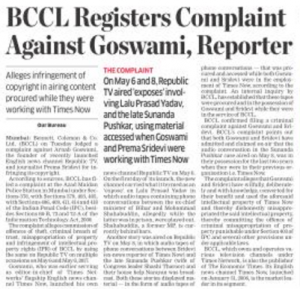
 By Ranjona Banerji
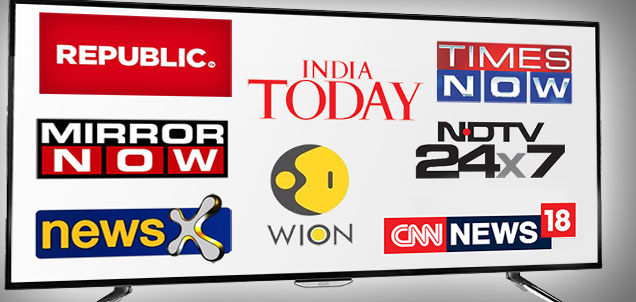

 By Sanjeev Kotnala

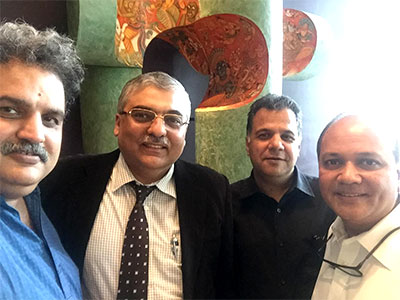

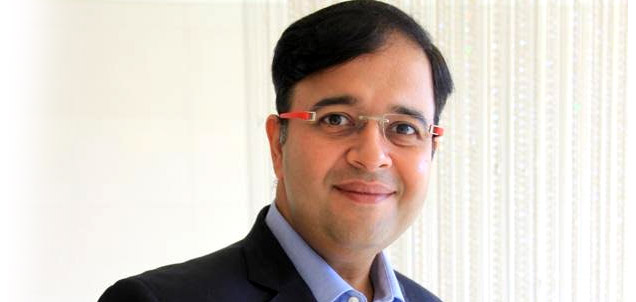


 Senior media professionals Pradyuman Maheshwari and Sorbojeet Chatterjee have announced the launch of Happ Post, an apps- and web-based news offering that promises a “sunshine take on newsâ€. * See Disclosure