
Tag: Pradyuman Maheshwari

  • Mediaah! by Pradyuman Maheshwari: The Rise and Rise of Anurag Batra

    By Pradyuman Maheshwari


    If Anurag Batra had his way, he would possibly want the day to have a few hundred hours. Reason? He could then network several times over. Widely regarded as kingmaker in the media, Mr Batra loves his food and meeting people. He is known to have multiple breakfast meetings, followed by a couple of lunches and then a dinner or two. And not to forget the early evening snack or juice and post-dinner coffee.


    He is passionate about helping people across all levels and strata and then at times seeks help for his businesses and his friends. So depending on who you are and what kind of stuff you like, he’ll gift you a book with a personalized note. And if you are the type who wears printed socks, he’ll even bring you those from one of his various international travels.


    I have had the fortune of knowing him well for over a decade – first as a friend and then employed with the exchange4media group that he co-owns. After I quit e4m over an ethical issue in 2011, he was a friend too. He gave me a fond farewell and insist I keep an iPad he had gifted me the previous year. He unfriended me on Facebook a year after I set up MxMIndia.


    Anurag (or Annurag, as his publications spell his name) was invited by his friend and co-partner Amit Agnihotri to join the group in the late 1990s. A textile engineer and MBA by education (TIT Bhiwani and MDI Gurgaon), he started working in the real estate sector and then with ad agency JWT (then HTA). While Amit is designated Editorial Director, he now spends most of his time running MBAUniverse, an MBA-preparatory service provider. The third partner is Nawal Ahuja who moved to Mumbai in the company’s early days to kickstart operations. He now runs exchange4media.com and Impact editorially as well as heads the business end in Mumbai. There were two sets of partners – adman and BJP loyalist Sushil Pandit and the husband-wife duo of Nitin and Mona Jain. A few years back, Pandit was fighting the Anurag, Amit and Nawaltrio in the Courts. Pandit couldn’t be reached at the time of writing while Nitin Jain said he had virtually written off his investment.


    The litigation may have taken its toll on the group’s expansion plans, but that hasn’t stopped Anurag from forging ahead. He set up fashion site Stylekandy and the now-defunct media school FMCC. There were a few other media operations that he has rumoured to have funded, but these are unconfirmed. Earlier this year, he is said to have bought a digital marketing site in Singapore.


    The Businessworld acquisition clearly propels Anurag to a different league of media-owners. From being a Chairman and Editor-in-Chief of a B2B media group he is now the man spearheading one of India’s best known and respected media brands.


    Will Anurag be able to turn around Businessworld? As a genre, all news magazines and business mags in particular are under tremendous pressure. But the loads of enthusiasm and energy that he comes with, networking with people who matter, and the desire to achieve the impossible could get him there with organising events and look at innovative ways to earn revenues. Businessworld already has a top-grade editorial team and a few tweaks in content and packaging could help it shore up the offering. Friends and those who’ve been tracking his career believe he can turn the fortnightly magazine company profitable if the investors he represents are not impatient and continue to invest. There are some though who believe he is playing with fire and a failure could cost him much as it has with big media aspirants in the past.


    Clearly Businessworld needs to reinvent, and Anurag/Annurag Batra can bring in the energy to the enterprise. Good luck to him.


     

  • Mediaah!: How underdog Colors won the great GEC battle

    By Pradyuman Maheshwari


    Having tracked the journey of both Television 18 and Viacom from their early days (in India in the case of Viacom), there was much desire to see both groups succeed.


    But I thought they were being too ambitious to launch a Hindi GEC in 2008. The market was already very crowded and with the whizkids of broadcasting Peter Mukerjea and Sameer Nair also in the fray, the sentiment then was that it was going to be well-nigh impossible for any new channel to be a success.


    I was sure the Network 18 team wouldn’t get it right. They had had success with CNN-IBN but entertainment wasn’t like news. Good content doesn’t necessarily maketh a GEC.


    The idea of getting Ashvini Yardi (who had earned her stars as programming head at Zee) was a great one. But could CEO Rajesh Kamat and she be able to match the maharathis and former Star India CEOs Peter and Sameer?


    I think what changed my outlook to the channel’s launch was the news that Akshay Kumar was signed to do a Fear Factor. The folks meant business and Akshay was then the reigning king of Bollywood. Plus the team was young, friendlier (than the others) and indulged us in the media.


    A week before the launch, most of us had wanted Colors to succeed. Even advertisers and media agencies longed for a worthy alternative to the existing slew of channels. And after the ratings for the first two weeks came in, we were sure the channel was a winner.


    Even then there were naysayers telling us that the magic would fade away. Regrettably for them, it didn’t. Soon Colors dethroned Star Plus as the numero uno Hindi GEC.


    I remember writing then that it was complacency that had seen Star Plus go down, a comment that didn’t work very well with some people internally and of course the biggies in the business. But a year-odd later, when I spoke to Star India CEO Uday Shankar, he admitted that the channel getting complacent. I asked him just to let people know that my earlier statement was based on some digging in, and not speculation.


    **


    My first major interaction with Rajesh Kamat happened only when I had this interview on the first anniversary of the channel in Impact magazine. It was an extra-long 6000-word interview. Rajesh had then told me how it helped being an underdog. “It made us focus on our own efforts. Also what happens is when you’ re an underdog, you push yourself to give 200%.” He mentioned how he learnt several tricks of the trade from Sameer Nair, and knowing that the former Star India CEO would’ve tracked the rise and rise of the channels, we invited him to do an appraisal for this fifth anniv package.  The Impact interview isn’t on the Net, but I found a Word version on my Gmail archives. Inbox me if you want a copy.


    ***


    In many ways, the launch of Colors also marks a little over five years I have spent in the M&E media. I can’t claim the same kind of success that the channel has achieved, but, yes, the ability and desire to try and do stuff that has not been done before is there.


    Here’s to many, many more colourful years for Raj Nayak and Team Colors (and the folks at Network/TV 18, Viacom and Viacom 18)!


  • Mediaah! Remembering Charu & PR disaster for Tatas

    By Pradyuman Maheshwari


    I always had admiration for Charu (as Charudatta Deshpande was known to friends). This was because he had made the perfect switch from a being a senior journalist (and who wasn’t really floundering as one) to corporate communications.


    Having failed at doing so twice over, I asked him how he managed the transition, and how it was dealing with journalists who one wouldn’t care much about had he been on this side of the fence. Or dealing with corporate bosses who don’t care much about the news media and think everyone’s ‘buyable’.


    Save a few occasions, our paths didn’t cross professionally over the last decade or so, but our relations were always cordial. Since he possibly had another view from being part of the corporate sector, I would ask him for his perspective on Maharashtra politics and the state government. At heart he was a journalist, and one with a very sharp mind.


    Even though the Tatas instituted an enquiry committee with top speed, I am not sure if it will yield any result. If the allegations made against Tata Steel are true, then surely there’s someone right at the top who is behind all that happened. If the PR agency went about on a disinformation drive, then one can be certain it was asked to do so by a top functionary with their client (Tata Steel).


    While the group’s Chief Ethics Officer Mukund Rajan is reportedly no-nonsense and one can expect fairplay from Ishaat Hussain, will they publicly indict a Tata Steel biggie if the need arises?


    **


    For the Tatas, it’s a huge PR disaster, and if I were with the PR agency handling the group and the Tata Steel business, I would be worried about being delivered the sack.


    The Tatas have carefully built an image which could see no wrong in employee care and welfare. This has taken a huge beating.


    **


    A severe cold held me back from being at the Press Club Mumbai condolence meet for Charu on Wednesday. You don’t find too many senior journalists and corporate execs writing letters to big business captains. And even if they do, these don’t find their way to the media. While the Tatas may not be in the same bracket, corporates are not known to take very kindly to their reputation being questioned in public. It’s also nice to see an ICICI executive director and an L&T corp comm manager sticking their neck out for Charu, albeit in their personal capacities. My salute to all of them.


    Pradyuman Maheshwari is Editor-in-Chief, MxMIndia. The views expressed here are his own


  • Dumping TAM is not the solution!


    Dumping a system does not solve the problem: CVL Srinivas
     

    While both AAAI and ISA have expressed their views on the controversy, we asked GroupM CEO South Asia CVL Srinivas, CEO South Asia, GroupM as head of the country’s largest media agency conglomerate for his views on the issue.

     

    As the country’s largest media agency conglomerate, what is Group M’s view on the current imbroglio – given that three broadcasters have stopped their subscriptions making charges?

    In our view it is an extremely ill-advised, ill-timed and regressive move. TAM is the rating system followed by the industry. Rating systems world over have evolved and keep evolving. To simply junk them altogether is not a solution. Issues if any need to be addressed jointly by all stakeholders as were done in the past. Both AAAI and ISA have already made their stand clear on this. As a responsible member of the industry we will work with our colleagues across industry bodies to help address the issue.


    You represent some of the biggest adspenders in India: are you happy with the data dished out by TAM week after week?

    In a dynamic market like ours which is seeing a lot of structural change (like digitization, increasing penetration of TV in smaller towns, more access to satellite channels etc) there is bound to be fluctuation every time the sample is refreshed or any other change is made. In addition, there are behavioural changes from a viewer perspective that keep happening. Nobody can deny the fact that consumption of content on digital platforms is growing at a rapid pace. TV ratings keep shifting and mirroring real life in a manner they best possibly can given the limitations of a sample survey.

    And your clients? Have they (especially big ones like Hindustan Unilever) raised issues about TAM’s and the data’s bonafides?

    Our clients continue to back TAM. They do not think that dumping a system solves the problem. Whatever questions keep coming up are always discussed openly with TAM and addressed.


    TV as a medium has shown robust growth despite a general slowdown. To a large extent this is because of the existing rating system. Given the magnitude of spends on TV, a rating system is a must. With no ratings a spot on one channel is the same as a spot on another channel. The lead channels in every genre will stand to lose the premium they command on rates.


    Does the fact that TAM is part-owned by your parent WPP put you under greater pressure from advertisers – since you obviously can’t be vociferously condemning TAM, if there was need for it?

    TAM is recognised as an industry system and has been in existence for many years. All clients, agencies and media owners have been using this data.


    Would you think that broadcasters have too much of ownership of the measurement exercise when actually it should be advertisers and media agencies since you’ll are the primary users of the data?

    While advertisers and agencies use the rating data to help plan and buy media, for broadcasters it is the currency that helps them sell their inventory. They are able to command a premium wherever ratings are high. They use ratings to market their programmes and channels.


    AGENCY+CLIENT VIEW
     

    Srinivasan K Swamy, CMD, RK Swamy BBDO and President, International Association of Advertisers (India Chapter)


    TV ratings have shown a downward trend after digitization of distribution. The decline is quite steep – as much of 20-25% in several instances. Such decline affects the revenue stream of broadcasters and hence it is natural for them to reject it. But it is like giving a dog (TAM) a bad name to hang it.


    Advertisers and agencies need ratings for advertising planning. It would be a retrograde step if the ratings had to be given a go-by, even for a short run. I am confident a solution will be found to continue the ratings even with Channels withdrawing their subscriptions.


    Lloyd Mathias, Lloyd Mathias, Director, Green Bean Ventures formerly with Tata Teleservices, Motorola and Pepsi and former Chairman, MRUC

    Basically media doesn’t like being measured by a third party. It happened in print with people raising objections to the NRS and later the IRS. In fact the Media Research Users Council (MRUC) which was set up by stakeholders faced a constant threat of boycott.


    The same lack of discomfort of being measured by a third party afflicts television too.


    However, in all fairness even advertisers have said that the number of Peoplemeters isn’t enough. I think the methodology has to be transparent, the Peoplemeter base has to increase and the system must factor in cross-consumption of media.

    ISA view: Advertiser cannot advertise without television ratings
     

    Statements issued by the Indian Society of Advertisers (ISA) and the Advertising Agencies Association of India (AAAI)

     

    The Indian Society of Advertisers (ISA) has read with concern recent reports that some broadcasters have decided to stop subscription to television measurement service. This is a matter of immense importance as the measurement system is integral to the health of the industry. The rating system needs to continue for the smooth functioning of the industry as it’s the very foundation of the commercial process, media planning and pricing. The ISA believes that any measurement system should appropriately reflect the viewership pattern and should not be judged on a short term basis.


    The best course of action is to engage in a constructive dialogue and pursue continuous improvement. While some broadcasters have stopped using the current rating system for measurement, as advertisers we support it and will continue using it till another credible measurement system is made available. Any action taken which is detrimental to the measurement system would be detrimental to the industry at large. “An industry-accepted rating system is the need of the hour and ISA is working with rest of the industry to ensure this is in place and any action to the contrary will have an adverse impact” – Hemant Bakshi, Chairman, Managing Committee, The ISA and Executive Director, Home and Personal Care – Hindustan Unilever Limited.


    AAAI view: TV could lose popularity with advertisers

    Advertising Agencies Association of India (AAAI) has expressed shock at the decision of some channels, supported by the Broadcasters’ Association, IBF to decide not to subscribe to the only TV Ratings service in the country – TAM. TV ratings provide the currency based on which thousands of crores worth of advertising time is bought by advertisers with confidence. Ratings also provide the basis on which media agencies do sophisticated analysis and arrive at sharply targeted plans for a brand’s target audience to minimize wasteful advertising and improve advertising effectiveness.


    An established rating system augurs well for the Advertising and Marketing Industry, because it enables advertisers to invest large sums of money in advertising with the confidence that they are reaching the right number of desirable audiences. It has been seen from experience in India and other markets that an established media research study on an ongoing basis leads to rapid increase in advertising spends in that medium. Those media which do not have such a system have not grown in India. Also, the current TV ratings system has thrown up real leaders in each of the genres based on the audiences they deliver and enables such leaders to command a premium price based on such ratings, rather than advertisers and agencies having to rely on perception. And very often perception is different from reality.


    AAAI will hold broadcasters responsible for deliveries as per signed agreements based on the TV Ratings System. Says Arvind Sharma, President AAAI, “The move by broadcasters to discontinue with ratings is ill-advised and not in the interest of advertisers, advertising agencies or broadcasters. It will lead to overpaying and underpaying of advertising time, both of which will lead to a collapse of TV as an advertising medium. The ratings from Broadcast Audience Research Council (BARC) are yet some time away and until they are released it is critical to continue with the current system. Most broadcasters all over the world have some issue with media measurement systems but that does not mean that the system must be abandoned. Instead it must be improved and identified gaps must be plugged”.


    Wtf! Why can’t all stakeholders sit together and clear the mess?
     

    By Pradyuman Maheshwari


    The media industry is captained by grown-ups, wise and mature men and women. We propound theories on ways the world should be run on our news channels and send social messages via our soaps and shows. But, wtf, why can’t broadcasters, advertisers, advertising agencies and measurement/ research firms sit together and clear the mess?


    With BARC having invited proposals by issuing a global RFP, a new system can be expected to be in place this time next year. However, since there is a year to go and much business to be sought, can we do the following:

    1. Get a third-party to study the problems and come up with a white paper superquick? A consulting firm like Ernst & Young could be asked to do it. Or KPMG. Or PwC. Or whoever can do it without getting influenced by any of the stakeholders. We could ask the folks at BARC to do it. Let the three stakeholders plus the government-owned Doordarshan commission this soon.


    2. Let each stakeholder appoint a representative to have a Measurement Steering Committee which will work in the interim. These could be from amongst people running BARC currently.


    3. Alter the method of funding research. Although no one was willing to come on record on this, there is a sentiment that the broadcasters have a dominating influence on BARC (and now TAM). This has got to change (the perception and if it is indeed a fact). Currently, since it’s advertising which drives the broadcast business, the ad agency and the advertisers are the primary users of the data.


    Hence, the stoppage of subscription revenues going to TAM (and later BARC) can derail the entire system. And have a significant impact on the TV trade. Perhaps the South African model of a small percentage of all advertising revenue going to fund research may work.


    These are three immediate measures that may work. There are various other minds at work… one hopes we will eventually see reason.


    Whatever be the way out of the mess, it’s clear that the industry can ill-afford a system without a measurement system. TAM, in this case. And it’s also important TAM understands the problems of broadcasters and corrects all the problem areas.


    That’s the only way to go.


  • Mediaah! Are disclaimers enough to pass off paid content?

    By Pradyuman Maheshwari


    Last week, as part of The Times of India’s announcement of its 175 years, there was a full-page edit by editor Jaideep Bose. There’s an interesting bit from this note that I would like to highlight:


    “Truth is, we have no masters and no hidden agendas. Our dharma is to serve our readers. Which is why we take constructive criticism seriously and listen when you speak. Political parties go to the people once every five years; we seek your mandate every day of the year. The relationship between The Times of India and its readers is a nuanced one. There exists an invisible line of tension between what the editor thinks the reader should be interested in, and what the reader thinks the editor should offer him or her. It is the editor’s job to strike that delicate balance. What appears in the paper is often the product of hours of intense debate and introspection over content and tone.”


    There is no denying that the TOI has improved hugely in the last eight years. In fact even before – from the time of the Gujarat riots to this day, the paper has taken up issues and campaigns that have one would expect a newspaper to do.


    However, along with all this, its paid content practice called ‘Medianet’ has flourished too. The city-specific supplements may carry the disclaimer ‘Advertorial Editorial Promotional Feature’ under their mastheads, but the fact that the owners persisted with what’s clearly a regressive practice has got a lot of people questioning whether other parts of the paper are also similarly compromised.


    When Bose, who I have much regard for, writes that what “appears in the paper is often the product of hours of intense debate and introspection over content and tone”, he obviously doesn’t mean that the city supplements are part of the main paper, or it’s possibly that paid content has been so internalized that he doesn’t really think there’s anything wrong with the practice.


    A few years back, at the Pitch CMO Summit, Suparna Mitra, the then Titan Industries global marketing head (now business head – south) spoke about the various ways in which Titan had marketed its watches so successfully. And one of these, she said in her presentation, was Medianet in The Times of India’s city supplements.


    What surprised me was that Mitra represented the Tatas, a business group known to not compromise on values. I was quite shocked to learn that a Tata group company bought editorial space to further its ends.


    When I met her a few months later on the sidelines of the Indian Magazine Congress in Delhi, I told her I was surprised that Titan was paying for content. She wondered why I was saying that and then a leading publisher in the room came to her rescue insisting that there’s nothing wrong with it since it was aboveboard.


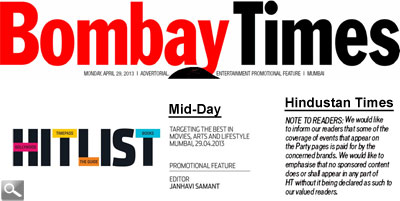
    Calling it a legit activity is like saying there’s nothing wrong if you adulterate milk with water. When The Times of India started Medianet, the editors of many publications cried hoarse about the practice. Prominent among these were Vir Sanghvi in Hindustan Times, N Ram in Hindu and Aakar Patel in Mid-Day. While the Hindu hasn’t given in to the pressures of revenues, both Mid-Day and Hindustan Times have buckled under. Mid-Day has been in it for a few years now, albeit on the entertainment pages. The sections carrying these are tagged ‘Promotional Feature’.


    When Hindustan Times got into the act recently, it knew the practice was incorrect. Page 3 in ‘HT Café’ is tagged ‘Entertainment and Promotional Features’ and there is a disclaimer on the front page of the supplement which states: “We would like to inform our readers that some of the coverage of events that appear on the Party pages is paid for by the concerned brands. We would like to emphasise that no sponsored content does or shall appear in any part of HT without it being declared as such to our valued readers.”


    I think it’s great that HT says it in so many words that some of the content is paid for. However, the features inside aren’t tagged as such. Also, the disclaimers are in fine print and unless it was pointed out to them, the readers would miss them. I asked five regular and two first-time readers of the paper, and only one of them noticed it, when being told what to look for.


    If HT is serious about its intentions it must do what the group’s business daily Mint does: put a disclaimer on the front page of the main paper. In addition, it must tag each and every article that’s paid for. Ditto with The Times of India, Mid-day and all other publications charging for content.


    **


    Should a newspaper be published only for social good? If it’s got to make monies, why shouldn’t it be doing so from every conceivable way, one may ask. I agree and see no harm with profit being the primary motive of any business. I don’t think it’s right to expect a newspaper to be only reporting on political, civic and developmental issues. People are interested in a reading a lot more… including news on health, sports and entertainment.


    However, one would expect the content in the newspaper to be published based on the decision of the editor, and not an advertiser paying for it.


    Newspaper owners ask the powers that be for several favours – DAVP ads, land allotment at discounted rates, access to various official functions and the government grants them these because newspapers are supposed to be serving a larger social good.


    By passing off content for which it has charged and is published not on the discretion of the editor, the newspaper is cheating readers. Thankfully for the owners – and possibly because many of them are very powerful – the law-influencers (including the Press Council of India) havent’ really damned paid entertainment/glamour content. Various favours continue to be granted to newspaper owners despite them charging for editorial content.


    In private many editors and publishers have told me that they are against the cash-for-content policies of their publications. However, it’s only in the film and party pages that are edited by an entertainment editor, they add, trying to wash their hands off the regressive practice. So on one hand, editors carry campaigns against the various wrongs of society and even write editorials on these, on the other they allow part of their paper to be used to publish paid-for content.


    I asked a dozen readers from across four metros and the seven others I had spoken with earlier to comment on the issue. Here are the Top 3 observations:

    1. They don’t differentiate between the entertainment supplements and the main paper, even though Bombay/Delhi Times, HT City/HT Café and Hitlist are popular titles.
    2. As high as 60 percent of the respondents don’t trust the movie and restaurant reviews, even if they carry a disclaimer that the reviewers pay for their food bills
    3. They don’t really care that the content is paid for or not.


    The views of 19 people can of course not be extrapolated to the entire readership of these papers, but the last of these views left me wondering whether I was being a prude.


    Perhaps, but happily so.


    Pradyuman Maheshwari is editor-in-chief, MxMIndia. The views expressed here are his own.


  • Announcing the MxM Viewsletter

    Since it went live on September 9, 2011, MxMIndia has established itself as India’s only online destination in M, A&M domain which goes beyond news: we carry regular and one-off columns and blogs by some of the country’s best minds.


    While inviting our columnists, the attempt has been to ask those whose views will add much value to our reader’s understanding of the business. We may not necessarily agree with the views, but what we can assure you is that there is little or zero interference from our end on what our columnists write.


    While MxMIndia.com is a for-profit enterprise, our primary allegiance is to our readers. That our readers are essentially members of the media ecosystem makes the exercise a lot more challenging. But, we have done it reasonably responsibly. And, we must add that the industry – especially our advertisers – have also handled our content very responsibly.


    We are now increasing our ‘views’ element and will bring you ‘The MxM Viewsletter’ every afternoon. There will be some new columns and blogs which you’ll discover over the next month, a new daily views column – our version of the editorial comment and a reader’s blog, where all of you are welcome to post your views. Initially the Viewsletter will be sent out to all current recipients of the ‘Digest’, but soon we’ll offer it as an optional service.


    The MxMIndia Twitter handle (@mxmindia) will also get active and will do more than just tweeting links from our site.

    All of this and more coming up on your favourite daily destination.

    Keep the faith.

    Pradyuman Maheshwari

    Editor-in-Chief and CEO


    PS: Our offices are closed on Friday, April 19 on account of Ram Navami. So, while there will be no ‘newsletter’ tomorrow, our viewsletter will take off in right earnest.


  • Mediaah! Should Ford sack JWT India for ad mishandling? + Cut the Katju!

    By Pradyuman Maheshwari


    Harsh headline? Should JWT indeed be crucified or should we let the agency off by allowing it to nail a few bachchas and then let the whole thing be forgotten?


    Yes, before we have someone saying that MxMIndia is shying away from taking on the high and mighty of advertising and marketing, here’s our two-bit, laced with comments from the Twitterati across the world.


    If the work of posting unapproved ad creatives is the handiwork of some upstart blokes – creative, client servicing whosever – then they ought to be asked to play Holi for the rest of their lives.


    For those not in the know, BusinessInsider broke the story of ad creatives posted on adsoftheworld.com one of which saw former Italian PM Silvio Berlusconi with a set of gagged, wailing women in the trunk of a car. The creatives have since been withdrawn from the creative showcase.


    The apologies handed out are mere words of regret. It smacks of a cover-up. Ask anyone working in an agency of moderate size and you’ll be told that work such as this can’t not be seen and approved by the client and must have the blessings of the seniors.


    Okay, so it’s not that people don’t make mistakes. They do, and it would be nicer if the biggies involved were to own up to the act rather than blame kids at the agency.


    What they haven’t bargained for is that if there is indeed some funny stuff happening, it won’t take too long for it out to be on the social media.


    One industry captain texted us last evening to ask if there was a Chapter 2 to the Ford story? And added an extra-large smiley. We don’t know, but what we do know is that it could well be the beginning of an all-new story.


    Meanwhile, check this:

    1. The BusinessInsider.com story with the offensive creatives and the apologies from Ford and WPP: http://www.businessinsider.com /awful-ford-figo-ad-silvio-berlunsconi-gagged-women-2013-3 and http://www.businessinsider.com/ford-wpp-apologizes-for-offensive-car-ad-2013-3


    2. Since it’s not just about Silvio Belrunsconi but also about Paris Hilton and the Kardashian sisters, it also features in Hollywood chroniclers: http://hollywoodlife.com/2013/03/24/ford-kardashians-ad-leaked-poster-paris-hilton/


    3.  The much respected Slate.com had this damning comment titled ‘Ford India needs to fire its advertising execs’: http://www.slate.com/blogs/xx_factor/2013/03/22/ford_india_should_probably_fire _its_ad_execs_for_depicting_bound_and_gagged.html


    4. On Twitter, reactions bordered from the extreme to the moderate. Sample this:

    Tom Becktold ‏@becktold: With the Ford/JWT India debacle, check your partner contracts to make sure spec creative cannot be shared. Shouldn’t need to, but..

    Louise Ridley ‏@LouiseRidley: JWT India taking serious action after ads featuring Silvio Berlusconi with gagged women in a car boot appeared online http://bit.ly/14jwKYP

    Seth Cargiuolo ‏@carge77: RT @rachebrun: Dear @Ford, you have no excuse. your ad is inexcusable: http://mashable.com/2013/03/25/ford-apologizes -for-ad-in-india-kardashians/…

    << Ford should sack JWT India, no question.


    5. There was also some debate. Like this one:

    Piyush Pankaj ‏@piyushpankaj: @sshibad u can’t hold agency responsible for this as ad would have passed through various brand managers at Ford India as well

    Sunil Shibad ‏@sshibad: @piyushpankaj I think some juniors did it for ad awards. I doubt Ford India even saw it.


    So did someone say Goafest 2013 is going to be a li’l dry this year given the absence of Ogilvy at the creative Abby? Well, now, there’s going to be a fair deal of action. And we’ll be waiting for that someone to get plastered and talk. Wicked us.


    Cut the Katju!

    Over the last two years, Markandey Katju has become a household name given his various outbursts, all of which have provided much fodder to us in the news media. Often, we’ve even been happy with what he’s said. For, Katju can be expected to shoot his mouth off on anything… and until now he appears to be getting away with it.


    But, remember, he’s also the Press Council of India chairman. And although the organization has got no teeth and the only print journalists who care much about it are those on its committees, it’s an important position and the Press Council’s role is quasi-regulatory.


    His appeal to the Governor to let Sanjay Dutt off is bizarre, his arguments are outlandish. Apart from serving the needs of the government to needle journalists and media organizations and providing some comic relief, Katju has done precious little as Press Council chief.  I think his time is up. He ought to go. Doesn’t any little country in South America or wherever need an Ambassador?


    Pradyuman Maheshwari can be reached at @pmahesh on Twitter and 29fea79c via BBM. The views expressed here are his own.


  • Announcing: The Dubious Achievement Awards 2012 + the Political Incorrect Quiz… on Mon, Dec 31!

    Hey Mediawaalon, get set for some naughty and spicy stuff on MxMIndia on Monday, December 31.


    It’s the last day of the year and on the day when half the world is busy dreaming up plans for the evening ahead and greeting each other (some silly “see you next year, haan”  asides), MxMIndia will see spirits soaring with the Mediaah! Dubious Achievement Awards 2012.


    If you want to send in your entries for these, inbox them to pradyumanm@mxmindia.com. Confidentiality assured. We will protect your identity if you don’t want it disclosed.


    The award titles should be fun (and we expect people to take them in the right spirit). For instance:

    The Colgate Sensitive Award

    to the UPA government for pouncing on to the news channels whenever it gets a lashing from them


    Or


    The King Dasarath Award to the IBF, ISA and AAAI

    to banish TAM for 9 weeks on a whim (and some machinations)


    Or


    The Tu Tu Main Main Award

    to WPP and NDTV for fighting each other over viewership ratings via press communiques


    Or


    The Manoj Kumar ‘Mera Bharat Mahaan’ Award

    to Arnab Goswami for boldly asking questions for India when nobody really cared (including many of us)


    And many more! How many other awards will Arnab Goswami get? And Satyamev Jayate? Who will get our Arnab Goswami award for the Most Sound News TV Editor? Or the Red Blue award for Reality Show Fatigue? And the Two-Timing Award. Also, the Kaju Feni Lifetime Achievement Awards for Promoting Goa… Read it all on Monday, Dec 31 on your favourite mid-morning destination!


    Over and above this, we are going to have the first ever Politically Incorrect Media Quiz. We will quiz your knowledge on stuff that you’ll never ever find on other sponsor-friendly quizzes. We will ask questions that are factual, but may not be comfortable to some. Hence, Politically Incorrect.


    Look out for it… 11am, Monday, December 31.


  • Must-read book on advertising


    Trying not to see
    By Kurien MathewsWikipedia describes Elephant in the room thus:

    “Elephant in the room” is an English metaphorical idiom for an obvious truth that is either being ignored or going unaddressed. The idiomatic expression also applies to an obvious problem or risk no one wants to discuss.


    It is based on the idea that an elephant in a room would be impossible to overlook; thus, people in the room who pretend the elephant is not there have chosen to avoid dealing with the looming big issue.


    All of us in advertising, for almost as long as I have been in it, have suffered and have been greatly affected by ignoring or not addressing some very obvious truths that have been staring us in the face. Forget about addressing it; we never even spoke about it, and went about our lives pretending that everything was just fine, and if there was a problem it was just temporary and would soon go away.


    Around the time I joined advertising, nearly three decades ago, everything was in fact just fine. No too many elephants in the room. If they were there, they were baby elephants, the playful kinds.


    In those days talent was good and abundant. Advertising was glamorous. Money was plentiful. Clients respected agencies, and thought of us as people who generally knew much more than them. We wined and dined. Almost everything was done in English, and then translated. Commercials were broadcast on one channel. No one asked for discounts. It was fun with many other such wondrous things in place.


    In his book, Anant Rangaswami speaks of many, many Elephants in the room today. All carefully chosen. All well articulated.


    These Elephants started emerging, one by one, somewhere in the mid 90s- perhaps with the arrival of satellite TV and the birth of the AOR. Suddenly the sacrosanct 15% was thrown out of the window. Before you knew it, agency revenues started shrinking and the demands on them started increasing. Simultaneously, the brighter MBAs found that there were other fun jobs that paid better, and then the vicious downward spiral of low pay, lower quality talent, suicidal discounting and the need to find revenue at any cost started.


    Soon more Elephants started appearing in the room and by the beginning of the new millennium the room was beginning to fill up, fast and furious.


    But no one cared. No one wanted to talk about it either.  If there was the odd murmur, it was quickly rubbished. Ostriches, all of us.


    In ‘The Elephants in the room’ author Anant Rangaswami not only points out to all the Elephants so glaringly visible to him, but he does so without holding back or being polite or gentle. He tells it like it is. He names names, speaks of incidents, and at places proposes action as well.


    If you have anything to with the business of building brands then this book is a must-read for you. While it is about serious business it is a fun read. Best of all, it is free - comes only in the form of an e-book, which can be downloaded from www.firstpost.com


    Kurien Mathews is Chairman & Managing Director, METAL Communications Pvt. Ltd, Director, Rage Communications Pvt. Ltd and Director, Conscious Food Pvt. Ltd


    Trumpets and snorts: A book review of sorts
    By Paritosh Joshi1984. That was the other book with a date in it that popped into the mind. A book that caused a proper noun, Orwell, to be recast as an adjective, Orwellian.

     

    And so to “Elephants in the Room – The Future of Advertising in India, 2016”, Anant Rangaswami’s self-published book launched with minimal fanfare on November 19.


    Prognostication is often grim business. With a date in the name, you are sort of prepared to deal with dystopic speculations on where Advertising is headed. The author doesn’t disappoint. This is sentence no. 1. “Let’s not fool ourselves; it’s going to be a tough few years ahead”.


    It is not unusual for business professionals at a certain stage in their lives to turn to writing and wish to be published. A few decades spent winning more business battles than they lost and they fancy themselves to be keepers of recondite truths that are hidden from the little people. Hindsight, a self-congratulatory attitude and a desire to elevate banality to wisdom compel them to couch their “insights” in prolix prose.


    Anant’s book, refreshingly, is at the exact opposite pole.


    The ‘elephants’ that populate this book are incipient problems that the Advertising industry will face over the next few years. The author has the journalist’s insatiable appetite for conversation. From the lowly Account Manager to titans that bestride the narrow world like Sir Martin and Sir John, he talks to them without fear or favour. His inquisitiveness is unbridled and uninhibited. The ‘elephants’, therefore, are distilled from empirical knowledge and documented anecdote, not idle speculation. From the endless hand-wringing over talent scarcity, through the challenge that digital specialists pose to the traditional creative agency to a near future where many of today’s marquee names from the advertising industry may retire, each ‘elephant’ warrants a chapter where the author attempts to lay out the problem as he sees it, a prognosis of where it will go next and prescriptions that may alleviate or remedy that problem.


    What makes the exercise utterly unusual is the author’s unabashed willingness to name names, individual and corporate that are the protagonists in this unfolding epic. To be clear, there is not one reference that might be considered libelous or intemperate, though there will be several that will cause people to squirm.


    Now while the author is almost consistently objective in his assessment, he is human enough to let some deeply held beliefs; they are logically constructed so they cannot be labelled prejudices; show through. One such, which I have had the pleasure of debating with him on many occasions, is the role and functioning of the Advertising Standards Council of India. He devotes a sizable chapter to the theme and in the interest of full disclosure I record my vigorous disagreement. There will be a rejoinder in these columns soon.


    Here is my big problem: The urgency that informs the book, while making it a real page-turner, does it a huge disservice. This is not a rash pamphleteer whipping up a mob to frenzy but a thoughtful commentator’s significant contemplation of important questions that plague, arguably, the wider Communications industry and not Advertising alone. Identical or analogous problems exist, inter alia, in the broadcast industry. And none of these problems will suddenly disappear in 2016. Media & Communications professionals, particularly those holding senior responsibilities would all be well advised to read what Anant has to say in “The Elephants In The Room”, now and for many years to come.


    And finally this. I wish, I really wish, that I had bought this book and not got it gratis as I left the launch party. Content creators, particularly when they create content as important as this, have the right to demand fair economic value for their work. Now Anant will almost certainly see this as his responsibility towards the industry he calls home, we will be unable to show our appreciation and gratitude if we can’t pay for the cry of the conscience keeper.


    Elephants in the Room: Essential reading!
    By Pradyuman MaheshwariI’ve read the book twice over. Well, actually, two-and-a-half times. First to decide what part to pick for an extract… that was a pdf which Anant shared with me a few hours before the formal launch. I did a rapid read, like the ones you do when reading those tomes that come out from government or regulator documents posted online.


    So how many enemies will I make, Anant asked me at the launch. I muttered a couple of names but also told him that the book was brilliant. And unputdownable.


    The half-read was when I had to actually pick the extract. I decided on two to give MxM readers a perspective on what to expect from it. The first on whether it should be a suit or creative who should head an agency. And the other on Goafest.


    The last time I read it was after Paritosh Joshi suggested the idea of this joint review.


    The Elephants in the Room is not an academic account of what ought to be done by the industry. It’s no white paper. Yet, in its chatty style, it highlights all that needs to be stated about the business. Racy in style, it’s almost like some of his blogs on Campaign India put together. Except that here they are longer, and the issues are dealt with in detail.


    I tend to agree with his views on industry associations – the AAAI and ASCI specifically. There is much scope for improvement, in fact what’s needed is an overhaul. The Advertising Club also needs to get into activities that attract the youth. And above all: Goafest. Why have it in Goa in April?


    So, my sub-140-character review continues to be what I gave on the morning after the launch: Unputdownable. If you’re in the biz of advertising, download now!


    I wouldn’t want to get too much into the book, and would urge readers to download it off Firstpost, but I have two peeves about the book. Or possibly three.


    The first: In the attempt to make it quick-and-racy, I think Elephants in the Room rushes through some of the issues that impact the business. For instance, corruption. I could list a few more.


    Second: The focus is Creative. It delves into digital, talks a bit about media, but it’s essentially the big creative agencies and gods who have been discussed.


    And, third: why the hell has Mr Rangaswami not priced the book. Why offer it as a free download? Printing a book doesn’t take an arm and a leg. I would’ve been happy to have MxMIndia publish the book. Or possibly Firstpost could have.


    The Elephants in the Room is an excellent book. It’s essential reading for all those in advertising, and all those who deal with creative folk and creative agencies.


    Pradyuman Maheshwari is Editor-in-Chief and CEO, MxMIndia


  • Mediaah!: What’s not right with Arnab Goswami

    By Pradyuman Maheshwari


    Many months back, even ahead of the November 26 terror strike in Mumbai which transformed the English news television landscape entirely, I had written that Arnab Goswami was the best anchor on primetime news TV.


    He was different from Rajdeep Sardesai and Barkha Dutt who were stars of the nightly bulletins. He was direct, he asked the tough questions and didn’t let his guests get away easily.


    In many ways, just as Angry Young Man Amitabh Bachchan mesmerized the nation in the 1970s, the Angry Young Man Arnab Goswami grew big on television. Rajdeep and Barkha (and Prannoy Roy etc) were journalists… this guy was like one of us.


    November 26, 2008 onwards was when he was at his peak. Some may say he took the easy (and if one may add uncharitably: safer) option of being in the studio as his reporters went closer to the hostage drama. But it was a wise decision. While it’s good to have your trump cards in action  – whether they should be on the field or off is a call that’s got to be taken. By staying in the studios, Arnab ensured that the 60+ hours of the hostage crisis was covered the best on Times Now.


    Arnab Goswami

    It’s been no looking back thereafter. He took the nationalistic line and the longevity of the terror discussion ensured that he would go on and on and on. Then there were border concerns in China and immigrant problems in Australia and wherever there was an issue where there was an Indian case to be fought for, Superman Arnab came to the rescue.


    A variety of political scandals and multiple scams ensured that there were enough ratings for news on television. Plus a packed sporting season.


    However, Arnab appeared to have got greedy. Or was forced to not see reason and hold back. He stretched his nationalistic debates a bit much.


    Agreed the nation wants answers and is happy that Arnab asks for them too, but the shrillness with which he goes about his task makes it a charade. There is a hardly a night when there is peace among his his panelists.


    There are other problems with the Arnab we see on Newshour and beyond. His body language as he faces the camera shows that he gets in with a view. And he wants to lead the discussion as per that.


    He gets carried away. Like he failed to see reason when Anna Hazare was at his peak. Like he did last Sunday as anchored a newsroom discussion through the day for Shiv Sena chief Bal Thackeray’s funeral procession. While one didn’t expect him to damn him, the death of a political leader like Thackeray offered enough reason for a debate on his policies and style of functioning.


    Arnab’s ‘Frankly Speaking’ with Raj Thackeray may have seen him raise some probing questions, but he let him get away. Raj even had some fun at Arnab’s expense.


    Last night (on Tuesday, Nov 20), we had a discussion on the two girls in suburban Palghar being arrested over a Facebook comment. The arrest as well as the vandalism thereafter must be damned. Those who committed both the crimes ought to be taken to task.


    I hold no brief for any of the three Mumbai women guests present, but Arnab was being offensive. At least allow Shaina NC to speak and move on if she’s not making a direct reference to the Sena, though later she did make an oblique reference!


    Arnab is fortunate that his competition, save Rajdeep Sardesai’s CNN-IBN, is not formidable. The NDTV 24×7 coverage of the Bal Thackeray death and funeral procession was pathetic. Sreenivasan Jain is poor with live news TV. His performance has been consistently below par: he was no great shakes when he was the Mumbai bureau head some years back, on Profit and now with the Thackeray coverage. Yes, on-off documentaries are great as are his exposes.


    As for Headlines Today, I think I have the solution to how it can be a force to reckon with. Let Rahul Kanwal be around for interviews et al, but get another primetime anchor-editor.


    Since I don’t have NewsX piped in through my digitized signal, I don’t watch the channel, but to my mind, CNN-IBN is by far the best English news television channel.


    Mind you, Rajdeep also gets shrill at times and Sagorika Ghose is a dozen times his decibel levels, but what makes the channel stand out is that it’s got multiple faces.


    Times Now appears happy to have not created a face beyond Arnab. But that’s their internal policy, though I am not sure if it’s a wise one.


    As for NDTV 24×7, it’s sad to see a wealth of talent often being wasted. Although I didn’t see much of the channel after a point last weekend, perhaps getting Barkha Dutt on would’ve been better with the Bal Thackeray coverage.


    Back to Arnab. If he really wants the viewing masses to find him spending their primetime with, he must switch tracks, get less combative and chill.


    A 10-day Vipassana course perhaps?


    Mediaah! Is written by Pradyuman Maheshwari, Editor-in-Chief, MxMIndia. The views expressed here are his own. If you don’t want to use the messageboard below, inbox your comments to him at pradyumanm@mxmindia.com. Or BBM 29FEA79C.

    File Photo: Fotocorp


  • The Sun Rises on New Era of Digitization


    By A Correspondent

    Okay, there are the hiccups. The plea to push digitization in Chennai was successful with the Court extending the date to November 5. In Mumbai, the plea was rejected even as local cable operators are gathering in the afternoon to decide on the next course of action. They may even go in for an appeal to the Supreme Court.

    What the stakeholder body bosses say:

    Man Jit singh

    Man Jit Singh, President IBF and CEO, Multi Screen Media

    This has been the biggest step in the broadcast industry. Not only is digitization good for broadcasters as it will bring subscription revenues in line but will also enable us to launch new channels, the carriage fees will be lower; but it is also good for consumers. This is the chance for consumers to get different content, it is also a chance for them to get broadband connectivity, which will bring a great information revolution. It is great for MSOs as they will get fair revenues from customers after having invested in the boxes. FDI is allowed too, so the MSOs can look for investments. For LCOs, ARPUs will go up when they offer services like cable modems and broadband connectivity. Government will get more taxes. It is going to be a fantastic phase.

    Arvind Sharma

    Arvind Sharma, President AAAI and ASCI and chairman and CEO of India subcontinent, Leo Burnett

    Digitiation will be a big leap for everybody involved, either as an advertiser, as a businessman, as an agency. So all of the stakeholders are looking at the day with the hope that all will go well.


    Roop Sharma

    Roop Sharma, President, Cable Operators Federation of India

    We all were waiting for digitization. But i have mixed feelings for the day. We have not been able to deliver what we had promised the consumer. There is no transparency, the electronic bill system is not in place, and moreover, the required number of boxes have not been seeded. What can one say? Chennai has extended the deadline. Mumbai will now be moving to Supreme Court for the extension of deadline.

    In Kolkata, the opposition is kind-of state-sponsored with Chief Minister Mamata Banerjee objecting to the mandatory digitization and the impact it has on the poorest of poor.

    In Delhi, there were some objections raised, but they appeared to have fallen on deaf ears.

    The result: mandatory digitization in three metros is here. And at long last there is going to be some order in the broadcast business. One is not very sure whether those who are very elated about the move will be so in future. Because transparency comes with its own set of problems. Especially for those who have been used to the inefficiencies for far too long.

    See also:
    Shailesh Kapoor/TV Trail: Channel Brand: The Digitization RealityThe Anchor: 5 problems and that you and I will face thanks to digitization


    So, who gains and who loses by the digitization:

    Consumers: Will they gain? Yes and No. It’s great for those who can afford it, but for the lowest common denominator already burdened with rising salaries and falling incomes, it’s going to pinch.

    Broadcasters: Content-makers will now get the money they ought to get as they will know how many people are subscribed to their channel, but no longer will they be able to give the spiel of millions of viewers watching their channel without the relevant proof.  They will save some of the carriage fees paid to Multiple System Operators (MSOs)

    MSOs: Monies coming from carriage fees will take a beating, though it won’t vanish entirely as some revenues from placement etc can be made. Their incomes could rise with better reporting from the local cable operators.

    LCOs: While quality of content will mean greater number subscriptions to niche channels and hence more commissions, the overall revenues will reduce as the set-top boxes will mean zero unaccounted connections (unless of course there’s pilferage)

    Distribution Bouquets: MediaPro with Star and Zee channels in its fold will be the biggest gainer as will be IndiaCast with the Network18 and allied group channels. However, others smaller group but with key channels like, say, Times Now could also flex their muscles.

    Advertisers and Media Agencies: They will now have a better idea of the reach and may be able to negotiate harder, but there may be a few hiccups

    Hiccups there will be for all. The next few months – possibly till end-December – will see a state of uncertainty for stakeholders. The fight for mandatory digitization may have been won, but the battle has just begun.

  • Mediaah Report Card on Ambika Soni: 7/10

    By Pradyuman Maheshwari


    Although I would hold her responsible for the mess that we have in digitization, Ambika Soni was among the better I&B Ministers we have had in the last decade.


    In my report card, I would give her a 7 on 10.


    In fact had it not been for digitization and the lack of gamechanging vision, she’s could’ve scored higher.


    Remember she took over from Anand Sharma and earlier Priyaranjan Dasmunshi who had made life tough for industry practitioners.  Ms Soni’s tenure came as a breath of fresh air. Reportedly, the advisory she received from her predecessors was that she shouldn’t go easy on media biggies, but she would’ve none of that.


    Everyone has a view on the content dished out on television and in the print media. Parliamentarians, legislators and politicians of all hues, consumer and advocacy groups, corporate, citizens, et al would engage with her to act on their demands. For instance, Balika Vadhu in Colors was found by some to be glorifying child marriage or Sach Ka Saamna and Bigg Boss were found to be unfit for family viewing. Ms Soni heard the complaints and kept the complainants at bay. The general entertainment channels must thank the former minister to ward off a variety of pressures.


    I think just letting various players do their job with a nudge here and there was an achievement. Ms Soni also ensured that entertainment and news broadcasters work out an effective self-regulatory mechanism. This had had its share of hiccups in the past, but in her tenure it happened.


    Ambika soni

    But though her progressive outlook ensured that the industry benefitted, various factors pull her down in this appraisal. In fact, according to one magazine study a few years back, she was judged to be a non-performer.


    Let’s look at the areas where Ms Soni failed:


    1. Doordarshan. The pubcaster had turned 50 in 2009 and there was an opportunity to make it a more professional BBC-like body. Didn’t happen.

    2. Radio. News on FM radio is not allowed due to some silly Home Ministry objections even as there are several cable channels in every nook and corner of the country.

    3. Paid news. If paid news is being discussed much it’s thanks to the Election Commission and a section of the fraternity. The minister had an opportunity to cleanse the system, but she didn’t want to upset the holy cows in the business

    4. Tougher on measures: Had she adopted a sterner stand and asked the industry to act faster, we wouldn’t have seen an NDTV taking TAM to court as BARC would’ve been set up and offered the necessary guidelines.

    5. Digitization. Agreed it’s a bold measure and it’s in her tenure that it gained momentum and was being executed. But the fact that it didn’t was all thanks to the way her ministry went about the task. Even as there are just two days to go, 100 per cent digitization will take another two or three months to happen in the four metros.


    Could this embarrassment have been avoided? Yes, of course.


    I am also shocked at how and why she quit less than a week before what was decidedly the biggest thing in Media and Entertainment in the last decade. Bigger than DTH and other policy initiatives. Yes, it’s a good idea that a senior political leader goes back to help the party in the run-up to the elections, but why do it when the Sunset Date is just a week after?


    Why did the Prime Minister allow her to do so? Why did the UPA chairperson allow it?


    This, I guess, is the reality check for all of us in the media. The powers that be don’t really care.


    As for Madame Soni’s score in my report card. 7/10. And a red line for being irresponsible and leaving the ministry a week before her biggest project was being executed.


    Pradyuman Maheshwari is Editor-in-Chief, MxMIndia. The views expressed here are his own. Inbox him at pradyumanm@mxmindia.com or use the messageboard below