A few years back, on the sidelines of its internal Envies Awards, Piyush Pandey had told the media that he found that some members of his agency did not have any respect for the Abby Awards won by them and found the metals strewn all over. Not his exact words, but this is what he meant to say.
For long, former Lowe Lintas has rubbished the Creative Abby and was the first amongst the big boys who stayed away from the Abby.
Interestingly, both Ogilvy and Lowe are active participants of the Effies, though in the last edition, the MullenLowe Lintas group stayed away reportedly not because of any angst against the organisers. Bottomline: both agencies have nothing against the Advertising Club, but they don’t really much for the Creative Abby.
Juniors in the agencies have often cribbed that they don’t have Creative Abby metal honours to sport on their CVs, but the attraction of international awards and participation in the Effies has been some consolation for the rank-and-file. Ogilvy of course has been participating and is an active supporter of the Kyoorius Creative Awards.
To be fair to Ogilvy and Lowe, the Abby Awards (and the organisers) deserve some credit for letting the rep of the awards slip a few years back. It required the gentle aggression of Shashi Sinha to start the cleaning up, followed by Pratap Bose and later Ramesh Narayan to ensure that things were brought in order.
But I am delighted to note that in the 2018 edition, the Ad Club and Goafest thinktank have taken some dramatic measures to cleanse the system.
So the countless categories that were added to the list over the years have been dropped. This has resulted in a significant loss of revenue to the organisers, but it also ensures that the awards are rationalised.
Ad Club this year persuaded Ajay Kakar to take charge of the Awards Governing Council. Kakar, who has spent the bulk of his working years on the agency side of the business but now CMO of the high-spending Aditya Birla Capital,has been a closer watcher of what has worked and what hasn’t for the Creative Abby. He has also been head of the Effie Awards as well as some international juries so is clued into the ways in which jury processes ought to happen.
So this year, he unveiled a masterstroke in the form of the Masterjury where he called upon 15 creative hotshots to lead the judging process end-to-end. Including the initial sifting to the final judging. Also, the earlier pre-requisite that only representatives of agencies participating was done away with.
I understand from the grapevine that not all were happy with the constitution of the jury. There were some who felt that there shouldn’t have been two biggies from one agency. And then there was a sentiment that the emphasis was on big name creative biggies. What about those who’ve been doing great work, winning awards, but belong to smaller agencies.
And last and most importantly: there is no Piyush Pandey in the Masterjury. There’s no Sonal Dabral either… in fact there’s no one from Ogilvy. The official reason given is that Pandey and Dabral weren’t available, but there are some other theories doing the rounds. That Kakar wanted the Masterjury to be a ‘Jury of Equals’ with no chairperson or jury chair, and there was one view that Pandey should be given the honour, given that he is unarguably the most celebrated Indian creative adguru.
Some seniors in the system told me that the awards process has Pandey’s blessings, and takes care of many of his peeves against the Abby. If he and others find it clean and well-run, they’ll be back next year.
Let’s hope they do. I am all for multiple advertising awards. For instance, MxMIndia (and I) backed the Kyoorius awards very actively in the first few years. It’s not that I don’t back it now, but then Kyoorius is now established and doesn’t need any evangelising. Rajesh Kejriwal is an integral part of the A&M industry and he was even a member of the Abby Publishers’ jury. The exchange4media group also runs a score of advertising awards, and the participation in them underscores the fact that the industry finds them credible and has lapped them up. The Ad Clubs of Bengaluru, Kolkata and Delhi have their own awards, and they get a healthy set of entries too. There’s the Pepper Awards in Kochi. I don’t know if it’s still affiliated to the Kochi Ad Club or it’s an independent trust. There was some exchange of angst there, but I am told things were sorted out after the intervention of some local gods.
Back to Abby Awards 2018. I am going to be there yet again from April 5 to 8 and will watch them closely. I will also of course listen to all the conversations before and after and during the awards ceremonies. The Ad Club and Goafest office bearers aren’t in it for the money. In fact, they spend a sizeable sum in carrying out the responsibilities. In many ways, it’s a thankless task.
I think the industry owes it to itself to give the Abby Awards a good chance.
The Indian print industry is much-pampered. While television should rule in a country with a low literacy rate, it’s the print players who appear to get all the sops. There’s a 5 per cent GST on advertising in print. It’s 18 per cent in other media.
There is no restriction on advertising volume in print. And there is no government rulings or guidelines for bodies in the business of audience/reader measurement of newspapers and magazines.
Net-net, it’s a near-free-for-all.
Now what happens when you leave kids without any control. They can grow to be very independent and confident adults, or can go offtrack. Our print players may not have gone astray, but it wouldn’t be incorrect to say that many of them have acted with loads of immaturity when it comes to readership measurement.
We aren’t recommending government intervention in monitoring as the broadcasters led by news channels invited upon themselves, but there’s reason for worry given that the Advertising Agencies Association of India and the Indian Society of Advertisers, the two apex bodies of agencies and clients, haven’t flexed their muscles and told newspapers and magazines that if they reject measurement studies, they will not get any ads.
IRS 2017 is due to be released in the third week of January 2017. While there is no specific date given, this would mean any day starting Monday, Jan 15 to Friday, January 19.
According to a communique, the “IRS Techcom, RSCI, MRUC along with the Nielsen team have left no stone unturned in their endeavour to provide the industry with a reliable and robust study. The team focussed on enhanced levels of scrutiny adopted via frequent field visits, backchecks, use of GPS tracking devices, audio recordings, and quarterly validations. There was also an encouraging response from media agency personnel who took part in field backchecks and accompaniments. Data validation for all the four fieldwork quarters for IRS 2017 was successfully completed last month.â€
Commenting on the release of the report, Ashish Bhasin, Chairman, MRUC and Chairman and CEO – South Asia, Dentsu Aegis Networks, said: “Absence of IRS data in the past three years or so has impacted our industry in many ways. It was difficult for the agencies to plan without the availability of a comprehensive and reliable study, which provides valuable information on product ownership, demographics, and media consumption habits, across markets. Advertisers and Publishers, in particular, relied heavily on intuition and market perception, leading to loss of opportunity in maximising profitability. We are delighted that the IRS is back and we expect that this will set a new standard for Print Research globally.â€
Pratap Pawar, Vice Chairman, MRUC and Chairman, Sakal Media Group, added, “The print industry has been eagerly awaiting the release of IRS. I would like to thank the stakeholders for having shown tremendous patience and also for providing their unstinted support to the industry study, which was really great to see. Going forward MRUC and the IRS would continue to deliver the best and tread on higher paths of glory.â€
And this is what Shashi Sinha, RSCI Managing Committee Chairman, and CEO, IPG Media Brands, stated: “There is no other readership study in the world other than the IRS that caters to a complex and diverse market like India with a sample as large as 3 lakhs plus households, and with a methodology designed to deliver gold standard research. I believe the RSCI Techcom and the MRUC has put in a lot of effort to perfect the upcoming Report, making it future-ready and synonymous with the market truths.â€
Added NP Sathyamurthy, Chairman – RSCI Technical Committee and Executive Director, DDB Mudra Group: “After months and months of dedication, we have come out with a product that we believe is truly world-class. The IRS has constantly innovated with new technology led solutions to improve veracity of data capture quarter-on-quarter, and the sheer focus on data scrutiny which we deployed makes us believe that the new improved IRS would reap rich dividends for the industry stakeholders.â€
It’s important to read the above quotes at what they are stating and what’s possibly written between the lines:
So let’s interpret these quotes for you:
Ashish Bhasin: Lack of measurement data has nailed the industry and resulted in loss of opportunity in maximising profitability of newspapers doing well.
Pratap Pawar: Thanks for the patience folks, we are back.
Shashi Sinha: Conducting an IRS is a complex task but we’ve achieved it
NP Sathyamurthy: It’s new, improved
Now here’s what the four gentlemen possibly wanted to say, but they couldn’t have in an official communique:
Bhasin: If you don’t accept IRS 2017 as currency, print players are going to get screwed
Pawar: Grow up, guys. Accept the data.
Sinha: We’ve done as well as we can. It’s robust. Now junk it at your own peril
Sathyamurthy: We’ve taken care to not repeat the mistakes of the past, so please accept the data
Having tracked readership and audience measurement systems actively for a while, it’s clear that it’s a lose-lose if the print majors rejected IRS 2017.
According to the grapevine, the going may not be as bad as it was the last time. Care has been taken to plug all possible holes, and ensure that there are no booboos. Also, the data has been validated and is kind-of under control.
But it’s possible that English newspapers will take a hit given the emergence of digital as a big force. And this could lead to some angst. It’s possible that there will be some reversal of fortunes among some regional players too given that a lot has happened over the last five years.
Does this mean that there could be litigation and MRUC/RSCI will be taken to court? It would be foolhardy to think there wouldn’t be. And MRUC/RSCI would be well-advised to have their lawyer retainership renewed and ready with her/his arguments.
~~
It’s important to note here the tremendous work done on the establishment of BARC for television measurement in the last three years. That BARC has been a super success despite the stakes being much higher in television is thanks to a variety of factors.
1. Television is largely professionals-driven. While owners are active, professionals understand the dynamics of the business and do know that what is down can also go up.
2. The importance of the owners and CEOs to deal with data with maturity. One of the primary reasons for BARC taking off was the presence of Punit Goenka as Chairman. Despite flagship channel being humbled in the first few weeks, Goenka is said to have given the green signal to the launch of BARC. Does MRUC/RSCI have someone who is even close to Punit Goenka in terms of maturity to deal with indifferent data?
3. A robust technical committee: The BARC techcom is headed by IPG Mediabrands CEO Shashi Sinha, who heads RSCI, the real ‘custodian’ of the IRS. It’s critical for any techcom to be wordly wise as well as firm and able to take along the diverse ecosystem. Sinha managed that fantastically, and the print sector is lucky to have him active on IRS.
4. A superstrong secretariat. No industry-owned body can be successful if you do not have a secretariat that’s strong and can ward off the nasty (if not evil) forces. In CEO Partho Dasgupta, BARC had that. The next few months will need MRUC CEO Radhesh Uchil to be the same with all the holy cows of the business. And if necessary bare his fangs…
At MxMIndia, we will monitor the launch of IRS 2017 and also give you the real story post that. But in the interests of the industry and the print sector, we hope we don’t have to do burn the midnight oil post the launch.
As a specialised destination tracking the advertising, media and marketing ecosystem, MxMIndia restricts itself to the CxOs and stars in the industry. We often forget the soldiers in the system – the lowest common denominators, as one brackets them – without whom we couldn’t function as well.
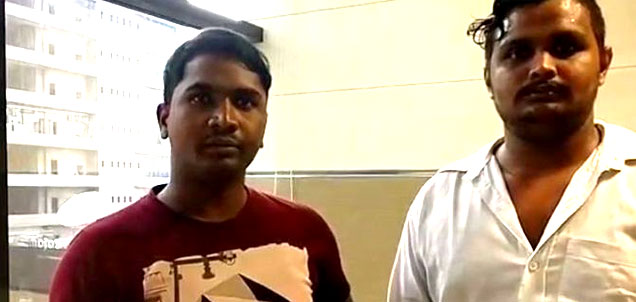
Last week, two of these folks achieved what a lot more than the biggest stars in the business haven’t: saved the lives of around 150 people who could’ve lost their lives in the Kamala Mills tragedy.
Here’s a report that appeared in The Times of India:
Two security personnel from the Times Network exhibited exemplary courage and heroism in the midst of the Kamala Mills tragedy on Friday and rescued over 150 people by breaking open an exit door and leading them to safety.
The staffers, Mahesh Sable (23) and Suraj Giri (21), also averted a bigger tragedy by removing gas cylinders which were close to the falling fire debris.
The Times Network is located in a building adjacent to the one housing the restaurant where the fire started. Giri said the two premises had a connecting terrace. Sable told TOI he noticed the fire around 12.10 am and immediately called the cops.
“I saw people coming down the stairway, but since it was dark, they were clueless. Having worked there for over a year, I knew my way around. I immediately broke open the exit door and guided people out.”
Sable said he then called up Giri, who was outside the building gate, and told him about the people making their way down.
Working in perfect sync, Giri ensured people were escorted to safety. “It was chaotic. Some did not have shoes on, while the clothes of a few others were torn. A couple of them even fell down. I steered everyone away from the shower of debris and the fire,” Giri said, adding he had to even stop a few from going back to the building to rescue family and friends.
Giri also had the presence of mind to alert fire officials about several cylinders kept in a room close to where the fire debris was falling. “We broke open the door and managed to take the cylinders out. If this hadn’t been done on time, all of Kamala Mills would have been destroyed and loss to life would have been colossal,” he said.
Both said their fire training courses had helped them overcome their fear. “I also suffered minor injuries, but I knew I could not leave anyone behind,” Sable said. “It was heartbreaking…I had to help however I could,” Giri added.
Remember these are security personnel. The ones who do the salaams to the saabs and memsaabs every day. Â But Mahesh Sable and SurajGirideserve our salaams. I would urge the Times of India group, citizens and administration of Mumbai and Maharashtra and the various industry associations (IBF, NBA and Press Club) to suitably honour them, as also the various others who saved the day for hundreds.
I have no special love for Rahul Gandhi or the Indian National Congress. While we have seen some good things happening in the country when the party governed the nation, we have also suffered from years of misrule and corruption. And casteism and votebank politics.
I also don’t think too much of Rahul Gandhi. Okay, let me correct myself: I also didn’t think too much of Rahul Gandhi. But since his US trip a few months back, I can see an all-new persona. Perhaps it’s created by the media, perhaps we are looking at things with a different filter. Or perhaps it’s angst against the Narendra Modi-BJP dispensation that has altered my perception.
While it’s true that it’s the winner who finally matters, this is not a game of tennis or cricket. The fact is the Congress came a not-too-distant second and with some margins being wafer-thin. So while the BJP retained Gujarat, it wasn’t too bad a loss for the Congress.
There have been various attempts by people from across the spectrum – journalists included – to discredit the Congress by saying that only the winner matters.
We know that Karnataka, Rajasthan and Madhya Pradesh go to the polls next year along with a few others and the general elections are scheduled to happen the year after (2019). And the performance of Rahul Gandhi and the Congress in Gujarat will have a significant impact on the entire political landscape.
It’s quite likely that the 2019 General Elections will see the return of Narendra Modi as Prime Minister. But even the Prime Minister is said to have admitted to aides that a course correction is critical. Like the revision in GST rates helped save the day in urban Gujarat.
There have been issues about how serious Rahul Gandhi will be now that he has taken charge as Congress President. Will he take off for longish holidays? This is a question which I heard even being raised by Rahul Kanwal on India Today.
In the context of this, Times Now made a “dramatic disclosure†of Gandhi Jr going for a film – Star Wars – on Monday evening, hours after the results were confirmed in both Gujarat and Himachal.
Personally, I don’t see any major virtue in anyone being a workaholic. It’s important to chill, take breaks. It keeps you healthy. And it’s critical that the country is governed by people who are health-conscious. Nothing wrong if they take a break or watch a movie or step out for a meal.
I didn’t watch Times Now last evening (Dec 19), but my Twitter panel was full of posts damning the channel for a show it aired, hashtagged: #AreYouSeriousRahul. A post on Twitter said: “6 hours after Gujarat loss, Rahul Gandhi was watching ‘Star Wars’ at a cinema hall in Delhi. #AreYouSeriousRahul Watch @thenewshour with @navikakumarâ€. There was a good primetime show on it anchored by Times Now editorial head Rahul Shivshankar: http://www.timesnownews.com/india/video/rahul-gandhi-indian-national-congress-gujarat-himachal-pradesh-star-wars-cinema-hall/179827
Shivshankar doesn’t scream and shout, and does try to balance things, but why raise an issue when there is none? Why is Times Now trying to discredit Rahul Gandhi when there’s no need to do it. And does his going for a movie mean that he doesn’t care about the country or his party. On the contrary, I think it made him appear cool (spelt kewl?) and would appeal to the large number of young urban voters.
It’s ironic (and thankfully so) that The Times of India, the popular English daily from the group is significantly more reasonable than Times Now.
One may argue that this is how Times Now has always been and the editorial policy was set by Arnab Goswami when he was President – News and Editor-in-Chief shaping the channel to be a pro-right news entity. But when Goswami left, Times Now had the opportunity to rewire, change things and turn neutral in its political ideology.
That didn’t happen, and things only got worse. Result: while Republic TV launched in May this year, Times Now tried to be a me-too and failed miserably. It boasts of high ratings in sliced age groups and not the relevant viewing mass as released by BARC. While the high numbers in the big cities are significantand perhaps 50-plussers don’t matter, at an overall level Republic TV is far ahead of Times Now. (Do read Ranjona Banerji on Times Now at http://www.mxmindia.com/2016/05/ranjona-banerji-has-times-now%e2%80%99s-news-hour-gone-totally-beyond-journalism-as-we-know-it/).
This story by Times Now hit a new low in journalism, and I’m shocked at the mindset of the editorial thinktank at the channel.
I have spoken with a few people within the channel, and they too aren’t too happy at the stance taken, but then they need the job. And who really cares about their sentiments.
Perhaps the folks at Times Now don’t realise it, but stories like these are doing a great disservice to their own brand. And whatever value it still retains.
There’s only one person who wouldn’t be complaining. Rahul Gandhi. He now appears to be as the leader of a new India. Young, restless. Works hard. And loves his R&R.
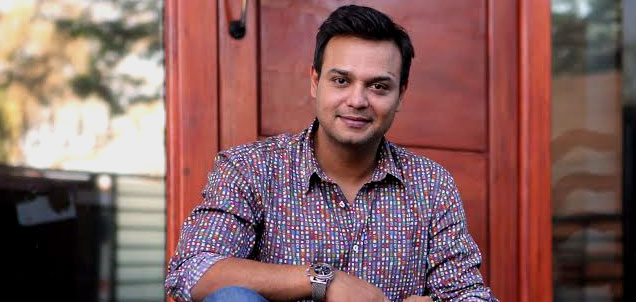
Sony Entertainment Television will debut its much-awaited and possibly most ambitious project ever among ficition shows, Porus, later today (November 27). But writer-director Siddharth Kumar Tewary, whose production house also created the concept, says the show is not just a great story coming alive on screen, of an Indian king who stood up to Alexander of Macedon. It will also set new standards in Indian television with its content, look and treatment. And so confident is Tewary about his work, that he has bought the rights for the show. Pradyuman Maheshwari caught up with Tewary in his office in Andheri in North West Mumbai for a conversation. Excerpts:
Porus will be your biggest project ever, and it comes on the back of some big successes, the most recent being Mahakaali on Colors. Since we are also speaking to you as you complete a decade as an independent producer, let’s look at how it all started. Also, when you started out, was this the path you had set out to take. Did you think you would be doing what you’re doing now?
Not at all. I was born and brought up in Kolkata, which is a very passionate city. It’s passionate about sports and cinema. The idea of making movies really excited me. That’s what brought me to Mumbai; all I wanted to do was to tell a story.
Then, thanks to [Sony CEO] NP Singh, who took note of my interests and asked me to pitch ideas to producers and channels, I quit my job. I just wanted to tell a story, and the only way I could’ve done it 11 years ago, was by becoming a producer myself. I had zero experience in that area, so it took me some time to start a [production] company, pitch to Sony and then make a pilot for them. Funding was a big issue. It takes a huge investment to make a daily series. So yes, I wanted to tell a story then, and I still want to tell a story now. Only the modalities of working have changed, while the core remains the same.
Amber Dhara was your first show 10 years ago, right?
Yes, on September 24, 2007. I call it our birthday. We turned 10 this September.
Many people I have spoken about the phenomenal success you’ve seen in the last decade. Nobody has achieved so much, in terms of body of work and the kind of money you’ve made.
(Laughs) Not really. I don’t believe we’ve made a lot of money. I feel really humbled wen people even say we’ve done decently. I genuinely believe I haven’t yet achieved what I set out to do. But, yes, it’s been a great journey, a complete roller-coaster ride. If you look at our graph, we have been constantly experimenting. We have not stayed in our comfort zone. I believe that has been the most exciting part. As I kept learning, the idea was to take more risks and make something new. To try and do things in a new way. Try and tell the story in a new way. So I think those choices have kept us afloat, because we are constantly trying to better ourselves in whatever we do.
It’s not easy to get out of your comfort zone in a world which works on staying in comfort zones…
That’s possibly true. But I believe that if we just keep on doing the same thing the same way, it might benefit the bottomline of the company, but it doesn’t benefit me as an individual. I don’t grow if I keep doing the same thing for 20 years, and learn nothing new. I might try to follow the Mahabharata with Kali and Shani, and these three may be in the same genre, mythologicals, but they will become completely different in their making. With Porus, it is completely different because it’s a historical series.
I believe we have just one life to live. We have a lot to do, but very little time in which to do it. Straying from your comfort zone actually makes you a better creative individual because you will try a few things, and perhaps fail a few more times than everybody else, but it’s okay. There will be a certain amount of learning that you will have to go through.
But can you take that chance when it’s the channel’s money at stake? And in this business, you are only as good as your last work…
I agree with you on most of these points. But it’s not just the channel that puts in money. Every production house, which is making a show, puts in a lot of money as well. In fact, it is primarily the production house that puts in money. That’s how it has always been.
And, yes, of course we are in an industry where you are only as good as your last show, but it doesn’t mean that if I played it safe, it would work a hundred per cent. I don’t think anybody knows what the chances are. Playing it safe might improve your chances. But a lot of people are playing it safe across the board, and continuing to do the same thing. But is it really working?
We were No. 10 at one point, and now we’re No 2. So for us, it’s really working. When we experiment, it’s not by trying to create niche content for a mass channel, but by creating and presenting mass content in a new way for viewers. By telling the story in a way that viewers get to see something new. My intention for starting this company was not about how much money we would make, but about what we would create. So somewhere along the journey, we realised that we can’t just keep doing Agle Janam Mohe Bitiya hi Kijo kind of things, or even another village story, all the time. So just as Mata ki Chowki was different, so were Agle Janam and Phulwa. As was Ambar Dhara. We also created Begusarai and Razia Sultan, which was a historical. Bandhan, which involved shooting with a live animal, an elephant, was the most difficult show for that reason, but we a daily show out of that. I wanted also wanted to send out the message that animals should not be ill-treated in our country.
So these are things that excite all of us at Swastik. We are a very driven organisation, and have a passionate bunch of people who’ve worked with us over many years. We take a lot of pride in what we create. Also, thankfully, the broadcasters have a certain amount of trust in us. They know that if they give us work, we will leave no stone unturned to give our very best. We are not astrologers and can’t predict the future of the work we create, but we do under-promise and over-deliver all the time.
What would you say was  Swastik Productions’ turning point in your 10 years? Was it Mahabharat? Did people look at you differently after that?
Definitely. I realised a lot of things with Mahabharat. It changed me as a person; it took an ‘epic’ amount of time to make, five years; and I had the full support of the Star family, headed by Uday Shankar. He said, let’s make it in such a way that even before an actor speaks the dialogue, the visual should grab the viewer. I agreed, but it was only when we embarked on the journey that we found lots of issues. Everybody told me not to make it, for various various reasons. But I stuck it out and, as a result, had a tremendous amount of learning.
Normally, we are not exposed to mythology at all. But I read and learnt a lot [during the making of Mahabharat]. I realised that when you start trying to create a world which has been heard and read about, but never seen, it’s a huge creative challenge. To present a familiar story to the viewer in a new way, with a new thought, really excited me. It also completely changed my perspective towards things. It made me re-think mythology. But more than that was the exposure I got while making a series like Mahabharat. With 260 episodes, it was really, really challenging.
Given the medium we operate in, we need to be on the edge 24×7, to deliver consistently. Every mythological we worked on after Mahabharat, was all about how we made it. Then I realised that we were mostly making premium content. Today, we’re a premium-content company, and that works for us for two reasons. First is the large amount of learning that comes. If we are making Shani, we need to understand who Shani is, and convey that to the viewer too — and perhaps demystify a God that people have been scared of. So now when people tell me they understand better what Shani actually stands for, it makes me happy that I’m telling a story in an entertaining way while also sending out the right message.
But interpreting mythology and religion can be tricky, especially in today’s times…
At any time, actually. For instance, in a school test if I answered a question exactly as it was written in the textbook, I would only get 50% of the marks. If I asked the teacher why, I would be told that in school, they don’t want us to mug up things; we get marks to understand and interpret. The Mahabharat is an epic written 5000 years ago, but still relevant today in the values it tries to disseminate and inculcate. If you go to a bookstore, there are 20 different versions of the Gita available. Which is the right one? Indian mythology requires us to read, understand and interpret things in our own way. As for the lessons and messages – to each his own. Everyone has his or her own version of the story they believe, whether or not it makes sense to you. So I have to tell the viewer that this is ‘my’ interpretation of things, and only then will it make sense to them.
After Mahabharat, you did some other shows as well. For Sab TV, for instance?
Yes. I did Yam Hain Hum on Sab TV. I was very cool and fun. I had a great time doing that.
Will you look at doing a  love story like Navya again?
Of course we are. We are a creative company; we are not bound to anything. People keep telling me you are only making mythology series’. I have to then tell them that we are doing various kinds of shows. I’m just going with the flow and enjoying my journey. If we have a great idea, we’ll go out and make the show. It’s not a rule that we’ll only work on things with a certain budget.
So would you create a web series?
Why not? But again, it’s not because everybody’s making one, so we should too. For me, it’s about the story you want to tell. Luckily the stories I want to tell are require a certain scale and a premium production. But I do have some thoughts [about a web series]. I’ll tell you when we get there.
And would you do something for children, again?
We had done a small show on YouTube where we told stories to children. Currently, it’s mostly animation content being created for kids in India. I met with some channel folks to understand that market and what they would like. But again, it’s not about trying to understand what they want on the kids’ front; it’s about what we want to do, and see who it is relevant for. You should first know what you want to do, and then see if it fits within [peoples’] strategies, or on the platforms that are available.
For over 10 years, you’ve worked with various channels like Sony, Colors, Star, Zee, &TV, Sahara and Sab. Has the business changed over the years? And do you have any channel preferences?
Every channel has played a significant role in my life. I started with Sony, and then I got Sahara and Mata ki Chowki was a very big hit. It helped me sustain the big losses I suffered from the first show that we made because, at that point, we didn’t really understand production. We didn’t really know how to make a show. We just wanted to tell a story, so we didn’t consider the financial side of things, which is very basic. But Mata ki Chowki helped us get back on firm ground. Then we did Agle JanamMohe Bitiya hi Kijo, which was our hit show on Zee TV. That’s how it happened. Then Sahara gave me Mahabharat, which was the changing point in my life. After that, I have done Phulwa, Shani and Mahakaali with Colors. All these channels have played an important role in my journey so far. So picking one out of the lot would not be right. We are all great friends. But among the heads, Uday Shankar and NP Singh have definitely played a very big role in my life – the latter because he trusted me when I was a nobody, and the former because he wanted me to make something that nobody in this country had ever made, and he trusted me as if I’d made a hundred shows before! I had done nothing of the sort. So they are definitely special.
While Mahabharat was big for you, I thought Begusarai on &TV would also have a special place in your body of work…
Begusarai was a different sort of series altogether. But for me, [the turning point] is definitely Mahabharat. For reasons that I can discuss over the next 10 hours!
A promotional still from ‘Porus’
So what made you go to Sony with Porus?
Danish Khan, who is currently the Head at Sony, was a part of Star when Mahabharat happened. So when he joined Sony, and I was working on Suryaputra Karn for them. He gave me brief saying he wanted to do something around the Golden Age of India, because that was something not yet shown on TV. He wanted me to think of a subject. I got this idea from something we had studied at school, about a king called Porus who had stood up to Alexander the Great. I had even seen a film about this years ago on Doordarshan. When I went back to Danish to with the idea, he got excited, and we decided to go for it. But I told him that we cannot make it in the way that historicals have been made for TV in the past. We’d have to present it in a much bigger way — probably on the scale of Mahabharat. But there were budget constraints. So that’s how we came to the discussions where I told him that I would like to keep the IP and invest my own money too…
I believe it’s worked because the focus is very clearly on the content. It’s a viewer-comes-first scenario. Because there is a huge amount of money to recover from the market, it will happen only if the show is a success. The channel is paying me much less than what it is supposed to.
So all things considered, it is eventually the viewer who is getting great content to watch. And that’s the only way you can improve the quality of content in television.
But does that mean a creative person like you has to then spend a lot of time and effort doing things other than what you possibly want to do, like marketing, looking at syndication and such?
That’s right. But I believe every content maker should undertake that journey as well, because it’s a natural progression. There’s a huge amount of production [responsibilities] that is cocooned by the channel. You don’t really know about it because you are [piggybacking] on an organisation that has tremendous amounts of exposure, learning and resources, and there are a lot of things that don’t even come to you. But you do need that exposure for the learning it brings. You need to just know I took the IP and I have reached a stage where I need to sell it. so how do you sell it. you don’t even have a great relationship with anybody in the US buying your content. So, yes, it’s been a journey. You also have to have a great team onboard. We are not just only selling Porus and the other shows that we have the rights to; we are also representing others’ content. We have 40 shows from India that we have taken. We took a stand at MIPCOM where we represented Porus there as well as other shows which we took to the world. One Life Studio, the company that we started [for the content syndication business]. It’s telling Indian stories to the world. So it’s a natural progression. And once you step into it, the real-world exposure is priceless. Content is no longer defined by geographical borders. It’s no longer true that a particular show will only work in India.
Today, all the networks — Sony, Star, Colors — have an international presence. For Porus, are you looking only at them or also at international networks with no Indian links?
In India, for example, we are looking at [dubbing Porus in] the regional languages in the South, so it could be on any of the south channels. We have sold Porus in Thailand, in the Thai language. Similarly, Mahabharat was a super-duper success in Indonesia. The South East Asian markets have been buying our content directly from the broadcaster so far. So they know us, and so have been quite welcoming. We also didn’t know where our content has been travelling to, so far. Now we know, and it’s been a nice learning on that front. Today, the whole world is a market. The whole of Africa watches a lot of Indian content, as does Latin America.
How has your experience with One Life Studio, and your effort to look at representing other producers, been?
It’s been really encouraging. It’s only been six months, and we have got some 40 shows. The whole of the TVF Library is with us as is the whole of the Arre library. For the makers down south who have their IPs, we have picked up their shows as well. So 40 shows is a good number to start off with distribution of shoot because Porus has helped us in setting up a distribution setup. Because currently we don’t have a distribution higher up across the world. So we are building it. So it will take some time. Definitely in a years time, we will be talking.
Right now, your shows are dubbed in regional languages. In future — and as part of the growth of your company – would you look at made-for-regional television?
We have started doing that already, with Shani. It was launched two weeks ago and we have remade it for Colors Kannada. So it’s opened with great numbers. We shot on the same sets and with the same script, but used a different cast. We shot it in Kannada and gave it to Colors Kannada. So we are definitely looking at the south for tis.
What about reality shows? Today’s shows are very different from those of an earlier time, and a lot of investment is going into this genre…
We have done a couple of reality shows as part of our journey. We did a show called Saas v/s Bahu [for Sahara One] and Gyan Guru for Imagine, but the channel shut down sadly. Yes, non-fiction is great. With fiction shows, we tell the tale in such a way that we try to convince the audience that that person actually exists. In non-fiction, you take real people and create fiction around them. We will do something in non-fiction, but as of now, I don’t have anything to talk about. Saas v/s Bahu was a five-day dance reality show. It didn’t really work — maybe it was poor content, or maybe it was something else. But non-fiction is definitely something we can do.
What’s next for Siddharth Tewary? Are you looking at cinema?
We are a content company, so we’re platform-agnostic. We keep on creating content so we will definitely do movies too…
Would you turn Porus into a film?
I don’t know if anyone will pay Rs 300 to watch it. We will definitely do movies but the subjects are something we are working on. We are not doing anything right now, but we’ll talk about it when it’s closer to happening. Currently, I have a lot of television responsibilities, and my full focus right now is on Porus and the other shows that are already on air. We don’t want to take on too much; we’d rather do fewer things that are of value to us.
We’ve seen in the past how many successful companies have fallen by the wayside in the long run because they don’t reinvent themselves. Your views and what are you doing to ensure you don’t see the same…?
Like I said earlier, it’s all about continuing to better ourselves. If you stay in your comfort zone, you will never re-invent yourself. You need to take that next step and for us, Porus is that next step. That is the zone we want to be in. I think we should be happy about what we are creating. Every series that we do, must have something new in it. This keeps us on the edge. Trying to figure out what people like — that excites us. Currently, I’m so nervous that I feel like I’m about to take an exam. But that feeling of nervousness fuels me, and I want it to stay till the next story I tell.
What’s next after Porus? What is the next frontier.
There are certain projects that have we are engaged with. I can’t say anything officially, or the broadcasters will kill me. There are certain shows, but let’s just say that we will be trying to re-invent ourselves again with those…
Six years ago, we started MxMIndia as an experiment.
There were enough and more players in the advertising and marketing space. They were active and aggressive. And we must say some were doing a reasonably good job.
However, we felt there was a gap. For one, there was need for at least one more credible player in the market. While it was a B2B space we were operating in, it didn’t mean one had to sacrifice editorial integrity just because an entity was advertising with us.
Or just because an entity was not advertising with us did not mean that we would black it out. Or write nasty things about it. Or good things about its competitor.
But along with all of this, we believed that the A&M reader had matured. She or he needed content that extended beyond announcements or analyses with quotes strung together.
It was important to offer commentary. It was important to ask even the most powerful the tough questions. And even if they weren’t available for replies, we would pose the questions.
We must confess that the strategy didn’t work initially.
And we figured why.
Save a few aberrations, the formula that existed earlier was always to please.
For even though industry folk here, as in any other business, like to hear good things about themselves, we can say with much satisfaction that they adapted to our unique ways soon enough.
They respect us for our views, and are confident that we don’t have an agenda. We may damn someone, but we are quick to acknowledge the good work by the same person/ organisation.
That was how we started out on Onam Day six years back – September 9, 2011.
Since then our editorial and business teams have changed, many moved on – but once again we say with pride that we are in touch with most of them, in fact some even refer to us when they are applying for jobs.
~~
Over the years, we’ve re-engineered our operations. We have fewer people working with us, and only on core functions and newsgathering.
We owe a lot to our various partners and stakeholders. All our columnists and writers, our technology partners and the many others who have helped us over the last six years.
While we thank all those who have advertised with us, our god isn’t our advertiser. It’s you, dear reader. And this means that we will do all that we can to ensure that your experience is never compromised. We’d rather lose revenues, but we’ll guard your interests.
~~
Over the last three years, several publications have trusted us and commissioned us for building editorial content. However, just because Company X or Person Y is our benefactor, it doesn’t mean that we’re going to be extra nice to them editorially. Or not question them.
In the last few years, we have also developed this reputation for not publishing interviews of people whom we’ve spoken with. Some of these are biggies, whose time is precious. But if we believe that that not much has been said by the person, we don’t carry the interview. Ditto with commissioned articles.
~~
Six years is a significant milestone. It marks the completion of five good years.
Thanks much to all those who have partnered us in this journey. Thanks for keeping the faith.
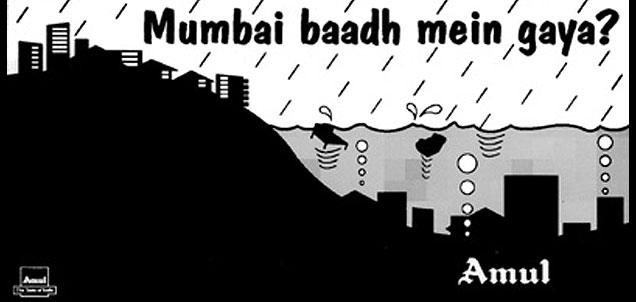
Baadh mein gaya Mumbai. This was the Amul ad from August 2005 on the unprecedented heavy rains flooding Mumbai causing loss of lives and havoc to people, their homes and properties.
There have been a few other Amul ads, that you can see here.
Perhaps the folks at da Cunha are working on an all-new creative for this year’s downpour. The quantum of rains may not been a patch in comparison to what we had in 2005, but it was more than the normal.
What got the entire country talking about it was the presence of a hyperactive social media, messaging platforms like Whatsapp and of course very belligerent English news channels. The belligerence has gone up ever since Republic TV launched earlier this year, with news anchors turning the tough questions to a screaming-and-shouting match.
There are several issues here. While one understands that even the world’s best urban infrastructure can’t handle heavy rains beyond a point, the scene in Mumbai was largely manmade and mishandled.
For instance, why was there no advance warning that there could be very heavy downpour. Why can’t we have graded alerts that ask people to stay indoors and keep schools and colleges shut?
What about the drainage systems of the city? Was there enough done?
Also, the potholed roads. Part of the problem of traffic jams is the presence of major craters at key positions.
Mumbai surely deserves better.
And it’s the community that reads MxMIndia – the advertising, media and marketing fraternity that needs to get into the act and force the government to act.
Let’s us have a safer Monsoon 2018.
But for that, we need to wake up now. And act immediately.
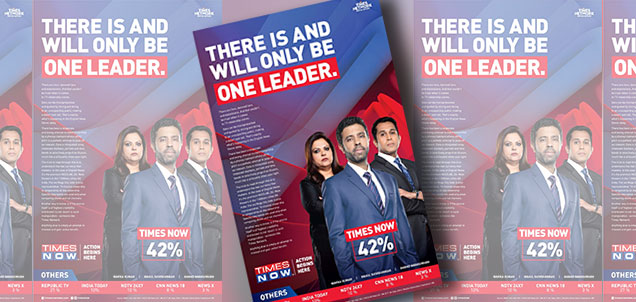
There are liars, damned liars and statisticians. And that couldn’t be truer when it comes to TV viewership claims.
Data can be misrepresented and quoted by slicing and dicing to an unsuspecting public, marking a dwarf look tall. That’s exactly what’s happening in the English News Genre lately.
There has been a desperate and losing attempt to claim leadership by a phoney claimant whose shrill pitch is pathetic attempt to pass off as relevant. Data is misquoted using irrelevant markets, periods and time bands to selectively project an illusion, much like a silhouette show uses light.
The trick to read through this is to understand the real currency that matters. In the case of English News it’s the premium NCCS AB, 22+ Male Viewers in the 1 Million+ cities All India. The six Mega City data is also representative. TV channel viewership is compared by all day viewership. Specific time bands are used only when comparing shows and not channels.
Another way to know, is if the source itself is of highest credibility and known to not resort to such manipulation – someone like Times Network.
Anything else is simply an attempt to mislead and gain undue benefit.
No marks for guessing who the ad is targeting. Republic TV, of course. And since the recently launched news channel is all about its founder, editor-in-chief and chief promoter Arnab Goswami, it’s hitting out at Goswami. The phoney claimant whose “shrill pitch†being “a pathetic attempt to pass off as relevant†is hence none other than Goswami, the former Times Now bossman.
But one must say that the ad has happened after much ‘tu tu main main’ between the bosses of Times Now and Republic TV.
Sources within the Times Network establishment as well as in the news broadcast industry say that more than the war of the Times Network (the broadcast arm of the Times of India group), it’s a war of sorts between the group’s managing director Vineet Jain and Goswami.
Prior to the launch of the Republic, Goswami has compared the battle for supremacy between the two channels like that of a David versus Goliath. There was a controversy around certain trademarks filed for and there was a very clear and loud offensive from both ends.
At MxM, we have observed each and every move of both channels and both owners, and we can say that both have tried their best to outwit each other. Goswami and his crew have also not stopped short of taking potshots at the Times group, though they may not be be as vitriolic as the text of the advertisement.
The News Broadcasters Association (NBA) which has the Times Network CEO in its top leadership also got into the act asking for measurement body BARC to not publish Republic TV data because it employed an incorrect trade practice or multiple LCNs. After Republic pledged to the Courts that is not resorting to dual LCNs to shore up its numbers, both channels got into the act of landing pages.
Landing pages is until now not an illegal practice, but requires a spend of big monies to the distribution trade. According to unverified information that we have received, the collective spends from the two channels per annum would be in the region of Rs 20-30 crore. The bulk of the spends is from Times Now.
What landing pages helps achieve for both channels is that the viewership numbers leapfrog, but that doesn’t necessarily mean an increase in time spent on the channel. In fact the average could go down as people view a certain channel only for a minute-odd and then switch to the channel of their choice.
Industry seniors MxMIndia spoke with aver that the amount spent on pushing distribution in an inorganic manner is a waste. I would rather have the monies being spent on newsgathering and improving the quality of the content or even other outreach activities, said one trade captain.
But the stakes are high for both channels. Republic TV, given the reputation that Goswami had built for himself at Times Now, needed to be on top of the charts to create an impact. And for Times Now, being part of India’s biggest news media company, it needed to show that it’s not dependant on any single individual to stay on as the leader.
Sadly, the network doesn’t seem to have learnt from its mistake, and in the case of Mirror Now, it is only propping up the channels primetime anchor and editor-in-chief Faye D’Souza.
Times Now has tried its damnedest to ensure that it doesn’t get affected, but even some insiders concede that the channel has taken a beating post the exit of Goswami. Also, the primetime alternatives that the channel has put up don’t really match up to Goswami.
However, it is creditable that the channel has not lost out very much, and that has been done thanks to its extensive reach and also editorially, it has ensured that it keeps raising the bar, even though content-wise – and in the pro-Narendra Modi, pro-rightwing genre – Republic is clearly a better channel.
Sadly, the channels with more neutral content – like India Today and CNN-News18 haven’t been able to measure up on the ratings roster. A more anti-Narendra Modi NDTV 24×7 which has been facing some heat given its financial past has also not been able to put up good numbers on the weekly BARC charts. In fact there was a time when the channel even exited from the Top 5 English news channels.
According to audience measurement numbers that we have seen, there is a clear inorganic rise of both Times Now and Republic TV. That of the former is very evident given the average numbers it generated before the launch of Republic.
Our view: For the larger good of the news business, it’s important that both Times Now and Republic TV and specifically Vineet Jain and Arnab Goswami smoke the peace pipe and stop wasting money on pushing distribution. And indulge in this ‘tu tu main main’.
It’s vital that broadcast trade associations like the IBF and NBA make the two see reason and back off. Let the content do the talking, and not fight via advertising and inorganically generated viewership numbers.
The last fortnight has seen many developments on the English news broadcast front, which was decidedly the most forgettable episode in recent media history. MxMIndia has been on the forefront on reporting these and also commenting on them. We believe that as a mature voice of the industry, it is important that we should comment on issues, and even if it means that we are the only ones in the business doing so.
Now that the dust is beginning to settle on the controversy, we list here 10 takeaways from the episode:
1. The IBF has curiously been very quiet on the entire development. We are sure (and hope) it’s been working in the background, but a public statement would’ve ensured that we know that IBF, as the apex body of broadcasters, is non-partisan on the issue.
2. The NBA issued a statement on Friday, but there was no remorse or regret on opting out of BARC’s measurement system. This even a day after BARC chairman Sudhanshu Vats issued a statement which said: It is unfortunate that some members have taken issue with the use of multiple LCNs when many have themselves set the precedent for it – either as a promotional or as a defensive tactic.
3. Multiple LCNs isn’t the only inorganic booster employed by the broadcast fraternity. Landing pages are looked at by not just the newswallahs, but the general entertainment channels too. There needs to be a standard policy for all such inorganic measures for boosting viewership.
4. Republic TV is not yet a member of the NBA, the apex body of news broadcasters, which is also recognised by the government. The NBA has also promoted a self-regulatory body – the NBSA. That Republic isn’t a member of the body doesn’t augur too well for both. And most importantly given its non-membership, Republic is not subject to a self-regulatory mechanism. This could work against it in the short and long run. In case it chooses not to join the NBA, Republic must have its own ombudsman and self-regulator.
5. NBA must cease to be seen as partisan. Its statement issued on Friday, specifically points to Republic, which is a non-member and has been serious competition to some key NBA members like Times Now and India Today. The heads of both these organisations are the two top NBA officebearers. Even though the CEOs of both networks are seasoned and respected professionals, there have been doubts expressed about NBA not being exactly neutral in this episode.
6. Most of the key news channels are members of the IBF. The IBF and NBA must enforce the rules laid by BARC on advertising on all its members. Perhaps either of the bodies must have a ‘fair play ranking’ like the IPL has, with a roster on how members have been faring on certain parameters
7. BARC has been forgiving and not imposed its own ruling of reprimanding channels that remove the watermark. By doing so, it has possibly lost an excellent opportunity of telling erring channels/networks that what they did was incorrect. Now just in case a single channel or a group does something similar in future, it will have to condone that act too!
8. Going to the TRAI and MIB for stuff is not good. These are things that broadcasters must settle amongst themselves. But by according TRAI a key role in their lives, the broadcasters – the newswallahs in particular – could well be playing with fire
9. The secretariats of the various industry associations must be made stronger and with people who can deal with things independent of their elected masters. That’s the only way associations will be considered neutral and that’s the only way in which industry associations can be relevant.
10. Lastly, in love and as in war, there are no permanent friends and enemies. In fact often the two sentiments can co-exist. As we saw in the current episode where at one level India Today and Times Now had combined forces on Republic TV’s multiple LCN deployment and on another India Today complained against Times Now for also deploying multiple LCNs. Imagine if Republic was also a member of the NBA… there could’ve been one complainant…
Pradyuman Maheshwari is Editor-in-Chief and Founder, MxMIndia. The views expressed here are his own
If you’ve been subjecting yourself to the developments of the last few weeks, you would possibly be left wondering whether the same news media that sermonises on what’s wrong and what’s right in India has embarked on a path that’s very uncool. Uncool is perhaps too soft a word. As the road sign says: Danger lies ahead.
Let’s start with the beginning:
01. Shout as if there’s no tomorrow: I was among the first commentators to applaud Arnab Goswami in 2008 for asking the tough questions. But is it right to forever keep raising your voice – with 6 to 8 talking heads screaming and shouting? Perhaps not. And even on nationalistic issues, if Pakistan is Enemy #1, why call people from there? How about some neutral, global commentators? And look at what’s happened when Goswami left Times Now? Another bunch of noise-makers!
02. There’s no really neutral English news TV channel. Sadly, there is no clearly neutral English television channel. NDTV 24×7: Appears neutral only because it doesn’t gush about the government, but clearly left liberal. CNN-IBN is mostly neutral and isn’t obviously pro-Modi even though it’s Mukesh Ambani-owned, but given its ownership, it can’t obviously be neutral. Must say that it hasn’t been tested on this score yet. India Today: Rajdeep Sardesai is exceedingly neutral, but Gaurav Sawant? And why did they need to cover Yogi Adityanath live for nearly two days. And Times Now: unlike the paper, the channel is pro-BJP, and in my mind, it’s to the extreme. Sorry, I don’t watch enough or any of NewsX and WION to comment on them, but from what I remember of it, NewsX isn’t exactly neutral and WION is as of today too insignificant to matter
03. Legit, but unfair distribution marketing: Using multiple frequencies to promote themselves on different genres is wrong as per the rules, but almost every channel has been reported to have indulged in it – in the distant and recent past. At one level, it’s an unfair practice. But why should the government or TRAI bother. An activity likes this costs top $$$s (in fact $$$$$$$$$$s), and a channel can’t do it forever, unless it cares a damn about its bottomline. Crying to the quasi-government TRAI and the ministry too often can backfire bigtime!
04. Pulling out from the BARC ratings is incorrect. The joint industry body was set up by the ecosystem – broadcasters, agencies and advertisers. And the setting up was accelerated because of a news network’s angst against the earlier measurement firm (TAM). The likelihood of relative errors is a reality, and needs to be factored in at all times. Does this mean one must pull out of the measurement system. What the News Broadcasters Association (NBA) has done doesn’t augur too well for the entire ecosystem. In fact it was Regressive. Let’s capitalise that: REGRESSIVE!
05. While television channels can be aggrieved, industry associations should be above interests of individual channels. The NBA erred on that. NBA President Ashish Bagga, is also CEO of TV Today Network, which runs the India Today channel and the decision to advise member English news channels to pull out was taken under his leadership. From what I hear, NBA may not be a divided house on this decision, but it’s clearly not united on it. There are some who believe that the episode could’ve been handled better. Meanwhile, I believe constituents of the ecosystem mustn’t handle them with kid gloves, as I think they have been.
06. The secretariat of the two key industry associations could do with some attention. The reason why NASSCOM or the much larger FICCI and CII are so successful is not because of the Chairman or Presidents, but because of the Secretary Generals or whatever the head of the secretariat is designated. The IBF, which is 60 per cent owner of BARC, chose to stay mum on the issue. And the NBA secretary-general chair perhaps needs a new occupant. The issue could’ve been handled better had there been a more dynamic head of both these bodies
07. Times Now has been making optimum use of its siblings The Times of India and Economic Times for promotion. What it doesn’t realise is that its readers see through the negative propaganda and every printed report actually gives more publicity to Arnab Goswami’s Republic TV. While it’s got India’s most celebrated journalist as a mascot, Republic got a major shot in the arm with all the publicity in the #1 paper of the country. Earned media or whatever it’s called! PS: the page slug on the ET page that carries the report today says: Pure Politics.
08. Cross-ownership issues have sprung up again with the Times of India and Economic Times offer prime space for negative stories on Republic TV. The stories make for good fodder for a trade site, but for a broadbased general news or a business daily? Had it been any other country, there would’ve been complaints on cross-media ownership. In India, no such luck. Governments are just too scared of the print mediawallahs
09. BARC guidelines not followed on advertising: This is something that Republic TV is going to get nailed on. By promoting viewership numbers for just one or two weeks, one is going against the guideline of advertising viewership numbers. The problem is that the reprimand, if any, happens when the damage is done. And the only way in which this malaise can be corrected if an industry association issues a diktat and imposes penal action.
10. The NBA and all the English news channels must realise that while the wars may have resulted in greater viewership attracting undue attention can be counter to their overall interests. For instance, the repeated statements by various people that the English news channels audiences don’t really matter. Etc, Etc. In the longer run, the perception sticks while making advertising decisions. And all of it is very bad for the genre as a whole.
Pradyuman Maheshwari is Editor-in-Chief, MxMIndia. The views expressed here are his own
The News Broadcasters Association has some really big industry folk on its managing committee… the Board of Directors as they call it.
At a personal level, they are all achievers, and I respect them. Click here for the list. Now, let me first say very unequivocally: I hold no brief for Republic TV. I must confess I am not really a huge admirer of the Arnab Goswami school of journalism. MxMIndia – with our Consulting Editor Ranjona Banerji chiefly and myself – has damned his shows enough when he was on Times Now.
But that’s my – or our – personal view. We believe it’s a free world, and if he does transgress – as in, cross the line, there are enough forces – political, business and legal to correct him. For the now, the masses are lapping him up. He’s the voice of the new Indian.
The fact of the matter is that the Arnab Goswami brand of news television has worked wonders. And this not just in terms of viewership or ratings, but also with those with the monies. Republic TV’s list of benefactors tells the story.
So when he decided to start his own channel, there were worrylines all over. Here was a man who could rewrite the rules of the business if he has enough staying power – moneywise.
Remember just having a credible, independent voice is not enough. If that was the case, MxMIndia would’ve been super-super-successful revenue-wise. But that’s not the case, we don’t aggressively solicity advertising. We just nudge. Those who believe in us, back us.
But this is not our story. This is the story of an industry association leadership that must indeed hang its heads in shame.
Or perhaps wear bangles, like this:
Gosh, have we gone too far… bahut ho gaya?
Nahin. Nooooo. Do you recall the disrobing of Draupadi in the Mahabharata? What happened on Thursday evening is something as bad as that.
Or let’s look at another example. We all know that the examination-oriented system of education has major problems. We also know that papers leak. We also know that kids cheat. But do we just exit the system screaming “Screw it!â€. Will a school or a parents’ association advise students not to take their exams because the Class 10 or 12 exams are a sham?
Well, we can exit the education system. It’s possible to flourish without the degree or certificate. But you’ll need to figure how the world will assess you.
I am not convinced that the News Broadcasters Association – which is headed by some very discerning names – could be buckling under pressure from some members who perceive Republic TV as competition.
If it genuinely felt aggrieved, there were other things that NBA could do. Like when it realised that BARC was going to go ahead with the release of ratings, if it felt it had a genuine case, it could’ve approached an appropriate Court of law (and not the Courts set up by some of our anchors across various channels) and urged for a stay!
Why didn’t it do that?
Why doesn’t the NBA issue a diktat to all its members asking them to not go in for any ratings-boosting activity like dual LCNs, landing pages/slotsetc?
As I write this, I am aware that some advertisers are reconsidering their advertising on the English news channels. They may threaten a pull-out very soon. And much as I would like every media entity to flourish, the English news channels who have pulled out of BARC ratings need to see reason. Or be shown the stick.
Here’s what needs to be done:
1. The NBA must reverse the advisory to its English news channels to pull out of BARC
2. The English news channels must get the watermarking back
3. The NBA, ISA and AAAI must convene a special meeting – which may be convened by the CEO of a network/channel who has no skin in the game – like NP Singh of Sony Pictures or any other respected industryperson like, say, Sameer Nair (now CEO of Balaji). Note I have not mentioned the names of Star India Uday Shankar because he is a former news television CEO. Also the Zee and Viacom18 heads have sibling channels in the news business.
4. All broadcasters must take a joint decision on the issue of dual LCNs, landing slots
5. The AAAI must be urged to only deal with channels/entities that are affiliated to the IBF or NBA, so that it will ensure that all channels toe the IBF/NBA line
6. All advertisers on television channels (Patanjali included) should be convinced to become ISA members to ensure that the rules are followed. Similarly, broadcasters should only deal with AAAI-membered agencies.
7. IBF and NBA must admit members provisionally without any delay, on clearance of cheque/RTGS/NEFT etc
8. Since NBA has limited number of members, and there can always be charges that all the channels can gang up against a new entity, there should be a recourse available to an aggrieved member to go to a joint committee of the IBF, NBA, AAAI and ISA which may be set up
9. Meanwhile, BARC must set up a clear deterrent as a rule that if any channel decides to opt out of its ratings, it will not be allowed to return for a period of one year or payment of Rs10-25 crore or some such
10. IBF and NBA must ensure that the BARC advisory/guideline on channels advertising is followed strictly. Those who are repeated defaulters should be penalised in the form of a lower payout of advertising monies on the channel. And eventual debarring of payment.
All of the above needs to be actioned before the Week 20 BARC numbers are released.
Pradyuman Maheshwari is Editor-in-Chief, MxMIndia. The views expressed here are his own
I have had mixed views on Arnab Goswami’s brand of journalism. But I do believe that there is a market for it. And for the last nine-odd years, his stock has been rising high.
I don’t think the screaming and shouting on the nightlies is the way to go about things, but I am in huge minority. I also believe that it’s important to have our news anchors ask the tough questions to the mightiest of politicians and authorities and not be a part of a cozy club.
Also, I must confess, on some issues that I feel very strongly about, it’s a delight to watch Goswami in action, demolishing the other side.
For instance, as MxMIndia Consulting Editor and senior journalist RanjonaBanerji has said, no one champions the cause of women’s rights as well as ArnabGoswami does. Okay, not in so many words, but you get the sentiment.
We don’t know the exact reasons why Arnab quit Times Now. The parting was amicable, though he couldn’t do a farewell show. But I tend to agree with MK Anand when he told me that it was impossible to offer a platform (on live television) to Arnab to host a grand farewell for himself.
But it’s been a war from the day he exited the Times Now headquarters.
ArnabGoswami has had friends in the right places. I remember how he helped invite Rahul Bajaj to an awards event of the Exchange4media group eight-odd years back. For Republic, he has managed to weave together an alliance of people who were willing to back his project, knowing fully well what his brand of journalism is all about.
Over the last few years, broadcasters have found a loophole in the distribution system where they manage to increase viewership by being available on multiple frequencies. Deals are struck with various distribution points to manage this.
Now there’s a government/TRAI regulation on this issue which is going to be finetuned further. But despite that there have been several attempts in the past:
For instance, when India Today relaunched. And then with the Union Budget for CNBC-TV18. Later Times Now did it around the UP elections.
According to information that we have, Times Now continues to employ multiple LCNs.
Meanwhile, ArnabGoswami is livid with the NBA and its functioning. He charges that there is a clear conflict of interest as Ashish Bagga who heads India Today is President and MK Anand, who runs Times Network, is the Vice Prez. It’s not the first time that a channel has complained about the NBA being partial given that its officebearers are from rival channels. In April 2009, Rajat Sharma’s India TV quit the NBA charging bias. According to a report in the Indian Express dated April 11, 2009, India TV had written to G Krishnan, the then NBA President and TV Today CEO stating: “The NBA Secretariat, under the presidentship of the channel head of TV Today group has become the personal fiefdom of the TV Today Group… we stood deprived of our invaluable right of personal hearing and representation through counsel.”
Very strong words, and even stronger words now from ArnabGoswami (See Television Post report: link)
Is there a way out of this mess? There’s got to be. All television channels must sit together and jointly agree to not go in for multiple LCNs and any other tactic on the distribution growth that is inorganic. And of course illegal.
Pulling out of BARC ratings will be counter-productive for television channels in the short run. Channels can’t be investing heavily on multiple LCNs and landing pages forever. A correction is bound to be seen, and eventually it will be quality content and of course marketing and distribution that will work for a channel.
The Nation Seeks an Answer to the LCN mess. It’s time someone from within the ecosystem steps in to broker a deal. Soon.