Tag: Pradyuman Maheshwari

  • Five years of BARC. Looking Back. Looking Forward


    The Broadcast Audience Research Council (BARC) celebrates five years of operations today (April 29, 2020).


    Many of us know the circumstances in which BARC was envisaged and established, and given that audience measurement doesn’t come cheap, it was indeed wise to have a joint industry body doing the exercise.


    With BARB from the United Kingdom as inspiration, BARC was incorporated in 2010. Operations though took off only after some five years and the first set of data was published on April 29, 2015. In the very year of launch, it also announced rural audience measurement and now measures 185,000 individuals over 44,000 homes, and that number is set to grow to 55,000. Well it was scheduled to, if Covid-19 hadn’t happened.


    Viewership, as measured by BARC, grew 38% till 2019 and a total of 48.4 trillion viewing minutes were consumed in 2019 alone. BARC currently measures 634 channels. The future is bright given that 100 million homes still to get a TV set.


    It’s unfortunate that the celebrations are dampened by an ill-placed recommendations from the Telecom Regulatory Authority of India (TRAI)


    Sunil Lulla, a veteran mediaperson who has worked across the M&E spectrum, took charge at BARC in October 2019. With broadcast – entertainment, news, with advertising and with a large production house. He has also spent some quality with a large digital venture. He spoke with Pradyuman Maheshwari, Editor-in-Chief, MxMIndia on a wide range of issues. Check out the video. It’s nearly 30 minutes. So pull out the popcorn or whatever. And enjoy.


  • Rising to the Top with Nick, now Colors

    Nina Elavia Jaipuria, Colors, Nick, Viacom18


    In September 2018, when Viacom18 announced that Nina Elavia Jaipuria was going to Head, Hindi Mass Entertainment in addition to the Kids TV Network which she was already spearheading, there was an element of surprise and anticipation. Surprise, because she was doing a great job in a hypercompetitive space like kids, so why burden her with more, and anticipation because we did know that she has done her bit with GECs at Sony and is no stranger to the genre and that she could do it. Almost in superquick time, Colors has delivered – and not just with non-fiction, but also with fiction. We took a while to do this freewheeling interview, but now that we fixed a time, we took the opportunity to get up, close and personal. Note: the interview was conducted on February 24 and after that two weeks of BARC data have been released. Excerpts from the interview of Nina Elavia Jaipuria with Pradyuman Maheshwari.


    You are sitting in the same place when you were only handling the kids cluster… haven’t changed your office?!

    Yes, very much. Some things don’t change. Some things that worked don’t need fixing. Very happy where I am and it’s been a fantastic ride. Moving from kids to adults.


    And you’ve done that earlier.

    Yes, back to adults. My media journey actually started with Sony Entertainment. My first show there was Jassi, if you remember.


    Yes, it was quite the rage.

    And then the first Indian Idol in Sony. I also did the first Khatron Ke Khiladi and Jhalak Dikhla Ja. I also did the first Bigg Boss. All of them were at Sony. Now of course they are all in this building which is a happy space to be. But having said that, I think I am grateful to the organisation to have found me capable. This is my 14th year by the way. Thirteen is a lucky number for me because when I got this it was 13 years in Viacom.


    You were with Viacom before it became Viacom 18.

    Yeah, my appointment letter was from MTV Networks and precisely one year later, we became Viacom 18.


    This was a question that I have been wanting to ask you ever since it was announced you were taking charge of Colors. So, is Colors kidstuff or a lot, lot more?

    I think all target audiences are now getting savvier. It’s important to understand the consumer and I think that it’s a very important part of what we do to make sure that we are catering to them and their entertainment needs. So, to me, kids is a very dynamic target audience. They are so dynamic that they are challenging with their tiny, mini attention spans. Having said that, in the GEC space, the whole question is how do you continue to get loyalty and stickiness for the channel. You have to keep making sure that you are delivering endearing stories and characters. We are looking at white spaces which keep viewers stick to you and keep giving them their daily dose of entertainment. To me, both businesses are fairly different in nature. Both audiences behave very differently. But at the end of the day, the good thing is that, since we are an entertainment channel we cater to families. I happen to know both of them fairly in detail now… we are a family entertainment network.


    So how do you switch on and switch off from kids to adults?

    See kids has been there for long. It’s like I said, 13 long years of Viacom 18 with the kids’ business. When I took it up we were really the number last channel and we came up the ladder and over took Disney and Turner. Nick has been rated the No 1 channel now for six years in a row.


    Hmm.

    We have really built that business. I remember there was this time in the organisation when there was a conversation which was like you are the No 1 channel but not the No 1 network. Now of course we are the No 1 network as well because now we have 34% of market share. It’s a long journey from where we started and where we are today with 21% Nick and 10% with Sonic. And Nick Junior is doing very well as well. From that perspective, the journey was very fulfilling, very gratifying in that sense because we built business models that weren’t built in this country until late. We started creating IPs on our own and which are created by Viacom 18. We have actually done eight IPs in eight years. Having said that, in my daily business now, both come very naturally to me. My foundation media was GEC, so that can’t change. The solid foundation that you have, takes you to where you have to belong.


    But the fact that you have to stay on top itself is important. There are other biggies out there who are fighting to get there. So sustaining No 1 status is also a challenge…

    That is always the case. To get there is easier than to sustain it. It has been a big challenge for us at Nick and we have managed it so far. But we keep thinking that somebody is going to topple us at some point and we want to stay ahead of the curve. But it’s also about being in the business which is very cyclical. It’s also about being in the business where you have a tempo that will take you somewhere and then it’s very hard to sustain and then it takes you up again and takes you down again. But what’s different from the kids perspective is that you hook them on to a character which creates a very big bond and relationship with the viewer. That stickiness and loyalty is much more because the kid wants to come back for that character, to you. Whether it’s Shiva or Motu Patlu or whether it’s Rudra, they want the dose of that character multiple times in a day. So that’s a different business of how you keep on innovating and make sure that you give them content. We made 150 hours of animation content last year for example.


    And they have been huge successes.

    Yes, huge successes. And we put in a huge amount of money. You know how much animation cost is. It’s not cheap. But that is what is keeping our portfolio – the width and depth of our portfolio — very, very robust. That keeps bringing kids, consumers and viewers back to the channel. I think we are actually making sure that at the end of the day we do the same at Colors where we are talking about knowing what the consumer wants. We are about knowing all about the white spaces and innovating. We are about delivering different genres which haven’t been tried before. If you look at our line-up today, the sweet part of this No 1 journey for Colors, at least if I would talk about it is the fact that, it is not purely on the merit of Bigg Boss. To me it is about our fiction which is firing and how!


    You had a great run doing Nick. So when you took on Colors, didn’t you ever think ‘Gosh, what have I taken up?” It was great going with Nick, and then you had more responsibility…

    No, in fact it was challenging. What you had to do was sustain one business at the No 1. What was challenging for me and what was more reassuring for me personally is to say is that if I had turned that around, there is no reason why one couldn’t replicate it. There is no reason why as a team we can’t come together and make sure to break our hands and legs or do something to be back at the top. We proved that. There were lot of exits in the building that we know about them, across lots of functions. Having said that, did anything change where we were driving the business?  Absolutely not. We just made sure we kept the focus on what we wanted to achieve and the good part about the focus was that we made sure that we worked on fiction and non-fiction. We made sure we worked on weekdays and weekend together. That’s why the beauty of the fiction firing for us is so large because from 7pm onwards which is Vidya to Choti Sarrdaarni which is at 7.30 to Shakti to now, Barrister Babu. All of these and I can talk about the first 3 are actually slot-leaders. The fact is we have four fiction shows in the Top 10 of the country. So that is Choti Sarrdaarni, Shakti, Naagin [4] and Barrister Babu which opened at 2 which put us with four shows in the Top 10. Which is absolutely so gratifying and not just from a quantitative perspective but from a qualitatively. We do all-max characters…


    While all shows are doing very well but in the past we have seen it has been a little cyclical. The Colors story as well had started right on top. When it started out 12 years back. It went up. And it often goes up and down.

    It’s true for the entire GEC genre.


    Unfortunate?

    That’s the truth for the category. When you do a tentpole, you hit a certain level. The strategy for us at Colors is try to maintain [the leadership].


    Perhaps an unfair question to ask: How do you ensure that you replicate Nick longstanding success story with Colors?

    See it’s not so easy. It’s not like there is a written formula which says, like here is what I have done in Nick and I should follow what I did at Nick. But I do believe that some bit of the ‘keedapanti’ and the whole thing about wanting to pioneer, innovate and experiment has been the DNA of Viacom18 and I think from Kids I take that to Colors as well. We are trying different things. We are trying to innovate. We are trying to experiment. Look at the genres at what we have launched. Look at Barrister Babu. Unheard of a genre; taking up a social evil. Naati Pinky – a very different, nuanced show, very enduring Pinky. I don’t know if you have seen in the show.


    I did…

    The character is lovely… it grows on you. It’s a very different genre. Experimentation there again. I strongly believe in my personal way of leading the teams has always been team work. Some ways of talking about how as an organisation which is a BU [business unit], we need to deliver and take the business [forward]. No matter whether that is marketing or on-air production, content, research or scheduling. In fact it’s even sales to some extent and if all of us are on the same page, I totally believe we can totally take the business to where it belongs… if we all work outside of our sidedoors and united. So large part of that happened when Colors happened. So of course one is the experimentation, innovation and risk-taking, trying different genres, making sure that… and the fact that we wanted to focus on getting our fiction right. We have tried a lot. You have seen the number of launches we had. You have always to be ready to make sure that not everything is going to be a hit. You will have to take some flops. But in that process we have got Meher going. We have got Naati Pinky going. We have had Barrister Babu getting a great start. Look at what Naagin 4 did. The biggest launch of Hindi GEC in 2019. People are actually waiting for it to come back and saying where is Naagin 4. Imagine viewers are waiting for it. Look what the launch did to us.


    How does a same person who does responsible entertainment with kids channels do Naagin which is labelled by many as regressive.

    Even when I did Nick and I was responsible. I think the onus of what happens in your family is that of the family member and the parents. Entertainment could be us, OTT, Bollywood. It could be anything. Your child can be exposed or the family can be exposed to anything today. The onus of being responsible while lies with us and we are very careful. The buck stops with the family and the parent. Look at what Twilight is. Everybody raves and rants about the western world.


    Hmm, and Vampire-

    That’s what. Vampire and Twilight and all of that. What is all of that? That is fantasy. That’s the genre in which Naagin functions. It’s been an Indianised fantasy compared to that of the world;s and all of that. Having said that, fantasy as a genre has always existed.


    And…

    The fact of the matter is that 90% and more are one-television households.  We always knew that co-viewing is happening.


    Huge amount.

    On both. Kids also. Adults watching kids and kids watching adults. Both ways. Because we know that the remote moves from child to adult at some point of time in the day. We know that all the kids who are watching us and their tailormade content are also passively watching everything else. A lot of reality and impact shows are followed by kids. They love a lot of all of that.


    True.

    It’s huge. There is a lot of fan following to an extent that in our kids research we find shows and characters mentioned which are GEC characters. There is no stopping that in a country like India, where you will continue to have co-viewing. If you ask me, co-viewing is actually benefitting the industry. Because it gives you the opportunity of having that many new platforms to reach out to families as a whole. That gives an opportunity to advertisers as well to reach out to audiences which are not just niche and specific for kids.


    When you look back at the Colors story since it started 12 years back, it’s a channel that’s experimented a lot. It’s like the name of the show – a Khatron ka khiladi.

    Absolutely. But experiment only when required. So you don’t fix what you have broken.


    That’s right.

    At the end of the day if it’s working for you, you build on it. So the trick is for the tenth season of Khatron Ke Khiladi, you build on KKK to say that what is it that I can give this season that I didn’t in the last nine seasons. How can I innovate. But you don’t go looking for another format when you know that KKK was the biggest non-fiction show of 2019. So what you do is get a twist in the tale and say we have not tried Bulgaria so far, for example. The fact that Bulgaria had its own challenges. To overcome those challenges, you actually ended up innovating, experimenting with tasks, experimenting with all the drills that you did there. The freshness comes from Bulgaria. The freshness comes from Rohit Shetty getting even more excited this year because he knew he delivered the No 1 non-fiction show last year and he himself wanted to this bigger, larger than life.


    And curated some of his own tasks.

    Yeah. Like, I don’t think KKK has ever done a moving train stunt before.


    I saw that.

    Plus we have done an aerial stunt with the chopper. That’s new. The fact that the newness comes from the kind of mix of contestants that you have. It’s a fairly eclectic mix…


    Are you worried about the ratings which come out every Thursday?

    I’m never worried. I think life in media is not to be worried every Thursday or whenever you give an exam and you wait for the results. But to be worried is a wrong thing to say. Having said that we know that the [Bigg Boss] season has delivered. So to me, it has been a blockbuster. The only anxiety of course has been of saying that post Big Boss, what? I am telling you that we have started that work long before while we were enjoying the success of Big Boss, all of us here were more worried about what life after Big Boss. The fact of the matter is that our fiction has fired so well that we are not so worried about losing Big Boss on the weekday – Monday to Friday because we know we have four fiction shows in the Top 10.


    Finally fiction is what drives a GEC.   

    It’s the bread and butter. You can’t do without daily dal roti and vegetables, right?


    You spoke about thinking of what you will do after Big Boss. How much do you get actively involved with the content mix, etc?

    See the content team is running with decisions that we as a team you use sounding boards to figure out what is going to work and not going to work. Should we try or not. For example, the content team was just talking about how do we continue with this Big Boss phenomena. How do we make sure this popularity we are able to deliver it. That’s when they came up with this whole thing about why not take Shehnaz and Paras into a new show. It was a matter of days and weeks of let’s try this new show. Let’s try and pull it off and see, take Shehnaz and Paras who were so popular in the Big Boss into a sequel. It was a decision that we altogether took. It would help us to sustain, to continue the Big Boss popularity. The fact that people are in love with Shehnaz may want to come back and see her and continue with the loyal audience for Bigg Boss to make sure that we don’t drop the eyeballs. So I don’t involve myself in the day to day content in terms of stories and arcs and all of that. But we do follow the fact that there was a Shakti leap to happen. We were all talking about should we, should we not. We said we have to. There is no other way. We have to do when Big Boss is on. All these decisions are cohesive in nature and taken together in that sense.


    Colors is the flagship channel in terms of revenues for the group.

    Absolutely.


    So the responsibility is huge!?

    Very huge. In fact it can be nerve-wrecking. You know everybody’s future in this organisation depends on whether Colors makes it to the top or not. It couldn’t have happened at a better time than a time when there is a slowdown. There is a sluggishness in the economy. But having said that when you are at a peak at that point of time. There are people who are willing to take a bet with you and willing to put their money where their mouth is because you delivered in a period that has actually been very hard. I think it could have come at no better time than to help our top line actually surge ahead with the kind of response we got for Bigg Boss. Even in a year like this it has been a profitable show. Even when we extended it, almost 70-80% of the sponsors that came to the original, came back to us on the extension which is how much they believed in the property. Which is how much they believed in the channel. So to me, it couldn’t have come at a better time. The fact that it is now helping us at a top line level. The fact is that some of the pieces worked for us…


    How is the sales process looking? You have a new sales head.

    He’s not new anymore. He has completed nine months and he has delivered. And he’s delivering.


    It’s been a horrible year for sales overall in the industry

    But like I said to you, when you have a winning property on hand. Whether it’s a fiction show that has worked for you and now it’s in the Top 10. Or whether it’s the winning property like KKK perspective or a Bigg Boss which has never seen a season like this before. There are brands who are willing to put their money where their mouth is… they know that a winning property is going to bring them a greater ROI than one which is not been tried and tested before.


    All in all, achche din for you. But any reasons for sleepless nights, if at all.

    See, the media is all about being very dynamic. It’s all about change. We are constantly on the treadmill. Every single week-on-week is a number that you need to make sure that you have to be delivering enough and more content so that viewers don’t run away from you. So there is no saying that I am going to sit back and relax and now enjoy. Like I said, before Bigg Boss was going to the finale, we were thinking about how do we sustain. That continues. We are constantly on the look out to maintain great storytelling. We have got to maintain endearing characters. We have got to maintain the newness and innovation which will keep getting our viewers back. So in fact we are already thinking about how do we tie IPL for example. What is going to happen during the IPL. What is going to happen after IPL when the viewers come back.


    IPL does impact

    IPL has always been eating into GEC eyeballs. It’s not just Colors. It’s the category.


    And the extra emphasis on promoting it.

    Yes, absolutely. It is bound to eat up into the category. No two ways about it. Having said that we have also gone through many IPL cycles now and all of us have survived and there is no reason why we should not. We should ensure that we plan for it. You know exactly what your strategy is going to be on weekday, weekends… on the matches where there are some teams that are very specifically watched and create a nuisance for you. But currently we are best placed for this challenge because we have about 144 million viewers every week on Colors. They are watching almost over 200 minutes of us. Now even if we lose, how much would we lose. That’s also because our fiction is firing. Bigg Boss has given way to KKK, it has given way to Naagin. There is enough and more in the channel to come back for and of course we are giving them Shehnaz as well.


    By the time IPL starts, some of these shows starting now would’ve matured.

    They only grow. Like I said, Pinky is growing on you as a character she is really for me personally I thought that show is very different. Because it is talking about a woman who is so challenged but yet she is so positive. It has a bit of comic twist to it which is different from the new ones. The character really grows on you. Similarly, Barrister Babu is talking about social evil but at the same time giving you so much entertainment and drama that it’s not a show that you will not watch. You will keep wondering what’s going to happen to this lovely girl who is eventually going to be the First Barrister Babu in her region. So it’s a lovely endearing story about a relationship between a man and a girl. It’s beautiful according to me.


    I have seen the promos.

    Lovely promos. Even the promos were looking lovely. It took us a long time to figure out the strategy of promoting that show and how we should promote it. It should not become like another Balika Vadhu that we are talking. We had that risk of going there. We said that we had to make sure of the strategy that we follow, and make sure that we get that promotion right as well. That’s why the great opening. Top 10 on the first week.


    Back to Nick… the big season for the kids channels coming up in the summer.

    Yes and we are ready with our ninth IP, by the way.


    Ninth?

    That’s our 9th … I’m not going to reveal more.


    Is it a film thing, or your own IP.

    Own IP. Can’t keep doing film. We are really looking forward to this. Again a completely new genre. A white space we have not done before. Even the category is not done before.


    So, are you watching more of kids channels or GECs?

    (laughs) Look at me. I’m consumed totally. Then to be in touch with all of that, I am also in touch with OTTs. I have my hands full. I have to make sure what viewers are watching. What is the kind of content that is being offered. Not just in television but in OTT space because in my view these two are going to co-exist for a while. Neither is going away. Neither is cannibalising. Neither is threatened by each other. As content makers and storytellers, you better understand the kind of stories that are being told across platforms. Because content to me is going into space which is platform agnostic. Because a lot of what we do on television is lapped up on Voot right. Look at what Bigg Boss did on Voot. 1.5 billion video views. That’s a big number!


    Yes it is

    Sometimes I do believe that content is platform-agnostic as well. And the good part of what we have on Voot, is the fact that there is so much rich data that is now available to us from a viewer standpoint that we can actually use the big data, use the analytics to make sure we help, chisel and curate the content that we go create for. That’s the beauty about having it. That’s why I think that when somebody asks me about what OTT means for a TV broadcaster. Unlike the West in India particularly, the broadcasters are ready with it. They are ahead of the curve. They create their own OTT platform. There is some viewer to be graduated from TV to OTT, we have our own product lying there ready waiting.


    Except that OTT has different kind of content, more adult stuff.

    While we are all say that, there are enough viewers of Choti Sardarni, Naagin and Bigg Boss on OTT and that’s true as well.


    So what next?

    There’s cricket which will go live on Colors Cineplex, VOOT and Jio.


    We didn’t discuss Colors Cineplex… but will do that on another day. Thank you!


  • Mufflerman & the Mango People


    By Avik Chattopadhyay


    In February 2015, I had done a piece for MxMIndia titled on Brand AAP on the occasion of Delhi waking up to the 67-03 mandate. Last night, my friend Pradyuman helped me refresh my memories of the same as I sat down to pen my thoughts on Delhi waking up to the 62-08 reality!
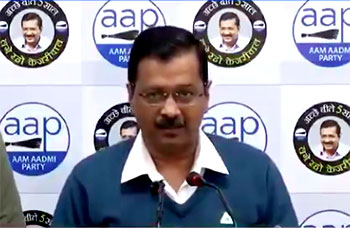
     

    After five years, I look at the AAP brand again.
    To see whether it remains the same. Or has it changed. Or evolved.
    There is nothing political in my analysis and assessment here…purely from a brand manager’s perspective.

    So, what have been the FIVE key learnings of the AAP brand?


    That the core purpose remains the same.

    The core brand idea cannot be tinkered with based on different occasions and opportunities.
    The AAP purpose remains the very same as it was in 2014 and 2015.
    It is all about fundamental deep-rooted development… about education, health, water, electricity, mobility and safety.
    It is an organisation of middle-class people who earn their bread the hard way.
    Therefore its purpose has to do with improving the lives of the middle class.
    You do not play around with your purpose just because you are in the driver’s seat… the destination remains the same as long as the vehicle remains the same.


    That the personality has to mature with time.
    This is crucial in the life-cycle of any brand, for it determines the ‘route’ you may take to help your vehicle reach its destination.
    It was “clean development” in 2015, it is “clear development” in 2019.
    The demonstrations on the street have given way to demonstration of actual work done.
    So, is the leader no longer the ‘rebel’? He sure is, but the cause is more clearly defined.
    And the energies of the rebel are channelised now.
    There was definitely some bluster in 2015. Its only candour now.
    The candour earlier was sometimes uncomfortable. Now, it is comforting.


    That the promise has to be clearly demonstrated.
    The comfort in the candour comes through the demonstration of the promise.
    At the end of the day, human life cannot improve by consuming tweets, memes and social media posts.
    It is by schools, clinics, uninterrupted electricity, free water, improved mobility and greater safety.
    It is about the here and now.
    Digital and social media are only supports and not the core food.
    Spinning stories are good for a satiated and secure person, not for someone who is still getting his / her life into order.
    As Lenin had said, “How can a man think with his mind when his throat is parched?”


    That the key stakeholders are to be respected.
    Most brands forget this in their ‘power trip’.
    As a ‘ruler’ one has the greed to look down upon the electorate and grant it a “mind” far lesser than it actually has.
    The context has to be set up right at the start, the key stakeholders identified and their engagement plans chalked out.
    Each stakeholder has to be given his / her due place, and space.
    The context is about every-day life and livelihood of the two crore people of Delhi, and quite frankly nothing more.
    The key stakeholders are [a] the voter, [b] the non-voter, [c] the candidate and [d] the reporter.


    The voter – central to your brand’s existence and is looking at you making his/ her life better, bit by bit, but surely, with every passing day. The Delhiite is immensely proud of a unique culture that the city-state has conjured up for itself. That has to be catered to and not rudely challenged. This is the “Mango People” and they come in various textures and flavours. Appreciate them and preserve them instead of putting them into a large mixer and churning them into one gooey mass.


    The non-voter – a very important influence on the voter – the children and the people in the NCR who will not vote but will surely have a clear opinion on who deserves to won.


    The candidate – is an individual in his / her own right, with a mind and a heart of one’s own; can chart out own strategies within the larger framework, express own opinion and share own plans rather than be a mute by-stander at the mercy of the bosses. Very similar to what happens in large organisations, is it not, with the regional managers / department managers / project heads?


    The reporter – do grant him / her the power to observe, analyse, digest and then opine; the sheer urge to browbeat and force feed ‘stories’ does not work especially in a battle-zone that is highly aware and expressive.


    That uncluttered messaging is crucial to any campaign.
    Keep it simple, uncluttered, frank and forthright.
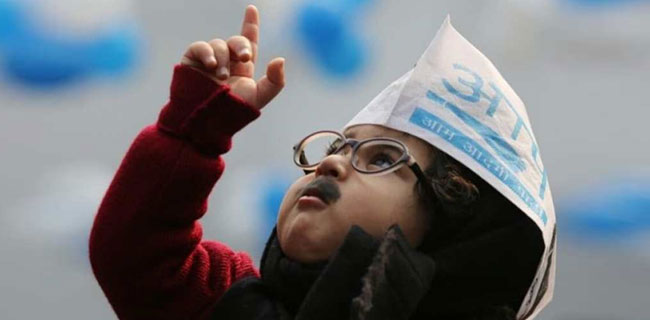
    I just loved the little interactive film shared on social media about Mufflerman looking into your door saying “Can I come in?”
    In 2015 it was the Mufflerman game, this time it was this truly disarming video interaction.
    That is what the target stakeholder likes…clarity and candour, without mixing up issues that are not relevant to the occasion at all.
    I would surely want the entire nation to be united and stronger but right now I have to decide on who can improve my daily life better.
    The relevance of messaging is always critical to any campaign’s success, and this was a great demonstration of the same.


    The AAP 2019-2020 election campaign is a lesson for every brand manager.
    On how to carefully nurture and deliver a brand that rides on huge expectations and external challenges.
    And how to stay true and committed to the core purpose and not get waylaid into distracting and diversionary narratives.
    As my brand guru Wally Olins used to keep reminding me, “Live your own life, Avik. You only have one bloody chance!”


    Avik Chattopadhyay is a brand strategist living in New Delhi NCR. He writes on MxMIndia on most alternate Thursdays, but this time we requested him to write on a Wednesday. His views here are personal.


  • Happy Anniversary to All!


    By Ranjona Banerji


    “Not all battles are fought for victory – some are fought to tell the world that someone was there on the battlefield,” – TV Journalist Ravish Kumar, recipient of the prestigious 2019 Ramon Magsaysay award for “harnessing journalism to give voice to the voiceless”. Kumar, managing editor of NDTV India, is a rare breed in Indian journalism and even more rarely sighted in television journalism. He’s there on the battlefield.


    This website and this column celebrate their eighth anniversary this week. When Pradyuman Maheshwari, friend and colleague for more years than I can remember, asked me to be part of his venture, I agreed in a heartbeat. Idealistic, straight as die, doughty, courageous, tenacious, industrious, maybe a little crazy, Pradyuman moulded MxMIndia.com into the force it is today.

    In these difficult times for the Indian economy and the Indian media, he has stood by my long and relentless critiques of the Indian media, regardless of business considerations and loss. And the past eight years have been an enormous education to me. I started writing a media column in 2010 when Pradyuman was in charge of exchange4media’s content, including the magazine, Impact. From there to MxM in 2011, what a comparatively innocent time it was for the Indian media. I wrote about changes in style and pattern, about individual transgressions and tracked growth and diversions.

    But after the Narendra Modi government came to power in 2014, it was the end of the age of innocence for the Indian media and yes, I do include the shame of the Emergency here. In front of my eyes, I saw the collapse of my profession and I had the task of chronicling that collapse, twice a week. And as names and reputations have fallen, as renowned editors and media houses have capitulated to power, you find yourself scrambling to find redeeming elements.

    For some years, I genuinely believed that if television has fallen to government pressure, newspapers still carried the torch, sort of. Those days have gone. Most of what passes for news on television is execrable, but the standard of print journalism has just followed suit. The nature of the beast gives the print media more places to hide but the cowardice and lack of courage, another name for complicity, is self-evident. It is no longer possible for me, or anyone, to carry on with the shibboleth that the print media is streets ahead of television when it comes to ethics or the basics of journalism. The scales have well and truly fallen from my eyes, as they have from many others.

    Even a couple of decades ago, journalists who were known to be close to ruling dispensations or power centres were despised as sold toadies or stooges, used by both their sources and their employers. Today, they are celebrated for their proximity and defended by their colleagues for their sycophancy. Social media has been an amazing revelation here. Well-known bylines and faces expose themselves, their biases and lack of professionalism with remarkable regularity and lack of self-awareness.

    The fact that Kumar has both won this award and talked about being on the battlefield has only won him enemies, especially from within his fraternity. He has shown so many up by simply doing the one thing we are all asked to do, of “showing truth to power”.

    The last eight years, from 2011 to today, have taught me that the need for media scrutiny has never been more important because a fair and free media is essential for democracy. I thank Pradyuman Maheshwari and everyone at MxM past and present, for fighting that battle with me.

    Happy Anniversary All!


    Ranjona Banerji is a senior journalist and commentator. She is also Consulting Editor, MxMIndia.


  • Happy to be Eight


    For those who’ve been tracking MxMIndia over the years and have been reading my note every anniversary day, an apology: yes, I’m aware I am getting repetitive. It’s just that in the times we live in, it’s important that we keep reiterating our core values. Also, there’s a new set of readers who come in every year.


    The Indian news media has never had it so bad. It’s not just about content and it’s not whether there’s enough money in the business. It’s about whether there is a place for ethical journalism. One can of course argue endlessly on the definition of ethics. And what may be unethical for me, may be absolutely fine for some others. For us at MxMIndia, while the desire is to make monies, it’s done without compromising on our value system.


    A few days back, I was speaking with a former colleague over a possible project he could be doing for MxM. He found it difficult to believe that I was so insistent on not carrying paid content or doing a quid pro quo. Everyone does that, he said. While lauding MxMIndia’s principles, a biggie from the biz was more candid: Others are thriving and are being patronised despite compromising on values. But all of this is not going to change the way we are, or we want to be.


    It’s not that we are a complete media news and views online publication. There are many, many areas and issues we don’t touch. But it’s not that we don’t want to… it’s just that we don’t have the wherewithal to do it. Or it doesn’t fit into our content framework.


    ~~


    It’s our eighth anniversary today. We started publishing on September 9, 2011. Onam Day. We started with a resolve to be a responsible B2B publication. We started with offering content which is beyond announcements. We started with a desire to offer analyses that was more than just stitching together quotes from half a dozen people. But most importantly, we started out with the promise that we will bring you the most credible voices in the business to analyse issues. And we will not shy away from discussing content – in news, advertising and the electronic media. We were also happy to take a stand on industry issues – whenever required.


    In the next year, we hope to accomplish some of the things that we haven’t been able to. We are also looking at bringing back a few of our popular departments – like the Jaldi 5 quick chats, the ‘Anchor’ with its listicles and a few new columns. There are also a few new initiatives we are looking at starting. But more on them when we are ready.


    Thank you for patronising us, and thanks much to all those who’ve been part of this journey. Please continue to keep the faith.


    Pradyuman Maheshwari

    Founder, Editor-in-Chief and CEO

    MxMIndia


  • Meet Ashish Bhasin, CEO of Denstu Aegis Network APAC


    At mid-afternoon on Thursday, in a cool, rainy climes of Khandala near Mumbai, the top deck of the Dentsu Aegis Network had gathered. While they had seen the rise of the Network in India, the announcement was perhaps the best recognition of their work in the last decade-odd. Their leader – Ashish Bhasin – had been appointed CEO of Dentsu Aegis Network APAC. And APAC included the key markets of China, Australia and New Zealand. He will will join big boss Tim Andree’s Global Executive Team, the first and only Indian to occupy the chair. Bhasin will continue to maintain his role as Chairman, Dentsu Aegis Network India. Meanwhile, Anand Bhadkamkar, COO India and CFO South Asia, has been promoted to CEO, Dentsu Aegis Network India. He will report to Bhasin, as earlier.

    Bhasin, who was MxMIndia Mediaperson of the Year in 2016, spoke with us over the phone from Khandala. While the clouds were out there in the Western Ghats as also in Mumbai where we are located, the sun was shining very brightly for Bhasin and the Indian advertising industry.

    Read on…


    Congratulations. Your elevation as CEO of Dentsu Aegis Network Asia Pacific is huge. Your sentiment as you move on to Singapore to take on the role?

    Thank you. If the company trusts you with a bigger responsibility, it obviously makes you feel good. First off, I feel it is actually credit to the fantastic team we’ve had pan-India. This has been a dream run of sorts. We started with 40-50 people and today we are almost 3700-3800 people. At a time when everybody is struggling, the markets have slowed down, etc, we have continuously been the fastest growing group in India for maybe five years in a row. It feels good because all of that is in some way recognising India’s performance and from India’s point of view, I think it is a nice reflection on the team and on the country.


    If you have to look back, what would you say would be the single biggest achievement since you helmed DAN in India?

    I think two things: One is that I was very lucky that I was able to build and retain a fantastic leadership team. If you look at the senior leadership of Dentsu Aegis Network, while the turnover rate is very high in India, in the last 11 years ever since we started this journey, not one single leader at the senior level has left us. Everybody who has been with us, and who we wanted in our team, was in our team 11 years ago and is today in our team too. In fact more got added as time went by. I think building that cohesive world class leadership team is something that I will always be proud of and I will always rate it as one of the best things that we managed to do.

    The other thing was taking this call on digital – to invest in digital in a big way. In India, no one else was looking at it and in many ways because of that we got a huge head-start over our competition. Of course eventually everybody is trying to play catch up and will do so over a period of time but that gave us market leadership. Digital was the fastest growing part in the advertising industry…


    Acquisitions have been a significant feature of your tenure, right?

    Yes, of course. That has been an integral part of my strategy. I’ve always said 50% of my growth should be organic and 50% should come from acquisitions because acquisitions are only about money. They also bring in fresh talent. Some of the best talent in the country whom we would never have been able to hire as employees, but we were able to bring into our group thanks to the acquisitions.


    And you have been able to retain them..

    People like Vivek Bhargava as an example.


    Right.

    So these are all very senior leaders and have finished their earnouts and have done very well in life, and they still continue to run their companies  many years after that exactly the way they used to right from the first day when they started,


    And Aggie (Agnello Dias) and Paddy (Santosh Padhi)

    Yes, and Aggie and Paddy. We managed to create an environment where we give our leaders enough space, One thing that people forget is that for an entrepreneur, it’s more than just money. Money is very important but it is your baby… it’s your life, right? Nobody can run Taproot better than Aggie and Paddy, nobody can run Communicate 2 better than Vivek, nobody can run Sokrati better than…

    True.

    And so on and so forth. So, we allowed them that, but the challenge is the need to align people as a group because we are now 23 different agencies all moving in same direction. I think we achieved that pretty well and I am very proud of the fact that even after their earnouts are over, all these fantastic leaders continue to run their businesses even more successfully than they did when they were standalone entrepreneurs.


    Is there something that you would’ve possibly liked to have happened differently?

    Yes, I think, it is quite clear to me now that we were significantly better than our competition. We were way ahead because even though our competition was well-established, very big, etc, we still managed to beat the hell out of them and gain huge marketshare. I think I could have been a lot more aggressive…  I should have been even more aggressive because we were really faced by very weak competitors who were still caught in a legacy world and who missed this digital revolution. We grew very fast, maybe we should have grown even faster.


    Since your move as APAC head requires a relocation to Singapore even though you continue to be chairman of India, how much time will spend here in India?

    I am doing the Greater South role already and I am travelling a helluva lot.


    But this has a bigger footprint.

    So, there won’t be any significant change in the number of days that I am spending in India. I do intend to spend at least a week every month here. I will be retaining my office in India and I will be actively involved in India. But I will be much less involved in the running of day-to-day operations which now we have a new CEO in the form of Anand (Bhadkamkar) who has been involved in this journey from Day 1.

    So I am not going away. I am not leaving, in fact I will probably spend as much time in India as I am currently. I am travelling 15-20 days in a month. Given that it’s a region as large as APAC with countries from Australia, New Zealand on one end, and China to Taiwan, Korea, South East Asia, etc. and because our regional center is there, Singapore is the most appropriate place to do that.


    Anything that you hope to achieve immediately as Densu APAC CEO?

    There are some inherent advantages we have as a group. We can bring all market communication services to the client, so one P/L which was very instrumental in our success in India. And then there is our approach to be digitally ahead. I see no reason why we can’t do this very, very well in every single country.


    Back home, you’ve just taken charge of your second year as President of the Advertising Agencies Association of India (AAAI). Are you going to continue with that?

    Well, coincidentally we also have our Board meet on Friday. So I will definitely inform my EC (Executive Committee) about the change. And I will go by whatever they decide – whether they would want me to continue my term or not.


    The Announcement:

    Dentsu Aegis Network today announces the appointment of Ashish Bhasin, CEO, Dentsu Aegis Network Greater South into the newly created role of CEO, Dentsu Aegis Network, APAC, effective immediately. Based in Singapore, he joins the Dentsu Aegis Network Global Executive team and will report into Takaki Hibino, Executive Chairman, Dentsu Aegis Network APAC. Takaki’s role as Executive Chairman, APAC remains the same.

    This move further cements the recently announced Cluster Structure; Greater North, Greater South and ANZ in APAC, giving the markets and their leadership teams greater focus on identifying and moving into key growth opportunities. Ashish will focus on accelerating this growth while delivering greater operational rigor and leadership excellence across the region. These changes reflect evolving market dynamics across the region, mitigating the disruption that new entrants, shifting consumer demands and technological evolution creates by focusing on delivering long-term, sustainable growth for our clients. Ashish will maintain his role as Chairman, Dentsu Aegis Network India.

    Commenting on Ashish’s elevation, Takaki Hibino, Executive Chairman, Dentsu Aegis Network APAC said: “Ashish’s appointment is critical for the region; enabling the markets to focus on client needs and growth opportunities while delivering operational rigor for the business. He was a clear candidate from the start with a proven track record of delivering long-term and consistent growth. Under his leadership, the business in India is now the second largest Advertising & Media organisation by revenue in the market. His long-term vision coupled with his acumen for identifying an opportunity is one of the best in the business, and I am delighted he will join me in leading the business in APAC.”

    Ashish Bhasin, CEO, Dentsu Aegis Network APAC commented: “I am thrilled to be taking on this new role within the APAC region. There is never a more exciting time to be in this business; our competitive landscape is becoming more complex and fragmented while our clients are crying out for long-term vision and simplicity. We have to keep their needs as our North Star whilst delivering long-term, sustainable growth for our business. We are in a unique position to build propositions around our client needs, and I look forward to this next chapter in the transformation journey of this region.”

    Anand Bhadkamkar

    In India, Anand Bhadkamkar, erstwhile COO India & CFO South Asia, has now been promoted to CEO, Dentsu Aegis Network India. Anand will continue to report to Ashish Bhasin in his new role.

    Anand Bhadkamkar, CEO, Dentsu Aegis Network India commented: “I am extremely excited and honoured to take on this new responsibility. I look forward to embarking upon a new chapter in my career and work with Ashish as the Chairman of India to continue building DAN into the country’s most innovative, future-proofed market-leading network. Our One P&L philosophy and our leadership status in Digital sets us up in the best position versus our competitors.”

    In addition, Masaya Nakamura, Deputy Chairman & Chief Growth Officer, APAC has taken a new role as CEO, Global Solutions, Dentsu Aegis Network, based in Tokyo. Prakash Kamdar, CEO, Isobar Singapore has been promoted to CEO, Dentsu Aegis Network Singapore.

  • Time for newspapers to up cover price!


    By Pradyuman Maheshwari


    The print media in India has reason to be sore with the government. Barring a few, most newspapers and magazine weren’t too negative on the previous regime, and in a sense contributed to its return to power. While some publications may indeed have aired anti-Narendra Modi views in the run-up to the elections, the dosage of that was limited and, one may say, controlled.

    Indian newspapers have forever worked on a lopsided business model. Masterminded by Times of India group vice-chairman Samir Jain in the 1980s, newspapers were being sold at very low cover price to attract and retain readers, and combat (and hence bleed) competition. The ‘invitation pricing’ policy was followed relentlessly by TOI and almost every old and new newspaper thereafter. Casseroles, soaps and assorted gifts were offered to readers in the form of subscription offers. But the price of the papers – especially the English-language ones – were far, far below the monies that went into the making of each issue.


    Newspapers that have profited over the last three decades have done so thanks to their leadership and thereby their ability to attract advertising or through allied or dramatically different businesses. Advertising from government or quasi-government organisations ensures that the money registers keep ringing even as the cost to consumer continues to be abysmally low.


    Over the last few years, as in the case of internationally sourced products like crude oil, the price of newsprint has also been rising. This has adversely impacted the bottomline of most print media businesses. In fact in the last few years, price of imported newsprint that is largely deployed by English as well as high quality regional papers, had skyrocketed. It went south in late-2018, but by then the ad volumes on print touched a new low. Adspends have been low for other media too, but print has been hit badly with digital steadily weaning away its readers. The Indian Readership Survey 2019 may have shown growth for newspapers but that’s only with the Total Readership metric. With the more widely acceptable Average Issue Readership, the future doesn’t look very bright – esp in the metros.


    So if the newsprint prices go north, the cover price should’ve also headed the same way, right? No, instead, newspapers have traditionally been quick to cut their content often even rejigging the mix. Publishers are worried that a hike in the cover price will impact their readership, which could well be true, but clearly the newspaper organisations need to integrate their digital operations better and foresee a future that helps them make monies from their e-presence.


    To blame the government for their new-found woes is incorrect. I am sure Prime Minister Narendra Modi will reverse the import duty hike. He has done that in the past, and could do it again.


    Yes, our readers are fickle in their ways. They don’t mind spending Rs 20 or whatever on a vada pav, idli sambar, chaat or jhaal-muri, but they will crib about Rs 10 for a copy of the morning newspaper or Rs 60 or 100 for a glossy and informative magazine.


    Newspaper owners meanwhile need to smell the coffee – or ink – and up the cover price. Over-dependence on government largesse is detrimental to an independent media. And it’s time that consumers learn to pay for quality content.


  • Is Your Name on the Voters’ List?


    By Your Editor


    So the general elections have been announced.


    We all have our cribs about our politicians. Narendra Modi, Amit Shah. Rahul Gandhi, Sonia Gandhi. Mamata. Mayawati. Kejriwal. Shiv Sena. About the inefficiencies in the country: potholes, corruption, traffic, trains, buses, educational system, no jobs. We are fed up of our systems, and many of us believe that things will never improve in our lifetime.


    Perhaps this belief is correct. But we can try and make a difference. For starters, elect a candidate and political formation to represent us. And pray the elected reps do something. Make them accountable.


    The question is: how many of us will beat the summer heat, the lethargy and the attraction of sleeping those few minutes extra because it’s a holiday? For those in Mumbai, the voting day is April 29, a Monday. Perhap enough reason to get out of the city for a long weekend.


    It’s however important for each of us to vote. If there’s no candidate who you think is worthwhile, press the NOTA button. It’s critical to express ourselves and get the right person elected as Member of Parliament.


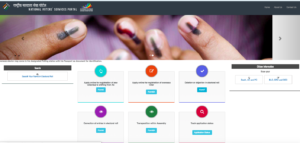
    Please check if you are on the voter’s list.


    Visit: https://www.nvsp.in


    If you get an error, just click on reload. It will come on.


    Then enter your name and search. If  you don’t remember your Assembly constituency, don’t bother. The search facility is pretty powerful.


    Also, please check with all those eligible to do the same, if they haven’t already done that. If they haven’t registered, they must. And if they have registered, they should keep checking at the website.


    The submissions (for proof) are simple: photograph (passport- or ID card-sized), birth certificate, passport, driving licence. If you don’t want to link your Aadhar Card with this, you can manage without it. The only painful thing is that if the first-time voter is over 21 years of age, then there’s a self-declaration to be filled in, signed and uploaded (click here). Please ensure that the scans of all of the above are jpegs/jpgs, not pdfs.


    We’ve done it ourselves for a recently turned potential voter and are hence convinced that it’s simple. You’ll get an sms near-instantly giving you a reference number.


    Please do visit the website. Check if your name is on it. As also your family. And then get your friends, colleagues etc to do something.


    Also, if you are an employer or a biggie at an organisation, dream up something to incentivise voters. An extra day’s salary may be a bit much, but how about a meal at a good restaurant? Or tie up with a Big Bazaar or Book My Show and get some discounts. Even tie up with the Nykaas of the world asking them to cosmetics at a 50% rate.


    We need some of upscale stores to step in too. Foodhall, Nature’s Basket, the five/seven star hotels, an extra discount to Zomato Gold members who have voted.


    How about some brands sponsoring hot and healthy/unhealthy breakfast outside the voting booths? Meal boxes.


    Can our TV channels position their popular stars at selfie points for people who have voted. Take a selfie with Shankar Mahadevan?


    If brands can do major activations at the Kumbh Mela, this is a Maha-Maha-Maha-opportunity for a public connect.


    Dream on, folks. Let’s make the 2019 Lok Sabha elections an unforgettable one. And elect a government we want out there.


  • Government, leave BARC alone!


    By Pradyuman Maheshwari

    MxMIndia has been consistent on its position that the government mustn’t have a role in the television ratings process. And we were appalled when on Monday, the government-owned Telecom Regulatory Authority of India issued a Consultation Paper of Review of Television Audience Measurement and Ratings in India.

    While a review of how BARC is performing is good to do, did it require a TRAI to step in to do it? Couldn’t the joint owners of broadcasters, advertisers and advertising agencies have conducted this? After all they run businesses of over crores of rupees and are mostly fair in their decision-making. Mostly fair, because we’ve seen some regressive acts in the past like not stepping in to disallow news channels from opting out of watermarking and boycotting BARC one-and-a-half years back post the launch of Republic TV. It may be noted that the BARC Board – the meetings of which happen very regularly – is constituted of members of all stakeholders.

    But back to our concern that the government shouldn’t be getting involved in measurement. Vested interests have evidently got onto the act and prevailed upon the government to do this.

    MxMIndia has maintained in the past that part of the problem with TAM was a creation of the industry. Just how many times did the TAM technical committee meet to advise the joint industry-appointed measurement body on how it should conduct its measurement. Or what changes should it bring about. From what one remembers, the techcom advising TAM fizzled out a few after it was set up. Later, it was for the TAM management and the wise women and men in the industry to shape the measurement business. A not-so-little birdie in the techcom tells me that the government representative present on the techcom is conspicuous by his absence in most meetings. MxMIndia was unable to procure the attendance roster of Board and Techcom meetings to get an indicator of the participation levels of industry players.

    In my limited understanding of the nuances of the business, I believe the industry – broadcasters, advertising and advertising/media agencies – have let down BARC miserably. And if they don’t step in and do what they ought to do, BARC could well be an exercise in futility. Television measurement could see the same fate as print. Or radio which after all these years still doesn’t have a 100% buy-in from all players or internet measurement which is so opaquely transparent. Or transparently opaque.

    The genesis of the problem is the unity (or lack of it) amongst and within the three constituents. The Ravana in the Room is clearly the lot of news channels and some of the smaller, fringe players. Unfortunately, they have access to big and mighty in, as Arnab Goswami loves to term it, Lutyen’s Delhi. Now, Ravana, we all know, was a learned man. Except that his ways were, well, wicked.

    It’s perhaps incorrect to give a Ravanesque hue to all news channels. Some of them are indeed progressive and think in the larger interests of the business. But, ask any one who knows the trade, the only reason why TRAI has got into the act is because of the pressure from news channels. News channel bosses are influential, and governments over the years are under pressure directly and from politicians to peruse issues which it shouldn’t waste its time on. Had BARC (and earlier TAM) not measured news channels, it would’ve been smooth sailing all through.

    Among the various misgivings – perhaps not spelt out loud and clear – is that the community of smaller channels believe that BARC is only a body of the biggies. But then that’s something they must get their industry association to work upon. It may be good for BARC to proactively have a separate tech sub-committee for small and medium-sized channels, advertisers and ad agencies.

    The contention which I hear has been expressed in some quarters that the BARC fees are very high is perhaps incorrect. At the lowest end, BARC fees are in the region of Rs 15 lakh plus GST. Which given the business they are in is fair money for data that could bring in 10x the amount.

    In the days of TAM, one of the major misgivings was the number of panels in existence. In India, for a TV AdEx of 3,364 million, the panel size in terms of approximate individuals is 135,000. Contrast this with China where AdEx is 20,105mn and the panel individuals size is just 29,361 (source: EuroData Study 2017).

    There is also a view that there must be more than one player measuring TV data. Competition is always good in any business. But it may be remembered that even aMap, when it existed as a counter to TAM not too long ago, had to shut shop because of lack of patronage. Will the various entities – broadcasters, advertisers and agencies – be willing to pay subscription fees to two measurement companies? My view is they won’t.

    In sum, the government-appointed TRAI should not have any role in the television audience measurement. Just as it doesn’t have any role in print, radio and internet audience measurement. There is some bizarre view that the reason why the government is involved is because its ads buying arm – the DAVP – loses monies because of incorrect measurement. So what about print, which earns its largesse? The government is scared of the big print players and isn’t able to bully them the way they are able to control the TVwallahs.

    The data that’s thrown up by measurement is used by advertisers (and hence ad agencies) to decide on advertising and by broadcasters to aid its content and distribution. And since successive governments are aware that the media ecosystem is divided and people love to pull down others, it’s taking advantage of the situation. Look at print: even though an HT may hate Times, a Dainik Bhaskar may take on Dainik Jagran or Rajasthan Patrika, all rivals are almost always on one page when it comes to warding off government influences.

    The ecosystem is so divided that it will not even invest the monies to hire a lawyer like the Raja of PILs Prashant Bhushan to ask the government: Hum Aapke Hain Kaun!

    By putting BARC on notice, TRAI will kill measurement. And the industry will allow it to be killed. Perhaps that’s what some want.


  • We’re Seven. Saat saal, saath-saath | The Seven-Year Itch


    On September 9, 2011, on Onam Day to be precise, MxMIndia was born. Those who’ve been tracking our journey know about the way we work. Our Code of Ethics. Our principles. Our commitment to credibility. Our commitment to give you content that’s fair.


    We are perhaps an aberration. The fact that some others who don’t believe in the same principles as us are prospering is perhaps indicative of the times we live in. We are certain though that there is a large community out there which is mature and wants content that’s meaningful. Interviews that ask the tough questions. News reports and analyses that are not influenced by the business interests of current or potential advertisers.


    It’s not been an easy journey, we can tell you. The last seven years have seen many of advertising partners being subjected to the vagaries of the world. We’ve stood by them. They’ve been there for us.


    Our seven-year journey has seen us travel alongside India’s growing A&M fraternity. Okay, we’re being filmi, but it captures the sentiment well:Saat saal, saath-saath.


    ~ ~


    Our team 

    Our team has grown steadily and we are proud to have people who have stayed on with us for most of our seven years. Our stars: Rafiq Barak, our head of technology, has now settled in well in Tamil Nadu and manages our ops from there. And Kishor Kate who has moved up the ladder to oversee all our accounts and admin work.We are happy to inform that we are now looking better on the business development front. Anuradha Kini, a seasoned media professional, is now on board to lead sales. Given all our constraints of credibility, her job isn’t easy.


    And then there is our high-powered team of star columnists and full- and part-time journalists. We’re proud to have Ranjona Banerji, Shailesh Kapoor, Sanjeev Kotnala, Indrani Sen, Prabhakar Mundkur and Siddhartha Mukherjee amongst our regular columnists. We hope to have a few more industry leaders on board over the next two quarters.


    Some of our tech partners and associates have also been a constant. Mediology, Deepak Joshi & Associates, CA Nishant Soni, Krishna Rathi & Associates, Fotocorp, Ganeshaspeaks and of course: Prashant Basrur and Deadline Advertising.


    Our gratitude to our advertisers for their faith in us. To our stakeholders for bearing with us. We’re indebted to the A&M ecosystem for standing by us. Our primary allegiance is – and will continue to be – to our readers. You, dear reader, will always come first.


    ~ ~


    The Seven-Year Itch


    Every year, this celebratory note has also been a time to introspect and look ahead. Our hit rate on accomplishing some of the stuff we intended has been a 5/10.


    It’s been seven years. And we can sense the itch to do more. We’ll keep you posted.


    Best wishes,


    Pradyuman Maheshwari

  • Times Now goes partly Hinglish. Will TRAI act on it?


    Mediaah! is back, and hopefully more regularly. There are risks involved in writing it, but then, there is a crying need for some no-holds-barred commentary.


    By Pradyuman Maheshwari


    Many moons ago, or so the story goes, a leading detergent powder, trying to impress its clients that it offers more ‘safedi’ with its wash, placed its wares strategically in the sales counters offering white shirts. Nothing wrong in doing this, in fact the innovation was perhaps an Emvie-winning one.


    But such things are not kosher in broadcast-land.And perhaps with (some) reason. So last year, the telecom and now media regulator (all media, except ‘holy cow’ print, that is) frowned upon dual LCNs. They tried to frown upon landing pages which many channels had (have still?) deployed, but that didn’t work in right earnest.


    Now we hear that regulator Telecom Regulatory Authority of India and BARC have received a complaint of Times Now going to distributors to put it in the Hindi genre in the EPG. While one may wonder that the channel will be the loser given that no Hindi viewer will turn to it, the reality is that it will actually help increase the reach of the channel. This also has an impact on the advertising front, as marketers pay top dollars for their slots in the premium English news space.


    We tried to reach the corpcomm of Times Now via Whatsapp to reconfirm the developmentt. The message was blueticked, but there was no reply. Meanwhile, Times Network is said to have deferred plans of its Hindi channel, and is currently relying on the morning Hindi band, and peppering its news bulletins with a bit of Hindi.


    A few days back, for instance, we found a noontime bulletin with headlines in Hindi and English. Perhaps it would be good for an all-new genre called Hinglish or Engdi.


    For now, our sources tell us that TRAI hasn’t been as quick on its feet on this one, as it has been with other issues in the past.


    Times Now is facing some heat ever since it lost Arnab Goswami in November 2016. Although it didn’t slip into oblivion, and has been a good #2 and rated fairly high with some slicing of data, it has lost the numerouno English channel status to Republic. While it has achieved success out of Mirror Now, there’s a view that it should’ve concentrated its energies on just one channel.


    Faye D’Souza as the primetime 9pm anchor would’ve been far better than Navika Kumar. And now with Anand Narasimhan gone – pictures of a farewell with his 10pm team posted on Instagram, there is another void that the channel faces. Of course some parts of the channel’s thinktank felt that Narasimhan looked like Goswami so he never really got the 9pm pride of place. Whatever be the reason, and if he actually does join CNN-News18, the channel will need to build an all-new face.


    Back to the Hinglishification of Times Now, we think it’s important that before the TRAI acts on the matter or the Courts step in, the News Broadcasters Association gets its members to sit together and have a clear set of ground rules.


    PostScript: Will Anand Narasimhan’s move to CNN-News18 change the fortunes for the channel? Despite having maintained a fair consistency in quality and not gone pro-ruling party as one feared it would, the English channel still needs to go some distance in the ratings war. Unlike the Hindi channel News18 India which has taken rapid strides for over a year now. Not yet the #1-3, but galloped way ahead. More on Battleground Hindi News on Mediaah! soon


    Pradyuman Maheshwari is a senior journalist and commentator. He is also Editor-in-Chief of MxMIndia. The views here are personal


  • One year on: Arnab Goswami Unplugged


    On May 6 last year, Arnab Goswami launched Republic TV, decidedly the most high profile media launch that we’ve seen in the last decade, post-Colors in the general entertainment space and in 2005 with the launch of the now-beleaguered DNA newspaper. The channel has been dominating the ratings roster from Week 1 and reports a big success in terms of ratings and revenues. But the year-long journey has seen its share of controversies, which in fact started a few months before launch. The launch of Republic got at least two competitors to lead a boycott of BARC television ratings, and then there were court cases which of course Goswami’s legal advisors defended with success. However, there are charges of a BJP bias that have been raised by many (including by MxMIndia columnists) and that the promoter and editor-in-chief of the channel doesn’t allow his guests to speak much.

    On Saturday, the day Republic TV completed a year of operations, Arnab Goswami took some time off to have a freewheeling conversation with Pradyuman Maheshwari. Read on… (Editor’s Alert: this interview is extra-long. Some 6000 words. So perhaps you should get yourself a coffee or chai, sit back and enjoy!)


    One year on, how has the Republic TV journey been?

    It’s been a very good journey. We achieved everything we set out to achieve. Viewership is high, revenues are good, people are happy. We are on the verge of expanding more.  We feel happy because we are ready to do new things and that’s what keeps any organisation going. About three to four months back, we realised that we have achieved what we would have wanted to achieve in two years, and so we sat down and discussed ourselves and realised that we are now ready to do new things. As we finished our first year, we are ready to do more.  Now the question is to identify what is that?

    Are you satisfied as a businessman? Are you satisfied as an editor?

    See, I am not a businessman, I run a business but I am not a businessman. I am the editor-in-chief of Republic. I have a titular title of managing director which I don’t use.

    Okay, so are you happy as a promoter?

    As a promoter, I am supremely happy. Our shareholders are supremely happy. We have added value to this business. We have got the highest viewership in our genre and continue to do so, and we are innovating and getting into new areas, building new verticals. So, yes, as a promoter I have no reason to be unhappy in fact I have every reason to be happy.

    How’s the financial bottomline?

    I think Vikas [Khanchandani, the CEO] will tell you more, but on a cash flow basis, we broke even in the first month. And we’ve done better every month after that.

    To be the No 1 News channel as per BARC through the year is phenomenal. Did it require pots of money to be invested?

    No, I think we were much smarter and we had experience and knowledge of the television news business and my own learning has been that you win by being smart and playing the game well rather than trying push your way through and that’s where we did well.

    We were pirouetting around in the first few weeks before our launch and we were pirouetting around for the first few months later and even today we are pirouetting around the sense that nobody can quite predict what we will do next. And that unpredictability of our approach which is not just restricted to our editorial stance, the stories you suddenly break at 6 o’clock or the debate you throw out at them  but it’s also got to do much with our approach on business and our approach on distribution and our approach on going into international markets . The great thing is that in Republic decisions are taken in seconds. You ask any of the Top 20 or 30 people in the organisation when was the last time they have emailed anyone, they will look at you with their jaws dropping. We don’t email anyone. So, our ability to take fast decisions, quickly take calculated risks both on the editorial and business side and every side, makes us a smart operator. I think that is one of the greatest reasons for our success.

    I know it’s an unfair thing to ask, but if you have to score Republic TV’s launch year from 1 to 10, what would you say it is? In terms of how the channel has done?

    Well, I think I will put us at an 8 on 10. Because anyone who gives themselves 10 on 10 is stupid. Either the person is stupid or the person  is trying to make himself or herself happy by giving a 10 on 10

    So I never  give myself a 10 on 10. I give myself 8 on 10 because I would still say there are some areas in news that I will like to do. Some formats I have not been able to do. I watch and consume a lot of television I’m aware of stuff I can do if I get a little bit of time and that is what I want to do now.

    Even in terms of business we did fantastically well. Vikas and I both agree that there areas were we need to get into not just because we want to throw more money but because we feel we need to be there. So, we have opened up two three verticals from the last few months and there is the whole digital thing throw up again. So there are certain incomplete areas but you can look at it this way: we have done so much in one year but we got a lot more to do ,if I had done that maybe I’d give  myself two extra points.

    What would you say would be your highest and lowest points of the year?

    Highest point of the year was yesterday [Friday, May 4[, because when I saw the ratings, we saw that we had a 11% lead over the No 2 channel. And that’s incredible. On an all-India all-time slots basis and when you look  at a primetime, my slots , like when you are looking at 9 o’clock , there is a 30% gap. That for me is very satisfying. So, we were actually very kicked yesterday in the newsroom when we saw those numbers, big smiles all around because people have realised that as we are entering Week 52, we are becoming stronger than ever. This was a resounding answer for all those who were stunned with our first two-three weeks and  fought us saying flash in the pan.

    And your lowest point?

    I don’t have low points because my low points don’t last.

    Something you felt sad about in the last year?

    I don’t feel low about it, so I won’t use the word low point. But I must say that the point when I was baffled was the way in which some news organisations and some old media, legacy media organisations fought me. They ganged up, they used industry bodies. They got together; they tried to throw us out. They tried to tell us: why are you here? And they came together may be out of their insecurity or just the inability to react or may be because simply they underestimated us.

    Yeah, but…

    So, let me complete. When they did that for a period of time, I was trying to study their thinking and I did not get a clear answer beyond the fact that they did not want us there. Now that made us sure that want to be there even more… that gave us greater resolve. But it is a lesson for the industry… that you can’t form a cozy club especially not in the news industry and try and throw someone who wants to enter with a new team into the business. So I was baffled at that time, but I did not respond beyond a week or two, because I have been in this business long enough to know that negativity is a self-destructive emotion. And there is so much negativity about us when we started, it’s not a …

    So the offensive from competitors helped build your resolve to counter them despite all odds?

    Oh, yes, I mean how foolish can you be. That you go and file cases on me and pay tons of money to lawyers to file stupid cases on me, you take our biggest exclusive which we have broken on stories like cry babies, go out there and say no that story was mine and then foolishly in an act of complete desperation, go to Azad Maidan police station and file a police case against me.

    When you see mature adults behave like this, you don’t know whether to laugh or cry. My resolve does not have to be propelled by these things but it baffled me. It was so utterly childish, that it just baffled me. It continues to baffle me even today. Whatever may have been their motivation or reasons, it baffles me even now why they behaved like that.

    But on that specific expose about Shashi Tharoor, some of the data you were sitting on from Times Now. I remember tweeting about it when you broke the story. So since the info was with the reporter from the organisation that she worked for previously, she shouldn’t have used it, right?

    No, that was completely wrong because this was a private conversation that the reporter had with the source and the news was never archived with the organisation.

    The private conversation was recorded?

    Reporters keep private conversations. It was a damn good story.

    Yes, it was.

    Let me tell you this: it was a damn good story, Lalu was a damn good story , the expose on the ISIS terrorists was a damn good story. All of these were damn good stories. And it’s also cry baby, going around saying no, these stories are ours, they should stop crying. In fact I think they really stop crying now. They have been crying for a year!

    Okay, let’s move on. There is a sense that a fair amount of money has been put into distribution in order to generate your high viewership numbers. Don’t you think the money should actually go into content rather than distribution?

    But we don’t have a choice. We follow the trend that is there in the market. But we are not spending anything abnormally, more than anyone else. We are just spending what is there in the market. But now whether distribution should take that kind of spend is the question which we all have to ask ourselves. But right now Republic does not have a choice or nobody does.

    I remember hearing that you would track BARC numbers even before you launched the channel. How influenced are you by ratings? Do you check if the numbers go up every time there is a discussion on Pakistan or on Nationalism… how much are you influenced by viewership data?

    Not to that specific degree you are mentioning today but may be five years or six years earlier in my career, I would do the level of micro analysis on subjects etc.  But now the new Bio-News data which BARC has brought out is interesting but frankly I haven’t gone through the detail of that yet. But I think it’s a good move by BARC.

    I have historically been known to study data more than other editors because I understand numbers better than any other editor. My entire background in sociology and socio-anthropology and statistics makes me obsessed with numbers. So I micro-analyse numbers and segments and I have my own numerical methods of collating data and my method of collating data are of taking different time parts indexing it in my own way and drawing some coefficients which I can use editorially.

    I have been doing this for a long time and therefore I take a lot of raw data from our people, they present me their analysis and then I do my own analysis out of it. I can safely predict to some extent the impact of certain kinds of programming on ratings.  I believe that my team and I understand numbers better and understanding the arithmetic of ratings and viewership is actually a good thing.

    Do you think if there would have been no ratings or advertising wasn’t so dependent on ratings, your content mix would’ve been different?

    No.

    Would your news selection be different?

    No. Absolutely not. We are in the business of relevance and I know where that question is coming from where there are certain channels which don’t get viewership and then they go around saying but we are still relevant and the question is nobody is watching. How are you relevant? Are you relevant only to yourself? So I think, I would always want to be relevant and to be relevant I must be watched.

    What you are asking is if your commercials are not indexed to your viewership, would you be relevant in any different way? No, because I will still be targeting the same audience… the same x, y, z. So if I need you to watch me and whether or not you got a Peoplemeter in your house, I will do the same See, there are two things which work in our business: one is your need to be relevant and watched and the other is to make impactful change in the way that you think the change should be done. It’s a mix of these. I don’t think there would be any difference in our approach to our news. We would have the same values and the same principles.

    You mentioned earlier that you are now ready to look at two or three things going forward. As you complete your 52nd week and embark on your second year, what are the few things that you are plan on doing? Are you looking at Hindi at all? You have a sub-brand called Republic Bharat?

    Yes.

    Is Hindi channel on the cards?

    Well, you know, you can ask Vikas this and others, but every week, every day, we get calls from the leading Hindi channels, top business executives calling our office to find out when Republic is launching a Hindi channel. I think they anticipate the kind of tsunami that we did in English or at least a mini-tsunami when we enter in Hindi and therefore the thought of Hindi is in our mind but when, how, to what extent etc is something, that we have to work out. We are in no hurry to do anything in Hindi as of now and I see no need no immediate imperative on my side to get into Hindi immediately.  This is the normal talk that happens in the market…

    Would you like it to happen before the elections?

    No. I wouldn’t predicate or link anything to an election at all. Everything has to be driven by the logic of entering into that genre. You can’t link logic to an election. Anybody in our industry who does things based on political highs and lows is playing a very short-term game. I am appalled at the manner in which people decide to launch channels in the states that are going to the elections, because I find that utterly opportunistic because you expect a certain amount of cash flow during elections to launch a channel. You should launch a channel when you feel you can do something good for the people, when you have stories, when you feel convinced that you can bring in a difference in the market. Why should you launch a channel when there is an election? It makes no sense to me.

    What about digital? Your digital foray was announced a few months back, but some how that has not taken off in the big way as you may have wanted to?

    Yes, we are testing waters on digital. If you look at the pure numbers, we have done well. We have a very numbers million uniques and we have a very good number of page views. I agree with you that, that’s not the only index in digital.

    Let me put it in this way, our exact strategy, what we want to do, cannot be driven by the old ways of measuring the business because the old ways of measuring the business will die very soon. When we want to do video, how we want to get content, how content is going to differentiate and how you carve it out into unique identity is something that we have done some serious work on. So, while it may appear to you that we did a mega-launch around January and February and then sort of, we have gone slower in last couple of months, that’s not the case. In the last couple of months, we have been finishing the financial year and Vikas and me are working on multiple things.

    I also want to tell you, we have got a very large digital team, we have got a full tech hub that we have set up that is working independently in Bengaluru. We have opened a brand new office in Bengaluru so there’s work happening, We’ve expanded our product teams. We hired about 10 new people, pure tech guys… when you are doing something for the long-term, you can’t depend on somebody else’s technology. So we have taken the move, we’re not trying to circumvent that process, we are trying to build our own tech base. That takes time. Along with it, we have expanded our content team, we have expanded our product teams and we have opened sales offices on digital in three cities. And we have a new sales head.

    New Sales Head overall?

    For digital. Varun [Mohan] came in.

    Jay, the person who  was heading digital has moved on?

    Jay was more for the broadcast tech business.

    One of the things said is that while over the last one year the channel has done well in terms of numbers and salience and is a force to reckon with, there have been a quiet few people who have moved on – anchors, some of  the faces who have on camera? Would you say that attrition has been high?

    I would disagree with you. Our attrition overall is the lowest in the industry. Attrition in the organisation and editorial and business is lowest in the industry. We have fantastic retention rates.  When we launched, as it happens, people come from different channels.

    You mean they couldn’t adjust to your work requirements?

    When we see this kind of aggression in news gathering or I would say the fast-paced newsroom, if someone were to come from a CNN-IBN or NDTV or India Today or Times Now after I left and say that you need to respond to a story in five minutes for which you have half an hour there , that you need to get graphics in three seconds, when you got 30 minutes there and then you need to relate in a different way to  promos and graphics and everyone. So people can get stumped with the pace but having accepted that only the fittest survive in every business. In the early one or two months when we launched, a lot of people said I will work in slightly slower-paced way, and hence we had one or two people and one or two anchors going back to the legacy organisations but most of them stayed on. By the way, there’s been almost no top -level attrition, which is also fantastic.

    One of the charges, as Rajat Sharma would say on ‘Aap Ki Adalat’: aap pe ilzaam hai ki Republic TV is too biased towards the BJP? Would you like to respond to that charge?

    I think I should. While Kathua happened or Unnao happened, none of the sort of pro-Congress channels, let me put it this way…

    Yes, you did go after the Haryana Chief Minister too…

    Ram Rahim, I will give you a straight answer to this question: there is no substance in that allegation at all. If there has been someone who has been tremendously tough on the BJP on issues, it has been Republic. We have gone after the BJP government, whether it is Yogi Adityanath, whether it is the central government, whether it is the top BJP leadership in case of Unnao and Kathua to the extent to that there was a clip which went viral that there was a big BJP rally and they kept taking our name with ministers who quit and they said if you think you are some kind of a wrestler come and wrestle with us and they were taking my name and were attacking us. Our reporters have been attacked by people from all political parties in the last one year.  This accusation is completely false and I think over the last few months when people have seen our coverage they have seen that this is false propaganda started by some of those who would not compete with us in first couple of months. Now I know that the news we do and when Yogi Adityanath recently, I think this was last week in…

    When he trivialized…

    When he took on the people who had been the victims of a train accident… We did entire shows on it. Therefore we shoot from the hip, we don’t compromise, our essential rule is no Congi, no Sanghi , no compromise.  I can share with you our line which we have for our one-year campaign: No Left, No Right, No Compromise.

    Hmmm

    Allow me to complete. We have taken each political party on for whatever it needs to be taken on for issues. Now, there cannot be any permanent position a news organisation can have. I know now there are certain organisations in this country which say let’s have two channels. Let one channel be pro-BJP and another be pro-Congress. It is a crying shame that leading media organisations of this country are falsifying news in this manner. By having one channel say we will be pro-BJP and another channel will bash BJP. That’s complete falsehood. To try and maintain that kind of editorial line is a shame. Which means you are essentially instructing editors on what line they have to take. Are you playing a game?  Is it a game you are playing or you are presenting the news? I have problems with permanent positioning.  I think a news organisation should take on people depending on issues and therefore recently when we did an interview with Amit Shah.

    Yes.

    We were the only people who asked even Mr Amit Shah straight questions, we don’t do candyfloss interviews. If you look at all the interviews that have been done with Mr Amit Shah or Mr Modi or the others, we have never done a candyfloss interview. I have never done a candyfloss interview in my life. But you will have seen other people do that. We are above board and we will be very straight on our interviews.

    But you don’t take on Narendra Modi as much as you take on others… say Rahul Gandhi? For instance, Narendra Modi has been quiet on quite a a few things.

    I think that’s also completely incorrect because when Kathua happened, I started my show by saying that if Mr Narendra Modi does not respond to this, he will have a problem. He should pick up the phone and tell Mehbooba Mufti that these two ministers should be sacked and that was said two days before the resignations happened.  Not that we are taking any credit for it. We are the only channel that has questioned Mr Modi, Mr Amit Shah and Mr Rahul Gandhi. I am not responsible if Mr Rahul Gandhi regularly goes and makes a fool of himself on many public platforms. We are not responsible for Rahul Gandhi’s public behaviour. So, I think this is all a figment of someone’s imagination.

    So are you happy to take on the BJP whenever needed?

    Of course, whenever or wherever it is required on issues.

    And even Prime Minister Narendra Modi?

    Whenever and wherever it is required on issues. I am not among those people who wake up in the morning and say okay for the next six months I will be anti-Narendra Modi, and after two months I will be pro-Narendra Modi depending on which side my bread is buttered.  I can’t do that.

    One of the other charges against Republic and against you is that there is no second line that has been established?  That Brand Arnab is bigger than Brand Republic? I asked you this question when you launched and you had then said you were going to be on air through the year. And you have actually been on the air since you launched. But you are also a promoter now. Don’t you think the channel is too dependent on you?

    Yes. You are correct. There is no denying it. Now, however let me present a counter-prospective. First of all I am not confronting you on this question. There are two or three aspects in running an organisation. Let me give you an organisational answer. There is a business side, there is a side of running a channel, there is distribution side and there is a finance side. Satisfaction number one as you can check this with Vikas, we have the most independent business team.

    Okay

    I feel very happy that the first thing I have done is that as a promoter of an organisation I have completely bequeathed the running of Republic, Republic World, Republic extension and business to Vikas.  And with Vikas and Mr Sundaram on the financial side and under Vikash to Priya on distribution and the international extension side. I speak to them only when necessary and I feel very happy they speak to me when only necessary. It is phenomenally satisfying for me to see that I have such a delightfully independent and nimble business team.  They give me lot of independence that I am very grateful to them for allowing me this space that I need on for my editorial. One part.

    And now you got Dr Bhaskar Das?

    Yes. Bhaskar will be helping us in extensions of our business. He is a great guy, I have known him for 20 years and I feel privileged that people like him are associated with us.  The second part is this that, I must say I am truly proud of Vikas. He is like a brother to me in this. We get along famously. You can’t run a business that grown to this size 400 people etc till you really have got that part sorted out. Now comes the editorial side. On the editorial side, with the entire sort of running of the channel, operations etc, the production side on the programming side, I have bequeathed it to Charu [Thakur], who is our chief executive producer and she has done a great job. So running of the channel will continue regardless of this. Now comes to the aspect and we have got a great editorial team.  Samya, Niranjan, Tanvi, Abhishek in Delhi. I don’t want to give individual names but we got a great team.

    Rhythm, how can one forget a name like that.

    Yes, Rhythm, Prema, Aishwarya so we built a strong line of editorial people with Samya and Niranjan and Tanvi playing a great role on the news desk and running the editorial operations here in Mumbai and in Delhi. I feel very happy about that. Now comes to your question on the perception part of the faces, so today if you look at it in terms of numbers you will find that we are ahead of Times Now cleanly on most weeks on the 8 o’clock slot.

    Achcha

    They’ve put their present editor on the 8 o’clock slot but my anchors – whether it is Shivani , Rhythm, Sakal would beat their editor hollow in the 8 o’clock slot and we thrash them in the 9 o’clock slot. So, we are way ahead of Times Now on most weeks at 8 o’clock. At 7 O’clock too, we are ahead, 6 o’clock most of the weeks, we are ahead… mornings we are ahead. This proves that in numbers, who they categorise as their top editors, anchors are all getting thrashed in their respective slots.

    But…

    Which means my anchors are more watched than their top-most anchors. Which means in terms of viewership, the audiences have already accepted our anchors as more credible, more watched, more interesting and more engaging than their topmost editors. This is across the board. If you were to put even the top anchor of India Today or any other channel vis-a-vis my anchor, our anchors are way ahead of them in terms of viewership and in terms of acceptance. Therefore, I have achieved Part Two, that our viewership of our anchors are better. Now in terms of perceptions, I think that there always be a comparison and I would want do things for our anchors and our reporters to be able to strengthen them and their presence in terms of branding opportunity and promotion in next six months which we are getting into. Having done this, therefore in the next two-three months I would have been able to become the strength and not the weakness of Republic.

    But there is no clear second-in-command. What if you have a bad throat or are not able to come on air at 9 o’clock. Will it not impact your primetime performance and viewership numbers?

    I will be taking a week’s holidays this summer and we will put up other anchors and I tell you they will do better than any other anchor at 9 pm.

    If your competition comes to know that you are taking a week’s holiday…

    (laughs) I once went to Orange County with my family in the hills and I won’t mention the name but one of the promoters of another media group, this is when I was with Times Now, called me and asked where I was for the last two days. I said I am at Orange County. Oh, you could have told me, we could have prepared a little better this week, the promoter said. But I think we will build a second line. See, I am confident today many of our reporters are better known than any other reporter. Our anchors will also be…

    I carried a story a couple of years back when you were with Times Now that ratings fell when you were on leave and the channel got impacted more than, say, a Colors got impacted when Kapil Sharma was off for a few weeks.

    I will just show you one line of my internal analysis (picks up a few sheets of papers from his desk). This is a weekly report I get. You will realise the level of details we go to. See this line of the content analysis: viewership without Arnab show. We create a hypothetical situation that should Arnab not be there, will Republic still be No 1? Please read it here and I am not making it up. In all combined terms, Republic TV is No 1 and without Arnab show’s market share, it is also at the No 1 position. So, this is with and without Arnab, we look at it both in terms of impression and market share.

    This is for non-peak hours of other channels. What if you look at 9 o’clock minus you on air?

    Listen: if you look at 9 o’clock of Times Now and others, we do much better. 9 o’clock on Times Now hardly gets a 10% share. So there is no comparison. Let me tell you: my 8 o’clock anchor will get three times the viewership of the Times Now 9 o’clock anchor. We feel we have the strongest anchors. We feel they put their weakest anchors at 9 o’clock or 10 o’clock with Times Now… India Today, they are putting their weakest anchor at 9 o’clock. If I would have been in their place, I would shuffle the team. They are giving us a walkover with their present bunch of anchors. They are giving us a walkover. The present bunch of anchors in all these channels – Times Now, NDTV, India Today and CNN-IBN are their weakest anchors.  May be they don’t want to come on at 9 o’clock.

    Ah, well.

    You can check it with the numbers. I think they are being unfair on their 7 o’clock anchors. They should put their 6 o’clock and 7 o’clock anchors at 9 o’clock.

    One more charge against you: you don’t allow people to speak. You don’t allow your guests to talk for more than 10 seconds if they don’t agree with your views!

    These people are so aggressive on my programme that in the last two weeks I have noticed that I have to beg to speak. They come with all guns blazing on my show and I think this is an unfair charge because the nature of the debate has become stronger and more polarised and it’s very difficult for me to compete with my guests sometimes.

    Do you check your blood pressure (BP) often enough?

    BP is fantastic. I had a health check-up three-four months back. Beautiful. I tell you, it’s like going to the spa.

    You find it therapeutic! A lot of your viewers complain their BP goes up watching your show!

    Therapeutic, it’s nice and it is like a work-out for me. After my show, I hang around the news desk for 20 minutes, generally gossip, talk to our people because I also feel that’s also therapeutic. The combination of the show plus chatting with my guests is the best time of the day from about 8 o’clock.  8 o’clock onwards I usually go into my zone. If I spend a little bit on my show I think I will do better.

    So what about allowing people to speak?

    I can’t let them speak more than what they do. They speak enough anyway. I feel I don’t have enough time to speak and what is this all business of letting people speak all about. The problem is also that very often other channel anchors have nothing to say. Have you thought about what their editorial contribution to the discussion is? No disrespect. But I believe here on Republic, we do more research, more ground work.  Our anchors are reporters. So they are better informed. You know the he-said-she-said thing does not work. I can keep saying ‘you speak, you speak’ and get along with it and say nothing but there would be no content in the show.

    You are very animated in your discussions, you move around your chair… how often do you change it?

    It has got no wheels. It’s fixed on the ground (smiles).  It’s great inside the studio. I have limited my appearances if you have noticed.  Going back to your charge: I am not breaking every big story myself anymore. So, when the last couple of big stories happened, I have not necessarily be in the studio and others have done phenomenally well. So I come on at 9 o’clock more often now and on my Sunday debate.

    Thanks for being candid, as always. And congratulations on a year of Republic TV.

    Thank you.