Tag: Prabhakar Mundkur

  • Ogilvy takes up the Plagiarism Mantle


    By Prabhakar Mundkur

     

    I believe the etymology of the word plagiarism comes from the Latin ‘plagiarius’ which means ‘kidnapper, seducer, plunderer’.  And for any creative and ideas person who has been the subject of plagiarism, the meaning runs true.  It actually does feel like your idea was kidnapped. The immense hurt and insult it metes out to the originator of an idea is unparalleled. Plagiarism has a long history and perhaps the first time the word was used was in the context of literature in 80 AD and with reference to the Roman poet Martial. Not surprising. Poetry, literature, music, the other arts and the whole history of man’s ideation is plagued by plagiarism. Roman architects I believe would present elaborate plans for aqueducts and bridges but decline to give the angle of the keystone involved for the arches because they were afraid of plagiarism.


    It was high time someone took up the mantle of protecting the advertising industry, and I can’t help feeling that Ogilvy as the industry leader has taken up this important cause. Unfortunately, I think the court has taken a weak stand already by allowing Vivo to continue with the advertising and by asking Vivo to deposit a crore with the court – that is just 2% of the reported spend on the campaign. If we are convinced that there was a striking similarity between the storyboard presented by Ogilvy and the final version produced by Dentsu, we need not go any further. Guilt is already established. The defence of simultaneous creative outputs being similar is a weak one in this case, while it is known to happen both in art and science, purely on probabilistic terms.  While it is remotely possible that Dentsu arrived at the same idea with amazingly striking similarities, one can’t forget that there is a referee who is in this case the client, who was examining both pieces of creative and obviously in great detail.  So that makes at least the client culpable!


    After all, what would the fair and ethical client do?  He would tell Dentsu that they already have a similar idea from a pitch Ogilvy made and ask them to work on an alternative idea.  There is one more reason why this sounds like a client led plagiarism.  If Vivo rejected Ogilvy’s idea of the script which was developed over a period of many months, how is it they approved a script from Dentsu which had striking similarities?  If the idea had no merit, the Dentsu script should have been rejected as well.


    Is it the first time this kind of plagiarism is happening from unethical clients?  Not at all.


    Just last year, I pitched for a very reputable Indian bank.  We were told that the selection process would take about a month.  Then a week later, my creative director opens his Facebook page and he finds the ad he had presented at the pitch staring at him in the face.  Personally, I believe that plagiarism has gone on for too long, and that agencies have been too weak in wanting to do anything about it.  So, kudos to Ogilvy for standing up!   Remember, it is only someone who is proud of their work who will stand up.


    Other cases of Plagiarism

    A few years ago in Malaysia Dentsu Otama was accused of plagiarizing the artwork of British designer Tom Anders unfortunately for the World Wildlife Fund which is such a well known brand.


    Tom claimed copyright infringement. His work was published on 27th April 2014, and the WWF ad appeared on 22nd July 2015.


    Do clients admit to Plagiarism?

    Oh yes they do. If they are honest and have a moral compass. Mcdonalds for example pulled their ad out of the media when they are supposed to have copied photographer Kristina Bakrevski that captures pictures of her friend David Sikorski staring lovingly at a burrito.

    In fact, Mcdonalds accepted the mistake with grace when they told Adweek, “This shouldn’t have happened, and, with our agency partner, we’re working to find out how it did. We’re reaching out to David Sikorski and Kristina Bakrevski. We apologise to them, their fans and ours.


    What is the way forward for agencies?

    Typically because of the nature of the industry, plagiarism happens during pitches. Pitches are for free and the ideas then remain with the client.  Often clients share their own information with great caution by asking the ad agency to sign a NDA so that their information is held in great confidentiality.

    For some reason the ad industry takes a servile position by not asking the client to sign a similar NDA for the work that they are likely to present to the client. After all most confidentiality and NDA Agreements start with the following statement “For all purposes of this agreement, the term “Confidential Information” shall collectively refer to all non-public information or material information or material disclosed or provided by one party to the other, either orally or in writing….”.


    It is high time the ad industry plugged loopholes to protect their intellectual property.


    And what will happen to the Ogilvy-Vivo case and what will the courts decide?


    Will Vivo have the same grace as Mcdonalds to admit that the two pieces of work which Ogilvy and Dentsu provided to them were strikingly similar and only they had the knowledge of the similarities?


    Not if they don’t have a moral compass.


    Prabhakar Mundkur is a veteran adperson and now a prolific commentator. His views here are personal

     

  • Prabhakar Mundkur | Bay99: Collective Spaces means Collective Intelligence

    By Prabhakar Mundkur


    Bay99, the new WPP campus in Mumbai, is a wee bit late considering that they have opened the WPP campuses in all the major cities of the world like Amsterdam, Hamburg, Lisbon, London, Madrid, Milan Bogota, Mexico City, Sao Paolo not to mention all the North American cities including New York and Chicago.


    All credit of course for creating a collective space called the WPP Campus must rightfully go its founder Sir Martin Sorrell. Sir Martin had been doggedly pursuing the idea of a horizontal offering for at least ten years now.  Having been a holding group that acquired various pieces of business over the years, Sir Martin abhorred the idea of vertical silos that often became the primary enemy of agency companies, defeating all efforts of consolidation and cooperation.


    Technology and the internet have in many ways spoilt us. Because it made us believe that the solution to getting everybody to work together was IT infrastructure, intranets and cloud-based file sharing systems.  But there is nothing better than working out of the same space to create true cooperation and collaboration amongst companies. Collective intelligence is not a problem unfortunately that only technology can fix.


     

    What might have been the trigger for creating common working spaces for WPP companies? Certainly, on one hand client demands for better consolidation because clients wanted to take advantage of the scale of WPP.  But also, because there is a constant demand for coordination between the different companies and the parent group.  Sorrell once said “WPP’s 205000+ individual brains represent the planets greatest store of marketing services insight, expertise, creativity and experience.”


    So Bay99 represents the collective intelligence of the WPP companies in Mumbai.  The companies of course might have to think a little differently.  For years Ogilvy, JWT, and other agencies in the WPP group saw each other as competition.  Now they might have to see each other as collaborators when they meet each other in the elevator every morning.  Not an easy task but they better get used to it.


    WPP Mumbai HQ
    The lounge area at Bay99, the all-new WPP headquarters in Mumbai. Source: Twitter

    Bay99 is an interesting name.  Firstly it brings back memories of Bombay, and of course the 99 for old city dwellers gives an approximate indication of its location.  WPP’s objective has always been to be the anchor tenants on a piece of property. And so, it will be the anchor tenant with Bay99.  Situated within The Orb, a brand-new complex next to the international airport in the Sahar area, the location offers various amenities, including convenient transport and social options. The Orb complex will also offer more than 40 dining and entertainment options within walking distance for staff to enjoy.


    In a first for WPP’s India offices, the co-location will bring together more than 16 companies under one roof, with a space of 380,000 square feet over a 10-year lease.


    Bay99 then will be the best manifestation of the horizontality mantra first made famous by Sorrell.


  • Accenture snaps the Jewel in the Advertising Crown


    By Prabhakar Mundkur


    While the consulting and ad agency pot has been boiling for some time, some people claimed they couldn’t still see the bubbles. Now with Accenture announcing the acquisition of Droga5 the pot might well be boiling over.  This seems like a coup for Accenture. They are not only buying into a creative agency of repute, they now have one of the most celebrated creative directors in the world with David Droga.  He is the most awarded creative director at Cannes and rounded up his string of achievements by being recognised with the Lifetime Achievement award at Cannes in 2017. Also, he is the youngest person to be inducted into the New York Art Directors Club Hall of Fame.  In 2017, Adweek named him one of the top 100 most influential leaders in marketing, media and technology for the third year in a row.


     

    Droga5 has been named Agency of the Year 13 times, recently by Ad Week and the Cannes International Festival of Creativity.  It is also one of the only agencies to be named in Fast Company’s World’s Most Innovative Companies list and the only agency to appear on Advertising Age’s A-List for over seven consecutive years.


    Quite clearly Droga5 was the jewel in the crown of the ad industry as far as Accenture is concerned.  Much more attractive than buying a limping old advertising agency. With Droga5, Accenture seems to have focused on creativity rather than scale and size which is a wise move, because the consulting firm has been accused of lack of creativity more than anything else. So far, most advertising groups had been in denial about the inroads made by consulting firms, but the Droga5 acquisition will no doubt becoming a turning point.


    Of course, the sad thing is that Droga5 will lose its identity and merge into Accenture Interactive, not necessarily a good thing.  While David Droga will continue to be Chairman of the combined entity, one can’t help feeling that Droga might have sold out. For Droga selling to Accenture may have been a result of his healthy disrespect for ad agencies in general. After all, when he set up Droga5, he wanted to escape the traditional ad agency model which was perhaps stifling him.


    Also, Droga5 becomes a part of a fairly large unit since Accenture Interactive claims to be already a fifth of Accenture’s revenue proving that consulting firms are treating this diversification as an important one.


    Of course, people are questioning the fit of the two cultures and if they are consonant with each other.  While many management scholars have eulogised on the question of culture in mergers and acquisitions, my own experience is that the excitement of acquisition or being acquired typically blinds respective owners on the question of culture fit.  There is too much money involved for merging companies to take culture seriously.  They think it is a bridge they will cross when they come to it.


    In the meantime, of course, Brian Whipple of Accenture Interactive has stoutly defended any doubts about a culture fit. Although one can’t help thinking that consulting firms are essentially left-brained and creative shops like Droga5 are essentially right-brained. And the twain shall never meet.


    What might be upsetting for the advertising industry might be Accenture Interactive sweeping the awards at the Cannes Lions in 2020.  With Droga’s reputation there is little doubt that he will create a dent as usual in most of the prestigious award shows around the world.  Does that mean we are now close to writing the epitaph on the advertising industry in general? We just have to wait and see, but the end does seem uncomfortably close. In the meantime, I am sure Droga’s compatriots will hate him for selling out to the enemy!


  • Is Thums Up losing its Thunder?


    By Prabhakar Mundkur


    When Coca-Cola launched Thums Up Charged with great fanfare two years ago, they might have consciously ignored what was happening to the cola market in general.  The signs of decline in colas has been a global phenomenon for some time now. An increasingly health conscious population, especially amongst the millennials, has meant that colas in general might not be the preferred beverage. Consumers are increasingly moving to juices and non-cola beverages and colas are no longer as ‘cool’ as they were even a decade ago.  The logic of therefore launching a extra fizzy Thums up Charged defied the logic of a cola market already under pressure. If fizz was unhealthy then extra fizz was likely to be even more unhealthy!


    The government has also held the health banner to cola products by classifying them as ‘sin products’ and have taxed them heavily.  As with most other harmful products like tobacco, colas attract 28% GST and a 12% cess or ‘sin’ tax. It is unlikely that colas could have carried this new burden in addition to a shift in consumer attitudes to more healthy beverages.


    So the prediction of $1 billion revenue announced with the launch of Thums Up Charged may have been a little premature.  The company has not yet announced if it met that target.


    So, what happens when brands don’t do as well as they are expected to? Typically, they change agencies. After all advertising agencies are the easiest scapegoats for CMOs when they have to answer to their superiors.


    What then might have taken the Thunder out of Thums Up?  Toofani Thanda or Taste the Thunder which evolved to Main Hoon Toofani,  Live the Thunder and Aaj Kuch toofani karten hain was a classic positioning that the brand has held for years and made it the leader in the market for the last few decades since it was first acquired by Coca Cola in 1993. Thanda in Hindi has been the generic label for all colas.


    The Thums Up Masculinity Model

    The earlier masculinity model projected by Thums Up represented pure machoism with Salman Khan. There was something raw about it.  In this, model men were expected to be muscular, drink a few gallons of alcohol without getting intoxicated and strong enough to be heavy smokers. Ian Fleming’s James Bond in his books represented this kind of raw masculinity. Typically, men projected toughness and independence and seemed invulnerable.  Brands and marketers projected this masculinity by finding appropriate role models and celebrities and for Thums Up it was Salman Khan. For other brands like Cinthol in the old days, it was Vinod Khanna that represented this kind of masculinity.


    https://www.youtube.com/watch?v=cCqG3FTdEMw


    When Thums Up made the change from Salman Khan to Ranveer Singh, they made a conscious effort to change the original masculinity code of Thums Up.  The launch of Ranveer Singh with Main Hoon Toofani theme, had Ranveer in a feat where he helped schoolchildren out of a bus that was about to fall in to a gorge.  Heroic and a social do-gooder yes, but was it masculine enough? Probably not.  Earlier commercials for Thums Up had shown Salman go to any lengths to get his bottle of Thums Up and in the process overcome several hurdles.  In comparison the new Ranveer film did not have the same purpose. Also, variant advertising is not easy. How do you differentiate variants adequately in advertising so that the classic variant is different from the new variant?  Did the Ranveer commercial achieve this distinction of differentiating Thums Up Charged adequately from the classic Thums Up? I am not sure.  It was not clear what the emotional benefit the extra fizz resulted in for the Ranveer commercial.


    https://www.youtube.com/watch?v=CgEVNWdfIEo


    Cutting to the latest commercial in November 2018 for Thums Up lacked both a theme and any substance.  Ranveer Singh seemed to be running away from thugs and finally escapes them with a swig of Thums Up before he jumps into some rapids.   Heroic again but not particularly masculine.


    https://www.youtube.com/watch?v=KPjy_6pX9wA


    Contrast all this advertising with the Salman Khan advertising of yore.  Maybe it was time to bring the real Toofani back to Thums Up. Which might explain the change of agencies from Burnett to Lowe.


  • 1 Minute View: Future Shock for Ad Agencies?

    1 Minute ViewMxMIndia columnist and veteran adperson Prabhakar Mundkur has very effectively pictured the state of affairs as they exist in the advertising business. His article appears on MxM today at: http://www.mxmindia.com/2019/01/future-still-fuzzy-for-communication-agencies/

    The advertising business in India has had one of its worst years last year. We don’t know if the state of the economy is the cause (demonetisation, GST etc) or it’s a global phenomenon where digital and consulting firms are taking over the business, but the future, as Mundkur writes, is indeed fuzzy for creative agencies. The going is set to be tough for media agencies as their role gets diminished by the Accentures of the world as well as standalone and more agile digital shops.

    So is it a cul-de-sac for advertising? Perhaps, if one looks at things from the traditional prism. However, one must remember that people hire the services of advertising agencies for creativity. Creativity in creative work produced, creativity in the form of innovative ideas and creativity in the form of strategy and effectiveness.

    If creativity continues to be be the primary driver of an advertiser-agency relationship, the path ahead for creative agencies needn’t be fuzzy. In fact it could well be fun.

  • Future still fuzzy for Communication Agencies?


    By Prabhakar Mundkur


    2018 has been a bit of a watershed year for communication agencies.  The threat that has long been echoing in the corridors of the largest advertising agencies, “Is advertising dead?” finally seemed more real than ever before.


    In some ways, Martin Sorrell who was responsible in the late 80s and early 90s for taking over some of the world’s best advertising agencies and changing their structure from the all-encompassing full-service agency to little unrecognisable bits and pieces by separating media, and other services might have been in some way also responsible for another huge second wave of structural change in the communication agencies of today with his exit at WPP.  The communication agency as it stood in 2018 was a shadow of what it was in the 80s, fractionated and decimated into several pieces that no longer made any sense together.


    The surprise announcements by WPP in 2018 to merge VML and Y&R and Wunderman with JWT, I see as a brave and perhaps rash move, (of course time will tell) to kill some of the best-known communication brands in the world without adequate justification.


    To take you into a bit of history, in the 60s, two erudite gentlemen called Stephen King and Jeremy Bullmore threw two buckets of hot water on the communication theories of that time, which believed that the harder you hammer a message into consumers’ minds the better it will work to convince consumers to buy a product.  Nay, they said. If you want someone to believe you are funny you don’t just say “I am funny” as expect someone to believe it.  Instead you would tell him a joke which is a stimulus. Then the response would be “Oh yes, he is indeed very funny!”


    Is Data helping us design the Stimulus?


    In the loud din caused by words like ‘digital’ and ‘data’ and the current narrative of how it has overtaken the importance of advertising I only have one question.  Can someone please show us some case studies of how data helped you to design the stimulus?  Is designing the stimulus an act of creation or has it been relegated to the world of algorithms?  In which case we wouldn’t need creative people at all in the communication business.  Also, I am suspicious of the word ‘content’ because it autosuggests that it is not as stimulating as creative or persuasive enough?  But someone told me that that is the idea. You might think I am old-fashioned.  But are you saying American citizens voted for Trump without persuasion?  And content works in hidden ways that only content makers understand?  Or data scientists understand?


    The biggest hoo-ha about data stealing and how personal data was used to influence personal opinions at least for me was the Cambridge Analytica case.  But of course, after having read hundreds of reports on the subject, I still haven’t got a clue on what kind of stimulus did the Russians design on Facebook that made consumers in America vote for Trump.  If this would be revealed to the world at large, I am sure it would create another third wave in communications. A chance to duplicate another landmark just like Stimulus-Response did when King and Bullmore first spoke about it.   Is data only helping us understand consumers better?

    (It always did! Now that data is digital perhaps that’s all) Is it helping us design the stimulus or only measure the response?  There are many questions that need to be answered here, which when I read the average local or international advertising weekly hides behind large words like data and digital without any specifics on how it really works, as if it is still a mystery, that cannot yet be revealed.  Or are the people touting this great advancement in communications not competent enough as communicators?


    Whatever it is I don’t think all the questions have been answered. To me it sounds like a lot of gobbledegook.  I am reminded of Sir David Ogilvy’s famous words in “Confessions of an Advertising Man” when he said some individuals use statistics as a drunk man uses lamp posts – for support rather than illumination.  There is something in that.  After all I can’t forget that our own Piyush Pandey was recently elevated to the global creative head of Ogilvy but I can’t for the life of me remember who the head of Cambridge Analytica was! Oh, thank god you are around, Google.


    I think the future is still fuzzy for communication agencies.  Hopefully they don’t throw out the baby with the bathwater!


  • Prabhakar Mundkur: What Clients Want

    By Prabhakar Mundkur


    The advertising and communications industry seem to be to shuffling its toes in the search for a new business mission and orientation to meet the demands of a business that has shoved them into obsolescence.


    One of the phrases doing the rounds is reorienting themselves to “what clients want”.  In a sense, the business was always about what clients want, but the day we forgot “what clients need “is what marked the downfall of the ad industry.  Clients wanted separate media. So, we separated it. Clients wanted exclusive agency units for their own business, so we created them.  Often they didn’t know what was good for them.


    We forget that the day we forgot what clients really need we became the servile partners in this business relationship.  When Bill Bernbach wrote the famous Volkswagen campaign, he gave them what the client really needed to make Volkswagen a great car in the USA.  You might think it is a small semantic difference but it is not because it changes the way you look at things.


    And I think that is the crucial difference between agencies and consultants.   Consultants see what clients really need, not only they want. If we just give clients what they want there will never be a sense of expectation and surprise! We will just be a supplier of goods made to specifications. We will never go beyond the ordinary.  We will never push ourselves.  Of course, in my own experience clients don’t really always know what they want either. They wait for us to show them the way.  If we don’t, we have added no value in the relationship.


    In our tearing hurry to reorient ourselves perhaps it is also worth giving a new name for our industry.  We are not agencies or agents, anymore are we?  Or do we still we think we are?  The meaning of agent is “a person who acts on behalf of another person or group”. It somehow seems to suggest that the product has no value added and the compensation will be a commission, something that died in the advertising industry a long time ago.


    The other confusion seems to be on how to define the business.  Is it creative transformation or business transformation or digital transformation as some communication groups are already claiming or is it some other kind of transformation we are seeking for our clients?  I believe WPP has already banned the use of the word digital internally.  Incidentally, is this what clients want? I hope so.  If we won’t really want to use the word digital, well that is fine, but what else do we want to say.


    When Wunderman announced its merger with JWT, I went to the Wunderman website, and found that their case studies looked like ad agency case studies compartmentalized into the 3 terse and all too familiar buckets: Challenge, Work and Results. I thought that is what agencies do. I somehow expected a company that prides itself as competing with the consultancy companies and with data and digital capabilities would present itself differently.  But no, Wunderman was imitating an ad agency. They even present a short video of their work in the case study just like another ad agency.  I was left wondering what consulting, data and digital skills had been involved.  I then went to the JWT website and found it many shades better than Wunderman.


    The industry obviously is in a state of flux and in some ways, it might not be the best time to look at it with a microscope.  But one can’t help wondering where all this is headed.


  • Finally, J Walter put to rest!


    By Prabhakar Mundkur


    J Walter Thompson the agency which was first established in 1864, and celebrated its 150th anniversary with aplomb in 2014 is finally putting James Walter Thompson the founder to rest. In 2005, the agency tried to rid itself of any connection with its founder by rechristening the agency to its initials JWT, which involved a logo change from the earlier famous signature of its founder.  That seemed like an effort to tear away from its past.  In the process it might have lost some of its charm.  But on its 150th anniversary good sense prevailed and Sir Martin Sorrell decided to rechristen the agency as J Walter Thompson because he thought the name was immensely powerful.


    Now finally with the merger announced yesterday by WPP with Wunderman to make it Wunderman Thompson, the ad agency finally puts the first two names of its founder to rest.  In some ways, the merger and the double-barreled name reflect changing times for the ad agency business.  It is no coincidence that the merged entity has been named Wunderman Thompson rather than Thompson Wunderman.  Neither is it a surprise that Mel Edwards earlier CEO of Wunderman is the global CEO of the merged entity and will have operational control of the merged entity. And Tamara Ingram the global CEO of JWT has been relegated to the position of Chairman of the combined entity, always a less active and more ceremonial role.   It is a clear signal to the marketing industry that the ad agency is now playing second fiddle in the communication business.


    WPP earlier did the same with Y & R when it merged it with VML a digital marketing agency in the WPP group.  By calling the new entity VMLY&R it reiterated that the ad agency was probably no longer as important as it earlier was.


    But with this new merger and name change, we lose over 150 years of the J Walter Thompson heritage.  Its culture, its many innovative firsts in the advertising business, its prominent place as the University of Advertising and last but not least its status as the inventor of strategic planning thanks to the famous Stephen King.


    So, what does the future hold?


    Certainly, it does seem that Wunderman will lead the merger.  Wunderman was founded in 1958 by the Wunderman brothers and has over the years transformed itself from a direct marketing shop to a modern digital agency. Mike Reed now CEO of WPP, is known to have steered Wunderman to its current position of ‘creative driven, data inspired’ in his earlier stint as CEO of Wunderman.  His affection for Wunderman is therefore quite natural given his earlier acquaintance.   He once defended the onslaught of the consulting businesses into the communication arena by differentiating Wunderman as, “We are different from Accenture. We are creative”.


    In many ways, the new merger in theory at least would be a very powerful entity with both digital and traditional marketing skills.  But the advertising business has yet to prove beyond doubt that integrating balance sheets necessarily lead to integration of diversity in communication skills. Sir Martin’s famous coinage of “horizontality “has remained more or less an admirable mission rather than transformed into regular practice.


    One can’t therefore help but wonder if JWT and Wunderman continue to operate as two different silos under one merged name.  It would certainly be a pity if it did.  What is intriguing is that if this is the model of the future for communication businesses, will the other large groups like Publicis, Denstu Aegis, Omnicom and Interpublic follow?  That’s a million-dollar question.


    We will need to wait and see!


  • Prabhakar Mundkur: Remembering Alyque


    By Prabhakar Mundkur


    Thou know’st ’tis common; all that lives must die,
    Passing through nature to eternity.

    — Hamlet, William Shakespeare


    When I first met Alyque back in 1976, I felt so exhilarated after meeting him for a musical part in “Man of la Mancha” (the screen version had Peter O’Toole and Sophia Loren )  that I regretted having declined his offer for a part in Jesus Christ Superstar a few years before.  But graduate studies had taken precedence.  He was tall and towering physically, just like his personality and reputation. A slight hunch made him look distinctive. It was the kind of hunch that tall people develop when they are young, when they want to compensate for their height and want to appear a little shorter, to make other people more comfortable.

    I was immediately taken up by this enormous personality and talent.  But talent alone can’t take you places. Alyque was extremely committed to whatever he was doing and for a creative person surprisingly organised.  For example, he would be constantly be making notes during our rehearsals with a small pad that was parked in the small of his back. Whenever he thought of something, he would pull out that note pad and make some furious notes, which he would recall in detail later.

    Like most stars, Alyque created volumes of folklore around him, typical of great personalities.   Even if you never worked in Lintas, any advertising person who worked during that time, would regale you with stories of God (as Alyque was affectionately and appropriately known) and Pope (his secretary whose real name was Jenny Pope).  They were all very funny and you couldn’t help a guffaw after hearing the punchline in the end.

    But it was not just people who worked with him that looked upon him with great respect. I worked at a competitive ad agency and although Alyque was the main competition, I daresay we were all overawed by him.  Seeing him at a pitch, for example made me terribly nervous.  Because in many ways, it was not just his advertising talent and creativity that had to be overcome but his personality and his showmanship.  Clients were equally awed by him. Somehow, I could imagine clients just eating out of his hands while we would go through several iterations of a creative idea until it was too dumb to produce.  I don’t think anyone would dare to argue with his advertising judgment. In fact, I was often asked by clients a rather uncomfortable question, “Who is the equivalent of Alyque in your agency?” I did not have a ready answer in spite of having painstaking pondered over it. In an era when suits became CEOs, after plodding for several years, Alyque proved that it was easy for a creative person to head an agency, something that is more fashionable today. What struck me most about him was that he was a perfectionist.  He was never happy with anything less than the best. Every imperfection made him angry and sometimes it was followed by string of expletives.

    He created many famous campaigns but perhaps some stood out more than others in public memory.  For example, the entire Liril campaign became the most talked about in the 80s and so did the Lalitaji campaign for Surf. Also, the first campaign for Kama Sutra condoms, which made a few waves in an India that was just coming out of the closet at that time and of course Cherry Blossom, Hamara Bajaj and many others.   He once grudgingly admitted that Lalitaji was inspired by his own mother who has a building named after her called Kulsum Terraces, the family home on Walton Road, a sleepy little lane in Colaba.  This was also where we rehearsed most of Alyque’s plays for the Theatre Group in the 70s.

    Alyque belonged truly to the Bombay of yore, so vastly different from the Mumbai we know now. When he spoke about the past, he would recall going to Olympia on Colaba Causeway for a ‘chai’ with Sylvester DaCunha because he was stressed out about something.  It somehow brought back images of an old Bombay flooding to your mind, with a young Alyque and a young Sylvester.

    About ten years ago we met at a party.  He was doing readings from Shakespeare then.  So, I couldn’t but help mention that Shakespeare wrote in Iambic Pentametre which is the same metre that the ‘blues’ is written in. He wouldn’t believe me.  So, I had to tell him that it was not my theory, but I had picked it up from none other than Leonard Bernstein, the famous American composer and musician in his speech on the “History of Jazz”.  Forever curious, Alyque invited me to his home for a demonstration of how Shakespeare could be sung to the blues. He found it remarkable and immediately ended his Shakespeare shows with a famous soliloquy sung to the blues, roping me in to accompany him on the guitar.

    Alyque was not just a star. He was an icon both for the advertising and the theatre industry.  And he showed us all that true creativity and leadership was multi-dimensional. Most people were shattered when they heard the news of his passing away on Saturday. Somehow, he had lulled all of us into thinking he was immortal.


  • Neymar’s antics inspire hilarious memes

    Image Courtesy KFC TVC


    By Prabhakar Mundkur


    One calculation said that Neymar had spent 14 minutes rolling on the ground during the recent FIFA matches. If that wasn’t enough for Neymar to have become the laughing stock of the soccer fraternity, the after-memes inspired by Neymar have become a source of entertainment for the public at large. In other words, you just have to ask yourself the question “What would Neymar be if he were a dog?” and you can have a pretty hilarious answer like this video that was doing the rounds of social media last week.


    https://www.youtube.com/watch?v=wFQTGlhgflY&frags=pl%2Cwn


    But one advertiser was quick enough to respond, when they actually decided to make a commercial for themselves using Neymar antics as the context for the commercial. The ‘Keep Rolling’ commercial from Ogilvy Cape Town capitalized on an existing meme to make KFC memorable during the FIFA season and beyond. The commercial depicts a fictional player rolling out of a stadium through several local scenarios to finally reach a KFC outlet.


    https://youtu.be/SP14zlGmvSQ


    Hyundai stokes Nostalgia for 20th India Anniversary 

    The new commercials from Hyundai use nostalgia to strengthen the brand while celebrating its 20th anniversary in India. The commercial has the story of a dad who doesn’t want to sell his carin spite of having bought a new car. In fact this dad loves his Hyundai so much, that the old car gets pride of place in the garage while the new car is parked outside in the open.  For many car owners selling a car can be a heart-breaking experience so this takes off from a real insight.  Hyundai calls it their ‘Brilliant Moments with Hyundai campaign’ but I think it works at many levels.  On the surface, it may seem like a campaign that is meant to extend their gratitude to its 5.3 million customers.  It even suggests that Hyundai cars may get old but they never die.


    https://www.youtube.com/watch?time_continue=272&v=QQiaENnzD1I


    But millennials love nostalgia it seems so the campaign may well strengthen Hyundai’s connect with the new generation.  In fact, the son in the campaign is no doubt a millennial and has an important role to play in the commercial.


    One piece of American marketing theory says that the millennial generation, in particular, is longing for the familiar. Largely because the defining cultural motif of our times is to counter the exhaustive pace that technology is forcing on our lives. Millennials this theory says are looking for brands that remind them of growing up and that elicit feelings of safety, comfort, and happiness. And that there is a yearning to bring back the “good old days” as they remember them. This kind of marketing logic rests on the fact that people (millennials) are literally buying into the past.  The thesis is that if you can show that a brand has been a part of a culture in the past, it shows how relevant it is to the present.


    So, I think the Hyundai campaign works at many levels to create strong emotional bonds with a wide range of customers both old and young.


    Is this new?

    Well, maybe not.  Volkswagen is one of the car companies that has been exploiting old relationships that it has with its customers.  One of the brands that it has been constantly evoking nostalgia for is the Beetle.  Another favourite was what we called the Volkswagen van, also known as the Volkswagen Kombi. In September 2013, after 63 years of production Volkswagen announced the discontinuation of the Kombi. They created a beautiful commercial for the Kombi based on the real consumers memories of the car.


    The new Airbnb TVC has the ring of reality around it 

    The new Airbnb drew criticism from some quarters but I thought it was a good commercial which was right on strategy.  Also, I thought it showed the typical process that consumers actually go through when planning their travel overseas. Saif Ali Khan and Kareena Kapoor came through as real people although they are celebrities in real life. That gave the commercial a ring of reality.


    Of course, maybe the script writer could have done a better job of the actual conversation. Most couples would first decide on the city or town they want to travel to when they are going on a holiday.  However, in the commercial, Saif and Kareena are deciding between an accommodation in NottingHill which is a district in West London and Brighton which is a sea side resort roughly 90 minutes away from London by train,often called London-by-the-sea and a castle somewhere else.  That did seem a little odd. I would decide that I want to stay in London and then choose alternative locations in London.  Or I would decide that I want to stay in Brighton and choose alternative accommodation in Brighton. Unless of course I just want a holiday in the UK and don’t have any particular location in mind, which of course rarely happens.


    But otherwise it was a nice way to introduce the traveler to the Airbnb brand and mimic the actual buying process the consumer would have to go through.


  • Does #IndiaInvited work for Kotak?


    By Prabhakar Mundkur


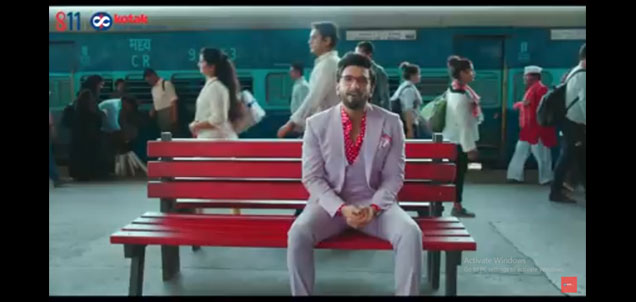
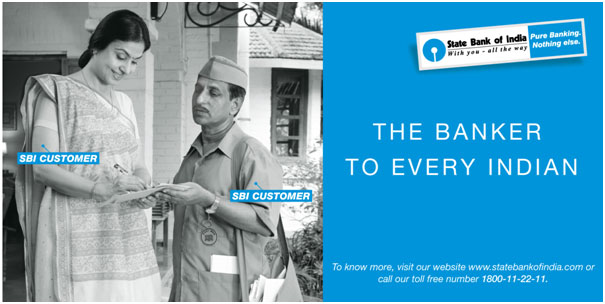
    When Kotak released a new campaign #IndiaInvited that said it didn’t discriminate between consumers, and everybody could therefore open a 811 account with them, I couldn’t but help remember the famous State Bank of India campaign many years ago that said “The Banker to every Indian”.  The campaign showed people from different walks of life and income classes to demonstrate that they were all SBI customers.  Somehow it seemed most appropriate for India’s largest public-sector bank to say that.  If I were to put it another way SBI as a brand had the consumer’s permission to make that claim.


    Does Kotak have the permission of consumers to make a similar claim?  I am not sure.  At the end of the day, positioning is not what companies want to say, but what consumers will let them say, or what they find acceptable.


    One thing that the commercial did for sure is to engage a number marketing experts on discussions on the ad and whether it was appropriate or not. I spoke to a number of marketers about it and these are some of the reactions I got.


    “Choice of Ranveer and his attire doesn’t feel appropriate; exaggerated expressions and caricaturized character seem over the top; almost making fun of the people it is made for.”


    “I received the ‘811’ as a sub-brand; a proper noun that doesn’t mean anything beyond the sound of its name.”


    “I think they got so engrossed with their superstar that they forgot to mention what makes 811 everyone’s bank…the fact that it is digital.”


    “Big deal. The customer does not expect discrimination from any bank… the creative could have focused on that sensitive button of multinational banks will look down on me, but as it’s all online, even that’s moot.”


    “811 is a zero-balance account, it can be opened completely online with just Aadhaar and PAN. It has a 6% interest rate. ‘For everyone’ is not a bad story. 90% of the accounts they open will be unprofitable. That’s the sacrifice they are proud of making”.


    “Yes, does seem a little like ‘Banker to Every Indian’ but while the SBI campaigns merely acknowledged that Indians came in all shapes and sizes and that SBI knew and catered for them all (or created special products for the many diverse customer clusters) the Kotak ad is in your face about discrimination in life.”


    “It is a communication that seems to be making a relevant point that needs to be made today. It’s like starting an important conversation in the society.”


    “Choice of Railway Station as a context is bang on; one that the ‘every Indian’ identifies with; one that brings together diverse classes and cultures. Using the context to make sensitive references to people across the Indian spectrum is clever; clear, mostly subtle (in some cases insensitive).”


    “It won’t make me consider Kotak; but now at least I see it as an organisation that seems to be raising an issue that needs to be raised.”


    Baggit


    The problem in using celebrities these days is that the consuming public knows much more about the lives of their celebrities through social media.  It may be a little incredulous to believe that Shraddha Kapoor would let Baggit to do the talking for her when all her pics on main media and social media show her letting bags from Cartier do the talking for her. In fact I googled all the pics of Shradhha with bags and they were famous international brand names.


    I thought the role of the bag was a bit forced in the commercial. But looking at the comments on YouTube it seems clear that people loved to see Shraddha Kapoor and none of them noticed her bag in the commercial which was Baggit. She is very popular but frankly I don’t know if she can help the bag to be popular.


    I guess the commercial might do the job of raising brand awareness (hopefully) and nothing much more.


    Indian entrepreneurs use celebrities so that they can show off to their friends about how they used a celebrity for their brand.  It’s got nothing to do with marketing science.


    Indira IVF


    The YouTube introduction to the video said “Becoming a mother should always be a matter of choice. BLUSH and INDIRA IVF present THE CHOICE – a new video in the Mothers and Daughters series, featuring SheebaChaddha and AuritraGhosh. “


    I quite liked the commercial. I felt it was sensitive.  And said that it was never too late to be a mother while subtly introducing the concept of IVF.  The story is about a mother who wants to delay motherhood but is under social pressure from her family to have a baby.  Somehow there was a ring of reality about the entire situation.


    It also tried to change the current attitudes to IVF which can tend to be negative.  Yes, it is a long ad though.  And I think the creators of the video prefer to call it content and not an ad.  Nothing wrong with that!  There is a of a lot of advertising masquerading as content, and vice versa.  Making it almost impossible to distinguish between the two.  If content is a 5-minute video advertisement on YouTube then this one is certainly content.  That’s all I can say!


  • Does Music have Colours (and why the ‘hai’ over ‘Hi’)?


    By Prabhakar Mundkur


    At first you might well find the idea a little incongruous.  But it does.


    Both colours and music seem to have emotional associations.  Little doubt that some music makes you sad, and some of it makes you happy for instance.  Similarly, some colours are formal, others are informal and some others are great for beach wear or even a psychedelic party.  So, it is inconceivable that music can have colours? Often the hippies of the 60s while tripping on acid have expressed several times that they have seen colours while listening to music. At the time it was explained away as the hallucinogenic effects of LSD on the brain, which made it unable to distinguish between the frequencies of colour and the frequencies of music.


    Current science says a miniscule minority of the population – one in three thousand – can actually see colours associated with music.  They are called cromesthetes and they spontaneously see colours as they listen to music.


    Now Maruti Suzuki seems to have used this little known and esoteric phenomenon to generate a musical signature to their brands.  They decided to generate the sound of Nexa Blue from three western classical musicians who were asked to present a musical theme for #NexaBlue.

    And this is the music they heard when they saw #NexaBlue.


    https://www.youtube.com/watch?v=Rg7FwoDA5c4\


    Very impressive as a piece of theory.  But is it mind-boggling as a piece of music?  I am not so sure. After all, music is intuitive at its very core.  And no amount of theory can help you to create a memorable tune that you want to sing along or whistle the moment you have heard it.  Music is a purely emotional response.  Also the tune being classical may not appeal to the larger target audience that Maruti-Suzuki in mind.  In fact perhaps it might have worked better, to have had Indian musicians interpret #NexaBlue into sound. It might have been more meaningful for the Indian market.  But the idea is both brave and experimentative.


    Rishton Ka Hi Fever


    The new Wagh Bakri has a nationalistic fervour to it.  The story is about a son returning from several years overseas. He is naturally a little westernised after his sojourn and uses the Western greeting Hi instead of say a Namaste. The son is a bit cold and self-effacing with his parents and grandparents on arrival.  The commercial ends with the grandmother admonishing the young lad for his westernisms and Western style of greeting with a Hi.


    If the son is a millennial and returning from overseas the poor boy deserves less of this severe cultural criticism.  After all it is Hello that was replaced by the more colloquial and modern Hi, which is likely to be used more often by young people than the old.


    When Parle-G recently launched its new campaign #YouaremyParleG, the first word in the first commercial for Parle G was the word Hi.  Take a look at the commercial.


    It would seem that Hi is no longer interpreted as being a western word but rather just a plain formal greeting that is used by the youth all over the world.  But somehow Wagh Bakri seems to have chosen to make it a moral lesson for Indian millennials.


    Hey v/s Hi and #WhenOatsMeetsChocolate


    And if Hi were so objectionable here is another digital video from Britannia Nutrichoice aimed at millennials uses the expression ‘Hey’ which is even more common perhaps amongst the youth than the antiquated Hi.


    https://www.youtube.com/watch?time_continue=54&v=SLVF255hQW4


    Britannia bases it assumptions that millennials are using emojis and animation to communicate all the time.  Oats and Chocolate are animated characters that meet in a romantic encounter in this new product from Britania.


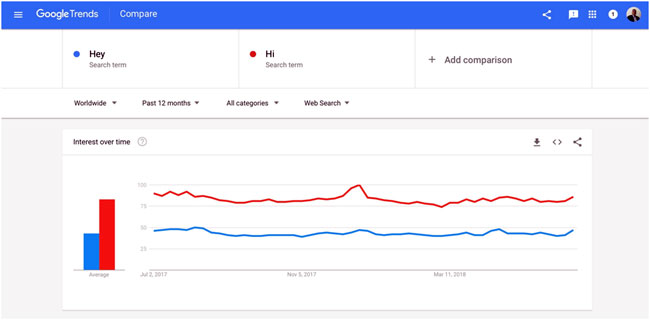
    However, if you compare Hey and Hi on Google Trends, it does seem like Hi is more commonly used than Hey on a world-wide basis.


    So one needs to see if the moral rap on the knuckles suggested by Wagh Bakri attracts Indian millennials or actually puts them off.