Tag: Prabhakar Mundkur

  • The Empire Expectantly Waits…


    By Prabhakar Mundkur

     

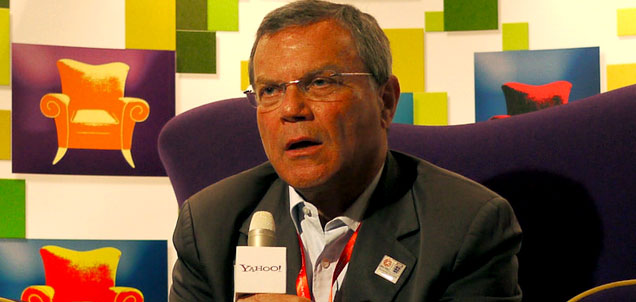
    They are enormously big shoes to fill.  As WPP looks for a successor, one can’t help but speculate on what it will take to step into Sir Martin’s shoes.


    WPP is much larger than we can imagine.  It has 405 ad agencies, PR firms, marketing and media buying agencies that include JWT, Ogilvy, Y&R, Grey, GroupM and Kantar.  With over 200,000 people in the group, it is no mean feat to manage this behemoth.


    WPP is not at its best at this juncture in its history.  Its stock has seen a 35% decline from its high in 2015. It also seems to be declining faster than the other communication groups.
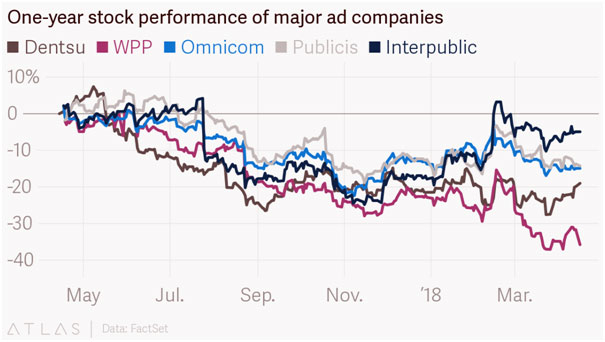


    The search for a successor has been on for the last eight years ever since WPP shareholders put pressure on knowing what would happen to WPP post-Sorrell.  One can only imagine that no candidate came close to be considered as a replacement for Sorrell.


    So what do we expect the ideal candidate would be?


    Commentator on the Global Economy

    Sir Martin has been a commentator on the global economy.  He constantly appeared in the press with his views on it.  He has also had a great perspective of the various regions.  He could talk as competently about Asia and he could about Europe or the US.  He related global events to the world economy.  For example, he had an opinion on how Donald Trump or Brexit would affect the world economy. At Davos this year he held his own on globalisation, capitalism and the ‘America first’ policy.He also had a comment on India and Prime Minister Narendra Modi at the same forum when he said “India has been extremely successful, he’s been extremely successful in changing Brand India, and in changing the actual performance of the Indian economy, but the question is, how does he continue to maintain the progress that he’s initiated? He has elections coming up in 2019, so hopefully, he will get another term, and take Brand India to another level.”


    Believer in Ideas

    Sir Martin was the quintessential entrepreneur. He knew how to start something small and make it big and this is exactly what he did with WPP since he first founded it in 1985.  He was a deal-maker. And master negotiator.  For people who thought he was just a bean counter, in an interview with the Daily Mail in 2014 he is known to have said that ideas are more important than making money.  At other times, he spoke of ambidexterity and that great leaders needed judgment, creativity, intuition and imagination.


    And Sir Martin did have ideas.  Almost all of his acquisitions were based on creating value for this company. His latest bug was “horizontality”. More than aware that the companies within the group were functioning in individual silos, Sir Martin was championing his idea of “horizontality” which he defined as  ‘connected know-how’: a way of working that unites people with diverse skills to deliver seamless solutions for clients”.


    Networker

    Sir Martin was a master networker.  This is what made him successful with WPP clients whom he met regularly all over the world.  Sir Martin was also charming when he wanted to be, and a great conversationalist.  Because he was interested in a wide variety of subjects he could quickly connect with most people.  I remember once introducing him to the Chairman of a company and my five-second brief to him was that the client was ex-MIT and an entrepreneur.  A few minutes later Sir Martin was engaging with the client and speaking about MIT and how he had just visited Boston a few months ago.


    Quick and Decisive

    Sir Martin was famously known for responding to his email on the fly.  Considering the size of WPP, everyone was assured of an immediate response to a query or approval from Sir Martin. Some people would joke about it and say that he perhaps had some people who could respond to the  routine emails and text messages.  He once said  “an imperfect decision on Monday is better than the 100% perfect decision on Friday”.


    The Will to Win

    Sir Martin liked winning and he made it a habit and always gave it all he had.  In a LinkedIn article in 2015 called “ 7 qualities What Will Get You Hired “  he said “ I often plagiarise Bill Shankly, the legendary manager of Liverpool Football Club, who famously said: “Some people think football is a matter of life and death; I can assure them it is much more serious than that.” That’s how I feel about WPP.  He reiterated this feeling in his farewell note to WPP employees a few days ago he said “As a Founder, I can say that WPP is not just a matter of life or death, it was, is and will be more important than that.”


    Industry observers are busy making predictions about whether the successor will be internal or external. Management theory tells us that if someone is 60% ready for the job, promote him and he will grow on the job.


    The problem here is that one can’t see anyone internal or external who is 60% ready to take on Sir Martin’s job. Or at least they don’t seem to be on the horizon as yet.



  • So what do we make of Infosys gobbling up Wongdoody?


    By Prabhakar Mundkur


    Prabhakar Mundkur

    The acquisition of Wongdoody for the Infosys Consulting Group could mean two things:

    1. Infosys is serious about the consulting business which has hitherto been a bit of a weak spot for them.

    2. The threat of the consulting-creative shop is closer back home for the communication groups in general.


    Not surprising. When Salil Parikh took over as CEO, many industry analysts predicted that he would strengthen the Infosys consulting business given his experience in consulting with Capgemini. His other strength was that he had worked in Europe for Capgemini, again a weak spot for Infosys whose primary strength has been the US.

    It did seem certain that Infosys could get more acquisitive and this was something that perhaps Salil Parikh would understand better than anyone else at Infosys. Capgemini’s successful consulting business accounted for 4% of its revenue. In comparison, Infosys has been struggling with the consulting business although they took a view to revive it in 2016. So the acquisition of Wongdoody makes more than good sense. No doubt the sale of Panaya and Skava announced recently will help fund this acquisition. It is indeed a smart move by Infosys to add value to its existing offering.

    The Infosys-Wongdoody combine is yet another emerging threat to the large communication groups like WPP, Omnicom and Publicis who have seen a slew of consulting groups joining the fray to acquire creative and digital capabilities.

    Scott Sorokin, the global head of Infosys’ digital arm is known to have said: “Their creative excellence and reputation for driving engaging digital customer experiences that operate at the intersection of advertising, retail, technology, and design precede them. I’m personally excited to work closely with the Wongdoody team to strengthen our customer experience capabilities and bring new thinking, talent, and innovation to our global clients.” For Wongdoody applying their creativity and design capabilities in new ways with Infosys’s technological capabilities creates a win-win situation for both.

    Large communication groups like WPP had been initially dismissive of the threat from the consultancy business. Sir Martin Sorrell is famously known to have said consultancies can’t buy “culture”. But with the sudden resignation of Sorrell, one looks forward to a new leader at WPP who can push back the emerging consulting threat for communication groups in general. And of course, push back the threat for WPP which has seen its stock price plummet by 35% from its 2015 high.

    But what is happening in the meantime to the advertising agency and the communication groups? Advertising agencies for a long time now have devalued their own services by charging less than they are worth. Add to this the unfair price competition with every agency trying to undercut every other agency. Their current weaknesses have allowed them to let clients disrupt their business model.

    The Chief Disruptor of the agency business model seems to be not the agencies themselves but a client. Mark Pritchard, Chief Brand Officer for P & G, has pooled three of his agencies into one creative agency called People First. Responsible for creating the Tide Super Bowl commercial in 2018 which was certainly not the best Tide commercial to date, it is keeping industry observers busy while they wait in great expectation to see what good comes out of it. But one thing that disruptors like Pritchard seem hell-bent on doing is to disrupt what they call the Mad Men model. Who would have thought that one famous television serial could have created so many demons around us wanting to decimate the quintessential character of the advertising business?

    You may not want to believe it. But to sum up, with all the emerging threats on the communication groups, including clients like Pritchard who want to disrupt their business models, the threat of consulting groups taking over a slice of the business from communication groups might be closer home than we think.


  • P&G’s Pritchard continues to walk all over his agencies

    Mark Pritchard at Cannes Lions 2017​


    By Prabhakar Mundkur [updated]


    There seems to be no stopping Mark Pritchard, Chief Brand Officer at Procter & Gamble (P&G).  Almost every week, the man walks all over the advertising industry hammering it into pulp. And the ad industry having lost its spine a few decades ago, is happy to let him walk all over them.


    The latest disruption that he has created in the advertising business is to create a unit where he has pooled the best creative resources of all his agencies into one agency called the People First agency headquartered in New York and headed by Andrea Diquez, CEO of Publicis Group Saatchi and Saatchi.


    I wonder why the three agencies even agreed to do that.  Do they not have any sense of ego?  Or has the revenue that P&G offers them forced them into submission and servility?


    Imagine Prasson, Piyush and Balki sitting in the same agency and producing work for one client.  I am sure the Indians wouldn’t agree to a formula like that?  Or would they?  Is the lure of money and profit too big to show your spine to the world’s largest advertiser?


    One could have forgiven Pritchard if what he proclaims is the new agency model had created something breakthrough and innovative.  But People First seemed to have created just another television commercial like any other agency, when they worked on Tide for the Super Bowl.  The ad failed to move me and I am unlikely to show it at my next public appearance as an example of breakthrough advertising.


    Small Creative shops no threat to Large agencies


    When the first few creative hotshops set up, some industry experts interpreted it as a threat to the large agency setup.  Taproot was a good example of a creative hotshop threatening the large agency like JWT for example when they usurped a part of the Pepsi and Airtel account.


    But now going by experience, the creative hotshop is set up only to dress up the bride.  To create a viable agency, with the sole objective of being acquired by a large group a few years later. And so alas Taproot became a part of Dentsu.


    A slew of other small hotshops followed among them Scarecrow.  Again, like Taproot but to a lesser extent it became a threat to the large agency taking little chunks of MNC and local business from other agencies.  But again, like hotshops before them the sole objective was to create an agency for acquisition.  Scarecrow has been acquired by M&C Saatchi now making it Scarecrow M&C Saatchi.


    Some will remember that M&C Saatchi has not had an illustrious existence in this country.  The agency floated around for a while without making any waves before leaving the country altogether.


    But it seems that with the new acquisition of Scarecrow, M&C Saatchi may have more to benefit from the partnership than Scarecrow. A quick look at the M&C Saatchi global website reveals that its global accounts might have not much leverage in India :Nandos, HBO, Natwest, Lexusetc are unlikely to affect the fortunes of either Scarecrow or M & C Saatchi, significantly.


    But of course, there is an upside as always.  The owners of Scarecrow will become rich and M&C Saatchi can drop one more pin on its global map of offices.  Besides Scarecrow of course can show off an international halo.


    Are India clients likely to work with New York agencies?

    One would have thought that Indian clients would never have considered working with a New York agency for many reasons. Time, distance, understanding of culture, and several other constraints.


    But much is being made of Nadia Chauhan’s appointment of Sagmeister and Walsh the New York-based agency that works on Parle Agro’sFrooti.


    In a new splash all over the Indian trade journals, both Nadia and Jessica Walsh a partner with Sagmeister Walsh raved about each other.


    The commercial itself was a little unimpressive according to me.


    The commercial features Alia Bhatt and is a combination of real life and animation.  As usual and like most Frooti ads the commercial was totally execution oriented and lacked any unique advertising idea for the brand.


    The graphics also reminded me of a style that the agency has developed of using post-modern art with strong graphics which they seem to be doing with all their other brands as well.


    I wonder if this was meant to show the world that Frooti has a New York agency or was the move only to slight its previous agency Creativeland Asia which was the Frooti agency for nine years.


  • Prabhakar Mundkur: Lighter is not better for Heineken

    Prabhakar Mundkur

    By Prabhakar Mundkur


    While the commercial might have been made in good faith, a recent television commercial for Heineken Lite has a bottle of beer sliding past several black people before coming to rest before a light-skinned woman. The tag line “Sometimes lighter is better’ might have aggravated the point about cultural diversity arousing the wrath of hip hop star Chance the Rapper who took strong objection to the commercial.


    The commercial in the meantime has been pulled off-air.  With the number of commercials over the last year including Pepsi drawing criticism, Grey has done a wise thing.  It has a mandate which says that creative teams working on a campaign must answer the question: “How can we make the idea reflect and respect the world’s diversity?


    Seems like an excellent idea from Grey considering the number of commercials that are constantly going wrong on the subject of cultural diversity.


    Silent Rebellion at Goafest?

    The guest line-up of speakers at this Goafest includes Baba Ramdev as the main speaker raising some eyebrows among advertising professionals.Patanjali is acknowledged as an innovator which disrupted the entire FMCG industry but is also seen as a bit of a pariah as far as its own advertising is concerned.  While Patanjali has risen to be one of the largest advertisers in the country, it has also committed the largest body of misleading advertising work in a very short period of time. Not only that, they have strongly questioned the wisdom of the advertising industry in judging their work as misleading.  Sanjeev Kotnala, writer, trainer and consultant, has been vociferously airing his views about how Baba Ramdev was a bad choice for the role of main speaker at a festival that celebrates creativity.  As an aside, none of the work produced by Patanjali could really classify as ‘creative’ by any standards.


    One argument for inviting Ramdev seems to be that he is an innovator and that there is a lot to learn from him.  But there is a lot to learn from many people who have been classified as offenders. After all who would deny that there is a lot to learn from Vijay Mallya about beer and spirits, a lot to learn about cricket and IPL from Lalit Modi, and a lot to learn about innovative jewelry from Nirav Modi?


    While calling Ramdev as a guest speaker might have been an innocent decision, with the sole objective of wanting to include a crowd-puller, one wonders how it affects the sensibilities of senior advertising chiefs?  At the end of day, every professional in his field must also be his own regulator.  Every industry needs to maintain the professional standards it has imposed on itself.


    Coke launches new Summer Campaign

    Coke seems to have broken the usual mould with its new summer campaign.  It has personalised the packaging of Coke through a co-creation exercise with consumers.


    There are 20 descriptors in 12 languages on various relationships in a new trend which is being labelled micro-segmentation and advocacy.


    Thus far co-creation seemed like a good buzz word to drop in conversations on marketing and advertising.  But Coke might has actually made this come alive as part of their “Share a Coke” campaign which is running globally.


    Good strategy for Coke.


    Alexa goes Wild

    India is currently running a boring, very functional campaign for Alexa and Amazon Echo/Dot and perhaps its defence is that they need to educate Indian audiences on how Alexa works through the Amazon devices.  In the meantime, Ellen DeGeneres revealed a funny and probably slightly dangerous side of Alexa in a lighter vein.


    While it does demonstrate what Alexa can do, it gives us an idea of what might happen were Alexa to know so much about you.


    Certainly a peek into our own future. The age of Artificial Intelligence is nearer than we think.


  • Prabhakar Mundkur: Ad Agencies no longer need Creative Chiefs!

    Prabhakar Mundkur

    By Prabhakar Mundkur


    Or so it seems if you want to follow in the footsteps of the oldest agency in the world, JWT, which has been in the advertising business for 154 years ever since it first started doing magazine advertising in 1864.


    Tamara Ingram CEO, JWT sent this memo to the agency when Matt Eastwood their global Chief Creative officer resigned earlier this month.  The memo from Tamara which was released by AdWeek went as follows:


    Everyone,


    I’m writing to share the news that Matt Eastwood, Worldwide Chief Creative Officer, has exited J. Walter Thompson to pursue a new adventure. We thank him for his contributions and wish him continued success in his future endeavors.


    We are reimagining the future of the agency. This is a structural decision that will allow us to be more agile, leverage our collective global bench strength and encourage the burgeoning diverse ‘maker culture’ growing within J. Walter Thompson. As such, we have no plans to replace the role.


    Creativity remains at the very core of our business, but today it is an even more collaborative process. It is borderless. It is broadly focused. We are increasingly relying on the people who are closest to making and creating the work. And, we are re-imagining the future of how this shift will be reflected within our organization and our leadership structure.


    The Worldwide Creative Council will evolve to better reflect the needs of the agency. It will continue to be a pivotal part of our organization internally and set standards and practices for how we improve the quality of our work. And, there will be a fluid roster of talented individuals with myriad skill sets.


    Additional strategic changes will include the use of technology to evaluate creative concepts at a much earlier stage. This will allow us to be iterative in real time and to ensure we are evolving our work to be stronger, more innovative and have a greater impact on our clients’ business.


    I am committed to protecting, supporting and developing the creative community and culture within JWT. I am looking forward to sharing more specific information soon. For now, it’s business as usual and we will keep the trains running as we head into Cannes.


    Tam


    What does this mean for the creative community as a whole?  Creatives the world over were enraged and showed their support for Matt.  In addition, JWT proved that it doesn’t really want to be a creative agency which has always been its nemesis.  Considered old, stodgy and uncreative, JWT might well have Commodore J Walter Thompson, the founder of the agency, turning in his grave.


    Coming on the heels of Marc Pritchard saying that he would like to see three quarters of the agency resources to be creative, the move from JWT saying that they are going to eliminate the job of the Chief Creative Officer, comes as a mighty surprise.  That they might want to challenge the current status quoin the advertising industry with planners and client service.


    Plagiarism crosses borders

    Finally, plagiarism has come up in the news because it can now cross borders more easily than people do. So, when Pakistan’s beauty brand Olivia did a complete lift of a Godrej BBlunt TVC of three years ago, India stood aghast. It had implications both for the advertiser and the celebrity in this case who was Kareena Kapoor.


    The Olivia Intence TVC


    The BBlunt TVC from Godrej


    If that were not enough, a MalaikaArora ad that had also plagiarised seems to have popped up.

    I am sure that theblatant attempt to copy something across international borders must have sent the IP lawyer community into a tizzy!


    Consumers are being manipulated not just Governments

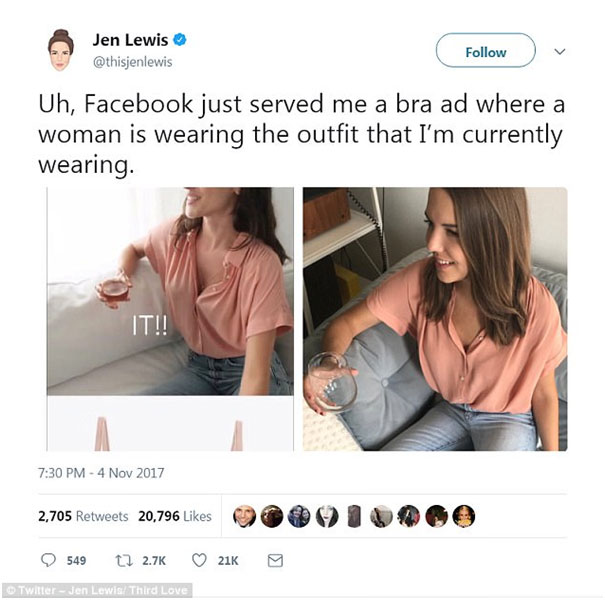
    With the governments of various countries venting their anger at Cambridge Analytica and Facebook for rigging election results in several countries around the world, everyone seems to have forgotten about the poor consumer.  Who has been secretly manipulated by these data thieves.  Some lone voices of consumers have been making these unconscious manipulative tactics from Facebook public on twitter, but I am afraid that in all the din created by the governments, consumers might lose out.  This tweet is a great testimony to how consumers are being manipulated.


    Mobile Manufacturers seem content to be camera replacements


    The new Vivo ad seems to have drawn a lot of attention because Aamir Khan has replaced Ranveer Singh in the advertising.  Marketing experts seem to be excited giving their opinions on how Aamir is good for the brand, others are discussing the pros and cons of using old stars versus young users.


    But the real problem with the Vivo commercial is that it treats the phone as a camera. The ad was reminiscent of the old Kodak and Canon/Nikon ads.


    And here we were busy thinking that the mobile has replaced the computer as a modern computing device that does everything from browse the web to order my Uber, pizza and more.

  • Prabhakar Mundkur: Is Client Service getting Extinct?

    By Prabhakar Mundkur


    Last week, when Mark Pritchard of P&G said“I’d like creatives to account for three quarters of an ad agencies’ resources”,he might have delivered a telling blow to one of the mainstays of the advertising agency – the client service department.  Globally and in India, creatives have been increasingly playing a more important role than any other department in delivering client satisfaction.  This is partly because the end-product of the agency is creative, so it does make sense that they are the crucial part of the delivery system.


    Almost simultaneously, the quality of client service has been in steady decline. Agencies once upon a time, queued up at the IIMs in India in the late ’80s and early ’90s to compete with the global FMCG players and recruited the best young brains in the country at competitive prices with the rest of the industries.  But alas, no more.  I remember that JWT used to take 50-60 new recruits into the system every year.  Decreasing margins and because advertising might have lost its sheen with young MBAs, ad agencies are no longer in demand on campuses today.  So, it is no surprise that the quality of client service is no longer what it used to be.


    But Marc Pritchard’s statements has its faults.  Agencies have for too long tried to mirror the hierarchies of the client’s marketing department.  This means that you need a mirror image of the brand manager, the marketing manager, the marketing director etc. in the ad agency’s client service structure.  And to their credit, client service does a lot of the dirty work on the account that is often invisible but plays its part.  Also, if creatives spend too much time on meetings, as clients often want them to, it is likely they will never have the time to actually do the creative.  In my experience, a number of clients are operationally heavy and often client service does the dirty work ungrudgingly.  But as more and more clients express their reliance on creative, client service might need to find a new reason to justify their presence on the business.


    Either way, the Marc Pritchard statement is a warning bell to client service people all over the world.  They need to redefine their existence and contribution on a client’s business.


    India Tourism and the Land of Yoga

    Incredible India rolled out its latest film positioning the country as the land of yoga.  Didn’t know that?  Surprised?


    I am sure no one in the world really doubts that yoga was born in India although to date it does seem like our most popular export. Unfortunately, in the world of intellectual property rights, India no longer owns yoga.  There are probably more yoga practitioners and yoga classes in the rest of the world than there are in India. With the UN having adopted Yoga Day, and Prime Minister Narendra Modi’s personal effort in promoting yoga, the new film does seem like a bit of wet blanket and the least impressive in the long series of Incredible India ads.


    The film released on March 7, 2018 seems to be languishing at under 10k views on YouTube.  No surprise.


    #AllBeginsWithBlack by Raymond

    This new TVC had everyone complimenting Raymond for their brave gesture of using visually impaired Canadian singer and writer Jugpreet Singh Bajwa as the hero of the film to give his interpretations of black for the new collection of fabrics. Advertising has been using differently abled people in their commercials for a while now.  Bajwa recites some slam poetry which goes like this:‘Black is a like a silence that everyone can feel. When it finally speaks it deafens the world with its powerful words. It’s time to unravel.


    While slam poetry might have a limited audience in India, I found the tone of the commercial very un-Raymond like. But that is perhaps because when I think of Raymond’s brand I think of their signature tune which was Traumerei from Kinderszenen Op 15 by Schumann. Languorous images of an idyllic world.  Beautiful musical phrasing by Schuman. This piece of music was played by radio stations at the end of World War II.  Listen to Horowitz playing it in Moscow to see how it moves you.


    This commercial to me was therefore a departure from Raymond’s brand personality and the harsh tone of both the visuals and the music got me quite disturbed.


    So, while the colour was about black fine fabrics, I felt there was no need to make the commercial like it belonged to the film noir genre. Because film noir is marked by a certain inherent fatalism and pessimism.   But that’s my opinion. Hope the commercial works for Raymond.


  • Are WPP results a sign of troubled times for the industry?


    By Prabhakar Mundkur


    WPP shares plunged 13 per cent on the London Stock Exchange because 2017 proved to be the worst year since 2009 showing a drop in net sales of 0.9 per cent.


    There seemed no single big reason why the largest communication group was showing weak results.  However, the industry has been under pressure with 84 per cent of the digital investment going to the digital duopoly: Google and Facebook. In addition, large global firms like Unilever had cut spends, while others like P&G were trying to cut out the middle man on media by going directly to the digital publishers.  Mark Pritchard of P&G told the press: ‘If entrepreneurs can buy digital media, why can’t the brand team on Tide, Dawn and Crest be entrepreneurs and do the same?” This might be a backlash of transparency issues that clients are having with agencies and also the suspicion that agencies are pushing more media money into digital because they are earning larger commissions there compared to traditional media.


    Internally, WPP was more than aware that they still function like a few large silos from media, advertising, data and research that don’t talk to each other.  This was reflected in Sir Martin’s statement to the press that they would move away from individual companies to a “to a cohesive global team dedicated to the core purpose of driving growth for clients.”


    While communication conglomerates like Publicis, WPP, Omnicom and Dentu went on an acquisition spree to offer a bouquet of services to clients, true integration amongst these disciplines has continued to be a challenge.


    In addition, the traditional agency model is antiquated, and the traditional agency has failed to come up with something new that can keep up with the times.


    Durex springs a new airy surprise

    Reckitt Benckiser is not the most creative client in the world, in fact most of their advertising is downright boring, but Durex seems to always break the mould.  Last year, Durex had surprised us with the Durex Jeans teaser campaign which had led everyone to believe that they could expect a new brand of jeans from Durex only to be presented with a DurexJeans a new condom.


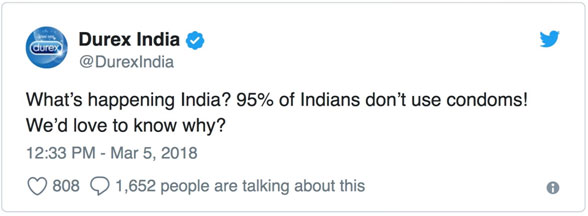
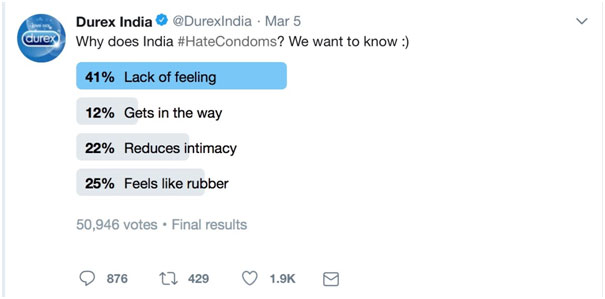
    Earlier this month, Durex went on to ask people on social media their main reasons for not wearing condoms and then presented the results of their research on twitter.


    Durex then went on to launch its new Condom Durex Air.  As its final tweet said: ‘Finally here’s our solution for all condom haters out there.  Presenting to you Durex Air, a condom so thin like it’s not even there. Reach a new level of intimacy and #LoveDurexAir.


    Do we need to thank Nike and Apple for introducing Air into our vocabulary to represent product variants which are thinner and lighter?  Somehow, I never thought a condom might also ride on the Air bandwagon.


    An exam in progressive parenting

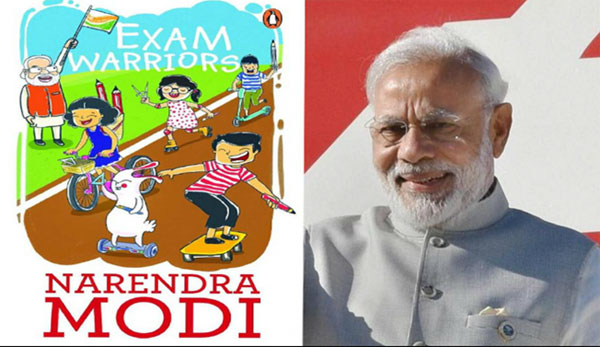
    Exam time stress for both Indian parents and children is well known.  So much is the attention given to it that even our Prime Minister addressed students recently on how to cope with exam stress through “Pariksha par charcha” speech which was broadcast to all CBSC schools.  The Prime Minister even published a book called Exam Warriors.


    Bournvita did an interesting twist on exam time with their Exam Sale promo.


    A stall at a local mall had children selling their guitars, cameras and paint brushes for free.  They explained that they were being given away for free because their parents wanted them to focus on their exams. Passersby were surprised and this got an adverse reaction from them about marks and trying for a 90% grade being so important that students had to give up their hobbies.


    The message came through quite clearly that marks is not all that good parents must be looking for when evaluating their children.


    East India Comedy depicts the truth on advertising

    East India Comedy’s recent salvo might be less of a parody and more reflective of how the general content in advertising is depicted.  The video launched on Youtube said:“Introducing a new product to help women match up to all the expectations that society places on them. Ab aapbhi ban saktihain ‘adarshnari’!


    It suggests that women are being pressurised into buying products to become what society wants them to be.


    Maybe there is some truth in that!

  • Prabhakar Mundkur: Indian Advertising and its Mother Schizophrenia

    Prabhakar Mundkur

    By Prabhakar Mundkur


    It would have helped if we had a uniform understanding of Indian mothers.  Last week, we saw two very different portrayals of mothers both emanating from Indian agencies.  One of course was the All Out TVC which ostensibly was making a commercial, that was in support of Indian mothers #StandbyToughMoms.  But the portrayal may have just backfired in spite of good intentions.


    Largely because it showed an Indian family sitting down to a meal where the Indian mother didn’t even have a seat at the table.  She then begins to play the servant rolled into a doormat role where she is busy serving an enormous family while she goes hungry herself.  She decides to be stern with her son who is behaving like the usual spoilt Indian brat and pushing his plate away rudely, only to be reprimanded by the mother-in-law – another cameo from the India of the past.


    Says Priyadarshini Narendra, an experienced strategist: “How is this a tough mom, when she doesn’t show the guts to stand up for herself and acts like a doormat? At the end,she needs to be rescued by a man, without his validation, she just standing there looking mulish.  It harks back to the Nirupa Roy trope. Which hopefully we have outgrown.”


    Milan Vohra, well known writer, says: “I find the ad regressive. It’s high time they stop glorifying clichés. And why does this woman behave like she’s their tight-lipped maid? Does she need someone else to speak for her? If the whole point was to show she’s a silent tough type maybe she could have had one pithy comment at the end to the bratty beta. Bah!”


    So, in many ways what might have been a film made with good intentions seem to have upset a lot of mothers because of the regressive woman stereotype portrayed in the film.


    And the big surprise is that the commercial was made by the same agency that did the path breaking #Shareyourloadcommercials for Ariel, which fought for an equal status for women.


    The India – Pakistan advertising collaboration

    Another much shared commercial on WhatsApp was the Shan Foods commercial for Peek Freens Cake-up. The ad focuses on two characters; a working mum and her son. The mum religiously fills up the son’s tiffin box with cakeeveryday and there is a letter she puts in the tiffin which attempts to instill the right values in her child.  So far, so good. Yes, it is touching at one level.  And it is a beautifully made film.


    But after having seen it one can’t but help, come up with some questions.


    One mother I showed the ad to said without any hesitation, that at one level the film was saying “I love you so much beta, but I’m a cliched working mum who is never around and therefore I will assuage my guilt by feeding you processed cake with artificial ingredients and sugar EVERYDAY!”.


    Of course, having worked on brands like Kellogg’s, which are maniacal about nutrition one can’t help asking the second question. What are the daily nutritional requirements of this cake and is it really wise for a mum to be feeding her child this cake every day?


    But at least it portrays the modern mother in Pakistan.  Now take a look at the All-Out portrayal of the Indian mother.  Are mothers in Pakistan more progressive than India?  Or is it just our schizophrenic understanding of what today’s mothers are about?


    Indian Print ads – lots of media innovation and no creative innovation

    In the 80s and 90s, Indian print ads moved you. Whatever happened to the print ads of today?  They are so obvious, they don’t make you smile or evoke any emotion at all.  And all the while you are struggling to read your daily newspaper that is so full of media innovations, it’s a struggle to read the paper because it is falling apart with fold-outs.  Or is it that we know how to be creative in English and we know how to be creative in Hindi, but we haven’t quite got around to being creative in Hinglish?


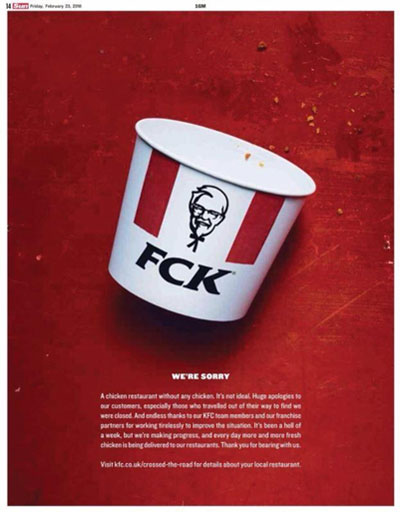
    But the KFC ad in the UK brought resurrected the creativity of print advertising. Provoked by a shortage of chicken in all their restaurants, KFC decided to turn the overall consumer disappointment on its head.


    The ad read “A chicken shop without any chicken. It’s not ideal. Huge apologies to our customers, especially those who travelled out of their way to find we were closed,” the ad reads.


    “It’s been a hell of a week, but we’re making progress, and every day more and more fresh chicken is being delivered to our restaurants.”


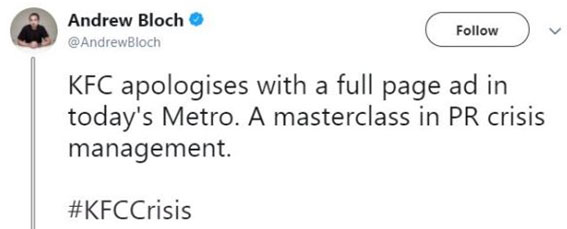
    Andrew Bloch, Founder and Group Managing Director of Frank PR called it a ‘master-class in PR crisis management’ on twitter. I can’t help but agree!


  • Prabhakar Mundkur: What happens when the Scam-accused is also the Brand

    By Prabhakar Mundkur


    No doubt people’s attention the entire week was focused on Nirav Modi.  While the finance experts tried to unravel the mysteries of the scam and the LOUs, the marketing and advertising experts argued on what would happen to the brand.In retrospect, the diamantaire extraordinaire might have made the mistake of using his personal name as a brand.  It has certainly pointed out to marketing experts that brands like Kingfisher, Satyam etc. which also went through a scam were perhaps less affected because the brand name was not connected to the alleged scamster.  The Nirav Modi case is different because every time you mentioned “Nirav Modi” the brand name was being dragged through mud.  We might have been more forgiving if the owner of the brand was an accused but called John Smith to make a point. That way the Nirav Modi brand could have lived on.


    By Nirav Modi’s own admission in a letter to the PNB Chairman he is reported to have said: “In the anxiety to recover your dues immediately, despite my offer (on February 13, a day before the public announcement, and on February15) your actions have destroyed my brand and the business and have now restricted your ability to recover all the dues leaving a trail of unpaid debts”.

     

    That now leaves one option were Nirav Modi to consider getting into business again.  He would need to think of a new brand but where he is only the designer.  Unless of course the brand gets suitably exonerated, through  legal battles with the CBI and PNB.


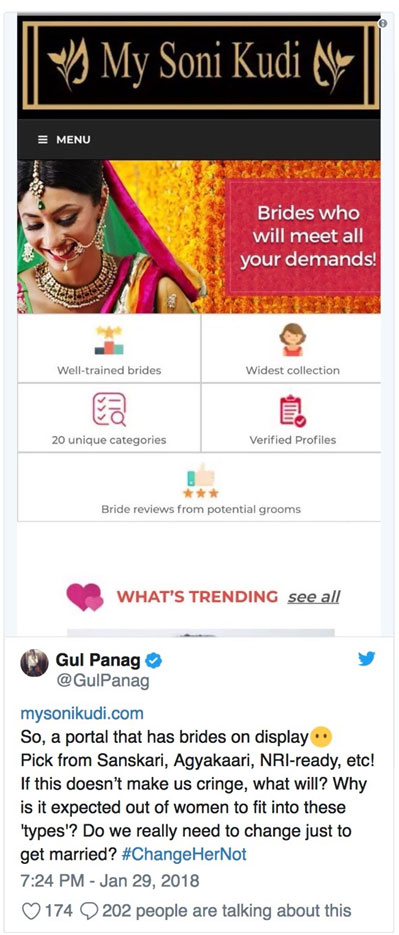
    Zee’s Social Media Experiment mysonikudi.com

    In a world where people still believe that communication has to be hard-hitting and that normally means that you spend a lot of money trying to hammer a message into people’s heads, it was refreshing to see the Zee campaign for mysonikudi.com


    They followed the Stimulus-Response approach which evangelised that if you want someone to believe something, you don’t just hammer that message into their heads.  So, for example, if I want you to believe that I am a funny man, I don’t show you my certificates in humour and shout at you loudly that I am a funny man. Because you might well not believe me.   Instead I tell you a joke, and then your response is that I am funny.


    Mysonikudi followed this approach when they got Gul Panag to tweet about a make-believe website called sonikudi.com which projected itself as a portal which provided customised brides like Wonder Chef’, ‘Bachat Focused’, ‘Agyakari’, ‘Gharelu’, and ‘Sansakari’.


    Gul Panag #changehernot hashtag was trending in no time and it drew the ire of the public at large making the campaign a great success.  The fake website I believe drew over 3000 eager beaver husbands-to-be putting in their preferences for the stereotypical housewives offered on the website.


    Yahoo advertises for India

    These days in drawing room conversations with my daughter’s friends, they say: “Uncle, we are no longer on Facebook, we are on Instagram”.  While I am still trying to grope around with a theory that would explain this millennial behaviour they add fuel to the fire by telling me that Facebook is only for older people.  That really makes me feel really old.  In the last months, I had almost come to the conclusion that Facebook was for old dads and grandads. And that Instagram was for all the young happening people. Of course I thought being an ad guy that this was a clever strategy by Facebook to differentiate between the users of Facebook and Instagram since they own both platforms.


    And now there is this campaign called “Live to Love” by Facebook that says all my thinking is wrong. For one its shows young people (read millennials ) and it also shows old people like me. Here are sample commercials for  both Neha the young doctor, and Sunny the 58 year old portly businessman.


    While the campaign does look like a strategy planner wrote a very detailed brief that eulogised about the target group and the creative just decided to translate it into a film, the campaign does what every mass marketer is known to do.  Talk to everybody, both young and old.  Which, somehow goes against the the tenets of positioning and targeting.  But I guess when you have 217 million users in India and those users are a pretty amorphous lot, you don’t have too many choices.


    In any case, the campaign does two jobs:  it reassures me that not only old people use Facebook.  And it reassures younger people that they need not shun it and go to Instagram.  If that is what Mark Zuckerberg wants in this second largest market the campaign perhaps meets the objective.


    PrabhakarMundkur is an ad industry veteran who is now a prolific commentator on LinkedIn and his own website – prabhakarmundkur.com. The views here are personal


  • Will Media Agencies ‘Kill’ the Creative…?


    By Prabhakar Mundkur


    I remember that back in 1996 when I was with JWT South Africa, Burt Manning the then global CEO of JWT made a trip to meet us.  In his informal speech at the office pub, he said that he would like to see a day when the traditional ad agency presentation started with a media presentation rather than a creative presentation.  If that is not already happening I am sure it will happen soon.  So, Mr. Manning might have just predicted the future very early on.


    Ever since media and creative separated, it’s the media agency that has made large strides forward.  I was lucky to be working at JWT Shanghai where the second Mindshare in the world was formed in 1998, thanks to Kelly Clark, the now Global CEO of GroupM who entirely supervised the transition. The media agency has embraced digital, activation, events, sponsorships, content distribution, sports and entertainment, and the rest of the integrated marketing puzzle. Making it far more attractive and qualified compared to the creative agency. Whereas the creative agency has remained what it always was… largely the producer of TV commercials and print ads.


    The acquisition of a digital agency called Glitch by GroupM may be a signal of where the future lies. After all there is nothing to stop the media agency from also acquiring a creative agency save the obvious conflict at a group level.  In fact, acquisition of a creative agency might well bring us full circle to the integrated agency of the future.  Today’s media agency has the Big Data, has the client relationships, has the research, is making large investments, unlike the creative agency that is just bumbling along trying hard to survive. I know creative freelancers who already work with GroupM.  I am sure it saves GroupM the bother of having to ask their WPP creative agencies for help.  And the informality of relationships with these creative shops prevents any obvious conflict of interest at a corporate level.


    But the press release did make GroupM look a like a bunch of bean counters.  Because the Glitch CEO said they were bringing right-brained thinking to the left-brained GroupM.  That is certainly not how GroupM should see itself in the future.


    McCann vilified on Social Media

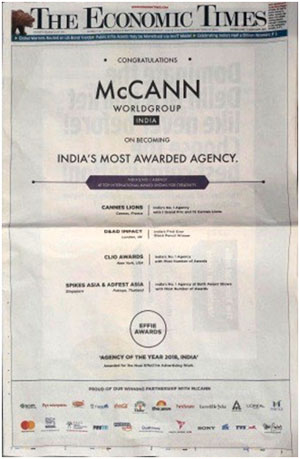
    When McCann put a self-congratulatory ad in The Times of India last week, suddenly the professional side of the advertising business woke up almost like Rasputin awakening from his slumber.  As the saying goes, professionals typically don’t advertise themselves and professionals generally means chartered accountant, lawyers etc. An old code of conduct says that professionals shouldn’t advertise, but I guess that is long forgotten.  After all we see plenty of ads for doctors and clinics these days.  When it suits the ad industry folks,they like to think of themselves as professionals.  So, the industry took to social media to denigrate McCann. The taunts included the creativity of the ad.


    But I am sure it is Prasoon Joshi, the CEO of McCann, who is having the last laugh.  In the just released Gunn Report 2017, McCann was named the No 1 agency in India.  Leaving behind the likes of Taproot Dentsu, BBDO, Ogilvy, Leo Burnett, L & Saatchi & Saatchi and Weiden+Kennedy.


    Advertising catches up with the Indian parent’s obsession for children’s studies

    While there may be no formal research to validate this, the Indian’s parent’s obsession with children’s studies is well-known.  We are the only country that indulges our children in the extra classes, the private tuitions, and other academic additions to regular school.  This either poorly reflects on our education systems, our children or our parents, I am not sure which.  But the insight triggered a few commercials both from Mirinda and Horlicks.


    What is questionable of course, in spite of trying very hard, is the rather loose connection between the product and exam time which has little to do with each other. The Horlicks claim of ‘emotional nutrition’ remained largely emotional with no real ‘reason why’. But with children’s nutrition categories being threatened by serious pharma companies like Abbott with products like Pediasure, its exam time for Horlicks as well which has seen its market share take a beating in recent years.


    But in balance, advertisers might have hit upon a good thing. After all Prime Minister Narendra Modi is addressing 10 crore students on February 16, on how to deal with the stress of exam time. Besides our PM has also written a book on the subject, which was released on February 3.


    It’s time to add Exam Time as another special day along with Valentine’s Day, Mother’s Day and Father’s Day.  I am sure the theme will attract more advertisers in 2019.


  • Prabhakar Mundkur: Does Comparative Advtg Work?

    By Prabhakar Mundkur


    The Bajaj Dominar 400 has come out with a string of commercials which use the metaphor of the elephant to connote heavy, old technology bikes – the obvious reference is of course Royal Enfield and even Harley to a lesser extent is in the same group, although Harleys typically fall into a more expensive price bracket.


    In overseas markets, it is a well-known fact that on any yardstick of performance Japanese bikes outclass a Harley.  That is much the same for the Royal Enfield in the Indian market, which at best has only made marginal improvements to the original version of the Royal Enfield that rolled off the production floors in Redditch, Worcestershire, more than half a century ago. No wonder the Royal Enfield websites refer to the motorcycle as a ‘modern classic’. After all, just to take one example it sports a carburetor which is a relic of old technology instead of a fuel injector that is found in modern cars and motorbikes.


    But what Bajaj is not accounting for is that the old heavy bikes have very strong ‘genes’ and strong emotional attachment. There is something in every Indian biker that tells him he must own a Royal Enfield at some point of time in his life.  And while they may not be fast, not great at picking up speed, or great at handling, there is some undefinable quality about sitting on top of a Royal Enfield that a string of commercials may well find it difficult to overcome. Obviously Royal Enfield is making giant strides in this market, and that’s the reason for this response from Bajaj.


    Which brings us to the eternal question on comparative advertising: does it really work?


    In a study conducted by Dr Fred Beard, professor of advertising in the Gaylord College of Journalism and Mass Communication at the University of Oklahoma, Dr Beard says “the potential for negative outcomes of [comparative advertising] are a very real possibility when prominent brands choose to go head to head using strictly comparative advertising campaigns.”


    Heineken India’s Generation Campaign is a good adaptation of international work

    The generation gap and particularly how to appeal to millennials has been every marketers challenge for some time now.  When Heineken launched their #OpenYourWorld campaign overseas last year, the premise was to test if two strangers divided by their beliefs ( political and social )can overcome their differences. That seems to have hit the right note amongst consumers abroad.


    No wonder then that Heineken considered adapting the same campaign to India but with a twist. Instead of two strangers, the campaign decided to capitalise on the generation gap between parents and children.  By finding the gap between how parents think about what their children should be and what children really want to be they have found an interesting idea right in the middle of this gap. The campaign idea expresses the parent’s traditional career expectations of children as a base and then uses interaction between the parent and child  to break down barriers.


    By using a comedian to present the unique social experiment, the Indian version adds a layer that perhaps makes the campaign work better.  But I wonder if the campaign lags the trend a bit ; Indian parents have been opening up to letting their children choose new age professions for some time now.  I see so many parents open to their children becoming musicians, fashion designers, disc jockeysetc, and joining emerging new sectors like media and retail that one hardly comes across the traditional parent forcing his child to become a chartered accountant, engineer or doctor.


    That is the only thing I found a trifle jarring about the campaign was the fact that India has passed the stage of being closed to new professions; the world has opened up both for Indians and people around the world.


    The Super Bowl Zeitgeist

    Jeff Weiner CEO of LinkedIn in a post this week said: “ If Super Bowl commercials are a barometer for the prevailing zeitgeist, interesting to note the number of inspiring, inclusive, and positive messages during this year’s game.”


    Whilst the Super Bowl does seem a very competitive space that brings out the best of brands one of my favourite spots that took me by surprise was the Amazon spot featuring Jeff Bezos for the first time in a commercial.   Various celebrities try and substitute for Alexa who has lost her voice.


    The other commercial I really loved was done by Droga 5 for Sprint and capitalised on  Artificial Intelligence and all the TV series we have been fed from Westworld to Extant to real life expressions from Sophia the Robot.


    The commercial does an excellent and laughable take-off  by portraying hyper-intelligent robots who have discovered that paying twice as much for Verizon isn’t smart.  The robots have a good laugh at their creator for being stupid.

  • Prabhakar Mundkur: Advertising loses another Great

    By Prabhakar Mundkur


    The week was full of tributes from all the people who knew and worked with him, including the famous Shelley Lazarus, one-time global CEO of Ogilvy and now Chairman Emeritus, who at one point of time was the only woman amongst seven men in the Advertising Hall of Fame.

    I never knew Ranjan personally although I did bump into him a few times in Shunu Sen’s offices at the Levers office at Backbay Reclamation in the early 1990s, when he would dash in from Singapore. We would both be required to present to Levers our latest views on the Lever competition which typically meant P & G and Colgate.

    Ranjan Kapur

    While I never worked with Ranjan, I did have a competitive perspective on him because Ogilvy and JWT were both vying for Sir Martin Sorrell’s attention after being acquired by WPP – JWT was acquired in 1987 and Ogilvy a little later in 1989.  Rumour had it those days that Sir Martin might have overpaid for Ogilvy, although in retrospect I am sure it was a wonderful decision. As one of the Lever agencies, we never considered Ogilvy a serious threat to the Lever business those days.  Then came a major storm called Ranjan Kapur.

    Since he joined in 1994, he seemed to have led a serious business transformation at the agency (before the word business transformation was to become popular). This included a huge emphasis on its creative product which he believed would lead to both fame and fortune.  By 2004, when Ranjan retired from Ogilvy, it was an awesome agency that had not only built itself a great solid reputation but was also sniffing at the heels of JWT which was always considered the #1 in revenue in the country.  Without IMRB’s revenue, Ogilvy was already bigger than JWT as I remember it back in 2004, while pouring over the annual reports of both agencies.

    Since I observed Mike Khanna, the erstwhile CEO of JWT from close quarters, I knew Mike always thought of Ranjan as a good friend, but he was more than aware of Ranjan also being the formidable competitor.  As luck would have it in 2005, I was one of the invitees for an Kolkata Ad Club function along with Ranjan.  And I was fortunate enough to catch him and wife Jimi at the airport where our flight had a miserable delay of a few hours.  This was my first real meeting with Ranjan and Jimi and I found them a warm and lovable couple.  We exchanged notes on a number of things including the quirks of our neighbourhood, since we both stayed at Prabhadevi.

    There are some whom you meet and you wonder why fate hadn’t brought you together earlier. Ranjan was one of those people.  As tributes pour in from every corner of the country, one can see how much he is being missed.


    Patriotic Branding

    I don’t think we have ever had a formal study of  patriotic brands in India, although several brands have pledged their patriotism,  but in the US where brands are continuously studied for their degree of Patriotism,  brands like Jeep, Hershey’s, Coke, Levis, Ford, Wal-Mart, Campbell’s and others  have stood out as patriotic brands. An annual research study finds out which brands were most associated with the value of patriotism. Quite often when we say American icon I guess what we are really referring to are patriotic brands. Largely, it has to do with being an American company or really being made in the U.S.A.  In the  2016 research, a national sample of 4,750 consumers, 16 to 65, evaluated 248 brands across a collection of 35 cross-category values. Consumers identified the following brands as leading 2016’s patriotism parade. Percentages indicate brands’ emotional engagement strength for the individual value of patriotism.

    1. Jeep/Disney (98%)
    2. Levi Strauss (96%)
    3. Ralph Lauren (95%)
    4. Ford (94%)
    5. Coca-Cola/Jack Daniels (93%)

    In India, Bajaj has always been known for its patriotic branding right from the days of the old Bajaj scooter with “Hamara Bajaj”.  Many brands pledged their patriotism this Republic Day but I thought one brand did it really well.  And no prizes for guessing.  It was Bajaj with its Invincible Indians ad.  It told stories of brave Indians who were serving society at large with the help of their Bajaj motorcycles.


    Advertising Ideas are not Intellectual Property?!


    Most ideas of any kind today are getting copyrighted both in the arts and the sciences. Create a piece of music and you can copyright it.  Create a piece of art and you can copyright it.  Create a scientific invention and you can copyright it.  Write a great advertising baseline, and consider it given away for free, forever. And be prepared to be forgotten. When Idea Cellular changed its agency from Lowe to BBDO late last year, the industry was left in suspense about what would happen to all the great properties created for Idea including “What an idea, Sirjee” which became a part of colloquial lingo in the country over the years.


    So when Shashi Shankar CMO of Idea Cellular recently said “The tagline belongs to the brand; it doesn’t matter who coined it”, I can see a copywriter cringing in a corner somewhere, about why he joined a profession where a client can say he doesn’t matter.  After all, that is not the tradition.  Most people are given credit for the good work they have done on a brand even if they lose the business over a long period of time.


    So, did the new work justify the change of agency from Lowe to BBDO.  I am not so sure.  I thought the new Idea commercial lacked the zing, and the intrusive personality the brand had built up over all these years. Somehow, the new commercials felt like they were for an older, soberer brand, unless it was intentional. In addition, the famous baseline “An idea can change your life” felt like it had been relegated to the background, along with its erstwhile agency.  The line preceding the baseline “A video can change your life” felt forced and idealess.


    But such is life in advertising.  You can slog your butt off for decades on a business and be forgotten forever!