Tag: Prabhakar Mundkur

  • It’s Mera Bharat Mahaan for Micromax


    By Prabhakar Mundkur

     

    In light of the Tanishq controversy, the new Micromax commercial provides an interesting counterpoint.


    The larger  truth that I am missing in all the marketing discussions on Tanishq is that ‘brand purpose’ came about because Millennials and Gen X in the West were looking for authenticity, honesty and purpose in brands.  In other words, they were looking for brands to mirror their own feelings and their higher purpose.  And this higher purpose took the form of say ‘Real Beauty’ for Dove as a proof of authenticity or the higher purpose took on a higher social responsibility to support some cause: sexism, racism (for us it is casteism), climate change, sustainability, poverty, domestic abuse, climate change and a host of other causes.


    I don’t know if the big brands have done a study of what this greater social responsibility might mean for Millennials and Gen X in India. I don’t think it is any of those that I mentioned for the Western audiences above.


    But the important point here is a that it is not marketing directors who sit in their ivory tower offices and determine brand purpose or the language a brand speaks. For brand purpose to be real, it must coincide with the people’s aspirations. Just as an example if the higher purpose of our targets in the country is to prevent “love-jihad” they may want to see brands that reflect that higher purpose. And Tanishq’s higher purpose was at odds with the higher purpose of a section of the public that engaged in the destruction of their commercial.


    After all, brands are not allowed to have a purpose that excludes the people it is talking to unless it wants to be altruistic or idealistic, which I am sure is not what Tanishq wants to be.


    Moving on, I found a useful counterpoint in this Micromax commercial.


    https://m.youtube.com/watch?v=aRo69b1wTNg


    The commercial essentially announces that they are back in the game after having taken a beating at the hands of the several Chinese mobile handsets in the market.


    In its ‘come back’ commercial appropriately titled ‘Micromax is Back’, the brand touches all the hot spots of the new Indian. Look at the various subtle inflections.  The story of an Indian entrepreneur who came from the ‘gullys’  of middle class India after borrowing Rs 3 lakh from his father.  A brand that was the No 1 brand in India and in the top ten brands in the world.  Stirring the new sense of ‘nationalism’ in the Indian.


    Then look at the skillful way in which the brand provokes anger against China by saying he was put down by Chinese brands. And that too in his own country? Oh, the injustice of it all!


    Then invoking the border conflict with China, invoking the Prime Minister were all briiliant strokes in a campaign that reeks of Made in India.  And to cap it all the new series being marketed by the marketers is ‘IN’. Another stroke of brilliance to use the first two letters of the country name. What could be more Indian, more desi that?


    Now go back to the Tanishq commercial and think for yourself whether it invoked the right feelings in the target audience. Or did it provoke mob anger by touching on a raw nerve that people are most sensitive about.


    For me this is a case study that brands cannot speak a language that does not strike the right chords among the people. Brands can’t hold beliefs that are in insolation without consulting the people they are talking to. Brands need the permission of the people before they speak.


    We have a choice now.  Either conform to the feelings of the new India that has been emerging for the last six years or continue to live in the past.


    Lofty ideals for brands must be examined in the light of the current mood of the nation.


    Prabhakar Mundkur is a veteran advertising professional and commentator. And also a musician. He has worked across geographies. His views here are personal




  • Prabhakar Mundkur: While the world is rising for unity, are we digressing?

    By Prabhakar Mundkur


    2020 is a year of huge upheavals not only because of Covid, but because of the huge social uprisings for unity.


    The killing of George Floyd, a 46-year-old black man in Minneapolis, by the police sent a sweeping shock wave of social change the world over.


    Racism of any kind just went out of the window this year. And the impact on brands was tremendous. Almost every brand worth its salt pledged to be fair and non- discriminatory. Brands asked people to stand against racism. Even the stoic Hindustan Unilever joined the tirade against discrimination of any kind when it decided to change the name of one its most profitable brands in country Fair & Lovely to Glow and Lovely. Such were the sweeping forces of an unprejudiced world. I sometimes wonder if Covid might have helped because it didn’t discriminate either between rich and poor, black and white or rich and poor.


    So, when Tanishq one of India’s favourite brands put out a commercial about the unity between two religions the uprising on Twitter felt unfair and the height of discrimination. After all India has been a pot pourri of various races and religions for centuries.


    https://twitter.com/beastoftraal/status/1315848777123598337?s=20

    Tanishq has pulled the creative off YouTube. The ad can be viewed here on a tweet by @bestoftraal – Ed


    Another common practice has always been to celebrate each other’s festivals and cultural practices. After all who can but help to eat biryani at Id, order a Sadya menu for Onam, or offer tilgul for Makar Sakranti. Somehow India has grown up celebrating every festival irrespective of which state, language or community it belonged to. Following this pattern, the commercial shows the mutual respect for each other’s customs.


    So, the outrage on Twitter seemed a little misplaced. Unless it was not representative of the feelings of the population at large.


    Should brands give in?


    I think when brands have done no wrong they should stick to their guns. And not get cowed down the mass hysteria on Twitter? Why do Twitter mobs behave in such extreme ways? Mob anger can be strange, pathological and monstrous. Behaviour of a larger group is known to have a big influence on individual behaviours and have been an area of interest in social psychology for years. Psychologists have found that group behaviour tends to be more extreme and amplifies the typical behaviour of its individual members. Mobs are known for losing their self-awareness. Sociologists refer to the process as de-individuation where individual personalities become dominated by the collective mindset of the crowd. Gustave Le Bon an early explorer of this phenomenon viewed crowd behaviour as “unanimous, emotional, and intellectually weak”.  The other reason is that twitter anger dies down as quickly as it is ignited. The half-life of a tweet ( average lifespan ) is 24 minutes or thereabouts.


    So, a kneejerk reaction to take your commercial off the air might well be unfounded.


    What else can brands do?


    Companies need to figure out strategies for dealing with social media manipulation with respect to their ads. After all a pattern seems to have been established of cyber bullying to pull out movies and ads.


    It can’t be difficult to gauge the reaction to your ads. Research should warn you about cultural inflections, and if there is an ad that has even a small probability of inciting twitter mob anger it might be better to go in well prepared. If social media and twitter can be manipulated by politicians and religious groups can’t they be manipulated equally by the biggest and best marketers in the country?


    Maybe we are seeing the dawn of a new era. Where brands can use their marketing power to do what politics and the law can’t do. Right the wrong. Tell television channels to stop doling out trash to the public. Tell Twitter mobs to shut up. Hail brand power! We might well be at the edge of a new era in marketing!


    Prabhakar Mundkur is a veteran advertising professional and has led agencies in various geographies, including India. He is a prolific writer and also a prolific musician. He comments frequently on MxMIndia, as on LinkedIn and other platforms. His views here are personal

  • The Unfairness of It All


    By Prabhakar Mundkur


    When Hindustan Unilever announced its decision to rename its moneyspinner $500 million brand Fair & Lovely to Glow & Lovely, it was a classic case of doing too little too late.


    To imagine that the decision was perhaps based on the greatest upheaval of racist stereotyping of our time with the excruciating George Floyd pinned to the ground doesn’t say much for Hindustan Unilever’s decision. There is nothing to congratulate them about.  There can be no appeasement of public emotion. There can only be guilt and shame.


    Activists through the decades have objected to Unilever’s fairness cream but it needed a revolt as ugly as George Floyd’s death, for the great marketer to make this small move.  Not since Rosa Parks was denied a seat on a bus in Montgomery has the world been so affected by the colour bias of the human race.


    But how good is the new name Glow & Lovely? Decades of skin care research has shown that ‘Glow’ is a major benefit in for the skin care regimen. Just like ‘Shine’ is. a major benefit for hair. So, taking a benefit from research and planting it in a brand name is perhaps not the most creative way of configuring brand names. But then Unilever has not been particularly known for its creativity. That lesser brands like Emami had already pre-empted this thinking by naming their brands Glow & Handsome is a bit of a shame. After all, one expects leaders to show the way. Not follow in the footsteps of their smaller competitor in the FMCG business.


    But is Glow and Lovely a good name?


     There is a reason why Glow and Lovely doesn’t sound right given the vagaries of the English Language. The reason why it doesn’t roll of the tongue as easily as Fair and Lovely has to do with the English language. Both Fair and Lovely are adjectives. Glow on the other hand is either a verb or a noun depending on how you use it. Glowing & Beautiful would have sounded better in English. Because Glowing is an adjective. But it then lengthens the brand name. And Unilever might have decided they would stay close to the current syntax. Anyway to the large majority of Indians it would hardly matter. It’s just another name for Fair & Lovely. Fair and Glow are both four-letter words. But how the name changes the advertising need to be seen. Will the new ads have dark and glowing faces to make amends with the brand’s past? That is anybody’s guess.


    How Darkie changed its name


    It may interest people to know that the exact opposite of Fair & Lovely existed as a toothpaste in Asia many decades ago. A toothpaste called Darkie. Produced by Hawley and Hazel, the brand was very popular in Asia. The pack showed a smiling black performer. The brand was then acquired by Colgate Palmolive which faced a lot of racist flak on the brand. In 1989, Colgate Palmolive decided to change the brand name to Darlie.


     

    “It’s just plain wrong,” Reuben Mark, chairman and chief executive of Colgate-Palmolive, said about the toothpaste’s name and logotype. “It’s just offensive. The morally right thing dictated that we must change. What we have to do is find a way to change that is least damaging to the economic interests of our partners.”


    Seems like a shame that another global company had thought about this so deeply more than 30 years ago. So Unilever in many way is 30 years too late.


     What will posterity say about Fair & Lovely?


     But what this would mean for the generations to come is anybody’s guess.  Will Generation Alpha which may use the brand a few years from now warm up to the brand given its history? (Generation Alpha is the demographic cohort succeeding Generation Z. Researchers and popular media use the early 2010s as the starting birth years and the mid-2020s as the ending birth years.)


    How will these young people see our racist past? One piece of research showed that Generation Z are as racist as their millennial parents. But will this continue on to Generation Alpha? Technology is likely to change a lot of mindsets in the future. And that may change the fortune of the brand called Glow & Lovely.


    Prabhakar Mundkur is an advertising veteran, a lateral thinker, storyteller and musician. He has spent several years in advertising – in India and elsewhere in the world – including at JWT China where he headed the Unilever business, amongst other functions. In fact he worked on Unilever brands for a good 17 years… though never on F&S ;-). A prolific writer now, he was LinkedIn’s #1 Top Voice for 2016 and YourStory’s 100 Emerging Voices 2018. He writes frequently on MxMIndia.

  • Prabhakar Mundkur: Coronavirus capitalised on by Opportunistic Marketers

    By Prabhakar Mundkur


    Some of the tech firms have really shown the way during the Coronavirus to make life better for people the world over.  They have done this by locking down their offices, making people work from home and Google has gone to the extent of blocking ads that are capitalising on the Coronavirus.

    On the other hand, opportunistic FMCG marketers are working in quite a different way. Some of them have decided to capitalise on the Coronavirus scare to promote their handwash and other products.  I personally think it is unethical to cash in on a major pandemic that is threatening the entire world, and look at it as an opportunity to market your products. While spreading the correct information is helpful, couching a product message slyly into that information somehow is very opportunistic.


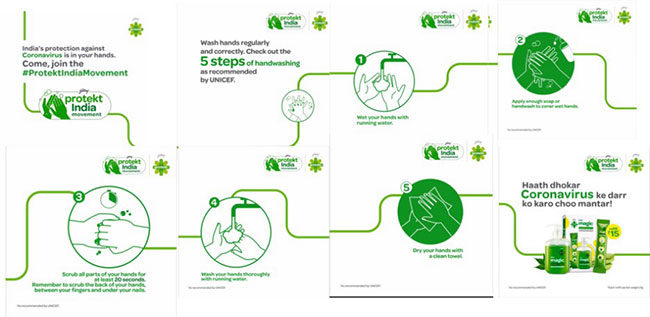
    One such example was a social media message from Godrej, a company that I greatly admire and has a good reputation as a trusted and honest company. The message played a film which went through the steps of washing hands correctly.  While this was going on, one couldn’t miss the Protekt India branding in the corner of the frame.  It all seemed like a good humanitarian effort to help everyone given the Coronavirus scare which you were about to applaud, when the disappointment hit you like a sock in your solar plexus.  It was just another product ad for Mr Magic, its new hand wash introduced a year ago.  The end-frame looked like this.


    It says ‘Haath dhokar Coronovirus ke darr ko karo choo mantar’.  Nice weasel. While the product message seems to say allay the fear of the Coronavirus, one can’t mistake how the product has been cleverly woven in with the dreaded disease.


    Then there was another ad for a product that I am not very familiar with called  Campure, a camphor-based product that claims to reduce the risk of Coronavirus. The 100% organic tag, might seem like it is a safe product. While no doubt the benefits of camphor are many, one wonders how it reduces the risk of Coronavirus which is a very specific claim.


    I thought the most responsible ad was by Lifebuoy. It was very clearly a matter of fact, public service message and it did not draw any direct inference to Coronavirus. Well done, Hindustan Unilever. One would have expected no less from a globally reputed company.


    One wonders how the Ministry of Health and the Ministry of Consumer Affairs is going to react to this kind of advertising from marketers. Are they going to patiently wait for innocent consumers to complain, or are they going to raise a suo moto complaint on their own?


    The world biggest tech firms like Google on the other hand have taken a stance to protect the citizens of the world from mis-information.


    Sundar Pichai for example in a statement said:

    “Protecting people from misinformation

    Our Trust and Safety team has been working around the clock and across the globe to safeguard our users from phishing, conspiracy theories, malware and misinformation, and we are constantly on the lookout for new threats. On YouTube, we are working to quickly remove any content that claims to prevent the coronavirus in place of seeking medical treatment. On Google Ads we are blocking all ads capitalizing on the coronavirus, and we’ve blocked tens of thousands of ads over the last six weeks. We are also helping WHO and government organizations run PSA ads. Google Play also prohibits developers from capitalizing on sensitive events, and our long-standing content policies strictly prohibit apps that feature medical or health-related content or functionalities that are misleading or potentially harmful.”


    Now that is a statement from a responsible world citizen.


    Prabhakar Mundkur is an ad industry veteran and a prolific writer and commentator. He writes frequently on MxMIndia


  • Leadership Lessons from Sports Coaches


    By Prabhakar Mundkur


    It might not be a coincidence that we use sports terminology in everyday management in our companies. We talk about a ‘pitch’, to a client, or we ask ourselves what is the ‘gameplan’ or when appropriate we say someone ‘dropped the ball’ when we see an error of judgment. Obviously, there is a lot to learn from the field of sports management.

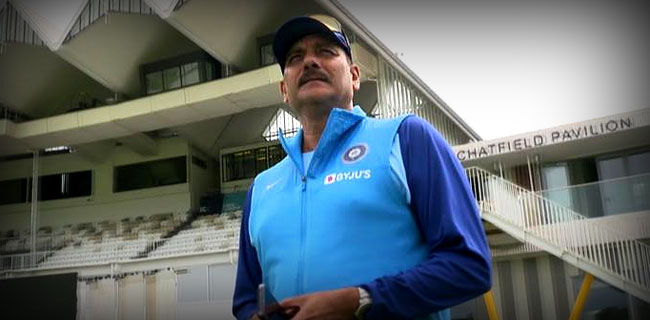
    And interesting area of sport management are the  sports coaches themselves and their style of team management. For example, if we were to look at some of our past coaches for the Indian cricket team, there might be one crucial difference between Anil Kumble and Ravi Shastri when it comes to evaluating coaches. And that is the question of ‘who is the boss?’ Kumble thought he was the boss, but Shastri thinks it is the captain of the team that is the boss.

    If press reports are to believed, Kumble’s pep talk after losing the Champions Trophy final against Pakistan didn’t go down well with the team which might have led to his final ouster. Although Kumble was not rude, he is supposed to have mentioned how wides and no-balls cost India dear and how the bowlers were not able to execute their game plan. While Kohli might have agreed with Kumble on how the team could have done better, he is known to have gone on to give a positive spin with his Captain’s pep talk by mentioning how the team played well to reach the final.

    In many ways, Kolhi acted like many leaders. Point out the mistakes to the team, but make sure that the team is not demotivated for future games and spur them on to do better in the future.

    Paul Barron, goalkeeping coach at Newcastle United, is an advocate of relationship coaching and once described his philosophy as

    :: They forget what you say to them.

    :: They forget what you do with them.

    :: But they never forget how you made them feel!


    So, perhaps, it is not just about Kumble said, but it is about how he made them feel. And obviously he didn’t make them feel good after the defeat in the Champions Trophy. Relationship coaching is about coaches connecting with their players, getting to the real pulse of the team, and releasing a powerful collective emotional energy. This very often is the edge that allows teams to survive the bad times and go on to remarkable achievements.

    Athlete-coach wars have been on as long as one can remember. Andy Murray for example re-hired Ivan Lendl after the pair decided to call it quits.

    If there are no codes of conduct formulated to protect coaches and athletes, then there is risk of a breach in the athlete-coach relationship. So if some of the reports in the press are to believe about Kumble and Kohli falling apart because of a discipline issue, or because Kumble wouldn’t let the players go out shopping for example, this is a fault of not laying down an athlete-coach code. The code in this case would have determined who was wrong and who was right.

    Coaches all desire strong team discipline, but do we really understand what that means? Are we willing to do what it takes? Athletes also crave discipline. They crave rules and boundaries regardless of how they may rail against them. Structure and a set of team rules, lets them know exactly what is acceptable and what is not for all aspects of team membership.

    You’re NOT a good coach when you call an athlete out in front of the team and tell that athlete, “You absolutely suck! The questions this raises is

    Does it motivate an individual to want to work even harder to improve?

    Does it help that individual to feel good about themselves?

    It;s very much the same in an office atmosphere.

    Shastri plays it right when he pats the team on the back when the team wins. A win is a win and needs to be celebrated and is a strong motivation to keep winning.

    According to various individuals from the BCCI and CAC as well as the committee of administrators, one big point of difference between Kohli and Kumble was who was the boss.

    Shastri is more than happy to let the captain take charge. “It’s always the captain’s team and it is the leader who calls the shots. That’s how it has always worked. A coach’s role, effectively speaking, is to stay in the background and let the onus be on the players. The coach and support staff’s role is to get the players in the most brilliant frame of mind to execute things and if done effectively, it brings enjoyment to the player’s game.”

    You’re NOT a good coach if you think that your most important job as a coach is to win games. If winning is the primary goal as a coach, he may have significantly lost his way and as a consequence, he might actually win less! The mission of a coach is to teach the team and help them grow as individuals so that they become better people in the world, both on and off the field. Good coaches teach their athletes how to be better people in the world and they use their sport as nothing more than a vehicle for this teaching. The winning and losing outcomes are completely secondary to the teaching of valuable life lessons.


  • Is Super Bowl the American version of IPL?


    By Prabhakar Mundkur


    The Super Bowl represents the most prestigious marketing event of the year. Which is why it draws so many specially made commercials and each has an aura around it.  Everyone is watching the Super Bowl so marketers almost think that they will be judged by the quality of their advertising.   It is also a great place for peer comparison, so how good the advertising is a matter of company prestige as well. It is also the day when the second largest food consumption happens in the US.


    Ticket prices normally hit the roof.  This year the cheapest ticket was priced at $4308 with the most expensive ticket going for $385,000.  And the most expensive 30 second commercial this year cost $ 5.6 million. In comparison a 30 second commercial cost Rs. 18 lakh on IPL.  While both are league games one has to remember that the Super Bowl is a one-day show, while the IPL lasts 6-7 weeks, so it is almost like a season.


    One difference I have noticed between the IPL and Super Bowl is that while the IPL is likely to have a lot of cricket stars in their advertising, the Super Bowl has a wide array of celebrities from TV, Hollywood and other sports, or in other words not just football stars.


    For example, take a look at the Amazon ad for this year’s Super Bowl starring Ellen DeGeneres and Portia de Rossi, where they wonder what the world might be before Alexa.


    https://www.youtube.com/watch?v=RF9t2rFmTVE


    The Google Ad for this year’s Super Bowl was quite a tear jerker.  I couldn’t help shedding a few tears for Loretta.


    https://www.youtube.com/watch?v=6xSxXiHwMrg


    Social psychologists refer to two kinds of reactions from sports fans. For those of you who might describe the Indian fans as fickle, the reactions of Indian fans are in line with the global experience.  BIRGing which stands ‘basking in reflected glory’ typically happens when the home team wins and people start feel better about themselves. They will often say “we won”, that’s how closely they identify with the home team.


    CORFing (or Cutting Off Reflected Failure) and BIRGing happens at the Super Bowl as well just like it happens at IPL.  This is evident when people use the third person and when Patriot fans say “They couldn’t stop Denver”.  Of course, because the Super Bowl is just a 4-hour game including the break and advertising, the effects of BIRGing and CORFing doesn’t last as long as say the IPL does which is a tournament that lasts 6-7 weeks.


    The Super Bowl boasted of a 48% female viewership and in 2019 had an audience of 98.2 million people. IPL has a male viewership skew 58-59% with females at 41-42% which is not so bad.How does the Super Bowl advertising compare with the IPL?  Many marketing experts I spoke to felt that the advertising on the IPL didn’t feel as special.  While many ads are created especially for the IPL, some are extensions of regular campaigns. Certainly, the ads have a lot of cricket celebrities.


    David Warschawski, CEO and Founder of Warschawski the integrated ad agency, said in a 2016 article in Adweek “America has a love affair with Super Bowl advertising.”  Would we say that we have a love affair with IPL advertising? I am not so sure, but maybe we are getting there. But we are in love with cricket and if the same passion was translated to its advertising, we might just push the bar a little up from where it is now.


    With the Star Re-imagine awards to reward creativity for ads aired in the IPL, advertisers might want to give the IPL a better shot.


  • Prabhakar Mundkur: Does Media truly reflect Public Opinion?

    By Prabhakar Mundkur


    When one says ‘media’ today, the focus somehow falls on social media and particularly twitter which represents the social media headlines of the day. But twitter might be responsible for distorting public opinion more than any other medium. This is because as the Pew Research showed, Twitter might be at odds with public opinion.


    This is because it is largely the opinion of the most vocal minority. This is obviously also the voice of who we regard as the influencer with a large following. Especially in India this could be even more pronounced. Our TV news readers for example are well-known for shouting down the public’s opinion when they shout down people who they have invited for their show. However it is not always the loudest voice that represents the voice of the public. Especially as societies become polarised, the public is often worried about expressing their opinion at all for fear that they might be politically and socially ostracised. Political twitter therefore might be even more unrepresentative of the public opinion than any other subject on twitter. What makes Twitter even more unreliable is the fact that it is infected with bots and trolls that may not be representative of the way we live our lives generally.


    Bots and Trolls


    The other day I saw a particular twitter handle that was dishing out malicious content meant to separate the multicultural nature of Indian society. On looking closer I noticed that the user had joined twitter only in December 2019, and in a few weeks had gathered more than 13,000 followers. The name was fairly anonymous although the picture of the twitter handle sported the Indian Prime Minister. You may think this is a sample of one but there is little doubt that there are several accounts like these that we may take as representative of the truth.


    Twitter and Mob Anger


    Outraged mobs on twitter follow all the behaviour patterns of real mobs on the street. Mob anger can be strange, pathological and monstrous. Behaviour of a larger group is known to have a big influence on individual behaviours and have been an area of interest in social psychology for years. Psychologists have found that group behaviour tends to be more extreme and amplifies the typical behaviour of its individual members. Mobs are known for losing their self-awareness. Sociologists refer to the process as de-individuation where individual personalities become dominated by the collective mindset of the crowd. Gustave Le Bon an early explorer of this phenomenon viewed crowd behaviour as “unanimous, emotional, and intellectually weak”. And twitter expresses mob anger much better than any other social medium.


    What about mainstream Media?


    So if social media and twitter is particularly unrepresentative of public opinion what about mass media? Typically mass media happens to be divided into the left and right ideologies, often but not always reflective of the owner of the medium. For example, if the media owner is a representative of the government in power, it is most likely that a TV channel or newspaper owned by such a person would be fiercely supportive of the government’s actions. And of course, vice versa. So what you might be consuming might often be a function of whether this is a ‘right’ or ‘left’ publication or TV channel. Whichever it is you can be assured that there is a built in bias in the medium’s point of view.


    It is always difficult to tell whether media is telling a story people are interested in or if they are manufacturing public concern.


    I quote from one Pew Research that said


    ‘Survey data from the Pew Research Center for the People & The Press reveals that public interest in the economy — going back to 2007 — has consistently been at a significantly higher level than the media coverage of the story. From August 2007 through the end of that year, for instance, about a quarter of Americans were paying very close attention the economy. That represents a fairly modest level of concern about that subject. Yet it still outstripped media interest. In that period, the economy and energy prices combined accounted for 4% of the newshole, making it the fifth largest news story.’


    It is quite possible that it is the same in the India at the current moment. Economy might be our greatest concern, but media content might not necessarily recognise that. Unless of course NRC and CAC represent even a larger concern. One can’t be quite sure.


    In conclusion, we need to take both social media and mainstream media with the proverbial pinch of salt. It may not always be a correct barometer of public opinion. Although I am sure it is a big influencer on people. But often the silent majority never expresses a point of view.


    Malcolm X famously said ‘ The newspapers will have you hating the people who are being oppressed, and loving the people who are doing the oppressing’.


    Prabhakar Mundkur is a veteran mediaperson and commentator. You can reach him via LinkedIn

  • By Invitation | Why it’s so important to get agency relationships right and how to do it: Sandeep Khewle, CEO, FirmDecisions India

    The last month has seen a major controversy around the decisions allegedly taken by the former CEO of one of India’s largest creative agency network and part of one of the most respected advertising networks in the world. Nothing has been on record and decidedly not in public, so we can’t name names. For the moment, it’s being dismissed as a silly rumour.


    Be that as it may, last fortnight, we published a comment by Prabhakar Mundkur which was very well-received. Soon after, we also invited Sandeep Khewale, CEO, FirmDecisions India to comment on the issue of transparency and how the marketing business can take measures to ensure transparency. – Editor


    By Sandeep Khewle


    In India and other major markets around the world, relationships between advertisers and their agency partners are under pressure like never before. This is true for both media agencies of record that plan and buy campaigns as well as creative agencies which develop creative assets to sell and represent the brand. The media and marketing ecosystem is becoming complex day by day and the options available for brands multiply ongoing basis, including into the realm of customer experience.


    The increased complexity of media and creative agency relationship demands greater scrutiny, knowledge, and professionalism in advertiser companies. This is necessary to ensure that agency partners deliver optimal value and return on investment. It’s also vital to determine that agencies aren’t cutting any corners that are in their own – but not their clients’ – best interests. It means that marketing, finance, and procurement teams at client-side need to work together to build functional and effective partnerships with their agencies of choice. Get it right, and the benefits on both sides can be transformational. Get it wrong, and brands can find themselves having to embark on the laborious, costly, and time-intensive process of finding a new partner all over again. In essence it all comes down to openness, transparency, and trust.


    Contracts are king

    In any agency partnership, it’s important that advertisers put in place a contract that enshrines their rights in a simple and clear manner. Contracts should be regularly reviewed – as often as annually in the ever-changing marketing landscape – and amended to include developments in supply chain management, agency ownership structures, and technology. Contracts must also be signed, by both parties. It seems like a trivial issue, but it is not uncommon for both global and national brands to operate with contracts that remain unsigned, months and even years after they’ve been drawn up, putting into question the enforceability of the terms if issues arise.


    The right to audit

    It is critical that contracts provide advertisers with complete and transparent access to all marketing and financial data related to their business, and this can come in the form of data or platform access, supplier contract ownership, and financial transparency. Contracts with agencies also need to include clauses that stipulate rights to an independent audit.


    We have seen contracts which specify that audit partners should be restricted to just one of the Big Four, global auditors. This presents two key challenges. First, the Big Four are not specialists in marketing contract compliance – they’re generalists, and so advertisers working with the Big Four (or anyone else not specialists in the field for that matter) may not be in receipt of the best advice available. But second, advertisers shouldn’t be told by their agencies which audit partner should be used to assess the work of the agency. Advertisers should be free to appoint whoever they choose as their audit partner. If not, it’s like a student grading their own exam paper. Being compelled by contract to choose from a limited pool of non-specialist auditors is little better than having no right to audit at all.


    Creative agency focus

    The industry focus for the last few years has been on media agency transparency, but it’s not only in media where advertisers need to enshrine transparent ways of working in their contracts. It’s vital in creative, too. It’s well known that media agencies can receive benefits from media vendors (publishers, platforms, and sales houses) for purchasing media inventory in bulk on behalf of multiple clients. Unless they’re explicitly called out in advertiser-agency contracts, these benefits can stay with the media agency and not be returned to the brands who fund the marketing ecosystem.


    In exactly the same way, there are issues of transparency and trust that advertisers need to address with their creative agencies. These include: creative agencies’ failure to reconcile project costs or the moving of residual balances into holding accounts, both of which can lead to money not being passed back to advertisers; the over-recovery of staff costs; the outsourcing of studio or production services to affiliates owned by the holding companies, without undertaking competitive bids, circumventing due process; and, bid rigging (making the agency affiliate the most cost efficient option). What’s more, choosing to work with a limited pool of production houses – because they are owned by or affiliated to the creative agency – means that advertisers can end up sourcing talent which is neither the best nor the most relevant for brand campaigns.


    In summary

    It’s the high-profile agency misdemeanours that make headline news. Yet in reality, advertisers should strive to make all of their agency relationships work hardest for them, in media – of course – but also in creative and production. The chances of being under-served abound when you take your eye off the prize; the opportunities for building a solid partnership in everyone’s best interests only emerge when these critical relationships receive proper attention.


    Sandeep Khewle joined FirmDecisions in 2017 to set up business operations in India. Prior to joining FD, he was Financial Controller at Publicis Media and has worked in advertising, ITES and the BFSI sectors. FirmDecisions is the one of the largest independent global contract compliance specialists. It provides advertisers with transparency into their marketing and media agencies. It works closely with advertisers and their agencies to validate and verify that clients receive what they pay for. Over the past 15 years, FirmDecision says it has completed over 4,500 audits in 70 countries, examining over $200 billion in transactions.


  • Will Marketing be forced to take sides?


    By Prabhakar Mundkur


    We are now truly in the post-truth era of marketing, and as Ralph Keyes aptly puts it, an era of dishonesty and deception. Post-truth marketing might have to follow post-truth politics.


    The Wikipedia defines post-truth politics as ‘.. a political culture in which debate is framed largely by appeals to emotion disconnected from the details of policy, and by the repeated assertion of talking points to which factual rebuttals are ignored.’


    Brands earlier had to stay neutral to political ideologies in their nations for fear of alienating their consumers.  Will this change in the new decade?  With increased polarisation of political views the world over, when celebrities voice their political opinion or show support for a particular ideology, does it mean the brands they endorse indirectly also belong to the same ideology?


    This could be disturbing again for the managers of the brands. Especially if their own ideology is different.


    When Deepika Padukone visited the JNU campus recently in support of the students, one can’t help thinking that this might impact the brands that she endorses. It also affects her fans.  If indeed Deepika stands with the JNU students, it could also mean she stands for a particular ideology in which case her fans are likely to be influenced by Deepika’s own attitudes.  So, there is dual effect here: 1. Deepika’s effect on her fans which affect their political ideology, and 2. which affect their choice of the brands that Deepika endorses.


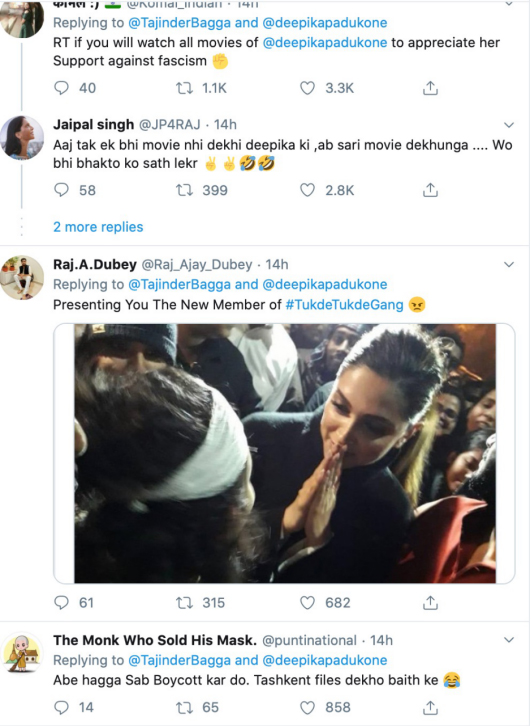
    As usual social media was quick to react.  Her support for JNU was seen as enough reason to boycott her movies.  It is difficult to gauge if there is any effect visible or invisible on the brands Deepika endorses.


    Source: Twitter.com


    Deepika had already shot a commercial for the Skill India ministry but after her JNU visit the video has been put on hold because of the clash of ideology with the government.


    Last week, things got worse for poor Deepika when the Union Minister for Women and Child Development, Smriti Irani, criticised Bollywood icon Deepika Padukone for visiting the Jawaharlal Nehru University to express solidarity with the protesting students.  Said Irani: “It was not unexpected to us that she was going to stand with people who want the destruction of India. She sided with people who hit girls on their private parts with lathis. I can’t deny her that right. She made her political affiliation known in 2011 that she supports the Congress Party. If people are surprised by this, it is because they didn’t know. There were a lot of admirers of hers who have just discovered her position.” 


    Implications for brands 

    The usual parameters to determine the choice of a celebrity for a brand has always been earnings, fame and social media reach.  Are we at the beginning of a decade where we may have to consider the political ideology of the celebrity? It may well be, as we move to a more polarised world, and as populations divide roughly into halves, rather than a majority or minority for a particular belief. I am referring of course to the most historic votes of the last decade.  Brexit was 52:48 for exiting the European Union. The NDA won 45% of the country’s votes. And Donald Trump won 46.1% of the vote.


    The political ideology of the celebrity is something that marketers never bothered about.  But now it may be something that needs to be factored, in the new decade.


    Marketing then might be forced to take sides in the future.

  • Are corporate titles cheap in Adland?


    By Prabhakar Mundkur


    The Uday Kotak Committee recommendations to SEBI on corporate governance stipulates that the Chairperson of the Board should be a non-executive director. This will affect about half of the top 500 listed companies from April 1, 2020. In the meantime, the ad industry has become very generous with their titles over the last two decades.

    More than 20 years ago, when I was working in Johannesburg, one of my colleagues told me ‘I wish I was working in India’, which came as a bit of a surprise for me. India was still not the most attractive place to work in for people from other countries twenty years ago. (I am not sure it still is ). Perplexed, I remember asking her why. She said she really wished she could have the titles of our colleagues in the Indian company of this multinational agency that we both worked for. It was the days when everyone was a Vice President of sorts. If you were not a VP, you were at least an Associate VP. Else you were a Senior VP or Executive VP. I remember that in one foreign bank those days which was one of my clients it was impossible to find anyone more junior than a VP.

    Have things gotten better for Indian executives in the last 20 years? I certainly think so.

    After tiring ourselves of abusing titles like VP, we seem to have moved on to more ambitious ones. Consider a title I came across a few years ago. The man I met from a very important media organisation said he was Managing Director (West). Now I had heard of Sales Manager (West), Branch Manager (West), but a Managing Director (West)? Seemed a little unusual to me. Because I grew up in an age where Managing Directors were at the very top of every organisation and could not be differentiated by region. After all a Managing Director typically was a board member, who also ran the organisation. Another favourite is COO (South). Typically supposed to mean that this is a branch manager who has reached the height of his or her incompetence, but who has missed the COO bus and still needs to be given some recognition.

    We then moved on to other titles like Chairman. Almost every CEO was unhappy being called CEO. He now wanted to be called Chairman. Twenty years ago, a Chairman typically looked after corporate and statutory affairs but didn’t run organisations while CEOs did. Chairman meant Chairman of the Board. In one particular case which I found most quizzical, there were two Chairmans reporting to the CEO, South Asia. I almost did a double take, when I saw the appointment being announced in the daily press. I thought that Indians had now reached a new high in making corporate titles cheap throwaways.

    In one of the companies that I was working for, we once wanted a person to head business development. Unfortunately for us, the candidate that we selected was fairly senior and he wouldn’t accept anything like New Business Director, which he felt was too cheap for a man of his professional stature. The senior management of the firm was frustrated, because they didn’t want to let his candidate go away, so they approached me on how to solve the problem and to discuss what kind of corporate title would be suitable for a candidate of his experience and stature. It took me only a few seconds to come up with a new improvisation. I said ‘Why don’t we call him Chief Growth Officer?’ I saw a look of relief on the men in suits in front of me. The last I heard, the man accepted the job gleefully.

    The way we are going, I think that no one in any organisation is really happy with his title. After all you can’t keep upgrading the senior positions and forget about more junior positions in the organisation. I would recommend that you call your head of despatch, Chief Logistics Officer, and the person who looks after sanitation in your office be re-designated as Chief Sanitation Officer. After all there seems to be no reasons to leave these poor folk behind. Everyone needs to be an Officer.

    Somehow and for some reason the word Officer is a must. In the old days, officers usually came from the Armed Forces. Remember that old favourite ” An Officer and a Gentleman”? Louis Gosset Jr won an Academy Award for Best Supporting Actor in that film. The title of the film is an old expression from the British  Royal Navy and later from the U.S. Uniform Code of Military Justice charge of “conduct unbecoming of an Officer and a Gentleman”.

    Of course you can’t expect the Officers of today’s companies to be also Gentlemen. While the title of Officer has been given around freely and cheaply, a gentleman who is a chivalrous, courteous and honourable man is not something that can be gifted away. It is something that you need to work hard for and perhaps something you grew up with.

    Although the latest title in vogue is that of Managing Partner. Almost everyone in every company is a Managing Partner. We may have borrowed the term from management consultants I suspect, but I am not sure.

    I read in a newspaper a couple of years ago, that one ad agency was going through some organisational changes, and I found that in the top management there were actually two Managing Directors. The press release explained the need for two Managing Directors by explaining that they need ‘to navigate and accelerate these transformations’. (imagine navigating with two captains on a ship!). Now that’s a new one. Again both the Managing Directors were reporting to a CEO. I hope all of you corporate experts can explain that one to me because I am still quite baffled.

    I guess the next time I see the newspapers I wouldn’t be surprised to see several Managing Directors and Chairmen in the same company. Leaving all of us innocents wondering who is the real boss!


  • Is Your Ad Agency Cheating on You?


    By Prabhakar Mundkur


    When the ad agency was on 15% commission there was no need to cheat. Although margins were thin at 3-4%, the ad agency was able to handle its rent, training, staff costs and other overheads and make a decent profit although always much less than their clients. The quality of staff was infinitely better.  When I first started doing the rounds of the IIMs in the late eighties, agencies were not a preferred employer, but it didn’t take long to get there. In the period between 1985-1990, HTA (the erstwhile Wunderman Thompson) hired anywhere between 50-60 young business school graduates every year. And we ran a two-week workshop for them called Entrez Vous typically held at one of the hotels in Marve (in suburban Mumbai). After the training programme, the trainees dispersed to the various offices across the country and formed an incredible buddy network that stood the agency in good stead.


    HTA was incredibly honest. I was once hauled up by the CFO of the company because he suspected that I had overcharged a client on a particular job – that I had charged more than the customary 15%. As it turned out, all I had done was charged a service fee for an exhibition in Rajasthan which was legal according to the HTA manual and the service fee I still remember had the billing head B7.  B8 was the production head where the remaining costs for the exhibition were billed like the artwork and the bromides to go over the panels. Exhibitions were charged a service fee because it was highly labour-intensive and if the agency were to just charge for artworks for exhibition panels, the job was highly unprofitable. I had had the client approve the estimate with the service fee and my CFO had to acknowledge that I was both clever and honest!


    My first memory of clients being suspicious of agency earnings was when clients started interrogating film production estimates. I would say this was roughly around 1990.  I found myself being grilled on a particular film production estimate. And I couldn’t believe it. A little later, all film production estimates were going through an external film auditor which was a shame for an honest agency like HTA. Later, I discovered that the problem was with one of our competitive agencies, which used to pad up film production estimates to 25% or over while its client contracts specified 15% on both media and production. The client had discovered an anomaly in the other agency’s film production estimate and was naturally suspicious of us as well. I was a little shocked that any agency could charge 25% when all agreements with clients mentioned the standard 15%. This ultimately gave rise to the emergence of the film production services auditor of which there were a few in the country. They matched up agency production estimates with actual market costs and advised clients accordingly. The objective was to discover the hidden padding of the film production estimate.


    Come the 1990s and agency earnings were rapidly going south. First the 15% agency commission broke down, and then came the major shock to the ad agency – the separation of the media from the creative business. This actually meant that neither the media nor the creative business was earning like before.


    So now it was the media arm’s turn to make a little extra money which was above and beyond the agency contract. In fact, I was once meeting the Chairman of one my largest clients in Asia, to make a very important presentation to him on one of his main competitors. When my Asia Pacific chief heard about my meeting, he at once wanted to accompany me knowing the stature of the client. When I put in a request to the Chairman that my APAC chief wanted to attend the meeting, the man winced. Clearly, he didn’t want to meet my boss. Later, I heard that the Chairman had a grouse against my Asia Pacific Chief because in another Asian country, my agency had not given back the media rebates the agency had earned, which were to be returned to the client as per the client contract. Yes, you guessed it – ultimately the lack of transparency in media rebates gave rise to the media services auditor. It is still difficult to separate ‘co-mingled buys’ that leverage the collective buying power of their clients but aren’t tied to any specific client’s account.


    And so, it has carried on for the last 20 years or so. Nothing has changed. A few weeks ago, a prominent up-and-coming and eminently successful CEO was summarily dismissed because he had been caught cheating his clients on film production costs amongst some other accusations. Tinkering with company P&Ls seemed like the lesser sin. A sad end to a promising career. Of course, he was trying to make his agency rich by maintaining margins much larger than his agency had promised the client globally. What could be the motivation? A really honest guy who probably was just trying to bump up his bonuses.


    I felt a twinge of sorrow when I heard that story. That is the sad downfall of the advertising agency as I knew it, since I first joined the profession in 1977. But who is to blame? I think the clients are to blame for negotiating terms that are so hard, that agencies are left with no option but to find means of increasing their profit. I blame the agencies for negotiating unrealistic terms with their clients just for the greed of handling their business. And lastly, I blame the agency bosses for laying unrealistic targets on their CEOs. In the process the ad agency seems to have lost its moral compass along with its ability to stay alive as it loses business rapidly to the digital agency of the future. Although, one must add, that digital agencies are not invulnerable. There are already stories of padding up hours for fee-based clients. But I am hoping they survive the future better than their predecessor.


    And I also wish agencies – networked and otherwise – relook at the way they conduct their business. Given a significant premium on the marketing spend, transparency is critical in the marketing services business. Clearly there is no room for any monkey business.


    Prabhakar Mundkur is a veteran adperson having worked across geographies leading agencies. He is also a prolific writer and recognised by LinkedIn as its #1 Top Voice in 2016. He writes frequently on MxMIndia. His views here are personal


  • Uday Shankar delivers 2019 AAAI Subhas Ghosal Memorial Lecture

    By A Correspondent


    Uday Shankar, President, The Walt Disney Company Asia Pacific and Chairman, Star and Disney India delivered the AAAI Subhas Ghosal Memorial Lecture 2019 at Four Seasons, Worli, Mumbai on Monday.


    Outlining why he has been in media for 30 years and continues to be so, Shankar said, “My career, first as a journalist and then as a broader media professional, let me observe and understand this country deeply, objectively and uniquely. As I slowly discovered, my profession also equipped me with an ability to impact this country and its people – both individually and collectively – in a way that few, if any other professions could have. It is the media – the journalists; the advertisers; the story tellers who enable us to make sense of the world. My 30 years in the media industry feels like I am just getting started because it has allowed me to not only understand and experience India in an unbelievable way, but over the years we have become change agents for India.”


    Prabhakar Mundkur, a veteran from the advertising world and currently Brand Strategy Advisor and a frequent contributor to MxMIndia, reminisced about Ghosal gave the audience an insight into what made him an outstanding advertising man and a leader that the entire advertising industry loved and revered.


    Said Sam Balsara, “On behalf of Subhas Ghosal Foundation, I want to thank Uday Shankar for kindly agreeing to deliver the Lecture and delivering an outstanding, enlightening and thought provoking one. I also thank the audience, for coming in large numbers to keep the memory of Subhas Ghosal alive, many decades after his passing away. I also want to thank Avinash Pandey and ABP Live, because of whose graceful support, the Lecture was made possible.”