Tag: Prabhakar Mundkur

  • Ad agencies vs Consultancies debate gets real


    By Prabhakar Mundkur

     

    So far, the debate on advertising versus the consultants was a theoretical one because it was not affecting the Indian market yet in any significant way. Companies like EY, KPMG, and PWC have been very active in digital marketing overseas but this capability was still not very active in India.  But with the launch of Deloitte Digital in India on January 12, the landscape is likely to change.  One will have to wait and see how the launch of Deloitte Digital willaffect  competitionlikrGroupM, Dentsu-Aegis and IPG Mediabrands.  Rakesh Barik – Technology Consulting, Deloitte India told the press, “Unlike existing creative agencies, we understand the business also.  We will help companies digitize their core”.  By implication it does mean that creative agencies don’t understand the business of their clients, something that has been troubling the advertising industry for some time now.  What’s more contrary to popular opinion ,the consultancies have been acquiring  talent in creative, designing and research, making up for their traditional lack of skills in this area.


    Hotstar’s Employer Branding Campaign

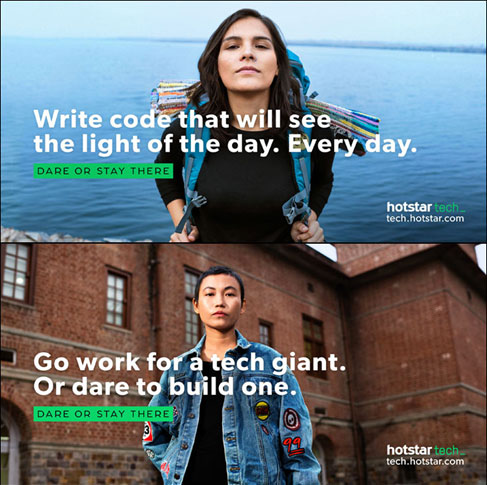
    Hotstar is a live streaming app that lets you watch your favourite shows, movies, sports and live news on-the-go. Most often its funny how we are able to see brands only as consumers of it.  So strong is our consumer perception of brands that often we may not even consider them as employers.  In fact, so strong is the value proposition to consumers that companies have to take a special effort to make a value proposition to its future employees and this is exactly what Hotstar has managed to do in its latest employer branding campaign.  The latest campaign from Hotstar positions it as a tech player to attract the best tech talent, which no doubt has several competitive options in the country today.

    The campaign makes you see Hotstar in a new light.  As a tech company that could offer the youth an interesting challenge.  The ‘Dare or stay there’ baseline is provocative enough for young techies to seriously consider Hotstar.
     

    Amazon Go 

    No wonder Amazon is being referred to as the ‘tech giant’ these days in the press. It’s no longer just the ‘online store’ or ‘e-commerce giant although its immediate competition might love to see it that way to serve their own purpose.


    With Alexa becoming the preferred personal assistant and taking giant strides forward, Alexa is not just a home assistant but is also taking control of cars (Ford has just adopted Alexa) and our other devices and possessions.


    Amazon now takes the pain out of shopping – no queues and no checkouts in their Seattle store. Just pick what you want from the store and get charged to your Amazon pay card on the way out. That’s the experience that Amazon offers at Amazon Go. The faqs on amazon.com had this to say about Amazon Go.


    What is Amazon Go?

    Amazon Go is a new kind of store with no checkout required. We created the world’s most advanced shopping technology so you never have to wait in line. With our Just Walk Out Shopping experience, simply use the Amazon Go app to enter the store, take I the products you want, and go! No lines, no checkout. (No, seriously.)

    I  liked the commercial because it made the concept of the new store really clear. It was really functional advertising which is a great way to launch a new brand.


    Indian men are not the only ones to touch their junk?

    For a long time now, there has been some public criticism of how Indian men touch their junk. A dermatologist friend of mine explains it away as tropical climate with a lot of heat and dust which could create conditions that justify this despicable Indian habit, especially amongst some classes of people.  But a new TVC from Columbia may imply that the habit is not unique to India.  The Colombian League against cancer has found a hilarious but gross way to make men aware of testicular cancer.


    This is an insight that is waiting to be used in the Indian market.  Everybody is going to identify with it.  In fact, I am wondering why no one has exploited it yet.


  • Prabhakar Mundkur: Does using the same idiom as someone else make an idea original?

    Prabhakar Mundkur

    By Prabhakar Mundkur


    The death of Kapil Mohan,the creator of the Old Monk rum drew a number of memoirs and essays on this iconic brand.  But one particular ad on social media on January 10, became quite popular and went viral.


    To me it was an idea made famous by Chivas Regal in their campaign below.

    In a debate with some of my contemporaries, the opinion was divided.  Many felt that it was reminiscent of the old Chivas campaign, but others felt that it was an adage that could well be re-used. One of my friends even questioned whether the ad was legal since it promoted Old Monk rum. (although the word rum was cleverly not used). Another friend raised the issue of the ad being created as speculative work, since it was not approved by Coca-Cola according to the tweet from the agency that created it.


    One awardwinning creative director I asked said: “Yes it reminds me of Chivas, but the visual makes up for it”.  Another awardwinning creative director said: “Yes it reminds me of Chivas. I remember it was something like ‘To the host it’s half empty, to the guest, it’s half full’.  However, since it’s an adage, nobody really owns it. Chivas did a fine job of adding a twist while in the Thums Up ad, the art director went for a literal visual depiction of the adage.”

    But I leave you to decide if you think the ad is original and if it needs to be applauded.


    Patanjali – LVMH Alliance

    While as a financial proposition it may make some sense, news of the LVMH-Patanjali partnership is as different as chalk and cheese to use a very tired phrase. The L Catterton Equity Fund was set up by LVMH to make investments in high growth companies with consumer brands and is one of the largest funds in the world.


    I thought that there might be some major hurdles to overcome especially the brand name itself.


    L Catterton Managing Partner, Ravi Thakran told the press that he is keen to explore markets like US, Japan, China, South Korea and Europe for Patanjali. However, the markets he mentions are hardly homogenous. For that matter, even the markets in North East Asia are not homogenous.


    The first hurdle for overseas markets could be the name itself – Patanjali. First of all, it is a four-syllable name which is quite uncommon in Asian markets. In addition, the Japanese recognise the foreignness of names both in Katakana and Roman alphabets and the Chinese recognise foreignness whey they see certain Hanzi characters.  And if the foreignness is attributed to Indianess, one is not quite sure what Indianness and Indian products mean in these markets. For most North East Asian markets India is considered both chaotic and mysterious.  The Chinese feel that Indian media is constantly portraying them as evil, which is not going down well with the Chinese.  In addition, in countries like China, the government is officially atheist.  So Babas and Vaids have little cache there. According to a research conducted in 2008, less than 40% of the Japanese population is religious.


    Besides, for Patanjali to accept any foreign investment, might be a bit like selling the brand’s soul, given its nationalistic, anti-MNC positioning thus far.


    The Art of the Crowd

    Crowd Art is an often-employed ploy by artists and advertisers.  The first great commercial to use crowd art was the British Airways commercial in 1990.  It used thousands of people to create a face which then winked at the audience before dissolving into a Union Jack.

    The recent Mercedes ad re-inforcing their leadership in the Indian market used crowd art to form the three-pointed star which was quite interesting.

    Which brings me back to the question I started with: is using the same idiom as another person but dressed differently, original?  When it comes to art, the question of originality needs some deeper introspection.  Under some conditions it still remains original. To me for example, Bernard Shaw’s famous play Pygmalion had to make a transition from being a play to being a musical when it became My Fair Lady, but for me My Fair Lady is still original.


    In general, I like Herman Melville’s view of originality when he ways, “It is better to fail in originality, than succeed in imitation.”


  • Ad Buzz by Prabhakar Mundkur: Will advertising strike back at consulting cos?

    By Prabhakar Mundkur


    Consulting vs Communication Groups

    In a surprise move, Sir Martin Sorrell may have silenced all the critics who have been proclaiming the death of advertising, as consulting companies have been making forays into digital marketing and advertising. Some investment gurus have even been predicting the eventual take-over of the advertising industry by the consulting industry. Kantar, one of the major companies in the WPP group, collapsed four brands – Kantar Added Value, Kantar Futures, Kantar Vermeer and Kantar Retail – into one brand called Kantar Consulting.  Kantar has already informed their clients about the development and hopes to have about a 1000 staff that consists of analysts, thought leaders and software developers.

    Will the others quickly follow suit?  It remains to be seen, but if they do, advertising is certainly striking back. Old professions have great survival skills, as the oldest profession in the world has proven to us time and time again.


    Social Media inspires Communication themes

    Earlier, brands took their cues from the news, cinema and other fields. Or used topics like another brand’s major event to take advantage and poke fun at them. Remember in 2017 when BMW celebrated its 100th birthday, how Mercedes acted cheekily with this ad?

    It paid BMW a left-handed compliment to make a point about themselves while overtly congratulating BMW.

    They also went all the way and invited all BMW employees to the Mercedes-Benz Museum “to discover the complete history of the automobile” from March 8 to 13.

    Now all that is changing. The latest source of inspiration is what is trending on social media.  While President Donald Trump’s #nuclearbutton tweet might have fazed political pundits, some brands decided to have some fun with the latest topic of conversation around the world.

    Closer home, Amul Butter has for the last 5 decades always capitalized on what is the current buzz. President Donald Trump’s tweet inspired this hoarding from Amul Butter.

    KFC UK and Ireland decided to get cheeky with McDonald’s on Twitter. Many Americans acknowledged they weren’t even aware that KFC existed in that part of the world until their tweet took Twitter by storm.


    Consumer Protection

    When Consumer Affairs Minister introduced a new Consumer Protection Bill in Parliament last week, it might have sent shivers down the Advertising and Entertainment industry in an already cold January.  The bill provided for a fine of INR 50 lakh which of course is unlikely to bother the top celebrities since it represents only a fraction of what they earn through endorsements. What might have seemed to be harsh to them was that celebrities could face up to three years imprisonment for appearing in misleading.  No doubt agents of celebrities would seek clarification on what exactly is misleading advertising.  The Advertising Standards Council of India has already made an offer to advise if an ad is misleading.

    Quite simply, misleading means giving the wrong idea or impression about something. In the case of products, if the claims made in advertising are not honest and truthful, it would mean an advertisement is misleading.  Anyway, the new act is likely to put the brakes on blindly accepting every brand offer that meets the celebrity’s standard fee.  Celebrities are also being careful about how the brand affects their own brand equity.  When Virat Kohli refused to endorse Pepsi last year, he was actually being careful about the repercussions on his own image.


    Creativity vs Effectiveness

    The advertising industry celebrated the Effies with their usual revelry. The Effies typically precede the euphoria of getting ready for the Abby’s which are around the corner. The cynics of the creative awards will quote Dave Trott when he famously said “You are not doing advertising for six million people anymore, but for ten people in the jury, and for a few clients”.   While the creative people are centre stage for the creative award, the effectiveness awards are for the ad-fiddlers as Dave Trott labeled our dear planners.

    However, it looks like the old polarity between creativity and effectiveness no longer holds true.  Increasingly I find that it is the creative agency that also wins the Effie.  And often I find that the best campaigns are quite likely to win both the creative awards and the effectiveness awards.  Hopefully it has nothing to do with the same organisation in India conducting both the awards.


    Having spent nearly four decades in the advertising business with companies like JWT, Havas and Y & R in India, Africa, and Asia, veteran adperson Prabhakar Mundkur is Chief Mentor at HGS Interactive, a part of Hinduja Global Solutions. He was LinkedIn’s Top Voice in India in 2016 andis a prolific writer. He recently set up PrabhakarMundkur.com as homebase for his writings. Ad Buzz will appear weekly on MxMIndia.com. The views here are his own.


  • Introducing Ad Buzz, a new column by Prabhakar Mundkur


    Adperson, musician, bicyclist and someone who doesn’t hesitate to speak his mind…. every Thursday on MxMIndia.


    By Prabhakar Mundkur


    Prabhakar Mundkur

    The year-end was full of the cacophony of writers making predictions for 2018, or mundane reviews of 2017, in spite of the fact that a calendar year has no particular statistical significance for trend spotting.  Change is always continuous and never separated by any discrete intervals, especially an interval that lasts exactly twelve months. In some ways, 2017 may have just stolen the thunder from 2018, with the strides in artificial intelligence in the form of Sophia the Robot, or personal assistants like Alexa making a major impact in our lives towards the end of the year.


    But one bright spot for December was the Lion of St Mark awarded to the much-deserved Pandey brothers.  They have truly raised the bar of creativity to a global standard, besides putting India firmly on the advertising creativity map.   Showering undue adulation on our stars is an Indian trait and we do it constantly with all our stars, whether they are from cinema, sports or any other field.  We may just have added ‘advertising’ to the adulation list.


    With this award, Piyush and Prasoon Pandey join an illustrious band of creative people around the world that has included David Droga, Marcello Serpa, Bob Greenburg, Joe Pytka, Lee Clow, Dan Wieden and Sir John Hegarty.  Not everyone might be aware of the work created by these distinguished gentlemen, or even knowwhere they work.The Lion of St Mark is one of those awards that lets the winner soak in humility and pride so deserving of a life time award, which by definition implies that it can only be won once.

     

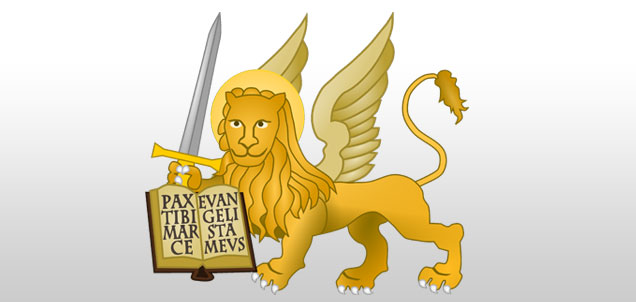
    St Mark incidentally is the evangelist pictured in the form of a winged Lion holding a Bible and is symbol of the city of Venice where the first Cannes was held in 1954.  But the significance of all this may be lost to many, or otherwisedismissed as unimportant.  At least one of our advertising weeklies, which covered the event exclusively, could well have educated their readers on the significance of the award.


    ~~


    For the marketing intellectual, the introduction of Thums Up Charged might hold room for an interesting debate.  Variants according to textbook marketers can endow the mother brand with rewards ranging from increased market share to a longer life.  But how does that augur for a category like colas, which is increasingly being seen as unhealthy?  And Thums up Charged might well be dubbed an even unhealthier variant given the extra levels of caffeine and the heightened aeration.  So how will an unhealthier variant of an already unhealthy brand perform?  Of course, to its credit, Thums Up remains the market leader in a market which has the world’s leading colas.  Another point to debate might well be how will the two variants will be differentiated in the advertising.  Will it be differentiated enough for the consumer to know which variant is being advertised or will the consumer just see it as another Thums Up ad? This often is the acid test for variant advertising.

     

    ~~


    If the rumour mill is to be believed at least one leading ad agency of earlier years shut down its Delhi office on Dec 31.  What a way to close 2017.  I believe the agency is managing its Mumbai office on skeleton staff.  Another well-known agency that at the turn of the millennium was threatening to hold the creative high ground is being absorbed by another agency in the same communications group.  As an ad guy, I find this kind of news depressing.  Partly because I always questioned the soothsayers and never wanted to believe in the death of advertising that has been a hot topic of discussion for some time now.


    For those of us who were celebrating the close of the old year, I am sure this is a week for sobering up and reflecting on what the new year holds for all of us.  The first week of a new year always feels like the end of one journey and the beginning of another.


    Having spent nearly four decades in the advertising business with companies like JWT, Havas and Y & R in India, Africa, and Asia, veteran adperson Prabhakar Mundkur is Chief Mentor at HGS Interactive, a part of Hinduja Global Solutions. He was LinkedIn’s Top Voice in India in 2016 and is a prolific writer. He recently set up PrabhakarMundkur.com as homebase for his writings. Ad Buzz will appear weekly on MxMIndia.com. The views here are his own.


  • Can IT consulting majors gobble up communication giants?


    By Prabhakar Mundkur


    Prabhakar Mundkur

    Steve Jobs is once known to have said, “We do no market research. We don’t hire consultants”.


    So obviously Steve Jobs didn’t have much faith in either but for some time now marketing trade magazines have been publishing articles on what might be described as a face off between the consultancy firms and the communication groups like WPP and Publicis.


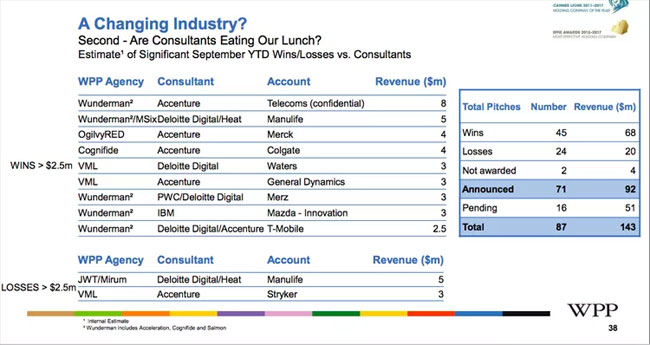
    The latest salvo came from WPP’s third quarter earnings report where WPP dismissed the threat from management consultants as “overhyped”. Analysts may tend to have agreed.


    And yet just last month, Jerome Bodin, an analyst at Natixis shocked the communication group community by saying that WPP and Publicis were potential take over targets. He seemed to suggest that consultancy or IT services companies like Accenture or Capegemini could be shopping.


    Bodin said that WPP and Publicis were potential take over targets and that Accenture could be a possible buyer. “Amid strong pressure on advertising agencies’ business models, a consolidation deal is a credible scenario,” Jerome Bodin, an analyst at Natixis, wrote in his research report. Bodin said a merger was one possibility, but more likely were acquisitions by a consultancy or IT services company like Accenture or Capgemini. Brian Whipple an ex-ad agency executive from Accenture Interactive said, “We don’t believe brands are built from advertising anymore. “They are built from an amalgamation of customer experiences, so that is what we are focused on.” That statement unveiled the possible threat on the horizon for communication groups. Cognizants buy out of Zone Digital in the UK just two weeks ago perhaps was a good example of what Bodin might have been alluding to.


    In their third quarter earnings report this year WPP accused AdAge of carrying “wildly inaccurate” estimates of the consultancies’ digital marketing revenue in comparison with the industry’s agencies or holding companies. (Earlier Ad Age had reported that four consultancies have already cracked Ad Age’s ranking of the 10 largest agency companies in the world.)

    “Where the consultancies may have made some inroads is their focus not so much on the digital area, but more importantly on client concerns about cost,” WPP said.

    So WPP seems to have gone to great lengths to justify that the consultants were indeed no threat to WPP. They seem to have won more pitches and the more important ones in terms of size.


    Do services of the communication group and the consultancies really overlap?

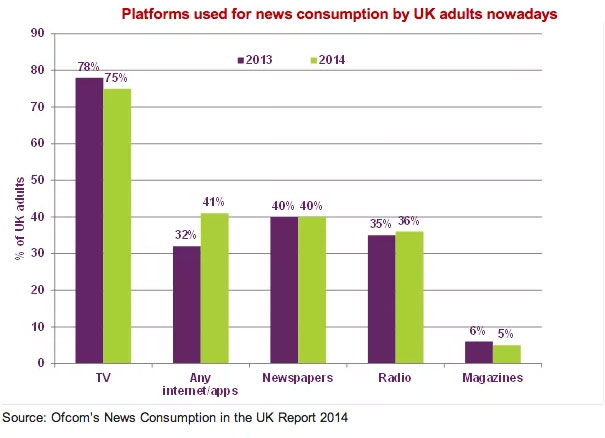
    If one looks at it objectively there is no real overlap. Communication groups have mostly focussed on communication and creativity and the consultancies have been focussing on business expertise and advice to clients. This has often been alluded to as the consultancies being more left brained and the communication groups being more right brained. Why then this furore over the consultancy and the communication group face off? One of the reasons perhaps that there is some degree of overlap is the new field of ‘digital’ that has attracted both the consultancy and the communication groups, which considered it a natural extension of their earlier services since main media like TV and print have been slowly down and giving in to digital media, that is in some countries taking over a lion’s share of the market. For example, when it comes to news, digital media because of the penetration of phones and tablets and computers has been catching up with TV and newspapers in developed countries like the UK and others.

    Ofcom’s report in 2014 for the UK first showed a trend that would soon catch up in other countries as well.


    Andy Main, Chief Executive of Deloitte Digital which is entering India says ” We are transformation partners for our clients, while an advertising agency is a communication partner offering only creative solutions and talking only to marketers. Through our work, we try to impact the business of a company by bringing a change in its balance sheet quickly. I don’t think a television ad has ever transformed a business. We can work with the brand’s chief executives, supply chain, sales, finance and even human resource managers.


    Deloitte Digital brings capabilities like digital technology, experience design and linkage to back office systems. We can manage the company’s data leveraging new-age technologies like artificial learning and cognitive technology apart from connecting with the brand’s consumers through advertising”.


    So there is no doubt that the consultancy groups are taking the high ground with clients by claiming to be transformation partners for clients. Once upon a time, agencies also claimed to be transformation and business partners for clients, but it might be something the communication group has forgotten along the way. After all who would deny that Bill Bernbach transformed the Volkswagen business in the United States with the launch of the VW Beetle. Or deny that Ogilvy transformed the business for Rolls Royce and many others?


    Unfortunately that may no longer be true. Declining margins in the advertising business, have forced agencies to do just that much and no more. They have also enveloped themselves into the comfortable cocoon of ‘creativity’, thereby limiting their transformational abilities.


    Sometime ago Sir Martin Sorrell posed a rather rhetorical question when he said that consultancies can’t buy culture. He added that one is a science and the other is an art. I agree with that. But communication groups have not been happy with art and all the recent additions to their portfolios have been in the area of science. In fact, WPP boasts that less than a fifth of their revenues come from mainline advertising. The rest is data, media, research and digital which probably falls under ‘science’. So it is justified perhaps that the time has come for the consultancies to chase art as well.


    On the question of buying culture, my piano teacher used to say that it is easy to buy culture. She once pointed out that the easiest way to buy culture for the nouveau riche was to buy a piano and study classical music!


    Veteran adperson Prabhakar Mundkur now blogs at prabhakarmundkur.com. This comment first appeared here


  • Is your company ready for Social CRM?


    By PrabhakarMundkur


    Take what happened to one of my friends last week. A very reputed retail chain owned by one of the most trusted companies in the country let him down very badly. A washing machine he had bought last year and was still under warranty let him down. Unfortunately my friend had opted to buy the own store brand of the retail chain rather than a LG or a Samsung or some other more reputed make. The washing machine stopped working suddenly. There has been no response from this well known retailer for over a week and finally my friends name was struck off the complaints list without his even knowing it. He then had to go through the trouble of re-registering his complaint in which he lost another seven days.


    He decided to complain about his experience on social media since he thought it might be at least mildly embarrassing. To their credit their Twitter handle started conversing with him almost within five minutes. The very next day the Hyderabad call centre of the retain chain called my friend and began to make at least some amends for the neglect shown to him by Customer Service. His case however still remained unresolved. The mechanic attending the complaint said that if my friend went back to the store where the washing machine was purchased from, he would have a replacement with a new machine. But when my friend reached the store all he heard was an ugly altercation between the Customer Service Representative and the Mechanic where the Customer Service executive fired the Mechanic for making false promises of product replacement to the customer. He went on twitter again to update the latest status on his case and the company’s Twitter handle once again promised to get the case resolved at the earliest. In the meantime my friend is biting his nails on what is going to happen to his washing machine.

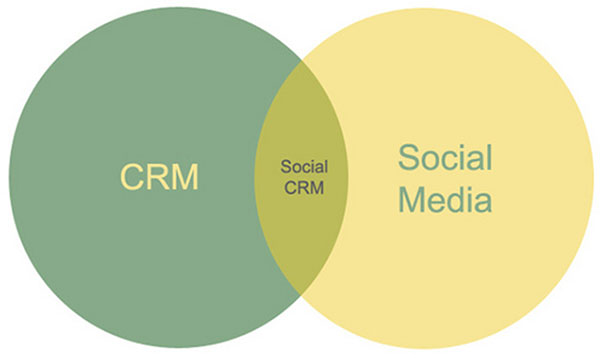
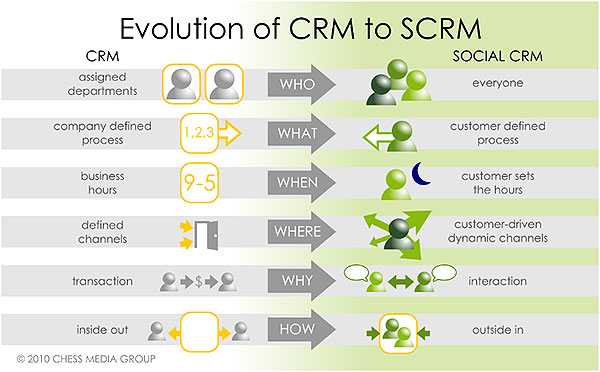
    While in many ways social media has become the new face of Customer Service(because traditional Customer Service is completely out of touch with customers ) the above case is a sure sign that the biggest brands in the country need to do a better job of their Social CRM. In a way Social CRM takes over where traditional CRM left off. Unfortunately traditional CRM still operates on a 9am to 5pm basis and they wouldn’t care a hoot what happens to customers once they leave their office. Social CRM on the other hand is 24×7. Because customers may need help at any time of day or night.


    What is Social CRM?

    But first of all let’s start by defining Social CRM. Social CRM (customer relationship management) is a phrase used to describe the addition of a social element in traditional CRM processes. Social CRM builds upon CRM by leveraging a social element that enables a business to connect customer conversations and relationships from social networking sites in to the CRM process. Social CRM may also be called CRM 2.0 or abbreviated as SCRM (social customer relationship management).


    Social CRM takes over where CRM left off

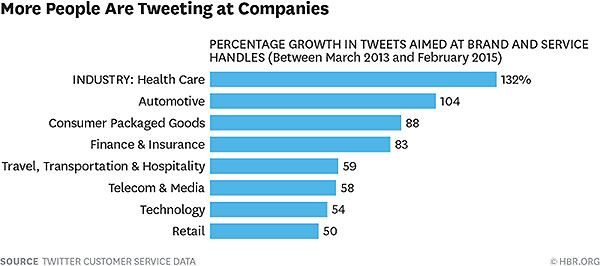
    People under 35 spend almost four hours on social media, and more of that time is being spent engaging with brands. One piece of research has shown that the volume of tweets targeted at brands and their Twitter service handles, for example, has grown 2.5x in the past two years. Similarly, the percentage of people who have used Twitter for customer service leapt nearly 70%, over a two year period. McKinsey’s analysis shows that 30% of social media users prefer social care to phoning customer service.


    The most successful social media interactions are personal, genuine, and relevant. To scale that connectivity requires integrating social media data into your CRM system.


    You could be forgiven for treating the idea of “social CRM” with a certain amount of scepticism. It just sounds like a buzz word. Also it is sometimes hard to distinguish the hype around social media from the genuine value it can bring. But social CRM isn’t a gimmick, and it doesn’t ask you to “forget everything you know” or “reinvent your business”.


    Social CRM simply adds a social dimension to the way you think about customers and your relationships with them.


    Given the current state of customer service, Social CRM would be an important weapon in the armoury of brands that have large number of customers. Its not enough to just have a twitter handle or a Facebook page. That doesn’t complete your Customer Service or your Social CRM.


    Why is Social CRM important?

    It’s a familiar story. Marketing departments are diligently creating and publishing tweets, Facebook posts, and YouTube videos, carefully crafted to make the most of each channel and designed to encourage sharing, retweeting and customer engagement. But the audience doesn’t come.


    Meanwhile, your customers are elsewhere on Facebook and Twitter, having conversations about your organisation – discussing you, recommending you, complaining about you and even trying desperately to talk to you. But they’re not getting the answers they want.


    Social CRM bridges the gap. No more forcing customers to use the channel you prefer. No more losing track of issues when they change channels. You can engage and respond to customers individually and in the way they choose.


    With Social CRM you can place your customer right at the heart of your organisation.


    Veteran adman Prabhakar Mundkur is currently Chief Mentor at HGS Interactive


  • LinkedIn unveils India’s Top Voices of 2016

    By A Correspondent


    LinkedIn, with 467 million members globally and 39 million in India, announced the LinkedIn Top Voices list for 2016. Of nearly three million unique writers on the platform, LinkedIn Top Voices list puts the spotlight on professionals that have emerged as top voices by publishing compelling content. These storytellers of the year are from industries such as advertising and marketing, media, financial services and others.


    LinkedIn Top Voices list for 2016 identifies 15 popular writers including Prabhakar Mundkur, ‎Chief Mentor, HGS Interactive, Ester Martinez, CEO & Editor-in-Chief, People Matters and Subhash Chandra, a leading political consultant.


    The LinkedIn Top Voices 2016 List – India:

    Writers – Member List

    1.   Prabhakar Mundkur

    2.   Abhijit Bhaduri

    3.   Ester Martinez

    4.   Subhash Chandra

    5.   Tamal Bandyopadhyay

    6.   Prabal Basu Roy

    7.   Procyon Mukherjee

    8.   Purnima Menon

    9.   Hari TN

    10.   Roshni Dhal

    11.   Jayashree Patnaik

    12.   Vartika Kashyap

    13.   Ritesh Kumar Singh

    14.   Parag Kar

    15.   Lakshmipathy Bhat


    “LinkedIn Top Voices 2016 is our way of celebrating professionals who have developed an influential voice by investing in the exchange of knowledge, ideas and opinions. There are exciting times ahead for our members as they can leverage the opportunity to expand their knowledge and develop perspectives by following influential writers and honorees (influencers) to discover professionally-relevant local insights,” said Akshay Kothari, Country Manager and Head of Product, LinkedIn India.


    The top voices list also features seven influencers as honorees, including  Narendra Modi, Shradha Sharma, Kiran Mazumdar-Shaw, Vani Kola, Santosh Desai, Ravi Venkatesan andShashi Tharoor. The Top Voices 2016 also unveiled some interesting insights.

    • ‘India’ ranks first as discussion topic in 2016

    ○        The top content topic for 2016 was India, followed by management, branding, and advertising and marketing

    • Indians are reading as much as they are writing

    ○        On an average, Indian top writers garnered almost twice as many follows (96,000) compared to the global average (54,000)

    ○        Indian Honorees overtook their global counterparts by publishing on an average of 44 times this year while the global average stands at 36

    • Trending industries

    ○        Marketing and advertising was ranked as the number one industry followed by Information technology and services. In the third place was a mix that includes research, financial services and political organizations.


  • Nilesh Naik is Senior CD, Percept/H, Bengaluru

    By A Correspondent


    Nilesh Naik has been appointed as Senior Creative Director, Percept/H – Bengaluru, effective February 2012. Prior to joining Percept/H, he was working with Dentsu Marcom, Mumbai as Creative Director.


    In his new role as Senior Creative Director at Percept/H, Mr Naik will be spearheading the creative team in Bengaluru and will be focusing on developing and strategizing innovative campaigns for the clients.


    Commented on the new appointment, Prabhakar Mundkur, Chief Executive Officer, Percept/H, said, “Our Bangalore office is growing from strength to strength. Getting Nilesh on the team is part of our effort to strengthen the creative product at Percept/H.”


    Elaborated Mr Naik: “Percept/H is the right fit in terms of brands, the people, and their vision for the place. It’s a great opportunity to create work that’s refreshingly different yet works wonders for the brand.”


    With experience of 13 years in the advertising industry, Mr Naik has worked with leading agencies such as Everest, Euro RSCG, Ambience and Bates. He has had the opportunity to work for different verticals namely FMCG, Finance, Real Estate, Publications, Telecom and Insurance, and his creative work has won him several accolades at both local and international award shows.