
By Prabhakar Mundkur
 A week ago, The Times of India flashed a provocative headline “Has Santoor overtaken Lux as India’s No 2 brand?â€. At first, I couldn’t make sense of it. Because of the sentence construction. I thought to myself while reading it “Has Santoor overtaken Lux as India’s No 1 brand?†would have been a clearer headline making the point definitively that Santoor is the largest soap brand now in the country (for whatever reason). The same article later on went on to say that according to Nielsen data for the quarter Jan-March 2018 Lux has a value market share of 13.4 % while Santoor has a market share of 9%.
That to me sounded like it was inconsistent with the misleading headline which was perhaps put there for some sensational reporting on the soap market.
Admittedly, Lux may have suffered losses in market share because I handled the brand in India in the 90s and its market share was around 19-20%. The market was around 400,000 tonnesaround at that time. Now it is expected to be closer to 600,000 tonnes. Which means that Lux has declined in a market that has grown over the last 25 years or so. However, whether Santoor is bigger than Lux, was a fact not adequately supported in The Times of India article.
In any case, more than the Times of India article it was a celebration on social media from the people who belonged to the ad agency (FCB-Ulka) that had handled it for the longest period of time of about 25 years. The tragic part of the entire mass media and social media sensationalism was that Santoor is not handled by FCB-Ulka anymore. In fact, the account is handled by ADK Fortune. And kudos to ADK Fortune for being the agency when Santoor reached this historic milestone, that is if it did.
As far as Lux is concerned, it is a well-known fact that the brand has historically been milked by Unilever in every part of the world. In a book by John Philip Jones called “Does it pay to Advertise?â€, Professor Jones had lamented on the decline of this great brand called Lux from a global market share of 33% once upon a time to under double-digit share in most markets at the time of his writing the book.
The Star Relationship Programme on Lux
In many ways, India was perhaps the last bastion of Lux. Once upon a time, before we knew words like ‘relationship management’ and ‘direct marketing’ in the 1980s, the team on Lux would handle a regular relationship building program with about 200 film stars in the country. The team handling the brand would be in regular touch with the stars, sending them birthday cards and flowers on their birthdays and arranging for photo sessions with the late photographer of repute, Gautam Rajyadhaksha who once said that every Lux campaign was Unilever acknowledging that you had become a star and the star in turn saying a thank you to Lux.
An outside consultant who had spent his entire career in the film industry and had an excellent relationship with Hollywood stars would make regular visits to meet them. He was the chief of PR with stars. As a result, most stars considered it a privilege to be featured in a Lux print ad or film and would do it for free or perhaps sometimes for just a nominal fee. These were the golden days of Lux. They thought of Lux as furthering their image and publicity in the media and therefore a step up the Bollywood ladder of fame. So, it was truly the soap of the stars, rather than the soap of Kareena Kapoor for just a year which is where the brand is now. In fact, the Lux teams used to shoot at least 12 Lux films a year with a dozen different stars, many of them regional stars. Lux had a deep and enduring relationship with every female star. The recent Deepika commercial was pretty much made with the classical values that Lux has always been known for.
https://www.youtube.com/watch?v=y3cZ-Rc5-p8
One of the tricks of handling the star portfolio for Lux was to catch them young. The moment an upcoming star made her appearance in Bollywood the Lux team was there to make friends with her and promote her image in the local film magazines of the day.
Lux was glamour personified. Lux was about the private moments of the star. The ‘star on a pedestal’ image. Distant but alluring. Not the film star putting her head out of a car to scream at someone littering the road. That was never Lux. The Lux soap advertisement  showcased the glamour of the female star in Indian cinema. And gave the consumer a peek into her life.
Lux was about the glamourous world of the star and her inner sanctum sanctorum with Lux where she spoilt herself with a luxury bath with Lux. That is what made it the soap of the stars.
But whose soap is it now?
Prabhakar Mundkur is a veteran advertising agency captain who is now a strategy consultant, educator and a prolific writer. The views here are personal





 Most award shows these days position themselves both as a learning/knowledge forum and an awards night to celebrate the and acknowledge the winners. Zee Melt, the two-dayprogramme on May 30-31 that precedes the KyooriusAwards night on June 1, promises some of the world’s best speakers from Fernando Machado, Head of Brand Marketing, Burger King to Chuck Porter, Chairman CP+B demonstrating that there will be a lot of knowledge sharing at the event.  But there has been an indifferent demand for these knowledge sessions thus far. Is it our new-found and emergingnationalism that makes us feel superior to everybody else in the world, and our attitude of ‘what do we have to learn from them’? Followed by the oft repeated chorus ‘India is different’. Or are people just tired of listening to experts on advertising and marketing because there are too many of them, one is not sure.
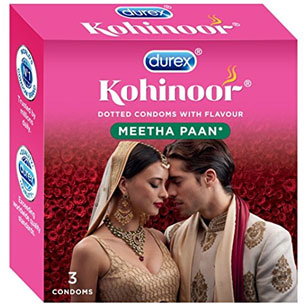 But here is the contradiction. Pankaj Duhan, marketing director, RB Health-South Asia told afaqs.com ‘..95 per cent of Indians do not use condoms and we already have a huge population. This is an alarming situation!”If 95% of Indian’s don’t use condoms what is the point of encouraging them to use flavoured condoms for oral sex? Because oral sex doesn’t make more babies.
 Â
Â