Tag: OTT

  • Reality Check


    By Shailesh Kapoor


    Shailesh KapoorThe linear television business in India has been struggling to find its next big idea. The streaming originals marketplace in India is operating more cautiously too, with economic and industry considerations, both global and local, slowing it down. Amid this relatively low-action period, a new format is making its presence felt: Daily unscripted content.


    While Bigg Boss and Kaun Banega Crorepati have been around for years as dailies, non-fiction has largely been seen as a weekend content type. GECs rightly expect daily soaps to build loyal weekday audiences. In any case, most non-fiction shows in India are in the broad genre of talent competitions, and they tend to be upto five to 10 times more expensive that fiction shows, making them unviable as a staple proposition.


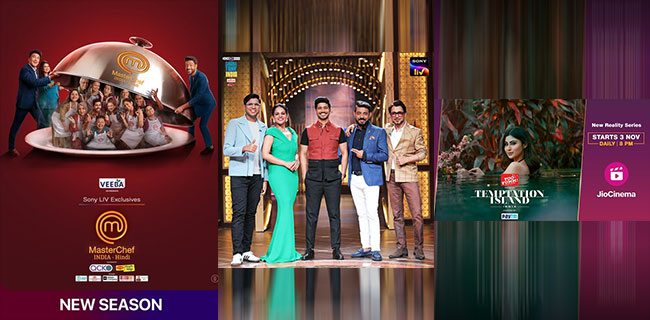
    But the advent of streaming may have changed things a bit. Sony LIV recently launched MasterChef India only for OTT. The show has been around on GECs for years, across two networks, but has never quite found the success it would have hoped to. No surprise, then, that Sony has given up on its ambitions for the show related to mass television.


    Shark Tank India is a more recent, and a more obvious, example of a streaming-friendly show failing to deliver on linear TV, despite the network backing it with up aggressive marketing. The third season will follow the MasterChef India template, with daily episode drops on Sony LIV.


    JioCinema (earlier Voot) has done two seasons of Bigg Boss OTT. MX Player did its own homegrown variant, produced by Balaji Telefilms, titled Lock Upp, in 2022. Tonight, the first-ever season of Temptation Island India, starts on JioCinema. All these shows are in the daily format.


    The weekday-weekend distinction related to fiction and non-fiction seems to have blurred in recent times. It could be a result of many factors: Less compelling fiction content on TV, change in audience habits in the OTT era (such as low appointment viewership), episodic content being more preferred to continuity-driven stories, etc.


    While the reasons are a subject of further analysis, daily non-fiction is finding its takers, both at the platform side and the audience side. The new season of Bigg Boss has opened very well from TV standards. The show has original content in the form of interstitials and spin-offs on OTT, which are carefully designed for better monetisation. In what’s increasingly an AVOD-SVOD hybrid environment for original content (compared to 2020-22), monetisation via advertisers has made non-fiction a more relevant option on streaming.


    The Indian non-fiction market needed this boost in its thinking. There has been a sense of sameness to the shows over the last five years, with the same formats being rehashed. But formats that were safe bets till before the pandemic have struggled to deliver numbers in recent times, and viewer fatigue is evidently one of the primary reasons.


    Daily non-fiction may help GECs and OTT platforms, especially those with a strong AVOD service, find a new business model. It may be just the right time too, given that the web-series (fiction) content on SVOD is beginning to look just a tad jaded. The audience will surely not be complaining if they get a legitimately-different option on the menu.
     

  • Free-to-stream: Will subscription models survive?


    By Shailesh Kapoor


    Shailesh KapoorThe much-anticipated India-Pakistan clash in the Asia Cup, scheduled tomorrow (Sep 2), marks the start of a busy cricketing scene. The action is equally hectic off the field too. The start of the Asia Cup also coincided with the news that Viacom 18 has bagged the rights for BCCI-organized bilateral series in India over the next five years.


    Viacom 18/ JioCinema’s entry into sports has disrupted the landscape in 2023. From being a driver of paid subscriptions, cricket is now playing the role of reach aggregator on OTT. The Asia Cup is available for free streaming on Disney+ Hotstar, and the ODI World Cup that follows will go the same way. Indeed, the era of paid sports content in India maybe over. It’s only a matter of time that sports channels on TV go free-to-air as well.


    With the no. 1 sport in the country (and by some margin) being available for free, the state of several other sports, including football, tennis, wrestling, etc. hangs in balance. Will they continue to be “premium” offerings that get smaller audiences who are willing to pay for them? Or will the networks hope to expand the reach of these sports by making them available free? The question, of course, extends to television too.


    Are we going back in time, by shunning subscription models in favor of those dependent on advertising? Far from it. For the last several years, almost all major players, in the streaming space in particular, but also in linear television, have over-rated an average Indian’s inclination to pay for content. They have priced their products at levels that are untenable, and then gone on to offer handsome discounts, to the extent of 50-75% at times.


    But the core question is not about the price alone. It is: “Why pay at all?” Changing a market’s mindset from free to pay is an arduous task. We have seen how niche channels lost out once the NTO effects kicked in a few years ago. Outside the top 10 cities in India, paying for data, however low the rates maybe, itself is a choice to make. Stand-alone subscriptions are not even serious considerations. Reluctantly but inevitably, platforms have consented to being a part of aggregator bundles, where the ARPUs are much lower. A Jio-Netflix deal was announced just last week.


    It may seem like an extreme position to take, but the days of pay content in India, especially when it comes to mainstream content that’s targeting a wider demographic, may be numbered. The major GECs going free-to-air in the next 2-3 years is not ruled out either. It would just take one of the top 4 to make the move and grab the top spot, and things may look very different overnight.


    All hail the advertising economy!


  • Planet Marathi Group & Vistas Media collaborate for hyperlocal OTT

    By Our Staff


    Planet Marathi Group has joined hands with Vistas Media to launch an OTT platform called ‘Planet Bharat’. This new OTT will showcase high-quality local language content across a diverse range of formats, languages, dialects and genres. It will be launched in November 2023.


    Said Akshay Bardapurkar, Founder and CEO of Planet Marathi Group: “It is essential that we elevate the standards of creating and consuming Indian content. Our country is home to numerous languages, each possessing its own unique power and potential that remains largely untapped. There is a significant void in exceptional content from India across languages, and Planet Bharat aims to bridge that gap. With the launch of Planet Bharat, we strive to create a unified one stop destination, where audiences across the globe can enjoy and embrace the diverse cultural heritage that India has to offer.”


    Added Abhayanand Singh, CEO of Vistas Media: “Our country is made up of various languages, cultures and dialects and often, many of them get neglected for various reasons. Planet Bharat aims to bring the whole nation together, wherein we will celebrate the diversity of our culture with a significant representation across segments.”


  • OmTV unveils new campaign

    By Our Staff


    OmTV, the spiritual OTT platform, has announced the launch of the new campaign #AppSahiSochSahi.


    Said Nitin Jai Shukla, Founder & MD of OmTV: “Right from the inception, OmTV’s aim has been to inspire individuals to adopt a positive mindset by focusing on solutions, growth, and gratitude. We believe that by encouraging positive thoughts, individuals can overcome challenges, foster resilience, and lead happier and more fulfilling lives. With this thought, we are kickstarting this campaign and will be leveraging the power of technology and social media to spread this message.”


  • Aaonxt, OTT Platform of Eastern India, offers new content

    By Our Staff


    Aaonxt, the Over-The-Top (OTT) streaming platform in Eastern India, has launched nine exclusive content offerings on its platform throughout the year. With a commitment to providing top-quality entertainment and catering to the diverse preferences of their audiences, Aaonxt aims to deliver an unparalleled viewing experience, with original and award-winning movies.


    Said Kaushik Das, Founder and CEO of Aaonxt: “We are thrilled to announce the upcoming launch of nine exclusive content offerings on Aaonxt. We are passionate and avid creators of content for our viewers with a goal of bringing engaging and captivating content that caters to our audiences all over the globe. Aaonxt has worked closely with talented industry professionals to curate an exciting lineup of shows and movies that will entertain and enthral our audience. These exclusive releases will further solidify Aaonxt’s position as the go-to platform for exceptional regional entertainment.”


    Added Ram Patnaik, the co-founder of Aaonxt: “Aaonxt remains committed to fostering a strong relationship with their viewers and supporting the local film and television industry. Through strategic collaborations and partnerships with renowned production houses and independent filmmakers, Aaonxt aims to bring forth compelling narratives that resonate with East Indian and global audiences.


  • No more tobacco disclaimers needed on OTT, notes survey

    By Our Staff


    We don’t agree with the findings of the report, but are publishing it as is. Perhaps a study of those who have suffered because of tobacco, should’ve also been studied.


    Be that as it may,  Koan Advisory Group, a technology policy consulting firm based in New Delhi, has released a study that challenges the prevailing narrative surrounding smoking habits in India. Released ahead of World No Tobacco Day today (May 31), the report titled The Effectiveness of Tobacco Disclaimers on OTT Content Services: A Behavioural Appraisal sheds light on the primary factors influencing smoking behaviour and questions the necessity of additional health warnings on Over-The-Top (OTT) content services.


    Conducted between March and April 2023, the comprehensive survey engaged 1896 online users across 350 locations in India. Most of the respondents were men aged between 18 and 35. The study found that 66.6 percent of respondents remained indifferent to the depiction of smoking on OTT content services. Factors such as peer pressure, the influence of friends, and mental stress were identified as more significant drivers of smoking habits in India. The report also emphasised that people primarily consume OTT content for recreational purposes and found minimal evidence to support a direct causal relationship between OTT content and behavioural changes.


    Moreover, the study revealed that many respondents questioned the need for additional disclaimers, citing existing content descriptors and age ratings as sufficient. Over 50 percent of participants expressed concerns that additional text disclaimers could negatively impact their viewing experience. The report explains that the prevalence of smartphone usage for OTT consumption, with screens typically ranging from six to seven inches, heightens the potential for distractions and disruption to the overall viewing experience.


    Commenting on the study Vivan Sharan, Partner at Koan Advisory Group said: “Our study assesses the prevailing narrative on smoking habits in India. The findings highlight the minimal impact of OTT content on smoking habits, with peer pressure and mental stress emerging as more significant drivers. As policymakers deliberate on regulations, it is essential to consider the broader context and adopt a balanced approach. By embracing this, we can develop more effective strategies to combat smoking addiction while preserving the immersive and enjoyable viewing experience that audiences seek.”


  • MX Player powers up with Vserv AudiencePro

    By Our Staff


    MX Player OTT platform has partnered with Vserv AudiencePro to enhance its audience stack and provide advertisers with richer audience segments and an evolved marketing solution.


    Saurabh Khanna, VP – Vserv AudiencePro, said: “The combination of quality reach & scale, sharper audience segmentation, and cutting-edge data-driven solutions presents a compelling proposition for brands. MX Player & Vserv AudiencePro partnership brings this unique combination to the forefront thereby opening new avenues for brands to unlock new audiences or do smarter remarketing.”


    MX Player Spokesperson added: “As one of the largest content platforms in the market, we are at the forefront of innovation and are constantly looking for ways to improve our offerings for advertisers. AudiencePro platform has established credibility in delivering quality segmentation to a range of brands. Our integration and partnership with them empowers us to offer more comprehensive audience segments and offer advertisers an evolved marketing solution that leverages data for deeper audience insights.”


  • Samsung rolls out new TVC

    By Our Staff


    Samsung has rolled out a new TVC – ‘The era of Bespoke Begins’ for its Bespoke Side-by-Side (SBS) refrigerators.


    This TVC will be aired across national and regional TV, covering general entertainment, movies, news and infotainment channels. It will also run on digital platforms including Samsung’s owned social channels, YouTube, OTT channels and Samsung TV plus.


    Highlighting this urban lifestyle, where the kitchen is no longer a remote space and has been well integrated into our social spaces, the TVC perfectly showcases evolving behavioural insights as it recreates a day in the life of our consumers. It portrays that even a small occasion such as a party can turn into a celebration of the Bespoke Side-by-Side refrigerator because it emerges as the highlight of the night and “the showstopper.”


  • Paywall Pangs: The OTT Conundrum


    By Shailesh Kapoor


    Shailesh KapoorHalfway through this year’s IPL, it is evident that the season has been a resounding success. The pandemic led to restrictions related to venues and in-stadia audience capacities, all of which are now a thing of the past. Games in the home-away format is at the heart of any sporting league, and that’s on show this year, for the first time since 2019. Though it’s another matter that Chennai Super Kings fans make even the away stadia look like home venues.


    But the biggest change in this year’s IPL is that it can be streamed for free. By choosing to not put IPL behind the paywall, Jio, via its platform JioCinema, has set the cat among the pigeons, so to speak. If one of the most-sought-after content properties in India doesn’t need a paid subscription, then who do platforms with mediocre web-series demand that their audience pay? That’s something many OTT audiences are beginning to think about.


    The numbers on JioCinema, as also on Star Sports, look very encouraging. It will be no surprise if peak concurrent viewership on JioCinema crosses the 3.5 Crore mark on the day of the final.


    Since the arrival of OTT platforms in India, about six years ago, a large share of media attention has been on the ‘premium’ SVOD business. But the advertiser sentiment has progressively moved from linear television to digital, and a big-ticket property like the IPL being accessible to the wider OTT audience base is a fascinating proposition for marketing managers and media planners.


    Of course, JioCinema has plans to launch a paid offering too, for premium entertainment content, including that from HBO. And doing so is their recognition of the potential of a hybrid model, wherein advertiser-funded and subscription-funded content will co-exist.


    But the success of IPL on AVOD should be food for thought for Indian OTT platforms who run products that are technologically inferior to the global leaders in this space, but expect audiences to shell out subscription fee for routine content. With YouTube being omnipresent, it’s not going to get any easier for audiences to pay for content, unless both the content and the app experience is truly compelling. And consistently so over a period of time.


    Just last month, I wrote in this column that there is unlikely to be a dull moment in the Indian OTT space for a while. But it seems we are in for even more action and excitement that what one originally anticipated.


  • BCG-Meta come together to launch Report

    By Our Staff


    Boston Consulting Group (BCG) and Meta announced the launch of a new report around the increasing influence of digital in driving media and entertainment consumption in India across over-the-top (OTT), linear TV (LTV), and Movie Studios.


    With the meteoric growth in online content and on-demand streaming platforms in India, the media and entertainment landscape in the country has transformed dramatically over the last few years. The report unravels key consumer trends around how India is consuming content while busting prevailing myths and highlighting the growing digital influence that is increasingly driving people’s viewing preferences. Digital influence implies the role of digital in content discovery, sharing, and engagement both before and after viewing content.


    ‘Seeing the BIG Picture – Harnessing digital to drive M&E growth’ a Meta-commissioned report by BCG was done with over 2600 consumers across 15 towns and cities. The study also includes in-depth interviews with consumers and industry leaders from Linear TV (LTV), OTT platforms, and Movie Studios.


    Said Shaveen Garg, Managing Director and Partner BCG: “Consumers increasing time spent on digital video is well-known. But what was counter intuitive is how much digital is influencing their discovery of content, decision to watch and the engagement post watching. It is not limited to digital native mediums but across all content as category. It is clearer than before that many media companies haven’t embraced this power to unlock potential. Content is king, no doubt, but kings also need an army of soldiers to become and reign. This digital interventions by companies is the army behind the great content”


    The report aims to bust some myths and mindsets in the market around digital influence being limited to metros, men and English content viewers.


    Among the most significant findings of the report is that contrary to industry perception women, small-town residents, and people over 35 years of age have significant digital influence driving their content discovery and consumption choices. For instance, among OTT watchers, after consuming the content, 78% of the surveyed men said that they use digital to engage with the content. This number was equally high at 77% for women.


    Similarly, before watching something on OTT, more people from smaller towns (81%) use digital for content discovery than people from large towns (74%).  Moreover, contrary to popular belief, digital discovery is on the upswing, even for linear TV, with linear TV viewers increasingly seeking information and engagement online for the content they watch.


    Added Shweta Bajpai, Director and Vertical Head – Media, Finserv, Travel, Real Estate and Services for Meta in India: “The prevalent view presumes that consumer behaviour across small and large towns, across gender and age-groups is vastly distinct. While this may be true for some industries, when it comes to content consumption in India, there are more similarities than distinctions. The biggest similarity is that irrespective of where people consume content – OTT, TV or in movie theatres – they rely on digital to share, engage, and express themselves. 40%+ respondents discover content on digital via Word of mouth. This is a game changing insight for media companies and marketers in how they want to reach their customers.”


    The study also showed that 60% consumers seek information about the content before deciding to watch. Up to 80% of this research occurs online across OTT, LTV, and Movies. The findings further revealed that higher digital engagement is correlated with higher watch time on both LTV and OTT.


    Based on the insights, the study recommends that media and entertainment companies need to evolve.

    :: With boundaries blurring between different formats in the consumers’ minds, M&E companies should refrain from defining themselves as LTV/OTT/Movie Studios and reimagine themselves as content creators not chained to a delivery medium.

    :: Given the high digital influence, digital marketing could be effective across demographics, genres, and languages, and could be a crucial addition to the existing marketing efforts at every step of the consumption journey.

    :: The report also calls for diversifying digital activations including communities, influencers, personalized reach-outs and short videos to reach all kinds of consumers.

    :: Lastly, the report advises brands to develop in-house muscle, build a content factory, leverage the user engagement flywheel, develop a robust measurement strategy and impact attribution.


  • Not at all Quiet on the OTT Front


    By Shailesh Kapoor


    Shailesh KapoorOver the last three years, it became abundantly clear that streaming (or OTT, as it’s called in India) is the medium of the future in this country, even as other media will continue to co-exist. Linear television always had the numbers. But thanks to a mix of factors, ranging from the pandemic, to ever-reducing data costs, to a nosey TRAI, linear television has barely managed to stay afloat. Pressure on revenues has been felt across the board, and that’s never a good sign.


    Streaming itself is trying to find its sweet spot. Is it a premium paid (SVOD) medium, as all the promotions of well-mounted web-series suggest? Or is it a medium for the ‘masses’, where free (AVOD) content is going to dictate the future? The jury has been out. And the last few weeks have seen their share of action on this front.


    Perhaps the biggest shift in the dynamic has been around the IPL. The 16th edition of the league, which starts March 31, will stream free on JioCinema. That’s a polar opposite to how it was thus far: IPL was a subscription (and hence, revenue) driver for Disney+ Hotstar, not just in India but at a global level too.


    Then, there’s the talk of the largest AVOD player in India outside of YouTube, i.e., MX Player, being up for sale. The content side is going through its continuous evolution. For example, price points for acquiring streaming licences to theatrical releases have not stabilised yet.


    All these are healthy signs, one would think. A growing category is bound to see new ideas, new strategies, and new alignments. And some of these may shape the future of the category. For example, there is little doubt in my mind that IPL’s streaming viewership will outnumber that on linear television this year.


    How did linear television find itself in this situation is a matter of another debate. But it should not have, because it’s still the staple, go-to medium for millions of Indian families every night. But the only way you can fight technology is by building a precise and relevant narrative. The linear TV industry has failed to do that for itself.


    Amidst all the positive action, the talk of censorship of streaming content has started again. This week, the I&B minister advocated censoring “vulgarity”. The genesis of this not-so-veiled threat lies in a Delhi High Court judgment will handling a complaint on TVF’s show College Romance. The state and the judiciary playing moral police can be a major irritant in a category that’s otherwise amid a period of high activity and growth.


    All eyes, hence, are on India’s streaming story, in its second phase, where the category seeks stabilization and re-alignments. And the upcoming IPL will set the ball rolling on that front.


  • Farzi: The Real Thing


    By Shailesh Kapoor


    Shailesh KapoorIt’s not a major talking point yet, but the OTT Hindi fiction space may just have entered its second innings. Farzi, Amazon Prime Video’s recent launch, has amassed huge viewership numbers, and is almost certain to become the most-watched SVOD show in India across platforms by the end of next week, based on Ormax Media’s viewership estimates for OTT originals in India.


    The success of Farzi marks the end of a lean period that started in mid-2022. The first half of that year saw a good mix of launches: Panchayat S2 proved to be a worthy successor to the delightful first season; Rudra received mixed audience response, but went on to get huge viewership, thanks to Disney+Hotstar’s sizeable subscription base and Ajay Devgn’s star value; Rocket Boys received immense appreciation, and was Sony LIV’s tentpole property for the year; Gehraiyaan delivered some solid numbers in the first week despite mixed to negative audience feedback; starting off as a low-profile film, A Thursday went on to become the most-watched direct-to-OTT film of the year; Human, The Great Indian Murder, Gullak S3 and Mai were fairly successful as well, especially for shows of their scale.


    But then started a drought of sorts. The second half of 2022 just didn’t have enough firepower. Criminal Justice: Adhura Sach managed to build good viewership, perhaps aided by a staggered episode drop, but scored below the show’s previous (second) season on audience likeability. The same can be said for Delhi Crime S2, which lacked the relevance of the first season that focused on the landmark Nirbhaya case. Films like Monica, O My Darling and Darlings good positive reception, but the viewership levels were only moderate.


    The lull continued till the launch of Farzi on Feb 9 this year. The show recorded a peak ‘Buzz’ of 45% on Ormax Stream Track, the highest since The Family Man S2 in June 2021, incidentally another show by Raj-DK, the creators of Farzi.


    There were more than 150 SVOD originals that launched in Hindi in 2022. But clutter generally comes with its share of issues. In a year where the conversation moved back to theatrical content, the absence of truly marquee shows on streaming made one wonder if the honeymoon period that the streamers enjoyed, especially during the two pandemic year, is over.


    Farzi can be called the start of a new phase in the Indian OTT originals market. The category is more mature and stable now, and one hopes that, like theatrical, it finds its equivalent of an “event film”. Six-eight “event shows” in a year will keep the category running strong. Farzi is 2023’s first, and one hopes the next one is round the corner.