
Tag: OTT

  • Free over Pay: Reset Time for Streaming?

    Free over Pay: Reset Time for Streaming?

    Shailesh Kapoor2023 saw the release of 383 streaming originals in India, across languages and formats (fiction series, direct-to-OTT films, unscripted, etc), across all major OTT platforms (excluding YouTube and social media) put together. That’s more than one launch a day. The equivalent number in 2024 so far is a lot more modest. On a pro rata basis, the year can be expected to just about touch the 300 originals mark, a good 20% below last year.

    Clearly, streaming platforms are commissioning less content than before. The number of originals were significantly higher than 300 in both 2021 and 2022 (337 and 368 respectively). Effectively, we are back to the pre-pandemic levels in terms of supply of Indian OTT originals. Like the US, our peak TV phase (which we never really celebrated last year) is also over.

    One can call it a slowdown or a correction, depending on how one looks at things in general. But semantics apart, the signs are there for us to see. Streaming originals may not be the next big story anymore. The OTT category is still growing, with immense headroom for growth, given that only 38% of Indians watch digital videos at least once a month. But this growth will come via sports, YouTube, social media videos, news, comedy, catch-up television, etc., all of which are ‘free’ content forms on OTT in India today. On the paid side, new theatrical films were already a strong force, and are going to be get increasingly stronger compared to originals in the coming times.

    A huge creators economy has flourished in India on the back of the demand for OTT originals, and one can already sense the impact the supply slowdown is having on this economy. It doesn’t help that the film (theatrical) industry is not producing a lot of content either, especially in Hindi.

    In all this, traditional linear television, the punching bag of many, could emerge as an unlikely saviour. The TV industry has been on perception and business decline, but it’s nowhere close to losing relevance, and a bounce back is not entirely ruled out. But even there, free-to-air platforms, more than the pay ones, seem to be better positioned to drive some growth in the future.

    Has the pay-for-content endeavour in India died a premature death? The top platforms like Netflix and Prime Video would choose to differ. And indeed, “death” may not be the accurate term. But pay TV or pay OTT are going to go through their toughest challenge yet, in the coming year or two. And all eyes will be on the big players in the category to shape the trajectory ahead.

  • Entertainment in Limbo

    Entertainment in Limbo

    Shailesh KapoorIn more than 25 years of observing the Indian media and entertainment industry closely, there has never been a period like the one we are in currently. Every mainline sector of the industry is going through a phase of stagnancy or descendancy. It is difficult to say if any of this will change anytime in a hurry.

    The television industry has been struggling to hold on to pay subscribers. The drops are not sizeable in percentage terms. But in a country where more than 30% of the population still doesn’t have access to TV, growth should be a given. Instead, we are looking at stagnant numbers. Because BARC India hasn’t conducted a baseline study in a while, this data point is open to debate. On the revenue front, the EY-FICCI report projects positive revenue growth, but that’s a little hard to believe in the current scenario.

    On the content front, big-ticket cricket is the only marquee property type that television has to show. Nothing on mainline Hindi GECs is in that league anymore.

    Over the last couple of years, the popular narrative suggested streaming is the future, and television will slowly make way for it. But the streaming numbers paint a picture of their own. In our recently published OTT report, India’s digital video audience size went up by 14%, from 481 Mn to 547 Mn. But this entire growth comes from the AVOD segment, largely on the back of new audiences who have entered the category via YouTube and social media videos.

    As new audiences enter, one would expect those already there to move to the next level. In case of OTT, this would mean from AVOD to SVOD. That hasn’t happened at all, and the total paid subscriptions seem to have frozen in time. Audiences outside the Top 15 cities are not keen to pay for OTT subscriptions, and the Top 15 cities have reached their saturation point post the pandemic.

    The evident slowdown in content production makes the picture look gloomier. The number of originals on OTT this year may be a good 30-40% less than 2023. Next year could be even lower. Creators (producers, writers, directors) who were navigating multiple projects last year are now in sustenance mode.

    The theatrical category is doing decent numbers, but matching last year’s box-office will be a tough ask. In any case, a handful of big films are driving the box-office, and the long tail has weakened considerably, leading to a lot of scepticism, and a general drop in the number of Hindi releases. We are currently in one such period, where there are no major releases for several weeks after Stree 2’s release on Independence Day.

    The silver lining comes via positive signs on the larger consumer sentiment and demand in the country. Evidently, media advertising will ride on this sentiment. But that could be the only tangible positive for the Indian media industry currently.

    Hopefully, there are positive developments round the corner, which will pleasantly surprise us. For now, the next few months may be those of wait and watch.

  • Difficult times for Direct-to-OTT films

    Difficult times for Direct-to-OTT films

    Shailesh KapoorEarlier this week, Ormax Media released the mid-year streaming report, on the top original content on OTT in India, in the first half of the year (link). The report is on expected lines, with Panchayat S3 and Heeramandi being the two most-watched OTT originals in the first half of 2024 in India (Mirzapur S3 was released in July and is not covered in this report). However, the decline of the direct-to-OTT film format stands out as a key streaming trend in 2024 so far.

    Only four direct-to-OTT films across languages (though all four happen to be Hindi films) have crossed an estimated viewership of 10 Million in the first half of the year: Amar Singh Chamkila, Murder Mubarak, Ae Watan Mere Watan, and Maharaj. In contrast, nine fiction series (8 Hindi and The Boys S4 from Hollywood) and four unscripted shows (reality/documentary formats) have managed to achieve this mark.

    The direct-to-OTT film format gained immense traction in 2020-21, during the lockdowns, when theatrical films were forced to release directly on the medium. This led to many films being commissioned for OTT, and many films that were originally conceived for a theatrical release curtail their ambition, and opt for a safer, invariably profitable, OTT release.

    Last year’s viewership report had Prime Video’s Bawaal at more than 20 Million estimated viewers in India, despite the film getting mixed reactions from the audience and the critics. Those numbers seem like a distant dream now. No film has touched the 13 Million mark in the first half of this year, and from what it looks like, we may not have one in the second half either.

    Platforms are not keen on commissioning direct-to-OTT films anymore. These films must be marketed as standalone properties, compared to theatrical releases, which come pre-marketed. Theatrical films dwarf direct-to-OTT films on viewership, and carry much higher potency to generate new subscriptions too. Direct-to-OTT films don’t offer the scope for franchise building either, like a series would do. Franchise shows dominate the viewership charts for all platforms.

    This spells bad news for cinema that lacks a certain minimum scale needed to make it big-sreeen worthy. With big films continuing to get bigger (Kalki 2898 AD alone accounted for 15% of India box office in the first half of 2024), the smaller, more intimate films, that rely on realistic storytelling rather than larger-than-life portrayals, were beginning to find a good destination on OTT. But that’s no longer the case.

    Where do such films go? If they release theatrically, they carry the tag of a flop when they come on streaming. They invariably underperform, and this creates further doubts at the platform end, on whether such films are worth spending money on.

    We may well be entering a phase when such cinema, that cannot appeal to the theatrical audience’s post-pandemic taste, will phase itself out. The makers would try and tell the same stories through series instead. But it’s not as if the series business is flourishing in 2024 either.

    The streaming honeymoon in India is clearly over. And the decline of the direct-to-OTT film format in 2024 is a telltale sign.

  • Crumbling of the Bollywood star system is imminent

    Crumbling of the Bollywood star system is imminent

    Shailesh KapoorOver the last year or two, there has been escalating media coverage how remunerations demanded by Bollywood stars are making Hindi film-making an increasingly-difficult business. The top rung of stars, such as the three Khans, have either turned producers, or forgone their fee against what’s called a ‘backend’ deal (typically referring to a distribution or licensing deal), the next line continues to operate on fixed fee structures, where the numbers increased significantly since before the pandemic. There’s also a lot of conversation about star entourages, and how ridiculous their costs are.

    Now all this would just be gossip, if the stars could justify these fees through their box-office performance. But that’s not happening at all. The biggest ‘Hindi’ language film of the first six months of 2024 is likely to be the dubbed Hindi version of Kalki 2898 AD, which released yesterday. A non-starcast, concept-led film Munjya is set to cross the Rs 100 cr mark, even as star-led titles made at much higher budgets, such as Bade Miyan Chote Miyan, Maidaan, and Chandu Champion, have fallen well short.

    For a year or two after the pandemic, streaming platforms were in a mad rush to acquire theatrical films. Since these deals happened before the theatrical release, the star power came into the picture. With time, and facing their own share of challenges related to stagnant subscriber growth and profitability, streamers have become conscious, and are often insisting on deal structures that have box office linkages.The message is clear: If the star cannot pull an audience in the theatres, he (or she) is not ‘saleable’ on OTT either.

    Movie channels in linear television have been on the decline anyway in the post-NTO world. Licence fees for satellite rights is no longer a prominent item on the P&L of most films. The reliance on theatrical (box-office) revenues is only going to go up in the coming year or two. And all evidence suggests that stars cannot pull in the audience anymore on their own strength, and need the story or the concept to work for the film to stand any chance on the theatrical front.

    It is hard to imagine how any of this is sustainable. Hindi film producers cannot even make films that go direct to OTT anymore. There is no demand for such films, either from the streamer or the audience side. There is only one way out: Stars must understand that the audiences and the marketplace has evolved, and bite into the humble pie that a pay cut can be. They can also be a lot more prudent in their film selection, aligning it with evolving audience tastes and expectations in a digital-first, post-pandemic era.

    Whether that will happen is anyone’s guess.

  • Two Types of News Media: A Tale of Two Indias?

    Two Types of News Media: A Tale of Two Indias?

    Shailesh KapoorThe divide between linear TV and digital (OTT/ streaming) in India is well established now. IPL perhaps is the easiest way to explain it. Both in terms of viewership and revenue, linear and digital are in the 40-60% share bracket. This near-equal split aptly tells the story of two media.

    But in examples like the IPL, the story is primarily about audience size and monetisation, but never about the content. Because the content is essentially the same, barring some paraphernalia. This is also true for catch-up television, where digital may be generating 20-30% of audience size, but the content is again the same.

    But there’s one category where the divide is fundamental in nature, and extends to content: News. It’s election season, and news is the genre of the season, apart from the IPL. Till a few weeks ago, this election was being called a no-contest. But no election is, even if many feel the result is a foregone conclusion. Things have heated up, and not always in a good way. We are still another five weeks away from the results, and we can expect more fireworks, to use a mild word.

    If you watch news on TV channels (or their YouTube feeds/ channels), you will see a certain kind of coverage. But if you follow the elections in digital media, including YouTube, you will see something very different. It’s a tale of two Indias, so to speak.

    Last week, PM Modi made a highly controversial speech in Rajasthan, where he specifically singled out a religious community, and quite uncharitably so. The way this story has shaped up in linear TV news channels and digital media is remarkably different. The digital coverage is more analytical and evidence-based in nature, while that on TV is more dramatic and confrontational. Of course, it also means very different political stances on the speech, in the two media.

    And that’s true for all political news, in general, today. It’s not just the content, but even the tone, tenor, and treatment are poles apart. This segmentation of the news genre is compelling, but also tricky, because it means that the nature of the media is deciding the discourse!

    Digital news is nowhere close to linear TV news on monetisation. Almost all of it is free, and YouTube monetisation is hard to come by, unless you have big numbers. Some digital news platforms do not take advertising to make the larger point about free media. Relying on subscriber support can be hard, especially in a category where there are too many options available. But it’s a fundamental stance these platforms have taken.

    Hence, unlike the IPL, the share of viewership or monetisation is not in the 40-60% range, but closer to 20-80% or even 10-90%. If the content was the same, digital news would have been on the fringes, battling irrelevance. But because of the content contrast, it manages to breathe. At least for the moment.

  • OTT Originals Growing Significantly in Regional Languages: MIB Secy Sanjay Jaju

    OTT platforms are growing significantly in various regional languages across India, said Sanjay Jaju, Secretary, Ministry of Information and Broadcasting, Government of India, at the India Digital Summit (IDS) 2024, in Mumbai, on Wednesday. In his keynote address, he pointed out that there were over 60 OTT platforms in India out which 30 per cent OTT Originals were operating in regional languages. The number is expected to go up to 50 per cent this year. The session was moderated by Vivek Malhotra, Group CMO & COO, Consumer Revenue, India Today Group.

    Jaju also said that the media and entertainment sector was a huge sector and played a pivotal role in the Indian economy. “It’s been growing phenomenally at a rate of 20 per cent and is approximately Rs 2 lakh crore. In that, the digital media segment is the second largest sub-segment, and has been showing a growth of approximately 30 per cent — around Rs 60,000 crore — and the film segment has a 25 per cent growth rate,” he said. Sharing data he added that over 200 films were released on the digital platforms in the last year, including 75 films which were released directly on the digital platform without a theatrical release.

    Regarding the growth of the digital gaming industry, Jaju said: “The online gaming industry has been growing by 34 per cent and animation and VFX have close to around 30 percent growth rate, expected to become a $2 billion industry by 2025.”

    Jaju also announced some new initiatives that the government is taking to provide a boost to the media and entertainment sector in India. These include the setting up of a National Centre of Excellence in Maharashtra to create world class media talent and an incentive scheme to attract international projects. He pointed out that, this would help the industry undertake a lot of co-production treaties with multiple countries and create a number of audiovisual co-productions.

    IDS 2024 was being organised by IAMAI in partnership with the Ministry of Electronics and Information Technology (MeitY), the Ministry of Information and Broadcasting (MIB), the Union Ministry of Tourism, UIDAI, Indian Cybercrime Coordination Centre (I4C), Government eMarketplace, In-Space and Skill India Digital.

  • OTT, not communication, tops internet use in India

    OTT, not communication, tops internet use in India

    As high as 86% of internet users in India, that is 707 Mn people, enjoy OTT audio and video services, making it the top use-case for internet in the country. These numbers were revealed by the ‘Internet in India Report 2023’, jointly prepared by the Internet and Mobile Association of India (IAMAI) and Kantar, the leading marketing data and analytics company.

    The report was released by Harsh Jain, Chairman, IAMAI, and CEO and Co-founder Dream Sports, at the inaugural session of the two-day India Digital Summit 2024, being held in Mumbai (Feb 27 and 28). “‘Internet in India’, which is based on the ICUBE 2023 study, covering over 90,000 households across all states and Union Territories of India (barring Lakshadweep), is the most comprehensive survey of internet usage in the country,” he said.

    Puneet Awasthi, Director, Specialist Businesses, Insights, South Asia – Business Development, Kantar, India, presented the key figures of the report.

    The rise of digital entertainment services is also bolstered by the rise of non-traditional devices (smart TV, smart speakers, Firesticks, Chromecasts, Blue-Ray etc) that has witnessed a growth of 58% between 2021-23 at all India level. The adoption is driven by the new generation ‘cordcutters’ as for the first time, there are more people accessing video content over internet only devices (208Mn) than over conventional linear TV (181Mn).

    Other top use-cases of internet in the country are communications, with 621Mn users, and social media with 575Mn users. These are the second and third most popular services availed by Indian internet users. OTT refers to audio/video streaming either from subscribed or user-generated content UGC platforms while Communication refers to text/ voice/ video chat or used email, video conferencing, etc. using an online website or app in the last one year.

    The report points out that users from rural India are driving all these use-cases, accounting for more than 50% of the user base for each use case.

    The growing internet penetration in India surpassed a new milestone of 800Mn as total Active Internet Users reached 820MN in 2023, meaning more than 55% of Indians have used internet last year. Internet penetration grew across the nation at a modest 8% YoY. Rural India (442 Mn) is a clear majority accounting for over ~53% of the total user base.

    From a Male:Female ratio of 71:29 in 2015 we have reached 54:46 in recent times, which is almost at par with the overall sex ratio of the addressable population in the country.

    Reading between the lines the report reveals that the growth has decelerated in both urban and rural areas. Rural India, which has been driving internet growth rates for the last many years has been witnessing a slowdown lately (11% YoY), effectively in the post pandemic period, that is lowering overall growth rates (8% YoY). However, while the growth rate has slowed down, in terms of actual numbers it is still phenomenal, since 8 per cent and 11 percent in a base of over 800 million are huge numbers.

    One of the ways to accelerate the growth may be to focus on Indic languages which shows a healthy sign of growth in some states. The report finds that 57% users prefer to access content in Indic languages, with languages such as Tamil, Telegu and Malayalam having the strongest language preference for content.

    Finally, it is also a matter of great optimism that states with the lowest internet user base is also showing signs of highest growth rates. States such as Jharkhand (46% penetration) and Bihar (37% penetration) are showing above average growth rates of 12% and 17% respectively.

    For a copy of the full report please visit: thought-leadership | India Digital Summit.

  • From SRK to Animal: Success Stories of 2023


    By Shailesh Kapoor


    Shailesh KapoorThe year 2023 had its fair share of success stories, across cinema and OTT at least. Here’s my pick of the five most significant landmarks of the year (in chronological order), which could, in turn, shape how Indian entertainment pans out in the next half decade at least.


    The return of SRK, and the old guard in general

    January saw Shah Rukh Khan mark a box-office comeback with Pathaan. It had been a decade since he had a bona fide hit (Chennai Express). But with Pathaan, he announced his return, in an innings that’s already seeming a lot of fun. Pathaan was followed in September by Jawan, which went on to become an even bigger success. SRK’s December release Dunki has received mixed response, and significantly lower collections. But with SRK, and with Sunny Deol in Gadar 2, it seems like we are back in the ’90s. Superstars from that era are showing the young guys how it’s done!


    Farzi: The Real Thing

    In what was not the best year for OTT (curtailed subscriber growth, very few breakout properties), one show stood out as an outright blockbuster: Raj-DK’s Farzi, on Prime Video, starring Shahid Kapoor and Vijay Sethupathi, became the most-watched Indian SVOD show of all time, with an estimated 37 Million (Ormax Media estimates) Indians having watched at least one episode. Coming after the immensely successful and appreciated The Family Man, Farzi established Raj-DK as one of the most powerful names in the Indian streaming space. Their next venture Guns & Gulaabs (Netflix) fell short of achieving the same heights. But Farzi’s success confirmed that mass entertainers, rather than urban-centric understated content, is likely to be the way ahead for web-series in India.


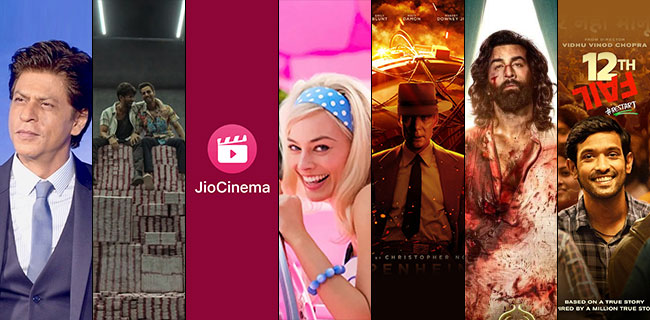
    JioCinema: A ‘free’ ride

    The arrival of JioCinema, with an IPL edition that was free to stream, brought in a sea change in the Indian OTT landscape in March 2023. The platform made some of the global giants relook at their India strategy. Disney+ Hotstar offered the Cricket World Cup free later in the year. JioCinema backed the IPL season with a plethora of launches, most notably Asur 2 and Taali. But over the last four-five months, they have gone easy on things, and relied more on non-fiction properties, especially Bigg Boss. Perhaps IPL 2024 is when we will see more activity around the platform.


    Barbenheimer

    Who would have thought that a Hollywood film clash will make headlines in India? The Barbie vs. Oppenheimer weekend in August 2023 brought in about Rs. 100 Cr (gross) worth of box office in India, which was also one of the few countries where Oppenheimer was ahead of Barbie at the box office. Hollywood has not had its best year in India, with the Marvel Cinematic Universe, Hollywood’s mainstay in the Indian market, being on some sort of a downtrend. But with Oppenheimer, we saw audiences flocking theatres in the service of a director urban India has come to love: Christopher Nolan.


    Animal instincts

    December 2023 saw the release of director Sandeep Reddy Vanga’s Animal, a film that polarised critics, but was largely embraced by the audiences, going on to become one of the most significant success stories of the year, especially because it’s headlined by a younger star (not from the ‘old guard’). After Atlee’s Jawan, Vanga’s Animal established the firm hold directors from South India are beginning to have on Hindi audience’s imagination, through their distinctive style of storytelling. Everything about Animal, right from its trailer to the choreography and background music of its action set-pieces, broke conventional rules of mass Indian cinema. And it was very heartening that another film (12th Fail) that came just a month before Animal, and broke a few rules of cinema too, also got immense audience love, especially for its scale, cast and budget. That Animal and 12th Fail can co-exist augurs well for Hindi cinema, which had its best-ever year by some margin.


  • One-worded Box-office Beasts


    By Shailesh Kapoor


    Shailesh KapoorIt’s a huge Friday at the box office today. Ranbir Kapoor starrer Animal, directed by Sandeep Reddy Vanga, releases today, and is set to witness one of the highest openings in Hindi cinema, with even a shot at the 50 Cr first-day box-office, a mark that only four Hindi films have ever achieved.


    2023 has been an interesting year at the Indian box-office. A series of non-performing films have been punctuated by mammoth blockbusters. In the Hindi language, it started with Pathaan in Jaunary, post which we saw a long period of flops, with an occasional hit like Rocky Aur Rani Kii Prem Kahaani. August saw positive momentum shift, with Gadar 2 emerging as a huge blockbuster. And then, Jawan followed it up early September, recording the highest-ever lifetime box-office for a Hindi film at the domestic box-office.


    In the Tamil market too, Jailer (Rajinikanth) and Leo (Vijay) have done great numbers, and are a part of the list of top 5 grossers of the year, after Jawan, Pathaan and Gadar 2. Animal would be challenging to enter this list, as will Dunki, the third Shah Rukh Khan release this year.


    What’s with film with one-word names, most of which are names or descriptors of their lead characters, doing well? Perhaps there’s more than a coincidence at play here. It could be a sign that audiences are gravitating towards superstardom and larger-than-life hero characters again. While this factor always existed, the pre-pandemic period in Hindi cinema saw a slew of thematic and genre-led films do very well. With OTT around, theatre-going is about scale today, more than ever before. But it need not be the conventional definition of “scale”, which comes with elements like large sets (Bhansali) or VFX (Marvel). It’s about bold-stroke, larger-than-life storytelling too, led by protagonists with an unmistakable swagger.


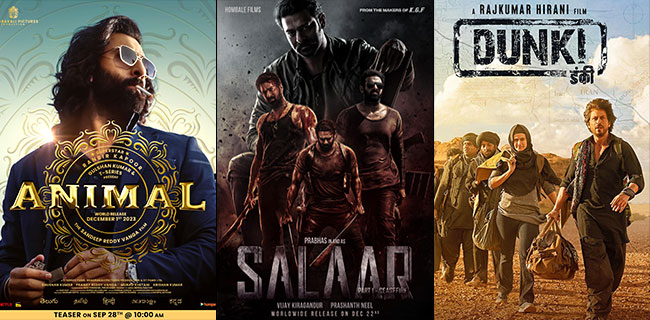
    If the three big films of December (Animal, Salaar and Dunki) live up to their expectations, 2023 has more than a real chance of becoming the best-ever year at the India box-office, with a gross business of 12,000 Cr in India.


    Animal, however, won’t be the only media highlight of this weekend. We have important elections results coming up this Sunday, when votes for legislative elections in five states will be counted. These results can have a significant influence on how the national politics will look like in 2024, in the lead up to the General Elections.


    Irrespective of how the film fares or what the election results are, one thing is certain: There won’t be a dull moment for media & entertainment observers this weekend.


  • Justice Sikri kickstarts campaign for responsible OTT content viewing

    By Our Staff


    Led by its chairperson, Justice (Retd) A.K. Sikri, former Judge of the Supreme Court of India, Digital Publisher Content Grievance Council (DPCGC), a self-regulatory body under the IT Rules 2021 and operating under the aegis of the Internet and Mobile Association of India (IAMAI), has initiated a year-long all-India campaign to enhance awareness regarding OTT content consumption and the redressal mechanism of related grievances. The campaign aims to make law enforcing agencies and consumers of OTT platforms aware of the various tools that the law provides for an enhanced viewing experience, and to foster collaboration between parents, law enforcement agencies, and educational institutions, promoting responsible content consumption practices for all.


    Speaking on the goals of the campaign Justice (Retd) Sikri said, “In their right wisdom, our legislature and our parliament, guided by the MIB, have collaboratively established a robust framework to integrate OTT platforms into the legal landscape. DPCGC formed under the IT Rules aims at efficiently addressing concerns or grievances related to OTTs through self-regulation. It is essential that all stakeholders, particularly viewers and law enforcement agencies, remain well-informed about this mechanism.”


  • What Marketers can Learn from the world of Organised Crime?


    By Sanjeev Kotnala


    Sanjeev KotnalaMy last discussion this weekend with Vermajee, my dear friend and brand and marketing consultant, was about the underworld. The perspective was different and worth sharing. The trigger point was the spate of crime series on OTT Platforms and the number of books on the Mumbai underworld- which have once again made many legendary gangsters a household name. The mafia wars and shootouts have become more recognisable. They are no longer a memory of just the old residents of Mumbai like Vermajee.

    I love the discussion. They almost seamlessly need no nudging to align with our passion and subject of interest- brand and marketing. However, seeing crime series as a marketing device and relooking it as a market are two totally different things. The dynamics and viewpoints are skewed with different perspectives- which makes it more interesting.

    The underground mafia is truly an unexplored hazy maze of relationships, loyalty, revenge, survival, aspirations and dreams. A marketer can learn a lot from it. A few pegs of absolutely delightful Amrut single malt made the discussion more lively and animated.

    The underworld is the most demanding market to operate in. It’s dynamics, chaos, churn and changing expectations would make any brand manager mad. You don’t know if the product and the consumer will be alive and kicking by the next sunrise.


    Cultivating Loyalty and Trust

    The underworld can’t survive without trust and loyalty. Mafia dons and their leadership invest time and energy to cultivate loyalty. Just like it is an essential requirement for building a strong and credible brand and lasting customer relationships. Trust is what maintains a mafia operation, and that can be equated to genuine customer connections. Authenticity and delivering on promises is a critical part of the underground; however, authenticity remains questionable.


    The Key is Networking

    The underworld mafia is built on interconnected relationships and partnerships with influencers. There is a lot that marketers can learn from these networked partnerships and working with influencers. The idea of connecting and collaborating to grow the reach and influence is no better demonstrated than in the underworld.


    Adapting to Change

    There cannot be a market more chaotic and in flux than the underground world, which has to constantly evolve to stay ahead of the law. Similarly, marketers need to adapt or stay ahead of the curve in the market reshaped with changing consumer profile interests and technology. Valuing innovation and being flexible and agile is what gives the brand continued relevance and longevity.


    Reputation Management

    In the underworld, reputation is something to die for. Mafia bosses need to guard their reputations. Nothing can be allowed to tamper with it. Mind share is very important, and hence repeated purpose-led consistent messaging of loot, murder, robbery, threat and delivering on the promise is essential. Brands must learn that, in the end, in this world of perception adulterated with reality, reputation is what finally matters and counts. Marketers must actively engage with their audience, addressing concerns and maintaining a positive presence to build trust and credibility. Just like an implementor’s mistake affects the boss’s reputation – an error at any stage of consumer experience affects the brand. Hence, the br5and is also responsible for the distribution and after-sales service experience.


    Understanding Human Psychology

    Underworld thrives on two fundamental human levers- aspiration and fear. It is where the human, as an animal with territorial instinct, is alive and thriving. They understand the psychology of team members, competition and the legal system. The actions and reactions are mapped to these. Marketers would do great in understanding this deep dive into customer decisions, fears, and desires to build on marketing strategies, enabling businesses to create compelling campaigns that resonate with the audience.


    Launching new Names

    The mafia underworld is the most brutal place to introduce a new product- a new name- a new Don, or a new officer. It must be announced with fanfare and fireworks with lettering in red. For the new product to survive, it must be provocative and upset some set leaders. The brand managers and advisors in the underworld ( and so should be in business) know exactly what to say, when to say it, where to say and how to say it. The SOP has not changed much in the company.

    The lack of media other than the mug shot at some police station and word of mouth makes it much easier or tougher to launch into the underworld mafia. There, the brands are made or finished in a shoot-out or live life at the fringe, always under threat. The logic of fear and desire to survive, a penalty of hafta and protection money and the price of life all keep changing and guiding the decibel level a brand could command.

    Unfortunately, branding in the underworld mafia is more of a default action than based on attributes, USP, Purpose or service. But these names stick.


    Crisis Management

    If the underworld is good at anything after networking is crisis management. They are fast to adapt to changing and unpredictable situations. Maybe they think of six impossible things and outcomes daily, knowing that what happens is most unexpected. In this digital era, marketers need precise crisis management plans to respond to negative publicity, events, product recalls, service issues or any emergency to be able to mitigate damage to their reputation l while navigating challenging situations.


    Persistence and Resilience

    The underworld mafia’s ability to face adversity is unparalleled. They have legendary patience for the right time and place for actions. They may want it differently, but they know success and failure are cyclic, and they are ever willing to rise like a phoenix and claim their spot. Marketers need to believe in their understanding and strategies and willingness to give the required time for results.


    Signals

    The underworld mafia knows best. It is observant to see signals and interpret them before making decisions. Their market and business survive on such readings and interpretations. Marketers must not fail to be observant in reading signals that are omnipresent.


    Net-net

    While the underworld mafia may not be a referenceable place for ethics and morality in business, they can teach a few lessons to marketers. Cultivating loyalty, building networks, adapting to change, managing reputation, understanding human psychology, mastering crisis management, and embodying resilience- if only this much gets imbibed by the marketers in their business of

    Think of a new ‘don’ introduction into the market like a budding entrepreneur in the cutthroat business world. The new non encounters hurdles that test their mettle and strategic acumen.

    The new don must understand the market trends and consumer behaviour, grasp the complex dynamics, study rival gangs, understand the political landscape, identify potential allies, find its niche among established players, and be innovative in delivery and promise delivery -otherwise, survival is tough. We must not forget internal rivalry, dreams and aspiration management, as well as internal unity and prioritised internal support is essential before any external act.

    Underworld mafia may be illegal, but it has its own operating system that demands strategic thinking, adaptability, and resilience- and can teach marketers few lessons.


    PostScript

    Watch a few of these series and movies with the team, or make them read and present their understanding in team meetings. You can start with D-company, Mumbai Meri Jaan, Heroines, Dongri to Dubai, Mafia Queen, Satya, GodFather, Shantaram, Vaastav, Scoop, My Name is Adbu Salim, Sacred Games, Gangubai Kathiawadi, Once Upon a time in Mumbai, Haseena Parkar, Shootout at Lokhandwala, Daday to reflect upon these as market and campaigns.


  • Zee to present DP World ILT20 2nd season

    By Our Staff


    Zee’s 10 linear TV channels, OTT platform ZEE5 and on its syndicate partners’ TV and digital networks across the world will exclusively broadcast live DP World ILT20 Season 2, beginning January 19, 2024


    Said Rahul Johri, President – Business, Zee Entertainment Enterprises Limited (ZEEL): “Zee is delighted to present DP World ILT20 2nd season and promises an electrifying experience to cricket fans in India and around the world. With the world’s finest players, iconic stadiums and infrastructure and six leading sporting franchises, our goal is to build upon the previous year’s success, further solidifying the league’s stature as one of the most-widely followed cricket events in the world.”


    Added David White CEO DP World ILT20: “We are excited to announce the DP World ILT20 Season 2 schedule. Just like the opening season, we are set to deliver 34 action-packed matches at three fantastic cricket venues. The event begins on 19 January and will finish with the final in Dubai on 17 February. Season 2 will be launched with riveting on-field action and entertainment for the entire family on the opening weekend in Sharjah, Abu Dhabi and Dubai.”