Tag: Indrani Sen

  • What’s Hot on Online Video Viewing


    By Indrani Sen


    Hotstar, India’s largest video viewing platform, launched the third edition of its India Watch Report last week. The report is an in-depth study of online video consumption behaviour and trends of Indian viewers on Hotstar and narrates their deep connection with various genres of video content.


    As observed by ET Brand Equity on December 11, 2019, “From becoming the favourite destination for cricket lovers on the internet to making Game of Thrones a household name, where viewers in India woke up at 6:30 in the morning to watch episodes of the cult fantasy series, Hotstar has come a long way, and in the process played a critical role in shaping the country’s binge-watching culture.” (https://brandequity.economictimes.indiatimes.com/news/media/hotstar-decodes-the-online-video-consumer-unveils-india-watch-report-2019/72472795)

    The report has unveiled quite a few surprising facts, broken a few myths and has highlighted delightful insights through ‘Fun Facts’ under each topic explored in it. Uday Shankar, President, The Walt Disney Company APAC & Chairman of Star and Disney India says in the introduction “Until a few years ago, online entertainment was restricted to the urban affluent. However, we now see newer horizons of customer reach, with non-metro towns driving online consumption. Digital viewership among women has also grown by leaps and bounds. Moreover, Hotstar’s pan-India consumer base reveals how each person has unique and individual choices – men are watching drama and movies from the South are being consumed in the North. While the enchantment of cricket remains unabated, customers are increasingly getting attracted to kabaddi and football. The new Indian consumer is breaking old stereotypes and defying conventional wisdom.”

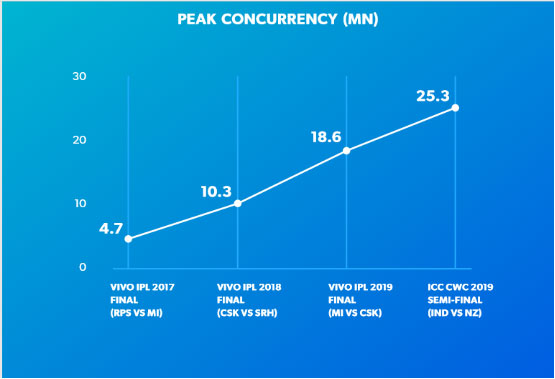
    In 2019, Hotstar saw 555 installs per minute and compared to 2018, the number of installs doubled. Video consumption went up three times compared to 2018. The chart tilted ‘Roti. Kapda. Makaan. Data.’ shows the degree of data consumption by states and surprises us by revealing that West Bengal and Bihar has more data consumption per viewer that Maharashtra and Karnataka. Live viewership of peak consumption of cricket events over 2017, 2018 and 2019 shows it is growing in leaps and bounds.
     

    Source: India Watch Report 2019

    95% of the video consumption on Hotstar comes from mobiles, which continues to be the primary screen for the users. An analysis of content category split by platform shows that Indians love entertainment, ranging from85% on Connected TV to 58% on Android. Sports are next in a reverse order ranging from 42% on Android to 15% on Connected TV. While most viewers happily switch their smartphone brands, viewers in West Bengal and Kerala have a loyalty to Samsung.

    There has been a shift in the demographics of online viewers of entertainment with the share of non-metros going up from 54% in 2018 to 63% in 2019 and Lucknow, Pune and Patna Surpassed Hyderabad, Bengaluru & Kolkata in video consumption. The overall share on women viewers in entertainment grew from 42% in 2018 to 45% in 2019, but overall video consumption by women grew by 3.2 times over last one year. According to the report “More women are owning their right to me-time!”

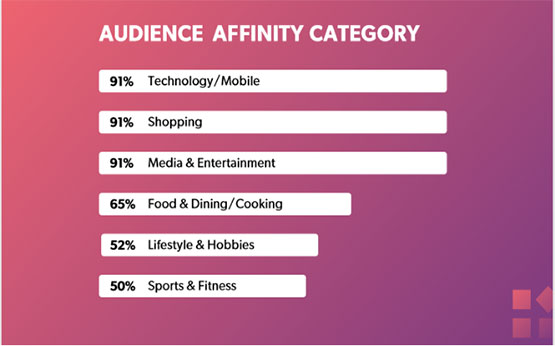
    There has been a huge surge in shopping and food enthusiasts online, particularly over the weekends with these becoming the fastest-growing affinity base on the Internet.
     

    Source: India Watch Report 2019

    As reflected by consumption across other media, 40% of total video consumption comes from regional languages with Tamil, Telegu and Bengali leading the list. While 80% of Tamil and Telegu video consumption comes from the native states, only 65% of Bengali comes from West Bengal. In cricket also language and loyalty went hand in hand with 2 times jump in Tamil consumptions during CSK matches, 1.6 times jump in Bengali consumption during KKR matches and 1.5 times jump in Kannada consumption during RCB matches.

    The report breaks myth of premium content for exclusive audience by highlighting 40% of Game of Throne viewers and 30% of Koffee with Karan viewers also watch Hindi family dramas. The fact that 40% of viewers of family dramas are men is also surprising as unlike the viewership of the family owned big screen TV, this data is based on individually owned small screen viewership on mobile. An analysis by genres again show men don’t dislike Hindi TV serials and their interest for family and mythological shows is at par with women.

    The report presents Leaderboard of TV shows and movies during 2019 highlighting women prefer scripted dramas over reality shows; Hindi movies are a hit with Mumbai showing the highest consumption, while Bengaluru leads the fandom for English movies.

    In 2019 online video consumption of news grew by 10 times compared to 2018 with consumption per user growing up 3.5 times. Millennials led the way with 65% of news consumption coming from the age group of 15-34. Delhi consumed the most news in India and surprisingly Lucknow and Patna watched more news than Mumbai.

    In sports, Cricket reigned supreme across India and became more interactive in 2019 as Hotstar combined viewing with video games, fandom and food. There is a section ‘Hall of Fames’ giving details of moments that gripped India during cricket matches, Leaderboard of cricket matches as well as most viewed ads during cricket matches. The report shows consumption of both football and kabaddi went up during 2019 but detail analysis shows that football is popular in South India and East India, while Kabaddi is most-watched in Uttar Pradesh and South India.

    The report presents a chart showing city wise log off timings. With the ever-growing options for entertainment and other content, sleep has taken a back seat. However, Mumbai, the city that never sleeps is not the last to sleep. Kochi and Gurugram surprise by staying awake more with Hotstar.

    Finally, kudos to the Hotstar team for the way they have developed India Watch 2019 as their marketing tool. Apart from enlightening the industry through facts and figures related to viewership on Hotstar, it has showcased case studies of how certain brands achieved their marketing objectives by advertising on Hotstar. In the disguise of a research report on video viewership, the report is an excellent marketing pitch to the advertisers and agencies for choosing Hotstar as their video viewing platform and converting non users of the medium to users.


  • Promoting or Muzzling the Digital Media


    By Indrani Sen


    The Ministry of Information and Broadcasting issued a public notice on November 25 soliciting suggestions/ comments/ inputs from the stakeholders on the draft “Registration of Press And Periodicals (IPP) Bill, 2019”. It also announced that the IPP Bill 2019 will replace the “Press and Registration of Books (PRB) Act, 1867‟. The 152-year-old PRB Act of 1857 has been amended from time to time in the past and it is high time that a comprehensive new version replaces the act of the British period. On the face of it, industry would have been ready to accept MIB’s move.


    However, the salient features of the IPP Bill 2019 highlighted by the Ministry in the Annexure to the draft bill have raised many questions. It appears that the process of title and registration of all press and periodicals will be controlled centrally by the Press Registrar General (who will replace the current Press Registrar) appointed by the Government, doing away with the custom of publishers and printers furnishing declaration to local District Magistrate for authentication. This will undoubtedly raise the cost of the process for small publications that will have to travel to Delhi for registering their publications.


    The IPP Bill 2019 also proposes to strengthen the hands of Central and State Government by giving them the power of framing appropriate rules/ regulations for controlling the accreditation of publications and releasing of Government advertisements. This is ambiguous as if such power is entrusted with both Central and State Government and if in a particular state the local government does not belong to the ruling party at the centre, then a controversy may arise related to accreditation and release of government advertisements in the publications published from that state.


    One salient feature assures that the Bill proposes to do away with the provision under the PRB Act, 1857 of prosecution of publishers. However, going through the details of the draft, one discovers that the publishers can be fined by the Press Registrar General for not abiding by the rules and guidelines provided in the bill, but would not be prosecuted for jail terms. Reading between the lines, it appears that the publishers will have less scope of defending themselves as they would be given a dictate by the Press Registrar General and most likely would have to first pay the fine before starting a court procedure to protest against the dictate/ the fine imposed on them.


    Not highlighted as a Salient Feature but very salient for the publication industry is the proposed clause that Editors must be Indian citizens. MIB should look into how many Indian journalists work abroad as editors of foreign publications. Why should we impose such clauses restricting the scope of employment in India in the era of globalisation?


    Last but not the least, is the Salient Feature “The Bill proposes to have a simple system of registration of e-papers”. The modus operand of the simple system has not been spelled out in the draft bill. As and when MIB finally details it out, one may find it complex instead of simple. However, it is obvious that the intention of the Ministry is to bring all digital platforms dealing with news, e-papers and digital news websites under the governance of MIB.


    Some people within the industry are arguing that the registration requirements for periodicals do not apply to digital-only media houses as the definition of ‘publication’ in the draft bill says anything which is printed on paper and is meant for public distribution including periodicals, newspapers & books”. I would like to point out that the draft Bill does include a definition for ‘news on digital media’, and Section 18 of the draft RPP Bill, 2019 says that publishers of news on Digital Media shall register themselves with the Registrar of Newspapers of India in such manner and giving such particulars as may be prescribed.


    Apart from the fact that the phrase “such Particulars as may be prescribed” is dangerously open to unforeseen and unwelcome possibilities, Section 18 raises the question how do we define publishers of news on digital media? Who all are included in the definition? The digital version of traditional newspapers and TV News Channels; digital-only websites dealing with different types of news (political, sports, entertainment, industry specific, etc. etc.); OTT platforms carrying news sections; websites of various industry and technical associations carrying specialised news; websites of companies carrying news about them, their associates and links to related media releases; websites of academic institutes carrying news about their admission, courses, academic delivery, etc.- the list is endless. How will MIB control news websites not registered in India but available to Indian Netizens?


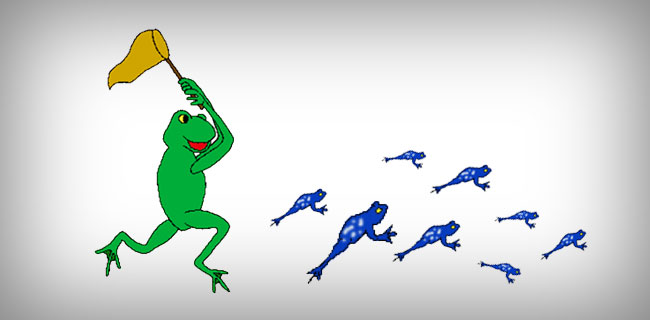
    In this game of playing catch with the digital media, MIB poses not only a severe threat to the freedom of digital media, but may also end up scrapping the proposal and making a fool of themselves. If it was so simple to control the digital media, then more advanced western nations would have done so by this time. No Democratic country in the world has been able to implement such rules and regulations for controlling the digital media. It would be interesting to wait and watch the developments in India.


    Indrani Sen is a veteran media professional and now an educator. She writes weekly for MxMIndia. Her views here are personal


  • Okay for media agencies to help clients take media & planning inhouse?


    By Indrani Sen


    According to the grapevine, some global media agencies are contemplating a move to allow clients to take media and planning inhouse. Noted one report suggesting that information coming in from the UK suggest a certain large networked agency is in for a significant restructure that may possibly include the group launching a separate business to help clients take their media and planning inhouse. This would have been unthinkable even in the first decade of the twenty-first century when the media agencies went on an integration drive to offer as many services as possible from one stable to their clients.


    But times have been changing and changing at a very first rate. Globally, consulting agencies have started competing for a share of the media (planning and buying) business and have started enjoying a high rate of growth. In order to counter competition from the consulting agencies, media agencies have rewritten their profiles as consultants and have started offering to their clients multiple choices for doing business. But their woes do not end just with countering the move by the consulting agencies. The bigger threat is coming from the clients themselves, many of whom are planning to move some of the agency work in-house.


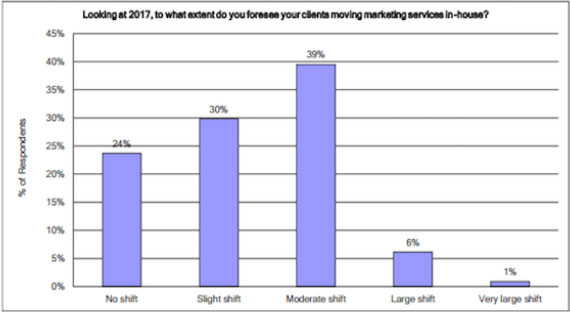
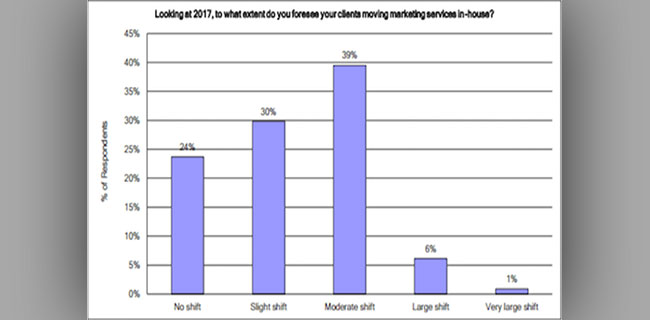
    The above trend has set in from first decade of this century with clients initially hiring media executives and managers to interact with their media agencies for ensuring better ROI. The move gradually expanded to clients shifting some of their marketing services in-house. The 2017 RSW/US New Year Outlook Report indicated that 84% of the marketing businesses themselves were planning a transition which may result in assigning on an average 20% less work to agencies.


    Source: 2017 RSW/US New Year Outlook Report


    In this changing business climate, what could be a better move than launching a consultancy business to help clients to take media and planning inhouse? Data monitoring and gathering, transactional capabilities, like programmatic planning and buying, optimisation through SEM and SEO, can easily be shifted in-house to give clients scope for driving efficiencies guided by the consultants from media agencies. This move will help to kill two birds with one stone, to counter the consulting agencies by providing data strategies to brands and to establish a better client-agency relationship which is essential for retaining the accounts in the long run.


    It may be difficult for individual clients to keep pace with technological changes like AI, VR, Voice, etc. The media agencies can play a role in providing clients with solutions for applications of such new technologies. In other words, the business of media agencies may shift from media planning and buying to creating solutions to marketing problems and application of the solutions across various technologies and platforms for reaching the target audience with least wastage.


    In the last quarter of twentieth century, creative agencies were focussed on creating big ideas, but their ideas were not data driven. The media agencies at the same time were focussed on data based strategies, number crunching and negotiating for best rates and deals. They were not interpreting data in creative ways, on weaving a story with data analytics. The future of media agencies lies in marrying creativity with data and analytics, a lesson which they should learn from the newer digital agencies who have gone back to the good old full service mode under one umbrella.


  • Rise & Shine of the Digital Duo


    By Indrani Sen


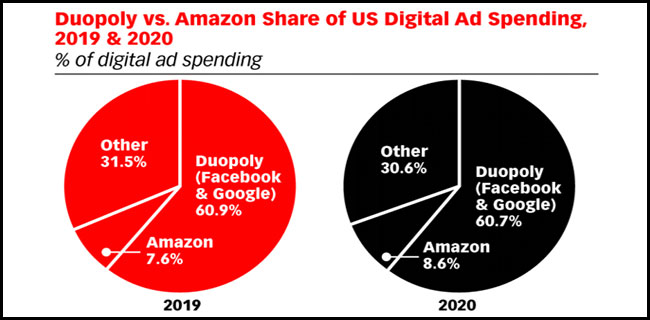
    The digital marketing trends in US indicate the trends across the world (except China). Recently, an article in www.emarketer.com indicated that the Facebook-Google duopoly will continue in the US market in spite of the amazing growth registered by Amazon which has been steadily increasing its share (https://www.emarketer.com/content/facebook-google-duopoly-won-t-crack-this-year?ecid=NL1009). Google is the leading partner in this duopoly across the world.


    The same duopoly enjoys together 68 per cent of India’s digital ad market and it is likely to grow as the digital advertising spending is expected to also increase by 30 per cent in 2019. Even if the growth forecast takes a dip as foretold by the less than expected yield of digital media during Diwali 2019, it will not affect the stronghold of the duopoly.


    Google India, the arm of the technology giant, reported total revenue close to ₹ 9337 crores in FY18.  A most unprecedented financial result reported by Google India for FY19 has created confusion in the market place. Google India reported a 56 per cent fall in revenue to ₹ 4147 crores in the year ended March 31, 2019 (https://www.statista.com/statistics/717633/google-revenue-value-india/). The fall was attributed to a new accounting standard introduced by the Ministry of Corporate Affairs, Government of India.


    Google is the undisputed leader in India’s mobile search engine market, but its biggest cash cow- Google AdWords, is registered under the Google Asia Pacific division. As such, the revenue and profits from AdWords cannot be filed as part of the Indian division without incurring certain burden of taxation as per the amended rules. So, advertising revenue, the biggest contributor to Google’s  overall revenue is missing from the revenue posted by Google India.


    On the other hand, Facebook Inc’s Indian operation has reported revenues of ₹ 892 crore, compared to revenues of ₹ 521 crore, a 71% jump in revenues last fiscal for fiscal year ended 31 March 2019  (https://economictimes.indiatimes.com/markets/stocks/earnings/facebook-reports-84-jump-in-net-profit-for-india-at-rs-105-crore-for-fiscal-2019/articleshow/71891826.cms?from=mdr) As a result, share of Facebook has gone up in the duopoly in Indian market, though it has a long way to go before its revenue gets closer to Google’s revenue. It remains to be seen if Amazon will be able to grow its share in the Indian market following the US example.


    As advertisers and agencies continue to use Google AdWords and place digital advertising through Google, the analysis of the revenue sources will not match with the money spend on digital advertising across various platforms offered by Google and will add to the computing confusions in media planning.


  • Localisation in Indian Digital Media Market


    By Indrani Sen


    Earlier this year, I was delighted to read the news that Chanpreet Arora had stepped down from the position of CEO of Vice Media to join as a Journalist Fellow in Reuters Institute for the Study of Journalism under University of Oxford. In India, only a selective set of people from industry interact with academic institutes and very few academicians act as consultants to the industry. Against that backdrop, Arora’s move was courageous and inspiring to others. Recently, I read on the internet her Fellowship Paper “The Evolving Indian Media Market: Succeeding through Localisation” and was impressed by her analysis. (https://reutersinstitute.politics.ox.ac.uk/our-research/evolving-indian-media-market-succeeding-through-localisation)
     

    When we discuss about localisation of media, our top-of-mind recall is regional publications, followed by regional TV channels and FM radio stations. Arora has presented an excellent analysis of the various factors guiding and governing localisation of doing business in Indian digital media market. Her article deals with macro economics, key global trends, digital explosion in India and models adopted by international companies in India under the section “Why India”.


    Next is a section on “Doing Business in India” covering from localisation of content and delivery to regulatory framework.  Arora argues: “India is one of the largest, most dynamic and growing markets in the world and is too big to ignore for any global player. Unlike its biggest neighbour, India’s primary attraction lies in its massive market size and open market policies for digital players. There is a viable demand for every solution. However, sharp segmentation is the key to success… If a company wants to come into India without any localisation then it will only be able to capture the top 1% of the Indian consumers who are highly affluent and have similar exposures as that of the western audience.”


    In her article, Arora presents some key aspects of building a robust business and localisation in India as understanding of Indian business culture, creating a strong local leadership, building a strong digital product with ability to focus on consumer segmentation, creating content in regional languages beyond Hindi, focus on video and audio, innovative content, metrics developed for Indian conditions and finally revenue diversification beyond advertiser led revenue model.


    The article deliberates on how to develop a healthy ecosystem and the various adjustment factors which an international company investing in India has to deal with. In conclusion, she elaborates on building a successful internet news media company for the future in India and shares her own industry experiences in the end note.  To sum up, it is a very good guideline for international companies interested in investing in Indian digital media market.


    I found Arora’s analysis lacking in only one aspect. Indian media today is vulnerable to administrative excesses and political pressure to a degree which International organisations are not used to dealing with. Arora has completely ignored this aspect of doing media business in India, though digital media in future will have to deal with many such situations.

  • No-brainer, but shape of things to come…


    By Indrani Sen


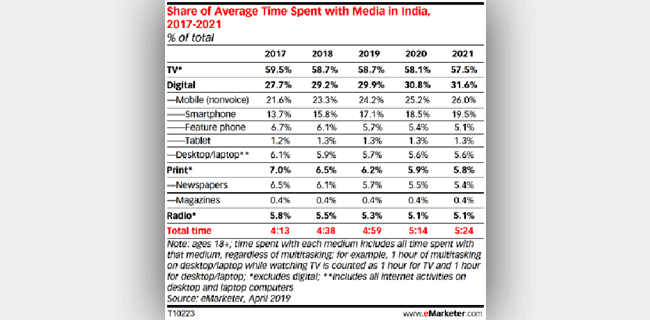
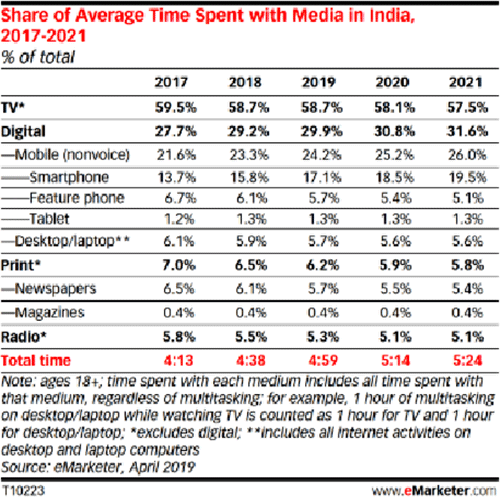
    Recently, eMarketer conduced a global survey of the time consumers in different countries spent on media consumption per day. Adult consumers in India will spend 70.1% (3 hours, 30 minutes) of their daily media time on traditional media and remaining 29.9%, or 1 hour and 29 minutes on digital media in 2019 (https://www.emarketer.com/content/india-time-spent-with-media-2019).


    A large part of the growth for time spent by Indian adults with digital comes from content consumption that takes place over the mobile internet. This trend will continue till 2021 based on availability of cheaper smartphones, a growing number of smartphone users and affordable data. It is estimated that in 2019, adults will spend 1 hour, 12 minutes online, and the majority of that time (76.5%) will be via mobile devices.

    In India, TV takes the largest share of total time spent at 58.7%, or 2 hours, 55 minutes. Digital is the second most popular medium with 1 hour, 29 minutes daily, a little under one-third of media time each day.


    In terms of ad expenditure, digital media is lagging behind their market share of daily media time spent. eMarketer forecast that digital and traditional will, respectively, account for 20.8% and 79.2% of media ad spending in India in 2019.


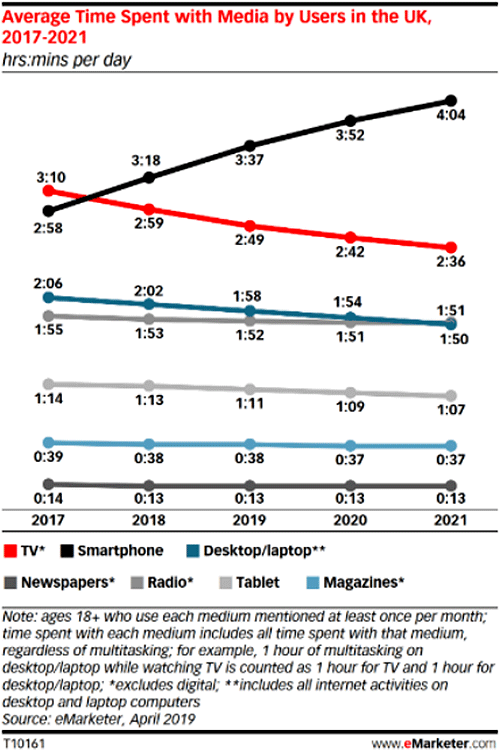
    As per the estimates of daily media time spent, the above table shows that by 2021 adult Indians will spent on an average 5 hours and 24 minutes on media consumption. There is head room for growth in the average media time, as adult consumers in many other countries spend 8 to 9 hours on daily media consumption. In some countries, consumers have reached the limit of their time spent on media and year on year there is hardly any growth. For example, consumers in the UK will spend 9 hours, 38 minutes with media in 2019, a 1-minute increase from last year. Similar to the rest of the world, time spent with mobile becomes a major driver of digital growth in UK as shown in the table below.


    We can expect in the long run, similar trends in daily time spent on media as reflected in the above table. According to the survey, time spent by consumers with digital and traditional media will continue to grow in tandem in India, but digital will grown at a faster rate from 2019 to 2021. However, it will take Indian consumers probably another decade or more before their average daily time spent on media can touch 8 to 9 hours as the growth of time spent on digital media will depend on spread of broadband across the country.


  • Will Skinny Bundles work in India?


    By Indrani Sen


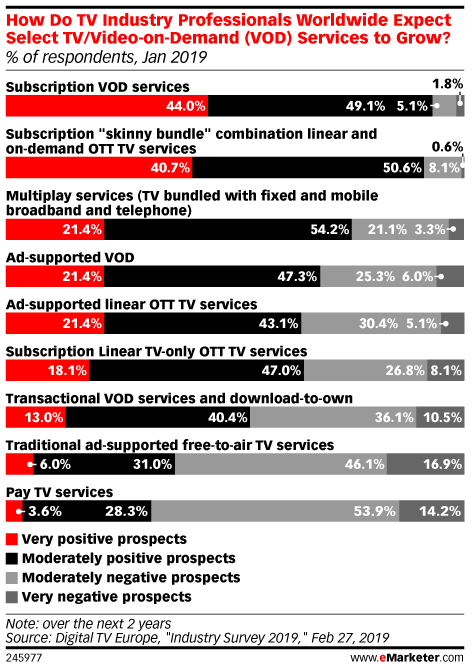
    I recently read an interesting article “TV Industry Eyes Hybrid Linear, On Demand OTT services” in www.emarketer.com based on the findings of Digital TV Europe’s “Industry Survey 2019.” According to the survey, nine in 10 industry professionals worldwide had positive outlooks on the two-year growth of “skinny bundles,” or subscriptions that offer both linear and on-demand OTT services as against subscription of only SOVD services like Netflix and Amazon Prime Video.


    The term “skinny bundle” was first coined to describe pared-down cable TV packages in the United States. In recent times, the concept of ‘skinny bundle’ has been introduced into the digital video sphere with an aim to describe either linear OTT services that offer customizable channel packages or a service that combines linear and on-demand content, as defined in the Digital TV Europe’s survey. As the article explains “The latter definition alludes to linear OTT services like Sling TV and fuboTV, which now have subscriptions that offer additional access to premium, on-demand content from services like HBO and Showtime. But it also represents SVOD services like Hulu, which bolstered its offerings with Hulu with Live TV, a linear service. (Source: https://www.emarketer.com/content/tv-industry-eyes-hybrid-linear-on-demand-ott-services?ecid=NL1001)


    In the US and other European countries, there is a growing trend of “cord-cutters” every year, referring to the consumers who are cancelling their subscription to cable and opting for other digital services. There are also a significant number of “cord-nevers” among younger generation (those who have never subscribed to traditional cable). It would be interesting to wait and watch what impact the growth of mobile internet in India has in the next few years on the cable TV and Dish TV subscribers.


    This model of skinny bundles can be adopted easily to suit the Indian TV industry, against our unique scenario of rapidly growing access to internet through mobile phones. Among the various options of skinny bundles shown in the above chart borrowed from the article, the option of Multiplay services (TV bundled with fixed and mobile broadband and telephone) looks like an ideal solution for Indian TV industry in near future.


    To sum up, it is going to be an exciting time for Indian TV industry from 2020 onwards with constant changes and innovations in the way of doing business. Needless to mention that the TV channels who were early adopters of OTT platforms will enjoy a distinct advantage.


  • IRS 2019: Future of Print under Microscope


    By Indrani Sen


    Indrani Sen

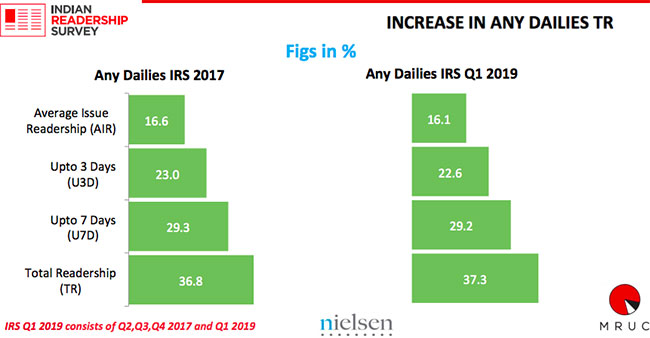
    The recent release of IRS 2019 by the MRUC did not have as dramatic impact as the release of IRS 2017 when the definition of readership was changed from “Average Issue Readership” (AR) to Total Readership” (TR). Yes, the TR has gone up by 2.7 crore from 40.7 crore to 42.5 crore with both newspapers and magazines contributing to the raise the numbers, but if we try to read between the information in the carefully drafted PPT released by MRUC for consumption of Industry at large, we find some red flags concealed in certain corners.

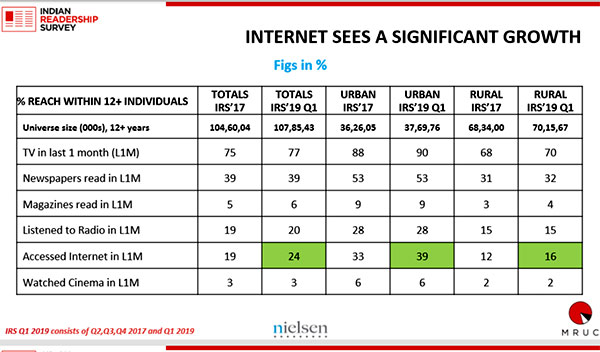
    Let us look at the slide on all media consumption highlighting the growth of internet. Internet accessed has grown by 5% from IRS 2017 to IRS’19Q1. No other medium has shown this kind of growth. While total readers have increased to 42.5 crore, the internet users are now 384 million, or 38.4 crore. With increase of another 5 to 6 million internet users, soon the internet penetration will be same as penetration of print on All India basis. Print media needs to plan for their digital strategy asap in order to survive.

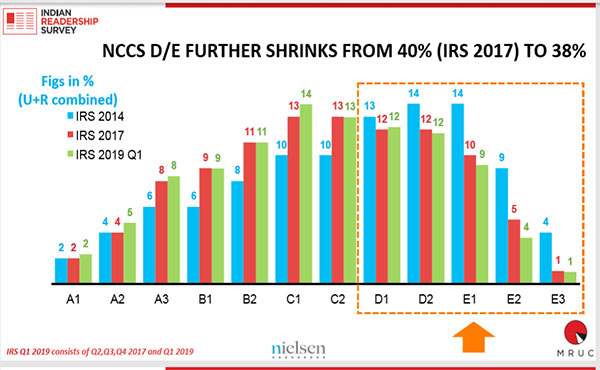
    The NCCS distribution going flat is a clear indication that MRUC needs to rework the definitions based on ownership of durables. The PPT has put in a flag in couple of slides saying “Need for a sharper socio economic discriminator?” No timeline for a working plan was indicated at the launch event.

    In this connection, I would like to mention that my students at SIMC did a survey last year on media habits of non-teaching staff working in all Institutes of Lavale campus of Symbiosis, Pune. They found that the need of giving good education to their students and the availability of easy EMI have made 90% of ‘bhaiyas’ and ‘mausis’ with their children in secondary schools have made them purchase either desktop or laptop computers for their use at home. I have been commenting on this need for a change in NCCS for some time. I am happy to see that MRUC has acknowledged it this time in their PPT on IRS 2019.

    Finally, I would like to comment that print players need to respect the findings of IRS 2019. MRUC should get a continuous flow of funds from them, so that no disruptions occur in the field work like it happened after the release of IRS 2017.


  • Online Gaming is the new Digital Rock Star


    By Indrani Sen


    Indrani Sen

    The digital gaming industry in India is currently undergoing rapid changes riding on the mobile revolution and fuelled by investment from big players such as Alibaba, Tencent, Youzu and Nazara. Many startup gaming developers are also lapping up the opportunities and providing the online gamers with new formats of online games and real-time experiences. Industry experts estimate that the number of online game developers has grown 10 times in last eight years from a mere 25 in 2010 to around 250 in 2018.


    A decade back, the accessibility to playing online games was not easy as it required downloading and installation of games on consoles and desktop computers. The rising affordability and adoption of smartphone has become one of the important factors contributing to the rise in the number of gamers and success of the online gaming Industry. The new age gaming developers are experimenting with innovative gaming formats backed by blockchain, artificial intelligence and machine learning technology. Action, adventure and puzzle are the popular gaming genres in India with fantasy sports rising at a fast rate supported by emergence of new sports leagues as well as promotion of traditional sports tournaments through online gaming.


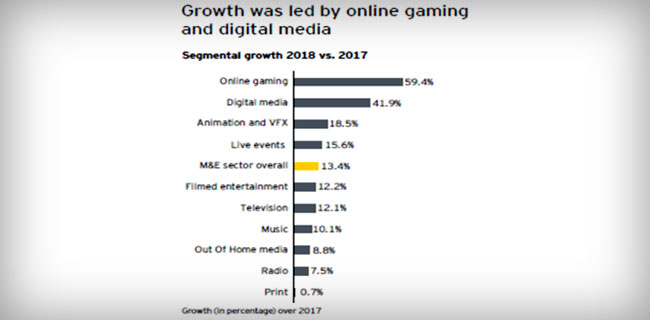
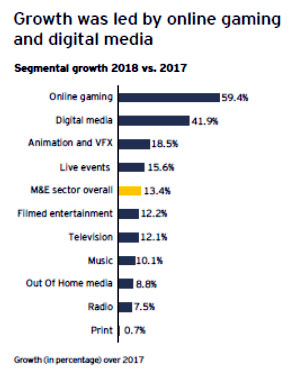
    As per the FICCI-EY 2019 report on Indian M&E Industry, the industry growth was from 2017 to 2018 was led by online gaming and digital media as shown in the following chart.


    Source: FICCI EY ME Industry Report 2019


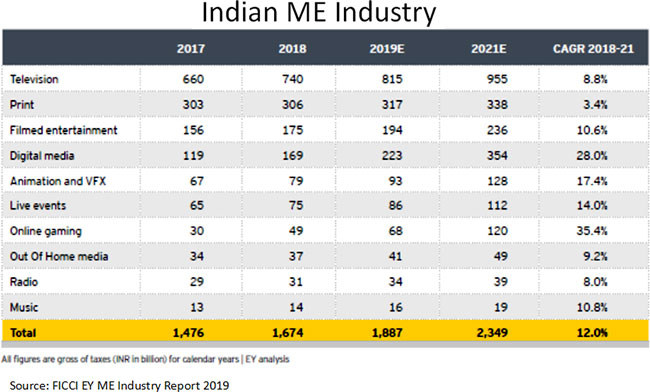
    The report further predicts that online gaming will have the highest CAGR (35%) from 2018-2021 and along with the digital media (28%) and in three years both sectors will more than double their value in INR. While digital media is tipped off to overtake filmed entertainment 2019 and print in 2021, online gaming is already bigger than OOH, radio and music and will overtake live events in 2021 and is likely to overtake Animation and VFX by 2022 to rise to the fifth rank in terms of the share of the Indian ME industry pie.


    Indian ME Industry Source: FICCI EY ME Industry Report 2019


    This trend is going to have a far-reaching impact on the effectiveness and efficiency of the digital media planning which is expected to ride largely on programmatic buying and planning. Many advertisers would like to try out the route of developing exclusive/ branded online games targeted at their audience profile. The Freemium business model, which is currently most commonly used model in the online gaming sector in India, will attract more support from advertisers. Digital Marketing and Media Agencies will explore more innovative ways of exploiting the scope of reach provided by online gaming. After mobile and social media, online gaming will develop as a distinct media channel in the next decade. Online gaming is going to be the new rock star of all online media from 2020.


  • EY-FICCI report rediscovers Indian Customer Segmentation


    By Indrani Sen


    Indrani Sen

    It has been nearly two weeks since the FICCI-EY Report on Indian M&E Industry “A billion screens of opportunity” was released at the 20th FICCI Frames held in Mumbai on March 12, 2019. Most leading financial newspapers and industry websites have carried the press release issued by FICCI with highlights of the findings.


    This website www.mxmindia.com carried a report with highlights of the findings on March 13, 2019 http://www.mxmindia.com/2019/03/me-grows-13-rs-1-67-trillion-in-2018-ey-ficci-report/. The marketing and advertising industry experts have been busy analysing and internalising the findings and useful insights given in the report and their strategic significance.


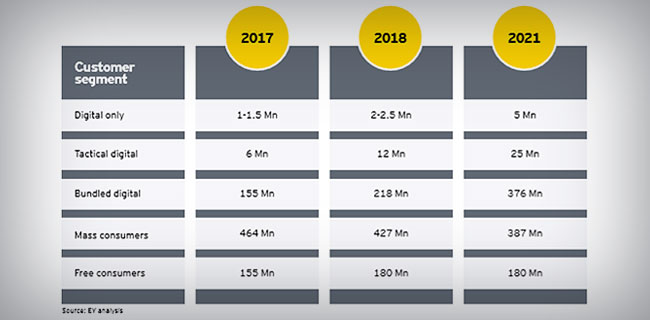
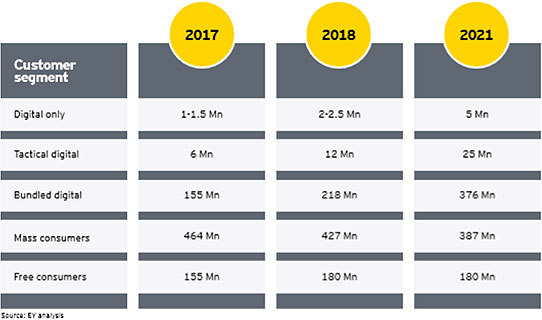
    To me, the most significant insight of the report is its estimate of the customer segmentation in India by their access to various media consumption platforms. Last year, EY introduced the idea of this type of customer segmentation by introducing us to three types of segments, digital only consumers, tactical digital consumers (Pay TV & Pay OTT) and mass consumers (Pay or Free TV & Free OTT) and projected that by 2020 there will be 4 million digital only subscribers, 20 million tactical digital subscribers and 500 + mass subscribers.  I was delighted to discover that EY has refined their estimation of the customer segmentation by introducing another segment “bundled digital” consumers (as provided by telecom services) and segregating the mass consumers from the free consumers as shown in the chart below:

    Customer segmentation by media consumption platforms

    Source: FICCI-EY Report 2019

    The broad category of mass consumers accounting for 500 +million in 2020 has become more specific with 943 million subscribers in 2021 spread across three categories. This analysis of customer segmentation introduced in the FICCI EY report not only has strategic implication for marketers in the short run, but also will help to further accelerate the growth in digital advertising in the long run.

    Digital media has been consistently contributing to the growth of M&E sector. It is expected that digital will overtake filmed entertainment (currently in number 3 position) in 2019 and print (currently in number 2 position) by 2021. TV clocked the highest share (44%) of the entire industry in 2018 and is expected to grow by 8.8% from 2018 to 2021 but its share is estimated to drop from 44% to 40%. Digital media, growing at 28% from 2018 to 2021, is estimated to have 15% share of the entire sector in 2021 from 10% in 2018. It is difficult to predict what will happen in the next ten years and EY has not ventured into that forecast, but it will not be surprising if digital media overtakes TV by end of the next decade.

    In fact, MRUC should consider adopting this customer segmentation for revising their criteria for new socio-economic classifications as the current structure based on ownership of durables etc. is not reflecting the disposable income correctly, given the availability of easy financing schemes for purchase of white goods, etc. and the aspirations of the upwardly mobile population in rural and semi-urban areas.

    Uday Shankar, Chairman of the FICCI Committee said in his opening remarks at the FICCI Frames    “… in my humble opinion, the great Indian media & entertainment story has just begun. We are standing at an inflexion point. In business strategic inflexion point is described as a period when the individually the organisations and collectively the industry needs to respond effectively to the disruptive change in the environment in order to survive and grow.  The Indian ME industry entered the inflexion point/ period in 2018, when Indian ME Industry was at the “Digital Tipping Point”. The scope of making a choice no longer exists for the various segments belonging to the Indian ME industry and in order to stay in the race they need to adapt to the disruptive changes including the customer segmentation based on access to media consumption platforms.

  • Indrani Sen: Measuring OOH media in India: A plight or a challenge?

    Indrani Sen

    By Indrani Sen


    In the Neons OOH Conference & Awards 2019 held in Gurugram last week, the issue of monitoring OOH in India and developing an OOH AdEx again came to the limelight. The panellists from marketing organisations and OOH industry expressed concern about the lack of OOH measurement and agreed on the need for generating data for OOH to align with ROI in the medium.

    OOH Industry took a big step towards the end of 2017 when in collaboration with AAAI (Advertising Agencies Association of India), IOAA (Indian Outdoor Advertising Association) circulated a standard set of procedures (SOP) to OOH owners and marketers and advertising/ media agencies. Any report related to the success or failure of implementation of the SOP has not been reported during the following year 2018. It is unlikely that in the highly fragmented outdoor industry, such voluntary standardisation of operating procedures has happened during just one year.

    Can IOAA along with AAAI work out a similar SOP for OOH measurability so that leading outdoor agencies who have independently invested in outdoor measurement system, follow a common methodology and matrix for measurement? This will enable the industry to compare or combine the results available from different sources. There is also lack of sharing of knowledge of the measurements carried out by individual outdoor agencies, which needs to be addressed.

    TV AdEx system was the precursor of TV Audience Measurement in India; similarly it is believed that we need an OOH AdEx before developing the OOH Audience Measurement System. There is also need for a OOH Census or a baseline survey for creating the sampling framework for the OOH Measurement System. The industry also need to decide if the OOH AdEx as well as OOH Audience Measurement Model will be confined to only urban India or alternatively, should it be confined only to “India”, leaving out “Bharat”? These are some of the issues which will have to be debated by the Technical Committee appointed for AdEx as well as OOH Audience Measurement System.

    The first serious attempt for a syndicated outdoor research happened in 2009 when under the guidance of MRUC, Hansa Research conducted Indian Outdoor Survey (IOS) in Mumbai. MRUC had plans for rolling out the research in other cities subsequently which never saw the light of the day due to lack of funding. Subsequently, IOAA tried to revive the project along with MRUC, but was not able to generate the required financial support from the OOH industry in India. No market research organisation took the risk of investing in outdoor research on a large scale though couple of them have developed models for assessing the ROI of a particular client’s outdoor campaign. The issue of monitoring and measuring OOH in India has remained as a plight for years with no one coming forward to develop a workable solution.

    It came as a pleasant surprise when few weeks back, I read about Display Metrics India’s (a start up company in data analytics) plan for unveiling a roadmap for OOH metrics development in India. In an event held in Mumbai on January 17, 2019 Display Metrics announced that in association with Czech Out-of-Home Displays (MOD) for the Indian OOH industry in association with IOAA (http://www.media4growth.com/ooh-news/display-metrics-india-unveils-ooh-metrics-development-roadmap-3467). It was extremely reassuring to find that a group of young entrepreneurs taking up the challenge of developing OOH metrics in India. It was equally disappointing to note that there was no participation by Display Metrics India in the panel discussions or any mention of their venture by the industry stalwarts participating and debating various issues at the panel discussions at the 9th NEONS OOH Conference.

    It appeared from the above report that IOAA has lent their support to the venture of developing OOH metrics in India proposed by Display Metrics India. IOAA is an established entity with easy access to other industry bodies like AAAI, ISA and MRUC. The ball is therefore in their court to promote the venture of Display Metrics India across various industry forums. After all, it is rare to find a group of young entrepreneurs ready to take up the challenge of monitoring Indian OOH media and creating a metrics for measurement. It would be a real pity if such a venture is met with premature death.


  • Print AdEx: The writing is clear on the wall


    By Indrani Sen


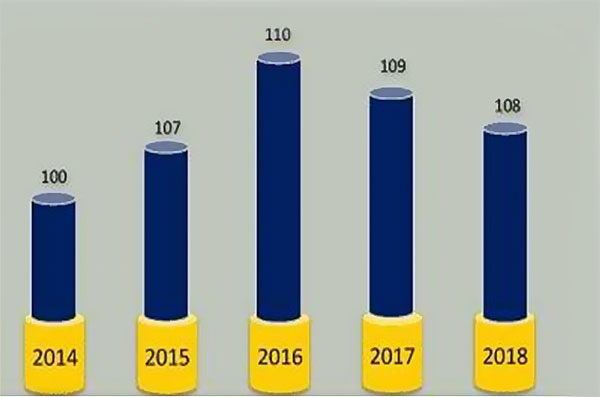
    According to a report published in Brand Equity on February 27 based on TAM AdEx data based mainly on display ads, print advertising volumes are up by 8% from 2014 to 2018, though after 2016 there has been a decrease in print advertising volumes in the next two consecutive years. (https://brandequity.economictimes.indiatimes.com/slide-shows/print-advertising-volumes-up-8-between-2014-2018-tam-adex/68172547).


    Source: TAM AdEx/ ET Brand Equity


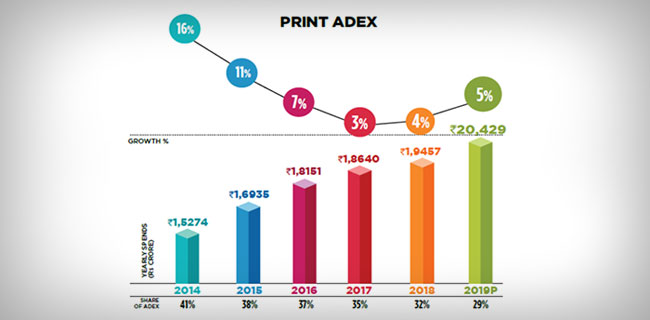
    If we compare this growth in volume with the growth in value as reported In PMAR 2019, we find that though there has been a growth in the print advertising Value by 27% from 2014 to 2018, the share of print Advertising in the total advertising pie has been decreasing steadily.


    Source: PMAR 2019


    As shown by PMAR 2019, from 2014 to 2018, the share of print advertising in the overall advertising pie reduced from 41% to 32%, a 9% drop in 5 years. In another five years, the share of print advertising in rupee value may come down to below 20% in India. The writing is clear on the wall as reflected in the diminishing/ stagnant growth rate of print advertising value.

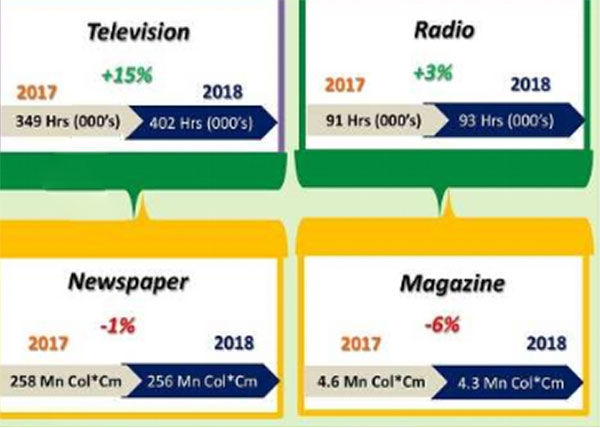
    If we compare the above two charts, then we find that in terms of value, print advertising has grown by 27% from 2014 to 2018 as against only 8% increase in volume. Over the next five years, there may be still a growth in value of print advertising, but in terms of volume it may show a diminishing trend as reflected in the TAM AdEx comparative analysis of ad volumes across media in 2017 and 2018 where we find that magazines have lost 6% of ad volume from 2017 to 2018.


    Source: TAM AdEx/ ET Brand Equity


    So, print media needs to work out a strategy for survival which lies on one hand in promoting and monetising their online editions and on the other hand in innovative ways to tie up with other media which are still showing growth in both volume and value.

    In another recent article, Vanita Keswani, CEO of Madison Media Sigma, suggested that “Print ads will be more effective if they complement digital campaigns and entice readers to interact with brands online” (https://brandequity.economictimes.indiatimes.com/news/business-of-brands/what-print-media-needs-to-do-to-win-back-advertisers-faith/67959125). This solution however requires active support from the creative and media agencies which may not work out across categories and brands. It may be worthwhile for the newspapers to look at categories like Two-Wheelers, Cars & Jeeps and Services which are the leading contributors to the Print AdEx volume and experiment with strategic integrations.