By Indrani Sen
 The two biggest global video streaming services, Netflix and Amazon Prime, have shifted their focus to India over the last two years. Netflix, who was the first to launch in India in December 2016, has been overtaken by Amazon Prime, launched a year later, in their debut year. By end-2017, Amazon Prime held 10% share of the Indian OTT streaming market with Netflix holding 8% share according to the data shared by the London based firm IHS Markit with Quartz. (https://scroll.in/reel/868786/why-amazons-streaming-platform-has-overtaken-rival-netflix-in-india). Globally, Netflix is the leading video streaming service provider except in Japan, Germany and India where Amazon Prime leads. In India, the Hotstar is the leading video streaming service, which along with Voot and couple of other home grown services controls almost 80% of the segment.
Netflix focused on the top end of the market and aimed mostly at the early adopters of the video streaming services. Accordingly, more than two thirds of their content is in English with Indian language content limited only to Hindi and Bollywood. On the contrary, Amazon Prime targeted a wider group of audience with less than 65% of their content in English, 25% in Hindi and more than 10% in other Indian languages. According to research, Indians spend 93% of the time on online video watching content in Hindi and regional languages. So, the formula of only western content for the top end of the market or even western plus Bollywood content does not hold the key to successful winning of the emerging Indian audience for online video streaming.
Netflix has lost out to Amazon also in the price war in the highly price sensitive Indian market. Amazon strategically decided to offer a significant discount for entering the Indian market after Netflix. Their launch price of Rs 500 per year was subsequently doubled to Rs 999 per year where as Netflix charges Rs 450 per month from their customers. The annual subscription fees paid by the consumer for Netflix are more than 5 times the annual subscription fees of Amazon Prime. Off course the Freemium model of Hotstar seems to be the top most favourite of Indian consumers with the free base tier (with ads), and a single premium tier that costs Rs 199 a month.
Amazon has announced an investment of $300 million in 2018 for creating original content in Hindi and regional languages. They have tied up with big production houses like Dharma Productions (Karan Johar), Vishesh Films (Mukesh Bhat), etc. They have struck a deal with Salman Khan allowing them to show his titles before satellite or TV channels. It is rumoured that they have tied up with more than a dozen of stand up artists across the country.  James Farrell, Asia-Pacific Content Head, Amazon Prime Video, said in a recent interview, Amazon Prime video content is growing faster in India than any other country.(https://www.exchange4media.com/digital/amazon-prime-video-is-growing-faster-in-india-than-any-other-country-content-head-apac_88861.html)
Netflix bagged an exclusive deal with Shah Rukh Khan’s Red Chili Productions in 2016. This year they have released their first mainstream Hindi movie, “Love Per Square Footâ€. Their original India series, Sacred Games directed by Anupam Kashyap in the making. Comedian VirDas’s Netflix special was released in early 2018. Still they have some catching up to do to beat the multi-lingual content portfolio of Amazon Prime. Reed Hastings, Chairman& CEO of Netflix, recently visited India for attending the Economic Times Global Business Summit. During an interview with Economic Times, he said about Indian market “It’s a good market, a different market and we just don’t compete for advertisement revenues. We will evolve over the years to do more languages and more Indian content, again both for India and for around the world.†(https://economictimes.indiatimes.com/small-biz/startups/newsbuzz/india-is-a-key-part-of-international-subscription-growth-netflix/articleshow/63074317.cms).
The market research firm, Counterpoint Research, has reported that Hotstar is the largest video streaming service in India, with around 75 million subscribers, followed by Viacom 18’s Voot with 22 million subscribers, Prime Video with 11 million subscribers. (https://www.androidcentral.com/netflix-getting-crushed-india-and-its-because-amazon-and-hotstar). In India Netflix (totally ad free) is in the fifth position with around 5 million subscribers. According to industry sources, Amazon is developing an ad supported, free version of its popular Prime video service, which may work well with the price conscious consumers in India.
Hotstar, apart from offering the content from the Star Group, has the digital rights to HBO shows in the country. Currently, Hotstar streams Game of Thrones episodes same day they air in the U.S. This advantage along with the exclusive rights to stream cricket and football games in India has made Hotstar the most favorite Video Streaming Service. Voot has shows from TV channels which are owned or are subsidiaries of Viacom 18, namely MTV and Colors in various regional languages.
Airtel Movies, also offers good movie content. SonyLiv, as well as HOOQ subscriptions, are all heavily loaded with Indian content which is helping their growth. ALTBalaji, a wholly owned subsidiary of Balaji Telefilms Ltd.launched on 16 April 2017, is the latest entrant in the home grown segment. Ekta Kapoor plans to create original, premium, and tailor-made content especially for Indians across the globe. But, she has an in depth understanding of the Indian audience and stands a good chance of attracting them to her streaming platform with good video content in various Indian languages.
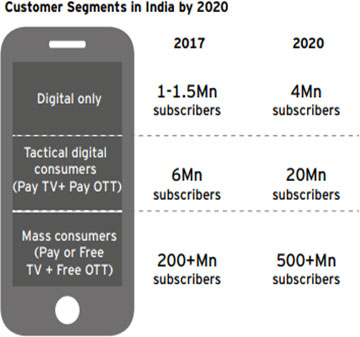
Needless to mention that availability of affordable data and easy access to internet are helping the growth of the streaming services. It is a full war out there on the internet for winning the Indian consumers with video content of different types, different colours and hues. As India reaches the “Digital Tipping Point†(please see my article http://www.mxmindia.com/2018/03/indian-me-industry-at-its-digital-tipping-point/) the war is going to intensify for winning over the emerging Indian users of streaming video services. The demand for content creation and marketing will also increase as brands will seek ways and means for reaching the emerging Indian audience of the video streaming services.