Tag: FMCG

  • Google & Bain study predicts interesting digital trends

    By A Correspondent


    A joint report released by Google and Bain & Co. to understand the influence of digital on the FMCG sector revealed that the Internet would influence a third of total sales in the FMCG sector over the next five years. The influence of Internet will impact $35bn worth of FMCG sales in India, as more and more users get online to research for FMCG products.


    Projecting the growth of online user population in India, the report revealed that India would have over 650 million Internet users by 2020. Online shopping will continue to see rapid growth and over 250 million users will shop online by 2020. This dramatic rise in the online shopper base in India, will contribute $ 5bn worth of FMCG product sales through online channel, growing 50 times from current level contributing 5 per cent of total sales from current 0.3 per cent share by 2020.


    The study notes that Internet influence will be the most for high engagement categories like male grooming, infant care products and beauty products, as more and more users will research online for information related to these products. For male grooming products, 25 to 30 per cent purchases will happen online, 20 to 25 per cent for infant care products and around 8 to 10 per cent of all beauty products will be bought online by 2020.


    These findings were derived by studying various factors including research conducted for Bain and Google by Millward Brown by selecting a sample of an evolved 1600 Internet users (male and female) from across 13 cities in India including metros and non-metros – across eight FMCG categories – Skin care, hair care, oral care, home care, infant care, male grooming, beverages and food.


    Findings from the study further revealed that 35 per cent men and 22 per cent women are strongly influenced by digital for their purchases. Internet influence differed by category of products, with maximum influence on purchase decisions noticed in male grooming (39 per cent), skin care (26 per cent), infant care products (24 per cent) and hair care (24 per cent) products.


    Speaking about the key findings of the report, Vikas Agnihotri, Industry Director, Google India said, “By studying the behavior of the lead consumers from an FMCG standpoint, it is clear that FMCG companies in India need to start thinking of digital as a more strategic medium and chart out a digital growth path for their products. In terms of key target audience from FMCG perspective as made clear in the report, 200 million digital natives will be online, 30 percent of women population in India will be online by 2020 reaching 200 million and 100 million women will shop online. 200 million plus users will be from rural India, whose disposable income will continue to grow. With these three key consumer segments moving to digital and spending more time online, FMCG companies will need to prepare themselves for this digital future.”


    Speaking about the current engagement levels of FMCG companies with the digital medium, Nikhil Prasad Ojha, Partner, Bain & Co., said, “Most FMCG companies in India have underestimated the impact of Internet and are struggling to ascertain a clear digital roadmap for their products. Companies need to uncover the digital potential for different categories, and align their growth trajectory with the changing consumer behavior. This report will serve as a useful reference point to start thinking and engaging consumers.”


  • Weekend blues: Less than 10 days to go & Star Sports doesn’t have lead sponsor for the World Cup!

    By John Sarkar


    India’s dismal performance in the recently concluded tri-nation series Down Under has left advertisers uncertain. With less than 10 days left for the ICC Cricket World Cup, Star Sports, which will broadcast the tournament, has not yet found a lead sponsor.


    With 90% of TV viewers in the country having watched the previous edition of the World Cup, advertisers expected that the flagship tournament of ODI cricket would garner millions of eyeballs. But India’s poor form, lack of star players, the waning appeal of ODIs, non-primetime telecast and the impending IPL has made advertisers play safe. They would rather prefer to sit on the fence and wait for the right moment.


    “We will look at it match by match. Depending on India’s performance, we will decide whether to buy on-air advertising slots or not. We don’t want to put all our eggs in one basket. The IPL starts right after the World Cup and the return on investment for it doesn’t depend on a single team’s performance, like it does on India’s in the World Cup,” said a senior executive with one of the world’s largest FMCG firms.


    According to people familiar with the matter, most on-ground sponsors (commercial partners) of the World Cup, such as PepsiCo India and Hyundai India, have not yet bought on-air advertising spots. When contacted, spokespersons from PepsiCo India and Hyundai India declined to comment.


    However, a Star Sports spokesperson said that on-ground sponsors too have plans which include on-air, digital, activations, screenings, though he refused to divulge any names.


    Lead sponsorship for all feeds and languages is being offered at around Rs 60 crore, the associate sponsorship for over Rs 40 crore for all feeds and over Rs 20 crore each for English and Hindi feeds, and about Rs 10 crore for HD feed.


    “We already have confirmations for over 80% of our inventory for the opening match of India vs Pakistan, with many more confirmations to be closed over the next 10 days. Considering the response, we might have to drop at least 20 to 30 spots in the very first match. We are almost sold out for the top 13 games (all India plus knockout games) and are in the process of closing the balance,” said the Star Sports spokesperson.


    Market experts say not everyone is sitting on the fence though. Many first-time World Cup sponsors, including Nestle, Marico, Yepme, Paytm and Raymonds, have signed up. A lot of advertisers are eyeing digital feeds that allow online streaming and is more affordable than TV ads. But media buying experts said on the condition of anonymity that a significant amount of total ad inventory is still sitting idle.


    Source:The Economic Times

    Copyright © 2015, Bennett, Coleman & Co. Ltd. All Rights Reserved

    Licensed to republish


  • Adspends to increase 12.6% in 2015: GroupM


    A Correspondent


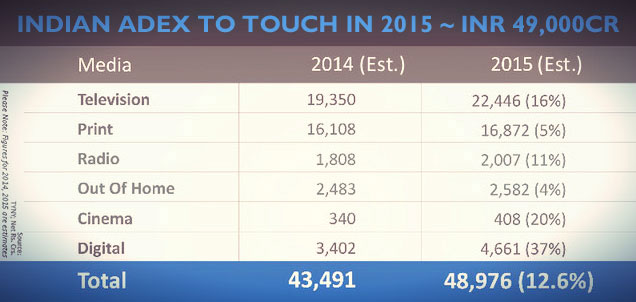
    Leading media marketing services conglomerate GroupM released its biannual advertising expenditure futures report This Year Next Year (TYNY), forecasting India’s advertising investment to reach an estimated Rs 48,977 crore in 2015. This represents a growth of 12.6% for the calendar year 2015 over the corresponding period in 2014.


    As per GroupM the adspending was Rs 43,490 crore for the calendar year 2014, an increase by 12.5% over 2013. This growth was attributed to the heavy adspending due to the General and State Elections and industry categories like ecommerce and telecom.The FMCG sector, which contributes to nearly a third of the AdEx, had a steady year, growing broadly in line with the industry average.


    CVL Srinivas

    Said CVL Srinivas, CEO, GroupM South Asia, “With a new government coming to power, the negative sentiment has lifted but there is still some bit of caution amongst advertisers.We continue to operate in the same zone as last year at an overall level. Digital, TV and Cinema are expected to be the high growth media channels. We are seeing a lot more confidence amongst local businesses to invest in brand building than before. This is a positive sign for the industry. Penetration of smartphones coupled with the popularity of online video is making FMCG spend more on digital. Another trend is the emergence of categories like e-commerce and the increased competition in telecom both of which are aiding the growth of traditional media channels including Print and TV apart from digita.l”


    E-commerce is expected to lead the charge in 2015 in terms of ad spend growth although from a relatively smaller base than more established categories, according to GroupM’s forecast. There is increased competition in this sector and no dearth of funding. FMCG, Auto and Telecom are expected to do better than the previous year. More multinational entrants under single brand retail are likely to add to ADEX spending in the retail category. The recent rate cuts by the Reserve Bank of India will stimulate the banking sector, reactions of which are evident on a buoyant stock market. This year will possibly see a number of IPOs as there is a sense of stability in policy and investors are willing to take more risks. The market will also see higher spends from the Central Government as they showcase their new initiatives.


    Prasanth Kumar

    Added Prasanth Kumar, Managing Partner, Central Trading Group, GroupM South Asia and CEO-designate Mindshare South Asia: “Over the last few years, Indian media has been in a state of change. The next three to five years will be about embracing technology, which will allow both advertisers and media owners to customize distribution to a premium niche audience with very nominal margin of error. In 2015, programmatic buying will see an impetus, as all media in the future will see automation, backed by smart data and analytics.”


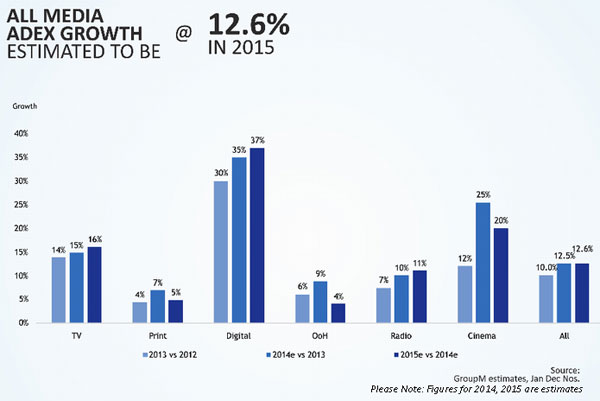
    As per GroupM’s in-depth research of the Indian media industry, digital media continues to show the maximum growth with 37% in 2015. Digital has been growing at an average rate of 35% over the last two of years. This year within digital media Video, Mobile and Social will be the biggest growth drivers.


    Television shows a higher growth percentage in 2015 compared to last year with 16 percent. TV channels will especially be bullish with cross media integration via their own digital platforms. The big ticket event this year is the ICC Cricket World Cup in February and March, with scope for programming and advertising innovation during the tournament.


    Even with pressures on advertising revenues, the print medium shows an increase by 5.2% as against the 2014 estimate of 7.6%; however print magazines continue to be on the decline, as several are looking at digital delivery mechanisms.


    The surprise element in the media mix has been cinema advertising which finally closed 2014 with a 25% increase. This year too, GroupM estimates this media category to grow at 20%, as multiplex chains consolidate, leading to a more organised and accountable environment. With technology fuelling exhibition and distribution, especially in smaller towns, consumers will get a better viewing experience.


  • Personal care drives FMCG business on rural push

    By John Sarkar & Shubham Mukherjee


    If you are stuck in a remote village in India, dusty and hungry, chances are you will find more options to wash your hair than fill your stomach.


    For decades, food items have been the most widely distributed FMCG products in the country. But that rule of thumb is changing. Indians are more likely to find more personal care products than food in a shop these days—a result of consumer goods players pushing the distribution of an entire range of their products in the face of wary consumer spending.


    Latest data from market research firm Nielsen reveals that on the list of the top five FMCG product categories, only one food product—biscuits— finds place. The category with the maximum reach, or penetration as it’s called in market parlance, is shampoos at 79 per cent, followed closely by biscuits at 78 per cent.


    Distribution of categories has undergone a dramatic transformation in the last 15 years. FMCG is available in 8.8 million outlets and shampoo is available in 80 per cent of those outlets, says D Shivakumar, chairman and CEO, PepsiCo India.


    “Skin creams have got into the top 10 distributed list and packaged tea, which was the most distributed category a few decades ago, is now out of the top 10. Daily-use, low-unit price, easy-to-sell via wholesale are the key lessons for categories in the last 10 years.” Data suggests that most of this evolution is due to a lot of un-branded consumption shifting to branded consumption. For instance, in utensil cleaners and edible oils penetration has increased to 36 per cent from 33 per cent and 21 per cent to 17 per cent from 2012 to 2014, respectively. “Earlier, people would turn up at shops with bottles to buy loose mustard oil. That’s changing with rising affluence levels and lower packaging costs. In future, we will see more un-branded-to-branded consumption in non-mature categories such as, hair oils and hair conditioners,” says Vijay Udasi, executive director, Nielsen India.


    The findings also reveal a drop in penetration levels of detergents cakes and bars from 60 per cent in 2012 to 59 per cent in 2014 as more consumers shift to washing machines to do their laundry. Similarly, skin creams have also seen a drop of 2 per cent due to changes in consumer behaviour. “The segments within the skin creams category have also changed. More people are buying emerging products like face washes, anti-ageing and under-eye creams,” says Mr Udasi.


    For HUL, the next step now is to make its brands accessible using pack sizes and price points tailored to win across the country. “We have been able to maintain our leadership position in a growing market by following a market development approach. One of the most successful attempts on this front has been the Dove ‘twin sachet’, which offers a shampoo and conditioner together at a Rs 5 price point to induce trials,” says Srirup Mitra, category head – Hair Care, HUL.


    But the dominance of non-food categories on the top could change. There are ominous signs. Take the salty snacks category for instance. Penetration has risen from 58 per cent to 64 per cent. Even a category like noodles, which has still not broken into the top-ten list, has seen an increase in penetration from 38 per cent to 42 per cent. “The next level of growth lies within branded foods,” says Mr Udasi. “There is an emergence of new food categories in bread spreads, including peanut butter and branded spices. As affluence levels rise, rural consumers will spend more on grocery items and food.”


    Although FMCG growth has been slowing for some time now, sliding by 8.1 per cent from 2010 to 2013, Nielsen predicts that India’s FMCG industry will grow from $37 billion in 2013 to $49 billion in 2016. Distribution growth and innovations around sachet offerings will play major roles in fuelling growth, which had slowed down in the last few years. While the rise of e-commerce is being keenly watched, several new models may evolve over the next few years.


    Source:The Economic Times

    Copyright © 2014, Bennett, Coleman & Co. Ltd. All Rights Reserved

    Licensed to republish
     

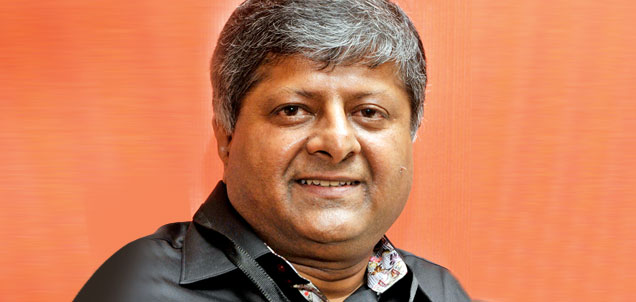
  • Digital awaits breakthrough: Shashi Sinha


    Twenty-fourteen will be remembered for long because of two things, the general elections and the upsurge we saw in e-commerce. But if you were to remove these, I don’t think adspends have gone up dramatically. There is a lot of noise about ‘achche din’ but we haven’t seen any real change on the ground. In our business, the FMCG sector is the true indicator of performance and these companies are not reporting a big turnaround. I know it takes time after a new government settles in, but the fact is it hasn’t happened so far. The trends in e-commerce indicate that the upsurge will continue through the next year but if FMCG revenues don’t improve and they don’t start spending, then we could be in trouble.


    Digital has been a big talking point of the year but I think we are far away from a big breakthrough. It will grow at a particular pace. So consumers may adapt to it but advertising will take some more time. I have always believed that collective consumption of media is in our DNA, and purchase decisions still happen collectively in India as opposed to the western world where decisions are mostly individualistic. This difference is because of our culture. Our society is very outwardly-directed, unlike the US, which is an inwardly-directed society. When it comes to consumption and spends, societies and culture matter a lot. For instance, television viewing in our country is still perceived as a family thing. So while personalisation has happened with devices, the family still remains in our DNA. In fact the whole Hindu ethos is made up of the family and the principle of collectivity. And that’s not going to go away. Devices will help you, they are mere enablers. But our ethos, psychology and culture are not going to change.


    There has been a tremendous increase in numbers as far as the internet penetration and users go, and I believe India is the second biggest user of Facebook today. But have you ever wondered why is India such a big Facebook user country? That is because Facebook stands for a collective consciousness and it is the same as our ethos. As a country, the penetration of Facebook is higher because Facebook is an example of connected-ness. That culture is not going to change in a hurry. It will happen, with a lot of internalisation, but it will take time. At this point of time, it will all be collective.


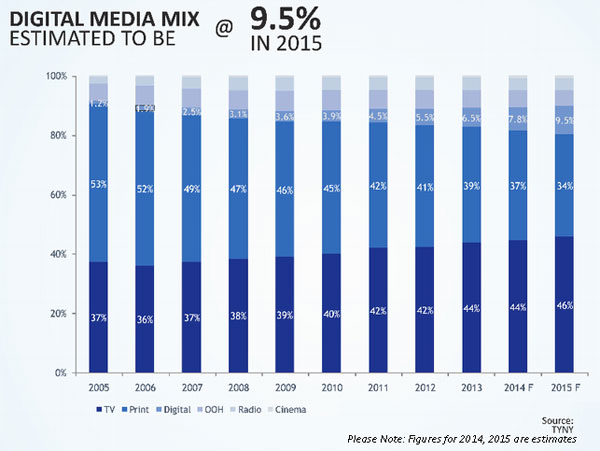
    As for the talk of 2014 being the year of digital innovation, I think we haven’t scratched the surface yet. I think we have a long way to go for us to say that this is the year of digital innovation in India. India is a very strong content country, one of the few countries in the world where original content is done. In my mind, while creativity will stay, digital is just a format. A lot of people are experimenting with content but the truth remains that digital spends are still at 8 or 9 per cent of the overall spends.


    Digital is also a mindset. In our mindset, the transition to digital has happened, it may not reflect in terms of numbers and volumes. But as far as mindsets go, at least we are talking digital. It’s probably the fashionable thing to do or even the right thing to do but I’m not sure whether the numbers justify. Television and print are still very big in this country.


    Today, to get into digital, you have to make investments in people, for the right kind of talent, which is expensive. It’s a huge investment. We are making the investments and hoping that the returns will come.


    As for the next year, the situation on the ground is not good but there is collective hope.


    The forthcoming ICC Cricket World Cup will bring some hope of being a trigger to growth in ad spends. It’s all about activity around events. Cricket is a big sport in India and World Cup come once in four years. I see some advantages, it may not be as dramatic as last time because it was in India then but still, the World Cup is big enough.


    Reports indicate that the global economy is expected to improve and therefore global adspends will improve. Hope is what drives the economy, hope is what drives the stockmarket, hope is what drives sentiment, this is the hope for India and why should I go against that hope. But we have to be slightly cautious. We are hoping that with the new government and with their will to improve things, things should improve. It all depends on the budget. If the government can push through the budget, they can do a lot of stuff otherwise there is trouble.


    What I see as a challenge for myself is to ensure that our clients do well. I am not sure that it’ll be dramatic. But I feel if we can consolidate in the next year in spite of what everyone is saying, that’ll be a big achievement. If we can sustain, if we can just do what we have done in 2014, it should be alright.


    Shashi Sinha spoke to Shruti Pushkarna on the sidelines of The Advertising Club’s Media Review 2014 held last Thursday (Dec 18) in Gurgaon. A version of this appeared in the December 22 issue of ‘dna of brands’


  • Happy New Year awaits FMCG companies

    By Sagar Malviya


    The FMCG industry in India is set to return to double-digit growth rate next year after a gap of two years on the back of improved consumer sentiment and lower inflation rates, according to leading market tracker Nielsen. Nielsen expects the fast-moving consumer goods market to grow 7 per cent in 2014, 10 per cent in 2015 and about 12 per cent in 2016.


    “While India’s GDP might not revive drastically and could stay below 6 per cent, we still don’t see it weighing down the overall FCMG growth due to better sentiment and lower inflation,” said Ranjeet Laungani, vice president at Nielsen India. “Nearly half this growth will be volume-led, indicating favourable real consumption growth,” he said.


    India’s FMCG market has normally been immune to macro-economic pressures, but sales have fallen to single-digit growth since 2013. Worse, volume consumption remained flat and nominal growths came from price increases driven by inflationary pressure. However, the quarter ended September saw a bit of a revival at 7.2 per cent growth compared to 5.2 per cent in the previous quarter. Marketers say things have started looking up since the last two months.


    Source:The Economic Times

    Copyright © 2014, Bennett, Coleman & Co. Ltd. All Rights Reserved

    Licensed to republish

     

  • After much decline, now Retail awaits ‘achche din’

    By Writankar Mukherjee & Sagar Malviya


    Modern retail for consumer products slumped to its slowest ever sales growth as retailers shut stores, consumers cut back on discretionary items sold by supermarkets amid an economic slump and a fizzling out of the much-anticipated surge in FDI because of burdensome conditions.


    The segment, which accounts for 7% of total sales, grew 8% in 2013, a sharp fall from 32% growth in 2012, according to market researcher Nielsen. In comparison, grocers, which contributed 72% to overall FMCG sales, grew 9%. Even chemists and other channels such as paanwallahs grew faster than modern trade despite having a higher base.


    Nielsen said this was the first time modern trade slowed below double digits, with expansion plans being put on hold also contributing to the effect.


    Inaction over FDI policy made way for retail downturn 3 years ago

    “Most retailers went in for major store count expansion initially to capture higher market share so that they could look attractive to foreign operators and get higher valuation from them,” said Ruchi Sally, director at boutique retail consultancy Elargir Solutions. “However, this impacted profitability as major retailers had B2B background and little experience in a customer-centric industry such as retail. Hence, they had to scale down, especially when the FDI environment was uncertain.”


    Tesco is the only foreign supermarket chain that is investing in India, through a joint venture with the Tata Group’s Trent Hypermarket. Apart from stringent terms attached to the policy, not all states allow FDI in multi-brand retail and the ruling BJP is not in favour of liberalisation of the sector.


    Future Group CEO Kishore Biyani said the slower rate of growth is because of expansion being stalled in food and grocery retailing due to consolidation by the leading firms. He expects things to improve though.


    “Strong growth is recorded from this quarter, which will trigger back growth generated from modern retail to FMCG sales,” Biyani said. Meanwhile, the new Narendra Modi government is seeking to revive the wider economy, holding out the prospect of consumers opening up their wallets a little more. The downturn for supermarkets began more than three years ago as government inaction over FDI policy dented retailers’ confidence. Most of them, weighed down by heavy losses, were waiting to sell off stakes to global players.


    “With a sense of uncertainty in the retail sector where regulations are concerned, many major operators have put expansion plans on hold,” said Vijay Udasi and Vikram Dhunta of Nielsen India, who authored the study.


    “Shoppers have pulled back on the number of visits they are making to modern retail stores, downgrading from 2.5 trips per month to about 1.5 in 2013.”


    This forced several retailers to freeze or slow down expansion plans and in some cases shut unprofitable stores.


    For instance, Future Group cut down its standalone Food Bazaar store count to 24 outlets as of March 2014 from 43 nearly two years ago. Bharti Retail, after opening more than 140 stores mostly during 2008-11, added just 60 more in the next three years. Reliance Retail, now the largest retailer in the country with 718 value format stores, shut more than 42 outlets last fiscal. Spencer’s Retail closed several unviable stores in 2012 and also exited the west, whereby its total trading area fell to 8.9 lakh sq ft in April 2013 from 10 lakh square feet in April 2012. In 2013-14, it added nine new stores to bring its current trading area to 10.5 lakh sq ft.


    Nielsen’s numbers reflects this- the modern trade universe in India grew merely 0.4% with a sales volume decline of 2.2% in 2013.


    Footfalls were low in modern retail last year compared with the previous few years, which had an impact on consumption, said Chitranjan Dar, ITC divisional chief executive (foods). ITC said in its annual result announcement recently that categories involving higher discretionary spends or with relatively high penetration levels were impacted the most last fiscal, as was the trend of premiumisation in most major categories. A senior official at a leading food and grocery retailer said premiumisation had been a major growth driver of food and grocery retailing and the hit on this added to the slump.


    To be fair, several smaller brands rode modern trade to grow their business piggybacking on pan-India reach. For instance, Murtaza Mala, partner at Mala’s Fruit Products that sells jams and squashes, said his company has grown 10 times in the past six years thanks to large supermarkets. “Visibility at modern stores for our products also helped brand recall at kirana stores. While there is a higher margin pressure at modern trade, we can consider it as a marketing cost for our overall business,” said Mala.


    At the same time, most consumer goods companies recruited more grocers across urban and rural India. Distribution was another key lever utilised by the top 10 companies allowing them to expand distribution in both urban and rural centres. In rural areas, they added about 1.8 lakh outlets collectively, said the Nielsen report.


    Despite retailers’ cost-cutting efforts, India’s top 10 food retailers are estimated to have accumulated losses worth $2.20 billion in the fiscal year ended March 2014, according to a report by ratings agency Crisil.


    Source:The Economic Times

    Copyright © 2014, Bennett, Coleman & Co. Ltd. All Rights Reserved

    Licensed to republish

     

  • Top FMCG brands gain market share during economic slump

    By Sagar Malviya


    Mondelez India, maker of the country’s top chocolate brand Cadbury, had been struggling to hold on to its market share over the past few years, but in the January-March quarter it managed to improve its share for chocolates by 2.5%. With new chocolate capacity in place in India, the company has been able to regain the share it lost in the first half of last year, Mondelez International CEO Irene Rosenfeld said in an earnings call for the quarter two weeks ago.


    Perhaps it’s not just about higher capacity. It seems that in a downturn consumers tend to lose their impulse to experiment and stick to established ones, as around a dozen market leaders including Gillette, Colgate, Dabur Real and Chyawanprash, Godrej’s Good Knight and Jyothy Laboratories’ Ujala, have improved their market share in their core categories over the past one year.


    “In a downturn, consumers might not want to risk and experiment buying new brands and generally stick to trusted or established brands especially in the health space even if it has a slightly premium pricing,” said Sunil Duggal, CEO at Dabur. The Delhi-based firm’s Real juice and Chyawanprash have gained around 200 basis points to improve their market share to 54% and 64%, respectively.


    While several small players could not hold their price lines in the wake of inflating input costs since last year, several large companies increased their marketing spends and focused on innovations to push growth amid weakening consumer demand for most daily products.


    The overall consumer goods market growth fell to nearly 6% during the January-March quarter compared to 18% in the same period last year. Top companies aggressively tried to develop mass-products that would be easy on consumer wallets. “We have continued to focus on launching some great innovations,” Vivek Gambhir, managing director at Godrej Consumer Products, said. “For instance, we have launched three innovations in home insecticides over the last 12 months — more than the previous ten years,” he said, adding that new products accounted for more than a third of the firm’s incremental growth.


    Top oral care brand Colgate claimed a 60 basis points gain in its toothpaste market share year-on-year at 53.8% in the March quarter despite increased competition driven by new entrant and global rival Procter & Gamble. Colgate launched newer products and stepped up its reach and advertising spends substantially on the face of heightened competition. “Strong communication and trade plans have helped drive these results,” it said in a global earnings call last month.


    Source:The Economic Times

    Copyright © 2014, Bennett, Coleman & Co. Ltd. All Rights Reserved

    Licensed to republish
     

  • Summer Blues: Sales dip for retailers, FMCGs


    By Writankar Mukherjee & Rasul Bailay


    Top fashion retailers in the country plan to cut down on discounts and sale durations this year, after resorting to extended discount season last year to clear inventory pileups and create demand.


    Retailers such as Future Group, Arvind Brands, DLF Brands and Adidas say they have rationalised their buying patterns and inventory management to reduce dependence on discount sales.


    FMCG market growth dips during January-March quarter


    By Ratna Bhushan & Sagar Malviya


    Global consumer companies, which consider India as one of their last bastions for growth, saw demand taper off during the January-March quarter despite a low base last year. Top multinationals including Unilever, Yum Brands, L’Oreal, SABMiller, Nestle, Coca-Cola and Pepsi-Co have all reported slower growth in India in the quarter ended March compared to a year ago period, as Indian consumers remained cautious about spending amid high inflation and a slowing economy.


    While most of these firms had reported slower growth in every quarter last calendar year too, it was against a relatively high growth of 2012. “What we were experiencing in terms of the FMCG market growth slowing down has continued this quarter, both in terms of volume and value,” R Sridhar, Hindustan Unilever’s CFO, said while announcing the firm’s quarterly performance on Monday.


    “Premium segment and discretionary categories were really under pressure. The markets are still growing, but the pace of growth is slow,” he said. The overall FMCG growth has come down to 6per cent in the quarter ended March from 18per cent a year earlier. Experts said continuing slowdown in formerly fast-growing emerging markets such as India has dimmed multinationals’ prospect at least for the next few quarters. Yet, India is better than developed markets.


    “The India growth story is muted but it (India) is still growing faster than developed markets,” Debashish Mukherjee, partner at consulting firm AT Kearney, said. “There are structural headwinds in some sectors and downtrading across categories, but the overall macro outlook is steady,” he added.


    In the Jan-March quarter Yum! India, which owns KFC and Pizza Hut quick-service restaurant (QSR) chains, saw its same-store sales growth decline 1per cent. While consumer demand continues to remain subdued, top QSR players such as Yum! have maintained a high level of promotional intensity to enhance customer footfall.”Understanding the market sentiment, we have doubled our efforts to increase variety in our menu and hence increase ‘relevance’ to attract new customers,” a Yum! Restaurants India spokesperson said.


    Coca-Cola has reported 6per cent volume growth for its Indian operations in the quarter, impacted to some extent by a prolonged monsoon season, while its rival PepsiCo India delivered high single-digit organic revenue growth for its India operations. Companies’ performance also indicated that growth has been harder to achieve with most of them focusing on high-margin premium products even as consumers downtrade to lower prices products.


    Some companies feel that support from India is fading. For instance, Nestle SA in its Q1’14 sales release highlighted that trading conditions in India remained weak due to the weaker economy and consumer sentiment. Nestle India will announce its first quarter result next week. World’s second largest brewer SAB Miller also noted that India group revenue declined by 3per cent due to a volume decline of 7per cent, partially offset by robust realisation growth of 4per cent. “Volumes were impacted by regulatory changes made in the earlier part of the year in several key states, coupled with the prolonged monsoon season during the year,” said SABMiller in its investor update.


    Source:The Economic Times

    Copyright © 2014, Bennett, Coleman & Co. Ltd. All Rights Reserved

    Licensed to republish
     

    “Last year, retailers went overboard and the discounts went really deep. This year, the retailers are having a re-look at the strategy and might cut back on the discounts,” said Dipak Agarwal, chief executive at DLF Brands, which markets global brands such as Mango and Mothercare in the country. “Last year was best for consumers but this year will certainly be not going to be like last year,” he said.


    Some retailers have already taken the lead. Adidas AG, which used to run four-five weeks of discount sales in January, restricted it to just two weeks this year.


    According to Tushar Goculdas, brand director for Adidas India, the firm plans to have only short duration season discount, not exceeding two weeks, this year.


    “We support our partners to ensure a more effective merchandise mix and sharper demand planning. As a result of these measures, our need to clear inventory at discount has been steadily declining,” he said.


    Over the years when consumer spending soared in a booming economy, most fashion retailers started stocking heavy in anticipation of even higher demand. But an economic slowdown hit consumer sentiment in late 2012 and suddenly retailers were saddled with piles of stocks. To clear that inventory, retailers resorted to extended discount season last year.


    Industry insiders say fashion retailers are now working hard on managing their inventory to avoid such a fate this year.


    “Most of the retailers have become very smart and careful in terms of stock they hold and they currently hold very lean stocks,” Kumar Rajagopalan, chief executive of the Retailers Association of India, said. “It is also a matter of maturity of retailers. As they become mature their buying becomes more careful,” he said.


    According to Rajagopalan, till some three-four years ago retailers would start the spring-summer discount season only in August; but more recently many retailers have been going on sale as early as in June and the discounts went on all the way till August.


    Retailers say that such extended discount season hurt their businesses as sales have gone down substantially post-discount months.


    “The sales seasons have stretched from four weeks to six weeks to eight weeks, so the actual season for fullprice is coming down, particularly the spring-summer which is a shorter season,” said J Suresh, chief executive at Arvind Brands, which sells various global brands including USPA and Gant here.


    “There is a consciousness among everyone today that we should not unnecessarily get into too much discounting, but what happens (is that) if someone has extra stock they start (discount sales) and how the whole thing spreads,” he said.


    Future Group, ITC Wills Lifestyle and Woodland too have decided to cut down the number of discount days and margin of discount they offered. “The problem of discount-led demand generation has been a self-created problem of the retail industry and the industry is now trying to solve the problem together,” said Rachna Aggarwal, CEO at Future Lifestyle Fashions. She said Future Group has decided to reduce the number of discount days and discount mark-up, and also to finish the discount period at least two weeks before main buying seasons.


    “We are also placing fresh merchandise alongside the discounted products which has spurt sales of the fresh merchandise to almost 30% of the total sales during the last end-of-season sale in January,” Aggarwal said.


    ITC-owned Wills Lifestyle has decided to reduce the discount markdowns by 5%-10% this year and will also put less number of stock keeping units or SKUs up for sale, said Atul Chand, ITC’s lifestyle retailing business chief executive. This will help ease the pressure on margins, he said. “We are rolling out six collections this year as compared to four collections before to drive sales without promotions,” Chand said.


    Harkirat Singh, MD at Woodland, said the shoe and apparel retailer wants to reduce the share of discount-led sales on its total revenues to 15% this fiscal from 22% last year by cutting down on discount days as well as merchandise put on sale. “However, it is not possible and neither is it desirable to completely eradicate discount sales since in the fashion industry it is the best way to clear out old stock,” Singh said.


    What gives retailers confidence to reduce discounts and improve sales of fresh merchandise is that many of them clocked double-digit growth in March-April without offering any discount. Also, consumer demand is expected to pick up once a new government takes office later this month.


    Source:The Economic Times

    Copyright © 2014, Bennett, Coleman & Co. Ltd. All Rights Reserved

    Licensed to republish
     

  • FMCG product launches dry up in a tough market

    By Ratna Bhushan & Sagar Malviya


    Consumer product companies drastically cut down on product launches in 2013 to avoid additional cost pressures in a year when sales growth slipped to a decade low. Growth in product launches in the fast moving consumer products (FMCG) segment dropped to just 5 per cent last year from 35 per cent in 2012, according to data shared by research firm IMRB. Consumer product companies confirmed the slowdown in product launches and said they will bring out new variants and products once overall market improves.


    “This is not the best time to launch new products. We are waiting for consumer sentiment to improve, which we believe will be in the second quarter of the next financial year,” Sunil Duggal, chief executive officer at Dabur India, said. Dabur restricted its new products, Real drinking yogurt and premium chyawanprash Ratanprash, to select markets instead of a national rollout.


    Companies want to keep their expenses low even as they increase ad spends to protect existing brands and roll out higher promotional offers or price cuts to mop up volume growth. “Any FMCG company will have to take into consideration the high expense of taking a new launch national. The second half last year was bad in terms of cost perspective,” said Anil Chugh, senior VP at Wipro Consumer Care and Lighting.


    Consumer product companies have been facing relentless rise in the prices of raw materials such as crude and palm oil that went up by 19 per cent and 32 per cent, respectively, in the last 12 months. Consistent demand pressures weakening margins also resulted in the BSE FMCG Index underperforming Sensex by 10 per cent in the past six months. Some experts, however, feel marketers are making a mistake by not exciting a dull market with new launches. “It’s an irony that marketers take upon themselves to open consumers’ purse strings while they themselves tighten theirs,” Devendra Chawla, CEO at Future Group’s Food Bazaar, said. He said companies that continue to invest and innovate in a slowdown will benefit once the economy rebounds.


    According to IMRB’s group business director Manoj Menon, categories such as tea, breakfast cereals, hair, washing powders and noodles drove the slowdown last year while skincare and oralcare products saw higher launches.


    Several product launches in the past three years have been in the premium category – a space which slowed down the most as consumers cut back on discretionary spends.


    Some companies said the slowdown in product launches is temporary and it will pick up in the coming months as raw material prices stabilise and food-inflation is controlled. That’s already happening in some cases. L’Oreal has introduced a hair care range called 6 Oil Nourish, ITC has launched Sunfeast Farmlite and Procter & Gamble has rolled out a shampoo for men -Head & Shoulders Men. A recent Goldman Sachs report said marketers expect things to improve after the general elections. “Most companies pinned hopes on improved consumer sentiment post elections,” it said.


    Source:The Economic Times

    Copyright © 2014, Bennett, Coleman & Co. Ltd. All Rights Reserved

    Licensed to republish


  • Leveraging films by top guns on MTV


    By A Correspondent


    In a seemingly volatile broadcast scenario in India, it is a given that only ideas that are fresh and out-of-the-box manage to make a mark while the others face the possibility of being rejected. In a synergy that probably plans to change the way the genre has been approached until now, leading youth channel MTV has joined hands with FMCG major Hindustan Unilever to launch MTV Films.


    The idea germinated out of a casual conversation that MTV and HUL’s media buying and planning agency Mindshare had sometime last year. Convincing HUL was easy for Mindshare, and since then it’s getting all parts of the act together.


    The initiative would see six young and well-known directors known for their cutting edge film making styles making original movies just for television. Eminent movie directors including Anurag Basu, Abhinay Deo, Shoojit Sircar, Rohan Sippy, Nikhil Advani and Anurag Kashyap have been assigned the task of bringing the idea alive on television.


    What would make this initiative unique is that MTV Films would be a mixed bag of six movies based on brand philosophies of different HUL products that will be showcased every month.


    An initiative to provide film buffs a unique movie viewing experience in the comfort of their homes, MTV Films offers a mix of all the ingredients that connect with the youth instantly. These 60-minute movies are inspired by HUL’s brands like Sunsilk, Ponds, Tresemme, Close Up, Lakme and depict today’s generation’s perspective on love, friendship, family, responsibilities in a light hearted fashion.


    Speaking about this initiative, Aditya Swamy, EVP and Business Head of MTV said, “It’s been a treat to watch six very special people look at youth through such different lenses. This project has redefined the rules of television and branded content in so many ways. Everyone around the table today has dared to take risks and it’s that spirit that has made this an exciting journey for all of us. With a new film being released every month, MTV Films can become a very strong franchise.”


    Hemant Bakshi, Executive Director, Home & Personal Care, HUL, said, “HUL firmly believes in pioneering and creating newer ways of engaging consumers by leveraging popular culture. With the launch of MTV Movies, we will re-define the way in which brands tell their stories to consumers. This initiative will focus on communicating brand purpose and we are confident that it will resonate with our audience and build brand love.”


    The initiative will see Bollywood, television and the corporate world collaborate to give consumers content they can best relate to. While MTV India is seen as the channel that has its check on the pulse of today’s youth, the film-makers roped in for this initiative have already made waves with their art and have an increasingly large fan base in the younger generation. Their unique approach and cutting edge portrayal of different themes has made a lasting impact on many. It is befitting then, that Hindustan Unilever – known for their innovative touch in every initiative – imbibes these themes in their brand philosophy and make MTV Films the perfect platform to reinforce their connect with the youth of today.


    ‘For HUL, the films are beyond passive integration… more of active integration’
     

    Aditya Swamy
    Ravi Rao

    Q&A with Aditya Swamy, EVP and Business Head, MTV and Ravi Rao, Leader, Mindshare South Asia


    And we thought MTV was a music channel… has the basic positioning changed by this move of getting into movies?

    Aditya Swamy: MTV is about entertainment and if you see there is a strong music element to all of the stuff that we create. So there’s this film that we showcased at the preview where a bunch of girls coming together to run a radio station…similarly there is a strong musical element in all the films.


    But the core premise of the channel initially was just around music…

    Aditya Swamy: My sense is that the audience is changing. Twenty years ago when we were asked what music you listened there were a few names that came top of mind. But the times have changed today where the youth have a plethora of options to choose from. Right from the brands they wear or endorse they are getting defined by a lot of other factors. So as the audience is moving forward the only way to stay relevant is to move with them. Like I say, music is synonymous with creativity and creativity will always be the sole of MTV. That’s where we take this from; it’s storytelling.


    Would you elaborate on the cost aspect of the deal with HUL?

    Aditya Swamy: I wouldn’t be able to talk about the costs and budgets but I would say the challenge is going to be for partners to have deals that bring in good ROI for everyone concerned. If you see the films, they are not cheap or made on handheld camera they are films made by some big directors and have the latest technology to its credit. Moreover the audiences want a quality product and the directors are creating films which are mega in approach. I think the objective will be that when a viewer sees this he would not feel that these are films made specifically for television; the content rests seamlessly across different platforms and this platform happens to be the TV platform.


    Was it tough to get the creative folk to weave in brands in the stories?

    Aditya Swamy: For me the real cool thing has been getting these six directors together but the common thing that ties all of them together is that they are going to jump into a space that they haven’t done before. According to me, what excites creative people is taking up new challenges. Earlier they used to tell stories in two-and-half hours now they have to say it in 60 minutes. So it’s challenges such as these that excite these people. They’ve always been leading the charge that let’s do something beyond advertising. This idea was something that everybody quickly latched onto immediately.


    How involved or over-involved were brands with the project?

    Aditya Swamy: If you see the film it’s a new era in branded content. We’ve not needlessly pushed brands; it’s about the brand philosophy coming to life. Once they were onboard the philosophy then they would like to run.


    Ravi Rao: I’d like to add here by saying that when you do a product integration exercise, the emphasis is how do I ensure that it is not just passive integration but more of an active integration. In these films what we did was give a positioning line for a brand and told them to interpret the way they want. If you see the banners that we have got it has been completely imagined by the directors themselves.


    At Mindshare, you’ve handled spends across various platforms. How different was this exercise for you?

    Ravi Rao: Whether we like it or not, content has been an important storyline for a long time. It’s just that the canvas is the same but we have made it bigger with high production values and great directors onboard. Also, for example when you say a shampoo can clean your hair, there are a whole lot of other attributes that can come aboard because it’s to do with the person and his/her choice of using the shampoo. It was a good opportunity to go beyond the 30- or 50-seconder where you can tell a story in a much more fluent way. To that extent it is going away from mainstream and making it even more interesting.


    Would you be engaging in a high decibel cross-platform promotion for this initiative?

    Ravi Rao: I think you should wait and see because some of the promotional ideas that we have got on this is very unique. It won’t be like what you see the other movies doing. It will be different. Also, while television as a medium will be huge, we would be exploiting the digital platform too. If the word-of-mouth happens you will see audiences coming back towards it. The first movie is just the trigger; you will have to wait to see how fine the others shape up as well.


    For the last six years, Mindshare has been trying to do the content space differently. The team has done a fantastic job this time too. Here it is about how you generate impact; what is the right story that we need to do and what is the media that will be apt for the initiative. It is also about being flexible and doing things in a unique way.


    An FMCG company like HUL is known to be very tough on deliverables…

    Ravi Rao: They still are but they have been fair. It is also about their philosophies; on the one end, they are talking about getting great effectiveness but they also lay great emphasis on innovation. We have pushed our idea limits to see what more can we do. If the idea is strong enough for a brand to capitalise it works brilliantly and HUL gives a canvas to do it our way.


  • Bihar mein No 1 radio station kaunbaa? Aapan Hindustan Unilever ke ‘Kan Khajura Tesan’

    By Sagar Malviya


    At Gosaidaspur, a village near Ganga river basin in Bihar, people regularly listen to movie songs, dialogues, radio jockey talk, jokes and shayari on their mobile phone. There’s no FM station covering this village 250 km east of Patna; villagers owe this special service to Hindustan Unilever.


    The country’s largest consumer goods maker has come up with a free radio-on-demand service to reach out to villagers in remote areas. And it says its lone channel – Kan Khajura Tesan, or ‘centipede station’ – is already the largest radio station in Bihar in terms of subscribers.


    This is how it works: any mobile phone user in Bihar can give a missed call to a specific number to immediately get a return call that will play Kan Khajura Tesan for 15 minutes. Besides a series of entertainment programmes, the channel of course plays advertisements of HUL brands.


    HUL has Stopped Ads on Radio

    “There is a lot of demand for content or entertainment in media-dark villages and mobiles become their only route to that world. So, we thought, can we institutionalise missed calls into an entertainment channel,” said Hemant Bakshi, executive director for home and personal care at HUL.


    “For consumers, it’s just like any other free radio station. But the one big difference compared with a radio is that we know who’s listening to our programmes,” he said.


    Mr Bakshi said the company has stopped advertising on radio in Bihar because its own channel reaches more people than any radio station. The company has printed the phone number for the channel on some of its product packs and has put up banners outside stores to increase its reach.


    It has already acquired more than 5 million subscribers, and interacts with about 1 lakh consumers everyday. That means about 25,000 hours of engagement daily with consumers in Bihar. And the company says it has more than 26 million ad impressions till date.


    Buoyed by its success in Bihar, Hindustan Unilever has launched this service in neighbouring Jharkhand and plans to take it to other states including Uttar Pradesh, Madhya Pradesh and Rajasthan.


    Experts said Hindustan Unilever has reinvented “The notion that more advertising could mean more sales is diminishing. Also, impact of paid media is waning. HUL’s initiative is like a viral which will give much bigger bang for the buck,” said Alpana Parida, president at brand consulting firm DY Works.


    So, where did the company get this idea of running a parallel radio station? From a radio campaign for Wheel detergent it ran more than two years ago.


    The Active Wheel advertisement on All India Radio in Uttar Pradesh and Bihar asked listeners to give a missed call from their mobiles to a particular number.


    When they did so, they promptly got a call back with a recording of actor Salman Khan’s dialogues from his blockbuster film Ek Tha Tiger and his endorsement of Wheel.


    HUL got 16 million missed calls in four months and, by the end of the campaign, brand awareness scores for Wheel had increased 25% and its sales jumped three times in the region.


    To ensure quality programmes, HUL has roped in several third-party firms to generate content and services for the channel, which it had initially named ‘Mobile Vani’ before opting for a more sticky and colloquial name.


    Also, similar to a loyalty card system for retailers, HUL plans to develop strategies once it gets profiles of the listeners over a period. “Content and advertising are becoming more linked with each other than they used to be in the past.


    As we go forward and have richer profiles of our listeners, we can leverage the database and plan customised strategies for our brands,” Mr Bakshi said.


    Source:The Economic Times

    Copyright © 2014, Bennett, Coleman & Co. Ltd. All Rights Reserved

    Licensed to republish

     

    Editor’s Note: Many thanks to Sanjay Singh, senior journalist and now communications specialist based in Patna, for help with the Bhojpuri headline