Tag: FMCG

  • What they don’t teach you about retail at an MBA course

    What they don’t teach you about retail at an MBA course

    With apologies to none at all

    Vikas MehtaWhen I passed out from business school more than 35 years ago, India had not even entered the world of malls. Retail meant mostly mom-and-pop neighbourhood stores and every FMCG company worth its salt was into the depth of distribution. The role of wholesalers, in the Indian context, could never be overstated. While western marketing authors always used the words distributor and wholesaler interchangeably, In India depth of distribution meant huge dependence on wholesalers. Even for the HULs and the ITCs.

    But B-schools hardly explained the Indian wholesale phenomena. At best wholesale was referred to as buying in bulk, cheaply and then distributing it to retailers and earning good margins. In reality, it was almost the opposite. Sorry, not was. IS. Even today, wholesale is referred to as cheap. In fact there is a neighbourhood modern store in my area which is called Wholesale Store just because it claims to be at least 5% cheaper on almost everything.

    For the uninitiated, wholesalers in India buy across product categories, unlike most distributors. And it’s not just 5-6 categories but maybe 30-40 categories. The idea is to service kirana and groceries in small towns and villages with everything that they need. These shops may buy 20 soaps and five 1 kg detergent powder packs a month. A distributor cannot afford to service them as the margin on those small quantities does not cover even his/her transportation costs. A wholesaler, by servicing the whole gamut of products in a small kirana store, makes margins across product categories that allows it to make profits. And this allows sales at thin margins, in effect sometimes enabling a kirana store to sell below MRP. And that’s why the myth of wholesaler buying in bulk, selling cheap. S/he buys in bulk but across many product categories. S/he sells cheap because his depth of product categories allows him to do so.

    Since the last 35 years, trade has evolved rapidly. Modern trade, which is local supermarkets, emerged. They made shopping a pleasant and an involved experience. From dinghy, badly lit kirana stores, one could touch, feel and see the variety at offer.

    But it was the malls that shaped this modern trade into supermarket chains. The now-defunct Big Bazaar was the pioneer. There was Spencer too. And malls and big supermarkets were made for each other. Malls had big brands. In apparel, footwear. Electronics, fashion, etc. But the problem was that after the novelty wore off, the consumer would not visit regularly. One does not buy branded clothes or footwear or electronics every month. It’s maybe twice or thrice a year. Malls wanted footfalls every day.

    That’s when the concept of anchor stores came in. Consumers need groceries every week. So, if a mall could get a good supermarket, consumers would come in every week. And these would be located either on the top floor of the mall or at the end of a vast one level mall. The idea was that the consumer will get to see other stores and would be tempted to walk in, browse around and get attracted by offers. In fact, within a supermarket too, this concept works. Vegetables or daily products like milk, eggs bread are always at the end of the supermarket. So that you walk through the entire display and are tempted to buy more.

    Now, if consumers come in once a week, can we get them more than once? ‘Super Wednesday’ with the concept of mid-week replenishment came in. Or the concept of cheapest first seven days of the month. Traditionally, the local kirana would give credit which would be paid off in the first week of next month, once payday happened. This was one step ahead. Buy in advance for the month when your pay day happens. Stock up for the month.

    The concept of anchor stores got extended into multiplexes, food courts. All again on the top floor or at the end of the mall. Malls without anchor stores struggle. Even today.

    Retail had definitely evolved

    E-commerce of course changed retail forever. People call it retail at a click, I call it retail on wheels. It brought everything, even apparel to your doorstep. It made you lazy but it opened a new concept call gig workers. The delivery boys and girls. I would love to see some hard facts but I think that Dehradun, where I stay at least 20-30% of two wheelers on road are into delivery. And these have become brands in their own right. Ekart, Delhivery.

    But I digress. We think ecommerce changed the way we shop because they gave discounts. That’s a fact which cannot be disputed. But discounts were the sop. Today, we are used to paying delivery charges. One feels good that a saving of Rs 30 has happened on a Rs 250 order, but we also pay Rs 30 as delivery charges. Delivery charges have become so commonplace that free delivery today, is an effective promotion. That is the price we pay for the wheels. That’s why I call it retail on wheels.

    And today we are in the age of Q commerce. Quick commerce. Retail on steroids as I call it.

    I don’t think it’s about the 10-minute or 15-minute, quick delivery. I think it has touched the psychological sweet spot of completing the full shopping experience in a few minutes. Let me explain.

    Twenty or 30 years ago, shopping meant having a shopping list and going to the market to shop. One would spend maybe an hour or so, but in that one hour choosing, deciding, haggling, weighing and paying would happen. And one would be back home with the full shopping. Done and dusted.

    E-commerce actually stretched the shopping experience into days. Sure, one has a list. One clicks and checks out. But then one has to wait for delivery. It could be 24-72 hours. It causes anxiety. Will someone be at home when the order is delivered? Will all the stuff come? Will there be some mistake in the quantity? Will the quality be satisfactory? To assuage these came delivery on fixed time slots, return policy etc. But it was ironical that the shopping experience took longer to complete.

    Q commerce actually is a panacea to that. It came at a time when consumers were used to discounts. Q commerce offered it. Consumers were used to delivery charges, Q commerce extracted it. In fact, during certain hours Q commerce charges rush surcharge. And yesterday on Blinkit I saw a rain surcharge and it said that it’s raining heavily in the vicinity of the store so…. You get the point.

    But, more importantly, by delivering in 15-20 minutes, Q commerce rounds up the full shopping experience and frees one from all the worries. That’s why it’s been such a big success. It’s like going to your neighbourhood store and buying three-four things and coming back in 10-15 minutes. Except, this neighbourhood store also sells iPhones and pooja thalis.

    And like anchor store,s Q commerce is trying to make you visit more often. Just one example to explain this

    Big Basket every day morning sends me notification of some deals. All offers for Rs 29. Sometimes for Rs 10. Or BOGO. Buy one get one free. Or flat 15% off on bakery. Now it’s a good trick to get one to browse. Rs 10 could be a small Lays packet or a small scrubber or even 100 gms ladyfinger. But with that the bigger packs or larger quantities are also available. So, when I click the option, I may not want 100 gms ladyfinger but definitely 500 gms, so I buy that. In lure of Rs 10 I have entered the store and done shopping which I was not planning to.

    I started this column with the grouse that one never learnt wholesale distribution during MBA, I suspect it doesn’t happen even today. Do MBA courses keep pace with the evolutionary trends? Is Q commerce in the curriculum. Is the difference between Omnichannel retailing and multi-channel retailing being taught? Has the faculty participated along with the industry to understand the evolution? Or are the colleges and Universities just paying lip service by taking a guest lecture or two on the topic. Or holding a webinar?

    This column is not to criticise but to reflect upon how much has changed in the retail sector and are our MBA courses reflecting those changes?


  • Parle tops Kantar’s annual Brand Footprint India report

    Kantar released the 12th edition of its annual Brand Footprint India report. The report ranks the Most Chosen (in-home and out-of-home) FMCG Brands based on Consumer Reach Points (CRPs). CRP considers the actual purchase made by consumers and the frequency at which these purchases are made in a calendar year.

    Key findings: In-Home segment:

    1. With a CRP score of 7980 million, Parle holds the top spot for a record 12th year in a row, followed by Britannia, Amul, Clinic Plus and Tata Consumer Products.
    2. Consumer Reach Points (CRP’s) continue to grow, however is slightly lower than last year. Overall, CRP’s have increased almost 33% in the last five years.
    3. All sectors have seen a CRP growth slow down, except dairy:
    4. Brands chosen more often have greater probability of growing in CRP:
    5. Haldiram’s and Balaji are the only two brands in the 2024 top 25 in-home brand list to grow by more than 30% in CRPs in 2023.
    6. Sunfeast leads the way in biggest penetration gains in 2023 at 6.4. The following brands make it to the top 10 list:
    7. Seven brands in the top 25 in-home rankings show more than 20% penetration increase in the last decade. Britannia leads the way, followed by Surf Excel, Sunfeast, Haldiram’s, Patanjali, Brooke Bond and Vim.

    Key findings: Out of Home segment:

    1. Britannia leads the way in the 2nd edition of OOH brand rankings with 628Mn CRP’s. It is followed by Haldiram’s, Cadbury, Balaji and Parle. The top 5 rankings are all snacking brands and remain the same as 2023.
    2. The five Most Chosen OOH beverage brands in India are Thums Up, Frooti, Amul, Maaza, & Bisleri.

    Speaking about this year’s report and rankings, K. Ramakrishnan, Managing Director- South Asia, Worldpanel Division at Kantar said: “Consumer choice is very reliable strength test for a brand across market conditions and Brand Footprint has been a widely acclaimed ranking system to measure this for over a decade now. As we see over the years, consumers are making increasing trips for purchase and that adds their options and in-turn, their choice. This is reflected in the constant increase in CRP’s. We also introduced an out of home rankings last year as OOH consumption is on the rise and has different choice triggers.”

  • Dentsu & Ripplr join forces

    Dentsu has entered a strategic partnership with Ripplr, a leader in digital-first distribution and logistics companies, driving customised strategies that fuel client growth.

    Narayan Devanathan
    Narayan Devanathan

    Under the joint leadership of Narayan Devanathan, President & Chief Strategy Officer, South Asia at Dentsu, and Abhishek Nehru and Santosh Dabke, Co-Founders of Ripplr, this collaboration will leverage the expertise of each party to deliver client-led solutions that bridge the gap between demand and supply chains.

    Commenting on the alliance, Devanathan said: “Ripplr stands out as the unparalleled digital-first leader in distribution and logistics solutions, facilitating the most efficient movement of products from factory to retail. Moreover, when it comes to motivating consumers to engage with products across various channels—be it offline, online, or omnichannel—nobody does it better than dentsu. With our comprehensive suite of solutions at the intersection of marketing, technology, and consulting, this alliance will enable businesses to pinpoint the sweet spot between demand and supply, creatively and effectively bridging gaps across the entire value chain.”

    Abhishek Nehru
    Abhishek Nehru

    Added Nehru: “Ripplr is one of the largest FMCG authorised distribution companies, and our platform services more than one lakh retailers across 10+ cities. We have built a robust tech-enabled playbook for all FMCG brands, along with smart data analytics, helping brands to scale up in the ever-changing omnichannel market. With dentsu as a partner, which is a powerhouse of research, analysis, and strategy, and Ripplr’s execution and reach capability, the combined synergy will enable us to launch and scale brands faster and more efficiently across multiple geographies.”

    Harsha Razdan
    Harsha Razdan

    Said Harsha Razdan, CEO South Asia, Dentsu said: “In today’s dynamic business landscape, where time is of the essence, we understand the urgency of responding swiftly to client needs. We firmly believe that complementary solutions are paramount to not only meeting these demands but also overcoming challenges and fostering sustainable growth. Our partnership with Ripplr marks a significant milestone in our journey. By joining forces, we are empowered to offer a comprehensive spectrum of distribution and customer-facing solutions that cater to the evolving needs of our clients. This collaboration enables us to provide unparalleled value and innovation, ensuring that our clients remain ahead of the curve in an ever-changing market landscape.”

  • E-com leads in Influencer Marketing, according to Kofluence Report

    Kofluence, Social Media Influencer Marketing-Tech platform, announces the release of its annual report, Decoding Influence: The 2024 Influencer Marketing Report. From tracing the genesis of influencer marketing to delving into the psychology underpinning consumer behaviour, and from analyzing the total market size to examining compelling case studies, the report comprehensively illuminates key trends, challenges, and opportunities within the Creator Economy. By offering strategic recommendations and actionable data-backed insights, readers can be equipped with the necessary tools to effectively navigate and capitalize on the opportunities presented by this evolving industry.

    Ritesh Ujjwal, Co-founder of Kofluence, emphasized the report’s significance, said: “In today’s digital age, customer acquisition costs are constantly spiralling and, combined with customer retention D30 retention rates at 5%, Brands are facing formidable challenges across customers lifecycle. They are responding strategically by leveraging trust through influencer collaborations, a marked departure from traditional approach, particularly in an online environment where ad-fatigued consumers allocate a substantial portion of their time. Our report meticulously examines platform dynamics and the evolving preferences of creators and brands, offering readers a centralized resource containing exclusive insights and proven strategies sourced from top brands and industry experts.”

    In recent years, the influencer marketing industry has matured significantly, emerging as a global billion-dollar market. The transition from traditional celebrity endorsements on platforms such as television, radio, and newspapers has evolved towards social media creators, emphasizing a strategic focus on the “5 Ws” – addressing who, what, when, where, and why the specific target audience comprises. According to the report, India’s Creator Economy is thriving, with 2.5 – 3.5 million creators predominantly engaging on platforms such as Instagram and YouTube. Notably, between 110-170K creators on YouTube are actively monetizing their content, solidifying YouTube’s position as the leading platform for creator monetization in India.

    Sreeram Reddy Vanga, CEO & Co-Founder of Kofluence, shared his perspective, adding: “At Kofluence, we hold steadfast in our belief in the influence wielded by content creators as they shape the very fabric of online engagement. The growing emphasis on creator monetization over the last few years underscores that sentiment. I envision a future where standardized metrics and regulatory guidelines will bolster transparency and efficiency, with data-driven platforms at the helm. In this 2024 edition of the Influencer Marketing Report, we draw upon the insights of over 1000 content creators, brands, and industry professionals, encapsulating the prevailing sentiments within the current Indian influencer marketing industry.”

  • Psychographic Segmentation Framework – The R&D Effort Indian Marketing Needs

    Psychographic Segmentation Framework – The R&D Effort Indian Marketing Needs

    Ashoke AgarrwalIn my over four decades in the business, I have found that the critical psychographics that drive advertising are that of the client and the creative team. For example, if both the client and the creative honchos are introverts or extroverts, it leads to a happy meeting of minds, and if there is a mismatch, there is trouble ahead.
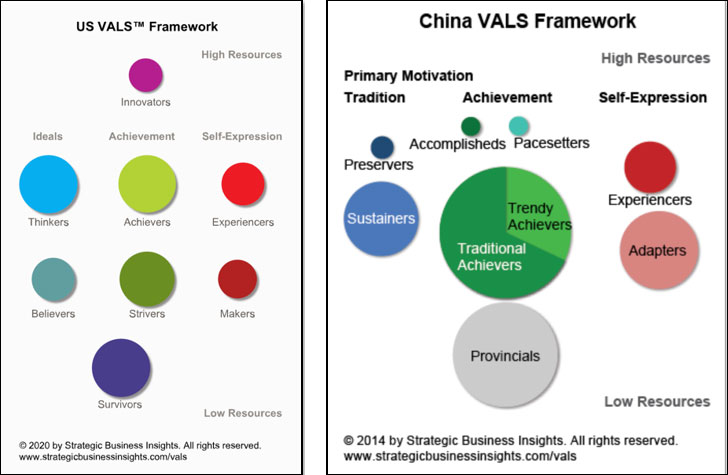

    Seriously though, over the decades, I have been part of teams that have devised marketing communication strategies for a wide range of brands – market leaders and challengers from multinationals and desi companies in FMCG, durables, fashion, and services – and yet to come across a case where psychographic segmentation was a crucial part of the strategy.

    Even the demographic segmentation that drove strategy was, by and large, of the broadest stroke – the young or mature adult, affluent or middle class, EMT (English Medium. Type) of VMT (Vernacular Medium Type) and, of course, male or female.

    Over the decades, I have seen the “young” morph from Gen X to Millennials and now Gen Z, but the picture of the young that most brand managers and advertising people cater to has remained more or less the same, except for external attributes that Gen Z are digital natives while the Millennials were partially there and so on.

    The reason for the benign neglect of psychographics among marketers and advertising people is not laziness or ineptitude but the realities of the Indian marketplace.

    For most of the past decades, the Indian people have been striving to meet basic needs, with some at the top of the income ladder doing it relatively easily and the rest. in a daily struggle for “roti, kapada and makaan”. Therefore, India’s consumer and media markets cater to basic needs with a thin patina of demographic segmentation.

    India and Indians are now climbing the income ladder.

    Household income projections by PRICE, a think tank, show that in 2016, 37 million Indians lived in households with annual income levels greater than INR 30 lakhs a month (at constant 20-21 prices). By 2021, this had gone up to 56 million, and the projections are that by 2031, there will be 169 million, and by 2047, there will be 437 million. Given the Purchasing Price Parity (PPP) conversion, as determined by the World Bank, is roughly INR 25 to 1 USD, the INR 30 lakhs plus income bracket translates to USD 1,25,000 plus income bracket in the US. Based on these numbers, Martin Wolf, the Chief Economic Commentator of FT, London, has predicted that the purchasing power of India will be 30% higher than that of the US by 2050.

    As India becomes increasingly affluent, social, cultural, political, and consumer choices will be nuanced and driven by personality, lifestyle, and attitudinal factors, in addition to basic needs.

    Therefore, it may be time for India’s marketing, media, and advertising communities to develop and invest in a common psychographic framework.

    Through the Market Research Society of India (MRSI), the community has created a solid framework for demographic segmentation through the SEC (Socio-Economic) system of classifying Indian households. It has taken a couple of decades for this system to mature and become universally applied across all marketing and media data sets. The latest tweak, released in February 2024, fine-tunes the system. While the SEC system is reflected in most data sets related to traditional media (for example, BARC and IRS), syndicated studies like TGI and Kantar World Panel and ad-hoc research studies, the community should push the social media giants like Meta and Alphabet as also the likes of Comnscore to adapt the system to the extent possible in their reporting and their targeting algos,

    Psychographic segmentation will become increasingly relevant in an increasingly affluent India. It is time for a body like the MRSI to start discussing, with all relevant constituencies, the first step to creating a psychographic segmentation framework for India. The objective should be to develop a segmentation framework that is most predictive of primarily consumers and media choices and secondarily of lifestyle, attitudinal, cultural, and political choices. Whether lifestyle and attitudinal choices will be dependent or independent variables will depend on the classification framework. To choose the framework with the highest discrimination power, we need a benchmarking study before settling on a final framework.

    We will need to evaluate a wide range of global frameworks:

    • VALS (Values, Attitudes and Lifestyles)
      • Developed by SRI International, VALS divides consumers based on their primary motivations and resources.
      • It develops unique VALS systems for each country.
      • For example, the VLAS systems for the US and China differ widely.

    • PRIZM (Potential Rating Index by Zip Market)
      • PRIZM segments consumers into lifestyle types based on demographics, behaviours and geographic location
    • OCEAN utilises personality traits to predict consumer behaviour: openness, conscientiousness, extraversion, agreeableness and neuroticism

    The Myers-Briggs Type Indicator (MBTI), once very popular, is a psychographic framework that has recently been controversial.

    Kantar’s TGI is an audience profiling study that captures various data points—from product use to leisure activities to attitudes and media engagement. Since TGI has been present in India for decades, it offers a rich trove of data that can help develop an effective psychographic segmentation framework for India.

    Academic studies exist in the broad area of psychographic profiling of Indians, some of which can provide useful data sets or insights.

    It will take a decade or more to drive consensus and establish credibility for a Consumer Psychographic Segmentation Framework (CPSF) to become widely accepted and part of every essential marketing and media data set. If we start today, the marketing and advertising community will be in time to function optimally in an affluent and increasingly complex market called India.

    The use of CPSF will begin as early in the marketing process as product or service design and, of course, be central to marketing communication planning. A CPSF would also usefully inform social interventions and political campaigns.

    Developing a widely accepted psychographic segmentation framework is a vital R&D effort that ranks along with the attempt to create India-contextualised AI-driven martech and adtech. Let’s get on with it.

  • TooYumm! appoints Curativity as brand partner

    By Our Staff


    TooYumm! from the house of Guiltfree Industries, the FMCG division of the RP-Sanjiv Goenka, on-boards Curativity as their brand partner to drive their integrated creative mandate.


    Speaking about the partnership, Rajeev Khandelwal, Chief Executive Officer, Guiltfree Industries Ltd, RPSG FMCG, said: “TooYumm! is a fast growing brand which has always focused on relevant consumer needs in the market and innovations to support it. Curativity, an ahead of the curve platform will provide us access to the best in class talent across the spectrum of marketing services. The model of curated specialist teams for our specific marketing requirements is a good match for TooYumm!”


    Added Virat Tandon Co-Founder, Curativity: “Partnering with TooYumm! is an exciting opportunity for us. TooYumm! has a fantastic challenger mentality and their innovative approach has helped them create significant success in a short time. It’s a fiercely competitive category and with the ambitious goals set by the company for the future, this is going to be one helluva ride. We look forward to bringing the best of Curativity to shape the brand’s agenda.”


  • Indian research & insights biz overtakes China, touches @2.9bn in FY23


    By Our Staff


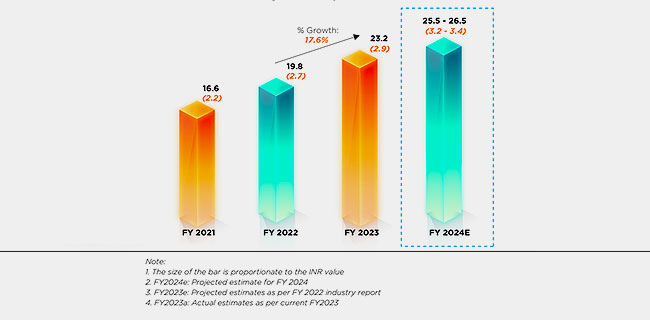
    Market research body, Market Research Society of India (MRSI) has announced the launch of its now-annual industry sizing report titled ‘The Indian Research & Insights Industry 2023 Update’. As per the report, India’s market research and insights industry grew by 17.6% in FY2023 reaching USD 2.9 bn from USD 2.7 bn in FY2022. Currently at the third position globally, and ahead of China, India’s market research and insights industry is further expected to reach USD 3.4 Bn in 2024.


    Notes a communique: “With a strong growth trajectory, supported with global confidence, India is considered a talent hub with strong analytics expertise. The growth witnessed aligns with the global research and insights industry, which posted a substantial 12% increase to reach USD 130 bn, over USD 118 bn in the previous year. Data analytics is the fastest-growing sector of the global insights industry in absolute terms.”


    Speaking on the industry’s growth, MRSI President Paru Minocha said: “The Indian research and insights industry witnessed another year of significant growth, achieving a substantial size of USD 2.9 billion. This growth is a testament to India being the focus growth market for companies and the market research industry’s ability to navigate challenges and capitalize on emerging opportunities to enable that growth. In addition, there is global confidence in India as a talent hub and as a market that is pivotal in offering valuable insights and research solutions.”


    Added Mitali Chowhan, Director General at MRSI: “The growth our sector is undergoing is very encouraging. This has helped maintain us our global ranking, and in fact has moved us up to the third position in the global Market Research and Insights industry. India’s significant capabilities, along with our industry’s ability to adapt effectively to challenges and thrive on both global and domestic fronts is something we can be proud of.”


    The BFSI, FMCG, Technology, and Healthcare sectors continue to contribute significantly to sectors growth and revenue. Emerging sectors like Telecom, Electric Vehicles, and Gaming have seen increased demand for analytics and custom research. While online data collection is gaining traction, traditional methods such as face-to-face interviews remain relevant for their cost competitiveness and ability to provide wider coverage of the Indian consumer.


    The executive summary of The Indian Research & Insights Industry Report 2023 is available to download on https://insight.mrsi.co.in/indian-industry-report/


  • How and why defence personnel families have different consumer behaviour traits


    With apologies to none at all

    By Vikas Mehta


    Vikas MehtaI shall be soon completing 10 years, living in the small, yet cosmopolitan and progressive, yet steeped in tradition and eclectic, and yet distinct city of Dehradun. And while the transition and experience has been both interesting and challenging, I am amazed at how I keep on discovering new facets of not just culture and tradition but also consumer behaviour. In this column, I will try and touch on a few of these points.


    Dehradun was always known as the city of retired people. Slow, sedentary lifestyle. Nature at every step and the ability to lose oneself in its myriad seasons. Institutions like ONGC, FRI, Geological Survey of India are steeped in history and even folklore. And many of its employees, hailing from all parts of India, settled down in the city, post retirement. Indeed, such was the case with my father too.


    But Dehradun is better known for its retired population of defence people. From Lt Generals to Brigadiers to Majors and to Captains. It’s not just the army people but even the other wings. As an aside, do you know that Dehradun also has a naval office? The Indian Naval Hydrographic Department.


    But I am digressing. It’s not just the retired defence people who stay in Doon. There is also a decent population of currently serving defence personnel whose families live in Doon. With frequent transfers, posting to non-family stations, most families prefer settling down at one place, mostly because of children’s education. And Doon with its plethora of schools, proximity to border areas, bustling cantonment life, and medical hospital for defence people is an ideal place.


    During my morning walks I would come across retired defence people. Mostly they would stand out because of the typical stick, not walking stick, but the small stick of a commanding officer that one would see in many Hindi films, and their gait and posture. I would interact a bit and over a period of time got to know a few of them and their families including some serving ones. I am not professing to be an expert on defence people as consumers but I encountered some interesting behaviour and insights which I would like to share.


    Living in cantonment areas in small towns and sometimes in far flung places is a unique experience. One is living in a secluded township which has its own rules. The life is steeped in discipline and protocols. And this includes the lives of families too. Seniority matters in family relationships too. There are formal and informal occasions with dressing according to the occasion. Life is regimented and strictly routine. And almost all purchase happens from the canteen stores.


    I am sure most of us have heard of how defence personnel and their families get groceries etc at discounted rates at canteen stores. Today, it’s not just groceries but almost anything that a household wishes to buy, is available at canteen stores. Not just durables like ACs or refrigerators but also two-wheelers and four-wheelers. At subsidised rates. A defence person can buy a car at a subsidised rate every 8 years and a two-wheeler every four years.


    For a brand it therefore becomes imperative that they register to sell through canteen store department and in some categories like fans a brand could have almost 10% of its total annual sale coming through canteen stores department (CSD). Even premium brands like BMW and Audi sell through CSD. And it was news when Kia was made available through CSD earlier this year. I also gathered that defence people get a 50% discount on GST to be paid on vehicles. Though some capping on the above is in place now.


    If you now look at it from the viewpoint of serving and retired defence personnel, CSD is an important part of their life. Except for a few perishables like milk or bread, almost everything they buy is through CSD. And the distance from a CSD is an important consideration when they are settling down or renting property in a place. Indeed, when the defence person comes home on leave from his posting a visit to CSD for a major purchase or a big ticket item purchase is always on the agenda. Their visit to a local grocery store or an electronic store is very limited. Even elements like servicing or repair are handled through CSD. And CSD has kept pace with time. If something is not available at the nearest CSD, one can order it through the online site of CSD, for delivery.


    Therefore, if an FMCG brand or a durable or an electronic brand is not present at a CSD, it is not in the consideration mindset of most defence people. They have not seen it. They have not discussed it. They have not felt the need to know about it. This hurts new brands and new categories more. They may be exposed to something new through some media but the familiarity and interest comes through CSD, offline or online. The bottomline is that a brand, to make a difference in the life of a defence person must be a part of CSD.


    And this is more important when these families are placed in remote areas. Their exposure is limited to CSD only. This has a ramification for brands. Because, later on in life when these people move on to bigger cities the perception and awareness that has been built in their minds about brands persist. CSD therefore has created impressions and perceptions which can last for life.


    Sometimes, this also leads to family conflicts. The younger generation which is more technology oriented is more aware and knowledgeable about brands, their benefits, their cool quotient etc. So, they try to look beyond the CSD brands or their impressions for personal use. The parents are at odds with such thoughts. They cannot reconcile to the same. Also, the discounts that CSD offers goes a long way in their decision making.


    Moving beyond CSD, defence personnel face a dilemma and social unease when they get back into society. The career path of a defence person is shorter than the civilians. Most at the level of Major or Colonel retire between 50-54 years. For most of their life they have lived a regimented, disciplined and structured life. They are taught working in a team. They live unselfishly. Sacrifice of personal needs and comfort is part of their upbringing. And yet, when they get back into general society they see indiscipline. They encounter selfishness. They are not trained to do anything else. They try alternate career and find it difficult to fit.


    To make matters worse, families face different problems in amalgamation. With an unregimented society they find issues of adjustment. Their time discipline and selflessness goes unappreciated. And children find themselves woefully inadequate in terms of new type of hobbies or sports. One of them asked my daughter what was Sushi when she said she had it for dinner. Examples of this kind create a divide amongst children and gives an inferiority complex to the defence force children.


    These adjustment issues sometimes force defence people to live in their own enclaves. That in turn makes the “civilians” a bit more wary of the defence types. It’s a lose lose situation for both as the defence people dig their heels in and refuse to accept the reality of the bigger world and the civilian see them as snobbish and entitled (CSD adds to it).


    Surprisingly, it’s the children  who finally integrate better. They go to schools and education institutes where they rub shoulders with all types and they learn to adjust. But this also means that they compromise on their “defence values” like discipline or regimented life. Within the family the clash of generation ensues. The children are quickly enticed by the lure of new products, new services and consumption. They look at their parent’s choice of career vs their new found friends parents and the grass seems greener on the other side. And that’s one of the reasons that unlike in the past, many defence children no longer want to pursue defence as a career option.


    It’s such simple observations that have ensured that I still keep learning new things. Here is to the next ten years of learning in this quaint little town called Doon.


  • Fortune Chakki Fresh Atta launches TVC

    By Our Staff


    Adani Wilmar, the food and FMCG company, has launched a new TVC.


    Speaking about the TVC, Vineeth Viswambharan, Associate Vice President, Marketing & Sales, Adani Wilmar, said: “Fortune Chakki Fresh Atta is one of the fastest-growing brands in the category. Consumers vouch for its consistently great quality, which makes it easy to knead and consistently deliver soft rotis. Over the years, we have come to better understand our consumers and their lives, as well as the role that Fortune plays in their lives. We seek to make their lives a little easier through a perfectly ground atta that is easy to knead and makes delicious soft rotis. This film is a labour of love, a tribute to the lives of those we serve. Of the trials and tribulations of earning our daily bread (Roti Ki Mehnat). Of the warmth & harmony of Indian homes today. Of the shared responsibility among couples to balance home and work. We hope it will touch you, the way it touched us.”


    Added Puneet Kapoor, Chief Creative Officer, Ogilvy South: “While contemplating the product proposition of a flour that effortlessly binds, we recognised the irony: easy to knead, yet hard-earned. This reflects the daily struggle of numerous Indian middle-class families, where couples toil tirelessly, whether in the workplace or as homemakers, just to put bread on the family table. This ad is an ode to such working-class heroes.”


  • Fortune Sunlite Oil unveils new TVC

    By Our Staff


    Adani Wilmar Limited (AWL), one of India’s leading food and FMCG companies, has launched a new TV commercial for Fortune Sunlite Refined Sunflower Oil. The new multimedia TVC, conceptualised by Ogilvy, features brand ambassador, actor Samantha Prabhu.


    Commenting on the latest TVC campaign,  Mukesh Mishra, Vice President, Sales & Marketing, Adani Wilmar Limited said, “At Adani Wilmar, we place great emphasis on the nutritional value that discerning consumers seek in their grocery selections. Indian consumers have an insightful understanding of the need to change their edible oils periodically to benefit from varied nutrients and advantages. We introduce our new TV commercial, featuring brand ambassador Samantha Prabhu that aims to encapsulate the essence of Fortune Sunflower Oil – it’s not just a cooking oil; it’s a commitment to a healthier, happier life. We believe this TVC will inspire consumers to make healthier choices for their families.”


  • L&K Saatchi & Saatchi partners with Amway

    By Our Staff


    Amway India, direct selling FMCG company, launches campaign featuring brand ambassador Olympian weightlifter Saikhom Mirabai Chanu. The campaign reiterates the brand’s continuous efforts towards focusing on fuelling one’s passion with adequate nutrition support to achieve excellence.


    Talking about the campaign, Ajay Khanna, CMO, Amway India said: “Amway has always held a distinctive and compelling approach to driving forward its vision to make India healthier. In line with this, we are thrilled to announce our new campaign- ‘Passion ko do Poshan’, that personifies the essence of our nutrition and wellness brand, Nutrilite, the world’s No.1 selling vitamins and dietary supplements[1], which brings together the best of nature and the best of science. As people focus on excelling in their passion areas, they often miss out on providing their bodies with the nutrition, which acts as fuel in their journey towards their goals. This campaign reflects how people’s passion is synonymous with their identity, and, along with a proper diet, Nutrilite provides them with the required nutrition support. Through our flagship brand, Nutrilite, which offers bestselling products such as Nutrilite All Plant Protein powder, Nutrilite Daily, Nutrilite Salmon Omega – 3 and Nutrilite Cal Mag D Plus, we inspire people to keep pushing their boundaries every day. We have extended our partnership with Mirabai Chanu, which I am sure will continue to help us champion our commitment towards the health-conscious Indians, driven by passion, to level up their nutrition to accomplish their dreams. We are elated to see the vivid response across India that our initiatives have received.”


    Added Rohit Malkani, Joint National Creative Director, Law & Kenneth Saatchi & Saatchi: “We partnered with Amway to start a powerful conversation, encouraging people to ‘feed their passion’ and promote the role of nutrition through Nutrilite, as a partner in their journey to achieve excellence in their area of passion.”


  • Upskilling will boost the FMCG sector: CII National FMCG Summit

    By Our Staff


    Post the COVID 19 pandemic consumers are switching to more eco-friendly products and to cater to the conscious customers, FMCG companies are looking at more progressive models as a future necessity to minimize the environmental effects stated Bharat Puri, Chairman National Committee on FMCG & Managing Director, Pidilite Industries speaking at the CII FMCG National Summit 2022 organised by the Confederation of Indian Industry (CII).


    Puri explained that the FMCG sector is called as the bell weather of the economy. “Speed and agility are a must to succeed however this needs to translate across all elements of the organization for long term success. There is also a need to focus on creating sustainability and become environmentally friendly in the long run,” he said.


    Deepak Iyer, Managing Director, Mondelez India explained that a lot of changes have taken place in the FMCG sector in the last couple of years. “It is a digital consumer that we are looking at today. This means that even within the organization a lot of skill sets have begun to change. So, people need to be reskilled and given the new age skill sets to get more future ready workforce,” he informed.


    According to Iyer, there is a social responsibility of saving the planet. “There is a need to reduce the carbon emission at source. There is no ban on plastic use, but one need to recycle or dispose plastic more responsibly,” he added.


    He stated that technology is being leveraged to optimize the workforce. “FMCG products used to be transported in specially designed vehicles but what is the guarantee that the operator does not switch off the vehicle. This would mean that products worth lakhs of rupees would stand the risk of getting destroyed because of changes in the temperature. Now with the help of special sensors, the same can be monitored and the risk eliminated,” he added.


    Prashant Peres, Managing Director – India & South Asia, Kellogg stated that brands today are living off a purpose of doing some good for the people.


    “Companies are looking at partnerships and are taking steps to put sustainability on their agenda. However, the industry will have to take collective steps in this regard and one individual company cannot do it alone,” he said.


    He explained that post the pandemic, how you communicate with the consumer has. also changed. “A lot of reskilling is needed not just for individuals but for the entire team. People today trust influencers and there is a need to adapt to the change to mark success,” Mr Peres added.


    Success of FMCG companies in this new era will rely as much on developing new skills as it would on precise leadership and decision making, often with disparate information.


    Navneet Saluja, Area General Manager, Indian Sub-Continent, Haleon stated that there is a need to create a culture that drives innovation. “Though surviving for larger brands would be possible in the future, the revenue pie will keep growing smaller. So, there is a need to challenge ourselves,” he said.


    According to Saluja, the FMCG sector has been delivering pricing which is lower than the inflation. “We have done a great job on the pricing. We need to percolate our purpose to our brands as well which would define the boundaries. In the next 20 years, all brands would have a social purpose as well,” he pointed out.


    He added that even if the company generates a lot of revenue, unless there is a social agenda, their multiplier would be zero. “This has set a serious direction and gives a better multiplier effect,” he said.


    Abheek Singhi, Managing Director and Senior Partner, Asia- Pacific Leader, Consumer and Retail Practice, Boston Consulting Group (BCG), Mumbai explained that there has been a double- digit growth rate in the FMCG sector in India since the last two decades.


    “Almost two third of the revenue generated is from the unorganized sector. The share of the FMCG profits have also grown from 5 percent in the year 2010-14 to around 7 percent in the year 2020-22. The Indian FMCG market has outperformed globally,” he said.