Tag: facebook

  • 6 tech-driven trends to look out for in 2014


    Wearable fundraising, smart bras, e-Government and ambient Bluetooth consumer messaging are all set to trend in 2014. Digital technology will continue to provide new connections, revenue streams and communications channels for brands, consumers, charities and businesses.


    Said Norm Johnston, Chief Digital Officer, Mindshare Worldwide: “Expect 2014 to be the year when the internet of things gets pretty weird. At Mindshare, we believe that everything begins and ends with media, and that is underlined by the hugely ambitious projects global organisations are working on to launch in the next 12 months. Companies have to get more and more creative in order to capture the attention of consumers. That means that they will try to find new touch points, new technology and new strategies to capture the imagination of increasingly discerning audiences.”


    1 / THE RISE OF THE SHARING EPHEMERAL

    This year we will see an increase in the popularity of apps like Snapchat and Wickr that enable users to establish multimedia conversations that erase themselves after a given period of time. The flirtatious and secretive nature of these apps is driving adoption and where a few heave led, expect plenty more to follow.


    2 / ADAPTIVE GOVERNMENT
    David Cameron tweets. Obama had a social media cave. Even the German police are developing technology (an App that detects Neo-Nazi lyrics in music). Governments and political parties are beginning to switch on to the fact that they need to embrace technology to remain relevant and in 2014 we’re going to see more tech led NPD from governments worldwide.


    3 / THE INTERNET OF WEIRD THINGS
    Wearable technology, particularly health-related devices have finally become affordable, accurate and accessible, but that is just the tip of the iceberg when it comes to the internet of things. Samsung has patented ‘smart wig’, Microsoft has developed a ‘smart bra’. Expect 2014 to be the year when the internet of things gets pretty weird.


    4 / SOUND TAKES CENTRE STAGE
    Companies such as Sonic Notify and Apple are leveraging ambient sound using BLE (Bluetooth Low Energy) to deliver a message to consumers when they are at the key purchase decision making time. Mindshare and Shazam have launched AUDIO+ – a partnership to allow brands to leverage their investment in sound. Brands are switching back to the marketing power of sound – it’s just not radio.


    5 / FITNESS + CHARITY + TECHNOLOGY + FASHION = KERCHING
    We all liked to wear Livestrong bracelets as a show of our support (and coolness) to others, but what if it actually raised money at the same time? Apps such as Charity Miles – where consumers earn money for their favourite charity by using the app to track fitness (ad supported) – will become more popular. Consumers like something for nothing, so interacting with brands and getting a value in return will become important, and a great way for charities to raise cash.


    6 / GOOGLE, FACEBOOK, TWITTER – BEWARE
    2013 was the year of the social and search giants; Record revenues, IPOs and future predictions of huge growth. Watch out as 2014 will be the year of the guys who actually sell stuff. Amazon and Alibaba lead the field. E-commerce in China alone is worth $1.4 trillion and Alibaba, fuelled by Taobao and T-Mall, has become the world’s largest online retailer, selling more than $170bn in goods in 2012, more than eBay and Amazon combined. Don’t expect these guys to not be looking at leveraging their huge scale and reach into the world of digital advertising – and when they get it right, Google watch out.


    Republished with permission from Mindshare Worldwide. This was published as part of Mindshare’s Original Thinkers Series, circulated weekly


  • Ogilvy shows off its digital power with ‘Techtonic’

    By A Correspondent


    The agency’s dominance in the traditional creative advertising has been so major that one doesn’t really associated Ogilvy with the digital media.


    But over the past few years, OgilvyOne has grown to become India’s largest, most awarded full-service digital agency. But there is more to this story than just growth and fame. It’s built specialist capabilities, completed digital acquisitions and now has over 400 digital resources across Ogilvy India.


    On Thursday, the agency organized Ogilvy Techtonic in Mumbai with an attempt to bring to its clients a series of relevant, usable conversations around the shifting digital landscape. Perspectives from industry leaders from Facebook, Google, Myntra, social influencers Miss Malini and Gabbar Singh and Ogilvy’s own digital leaders from across the country. The venue was the Bluefrog nightspot in Central Mumbai… we aren’t like some of those newspapers which only carry the venue name if it’s paid for.


    Guest speakers included Kirthiga Reddy, Guneet Singh, Mukesh Bansal, Miss Malini and Gabbar Singh and the Ogilvy speakers were Abhijit Avasthi, Vikram Menon, Karthik Srinivasan, Sanjay Ramakrishnan, Shivakumar Viswanathan, Nalini Guhesh, Anand Morzaria, Upasana Roy, Dharam Valia and Kunal Jeswani. And we even spotted bossman Piyush Pandey also in the house.


  • Facebook posts get Suhel Seth to give up Rai doctorate

    By A Correspondent


    He is one of India’s best known faces on television panel discussions. Suhel Seth, ad man-turned-communications consultant and managing director of Counselage, was awarded an honorary doctorate by the Rai University last week.


    But  a Facebook post by Maheshwer Peri, Careers360 CEO-promoter and may we call him an ethical education activist, got him to give it up as there was outrage over Mr Seth’s accepting the recognition from a university which, as Mr Peri put it, “is most likely to abuse it to reach out to ignorant students”. “How I wish our celebrities acted a bit responsibly and did their homework,” Mr Peri’s post on Facebook added.


    There was much outrage after this initial post on Facebook with many people casting aspersions on Mr Sethi’s credibility. Almost an hour after the initial post by Mr Peri, Mr Seth reacted with:  “I had no clue…will return this immediately” and later added: “In fact even at the damn convocation I said this was a fraudulent event…I was told that this was a legit university and so on… but I agree… it is a fraud and I will have nothing to do with it…”


    After Mr Seth’s pronouncement, there was an expression of delight at the decision. “Bravo Suhel Seth,” exclaimed one post.


  • In Google & Facebook-dominated world, Yahoo invites entries for Big Idea Chair Awards India 2013

    By A Correspondent


    A few years back when this correspondent was invited with some media maharathis to an event organized by a premier Ahmedabad-based management institute (not the IIM), the large student crowd expressed its unfamiliarity with the Yahoo! brandname to a senior functionary from the internet giant. Evidently, to a generation for whom Google, Microsoft, Facebook and Twitter are the most visible digital brands, Yahoo’s name belongs to sepia-tinted history books.


    Sad because Yahoo and Yahoo India in particular have done some pioneering work in the business ever since they announced their entry to the country with a mother-of-all-parties at Mumbai’s Taj Mahal Hotel over a decade back.


    Yahoo! is of course still relevant in the Indian digital media scenario, and it ensures it stays there by hosting the fourth edition of the Yahoo Big Idea Chair awards by inviting advertising and media agencies in India to showcase their best work in digital. Spread over nine categories, the call for entries will be open till November 25, 2013.


    Interested teams can now register for free at www.bigideachair.in. The winners will be announced next month (Dec 2013)


    Announcing the Yahoo Big Idea Chair call-for-entries, Nitin Mathur, the normally out-of-bounds Senior Director & Head of Marketing, India and South-East Asia, Yahoo, said:  “India is seeing some amazing creativity in digital advertising, helping brands integrate more meaningfully into consumers’ everyday lives.  Yahoo Big Idea Chair Awards honours individuals and agencies who are pushing the boundaries on digital in their search for the next big idea with the highest impact.”


    Last year, as many as 376 entries were received, with over 100 brands and 57 agencies participating in the Yahoo Big Idea Chair awards, noted a communique, adding: Acknowledging the increasing importance of content marketing in brands’ digital marketing strategies, Yahoo has added a brand new category of Best Content Marketing, to the existing stack of awards. Advertising and media agencies can now submit their exceptional creative and innovative ideas across 9 award categories including:


    Best Use of Display Advertising to recognize the most creative and innovative use of display advertising.


    1. Best Online Video Advertising for excellent work on video ads or video series created for digital


    2. Best Use of Social Media for the most innovative use of social media for brand advertising


    3. Best Use of Technology recognizing innovative use of technology for digital advertising on the Internet or mobile (includes technological innovations such Augmented Reality, applications, blufi, other tools).


    4. Best Use of Mobile Advertising to recognize campaigns that use mobile as a medium for to effectively communicate the brand message and engage consumers


    5. Best Use of Search – to recognize creative and innovative use of search advertising in a brand campaign


    6. Digital 360 degree Award -This award recognizes campaigns that strategically used digital as the core medium and implemented all digital channels including display, search, social, mobile.


    7. Best Content Marketing Award to recognize campaigns that strategically use content to ensure targeted message delivery and high levels of consumer engagement


    8. Yahoo Big Idea Chair Award flagship award to recognize fantastic digital campaigns which combine ideas, content, execution and real innovation to deliver with impact


    The entries will be judged by a panel of eminent industry leaders and professionals drawn from diverse sectors, including marketing, advertising and media planning. The jury panel will be announced soon.


    Now if only the digital generation would do a Yahoo! for Yahoo after all of this.


  • Vijay Mukhi: There are no fake accounts on Twitter and Facebook

    By Vijay Mukhi


    If you believe the title of this column, you will believe anything, including the medicinal properties of snake oil. Let’s take a hard look at a real Twitter user, vijaymukhi712 by typing in any browser http://twitter.com/vijaymukhi712. The reason why this user cannot be a fake under any circumstance is because he/she has tweeted over 150 times and also has an unrespectable 16 followers. He/she is also a confirmed romantic as most of the tweets sent talk about love. There is no way a person who tweets once a day for months can be a fake. However, if you look at the tweets for a certain day of the month, say, August 22, July 22 etc, they are all the same. One probable explanation could be that this user tweets the same tweet every day of the month, you can accuse him/her of running short of love tweets.


    The more probable explanation is that the author of this column is extremely lazy. All that he did was collect 30 love quotes from a site on the internet and placed it in a database. He then wrote a 5-line program that picks up the current day of the month, goes to the above database and picks up the corresponding love quote and tweets it. This explains why the quotes are being repeated every month. If I had the patience to collect 366 love quotes, then there would be no way you could figure that Twitter user vijaymukhi712 was not a human. I used to do the same for my Facebook account, but I stopped because too many people (friends) started liking and commenting on my quotes, hence I stooped embarrassing people. This program that tweets automatically is so simple to write that I doubt that I can get anyone to purchase the code from me, even though I am willing to accept payment in 10s of paisas.


    My basic tenet is that there is no way to distinguish whether a Twitter/Facebook/Social Media account is being operated by a human being or a machine. There is an arms race going on in the social media space where everyone wants to showcase the number of users they have, not at all talking about the quality of the users. Thus it’s in the best interests of the social web to go overboard in making it child’s play for you to create users real or fake. The social web believes that there is a direct correlation between the number of registered users it has and its stock price, the higher the number of users, the more money the social web makes through various means like selling advertisements.


    I have seen no attempt at all made by the social web to clamp down even slightly on fake users on its properties. I always thought that my name was unique, in the solar system, but on Twitter there is a vijaymukhi, vijaymukhia, vijaymuhiy, vijaymukhi712 and so on. Is there no way for Twitter and Facebook to crosscheck why are there so many Vijay Mukhis on Earth. All that I would do if I was the person in charge of the social web, I would insist  for a phone number while registration to which I would then send an sms to verify the user’s identity.


    I would make sure that you cannot use the same mobile phone number twice bearing in mind that every user may not afford a mobile phone. This is one sure and simple way to eliminate fake accounts, but is anyone out there listening?


    The social web has made sure that you can access it by using any device, be it a computer, phone, tablet and now a watch. The only way they can achieve this is by allowing you to use programs to handle the entire process. The social web was smart enough to realise that a CEO would be on the social web only if he/she could outsource their social media presence to an outside agency. After all, few CEOs would actually have the time to tweet or post. Thus the company entrusted to manage the CEO’s account would only make money if they could automate the entire process. This is what I did and I have a Twitter account that is now very active. Unless you automate a social media presence, you cannot scale and make money hand over fist.


    The second problem that the social web faced was that no CEO would like The Times of India to talk about how he/she has only say a mere 1000 followers, very bad for reputation. To resolve this issue I believe the social web made creating fake followers very easy. Today, it has become a lucrative  business for people to start companies that guarantee millions of followers and likes on Twitter and Facebook for sums of money. The bits of the social web is now replaced by $s. If our government was serious about reducing CAD, encouraging activities like this would go a long way in making the Rupee stronger.


    What I now spending sleepless nights thinking about is a simple fallout of fake followers. I now have around 10,000 sleeper Twitter accounts which can be activated by the simple act of running a program. I also have a database of over 50,000 negative and other generic statements like You do not know what you are talking about, You are an idiot, You have the brains of a donkey, I disagree with you Sir etc etc. Very easy for someone who understands some English and a one-time activity for creating a database of known English comments. I wait for Mr Modi to make an innocuous tweet. I then turn my social media cyber army on and within minutes I have 10,000s of tweets against Mr Modi’s tweet. Another cyber army of mine only specialises in retweeting these tweets. Within minutes, Mr Modi is now trending, in a very negative sense.


    The media picks it up as how 10,000s of people on Twitter/Facebook have risen against Mr Modi and eating him for lunch. Makes for Breaking News, Modi is losing the war in cyberspace, a cyber revolt against Modi, etc. This simply shows how unpopular Mr Modi is in cyberspace. Nobody realises that it’s not even a storm in a teacup as none of these tweets are by real people.


    Do this for a month and the press convinces the rest of us on how Mr Modi has lost his edge in cyberspace and therefore his chances of being anything. How much would the entire exercise cost, if you paid over Rs 10 lakh for this exercise, you would have overpaid. You can also substitute Mr Modi by Mr Tharoor and nothing would change.


    My worry is that because it is so cheap and there are no safeguards built into the social web, reputations could be damaged with seconds. I would like the Election Commission in India to make an Act like this into a serious electoral and criminal offence which can get a candidate/party debarred for life. The only hitch is that if I pay someone in Bangladesh a lakh of rupees in Indian currency in cash to increase Mr Tharoor’s followers by a large number. When this happens I complain to the EC that Mr Tharoor has indulged in an electoral malpractice. How would the EC prove it either way, only God knows. The only way out is that the EC in India codifies strong Do’s and Dont’s on what is fair and decent campaigning in cyberspace. We haven’t seen such a document yet.


    Finally, a word of advice to the print and TV news media. Can we please stop reporting social media numbers until the dust settles down? Comparing the number of Mr Modi’s followers with Mr Tharoor’s makes no sense as there is no way of ever figuring out whose followers are fake or not? We must stop believing in social media statistics until we have independent verification of the numbers we use. The social media ecosystem needs to make sure we have a credible way of looking at numbers, if they do not, they will go by the moniker, snake oil salesman. I am saying this with a lot of responsibility as that is what the social web ecosystem is known by today.


    Next time we will talk about actual numbers that people charge all over the world to make you more popular that Mr Bachchan or Mr Salman Khan on the social web. You do not have to sell your house to be more well known than Bollywood stars on Twitter and Facebook. See how much respect you get from everyone, you could be a social media icon!


  • Vijay Mukhi: Why the BJP is wrong in wanting to be aggressive on the Social Web


    PoliTech / By Vijay Mukhi


    Last week, the BJP had a major briefing of its media cells from all over the country which was addressed by the party top brass. The advice they were wrongly given was told to ‘swamp the social web’ and also be ‘aggressive’ . A extremely bad idea in my view. For some vague reason we believe in the myth that to spread your message on the social web, you have to be aggressive and like Rambo, go out all guns blazing. The social web is not like primetime TV where you are encouraged to shout and scream and interrupt others. Nothing could be further than the truth. The social web respects good behaviour and we normally highlight only a very small part of the social web which does not reflect on the majority behaviour. Let’s look at some real numbersto substantiate why the meek shall inherit the social web. Let’s start with Twitter and then move to Facebook.


    The only way to judge the popularity of a tweet and not that of its owner is to see how many people retweet it. There is no other objective way of determining the popularity of a tweet. An indirect metric about the popularity of your tweets would be that if people like your tweets they would follow you or tweet about you and may not always retweet your tweets. Let’s look at what types of tweets get retweeted from India and created by Indians only. We are not looking at tweets that you retweet, that is. those that start with RT @, which are obviously tweets written by others that you like.


    The No 1 and 2 position on this list is taken up by our silent cricket captain M S Dhoni with around 9900 retweets followed by Shah Rukh Khan at the next three places. The first politician on this list is Narendra Modi at No 9 with around 3000 retweets. Mr Modi bags a total of only six places in our list and the only other politician he has for company is Subramanian Swamy, that also only once. To be on the top 100 list, all that we need is our tweet to be retweeted 1278 times, not very difficult to get 1300 followers to retweet your tweet. But even that our politicians’ followers cannot manage. Bad showing for the political community on Twitter!


    The other big Twitter politician Shashi Tharoor simply does not figure on this list unlike the big film stars who make too much of an impression and dominate our list. Shah Rukh Khan is the real badshah of Twitter retweets. Thus we can be sure that being mentioned on Twitter a lot or having zillions  of followers do not get your tweets retweeted at all which means that not enough people are getting access to your tweets. The bigger story is what types of tweets get retweeted.


    First, none of these tweets contain any aggression in any form whatsoever. All these tweets said nothing controversial, used no sexual overtones, used the queen’s English and were something you could share with your family. If you were a [olitician who wanted his/her tweet to be retweeted, what is the first lesson you would have learned. Please do not cross the line of decency on Twitter, it is not a line drawn in sand but in concrete. The Twitter world would not like to be associated with heat, noise and thunder, so stay away from all forms of aggressiveness if you want your tweet to go viral. If you want to promote Mr Modi, please do so, but do not use any aggressive behaviour of any form, the tweet will not go viral it will only create a backlash against Mr Modi.


    Only if the Social Media cell of the BJP looked at the list of the top 100 retweets out of India, they would have not given their media cells advice that they gave.


    It is a big mistake on the part of the larger media that says that if you shout on Twitter and be loud, you will be heard and retweeted and you will go viral. An analysis of the retweets out of India  shows that decency and dignity go a long way on Twitter.


    What should bother the politician most about Twitter is that the tweets that get retweeted have very little political content. Those tweets of Mr Modi that do get retweeted and are political in nature simply have not fired the imagination of his supporters. The idea of a Politician to be on Twitter is to get the message out and the only way is to make your tweets go viral. A Modi tweet that gets retweeted 4000 times does not spread the message at all. It’s cold consolation that Mr Tharoor also does not fare any better. My belief is that Mr Modi and the others of his ilk may get someone else to write his speech, but he says it on stage. On Twitter I believe someone else writes his tweets and he does not know or seem to care why his political tweets do not get retweeted.


    The media in India has a fascination for Twitter but does not seem to realise that Facebook is by larger and dwarfs Twitter in size and influence. Facebook is a more visual image and words do not sell on Facebook but images do. For proof of this let’s look at the Top 100 hundred likes for Facebook posts out of India. A like is the most important concept in Facebook and is used a lot, you like a Facebook post, you like a Facebook page etc.


    We do three things on a Facebook status update, we add a picture a video or plain words. And guess what?! 99% of status updates that were liked were pictures and Videos and only 1% used words. This makes it very clear that Facebook is a visual medium for likes and all the writers have fled to Twitter. Pictures sell on Facebook not words. We do not use Facebook to have long discussions, as Facebook is simply not structured for engaging people in a debate on any issue. Politicians do not figure in the list of likes at all.


    On the other hand, if you want people to share with others what you have posted, then you do not have to change tack a lot. Here once again text does not rule but pictures do. Only 3% of the Top 100 in the category of sharing goes to text updates. Unfortunately, the only politician on this list is Mr Modi, he comes in at a lowly 49 and appears 3 times. The big question that needs to be asked is that if for Twitter, politician were sort of around, they are totally missing in action on Facebook.


    With text you can be aggressive, with pictures what sells are stuff that looks pleasing to eye, that appeal to the senses and this is why film stars win on Facebook. Salman Khan with 2 dogs is what people like but at the same time people like more than they share on Facebook. See the pictures that made the list and tell me one that you found aggressive or offensive. None of them were there to garner attention of make a point, low key also wins on Facebook.


    The world learnt just one big thing from the Obama e-cmapaign. The best way to win the social web elections is by getting people to share your message to others. On TV, all content is created so that I do not use my remote, TV content tries to make my remote disappear. On the other hand, on the social web, there is no remote, a mouse or a finger is always within reach. The core idea on the social web is can I get the user to share my email, my tweet, my post. If I can, then I have a winner. This means that please do not send me an email every month with your picture 10 times telling me what you do, content like this puts me off and I will never click on Forward. I will not participate in spreading your message out. Give me content that I can share with  my friends, my followers, my -mail contacts, etc and you have a viral effect.


    As a columnist, I love reading comments, tells me that someone is reading. What I do not understand is people calling me names without any reasoning. What the BJP should have told its media heads last week was to weed out these aggressive followers of theirs on the social web who do get loud, aggressive, abusive , etc , etc. Even expel them if need be. If the BJP wants to win the social web elections, these people must go or else the Congress comes out on top.


     

  • Max Bupa signs on customers via Facebook

    By A Correspondent


    Get Help is a first of its kind engagement platform by a health insurer on Facebook to reach out to its customers and be present wherever they are. This innovative platform enables customers to buy a health policy from their Facebook account, interact and share their experience with Max Bupa and also get instant customer service at their convenience from anywhere, anytime.


    Get Help offers instant response to health insurance related information on products, service requests, queries related to policy purchase, renewal, claims, loyalty benefits and premiums. It enables customers to get a call back within seconds of posting a request and provide them the option to share feedback and get response within 24 hours. It also allows them to access information related to hospitals in Max Bupa’s network.


    Committed to making quality Health Insurance more accessible to customers, Max Bupa is using technology to deliver Health Insurance to customers within minutes, at the click of a button, from the comfort of their home. A recent consumer research conducted across 13 countries by Bupa highlights the growing popularity of social media among Indians when it comes to seeking information regarding their health related needs. It indicates that 51% of Indians use Facebook to search for health related information and 29% Indians access it for sharing positive feedback about a recent healthcare experience, update friends on personal health issue and search for people facing similar health concerns.


    Through this initiative, Max Bupa has taken the lead to transform the perception of insurance as a complex product by using the most interactive social media platform to drive conversations on the category. Max Bupa has been strengthening its online presence to reach out to its customers. Earlier this year, Max Bupa launched online product Health@Companion on its website (www.maxbupa.com). The website has been designed to assist customers in buying health insurance in a well informed way with a unique product recommendation tool and a host of self service options.


  • Facebook is India’s most liked for engaging customers: E&Y


    Community building and highlighting company news are the top reasons for social media use by organizations in India. They are also increasingly using social media to generate leads, provide customer service, conduct research, get customer feedback, understand customer behavior and do competitive benchmarking, according to Ernst & Young’s new report titled ‘Social Media Marketing – India Trends Study 2013’


    The findings of the report are based on a survey of 48 social media-savvy organizations in India as well as secondary research. Key questions that the study attempts to answer include what is the business objective for using social media, what are the commonly used strategies and measures, the average social media budget and its future prospects.


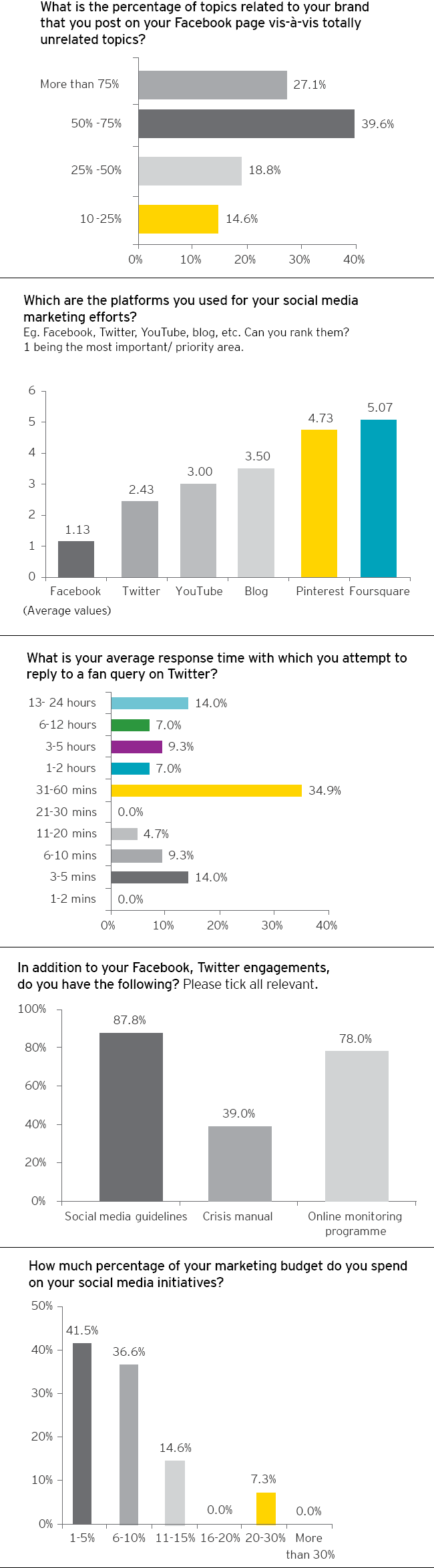
    } 95.7% use social media to build communities and advocate usage, while 76.1% use it to highlight brand news

    } 83% use social media ads, majorly to promote contests/campaigns or for brand awareness and 81% measure their success through platform-specific parameters such as’Likes’, ‘People Talking About This’, etc

    } 41.5% spend around 1%-5% of their marketing budget on social media; most social media budgets are below INR10 million

    } 76.7% have their marketing department handling social media with the rest being handled by a cross functional or PR/communications team

    } For social media campaigns, 73.8% organizations have chosen standalone digital agencies as compared to PR/ advertising agencies and freelancers


    According to the report, Facebook is the most popular social media platform in India with more than 62 million users, and is the favorite playground for social media savvy organizations to banter in everyday conversations and engage in promotions and contests for its fans. Additionally, almost half of the organizations surveyed are already using emerging platforms such as Pinterest, Google Plus, and Foursquare.


    Dinesh Mishra

    “Social media is fast emerging as a means of partnership between organizations and their customers, leading to continuous engagement and deeper loyalty. Many Indian organizations are already using social media in an advanced manner, even though there are ample growth opportunities. The future is looking bright with increase in scale and sophistication; however, social media savvy organizations need to analyze their maturity level and explore new opportunities. They can move beyond marketing and see which other departments can benefit from using social media. Clarity of purpose and engaging universally accepted approaches in calculating ROI from social media marketing will help organizations make bigger investments in this area.” said Dinesh Mishra, Advisory Director and Leader – Customer Practice, Ernst & Young.


    More than half of the social media-savvy organizations in India, who participated in the survey, post two to three updates on their Facebook pages a day. A quarter of the organizations surveyed said that they post one update per day on their Facebook pages. About one-third said that they post more than 3 tweets a day on Twitter, while 28.9% said they tweet two to three times a day. On the speed of response – one-fourth of the surveyed organizations respond to fan queries on Facebook within an average of 30 minutes of the query being posted, which indicates a robust monitoring and response structure in place. On Twitter, 28% respond to their fans and followers within 30 minutes. However, 14% of the organizations still take 13-24 hours to respond.


    With social media becoming a key component of the Marketing strategy for companies, the need to appease online fans comes as a natural extension. 64.6% of the surveyed organizations said they have organized exclusive deals for online fans and 20.8% said they are likely to organize such deals in the future. 83% of the surveyed said that they have used social media advertisements majorly to promote a contest/campaign or for brand awareness and 88.6% said they find social media advertisements beneficial in achieving their objectives.


    Almost all of social media efforts in India are managed by in-house teams: 76.7% of the surveyed expressed that social media is handled by their marketing department with the rest being managed by a cross-functional team or by the Public Relations and Communications team. Other than using it for Marketing activities, 34.6% said they use social media for thought leadership while 26.9% use it to promote corporate social responsibility. A majority (70.2%) said they have an in-house social media expert in middle management.


    Knowing how the social media governance situation looks like within an organization comes with many benefits such as recognizing strategic opportunities, enhancing competitive advantage, conducting efficient recruitment, cost reduction, generating revenue, creating valued relationships and controlling strategic, operational, reputational and legal risks.


    “Social media-savvy organizations are very optimistic about the role of social media in their organizations. Organizations have realized that social media generates great insights and helps engaging with customers on a continuous basis, and in some cases also generates sales and leads. Social media has helped organizations to create their own communities of fans, customers and prospects. The huge growth and demand of internet connected devices in India is only going to further strengthen the influence and power of social media in customer engagement, and organizations may well look at meeting their strategic goals and business needs through this channel in future,” said Mr Mishra.


  • Aaj Tak upbeat on social media

    By A Correspondent


    Hindi news Channel Aaj Tak has crossed the one-million mark on Facebook. The channel boasts of more than a million fans in the digital world. Aaj Tak on Facebook has been actively engaging with the audience by using various tools and mediums such as debates, polls, issues & news. Social media is a high interaction platform where the communication is between both the parties. The channel has been raising issues on the digital platform.


    The digital platform at Aaj Tak is currently managed by the in-house team. Salil Kumar, CEO – India Today Group Digital said that it is critical for a news channel to be present on social media. He said, “In today’s environment the audience we cater to is always on the move, their content consumption devices and hence the patterns have evolved and will continue to do so. He is connected to the world, almost 24 X 7. He not only is someone who consumes content (consumer), but has also become a contributor (social editor) and a disseminator (publisher / share), and a critic (feedback / dislike).  He seeks news not only through hard core news sites / channels but also through his social network. Hence FB and its community is a critical part of our overall strategy.”


    Aaj Tak is also monetizing its FB page, though Mr Kumar did not divulge further details.


    Going forward, the channel plans to leverage the social media connect aggressively. “The social media connect will always remain an integral part of Aaj Tak. Going forward, I would like to leverage the social connect to build a large collaborative community helping us interact and  stay connected with our audience and will be a permanent place holder on the second screen,” concluded Mr Kumar.


  • Into the all-new world of Facebook Home


    Mindshare’s “Original Thinker Series” is a series of thought pieces and PoVs from Mindshare on a range of subjects. These cover topics like digital trends, innovation and new platforms and products in the media and technology, to name a few. To subscribe or find out more, please mail Shruti Dixit at Mindshare (shruti.dixit@mindshareworld.com). Republished with permission.


    By Ciaran Norris


    After years of rumour, we finally saw the release of the Facebook phone a couple of weeks ago. Except it wasn’t a phone at all, rather a phone running Facebook Home, an application which changes many aspects of how the phone operates. Rather than get involved in a lengthy, and costly manufacturing and development battle with the likes of Apple, Android and all of the device manufacturers, Facebook has decided to take a shortcut in its attempt to rule the mobile web.


    Details

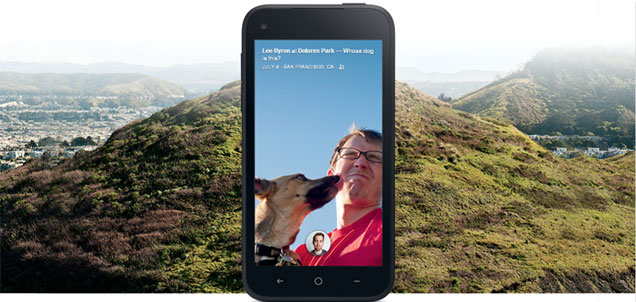
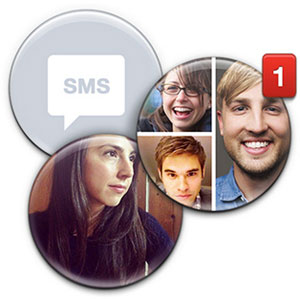
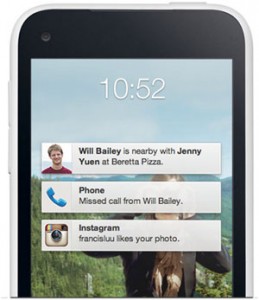
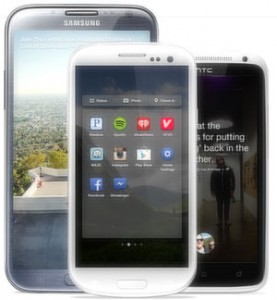
    The elements of Home that have generated the most comment are the Cover Feed and Chat Heads. The first swaps out a phone’s lock and home screens for live versions of the owner’s News Feed. Chat Heads allows people to use Facebook’s messaging services even when using another app. Both of these highlight how tightly integrated Facebook is in the new system, replacing or overlaying on top of previously core functions.


    Whilst the new system was previewed on a mid-priced new HTC Android phone, it will be released through Google Play and available on a wider variety of handsets overtime. Facebook clearly have designs on the hundreds of millions of Android handsets worldwide. There will be no Apple equivalent, as Apple would never allow such tinkering with its core products.


    Implications

    Facebook’s Mark Zuckerberg has claimed that Home will help sell more Android phones. However the fact that it was launched on a phone retailing at $99 suggests that in fact Facebook is using Android’s mass-market dominance as a Trojan Horse; this isn’t something aimed at the early-adopters – it’s for those for whom Facebook essentially is the Internet.


    This is a clear play by Facebook to try to replicate its dominance of the desktop web on mobile devices – many put its disappointing IPO down to the fact that it wasn’t adapting to mobile quickly enough. It’s certainly an ambitious and aggressive move, potentially building up its already massive data pools, and enabling it to create truly personalised ad opportunities with mobility at their core. Some have suggested that Apple will be forced to start to mimic the flexibility of the Android platform in order to allow people to download Facebook Home, but it could equally have the entirely opposite effect.
     

    The recent move to align Android and Chrome under one team, following the departure of founder Andy Rubin, could have many reasons. But one could be that it is starting to become hard to see how Android materially benefits Google’s bottom line. Samsung & Amazon barely mention Android anymore, China’s fastest growing mobile company uses it, yet most of Google’s services are banned or limited in that country, and now one of Google’s biggest competitors has launched a product that could well cut Google’s products out of the picture.


    Summary

    Facebook’s mobile strategy is now clear to see: try to dominate the platforms, rather than replicate or compete with them. For advertisers who have invested heavily in Facebook up till now, this could well offer opportunities to start to take their messages to everyday phone-owners as they go about their day-to-day.


     

    But equally Facebook’s ambitious attempt to take over the main parts of the mobile experience could well back-fire, whether due to consumer concerns about the amount of data Facebook will now have access to, or because Google decides it is no longer interested in building its competitors’ businesses as well as its own.


    Ciaran Norris is @ Digital Nation, Mindshare


    Photograph source: https://www.facebook.com/home


  • Vh1 India and Hungama launch app for Facebook

    By A Correspondent


    Vh1 has announced its entry into the digital space with the launch of a new generation app, Vh1 Pulse. The app will enable fans to be in sync with their favourite tracks, any time of the day.


    Powered by Hungama.com, Vh1 Pulse is a music streaming application on Facebook which will enable over 1.7 million fans of the channel to listen to Vh1’s picks of the best international music.


    On the application, all songs will be picked by Vh1 and fans can listen to the playlist specially created which includes the best of all English music.


    Speaking about the new app, Ferzad Palia, Senior Vice President & GM – English Entertainment, Viacom18 Media Pvt. Ltd. said, “With a fan base of nearly 2 million ardent music lovers, this addition to the Vh1 India Facebook page is part of our philosophy of ‘Vh1 Everywhere’.”


    Siddhartha Roy

    Siddhartha Roy, COO – Consumer Business & Allied Services, Hungama Digital Media Entertainment, said, “Social communities are the new media real estate for brands where they can increase interaction and engagement with their consumers. There is an increasing demand for international music and Hungama is committed at satisfying this need by powering this service via its platform and content.”


  • Paritosh Joshi: Ratings need reinventing

    By Paritosh Joshi


    A story on this site published in May 2012, “TAM to cross 10,000 Peoplemeter mark soon”, signalled TAM’s intention to substantially deepen its coverage as India’s television footprint continued relentless growth.


    It brought to mind a conversation I had with senior TAM personnel a few years ago where they explained to me the mammoth scale of the data processing task that tracking viewership involved. Here is a simplistic way of looking at it:

    1 2 3 4
    Homes Viewers (Age 4+) per home Average daily time spent (seconds) Unique data points (1. x 2. X 3.)
    10,000 4 14,400 576,000,000


    A single day’s dataset has very near 0.6 billion unique data points. Given that ratings are released weekly, the ratings tables that you read are compiled after compiling information from ~4 billion data points.


    Let us now throw in a comparison with another medium we are all familiar with: Facebook. In September 2012, Mark Zuckerberg announced Facebook’s acquiring its 1 billionth subscriber. Over a half of these are active in a given week and post at a steady rate of 3 updates a day. That’s 1.5 billion updates a day or 10.5 billion a week.


    In both cases we are talking about really large numbers. The difference is what happens next.


    TAM crunches all the 4 billion data points down to 1 second granularity viewership trends for each channel that it tracks. That gives you, say, 400 channels being tracked. Facebook, taking a radically different view, starts trying to triangulate what are the likes, dislikes, interests and affiliations of each one of 1 billion individuals.


    In the TAM view of the world, individuals are faceless, identity-less statistics who vote with their eyes for different channels and shows. In the Facebook view of the world, individuals are the very center of all analytical exercises helping the company offer individually tailored suggestions for everything from whom they should seek out to make friends with through what they ought to be buying.


    The difference is telling. The legacy medium places the content at the centre of the analysis plan, the new age one, the consumer. While the first plan crunches a large dataset down to a relatively compact tabulation, the second embraces the concept of ‘Big Data’ where datasets going into the Exabyte order of magnitude (an Exabyte is 1 billion gigabytes) are routine.


    Ratings have been around from times when mechanized data processing was in its infancy and the first task before any database manager was reducing and compressing voluminous data into a few large chunks that could then be subjected to analysis. In the specific case of television viewership, an easy was to construct a histogram that plotted the number of viewers against each channel and program. This histogram would then be projected up from the sample to the population to yield an estimate of the percentage of people who watched a particular program: the rating. Since this was the only way in which we had ever seen television viewership being tracked and reported we found nothing odd or inadequate about it. Even today, when digital media enable us to target individuals with very precisely defined characteristics, we still don’t challenge the rather coarse approach that ratings take.


    So here is a thought: It is time for television measurement to place the viewer at the centre of the measurement system.


    The advent of digitization in India’s television landscape throws up an interesting possibility. If a return path from subscriber to distribution platform is natively available, as it is in digital cable systems or is bolted on using various modes of internet access, as it is in DTH, it becomes possible to know continuously what channel the set top box is tuned to. Techniques like Data Fusion and Ascription (dealt with in a previous column that you can find here) make it possible to marry set top box data with respondent level Peoplemeter data thus magnifying it to large digitally connected populations, within defined levels of statistical error. It is now possible, provided we already have access to cable or DTH operators’ subscriber lists, to develop very good estimates of the viewership behaviours of individual consumers.


    In effect, we can tell, within defined levels of error, what an individual in a digital cable or DTH home consumes on television through the day. We now have a view that is viewer centred rather than channel/programme centred. This is where the ‘Big Data’ approach must come in. The massive datasets that are born of the union of Peoplemeter and Set Top Box data need Big Data tools to be managed sensibly. Mining the datasets using these tools can yield an unprecedented level of textured understanding and individually addressable propositions.


    And given that digital distribution platforms now have the ability to push messages and suggestions to the viewer, just like online media do, we can use such insights to deliver unique marketing messages, whether for broadcast content or for client brands.


    Come on then, BARC, put that viewer at the centre.


    Paritosh Joshi has been a marketer, a mediaperson and a key officebearer on industry bodies. He is developing an independent media advisory practice. His column, Media Matrix, appears on MxMIndia, usually on Thursdays