Tag: Digitization

  • Hathway goes all out for digitization awareness

    By A Correspondent


    Digitization of TV is less than a fortnight away and Hathway is leaving no stone unturned to educate the customers about the benefits and importance of digitization. With digitization, consumers will be able to watch a wider variety of TV channels in digital quality, providing them better viewing experience than ever before. Digitization will also allow consumers to pick their mix of favourite channels.


    Hathway has undertaken multiple initiatives to make the consumer aware that digitization is affordable and will take TV viewing experience to the next level. Marketing activities including advertising placements in mainstream print publications across the country, outdoor advertising and door-to-door campaigns are being conducted to educate the consumers.


    Infomercials about digitization are running on Hathway’s local channels, and its consumers are also receiving e-newsletters on the issue.


  • COFI has reservations about digitization

    By A Correspondent


    Fifteen days to go and controversies regarding the first phase of digitization refuse to die. Kolkata Cable Operators Digitization Committee has already written to the ministry to take into account their representation in the meetings. Now, the Cable Operators Federation of India (COFI) has voiced its apprehension regarding a-la-carte packages. In a task-force meeting in New Delhi, COFI presented a paper saying, “Government’s promises of a high quality digital cable service with affordable price and a facility to choose their favourite channels and pay only for them will prove false if subscribers find on November I that in spite of paying Rs 800 to Rs 2000 for STB they don’t have any choice and being forced to pay two to four times more to get the same cable TV service.”


    The paper then went onto list the offers from MSOs as given on their respective websites:

    • DEN Networks has NO channel from Indiacast (Viacom 18 and Sun) like Colors, Sun South Indian channels etc.
    • DIGI has no STAR channels, no ZEE channels and no SPORTS CHANNELS except DD sports and their package price is Rs. 250 PM.
    • IN CABLE has not given any names of the channels that they will carry on their network.
    • HATHWAY is the only MSO to carry all popular Premium channels on their Network but package with popular channels cost consumers more than Rs 350 (with Taxes).
    • No MSO has given a-la-carte rates of channels to allow consumers to select individual channels.


    Channel Package Offers from MSOs

    MSO Name of Package No. of Channels Rate Per Month in Rs (Exclusive of Taxes) Remarks
    Digi Cable Basic 145 180 No Star and ZEE Channels. Minimum customer price after taxes in Delhi will be Rs. 260.00 Taxes applicable on all packages and monthly rentals:1. Entertainment Tax- Rs 20 in Delhi.2. Service Tax- 12.5%

    3. Vat- 10%

    4. STB Rental- Rs 15- Rs 100 per month

    Gold 151 200
    Premium 165 250
    Hathway Basic 135 160 Minimum Customer price Rs 240.00 after taxes
    Medium 198 220
    Premium 242 275
    DEN Pack1 112 180 No Colosr, Sun group etc. Minimum Customer Price Rs. 260 after taxes
    Pack2 219 225
    Pack3 235 270
    WWIL Janta 118 100 Minimum Customer Price Rs. 160 after taxes Minimum Customer Price Rs. 160 after taxes
    Popular1 (Kolkata) 151 150
    Popular2 (Mumbai) 153 150
    Popular3 (Delhi) 142 150
    IN Cable Manoranjan FTA 100 100 Minimum Customer Price Rs. 160 after taxes
    IN Silver 140 225
    IN Gold 175 275
    IN Platinum 200 325
    IN Diamond 250 400


    STB Selling Schemes

    MSO Outright Purchase Rental Scheme Hire Purchase
    DEN Rs.1999/- including taxes Rs.799/- + Rs.15/-p.m. for 5 years, excluding taxes Rs.400/- + Rs.40/-p.m. for 5 years excluding taxes
    Hathway Rs.1999/- including taxes Rs.1900/- + Rs.40/- p.m. for 35 months including taxes Rs.500/- + Rs.100/-p.m. for 15 months including taxes
    Incable NIL Rs.500/- + Rs.40/- p.m. for 40 months Rs.500/- + Rs.100/- p.m. for 18 months
    Digicable Not available
    WWIL Not available


    It was also pointed out that none of the MSOs are offering the Rs 100 FTA package as provided in the regulations.


    According to the COFI memorandum, LCOs had raised this point of packages and pricing on 8th June at stakeholders meet in Vigyan Bhawan and were assured by the I&B Minister and MSO representatives that they will come out with final packages very soon. More than 4 months have passed and still no sign of any clarity on packages, pricing of channels and STB schemes.


  • Jaldi 5 with Anil Garg: No industry body to take care of smaller channels

    While digitization is supposed to help bring in greater transparency into the broadcast ecosystem, the real beneficiary will be the small broadcaster who could well be on a near-equal playing field as a big broadcaster. But does the small channel-owner really feel that he or she is going to benefit. While there are several independents in the business, we approached one who is indeed completely unattached to any ‘big’ force and is not part of any major broadcast association or pressure group.


    We spoke to Anil Garg, Chairman & Managing Director, Explore Travel Channel.


    01. Is there renewed hope for small channels such as yours given that digitization will see access fee being eliminated?

    I don’t know if the access fee will be eliminated completely, but yes it will be in cases where the distributors ask a channel for the signal! The good news is that if digitization is implemented in the manner that has been mandated by the government, it will help many specialized and FTA channels to be a part of the FTA package. But most importantly, we should appreciate that the biggest beneficiary of this historic switchover to digital is going to be the consumer. They will have more choice, better quality of signals and a transparency in billing practices.


    02. So is it goodbye to carriage fees wef November 1?

    No, I don’t think so. But there will be some rationalization since the operators have more bandwidth unlike what was the case in the analogue space. Also there is really no prime band kind of placement. With the increased number of channels on the digital platforms, channels are typically grouped by genre. With all this, we will see carriage fees being re- negotiated.


    03. Are there areas where you think the government can still step and clear the mess?

    I am not sure if there is a mess in the digitization proposal mandated by the government. This is a serious attempt by the government to shift the nation to digital and this is the only way to grow the industry and all the stakeholders in this ecosystem be it broadcasters, advertisers or the distributors among others. Everyone needs to work together at this important and historic juncture in time.


    It is important that the rollout be implemented in time and as fast as possible to ease the perceived pain in implementing, as I said earlier, perhaps the first major step towards improving service levels and bringing in transparency and an element of fairness in this business.


    I am sure that once the rollout starts, there will be many suggestions on how to improve the process and am sure that the government and the various stakeholders will be open to discussing such suggestions and sorting them out.


    04.What’s your view on ratings? Should TAM be suspended in the early days of

    digitization?


    As we are aware, there is already pressure on TAM Media Research to suspend television ratings data on account of digitization rollout in the four metros. There is always resistance to change; in this case we hear that in such a situation the advertisers are concerned on the methodology that will be used by media planners and broadcasters in their pricing mechanisms due to lack of an alternate viewership metric.


    It is a fact that the TAM (analogue home) sample size in these four metros is substantial. Therefore, there is bound to be inaccurate viewership data till such time TAM transitions totally in the digital markets. Till such time, using such inaccurate data will be rather unfair to all stakeholders. The other grouse is from the advertisers in that they would like to be cautious about spending large sums on advertising on television without any accurate data on the returns on such spends.


    Again as I have said, all the stakeholders must take a call in this matter in the bigger interests of the industry and the consumer in particular. My own personal view is that no one should use inaccurate data.


    05. Are industry bodies able to take care of the interests of small channels like yours?


    I don’t think any industry body exists to take care of the smaller channels. Neither is there any industry body helping promote the growth of pro-social channels. Nor has the government built any mechanisms to support television channels, large or small; I feel it is high time the government came out with a plan to support media channels, especially if they are in the pro-social domain.


    There is an urgent need to build a body akin to NASSCOM for the television industry in this country.


  • The A-Z of DIGITIZATION


    By Shruti Pushkarna


    Digitization in the four metros is less than 20 days away. But what exactly does it mean, and why this usage of the term Sunset Date. What does ARPU mean and why is COFI spelt without an extra F and two Es?


    Here’s The A-Z of Digitization… terms explained and contextualized.


    ARPU

    Average revenue per user or average revenue per unit is an expression of the income generated by a typical subscriber or device per unit time per month or per year. The ARPU provides an indication of the effectiveness with which revenue-generating potential is exploited. It is the amount of money, on average, that a company brings in for each of its customers.


    ADDRESSABILITY

    Addressability is the ability of a digital device to individually respond to a message sent to many similar devices. Examples include pagers, mobile phones, and set-top boxes. Addressability is the process by which (optionally encrypted) messages are sent from the cable provider for a particular cable box via the cable signal. The cable company can “address” a particular customer’s cable box to command it to activate or deactivate the descrambling of selected premium or pay-per view channels.


    ADVERTISING AGENCIES ASSOCIATION OF INDIA

    With the deadline approaching, the apex body of advertising agencies has naturally got active. If digitization is not 100 percent, the advertisers they represent will have reason to feel cheated if the government bans transmission of analogue signals.


    ANALOGUE (OR ANALOG)

    Analogue television is the analogue transmission that involves the broadcasting of encoded analog audio and analog video signal, one in which the message conveyed by the broadcast signal is a function of deliberate variations in the amplitude and/or frequency of the signal. All broadcast television systems preceding digital transmission of digital television were systems utilizing analog signals. Analog television may be wireless or can require copper wire used by cable converters.


    A-LA-CARTE

    With reference to offering of a TV channel, a-la-carte means offering the channel individually on a standalone basis.


    ADDRESSABLE SYSTEM

    An electronic device (which includes hardware and its associated software) or more than one electronic devices put in an integrated system through which signals of cable television network can be sent in encrypted form, which can be decoded by the device or devices, having an activated Conditional Access System at the premises of the subscriber within the limits of authorization made, through the Conditional Access System and the subscriber management system, on the explicit choice and request of such subscriber, by the cable operator to the subscriber.


    ARASU

    Soon after she came to power in 2010, Tamil Nadu chief minister J Jayalalithaa set up a government-owned cable service called Arasu to counter the dominance of Sun. The digitization in Chennai rests on how many set-top boxes Arasu is able to install in the next few weeks.


    BROADCASTERS

    A person or a group of persons, or body corporate, or any organization or body providing programming services and includes his or its authorized distribution agencies.


    BANDWIDTH

    The amount of data that can be transmitted in a fixed amount of time. For digital devices, the bandwidth is usually expressed in bits per second (bps) or bytes per second. For analog devices, the bandwidth is expressed in cycles per second, or Hertz.


    BARC

    Short for Broadcast Audience Research Council, a body being set up jointly by the broadcasters, advertisers and advertising agencies with the blessings of the government. Mandated to govern audience research (very specifically measurement), it’s taken some five years to set up given the complexity of its operations and ownership.


    BST

    Basic Service Tier means a package of free to air channels to be offered by a cable operator to a subscriber with an option to subscribe, for a single price to subscribers of the area in which his cable television network is providing services.


    BOUQUET

    Bouquet or bouquet of channels means an assortment of distinct channels offered together as a group or as a bundle. MediaPro – owned by Star India and Zee Entertainment is the biggest.


    CABLE OPERATORS

    Any person who provides cable service through a cable television network or otherwise controls or is responsible for the management and operation of a cable television network and fulfils the prescribed eligibility criteria and conditions.


    CARRIAGE FEES

    Carriage fee has been defined as any fee paid by a broadcaster to a distributor of TV channels, for carriage of the channels or bouquets of channels of that broadcaster on the distribution platform owned or operated by such distributor of TV channels, without specifying the placement of various channels of the broadcaster vis-à-vis channels of other broadcasters.


    COFI

    Cable Operators Federation of India is a national level, registered, non-profit organization with head office in New Delhi with its executive members spread-out all over India and with membership of more than 23,000 cable operators (Delhi alone accounts for 1200). COFI was founded in August 1993 with the primary aim of forming a unified body to represent Indian cable operators at national and international levels and with the strong determination to unite all State Associations and bring them under one powerful representation.


    DIGITIZATION

    Digitization is the process of converting information into a digital format (also referred to as digitalization). In this format, information is organized into discrete units of data called bits that can be separately addressed (usually in multiple-bit groups called bytes). Audio and video digitization uses one of many analog-to-digital conversion processes in which a continuously variable (analog) signal is changed, without altering its essential content, into a multi-level (digital) signal.


    DTH OPERATOR

    Direct to Home operator means an operator licensed by the Central Government to distribute multi channel TV programmes in Ku band by using a satellite system directly to subscriber’s premises without passing through intermediary such as cable operator or any other distributor of TV channels.


    DAS

    In this model, all the channels, whether Free-to-air or Pay, are delivered in the addressable-digital form only. This is akin to the DTH model. Not only is content carried in digital form, all content, whether pay or FTA, is also encrypted. The subscriber necessarily requires a Set Top Box (STB), duly authorized by the service provider (MSO), to view the TV channels. The same STB can also be used for the reception of other value added services and interactive services such as broadband.


    DTH SERVICE

    Direct to Home service means distribution of multi channel TV programmes by using a satellite system by providing TV signals directly to subscriber’s premises without passing through intermediary such as cable operator or any other distributor of TV channels.


    DTH

    Television and radio programmes distributed by satellite for reception via a dish at the receiver’s property.


    ENCRYPTED

    Encrypted: in respect of a signal of cable television network, means the changing of such signal in a systematic way so that the signal would be unintelligible without use of an addressable system and the expression ‘unencrypted’ shall be construed accordingly.


    EVASION

    Evasion is what the cable is said to be indulging in. It is believed that cable television service is prone to tax and revenue evasion by under reporting of client base by cable operators.


    EXTENSION

    An extension of deadline is what folks in Chennai and Kolkata are seeking. Political compulsions may well force the government to give in, but the answer lies beyond the I&B Ministry offices in Shastri Bhavan. 10 Janpath perhaps?


    FTA

    Free-to-air channel: in respect of a cable television network, means a channel for which no subscription fee is to be paid by the cable operator to the broadcaster for its retransmission on cable.


    FOREIGN DIRECT INVESTMENT

    Foreign direct investment is investment of foreign assets into domestic structures, equipment, and organizations. With respect to cable television, Foreign investment limit is the cap put on FDI in cable television by the central government.


    GEC

    An acronym that stands for General Entertainment channels in India. This includes entertainment channels in Hindi, English and regional languages. Some examples would be – in no specific order – Star Plus, Zee TV, Colors, Sony Entertainment Television etc. English GECs would be Star World, Zee Cafe etc.


    HITS OPERATOR

    Headend in the sky operator means any person permitted by the Central Government to distribute multi channel TV programmes in C band or Ku band by using a satellite system, to intermediaries like cable operators and not directly to subscribers; and by using its own cable network, if any, to the subscribers of such cable network through Quadrature Amplitude Modulation (QAM) set top boxes, after first downlinking the signals at its terrestrial receiving station; and provide passive infrastructure facilities like transponder space on satellite, earth station facilities, etc. to one or more multi-system operators or to any consortium of multi-system operators or cable operators, for distribution of multi channel TV programmes in C band or Ku band through QAM set top boxes, using such infrastructure facilities.


    HD

    High-definition video or HD video refers to any video system of higher resolution than standard-definition (SD) video, and most commonly involves display resolutions of 1,280×720 pixels (720p) or 1,920×1,080 pixels (1080i/1080p). High definition is the top-level resolution offered within the digital television category. Digital cable comes in three formats – standard, enhanced, and high definition.


    I&B MINISTRY

    The Ministry of Information and Broadcasting is a branch of the Government of India, an apex body for formulation and administration of the rules and regulations and laws relating to information, broadcasting, the press and films in India. The Ministry is responsible for the administration of Prasar Bharati-the broadcasting arm of the Indian Government. The Censor Board of India is the other important body under this ministry being responsible for the regulation of motion pictures shown in India. As of May 2009, the head of the ministry, Minister of Information and Broadcasting is Cabinet Minister, Ambika Soni (I&B Ministry is also referred to as MIB).


    IBF

    The Indian Broadcasting Federation is the trade association of broadcasters. Most broadcasters are members. Digitization impacts its members… right now in the four metros and soon the rest of the country.


    INDIAN SOCIETY OF ADVERTISERS

    That ISA follows the IBF in the list is coincidental. Jokes apart, the Society represents the interests of advertisers who, in the Indian context, pay for all of us getting the content. The ISA, is rightfully, concerned about that if digitization is not 100 percent, advertisers will feel cheated if the government bans transmission of analogue signals.


    IPTV

    IPTV or Internet Protocol television service means delivery of multi channel TV programmes in addressable mode by using Internet Protocol over a closed network of one or more service providers. As a technology it hasn’t really taken off in India even by those who have high-end computers and high-speed data connectivity.


    IRD/INTEGRATED RECEIVER DECODER

    An integrated receiver/decoder  is an electronic device used to pick-up a radio-frequency signal and convert digital information transmitted in it. Commonly found in radio, television, Cable and satellite broadcasting facilities, the IRD is generally used for the reception of contribution feeds that are intended for re-broadcasting. The IRD is the interface between a receiving satellite dish or Telco networks and a broadcasting facility video/audio infrastructure.


    JUNE 30TH/JULY 1

    June 30, 2012 was the (first) deadline set by the government for a complete switch over from analog to digital cable television in four metros, Delhi, Mumbai, Kolkata and Chennai. Post June 30, all analogue was expected to be switched off. The new deadline set by the govt is October 31.


    K-BAND

    The Ku band (Kurtz-under band)  is a portion of the electromagnetic spectrum in the microwave range of frequencies ranging from 11.7 to 12.7GHz. (downlink frequencies) and 14 to 14.5GHz (uplink frequencies). The Ku band is primarily used for satellite communications, particularly for editing and broadcasting satellite television.


    LCO

    Acronym for Local Cable Operator. The role of the LCO in the supply chain is to receive a feed (bundled signals) from the Multi system operator (MSO) and retransmit this to subscribers in his area through cables.


    MAMATA

    Like it or not, it’s not set-top boxes which will finally decide when digitization will actually happen in Kolkata… it’s Chief Minister Mamata Banerjee. Sigh.


    MIB

    See I&B Ministry


    MSO

    Multi-System Operator: means a cable operator who has been granted registration under rule 11 of the Cable Television Networks Rules, 1994, as amended by rule 8 of the Cable Television Networks (Amendment) Rules 2012, and who receives a programming service from a broadcaster or its authorized agencies and re-transmits the same or transmits his own programming service for simultaneous reception either by multiple subscribers directly or through one or more local cable operators and includes his authorized distribution agencies, by whatever name called.


    MSO ALLIANCE

    Trade association of the MSOs


    NBA

    The News Broadcasters Association or the NBA is the apex body of news broadcasters in India. Given the nature of their business and specific demands, a key stakeholder amongst broadcasters.


    NODAL OFFICER

    Means the officer appointed or designated by the multi-system operator or his linked local cable operator, as the case may be under regulation 8 of the regulations.


    NOVEMBER 1st

    Dawn of a new era. For the rest: see October 31st


    OCTOBER 31ST

    October 31, 2012 is the new deadline set by the government for a complete switch over from analogue to digital cable television in four metros, Delhi, Mumbai, Kolkata and Chennai. From November 1, 2012 all analogue is expected to be switched off.


    PAY CHANNELS

    In respect of a digital addressable system, means a channel for which subscription fees is to be paid to the broadcaster by multi-system operator or DTH operator or IPTV operator or HITS operator and due authorization needs to be taken from the broadcaster for its re-transmission on the digital addressable system.


    PLACEMENT FEE

    Any fee paid by a broadcaster to a distributor of TV channels, for placement of the channels of such broadcaster vis-à-vis channels of other broadcasters on the distribution platform owned or operated by such distributor of TV channels.


    QoS 

    Acronym for Quality of Services, which are the benchmarks for various parameters laid down by the Telecom Regulatory Authority of India for the service provided to the viewers. Quality of Services may be defined as the collective effect of service performance which determines the degree of satisfaction of a user of the service


     (Rs.)

    The rupee symbol. It’s revenues that everyone is looking for.


    RATINGS

    The all-important ratings. TRPs (or Television Rating Points) is now part of the average Indian’s vocabulary. There is a dispute about TAM’s measurement process, but there can be no denying the need for ratings for advertisers to be able to figure how and where monies should be put.


    SERVICE PROVIDER

    Service Provider: means the Government as a service provider and includes a licensee as well as any broadcaster, direct to home operator, HITS operator, multi-system operator, cable operator or distributor of TV channels.


    SET-TOP BOX

    Written variously, but ideally hyphenated, these are boxes that help your television set ‘read’ the digital signals that come from your broadcaster via a cable or DTH operator. Abbreviated STB.


    STAR INDIA

    It was the  first private satellite broadcaster in the country and it’s also the most popular pan-India given the channels it has. Other than broadcasting, also has interests in bouquet (MediaPro) and DTH (Tata Sky). Exited its interest in MSO Hathway recently.


    SUBSCRIBERS

    The most vital part of the cog in the wheel. With packages and a la carte services on offer, revenues from subscribers could well lead to greater transparency in the system.


    SUN

    The undisputed leader in South India, but although its DTH business has spread to other parts of the country, it’s domination doesn’t extend beyond South India. Often impacted by political affiliations.


    SUNSET DATE

    A commonly used term for the scheduled date for a phasing out of operations. Here’s the Wikipedia definition: In public policy, a sunset provision or clause is a measure within a statute, regulation or other law that provides that the law shall cease to have effect after a specific date, unless further legislative action is taken to extend the law. Most laws do not have sunset clauses and therefore remain in force indefinitely. (Verb: sunseted)


    TRAI

    The Telecom Regulatory Authority of India (TRAI) is the independent regulator of the telecommunications business in India.


    TAM

    Television Audience Measurement or TAM Media Research is a joint venture company between AC Nielsen and Kantar Media Research/IMRB. It is one of the television Audience measurement analysis firms of India. Besides measuring television viewership, TAM also monitors advertising expenditure through its division AdEx India. It exists in the PR Monitoring space through another division – Eikona PR Monitor. There has been a legal tangle that TAM has been involved with along with its co-owners. There are also many broadcasters (Bloomberg TV being the latest) who have been questioning the processes TAM follows for measurement.


    TDSAT

    Telecom Disputes Settlement Appellate Tribunal was established to adjudicate disputes and dispose of appeals with a view to protect the interests of service providers and consumers of the telecom sector and to promote and ensure orderly growth of the telecom sector.


    TARIFF ORDER

    A schedule of rates and charges applied by a business, especially a common carrier, together with a description of the services offered and the rules and regulations applicable.


    TERRESTRIAL

    Terrestrial channels are those that you can receive via a normal aerial. These are currently being switched off as the Digital Switchover reaches all over the country.


    TRANSPARENCY

    Or the lack of it. Widescale under-reporting of the number of subscribers by the cable trade is said to be one reason why broadcasters are so dependant on advertising as the source of revenue. Digitization could help lead to greater – if not total – transparency.


    UPLINKING

    Uplinking refers to the transmission of a signal via a satellite from one terrestrial location to another location and then ultimately the signal can be distributed to the end users.


    VAS/VALUE ADDED SERVICE

    Value-added Services refers to advanced or additional services a content provider (network operator) offers to possibly increase their revenues, or make their offering more competitive. VAS type services might include e-mail, Internet access, text messaging, enhanced TV, video on demand, teleshopping, communal gaming, TV Mosaics, interactive advertising and subscription gaming.


    VIEWERSHIP

    The all-important requirement metric… not just for revenues, but also for feedback on content. Also see: Ratings


    ZEE

    From amongst all the broadcasters in the Indian space, the 20-year-old Zee TV at the helm is by far one of the most influential players in the space. Chairman Subhash Chandra is still one of the most influential players in Indian broadcast.
     

  • It’s Dish’tization as basic tier is free for Dish subscribers

    By A Correspondent


    Dish TV, the DTH service provider, has announced a game-changing initiative aimed at viewers in the four metros which are due for digitization. Dish TV’s customers will be eligible to receive a basic channel tier comprising of 70 channels free of cost for five years. TRAI had recommended at providing the basic tier (free-to-air channels) at Rs 100 per month to their subscribers. The Dish TV subscribers will have to recharge the option every six months with Rs 200.


    “The offering is valid for four metros: Delhi, Mumbai, Chennai and Kolkata. We are adopting the telcos’ method. The free-for-lifetime offer did not reduce their revenues neither did it affect the size of the industry in negative way. We are sure that with this package, consumers will have more choice, and will recharge to avail access to more channels,” said Salil Kapoor, COO, Dish TV.


    The launch will be supported by a 360-degree media campaign. Mr Kapoor said, “The media campaign will be launched in all four metros within a week. The total outlay for the whole campaign is to the tune of Rs 30 crore.”


  • Cable operators seek protection

    By A Correspondent


    In letters addressed to Ministry of I&B and Home Ministry, the West Delhi Cable Operators Association has put forth its apprehensions regarding switching off the analogue signals in the move towards digitization. The letter says that since consumers are not aware of the process leading up to digitization, including switching off the analogue signals, the last mile operators might have to face the wrath of consumers, who might also damage the offices of the LCOs.


    The letter says:

    a) No a-la-carte rates have been announced.

    b) STBs forced upon the consumers are basic ones of the cheapest variety without any features of video –on-demand, internet, games etc. that you have been promoting.

    c) No testing/ repair/ maintenance facilities exist for STBs.

    d) In spite of the consumer paying Rs 800 for an STB, ownership of it remains with the MSOs. The charges are termed as ‘Activation Charges’.

    e) MSOs are asking to pay more for the STBs now. Some of them are selling the STBs for Rs 2000. For HD STBs, Rs 6000 is being demanded.

    f) These STBs are not subsidised as reported by the media.

    g) Millions of poor consumers do not have good quality TV sets to support digital feed. They cannot use STB unless they spend more on a new TV set which they are resisting.

    h) Many areas of the metros do not have digital feed from any MSO.

    i) Increase in electricity bills of consumers.

    j) Rs 20 or more entertainment tax and 12.5 percent service tax on the cable TV bills for each STB.

    k) Consumer does not have any choice. He is being forced to buy the bouquets that an MSO gives.


    “We all are willing to co-operate with the government for the good of the consumers but we fear that since the consumers don’t know that they would not get all their choice in a single package of MSO and they would have to pay much more for the cable service, they are likely to react and cause damage to the life and property of cable operators,” said the letter.


  • Digitization in Delhi crosses 66%, 99% in Mumbai: MIB

    By A Correspondent


    As per the data made available to the government by the multi system operators (MSO), the level of cable TV digitization in Delhi has increased to 66 percent. It has been reported by the six private DTH operators that 9.45 lakh households have got DTH connections in Delhi as onOctober 9, 2012. This implies that 19.94 lakh households have cable TV connections. Adding a provision of 20 percent to account for multiple TV homes and TV sets in offices etc., it is implied that about 23.93 lakh subscribers require set top boxes (STBs). As per the data made available by the MSOs, 15.88 lakh STBs have already been installed in Delhi.


    Taking into consideration that the fact that figures given by the ministry have been questioned, a press release from the ministry said, “During the initial stage of planning, the data was collated by the Ministry based on the information supplied by the MSOs. On perusal of the data, it was observed that there were grave discrepancies in data, particularly number of cable TV subscribers in four metro cities furnished by the MSOs.” The ministry has thus undertaken the exercise to base the data on Census of India 2011, released by Office of Registrar General & Census Commissioner, India, which gives authentic figures relating to households and TV penetration in Delhi, Mumbai, Kolkata and Chennai.


    The analysis of data received from four metro cities reveals that overall 77 percent of cable TV digitization has already been achieved. City-wise data shows that the achievement of cable digitization in Mumbai is 99 percent, followed by Kolkata (73 percent), Delhi (66 percent) and Chennai (59 percent). Taking into consideration the progress made by DTH in this sector, the level of digitization goes upto 84 percent in the four metros.


  • MxM Monday: Are the 4 metros really ready for digitization?


    By Ananya Saha


    It is less than a month to go (24 days to be precise!) before the extended Sunset Date on Phase I of digitization arrives. The West Bengal government has already asked for an extension, and Chennai grapples with issues too. While Mumbai and Delhi seem on track, does 100 percent digitization in all four metros seem like a remote reality? Are the four metros ready to switch off analogue signals from midnight of October 31?

    MxMIndia sought a variety of views from stakeholders – Multi System Operators (MSOs), Local Cable Operators (LCOs), and broadcasters – on the status of digitization for Phase I.


    Susmit Basu, VP, Strategy & Business Development, DEN Networks Ltd

    I will not comment about Chennai but Delhi, Mumbai and Kolkata are geared for digitization. The cable operators are positioned to digitise the market by the deadline. What is needed for digitization: setting up of digital head-end. Once the digital head-end is established, the same cable network that was running the analogue signals can transmit the digital signals. The third and the critical step is placing the set-top boxes in the homes.


    The first two steps in the three cities have already been covered. For the third step, with the earlier deadline of June 30, it was true that a lot of MSOs were not ready. Many were, like DEN, since we were pushing for STBs aggressively. But in the three months that has passed since then, MSOs have ordered a lot of STBs. Also the ministry, I&B, central government and TRAI are playing a very active role and tracking digitization day-to-day. It is quite remarkable the detail and granularity that they go into on taking status from various MSOs, finding and visiting various kinds of households to see if the digitization is happening and at what level.


    MIB has launched a campaign as well in the last few days, and that kind of consumer messaging was missing. We, as MSOs, came together and were doing a consumer awareness campaign. The kind of push that has been out through the new campaign by MIB, which is being beamed across various channels, is completely unprecedented in terms of the scale and the push from all stakeholders. Broadcasters are giving primetime inventory to run these ads. The entire ecosystem is working together.


    This is the last one month, and if we continue to work like this it is a very achievable task. Between now and the deadline, a lot more awareness is going to come into play.


    Swapan Chowdhury, General Secretary, Cable & Broadband Operators’ Welfare Association, Kolkata

    Digitization of the cable TV system is the need of the hour and cable operators of Kolkata and West Bengal are all set to welcome the next generation technology. The idea of adopting the technology is to win-win situation for all the stakeholders of the industry that started way back in 1990-91.

     

    Digitization has been taken up in a fashion which is contrary to its actual application. If we set aside the WB state government’s request for extension, what we see on the matter is:


    • There was no movement/activity from any stakeholder after Ordinance and Notification vide dated 11.11.2011 from the central government and cable operators were only been communicated from late December 2011.
    • MSOs were delivering STB without assigning any appropriate scheme to opt with variable price that fluctuates, very often leading to confusion in the market and in the consumers’ sentiment. Neither have MSOs undertaken any consumer awareness programme.
    • Cable operators were not informed of the revenue that will be retained by them after executing their role and responsibility untill April 30, 2012. The revenue sharing model between MSOs and cable Operators in the term of Section 5 of the Tariff order is for FTA @ 55:45 and pay channel @65:35. It has given better right to the MSOs, ignoring the cost incurred by the cable operators in executing the service. In the CAS zone TRAI alloted around Rs 82 for analogue free-to-air channel, but in absolute digital system the revenue of DFTA has brought down to Rs 45 only. Despite objection from cable operators, TRAI has not considered while formulation the sharing nor did they reconsider the same. Cable operators demanded allocation of considerable /justified charges to enable them to deliver digital cable TV service to the consumers after taking into consideration all costs involved therein, including cost of providing services, network upgradation, repairing and recurring cost, salaries and wages, electricity and all government statutory charges.
    • There were no steps to declare the programme package and its price so that cable operators could start dialogue with consumers. Cable operators are the interface of the whole system but have not been considered and kept informed in the matter, though they are responsible for ultimately selling the product to the consumers. Recently cable operators have come to know about the package and its rate from the media, but none of the MSOs have officially communicated this to the operators in detail till now.
    • There was no arrangement from the MSOs in regard to the “Interconnect Agreement” which is to be completed with the cable operators. Only in the last week of September did one MSO come out with their interconnect agreement, while the others are still to come. The terms and conditions of such an agreement is absolutely contrary to the interests of the cable operators; it has been formulated arbitrarily and is biased in nature. The MSOs have failed to win the confidence and trust of the cable operators who have been doing business since the last 20 years and are the key architecture in building this huge industry.
    • There was no advertisement material in the print media from the Ministry of Information & Broadcasting except one only; as a result consumers were not convinced of the system. On the contrary the DTH service providers were coming out with different and negative insertion in the print media, causing even more confusion.
    • The DTH service providers are also using their own infrastructure for promotiom of their own service and system. At a time when the cable TV industry is on the verge of a massive migration process from analogue to digital platform, the DTH service providers have played a negative role and stalled the digitization process.


    In absence of cooperation from the stakeholders, cable operators could not come forward. The malpractice of the broadcasters and the DTH service providers confused the consumers’ sentiment. Demand for STBs did not pick up as expected. Moreover, a few MSOs of Kolkata are running short of inventory and could not deliver set top boxes to their associated cable operators in spite of advance payment from the operators. The government is indifferent and not ready to understand the ground reality, and instead is trying to implement DAS forcibly.


    In the process, the government and the TRAI are giving misleading information in connection with the seeding rate of STBs. The actual penetration is far below the recent announcement by the I&B Ministry. In Kolkata out of approximate 40 lakh STBs, only 12-13 lakh STBs have been seeded and hence forcible implementation of DAS on the deadline date will deprive around 65-70 percent of cable subscribers.


    Anil Khera, CEO, Videocon d2h

    All the responsible bodies, whether it is TRAI, MIB, Broadcaster, DTH operator & MSOs, are doing everything to achieve the deadline.


    As a DTH operator we would like to welcome the efforts by the government and bodies affiliated to broadcasting & distribution. All DTH operators in country have jointly digitized nearly 50 million homes pan India. India’s total household population as per the 2011 survey is 240 million households, out of which 150 million have TVs, which takes India’s CTV ownership penetration to 60 percent. Out of 150 million TV households, 50 million have been digitized already by DTH operators.


    In the first phase of digitization there are 11 million households in four metros. Out of which two million have been already digitized by DTH operators and as per MIB’s latest figures released, there are only 2.2 million homes left to be digitizes or where boxes need to be seeded. We all are 99.99 percent sure that this time, digitization dates will not get postponed. If this phase gets started on the specified dates, the rest of the country’s schedule will follow in a timely way.


    The digitization process will bring about a level playing field for DTH and cable operators in the content cost, taxation and addressability. This also help the DTH and cable operators to increase the ARPUs because of non leakage of revenue. The digitization process will create a wonderful, transparent ecosystem whether it is DTH operator, cable operator, broadcaster, state government or central government. Everyone will reap the benefits of this law of digitization.


    The consumer will get universal pricing, choice of packaging, enhanced picture quality, and better viewing experience, whether he stays on DTH or cable. Earlier the consumer used to switch between cable and DTH as cable has no entry cost. But now it will be a cautious decision by the consumer. This will create box rationalization. Also, everyone will migrate to ‘per TV price’ regime. Digitization is therefore will lead to a paradigm shift in home entertainment.


    There is another benefit to the consumer, and that is high definition. We have almost all the required channels in GEC, movies, music and sports genres in HD format, and most of the DTH players are also capable of broadcasting 3D channels.


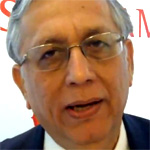
    Sunil Lulla, MD and CEO, Times Global Broadcasting Company

    A law has been passed and awaits implementation. Over the last many months, broadcasters, MSO, LCO, DTH operators and consumers have been made aware of digitization and the benefits of the same. MIB has released information which indicates that penetration of the four cities under DAS Phase I is rapidly progressing. The sunset date of October 31 has to be met.
     

    Broadcasters, MSO s and MIB are all promoting the date and benefits, with a shared responsibility. There is never a perfect marketplace and perhaps some consumers may wait till late or beyond.


    Television has come to be a part of every Indian’s life (definitely in these cities) and consumers will act. Perhaps some may be slow off the block. From a business point of view, Broadcasters and MSOs are in discussion to close DAS-based negotiations. Obviously each part of the eco-system is desirous of gaining an economic advantage. We must not take a short-term view of things – DAS will evolve to a more transparent and welcoming economic regime in satellite television and cable broadcasting, and that’s what we should look forward to.


    In essence, digitization will and must happen. Significant investments have been made by MSOs, DTH operators and broadcasters in ushering in digitization. There should be no spoilers to what will be a new and healthier market place.


    Digitization is not a rainbow; on November 1 we will not find a pot of gold there. It is the ushering in of uniform capacity in cable systems, resulting in transparent choices for the consumer. Moreover, the consumer experience is enhanced in terms of better picture quality and sound. Certainly we expect transparency in terms of declaration of subscribers, which is the first big step towards a stronger economic system. Adoption of channels is the key for viewer homes and that will be a big decision homes evolve, too. From an expectation perspective, with capacity being created and placement as such ‘banned’ as per law, carriage should not be an economic stream for cable systems.


    However, given the investments made by MSOs we expect a phased increase in subscription revenues and it is likely that broadcasters and MSOs will jointly market channels in communities/ micro-geographies. Over time, ARPUs at the homes will need to go up, if there has to be an upside in terms of economic value for all stakeholders. Broadcasters, MIB, MSOs, DTH operators have expended significant resources in communicating the benefits and deadline of DAS. Moreover the beginning of digitization in terms of discussion, policy and partially via CAS all started eight years ago. So the industry cannot say it’s not prepared. However, it can never be perfect. Let’s move on and welcome digitization!


    Ashok Mansukhani, President, MSO Alliance

    Mumbai and Delhi are ready. Chennai is a question mark. Kolkata is a question mark.


    The next step, hence, is up to the government to decide. MSOs are completely geared up for Kolkata, but if there is an issue of the state government, the will of state government prevail. Chennai as a market is not known to many, except there are 3-4 major players there. The ministry has said in its presentation that over 50 percent of Chennai has been covered through DTH and 20 percent has been covered by Sumangi TV, which is its own partner. So Chennai should not be a problem with so much of houses already covered, unless the state government has different view. The way I see it, is that the deadline will not be extended but if the state government is not ready they will speak to the central government.


    The four metros are ready. But if you have political factors deciding on consumer issues, then there is no comment. What more can an MSO do than what we have done or are doing? The MSOs are ready.


    The customers are ready. There have been surveys that prove the awareness of the consumers. What is needed is the education of consumers, and fast, by MSOs and DTH operators to explain various packages. There have been enough advertisements. Even the MSO alliance has campaigned in the four metros. Awareness of DAS is not an issue. Awareness of DTH packages is what has been submitted to the government and the packages should be available on every operator’s website soon.


    The MSOs are ready to broadcast 200-300-500 channels. The question is: are customers ready to buy pay channels in the way they were paying for bulk channels? The cost of channels will be decided by the cost at which the broadcaster wants to sell their product. And whether customers are ready to pay a la carte or bouquet is a question that broadcasters need to answer. The pipeline owner cannot predict what a customer will do. Ultimately, it is their own product (broadcaster) and they should advertise on their own channel to promote their product. I do not see that happening.


    Every broadcaster is thinking that it is the divine right to be bought by the customer. In the past you had packages being sold as bulk. The broadcaster sold a bulk package to MSO, who sold the bulk package to operator, who sold the bulk package to consumer. Now, the customer can ask: I have a budget of Rs 200, which channels can you give me in that budget? This is what going to be the question for the next few weeks. Everybody knows that we are switching to new technology, which is more cost beneficial, more attractive, more features. There is no negative in adopting new technology.


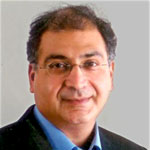
    Vikram Mehra, Chief Marketing Officer, Tata Sky

    Digitization would benefit every stakeholder including the government, broadcaster, MSOs, DTH operators and consumers. The consumers will have an immediate benefit of choice with more channels, a better viewing experience, attractive package options, new and better services like HD, VoD, DVR and an improved quality of service. Going with the latest MIB numbers and reports, we believe that all the four metros are surely geared to meet the deadline.
     

    Digitization is in favour of every stakeholder especially the consumer. Every stakeholder including the government, broadcaster, MSOs and DTH operators are currently building awareness around digitization to ensure that the deadline is met.


    Every stakeholder including the government, broadcaster, MSOs and DTH operators are currently running multiple campaigns to build awareness and educate the consumer on the benefits of digitization. The internal study across the four metros indicate that there is high awareness among consumers and many of them are now going digital.


    As far as DTH is concerned, the industry has been driving digitization in the country for the last six years. It is currently adding over one million customers every month. With digitization coming in, the unfair pricing advantage arising out of structural anomalies such as under-declaration will go away, thus putting all pay-TV operators on a level playing ground. With pricing becoming similar, the brand that provides the greater customer service and value for money will become a winner.


    Jehangir S Pocha, CEO, INX News

    There is no doubt that people across India (not just the four metros) are not only ready but eager for digitization. It will offer consumers more and better quality TV channels, it will allow the ailing broadcast industry to grow, and most significantly it will allow average Indians to get cheap and instant access to broadband internet connections. All this will empower citizens and produce huge and obvious benefits for advertisers, equipment and IT companies, and a range of industries. The US was the first nation to reap these benefits when it built its ‘information superhighway’ in the 1990s and the rest of the world was quick to follow America’s example.

     

    Unfortunately in India, some narrow-minded cable operators and misguided politicians have kept India 20 years behind the rest of the world. These people just don’t seem to understand how digitization, especially greater availability of broadband internet lines, can transform nations. They appear to be more interested in protecting the narrow vested interests of a handful of people benefiting from the current artificial scarcity in broadcasting bandwidth. Their main weapon is their ‘go-slow’ strategy, which sees them raising all kinds of spurious excuses to delay the rollout of digital services.


    It is exactly things like this that have always hurt India’s modernisation and progress. I hope better sense prevails in our industry. Failing that, I hope the courts, government and the anti-monopolies commission protect India’s larger interest by ensuring rapid digitization.


    Arvind Prabhoo, Owner, Orbit Television Network

    The cable operators, MSOs and broadcasters are ready for digitization. But it does not look like the consumer is ready for it. In spite of all commercials, in spite of cable operators telling the consumer that digitization is a must, I think 30-40 percent of consumers are not taking it seriously. They are thinking that the cable operator is trying to push the product for their own benefit, or that since it is an initiative of the government it will get postponed. Unfortunately, on November 1 they will ask the cable operator or the MSO to resume the new service immediately, which is not going to be possible. To educate the consumer on how to use the set-top box (STB) is becoming quite an issue. And therefore, I predict that 30-40 percent of at least Mumbai will be blacked out by November 1 if immediate steps are not taken.


    Seeding of boxes is also an issue in Mumbai. Imagine 30-40 percent of households not being connected. To top it all, there were thundershowers in Mumbai a few days ago and 3-4 percent of STBs got damaged. In my network alone, 80-90 percent STBs got damaged because of voltage fluctuations. When we approached the MSO, they said that they will replace it after a particular time. What happens to the consumer in a 2-3-5-day period when they do not have access to STB till the box is replaced or repaired? What is the cable operator supposed to do in that case? We have an inventory of 5-10 service STBs but in case there is more damage, where do we go? It would have been preferred in such a case that government allowed us to keep on the analogue signals, and the consumer would have had access to a few channels if not all channels.


    I think the government needs to look into the matter. The government should come out with a white paper explaining why they have made digitization compulsory. This will help the consumer understand that it is not the cable operator or broadcaster who is initiating the deadline.


    The only beneficiary I see in the whole digitization process is the government. I doubt if any of us in the chain are going to benefit.


    Roop Sharma, President, Cable Operators Federation of India (COFI)

    Two states out of the four are definitely not ready. Chennai has just got the tenders out. They do not even have the required number of STBs. Cases are on in the court currently for revenue sharing with operators. STBs are not inter-operable when they should be.


     

    The lower-strata consumers are not switching to DTH saying they do not have the money. The government is not making the stance clear that every STB connection needs to pay 10.5 percent as service tax or entertainment tax nor that it will consume 20 watts of electricity.


    The problem of the STB has not been solved. The cable operators are opposing it since they are the face of digitization. The cable operators will face the consumers, not MSOs and broadcasters.


    We are all for digitization, but there should be transparency and consumers should be made aware of all the hidden charges and expenses by the government.


    MR Srinivasan, General Secretary, Chennai Metro Cable TV

    The calculation done by the I&B ministry for the Chennai market is wrong. They have taken Chennai’s cable and satellite homes at 11 lakh. Chennai metropolitan area in itself consists of 40 lakh connectivity of households. Out of 11 lakh, they have numbered 6-6.5 lakh as digital connectivity and two lakh of the existing MSOs in Chennai. Considering 11 lakh is the universe, close to nine lakh homes are digitised and only two lakh STBs are required to complete 100 percent digitization in Chennai.


    But this is an absolutely wrong perception by the I&B ministry. Out of the four million households, seven lakh have STBs. Also, none of the STBs are seeded in Chennai. They are smuggled to the Middle East or Sri Lanka. Out of seven lakh STBs, which they are claiming are present in Chennai, 50 percent are not available. Since it is cheap in India, compared to neighbouring countries, half of the stock ends up getting smuggled. Only two lakh boxes have been seeded out of the 3.3 million STBs are required. Apart from the two MSOs already present, two private players have taken the licenses but are not yet ready. There is uncertainty in the business here in Chennai because of the presence of Government Cable Corporation. Hence, they are not keen to invest STBs.


    Also, the last UPA government distributed free television sets. Hence, every house in Chennai has a second television set at home. To go digital, even the second TV set requires STB. The I&B ministry and TRAI have not come forward in Chennai to check the situation. We have requested the I&B ministry to have representation in the task force from Chennai, but it has not happened. With 25 days left, the tender has been floated recently. Thus, to procure boxes in fast-track mode is going to be difficult.


    Implementing the sunset date in Chennai is impossible. If they still go ahead, only 10 percent of the consumers in Chennai will be able to watch through digital signals. If the analogue signals are turned off according to the current sunset date, it will result in a law and order problem in Chennai.


  • What’s-On-India acquires Middle East co, sets up What’s-On-Arabia in Dubai & Jordan

    By A Correspondent


    Leading television search and EPG company What’s-On-India has expanded its operations into the Middle East under the name ‘What’s-On-Arabia’. The Middle East TV industry has seen a firm and rapid movement into digitization, paving the way for increase in channels and content as well as proliferation of digital TV technologies. “These factors are ideal catalysts for a very specialist TVSearch offering that What’s-On-India can bring in given its expertise in this arena”, said Ajit Joshi, CFO of the company.


    What’s-On-India has now set up a What’s-On-Arabia office in Amman, Jordan by acquiring a local EPG company and is in the process of setting another in Dubai. With four large Middle East contracts spanning across nine countries already under its belt, What’s-On-Arabia has started in right earnest.


    Spearheading the effort Mr Joshi said, “We are proud to announce the setting up of our Middle Eastern arm – What’s-On-Arabia in Jordan. We have appointed Ms Hiba Dajani as our Country Manager and she is aided by a very able, committed and growing team that promises to dramatically alter and enhance the TV Search and EPG experience for millions of viewers in that region.”


    Through this expansion, What’s-On-India now offers EPGs for India, Sri Lanka and the Middle East for more than a thousand TV channels making it one of the largest TV Search companies in this part of the world. The localization of TV Search is also undergoing an expansion with a multi-lingual offering of English as the base language but translated EPGs for Hindi, Arabic, Tamil, Telugu and Marathi!

    What’s-On-India Media Private Limited, founded by Mr Atul Phadnis and owned by Intel, Sequoia Capital and Nexus VP,  is Asia’s Premier TV Search and EPG Company. The company’s Technology vertical powers EPG Metadata content from 1000+ TV channels for set-top boxes and devices across cable, DTH, IPTV, MobileTV, Smart TVs and tablets.


  • 73% digitization target achieved; Ambika Soni meets Delhi CM

    By A Correspondent


    Ambika Soni, Minister for Information and Broadcasting, met the Chief Minister of NCT of Delhi, Shiela Dixit, to discuss the progress made towards cable TV digitization on Sunday. In the four metro cities of Chennai, Delhi, Kolkata and Mumbai, the cable TV digitization deadline is October 31. During discussions Ms Soni emphasized the importance of meeting the deadline and sought the support of the Delhi government. The Chief Minister of NCT of Delhi assured the Minister of Information and Broadcasting of the Delhi government’s full support for the digitization exercise. She also asked the Chief Secretary to ask all SDMs to convene meetings with stakeholders to achieve digitization roadmap well within the time.


    The ministry has embarked on an aggressive public awareness campaign on the digitization deadline, on more than 200 television channels. Radio jingles, print advertisements and SMS campaigns have also enhanced public awareness about the digitization exercise. With all these efforts, digitization percentage in the four metro cities has gone to 73 percent.


  • 4 national MSOs announce digital cable TV rates

    By A Correspondent


    Towards achieveing the goal of digitization, four National-level Multi System Operators (MSOs), DEN, Digi Cable, Hathway and WWIL, have announced rates for consumer packages for digital cable.  As per TRAI’s stipulation, the Basic Service Tier (BST) consisting of at least 100 channels for Rs 100 has also been announced by some of them. The bouquet rates for pay channels is:

    Name of the Package No. of Channels Rate in Rs. (exclusive of taxes)

    Digicable

    Basic 145 180
    Gold 151 200
    Premium 165 250

    Hathway Cable and Datacom Ltd.

    Basic 135 160
    Medium 198 220
    Premium 242 275

    DEN

    Pack 1 112 180
    Pack 2 219 225
    Pack 3 235 270

    WWIL

    Janta 118 100
    Popular 1( Kolkata) 151 150
    Popular 2( Mumbai) 153 150
    Popular 3( Delhi) 142 150


    Consumers will also be given the option of choosing channels from an a la carte list. The MSOs had earlier announced a combined promotional rate of STB for Rs 799.  The MSOs have also announced a consumer care service wherein toll-free numbers including consumer charters have also been made available on the respective websites.


  • Jaldi 5 with Harit Nagpal: Ensure those not following digitization rules are disadvantaged

    In our run-up to the digitization deadline, we have already interviewed the heads of the organizations representing the local cable operators and the Multiple System Operators (MSOs) and the head of bouquet of channels. The Jaldi 5 interview today was with Harit Nagpal, CEO, Tata Sky. The interview was done via email, and all the responses are rather short but guess they capture what the head of a DTH company would want to say…


    01 We have a little over a month to go for digitization in the four metros. If the government estimates of last week were to be believed, by now over 70 per cent of Mumbai, Delhi, Kolkata and Chennai would be digitized. Is that the case?

    Yes.


    02 Are the lower income groups in these cities buying set-top boxes?

    Yes.


    03 There is a worry that there will be some piracy in the form of pilferage of signals after November 1.

    This worry does not have a basis.


    04 What more would you like the government/others to do to ensure 100 percent digitization?

    Just keep the pressure on all stakeholders as they have done in the last couple of months and ensure that the ones not following the rule are singled out and disadvantaged.


    05 The last mile which is managed by the local cable operators is the key to the implementation of Digitization. Are all cable operators working step-in-step with MSOs in the four metros about the implementation of the October 31 deadline?

    Digitization is now a law and anyone not abiding by it is working against the law.


    Photograph: Fotocorp