Tag: Digitization

  • 55% digitization target achieved in Phase II cities: MIB

    By A Correspondent


    As per the data received from the DTH operators and the MSOs, as on 22.02.2013, a total of 87.7 lakh Set Top Boxes (STBs) have already been installed in Phase II cities against the target of 1.60 crore, registering an achievement of 55 percent digitization. Out of a total of 87.7 lakh, DTH connections accounted for 40.7 lakh, whereas cable STBs accounted for 47.0 lakh.


    A release from the ministry said that it has been constantly monitoring preparedness for the implementation of digital addressable cable TV system in 38 cities of Phase II, where cable TV will undergo digital transition by 31.03.2013.


    The Ministry has set up a Task Force exclusively for Phase II cities to oversee and monitor the digitization process in Phase II. A public awareness Committee has also been constituted in the Ministry for spearheading awareness campaign in Phase II. As part of the awareness initiative, all television channels have started to run a scroll, informing consumers about the deadline for cable TV digitization. All India Radio has also started broadcasting of the radio jingles on its National and regional networks for creating public awareness. Several other initiatives like SMS campaign, video spots and print advertisements etc. are on the anvil. The State Governments/UTs have already nominated nodal officers in 38 cities of Phase II. Ministry had recently conducted a workshop for them. It has been planned to organize a second workshop shortly to take stock of preparedness in Phase II cities. A regional workshop was also held recently at Bangalore to sensitize local MSOs, Cable operators and other stake holders.


    The Ministry had set up a Control Room during Phase I, which has continued to function to address the queries of consumers, cable operators and others. The Control Room, which also has a toll-free number, has been receiving a number of calls from consumers of Phase II cities.


    In order to facilitate cable TV digitization in 38 cities of Phase II, the Ministry has already issued provisional registration to 30 Independent MSOs to operate in Phase II cities. This would enable these MSOs to operate in their respective cities to provide digital cable TV services.


  • Talking Business | It’s gonna be Xmas for English entertainment channels: Rasika Tyagi


    Talking Business is our new fortnightly series of interviews with heads of businesses in various media companies. So although Rasika Tyagi is not the business head for the English channels of the Star India network, she has been holding fort ever since Saurabh Yagnik quit the organization to move to MSM Sony.

    In a freewheeling one-hour chat over some well-brewed tea, the Senior Vice President and Content Head, English Channels spoke to Pradyuman Maheshwari and Johnson Napier. And, as you’ll figure, she does talk with much confidence (and conviction) on issues concerning her business.

    Excerpts:


    There has been much action in the English general entertainment genre thanks to digitization. How have your channels done in the recent past? (*See Disclaimer below on ratings data)

    I think digitization has opened up plenty of opportunities and not just for our channels, which of course have seen huge growth. Our channels Star World and Star Movies were being well-distributed already. So I don’t think the upside of the digitized environment has been so much on these legacy brands; it has been rather on our newer brands. The Star network within the English category has grown by 15%. All our channels have seen positive trends post-digitization. While Star World continues its leadership; FX and Fox Crime have been the key contributors in the genre growth. The shares of these two channels have more than doubled post-digitization. FX has grown by nearly 343 % and Fox Crime has grown by 117 %


    So did this happen because they are now being distributed better by you?

    As far as I see it, I think it was availability that was stopping them from having a level-playing field. There is actually no reason why an FX cannot be at a similar rating as a Star World? Sure it is more niche so it won’t be as wide as FX, but the difference between the two channels  as it was pre-digitization did not make any sense. The only reason that happened was because FX was not as widely available. Now you see that the difference of availability has gone away the two channels could be compared almost similarly.


    But you are Star India and you could’ve leveraged the distribution muscle from MedioPro… so why wasn’t FX more widely available earlier?

    I think it didn’t make any business sense to us. In the pre-digitized environment, you didn’t need to spend a lot of money on analogue distribution. Frankly, if you see the possibility of recovering that money one would’ve surely put in that kind of money. For a new channel that is starting off and does not have as much as presence in the mind of the buyers, you were going to have to take it slowly. In Year 1, there is no way we would have recovered the kind of money that we would have had to pay to get it to the same distribution levels as Star World. Also, because of the fact that Star World and Star Movies have been around for a long time, they were being distributed without us having to invest a certain amount of money. But costs have been prohibitive for anything that launched a year-and-a-half or two years ago, which niche channels found extremely hard to recover… at least in the short-term.


    Have these smaller channels grown at the expense of a Star World or Star Movies?

    Star World has not lost… in fact we’ve gained.


    So where have these viewers come from?

    If you were to see the time spent by the viewer watching English entertainment, it is very small compared to other genres. I think that fraction of time spent has increased a lot more; it’s not gone from Star World to FX. It is: I will watch Star World and FX. This tells you that the propensity to watch English is so much more. … If 60% of the measured universe watches English and spends substantial amount of time on TV (1000+ minutes per week), of this, 1 to 2 hours is spent on channels within the English category (average time spent). These viewers are not new. They have always shown affinity towards good English content. Our Star network GEC channels have benefitted the most because our content line up is stronger. Similar trend exists in the movies category. All our channels have seen positive trends post digitization. Our #1 channel, Star Movies continues to lead the category with 30% share whereas FOX Action Movies has seen a 3000% growth.


    That’s because it started off as a small base and is suddenly available everywhere and people are spending a lot more time watching it. That applies for other English movie channels who have all seen growth post-digitization.


    Given that digitization has happened in Delhi, Mumbai and Kolkata in parts, what you are inferring is that the growth for your channels has come from mostly Mumbai and Delhi. Is that the case?

    It is primarily led by Mumbai and Delhi but we have seen growth come from Kolkata as well. Delhi being a 100 per cent digitised market, we are seeing more growth there.


    If this is the kind of growth you’ve seen from just two markets, what do you anticipate when Phase 2 digitization kicks off from March 31 2013?

    It’s going to be Christmas! At least Christmas is going to come early for us… for at least those working in the English entertainment category. In this country we tend to talk about how many people and not about who watches us. Considering that we were considered as primarily being available in the metros in India, I have no reason to believe that people residing in towns like Lucknow, in MP, Punjab, South… do not want to consume English content? I think every city has elite English-speaking people who did not have English channels available because it was prohibitive for us to distribute in those markets.


    You will now need to market yourselves in these cities and towns?

    I agree. There are two things to this: it’s not just about marketing that will indeed play a crucial role but also what you are doing to differentiate yourself in the line-up of seven movie and seven entertainment channels. Star World and Star Movies are easy brands to deal with. Like when I was doing a research and asking people about their preference about English movie channels it was heartening to note that they started by saying Star Movies and followed by other brands.


    Was this across all age groups?

    It was across all age groups, male/female, English-speaking viewers from Sec A&B. That was not what was observed with Hindi movie channels where the opinion was divided.


    A fair percentage of your TG comprises teens. How strong are you there?

    Yes, you are right. We are strongest among the 15-24 age group.


    But this TG is also considered to be fickle with their choices. They hop on from one channel to another and be back to yours for a show of their choice. Is this a pattern you are worried about?

    Absolutely not. What is my hope? My hope is that I am your first choice to start your search.


    The reason why this is important and is not the case with the Hindi GECs where it took some taking to a dislodge a Star Plus from its #1 status. And because it is a younger generation, there is no loyalty to a media brand.

    Whether this exists as much I do not know, but again I am hoping that I am able to start them to watch me now and build them to be my loyal audience when they turn 23-24. It is my job to build brand loyalty in them. I will try and get the best programmes because I will still try and get these audiences to play only me.


    So more spends on wooing viewers increase in the digitized scenario?

    I am not sure whether spends will necessarily increase, though there will be some gain but because of whom we are talking to, we are rethinking the mediums for promotion. For example, in the campaign we did for ‘Packed to the Rafters’ we only used our own channels and the rest of it was only done online. That’s because the 15-24-year-old TG is available on that platform and they spend a large amount of time there. I think it is a rethink that we are doing. If we put a masthead on Youtube, it is not just going to seven metros it is going across.


    Is getting a Karan Johar to be your brand ambassador worthwhile considering the monies you will make from the show?

    Yes, it is worthwhile because that show was going to come on air for 6-7 months. Could I have done that for a show of 22 episodes, Monday-Friday, which is one season in the US – and done for 22 days? No. May be I wouldn’t have thought of doing something like this. Also it is about relatibility of our content. Because they do not talk your accent or do not dress like you doesn’t mean that their issues are not yours.


    I think for that barrier to break, we make it more culturally relevant to a larger set of audience.  That we managed pretty successfully. We started with ‘Grey’s Anatomy’ in September where we said a Meredith Grey is just like you. Her issues are your issues and she is grappling with what a 24-25-year-old would be grappling with. Just because she doesn’t look like you doesn’t mean she is not like you. It was an extremely successful campaign and it is today the No 1 show in the 10pm time band. That is also the reason that I chose a show like ‘Packed to the Rafters’ because it is all about relationships and something what Indian families go through. Our lives are changing in metro India and we do not know people pick up cues on what they want to evolve into…


    What about the season lag issue that exists for shows on your channels? I guess the bigger competition is not a rival channel but the internet where the more newest season and/or episode is aired

    Yes, downloading, Torrents, etc… I am very well aware of that. It is such a hard battle and my team and I fight this battle each and every day. We often sit and mull whether should we go a day-and-date with the US…but the point is that we keep trying. We had a whole slot called Crime @ 10 where we did 5 shows including Castle, White Collar, Dexter, Person of Interest and Unforgettables. We launched them exactly the same day and had the shows airing 24 hours after the US. That meant playing a different show every day of the week. In India, we are not used to watching television like that. People were finding it tough to remember the slot because they were watching 600 other channels in one day!


    Yeah, Star pioneered that…

    (laughs) Yes, but I was trying to tell viewers that you watch 600 channels in one way but you come and watch my channel in another way! That’s very hard and the point is that the US makes only 22 episodes per season. So when I have to strip something it only lasts 22 days, so when do I promote it, when do I get you used to watching it, etc. This was not working for the audience. We did enough work to find this out.


    Yet you have a fair number of people who watch the latest episode of ‘Grey’s Anatomy’ or some other American show on the web, especially in the two digitized metros.

    If you haven’t seen ‘Grey’s Anatomy’, you will have to download 250 episodes. It’s kind of hard but I am not taking away from the fact the downloading happens. What we are trying to do is have a balance where we are saying: on weekdays, let’s show you shows together on the go and therefore six seasons of Grey’s Anatomy. But on weekends, I am showing you the biggest shows in the US. There’s a show called Arrow that has just launched which has done seven episodes in the US after they were going to take a seven-week break. So I started seven weeks after them, else I would have to tell people that for seven weeks there will be no episode of Arrow…


    But the Star India with Uday Shankar as CEO has always done things differently. So I am sure you too change the way things are here…

    Firstly, I think that it is slow progression. And also I think that we have changed over time. I come back to what I have said that if this is not your primary source of entertainment – if you watch me only for 15 minutes from the entire viewing time limit…


    But there is a generation of people who just watch English entertainment.

    That’s a rarity. Around 99 per cent of my audience watch Hindi/regional GECs for primary consumption. Actually we have not found even one person who only measures and comes up in English and does not cross over to other genres.


    So what’s going to be the way forward for you in terms of tackling this online immigration?

    We are trying to do is getting all our content available online as well. Whatever we play on television we will play online and just take away the reason for you to go and download from any other place. Also it comes down to economics of business as well. Most people end up paying Rs 1 to watch Star World in a month; this content is made for millions of dollars every episode…I am just waiting to work out a business model that will give me the revenue that I need to go and buy the rights of these shows online and doesn’t restrict me whenever I want to play them online. So it has to make business sense to us.


    By when do you see the ratings see-saw game stabilising itself?

    When you say see-saw we do not really measure as the whole number is very small. We tend to look at only 4-week averages. There is not much see-sawing in 4-week averages and our two prime channels are always on top.


    Any fresh targets being looked at for profitability?

    For the newer channels, we hadn’t really set any ratings or revenue targets. We were waiting for digitization to happen. In fact, March 31 will open up and reveal a lot more of what is going to happen. We are all waiting with bated breath for that to happen. Our financial year starts June-July so in July we will set targets for these new channels because when they continue to rate the way they have been in the last two months, we are very hopeful that we will be able to monetise them as well.


    Did you expect this growth of the niche channels?

    I was prepared for growth; I knew the kind of content we showed was going to work but was I expecting 350 per cent growth for FX, I do not know? I was pleasantly surprised too and the time spent on FX is what has blown my mind.


    Given the opportunities that are being thrown up by digitization what’s the next plan of growth for you in terms of new channels, more local content, etc?

    Where next year is concerned, we are looking at making FX and Fox Crime bigger so that we deliver rounded entertainment to our viewers. We already have 36 per cent of the English GEC market captured with these three channels and we want to solidify and expand that. There are plans… digitization allows you to get more focussed. It really allows you to go much more specific in terms of what you intend to deliver.


    But English movie channel are essentially about the library, right? Like Movies Now which has a fantastic library…

    They are essentially a library channel. I see it differently with Star Movies looking  to premiere almost 70 new movies including movies like Snow White and the Huntsman, Prometheus, Battleship, Life of Pi etc. We have more studio tie-ups than any other movie channel in India. We believe that movie channels need to show you new content or premieres; that’s one of our prime responsibilities.


    On Star World, how was the last year in terms of local content?

    We tried experimenting with more Indian content last year than we ever had previously on the channel. We have a lot of learning to do as a team. We have gone from having no Indian content to having eight shows. Some we were very proud of and some did not run up as we expected.


    Will we see a new season of Koffee with Karan?

    Fingers crossed; we are trying to work that out.


    With stricter regulations coming into play do you think you may have problems playing up risqué questions on air?

    Not at all. Koffee with Karan does not fall under the risqué basket as far as regulators are concerned. While the last season had content that was risqué but not so much to fall in trouble with the authorities. On the contrary, I think the regulators have been good with English entertainment channels as they realise there is a different sensibility of audiences involved, I feel we have had a great level of understanding with the BCCC. Some stuff which they told me, I was in complete agreement with them on that.


    In fact according to a report released by the BCCC, the maximum number of problems they faced was with the English entertainment genre…

    Yes, they may have received a lot of complaints but how they have responded to it has been fabulous. We have made a lot of adjustments as well. One of the reasons that we hurried up and brought the FX beams to India was because of the problems they were facing which we agreed with. FX was being beamed according to Asia primetime and shows like Archer, Californication were coming at 8-9 pm in India and that was late night for Hong Kong and other countries in Asia. We thematically agreed with the BCCC that these shows were not right to be aired before 11pm. So we’ve had a good experience with the regulators.


    What about other local shows. Will we see them back?

    We have just completed Season 2 of Dewarists which has done very well. It’s mindblowing to be able to do content like this and work for a channel that allows you to do something like this. We are currently also doing Season 2 of Teacher’s Achievers Club, which we are very proud of. I wanted to tell stories of people who have been successful but started from very humble backgrounds. I believe we all have an equal chance to be somebody irrespective of what lineage you come from. This year we are doing it with Boman Irani. We also have another show called The Front Row with Anupama Chopra which is a year-long show. Hopefully we will do another show with Koffee with Karan.


    And Simi Garewal?

    We have not yet decided on whether we will do another season of India’s Most Desirable. We will take a call on that later.


    *Disclaimer: Since TAM Media does not share viewership numbers with the media, all ratings-related data in the interview have not been verified by MxMIndia – Ed


  • Jaldi 5 with L V Krishnan: Core viewers of genres is up

    By Ananya Saha


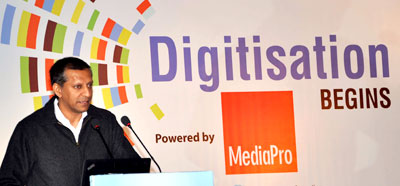
    Digitization is having multiple ramifications for all stakeholders: MSOs, LCOs, broadcasters and advertisers. On the sidelines of the ‘Digitization Begins’ conference convened by afaqs.com, MxMIndia spoke to LV Krishnan, CEO, TAM India to get upclose to the real picture after mandatory digitization was implemented in the three metros.


    01. What can broadcasters learn post DAS, given that the two metros (Delhi and Mumbai) have shown differential changes towards genre preference?

    There are two aspects to it. One, distribution is bringing order in the chaos post-DAS, where channels are getting in two metros. In a way, order that you now see will be much more systemised order and consist of core audience wanting to watch that genre than the trespass audience. This will go the long way in Phase II. The learning of Phase I is good enough to say what the next step should be. Step one is marketing: tell the consumers what the channel has and come and watch it. The second step would be much stronger content of engagement.


    02. So, do we have any surprises post-DAS?

    Overall, the core viewers of the genres have gone up. However, the overall reach of mass channels has gone down. Engagement levels have marginally increased with the genre and strong properties that are marketed are getting the audience. The core audience is still sticking to the preferred genre; it is the trespassing audience that are no longer accessing it. The broadcasters can create strong properties and communicate those properties to the audience so that the audience becomes loyal.


    03. How do you see the audience trend of Delhi and Mumbai replicating in other cities?

    Rollout of digitization will exhibit same phenomena in other markets as well. But the difference will be those markets already have strong penetration of digitization, eg MP and Gujarat. In metro markets, we see 50 percent penetration so such cities will see much smoother rollout of digitization than a Delhi or Mumbai.


    04. Many channels are claiming a spike in viewership. Have things shaken up much with digitization?

    These are the initial stages of digitization. The channels have worked hard to get their communication across to the audiences and have created better content and engagement.


    05. What is in it for the advertiser in the post-DAS scenario?

    They are getting targeted with audiences getting skewed to genres. Therefore, they can target their advertising more efficiently unlike the pre-DAS scenario. Secondly, geography is becoming clearer, especially for niche genre. Communication will be much easier in the digital era.


  • What next, now that digitization has begun?

    By Ananya Saha


    L V Krishnan

    The past two months, after the implementation Phase I of digitization, have been quite an incredible journey. From doubts about whether we would achieve 100 percent digitization at all to achieving it in Mumbai and Delhi. Of course the hiccups still remain. Probably Phase II will see less of these hiccups and more of successful implementation. This and many more issues about digitization were discussed at afaqs event in the capital titled ‘Digitization Begins’. The panellists not only discussed the ramifications of post-DAS scenario but also what the stakeholders should do to take advantage of digitization.


    Numbers game

    According to LV Krishnan, CEO, TAM India, the digitization onus is on marketing and programming. At the summit, ‘Digitization Begins’, culling facts from the data (based on eight weeks pre vs post DAS CS4+ in Delhi and Mumbai), Mr Krishnan said, “There has been 2.5 times growth in the availability of channels in the initial months but it does not match the viewing with 30 percent increase in incremental fragmentation.” He also noted how North and West markets in India are maturing faster than the Southern market when it comes to digitization. “Today channel-surfing behaviour is prolonged in digital homes, while direct landing is leading to increased reach for English entertainment, English movies, and the kids genre.” According to him, inter-genre surfing may also come down.


    Other findings that Mr Krishnan shared included: with sports channels becoming omnipresent, other sports will also get benchmarked; viewing is getting spread from primetime to other day parts, eg: youth music to the early morning band of 7-9am. However, he cautioned, “The biggest disadvantage is that DAS will hit single channels since the top seven channels garner almost 80 percent of audience in DAS-enabled Delhi and Mumbai.”


    Mr Krishnan, however, viewed digitization as a positive change and said, “The clear action step for the broadcaster to be present on distribution chain should choose between two cluster homes: home with kids, and home without kids. For the advertiser, they need to focus on cost of targeting, increase in co-creation of brands. Advertising will see a boost via paid media, and additional media budgets will get shifted from localized ground promotions to unique television content channels.”


    The next 6-8 months will also see a spike in free-to-air channels, according to Mr Krishnan, to cater to the bottom-end of the market.


    Chasing the momentum

    Roop Sharma

    Digitization was promised to bring in not only the set-top boxes (STBs) into the house of the consumer, but also digital services such as digital billing, services such as video-on-demand, broadband etc. Even though the seeding of STBs has been achieved, it is still a long way before we achieve digitization in the true sense.


    Vivek Takalkar, VP, Marketing and Business Development, MediaPro and Roop Sharma, President, Cable Operators Federation of India believe that post seeding of boxes, digitization has not achieved desired results while Ashok Mansukhani, Director, Hinduja Venture and President MSO Alliance asserted that the all the stakeholders of the digitization process should work together towards establish contact with the consumer.


    Sugato Banerji

    Sugato Banerji, COO, What’s-on-India, noted, “Content discovery will become important for operator to push channels. As digitization progresses, EPG in various languages will also be required.” While broadcasters and content creators might struggle with monetisation, the panelists were of the view that digitization will result in demand for more content.


    Giving the advertisers’ perspective, Anita Nayyar, CEO India and South Asia, Havas Media, initiated a discussion with Amit Tiwari, Country Head, Media and Digital, Philips India and Sunil Raina, Business Head, Lava International. Mr Raina emphasized content co-creation, while Mr Tiwari said, “Channels have to become brands. They have to think from a marketers’ perspective. Even though we have not changed our media plans, depending on digitization numbers, but I am sure that as digitization grows and sub-category of genres emerges, it will impact us directly. We will look at focused advertising.”


    Anita Nayyar

    Ms Nayyar noted, “When it comes to advertising, the brands prefer to go with what has been working in the past and their gut feeling. When the digitization process began close to Diwali, we did not have the numbers. But even then the brands advertised because it was the season and went with the gut feeling.”


    Even as marketers have not clearly changed their media strategy based on initial numbers, it is clear that as content becomes targeted, media preferences could change dramatically.


    Neeraj Sanan

    Neeraj Sanan, CMO and Head, Distribution, MCCS India said, “Good content will determine market share and role of distribution will reduce. Even as time spent on television has increased by 5 percent, the choice has also increased from 80 channels to 250 channels.”


    Even as business models will undergo huge changes, the panel believed that the future implications have not had any affect on their current strategies. And while DAS is believed to be a game-changer, the veterans think that more then the distribution equilibrium, it is the convergence that will have an effect on the consumption of content. As Mr Raina said, “It is important for us to integrate online and offline media to create impact. Plans are not going to change because of digitization but because of convergence. I would like to reach my consumer through the medium they prefer: it can be a television or a tablet. I have to be present where they are.”


    With competition rising, Mr Sanan noted, “There are going to be some wild implications of digitization including, local events can become content through MSOs; a good EPG search engine could take off; concept of broadcast UGC can happen; with triple play, MSOs can think of ad options with a clear-to-call action.” He also noted how MSOs will start competing with national channels for content rights.


    Though there is still a long way to go, digitization is throwing up interesting trends. How many of these will get converted, only time can tell.


  • MxM Mondays: Are stakeholders ready for Phase 2 of Digitization?


    By Ananya Saha


    Even as the first phase of digitization has been lauded as a success, two (Kolkata and Chennai) of of the four metros (Delhi, Mumbai, Kolkata and Chennai) are yet to achieve 100 percent digitization. As per the notification, 38 cities with a population of more than one million are to be digitized before March 31, 2013. Are the stakeholders prepared? Presenting a cross-section of views (in alphabetical order of their last names):


    Phase II: 38 Cities that need to
    be digitized by March 31, 2013
    1. Bangalore
    2. Hyderabad
    3. Ahmedabad
    4. Pune
    5. Surat
    6. Kanpur
    7. Jaipur
    8. Lucknow
    9. Nagpur
    10. Patna
    11. Indore
    12. Bhopal
    13. Thane
    14. Ludhiana
    15. Agra
    16. Pimpri Chinchwad
    17. Nashik
    18. Vadodara
    19. Faridabad
    20. Ghaziabad
    21. Rajkot
    22. Meerut
    23. Kalyan-Dombivli
    24. Varanasi
    25. Amritsar
    26. Navi Mumbai
    27. Aurangabad
    28. Solapur
    29. Allahabad
    30. Jabalpur
    31. Srinagar
    32. Vizag
    33. Ranchi
    34. Howrah
    35. Chandigarh
    36. Coimbatore
    37. Mysore
    38. Jodhpur


    Anand Chakravarthy, EVP- Marketing and Business Head – BIG CBS Networks

    Kolkata was slow but it is almost there now. Chennai has had its issues. Delhi and Mumbai, which are bigger markets and have far bigger number of households, have been able to get there. As a broadcaster, and as a third-party observer, enough time has been given to everybody in the distribution space to get their planning together. The date 31 March was proposed two-and-a-half-year back. I think that is enough time for distributor to get their act together, and to recognize opportunity not just for broadcaster and advertisers but as an opportunity for themselves. I think the big MSOs have seen the opportunity and they have done what was required in Mumbai and Delhi. In all the markets in Phase 2, you have real distribution players. Our sense of ground is that most of the distribution players are clearing by starting to export STBs three-to-four months back itself. I believe that in key markets like UP, MP, Gujarat, Punjab, digitization will happen as scheduled may be a couple of days up and down possibly. The ground realities are always going to change closer to the date. My assumption is that it will close between March 31 and April 30.


    Phase I of digitization has been a great enabler for our channel, especially the English channels in the four metros. Both Love and Prime have grown significantly. With the HSM markets getting digitized, we realize that numbers will grow given that there is a large number of audience out there. Digitization removes the distribution advantage that large bouquet channels have. In terms of reach, any advantage that your competitor has will get nullified due to digitization. And that will help in greater viewership and reach for few channels like ours. As we get to reach more markets, share will automatically improve.


    In accordance to DAS regulation, all broadcasters have made certain business plans keeping in mind that digitization will happen by a certain date. If by chance, there is fairly long delay in implementation, it will impact all broadcasters’ plans. All PnL’s made in accordance to this deadline will get completely changed. It is important that the time frame is adhered to and any delays are reduced as possible. Not only broadcasters, it will impact MSOs who will get higher revenues from LCOs since every subscriber will count. For advertiser, our channels do not only imply ‘reach in top eight metros’ since we will be available across country. Thus, advertisers get a larger footprint.


    If the deadline is adhered to, it will be a game-changer for everyone in the industry.


    Anuj Gandhi, Group CEO, IndiaCast

    As broadcasters, we are ready for Phase 2 of digitization. If you see, DAS Phase 1, it was in November that most of communication and other work got done. This time, getting the agreement between stakeholders, which was a challenge in Phase 1, is not there. Broadcaster- MSO deals have been set for Phase I, so the same has to be duplicated for Phase 2. Similarly, there has been precedence when it comes to announcing the packages. It is much easier, thus, play in that sense. The bulk of consumer awareness happens mostly in the last 60 days or so. As far as communication is concerned, IBF has written to all broadcasters. Some of the news channels are running the scrolls in these 38 cities. So, the awareness is already on.


    The challenges might be on the financial and hardware side for the MSO.


    Ashok Mansukhani, President, MSO Alliance

    Yes, the deadline is achievable. There is a great consumer demand, and there is a great desire to catch up with the metros. The only question is the availability of STBs, which has to be organized in terms of funding, infrastructure and customs permissions. Otherwise the target is definitely achievable. Most of the MSOs have already submitted their plans to the government and have taken the necessary funding from their promoters or shareholders.


    Roop Sharma, President, Cable Operators Federation of India

    The addressability issues of Phase I are yet to be solved. Phase I has been a failure, how do you expect Phase 2 to succeed? Digitization is not only about installing STBs, it is about digitizing the processes as well and it is has not happened. As we move towards, Phase 2 deadline, the LCOs are not being invited to the meetings. The government is protecting the interests of private players. Why is the government not revealing the taxes collected through digitization in the metros?


    Uday K Varma, Secretary, Ministry of Information and Broadcasting

    I think it is well on track. The beauty of digitization is that it is market-friendly. We have got the basic data. We are holding regular meetings with the stakeholders. We are reconstituting the taskforce, which will oversee the whole thing. We are quite sure that we will be able to meet the phase 2 deadline. I am satisfied with the progress. There are many cities and towns in phase 2 of which 70-80 percent is already digitized. This is quite a large number where digitization has taken place already. It is not a step that has to begin afresh.


  • LookBack 2012: Tales with a tail – the packages

    At MxMIndia, our endeavour always is to take an in-depth look at happenings in the media and marketing space. Here are the key stories of 2012, which panned through a number of days and, in a few cases, months. While MxMIndia covered the issues extensively, only a few headlines from each them are listed here to give you the big picture.


    1. TRAI insistence on 12-minute ad regulation continues. Also the ads cannot be part screen or scrolls – they would need to be shown on the entire screen. Though many stakeholders are unhappy, TRAI is in no mood to give it a second thought.


    TRAI sticks to 12-minute ad regulation in fresh draft, seeks feedback

    http://www.mxmindia.com/2012/08/trai-sticks-to-12-minute-ad-regulation-in-fresh-draft-seeks-feedback/ (August 28)


    TRAI curtails ads to 12 mins per clock-hour, no part-screen ads allowed

    http://www.mxmindia.com/2012/05/trai-curtails-ads-to-12-mins-per-clock-hour-no-part-screen-ads-allowed/ (May 15)


    TRAI-ing time for TV with ad curbs

    http://www.mxmindia.com/2012/03/trai-ing-time-for-tv-with-ad-curbs/ (March 23)


    2. Digitization or digital access system (DAS) has been implemented in four metros with varying degrees of success – Mumbai and Delhi doing exceedingly well, Kolkata almost there and Chennai lagging behind. While rural areas largely have DAS, rest of the urban India is still analogue. March 31st 2013 being the deadline for it to go digital. A long running story this one – and still long way from getting concluded.


    Let the (ratings) games re-begin!

    http://www.mxmindia.com/2012/12/let-the-ratings-games-re-begin/ (Dec 18)


    Stakeholder view of one month of digitization

    http://www.mxmindia.com/2012/11/stakeholder-view-of-one-month-of-digitization/ (Nov 30)


    March 31, 2013. MIB kicks off Phase II countdown

    http://www.mxmindia.com/2012/11/march-31-2013-mib-kicks-off-phase-ii-countdown/ (Nov 7)


    The A-Z of Digitization

    http://www.mxmindia.com/2012/10/the-a-z-of-digitization/ (October 12)


    Can we achieve the October 31 deadline?

    http://www.mxmindia.com/2012/06/can-we-achieve-the-october-31-deadline/ (June 21)


    Mediaah! Why Ambika Soni is to blame for the delay in digitization

    http://www.mxmindia.com/2012/06/mediaah-why-ambika-soni-is-to-blame-for-the-delay-in-digitization/ (June 21)


    I&B pussyfoots on digitization. Decision on deadline to be announced this week

    http://www.mxmindia.com/2012/06/ib-pussyfoots-on-digitization-decision-on-deadline-to-be-announced-next-week/ (June 18)


    Ready, Steady, Go? Or Delay?

    http://www.mxmindia.com/2012/06/ready-steady-go-or-delay/ (June 7)


    60 Days to Digitization Day: Digitization in 4 metros will not happen by July 1: JS Kohli

    http://www.mxmindia.com/2012/05/60-days-to-d-day-digitization-in-4-metros-will-not-happen-by-july-1-js-kohli/ (May 2)


    MIB diktat: Digitize or get punished!

    http://www.mxmindia.com/2012/03/digitze-or-else/


     3. Cricket – IPL and beyond


    Cricket is a continuous story on media websites through the year – however, this year it too became a bit more intriguing with DHL going and Pepsi coming in as IPL title sponsor, not so good ratings of IPL 5 and the short but stressful conflict between BCCL and Sahara. What with India’s performance deteriorating even on home turf, 2013 might see advertisers’ interest waning in this particular genre.


    Pepsi bags IPL title sponsorship for 5 yrs @ Rs 396.8 crore

    http://www.mxmindia.com/2012/11/pepsi-bags-ipl-title-sponsorship-for-5-yrs-rs-396-8-crore/(November 22)


    India out, advertisers still in!

    http://www.mxmindia.com/2012/10/india-out-advertisers-still-in/ (October 8)


    DLF exits IPL lead sponsorship as BCCI ups rate

    http://www.mxmindia.com/?p=29678 (August 29)


    Loyalty factor is the key to consistency in season 5 IPL viewership

    http://www.mxmindia.com/2012/05/loyalty-factor-is-the-key-to-consistency-in-season-5-ipl-viewership/ (May 17)


    4 reasons why IPL ratings & revenue won’t be better this year: Ashish Bhasin

    http://www.mxmindia.com/?p=14860 (March 19)


    Halfway through, IPL 5 ratings stabilize

    http://www.mxmindia.com/2012/05/halfway-through-ipl-5-ratings-heading-towards-stabilization/(May 10)


    Will IPL 5 ratings match those of earlier seasons?

    http://www.mxmindia.com/2012/04/will-ipl-5-ratings-match-those-of-earlier-seasons/ (April 4)


    Brand IPL needs to play innings of its life: MSL Group report

    http://www.mxmindia.com/2012/04/brands-focussed-on-men-now-wooing-women-customers/ (April 4)


    All’s well as BCCI gets back its Sahara

    http://www.mxmindia.com/2012/02/alls-well-as-bcci-gets-back-its-sahara/ (Feb 17)


    Is cricket overpriced?

    http://www.mxmindia.com/2012/02/is-cricket-overpriced/ (Feb 7)


    Be-Sahara BCCI | What next for cricket? Laxminarayan, Bijoor comment. Also: the Sahara communique in full

    http://www.mxmindia.com/2012/02/be-sahara-bcci-mahesh-ranka-why-this-cricket-veri/ (Feb 6)


    4. Dentsu taps Taproot


    The Taproot acquisition was perhaps a piece of news that generated unprecedented interest from agency majors. The last time tie up between an Indian agency and a global one generated so much interest was in the ’90s, when Trikaya became Trikaya Grey. And no wonder, as Taproot has been connoisseur of many eyes with numbers of awards, account wins and its creative excellence.


    We will not mess with what’s working wonderfully: Rohit Ohri

    http://www.mxmindia.com/?p=29769 (August 30)


    Rahul Kansal: No shortcuts and stereotypes with TAPROOT!

    http://www.mxmindia.com/?p=29817 (August 30)


    Pops on the Rise & Rise of Aggie & Paddy

    http://www.mxmindia.com/?p=29738 (August 30)


    Anil Thakraney:Talent & values rewarded

    http://www.mxmindia.com/?p=29734 (August 30)


    The Complete Story: Win-win for Dentsu,Taproot; big loss for WPP

    http://www.mxmindia.com/2012/08/win-win-for-dentsu-aggie-paddy-big-loss-for-wpp/ (August 30)


    Global ad biggies like Omnicom, Publicis & Dentsu in hectic parleys to buy Taproot

    http://www.mxmindia.com/2012/06/global-ad-biggies-like-omnicom-publicis-dentsu-in-hectic-parleys-to-buy-taproot/ (June 7)


    5. Though questions have been raised on the accuracy on data collected by TAM due to the sample size quite in the past as well, it was a first for the measurement giant to get into a dragging legal battle with a media owner. NDTV filed the case against TAM in a US court, and it opened a Pandora’s box of accusations and counter accusations.


    WPP, Nielsen (proposed) dismissal motions to be heard on Dec 14

    http://www.mxmindia.com/2012/09/wpp-nielsen-proposed-dismissal-motions-to-be-heard-on-dec-14/(11 Sep)


    WPP moves New York Supreme Court for dismissal of NDTV lawsuit

    http://www.mxmindia.com/?p=29737 (August 30)


    NDTV, WPP trade statements yet again

    http://www.mxmindia.com/2012/08/ndtv-wpp-trade-statements-yet-again/ (August 28)


    MxM Comment: Enough of trading charges. Industry needs to bring warring partners to the table

    http://www.mxmindia.com/2012/08/mxm-comment-enough-of-trading-charges-industry-needs-to-bring-warring-partners-to-the-table/ (August 27)


    NDTV v/s WPP: War of words over the Weekend

    http://www.mxmindia.com/2012/08/ndtv-vs-wpp-war-of-words-over-the-weekend/ (August 27)


    Battle of courts spills to media statements, as NDTV rubbishes WPP claims

    http://www.mxmindia.com/2012/08/battle-of-courts-spills-to-media-statements-as-ndtv-rubbishes-wpp-claims/ (August 24)


    NBA urges Soni to suspend TAM data reporting until system probed, made robust

    http://www.mxmindia.com/2012/08/nba-urges-soni-to-suspend-tam-data-reporting-until-system-probed-made-robust/ (August 24)


    WPP takes on NDTV, mulls defamation suit. Says NY courts have no jurisdiction on claims against it

    http://www.mxmindia.com/?p=29130 (August 23)


    Mediaah! | Ratings controversy: Too little too late

    http://www.mxmindia.com/?p=28862 (August 21)


    AAAI, ISA to meet TAM on Aug 16 as MIB, Prasar Bharti mull probe

    http://www.mxmindia.com/?p=27887 (August 8)


    Government mulls probe against TAM after complaints

    http://www.mxmindia.com/2012/08/government-mulls-probe-against-tam-after-complaints/ (August 2)


    By Invitation | Atul Phadnis: Industry must not duck core issues on measurement

    http://www.mxmindia.com/2012/08/by-invitation-atul-phadnis-industry-must-not-duck-core-issues/ (August 2)


    Trade shocked as NDTV sues Nielsen, Kantar, TAM & others

    http://www.mxmindia.com/2012/08/trade-shocked-as-ndtv-sues-nielsen-kantar-tam-others/ (August 2)


    6. The Aamir Khan – Satyamev Jayate phenomenon


    There are shows and there are shows. TRPs, of course, are always at the back of broadcasters’ minds. Satyamev Jayate, nonetheless was a show that tried to make a difference – and did manage to capture people’s attention due to the credibility of its host. Whether it made a difference or no might be argued – but what is indubitable is that the attempt was honest.


    Exclusive: Satyamev Jayate isn’t over yet, special show planned for Independence Day

    http://www.mxmindia.com/2012/08/satyamev-jayate-isnt-over-yet-special-show-planned-for-i-day/ (August 8 )


    End of Season 1 of Satyamev Jayate: The good, the bad and the ugly truths of life

    http://www.mxmindia.com/2012/07/satyamev-jayate-the-good-the-bad-and-the-ugly-truths-of-life/ (July 31)


    Planners happy with Satyamev’s 4.9 TVR

    http://www.mxmindia.com/2012/05/planners-happy-with-satyamevs-4-9-tvr/ (May 17)


    By Invitation: Sundeep Nagpal | Will Satyamev Jayate work for advertisers?

    http://www.mxmindia.com/2012/05/by-invitation-sundeep-nagpal-will-satyamev-jayate-work-for-advertisers/ (May 12)


    MxM Exclusive: Satyamev Jayate impacts govt. Women & Child Dev Minister Krishna Tirath promises action, commends Aamir

    http://www.mxmindia.com/2012/05/mxm-exclusive-satyamev-jayate-impacts-govt-women-child-dev-minister-krishna-tirath-promises-action-commends-aamir/ (May 10)


    Dream start for Satyamev Jayate

    http://www.mxmindia.com/2012/05/dream-start-for-satyamev-jayate/ (May 7)


    7. Starbucks comes to India


    It might appear to be an out-of-place article here – but then it was a much awaited move. And indeed it demonstrates what a power brand is all about. It is the most crowded destination in the malls where it has a presence. And Starbucks surely doesn’t need to worry about future – as word of mouth is great and sampling would definitely turn to conversions!


    Mumbai, Delhi malls relocate brands to welcome Starbucks

    http://www.mxmindia.com/2012/11/mumbai-delhi-malls-relocate-brands-to-welcome-starbucks/ (November 7)


    Anil Thakraney: Starbucks: Power of a brand

    http://www.mxmindia.com/?p=34057my (Oct 23)


    Make mine a Mocha Frappuccino!

    http://www.mxmindia.com/?p=34008 (Oct 19)


    Starbucks set for festive season flag-off in Mumbai

    http://www.mxmindia.com/2012/06/starbucks-set-for-festive-season-flag-off-from-mumbai/ (June 26)


    8. At 20, Zee is young as ever


    It has been 20 years since Zee changed the TV viewing habits of the Indian consumer – even the earliest shows and soaps on the channel are remembered by many with immense fondness. The journey has not been without the bumps – but Zee rocks even today with its own kind of programming and signature shows.


    Anil Thakraney: Zee showed the way

    http://www.mxmindia.com/2012/10/anil-thakraney-zee-showed-the-way/ (October 3)


    What makes Zee such a force to reckon with

    http://www.mxmindia.com/2012/10/what-makes-zee-such-a-force-to-reckon-with/ (October 1)


    Jaldi 5 with Ashok Kurien: Zee changed the Indian consumer forever!

    http://www.mxmindia.com/2012/10/jaldi-5-with-ashok-kurien-zee-changed-the-indian-consumer-forever/


    From ‘Okara Dukaan’ to Zee… the complete story

    http://www.mxmindia.com/2012/10/from-okara-dukaan-to-zee-the-complete-story/


    Uday Shankar: ‘Zee is a treasured peer’

    http://www.mxmindia.com/2012/10/uday-shankar-zee-is-a-treasured-peer/


    Zee@20 | Rajdeep Sardesai: In 1992, no one believed a 24-hr channel was possible

    http://www.mxmindia.com/2012/10/zee20-rajdeep-sardesai-in-1992-no-one-believed-a-24-hr-channel-was-possible/


    Zee@20: At the helm of the vision

    http://www.mxmindia.com/2012/10/zee20-at-the-helm-of-the-vision/


    Zee@20 | Sundeep Nagpal: What a score!!!

    http://www.mxmindia.com/2012/10/zee20-sundeep-nagpal-what-a-score/


    Zee@20: Producers raise a toast to team spirit

    http://www.mxmindia.com/2012/10/zee20-producers-raise-a-toast-to-team-spirit/


    The Anchor: 10 all-time favourite ‘faces’ of Zee TV

    http://www.mxmindia.com/2012/10/the-anchor-10-all-time-favourite-faces-of-zee-tv/


    9. Verghese Kurien’s legacy continues


    It rarely happens that a man becomes a movement. And that too of the nonpolitical variety. A story that has inspired many – and would continue to do so. MXM India salutes the man and the brand that lives on in style yet once again.


    Verghese Kurien: Great vision, Dream client

    http://www.mxmindia.com/2012/09/verghese-kurien-great-vision-dream-client/ (October 11)


    V Kurien was visionary par excellence: B M Vyas

    http://www.mxmindia.com/2012/09/v-kurien-was-visionary-par-excellence-b-m-vyas/


    How Amul honours its contract with consumers: V Kurien

    http://www.mxmindia.com/2012/09/how-amul-honours-its-contract-with-consumers-verghese-kurien/



  • Kolkata digitization: Tug-of-war between State and Centre

    By Ananya Saha


    The digitization conundrum in Kolkata is not likely to see a solution soon, it appears. While the Centre recently ordered the MSOs in the city to switch off analogue signals by December 27, the State wishes to take into account the ground realities and extend the deadline. The State government is also upset because of the pressure from the Centre.


    Swapan Chowdhury

    Swapan Chowdhury, General Secretary, Cable & Broadband Operators’ Welfare Association, Kolkata said, “Yesterday a meeting was called by the State Urban Development Minister Firhad Hakim with all the existing MSOs of Kolkata. He has categorically stated that no switchover will be done from December 27 onwards. When MSOs informed him that they have already written to MIB, he said that it was also a State issue.” The MSOs have been told to not follow the terms of the Central government.


    Mr Hakim also said that he was looking at a tripartite meeting between the Centre, State and local MSOs to sort the problem in a systematic manner.


    On the condition of anonymity, a local MSO said that situation is grim and 100 percent digitization might take more than a month in Kolkata. Sumit Bose, President, GTPL, said, “The State has their set of concerns and we respect those concerns. On the other hand, the law has to be respected.” He added, “As MSOs, we are keenly watching the situation. We would like to move on with the model.”


    “It is the matter of State issue also to look if the systems are followed or not. And MIB cannot pressure us if the realities do not match the goals. But because of the political tussle, the Centre is not ready to talk to the State govt. They are trying to do it forcibly, bypassing the State govt and the minister concerned,” said another cable operator, who did not wish to be named.


    “There is still a shortage of STBs in the city, and it will take some time to sort out. But non-availability of STBs is not the only problem; the State govt will not let MIB to build so much pressure. MSOs have obligation to local govt as well. The MSOs are currently ‘sandwiched’ between local and central govt,” Mr Chowdhury said. Mr Bose said, “There are various figures floating in the market about the digitization levels in Kolkata. It is not easy to estimate the exact numbers because of the Cable and Satellite homes. Even a 10% here and there can mean three lakh homes. But I would like to say that GTPL has fared well.”


    Kolkata was supposed to completely digital from December 28, according to the recent directive from MIB. According to Mr Chowdhury, the switch off of analogue signals was initiated from December 16, and was to switch to digital genre-wise.


    Needless to say, the stakeholders in this process are waiting for the stalemate to be sorted out. But when would the State and MIB, and the MSOs reach a common consensus is hard to say.


  • MIB asks TRAI view on Central/State govt entry in cable

    By A Correspondent


    The Ministry of I&B has sought the recommendation of Telecom Regulatory Authority of India (TRAI) regarding the entry of central / state governments and their entities into the broadcasting sector.


    The ministry made this reference recently as the issue of granting permission to a state government or its organs to run cable TV networks has been drawing its attention from time to time with particular reference to the TRAI recommendations restricting such entities to enter into broadcasting and distribution activities. The ministry has received also requests from central government ministry and from several state governments in the past, a communique said.


    The ministry has sought the views of TRAI regarding the entry of the following entities in the broadcasting sector:


    (i) Central Government Ministries and Departments / Central Government owned companies / Central Government undertakings / Joint venture of the Central Government and the private sector / Central Government funded entities.


    (ii) State Government Departments/ State Government owned companies / State Government Undertakings / Joint venture of the State Government and the private sector / State Government funded entities.


    In its recommendations on “Issues relating to entry of certain entities into Broadcasting and Distribution activities” dated November 12, 2008, the TRAI was of the view that a state government and its organs may not be permitted to enter into broadcasting and distribution activities.


    As per extant policy guidelines for uplinking and downlinking of television channels, an applicant seeking permission to set up an uplinking Hub / Teleport or Uplink/downlink a TV Channel should be a company registered in India under the Companies Act,1956 irrespective of its management control. This assumes significance in view of significant growth in the broadcasting sector wherein the number of TV channels and cable connections in India have grown exponentially.


  • Jaldi 5 with Sugato Banerji: Digitization has opened up opportunities for service providers

    What’s-on-India, TV Search & EPG (Electronic Program Guide) technology company, took a leap forward with the the appointment of Sugato Banerji as its Chief Operating Officer. Mr Banerji was until recently CMO at Airtel DTH & Media.


    A graduate from IIM Bangalore and a chemical engineer from IIT-BHU, Mr Banerji has worked with advertising (Ogilvy, JWT and Lowe), internet (Aptech), banking/finance (Visa, Stanchart) before being CMO at Airtel for the last five years. He started his 23-plus-year career at Xerox in sales.


    Mr Banerji spoke to MxMIndia hours after his appointment was announced:


    01. And we thought the action was happening in DTH, given digitization?

    It’s a misconception that DTH is the only category that will grow and thrive in the digitization programme. Globally in highly penetrated C&S countries where DTH has been existing for 20 years, it has been able to garner only between 40-45% of the total C&S share. It is expected that with the seriousness of the government to pursue TV digitization being demonstrated by adhering to the extended timeline given for Phase 1, more and more action will shift to the MSO who control large chunks of the next 38 cities.


    There is a clear message the MSOs and LCOs have taken home and we are already seeing MSOs, both big and small in the Phase 2 cities gearing up as fast as they can for digitization.


    And as the digitization takes root, there will be an entirely new ecosystem of various service providers who will participate in the category. Allied service providers have a window of massive opportunity akin to how VAS service providers, billing systems, domestic centered call centres, network companies, passive infrastructure companies have worked with telecom majors to drive telecom category growth and efficencies.


    We at Whats-On-India strongly believe that the momentum will continue on digitization giving as opportunity to grow because every set top box will need the core Whats-On-India product – the programme information, programme synopses and series information necessary for the electronic programme guide to be functional.


    The critical consumer change cable digitization will bring in is the fact that there will be 500+ channels available to chose from as declared by the regulator and the introduction of multiple tariff plans by the MSOs. Let’s talk about the proliferation of the channels available to the viewer once the home is digitized. The plethora of choices and competing programmes would make it difficult to choose the right one. One could miss a fabulous programme and end up surfing aimlessly. Content discovery will become more and more complex. This is precisely where our sophisticated TV search applications come in.


    Now look at the tariff plan regime change that will start in the digitized homes. The operators will need to know the best programmes to recommend, the most appropriate channel mix to promote. The unique ARPU enhancer and the Pack Builder products will be crucial tools for the operators to start building usage and revenue enhancement programmes around the customer base they digitize.


    So, the action is far, far wider and diverse than just the DTH operators. I wanted to be a part of this exciting time in the bigger digitized TV category, that’s why I am here.


    If there’s one thing that you would like the DTH business to be able to redo, what would it be?

    The DTH industry has grown rapidly in the period 2008-2011 largely led by the entry of four more competitors. This increased distribution reach and heightened consumer awareness due to big budget ad spends by the 6 DTH operators in the private sector. The intensity of competition brought several short-cut methods to grow customer acquisition. On an already subsidized set top box, DTH operators kept adding irrational freebies on two sides simultaneously – higher and higher margins for the retailers and more and more free months/channels with each purchase for the customer.


    This has led to massive churn by consumers in the lower end who merely swapped a 6-month-old box with another box of a different or same brand at a lower price than earlier, with the retailer selling the roof top accessories to another customer. A win-win for the customer, the unscrupulous retailer and a lose-lose all the way for the DTH operator. The DTH industry should have avoided this shooting at its own feet. It is paying a heavy price for this, even today.


    02. From an ex-DTH marketer’s point of view, are you happy with the way the digitization process is going?

    Digitization is moving forward surely albeit slower than we would like. This has to be understood in the context of the deep-rooted analogue cable industry’s revenue distribution. Local cable operators (LCOs) are the owners of the customer in an analogue regime. They share 20-30% of their revenue with the MSOs. There is rampant under declaration of subscriber numbers. MSOs therefore are forced to depend on carriage fees as a source of revenue. There are many politically well-connected entities running analogue cable.


    With digitization, the LCOs share will come down drastically to 30-35% of the total subscription revenue. This will impact 60,000 LCOs, controlling about 80 million analogue homes. Who would want their income to drop nearly 3 times? So there is bound to be resistance. However, the government has done a considerable bit to ensure the timelines are adhered to as close to the original deadlines as possible. The broadcasters and the government both have run extensive on air campaigns for consumer awareness. Additionally, the broadcasters are switching off analogue feeds, the MIB officials are undertaking head end visits to audit compliance of switching off analogue signals. The first phase was easy with only 7 million homes to be digitized. Phase 2 will be the real test as 22 million homes need to be digitized in less than 4 months. It’s a tall order and while we want the digitization deadlines not to be extended, given the enormity of the task, there is likely to be some slippage. But overall are we happy? Well, the answer in a single line is somewhat happy. The government has demonstrated seriousness with the first phase and one sincerely hopes the GoI adheres to the rest of the deadlines without extensions.


    03. The change also means moving back to Mumbai. Happy about that? You can’t take Mumbai too far away from a true blue Mumbaikar, huh?

    Haha! Well from the BPO capital of the world and glitzy buildings portraying the epitome of India shining where BMWs often outnumber motorcycles in a traffic signal, to amchi Mumbai with its incredible all-round buzz, efficient public transport systems available 24×7, loads of interesting cultural and gastronomic opportunities to spend leisure time on ! Well apart from the joys of winter I won’t really miss much because I truly think the Whats-On-India role is intensely exciting. Plus this is the hub of the media and entertainment industry in India so professionally it’s an exciting city to be in. Immensely glad to be back here.


    04. What’s-On-India is unique in many ways. It’s a technology company which facilitates information processing. Is that what you will be driving further?

    What’s-On-India is uniquely positioned to drive change in the way digital TV distribution companies will operate in India going forward. While technology is the facilitator, the real product we have is a transparent search service that pools in information from multiple sources including the viewer’s preferences, his profile, his social network and other sources to present a comprehensive personalized recommendation of the best programmes. As more and more connected TVs, connected wireless devices get bought, the consumption of TV content will dramatically increase in these devices. Catch Up TV, Recorder devices, side loaded content, peripheral content all will start quickly. This is where search and content discovery will help simplify the viewer’s choices of what to watch when. What’s-On-India is right there in the middle of this pitch ready to score.


    There are ground-level  analyses and reports we provide to broadcasters from 2000 head ends for aiding  distribution as well as consultancy for broadcasters to improve their products placement. This comes under our TV Street Maps division which we recently acquired.


    We are already present in the Middle East catering to the Arabic electronic programme guide market through a recent acquisition in Jordan where we have already been working with two large operators.


    I would be working to expand our client both at the operator side and broadcaster side  roster in India as well as deepen the existing relationships in light of digitization, consolidate the ME operations while  work at judiciously expanding our footprint.


    05. So what’s the immediate action point for you? What’s the new thing one can expect?

    India is the focus because this is where the immediate opportunity lies. So my task would be to get cracking with deepening our relationship with the large DTH operators like Airtel, D2H, Reliance, Tata Sky and in parallel working with the MSOs and broadcasters. I will work on getting a more structured client management approach with the sales team so that we can cover more clients and get faster closures of deals. In the next 90 days we want to sign up lots more clients and build a robust revenue stream that will allow us to start building deeper product penetration with each client.


    In summary what I would be doing is consolidating and deepening the large relationships while expanind the client roster at the medium to small end.


    You are an accomplished marketing professional having spent some quality time in the internet space, banking, finance and telecom and who has cut his teeth in advertising. Do we see a greater marketing offensive coming up at Whats-On-India?

    What’s-On-India has a strong brand recall in the relevant segment we operate in for being a quality driven innovative organization. We need to enhance this further by becoming the thought leaders in the domain. I see a lot of scope of What’s-On-India becoming the benchmark in the category of search and viewer analytics in the TV space.


    We have a B2C website that is getting revamped by among the world’s top notch digital design firms. This will be ready soon and we will need to market that effectively using cost-efficient ideas. The team is already working on them as I speak.


    We will be launching a slew of more sophisticated products to enhance the capability of the entire product suite we have. So on the product and B2C front there is a lot we will do.  Plus the whole effort of overseas market entry and growth.


    That’s a lot for any marketing man to work on…  it’s exciting.


  • Stakeholder view of one month of digitization


    By Ananya Saha


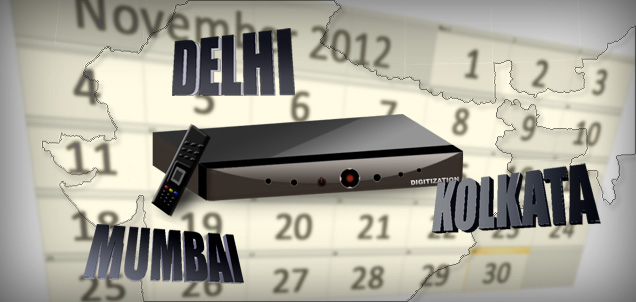
    It has been a month of mandatory digitization in the three metros of Mumbai, Delhi and Kolkata. Even though government officials may make us believe that the metros are completely digitized, , the ground reality appears to be different. Analogue signals continue to be available, and not all stakeholders are happy with the way things are shaping up. Meanwhile, in Chennai, the digitzation hearing has been postponed by four weeks. It is likely to happen only by December 31, though given a cloud over whether the government will be allowed to run a cable service (in Arasu Cable),  will be allowed to be


    Man Jit singh

    Calling the Phase I a tremendous success for industry, Man Jit Singh, President of the Indian Broadcasting Federation (IBF) and CEO, Multi Screen Media said, “Digitization has been a huge success. The kinds of effort that was done to get digitized, no where in the world have we seen this kind of achievement has been done. Kolkata has not reached 100% digitization yet, but I think it will get there.” He also acknowledged that fact that there are few illegal signals in Delhi and Mumbai but assured that the IBF is working with other stakeholders to have these illegal signals completely switched off.


    Roop Sharma

    On the other hand, Roop Sharma, President, Cable Operators Federation of India (COFI) highlighted how none of the promises made on digitization by MIB have been achieved so far. She said, said, “During Parliament discussion on the Cable TV Act Amendment Bill last November, the then I&B Minister Ambika Soni said digitization will provide choice of channels to consumers-through a-la-carte selection, provide high quality service, controlled pricing of pay channels and thus lowered billing to consumers, and that consumer to pay only for what they wish to watch. Consumers were to get internet video-on-demand and value added services through set-top-boxes, and she had said that small cable operators will not be rendered unemployed, there will be transparency and correct accounting of channel viewership, govt will get tax on all connections as no under-declaration will exist, and that there will be no ambiguity in TRP ratings. Now, with one month of digitisation over, has this been achieved?” She is of the view that nothing that I&B Minister had promised the Parliament has been achieved yet and still, the Ministry has announced successful completion of phase I and started roll out of phase II.


    The figures

    Swapan Chowdhury

    Currently, according to various stakeholders, over 95% digitization has been achieved in Delhi and Mumbai even as Kolkata trails behind with quite a less percentage. Swapan Chowdhury, General Secretary, Cable & Broadband Operators’ Welfare Association, Kolkata, however, estimated, “Mumbai achieved 75% digitization and 70% in Delhi while digitization in Kolkata is only about 40-45%.”


    Mr Chowdhury also said that the actual activation of set-top boxes in November for Kolkata has been than a lakh. Arvind Prabhoo, Owner, Orbit Television Network, Mumbai said that the actual reason behind high numbers from Mumbai is because of stopping of analogue signals. “Most of the networks have reported 90-95% switchover in Mumbai. This figure has happened after the stoppage of analogue signals. We were hardly touching 60-65% before the analogue signals were not switched off. Even then, at least 35-40% people have not taken to digitisation voluntarily.” Though the piracy is still an issue in some pockets of Mumbai, over 8-9 lakh STBs were installed this month alone.


    Certainties and Uncertainties

    “There are certain distributors who have not made their pricing policy clear yet. There us a lot of confusion over revenue-sharing. One of the major issue is Entertainment Tax. If the govt charges Rs 45 per STB connection, does that mean every house that has two television sets, pays Rs 90 entertainment tax,” voiced Mr Prabhoo.


    Ms Sharma said that broadcasters are making lumpsum deals with MSOs for pay channels and not based on the number of consumers opting for those channels. “Hence, there are no accurate figures. Discrimination is rampant. Rates of pay channels are not based on market demand but whims of the large content aggregators, vertical monopoy business houses/ companies like MediaPro who enjoy monopoly in pay TV content distribution,” she remarked.


    Ashok Mansukhani

    Although, the DTH operators this writer reached were unavailable for comment, there have been mixed reports on its success rate. While one report says it has done well in the Capital where the availability of analogue signals has been low, MSO Alliance chief Ashok Mansukhani has another view. “DTH is surprised at its poor performance. They need to take a call on what they are upto: have they grown in the last six months,” he asked. “According to statistics, it’s 70:30 in favour of cable and that is not going to change soon. Where did cable have the capacity to retain 70% of cable base? For DTH, there is enormous churn which is as much as 33% of the total amount claimed. And how come the government doesn’t take the churn into account,” asks Mr Mansukhani.


    While Ms Sharma and Mr Prabhoo said that the issue of carriage fees has not been sorted out yet either, Mr Man Jit Singh sounded optimistic, “We expect there will be decrease in carriage fees as digitization rolls out for simple reason that the capacity constraint of analogue system will go away. However, carriage fees is not going away completely and it will take time. Both broadcasters and MSOs are working together to make a gradual transition to reach a stage economically in the short run so that it sorts itself out in the long run. We feel that carriage fees is moving in the right direction.”


    Phase II: Lessons from Phase I

    Phase I was not a smooth ride. And Phase II will be even tougher since it will be rolled out in 38 cities simultaneously. Apart from stronger communication aimed at the end consumer, the stakeholders need to tighten their belt for doing their bits too.


    Mr Mansukhani said that in the second phase, more attention should be given to the consumers and less to the broadcaster. “Awareness creation by all stakeholders is necessary since once people are aware, they are open to change. In the phase I, we were not communicated on the need of digitization and we still do not know why digitisation is happening,” said Mr Prabhoo.


    Ms Sharma said insisted that for the next phase transparency is required on each level: between broadcasters and channel aggregators; between channel aggregators and MSOs; between MSOs and LCOs and between LCOs and consumers. “Digital Cable System is new and is not tried and tested. Lots of teething problems, application hazards are poping up which needs to be addressed. Redressal of all such issues should be considered on practical ground and not on any task force or ministrial meeting. The first phase of digitization is practically incomplete. Supply of STB in the first phase is inadequate, the pressure of second phase will push the process into much more complication. Authority is not accepting the time for settling down for supply of STB and the technology,”said Mr Chowdhury.


    Mr Singh concluded, “The early seeding of boxes and getting the message out to consumers that they need to get their boxes early is one key message. IBF’s campaign to build public awareness was extremely effective and we should continue with that campaign for phase II. The ministry’s effort to coordinate with all stakeholders was in excellent trend that should continue. If anything, I think MIB  is going to take even more proactive stance of monitoring the actual implementation of the roll out of boxes city by city. So I think a lot of the learning from phase 1 will apply to Phase 2 and it is very positive.”


  • Creating balance is important: Rahul Johri


    By Ananya Saha


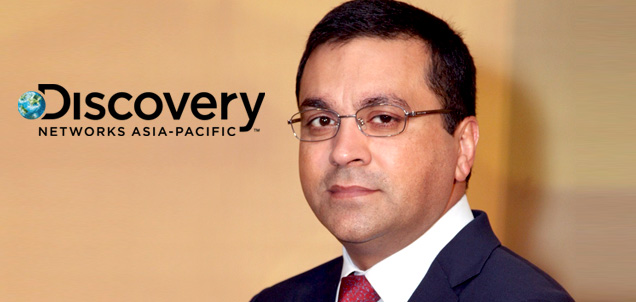
    Rahul Johri, Senior Vice President and General Manager,South Asia at Discovery Networks Asia-Pacific was recently named ‘Media Professional of the Year’ award at the Global Awards for Brand Excellence 2012. He has been associated with the Discovery network since 2001. Over the years, the Indian broadcast industry has seen lots of changes: from a two-channel to too many channels on the airwaves. “Hopefully, digitization will sort this. Well, at the same time, because the viewers are far more exposed, it is an opportunity to bring in a lot more channels, specialised channels and content,” articulates Mr Johri.


    He insists that robust distribution becomes the key in Indian broadcast space, adding: “A lot of channels understand the importance of affiliate revenue, which drives more mature content. If you look at our television landscape, we have channels that are very sensational in nature. Even if not many channels, a good number of channels are. The number of sensational channel exceeds the number of non-sensational ones. That is because if you are free-to-air channel, you are chasing only eyeballs and then you are bound to be sensational. If you are a pay channel, you expect viewer to actually pay for the content, more so in a digital environment where you will pay for what you wish to watch.” He is also hopeful that digitization will see a balance being achieved between the sensational and non-sensational channels, even though the later will not stop beaming completely.


    Mantra for success: Stay Contemporary

    Mr Johri says that staying contemporary and relevant to younger audience has helped channels like his to grow steadily. “Our viewership numbers have grown steadily over the years and it is clear testimony to the fact that this is a young country and 65% of audience is under 30 years of age who are interested in mature content. If you continue to give same fare to three generations, someone will walk out of the room,” he said.


    And contemporary is definitely the buzzword with the channel itself. The branding of Discovery was recently seen in the Yash Raj Film – Jab Tak Hai Jaan where the female lead Akira plays a documentary-maker from the channel. “The way I look it, it is the first from any broadcaster or any marketer that it is a perfect interplay between fact and fiction where Discovery Channel is fact and the movie is fictional. Discovery is seamlessly a part of the script. It is much more than a plain branding. The branding opportunities like this does not present itself everyday – it is like the perfect storm where everything comes together,” observed Mr Johri.


    The fact that in 2001, Discovery was seen mainly as educational channel pushed the broadcaster towards a lot of marketing and promotional activities. “Today, we are not a one-channel service, and hence, our job is more complex. For instance, we have programming from 10 channels in theUS, international channels, we have programming that we are producing. So all that progamming is being sorted here and then sent to various channels that we have here. There was a time when same streams were there but you had to put it only on one. So you choose whatever you thought was right. Today, the job is more complex to identify what goes in TLC or there is a gap here, or it needs to be edited. No doubt that the number of variables has increased manifolds,” says Mr Johri.


    The way forward

    Mr Johri is optimistic of the growth of the Indian media industry even though he thinks that we have a long way to go. He said, “Industry will continue to grow. We have a long way to go. Even though we might think we are a big industry, by global standards, we are not one of the biggest industry or market. There is tremendous opportunity in Indian marketplace. Broadcast companies need to grow over next few years.”


    He also believes that there is no reason that advertising revenues and subscription revenues for a broadcaster will not equal themselves in the time to come. “All over the world, subscription revenues are higher than advertising and I foresee the same trend here,” Mr Johri says


    He, however cautions, “Digitization playing out all over the country is going to be huge task. Once Digitization is completed, then the need for quality and diverse entertainment will grow. Five years from now, if you are in the perfect digital world with 1000 channels, these channels are going to be content guzzlers. While on one side, it will spell tremendous amount of opportunity to content creators and production houses etc, but at the same time how much quality will one be able to maintain? The critical balance between quality and quantity will be a challenge.” He thinks, however, industry bodies such as IBF will help channel the industry growth.


    For the record, Mr Johri is also a Board Member and Treasurer of Indian Broadcasting Foundation (IBF). He is also a member of the media and entertainment committee of Confederation of Indian Industries (CII) and member of the Media & Entertainment Division of Federation of Indian Chambers of Commerce and Industry (FICCI).


  • Bigg Boss, OMG top Whats-On-India’s TV Trends

    By A Correspondent


    Given the popularity of our report on the TV Trends weekly report that we carried last week (http://www.mxmindia.com/2012/11/in-tams-absence-whats-on-india-search-rankings-show-some-trends/), we bring you Whats-On-India’s weekly TV Trends report for Week 47 (November 18-24, 2012).


    TV Trends has been built using specialist and proprietary algorithms that collate, analyze and compute millions of observations across multiple platform. It provides cues and powerful insights on the potential consumption and intention-to-view of content by Indian TV viewers.  The sources from where observations are aggregated include What’s On India platforms like:  Web, Mobile portal, Apps (Android, iPhone, iPad, Blackberry, Windows Mobile, Nokia Ovi), EPG-on-the-Cloud (MobileTV and IPTV).


    It’s been a little over a month since TAM Media Research stopped releasing its weekly ratings following a decision taken jointly by broadcasters, advertisers, advertising agencies and TAM, that the release of the data will be held back until December 19 given that it would take some time for the mandatory digitization process to settle down.


    The report gives the Top 5 Programmess of the Week for the following genres:  English Movies, Hindi Movies, English TV Shows, Hindi TV Shows, Regional TV Shows, Regional Movies, Sports and Kids, Documentaries, Lifestyle & Food.