Tag: Digitization

  • We want to be in the forefront when new media merges with traditional: Anuj Gandhi


    The writing was on the wall the day Anuj Gandhi joined Network 18 in March this year to oversee the group’s distribution and new business development. And the reason for this was the all-new relationship between Network 18-TV 18 and Reliance Industries forged a few months before his joining.


    Other than the providing of the much-needed funds and the consequent stake in one of India’s largest (and more powerful) media conglomerates, Reliance was also looking at making full use of the content produced and owned by the various Network18 and Television18 arms, especially for the Reliance 4G services.


    Also, in the post-digitization era, distribution becomes a key driver in the revenues of a broadcaster, especially for niche channels. And with various mobile devices becoming popular and wireless technology progressing rapidly from 2G to 4G even in India, the monetization potential for multimedia content leapfrogs.


    Enter IndiaCast, a joint venture of TV18 and Viacom18 to create India’s first multi-platform ‘Content Asset Monetization’ entity.


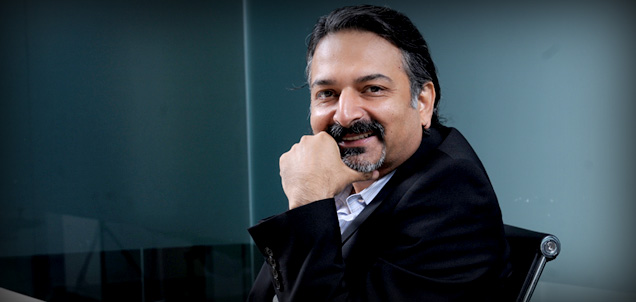
    IndiaCast Group CEO Anuj Gandhi is a veteran in the distribution and the affiliate sales front. An MBA from the SP Jain Insitute of Management, he has worked with Discovery Communications as Director – Affiliate Sales (1997-2002),  as President of SET Discovery (2002-07) and CEO of DEN Networks (2007-2010) and worked as an independent consultant for a little over a year. He has also worked with IndusInd Media in distribution (way back in 1994) and prior to that with Ranbaxy. Clearly, being an early leader in every aspect of the distribution business, Mr Gandhi is well-poised to monetize the wide variety of content that IndiaCast has in its basket.


    Hours after announcing IndiaCast, Anuj Gandhi spoke with MxMIndia, his first and until the time of publishing only detailed interview on the shape of things to come.


    So we see the the birth of a laaarge distribution company…

    IndiaCast is much larger than other traditional distribution companies because it entails monetizing content assets of all the groups – right now TV18 and Viacom18, and post-acquisition of Eenadu, but for all rights. It’s effectively all non ad-sales kind of monetization businesses. It will be online, traditional brick-and-mortar distribution businesses at a global level. So it is pretty huge.


    It’s just the beginning. My sense is that most people will do it because the lines are diffusing between various rights that people use in the market. It has already happened in the international market where a DTH guy blocks Over The Top (OTT) or IPTV rights from you and vice versa. So you will have technologies where OTT rights will sit on a box so the cable guy will come and tell you that I not only want to do cable rights but I also want OTT rights. Thus, with the passage of time, new media will get merged with traditional media and we want to be at the forefront of the revolution which will happen in the next few months/years.



    Any international tie-ups in the offing?

    We already have international updations in the US, UK and Dubai. Colors is being distributed there and going forward, we want to expand our portfolio. We plan to distribute more and more channels internationally. So it’s work-in-progress on that front.


    So what happens to Sun18 now that IndiaCast has been formed?

    Sun18 was an alliance that worked very well and will continue to do well. The deal at Sun18 was that we will distribute Sun and Disney channels in Hindi-Speaking Markets  (HSM) and they will distribute us in the South. So, the only change in the whole alliance is that instead of distributing in the whole of South, they will only do Tamil Nadu now. Otherwise everything stays the same, we still distribute them in the North and also Disney which is part of their network. With this, Sun18 North has kind of folded into IndiaCast.


    Is it a coincidence that IndiaCast happened days before the scheduled digitization in the metros or was it on the cards for a while?

    No it was in the pipeline and we were talking about it for a while now and we knew that we needed to get all our pieces in order.


    Any major challenges you see coming up in the future?

    I think the major challenge would be to get the deal right for digitization. Whether it happens in 25 or 90 days (as digitization in the four metros is likely to get delayed by a few months), this is a chance where the industry needs to correct itself; we all need to work in getting the ARPU situation right in this country. So the challenges are basically at the industry level. Also, on the global front, the challenge is to be able to do more channel launches in international markets and be seen as a serious player. Also, one more challenge will be about how new media unfolds in the country.


    With viewers being able to subscribe to channels a la carte, do you anticipate reach/visibility of channels to take a beating… for instance, what if a person just takes one or two channels a la carte?

    While there will be some percentage of the market that will opt for it because by law you have to offer it. Like when CAS started, everyone talked about a la carte and people taking only one or two channels, but it just doesn’t happen. It doesn’t happen anywhere in the world and it won’t happen inIndiatoo. There may be a few people who would want that but that would be a single-digit percentage for me. So I am not too worried about it. But what will happen is, as they say, the time spent on niche channels will go up with digitization as everybody will be getting the same quality of channels. But if you start picking and chasing packages, some channels will start suffering. Not everybody is going to take all Hindi news channels, for example. So if they are in the same package, then people may pick them but if they are placed differently then it may not be the case. So some impact will happen, but not in the short term.


    We see that IndiaCast will also represent Sun and Disney in HSMs. Any others on the anvil? Since UTV channels are now part of Disney, will they move too?

    Nothing right now, I think we already have too much on our table right now. If something happens tomorrow, we do not know but we are not looking at adding anything new as yet.


    As part of Network 18/Television 18 agreement with the Reliance Industries Ltd’s Independent Media Trust stake, there was also a plan of all Network 18/Television 18 content being syndicated to Reliance 4G? Will it be done via IndiaCast?

    I won’t be able to comment on this but as is known, all content monetization businesses lies with IndiaCast so the same businesses will be done with any 4G networks whether it is from Reliance or any other telco from the business.


    So going back to the earlier discussion, the arrangement with Sun18 stays…

    Yes, we have just changed the definition in terms of the three states in the south. Otherwise it remains where it was. So Sun18 continues to exist and holds up in IndiaCast. It won’t be called Sun18 anymore. There is no shareholding changing – Sun18 North is just folding up into IndiaCast.


    Do you see consolidation gaining prominence as we move ahead?

    I think it will happen for some time. What way and form – will now change as technology is becoming a critical part of our business. The traditional mergers may not happen as much but there has been a lot of M&A happening on the platform side which will also have an impact on broadcasting.


    With digitization happening, do you anticipate the revenue from non-advertising sources will actually be more than what comes from advertising?

    I cannot generalise it and will depend on channel to channel. But will certainly grow; I feel that it could be 50-50 at the network level. So niche channels will benefit more from subscription than ad sales but mass channels will still earn revenues from ad sales.


    So just as it holds true for the sales folk these days, do you see the distribution team also have much say in content in the future?

    I wish my bosses here say that distribution guy must have a say in content (laughs). But it’s not that now. Until now the interaction with the consumer was through various means and the stakeholders were too many in the value chain. Going forward, because it will be a box and be kind of a direct deal – so if I am going to an MSO, he can probably tell me area specific complaints – it will reach back to the content owners much faster and in much clearer terms than what is happening today. That is what is happening in international markets and it will start happening inIndiatoo. But we are a couple of years away from that.


    So we’ll soon have distribution heads becoming CEOs of networks…

    Touche.


  • The Anchor: Dinyar Contractor on 10 reasons why the digitization deadline is a mighty challenge

    By Dinyar Contractor


    1. At the FICCI- I&B ministry meet that was held a week ago in Mumbai, barely 40 days before the analogue sunset date, the I&B officials said that they had reviewed digitization in Mumbai the previous day so their report was immediate and current and they confirmed that 33 per cent of the homes in Mumbai already have set-top boxes. I would like to turn that around factually and say that 67 per cent of the homes did not have digital boxes even 40 days before the sunset. So it is pretty much an impossible task that 67 per cent will get it within 40 days.


    2. Let’s look at Chennai. Arasu Cable has confirmed that they don’t have set-top boxes. In fact, a day after the FICCI meet, Arasu had asked its cable operators to log in to the Arasu site and send in their estimates of how many boxes will be required. Arasu will then put together these estimates and float a tender which means they would then start asking for people to give prices for boxes. So for the boxes coming in is way over the horizon for Chennai.


    3. Incidentally, there is a lead time just for a component of a set-top box in the world market today of four months. That means if you order your box today and the manufacturer orders the component, it will be four months before the manufacturer gets the component. What that means is that the box will not be manufactured and it will definitely not reach you before five months. Therefore, if at all there is a postponement, it doesn’t make sense to have any postponement which is earlier than Jan 1, even six months is really cutting it fine.


    4. There is a major national level MSO who candidly admitted to me that their HD boxes have landed but they don’t have the funds to clear them. The government had promised 74 per cent FDI as part of the digitization effort but the government has not implemented this and therefore, MSOs have not been able to tap foreign investors. So without enabling funds, the government has put this clause out which does not make any sense.


    5. We are talking of a sunset date 30 days from now. So for instance, I as a cable operator go to somebody’s home and I say please take the set-top box. And they say, sure I’ll take it but what is it going to cost me? And I say I don’t know what it is going to cost you because the government hasn’t declared the rate. Now as a customer I would not accept the box.


    6. On May 28, the TRAI put up all the analog pay channel tariffs. There is a Supreme Court judgment which says that broadcasters cannot charge more than 42 per cent of the analog pay channel rates for digital. So 42 per cent is the ceiling, however that 42 per cent is completely irrelevant since broadcasters are providing pay channels to DTH platforms at something between 10 to 15 per cent. So from May 28, the ball has started rolling where negotiations have been opened between broadcasters and MSOs to work out some figure for their pay channels that will be somewhere between 10 and 42 per cent. So there is a huge spread in the rates between 10 and 42 per cent, these negotiations are obviously not going to quick and easy. I don’t see these negotiations culminating in three weeks or a month.


    7. There was a Parliamentary Committee report which was released and tabled in the Lok Sabha a few days ago where the Committee says that this entire thing should be delayed by at least six months. I see this as the first stone thrown by the government to ripple the waters and start talking of a delay.


    8. The TRAI suddenly declared that every digital headend must deliver 500 channels. Incidentally, a major portion of the set-top boxes already deployed are incapable of doing 500 channels. This is again a fact that is not adequately ventilated. They can typically do 350 channels, less than 400 channels. It means that they have to take out may be 2 million of the boxes that have already been seeded and throw them away. Where is the money going to come from? We are not even realistic about what is going on.


    9. In Kolkata, don’t forget there is Mamata Banerjee who might rake up the issue against digitization depending on the political capital it might have.


    10. Here you have a sunset clause where the government has not enabled anything, they have only been talking of a sunset but they have not done anything to facilitate and to enable the sunset. The delay has nothing to do with the MSOs or the cable industry, it is simply completely chaotic unplanned deputation of the law or total lack of enabling a systematic process in which digitization could have been introduced.


    Dinyar Contractor is Editor and Executive Publisher, Satellite and Cable TV Magazine (www.scatmag.com)


  • Cable operators take on I&B at digitization meet

    By Meghna Sharma


    With May coming to an end and only a month left for digitization, the Information & Broadcasting Ministry is trying its level best to get the stakeholders to a mutual consensus. A forum was organized by FICCI and I&B ministry in Mumbai to share some thoughts on ‘ India going Digital’.


    Present at the event, Supriya Sahu, Joint Secretary (Broadband & Policy) and Rajiv Takru, Additional Secretary of Ministry of I&B heard what the cable operators of the city had to say. It is not a hidden fact that cable operators aren’t very happy with the whole process. Deadline date, revenue share and carriage fee were some of the strong points put forward by them.


    Cable operators’ woes

    The operators stood unanimous as they put their issues in front of I&B Ministry. The issues on which they wanted answers to varied from them being given a ‘chor’ tag to why they should collect entertainment tax for the state government.


    Although the topic of revenue share was top of the list, none of the operators agreed with the 45:55 share with the MSOs and wanted the government to do something about it. “How will we survive?” they questioned. The cable operators want a bigger share in the pie; some even suggested of a full 100 per cent share.


    Some operators even went on to tell the government to re-work the deadline and launch a phase-by-phase change, wherein both analog and digitization be allowed hand-in-hand, with only a few channels being converted in the beginning.


    One operator even compared the cable operators with Jesus and said that they’ll be carrying the set-up boxes to their funerals. Availability of the set-up boxes is a major concern as many reminded the ministry representatives that MSOs have not been able to provide them with the boxes even as the deadline looms in. “How does the government expect us to meet the deadline when we haven’t been provided with the set-up boxes. We don’t even know if the demand will be met before the blackout. And how are we going to face the wrath of our customers when their television sets go blank?” questioned one operator.


    Carriage fee was a topic on which all of them agreed upon, stating that they alone shouldn’t be allowed to bear its burden. They also wanted the ministry to intervene and tell the broadcasters to bring out their rate cards as soon as possible so that they can, in turn, inform their customers.


    Ministry’s assurance

    Rajiv Takru, Additional Secretary of Ministry of I&B, confirmed that no matter the issues raised or problems faced, digitization will not be compromised upon. “There is still some confusion and doubts in many cable operators’ minds, but one needs to be very clear that digitization will happen and shouldn’t be taken lightly.”


    He advised the cable operators to start working on it as very little time is left. He added that it is cable operators’ job to go and talk to their customers about digitization becoming a reality soon. “Multi-system operators (MSOs) have been informed to provide cable operators with set-up boxes before the deadline of June 30 and they will have to follow suit. It is the cable operator’s job to convince customers to change before it’s too late to avoid the chaos.”


    He added that the rules of the game have been changed and if anyone is caught evading rules or indulging in any malpractice then according to the Cable Regulation Act, the person will be arrested and made to shut shop as it has now become a cognizable offence.


    The broadcasters have been informed and will bring out rate cards by end of this month, Mr Takru assured: “Broadcasters and MSOs have to go by the rules and have to come out with bouquet as well as a-la-carte channels. One needs to understand that digitization is a win-win situation. The customer will be able to chose and cable operators will be able to provide the best quality service.”


    Direct to Home (DTH) service is seen as the biggest opponent by cable operators and feel that DTH operators don’t want them to reach the deadline, especially with monsoons approaching as they do not get many customers in the season. To this Mr Takru assured cable operators stating that they shouldn’t see DTH as a challenge: “A lot of DTH operators are still waiting in line to get more channels as they don’t have sufficient signals/transponders whereas cable operators will be able to provide 500 channels to their customers.”


    No end to the chaos

    However, no concrete solutions came out of the meeting as the atmosphere at the forum heated up. The cable operators continued demanding the deadline to be pushed back while Mr Takru only said that their point has been noted.


    Furthermore, the cable operators didn’t let the MSOs present at the event speak their side of the problem or issues. The agitation ended when Mr Takru and Ms Sahu walked out of the venue citing shortage of time and the MSOs escaped with them.


  • So will Digitization mean more Revenues?


    By Ashish Pherwani & Devendra Parulekar


    It is estimated that India has 127 million C&S television homes, out of which around 32 million are DTH, 7 million digital cable and the balance 88 million analogue cable homes.  The first phase of digitization of analog TV broadcast, which covers the four metro cities – Delhi, Mumbai, Kolkata and Chennai – is mandated to be completed by June 2012, while the entire country is to be digitized by December 31, 2014 when analogue signals will be finally switched off completely.


    It is expected that the industry will need to invest around Rs75 billion in the process, and Phase I alone will need around Rs11 billion. This is based on the assumption that the cost of digitization per subscriber will be Rs1,500, out of which around Rs600 will be borne by the customer.


    The following present some of the key aspects of digitization:


    How does digital cable compare with DTH, the current digital distribution leader?

    Digital cable has the capacity to carry 1,000 Standard Definition (SD) channels and surpasses DTH, which can only carry 250-300 SD channels at present due to limited transponder availability. In terms of technology, digital cable is capable of having a “return path”, which is not possible in the case of DTH. This limits the latter’s scope to provide value-added services and dual play. Digital cable is able to provide a larger number of regional channels, and given the growth of the Indian media sector – fueled largely by regional content – this could be a significant advantage for it.


    However, in terms of customer connect, management capabilities and readiness, DTH players have a definite advantage, since while they have had B2C from the beginning, most Indian MSOs still have B2B. DTH players already have in place customer-centric systems and processes, including multi-lingual call centres and field engineer forces.  They understand the implications of running a B2C business, having already implemented subscriber management systems, customer relationship management systems, and so on.  Moreover, DTH players have already invested heavily on building their brands, using ambassadors such as Saif Ali Khan, Aamir Khan, Shah Rukh Khan and Abhishek Bacchan, thereby making DTH an aspirationally more desirable product.


    Due to the factors mentioned above, it is expected that there will be a churn of subscribers from cable operators to DTH, particularly in Phase I. While certain MSOs peg this churn at 15 per cent in favour of DTH, DTH players are more optimistic and expect to gain up to 40 per cent of MSOs’ customers. This churn will, however, largely depend up the readiness of MSOs to meet digitization deadlines and also take advantage of the marketing and sales efforts of MSO and DTH players.


    Another factor that needs to be considered is Headend in the Sky (HITS).  HITS operators may find it advantageous to assimilate smaller LCOs by becoming their technology service providers and providing them with content as well as SMS, CRM and billing services.  However, this could pose issues for MSOs, who are counting on aligning themselves with such LCOs.


    Evolution of the distribution system

    The distribution system comprises four key segments:

    • DTH companies
    • Large national multi-service operators (MSOs) – 5-6 players
    • Small MSOs with a regional presence – around 25 players
    • Small LCOs (local cable operators) – around 40,000 players


    Currently, national MSOs have interests in several smaller MSOs and LCOs. This is either in the form of investments or JV agreements.


    Going forward, the distribution system is expected to evolve, based on the ability of small players to scale up their operations. Today, the main role of an MSO is to buy content from broadcasters, decrypt it and distribute it to LCOs for last-mile distribution to customers. All customer-facing operations are performed by LCOs, which include billing, collection, repairs and maintenance.


    Once digital addressable systems are set up, some of the smaller MSOs or more competent LCOs may decide to provide all services to customers themselves. In this event, they may break away from their parent MSOs, and assisted by funding and systems setups, be in a position to manage their customer bases on their own, and thereby gain a large share of the total subscription revenue generated.


    Therefore, we expect that broadcasters may not only be dealing with the big 5 MSOs, but the big 50 MSOs as well in a short time, which would be a definite advantage for them.

    The depth of relationships of MSOs with their JV partners and the LCO community will be critical for a successful national roll-out.  It will determine which and how many LCOs team up with each MSO, as well as the share of revenue an MSO can expect to receive from LCOs.


    The entry of pure-play global cable operators such as Liberty and Comcast could result in consolidation of the industry.  The proposed change in FDI limits for all cable distribution to 74 per cent, and the sheer size of the Indian TV market, is sure to interest such global players. PE players have shown a significant interest as well, but appear to have taken a watch-and-wait approach to determine how phase I of the digitization process plays out before deciding on whom and how much they will fund.


    How will ARPUs move?

    Given the past as a benchmark, one likely scenario is that the base pack of free to air (FTA) channels is priced at around Rs100 plus taxes.  Earlier indications from TRAI indicated a rate of around Rs83 plus taxes, but given that several channels are expected to opt for FTA in the digital arena, this will probably increase.  The cost of this base pack is, therefore, expected to increase at an inflationary rate of around 8per cent every year.


    High growth rates of 10-15per cent are likely to be seen in tier 1 and tier 2 packages, which will comprise most of the popular pay channels, e.g., the GEC and sports channels, and be priced between Rs150 and Rs250 plus taxes.  Premium packages, priced at Rs300-500, and including packages that have a large number of niche and HD channels, will probably grow at 15-20per cent per annum.


    Compared to the current ARPU of Rs140 per subscriber, we expect that within two years, the average family cost per TV set will increase to Rs250, inclusive of taxes.  The important factor to note is that households with two or more TV sets (according to estimates as high as 20per cent or more in the four metros) are likely to opt for addressable digital systems, and thereby, increase the size of the industry significantly.


    Application of a price cap, either at per channel level or a package level, could prove detrimental to the roll-out of digitization.  The equilibrium brought about by market forces would ensure optimal price points from a customer perspective.


    The tax impact could be significant as well.  The so far largely untaxed 88 million analog subscribers will now be subject to taxation, and this is likely to result in an increased cost of Rs25-45 per subscriber per month.  In all probability, this cost (around Rs4,000 crore a year) will be transferred to customers by the industry, and therefore, ability to increase ARPUs may be impacted in the short term.  Therefore, the efficiency of the value chain will be critical in determining the actual incidence of taxes levied on LCOs, MSOs and broadcasters.  The cost incurred to digitize networks also needs to be considered in terms of a one-time write-off or by spreading its impact over several years.


    How will ARPUs be shared?

    Honestly, we don’t know.  Today, many LCOs retain up to 85per cent of the revenues they collect from their end customers due to under-declarations made by subscribers, and the balance is split between MSOs and broadcasters in a ratio of 1:2.


    Different MSOs are proposing different splits.  Some envisage an equal split between the broadcaster, MSO and LCOs.  Some expect LCOs to retain 50 per cent of the collection, even two or three years down the line (given that it would be difficult for them to give up their revenue share).  According to a recent news article, TRAI is considering a regulation whereby LCOs will retain 70 per cent of the collections.  Some sources indicated that MSOs may guarantee revenues for certain LCOs at their current take-home levels for a year or two.


    Eventually, once addressability sets in, the share of revenues is expected to be driven by services provided to the customer.  Broadcasters will get a share for the content they provide; MSOs for their buying efficiency and the technology support they provide;  LCOs a share that is proportionate to the last- mile and customer-facing activities they provide.  If we compare this to the telecom sector, 60-70 per cent of the revenues are retained by telcom, as compared to 90 per cent by MSOs and LCOs.  This percentage needs to come down to global levels, where less than 50 per cent is the share of the distributors.  But this will take time.


    How carriage fees are likely to move

    Every business has a cost of distribution, and media is no different.  The cost of carriage will remain, one way or the other, whether as a per subscriber technology, a provisioning cost, a fee to place a channel in a package or as one to position a channel within a genre.


    There is likely to be some reduction in carriage fees, since digitization will result in eradication of the artificial scarcity caused by the analogue infrastructure.  However, in the long term, carriage fees are expected to continue in one form or the other .


    In all probability, strong channels (and those that are included in much-demanded broadcaster bouquets) will end up paying a reduced carriage fee, and weaker ones will pay a higher amount.


    The role of TAM

    TAM is expected to continue being the leading provider of viewership measurement services inIndia, since no method or technology is currently planned in any large-scale STB implementation program or any other system to find out which person in a household is watching which part of which program.  It may be possible to determine how many subscribers have subscribed to a channel by aggregating data from leading MSOs, but that is not a measure of actual viewership.


    Alternative business models

    Broadcasters and distributors can now think about implementing channels by using innovative methods to share risks and rewards.  Some such methods could be:

    • Broadcasters selling channels to distributors to exploit these in the form of ad sales and subscription revenues
    • Re-packaging existing channels for local audiences of MSOs and larger LCOs
    • Creating channels based on dubbed content from popular channels, to be rolled out as regional language channels across larger MSOs
    • Broadcasters, etc., distributing specially packaged film or music channels on a revenue-sharing basis


    The recent recommendation made by TRAI to limit the total advertising time on pay channels to 6 minutes per hour and FTA channels to 12 minutes per hour could also have a significant impact on the number of channels that continue to “go pay,” should such recommendations become the law.  Such a rule would boost transparency in TV distribution, and given that advertisers would not be willing to pay twice for the same audience reach, would also push up per-channel prices significantly.


    Moreover, in addition to regular revenue streams, new ones would emerge for MSOs.  For example, Hathway has demonstrated that it can generate 10-15 per cent of its revenues through broadband, and this could become a service other operators can also begin providing. Video on demand, gaming and niche content could also be provided at local levels.


    In summary, although the timeline for digitization is aggressive, the ordinance is a concrete step toward enabling systematic growth in the industry and more equitable distribution of revenue across the distribution value chain. All stakeholders are expected to benefit from the digitization process – transparency generally ensures this. It is, therefore, in the best interest of the industry that all stakeholders ensure that this initiative is implemented in as speedy a manner as possible, and make sure that no political, regulatory or any other road-blocks interfere in the process.


    Ashish Pherwani is Associate Director, Ernst & Young & Devendra Parulekar is Partner, Ernst & Young


  • Mediaah! Broadcasters suffer with ad restrictions while print & web publishers have fun

    By Pradyuman Maheshwari


    So the TRAI has finally chosen to subject the television channels to its regulation over ad duration in the guise of quality of service. Assorted politicians and consumer groups who’ve been complaining about the ads on telly should be happy, but I would see the development as unfortunate.


    Yes, some of the practices adopted by our broadcasters are reprehensible. They deserve to be damned.  But should the government directly or via a regulator like TRAI be getting into the act? I don’t think it should.


    Market forces will force channels to ensure viewer experience isn’t impacted beyond a point. In fact in the chase for ratings, the entertainment-wallahs have already done that.

     

    My heart goes out to the news channels who are going to be impacted the maximum. Ads in the form of tickers etc amount to revenues of around Rs 100 crore across channels, I was told.


    The battle is going to move to the Courts/TDSAT, I am told. I hope the learned souls there see reason.


    What about other media?

    If broadcasters get carried away with commercials and if the government and/or TRAI sincerely believe that they are taking consumers for a ride, then what about newspapers, radio and the internet?


    Full page ads on Page 1, half-jackets, ads flowing through editorial… etc etc etc. All of this in print.  Radio has ads camouflaged as RJ mentions. On the web: innumerable innovations, site captures, interstitials, awful and annoying innovations done by some of the trade sites.  And then innumerable advertising mailers. I must add here MxMIndia too carries site captures and while we don’t send more 5-6 mailers or at most 10 a day, guess we’re getting there.


    Now, other than our readers cursing the publications in question, there’s no one stopping the print and web players from carrying intrusive adverising. Also, the ad-edit ratio can well exceed 70-30 on big occasions like Diwali or Akshya Tritiya.


    Wanted a top quality lobbyist for TV!

    Perhaps the television industry must hire a top draw bureaucrat to lobby its case to the powers that be. The fact is that the Indian government policies are skewed against the television media. Even on issues like service tax, while advertisers don’t have to pay any levy for an ad in print, they’ve got to cough up the entire 12.36% for TV, the web and I guess radio too.


    Even though television has some rather powerful players, it’s evident that the print folks command more respect. Or at least the government tries to not meddle in their affairs.


    It’s not that established print players don’t have a broadcast interest… we have BCCL, India Today, ABP, Malayala Manorma, Lokmat, Sakal, Mathrubhoomi and Eenadu amongst others, but it’s just that they are more revered for print than television.


    Now that INS president Ashish Bagga also heads up the TV Today Network as CEO of the India Today group and the MCCS channels are better integrated in the ABP group, perhaps the old warhorses must exert pressure.


    Buzz me if you have a story to tell. Confidentiality assured. There are various ways you can reach me:

    pradyumanm[at]mxmindia.com, BBM 23050B5D, Gtalk pradyumanm@gmail.com, Twitter @pmahesh and of course the mobile: 98338 76278.


    Disclaimer: Although he is CEO and Editor-in-Chief of this site, Pradyuman Maheshwari’s views in Mediaah! are not necessarily those of the rest of the team and MxMIndia.com.


  • The Anchor: Raman Kalra on 5 reasons how tech is going to drive media and entertainment

    By Raman Kalra


    1. Always Connected

    The shift to connected devices disrupts established ecosystems and present opportunities to engage and monetize the content in very different manners. It is beyond than just being digital. Multitudes of technology platforms is fast becoming a reality providing seamless experience to the consumers.


    2. Target consumers based on their “digital personalities”

    Personalization of content is an ‘essential’ now to be able to garner the time and wallet share of the consumers, and thereby monetize the content. While most of the ecosystem players are yet to gear up for age based segmentation, it’s already becoming increasingly important to segment the consumers based on the individual behaviours. Social media adoption and influence is further making this element lot more critical. Media companies will have to invest lot more heavy for the Customer Relationship Management solutions.


    3. Substitution is real

    Fragmentation continues as consumers of all ages embrace these new experiences, substituting time spent with traditional media. With consumers of all ages embracing digital, the threat to traditional media is real and which brings with it the larger impact of the multi-billion dollar ad industry. As cannibalization percentage grows, more revenue will be at risk for broadcasting and print industries. Changing media consumption habits with time-shifting and place-shifting will further add to this challenge. Technology will bring a paradigm shift in the way audience measurements and readership surveys are carried out. This will eventually work towards a 360 degree view of the consumer behaviour.


    4. Cable Industry will see a big shift from B2B to B2C

    With ongoing digitization of cable industry, technology – both information technology and operational technology – will become critical to succeed in the changing B2C environment. Globally, cable & satellite companies have made their profits from VAS add-on offerings. It is vital for cable companies to start understanding this important aspect and invest in technology for organizational readiness from back end standpoint as well as in revenue generating technologies to lead the ARPU growth. Consumers are more than willing to pay more, if provided content of their interest and relevance.


    5. Its ‘Data’ flowing everywhere

    The media industry is increasingly driven by data, shaped in different forms including news, education, sports, entertainment, and so on, flowing in structured as well as unstructured form. Media companies would need technological solutions to be able to make the data useable to inspire customer actions such as: buy, subscribe, share, recommend, like, etc.


    Raman Kalra is Director & Partner, Communications Sector-Media & Entertainment, Industry Leader, IBM Global Business Services, India/South Asia

  • Digitization is going to be the biggest reform in broadcast sector: Ambika Soni

    By Shruti Pushkarna


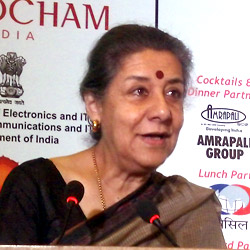
    High drama ensued at the Assocham event inNew Delhias local cable operators (LCOs) flagged black ribbons at the Minister for Information and Broadcasting, Mrs Ambika Soni. The Minister was attending the 6th Annual Summit on Entertainment and Media organized by Assocham, Focus 2012: Digitization for Inclusive Growth. As the theme suggests, one of the primary issues discussed at the event was Digitization of Cable television.


    The LCOs were protesting against the recent tariff order issued by the Telecom Regulatory Authority of India (TRAI), which they claim is an unfair order against all small operators. Following the heated arguments between cable operators present at the event venue and the Minister, one of the cable operators, Sandeep Mcgee who is based inEast Delhithreatened to commit suicide in front of the Minister. Mrs Soni, however, tried to pacify the operators’ fraternity and asked them to file a formal letter with all their grievances against the tariff order and the regulator. She also promised to address their concerns and, if need be, raise the same with the regulator.


    Addressing the concerns of broadcasters on the carriage fee mentioned in the same order, Mrs Soni said that the government will consult all stakeholders before taking a final call on the regulations decided by TRAI under which the Multi System Operators (MSOs) are allowed to charge a carriage fee from broadcasters.


    Earlier, in her inaugural address, the Minister emphasized the importance of digitization for the entire industry and all stakeholders: “Digitization is going to be the biggest reform in broadcast sector and enable operators to expand their revenue sources by providing more choice and variety to customers. Digitization is imperative to tabulate subscriber base and reduce carriage fee. Digitization will also help reduce all human error in the process.”


    Defending the tariff order issued by TRAI recently, she said that the government indulged in exhaustive consultations with all stakeholders on all issues including the carriage fee, and the main aim of the new regulations had been to benefit the consumer. Mrs Soni said: “The TRAI tariff order makes the viewer the most important beneficiary; the choice will be with the viewer.” As for the broadcasters, she said digitization would help reduce the dependence on TRPs and bring in transparency where every broadcaster would be in a position to identify exactly how many people are subscribing to the channel.


    On the issue of media regulation, Mrs Soni said: “Let’s not condemn self-regulation per se because even though self regulation is a slower way of correcting things, it is still a surer way as it involves converting minds and hearts in the process.” She added that in the whole race to growth, the provisions of the Cable Television Regulatory Act were overlooked and it was a fault in the functioning of the government that the act had been ignored.


    On the issue of Paid News, she said that while it was the worst phenomenon that existed, it’s not as easy to detect paid news. She was responding to scathing criticism of the media by the Chairman of Press Council of India, Justice Markandey Katju in his keynote address at the same event.


  • IBF welcomes Tariff Order, seeks clarity on Carriage

    By A Correspondent


    The Indian Broadcasting Foundation (IBF) has welcomed the initiatives taken by the I & B Ministry and TRAI in bringing about much needed reforms in the cable sector.


    The Tariff amendments and the new Interconnect regulations for Digital Addressable Cable brought about by the Telecom Regulatory Authority of India (TRAI) will inject necessary transparency across the value chain. With a slew of consumer friendly measures – namely choice of packages and introduction of Basic Service Tier, TRAI has ensured that all subscribers of varied socio economic background are duly taken care of and provided for. IBF also welcomes the mandate to enhance the channel carrying capacity to a minimum of 200 channels wef July 1, 2012 and 500 channels wef January 1, 2013.


    The new interconnect regulations have brought within its wake the much awaited specifications for digital addressability while at the same time laying down the eligibility criteria for availing signals. The reporting requirements will help the government in plugging leakages while the provisions on disconnection of signals will ensure that all stakeholders are aware of their rights and obligations.


    Overall the Tariff Order and the Interconnect Regulations read with the amended Cable TV Act and Rules are steps in the right direction and will help the country to make the digital transition.


    However, a big area of concern for Broadcasters is Carriage Fee. The Broadcasters have taken up this issue in various discussions with the TRAI and the Government in the past. Carriage Fee has crippled various broadcasters, especially the smaller sized companies, and it has restricted a broadcaster’s ability to invest in content and other activities of a channel. Therefore, there is an urgent need to revisit this issue and IBF will seek clarity on this matter from TRAI.


    India is on the threshold of a digital makeover and IBF trusts that this will, over a period of time, make way for more freedom to stakeholders as digitalization acquires critical mass and the country gains more confidence in bridging the digital divide.


  • No comebacks on Tariff Order: TRAI chairman

    By A Correspondent


    While the News Broadcasters Association has protested against the tariff order for digital cable TV issued by TRAI on April 30, saying that the order ‘legalized’ carriage fee, TRAI Chairman JS Sarma has maintained that there is no cause for dissatisfaction on carriage fee.


    In an interview to NDTV 24×7, Mr Sarma said: “Carriage fee is now a well-regulated issue and it should be transparent. We will intervene if required but we won’t relook at the recommendations.”


    The NBA claims, “The primary purpose of digitization was to increase the number of channels broadcasted. The objective was to give consumers greater choice and to eliminate the phenomenon of ‘carriage fees’, which were being charged due to capacity constraints. However, the NBA is distressed and disappointed that TRAI’s new notification has actually legalized the practice of ‘carriage fees’ and given distributors the freedom to unilaterally set the amount of ‘carriage fees’ broadcasters must pay.”


    The TRAI has also prescribed that the MSOs increase their channel carrying capacity. In its recommendation, MSOs have been mandated to carry a minimum of 500 channels by January 1, 2013. TRAI stated in its order, “The Authority has mandated MSOs to carry a minimum of 500 channels from January 1, 2013. However, keeping in view that smaller MSOs having less than 25,000 subscribers may need some additional time for building capacity, they have been given time up to April 1, 2013.”


    The TRAI has prescribed that every MSO should have a minimum capacity to carry 200 channels by July 1.


    The Indian Broadcasting Foundation (IBF) convened a board meeting to discuss the issues pertaining to the TRAI order. A press statement is scheduled to be released on the issue later today.


  • Introducing: Media Matrix, a new weekly column by Paritosh Joshi

    By Paritosh Joshi


    A young man who currently works in one of the Big Three television networks dropped by for some career advice last week. After graduating from business school, he has spent almost five years at the job, the first two in Ad Sales and the next three in Marketing. He feels like he is beginning to stagnate and has raised the issue with his boss. Boss suggested that he move back into Ad Sales.


    What would you advise him?


    If he planned to be in the broadcast industry for the long haul, say the next decade, I suggested that he stay in Marketing. If it was just the next two or three however, he was likely better off shifting back to Ad Sales.


    Seems cryptic? Hang on, we should soon see why.


    Marketing’s role at most Indian broadcasters only comes in when all aspects of the channel, show or event have already been finalized. All that remains is to build awareness of the impending launch to try and ensure the quickest possible pace of sampling among viewers. Talented creative agency is called in and briefed. Wit, emotion, action and drama are poured in and out pops a striking, often award winning, campaign. All that remains to be done is splashing out a large sum on a media plan and the job is done.


    If you learned your Marketing at one of the putative Universities of the discipline, P&G or Unilever or one of the beverage majors for instance, you would expect to lead, not follow the process and centre every decision at each stage on the consumer. It would probably offend you to be treated merely as a deliverer of advertising and media campaigns. Given the circumstances, you would want to shift closer to either the Content or the Ad Sales side of the business, where the action really was.


    Things are going to start changing. As soon as July 1, 2012 actually.


    For as long as we’ve had C&S TV inIndia, going on 20 years now, the biggest impediment in its expansion has been limited bandwidth due to analog delivery. With capacity of less than 70 channels delivered at indifferent resolution and scratchy audio, the biggest challenge before a channel is to get distribution at whatever cost. Once this hurdle has been negotiated, it enters a relatively limited range of options available in any given genre. The rest depends on casting as wide a content net as possible. Almost every channel tries to be all things to all viewers.


    Mandatory digitization arrives in the big metros on July 1. In a fell swoop, channel choice is set to grow three-fold or more. Costs of distribution should fall rather sharply, removing a significant entry barrier and opening doors for many more content providers. Inevitably, the days of every channel wanting to be ‘One size fits all’ must give way to specific consumer needs driving product design. International channels already show this precision in proposition and content. Comedy Central makes no bones about what it stands for and will stay close to the promise. Fox has a whole portfolio of well-designed channels that identify and then single mindedly go after a tightly defined benefit.


    And make no mistake. This is the direction where all of Indian television is headed; the era of the Marketing-led broadcasting business.


    Paritosh Joshi was until recently CEO, Star CJ. He has been a marketer, a mediaperson and been a key officebearer on industry bodies. He can reached via his Twitter handle @paritoshZero


  • [60 Days to D-Day] All stakeholders need to work together: Neeraj Sanan

    The Telecom Regulatory Authority of India (TRAI) issued new rules refurbishing the regulatory structure of the broadcasting, cable and DTH industry ahead of the digitization switch over in four metros, Delhi, Mumbai, Kolkata and Chennai from July 1. The order deals with issues such as channel availability, channel pricing, carriage fee and revenue sharing.

     

    Digitization is being seen as the game changer for the Indian TV industry, expected to bring a sea change for viewers, broadcasters and cable operators. The broadcasting industry is expected to see a growth in subscription revenue post digitization, as opposed to the present model where they depend largely on advertising revenue.


    As per the new guidelines, ‘The Broadcaster would enjoy ‘must carry’ provision from 1.1.2013 or 1.4.2013 as the case may be, for Hindi, English and channels in the regional language of the concerned area.’  In the order, TRAI has also addressed the much debated issue of carriage fee. The order states, “Keeping in view the fact that substantial investment for implementation of Digital Addressable Cable TV Systems is made by the MSO and the cost involved in carriage of channels, the Authority has decided that every MSO may fix the Carriage Fee. However, it should be published in the Reference Interconnect Offer and applied in a uniform, non-discriminatory and transparent manner. The Carriage Fee cannot be revised upward for a minimum of 2 years. The Authority would intervene in case it is felt that the Carriage Fee is unreasonable.”


    The regulatory has also prescribed the MSOs to increase their channel carrying capacity, stating that every MSO should have a minimum capacity to carry 200 channels by July 1, 2012.


    MxMIndia’s Shruti Pushkarna spoke to Mr Neeraj Sanan, EVP- Marketing and Distribution, MCCS to get his response on the Tariff Order and Interconnection Regulations for the Digital Addressable Cable TV Systems issued by TRAI.


    What’s your first response to the Tariff Order? Specifically the MCCS position?

    It is a reaffirmation of the government’s stated position and something that TRAI has been working towards for a long time.


    The TRAI observes that the Order will help profitability of channels. But carriage fee exists. Do you think your bottomline will be impacted in a positive way with this?

    The TRAI’s order will help all stakeholders move to a position of working in a structured manner. A well-run business can hope to get its deserved profit.


    Do you see the implementation happening in the four metros before July 1?

    I understand that a lot of intelligent people in well-run MSO and LCO organizations are working round the clock to make it happen. A key factor here will be for the government to continue to do what it has been saying. We shall all have to brace ourselves to a large surge in operational logistics at the last minute, but yes all this is surmountable.


    What are the marketing initiatives you are undertaking to ensure that you retain viewers?

    This is a challenge more for a distributor.


    Do you think the government is doing enough to promote the switch to digitization and explain the benefits to consumers?

    There is always something better we could do, but yes, government has been consistent in it’s thought. Now it is for all stakeholders, including all state governments to realize the prudence of digitization and work together to make it happen.


    Are there any areas of worry in the run-up to digitization (given that we have just 60 days to go)?

    No constructive business happens without risk and yes there are a lot of things that could go awry but if all players remain aligned, this is achievable. We should all realize that it is history being written everyday for distribution and we need to carefully tread this path.


  • [60 Days to D-Day] Digitization good for industry: Sahil Gupta, PWC

    The Telecom Regulatory Authority of India (TRAI) issued the Tariff Order and Interconnection Regulations for the Digital Addressable Cable TV Systems on April 30.


    Aimed at providing the viewers with a better viewing experience and maximum choice, digitization is being seen as the biggest change broadcast and cable industry in the country is set to witness. Television viewers will get to choose a minimum of hundred Free to Air (FTA) channels at a maximum retail price of Rs100, as per new tariff rules for Cable TV announced by TRAI.


    The order states: “The basic purpose of digitization is to ensure ample choice to the consumer as well as to enable him to budget his subscription according to his paying capacity. Accordingly, the Authority has mandated MSOs to carry a minimum of 500 channels from January 1, 2013. However, keeping in view that the smaller MSOs having less than 25000 subscribers may need some additional time for building the capacity, they have been given time up to April 1, 2013. Besides, to ensure that the consumer is not adversely affected, the Authority has prescribed that every MSO should have a minimum capacity to carry 200 channels from July 1.”


    In the new guidelines issues, TRAI has also addressed issues pertaining to revenue sharing between MSOs and LCOs, carriage fee paid by broadcasters, channel pricing and so on.


    Mr Sahil Gupta, Senior Manager, Tax and Regulatory Services, PwCIndia shared his analysis of the recent order with MxMIndia’s Shruti Pushkarna and how he sees digitization as a win-win for all.


    What is your view on TRAI’s Tariff Order? 

    It’s a pro-consumer directive. Consumers can now pay for what they want to see, unlike in today’s time when they purchase a bouquet which has unwanted channels as well. Hence a la carte selection works more cost-efficient for consumers.


    So do you see digitization as a win-win for all?

    Digitization per se is good for the industry – consumers get better quality reception, broadcasters can know their exact consumer base, which will help them realise full value from MSOscable operators (which gets under-reported in current times based on what subscription base the intermediaries disclose to broadcasters). Moreover, it helps in bringing addressability in the system.


    Do you think the government is serious about the July 1 deadline?

    The government is taking a lot of initiatives to push digitization – it has a stakeholders’ meeting every week or two weeks and is helping stakeholders migrate to the new system. They are thus doing their bit for helping meet the deadline of July 1.


    But on the ground we hear that there is much to be achieved?

    The infrastructure is what is taking time. The digital/upgraded set top boxes need to be procured and be ready for installation at the consumer’s end. Some MSOs/cable operators are looking at funding mechanisms for meeting these procurement needs, while others are working towards building a right procurement strategy for the same. All in all, the industry is gearing up for it and all stakeholders doing their bit.


    Your view on the guidelines for carriage fees in the Order?

    Carriage fee is what MSOs charge broadcasters for carrying their channels to viewers. Some element of arbitrariness gets reduced from this Order as it needs to be uniform and non-discriminatory across all broadcasters. The TRAI will step in if it’s unreasonable and this will help.


    And on pricing of channels?

    The limits on pricing mentioned in the order is aimed mainly at ensuring that channels, especially popular ones, are not priced high.


    There’s also a mention on the revenue sharing between MSOs and cable operators…

    There seems to have been certain disputes between MSOs and cable operators in regard to sharing of distribution revenues. Prescribing the revenue sharing formula, in absence of an agreement between them, will help and bring in transparency…