Tag: Digitization

  • Jaldi 5 with Joydip Kapadia: As we approach a month of digitization, Mum, Del nearly 95%, Cal: 80%

    It will be a month of mandatory digitization in the three metros of Mumbai, Delhi and Kolkata. MxMIndia spoke to Joydip Kapadia, Business Head, Television Street Maps on the progress made so far


    01. According to Television Street Maps estimates, how much digitization has actually been achieved in Mumbai, Delhi and Kolkata?

    We cannot comment on the exact numbers as there is too much of flux in these markets between DAS, DTH, Analogue. Hence, we would prefer to give a range estimate as follows: Mumbai and Delhi together are tending towards the 95% mark. Kolkata is trailing with less than 80%.


    02. Evidently, a lot of the process is work in progress… how many of the set-top boxes have been installed in the month of November alone?

    Yes. The pace of seeding has been pretty impressive with just under 35 lakh boxes seeded in November. Delhi leads the pack with more than 15 lakhs seedings. Followed by Kolkata with more than 12 lakh boxes. Mumbai was earlier seeded well and has added another 4.5 lakhs boxes in November.


    03. Do you see many switchovers from cable to DTH given the confusion?

    In the early part of 2012, we had seen a far greater enthusiasm with DTH expecting a large gain from cable. In a few cases, that expectation was as high as 30% of the total analog base within these metros would switch to DTH. However, the reality has been a little different. Cable has not lost as many homes as many on the DTH side had expected.


    04. How has the roll-out of Channel Packs been by the cable MSOs?

    While all major players have now introduced their packs, we have a few observations:-


    1. The packs have been rolled out – but not so much to end consumers. Cable Pack sales in the truest sense, in our estimate, is still 8-9 months away.

    2. There are fewer packs per cable operator vis-a-vis their DTH counterparts. This is bound to increase in days to come.

    3. The first approach seems to be National packs even for operators who are expected eventually to move to Regional/ Local packs.

    4. The systems at the MSO end are still not fully/ seamlessly integrated. Hence we are finding strange discrepancies of channels available on packs even when those are not being relayed by the MSO’s headend. We expect some of these teething issues to be ironed out in days to come.


    05. Any broad lessons as we embark on Phase 2 of digitization?

    a. The two back-to-back deadlines for Mumbai-Delhi-Kolkata could be avoided in the second phase. If individual MSOs/ Cable operators are known to expedite box seeding closer to the deadline, we need a more effective push for all key players to start seeding in time rather than at the 11th hour.

    b. DTH cannot assume that it will gain automatically due to the flux. They cannot assume that just heavy advertising and price promos will do the trick. Extensive ground efforts/ initiatives will be needed.

    c. The seduction and mating rituals between distributor companies and MSOs should start much in advance. Waiting for the last minute will only mean signal disruption to consumers.

    d. Distributor Companies would have to insist on getting subscriber visibility from the SMS of Regional Operators within the 38 cities as part of their deals. Succumbing to quick wins of minimum guarantee/ fixed deals would again put broadcasters in the same spot where their fortunes remain disconnected from number of subscribers.

     

  • Jaldi 5 with M R Srinivasan: Chennai could need 3-6 months for digitization switch-over

    01. The court has extended the sunset date. How is the situation in Chennai post the extension?

    In Chennai currently, there is a big confusion. One day we went to the court and got interim order stay and now the case has gone to the Bench, which will have the hearing on 19th. Secondly, despite our letters to MSOs and MIB from our end, none of them are importing the set-top boxes. SAB said that they will be able to import boxes in 21 days provided the LCOs deposit advance money. But some of our members have already deposited two lakh rupees as advance last month. They are yet to receive to boxes. We will be submitting the dealing to the Court on 19th.


    There is uncertainty also because Arasu cable has not been given license yet to provide STB, and once it is given the license it will conquer the market. So, the existing MSO and licensed players are not sure of importing the boxes yet. As they may get wiped out once Arasu gets license.


    Four out of eight players who have got license, only three have installed head-ends.


    02. What are your expectations from the Bench on 19th?

    Well, they should extend the deadline. And if the extension is given, I&B Ministry should take views from all stakeholders. And all the information should be furnished clearly for and by stakeholders in front of MIB. Verification should be done if the said number of STB have been installed and activated. It should be made known as to how many boxes have been imported and how many of it installed by every player, since the imported boxes are usually smuggled in Middle East or Sri Lanka.


    03. How much of Chennai has been digitised, according to you?


    Right now, as per active status given to broadcasters by SAB it is 1.25 lakhs. As per our calculation, the active status is 1.3-1.5 lakhs only. DTH players are claiming that they have sold seven lakh connections. Most of these boxes, almost about 300-400 per month, are smuggled out of Chennai. In Chennai, about three-four lakh of these claimed DTH connections are active. We require about four million boxes in Chennai metropolitan area, which also covers the outskirts of Chennai.


    04. Even if the extension is given, how much time would Chennai require to reach 100% digitisation?

    Chennai would need 3-6 months to switch completely to digital signals. It is well-known that analogue signals are still on in Delhi and Mumbai where 100% digitization has been claimed. In Delhi and Mumbai, boxes are available aplenty and still they have analogue signals. Here in Chennai, we do not have STBs. It is important that analogue signals are not switched off.


    05. How does analogue benefit the stakeholder?

    We have 4G spectrum, but TRAI has not wiped out 2G. With digital, 10-15 analogue channels should be available. Not everyone can afford a STB. One should also think of low-income households.


    As told to Ananya Saha


  • Digitization: The media agency view


    By Ananya Saha


    Phase I of digitization has been a challenged ride. Even as MIB believes that as on November 5, 2012, 22.4 lakh Set Top Boxes (STBs) were installed in Mumbai, 25.15 lakh in Delhi, and 17.74 lakh STBs in Kolkata; analogue signals still continue to beam in the four cities. The Chennai matter is sub-judice in the Madras High Court. To top it all off, the sunset date for the second phase has already been announced. It is no doubt that 100 percent digitisation of the four metros is still a huge task.


    Anita Nayyar

    Anita Nayyar, CEO, Havas Media, India & South Asia said, “The current state will carry on over the next eight weeks until stabilization sets in and state government and consumers realize it’s here to stay. The change to digital, now or later is eminent in waves if not crests and troughs. Hundred percent digitization across India will certainly take much longer and there will be many more extension dates.” Raj Datta, Senior GM, MPG-Kolkata also opined that reaching 100 percent digitization in Kolkata will take close to three months.


    Raj Datta

    While the broadcasters are happy with the numbers, since it will give them additional revenues and save them the carriage fee, the advertisers are still apprehensive. The cost of set-top box (STB) and infrastructure are the primary concerns of the industry. The suspension of TAM data, simultaneous beaming of analogue and digital signals is only adding to the confusion during the festive season. Mona Jain, CEO, Vivaki Exchange opined that the advertisers are wary of the fact that visibility will drop due to the transition. She said, “For the advertising fraternity, the festive season is the key period for them. Due to transition to STBs and digital signals, there are going to be shortfall and shifting in terms of visibility. This is a big concern for them. They are not able to predict the shifts in their current plan and that is an issue.”


    Mona Jain

    Kolkata has been grappling with low transition numbers. While Mr Datta predicts that digitisation might shoot up due to the impeding cricket season, he is quick to point out, “We do not know what the numbers will show because TAM data has been suspended and will be available only after December 15. Anything and everything is an estimate. It remains to be seen how channel scenario will change. I am guessing that the viewership of niche channels such as History, Nat Geo might shoot up. Post digitization, illegal connections will also drastically drop, also because they will have to shell out money and take a connection. Thus, I feel that the whole scenario will change towards what SEC A likes.” He also said that the sampling of SEC A, B has also increased and this might result in shift of advertisers’ money.


    “Advertisers as rule will have to adopt a more segmented and targeted approach sub-slicing their segments. With access to more channels, viewership by TG, will get spread, people will experiment and consume more even if it is not focused consumption and this will happen across genres. Marketers and advertisers if they want immediate results will be looking at incremental spend than earlier budgeted as they will have the option to follow the spread,” opined Ms Nayyar, adding, “Underreporting of C&S households has been an issue and resulted in loss to the exchequer. Further there is the deferring of the TAM data which clients are used to even though digitization will allow more refined information, but while this is already being done it will take a while to become a norm.”


    She also said that advertising will increasingly get localised and spill over to local print and radio in the long run.


    According to Mr Datta, advertisers are apprehensive about believing the historical data and the current situation. “As a media agency, we have to depend on historical TAM data that we have till October 7, but we do not know if it is giving the correct picture. But we do feel that overall viewership might drop because of digitisation. These issues are coming up repeatedly since we work with cost effective measure called CPRP, and broadcasters are a little apprehensive. It is a complete wait-and-watch kind of scenario. Something definite is quite difficult to predict,” he said.


    While the planners and buyers feel the broadcasters are co-operating, it remains to be seen who emerges unscathed in the digitization fracas.


  • The Sun Rises on New Era of Digitization


    By A Correspondent

    Okay, there are the hiccups. The plea to push digitization in Chennai was successful with the Court extending the date to November 5. In Mumbai, the plea was rejected even as local cable operators are gathering in the afternoon to decide on the next course of action. They may even go in for an appeal to the Supreme Court.

    What the stakeholder body bosses say:

    Man Jit singh

    Man Jit Singh, President IBF and CEO, Multi Screen Media

    This has been the biggest step in the broadcast industry. Not only is digitization good for broadcasters as it will bring subscription revenues in line but will also enable us to launch new channels, the carriage fees will be lower; but it is also good for consumers. This is the chance for consumers to get different content, it is also a chance for them to get broadband connectivity, which will bring a great information revolution. It is great for MSOs as they will get fair revenues from customers after having invested in the boxes. FDI is allowed too, so the MSOs can look for investments. For LCOs, ARPUs will go up when they offer services like cable modems and broadband connectivity. Government will get more taxes. It is going to be a fantastic phase.

    Arvind Sharma

    Arvind Sharma, President AAAI and ASCI and chairman and CEO of India subcontinent, Leo Burnett

    Digitiation will be a big leap for everybody involved, either as an advertiser, as a businessman, as an agency. So all of the stakeholders are looking at the day with the hope that all will go well.


    Roop Sharma

    Roop Sharma, President, Cable Operators Federation of India

    We all were waiting for digitization. But i have mixed feelings for the day. We have not been able to deliver what we had promised the consumer. There is no transparency, the electronic bill system is not in place, and moreover, the required number of boxes have not been seeded. What can one say? Chennai has extended the deadline. Mumbai will now be moving to Supreme Court for the extension of deadline.

    In Kolkata, the opposition is kind-of state-sponsored with Chief Minister Mamata Banerjee objecting to the mandatory digitization and the impact it has on the poorest of poor.

    In Delhi, there were some objections raised, but they appeared to have fallen on deaf ears.

    The result: mandatory digitization in three metros is here. And at long last there is going to be some order in the broadcast business. One is not very sure whether those who are very elated about the move will be so in future. Because transparency comes with its own set of problems. Especially for those who have been used to the inefficiencies for far too long.

    See also:
    Shailesh Kapoor/TV Trail: Channel Brand: The Digitization RealityThe Anchor: 5 problems and that you and I will face thanks to digitization


    So, who gains and who loses by the digitization:

    Consumers: Will they gain? Yes and No. It’s great for those who can afford it, but for the lowest common denominator already burdened with rising salaries and falling incomes, it’s going to pinch.

    Broadcasters: Content-makers will now get the money they ought to get as they will know how many people are subscribed to their channel, but no longer will they be able to give the spiel of millions of viewers watching their channel without the relevant proof.  They will save some of the carriage fees paid to Multiple System Operators (MSOs)

    MSOs: Monies coming from carriage fees will take a beating, though it won’t vanish entirely as some revenues from placement etc can be made. Their incomes could rise with better reporting from the local cable operators.

    LCOs: While quality of content will mean greater number subscriptions to niche channels and hence more commissions, the overall revenues will reduce as the set-top boxes will mean zero unaccounted connections (unless of course there’s pilferage)

    Distribution Bouquets: MediaPro with Star and Zee channels in its fold will be the biggest gainer as will be IndiaCast with the Network18 and allied group channels. However, others smaller group but with key channels like, say, Times Now could also flex their muscles.

    Advertisers and Media Agencies: They will now have a better idea of the reach and may be able to negotiate harder, but there may be a few hiccups

    Hiccups there will be for all. The next few months – possibly till end-December – will see a state of uncertainty for stakeholders. The fight for mandatory digitization may have been won, but the battle has just begun.

  • The Anchor: 5 problems that you and I will face thanks to digitization

    By A N Chorrea


    #1 You need a fresh table for the set-top box:


    So you thought the fancy 165-cm Sony Bravia would look fantastic on the bare wall of your living room. Now, where you are going to keep the set-top box? Pain, huh?


    #2 Other paraphernalia for the box:


    Like a sexy little cover for the box so that dust doesn’t settle on it when not in use. Buy an all-in-one remote and if necessary get an additional remote laminated. Build an electricity point for the set-top box.


    #3 Keep tabs on packages:


    Until now it was the cable operator who decided what you saw. Well, kinda. But now with several packages, and a variety of new channels coming on board, get ready to be picking and changing channels and/or packages.


    #4 One more monthly payment to be made


    If your existing arrangement with the cablewallah allowed you to pay just once a year, now you may want to make it a monthly cycle, until you’ve decided what package to take.


    #5 More money


    Set-top boxes for all the help/assistants at home, office, the driver… and the building sweeper and watchman. Guess one of the suggestions that someone should’ve made to the government that is that investments in buying set-top boxes will get you tax exemption. This could be sizeable given the number of boxes you’ll be buying in the immediate future.


  • Shailesh Kapoor | Channel Brand: The Digitization Reality

    By Shailesh Kapoor


    D-Day has arrived. By the time you read this, analogue cable would have ceased to exist in three of the four metros, at least legally. The first phase of digitization is finally a reality amidst much speculation over the last few months and, now, chaos. It’s public knowledge now that large audience sections in the metros have still not moved to a digital cable or a DTH connection. If you ask me, there’s absolutely nothing surprising about this at all. After all, this is India. And we do things at the last minute all the time, don’t we? Then why should it be any different when it comes to changing one’s cable connection?


    If the government can enforce end of analogue television, the balance households will go digital in a jiffy. There is no such thing as ‘a life without television’, certainly not in urban India. So connectivity is not going to be a major challenge at an industry level. But digitization is sure to throw some new challenges into the arena.


    To begin with, the first challenge is right in the midst of all of us. It’s called ‘Nobody Knows Nothing’. There is uncertainty on multiple counts. There are no ratings available for the last three weeks. There are different reports and estimates floating around on the actual status of digitization. But in all this, the real question is getting muted: What will really change when the flux period is behind us and connectivity and ratings are not issues any more?


    The most substantive change will be a marketing change. With digitization, the consumer’s ability and acumen to choose channels he wants to pay for will progressively increase. With this change, the focus will shift from programme brands to channel brands.


    In nearly 25 years of satellite television in India, broadcaster campaigns have been primarily focused on building viewership towards specific properties, typically new fiction or non-fiction series, film premieres, events and specials. As a rough estimate, more than 85 percent of the marketing budgets of channels are spent on promoting programme brands, while channel brands get less than 15 percent of the spends.


    It’s popularly believed that GECs are watched for shows and not for the channel per se. But that’s not entirely true. In a recent large-sample segmentation research conducted by us, more than 35 percent viewership on GECs stemmed from channel loyalty, than programme loyalty. Importantly, this 35 percent makes the crucial difference in a closely fought battle. For example, Star Plus fiction launches typically tend to open at higher ratings than most other GEC fiction launches because the channel’s loyal base gives it the edge for every such launch.


    For non-GECs, like movie, news, music, youth and infotainment, upto 70-80 percent viewership is a result of brand loyalty. Live cricket is perhaps the only content type that is entirely driven by programme preference, with minimal brand interplay.


    Yet, we see channels spending millions in creating programme sampling. The oft-repeated argument is that to create brand loyalty, one needs to create programme viewership. To me, this has been the television marketer’s excuse for being lazy and not thinking like a true champion of his brand. And the excuse may have overstayed its welcome by a few years now.


    In the digitized environment, the arguments in favour of such lopsided programme brand focus will get even weaker. When the consumer has a realistic choice on deciding specific channels to pay for, a bigger brand story will have to be sold. Less than five channels can boast of a programme strong enough to become their brand story today. For others, the brand story will have to come from somewhere else.


    So, once the dust settles and the red herring of no ratings is out of our lives, the real digitization-related change should begin. A change that will make the marketing departments at channels more powerful than ever before. But also a lot more accountable than today!


    Shailesh Kapoor is founder and CEO of media & entertainment research and consulting firm Ormax Media. He spent nine years in the television industry before turning entrepreneur. He can be reached at his Twitter handle @shaileshkapoor

  • Jaldi 5 with Roop Sharma: All set for digitization!?

    Roop Sharma

    It’s the day of reckoning for the Indian media sector as mandatory digitization is scheduled to happen in the four metros of Chennai, Kolkata, Mumbai and New Delhi. While there are various stakeholders, the role of the local cable operators (LCOs) is most critical for the move to be successful. Over the last few weeks, LCOs have been exceedingly vocal on the problems with digitization move. MxMIndia spoke to Roop Sharma, founder and president of the Cable Operators Federation of India on the morning of October 31…


    01.   So the sun is finally going to set on analogue transmission in the four metros today?

    Yes, this is what looks like considering the attitude of the government.

    Don’t you think some teething troubles would exist even if there was 100% set-top box installation?

    Firstly, everyone including the Ministry knows that seeding of STBs is not 100%. So many consumers would be having a dark day if analogue is switched off tonight. Secondly, consumer choice has not been asked and fed into the SMS systems of the MSOs. Ministry press release says that this would be done in the next 15 days. I doubt if that is possible to collect and feed the data of about 10 million subs in such a situation. Any way, the Ministry’s job will finish after they give another release patting their own back for a good job done. It damn cares for what the consumers go through. I expect a chaotic situation for another two to three months when people come to terms with what has happened.

    Do you still have reservations about whether it will work?

    I have never suspected working of the technology and always favoured digitalisatioin.  However, I do suspect the intention of the government behind the whole exercise. It appears that it is being pressurized by some external force otherwise government would have remembered its social, economical and political responsibility while implementing a new technology, forcing down the throat of the masses in the name of doing good.

    You check the experience in rest of the world. No government has ever mandated digitization in a private cable TV industry anywhere in the world. In the US, Europe, South Africa, Australia and in many other countries, they digitalized terrestrial television services given free to the masses because it frees lot of spectrum that can be used for new telecom services. While doing this, they ensured that till the last customer is given a digital STB, no analog switch off takes place. Not only this, they offered free STBs to millions or gave a subsidy to buy an STB for each TV set.

    India is not so rich. It could have let analogue exist for the poor masses or provided an alternative, digitizing the free terrestrial services of Doordarshan for them. Don’t forget it is cable TV that made a information and knowledge based society in India and not mobile communications. Real globalisation started with cable TV revolution in India in early nineties.


    02.   If the government turns a blind eye to data pilferage to non-digitised subscribers for a few months, LCOs and MSOs should not have any problems?

    Let’s not talk about pilferage of data. Even in the US there is 15% accepted piracy. Has the government stopped pilferage of food grains from its godowns, tax avoidance or corruption in the big industries and politics? However, government should have ensured that every existing customer is enabled to receive digital service and afford the service. Ministry is working like Gestapo as if it is a question of life and death for the nation.


    03.   If LCOs don’t get proactive, you’ll lose customers to DTH, as there are some attractive schemes on offer?

    No, this cannot happen. Don’t forget that DTH existed since 2003 in India. If the service was affordable and so good, cable TV would have lost all its connections to it. This has not happened in the last eight years. It will not happen now also. DTH gains are only in cable dark areas or far flung isolated areas. This is the main reason that Ministry is so proactive in making Cable TV more costly than DTH so that consumers are forced to shift to DTH.

    For your information, there is no transparency on DTH in spite of it being a fully digital service. All their content deals are done not based on the actual consumer consumption but lump some deals. Consumers do not get their choice. To get your choice on DTH, you shell out not less than Rs 400 per month. Government is befooling the masses to help a few large media groups who enjoy monopolies in the media markets through their numerous TV channels, This was very evident from the ads given by the government, broadcasters and DTH companies on TV and print media. They had a threatening and scary tone to terrorise the consumers rather than convince them. Otherwise, why should the ads tell the cable TV subscribers to approach DTH operators when the law is made to digitalise cable TV.

    If you ask me, this law will prove a death knell for all small players, both cable operators and broadcasters.


    04.   Is there fair clarity on the subscription pack tariff and how much LCOs will earn in the new regime?

    No, there is no clarity so far. Many popular channels are missing from packages offered as well as a-la-carte offerings. Consumers are clueless till now.


    05.   As owners of the all-important last mile, your role in this gamechanging move is critical. But there are many who think that cable operators have suddenly started creating obstacles to delay digitization. Why this sudden reluctance?

    We appraised the government what is the true situation on the ground. However, since that was against their mindset, they started ignoring us. In fact, they started having separate meetings with broadcasters and MSOs where cable operators were not made to participate.

    Your critics say that LCOs have realized that their income is going to take a beating… legimately with margins and because digital transmission will require reporting correct subscriber numbers

    It is not a question of dwindling income, what is disturbing to the cable operators is that government has made a law to force LCOs to hand over their years old family business to the big media houses.


  • Mediaah Report Card on Ambika Soni: 7/10

    By Pradyuman Maheshwari


    Although I would hold her responsible for the mess that we have in digitization, Ambika Soni was among the better I&B Ministers we have had in the last decade.


    In my report card, I would give her a 7 on 10.


    In fact had it not been for digitization and the lack of gamechanging vision, she’s could’ve scored higher.


    Remember she took over from Anand Sharma and earlier Priyaranjan Dasmunshi who had made life tough for industry practitioners.  Ms Soni’s tenure came as a breath of fresh air. Reportedly, the advisory she received from her predecessors was that she shouldn’t go easy on media biggies, but she would’ve none of that.


    Everyone has a view on the content dished out on television and in the print media. Parliamentarians, legislators and politicians of all hues, consumer and advocacy groups, corporate, citizens, et al would engage with her to act on their demands. For instance, Balika Vadhu in Colors was found by some to be glorifying child marriage or Sach Ka Saamna and Bigg Boss were found to be unfit for family viewing. Ms Soni heard the complaints and kept the complainants at bay. The general entertainment channels must thank the former minister to ward off a variety of pressures.


    I think just letting various players do their job with a nudge here and there was an achievement. Ms Soni also ensured that entertainment and news broadcasters work out an effective self-regulatory mechanism. This had had its share of hiccups in the past, but in her tenure it happened.


    Ambika soni

    But though her progressive outlook ensured that the industry benefitted, various factors pull her down in this appraisal. In fact, according to one magazine study a few years back, she was judged to be a non-performer.


    Let’s look at the areas where Ms Soni failed:


    1. Doordarshan. The pubcaster had turned 50 in 2009 and there was an opportunity to make it a more professional BBC-like body. Didn’t happen.

    2. Radio. News on FM radio is not allowed due to some silly Home Ministry objections even as there are several cable channels in every nook and corner of the country.

    3. Paid news. If paid news is being discussed much it’s thanks to the Election Commission and a section of the fraternity. The minister had an opportunity to cleanse the system, but she didn’t want to upset the holy cows in the business

    4. Tougher on measures: Had she adopted a sterner stand and asked the industry to act faster, we wouldn’t have seen an NDTV taking TAM to court as BARC would’ve been set up and offered the necessary guidelines.

    5. Digitization. Agreed it’s a bold measure and it’s in her tenure that it gained momentum and was being executed. But the fact that it didn’t was all thanks to the way her ministry went about the task. Even as there are just two days to go, 100 per cent digitization will take another two or three months to happen in the four metros.


    Could this embarrassment have been avoided? Yes, of course.


    I am also shocked at how and why she quit less than a week before what was decidedly the biggest thing in Media and Entertainment in the last decade. Bigger than DTH and other policy initiatives. Yes, it’s a good idea that a senior political leader goes back to help the party in the run-up to the elections, but why do it when the Sunset Date is just a week after?


    Why did the Prime Minister allow her to do so? Why did the UPA chairperson allow it?


    This, I guess, is the reality check for all of us in the media. The powers that be don’t really care.


    As for Madame Soni’s score in my report card. 7/10. And a red line for being irresponsible and leaving the ministry a week before her biggest project was being executed.


    Pradyuman Maheshwari is Editor-in-Chief, MxMIndia. The views expressed here are his own. Inbox him at pradyumanm@mxmindia.com or use the messageboard below


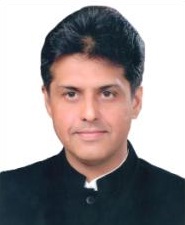
  • Manish Tewari is new I&B minister

    By A Correspondent


    Manish Tewari

    It’s a well-deserved reward for a loyal Congress soldier. Lok Sabha member from Punjab, 45-year-old Manish Tewari, was appointed minister to head the vital Information and Broadcasting Ministry yesterday. Although ranked Minister of State, Mr Tewari gets independent charge.

    He still needs to get the handover notes from predecessor and senior party colleague Ambika Soni, but he’s got some quick decisions to take on the digitization issue. Although his first response to the waiting media was that he would speak to all stakeholders as well as with Ms Soni, unless the High Court in Mumbai intervenes, he will need to take some quick decisions.

    On the issue of curbs, Mr Tewari said “self-regulation is the best regulation”.

    The relationship of the UPA-2 government and the media has been rocky with the government at the receiving end for its conduct. There have also been charges against the media for crossing its line and last week, Congress MP Naveen Jindal went public with allegations against editors of Zee News.

    Earlier, Ms Soni resigned as the I&B minister in order to work for the party in the run-up to the 2014 general elections. While it’s not an uncommon practice for senior ministers to quit to mobilize the party machinery ahead of a general election, the decision was untimely as it came less than a week from when the most critical and gamechanging action of the government for the broadcast sector was to happen on November 1.

    See:

    Manish Tewari Lok Sabha member profile: http://mib.nic.in/ShowContentOne.aspx?id=1&Section=7

    Manish Tewari profile: http://manishtewari.info/Work_Profile.html


    Photograph: I&B ministry website

  • Only 59% (&not 87%) digitization achieved!


    By Pradyuman Maheshwari


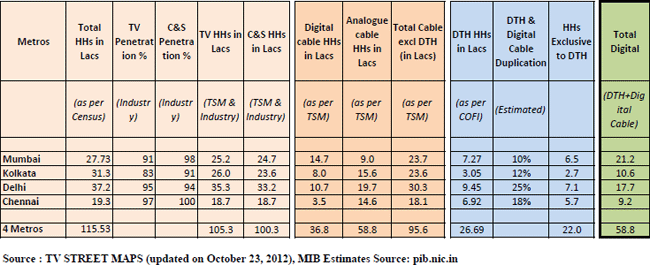
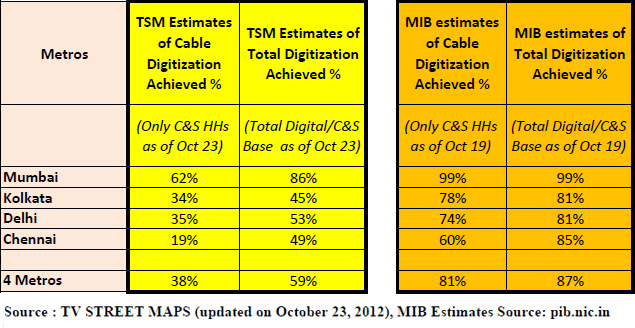
    Only 59 per cent of digitization has been achieved in the four metro as per the first ever independent survey of the extent of digitization in the four metros was conducted by Television Street Maps for MxMIndia. This number is in sharp variance to the claim made by the Ministry of Information and Broadcasting that 87% of the four metro was digitized.


    The figures for the four metros tell the story:


    For Cable & DTH:

    Mumbai: 86% (Govt: 99%)

    Delhi: 45% (81%)

    Kolkata: 53% (81%)

    Chennai: 49% (85%)

    The gap grows when you look at the achievement of digitization only in cable homes.


    Mumbai: 62% (Govt: 99%)

    Delhi: 34% (78%)

    Kolkata: 35% (74%)

    Chennai: 19% (60%)


    On Tuesday, we made a clarion call to the mandarins of the Ministry of Information and Broadcasting urging them to put an end of this charade of make-believe numbers of digitization.


    MxMIndia strongly believes that digitization is THE ONLY way in which the broadcast business can survive and thrive. For too long there has been much confusion amongst stakeholders. With half-baked regulations and guidelines, certain sections of the ecosystem were getting away with unethical practices.


    India has been among the most happening markets in the global broadcast business. Most of the world’s media superpowers are here. What was needed was some order in the business. Which digitization was going to bring in this, as it happened internationally. Unfortunately, the government has appeared to have missed  a trick in its attempt to execute this.


    The Sunset Date for the switch from analogue to digital transmission in the four metros was first fixed as June 30, 2012.  Then it was shifted at the last-minute to October 31.  When this writer mentioned that even that date looks tough to achieve, there were many in the industry who said that the momentum will build eventually.


    Although MxMIndia had been running a series starting 100 days to the June 30 deadline, we didn’t look at digitization in a big way until there 50 days left for November 1. But soon after interacting with all stakeholders, we figured that none of the numbers on the extent of digitization achieved that were being dished out could be believed.


    Jaldi 5 with Joydip Kapadia: Data based on ground-level info + professional & expert assumptions
     

    The government claimed an 87% achievement of digitization while the study conducted for MxMIndia by Television Street Maps showed this achievement to be only 59%. While this figure is for cable and DTH homes, that in cable homes alone is a low 38% as against the I&B ministry claim of 81%. MxMIndia spoke to Joydip Kapadia, Business Head, Television Street Maps on the issue:01. There is a huge variance between the TSM study figures of 59 per cent total digitization as against 87 per cent which the government is quoting. Why do you think do we have this huge difference between the two figures?

    I wouldn’t be in a position to comment on the numbers quoted in other studies. After all, whether its the authorities or TSM or other third parties releasing info about the ground, we all have to resort to diverse methodologies and assumptions. Sometimes the estimates of individual studies could vary due to the underlying assumptions considered. These assumptions work at multiple levels – each or all of these assumptions levels could influence the end result. For instance, differences in defining the areas within the city, definition of Digital TV (including or excluding DTH), total cable homes in a city extrapolated from census and other sources – are just some of the places where assumptions taken upstream within the analysis could produce variations in numbers coming out downstream – at the end of the analysis. All I can say is that our data is based on information obtained from the ground overlaid with our professional and expert assumptions.


    02. By your estimates how much do you see the 59 per cent grow to by October 31?

    It’s difficult to predict given the scale of the initiative and the number of players and variable involved. I wouldn’t like to hazard a guess.


    03. Would you see broadcasters lose out because of the delay (given more carriage fees, the delay in transparency, but then assured reach)

    We have actually not looked at these aspects so I wouldn’t like to say anything on that.


    04. Is there any one thing that you would like to see being done right if there’s a delay in the date and/or for the digitization for the rest of the country?

    We are not direct stakeholders in this and cannot offer any advice in this regard.


    05. 05. Do you think it would be prudent for the government to push the digitization date in the four metros by another three months?

    The math for all stakeholders comes down to what is the overall target to achieve vis-a-vis the seeding pace of the industry to reach that target. If that Math adds up then great, else the verdict would be to budget for greater time.


    It is then that we commissioned Television Street Maps (TSM),  India’s largest and widest channel distribution monitoring service covering over 1500 headends across  675+ cities/towns, to conduct this study. TSM placement monitoring data is provided on a weekly basis to its clients who include names such as Indiacast, One Alliance, Viacom18, MSM, Star, UTV, etc. Besides providing distribution monitoring for analogue and digital for Class-1 towns, TSM has recently started providing distribution monitoring for LC1 towns as well as Digital Track, a system to analyse Digital offerings of MSOs and DTH companies.


    Over the last two years, TSM has been tracking cable headends on a daily basis and reporting on a weekly level in almost a cable census style – covering every headend for the geographies it represents. While the data provided here are just the toplines we intend to provide detailed insights to our client on DAS. (see box: Jaldi 5 interview with TSM Business Head Joydip Kapadia: Data based on ground-level info + professional & expert assumptions ).


    Methodology of Data Capture:

    Over the last two years, TSM has been capturing TV channel distribution on a daily basis – the expanse of which is now a staggering 1500 headends across 675+ towns. This daily activity has been augmented since August 2012 for the four metros to capture the movement from analogue to digital at a more granular level. This augmentation/ expansion has been done using extensive ground intelligence and multiple verifications due to the criticality of the data. To ensure correctness of the data, more frequent scans were done in the last few days. The current release is for the ground situation as on October 23, 2012.


    The ground info on Analogue versus Digital has been layered with metro universes data collated from census and other third party sources to ultimately validate and put together the digital penetration data for the 4 metros.


    The sharp variance in the numbers as per the TSM survey and those put out by the government is reason for worry. But this is precisely what led MxMIndia to commissioning this study. No one really believes the numbers that are being put out by the government though MxMIndia, like other media, has been publishing these.


    MxM View

    MxMIndia recommends that the government act in a mature way on the issue. While a delay will mean a loss of face, it’s better to schedule for a time when 100 percent digitization is truly achieved. At the time of writing, we’ve heard of rumours that the government may well announce a delay by two months. We would urge the government to not look at December 31 as the Sunset Date. There is a fair amount of special programming on television planned on that day and the government would be well advised to look at a date like January 31.


    However, while doing so, it must get assurances from the governments in West Bengal and Tamil Nadu on compliance. The government must also meet all stakeholders to ensure that everyone is on the same page and is working towards the greater common good. It may be a good idea for it to appoint a full-time Officer on Special Duty for digitization. Either someone from its ranks, or pulled from the industry.


    A note of caution: there is a general election coming up in 2014, possibly earlier. Elections have been lost due to grave national issues and teary ones like onion prices. If there’s any mess-up with digitization, the government can ill-afford a crisis where the masses won’t get to watch their favourite shows on telly. Then, the cry will surely be: alag chahiye!


  • Jaldi 5 with Joydip Kapadia: Data based on ground-level info + professional & expert assumptions

    The government claimed an 87% achievement of digitization while the study conducted for MxMIndia by Television Street Maps showed this achievement to be only 59%. While this figure is for cable and DTH homes, that in cable homes alone is a low 38% as against the I&B ministry claim of 81%. MxMIndia spoke to Joydip Kapadia, Business Head, Television Street Maps on the issue:


    01. There is a huge variance between the TSM study figures of 59 per cent total digitization as against 87 per cent which the government is quoting. Why do you think do we have this huge difference between the two figures?

    I wouldn’t be in a position to comment on the numbers quoted in other studies. After all, whether its the authorities or TSM or other third parties releasing info about the ground, we all have to resort to diverse methodologies and assumptions. Sometimes the estimates of individual studies could vary due to the underlying assumptions considered. These assumptions work at multiple levels – each or all of these assumptions levels could influence the end result. For instance, differences in defining the areas within the city, definition of Digital TV (including or excluding DTH), total cable homes in a city extrapolated from census and other sources – are just some of the places where assumptions taken upstream within the analysis could produce variations in numbers coming out downstream – at the end of the analysis. All I can say is that our data is based on information obtained from the ground overlaid with our professional and expert assumptions.


    02. By your estimates how much do you see the 59 per cent grow to by October 31?

    It’s difficult to predict given the scale of the initiative and the number of players and variable involved. I wouldn’t like to hazard a guess.


    03. Would you see broadcasters lose out because of the delay (given more carriage fees, the delay in transparency, but then assured reach)

    We have actually not looked at these aspects so I wouldn’t like to say anything on that.


    04. Is there any one thing that you would like to see being done right if there’s a delay in the date and/or for the digitization for the rest of the country?

    We are not direct stakeholders in this and cannot offer any advice in this regard.


    05. 05. Do you think it would be prudent for the government to push the digitization date in the four metros by another three months?

    The math for all stakeholders comes down to what is the overall target to achieve vis-a-vis the seeding pace of the industry to reach that target. If that Math adds up then great, else the verdict would be to budget for greater time.


  • Digitization in Delhi crosses 66%, 99% in Mumbai: MIB

    By A Correspondent


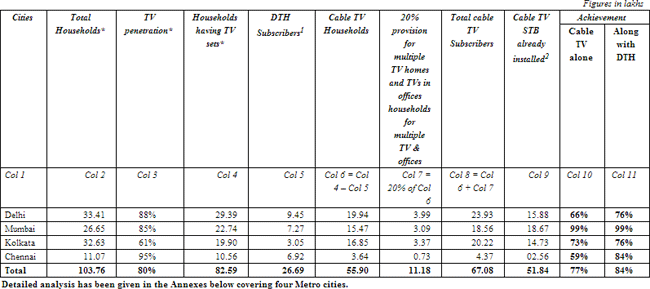
    As per the data made available to the Ministry of Information and Broadcasting by the Multi System operators (MSO), the level of cable TV digitization in Delhi has increased to 66 percent. It has been reported by the six private DTH operators that 9.45 lakh households have got DTH connections in Delhi as on October 9, 2012. This implies that 19.94 lakh households have cable TV connections. Adding a provision of 20 percent to account for multiple TV homes and TV sets in offices etc., it is implied that about 23.93 lakh subscribers require set top boxes. As per the data made available by the Multi System Operators, 15.88 lakh set top boxes have already been installed in Delhi.


    Taking into consideration that the fact that figures given by the ministry have been questioned, the release from the ministry said, “During the initial stage of planning, the data was collated by the Ministry based on the information supplied by the MSOs. On perusal of the data, it was observed that there were grave discrepancies in data, particularly number of Cable TV subscribers in four metro cities furnished by the MSOs.” The Ministry has thus undertaken the exercise to base the data Census of India 2011, released by Office of Registrar General & Census Commissioner, India, which gives authentic figures relating to households and TV penetration in Delhi, Mumbai, Kolkata and Chennai.


    The analysis of data received from the four metro cities reveals that overall 77 percent of cable TV digitization has already been achieved. City wise data shows that the achievement of Cable digitization in Mumbai is 99 percent, followed by Kolkata (73%), Delhi (66%) and Chennai (59%). Taking into consideration, the progress made by DTH in this sector the level of digitization goes up to 84 percent in the four metros.