Tag: Covid-19

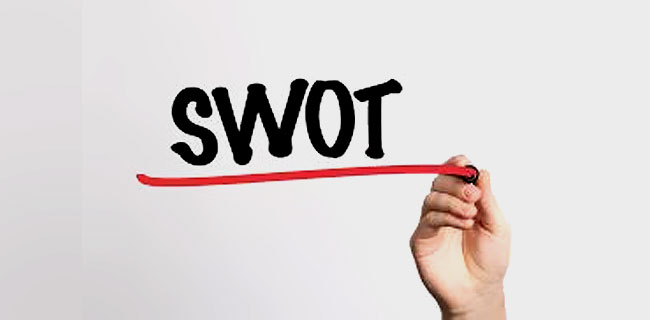
  • A SWOT Analysis for M&E given Covid-19: EY


    Excerpted from an EY (Ernst & Young) report:

    The Media & Entertainment sector is facing unprecedented challenges from the spread of Covid-19. Rapid changes in consumer behaviour and consumption, stoppages in content production, cancellation of live events and sports, and cuts in advertising spend, are impacting companies across the ecosystem. Media agencies, many of which were grappling with operational volatility, are struggling to maintain media spend as marketers manage risks and reduce spend rapidly. Publishers and media companies are benefitting from some marketers seeing the opportunity but face advertising revenue losses. Film and TV producers are under pressure to mitigate impact from delayed release schedules, theatre closures, and production stoppages.


    Companies are currently focused on enterprise resiliency and triaging revenue, but will likely need to turn to rapid cost reduction as business models settle into new norms as business models are not on solid foundation. Bright spots across the industry include digital pure-plays (such as video gaming) and other virtualised production capabilities.


    Accelerated consumer shift to digital journeys

    :: Enhance technology and infrastructure to support digital journeys including streaming and commerce

    :: Ensure digital sales and service models are as effective as traditional journeys

    :: Consider moving


    Marketers cut ad spend and demand agile response times

    :: Accelerate efforts around ad ops and creative production support to enhance responsiveness to marketer needs

    :: Proactively conduct brand sentiment analysis and consumer research to offer stronger insights

    :: Consider incentives or package bundles to maintain or motivate ad spend, including entertainment or escapism content


    Rapid transition to virtualized working environments

    :: Leverage collaborative software to maintain productivity and connection with vendors and clients (e.g. Microsoft Teams)

    :: Accelerate efforts around self service and inside/virtualized sales • Develop models for virtualized customer service rapidly, including potential for augmented reality


    Disruption or cancellation of content production and launch

    :: Revisit programming schedules to extract value out of back catalogue

    :: Accelerate releases to enhance consumer engagement

    :: Identify partners with virtualized content production capabilities


    And here’s a SWOT analysis as presented in the EY report:


    Strengths

    :: M&E is categorised as “essential services” and permitted to continue operation (except theatres and events)

    :: Need for escapism, news and knowledge increases in times of trouble – demand for content expected to remain high


    Weaknesses

    :: Inability to produce content (physical presence critical)

    :: High dependence on advertising for revenues

    :: Inability to connect with and sell to large number of advertisers and SMEs (traditional media)


    Opportunities

    :: Consolidation – Financially stronger brands consolidating weaker brands

    :: Sharing resources between competitors (co-ompetition)

    :: Back-office to the world

    :: Re-invention of sales through platforms to reach SMEs

    :: Direct to consumer and digital community creation

    :: UGC and Create-from-Home services

    :: WFH and manpower optimisation

    :: Better monetisation of library content


    Teihreats

    • Stressed balance sheets for smaller players, increasing credit days due to liquidity squeeze
    • Supply chain disruptions – Print distribution
    • Continuity risk – one positive case in a studio can derail content production
    • Increased piracy of content
    • Ad revenue from sectors like travel, hospitality, services will contract in the medium / long term
    • Reduced willingness to spend more on subscription products can impact price increases



  • Hamdard launches integrated campaign #StrongWithHamdard

    By A Correspondent


    Hamdard Laboratories (Medicine Division has launched a new integrated marketing campaign #StrongWithHamdard emphasising boosting the immune system to stay healthy amid the Covid-19 outbreak.

     

    Commenting on the campaign launch, Suman Varma, Chief Marketing Officer, Hamdard Laboratories (Medicine Division) said: “One of the key measures to stay safe amid the Covid-19 outbreak has been a strong immune system that safeguards us from various infections and the same has been emphasised by the Government and Ministry of AYUSH. As India enters the unlock phase, it becomes even more vital to have a strong immunity that will prevent us against the viral infection,” adding: “Our new campaign #StrongWithHamdard focuses on adopting an alternate medicine system to boost immunity and promote the uses of Unani medicine products to have a strong immunity system.”


  • Future of Safety for Brand Marketers


    By A Correspondent


    A new brand safety report has been released by GroupM, WPP’s media investment group, offering new category-specific recommendations for marketers on the future of brand safety.


    The report reveals how brand safety may evolve into the future within the context of political, social and technological shifts impacting brand safety at a high level. Then looks to specific challenges in five categories currently undergoing rapid transformation: Connected TV, Digital Out-of-Home, Location Data, Audio and Gaming.


    Said John Montgomery, GroupM Global EVP, Brand Safety: “In the first six months of 2020 alone, CCPA has taken effect, Google announced they would be phasing out third cookies, the home stretch of the 2020 presidential campaign has come into full focus – increasing the attention on fake news – the world has been hit with a global pandemic and most recently protests related to racial inequality,” adding: “Each of these events marks a unique opportunity to continue to challenge our brand safety practices. And, as people continue to evolve in how they consume content, there is always opportunity to push the envelope to create an even safer, more trustworthy online world. We look forward to continuing to do that for our clients and partners.”


    Some of the key items to consider in the evolution of brand safety:

    • Policy shifts such as GDPR and CCPA, among many others around the world, have created a seismic ripple throughout the industry, the full effects of which are yet to be felt. As old measurement methodologies such as third-party cookies fall away, the industry has an opportunity to collectively create better standards.


    • The Covid-19 pandemic has established a ‘new normal’ ‘digital first’ lifestyle for the majority of the global population. Consumption habits have changed (more news, gaming and streaming content). Where consumers go, advertising follows and, with it, new opportunities to strengthen brand safety measures arise. Aggressive keyword avoidance demonetizes online news, especially so during the Covid crisis, as the audiences increase and at a time when the public needs reliable information. Local news faces an existential crisis.

    Fake news and technologies that create deepfake videos are growing more sophisticated and threaten to further erode institutional trust. Brands must be more proactive than ever in preserving their core assets and demand transparency in all transactions.


    • Connected TV promises to command a larger share of budget in the coming years. However, measurement is fragmented across devices and publishers. Brands should demand greater transparency and interoperability among key players.


    •  Digital Out-of-Home is set to grow more advanced and complex as programmatic buying becomes more commonplace. While out-of-home has long been used for broad awareness, it remains an open question as to whether brands will have—or need—access to more granular targeting and measurement solutions.


    •  Gaming presents a huge opportunity in terms of audience, but brands must navigate a vast landscape of platforms, titles, player personalities and publisher relationships. Esports continues to grow in popularity, but brands must be aware of adjacency risks (violence and language, particularly). If people continue to stay home in the aftermath of the coronavirus, gaming audiences will retain some of the recent, rapid growth.


    Added Christian Juhl, GroupM Global CEO: “Consumers and brands use technology to access media in new and interesting ways. As behaviours, habits and preferences shift with social factors, responsible brand safety requires a constant assessment of these changes and their impact on how brands continually earn consumer trust. GroupM has long acted as an industry advocate in shaping how we manage brand safety across new and established media partners. It’s never been more important than it is now, and we stand by our commitment with this latest guidance.”


  • Management changes at D&AD

    By A Correspondent


    D&AD has announced some key changes in its top deck given the impact of the Covid-19 pandemic.


    Notes a communique: “A key part of that plan includes a significant reduction in our staff numbers; and this also means we have had to reconfigure our senior management team. Our CEO, Patrick Burgoyne, has unselfishly volunteered to relinquish his role and step down. We thank him for his service, first as a Trustee and, since December 2019, as our CEO. Dara Lynch, our long-serving COO, will lead the company, ably supported by the senior management team, President Kate Stanners, Deputy President Ben Terret and our Board of Trustees. Tim Lindsay will also continue to play an active role as Chairman.”


  • FPJ launches Mission Cancel Corona with a special edition

    By A Correspondent


    For a while now, the Mumbai-based Free Press Journal and Taproot Dentsu have been innovating with the paper and the masthead on special days and occasions.


    Today, the creative agency has used the entire paper as a canvas to send the message that the “collective fight against Covid-19 will be successful only when we cancel out each and every Covid-19 case from India.” Hence, the paper has literally cancelled out words like Corona, Covid-19, pandemic, quarantine, lockdown, death etc across all 16 pages of its June 10 edition.


    Abhishek Karnani

    Said Abhishek Karnani, Director, Free Press Journal: “We began extensively covering Covid crisis through the epaper when the physical paper could not be delivered. Now that physical copies are welcomed back in homes, we felt it was important for us to reconnect with our readers by not just providing information but also making sure it impacts their behaviour positively. We believed the idea will be received well, and even though it seemed simple enough, it was a challenge to pull it off in real time on the printing press table”


    Santosh Padhi

    Added Santosh ‘Paddy’ Padhi, CCO and Co-founder, Taproot Dentsu: “Since the last year or so, Taproot has partnered with FPJ and created some impactful creative work and we are quite thrilled about the simplicity of this idea and how seamlessly it has allowed us to weave the message, which happens to be an important warning, into the product itself. It is an apt example of how print has the potential for innovation, without trying too hard.”


  • The Silent Coup by Prasar Bharati


    By Indrani Sen


    In February 2019, post TRAI’s NTO, big broadcasters had pulled out their Hindi mass entertainment channels from DD Free Dish which subsequently led to loss of viewership, weekly GRPs and ad revenue for those channels. The four big broadcasters, who submitted fresh bid invitation for vacant MPEG-2 slots by Prasar Bharati and won the e-auction held on June 2, 2020, must be sighing in relief now after getting five channels back on DD Free Dish. With effect from June 10, 2020, DD Dish TV subscribers would be able to view Star Utsav, Sony Pal, Zee Anmol, Colors Rishtey and Zee Anmol Cinema. It is definitely a win-win proposition for viewers as well as the channel owners in the post Covid-19 scenario.
     

    Considering that these channels were earlier earning on an average 100 times more that the average carriage fee of Rs 6 to 8 crore paid per annum to DD Free Dish and most of them lost 50% + of their ad revenue after pulling out from DD Free Dish, it is no wonder that they have all boarded back the DD Free Dish Band wagon at the first available opportunity. The five channels are in dire need of restoring their ad revenues in the post-Lockdown stage and cannot do without the viewership numbers which DD’s free-to-air platform promises to add. It is a silent coup by Prasar Bharati for making DD Free Dish an essential part for the survival and growth of these private channels.


    In most of the statistical analyses of subscribers of DTH providers, DD Free Dish is not included which makes the advertising and media Industry forget about its existence. While Doordarshan does not have the built in mechanism to measure the growth of DD Free Dish connections, estimates available from government sources as well as private consultancy firms unanimously agree that DD Free Dish is the leading DTH service provider in India.


    On June 23, 2019 at a programme to launch distribution of DD Free Dish TV set top boxes in Kashmir, Union Minister for Information and Broadcasting Prakash Javadekar claimed that (https://www.indiantelevision.com/dth/dth-operator/dd-free-dish-has-35-crore-subscribers-prakash-javadekar-190623) Doordarshan was the biggest DTH service provider in India with 3.5 crore (35 million) subscribers of DD Free Dish.  He further claimed that there are total 5.5 crore (55 million) DTH connections in India. The 2019 FICCI-EY report estimated 30 million subscribers for DD Free Dish and predicted that it would cross the 50 million mark in near future.


    It is evident from the activity related to DD Free Dish on various private e-commerce sites that their business is doing well. From the sale of DD Free Dish set-top boxes on Amazon (https://www.amazon.in/STC-DD-free-Dish-Set-Top/dp/B07FNKDGGC ) to installation of DD Free antenna on Indiamart (https://www.indiamart.com/proddetail/d-d-free-dish-antenna-installation-5874029873.html) to sale of remote  on Flipkart (https://www.flipkart.com/mase-remote-dd-free-dish-controller/p/itmfdcbspgtjqmgg) , e-commerce sites are doing brisk business due to the popularity of the DD Free Dish.


    DD Free Dish is available in Ku-Band on GSAT-15 (at 93.5°E). It has been upgraded from time to time. The number of channels available increased from 80 to 104 in 2019, of which 26 channels are reserved for Doordarshan. Currently 104 SDTV channels along with 40 radio channels of AIR are available to the subscribers. DD Free Dish has been the greatest contribution which Prasar Bharati has made to broadcasting in India since the satellite TV’s invasion from the sky and privatisation of TV channels. If the set top box for DD Free Dish can be made technically enabled to receive WiFi signals then a new vista of media consumption will open to the vast audiences belonging to  “Bharat”.


  • Columbia Pacific Communities delivers message of hope to seniors

    By A Correspondent


    Columbia Pacific Communities, a senior living community operator, has unveiled a digital film titled “Community beats uncertainty”. The film is conceptualised and scripted by Famous Innovations and produced in-house maintaining social distancing norms.


    Speaking about the video, Piali Dasgupta, Vice President, Marketing, Columbia Pacific Communities, said: “Community building is at the heart of everything we do at Columbia Pacific Communities. And it is a community that comes together in the face of all adversities- even if it is a black swan event such as Covid-19. Senior citizens the world over have witnessed all sorts of calamities and great affliction. This film salutes their indomitable spirit and resilience and underlines the message that a community stands together in the face of crisis. With this humble message of hope, we hope to spread positivity among the demography that’s worst affected by the pandemic – our seniors. ”


  • Digital campaign with #AtHomeWithOreo

    By A Correspondent


    Biscuit brand Oreo introduced a digital campaign titled #AtHomewithOreo to help consumers spark their innovative plugs and drive creativity with Oreo cookies. Commenting on the campaign, Sudhanshu Nagpal, Associate Director – Marketing (Biscuits), Mondelez India, said: “As concerns around the spread of COVID-19 continue to increase, we realised how the new normal was taking a toll on people’s lives amidst the pandemic gloom and the monotony of the homebound life. With Oreo our goal has always been to bring families closer through playful moments, and the current scenario proved to be fitting to reinvent our strategy while infusing a sense of normalcy and fun with the country’s favourite cookie. #AtHomeWithOreo was yet another attempt to bring people together and support families by breaking them away from the tedium of isolation through an array of engaging activities. As the lockdown continues, we only aim to amplify our connect with the consumers through the campaign and provide them avenues to keep their innovation plug sparking at all times.”


    Added Mark Mcdonald – Executive Vice President And Head Of Creative, India, Digitas: “Despite the Covid-19 pandemic and the subsequent lockdown, it’s clear that peoples’ desire to connect, share and innovate, has not dampened. If anything, it’s on the rise.


    Said Rajdeepak Das, Chief Creative Officer – South Asia and Managing Director – India, Leo Burnett: “Work From Home has created a major imbalance between work and home. Although we are spending more time at home, we are actually spending less time with our kids because of all the added house work and office work. Children on the other hand feel that since parents are at home they should be spending more time with them playing. With our ‘At Home With Oreo’ campaign we want to encourage parents to consciously take time out and have some playful moments with their kids cooking, creating and playing inside their homes.”


  • Patrika group launches Keynote Salon

    By A Correspondent


    Patrika Group launched launched Keynote Salon during Covid-19 period. In this initiative, Patrika invited prominent personalities from all over the country, which included Union Ministers, Chief Ministers of States, Ministers, CEOs of corporate houses to leading philanthropists and people who have different roles in nation-building.


    Notes a communique: “Through Keynote Salon, Patrika provided a platform to common people to communicate with eminent personalities which went live on all Patrika Group Facebook pages. Our moderator chose the best of questions which were answered live by our guests. It was indeed an open dialogue, where guests through social media (Facebook) interacted with readers and viewers of Patrika Group.”


  • Essilor India launches campaign to help eyewear industry

    By A Correspondent


    Said Maarten Geraets, CEO, Essilor South Asia: “The fight against the pandemic -Covid 19 has to be resolved collectively by helping each other. By leveraging this campaign we will promote awareness and by standing firmly behind the government in its effort, we hope to have played our part. We wanted to take this opportunity to thank the sales staff of the optics store who have been a pillar of support everytime and during these challenging times, it’s our time to show them support. We would like to call out a message to all spectacle wearers to care for those who have cared for your eyes”.


  • Ixigo video celebrates dawn of new train journeys

    By A Correspondent


    Travel app ixigo in collaboration with renowned bollywood actor Sanjay Mishra has launched a campaign to celebrate the start of train journeys amid Covid-19, highlighting the importance of safety and caution.


    The video titled ‘Naye Safar Ki Shuruaat’ showcases Sanjay Mishra reminiscing about fun-filled train journeys in the pre-Covid world and inspires Indians to look forward to a brighter future as we get ready to  travel again.


    Notes a communique: “A recent survey done by travel app ixigo with over 5000 respondents  revealed that 57% of the respondents are willing to travel immediately after the lockdown and 77% will prefer travelling via train over other modes of transport. However as travel normalises, for the majority of the travellers, safety and hygiene measures have become  a top priority for all while planning a trip.”


  • Will OTT consumption trends last beyond the Lockdown?


    By Indrani Sen


    Starting March 25, Covid-19 imposed four phases of a lockdown over 68 days in India. We have seen many changes in our Media & Entertainment industry during this period. The rise of consumption of video streaming or OTT platforms is a major one among the various changes. As we enter the Phase 5 of lockdown with gradual unlocking of restrictions, the questions which are foremost among the various sectors of the M&E industry ‘will the gain made during the Lockdown last/ can the loss made during the Lockdown be reversed?’


    How long does it actually take to form a new habit? Maxwell Maltz, a plastic surgeon published his thoughts on behaviour changes in an audio book called Psycho-Cybernetics which was not only a blockbuster hit, but also influenced thinkers like Zig Ziglar, Brian Tracy, Tony Robbins etc. Maltz’s submission “it takes minimum 21 days to form a new habit” was shortened to “it takes 21 days to form a new habit” and the ‘21 days’ myth was born.


    There have been other scientific studies on the subject and a study by Phillippa Lally published in European Journal of Social Psychology found that on average, it takes minimum 66 days before a new behaviour becomes a habitual one. Though we have had 68 days’ of lockdown, the consumption of OTT platforms did not increase at one stroke at the beginning of Lockdown, but has increased gradually over this period. Still, it would be fair to assume that a large percentage of the viewers contributing to increased OTT consumption is on the verge of forming a new habit which is likely to last as we slowly emerge from the lockdown.


    From only nine in 2012, today the number of OTT platforms in India now stands at 35. The technique of personalisation of content for individual viewers has been helping them to increase their subscriber base which in turn has started attracting distribution of recent movies and other interesting contents. According to TAM AdEx data, the OTT platforms have been advertising aggressively during the Lockdown period on national and regional TV channels across different genres. Most of the platforms have been rewarded with growth of paid viewers and rise in viewing time.


    Apart from the above increases, what other trends we can expect to emerge in OTT viewing in India? As the consumption of OTT platforms increase both vertically and horizontally, the bandwidth required for delivery would continue to remain as an issue. The Cellular Operators’ Association of India has already asked OTT platforms to limit the quality and quantity of video to reduce the strain on the cellular network infrastructure.


    The shift of OTT viewing from small screen to large screen would be a trend to watch out for. As we would be living under the cloud of COVID 19 till an effective vaccine is discovered and is available globally at an affordable price, we will be accepting ‘new normal’ in various wakes of life including spending more time at home with family. The urge to view content together as well as the limitations of the broadband internet may lead to a shift of OTT viewing from the small screen of the mobile to the large screen of TV, a fact which was highlighted in the recent KPMG study.


    Another trend to watch out for would be a shift in prime time viewing of OTT platforms due to WFH and early return from work to home due to night curfew.  A recent article in Financial Times stated: “According to a recent survey by mobile marketing platform InMobi, 46% viewers are watching more content online. Another consumer survey conducted by Hammerkopf has found that OTT consumption primetime has moved to 7 pm onwards, as opposed to 10 pm-12 am before.” (https://www.financialexpress.com/brandwagon/how-is-coronavirus-impacting-the-streaming-platforms-with-an-increasing-appetite-of-viewers/1919916/).


    Various websites have recently carried articles on the ad spend on OTT platforms based on the TAM AdEx report of January to April 2020 showing that ad insertions doubled from 16000 in March to 33000  in April on this medium. An article on www.warc.com made an excellent analysis of the same ( https://www.warc.com/newsandopinion/news/adspend-on-ott-platforms-double-as-advertiser-mix-shifts-in-india/43633) pointing out that while some  categories/advertisers/ brands withdrew their advertising from OTT platforms, many new categories/ advertisers/ brands started advertising in their place. The churning of traditional to new advertisers would be the third trend that we can expect to see in near future on OTT platforms.


    Could there be a negative impact on the Lockdown on OTT business? If there is a further spike in Coronavirus cases after unlocking and the Government is forced to impose Lockdown again, then the economy may take a grievous down turn due to prolonged Lockdown resulting in a severe cash crunch and loss of employment. In such a situation, there may be de-growth in subscription of the video streaming platforms along with de-growth across M&E industry.


    The OTT platforms have restructured the content creation and distribution in the entertainment industry and it appears that the Lockdown would be acting as catalyst to accelerate the growth of this sector and the current consumption trends would last beyond the Lockdown period.