Tag: Covid-19

  • MP unlocks travel, a shout out to back your bags #intezaaraapka

    By A Correspondent


    Madhya Pradesh Tourism Board has launched a campaign “Intezaar Aapka” to draw the attention of the potential tourist who would like to visit Madhya Pradesh.


    The campaign tagline “Intezaar Aapka” states that MPTB understands the emotion and situation of desirable travelers who have been patiently waiting to step out to visit their favourite tourist destinations.


    Notes a communique: “Through this campaign, the tourism board aims to establish the confidence back in the tourism sector by offering tour packages to the tourists that are specially designed keeping in mind safe travel, stay, and excursion for prevention from COVID-19 infection. In order to facilitate smooth travel, the board has come up with short road itineraries mainly for 2 -3 nights and solves the boredom of a weekend from the neighboring states with all safety measures that are required at the destination.”


  • Sanjeev Kotnala: Mask, Mask, Mask… the Covid-19

    By Sanjeev Kotnala


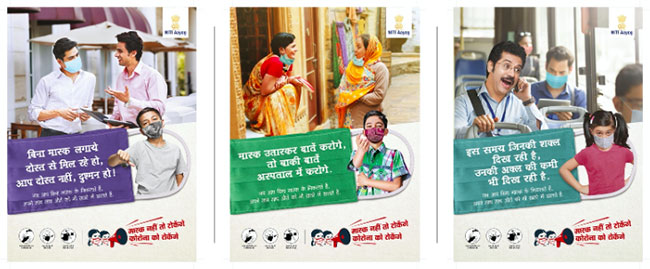
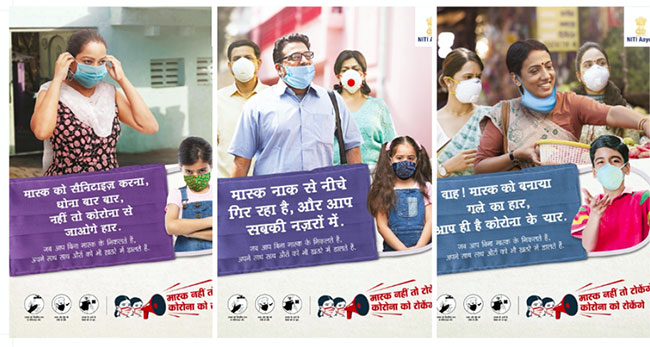
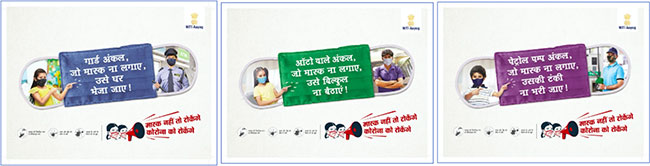
    If it was not for WhatsApp, I would have missed this communication on promoting the use of the mask as an effective precautionary tool against Covid-19. Creative developed by McCann Delhi office for client Niti Aayog. Thank you, Ashish Chakraborty (McCann) for sharing it on the Anthem Group.


    Another case of the client getting the creative they deserve. And I was surprised to see such cool work coming from a government client. Someone at Niti Aayog and the team at McCann is working in tandem. The client and the agency seem to be aligned towards the same cause. The digital campaign is from children point of view.


    Children are propagating the use of the mask. In a threatening tone, they share the possibilities and message that the adults send when they don’t wear or not wear the mask properly. Threaten the elders for compliance. It is a reminder for the mask they must wear in the fight against the virus. 


    High Likeability Quotient.

    The beauty is in the situations used. The copy is brilliant. It is short, sweet and to the point and uses very regional context and references. Something that every stakeholder can relate to.


    IT IS FOCUSSED.

    I like the creative for the sharp focus. It is Mask, Mask and Mask.


    Wear it when you step out. Cover the nose. Don’t let it hang. Sanities and wash it.


    There is some amount of warning and threat and advice. In fact, the digital post seems to cover all the four possibilities under SHAAM DAAM DAND BHED (Logic, Price/cost, penalty/punishment/barrier and Differentiation/doubt). And in that way raises the possible relatability and impact. The client and team must be congratulated for it and especially the copywriter.

    The template is set, and visuals are totally relatable.


    Moreover, it is absolutely actionable.


    And it addresses the not-often addressed subset who can help to check the use of mask at the first point of contact.


    POTENTIAL.

    Mask Nahi To Tokenge. Karona Ko Rokenge’ has the potential to become the slogan.


    I hope the client goes beyond the digital post.


    I hope that the actionable creative is pasted at the society doors, rikshaw’s etc.

    I hope people share these posts to reach rest of their friends and families.

    I hope people use them as an advice card or a message in social media.


    Above all, I hope people take the prints and place them at the strategic points.


    If possible and the best possible use of these will be if children groups and gangs adapt them. 


    EXTRA.

    Use of kids as influencer, marshals and stakeholders is not new.

    And it is at times not what you do, but how you do it that matters.


    Remembers the Swachch Bharat communication and a case of village where kids with whistle warned people against open defecation or in a way defined what real progress was all about.


    …………………..

    And here is something on Covid-19, that is perfectly right.


  • Traditional news, anyone?


    By Ranjona Banerji


    This is based purely on anecdotal evidence. I don’t even know if anyone has researched these patterns yet, since some of these changes have happened since the Covid-19 lockdowns.


    Newspapers have not been delivered uniformly across the country. So, there is a fall in circulation and therefore readership. (This has had another terrible effect on the employees.) Many newspapers, because of the fall in revenue, have retreated behind paywalls. Television has also been affected by revenue losses and have reduced staff. The coverage of the virus itself has not helped. So several TV channels appear to have cemented themselves even further into the mire of government and party propaganda.


    Social media however is booming, in the sense of public attention and engagement, not revenue. The reasons are obvious: nothing else to do, even as we are now in the partial lockdown and total confusion stage.


    If newspapers do not get delivered and then want you to pay online for access to the best articles, then most readers will stay away. If they have subscribed to the physical form of the newspaper, regardless of whether it is delivered or not, they are wary of paying twice for something. So those readers are lost.


    Most newspaper readers, especially in English, are older so the idea of paywalls is double anathema. Some banks, like ICICI, send PDF format newspapers to their customers. However downloading this massive file and then reading it is again somewhat troublesome.


    And what newspaper managements have evidently not factored in is the enormous amount of information, fake and real, that is circulated via Whatsapp for free. All day, people send each other a wide variety of information and thus, willy-nilly, you get a summary of what’s happening around the world. The use of Whatsapp amongst older generations in India is worthy of a study of its own.


    Then there’s TV subscription. I am sure TRAI meant well when they asked us to choose our own packages. But the end, the result was that many people realised the amount of rubbish that they had subscribed to. In the new system, you realise that even free-to-air channels just take up too much mind space. And this leads you to narrow your choices to what you believe in. Thus, the system allows or encourages you – perhaps not intentionally – to slip into your own ideological bubble.


    The climate has ensured that some “news” channels have got even screechier and more propagandist, pushing the government line far better than any government agency. The removal of the smorgasbord of options suggests that a vast number of TV viewers watch only those news presentations that they agree with. I hear from friends that even NDTV 24×7, always seen as balanced compared its rivals, has become more pro-government than before.


    Since the schedule for TV news remains the primetime screaming matches, that leaves reporters who work for these channels on the backfoot. They may do great work but that is lost in the abusive entertainment of the evening bouts. The fact that a retired army general can use choice Hindi abuses on Republic TV’s Hindi channel and people are just amused gives you a clue as to how much Indian society has changed. There was a time when Sushma Swaraj, as I&B minister, objected to Doordarshan newsreaders wearing sleeveless sari blouses! O tempora et cetera!


    As an aside, there is therefore a building ideological divide between those who read and those who only watch these TV “debates”. Without a range of news, people get even more set in their ways.


    And then, social media. I can spend the day on Twitter (and I have to confess, sometimes I have spent all day there) and find out what’s happening all over the world in “real time” as they say. I can watch bits of TV, read a selection of articles, interact with the writers themselves, and depending on who I follow, get specialist news. This makes all other forms of news almost redundant. I do read a couple of newspapers in the physical form. In my neck of the words, they only stopped for about a month.


    Webinars, podcasts, Youtube videos, the future is already with us. And there’s traditional media, stuck in the past.


    Ranjona Banerji is a senior journalist and commentator. She is also Consulting Editor, MxMIndia. Her views here are personal

  • Das ka Dum with Dr Bhaskar Das | The first half of 2020 will be past us in a few days. Your sentiments as we move over to the second?

    Bhaskar DasIt’s an unfair question to ask, coz who could predict at the start of the year that 2020 which will be such a @#$#@$% year (the number of characters in the prefix to year is no indicator of the word we wanted to use, so chill!)?!. But we are incorrigible. We ask. And our dear Wizard with Word is such a sport, he answers. So without any further ado, presenting the June 26 edition of Das ka Dum with Dr Bhaskar Da. Read on…

     

    If you wish to access the archives, please go to the Das Ka Dum tab on the website’s top navigation bar.


    Q. The first half of 2020 will be past us in a few days. Your sentiments as we move over to the second?


    A. I am usually not a believer (or expert) in prescriptive pontification. It’s a reality that the economy is under stress across sectors. The demand side of each business is undergoing challenges at multiple levels. Though the process of selective unlockdown has started, the recovery process would take at least one more quarter, if not more. But the collective grief of loss of normalcy and the prevailing uncertainty in various facets of life would take time to bounce back. Hence I feel the second half would be better than the first. But it may not reach the pre-Covid level soon. Some sectors like IT/ tech-led sectors would grow very well, ‘need’ categories would also perform well but ‘ want’ categories would might return to normalcy, a tad slowly.

  • Indian consumers shift to Digital Commerce, show no signs of slowing down


    By A Correspondent


    Consumers in India and across Asia Pacific are rapidly going digital with purchases of everything from groceries to movies in a shift that looks set to become a permanent habit after the pandemic passes, Mastercard research shows.


    E-commerce and contactless payments continue to grow in popularity as people make the move to digital by default and we reduce our use of cash, according to an ongoing study by Mastercard in multiple markets around the world that analyses the impact of current and future consumer behavior. Shopping in India has also shifted to online as 86% of people feel that hygiene concerns are here to stay.


    Indian insights show a rapid shift in preferences:

    E-commerce is on the rise with 49% of Indians planning to make more purchases online

    At the same time, 68% of Indian consumers think less in-store shopping is here to stay – the highest recorded across the markets surveyed

    In Asia Pacific, 46% of consumers say they plan to use cash less often, including 49% in India


    A large majority in India (77%) believe the shift to contactless payments is here to stay Said Sandeep Malhotra, Executive Vice President, Products & Innovation, Asia Pacific, Mastercard: “Our shift to digital commerce is here to stay as people embrace the benefits of safety, security and convenience. Consumers now want on-demand products and services – whether it’s food delivery, groceries, fitness courses, telemedicine, conferencing, learning or entertainment. This demand and these expectations will continue to drive e-commerce long after COVID-19 subsides,” adding: “As communities and economies emerge from the pandemic, the new consumer mindset sends a clear signal to merchants of all shapes and sizes that online shopping and touch-free transactions are essential to building the business and ensuring customer loyalty now and in the future.”


  • Problems Journalism &  Journalists must Answer


    By Ranjona Banerji


    Neha Dixit is one of India’s brightest young print journalists. I say young but that is relative. She has 13 years of excellent investigative work behind her and many more ahead. She delves into issues that many news organisations consider to be too difficult and important but non-sensationalist to spare one of their one of their employees for.

    Welcome to the world of the freelance journalist. Where you do back-breaking, painstaking work usually minus the support of a news organisation behind you, large or small. If you are lucky, you may get an introductory letter from them. But not everyone is lucky. Most newsrooms use freelance work. But it is not often that freelance journalists get either their due or the privileges which a contracted employee gets.

    Thanks to Covid-19 and the resultant economic situation, the media has been hit very badly. There are cutbacks all over and jobs have been the constant casualty.

    What Neha has put out on social media is a call which any editor worth their salt – few and far between – needs to pay attention to because it is a plea to safeguard the future of good journalism without which we are sunk. In an elliptical way, if heeded it will also rid us of the parasites which hang around the media, bleeding both resources and reputations.


    Neha Dixit:

    “With media organisations, including organisations who have closed bureaus as a cost-cutting measure, dependent on freelance journalists (including ones who are called stringers, not even given the dignified with the word journalist), no structures are created to safeguard our right to report.

    “I speak from experience since this does not stop at not having a press card. It includes legal costs of court cases for your stories, newsgathering expenses that you hardly remunerated for and many basic benefits that you will never get.

    “If you are an editor in a news organisation, or a person on board of a press body, please take the issue of providing identity cards to freelance journalists seriously. Start thinking of a system to address this. A system that is not dependent on favours or caste, class, gender networks.

    “We know there are no contracts for freelance work in India, we also know that we are paid less than peanuts and those peanuts don’t even arrive in our accounts because of YEARS of delay. The least that can be done is to let us report with dignity without fearing the police baton.

    “Everyone benefits from the work of freelance journalists in the New Media model. A transparent structure to provide press cards will help news organisations too. By not doing so, people are being pushed to make fraud ids or use their privilege networks. TO JUST DO THEIR WORK.

    “Discourse about freelance journalism in India falls on deaf ears. But this is 2020 and we must demand our editors, press bodies to change. They all are complicit in pushing a gig economy as a revenue model. So all talk about press freedom is hollow if this disparity continues.”

    The atmosphere in which Neha writes this is dire. There are mass salary cuts and losses in almost every news organisation now. Bureaus and editions have been shut, especially in areas away from big cities. Presumably nothing happens in India outside of the may be 10 urban conglomerations. Or, some wisecrack – I wanted to write a ruder word here – in management or some careerist self-serving editor has suggested that low-paying stringers and freelancers can fill the gap.

    We all know, however much we pretend otherwise, that those who have lost their jobs will replaced by interns, because they are cheaper and hopefully will be more malleable. The wealth of knowledge and experience that goes into making a journalist has no value. Bad managements want grunts and cheap grunts at that to be exploited and manipulated.

    People reach out to press organisations to come up with some answers or provide solutions. But everyone knows there is no such thing as an effective press organisation, really. The essence of a free press in India has been to stave off government control for as long as you can. And a trade-off has been to ensure that no press body has any kind of power at all. Because of the way our politics works and because most media houses are owner-driven, any other method is to open yourself up to even more establishment pressure.

    You can see how it has worked with the current government which is all about “perception control”. Media houses have capitulated, top down, to try and ensure that the government line is followed. Those who have deviated slightly have had money held back, advertisements denied, cases filed and essential supplies over-taxed. And now spectacular mismanagement over Covid-19 has led to further economic devastation. A rock and a hard place, Hobson’s choice, devil and the deep sea, or any other cliché that you want.

    However, in all that, Neha Dixit has encapsulated in her series of tweets, the problems which journalism must answer, which journalists must answer. If the future of our calling, vocation, profession is to survive, we need quality work. And by denying respect and support to our own, we only stand to lose.

    As it is, we teeter on the edge of the abyss. Sounds sensationalist? Watch some “news” television debates if you don’t believe me.


    Ranjona Banerji is a senior journalist and commentator. She is also Consulting Editor, MxMIndia. Her views here are personal


  • Stemrobo launches #Codeforhealth for K-12 kds

    By A Correspondent


    On International Yoga Day, Stemrobo Technologies, an Edtech startup in Stem Education (Stem being short for Science, Technology, Engineering, and Mathematics), launched #Codeforhealth campaign, a challenge for K-12 students to show off their coding skills while innovating and learning about the importance of yoga

     

    Said Rajeev Tiwari, Co-founder, Stemrobo Technologies: “Keeping the COVID-19 pandemic in mind which has brought the world to a standstill, we conceptualised #codeforhealth initiative at k-12 level where students can nurture knowledge, innovation and creativity in the field of Yoga and Stem with the help of Artificial Intelligence.”


  • As Covid-19 halts live action, Sportskeeda evolves with Esports

    By A Correspondent


    Sportskeeda, a subsidiary of Nazara Technologies has reported 1.3 crore users within two months. The company witnessed a 70% drop in revenue when all mainstream sports were suspended with the nationwide lockdown announced in March. Sportskeeda, notes a communique, was quick to convert the Covid-19 adversity into an opportunity by focusing on Esports without breaking away from the core. “With a 2000% hike today, the company has now emerged as the biggest Esports news destination in the country,” it claims.


    Porush Jain

    Said Porush Jain, Founder, and CEO, Sportskeeda: “Quick thinking and apt decision-making enabled us to harness the Esports growth opportunity successfully. Our strategic approach, innovation, and precision mingled with team-spirit is what truly fast-tracked the growth.”


    Given Sportskeeda’s success in the Esports vertical, Manish Agarwal, CEO, Nazara Technologies added: “The young team of Sportskeeda has always kept their users in mind while designing strategies which leads to their success time and again. Nazara has always had a predominant space in Esports with subsidiaries like Nodwin. With Sportskeeda entering the Esports news space we have not only widened our horizon but also established synergy within the subsidiaries.”


  • Coca-Cola unveils ‘Ummeedo Wali Dhoop’ film written by Prasoon Joshi

    By A Correspondent


    Coca-Cola India has released a series of stories narrated through the digital medium as short films, static posts on its social assets and long-format stories on Coca-Cola India Journey titled ‘Ummeedo Wali Dhoop’. The campaign features stories of everyday heroes who have gone above and beyond the call of duty to help the community amidst the COVID-19 pandemic.


    Said Shrenik Dasani, Vice President – Sparkling Category, Coca-Cola India and South West Asia: “At a time when the human spirit is being tested like never before, this was our attempt to share an inspiring, optimistic message with people and collectively reaffirm our unshakeable faith in the resilience and power of the human spirit. In equal measure, the campaign is a small expression of our gratitude to all those individuals, who acted as living proof of that resilience, when they went above and beyond what was expected and rose up in aid of their fellow human beings in a time of great need.”


    The anthem has been written by Prasoon Joshi, CEO of McCann World group India and Chairman (Asia Pacific). The now-released stories are an extension of the campaign which features ‘heroes’ from across the country and various walks of life.


  • Value and innovation: Finding growth in the post-pandemic recession


    By A Correspondent


    Persistent safety concerns, financial pressures and sticky new behaviours mean consumers will not return to pre-pandemic behaviour any time soon. Marketers will need to pivot to finding growth in recession; delivering increasing value in the short-term to address growing economic concerns while innovating their way to sustained relevancy as behaviours and priorities change long-term. These are the findings from the fifth wave of Kantar’s Covid-19 Barometer, a global study tracking people’s attitudes, behaviours and expectations across more than 50 markets.


    Post-pandemic recovery delayed

    Only one third of people (37%) expect to return to non-essential consumer behaviour before 2-3 months. Even as many countries relax lockdown laws and commercial businesses reopen, across the world 66% of people say they will continue to avoid busy places, meaning a drag on physical retail environments. Beyond mandated hygiene and social distancing measures, 50% of people want regular testing for all and 43% want mandatory facemasks, led by demand in Asia, but more reluctance in western markets.

    Nearly everyone is experiencing increased anxiety over money. 56% of households across the world have now experienced a loss of income due to COVID-19. In India, the impact is even more acute, with 74% of households having experienced a loss of income due to COVID-19. This rises to 68% of the Millennial generation and 65% of GenZ. A further 19% expect an impact on their income in the future.


    In the short-term, brands and retailers need to prove their value

    As the financial impact of the crisis becomes increasingly apparent, across the world consumers consistently speak of a sense of pride in finding value, making smart decisions, and quietly enabling their own long-term success. 53% of consumers are paying more attention to products on sale (vs 36% in wave1). Offering discounts and promotions is now the third highest expectation of brands, (vs 5th in wave 2). 69% of consumers say a shopping list is more important now globally as well as in India.

    Beyond pricing strategies, consumers expect brands to keep advertising and acknowledge the crisis; three in four (74%) are happy with the volume of advertising, and only 14% want to see pre-pandemic ‘normal’ advertising. Two thirds of consumers are looking for help and advice – for themselves (64%) and their communities (65%) in the adverts they see and in actual brand behaviour. In India too, more than half of consumers would like to see lot more of advertising which shows what brands are doing to help the community (57%) and the people themselves (54%).

    Grocery stores are recognised as delivering value in the short term. 40% of consumers globally and 60% in India perceive their grocery store experience to be more positive while 69% perceive employees to be friendly and helpful and grocery stores to be acting on their promises; both metrics significantly outperforming CX benchmarks. Ecommerce usage continues to soar. 40% (vs 33% in wave 3) of consumers now say they have increased or significantly increased their online purchasing, rising to 48% for households with children and millennial households. India too shows a positive trend for Ecommerce usage (45% vs 40%) in Wave 3). Low pricing and promotions rank as the biggest reasons.


    Innovate to align with the new rhythms of life

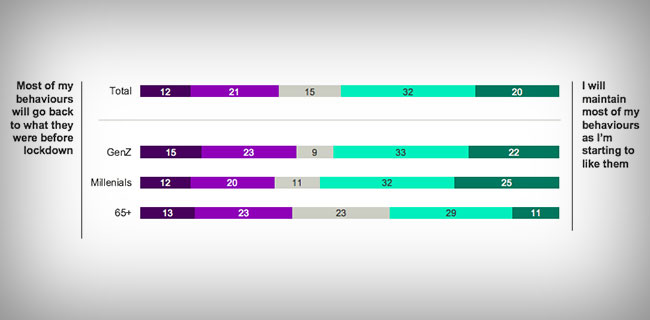
    People have started to like their lockdown habits. More than half (52%, 57% Millennial, 55% GenZ believe they will maintain lockdown behaviours post-pandemic. In India too, (53%, 56% Millennial, 61% – 35+ year olds) likely to maintain behaviours adopted during the pandemic. Increased hygiene, healthier eating, spending time with the family and personal development are most likely to be maintained. More than half the world (51%) now claim to be trying to exercise more. These changes all lead to different needs and spending patterns, and with more than half the world also feeling financial pressure, brands need to ensure their products make the cut in being considered vital in the new rhythms of life. This is amplified by the increase in willingness to switch. 45% (rising to 50%+ of households with kids) of consumers say they are prepared to keep using products and online stores they found while in lockdown.

    Said Soumya Mohanty, Chief Client Officer, South Asia, Insights Division, Kantar: “Indians are still in the phase between a lockdown and unlock. Some habits are starting to stick – eating healthy, hygiene while new ones around social distancing are emerging. The way we shop and interact will change but in an emerging, aspirational market the meaning of sustainability and responsible consumption differs. Brands will need to move from emotional succour and social solidarity to fundamentals of value, functionality, innovative delivery and simple mental availability. Simplicity could well be the new mantra as we navigate an uncertain world.”

    Commenting on the findings, Rosie Hawkins, Chief Innovation Officer, Kantar observed, “Adapting to life post pandemic, we’ve started to appreciate, and want to maintain our newly formed healthy behaviours, our more considered and purposeful personal connections and our online shopping habits. Brands and companies first and foremost need to ensure that their goods and services are safe to use and that precautions have been taken to guarantee this. As lockdown restrictions lift, consumers’ lives will continue to change and so brands will need to reassert their relevance in these new environments.”


  • Zee to donate over 200 ambulances, 40k PPE kits & build 100+ ICU Units across country

    By A Correspondent


    Media & Entertainment powerhouse Zee Entertainment has announced a national level CSR drive towards enhancing the country’s healthcare infrastructure, further strengthening its fight against Covid-19.



    In line with its CSR policy, the company will support state governments & local governing bodies with critical interventions across 10 cities – Mumbai, Noida, Chandigarh, Jaipur, Kolkata, Bhubaneswar, Bengaluru, Hyderabad, Kochi and Chennai.

    The company will be utilising the sanctioned CSR budget (for the fight against Covid-19) to provide the following:

    :: Ambulances – 200+ ambulances to be donated to the municipal corporations (46 ambulances have already been donated to BMC).

    :: Humidifiers – 50 High Flow Heated Respiratory Humidifiers to be donated BMC.


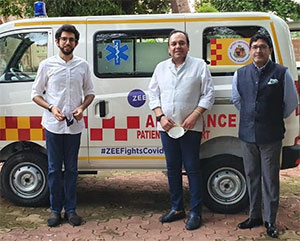
    Zee Entertainment has said it will donate over 200 ambulances, 40,000 PPE kits and build 100+ ICU units across the nation to fight against Covid-19

    :: The company has flagged off the healthcare infrastructure centric initiatives with Mumbai, by donating 46 ambulances and 50 high flow heated respiratory humidifiers to the Brihanmumbai Municipal Corporation (BMC).

    :: Company to also feed 10,000 migrants with 6,00,000 Daily Meals for a month across the Nation.


    The drive was flagged off in the presence of Honorable Chief Minister of Maharashtra Uddhav Balasaheb Thackeray, Minister for Tourism, Environment & Protocol, Government of Maharashtra, Aaditya Uddhav Thackeray and Zee Entertainment Managing Director & Chief Executive Officer, Punit Goenka, by donating 46 ambulances and 50 high flow heated respiratory rumidifiers to BMC. This support will help build capacity and enhance the existing healthcare infrastructure in Mumbai.


    As per an announcement, Zee will approach and work with all state governments and local governing bodies across the nation, to formulate an action plan that is structured on fulfilling the immediate requirements to fight the pandemic.


    Over and above the support towards healthcare relief, ZEE has also partnered with Akshaya Patra Foundation to provide 600,000 daily meals which will support 10,000 migrants across the Nation for a month.


    Speaking on this announcement Punit Goenka, Managing Director and Chief Executive Officer, Zee said: “The effects of the Covid-19 pandemic in India have been fa reaching and calamitous for vulnerable communities. It is important that we stand up during such times and step up our efforts as responsible members of the society. Zee is committed to continue its strong support towards the government, with a key focus on strengthening the overall healthcare infrastructure, to save our Nation from this pandemic. We are also significantly increasing our efforts on-ground to provide relief to migrants across the country. We will continue to do our best to serve the Nation in these challenging times.”


    Added Aaditya Uddhav Thackeray, Minister for Tourism, Environment & Protocol, Government of Maharashtra: “The scale of this pandemic is enormous, and the government of Maharashtra is working round the clock to enhance the modular medical facilities and support our frontline workers. Every step ahead is a successful step towards beating the current humanitarian crisis. We would like to thank Mr Punit Goenka and Zee for their support in this time of need towards Covid-19 response and relief.”


    Said Iqbal Singh Chahal, Commissioner, BMC: “We are dealing with challenging times where being ahead of the virus is key to fighting the war against Covid-19. We have implemented several path breaking innovative measures across the city to curb the increase in number of cases and are ramping up our medical facilities. We are glad to receive this support from Zee that will further strengthen our efforts while also ensuring the well-being of the citizens. It is humbling to see organisations such as Zee coming forward and fighting this crisis together with us.”


  • Kyoorius Creative Awards in digital form. Entry fee: 1.5k+GST

    By A Correspondent


    Kyoorius Creative Awards are happening, albeit in digital form.

    Punit Goenka

    Said Punit Goenka, Managing Director and Chief Executive Officer of Zee Entertainment Enterprises Limited: “We understand and acknowledge the challenges faced by the entire creative fraternity and this disruptive step is being taken to enhance the participation levels while significantly reducing the award entry budgets,”


    The entry fee will be Rs 1500 per entry, exclusive of taxes.

    In addition to reducing the fees, Kyoorius Awards will donate a minimum of 2000 PPE kits to authorities in Mumbai, Delhi NCR and Bengaluru on behalf of the advertising community of India. The first consignment of 500 PPEs has been delivered in Mumbai.


    Rajesh Kejriwal

    Added Rajesh Kejriwal, founder of Kyoorius: “Obviously, we debated whether the Award should, indeed, be held this year. After much thought, we decided that the Awards should be held, at the same size and scale as previous awards, but taking into account the realities of the post-coronavirus world that we live in,” adding: “The major change will be in the judging process. “While the quality and composition of the jury will be similar to previous years and will see both Indian and international practitioners assessing the work, the jury sessions will be online and virtual… It is a difficult time for all businesses including advertising, and we hope the Kyoorius Creative Awards plays a small role in the upliftment of the mood of the industry and all those who work in advertising and marketing, especially the younger professionals,” added Kejriwal.


    The key milestones and dates are as follows:

    Call for Entry Resumes – Monday, June 15, 2020

    Entries Close – July 15, 2020

    Jury Session

    First Round – July 31 and August 1, 2020

    Final Round – August 7 and 8, 2020

    Awards Night – Friday, August 28, 2020