Tag: Covid-19

  • Mask up, Shut up!


    By Ranjona Banerji


    Ranjona BanerjiThe Omicron variant of the SARS-CoV-2 has not surprisingly shocked the world, which thought it had seen the back end of Covid-19.


    And immediately, ably helped by the media and politicians, there is chaos. Travel bans, racism, borders closing and all the rest that goes with that.


    What is not happening and what should: increased vaccination rates, masks, social distancing protocols.


    You would think that after all we’ve gone through in 2020 and 2021, we’d have learnt something, but no. The media feels it is its bounden duty to create unsubstantiated panic. Politicians apparently believe that ill-informed kneejerk reactions are still the only recourse open to them.


    If South Africa says the Omicron variant has shown mild symptoms, it is obviously lying and travel from most African countries must be banned although most cases are in Europe.


    If the US has the highest number of cases despite high vaccination rates, let’s not mention except in small print that most of those who have been hospitalised for Covid-19 are the unvaccinated.


    Scientists, doctors, epidemiologists, virologists, what do they know, eh?


    You can see that after the drama about one billion vaccines and whatever other misguiding propaganda, India has more or less stopped talking about vaccination rates. Latest figures from Our World in Data show that we are at under 60 percent single vaccinated and about 30 percent double vaccinated. Long way to go.


    If our friends in the media won’t tell us, then no one can help the people who are bombarded with lies and nonsense from their social media feeds.


    **


    Meanwhile, our democratic farce continues. Members of the press are not allowed into Parliament. For the fifth consecutive session. The ostensible reason is Covid-19 protocols. However, as the Press Club of India points out in its letter to the Speaker of the Lok Sabha, malls, restaurants, cinema halls have all reopened. Indeed, Parliament itself has reopened.


    This denial of press access to Parliament is not a lapse. This is deliberate.


    It also tells the media what happens when it gives in to power instead of standing against it.


    There has been a consistent destruction of media independence since 2014. Every journalist knows this and every pretend journalist has happily been coopted by the government and the BJP regime.


    All the breathless coverage of Prime Minister Narendra Modi’s “celebration” of “Constitution Day” by the media only demonstrates how low we have fallen. Imagine the stupidity of the media which falls for Modi’s so-called respect for the Constitution even though Modi has kept them out for the highest Constitutional institution of all – Parliament.


    I hear you. It’s not stupidity. It’s evil acquiescence to fascism. It’s active promotion of the death of democracy by a supposed pillar.


    If a few journalists and media houses are now partially awake it will still take a long time to undo the damage.


    Incidentally, having kept the media out, the Modi government rammed through its farm laws repeal bill the way it rammed through the farm laws: without discussion.


    Because it knows the media can be bought and sold like MLAs. Okay. Correct that, MLAs are much more expensive.


    On that happy note, mask up.


    Ranjona Banerji is a senior journalist and commentator. She writes on MxMIndia every Tuesday and Friday. Her views here are personal


  • Goodbye to discounts, as Dainik Bhaskar reports 2019-like volumes

    By Our Staff


    The Dainik Bhaskar group has reported volumes and yields of 2019 levels. According to a senior official, discounts have been dropped since around a month, and the revenues are now back to 2019 levels. Or thereabouts.


    Since Dainik Bhaskar has a significant presence in non-metro India, it had reported a comeback in fortunes soon after last year’s pandemic-led lockdown.


    Satyajit Sengupta
    Satyajit Sengupta

    Commenting on the development, Satyajit Sen Gupta, Chief Corporate Sales and Marketing Officer said: “This festive season, we are overwhelmed with large format advertising. Gatefolds, Jackets, Full Pages are delivering impact and brands are getting big visibility and recall. Two-wheelers like Hero, HMSI and TVS have each booked 15-20 large format advertisements with us in October. Four-wheelers are not far behind, with Tata Motors, Renault, Skoda, MG Motors and Kia leading the race for consumer mindspace with multiple full-page advertisements and innovations. Apple iPhone, One Plus, Samsung Mobiles, Reliance Digital, Haier Appliances, LG, Philips, BPL, Kelvinator, Voltas, Havells have all come in, again with full pages or larger formats. Tanishq has also taken only full pages with us this year, as have many others. October has brought forth festive cheer in our markets. Everything from Homes to Cars & Bikes, Appliances to Jewellery are in huge demand. Retailers & Dealers are barely managing to maintain stocks due to the strong buying pressure.”


  • Prabhat Khabar goes on masking drive

    By Our Staff


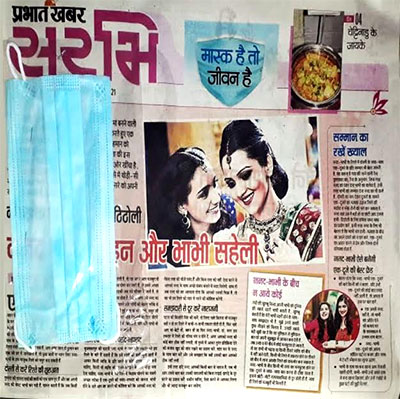
    Prabhat Khabar distributed over seven lakh face masks free to readers along with the June 22 edition across all editions in Bihar and across all editions in Jharkhand and Kolkata on June 27 in an attempt to educate readers the importance of face masks and Covid-appropriate behaviour.


    In addition, newspaper hawkers and their familes have been given free ration. All employees, hawkers and partners were provided with sanitisers. Notes a communique: “Oxygen concentrators were provided to government hospitals in Bihar and Jharkhand to overcome the shortage of oxygen across the country. In addition, the communique added, “periodic vaccination camps are being organised for readers, hawkers and partners and their family members.”


  • Brand Purpose & Credibility: Key to survival for Brands


    By Bhuvi Gupta


    Bhuvi GuptaThe last few weeks have had us all heaving a huge sigh of relief. The hold that the Covid-19 Delta variant had taken over our lives seems to have abated for the time being. We are all now in between where we have a longing to return to business as usual (usual being the new normal) at least for the short term but are scared about when the Third Wave will rear its ugly head.


    The storm of the last month made us all grateful for the positive power of the social media. And Dettol captures this sense of gratitude perfectly in its timely Covid warriors campaign which has just been launched. It hits the ball out of the park for multiple reasons – the timing, the ‘grateful’ mood of the nation, how it captures brand’s promise of protection and safety, and its high virality quotient.


    We all depended on Covid warriors the past few months – these are people who managed to save lives by foraging for medicines, ventilators and beds by using social media and extending their networks. It is influencer marketing campaign but in a respectful way because atypical ‘influencers’ are being used. By using influencers, Dettol gets the benefit of their reach and engagement thereby ensuring virality. The campaign replaces its branding on the package to celebrate these unsung heroes. Packaging has long been an under-leveraged branding vehicle. The campaign is hence a win all the way and is bound to pick up many a pencil, elephant and metal.


    Dove and  ‘Hair Love’


    I have talked about how with the information overload that the internet and specifically social media has decreased mental bandwidth for retaining advertising in many of my pieces.  Long-form marketing, content marketing, product placements that add credibility to the product narrative hence become more important to kindle a desire to purchase. Internationally, Dove and Nike are both investing in being true to their brand purpose.


    It has always fascinated me that the 2020 Oscar-winning short film, Hair Love was funded via a Kickstarter campaign and that a major participant in the Kickstarter was Unilever-owned Dove. Despite funding the short film, Dove did not try an overt product placement but kept its participation covert.  Just as other entities that contributed to the Kickstarter, Dove only appears in the ending credits. Because the messaging was true to the brand narrative, it helped market the film by arranging for community screenings, and reaching out to tastemakers and media.  This did not help them to sell products but it did help them to cement their perception as a brand which was genuine.


    Nike – Breaking2

    A similar case is of Nike. Nike has set the bar for sports marketing in the last few decades and they are constantly raising it to ensure they maintain a high share of voice.  In 2014, Nike set out to do what was impossible at the time – a project to break the two-hour marathon barrier. The documentary Breaking2 captured the entire three-year journey that culminated in an unsuccessful attempt in May 2017. While the star marathoner, Eliud Kipchoge missed the 2 hour mark by a mere 26 seconds in 2017, he achieved the feat in 2019.


    The project leveraged science and research to create an optimum environment which enabled the carefully chosen athletes a shot at breaking the record. The environment comprised of the perfect shoe, the best possible time of year, the track, a mechanism to manage headwinds (which affect speed) and many other miniscule parameters.


    While the project executed over a three-year period was directly linked to Nike’s products, it was the larger objective of relentless effort to enhance performance to test the limits of human endurance and capability, which made it closer to brand purpose than marketing communication.


    It was hence a perfect balance – communication that served a larger purpose while also enabling the company to sell shoes.


    Brand purpose is key in 2021. Customers want brands to embody an inspiring ethos, have a strong point of view and take actions to spread their purpose rather than communicate only to sell products.


    In a crowded market, the only way a brand can stand out today is to add credibility in communication.  Marketing is inherently transactional in nature, but communication which leads with brand purpose is key to move customers down the funnel and make them return, especially for products which are easily replaceable.

  • MxM Offer: 50% discount on ad hoc ads if marketing team is fully vaccinated


    By Your Team @ MxM


    Vaccination is key to curb the spread of Covid-19 as also reduce the risks that a virus attack could have on one. However, there are also many who are hesitant about taking a jab, and, sadly, there also exist several anti-vaxxers.


    In an effort to encourage and incentivise vaccination in the A&M and M&E sectors, MxMIndia will offer a special rate for advertising (on MxM) in the form of ad hoc mailers and site captures from June 11 to July 10, 2021.


    Here’s how: Just make a self-declaration of how many members of your marketing team have taken at least one jab. We don’t need proof… we trust you.


    If the team size is 8, and all 8 have taken at least one jab, we will offer a 50% discount on all ad hoc activity – mailers, site captures and banner ads. By ad hoc we mean advertising that is outside of annual deals or longish campaigns. If 90% of the staff have taken at least one jab, we’ll offer a 45% discount. And so on. If the team size is two, and only one colleague has taken a shot, we will offer a 25% cut.


    Is this a gimmick? It may seem like one, but it isn’t. We have been thinking about it for a while, and firmly believe that the solution to the current problem of the Covid-19 spread is masking, distancing, hygiene and vaccination. This is just a move to incentivise the vaccination process in organisations in a sector we are associated with.


    Over the years, MxMIndia has partnered the industry in various social causes. Whether it’s the flash floods in Kerala or free advertising to a television show that’s helped in the cause of cancer care. That’s how we are. That’s what we believe in. Business and revenues are important, but they aren’t our end-all.


    The impact of the Covid-19 pandemic has been huge. Let’s all work together to ensure the world we live in is safer and better.


    If you or your organisation wish to use this opportunity, please feel free to write directly to Pradyuman Maheshwari at pradyumanm [at] mxmindia.com, Whatsapp him or call (98338 76278). Or please get someone in your team to do so. Also, please forward this message to all. Also, get other media platforms – including our rivals to do the same. We aren’t doing this to earn brownie points. We sincerely believe that every eligible Indian must be vaccinated.

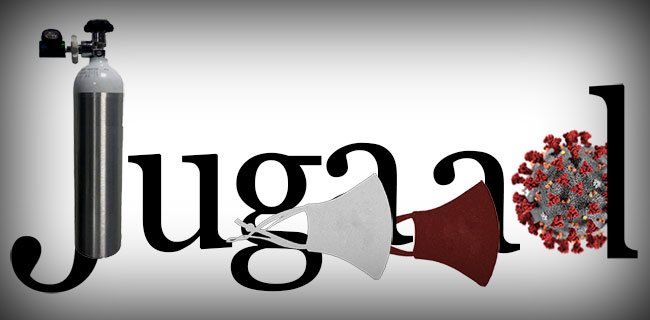
  • Is Jugaad a Covid-19 pandemic saviour?


    By Sanjeev Kotnala


    Sanjeev KotnalaIn India, it is fashionable to look down on desi things and ideas. We find problems with the system, approach, methods and solutions. Like a blinkered horse, we are blind to constructive suggestions. We refuse to acknowledge that another approach can have the same objective and be more productive. We shoot the messenger and blame the solution for our inability to prevent the crisis situation to build.


    This piece is inspired by an article by Shekhar Badve (Lokus Design, Pune), The Covid pandemic has shattered our international claim to fame, the Jugaad Model’. I knew something was wrong. Why and how can one instance be used to generalise and blame something that has provided solutions in crisis. There is a design firm bias against Jugaad, an approach of have-nots and not necessarily a wrong mindset. Jugaad is blamed because we depend upon it to wriggle out of situations – which could have been avoided in the first place. So, who should be blamed?


    Jugaad is an innovative solution within the time and resource constraints. A quick fix – not necessarily a sustainable solution. It is like the rapid recovery steroid during Covid treatment with unknown side-effects. It is an unconventional innovation. But a solution nevertheless.


    We may claim Jugaad to be uniquely Indian, but it is a global phenomenon. But= its cousins Chindōgu or Urawaza in Japan, Redneck Technology in us, Gung-ho in China or System -D in France are not really the same.


    Jugaad is the solution when people do not have the luxury of time, money or resources. Where immediacy of result is more important than the way, it is achieved. So, why not glorifying the person or the process of getting results.


    If Jugaad is considered an attitude that prevents systematic long-term planning, we must blame the planners, not Jugaad. If Jugaad is the standard of acceptance and standard operating procedure, blame people responsible for monitoring and benchmarking. Jugaad got nothing to do with these failures other than our inability to address our shortcomings. It reminds me of Osho, who said, Sin comes from thoughts, not the body, and Ganga only cleans the body. Blaming Jugaad will not change thinking – constructive actions will.


    We confuse our sluggishness and blame something non-existent- the Jugaad attitude. Jugaad is merely an approach.


    Dekha Jayega Jab Hoga Tab’ – we will see when it happens- or we will cross the bridge when it comes is not Jugaad. ‘Pyaas Lagi Toh Kuhan Koda’– we will dig a well when we feel thirsty – is not Jugaad.’ Aag Lagi Thi Toh Bhuja Di’– there was a fire – we extinguished it- is also not Jugaad.


    Jugaad is temporary. It is full of imperfections, at times illogical and bends the rules. Jugaad mainly works with pre-existing problems. But Jugaad can be proactive. And suppose Jugaad infested life is an issue. In that case, I will wait for a solution from the proponent of systematic, objective innovation and design thinking. Jugaad exists because they have failed. Instead of them blaming Jugaad, Jugaad should be blaming them.


    During Covid, we collectively failed. The government failed the citizen and citizens failed the government. The systems failed in projections and preparation. The peak demand for beds, oxygen and medicine was 10-20 x of the capability. If wishes were horses, we could have been better prepared. The reality is that we were not. It is the failure of systematic planning. Jugaad mindset provided makeshift solution preventing lot many deaths.


    Yes, we will have Jugaad thinking and success case studies, But not the case studies on systematic failure of forecasting, planning and implementation. Even when we are paying the price for this failure, and the case is of failure. We are human to celebrate success.


    We know Jugaad was never a curse or a hindrance. It never forced weaning from systematic planning and excellence. But, we must find scapegoats for failure, in this case, the non-existential Jugaad attitude. We must celebrate Jugaad, the saviour, till the resources and infrastructure are not easily accessible, available, and affordable.


    Remember, at times, results matter more than the approach. Covid is one such case. Highlighting and celebrating Jugaad is not a conspiracy against systematic innovation.


    Go ahead make Jugaad transparently naked under the spotlight of evaluation. Show the shortcoming, the imperfection and the risk of short term answers. Push people to accommodate space, time and resources constraints for systematic planning and implementation!


    There is no disagreement when Shekhar says: ‘What’s the point of celebrating how well we have managed to come out of the crisis if the crisis could have been totally avoided.’ 


    The second wave was expected. A disaster was in the waiting, but there was enough time to act.


    We closed Jumbo Covid centres. We failed to anticipate the required beds, medicine, oxygen etc. Our IT solutions failed when needed, and the SOPs changed by the day. We did not correctly estimate vaccine need. Definitely, we could have worked to make the impact less painful. Maybe many more lives could have been saved.


    It doesn’t take much intelligence to plan and organise well in advance. Covid has shown that the list of severe lack of systems planning and forecasting issues is endless. But, why blame internationally acclaimed Jugaad for it – it was Jugaad that came to the rescue. It worked when the paralytic systematic planning and execution was leaving us unguarded.


    There is no argument; India needs to rethink the whole game from a systems design perspective. It needs to understand entropies in almost every aspect of public interest: health, security, delivery of public services, and natural disasters. We must not always be forced to avoid and handle emergencies with ad hoc decision-making and fall back on citizen heroics with failing governance and response. We should be better prepared.


    Yes, we need to live in the re-world. Re-evaluate and Re-search. Re-think and Re-design.

    During Covid, Jugaad was everywhere – where the systematic planning and infrastructure support failed. Be it the tiffin service or beds or medicines. The ventilators or the oxygen concentrator, or the splitters. Sanitisers or masks. Kaadha or steam. Liquor or fruits or vegetables. Interstate or intrastate transit. Birth or cremation. And if systematic resource led efforts are incapable of delivering, Jugaad will again rise as a Hero.


    Unfortunately, as a nation with a short memory, passing passions and voyeuristic attitude, we will not go for the kill. We will not invest in understanding the cause. We will avoid getting down to the drawing board- scenario planning- mock-ups, and trials.


    Let’s pause, think, and maybe selfishly celebrate Jugaad until the angels of change start dancing to the new tunes!


    Sanjeev Kotnala is a senior business strategist and educator. He writes on MxMIndia every Wednesday, and often even on other days of the week His views here are personal


  • Effects of Covid-19 on M&E in 2021


    By Indrani Sen


    Indrani SenThe second wave of the pandemic is spreading all across the country and we are seeing state after state imposing various restrictions like night or weekend curfews, conditional lockdowns etc. The central government has decided not to impose a nationwide lockdown like last year which paralysed the entire Indian economy. The decision to impose restrictions for curbing the spread of the second wave has been left to the state governments. As the pandemic situation stands now in the second month of the April-June quarter, our economy is likely to see a contraction in this quarter which will have a cascading effect on M&E industry as advertisers will spend less on promoting their products and brands.


    Till now, most economists have predicted that the effect of the second wave of COVID 19 will be less on India Inc. than the effects of the first wave when we had a national lockdown for 70 days. However, it is too early to be assured about that prediction. The outbreak of Covid-19 is no longer concentrated in urban areas, it has been spreading virulently across villages, particularly in the Hindi hinterland of Uttarakhand, UP, MP, Bihar and Chhattisgarh. The rural areas of other states, particularly the states which recently held Assembly elections, are also experiencing a surge of the pandemic.


    Urban India contributes to 60%-65% of the sales of FMCG companies while rural India accounts for the balance 35% to 40. In certain FMCG categories the share of urban and rural is 50%: 50% or even tilted a bit more to the rural sector. Last year, when the lockdown had affected the sales of FMCG industry in urban areas due to restricted consumer spends, Bharat or Rural India spurred the growth of FMCG companies. An article published on February 28, 2021 in www.livemint.com  said: “To be sure, companies are betting on large swathes of consumers in rural India switching from unbranded, loose products to branded ones over the next few years. This gives them room to push their soaps, shampoos, biscuits, beverages and packaged staples in India’s villages, albeit at lower price points. Demand in rural markets has outstripped sales growth witnessed by companies in urban markets over the last several quarters. Companies expect India’s smaller cities and villages to continue driving growth.”  (https://www.livemint.com/companies/news/why-are-fmcg-majors-chasing-growth-in-rural-india-11614504243913.html). At the beginning of 2021, most economic analysts expected the momentum of sales in rural areas to continue. However, the ground realities have already turned out to be different which will affect not just the sales of FMCG products in rural areas, but also the production of Argo industries.


    The controversies over vaccination between the Centre and the states coupled with shortage of oxygen supply and inadequate health infrastructure have given a different dimension to the Covid-19 crisis induced by the second wave. Middle class urban families are spending their live savings, begging and borrowing to try and save their near and dear ones, in the process reducing their subsequent purchasing power. Upper class affluent urban families have realised suddenly that the big fat medical insurance in which they invested are not of any use to them if they cannot get their relatives admitted to any hospital or nursing home. Many insurance companies are refusing to give coverage for Covid treatment. These rich people are feeling the need of having large amount of cash in hand for emergency treatment of Covid, which will reduce their disposable income and affect the sales of consumer durables.


    The pandemic has already managed to disrupt our cricket calendar by postponing the IPL 2021 indefinitely to another venue in another country and it is unlikely that T20 World Cup will be held in India in 2021 which has affected the tourism and hospitality industry, the on-ground display, etc. The advertisers having peak season during summer months are putting a brake on their TV expenditures due to state level lockdowns, restricted movement of transport for delivering of goods and reduction in consumer spends due to very small windows of time available for daily shopping.


    Medical experts are predicting a third wave of the pandemic around September, 2021 which may result in further contraction of the economy in the October-December quarters, in spite of the festive season. Lack of economic recovery in the next two quarters will result in further loss of business for the M&E industry. As per the Pitch Madison Advertising Report 2021, overall AdEx de-grew by 20% and traditional media AdEx degrew by 29% in 2020 with only digital media growing by 10% during the same period. The PMAR 2021 predicted that in 2021 overall AdEx will grow by 26% touching the 2019 level. In the second month of the second quarter of 2021, it is too early to predict the overall effect of Covid-19 on the M&E industry over the entire year. The current signs indicate that it will be difficult for the AdEx to jump back to the 2019 level in 2021.


  • Time to change, dear TV networks, channels & advertisers/agencies!


    By Vinta Nanda


    Vinta NandaMy massive appeal to all the television networks and channels.


    I’ve been knocking on most of your doors since 2012, begging all of you to take behaviour change communication seriously, use the power you have on captive audiences all over India to motivate them to follow best practices.


    We’re in a state of emergency.


    People in rural India are frightened and don’t know what to do in the present crisis brought by the #Covid19outbreak of the #secondwaveofcoronavirus.


    Please, please rework your stories to communicate and inform them about how to handle this terrorising moment in time.


    Stop your mad rush for #TRPs and slip in stories that’ll inspire people to manage their lives, save themselves from anxiety and mental health issues.


    Tell them how to deal with isolation and quarantine when they encounter symptoms.


    My young colleague who was compelled to leave the city for his village last year when the pandemic struck has been telling me horrific stories from his village where nothing is accessible.


    Almost the entire village is sick and he’s already lost one family member while the others are struggling.


    This is one village in #UttarPradesh – imagine what’s going on in lakhs of villages across India!


    They’re gripped with fear and lack of available resources.


    Most of them don’t have electricity for long hours because a small storm plays havoc with the wiring held up on dodgy poles.


    But, at the slightest chance they get, they watch your serials and swear by them.


    I beg all of you with utmost humility – leave everything aside and find your drama in what people are experiencing today.


    Feel free to call me, I’ll help all of you out, I’ve worked on behaviour change communication through storytelling from my first series #Tara onwards.


    I’ll help you guys find the balance between entertainment and information.


    And to my friends and colleagues in the advertising industry – it’s time for you to tell your clients that you’re not going to do crap on their behalf just to add wealth to their already super-rich organisations.


    Stop backing powerful producers, self-appointed schlock-stirrers just because they have investors backing them.


    Go to storytellers, put your weight behind them and just see the difference you will make in the world.


    Let stories drive you instead of you driving stories to suit your marketing strategies.


    You won’t be ever able to forget that those are people who were alive yesterday, now floating lifeless in our holy rivers.


    They were flesh and blood a few hours ago, they were loved by their families and communities.


    Please, please guide the power you wield to spread love, hope and be compassionate in whatever you put out, in the name of creativity, in the universe.


    Most of you don’t need me because you already know what to do, but yet I’m just a call away.


    Please, please put everything aside and do this from right now.


    Vinta Nanda

    Tel 9820040680


  • Numbed by the Second Wave


    By Sanjeev Kotnala


    Sanjeev KotnalaAs I sit to write this, the fingers refuse to move on the keyboard. The mind no longer asks the fingers to keep pace with my thoughts. I am numbed with the pain surrounding us. Corona is far too close for comfort. The second wave of Covid-19 has touched and pained almost all I know. Nearer home, we have had the second casualties and a promising young man lost the battle. And there are more than 20 in close family who have tested positive and quartantined at home. All you read and hear is upsetting. It’s a terrible scene out there.


    I am not sure what I should do and what I could do. 

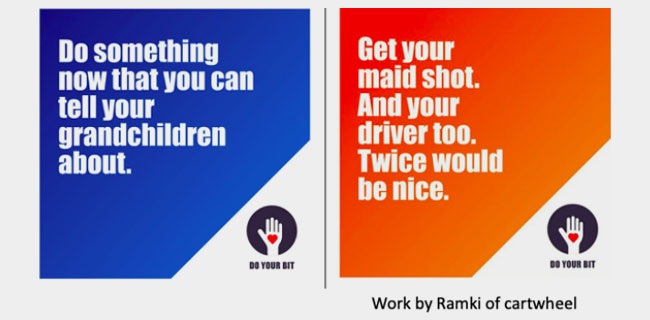
    Do I rejoice on the election results? Do I appreciate and see a silver lining in the self-less put-in by the next generation? Do I sit back and share the pains of people who have lost their near ones during the ongoing Covid-19 second wave? Do I focus on helping those currently fighting for life? Do I just cocoon myself and protect my family? Or do I redefine the term family that I belong to? Or do I, like Ramki (Cartwheel), who has created the post you see in this article, find how to contribute with my skillsets?

    Who do I blame? And what will blame gain? Maybe it will force people responsible to finally act decisively? Perhaps they will now try to better manage the situation? So, you and I must raise our voice till we are heard, and some effective action is taken.
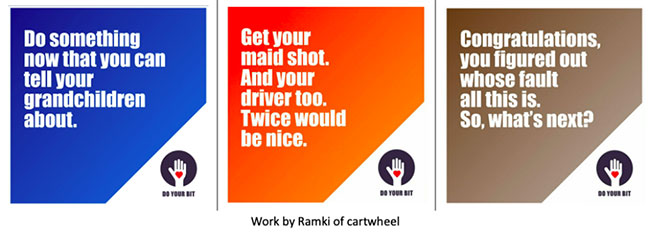
     

    MANAGEABLE Vs PREVENTABLE.

    Let us not fool ourselves; our existence could not have managed this scale of the pandemic and the Covid-19 second wave. However, better planning, implementation, and a dedicated, focussed unrelenting approach would have definitely eased the pain- maybe a bit. The infrastructure and the essential services like medicine, oxygen, and beds be better managed and not stretched at the seams. Everyone understands this is unprecedented. Everyone knows we could have lessened the pain a bit, and that would have counted.


    SOCIAL MEDIA A BOON.

    Yes, thank god for social media and mobile technology, the apps, and the internet. In the absence, many cries for support during the Covid-19 second wave would have gone unanswered. Strangers across geographics were working in tandem. The nation is a bit more united and secular—no one asking for caste, religion, region or language while stretching to help.

    However, everything is not right.

    People are sharing forwarding half-baked and, many times, fake information. The visuals shared can scar you for life. The right intending advice not always right.

    Some medical scams are already running. Exorbitant rates being charging for medical supplies and support services. Some middlemen brokering treatment. And here, too, social media and the internet is playing their role.

    I will live with all this if only the Government acts and we have some order of managed pandemic. I, like others, am confused.


    CONFUSION.

    I don’t know much. And what I know, I cannot be sure of its authenticity. Everything is suspect. The situation is anxiety-creating, and the relationships are getting strained.

    I don’t know when to take the second vaccine dose. Initially, I was told to take it after four weeks. When I got the first dose, I was told to come after six weeks. Now, they are saying 8-12 weeks. However, the Aarogya Setu app is asking me to schedule an appointment now, immediately after four weeks. It is a different thing that there are no centres to schedule.

    No one knows if the INR 10 steroid works or it has to be Remdesivir.

    When should one home quarantine and when to get admitted?

    At what oxygen level should one start looking for the bed, the cylinder, the concentrator?

    Is it Covaxin or Covishield, or should one look at Sputnik?

    The confusion entropy keeps increasing with every new post and video on social media. With every call among family members at different locations. The early ring of mobile feels like a telegram and for a change- No News is really Good News.
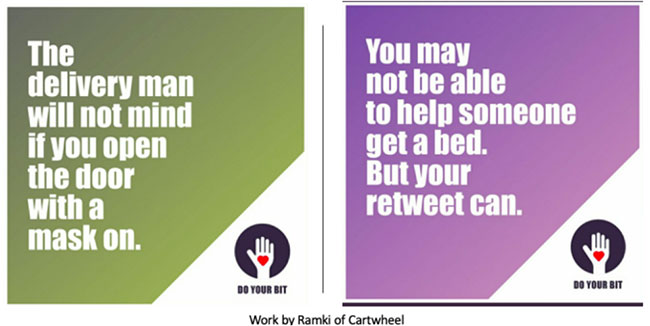
     

    COMMUNICATION.

    I still feel that the government  messed up communication big-time when it started and during the Covid-19 second wave. As a result, everyone is short on knowledge and information. Everyone is an undisputed expert. Each one busy playing fastest finger first to forward whatever they get. Everyone is a video star and interested in the next sensational share about the Pandemic.

    Could this Central Government and state governments not use every possible media time and space to ensure clarity and transparency to answer most basic queries and FAQs.

    There is so much confusion even after one year of living with the virus. Simple things like symptoms, vaccination, process, self-help, home isolation, treatment, and initial care are still confusing.

    During illness, what to measure and what to monitor? What are the new early symptoms?


    NEED ACTION

    I expected a lot more from this government that was comfortable taking unpopular decisions. But, for Corona, they seem to be hibernating.

    Why not blank unauthorised advice being shared on social media instead of taking offense to some post criticizing the inactivity or questioning the status.

    In a media-centric world, how have we forgotten the power of effective, transparent communication for critical information? Why be the pigeon in before the cat? Why live in denial?

    Why can there not be centralised bed allotment and control? Possible! Could have been possible! I was thinking just like multi-level parking with franchised at multiple locations and central control.

    Why not strongly act against black-marketers and hoarders of essential goods and medicines? The government could make an unregistered unauthorised stock of oxygen cylinder medicine a crime. Give people a day to declare online and then on a war footing seize what is unauthorised and unregistered. Or are we better with people being atmanirbhar in arranging for them?

    Why should one need to come to the vaccine centre? Why not carpet-cover the cities and towns and villages with the vaccination team moving to locations? Why should the person have an option to be vaccinated or not?


    ATMANIRBHAR

    I don’t know anything, but I do know that I want to know. I know that I will never have all the answers, and I am okay with it and continue questioning.

    There is no debate. The government has failed the citizen of the country during this pandemic and more so during the Covid-19 second wave..

    This gives rise to a few questions.  my dear friend Peter Suresh is anguished when he asks- What were the citizens doing? Why did they go and attend the rallies? Why did they go to Khumb mela? What stopped them from observing the essential sanitisation, handwash, and social distancing? Why they still not wear the mask? Why blame the politicians? Did we vote them to power? At least remember and make the right choices next time.

    And, I say: Blame Ourselves. We are the ones who are the cause of wave intensifying.  When it’s a lockdown, we do side business. We are hoarding oxygen cylinders and damaging the refiling cycle. We are willingly promoting middleman and kalabazari? When we are asked to remain at home, we venture out to see how serious the government is about it.

    And thus we continue to fail our fellow countrymen. instead of one for all and all for one- the cry of Atmanirbhar seems to have been misunderstood by many as u everyone for themselves.


    TIME TO ACT.

    There is still time to do something and contribute to the containment Covid-19 second wave..

    Follow precautions.

    Remember, we are as strong as the weakest link, and individually we are the smallest social unit.

    Do help out if you can.

    Donate and volunteer with known names and setups to ensure your contribution is well utilised. Remember- Everything does not require you to step out of the home.



  • Goafest: No News is Not Good News


    By Sanjeev Kotnala

    Sanjeev KotnalaIt is that time of the year. Goafest time. For the last 15 years, until 2020, Goa was my annual advertising, marketing, networking pilgrimage. I have attended every edition of Goafest.

    I have associated with Goafest in multiple capacities. I have been a delegate, a sponsor, an awardwinner and a jury member. Oh, I have rebelled by attempting to hijacking one evening with a successful standalone show. Few unfinished stories started at the Goafest and never reached a conclusion. I led cross-functional teams to publish the daily newsletter, including the first 3D issue at Goafest. Once, I objected to some Swami’s presence as a speaker. Pushed for more respect and participation to Publishers’ Abby.

    I have been an observer who regularly provided unsolicited inputs and suggestions. Some of them found the right ears and minds to impress and were implemented with no credit. But that’s par for the industry, or I think some else too had similar brilliant thoughts at the same time.

    So, it is natural that towards the end of March and the first/second weekend of April, I am full of nostalgia. My mind longs to be at Goa and enjoy the festival of advertising excellence. Thankfully, there are no withdrawal symptoms.


    GOAFEST 2020

    Goafest 2020 was rightfully postponed as the entire country was reeling under the spectre of the Covid-19. Later, Abbys were also deferred. The Red-Abby, which was to have its maiden appearance, remained silent. Later the whole show was cancelled.


    GOAFEST 2021

    One expected 2021 to be better. But, the Covid pandemic is back with a vengeance. The organising bodies AAAI and Advertising Club are silent. There is no announcement I know of.

    Don’t think there is any time left. In all probability, Goafest 2021 is dead.

    The question that stares you on the face is not so simple. Will Goafest ever be revived? There is no reason to believe it is dead! But most people do not see many reasons for it to be restored.


    FESTIVALS ADAPTING TO CHANGE

    I do not understand. When most of the awards have adapted to the new realities and have gone online or found other ways to celebrate, what stops from Goafest from doing the same?

    Is Goa the problem? Goa and virtual fun – does not sound right. What about the drinks? The tamasha? The knowledge sessions? The manpower poaching and interviews? Maybe, this is the right moment to get Goa out of Goafest. Maybe, it is time to get back to celebrating the excellence in Advertising and Marketing and be location-agnostic.


    ABBY COULD HAVE CONTINUED

    The Advertising Club says on its site: ‘ Recognition of efforts is what motivates an individual. And for an industry that thrives on motivation, the Ad Club has initiated various awards to ensure that Indian ad professionals receive the recognition they deserve. The ABBY AWARD are the Oscars of Indian ad awards to honour creative excellence in advertising.”

    So, when  Cannes changed its format and dates, it allowed a rich interaction with archives and sessions.  Adfest Pattaya went online and announced the winners of the last two years. Near home, award functions continued. Virtual webinars and exhibitions thrived. Knowledge seminars buzzed with suitable content and names… so what about Goafest? Kyoorius Award have started the entry process and were successfully conducted last year – what stops Goafest? Meanwhile, I read about the Filmfare Awards 2021, when the industry was almost shut for the last year. As I write this, I wait to watch the Mirchi Music Awards.


    EXPECTATION AND EXPERIENCE

    Goafest has evolved with time. Setting up new expectations and creating experiences to bridge the gap. So, what stops it from taking that leap of faith and get to a 2021 Goafest version going.

    Don’t the organisers have the responsibility and direct accountability to the community of agencies, clients, researchers, PR and marketers. Should the elected body at Ad Club and AAAI not go the extra mile to see it happens.

    2020 is understandable. But what about 2021.

    Why is no one asking and raising the voice?

    Or maybe Goafest does not call for such concern!

    Maybe, it is just me who is paranoid about the changes and what it could spell for Goa in Goafest.

    The industry has worked within imposing constraints. Brands and agencies innovated to find new ways to create fabulous relevant-original and impactful work.

    Should these industry warriors go unrecognised?

    Or do we plan to have a three-year award show in 2022 – subject to fair weather conditions.


    THE INDUSTRY NEEDS POSITIVITY  

    The economy, business and the advertising-marketing fraternity can definitely do with some positivity and celebration. Offline or online. WFH or lazing around in Goa. Remember, consistency is always a winner. Voids and absence give rise to many uncomfortable thoughts. Frankly, I can’t think how we will bridge the gap if Goafest is not held this year.

    Sanjeev Kotnala is a senior marketing and business strategist and educator. He writes on MxMIndia every Wednesday. His views here are personal


  • One year of the Lockdown: Gov’s Biggest Failure was Media’s Biggest Failure


    By Ranjona Banerji


    Ranjona BanerjiFor the past week, we’ve had several reminisces on the beginning of the pandemic lockdown, across the world. Of course, we knew about the virus, later named Covid-19, earlier than this. But we didn’t take it seriously, because it was like so many warnings about dangerous viruses which hadn’t become pandemics.

    Until this one did.

    Today marks the date India was put into lockdown. And like all announcements made in today’s India, this one was full of dramas and promises: Very short notice, very severe conditions, large assurances that the virus would be “vanquished” in 21 days when the lockdown ended and most importantly, that the time we were indoors would be spent by the Government to augment health infrastructure.

    The lockdown was definitely necessary, and the Centre did not balk at this tough decision. Sadly, a mere lockdown was insufficient without the promised augmentation.

    But the biggest official failure of those early days was the lack of provision made for India’s neediest: daily wage labourers, street vendors and migrant labour. And what was the government’s biggest failure was also the media’s biggest failure. It took the mainstream media, particularly television which has the widest reach, far too long to accept and acknowledge the tragedy being played out on India’s streets. Thousands and thousands walked home in the increasing summer heat because they had no means to survive in the cities where they had moved to work. India’s invisible workers remained invisible even as they walked in plain sight.

    It took smaller, independent media voices, the digital media and the print media to bring the horror to public attention. Barkha Dutt and her Mojo Story as they walked with the migrants for 100 days was the most prominent and served as a wakeup call for some TV channels.

    https://www.youtube.com/channel/UCrdPiSPVW0rtRsI002BX8iw

    This analysis from Outlook, from end May 2020, looks at how India’s economic policies impact migrant labour.

    https://www.outlookindia.com/website/story/opinion-indias-migrant-workers-conundrum-is-not-just-about-economic-inequality-but-social-too/353682

    Most damning are the first three paragraphs of this exhaustive report by IndiaSpend underlines the severity of the crisis:

    “A day before the lockdown was announced on March 24, 2020, the government told parliament that “it is not feasible to keep record/data of migrant labour workforce” because migrant workers tend to move often in search of employment. But over the next 68 days of the lockdown, as an unprecedented migrant worker crisis unfurled in India, it became clear that reliable data were critical to developing an effective migrant worker policy.

    “Between March 25 and May 1, 2020, distressed migrant workers, stranded without jobs, savings, shelter, food, transport or any organised support system, began long treks back home with their families and sparse belongings. The homeward exodus of around 11.4 million migrant workers–more than the population of Uttarakhand–resulted in at least 971 non-COVID deaths, including 96 workers who died on trains.

    “Five months after they left the cities where they worked, migrants started returning because of the lack of employment opportunities in villages, showed a rapid assessment survey. However, the pandemic had caused an economic contraction by then, and the number of poor Indians (with incomes of $2 or less a day) rose by 75 million. In April 2020 alone, 122 million Indians lost their jobs, a 30% fall in employment over the previous year.”

    https://www.indiaspend.com/governance/migrant-workers-no-reliable-data-or-policy-737499

    This article from The Indian Express looks at a year of misery:

    https://indianexpress.com/article/opinion/columns/coornavirus-national-lockdown-impact-migrant-workers-exodus-women-7241944/

    And this report from the Hindustan Times highlights how the exploitation continues, a year on:

    https://www.hindustantimes.com/india-news/fare-deducted-from-pay-of-workers-who-flew-back-to-rejoin-work-j-khand-report-101616564702356-amp.html

    Yes, all these links are from long after the migrants walked home: two are from this week. If you do an internet search for the coverage of the migrant workers as it happened, you get more academic reports than TV coverage. That is a telling indictment of the failure of large sections of the Indian media.

    However, if you search for stories for how we clapped, banged our pots and pans and sang “Go Corona Go”, you will find many reports, gasping with excitement at our amazing response to Covid19.

    We all know the reasons why.

    Even today, we have journalists who cannot hold the authorities to account, in spite of the enormous mistakes made and the lies told.

    This, to me, was and is our biggest media failure for the pandemic.

    With numbers still rising, next week let’s look at the small band of health reporters who tried to walk the publicity minefield laid out by their colleagues to try and decode both the virus and the official response to it.

    Please mask up and get yourself vaccinated as soon as you can, if you are within the allowed categories.


    Ranjona Banerji is a senior journalist and commentator. She is also Consulting Editor, MxMIndia. Her views here are personal


  • India 2nd Worst Nation in handling of Covid-19: Brand Finance Global Soft Power Index


    By A Correspondent


    As the world’s 27th soft power nation and with a Global Soft Power Index Score of 41.6 out of 100, India is leading the charge amongst its South Asian neighbours in the soft power stakes, but clearly underperforms relative to other leading nations, given the size of its population, economy, and its rich heritage.


    Brand Finance, the leading brand valuation firm, has released the findings of the Global Soft Power Index, which will be launched at Global Soft Power Summit on February 25, 2021.


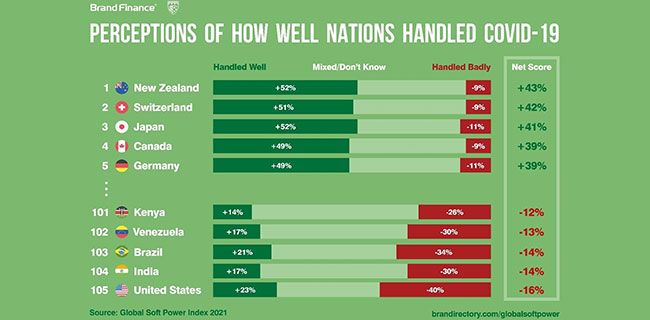
    India has the second-lowest rank, a notch better than that of the United States. In the specific area of nations handling the Covid-19 crisis, 30% people felt that it was handled badly, while 14% felt it was handled well.


    Adds the report: “Nevertheless, India is to be commended for the way in which it has invested in cultural diplomacy and for the major investments in global tourism spend. Prominent marketing of its “Incredible India” slogan has attracted a growing number of foreign visitors to India, raising awareness of the country’s diverse historical, cultural and numerous UNESCO world heritage sites which promote it as an appealing destination for travellers. This rings true with the general public survey findings where India scores 6.8 for Familiarity. The work of The Indian Council for Cultural Relations (ICCR) is a perfect example of India’s soft power priorities, as the government entity ramps up its presence to foster and strengthen mutual understanding between India and other nations. A fine example is The Nehru Centre in London, which acts as the cultural wing of The High Commission of India in UK. Established in 1992, it is regarded by ICCR as its flagship cultural centre abroad and has emerged as a premier institution engaged in India’s cultural interface with the UK. Following the controversial revocation of autonomy for Kashmiris by the Hindu nationalist Bharatiya Janata Party (BJP)-led government, India must build upon its soft power strengths instead of turning to more hard power initiatives. Yoga and Bollywood are two of India’s finest soft power tools. Bringing in tourism and talent, both can be seen as working their magic in order to boost India’s global image and project is as a peaceful rising power on the world stage.”


    As part of the Global Soft Power Index. Brand Finance asked 75,000 respondents from the general public and 750 from specialist audiences about the handling of COVID-19 by 105 nations worldwide. The respondents were asked to rate the nations’ efforts in terms of stimulating the economy, protecting the health and wellbeing of citizens, as well as cooperating on the international stage and providing aid.