The International Advertising Association (IAA) India Chapter has released a multimedia campaign to focus attention on the need to raise funds to rehabilitate the hapless victims of the Cyclone that caused havoc in the two States.
Said Punit Goenka, President, IAA – India Chapter: “While the entire Nation is fighting against Covid-19, Bengal and Odisha have also been battling with the impact caused due to the cyclone. We have always believed in the fact that effective communication implemented at the right time, positively generates the required change. I am very glad that the team IAA’s India Chapter along with Havas India, instantly synergized and created an impactful campaign, urging people to virtually join hands and support the rehabilitation initiatives. “.
Added Bobby Pawar Chairman & CCO Havas India: “The campaign posed a difficult challenge. How do you get people who are themselves affected by a crisis to care about the plight of those who have been struck by another? The solution was to use the very same things we find hard about our current situation and depict how much worse it is for the millions affected by the cyclone and the pandemic. IAA always rises to the occasion when there is a need and I am thankful to them for letting us be a part of this effort.”
Said Rana Barua, Group CEO, Havas India: “As a member of the IAA and a responsible part of the communications industry, it’s really up to us to create work that stirs the conscience of the world and makes people understand the true extent of this terrible situation in Bengal and Odisha. I am sure this initiative driven by the IAA and Havas will help create an impetus for people to contribute and help in the massive rehabilitation programs.
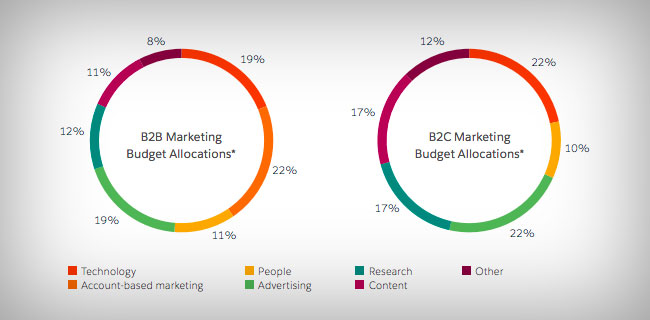
CRM leader Salesforce has released the sixth edition of its State of Marketing report which revealed that as technology drives customer expectations to new heights, Indian marketers have emerged as not just messengers, but engagers who foster meaningful customer relationships well beyond the first purchase. The research also found that standards of customer engagement are shifting again, and Indian marketers are prioritising innovation in a radically altered landscape.
For the 6th edition of the State of Marketing report, Salesforce collected data from nearly 7,000 marketing leaders across the globe, spanning six continents, just as the Covid-19 crisis emerged. After carefully dissecting the survey results, Salesforce Research deemed that the insights in this report provided significant relevance, value and a helpful guide to marketers as they navigate through these uncertain times.
Said Sunil Jose, SVP, Salesforce India: “The COVID-19 crisis is forcing marketers in India to rethink every aspect of their business – from strategic priorities and challenges, to the technological and team skills they will need — as they navigate getting back to work during a global crisis, and then continuing to transform the customer experience to be best positioned for success in the years ahead. The insights in this year’s State of Marketing report are a helpful guide for marketers as they journey to recover and transform their business.”
The trends revealed in the State of Marketing report were collected from marketing leaders from B2B, B2C and B2B2C companies across 30 countries, including 300 respondents from India, which showed the following:
:: Marketing Transformation Takes On New Urgency: The expectations and behaviors of consumers, businesses, and society at large are shifting with unprecedented speed and magnitude. Marketers are at the forefront having been increasingly tasked to take a leadership role, with 87% in India leading customer experience initiatives across their companies. This involves a combination of both technological and organizational innovation. In India, innovating is the top priority for marketing leaders, while insufficient organizational structure and processes is their top challenge.
:: Customer Data Sets the Stage for Empathetic Marketing: As customers navigate a series of “new normals,” personalized, empathetic engagement has never been more important. Delivering messages and offers that resonate with an individual’s unique needs and expectations requires deep insights. Marketers are shifting how they source and manage customer data and ramping up use of technologies like artificial intelligence (AI) that help them make the most of it. In India,marketers are expected to go from 20data sources in 2019 to 25 projected data sources in 2021 and report a 118% increase in AI adoption since 2018.
:: Marketers Double Down on Business Value: As businesses shift from crisis triage to recovery and adaptation, marketers have a unique opportunity to turn trusted customer relationships into business value. Marketers increasingly track metrics like customer satisfaction, digital engagement, and lifetime customer value to gain a holistic picture of what’s working and what isn’t across the customer journey. B2B marketers have a particularly strong role in business growth through account-based marketing (ABM). In India, 65% ofmarketers track customer lifetime value (LTV) to measure success.
For full report, visit: https://www-stg.salesforce.com/form/pdf/6th-state-of-marketing/
NBFC IIFL Finance has signed up cricketer Rohit Sharma as its first ever Brand Ambassador.
Speaking on the association, R Venkataraman, Managing Director and Co-Promoter, IIFL Group said: “We are glad to announce India’s leading batsman, Rohit Sharma, as IIFL’s brand ambassador. He is renowned for his straight drives. We believe in ‘Seedhi Baat’ or doing business the straight way. We do this by being customer centric, offering relevant and simple products and ensuring transparency in our processes. Rohit is a living representation of brand IIFL values.”
The first campaign by IIFL Finance with Rohit Sharma, informs a communique, is not a product promotion campaign but a public service message advising people on safety guidelines and rules to follow during lockdown to fight Covid19 outbreak.
FB-BCG Guidance bo Brands based on Report Findings
By A Correspondent
Facebook India in association with Boston Consulting Group has released a report titled ‘Turn the Tide’ that focuses on how Covid-19 has dramatically changed consumer behaviour and altered the path-to-purchase. The report also shares actionable guidance for brands to build for the new consumer journeys in times of Covid -19 and beyond.
Sandeep Bhushan
Said Sandeep Bhushan, Director and Head, Global Marketing Solutions, Facebook India: “As business after business joins the dots to understand consumer shifts in both mindsets and behaviours as a result of COVID-19, we have invested in studying the new paths to purchase in continuing our commitment to enabling growth for businesses both large and small. The ‘Turn the Tide’ report outlines the opportunities that businesses need to embrace in the context of new consumer journeys and category needs. In response to consumers embracing the digital medium, brands need to focus on solutions that are relevant for the new normal such as hyper-localization, creating virtual experiences, re-looking at the media-mix to build efficiency, or building messaging around new habits such as DIY and the increased focus on health and hygiene.”
Facebook and Boston Consulting Group are also expected to share vertical-specific insights to help businesses gain almost real-time insights, enabling them to ‘Turn the Tide’.
The report delves into key consumer-shifts based on three societal-truths that have emerged as a result of the pandemic – social distancing, increasing focus on health and hygiene, and increasing income uncertainty. Within each of these shifts, the report finds that there are three kinds of behavior change movements that are being observed – reversal of past trends, acceleration of existing trends, and formation of new habits.
Nimisha Jain
Added Nimisha Jain, Managing Director and Partner, Boston Consulting Group: “We are experiencing unprecedented shifts in consumer attitudes and behaviors – 80%+ consumers will continue to practice social distancing and are bringing the outside inside, over 40% of consumers are dialing up on health and wellness spends, e-commerce adoption has already advanced by 2-3 years – to name a few. These aren’t just temporary surges, and many will last longer and become more defining traits. Our analysis reveals that only one in six companies emerged stronger in past crises – players who show the agility to reinvent their value propositions, go-to-market plans and business models to address these demand shifts will be the ones that set themselves apart from the pack”
The reports especially calls out the massive acceleration in digital led by social media, the emergence of micro-market opportunities, an increase in value consciousness leading to more utility-led shopping, consumers embracing digital even in historically offline categories such as education, health, and fitness, the increase in spend on e-commerce in the coming months even for traditionally offline categories, a definite increase in spends on health, hygiene and wellness, and a rise in do-it-yourself (DIY) trends.
Executive Summary of Turn The Tide report
The COVID-19 outbreak has proven to be a global pandemic of an unprecedented scale impacting people, communities, and businesses across nations. In India, as with the rest of the world, the first few weeks of the lockdown saw the industry in a wave of panic and uncertainty as the disruption in business continuity threatened to potentially destabilize the economy.
Facebook has always been committed to developing and sharing industry-leading full-funnel solutions for brands across all categories. As India opens up to limited business activity, this joint collaboration with the Boston Consulting Group – a consumer sentiment survey, titled ‘Turn the Tide’ – aims to serve as a reference point on consumer insights, trends, and guidance for the industry, brands, and agencies as they begin to negotiate the commencement of operations.
What’s different about this report is that it’s not just a research study but that it also provides actionable guidance that brands can deploy right away. It brings together the expertise of BCG’s deep insights and years of consulting experience with Facebook’s experience across thousands of campaigns run on its platforms.
Covid-19 has impacted lives in 3 big ways:
:: Social Distancing
:: Health & Hygiene
:: Income Uncertainty
Key points:
:: Consumer journey has altered; brands need to urgently identify opportunities to build for new consumer journeys.
:: COVID-19 has fueled the digital medium in an unprecedented manner. Some of these consumer trends are here to stay.
:: Brands are already leveraging social media platforms to build for the new consumer journeys.
Consumer Behavior has fundamentally changed: Emerging Trends (11 Uber themes)
A. Reversal of Past Trends
1. Bringing the outside inside: 79% people are not going out of house, except work
2. Trust in Brand above all else: 63% people are paying more attention to origin of product
3. Trading Down and Bargain Hunting: 43% people are expecting decrease in overall spend in next 6 months
4. Shopping for Utility: Purchase triggers expected to become more “functional”
B. Acceleration of Existing Trends
1. Embracing digital services & experiences: 51% consumers saw an increase in payment via digital wallets
2. Accelerated adoption of e-commerce and O2O: 50% of all consumers expect to increase e-commerce spend in next 1 month
3. Strive for Health & Wellness: +40% may increase spend on Health and Wellness
4. Rise of Smart Shoppers: Informed purchase decision; High salience of digital research
C. New Habits:
1. Remote way of living: The new normal
2. Do It Yourself: Spike in new hobbies and habits
3. Superior Hygiene and Clean Living: 91% Indian households washing hands more often
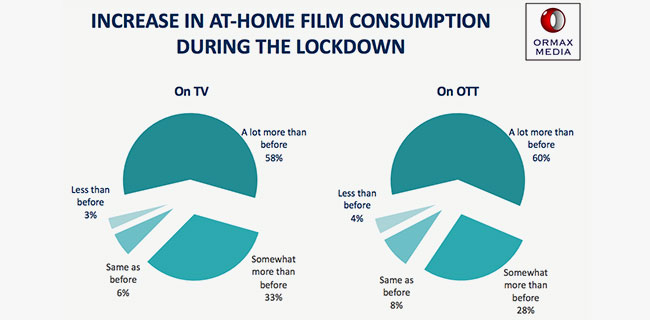
Ormax Media conducted a special study on theatre-going behaviour given the impact it has had by the Covid-19-led lockdown. The study measure audience sentiment about visiting theatres when they re-open, expectations and change in behaviour at the theatres, audience trust in various exhibitor brands in effectively implementing safety measures and the consumption of films on television and OTT platforms during the lockdown.
Here is the Executive Summary of the findings:
1.Audience have given whole-hearted endorsement to the theatrical experience, with 82% missing going to the theatres a lot during the lockdown
2. A dominant section of audience believe that they will go back to the theatres within 2-3 weeks of them re-opening. However, social distancing and sanitization precautions taken by theatres will play a crucial role in their decision to visit
3. Contrary to a perception being built in the trade and the media, high consumption of films on TV and OTT has not reduced the audience attraction for the theatrical experience
4. 69% audience said they will visit theatres not just for big-scale films but for medium and small films too
5. Economic considerations don’t emerge as a major factor in the decision to revisit theatres. Audience would rather have theatres keep the ticket price unchanged and spend money on implementing safety measures, than offer discounting to boost footfalls
6. F&B consumption at the theatres is likely to be impacted by about 60% during the period of Covid-19
7. The national chains score high on audience trust to effectively implement safety measures. However, chains with limited geographical presence, and single screens, are seen to lack this credibility
8. Communication of safety measures undertaken by theatres will be a crucial factor to persuade audience to visit theatres when they reopen
The Indian media, especially television, has been under tremendous pressure on advertising revenues ever since the nation went into lockdown – 10 weeks ago.
While there have been several discussions about major advertisers having curtailed their adspends backed by the huge reduction in ad volumes, things may not look as bleak as they are projected to be.
In fact, a closer look at the data spells a very different yet hopeful scenario – shedding some light on the changing consumer habits/ sentiments and a paradigm shift in the power that once controlled TV.
:: 287 new brands/variants of different brands were being advertised on TV every week, during the last 6 weeks
:: 37 product groups out of 472 odd listed products registered a growth in inventory bought on TV after Nation went into a lockdown from March 25.
Interestingly, these 37 product groups accounted for more than 45% of TV inventory consumed during lockdown while before lockdown they accounted only for a meagre 22%. While it is no surprise that a few products from giants like HUL, GCMMF still feature in the list – a testament to being listed under essentials – the real story lies in those products which have come into foray.
:: Time spent on gaming and number of online gamers have increased by 1.25 times. This has been capitalised by the online gaming industry whose inventory consumption saw an unprecedented growth of 151% during lockdown.
:: Taking a cue, the banking industry is also pushing its digital products more than ever during these times. Internet banking and digital wallets have seen an increase of customers by 1.2 times – a fact corroborated by their fair consumption of the inventory as opposed to other products in the category namely home loans.
One of the major categories to take hit is the ice-cream category, where the previous years have seen a copious amount of inventory being consumed by the Ice cream giants Amul and HUL. The current situation has led both corporates to cut on the inventory in this category.
Considering that the pandemic will be still on the horizon in the coming few months and consumers are likely to continue to operate from their homes as opposed to their offices, it is only logical that the personal skin care segment which has taken a hit by 50%, will be relegated from the shopping lists of the consumers.
That majors like Vicco and Emami have been completely absent during these Covid times is perhaps sign for upcoming decrease in the same segment.
Currently, with the signs seen in the consumption pattern of media and inventory, it looks like the shopping cart of an average Indian consumer has already undergone a major change. May be the consumer has adopted quicker than any to live with this pandemic than to wait for it to subside.
Zee Entertainment Enterprises Ltd (Zee) has announced fresh content for its consumers by embracing and utilising technology. The teams have enabled innovations through remote production of content over mobile and professional cameras by using video and audio production technologies to support broadcast, digital & social platforms.
Punit Goenka
Speaking on the extraordinary steps undertaken by the company, Punit Goenka, Managing Director and Chief Executive Officer, Zee Entertainment said: “Zee has always set new trends for the industry, and I am very proud of our teams for making the optimal utilisation of technology solutions to ensure that our consumers continued to get a fresh dosage of entertainment content, amidst the lockdown. We will continue to create fresh, rich and engaging content for our viewers, by discovering new means and paths. It is time for the Industry to define a new normal, to ensure that our consumers remain well-informed and entertained”.
The ongoing Covid-19 pandemic has taught people to slow down and find simpler ways to live life while putting vanities on the backburner. It has made us more conscious, compassionate, and empathetic towards others as we embrace the disruptive daily patterns. With this grain of thought, Colors has released its new brand film #InsaanHuaUnllock that asks people to find their missing selves and become more aware of the things that matter the most.
Launched on the heels of its previous film, #JitneDurUtnePass that sent out a message of social distancing, the new brand film takes ahead the conversation and opens with a diary visual revealing human sketches interspersed with a voice-over narrating their pre- and post-Lockdown stories.
Said Sapangeet Rajwant, Head- Marketing, and Digital, Hindi Mass Entertainment and Head of Brand Solutions, Viacom 18: “It takes a lifetime for people to realise what they have been missing out on and this difficult period has been a blessing in disguise to make us aware of what that matters the most. As a socially conscious brand, Colors has been effectively putting across the message of safety and solidarity through innovative campaigns and our new brand film #InsaanHuaUnlock is the next step in this direction. With this film, we intend to foster our connection with the viewers by urging them to make the most of the present moment and discover their real selves while being compassionate towards others. It has received a heartening response and we are glad to be able to spread positivity with the new initiative.”
Governments around the world are edging toward plans to exit mass population lockdowns, albeit at different speeds and in different ways, but the persistent questions for business are around what the future holds and how it should be navigated.
In response, Nielsen has identified three distinct time horizons for global market regeneration beyond the novel coronavirus (COVID-19) global health emergency and attached likely scenarios to each. The three-tiered framework identifies the conditions for businesses to Rebound, Reboot or Reinvent as they confront expected unprecedented recessionary conditions.
With trillions being pumped into economic stimulus packages, yet thousands still dying of COVID-19 and some countries confronted by the prospect of ongoing population lockdowns, the question of how to reconfigure economies is significantly dependent on the behavioural changes taking place among the world’s consumers.
Nielsen’s global intelligence team has undertaken an initiative that takes into account global macro conditions such as unemployment, bailout packages, and interest rates and ties them to ongoing FMCG sales and attitudinal inputs from consumers around the world. From there, the team examined common threads of consumer behaviour that tied to how the disease was being managed and the response of governments to support citizens through health and financial care.
The findings led to three horizons being established that reveal significant new and adjusted consumer behaviours that will lead to different types of demand in terms of what, where and how consumers make purchases. They also point to a series of common characteristics likely to be exhibited by consumers over time. All of these are based on the conditions currently in play to manage the virus on a global basis.
“Much has been made of comparisons to the 2008 global financial crisis, but this situation doesn’t make for accurate comparisons. The circumstances back then were fundamentally different,” said Scott McKenzie, Nielsen Global Intelligence Leader. “Thousands weren’t dying each day, millions weren’t locked in their homes indefinitely, businesses weren’t ordered to close their doors, kids were still in school. The impact of this will be profound and more far reaching than anything we’ve seen in our lifetimes. The pace of change is also extraordinary.”
The new Nielsen framework extends a set of six consumer behaviour threshold levels that provided early signals of spending patterns during the first three months of the health crisis. It lays out three possible timelines for each of the scenarios:
:: Rebound: An early return to normal living conditions (schools, workplaces, stores, restaurants etc re-open) at some point in the third quarter of 2020.
:: Reboot: A medium-term scenario that is positioned in the fourth quarter of the year.
:: Reinvent: A longer-term view that places the world in a general return to normal living conditions at some point in the first half of 2021.
“The world is fundamentally recalibrating right now. Consumer habits are changing at pace and understanding those changes, in the context of these scenarios, will be critical as businesses prioritise how they too recalibrate to meet the changed circumstances driven by COVID-19,” said McKenzie.
The framework points to a series of behaviours and habits that will be accelerated in each of the scenarios. In some cases, changes that may have taken years to evolve could be in place in a matter of months.
Already, this year, Nielsen has tracked significant changes to the ways people shop and the ways they think they’ll behave after the Covid-19 crisis comes to an end, particularly with regard to technology and the use of digital platforms.
Taking advantage of Nielsen’s global footprint, the intelligence team was able to shape the new framework by also taking into account consumer sentiment, such as that measured in Europe, where many expect the impact of Covid-19 to be long lasting. And to test hypotheses using data out of markets such as China and South Korea that are further along in dealing with the disease and its impact.
In each horizon identified by Nielsen, a different set of factors and respective consumer behaviours can be identified.
In horizon No. 1, “Rebound,” a series of health indicators, actions by governments and business, and market conditions point to a rebased “normal” that has some of the following as a societal response:
In horizon No. 2, “Reboot,” the societal response has a different set of focal points and positions the economy for meaningful regeneration toward the end of the year.
In horizon No. 3, “Reinvent,” as the name suggests, a complete reinvention is required and may not play out until the first half of 2021. The consumer behaviours and characteristics are sharply amplified compared to horizons No. 2 and No. 3:
With each of these time scenarios, the baskets of shoppers will also change. The repertoire, pack sizes, brand choices, product origins and more will be reconfigured as shoppers adjust to changed economic circumstances and a sharper focus on their health and safety.
Two clear sets of consumers will also emerge – those with insulated levels of spending, often those who have maintained employment and remain shielded from day-to-day economic impact and those who will be restrained in their spending habits due to unemployment, furloughing or other COVID-19-related challenges.
This polarisation of spending is expected to drive new considerations for retailers and brands as they urgently examine the range of products being offered and the pricing dynamics within.
Property platform Magicbricks is driving positive consumer sentiment in the national lockdown by encouraging its employees and partners to come together for a crowd-sourced first-of-its-kind brand film ‘Ghar pe rehkar Ghar ko Dekha’.
Said Prasun Kumar, Marketing Head, Magicbricks: “The challenge for us while making this film were two-fold. First, how to create a powerful piece of content based on strong consumer insight which also had to be contextual to the times we are living in. And the second was to produce the film remotely from every contributors’ homes. Real estate has been one of the most impacted industries due to the outbreak of COVID-19 impacting the consumer sentiments deeply. And as the leading brand, it is our responsibility to reignite property investment considerations. ‘Ghar pe rehkar Ghar ko Dekha’ is an emotive and engaging storytelling sure to make consumers identify with it and connect at heart. It is almost the most unique effort by any brand under the circumstances.”
Added Ankur Suman, Partner, RK Swamy BBDO: “We saw lockdown as a phase where the relevance of Magicbricks was actually amplified! Everyone was talking of staying home and home became the centre of our universe, indeed. But staying at home can be a difficult experience if you are not comfortable in it. This powerful insight was the cornerstone and lyricist Pankaj Bora built a poetic narrative on it. As the lockdown put many restrictions on production, we chose to crowd-source the visuals and the rest. We wanted this campaign to be realistic and truthful. After all, it is nothing but a reflection of the consumer truth.”
Kamdhenu Paints has launched a new social media campaign titled ‘Be Indian Buy Indian’ to amplify Prime Minister Narendra Modi’s message of being Vocal For Local and self-reliability.
Talking about the campaign, Mr. Saurabh Agarwal, Director, Kamdhenu Limited said, “The fight against the pandemic COVID-19 is a joint effort by the government and citizens of the country. Kamdhenu Paints, as a responsible Indian Company has been doing its bit in contributing to the fight. By leveraging social media platforms to promote awareness and by standing firmly behind the government in its effort, we hope to have played our part and we will continue with our initiatives to reach out to registered painters and other needy in help”.
As lockdown guidelines are being relaxed incrementally, we must continue to cooperate with the government and care for each other as a society. With the economy suffering because of the lockdown, this is the time for us, as citizens, to listen to the appeal made by PM Modi and buy locally produced goods and services only. Kamdhenu Paints encourages everyone to follow all safety guidelines issued by the government and we will continue to stand with the government in its initiatives.
Okay, we obviously didn’t expect BD to give a ‘sureshot’ answer given the uncertainties that lie ahead, but we asked him nevertheless. Without any further ado, here’s the May 18 edition of Das Ka Dum with Dr Bhaskar Das of course. Read on…
If you wish to access the archives, please go to the Das Ka Dum tab on the website’s top navigation bar.
Q. Lockdown 4.0 starts today. From the way things have been going – people not practising social distancing – do you think there will be a Lockdown 5.0 too?
A. Whatever numerical versions we ascribe, I strongly feel that till a vaccine arrives on the scene, some form of Lockdown has to continue, albeit in a deaveraged format across the country, depending on the spread of Covid-19 in the red, orange and green zone. In the interest of life and livelihood, restricted conditions of living would be new route to freedom from the virus. We have to learn to peacefully coexist with an invisible enemy to mitigate its visible impact.
 NBFC IIFL Finance has signed up cricketer Rohit Sharma as its first ever Brand Ambassador.



 The ongoing Covid-19 pandemic has taught people to slow down and find simpler ways to live life while putting vanities on the backburner. It has made us more conscious, compassionate, and empathetic towards others as we embrace the disruptive daily patterns. With this grain of thought, Colors has released its new brand film #InsaanHuaUnllock that asks people to find their missing selves and become more aware of the things that matter the most.


 Kamdhenu Paints has launched a new social media campaign titled ‘Be Indian Buy Indian’ to amplify Prime Minister Narendra Modi’s message of being Vocal For Local and self-reliability.