Tag: Avik Chattopadhyay

  • Brand lessons from the Ballot


    By Avik Chattopadhyay

     

    Avik ChattopadhyayA little over a fortnight ago the election results were announced for the five states of Goa, Manipur, Punjab, Uttar Pradesh and Uttarakhand. The outcomes were as expected only that nobody expected the magnitude of the Punjab victory.


    This was one set of elections where we saw seemingly smaller and regional parties wanting to be counted. Not that this was their first attempt, but in this round they seemed more committed and invested.


    There are interesting brand lessons to be taken away from the strategies adopted by the key political parties and personalities and also the outcomes.


    PunjAAP!


    This was the most emphatic, so let’s start with the AAP’s campaign in Punjab. There is nothing like a solid proof-of-performance as a testimonial of what you can do when in power. Just like start-ups with the best proofs of concept get the highest investors, so did the people of Punjab decide to invest in this development model from the shark tank.


    Whenever entering a new market or business segment, it is always prudent to appoint and announce the person who will lead the operations and give him/ her the required bandwidth to set the narrative. It is best if the person is a local who understands the market better than an expat.


    A critical part of a market entry strategy is to get your ‘own people’ converted first before you set sights on the others. Your own people are those who are culturally closest to your domestic market in terms of codes, rituals and likes. They become your early adopters and brand advocates in an otherwise socio-economically fragmented market.


    Lastly, the classic advertising appeal of “try me once” never fails. The appeal still carries a sincere ring to it, sans all the hype. There will always be the experimentative and early-adopters who lead the way. Just that in the case of Punjab they seemed to be the majority!


    Another “Nokia moment”!


    You have a commanding market share and come crashing in just 12 months all due to your own obstinacy of not deciding on an operating system and understanding what the customer needs. That’s the Nokia moment of 2007. Can also be termed a Rip Van Winkle moment!


    The Congress repeated it with unerring accuracy in Punjab. It depended on legacy while the people wanted policy. And it failed to capitalise on a traditionally supportive segment in the farmers who could have turned the tide.


    Just like a market leader loses focus on its core customer base in its urge to capture newer markets and address new product and customer segments. A case in point are brands like Maruti Suzuki and Hero wanting to go ‘premium’ while their core base of entry level product offers gets neglected.


    Divide and Rule!


    It still works. As it did in UP for Yogi and the BJP. Astute marketers do not waste time in addressing all customers needs and desires. They go for those that have a natural alignment with the product benefits. Like aspects of protection, exclusion and intimidation in the case of BJP. Consultants call this segmentation.


    Also, the best event managers do not fuss with the entire duration of the show but create just one or two ‘wow’ moments that impact most and stay on longer in the viewers’ minds. So, images of temple corridors and highways that double up as airstrips combine very well to cover both tradition and technology. The recipient is not really bothered with all details of your narrative, so a few ‘doosras’ are forgiven. The average human being understands and remembers pictures much better than data tables.


    Do not reinvent the wheel, at all. All successful brand managers will tell you that. Not that they are halting the wheel but are going on the same track, faster, smoother, and better while refreshing the look and feel of the wheel. Within a smaller gestation period.


    Elephants cannot dance!


    If Kodak had taken heed of early digital photography and re-calibrated itself accordingly, it would not find mention here. Market leaders typically fail to notice warning signs on their radar screens… of a new technology, of a new trend, of a new entrant, of a new solution, of a new regulation…! Some quickly change course while others perish. Netflix did. Blockbuster didn’t.


    While divide and rule worked for the BJP, it cannot escape the fact that it lost more than 50 seats to the SP. Most contests have been very closely fought. It might not be a wave yet, but certainly a ripple. And it is not that the BJP has not been defeated before, despite the narrative being the same, albeit much milder.


    When both AAP and TMC announced themselves as true successors of the Congress, it needs to read the clear signals on lifecycle management.


    When you are too large as a brand, the Nirmas and Chiks of the world can come up, nibble away at your pie and create a larder big enough for them to sustain. Someone like Sensodyne can change the narrative at one end. Size has its disadvantages. Elephants cannot dance!


    Different ground, different game!


    “Khela holo na” for Didi and the TMC in Goa. The game may be the same, but the ground conditions are different. Knowing how to play football does not mean one plays equally well on hard and slushy turf and in any position. Just because VW rules the roads in Germany does not entitle it to do the same in India, as it has painfully learnt. Cut-copy-paste does not work especially when there are strong cultural differences in the two markets.


    Remote control operations do not work in any market and for any product category. Also, a non-playing captain is not always the best option. One has to have a leader of the team at the ground level to assess the pulse on a daily basis and take corrective action in narrative and promotion. Moreover, the local team has to be empowered to take decisions and modify strategies without having to wait for an approval from headquarters.


    Controlling is fine. Micro-managing kills.


    Tell me something new


    The general narrative of the legacy parties remains more or less the same, be it the Congress or the BJP. They typically bash each other silly. While it works in some places, it fails in others.


    The Congress had nothing to offer the people of UP except for the glamour of the family and the legacy of the freedom struggle. The fact that the leadership had to fall back upon the forefathers rather than create a testimonial in Amethi or Rae Bareilly, is telling it all.


    Even though playing second fiddle to the Akali Dal, the BJP could have certainly performed better had it not applied the same narrative of UP. Also, its stand vis-à-vis the farmers over the last 18 months did not help.


    Political parties rarely seem to have any candour. They never seem to accept mistakes and own up to them. They offer no apologies. Just like most big brands never do. The challengers, however, use candour and vulnerability as strategic tools to move ahead faster. Today’s customer appreciates brands that are frank and fragile rather than infallible. This is a trait that most brand managers need to train upon and acquire.


    The light at the end of the tunnel…


    Work shows. Good work shows better. I saw an interview of N Biren Singh on NDTV after the exit polls were out and showed that the BJP would get a 3/4th majority in Manipur. He said that the projections might be too optimistic but as positive work had been done over the last five years, he was confident of getting the mandate. Eventually, he did get a mandate close to the projections.


    Market share is the outcome and not the objective. Just like good governance. Profits, loyalty, repeat purchase, electoral results and majority are all outcomes of fundamental work for the target customer. I get amused no end when brands make announcements of “x%” market share by such date almost as soon as they enter the market. Makes for masala journalism and nothing more.


    Biren Singh should know that pretty well. He was a journalist once. And a footballer before that!


    Avik Chattopadhyay is a senior brand and strategy consultant. He writes on MxMIndia every other Thursday. His views here are personal
     

  • Blond-haired blue-eyed brands!


    By Avik Chattopadhyay


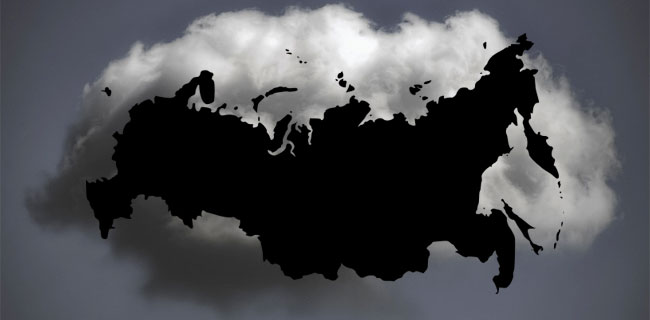
    Avik ChattopadhyayAs we read this, over 300 brands from across the world have taken a stand against Russia since it invaded Ukraine. Some real big names like Apple, General Motors, Volkswagen, Levi’s and MasterCard have decided to halt/ suspend operations and shipments. Consultancy firms like BCG, McKinsey and Deloitte have taken a call. Even some Chinese brands like Bank of China and Tik Tok have joined the list. All non-Russian energy companies have moved away either like BP and Shell divesting their shareholding in Rosneft or ExxonMobil walking away from the Sakhalin 1 project.


    While tracking the updated status on the internet, I came across an interesting Twitter feed that I cannot help but share here.


    While such economic ‘sanctions’ are very much expected, it is interesting to note that equally big brands like Coca-Cola, Unilever, Bridgestone, Pirelli, Pepsi, Philip Morris, Nestle, McDonald’s, Mondelez, Kellogg, Citi, Marriott, and Caterpillar still continue to do business in Russia.


    But the situation is very fluid. In fact, as I write I have an update that Coca-Cola and McDonald’s have also decided to suspend operations.


    Yale School of Management is keeping a real-time track of the status. Over 300 Companies Have Withdrawn from Russia – But Some Remain | Yale School of Management


    So, what makes some take one stand while others take another, or do not take the same one? Does this mean that McKinsey does not support Russia while Mondelez does? Or does BP denounce war while Bridgestone does not?


    While the ones who have taken a call against Russia are obviously being lauded for calling out an “imperialist” like Putin, are the ones who consciously have not, being subjected to criticism and pressure to fall in line? Will they experience serious fallouts on brand image and reputation in the long run?


    During my internet studies on the rise of Vladimir Putin and his oligarchs over the last two decades, I came across a term called “The Moscow Rules”. Bing! I remembered reading about this in ‘Tinker, Tailor, Soldier, Spy’.


    The Moscow Rules is a collection of 10 one-liners supposedly used by the Soviet secret service. They are also displayed at the International Spy Museum in the US. Post-Cold War, the rules remain as per the grapevine, now being used by the oligarchs to spread their presence across the world. They go as follows…


    1. Assume nothing.

    2. Never go against your gut.

    3. Everyone is potentially under opposition control.

    4. Do not look back; you are never completely alone.

    5. Go with the flow, blend in.

    6. Vary your pattern and stay within your cover.

    7. Lull them into a sense of complacency.

    8. Do not harass the opposition.

    9. Pick the time and place for action.

    10. Keep your options open.


    The stark simplicity hits you right away. There is no fancy business school jargon. Just plain common sense. Reminds me of Confucian precepts. Or Murphy’s Laws.


    Each is very much applicable to the world of brands. Each is fundamental to brand strategy and nourishment. Each feels more honest and powerful over the previous one. And the obvious paradoxes are simply brilliant! Just read 7, 8 and 9 together and you will get the drift. The sequence is intuitive, clinical, and utterly brutal. It’s like Machiavelli, Sun Tzu and Kautilya rolled into a Karpov move on the chessboard. Cold, calculated and thoroughly revised and rehearsed. Yet, #10 tells you that it could all go wrong, and you need to go back to #1.


    In the context of the Rules, I asked myself a few questions about the strategic decisions taken by brands in the context of the invasion of Ukraine.


    Pulled the plug or switched off power?

    Have the brands who have shown empathy with Ukraine pulled the plug altogether or merely switched off the power supply for the time being? The list by Yale uses terms like suspended and halted. These are all temporary measures and not finite ones. Once the invasion is brought to an end, whatever the outcome, they will be back for sure. Russia may be seen as a villain today but tomorrow it will all boil down to Putin, even if he wins this round. After all, a huge market of 145 million cannot be left alone to the Chinese and locals, can it? This is just like al Chinese brands, except for Tik Tok, were back in business in India just weeks after Galwan. The pressures of the marketplace and the shareholders are just too strong to pull the plug.


    Out of fear or fervour?

    With no disrespect to any brand that has suspended / halted operations in Russia, the action was taken more out of fear of political reprisal at home and other key markets rather than a foundational abhorrence of all war and military aggression. If it were so, similar stands could have been taken in cases of Iraq, Syria, Yemen, Palestine, or Tibet. It is all a matter of convenience. Most brands believe in #10 when it comes to morals. They take the high ground as the situation suits them.


    Hypothesis or hypocrisy?

    There are brands and then there are… brands. While a lot of posturing goes around about being led by and aligned with greater purpose[s], at the end of the day it just boils down to market share and share value. Most brands will not bat an eyelid to see their weaker competition die. Most would not hold themselves back from steamrolling a market. Most would love to enjoy ‘command and control’ in the markets they operate in, at the cost of unsafe working conditions, unethical influencing tactics, use of child labour and paying off officials and systems for staying a step ahead.  And they would not mind preaching to the ‘lesser’ ones, typically local / domestic. While constantly conspiring on how to gobble them up or bleed them to capitulation.


    These brands have blond hair and blue eyes.

    No harm can befall them.


    I end my tirade with a cartoon by the Russian cartoonist Aleksey Merinov that speaks about the harsh reality and futility of war. Either with tanks or tweets!

  • Avik Chattopadhyay: Foul smells and bad tastes!

    Avik ChattopadhyayBy Avik Chattopadhyay


    Stereotyping and objectifying are two of the critical mistakes brands make. The urge to impose one’s own limited perspective on a larger target consumer is both age old and a pandemic that runs through brand nurturing and communication.


    There is a deodorant brand called Wild Stone that insists on objectifying women in its advertising, be she in the role of an office colleague or one at a restaurant table. The woman is shown as possessed or mesmerised by the perfume making her do acts that are totally ridiculous, but more importantly degrading the social stature of one. While it surely might appeal to the alpha male, I am quite surprised that no one has raised an objection against this objectification. Interestingly, its direct competitor Fogg has decided to take a more mature route of putting its message across, choosing to ask people to stay indoors and take necessary precautions even if the pandemic is in its last stage.


    Why does the typical narrative have to show a submissive woman against a dominant male? Why does there have to be a ruler and a ruled? Why does the woman need to be objectified to pedestalise the man?


    Then there is a recently released web series on Sony Liv called “Rocket Boys”. It is a brilliant attempt at telling the inspiring stories of Homi Bhabha and Vikram Sarabhai, which itself is such a refreshing endeavour. But then it carries a negative character of almost villainous proportions in the form of one Raza Mehdi who attempts to destabilise the plans of Bhabha and Sarabhai. He becomes a Member of Parliament on a Communist party ticket and almost sells his soul to the CIA before his conscience beckons. Firstly, history tells us that there was nobody of that name. The character has been created out of thin air combining the lives of Meghnad Saha and B D Nagchaudhuri, two brilliant nuclear physicists and nation builders who might have had some differences of opinion and professional rivalries with the heroes of the web-series.


    Why distort history in the first place if one is trying to portray an inspiring slice of history? Why does there have to be an anti-hero or villain in the narrative? And if there is the need of a fictional anti-hero, why the typical stereotyping of being a Muslim or a Communist?


    Brands make these classic mistakes, some deliberate and most led by the perceptions and images in the minds of those managing the brand, both client and communication agency / partner. That leads to rampant stereotyping.


    For the North Indian, the South Indian will always be vegetarian.

    For the South Indian, the North Indian will always break into a bhangra.

    The North Indian is a Punjabi, and the South Indian is a Madrasi.

    The Bengali will have to love rosogolla and fish.

    While the Gujarati will always say “Kem chho?”.


    The second issue is that if a brand has to talk about its competitive advantage, it has to do down its competition. If one is ‘white’, the other has to be ‘black’. If one is a hero, the other is a villain. If I am good for you, my competition will have to be bad for you. There are no shades of grey. If I eulogise one personality, it will have to be at the cost of another one. If I put one brand on the pedestal, it is at the cost of bringing down another from the pedestal. It is always this or that, never this and that. I do not have the maturity to offer myself as the better choice. Instead, I present myself as the only offer.


    If Ram is good, Ravana must be bad. The latter has no option of being otherwise as good as the former but for the grave mistake which brings his downfall. The Kauravas can show no graciousness and valour vis-à-vis the Pandavas. Those amongst them who do show have to leave the flock and defect. If a certain period of our history is to be given its due place, another piece has to be derided. It is as if there is only limited space at the top and more than one point of view cannot co-exist.


    As a national culture, we find it very difficult to deal with shades of grey. Our gods and heroes can do no wrong. All shades of grey were repainted as either white or black through the centuries, taking away the fundamental capability to accept ourselves with our defects and fragilities. It is a binary culture code. Good or bad. Black or white. Yes or no. Us or them. Me or you.


    This manifests itself in our communication and narratives. My brand can do no wrong while yours does not stand a chance. Even if I have to misrepresent facts or suppress them, so be it for the cause of furthering my case. And brand managers actually see no wrong in this ‘strategy’ that believes in destroying competition before building one’s own relevance. The Pakistani cricket team has to be lampooned to support the Indian one. It is as if there is no room for mutual respect and recognition of competitive talent. And the fact that we enjoy such narratives is a disturbing evolution of our social fabric. The evolution is getting more intolerant, divided and shrill. That sure leaves a foul smell and a bad taste!


    Avik Chattopadhyay is a senior business strategy consultant based in Gurugram. He writes on MxMIndia mostly every other Thursday. His views here are personal


  • Netagiri with Netaji!


    By Avik Chattopadhyay


    Avik ChattopadhyayOn his 125th birth anniversary Netaji has become a ‘holographic projection’. Very soon that will be replaced by a magnificent statue in granite, as our respected PM emphasised on, for the nation and the world to marvel at.


    Every time we erect a statue of a national leader in the national capital, we lock him or her up into the vaults of time, almost like being cursed to turn into stone as the mythological character Ahalya! That is the most convenient way of showing respect.


    Bose has always been a character too rebellious and unconventional to be put into a box. The myth around his ‘end’ and the facts around his aura have prompted every political party to appropriate him, ending in failure. I had written about the same last year on 23rd January.


    Is Brand Bose Too Hot To Handle?! « MxMIndia


    Last year it was all about the elections in West Bengal. Round 1 went to the state.


    This year was pay-back time. The centre was waiting for the right time to pounce. It came with the state wanting to make its Republic Day tableau on Netaji. No way said the jury that decides which tableaus to accept. The CPWD had already submitted the same proposal. No point having too much of Bose. The state erupted shouting “controversy” and “disrespect to Bengal’s son” and so on. The centre swung into action. The Republic Day celebrations would start henceforth from the 23rd of January every year. And the big one was the statue in the heart of the capital. That was the ace. But how would one come up in a few days? A holographic projection, for Bose’s sake!


    Netaji has been appropriated! Or at least that is being projected [pardon the pun]. Round 2 to the centre.


    And then the icing on the cake of nationalism came with the CPWD tableau at the Republic Day parade on 26th January dedicated to Netaji. I have taken grabs from the recording of the same rolling past. The last portion of the tableau showing INA soldiers holding up the flag is a straight copy of the iconic Iwo Jima photograph. Talk about originality and respect!


    Screen grabs of the CPWD tableau on 26.01.2022 – the rear portion depicting the INA soldiers holding up the Indian flag


    The original photograph from the battle of Iwo Jima, Japan, 1945 and the US postage stamp


    Brand Bose has always been too unpredictable. His narrative has been too dynamic to get a firm grasp on and spin stories for one’s individual benefit. The man was rediscovering himself with every step and move he made right from becoming an able student of Chittaranjan Das to being the mayor of Calcutta to the president of the Indian National Congress and finally in his role as Netaji.


    His writings either in the form of letters to his siblings and friends or as articles show that this was an extremely restless mind. Nothing was taboo for him while nothing was sacrosanct either. He admired the Bolshevik Revolution but had serious reservations on the model of Communism put in place. He supported socialism but not at the cost of nationalism, one of the key points of dialectic conflict with Nehru. He believed in the forming of a constitution but after the ‘revolution’ and not before it, being a point of strategic conflict with the man he first called the ‘Father of the Nation’. He followed the tenets of Vedanta but despised the growing tentacles of fundamental Hindutva. He believed equally in silent protests as much as in violent struggles. He had solid differences of opinion with Gandhi and Nehru but respected their points of view and commitment to the cause. Just as Ramakrishna had said, “Joto mot…toto poth” [The paths are as numerous as the beliefs, but the goal is the same.], Bose believed that every type of strategy had to be applied to make the colonialist capitulate, hence all of them working in tandem were acceptable and supported by him.


    There were only two principles on which he had a single line of thought with no deviations, distractions, and interventions.


    First was that ‘Swaraj’ had to be “poorna” or complete with no half measures. “Freedom is not given, it is taken” were his famous words. Negotiations with the colonialist had to be for complete independence and not incremental and provisional steps. Che Guevara, a few decades later, was the perfect successor of Bose’s belief in perpetual revolution. Yet, when the Andaman & Nicobar Islands were occupied by INA and the Japanese, he declared a ‘provisional’ government and not a government-in-exile.


    Left: Pic of Netaji with INA and Japanese officials at Port Blair after declaring Arzi Hukumat-e Azad Hind or the Provisional Government of Free India – note the India flag with the Congress’ ‘charkha’!

    Middle: A Japanese manga [graphic novel] on Bose against Churchill using the India flag – published in Manga Mainichi in 1945 – note the charkha on the flag.

    Right: Asia Graph magazine, owned by Asahi Shimbun, with Bose on the cover – his popularity in Japan was far and wide.


    Second was that there was no room for religious fundamentalism or state support in a Free India. in his “Free Indian and Her Problems” published in 1942, he states that the ‘Muslim Problem’ was a creation of the British and a free India cannot have any state religion. Always a rationalist, in “The Indian Struggle” written in 1938, he believes in the Aryan migration theory, admires the Harappan civilization for its uniqueness and eulogises the positive impact of the Mughal period on the India he had inherited.


    These are the terribly uncomfortable aspects of Brand Bose that no ‘Netagiri’ can grapple with. When a certain group called ‘Itihasa Sankalana Samithi’ created a series of posts on Netaji with Savarkar, to imply the former’s closeness towards the latter, they forgot that Bose was as much a target of right-wing Hindutva as were Gandhi and the rest of the Congress. The cartoon below, published in Dainik Agrani in 1944 published by the Hindu Mahasabha gives it away.


    Cartoon in Hindu Mahasabha publication Dainik Agrani in 1944, edited by Nathuram Godse. Bose very much part of the 10 heads of Ravana to be destroyed by Veer Savarkar and Syama Prasad Mukherjee!


    Though Bose had broken away from the Congress five years ago and was now Netaji with his Azad Hind Fauj, he was still a ‘LeLi’ to use today’s terminology!


    In 2008-09 I had made an unsuccessful attempt to restore the Wanderer W124 in which Sisir Bose drove his uncle to Gomoh station from where Bose took an arduous journey on to Germany. In the due course of that effort, I interacted with a couple of people who had set upon the ‘mission’ to dig out the truth about Netaji’s death. I enquired as to why not work to keep his legacy alive rather than bother with whether he died in the air-crash and whether Gumnami Baba was him. I realised that like most of the nation, they too were obsessed more with Netaji’s death than with his life! That led me to create this social media post way back in 2010.


    Children wear Netaji uniforms.

    Adults wear Netaji caps!

    Legends make Netaji holograms!!


    Brand Bose will always be too hot to handle!

  • With IPL, have the Tatas finally found the right vehicle after all these years?

    Photograph source: IPLT20.com


    By Avik Chattopadhyay


    Avik ChattopadhyayNew terminology at IPL…

    Fours and sixes – Tata Assault

    A quick single – Tata Steal

    Strategic timeouts – Tata Consultancy Time

    Wicket – Tata Bye-Bye

    Man of the Match – Match ka Ratan


    So goes one of the many WhatsApp messages since BCCI announced that Tata will be the title sponsor of IPL from next season. There is a GIF too being circulated done by someone called Outcry Entertainment which shows the batsman in the IPL logo whacking Vivo out and the Tata logo emerges to the signature tune!


    This is certainly big news, beyond just the world of sports as India’s “most trusted” corporate brand chooses to play tag-team with India’s biggest sporting brand. What would have made this happen?


    After Galwan and Doklam, BCCI needed a non-Chinese brand to be the title sponsor for its marquee annual entertainment event. The optics were not good for the government and BCCI. Here you have skirmishes every month, chest-puffing galore and even the 14th round of talks breaking down while there you have a Chinese brand sitting proudly on the IPL trophy. Terrible paradox! It had to change. Dream 11 did not apparently have the shareholders’ nod to carry on with such spending beyond a year. The solution had to be more sustainable. Adani and Ambani are not the best brands to reach out to if you do not wish the opposition to have a field day. So, what are you left with? The Tata brand. You have returned Air-India to it. You have awarded it the Central Vista contract. Over the last few years, it has been cosying up to you for a significant pie of ‘Atmanibhar Bharat’. The brand is the talisman of trust and respect. Nobody will ever raise a finger at you.


    For the Tata brand wanting to appeal to the digital WFH generation, IPL is a terrific platform to ride. Given its forays into more D2C businesses like BigBasket, 1mg and Cliq, it can get a hold on the Indian family sitting in front of television watching their superstars create magic. Non-metro India can be reached even better on the mobile phone through the IPL platform. The brand wants to markedly shun its image of being big and bulky and behave young and connected. Also reach out to the diaspora who celebrate their biggest annual festival in IPL. The brand has had a long association with sports in general, having invested in football [TFA and FC Jamshedpur], archery, marathons, Formula 1 and a few more. One cannot forget the fact that one end of Wankhede Stadium was called the Tata End. Only that given the stature of the brand, I would have expected them to go more grassroots in sport development rather than join a filthy rich sport and make it richer!


    This looks like a win-win.

    BCCI has saved itself the blushes and finally turned nationalistic.

    Tata might have finally found the right vehicle after all these years!


  • Eight Buzzwords Wiser


    By Avik Chattopadhyay


    Avik ChattopadhyayTwenty twenty-two has not started the way we expected. The tentacles of the pandemic remain, in fact in newer forms. While we are coming to terms with the Omicron variant, countries like France have moved on to the IHU variety while Israel battles with Florona and the US with Delticron.


    Fanciful names for a killer!

    The WHO could have kept it simpler like Version A, Version B and so on but that might have taken the drama away. Just see the names of the hurricanes, cyclones and twisters and you will get the drift. Guess “I know what you did last summer” would not have sounded sinister enough if it were simply called “Revenge”.


    There is an art to naming and creating terms. It is an age-long craft. Axis sounded ominous while Allied seemed reassuring. New phenomena are explained and referenced better when given an interesting name or term. Conversations become easier when you refer to the group as BRICS rather than saying ‘Brazil-Russia-India-China-South Africa’ every time. Imagine calling the Cold War as the Russo-American Conflict! What would Bond do?! The uninitiated might think that DINK is the third option after DIY and DIFM. Such is the lure of naming.


    The pandemic over the last 22 months has thrown up certain names or terms that have caught my fancy. Reading them across platforms and hearing them on innumerable video calls and webinars have certainly made me wiser as I entered 2022. Some did appear pre-Covid but gained traction in terms of usage and ubiquity once the virus hit us becoming buzzwords for brands and businesses.


    New Normal

    This one became a rage in the first 12 months and has now somehow paled in popularity. I could never understand the construct. If it was ‘new’, how could it be ‘normal’? Maybe it was devised as a trick term and that is what made it the subjects of innumerable articles, webinars, and debates. It became a prefix to everything around us…new normal life, new normal work, new normal eating, new normal manufacturing and so on. Guess when we realised that normalcy was taking longer than our comfort levels, we switched to ‘post-Covid’ and this term lost the race. However, an interesting buzzword indeed,


    Omnichannel

    This was the consultants’ blue-eyed term to explain what tomorrow’s strategy would have to be. Enough white papers were written to rephrase another favourite buzzword of the yesteryears – 360-degree-engagement. I took the pains to read through a few of the papers and realised it was as creative as the NDA government renaming existing schemes and programmes as new!


    Hyperlocal

    Basically, “kirana” stores were given a makeover when marketers and consultants [again!] termed them so. For years the local vegetable vendor and the ‘paan’ shop had been doing exactly what the wise men in the metros suddenly realised as the holy grail of consumer connect.


    Greater Purpose

    This was the poster-boy of terms that became a symbol of corporate maturity and relevance. Almost all brands talked about having revelations of their ‘greater purpose’ due to the pandemic and how that has transformed them. Those that never ever bother with fundamental purpose of business now espoused the wisdom of greater purpose. Sadly, the longevity of this fad will be just as long as the effectiveness of a vaccine shot!


    Start-up

    This is my personal favourite. It just makes everything before the birth of this term seem prehistoric. It is as if all businesses that happened before did not start up but stalled up. It is as if nothing previously started as a new idea or from scratch. Every business since ancient times has had to start up before it was built up. It is like saying earlier we had motorcars and now we have automobiles! Massive disruption indeed.


    Unicorn

    Close on the heels of the start-up is this amazing term for businesses that have been evaluated as being worth at least a billion USDs. I understand you need to recognise such stalwarts by giving them a name but why ‘unicorn’? It is a mythical character that could be anything from a bull, goat, wild ass to a horse. Leonardo Da Vinci wrote, “The unicorn, through its intemperance and not knowing how to control itself, for the love it bears to fair maidens forgets its ferocity and wildness; and laying aside all fear it will go up to a seated damsel and go to sleep in her lap, and thus the hunters take it.” I rest my case.


    Deep Tech

    This is a relatively new one and makes you question if there is something called “shallow tech”! I have always believed that all technology is inherently and necessarily deep if it is to be useful and sustainable. The sudden emergence of this term makes one feel that all previous developments and investments have only been the froth.


    Metaverse

    This is the latest as 2021 closed. It is not a new term at all, first appearing in Neal Stephenson’s science fiction novel Snow Crash in 1992 to describe a three-dimensional virtual world, very much like Second Life. Facebook rebranding itself as “Meta” also helped this term become a buzzword now to describe a converged virtual world where ‘avatars’ and ‘NFTs’ are the way to be. The mind boggles!


    As the new year has broken, I have become eight buzzwords wiser. While I still ponder over a few, I am surely amused at the others as transient attempts to ‘brand’ behaviour and consciousness. How many start-ups will become unicorns in the metaverse using omnichannel deep tech to offer hyperlocal solutions in a new normal world that values greater purpose? Do I sound like a consultant? Terribly sorry…


  • India@75: Non-Violence – Relevant or Retarded?


    By Avik Chattopadhyay


    Avik ChattopadhyayThis is the fifth [and last] in my series on India@75 where I have tried to explore some indelible brands associated with the journey of our young nation. Having discussed brands like Democracy, Congress, Secularism and Doordarshan, I felt it most appropriate to bid goodbye to an eventful year with a discussion on brand ‘Non-Violence’.


    As a nation, this is one brand value we are most associated with given our freedom struggle since the early 1900s that was led by the principle of ‘Non-violence’. History describes the Indian ‘freedom struggle’ as the world’s first and largest ever at this scale. Its success against a particularly repressive colonialist became an inspiration to many others since then like the Civil Rights movement in the US, the freedom movement in South Africa, the Velvet Revolution in Czechoslovakia, the Mass Action for Peace in Liberia, and the February Revolution in the Philippines. Petra Kelly formed the Green Party in Germany based on non-violence. The Semai tribe in Malaysia have adopted non-violence as an active form of socio-political life. Morihei Ueshiba founded the martial art Aikido based on non-violence!


    US theologian and activist Walter Wink had said that in 1989 alone, 1.6 billion people across 16 nations had used non-violence as the means of demonstrations and protest. If one were to add the populations of India and South Africa, by then close to 65% of the world’s population would have attained freedom through non-violence.


    Twenty twenty-one will be a watershed year in Indian history as yet another non-violent movement succeeded when the central government decided to roll back the three Farm Laws. The Farmers’ Protest of 11 months was another demonstration that the route of non-violence still works, as long as one can be patient enough. While vested interests vilified the campaign and tried all tricks to destabilise it, the world actually saw it in positive light, not so much for the cause but more so for the means. Farmer protests typically end up being violent and ugly as seen in Europe and US where both protestors and enforcers use physical force. India, on her 75th birthday, once again told the world how it is to be done!


    Brand ‘Non-violence’ is beyond books of faith and the way of life of certain religious communities like the Buddhists and Jains. It is a greater purpose of how to subsist and sustain as a people and a nation. Like all enduring brands, it has a clear purpose, promise and personality. Over centuries it has kept evolving itself in its application and manifestation as well as adoption by an increasing number of people across nations.


    Interestingly, authoritarian governments have always been at loggerheads with non-violent protests for the latter neutralises the former’s ability to mete out physical harm. The autocrat is looking for a physical fight and some blood-spilling as a natural expression of power and hegemony. That is his / her comfort zone. The moment the protestor shifts the game to another playground, the autocrat is confounded. Revenge and retribution in the traditional sense make no sense here. And due to the inherent intellectual deficiency of the autocrat, mental torture is never a primary mode of offense.


    This is precisely why non-violence has become the most popular and powerful route of activism and protest. The tool-down and sit-down strike at a factory is far more effective than the days of the Luddites. The core operating principle that nothing should be harmed be it an object, a structure, a human being, or society’s interest is just too powerful to counter. And this makes non-violence so sustainable and adaptive as a brand ethic.


    The authoritarian state always builds a narrative against the non-violent protest by propping up ‘nationalist’ symbols of order, discipline, and masculinity like the army and law enforcing bodies. The soldier is typically positioned against the protestor as being the true nationalist while the latter is a renegade. Protecting land and borders is always more important than protecting rights and social sanity.


    There are some misgivings and myths about non-violence as a brand that I wish to dismantle here.


    Not peaceful or pacifist

    A non-violent movement need not be peaceful at all. Actions like non-cooperation, sit-down strikes, public addresses, marches, civil disobedience, economic boycotts, public assemblies, and petitions are all forms of non-violent protests.


    Non-violent interventions are some of the more incisive and powerful methods of protest using tools like public scrutiny, hunger strikes, occupation, blockades, and parallel governments. Since its coinage by Gandhi, ‘Satyagraha’ has become one of the most powerful ever. The Total Revolution of 1974 led by Jayprakash Narayan and the India Against Corruption movement of 2010 are telling examples of how interventions were used to weaken a government finally making it collapse.


    Hence, non-violence is neither peaceful nor pacifist, like any successful brand cannot.


    Not only reactionary

    Non-violence as a way of life is fundamentally proactive. In fact, it has brought disruptions in society that has led to far-reaching reforms. The Vedic revisionism around 500 BC was an outcome of the birth and rise of Buddhism and Jainism.


    Similarly, as a form of protest, non-violence can be institutionalised in civil society and tools put in place that ensure a totally proactive role in keeping the state in check and under constant vigil. The emergence of non-violent bodies like Greenpeace, Amnesty and Albert Einstein Institution makes up a unique eco-system of checks and measures that transcend borders to neutralise the ability of power-centres to harm.


    Not unidimensional

    Political scientist Gene Sharp, also called the ‘Machiavelli of Non-violence’, described 198 ways of non-violent action in his seminal 1973 book “Waging Nonviolent Struggle”. This is a handbook used by movements across the world right from the Estonian, Latvian and Lithuanian governments gaining independence from USSR in 1991 to Iranians protesting election fraud in 2009.


    There is no single route nor any straight-line solution for a non-violent protest. Multiple actions have to be deployed concurrently to make a non-violent movement successful. Just like the stakeholder engagement strategies for any product or corporate brand, this brand too follows the same blueprint.


    Not only political

    The Chipko Andolan, the Narmada Bachao Andolan and the Anti AFSPA Movement are examples of non-political non-violent struggles. Non-violence as a means can be applied to any subject and any context. School children marching across streets of Gurgaon or Bengaluru holding placards and singing songs to protect the Aravalis or the Ulsoor Lake have no political agenda. For them this non-violent form of protest is demonstrative of the life they wish to live, challenging the wrongs and protecting the right without causing any harm to anyone.


    Non-violence has to be accepted as the means of life for the maximum good of maximum people.


    Not only on charity

    Like all good brands, non-violence cannot be invoked only during the bad days or when the chips are down. It needs to be ‘invested in’ and nurtured at all times. In fact, the role that non-violence plays in the good times has a positive bearing on overall governance as it helps keep a constant eye on the state. This allows for lesser instances of mis-governance or mal-governance ensuring lower friction levels even during bad days.


    Every mature democratic nation needs to have a non-violent apolitical parallel governance mechanism operating 24×7 as a moral shadow of the political system in power. This mechanism needs to be owned by the man and woman on the street while its leaders ensure collaboration and co-creation. And this means that proper financial funding is needed to allow specific movements to sustain. There is nothing unethical about the same whatever the state might try to make one believe.


    Accepting the Nobel Prize for Peace on December 11, 1964, Martin Luther King Jr. had said: “Nonviolence is a powerful and just weapon. Indeed, it is a weapon unique in history, which cuts without wounding and ennobles the man who wields it.” Countering him, George Jackson of the Black Panther movement commented, “The concept of nonviolence is a false ideal. It presupposes the existence of compassion and a sense of justice on the part of one’s adversary. When this adversary has everything to lose and nothing to gain by exercising justice and compassion, his reaction can only be negative.”


    To me, non-violence is a unifying concept and holds huge relevance in a country like India with our diversity of opinion and multiplicity of issues. We won our freedom not merely by non-violent means as is made out by mainstream historians, but by use of multiple means with non-violence playing the lead role. The struggles of a Gandhi would never have worked without the sacrifice of a Surya Sen. They co-existed and tactically collaborated to stretch the colonial administrator to the point it finally snapped.


    The last 18 months have seen India go through two large non-violent movements – the Anti CAA and Anti Farm Laws. Both were successful in their own ways, the former forcing the state into inaction while the latter led to a reversal by the state.


    Brands India and Non-violence will always enjoy a symbiotic relationship.

    Whenever one mentions India, non-violence will be associated with her.

    Whenever one studies non-violence, India shall always find a prominent mention.

    As we look forward to the nation’s next 75 years, this will be one illuminating moment!


    Jai Hind!


    Avik Chattopadhyay is a senior brand strategist based in Gurugram. He writes on MxMIndia every other Tuesday and sometimes on other days as well. His views here are personal


  • India@75: Brand Secularism

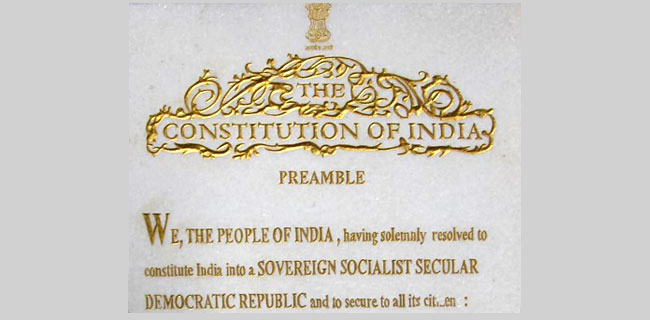
    Preamble to The Constitution of India. Source – internet


    By Avik Chattopadhyay


    Avik ChattopadhyayIn the fourth of my series on India@75, I deal with one more brand that we have grown up with that has now subsumed a significant portion of our coffee table conversations, social media activism and newsroom studios – Secularism.


    Secularism as a brand is a bit like ‘Kumbhakarna’ from the Ramayana – a humongous sleeping giant that needs huge coaxing to be stirred into action. In slumber since 1947, it was rudely woken up in May 2014. An integral ingredient in the concept called India that happened at the stroke of the midnight hour, the brand was a silent performer. It was woven into the fabric of a new nation just as freedom and justice were in the Constitution we gave ourselves. Given the complexity of the fabric, provisions were created by Dr Ambedkar and his team to define what “secularism” implies in the Indian context. This was crucial as the very nation was born out of a division on religious lines.


    Secularism is a foreign concept to the subcontinent. It is closely intertwined with another concept called ‘Socialism’. It was an outcome of a conscious effort in certain European countries like France to formally delink the state or polity from any religion or faith for the early socialists believed that only then would a true people’s government be established that worked for the greater good of all people, irrespective of colour, caste or faith.


    Our subcontinent was only a geographical entity which housed close to 500 odd kingdoms and principalities till the British called it a day. Each individual king or nawab or begum ruled with their specific faith as the official one. Most of their royal standards, flags and coins would carry elements of their faith. The outsider would easily identify whether the kingdom was Hindu or Muslim or Sikh or Christian with just one look at the flag!


    The state was never delinked from religion. The progressive ones patronised other religions too to allow a multicultural citizenry that enriched the arts, food, music, science, and architecture of the times. Rulers like Ashoka, Harsha and Akbar were exceptions to the rule. While Ashoka changed his faith, Ashoka dabbled with creating a new one and also had his sons convert to Christianity for some time. It is such broadness of their minds that make us address each of them as “the Great”. The subcontinent was a milieu of kingdoms and states each ruled by a family and a faith.


    With independence in 1947 and the trauma of the Partition, India could not afford to encourage any open patronage of any faith or even a bunch of faiths. And we had to be different from the part we lost that was born out of a single faith. Patronage was also a relic of the monarchies. Therefore, the new brand of ‘Secularism’ was introduced through the Constitution. It was well accepted in principle by most of us as we had higher priorities than building places of worship. The growing popularity of socialism as a post-war and post-colonial governing system also played a critical role in establishing the need for secularism to ensure success.


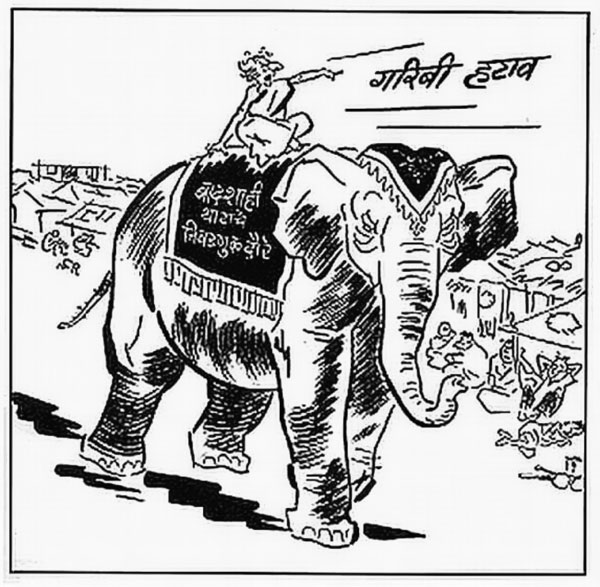
    Thirty years later the government, facing severe criticism of moral corruption all over the country, needed to divert attention of the common people and change the narrative of the media. Hence, both operating principles of ‘socialism’ and ‘secularism’ were used as political tools to be incorporated in the Preamble through the 42nd amendment to the Constitution in 1976. The rulers wanted to demonstrate their commitment to removing poverty [“Garibi hatao.”] before the electorate to ensure they stay in power. This one act of rashness brought the concept of ‘secularism’ into the limelight. People now started questioning what it really meant. And since then, it has been degraded into becoming a political tool rather than an underlying operating value.


    Appeasement of specific faiths, castes, clans and tribes became rampant under the garb of being secular. They were seen as vote-banks and nothing more. The rulers were never interested in actual alleviation but only appeasement in the aspiration of a better life. The rotten quality of life of these vote banks has further decayed over the decades of this deployment of secularism at the ground level. Otherwise, we would have at least seen the quality of life of certain communities having improved over time


    We still expect a Hindu election candidate from a Hindu area and a Muslim from a Muslim one. Political parties use the excuse of understanding the needs of the specific community better to justify such open “divide and rule” practices. This is one of the key legacies of the British that we have adopted very well.


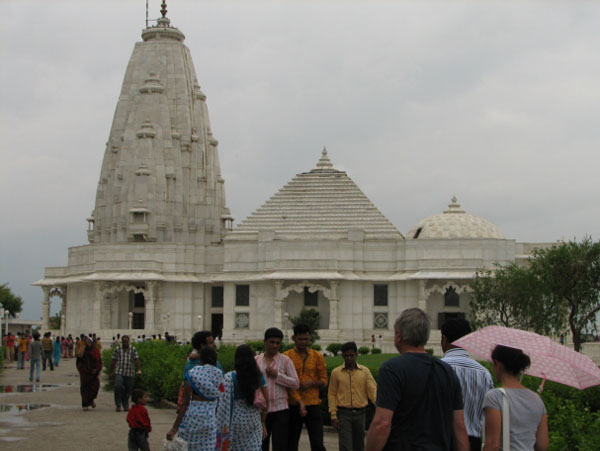
    The Birla Mandir in Jaipur – unique architecture incorporating the tower of Hinduism, pyramid of Buddhism and dome of Islam in one structure. Source – Wikimedia


    Since 2014, secularism has become a bad word. While it has been correctly described as a tool used to divide through selective appeasement, the new narrative denounces the very principle rather than question its misuse since 1976. Those who are truly secular in their individual lives are addressed as “Sickular”. It is a dirty word, bordering on being anti-national and disrespectful of our cultural heritage. The brand had been sullied with the 42nd amendment and has now assumed pariah status.


    So where have been the key shortcomings in managing brand ‘Secularism’?


    Mere ad-speak!

    Incorporating the term in the Preamble is not equal to actually believing in it and living by the principle. It’s like adding the term “corruption-free” to the Preamble through another amendment. Operating principles need not be openly advertised for they then remain only as advertising taglines. Across the world we have seen that the nations having the term ‘Socialist’ in their names have been the least so. You need to behave as socialist and secular and not merely talk about it.


    Lack of purpose

    True secularism totally delinks polity from religion. Not only does the state not have any religion but none of its constituents have anything to do with any activity or promotion of any faith. This is to ensure universal laws, rights and duties for every citizen, irrespective of faith.


    India is a classic case where we have adopted the word but operated just as before. As a culture we follow the tenet of “Sarva Dharma Sambhava” [Confluence of faiths] rather than the principle of “Dharma Nirpekshata” [Neutrality of faith]. We have eulogised Ashoka and Akbar who have patronised various faiths rather than a ruler who decided not to have any state religion.


    From patronising, we have moved to “peaceful co-existence” and not adopted the principle of secularism in its entirety. One may counter by saying we have adapted it to our conditions and requirements, but then, before 1947 we did not have democracy either! Hence, instead of choosing equi-distance from all faiths and have a set of universal social laws, we have deliberately chosen equi-proximity. That allows us to divide and rule and be selective towards one set of target segment / customer segment over others as market forces demand. This cannot be a sustainable proposition for any brand as word gets out and other segments either rise in defiance or shun you.


    Personality conflict?

    The current narrative tends to club the ‘sickular’ with the ‘communists’ and the ‘liberals’. This is dangerous for the current rulers as you will alienate more than you will accept. The communists abhor the concept of ‘secularism’ as they do not accept any religion at all. The socialists choose to delink while the communists choose to destroy. Therefore, calling communists as secular makes a laughing stock of the caller as you do not understand the fundamental differences. The liberals are again different from being secular. Theirs is a vastly open system of acceptance and allowance that follows the ethos of universal tolerance. And the true liberal will tell you that there is nothing called ‘religious tolerance’ as every faith teaches its believer to be tolerant towards others.


    Any promising showcase?

    The application of secularism in India really does not have any showcases to be proud of. According to data from the National Human Rights Commission, since 2005 an average of 100 lives have been lost and 2000 people have been injured due to inter-faith riots every year. More than 700 cases of rioting are reported every year. The Anti-Sikh Riots of 1984, the Kashmiri Pandit Exodus of 1990, the Christian-led separatist movement in the Northeast in 2000, the Gujarat Riots of 2002 and the Delhi Riots of 2020 are glaring examples where the stated value of secularism has been trampled with the powers that be being mute spectators.


    The underlying tensions can be easily brought to the surface for political benefit and the law-and-order machinery sadly falls prey to adherences to individual faiths from time to time.


    Just like the Shah Bano Case in 1986 and the Babri Masjid Demolition of 1992. Both were to undermine the Constitution and pander to specific electorates. The deliberate deprivation of basic rights to women of a faith while allowing them for others especially when the Supreme Court had passed a judgment against the same was a sure low point in our secular journey. Couple with the decadent destruction of an unused place of worship to drive home a divisive agenda for political momentum. The aftereffects of both incidents are being faced by the entire nation till date.


    So, secularism as a brand has not had a good journey in a 75-year young nation like ours. Its purpose is unclear, its personality is a bundle of contradictions, its promise totally shredded to bits by various pockets of powerbrokers. It has been used as a tool by some and a target by the others. All in all, a terrible situation for any brand. Especially when a ‘monk’ becomes a member of the polity and runs a religious administrative agenda.


    Appeasement gives way to aggrandisement!

    And that is the last nail in the proverbial coffin.

    Or piece of sandalwood in the pyre.

    Or fistful of soil in the grave.


    I finish my eulogy to brand ‘Secularism’ with a quote of Swami Vivekananda, one of the truest of seculars that ever walked this land. “A ‘sanyassin’ cannot belong to any religion, for his is a life of independent thought which draws from all religions; his is a life of realisation, not merely of theory or belief, much less of dogma.”


    Avik Chattopadhyay is a senior brand strategist based in Gurugram. He writes on MxMIndia every other Tuesday. His views here are personal


  • India@75: Doordarshan


    By Avik Chattopadhyay


    Avik ChattopadhyayWelcome to the third piece in the series on my thoughts about some of the country’s most enduring brands called “India@75”. The first two were on the journeys of ‘Democracy’ and ‘Indian National Congress’ as brands.


    The battle of Kurushetra in the Mahabharata, one of the world’s biggest epics, starts with the words “Sanjaya uvaacha…”. The style of the narration was unique in the format of Dhritarashtra’s advisor and charioteer Sanjaya giving him a ‘live telecast’ of each nanosecond of the 18-day battle. Sanjaya had the divine gift of being able to see and hear everything in person without being at the actual location of incident. He narrates each incident to the king including the killing of his hundred sons at the hands of Bhima without ever flinching. He also describes the entire “Bhoomandal” [universe /galactic system] and entire Bharatavarsha to Dhritarashtra to build the context of all that is to follow in the battle!


    Many equate the direct telecast of Sanjaya to the concept of television, just that it was described somewhere around 1000 BC.


    On September 15, 1959, Sanjaya was reborn as what later got to be called as ‘Doordarshan’. Or DD as the nation prefers to call it. Though not yet 75 years old, but since we attained Independence, it has been one Indian brand that has endured all these years and continues to serve its core purpose.


    From the days of Pratima Puri and Gopal Kaul reading out the short news bulletins, DD grew from a mere part of All India Radio with a five-minute news bulletin to a virtual tour de force in the 1980s. For my generation it was our “Sanjaya”!


    Stamps issued to commemorate the 60th anniversary of DD in 2019


    Since 1982 when colour transmission were launched it was our friend, philosopher and guide on all things proudly Indian while being our eye to the entire world. The 70s and 80s were creatively the best decades for India in terms of exploration and expression. While we were an economically backward nation, when it came to intellectual prowess we were at par with the best. Some of the best institutions of education, research and healthcare had been built. Some of the biggest infrastructure projects on this side of the world had been undertaken. The biggest democratic cooperative movements were here. The 50s and 60s had built the platform to allow creativity take flight, collectively as a nation.


    The country’s biggest cultural movements in terms of art, cinema, theatre, music, and scientific temper started then and what we admire today about our current situation is an outcome of the same. And there was nothing ‘political’ about it, for there was enough upheaval in that field too to add to the magical Samudramanthan that we experienced. And DD was right in the middle of it all, including us all in this journey. It demonstrated the ethos of our Constitution and the values of the democratic system that we had decided to live with.


    The twin principles of DD that made it such a brilliant vehicle of the new Indian ethos were, as I call them, “Door ka Darshan” and “Doordarshita”.


    Door ka Darshan

    Literally meaning viewing far away things, DD helped reduce the distance of knowledge through enjoyment for millions of us who aspired to be one with the rest of the country and the world.


    I was exposed to Fellini, Aravindan, Gopalakrishnan, Ray, Ghatak, Patwardhan, Kurosawa and many more on DD. I gorged tales of Tenali Rama along with Byomkesh Bakshi and Panchatantra. I waited for Spiderman as well as The Old Fox with equal eagerness. I saw movies of all possible languages with subtitles as they were nationally and globally acclaimed. I never learnt to differentiate on language, subject or provenance as I wanted to absorb it all.


    Doordarshita

    Literally meaning vision, DD was carefully crafted by the early leadership of the country as a vehicle that would unite the young nation and equip us with the knowledge and wide perspective to step into the global arena.


    DD was not seen merely as a tool for government propaganda, which all state-owned media platforms are across the world. it was seen as the Indian’s peep into the menagerie that is India and the world.


    A generation of evolved Indians, with a greater sense of empathy and enquiry was built by DD. We were exposed to Chandra Prakash Dwivedi’s ‘Chanakya’ as well as Shyam Benegal’s ‘Bharat Ek Khoj’. We were enthralled by ‘Yes Minister’ as well as ‘Kakkaji Kaheen’. The world was brought onto the screen for us. We watched, consumed, debated and crafted ourselves as evolved Indians with a worldview without even having a passport!


    The Great Indian Thali

    That is what DD was curated as. Right from ‘Krishi Darshan’ [the longest running television programme in the world], to ‘Chitrahaar’ to the Sunday afternoon National Award-winning film, DD had it all.


    It had something for everybody. The sports lover got all the key global events as highlights or direct telecasts. The curious got shows like Quest, Quiz Time and The World This Week. The culturally leaning got Surabhi and Mirza Ghalib. The religious-minded got Ramayan and Mahabharat. The comedy seeking got Yes Minister and Yeh Jo Hai Zindagi. The curious got Sherlock Holmes and Karamchand. The kids got He-Man and Malgudi Days.


    Nobody was left out in DD’s mission to bring the entire nation together. It was a symbol of our unity in diversity!


    Common Conversations

    The nation had similar subjects to deliberate upon. Everybody from Mumbai to Madhyamgram was on the same platform of exposure, entertainment, and knowledge. Every part of the country felt proud to have been amply represented and amplified to the rest of the nation. Indians got to know more about India.


    If an incident disturbed Assam, it disturbed Andhra too, and vice versa. When Adoor Gopalakrishnan received the Swarna Kamal nobody asked “Adoor who?”. When ‘Manthan’ was telecast, the entire nation new of a tiny place called Anand and a man named Kurien. The entire nation debated Salma Sultan’s red rose tucked behind her left ear. We all admired the new reading skills of Tejeshwar Singh. It was inclusive.


    Deliberate Deprivation

    With liberalisation in 1991 came commercialism and private enterprise. With private enterprise came the need to ‘protect and neglect’. To protect the fledgling private television channels, the government neglected DD. Like most government initiatives, this was relegated to being just a mouthpiece of the policy-makers and those in power.


    DD was deliberately deprived of funds to ensure the private channels took over. Equipment was not upgraded, technicians were not paid enough, producers were short-changed, studios were not upgraded, and new technology was not brought in.


    The best talent from DD went over to the private channels and termites had taken over in no time. Management after management had submitted plans of autonomy and revival but to no effect. It was to become a propaganda tool not too different from the likes in China and Russia. Viewership reduced year on year, creating a case of financial unviability and hence no serious infusion of funds.


    The treatment meted out to DD was similar to that towards Air India. To encourage private enterprise the government deprived the shining public enterprises who were qualitatively at par with the best in the world. The intensity of this move was almost to undo the ills of the ‘socialist’ past. And as if all that was public was sub-par.


    Division and Disunity

    DD today is once again symbolic of India today, divided and disunited. We have become more insular while posing as being more global. The broadness of our mind and ability to accept has constricted to all that makes us feel comfortable and ‘superior’.


    The quality of what is consumed today across the country is in direct correlation with the respect towards education and enquiry. The former is totally transactional while the latter is the exclusive domain of a few. Escapism has substituted inquisitiveness. Proliferation has led to dismemberment of issues of national interest and debate. We prefer to escape into a world of ‘reality’ shows and celebrity scandals rather than discuss issues like education and environment. And we don’t care a damn about diversity as we have media that restrict us to our own little worlds of wells.


    As a collective, we are back to being what we were in the early 1900s… some 500-odd kingdoms and principalities busy with ourselves lacking a common identity. Having brought ourselves to such a state over the last 75 years, can DD rise from its ashes and unite us again? While the policy-makers would have none of it and wish to retain it as a political mouthpiece, Prasar Bharati can surely take a long hard look at its child and give it a serious makeover.


    We did hear a statement from the Prasar Bharati CEO a few months back pointing to same, commenting it would be inspired by how the BBC has evolved. For that, one needs both intent and independence. Hope the ministry has the “doordarshita” for the same at the earliest. As we celebrate ‘Azaadi Ka Amrit Mahotsav” we would not like to see one of the country’s biggest brands be finally consigned to the flames. Sanjaya needs to be reborn…


  • The End of the ‘Managing Agency’


    By Avik Chattopadhyay


    Avik ChattopadhyayThis is my second in a series of thoughts on ‘India@75’. The first was to do with the very concept of ‘democracy’ in India as we enter our 75th year. This one is to do with the last stages of one of the oldest brands of this country that has important lessons for all of us in the world of brand strategy and management.


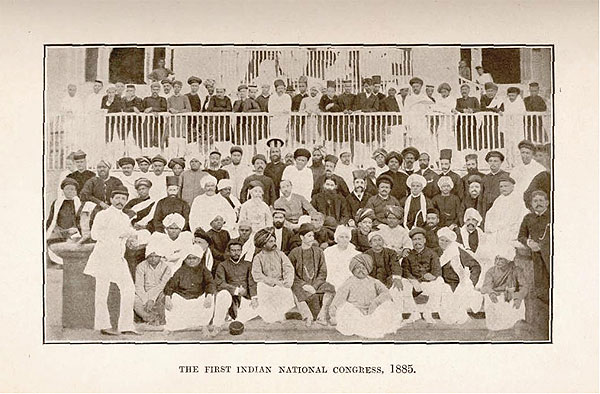
    The Indian National Congress was established on December 28, 1885 at the Gokuldas Tejpal Sanskrit College in Mumbai with 72 delegates responding to a call by retired Indian Civil Service officer Allan Octavian Hume of creating a platform for educated Indians to discuss and debate civil and political issues. In a letter to select alumni of Calcutta Presidency in 1883, Hume implored, “Every nation secures precisely as good a government as it merits. If you, the picked men, the most highly educated of the nation, cannot, scorning personal ease and selfish objects, make a resolute struggle to secure greater freedom for yourselves and your country, a more impartial administration, a larger share in the management of your own affairs, then we, your friends, are wrong and our adversaries right…and India truly neither desires nor deserves any better government than she enjoys.”


    The Congress was the ‘bridge’ between the ruler and the ruled. Its task was perfectly cut out in relaying the ruler’s orders and diktats in the required tone and language to the ruled while also carrying the requests and entreaties of the ruled up to the ruler. The elite members of society who made up the Congress were expected to coerce the ruler into becoming a bit more empathetic towards the subjects and have a softer approach to administration while looting the land.


    The plot took a twist with a man returning home from South Africa in 1915. The initial years were as per the norm with the points of inflection being the agitations in Champaran and Kheda. In 1920, Mohandas Gandhi took over the leadership of the Congress at it become more agitational in nature leading to the declaration of independence on 26th January 1930. The bridge had been drawn. It took numerous failed negotiations and betrayed assurances over the next twelve years to reach break point with ‘Quit India’. The Congress had firmly established itself as the only alternative to the Queen as ruler of India. A jilted and jealous Muslim League took away portions from the west and east but once the tricolour was raised atop Red Fort on 15th August 1947 the die was cast.


    The nature and structure of the rule remained more or less the same. The colour and language of the “my baap” had changed. And the fact that all that was now being done was for an independent India and ourselves. The nation had finally secured precisely as good a government as it merited, true to Hume’s words.


    The British ruled basically through agents and representatives who were given licences by the Queen / King to conduct business or trade in India on behalf of large British organisations. Independent individuals, mostly erstwhile officers of the East India Company, got multiple operating licences through bribery and nepotism and were called “managing agents”. Important names were Andrew Yule, Balmer & Lawrie, Burn & Currie and Martin & Co. who evolved over the years into not just managing various businesses through commissions but also into limited liability companies in areas like tea, real estate, engineering, paper, timber and manufacturing. At the core, the managing agents were as they were called…agents who protected the interests of the crown at any cost through managing all stakeholders using whatever means necessary.


    Though India got independent in 1947, their operating licences continued well into the 1960s. records show that in 1954-55 there were close to 3.944 managing agents who handled 5,055 joint stock companies. Once the licences expired, most of the agencies were either nationalised or conveniently handed over to ‘friends’ of the Congress. This was the beginning of the long chain of nepotism and ‘licence raj’ in the country.


    The new ruler became the de facto “managing agency” of an independent India. It operated just as one, with no enemies, no burning bridges and no ‘outcastes’ in the system. Everyone was welcome to the party, pun intended. This was a political movement that rallied a subjugated people around itself to demand freedom. In 1947 it was expected to govern a heterogenous conglomerate of 500+ kingdoms and 300 million people!


    The 1950s and 1960s were spent in a mix of utopia and resolve to build the nation. Some of the country’s most enduring institutions and ideas were born, built, and established. The largely impoverished but dreamy-eyed 300 million looked at the ‘Temples of Modern India’ with pride and aspiration. Some of the best brains in the world came to the world’s largest democracy to both teach and learn. Here was a nation crafted out of non-violence, a flagbearer of an ideal new world that every colony could take inspiration from.


    Cartoon on Indira Gandhi’s “Garibi Hatao” campaign, 1971

     

    The 1970s was the decade of rude realisation that the promises of 1947 were not being met. Nepotism, in-fighting and corruption had become the norm. Disillusionment had set in. And the “angry young man” was born…brooding, bruised and brash, out to challenge the establishment and question the status quo.


    The political organisation was not cut out for governance after all. Regional parties were anyway in power in a few places, but the continental plate shifted when the Congress was dethroned. The feet of clay were finally exposed, and the first cracks had appeared in its imposing superstructure.


    It has taken another 50 years for the Congress as an organisation to stare at the possibility of folding up even before it celebrates its 150th anniversary in 2035. Over this period the “brand” Congress has slowly but surely lost relevance in the India of today and tomorrow. Its current situation is not an outcome of the last seven years. The decline surely has accelerated since 2014 but the cracks just kept widening since 1975. Intermittent electoral victories in the centre and various states could not repair the cracks. The end is inevitable. The brand is in a lifecycle stage of “Fatigue” hurtling towards fatality.


    The 1950s were about Fascination.

    The 1960s were about Familiarity.

    The 1970s saw the onset of Frustration.

    The 2000s evolved into Fatigue.


    This is the lifecycle of a brand, as defined by me. Every brand has to go through this inevitable cycle. The successful ones stretch stage “B” as much as they can to ensure longevity by keeping their purpose and promise relevant and constantly refreshed. Stage “C” is the one where disruptive transformation is required to ensure the brand holds itself back from reaching Fatigue. This stage is where a Netflix switches from renting DVDs to creating OTT content. This is where Ford decides to go electric. This is where the brand purpose, promise and personality need to be recast, addressing a new consumer / recipient.


    The Congress did not change any of its brand parameters since the 1950s. At the stroke of the midnight hour, it had promised the new nation peace, progress, and prosperity. It had promised the 300 million to take them out of poverty. It had promised safety, security, and stability. It had promised opportunity based on merit and performance. While its demonstration of the promises has left a lot to be desired, there are some aspects of its purpose that has not evolved, as if we are still a just-independent nation, all at sea with the world around us. The aspects of its brand promise that it continues to talk about have lost relevance in the current context.


    Many aspects of the Congress’s promise have been usurped by other political entities. The BJP has taken aspects of national identity, progress, and world-recognition. The Trinamool has taken secularism and inclusiveness. The DMK is about regional identity and stability. The CPI-M is about socialism and collective development. The AAP and BJD are about transparent governance. What is equally important is that each of them has ably demonstrated bits of their promise in the states / regions they govern.


    The Congress continues to believe that its core voter is still the dreamy-eyed poverty-stricken villager. The villager continues to be poverty-stricken but does not believe in old-world dreams anymore. The aspirations have changed over the decades and there are new elements of religious identity, revival and divisions thrown in to divert focus from rising unemployment, rising cost of living and diminishing civic facilities. The Congress did not wake up to this changing narrative, born out of years of apathetic and corrupt governance.


    The average Indian is willing to support an inept government against a corrupt one, patient enough to put up with stumbles, blunders, and greater hardships than unending favouritism, nepotism and siphoning of public funds. Promises like safety, security and unity are not relevant anymore to this Indian for this India is not united but carved out into castes and regions out to secure their own livelihoods at the cost of others.


    To top it all, the insistence not to change the leadership is very Orwellian. The current leadership is obviously happy to see the sand totally slip out of its hand but not hand over power to others and call it a day. Possibly the ugly fact that an entire army of termites depend on one family for their existence push this oddity to eternity. the biggest internal disruption and upheaval would have come about with that one single move of abdication by the family. The Fatigue would have been arrested and yet another attempt at stretching Stage “D” in the lifecycle would have been elongated. Or maybe the leadership does actually want the end to come…fast and final.


    The Congress of 2021 can be equated to Nokia in 2011, completely irrelevant and outfoxed by competition only because it refused to recognise the change around it and evolve accordingly, instead resting on its laurels and misplaced confidence in its own capabilities and on the loyalty of its supporters.


    The British left in 1947.

    The last managing agency is preparing to leave now!


    Avik Chattopadhyay is a senior brand strategist and commentator. His column will now appear every other Tuesday. The next part in this series will appear on Tuesday, October 26 with a focus on Democracy as a Brand


  • Democracy as a Brand…


    By Avik Chattopadhyay


    Avik ChattopadhyayAs we enter into ‘Azadi ka Amrit Mahotsav’ to celebrate 75 years of our independence, we also enter the 75th year of our tryst with ‘democracy’. When the British got tired of looting their jewel in their crown and got shafted in the Second World War, we graciously took over an impoverished conglomerate of 550+ princely states and their 300 million people. While we talk a lot about the flag, emblem, and national anthem that we adopted, we also adopted democracy as the medium of governance of the fledgling union. The Constitution came a good 15-odd months later.


    Democracy was a new concept to an agglomeration of peoples of different cultures, languages and faiths who had experienced monarchies or aristocracies for more than 2300 years. Since the 16 Mahajanapadas during 600-400 BC that boasted of thriving republics like the Sakyas of Kapilavastu and the Lichchavis of Vaishali, this entire geographical subcontinent had never experienced any inch of land where the commoner could decide who would govern.


    Suddenly the traditionally servile ‘Indian’ was given the power to choose someone into power once we were finally on our own. Though elections were held under British rule to elect local/ regional governments, the subjugated Indian saw it as a strategic tool in the freedom struggle more against the British than a means of self-determination.


    After 2347 years, we suddenly became the ‘world’s largest democracy’! It has been just 75 years since our experimentation with this method. We continue to be the largest as the population has multiplied by more than four times since then. Has it been long enough to ensure we have a mature democracy that has its fundamentals deeply entrenched in our psyche? Or is it too early to pass any judgment on how well we have accepted and adopted it for a nation as diverse as ours?


    Democracy is a brand. A brand of governance. It has its core purpose, its promise, its values, and its personality. Wikipedia defines it as “a form of government in which the people have the authority to deliberate and decide legislation (“direct democracy”), or to choose governing officials to do so (“representative democracy”). Who is considered part of “the people” and how authority is shared among or delegated by the people has changed over time and at different rates in different countries, but over time more and more of a democratic country’s inhabitants have generally been included. Cornerstones of democracy include freedom of assembly and speech, inclusiveness and equality, membership, consent, voting, right to life and minority rights.”


    Typically, the constitution or people’s charter of a country describes the type of democracy it has chosen to live by. We decided to be a democracy and then the Constituent Assembly went about describing it in all its myriad aspects. The core purpose, promise and values of democracy does not change from nation to nation, or even through the ages. The manifestation in the form of its personality does surely change across cultures and time.


    The biggest aspect of democracy that can go through drastic changes is the way it delivers its promise to its primary stakeholder, the citizens. The delivery of democracy, like in any other brand, determines its health and sustainability. In this context I raise five issues on the delivery of Indian democracy that need healthy introspection and discussion to decide whether we are cut out for this system at all or was it a utopian imposition that must be overturned.


    Not just quantity, but quality.

    Just numbers cannot define the health of a governing system. It cannot be confined to the number of eligible voters, number of constituencies and number of legislators across state assemblies and the parliament. The legislature wants to keep it that way as that does not question the qualitative aspect.


    A report released in August 2021 by Association for Democratic Reforms shows that a total of 67 MPs and 296 MLAs have declared criminal cases against them! Voices have been raised on ‘cleaning’ the corridors of power but just like the jamming of the Women’s Representation Bill, such issues are stymied by both the current legislators and aspiring ones as then they are out of a job!


    We need electoral reforms in the way we define a “majority” too. Right now, it is not an absolute majority and need not be representative of the larger part of the country. A party strong in the North can come into power garnering 75% of the seats without cutting any ice in the south. There is a move to increase the number of constituencies based on population which openly goes against the national objective of population control. Any party forming the central government must get a minimum percentage of votes in every part of the country along with having an absolute majority that qualifies it as truly representative of all the nation.


    Not just voting but participating.

    Every five years, we celebrate the ‘dance of democracy’, as a nation or a state. And then we go back to the feudal system of operation that we are more comfortable with. The culture of “mai baap” persists for centuries. So, the ritual of casting a vote and chest-thumping as to how thriving a democracy we are is a convenient concoction of the legislature. Even Russia and China have elections, don’t they?


    Of the cornerstones of democracy, voting is just one. Freedom of assembly and speech, inclusiveness and equality, membership, consent, right to life and minority rights are the others that must be practised in every corner of the nation to qualify as a healthy democracy. The citizen stakeholders need to participate actively in each cornerstone to qualify as a healthy participative democracy.


    Not just studying but knowing.

    For the common man and woman to participate one needs to study the concept of democracy, our constitution, and the cornerstones. Learning “Civics” till secondary school is not enough.


    Every Indian has to know the ethos of our Constitution by studying it right through school and college, whatever be the individual stream. Unless each citizen is aware of the purpose, promise, values and operating principles of democracy, one will never realise the value of continuously protecting and periodically cleansing the governing system. There needs to be a level of constructive activism that does not turn away from the farmers’ protest while objecting to malls being closed.


    Not just rights but duties too.

    It is not only our right to protest but also our duty to protest.

    It is not only our right to be included but also out duty to include.

    It is not only our right to equality but also our duty to be equitable.

    It is not only our right to belong but also our duty to invite.

    It is not only our right to life but also our duty to preserve lives.


    Our years of servility have made us an accepting and docile race. Decades of keeping ourselves poor has made us numb to what rightfully belongs to us. Netaji had said, “Freedom is not given, it is taken.” Better knowledge of what we are entitled to by constitution will allow us to take them as they are never willingly given. There need to be citizen councils in every constituency that hold representatives accountable to their promises. It is a bit like a direct democratic system applying checks and balances on the representative democratic superstructure.


    Not just institutions but credible ones.

    There is a saying that democracy is an animal on four feet – the legislature, the judiciary, the executive, and the media. There have been times in independent India when all institutions have been controlled and compromised leading to a democratic system become autocratic. On occasions the transition has been drastic and in your face. On others, it has been subtle, protracted, and veiled.


    I remember L K Advani’s chastising the Indian media in 1975 saying: “You are asked only to bend but you crawled.” Today the voices of dissent are instantly drowned out by institutionalised trolls on all forms of media, but the fundamental remark holds true!


    When the chief of judiciary of a secular nation instructs the government to build a specific place of worship on disputed land instead of suggesting a hospital or place of education, you know it is time to demand better. When key media people deliberately dish out fake and divisive news knowing that thousands following them might get instigated into action, you know it is time to question better. When your chosen representatives fall back on their promise of a better life for you time and again and indulge in dismantling the cornerstones, you know it is time to choose better.


    That is when the near death of democracy is avoided by one more dance.

    But is that enough?


    Avik Chattopadhyay is a senior brand and strategy consultant based in Gurugram. He writes on MxMIndia mostly on alternate Thursdays, but sometimes on other days as well. His views here are personal


  • Avik Chattopadhyay: The Poverty of Indian sport!

    Avik ChattopadhyayBy Avik Chattopadhyay


    Well, the games are finally over, and we have done our best in the ‘arena’. The euphoria around the medal winners will remain till the time our “men in blue” ‘conquer England’!


    While we celebrate and savour our first ever gold in athletics and a total tally of seven medals, we lie in the 40s in ranking. The question remains as to why we end up winning so few medals in every edition of the Olympics. Before Tokyo, our best performance was in London when we got six medals. Since 1980, we have not won a team gold and the only previous individual gold was in 2008.


    It is not that we do not create world champions outside of cricket. We have quite a few of them in boxing, shooting and archery over the last decade. This has been despite the state of Indian sport and our collective deliberate apathy.


    Indian sport is poor. The poverty is not in the talent and the individual drive to excel. The poverty of Indian sport lies in the ecosystem built around it, composed of administrators, sponsors, policy makers, media, supporters, public and business enterprises. The commitment and support of the eco-system lets the sportsperson down, time and again. The hypocrisy, grandstanding and posturing gets exposed. And it got exposed once again in these Olympic games…


    • When we had debates on television channels on how to become a “sporting nation”! Experts professed how all children should be made to play a sport and only then will the parents appreciate this aspect of growing up as well produce a huge talent pool. Given the obesity rates in children in the US, GB, and Italy right now, they surely cannot be sporting nations!! Sport is treated there as a viable profession for the athlete and as serious business for some of the world’s biggest brands, from apparel to equipment and supplements.


    • When we admire pictures of the less than humble living conditions of many athletes and talk of their ‘struggles’ without being ashamed of keeping them in such a state in the first place!


    • When the broadcasting channel shifts focus on the sports minister cheering from a studio while your national team is marching past in the opening ceremony.


    • When Amitabh Bachchan, Bipin Rawat, Akshay Kumar, Sudha Murthy, Sajjan Jindal and Kiren Rijiju are brought in to cheer your contingent and give ‘victory punches’ while PT Usha, Abhinav Bindra, Rajyavardhan Rathore, Dhanraj Pillay, Karnam Malleshwari and Leander Paes are ignored!


    • When not a single state government adopted a sport inspired by the way Odisha has done with hockey, instead of merely congratulatory tweets and banners up in their respective cities.


    • When you share lists of “India’s narrow misses in 4thplace finishes” and feel that is enough to satiate us as a nation.


    • When the broadcasting partner starts promoting an upcoming cricket series on its channels telecasting the Olympics as if directing the nation to go into its “comfort zone”!


    • When we do not have a single world-class sporting brand all these years while other developing nations have created a few that are endorsed globally and proudly displayed by the national teams.


    • When the national channel with terrestrial reach is not allowed to share the feed by the broadcasting partner depriving more than 60 million television owning households who watch only DD. It could have actually been a “Barshim-Tamberi moment” for Indian broadcasting.


    • When there are clear best practices available from lesser privileged nations like Ethiopia and Nigeria on how to develop talent, but we wish to be bound by archaic methods of grassroots development.


    • When state governments announce rewards for an athlete after winning a medal but provide no incentives and infrastructure to him / her when preparing for the same!


    • When corporates look for returns on investment from sponsoring sports that need long gestation periods while lamenting why we do not win more medals than Cuba or Kenya does!


    • When names of sporting awards need to be changed as a political gimmick after a certain team wins in the Olympic year and not in the normal course of time!


    • When most sportspersons look forward to getting a secure job with a secure salary in a corporate / PSU / government as a career in sports has none.


    • When the broadcaster wastes time on stretched inane discussions and debates instead of covering as much live action as possible.


    • When our sporting federations are headed by politicians or political appointments for decades, damaging all chances of progress through nepotism and corruption.


    • When a state government announces crores as prize for a medal winner and will build a stadium for him in his village after the win but not before.


    • When a football league for children folds up for want of Rs.20 lakhs per annum when brands vie with each other to spend the same amount on 3-4 ad spots on IPL.


    • When media covers foreign football leagues more than raising the issue of building local ones.


    • When we hunt for foreign coaches for our athletes but have no Indian coaches doing the same for other nations.


    • When the country’s premier football league boasts of international players and coaches who are either spent forces or come from second / third division leagues.


    • When the country’s national sport was not officially accepted as one by the Ministry till the chief minister of Odisha had to write to the Prime Minister to officially declare it so in 2018!


    • When e-commerce brands give you 15% off using code ‘HOCKEY’ after the games but have no crowdfunding initiative for the team when they train.


    Avik Chattopadhyay is a senior brands strategy consultant based in Gurugram. He writes on MxMIndia on most alternate Thursdays but sometimes on other days as well. His views here are personal.