Tag: Avik Chattopadhyay

  • The Obsession To Be Premium


    By Avik Chattopadhyay

     

    The other day I was chatting up with a Maruti Suzuki Nexa dealer. Post the expected lament on lack of footfalls and the still elusive operating profit, we got into discussing the basic Nexa model – the purpose, the promise and the delivery. After a lot of soul-searching and head scratching, he finally brought it down to the wooden flooring, fancy furniture and focused lighting as the “premium” experience being offered to a customer vis-à-vis one who walked into a Maruti Suzuki Arena!


    Sounds preposterous? Totally believable!

    Let’s just spend a few more words on this Nexa vis-à-vis Arena case. The two channels of the same Maruti Suzuki brand offer separate products to customers, hence ensuring a minimum level of footfalls in both. I cannot buy an Ignis from an Arena outlet, hence go to a Nexa. Similarly, I cannot pick up a WagonR at a Nexa, hence go to an Arena. It is not that I have a similar product portfolio in both, yet I choose a Nexa over an Arena as the entire customer promise and experience is what I associate with and aspire for.


    There are various ways I can be premium in being a Nexa channel partner.

    In my product pricing. But the Nexa offers the Baleno that is in the same price band as the Swift.

    In my product positioning by addressing a different customer psychographic. But, then, the Ciaz was moved from Arena to Nexa to allow more revenues to the latter.

    In my overall experience. But the service and ownership experience, as per customer feedback and dealer inputs, are the same in Nexa and Arena.


    So, I am fundamentally undifferentiated from my less privileged channel cousin and totally confused in what I am supposed to be in the first place. Yet, I boast that I am “premium”. Not a very sustainable business model, is it?


    Maruti Suzuki’s urge to go premium is not an oddity. It is another demonstration of the common malaise many Indian brands have – the obsession to be premium!


    From aviation to automobiles, food to furniture, healthcare to homes, brands and businesses make proud statements in press releases and communication that they are a premium brand or aim to go premium.


    It is as if being entry-level or mass-market is a protozoan life rid of all respect and pride. It is as if being affordable is an affront to business logic and purpose.


    In the three decades I have spent working for a living, I have come across a handful of seniors and bosses who have also expressed this desire to ‘elevate’ the brand into a premium one. Basically, making the customer pay more money for the same product or solution. And how will that happen? Magical marketing! Spend on symbols of an elevated status like brand ambassadors, sponsorships and imagery to package the same product in a new avatar!


    Does this not work? It does, for some time and for some people. But it is never sustainable as the brand is desperately trying to live on borrowed clothes and makeup.


    Have I been successful in any such attempt? Not once. Have tried a few times but failed miserably. But in the process, have learnt five important lessons which I wish to share.


    Premium vis-à-vis Expensive

    These are two separate concepts. A Harley-Davidson is expensive. It is not premium. It is expensive because the Americans can just not get efficient enough. But in its home market no one buys it for its premium-ness but for its distinct imagery and culture code.


    Mass vis-à-vis Premium

    A Bic ballpen is mass. And people love it because it is so. But a special edition Bic commemorating the Black Lives Matter movement will certainly sell at a premium. Similarly, a Maruti Suzuki Swift is mass. But a 15th anniversary limited edition Swift Sport will be premium. Hence, mass and premium are not mutually exclusive concepts… in reality.


    Premium vis-à-vis VFM

    These are not conflicting at all. In fact, the better a brand is able to demonstrate value-for-money [VFM] to its target customer, the better the premium it will attract. And not extract. I once met Mr R M Dhariwal, the owner of the Manikchand Group, who told me that he bought a Maybach for his daughter on her birthday as believed for the amount of money he wanted to spend, the Maybach offered him best value for money!


    The intangible value of a product or experience, over and above the physical value is what allows a brand to command a premium. And not just demand it.


    Premium vis-à-vis Profit

    These two are not necessary and sufficient conditions to co-exist. There are mass-market brands that make profits that many luxury brands would give both arms for. A premium offering need not make higher profits than an entry-level one. The focussed definition and delivery of its promise is what makes a brand charge a premium.


    Response vis-à-vis Objective

    This is the biggest lesson for me. Being “premium” is a desired consumer response and not a business goal or objective. It is an outcome and not the process. It is the end and not the means. This clarity of brand management happens only when the brand stays true to its intended purpose and promise.


    We experience brands like Bata, Amul, McDonald’s and Chevrolet not because they are positioned as “premium” but because they are true to their brand DNA and carry no pretensions. As customers, we give them their due premiums when we wait for the pack of Amul Taaza milk to arrive at the store, love to see the sparkle in the eyes of our children on getting them a Happy Meal, squeal the hell out of the tyres of a gleaming Corvette or splash about in muddy puddles in the Naughty Boy shoes. Each of these experiences is what truly makes a brand “premium”!


  • Avik Chattopadhyay: Why we need ‘museums’ for brands to tell their stories

    By Avik Chattopadhyay


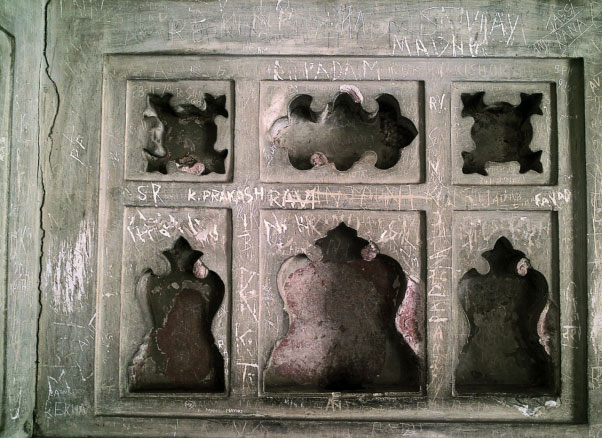
    We Indians simply love our history. And our legacy. So much so, that we do not mind twisting it, rewriting it, misappropriating it, defacing it, and just plain ignoring it. We love it so very much that we do not respect it, preserve it, accept it or cherish it. Visit any old Indian monument and you get first-hand demonstration of the same through people painstakingly carving the names of their loved ones on 17th century monuments, visibly stirred into leaving their marks on the walls of time.


    Defacement of the Agra Fort – picture sourced from the internet.


    The same malaise runs deep in most Indian brands. Somehow, they are very poor in preserving their history, painstakingly chronicling it and sharing it with their internal and external stakeholders. Go into the “About us” sub-links of most corporate websites and you will see a superficial attempt at talking about their ‘glorious and successful past’. They think that creating a ‘history timechart’ is a brilliant attempt at preserving and living their legacy. Sadly, this applies to some of the biggest and boldest of Indian brands.


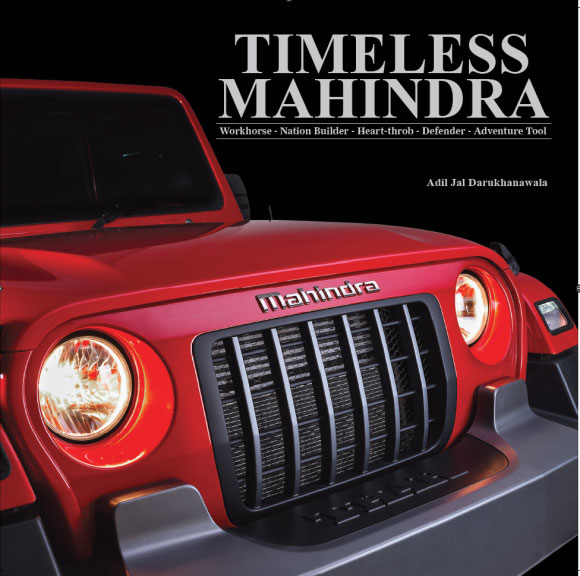
    Hence, when one comes up with a piece of work that genuinely attempts at living and loving their legacy, it is such a fresh whiff of old perfume! On October 2, Mahindra released a book called “Timeless Mahindra”, a chronicle of the Mahindra Jeep in India right from assembling the CJ3 Willys Jeep in 1954 to launching the new Thar in 2020! Crafted by the renowned automobile journalist and historian Adil Jal Darukhanawala, it obviously took months and months of unearthing the past, meeting hundreds of people, jogging memories of many and diligently putting it all together in words and pictures. This is an example of genuinely cherishing a brand whose progress is so closely entwined with that of the country. While the book costs beyond the reach of most of us, I am hopeful that Mahindra will gradually release a digitised version for all enthusiasts to access and enjoy. Eventually, Mahindra should go ahead and build a “Timeless Mahindra” virtual roadshow, converting the book into a digital 3D spectacle.


    Automobile brands carry some of the most interesting legacies. The stories of engineers, designers, business leaders along with the physical products make a heady combination. India has had its fair share of the same. Remember that cars were imported into our country from the 1890s, soon after the modern motor car was developed by Karl Benz! Yet, not one of the Indian automobile brands either has a proper chronicle of its history nor has a museum that proudly displays all it has done over the years!


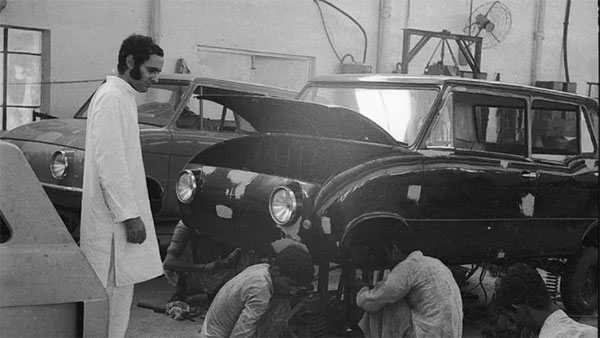
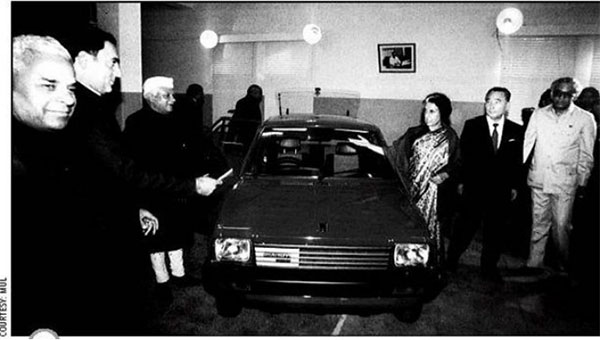
    In fact, some seem quite embarrassed by their history. Maruti Suzuki is an example. For some reason, this shining star of India wishes to hide any traces back to Sanjay Gandhi though there is enough information on the same all over. There is no mention of its history pre-1983 on the official website. There is no such mention anywhere in the Gurugram plant. In fact, all things to do with that phase of the brand’s life have been systematically removed. All photographs of the man were removed. The Tool Room of the Gurugram plant which was his erstwhile office and still had furniture from his days, was demolished in 2002 to make way for a new parking lot. The last few units of the first cars built were also ‘ordered’ to be destroyed before the 20th anniversary of the brand in 2003. In fact, the company considers its birth in 1983 and not 1971 when Maruti Motors Limited was incorporated!


    Sanjay Gandhi with the first batch of ‘Marutis’…sometime in 1974-75.


    December 14, 1983 – Indira Gandhi with the first Maruti 800; notice the photo of Sanjay Gandhi on the wall!


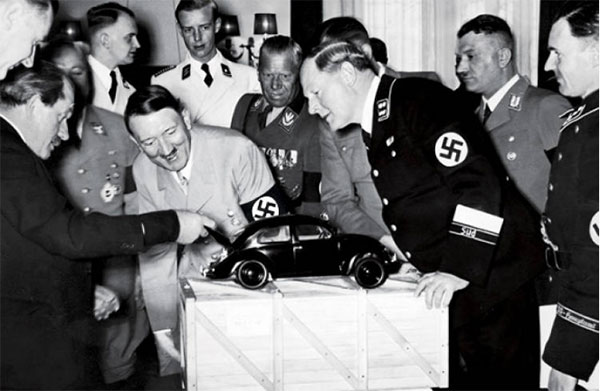
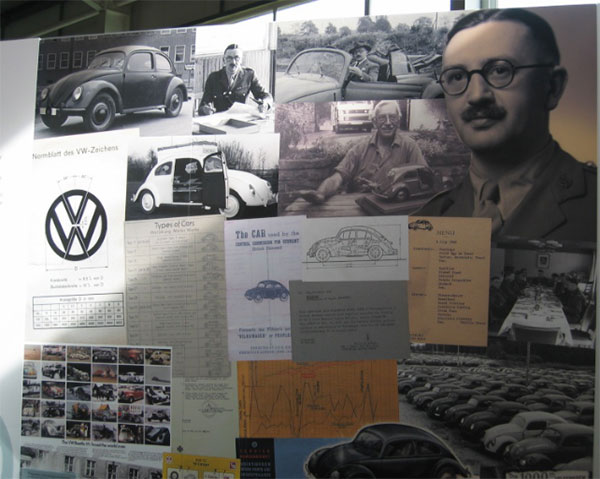
    This is in sharp contrast with Volkswagen, the brand that inspired the conception of Maruti as the people’s car for India. There is no attempt to hide the fact that Adolf Hitler had conceived the German people’s car project and instructed Ferdinand Porsche to work on it. At the AutoMuseum in Wolfsburg there are mentions of the same. Also, there is a fitting tribute to Major Ivan Hirst, the British Army officer who is credited with ‘preserving’ the Volkswagen plant during the Second World War and resuming activities as soon as the war ended. At the Zeithaus in the Autostadt in Wolfsburg there was a statue of Major Hirst when I first visited the place in 2003! Running away from history is as disrespectful as distorting it.


    Volkswagen has two museums in Wolfsburg, one stand-alone and the other as part of the Autostadt complex. Maruti does not even have one!


    Ferdinand Porsche explaining his plans to Hitler – source Fast Company


    Tribute to Major Ivan Hirst


    Tata Motors does not have one. Neither does Mahindra. Nor Bajaj Auto. Or for that matter Ashok Leyland or Hero MotoCorp!


    As an industry India does not have an automobile museum! We could have built one that houses vehicles, memorabilia, documents and events right from the late 1890s / early 1900s. It could have been such a testimony to the role the brands and the industry has played in the nation’s development and progress. It could have been such an inspiration for generations, taking pride in the brands that have done us proud for decades. It is time the entire industry got together to build one, physically as well as virtually.


    And the same applies to many other industries and houses of Indian brands. I would love to visit a “Tata” museum…one that traces the entire history right from the opium trade in 1858-59 to the present day and every milestone that is crossed in the days to come. Similarly, for Parle. And Kirloskar. And Birla. And Infosys. And MRF. Every brand has a duty to share its entire story with its stakeholders, right from employees to consumers.


    In fact, museum is a wrong word to use for such an initiative. This is actually a brand experience zone, both in physical and virtual forms. Such zones can never be static in what they display and share as what happened just yesterday could be important enough to preserve and show tomorrow.


  • Froth, flavour and Feluda!


    By Avik Chattopadhyay


    Over the last one week three specific developments in the world of brands have encouraged me to ponder over them, share my viewpoint and throw up some questions to all brand practitioners amongst you.


    Each development is unique in its business space, timing and impact. Yet, each is a situation that many of us do face in the world of managing and nurturing brands.


    #01 – Froth

    After a pretty high decibel launch of Vodafone Idea’s new brand identity “Vi” campaign a fortnight back, the company announced an advertising and promotion blitz of Rs.800 crores till March 2021 to establish the new brand and more importantly, arrest an eroding user-base. Half the amount would be on advertising and sponsorships like on IPL. The rest on signage, outdoor visibility, and promotions.


    For a brand that has to raise Rs.25,000 crores to pay off the AGR dues and more, why go into a rebranding at all? I find no logic working here. This is not a new brand, nor is India a new market and neither are there any new solution offers. Damn, it is not even a new owner. Merely changing one’s name to raise money to pay dues cannot be convincing enough even as a business school case study. It is merely new wrapping paper and ribbons, not even deserving a wine bottle. So why spend all this money? And it all going to be borne by the subscribers through a price increase being contemplated right now. By the way, Jio announced a post-paid package through IPL that is undercutting competition and giving them sleepless nights.


     For a brand practitioner, why would one ever recommend this window dressing? When one is challenged with protecting higher ARPU vis-à-vis a depleting subscriber base, is an expensive rebranding exercise the best option? Has the ‘brand’ ceased to be the promise of an experience delivered consistently over time? Has it been downgraded to mere theatrics, at the cost of almost disrespecting your existing user who is quite aware of the situation you are currently in?  


    #02 – Flavour

    Nikola was till last week a poster boy in the world of electric mobility. Nikola proposes to make electric light trucks for the US market. Not really new, as it was founded in 2015 by one Trevor Milton after his previous venture dHybrid lost a lawsuit and was gobbled up. From then till now, all that Nikola has done is present lot of prototypes at various fancy events and raised money on fancy projections.


    Milton is a terrific social media manager, always remaining in the limelight through his quirky, maverick image, building millions of followers who salivate on every word he says. As the valuation of Nikola went through the roof [based only on announcements and no demonstration over 5 years, mind you] General Motors stepped in with a huge investment, not wanting to miss out on this amazing bubble being blown.


    Early September, just two days after the GM investment, one of the investors [could be a competitor plant, for all you know] blew the ‘whistle’ claiming that Nikola actually had no technology to back up all the claims and had actually staged product performance. The stock price fell by 10%.


    The Securities and Exchange Commission stepped in to investigate. And the Department of Justice joined in. Milton resigned. The stock fell another 35%. The poster just folded up on the September 21.


    What really does it take to “build” a brand? What are the fundamentals that ensure sustainability and stakeholder return in the long term? Can social media management and event coordination build valuations? Is the science behind creating reality show celebrities and valuable organisations the same? Is valuation the true parameter of brand success or actual demonstration? Will the Indian “unicorns” of today stand steady and deliver on their promises tomorrow and the day after, or will they one day fold up like the Nikola poster?   


    #03 – Feluda

    As a piece of positive news in the Covid-19 gloom, the Drugs Controller General of India approved an accurate low-cost test to detect the virus using a paper strip in 30 minutes for commercial production. Jointly developed by CSIR and Tata Group, the test has been called “Feluda”! The two CSIR scientists Debojyoti Chakraborty and Souvik Maiti named it after the popular fictional detective created by Satyajit Ray.


    Feluda is the nickname of Prodosh Chandra Mitter, who was first introduced to the Bengali in 1965. Like his “guru” Sherlock Holmes, he too has an equivalent of a Watson in the form of his younger cousin brother Topesh, lovingly called ‘Topshe’. Over the next two decades a total of 39 ‘adventures’ were written by Ray, some being made into movies for theatre and television, serials and also radio stories. Feluda evolved from being meant for children into becoming a Bengali icon for all ages, with some of the best actors playing roles in the movies and television serials. Doordarshan ran a serial on Feluda in Hindi, the character played by Rajit Kapoor.


    Ray portrayed Feluda as the Bengali he wanted all Bengalis to be like. Sharp, witty, intuitive, rational, respectful, challenging, inquisitive, adventurous, helpful and always detecting the truth from the mess around us.


    Like Feluda, there are another half a dozen detectives in Bengali literature that deserve to be globally amplified and followed. Similarly, there would be a handful each in every language in this country. Yet they remain largely regional. Why can a Feluda novel not be part of the mainstream school curriculum? It will definitely teach the younger generation to be what Ray envisaged them to be like.


    India has been very poor with her non-corporate brands. She has millions of them, like little jewels in a treasure hunt that one needs to dig out and savour. As Indians, it is our duty to bring them out into the open to be experienced, by all within the country and also across the world. What will it take to do so, in a sustainable manner? Who should be the custodians of this unending repository? Do we not need a central body that takes this on as the core responsibility in making each valuable Indian non-corporate brand come alive? Definite food for seriously long thought…

  • Congress and Barca: The Reluctance to accept Redundance


    By Avik Chattopadhyay


    Two events over the last fortnight reinforce a primeval malady of the human race – the inability to recognise becoming redundant in one’s own lifetime. The first was the implosion within the Indian National Congress, exemplified by the letter written by the 23 ‘rebels’. The second was the implosion within Football Club Barcelona, exemplified by their 2-8 thrashing in the hands of Bayern Munich in the UEFA Champions League.


    In both cases, the letter and the defeat were results of the malaise and not the reason. The reason lay deep down within the operation of the organisations, both of which are big brands in their own right. They have rich legacies built on solid contribution over a century for both the Congress and Barca. They boast of big names, big following, global recognition and their own places in the respective histories of politics and sport. Yet both have refused to acknowledge and manage the redundancy staring them in the eyes for quite some time.


    In both cases, individuals somewhere became much bigger than the organisation. In fact, they defined the DNA and operating style, the brand being a natural extension of the personality and values of the individual. This is equally true of the corporate world where certain “stars” lead their businesses into the stratosphere by their own vision, drive, opinion and energy. This works very well as long as the core competence of the individual remains head and shoulders above competition and he / she also undergoes periodic refreshment and reinvention to maintain that edge.


    When does the malady shows its first signs?

    [1] When the organisation’s goals and purpose are completely fused with that of the individual.

    [2] When the individual believes there is no further room for improvement.

    [3] When the individual is surrounded by people and processes that build the narrative that there is no alternative.


    All the three happened in case of both the Congress and Barca.


    The Gandhi family and the Congress became fused into one entity. Just like Messi with Barca.


    The fused Congress entity believed their thinking and strategizing needed no fresh thought just like Barca thought there was no better way to play the game.


    And when the sycophants and ‘dependants’ around the Gandhi family kept reinforcing a false narrative of no alternative leader for fear of their own purging. The same happened with the 30+ club of Pique, Busquets, Vidal and Suarez taking refuge behind Messi for fear of being dropped.


    The Congress thought that winning state elections was a sign they were doing things right. Barca thought that reaching the Champions League semis with relative ease meant they were playing with flair. In both cases, the results of today were the outcome of what they did right yesterday. That is no guarantee that the opposition will not decode your strategies and style and break the weakest links tomorrow. In the case of the Congress it was the “younger” leadership that was getting frustrated with the plexiglass ceiling. With Barca, it was their defence led by ageing stars of yesterday who could be outflanked and outrun.


    The ability to accept that one’s ‘time is up’ is a rare quality that evades even some of the biggest achievers in history. The refusal to let go of position or power is what leads to disruptions and upheavals. And that finally leads to people being pushed out, overthrown or simply purged. It is one of the fundamental truths of human history.


    The same holds true for any brand, in whichever stage of its existence.


    You will either be a challenger or a leader. Followers typically do not last for long for their futures are tied with those of others and they have decided not to live their own lives. You may either challenge the leader or convention or behaviour. Or you may lead due to a differentiated proposition, consistent delivery of your promise or constant reinvention. In either case there will be occasions when the organisation as well as the individual needs to gracefully accept an oncoming phase of redundancy and act accordingly. As an individual one may work towards becoming redundant, handing over the reins to the next generation of leadership and performers. As an organisation, whether business, sporting club or political party, one has to gracefully ease the redundant people / processes / practices / products out of sight and give them an honourable send-off.


    Each of us carry a “best before” and an “expiry” date. The problem lies in not accepting this fact!

    I shall close with the words from a Pink Floyd song called ‘Time’:

    “You run and you run to catch up with the sun, but its sinking,

    And racing around to come up behind you again.

    The sun is the same, in a relative way, but you’re older,

    Shorter of breath, one day closer to death…”


  • Copycat, copycat, what have you seen?


    By Avik Chattopadhyay


    Four incidents over the last 15 days have ‘inspired’ me to write this piece.


    First, a much-circulated article written by a former Indian corporate head honcho about a bridge over the Choluteca river in Honduras.


    Second, the launch of the new Mahindra Thar.


    Third, an advertising agency called Hakuhodo being taken to court by an event agency called Gravity Entertainment.


    Fourth, a court ruling in Mannheim going against Mercedes-Benz on use of mobile technology from Nokia in its new cars.


    In each of the above instances, people and organisations were divinely “inspired” to create from ideas that came from elsewhere. They were either copied from somewhere else or simply refused to acknowledge and compensate the creator / ideator.


    Plagiarism is one socio-creative evil that most of us accept but refuse to act upon. Therefore, the bold act of taking an agency to court for creative cut-copy-paste is surely a welcome one, especially as the Hakuhodo-Gravity relationship would be like a Goliath-David one.


    As a society, we seem to be pretty immune to rampant plagiarism. It’s built into our psyche, starting with the education system wherein we wrote projects happily lifting paragraphs from here and there, as long as the key points were covered for that was all our teachers looked for. As research students, we evolved into hunting out obscure journals and papers to lift from. There are rumours of a venerable ex-President of India who was charged with claiming a junior’s thesis as his own, with the Vice Chancellor of the university adequately hushing up matters! The typical reaction to plagiarism is to either hush up matters or simply look away.


    Nobody denies the musical genius of R D Burman, but when he does not even acknowledge his source of “inspiration” for a composition, it is disrespectful of the world of creativity and your own craft. As an example, most viewers would have never heard of Emerson Lake & Palmer but there was no harm giving them the credit for the background musical track for the Hindi film ‘Parinda’. The attitude is, “nobody knows, so nobody cares”. And as nobody objects, the malaise grows bigger and more brazen. Just as Steven Spielberg should have credited Satyajit Ray for the inspiration for ‘ET’!


    Mahindra is a hugely respected brand, yet I fail to understand why it has to copy the Jeep time and time again. It already got a rap on its knuckles with the Roxor in the US market, yet again the new Thar looks so similar to the Jeep Wrangler!


    In my own professional life, I have come across innumerable instances where either the client wanted to own and lift ideas from advertising ‘pitch’ presentations, or an agency brazenly lifted concepts off the famous ‘Black Book’ and presented them as its own.


    There are three key reasons behind this absolute apathy towards plagiarism.


    1. Ideas are supposed to come free– while our cultural heritage takes pride in “gyan”, yet as a corporate client we expect domain knowledge, expertise and ideas to come free in a project. How many times have we asked external agencies for “good ideas” without paying them? Or how many times have we asked them to submit ‘detailed project proposals’? We almost imply that giving ideas for free is critical to getting a project. It is as if the brain is an appendix. Yet in the US or Europe we readily cough up fees by the hour as the law of the land demands so!


    2. Whoever executes, owns– the end is more important than the means in most instances. We gloss over the critical aspect of where and how the idea germinated. The final output knows no source and thus no need to give credit. It is just a recent phenomenon that some film makers have given credit to the original story, especially if it is sourced from overseas. Seeing William Shakespeare wink during the credits of Gulzar’s “Angoor” is still a gold standard to me in a fitting tribute in mainstream communication.


    3. The legal system is lax– this is the loophole most make merry of. The laws are there in place, but judicial slackness combined by diffidence of the affected to file cases have created no deterrence to plagiarism. And the affected might even be a brand as large as Zoom which does not wish to take Jio to the court for drawing ample inspiration for their meeting app, for fear of meddling with a local biggie. It will take a couple of landmark judgments against both blatant and veiled plagiarism to open the can of worms.


    The perpetrator and perpetrated are both at fault for allowing such a culture for so long and not breaking this chain. In today’s digital age and with social media, it is easy to both trace instances or plagiarism as well as amplify them, as happened in the case of the article on the bridge in Honduras. The original writer himself said, “Excuse me…”.


    It does not cost to acknowledge and announce the creative source candidly. The announcer’s creative prowess does not diminish but in fact get strengthened as you will then build a unique fraternity of creative partners who would want to work with you and create bigger and better.


    As the philosopher John Stuart Mill had said, “Originality is the one thing which unoriginal minds cannot feel the use of.”


    Avik Chattopadhyay is a senior brand and marketing strategist. He writes for MxMIndia every other Thursday. His views here are personal. He can be reached via Twitter at @Byapok


  • Avik Chattopadhyay: Am I “nationalistic” enough?

    By Avik Chattopadhyay


    We are moving close to another Independence Day. The tricolour will be unfurled from the Red Fort, the Prime Minister shall make some big announcements including about some vaccine and the National Anthem will be played. We shall all stand, as dutiful citizens.


    I too shall stand for the 52 seconds more as a ritual than possibly out of actual emotion. For otherwise it is an open display of disrespect to the nation. Forget the fact that most of us do not understand the meaning of the words we simply lip-sync, much like the way we muttered “Jack and Jill went up the hill…” in nursery school.


    I am in a curious state of mind.

    The five Rafales landing in Ambala does not enthuse me.

    The Statue of Unity did not rouse me.

    The failure of the Vikram lander did not really sadden me.

    The Surgical Strike did not inflate my chest.

    The Ram Mandir “shilanyaas” yesterday did not move me.


    And I thought to myself, am I nationalistic enough?

    Why do I not revel in what most around me do?

    Why do I not lament over what most around me do?


    But then, the migrant crisis shamed me.

    The beef-lynchings made me cringe.

    The woes of demonetisation infuriated me.

    The lot of the farmers bothers me.

    The anti-CAA agitation invigorated me.


    And I still think to myself, am I not nationalistic enough?

    Do I align with issues most around me do not?

    Do I identify myself with those that most around me shun?


    I reached out to a piece of work that I usually find solace in in such times.


    Tagore’s “Nationalism”.


    After extensive tours of Japan and the US, delivering lectures and engaging in deliberations with all types of people for over two years, he finally put his thoughts together in 1918 on the subject of nationalism in an India that would gain independence some time.


    The work is more than 100 years old yet so eternally relevant especially in today’s India. I will quote three portions from the 33-page essay to help encapsulate the conviction of the man who also wrote what we ended up choosing as our national anthem!


    “I am not against one nation in particular, but against the general idea of all nations. What is the Nation? It is the aspect of a whole people as an organised power. This organisation incessantly keeps up the insistence of the population on becoming strong and efficient. But this strenuous effort after strength and efficiency drains man’s energy from his higher nature where he is self-sacrificing and creative.” states Tagore.


    Four terms are important here, in their manifestations in society.


    The first is “organised power”. It implies a unilateral and unidimensional setup where every individual has specifically assigned roles and responsibilities from a higher authority, irrespective of personal likes and inclinations.


    The second is “strong”. Strength is a very relative measure and has no finish line. It is an aphrodisiac that keeps the organisation intoxicated in its endless pursuit.


    The third is “efficient”. This is about an organisation only of the fittest, purest and compliant. Differences of opinion, faith and abilities are gradually ‘weeded’ out over time. Inclusiveness is not a typical trait here.


    The fourth is “higher nature.” Is this not the same as the much-glorified management concept of ‘greater purpose’ especially in these times of uncertainty and anxiety? It is about creating a creative, collaborative and sustainable society, wherein all stakeholders co-exist for mutual benefit and even individual pursuit is for collective evolution.


    Tagore goes on to say, “Political freedom does not give us freedom when our mind is not free. An automobile does not create freedom of movement, because it is a mere machine. When I myself am free I can use the automobile for the purpose of my freedom.

    We must never forget in the present day that those people who have got their political freedom are not necessarily free, they are merely powerful. The passions which are unbridled in them are creating huge organisations of slavery in the disguise of freedom.”


    This, to me, is the summit of the essay, where the concept of political freedom being equated with independence is questioned and debunked. What we gained in 1947 was the power to determine our own future. If the same institutions of servitude and slavery are carried on from the previous regime to the new, the entire struggle ends up being pointless. If the poor and oppressed then are the same now, the freedom is reserved for only a few privileged people.


    The analogy of the automobile is so telling. It questions the very purpose of creating unending accoutrements to primarily help us finally ending up commanding our lives.


    Society needs to understand and recognise this fundamental conceptual difference between being free and being independent. Only then can the organisation and the institutions within be challenged and even dismantled.


    Towards the end, he comments, “When our nationalists talk about ideals they forget that the basis of nationalism is wanting. The very people who are upholding these ideals are themselves the most conservative in their social practice.”


    Absolutely and it is in your face! I take the Ram Janambhoomi “movement” itself as a demonstration of this wanting and constrictive conservatism. If the leaders were so bothered about the concept of ‘Ram Rajya’ as Gandhi had espoused, after ‘winning back’ the land from the ‘intruders’ they should have built the nation’s biggest hospital or set up a massive garden open to one and all. That would have been the true interpretation of the concept and a tribute to the “lord prince” of Ayodhya. But as traditional nationalists, their solution was confined to a mere place of worship.


    Nationalism is a menace! We are going through a phase where it is held up as a parameter for being judged as a true “Indian”. Soon, we shall be celebrating the 75th year of our independence. Hoping that at least a serious debate is started on what we really want to be judged against…conformism or the ability to challenge.


    To quote from Tagore once more, into that heaven of freedom, my father, let my country awake!


    Avik Chattopadhyay is a senior marketing and strategy consultant. He writes twice a month for MxMIndia, mostly every other Thursday. His views here are personal


  • Is ‘Stellantis’ a good name for PSA-Fiat Chrysler merged entity?


    By Avik Chattopadhyay


    Earlier this week, it was announced that the merged entity of PSA Group and Fiat Chrysler Automobiles will be called ‘Stellantis’.


    Quite an interesting move, given that the merged mega corporation owns some power brands like Peugeot, Fiat, Alfa Romeo, Citroen, Lancia, DS, Dodge, Jeep and Chrysler.


    The official press release says that the name is rooted in the Latin word ‘stello’ meaning ‘to brighten with stars’. “The name’s Latin origins pay tribute to the rich history of its founding companies while the evocation of astronomy captures the true spirit of optimism, energy and renewal driving this industry-changing merger,” says the joint statement.


    Why would the merged entity not imaginatively call itself ‘PCFC Automobiles’ or ‘Tri-Nation Mobility’? Why would it not take advantage of its unique French, Italian and American roots and call itself accordingly? We have had Daimler Chrysler, Arcelor Mittal, LVMH and Exxon Mobil, to name just four from many mega-corporations formed out of mergers/ acquisitions.


    Creating a new brandname and identity while forming a mega corporation is a strategic call to be taken by the merging entities. I can think of six clear reasons in favour of this action. The specific action could be due to any of the following or a combination of them:


    Protect strong individual brands – when the merging entities have very powerful brands that need to maintain their individual positions in the market, it is prudent to go for an umbrella branding that transcends strong product / solution brands. Inditex is a great example owning brands like Zara, Pull & Bear and Massimo Dutti.


    Partnership of equals – when each merging entity is on the same footing, then it is best to go for a new name as that does not give out any subliminal messages, internally and to the world on who exactly has the upper hand. It was Exxon Mobil and not the other way round. And “we are following the alphabetical order” is not a good excuse as we also had Daimler Chrysler clearly showing who was the boss. Arcelor Mittal was a clever strategic call as Arcelor was the more ‘credible’ name to ride on for Mittal to establish his empire.


    Merge provenance and cultures – Stellantis will see three cultures coming together to create a unique ecosystem requiring a fresh name to the new organisation. Entities which till yesterday overtly flaunted their provenance will now have to consciously move above and beyond this, without damaging the provenance of each product brand. Citroen will be quirky French while Dodge will be American muscle. Stellantis may be a combination of existing cultures or build a completely new one, born out of the new business purpose.


    Need to expand and acquire – mega organisation brands are created when conglomerates are planned through acquisitions and expansions. General Motors is the classic example, being formed in 1908 as a holding company for William Durant’s latest acquisitions of Buick and Oldsmobile, to be rapidly followed by Cadillac, Elmore, Pontiac and Reliance. The group name sounded grand and officious enough to take on Ford. Another example is United Spirits which was founded in 2006 announcing the merger of McDowell, Herbertsons, Shaw Wallace and few other companies. While these two examples are of mega corporations in the same industry space, a multi-industry example is United Technologies [now Raytheon Technologies] that once spread across various industries through brands like Otis, Sikorsky, Carrier and Chubb Security amongst others.


    Deliver a greater purpose – mega-corporations go into rebranding or creating a fresh brand when there is a significant shift or a new definition of the greater purpose. A good example to me is the creation of Alphabet in 2015 when Google realised its greater purpose lay in improving lives through empowerment, maintaining transparency and autonomy of various businesses in the conglomerate. Google’s recent announcement of investing $10 billion in India in the specific areas of health, education and agriculture is a manifestation of this greater purpose.


    Give a positive spin – or the inverse of it which is to remove any negative opinion and associations with one entity when the merger is in process. A good example here is when Philip Morris rebranded themselves as Altria when acquiring Kraft Foods, now no longer part of the mega-corporation. The conscious attempt to move into foods and non-tobacco businesses led to the creation of a new name with no association with the core business.


    Personally, I love the decision of the PSA Group and Fiat Chrysler Automobiles to call the merged new mega corporation Stellantis. It is a bold decision in the right direction. There is no obvious association with the automobile and neither any deliberate resting on the countries and cultures they come from. It sure sounds from the ‘western’ world with some Latin / Greek connection. Other than that, it is fresh and intriguing enough for people to ask them what it really means. That gives the brand the opportunity to narrate their story and share the new greater purpose. Cheers to that!


  • To China, With Hate


    By Avik Chattopadhyay


    China is a baaaaaaaad word nowadays.


    Dare anyone say even a neutral word about the country on the streets and that person shall be neutered. Those “chinkies” are evil. And all that needs to happen to them is be banned. A couple of days back I attended an international webinar on “dealing with the dragon” with powerful people from the EU and US deliberating on how to create a Trans-Atlantic team to counter and control China…over Zoom!


    Geopolitics and socio-economics are strange bedfellows. They end up quarrelling much more than making love to each other. Throw in the aspect of a country being a “brand” and the entire relationship gets further muddled. And, if you add individual brands from that country into this pot-boiler in the form of people and products, then it is as complex as a Manmohan Desai movie plot.


    A country as a brand is like a public transport map of a metropolis. There are arterial routes, stops, diversions, multiple modes, peripheral connectors and lots of lights and signages. A country as a brand is made up of its history, its culture, its celebrities, its political system, its political leadership, its thought leadership, its products, its view of the world, its view of your country and of course, its football team! In the timeline of the country, certain aspects come to the fore, either by design or by chance. And the world, at different stages of her larger timeline, looks at that country through different lenses.


    My father’s lasting memory of China points to the silk traders in the 1940s in the streets of Calcutta [then] saying “Tek tek o notek notek…ek baar to chi” which actually meant “Take, take, or no take, no take… once at least see”. He remembers the Chinese as industrious and practical people. But China is not to be relied upon as a country as “Chou stabbed Nehru in the back after Panchsheel”! For my mother, China is all about 1962 when she donated her gold earrings to the cause as a student. But the Chinese are all about exquisite handcrafted shoes, terrific cuisine, China Town and an extremely proud people when she interacted with them in business delegations.


    My first exposure to China was my grandfather’s Hero fountain pen… dark maroon, gold cap, with a golden arrow at the writing tip. It was far superior in design and finish to the Indian options of a Wilson or Ratnam, and far more affordable than a Parker. As a student, I was elated when my parents got me a Wing Sung with that incredible wraparound golden nib. We never wanted a Chelpark or Chairman or Bittoo as they were much inferior. As a professional, in a meeting with a Chinese delegation, I noticed most of them having a Gold Leaf, Hero or White Feather in their pockets while we proudly displayed our Parkers, Sheaffers and Pilots. On asking one slightly friendly counterpart as to why they did counterfeits of Mont Blancs and Parker Duofolds, he said: “Those are for you people. We have our own.”


    China for me is a myriad of images, concepts and contradictions.

    It is an oppressive authoritarian expansionist state. Yet it is also Hiuen Tsang and Fa Hien.

    It is an open aggressor conspiring with Pakistan, Nepal and Sri Lanka to destabilise India. Yet it is also amazing advancements in technology and open consumerism.

    It is the terrible Cultural Revolution and Tiananmen Square. Yet it is also Yao Ming, Li Ning and Lin Dan.

    It is a subversive surveillance system that plans to digitally control not only its own citizens but all users of its software and digital products. Yet, it is also the enterprising little mom-and-pop food outlet in every corner of the world, shouting aloud with a smile as you enter, “Wayyycom…wha you have today ah!”


    When Germany finally capitulated in 1945, did the world throw out Bach, Beethoven, Kant and Marx along with Hitler, Himmler and Goering? Did the world ban Mercedes-Benz cars and Grundig radios? If the football teams were banned, West Germany would have never won the 1954 World Cup under Fritz Walter!


    When you talk of Italy, do you remember Mussolini, the Mafia or Maserati?

    When you talk of Japan, do you remember Tojo, tofu or Toyota?


    Similarly, when we shall talk of China, shall we talk of the Communist Party, Chairman Mao or Chinese Cuisine? It depends very much on what China wants us to remember them by. It is a result of what aspect of the country is more enduring… its negatives or its positives. It is an outcome of what legacy the Chinese people want to leave their future generations and the world at large.


    We could very well be sipping some amazing jasmine tea in an open café on Tiananmen Square listening to an openly political poetry recital. Or we could be blindfolded and put in a car to be taken to a hospital for an unscheduled and unplanned emergency. I leave it to the Chinese to decide.


    Avik Chattopadhyay is a senior marketing and strategy consultant. He writes a fortnightly column for MxMIndia. His views here are personal

  • A Tale of our Two Cities


    By Avik Chattopadhyay


    Years back, I came across a report by the Economist Intelligence Unit on the future competitiveness of cities in the year 2025. I remember I was quite pleased at seeing seven Indian cities feature in the list of 120 but mighty upset at seeing none in the Top 50. Mumbai and Delhi ranked #51 and #56 respectively while Bengaluru, Pune, Hyderabad, Chennai and Kolkata were hovering around the 100 mark. What nerve, I had thought then, to have found no Indian city good enough for being in the Top 50.


    If the EIU were to undertake the same exercise today, what would the rankings be, given how each city in the world has tackled the pandemic and handled the concurrent economic meltdown? Would New York still be #1? Would Mumbai and Delhi drop further? Would Bengaluru and Pune move up? Would Kolkata be off the list altogether?


    Places, just like people and products are brands. For, they have a history or legacy, a unique culture, a set of values, a promise to their inhabitants and a certain personality that makes each unique. Unique enough to elicit a certain kind of response when mentioned. Conjure up distinct images of that place, whether good or bad, driven from the inhabitants and their behaviour, culture, food, architecture, ethnicity, industry, opportunity and consistency.


    In the tackling of the current pandemic in India, the two cities of Mumbai and Delhi stand out as symptomatic of the current state of affairs. Their own brand images have taken a battering that will take some of the most expert of minds and hands to repair.


    Mumbai is money and entertainment. Delhi is power and size.

    The ‘Bhais’ are in Mumbai and the ‘Baaps’ are in Delhi.

    The Mumbaikars and Dilliwalas take pride in “Mumbai Meri Jaan” and “Dilwaalon ki Dilli”.

    Mumbai always ‘bounces back’ and Delhi ‘never gives up’.

    The former is the City of Dreams and the latter is the Capital City.

    Both have the lenses of national and global media aimed at them.

    Both cities embody “India” as a brand, both internally and before the world.

    Therefore, how both cities have been ‘behaving’ during this crisis leaves an indelible imprint in the minds of millions – the citizens, the diaspora and the others.


    Both cities displayed behaviour that is truly disturbing and have failed in the specific areas their personalities have been built upon.


    Both have failed in the fundamental tangible areas of planning, resource building, implementation and enforcement. Both have equally failed in the intangible aspects of empathy, inclusiveness and social security.


    The Bhais of Mumbai could not rally resources to roll out sanitisation, sterilisation and distancing at every ‘shakha’ level. They did not offer their famed ‘protection’ to the millions of migrant workers who believed in the city of dreams.


    Apart from making a few cursory videos the famed Bollywood did not come together united and dive into the action for their fans that make them. The billionaires in their tony homes could have pooled in resources to create living facilities in the stadia, in hotels, on the beaches and in closed educational institutions which could have housed thousands that make up the backbone of the city, her migrant workers.


    The underworld that so famously protects could have adopted specific slum clusters and given their all for the inhabitants. Suddenly, everyone seemed to maintain social distancing to the hilt…right to the wallet and clout too. Political factions used this as yet another opportunity to hoist the ‘son of the soil’ flag.


    The “jaan” went out of Mumbai’s life when these hapless and overanxious people came out onto the streets wanting to go ‘home’, not to spread the virus but to save themselves from it. This city was not their home anymore. It had let them down when it mattered. In fact, abandoned them when they were most vulnerable. Just like the new-born child crying in the trash bin that we have seen in so many Bollywood films. Imagine if he grows up with a grudge against this “sapnon ka shehr” [city of dreams]. It is not even “apnon ka shehr” [our city]!


    Delhi, to the Mumbaikar, has always been a brash, selfish and uncultured lot of people. While I beg to differ on the last count, I do tend to agree on the first two. Thankfully, being the capital, the state and central government machinery takes care of the physical manifestation of the city. While the Dilliwala can be brand and selfish, s/he cares a damn for this ‘son of the soil’ thingy as most of them have anyway migrated from some part of the country [and Pakistan] and settled here.


    Delhi is full of “Baaps” and one typically cites one of them at all junctures of life, from a traffic fine to an ED raid. However, all the Baaps let Delhi down, of all colours, castes and hues. The famed machinery was initially sputtering along on first gear and now attempts a reverse. The city is all about tangibles but each parameter has been found wanting due to lack of cohesion, state-centre politics and refusing to get the domain experts drive the vehicle of control and cure.


    The glaring lack of infrastructure coupled with inept planners have been exposed. And then in a moment of utter panic, the “dil” of Delhi also went bust when the daily wage and marginal workers were asked to go ‘home’. The Baaps could have come out united for the cause, demonstrating a rare moment of maturity in a state of emergency. Their cadres could have worked together, their resources could have been pooled for greater impact. None of that has happened. The machinery just raised its hands in despair, driving more fear by painting pictures of impending disaster hoping manna would fall from somewhere. And the Centre must be pleased for the State had to finally request for immenent help. One “Baap” more powerful than the other.


    Today, Delhi is not just a ‘hotbed’ of the pandemic, it is a ‘powder keg’ waiting to explode with no clear projections of where the capital city is headed.


    Both cities are so symbolic of where the nation stands today.

    One city tells you we are getting yet more parochial and insular as regions, states and cities. The unique fabric that is India, is being taken apart, yarn by yarn.

    The other city is a demonstration of abject infrastructure and implementation, with corruption reaching the deepest levels of functioning and work ethos and political one-upmanship taking priority over national calamity.

    Neither is a city where any self-respecting Indian, across the economic strata, would like to live in.

    For it can disown, discard and divide you at a moment when you are most vulnerable.

    Not the best flag-bearers of the India brand anyway.


    Avik Chattopadhyay is a senior marketing and business strategist. He writes most other Thursdays on MxMIndia. His views here are personal


  • Avik Chattopadhyay on ‘The Expendables’

    By Avik Chattopadhyay


    February 2033 has been particularly cold in north India. Delegates coming in for a global conference on blockchains and bitcoins never expected hailstorms and biting cold to greet them. The heavy fog has messed up all flight schedules. And I had been waiting for five-and-a-half hours now to take my guest to the hotel. Some Mr Sorensen from Denmark. This was my third trip for the day and was yet to have one proper meal. Anyway, kept holding the placard at Gate 3, hoping to catch his attention. Ah, there he was. He waved back at me seeing his name.


    “Hello sir, welcome to Delhi.” “Thank you very much! How far is the car?” “You wait at Pillar No 21 and I shall bring it there sir. Let me take your luggage.” “No, let the luggage be with me. You bring the car. I shall be at pillar 21.” “Okay sir, will be back soon.”


    In some time, we were off towards the hotel. The fog was making matters a bit tough as visibility was down to near zero and the cluster of flights landing almost together meant too many cars on the national highway even at quarter to midnight. Switching on the hazard lights and the fog lamps, we crawled along.


    “First time to Delhi, sir?” “Yes. Have been to Chennai before, almost 10 years back. Is it always so cold in Delhi?” “No Sir, this year has been particularly bad. The rain, hailstorms and fog add to the bother.” “You speak very good English. What is your name?” “Thank you, sir. My name is Rajeshwar. You may call me just Rajesh.” “Okay Rajesh, how is your English so good? Does the hotel train all its drivers so well?” “The hotel does give us training, but I am actually a graduate in English language. First division from Ranchi University. Jharkhand state sir, in eastern part of India.” “Wow! You are a graduate and drive a hotel car!? Is this common in India?” “Many graduates drive hotel cars, taxis and buses in India. Being just a graduate does not ensure a better job. But this is still respectable and pays well, so many of us don’t mind driving hotel cars.”


    We were going via Moti Bagh and I decided to go via Africa Avenue as the traffic would be lighter. A bit further down was a police checkpoint. Traffic had slowed down. “Where to? Show licence. Name of passenger?” “Shangri-La. Mr. Sorensen. For conference.” Returning my licence the constable looked at the guest. “Hi, Barry Sorensen. You want to see my passport?” “No need. Please go. Go slow till the ‘Expend Statue’ as there has been an accident. After that the road is clear.” “Okay, thank you.”


    “What is this ‘Expend Statue’?” “Not Expend sir, it is a statue called The Expendables. These guys do not even know the name properly. Many call it the ‘Bachcha Statue’ or ‘Kid Statue’.” “The Expendables! What a name! What is it all about?” “You will see sir…just ahead…” We slowly approached the traffic circle where this statue was. In the fog what looked like a little mound slowly emerged as the form of a child held up by many hands. “This looks interesting. What is this statue all about? What does this mean?” “You want to see it from close sir? Then I need to park the car on the side and you can then walk down and see it.” “Sounds like a plan. Let’s do it Rajesh.”


    We walked up to The Expendables. Barry stood transfixed before it. The lights were tearing through the dense fog creating strange patterns of forms and shadows. I stood next to Barry. The noises from the altercations from the accident seemed far far away. “Do you know about this Rajesh?” “I do sir.” “I see some metal plates with a lot of written matter but can’t make anything out. Tell me please…” “Yes sir. This statue is called The Expendables. Made by a sculptor called Maheshwar Oraon, from my state of Jharkhand. The child is his little daughter Nimmi who died of starvation in her village during the Coronavirus attack. Remember that?” “Of course, I do. Oh man, that was quite a year. Turned the world upside down. We lost many lives in Denmark too, my country. So, why did she die of starvation? And what are these hands holding her up?”


    “Maheshwar was a migrant worker. You know migrant worker? People who leave their homes and travel thousands of miles for jobs. Maheshwar was one, away from his village, in Mumbai. During the virus attack, he lost his job and was stuck in Mumbai. No work and so no salary. And the fear of getting the virus. For five weeks they were under lockdown in Mumbai. What could they do? it was better to return home than live in fear and without any money. Many started walking to their homes, wherever they were. It was terrible sir. Almost 50 million migrant workers started their journeys back home, with basic belongings, without food, water and transport.” “50 million! Incredible! Never read about the scale of this exodus. This must be the biggest ever in human history, no?”


    “It was, sir. You know, a Belgian professor called Jean Dreze used to teach in Ranchi University that time. He had said in a television programme that it was the biggest reverse migration in human history. Anyway, Maheshwar too had started his journey back. Nimmi was his sixth and youngest child. Just 6 years old. His wife had no money or food for almost two weeks. Everybody in the village was surviving on roots and leaves. The little girl finally gave up sir. Just the day before her father reached home. In time to light her pyre.”


    “This is shocking! Did the government not do anything? You have social security here? Food rations?” “No social security for most marginal tribes and people sir. And many of us do not have ration cards. Maheshwar too did not have one. After that virus attack many of us have now been given ration cards. The state government had actually asked the Centre for ration supplies for people without cards but no help came. Then we read on social media that in just three months during the virus attack, our country allowed 65 lakh tonnes of food grains to rot away but none of it was distributed amongst the poor! Can you imagine sir, your own government that you have voted to look after your needs does not give you food when you are starving?”


    “Unbelievable! This is just so sad. What are the hands symbolising?” “There are five hands sir, each hand for a section of society that allowed Nimmi to die. One hand is for the government. Second hand is for the judiciary, for they were mute spectators when this national calamity happened. You know sir, close to 3,500 migrant workers and their family members died in this time period due to lack of food and water. Third hand is for the media for only talking of cities, urban people and rich industrialists without highlighting our plight. Fourth is for the social scientists and trade unions who kept quiet and did not take to the streets to force the government into some action. Remember sir how entire US was protesting against the killing of a black man at the same time?” “Yes, I do. George Floyd. They finally had to pass those bills and make that amendment to the constitution. Yes, I do.”


    “Here nothing of that sort sir.” “And the fifth hand?” “That is us sir. The migrant workers and marginal sections of our society who kept quiet and went through all the torture without raising one banner or placard. We too let Nimmi down.”


    We had gotten back into the car and started off for the hotel after all the accident mess had been cleared up. “So when did this statue come up? Just after the Coronavirus pandemic?” “No sir, this came up recently…in 2031. After the new government came into power. The previous one lasted for 10 more years before we finally uprooted them. This new party of Liberal Socialists have enforced certain labour laws that were created but never implemented. They connected with Maheshwar Oraon and requested him to build this in memory of Nimmi and all the downtrodden.” “So, finally some form of justice Rajesh?” “Just a reminder sir, to each one of us that never again shall we allow this.”


    As I drew the car into the porch and came to a halt Barry shook my hand and said, “Thank you so very much, Rajesh. I shall never forget this. Have taken some photos. Shall go back and tell my family about Nimmi. You seem to know so much…” “I should sir, after all she was my little sister!”


    Avik Chattopadhyay is a senior brand strategist and consultant. He writes for MxMIndia mostly every other Thursday. His views here are personal

  • Anyone for Tagore’s Legacy?


    By Avik Chattopadhyay


    We celebrated Rabindranath Tagore’s birthday on the 25th of Baisakh [May 8] with the usual reverence and fervour. We prefer to address him as either “Gurudev” or “Robi Thakur”. In this lockdown our fervour was more feverish with social media being the primary channel of showing our homage to the old man and demonstrating how well we follow him.


    Okay, who are this “we”? We are Bengalis. On both sides of the border. And across the world. We are a 260 million strong tribe speaking the seventh largest language on earth. We take pride in our language and culture and fiercely protect it with a sense of self-bequeathed racial superiority. Rabindranath, along with Rosogolla and Ray, are Bengal’s best export items. Sadly, Revolution does not make that list.


    I have read a bit of Tagore through the years…in English. I cannot read Bengali very well and cannot write it, things I admit with a sense of loss but not guilt. I have been told a million times that to understand Tagore one must read him in Bengali. Otherwise the essence is lost. That means I need to read Tolstoy in Russian, Ibsen in Swedish and Camus in French. That means I need to know close to 50 odd languages to appreciate 50% of world literature!


    One of my favourite works of Tagore is a novel called “Home and the World” [Ghare Baire, in Bengali]. There he questions the core concepts of home and world. He questions whether one can clearly differentiate and distinguish between the two in the context of human evolution. He asks us whether staying closeted within one’s home and protecting it by tall walls is the crucible of civilization, or we need to open all our doors and windows and allow the wafts and winds from across the world embrace us and help us evolve. He questions, through his protagonist Nikhilesh, whether imposing Swadeshi at the cost of the livelihoods of the poor is true nationalism. The home, open and welcoming, is part of a larger world. And the world is made up of countless such homes.


    Yet, why do we Bengalis bind Tagore into shackles of tradition, ritual and the ‘right way’ in order to keep him and his works “pure”? Why could Tagore not have been the truly global philosopher given the span of his works and the spread of his thought? One must remember that Tagore was not just a poet. He built a university, an institution of agri-sciences, an entire township and worked on socio-religious harmony apart from painting, designing, writing novels, plays, dance-dramas and treatises on philosophy. I strongly believe that his book “Nationalism” should be an integral part of our high school curriculum.


    For years we have been tutored that there is only the ‘right’ way of singing his songs accompanied by only the pre-determined set of musical instruments! We have been told that there is only one way of presenting his dance dramas and plays. For there is only one interpretation “officially” approved by a handful of people who have taken upon themselves the task of ‘preserving’ the legacy of Tagore. After his demise in 1941, Viswa Bharati, the very institution he created, set about rules and regulations on anything and everything about him and his works. Those that did not comply were literally treated as outsiders and ‘impure’! the old man had carefully built a home with lots of doors and windows to allow everyone in. The self-appointed purists went about closing them and building high walls all around.


    And that, unfortunately, was the start of the decline of Tagore’s legacy and took away his rightful place as a global philosopher. They bound him and gagged him in their own ways, obviously to ensure their own livelihoods and impose their status. They had a licence on all of his works. Fair enough, but that should have stayed up to credits and acknowledgements. They extended it also to the applications, depictions and renditions. In their mindless obsession with ‘purity’ they sacrificed the very traits and values of the old man, of going out and exploring new cultures, thoughts, genres and lifestyles.


    We never encouraged the world to sing his songs in their different languages and genres.

    We never allowed the world to adapt his plays and dramas to their cultures and share with millions.

    We did not envision that Gitanjali, in various languages, could be the typical gift that an Indian carries to the rest of the world.


    Most of India knows “Ravinder Nath” Tagore as the person who wrote our national anthem. We do not even know that it is the first of a five-stanza poem called “Bharat Bhagya Vidhaata” set to music by a young pianist called Margaret Chambers! About the rest of his contribution, the less said the better.


    We have made Tagore a symbol of Bengali elitist culture. Only the aficionados will ever understand him. He is not for the commonplace. One needs to read him in Bengali to grasp the nuances of his brilliant mind. How utter tragic! We, his own people, have reduced him to a black-and-white photograph on the wall that we possibly garland once a year.


    Under us, Tagore himself would have felt most breathless and might as well have been banned from the household!


  • Can Marketers encourage Responsible Consumption?


    By Avik Chattopadhyay


    A friend of mine shared an incident in the midst of this lockdown. As the person who irons the clothes of people her locality is out of work right now, each house has decided to continue paying her what they typically did every week. On her second week’s round, my friend asked her, “Do you need some more money? Rice?” “No didi, we have enough!”


    “Have enough!”

    Now, how many times have we heard these words in the positive sense? How many times have we just passed by a store telling ourselves that we have enough shirts, tops, suits, jeans, shoes and belts? How many times have we made our kids realise that the weekly trip to a fast food joint is not really lifesaving? How many times have we just told ourselves that we have enough?


    A meme doing the rounds these days carries a statement – “It’s funny how the world economy is about to collapse just because people are buying only what they really need.” Hope all of us sharing and forwarding this meme realise its implications once the lockdown is gradually lifted. Quite a few of my friends have been busy making “lists” of things to buy the moment ‘freedom’ is announced. They range from stocking up on medicines to single malts! They are all foreseeing another lockdown soon and therefore do not want to be caught napping, literally. Its quite a scary thought, is it not? The buying tsunami that would happen! Consumables, brown goods, white goods, winter wear, beer, cigarettes, frozen food and what not. We will surely have forgotten that meme!


    Hoarding is primarily a human trait.

    The rest of the animal kingdom does not believe in it unless it is for hibernation or winter.

    Us social animals always want to have more than what we immediately need. For we have ‘wants’ and ‘desires’. Stuff that the marketers salivate about. And survive on.


    So, as the world wakes up to a new “normal” as everyone keeps talking about, will the marketers wake up too? Or will it be business as usual? Will the new normal be a fresh fundamental of consuming responsibly?


    Responsible Consumption.”

    It’s when the one who can afford to consume more consciously decides to curb purchasing beyond what is ‘needed’. It is to gradually control the wants and the desires of physical ownership and consumption.


    How about waking up to a new India where marketers are actually encouraging responsible consumption? They are driving the much-needed consciousness through their communication, promotions and incentives. They have redefined their business not merely on numbers but on usage, lifecycle management and a slightly higher price point too, in some cases. Imagine…


    Maruti Suzuki gives a loyalty bonus only if you retain your vehicle for at least 4 years. And waives off servicing charges on any True Value purchase for 24 months, to encourage reuse of vehicles.


    Raymond’s gives you a cashback once you have used the same blazer or suit or jacket for five years. They also have a tie-up with Cult.fit to help you stay in shape.


    Apple decides not to launch any new device for the next 12 months asking their customers to maximise the use of what they already have. And they will sell a new device to an Apple customer only if the current one has been used for at least 3 years.


    MakeMyTrip gives additional bonus points for not actually taking a holiday trip this financial year. Also, huge MMT Black rewards for holiday trips made every second year outside of the usual tourist spots.


    Coca-Cola decides to reduce production of aerated beverages by 30% and promote more water and fruit pulp-based drinks. Also, it decides not to advertise any aerated beverage on mass media or social media.


    SBI chips in with their own token contributions to the ones you make to a list of social causes. Also, your loyalty points add up more if you make lesser trips to the ATM.


    Samsung waives off 3 EMIs of all loan takers on their white goods if they promise to use them for 12 months more than planned, subject to a minimum of 48 months.


    Bajaj starts a rental programme across their entire network where the Dominar and Chetak are available on a “pay per-use” basis. One need not own or borrow a Bajaj to enjoy it. Just needs to officially rent one from a dealership.


    McDonald’s does away with their ‘combo’ meals and encourages people to eat right and light, exactly as they want. They will have no incentives for bundling items. The Happy Meal however will stay for the kids.


    Tata finally decides what exactly to do with the Nano – relaunch it as a new-India smart mobility choice, in an electric avatar, with an AI-based algorithm that keeps crediting points into the customer’s account based on the times at least three people travel at a time.


    Finally, the Government of India decides that on the next emergency, it shall not ask for any contribution to the PM National Relief Fund or create something like PM-CARES as it will redeploy existing resources from unnecessary and low-priority expenditure rather than emotionally burden the citizen’s wallet.


    The challenge of instilling responsible consumption has to be taken up by the market leaders rather than the challengers. Leadership has to be seen to consciously shed its ‘greed’ for greater good.


    Am I day-dreaming? Between the dystopia of today and the utopia I paint, society shall definitely move to a situation better than yesterday. And there will surely be a few marketers with their hearts in the right place who will take the first steps. As Lennon had remarked, I may not be the only dreamer…