
Tag: advertising

  • Enough backers for payback series?


    By Johnson Napier


    The India-England cricket series that kicks off from November 15, 2012 is being billed as a revenge or payback series by most scribes who follow the sport closely. Be it the media, analysts, critics or even players/commentators, virtually all are going gaga about how the current series would be the one to watch out for as India will be fighting to prove its mettle as being the best in the business. The fact that the men in blue were thrashed badly by the Englishmen the last time they played each other makes the cause even more compelling. But is the prevailing sentiment as positive as is being made out to be, or will it be a tough ask for the channel as it begins its quest to draw in more audiences? And, more importantly, what is the response that can be solicited from the advertisers who of late are opting to stay aloof from their association with the sport?


    To begin with, the good news is that the tournament begins at a time when most of India is in the mood for celebration what with the festival season already underway. So while partying, visiting relatives and relaxing would be top of mind for most it would also mean being able to sit at home and watch Sachin Tendulkar or Virendra Sehwag get India off to a roaring start. And that’s what is leading everybody to believe that the Series will at least kick off on a high note.

     

    Ayaz Memon

    Anticipating a huge response, senior journalist, sportswriter and now commentator Ayaz Memon is hopeful that the current series will be a success. As Hindi commentator for the current series, Mr Memon sounded positive: “I feel the pressure is more on India as they have to prove a point on the home turf. The fact is that India hasn’t lost a home series since 2004, and also the record since the last 12 months hasn’t been good so the pressure is squarely on the Indian team. Also the team is not in peak form as can be inferred from their recent performances across other tournaments. So one can expect the Indian team to put up a compelling fight, to say the least.”


    Backing up his claim, Mr Memon said that the channel has been doing a good job promoting the series. “I will be doing commentary for Star in Hindi and I can tell you that they have done a good job in building up the tournament and promotion-led activities. Even on the print platform the exposure has been pretty good. But we will have to wait and see how it pans out over the next few weeks. But I am sure that the viewership will be higher than the previous Test matches. The fact that you have Sachin Tendulkar playing in the series along with Yuvraj, Harbhajan and also Kevin Pietersen from England etc, I think it will be a marquee series.”


    Balakrishna

    Backing Mr Memon’s optimism is PM Balakrishna, COO, Allied Media, who said, “From a cricket and sentiment point of view, I feel people are looking forward to the series. It is being touted as the Grudge Series going by the promotional activities that are being carried out by the broadcaster. The audience really wants to see India thrash the English. So based on the hype, I expect to see more crowds at the stadium and also more ratings for the broadcaster.”


    But while the initial sentiment seems bright it is definitely not easy predicting results before the start of the tournament. The prediction becomes even more difficult when the series begins with a Test match and not ODIs or T20 that can guarantee some decent TVRs. When asked about the possible ratings that can be expected, Mr Balakrishna said, “Test matches have never been about ratings like ODIs or T20. But maybe because of the fact that this is a long holiday week, one can expect high ratings at least from the initial match itself. While it would be difficult to hazard a guess, I would be happy to go with an average TVR of 2-3.”

     

    Kartik Sharma

    Kartik Sharma, Managing Partner, Maxus India was more forthright, saying, “Any cricket tournament involving India is always unpredictable but exciting. As Indians, we obviously want our country to win but a sport like cricket is always difficult to predict. If you ask me, the sentiments are purely driven by the results of the first few matches. And going by our ability to digest defeat, we Indians don’t really fare well in that department. By that I mean that if we lose a match or two, we tend to divert our attention to other sports or television properties. But then again, this being a festival/holiday season I expect at least the first few matches to have a decent viewership as people will be at home and thus would be able to watch the matches. By nature, Test matches anyway do not draw in more audiences compared to what the T20 or ODI matches do. So I am expecting an average TVR of 2+ for Test matches and an average TVR of 4+ for ODIs.”

     

    Mahesh Ranka

    Presenting another factor that could guarantee ratings or dismiss them, Mahesh Ranka, CEO, Indus Sports asserted that it may even depend on the opponent playing against India: “If it is Australia or even England, there could be some decent ratings expected, as these teams are ranked higher compared to what a Bangladesh or Zimbabwe series would draw. The thing about England is that we lost to them badly when we went there so hopefully, we can look forward to avenging that result through the current series. And if India happens to win the first match, you could expect more audiences (in the range of 20-30 percent more on the base figure) who will come in for the second match, and so on.”


    But in the overall analysis, Mr Ranka is of the opinion that the current series will not have anything great to offer in terms of viewership, at least as far as the Test matches go. “The ratings that Test matches have thrown up in the recent past kind of puts everything under the scanner. Though people (particularly media) tend to hype any tournament, Test matches have never really managed to draw in the audience (viewership). That’s because people have their own mindset behind watching any match and advertisers will always have to move along taking into account the risk of losing out on viewership.”


    On the interest shown by advertisers, Mr Ranka said, “From an advertiser’s perspective, one has to always look at why cricket is typically watched: it is brought for reach. There are two things to that. Firstly it is the festival season where advertisers have monies to spend and whether it is cricket or no, they will eventually spend at this time of the year. The rates that could be expected for Test matches in the current series would be in the range of Rs 50,000 to 1 lakh for ten seconds.”


    Taking a diplomatic stand Mr Sharma said, “The advertiser sentiment depends on the packages that are being offered by the broadcaster and there are various deals in store. But I wouldn’t be able to comment if the rates are more or less compared to the previous tournaments.”


    Presenting a bullish outlook, Mr Balakrishna said that from the advertiser’s standpoint, the sentiment seems pretty positive. “Against the backdrop of digitization, one genre that is the least affected always is cricket, as the sport is not always about being CPRP-led but also about hype and other such factors. So I do see a positive resonance to the whole series from an advertiser standpoint. Also, I am sure that the channel would have factored in the tough economic scenario and therefore would have come up with a competitive package for the advertisers, making it a win-win for both of them.”


    So whether it will be a winner or a dampener, what the India-England Series is managing to do is turn the spotlight back to cricket. Which is a good move considering that the recently held Champions League tourney didn’t go down too well with audiences. The icing on the cake would be if India manages to whitewash the team from England. TVCs have been saying that India “Angrezon ki band bajaayega” – that is, will thrash the English. Music to our ears or hitting the wrong notes? The game will tell.

     

  • Bipin Pandit’s Khumaar show in Feb ’13

    Bipin Pandit

    By A Correspondent


    Khumaar, a musical event organized in his personal capacity by Bipin Pandit, Chief Operating Officer of The Advertising Club, will be held in the first week of February 2013.


    Billed as a quality show for corporates, Khumaar is backed by a team of 18 pprofessionals who meticulously select and present songs and music that aim to stay as close to the original as possible. So far the shows that have been held have attracted well-known names such as Suresh Wadkar and Roopkumar Rathod, and have been well received by audiences which have seen participation from the advertising, media and marketing fraternity.


    The thought of starting Khumaar came to Mr Pandit following his career over 20 years as a professional Hindi compere, combined with his command over Urdu and skill in mimicry. Khumaar presents old Hindi musical hits from great films of yesteryear, with ghazals, Sufi songs and a qawwali interspersed for variety. A selected few new songs are also presented.


    Khumaar also serves a social purpose by supporting the activities of an NGO, Light of Life Trust, and the CPAA (Cancer Patients Aid Association). The Light of Life Trust does a variety of good work that includes reinstating dropout girls to school, providing help to people with terminal illnesses, and free medical attention.


    At February’s Khumaar, the first half will be themed around Romance, and will salute three romantic superstars – Dev Anand, Shammi Kapoor and Rajesh Khanna, as also the legendary Yash Chopra. The show will also pay homage to actor Joy Mukherjee with some great Rafi numbers. The show will be webcast live on www.bipinpandit.com.


  • Jaldi 5 with Dr A L Sharada: More ads must say: Yes, she can

    Population First has been at the forefront of the initiative on the way the girl child has been projected in the media. Dr A L Sharada, Director, Population First, spoke to MxMIndia on the girl child and the media and how we can prevent the celebration of the International Day of the Girl Child from being mere tokenism.

    01.  It’s good to see that the first ever International Day of the Girl Child is being celebrated. How do we prevent it from being mere tokenism?


    I welcome the UN, as a global body declaring October11, as the International Day of the Girl Child. This gives us an opportunity to take stock of the work that we have done so far, look further into what needs to be done and how we could take the issue at hand, forward. However the fear that it may turn out to be yet another gesture of tokenism is a valid one. The only way we can stop it from becoming yet another international day celebrated as a formality every year, is through concerted efforts to work on some of the major issues regarding the girl child.


    There are many issues concerning girls such as child marriages, low enrolment in schools and neglect of their health and nutrition needs. We need to advocate and lobby for more focused policies and programmes to improve the status of the girl child. We need to use the opportunity provided by the International Day of the Girl Child, every year to reflect upon achievements, fine tune our policies and redesign our programme, if required.


    Do you see that Population First’s efforts have had an impact on the media?


    I see lot of positivity and openness from the media towards these issues and a willingness to approach them differently. In the current media scenario, many of these issues are being addressed but more need attention. We, at Population First believe that we have to start a dialogue with all stakeholders, media being a primary stakeholder. We, as a nation have internalised, and have deeply ingrained patriarchal values to an extent that unless someone points it out, at times we are unaware of a possible patriarchal tone in our public communications. We need to initiate dialogues with all groups of society, so that together we can build a more gender-sensitive society.


    02, In your experience interacting with marketers and advertising agency professionals, do you think they are sincere in their attempts to appreciate the responsibility towards the girl child in a society like ours?


    Our experience with the advertising professionals has been very positive. We found them to be open-minded, willing to look at our standpoints and revise their current approach. From the time we began interacting with professionals in the advertising industry in 2008 up to today, we find a much greater presence of girls in advertising and many advertisements that are now projecting positive and non-stereotypical images of girls.

    03.  Do you think self-regulation bodies like ASCI, Advertising Club and AAAI should also take it upon themselves to promote the cause?


    Yes, definitely. It is important that activists working on gender issues and the regulatory bodies of media and advertising work together to ensure that the media does not project demeaning and negative images of girls. It is also imperative that  media does not consciously or otherwise, support or promote negative social attitudes and practices such as eve-teasing, commodification, objectification of women and violence.

    04.  What are your views on gender biases in today’s advertising?


    In 2008, during our analysis of advertisements showing girl children, we found that girls had a lesser presence and were often presented in a stereotypical fashion, for example mostly endorsing products that have been promoted by their mothers too. It was also observed that an ideal family is always shown as mother-father with one daughter and one son, or two sons. Rarely did we find ads showing two daughters. While a lot has changed in the last few years, in terms of projection of girls in advertisements, it is still rare to find an advertisement where two daughters are shown in a family setting. This, I believe, promotes the perception that a son is a must in the family. In a context where the country’s sex ratio is declining, this is a very disturbing trend.


    Television serials, television and print media content also further aggravate this image of women. What are your views here?


    Yes, it is true that the portrayal of women in print and electronic media is regressive and voyeuristic in flavour and we have to work on changing this. This is why we have instituted Laadli Media Awards for Gender Sensitivity. We have received 1500 entries this year and the quality of the content is improving. There is a lot of potential for change. The most pertinent example here is that of the popular show, Satyamev Jayate, which has suddenly got numerous issues into our drawing rooms. It shows the effect of one strong programme with a potent combination of Aamir Khan, an industry giant like Reliance and a media tool like Star TV. This shows that there is potential to bring social change. New media and its various options are also democratizing the way news now reaches out and has gained momentum with youth across the country as tools for creating public opinion. It is an exciting time to be, in terms of working with media on social issues

    05.  One view of marketers is that they need to sell to consumers, given the prevailing behavioural patterns, and that they are not in a position to correct these attitudes. How do we bring about a change in this view?

    I would like to highlight two ads here. For instance, an HDFC investment plan ad shows a father investing for his daughter’s education instead of a more common notion, such as saving for her marriage. This is a positive and refreshing approach to the product and in no way undermines the value of the product. The other ad I would like to mention is the Tata Nano ad where a small girl hugs the car, and the father gives her the car keys. This shows that the father is proud of his daughter. Giving visibility to girls in ads, is by itself crucial. We need to see more such instances where girls have to be shown in a capable light and in diverse concepts while selling a product. After all, communication is all about conveying the message effectively, is it not?

    (Interviewed by Fatema Rajkotwala)


  • The Magic of Narrative


    By Tuhina Anand


    In advertising it is about finding an emotional connect. If you have managed to do so, you hit a home run. Hence it’s no surprise that one finds many advertisements today that rely on a narrative style which is sometimes no less than poetry, and instantly strikes a chord with the viewers. The focal point is that the words should express the emotions and bring out both the joys and the trials and tribulations.


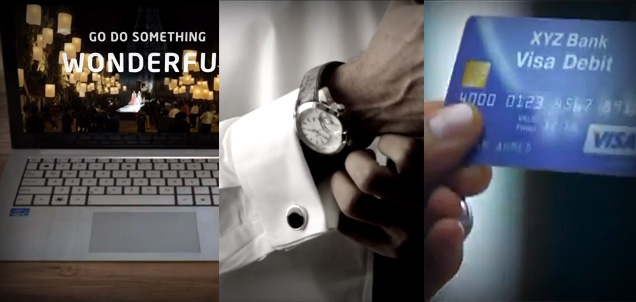
    Take for example the recent Visa Debit campaign. It has the best talent from the industry that has worked to craft the concept and the result is a fabulous example that blends a narrative style with human aspirations thus bringing out what Visa can do for a common man. End result – a narrative that resonates with common man and an ad that aligns well with the brand and its offering.


    VISA DEBIT

    [youtube width=”400″ height=”220″]http://www.youtube.com/watch?v=T44lW5FIq2g[/youtube]

    Shubhranshu Singh, Marketing Director, Visa, said, “The TV commercial that launched our ‘Dream to Advance’ campaign was visualized to deliver the core message that Visa Debit empowers people to achieve their dreams no matter where they reside. The integral human truth about an aspiration to achieve was brought alive in an authentically Indian setting. The narrative written by Gulzar engages and connects not only from an emotive point of view but also from the message delivery perspective. The music by Shantanu Moitra amplifies the beauty of the quest set against the majestic canvas of Kashmir’s landscape. Directed by Amit Sharma of Chrome Pictures, our latest TVC has ensured that the end result is a seamless blend of creativity and brand positioning.”


    Intel has launched its campaign on the theme – go do something wonderful. The campaign uses a narrative style similar to Visa. It talks about Intel helping in realizing dreams, and the powerful narrative only makes it more convincing.


    INTEL

    [youtube width=”400″ height=”220″]http://www.youtube.com/watch?v=M0QJc_rPYY0[/youtube]

    Sandeep Aurora, Director of Marketing, Intel South Asia, said, “Today’s youth are optimistic about what the future holds, but there is an underlying anxiety about tomorrow. Things around them are changing so fast that they know there are opportunities out there, but they don’t always know how to grab hold of them. The new Intel campaign maximizes relevance to this audience by showing stories that don’t focus on the technology that Intel makes, but what that technology makes possible. Based on the famous quote from Intel co-founder Robert Noyce, the ‘Go do something wonderful’ campaign the narrative aims at shining the spotlight on the partnership between consumers and PCs with Intel inside – that personal passion , big ideas and creativity can come alive when they meet a Intel Powered PC.”


    Then there is the recent ad for Xylys that uses the voice of Farhan Akhtar, who has also been featured in the ads.


    XYLYS

    [youtube width=”400″ height=”220″]http://www.youtube.com/watch?v=9DEbak91UeQ[/youtube]

    Giving his take on the narrative style of the ads, Harish Bijoor, brand expert & CEO, Harish Bijoor Consults Inc, said, “These ads are aspirational, hope-filled and hope-fuelling pieces of advertising that find their way into our advertising culture when times are tough. When the times are tough, one needs positive strokes. These pieces attempt these positive strokes. To an extent I would call them “economopause advertising”! When the economy hits its andropause moment, it needs advertising such as this.”


    After taking a look at these ads, Rahul Jauhari, National Creative Director, Everest Brand Solutions, opined, “This narrative style is tried and tested. Yes, it works. Given the right choice of voice and rendition, it can add magic to a film. It can raise the level of a film. Of the three, the narrative in the Intel and Visa one suit the film. The Visa narrative adds charm to the story. The one in Xylys? I think Farhan’s voice lets it down. Yes it’s his voice since he is in the film. But his voice, per se, is not a great one for narratives, and falls flat for me.”


    Opinions will vary but there is no denying that the narrative style definitely packs a punch.


  • Make ASCI membership compulsory: CII white paper

    By A Correspondent


    The CII National Committee on Marketing has released a white paper on “Self-Regulation in Advertising in India – A critical Evaluation”. The paper identifies key concerns regarding misleading advertisements and analyses the issues. It also critically evaluates the role and responsibilities of all stakeholders – regulators, industry, activists and consumers. The paper further suggests that the solution to the problems posed by misleading advertisements is not to add one more legislation in the form of an Administrative Authority as proposed by Department of Consumer Affairs (DCA), and only in cases of non-compliance of Consumer Complaints Council’s (CCC) decisions should the matter be referred to any other regulatory body.


    Adi Godrej, President, CII, said, “This white paper reinforces that self regulation in advertising works, as seen in over 70 countries already. In India too, we believe in the efficacy of ASCI to regulate misleading advertising and more importantly its ability for speedy redressal. We urge the Department of Consumer Affairs to reconsider its recent proposal to set up a parallel administrative authority, which we strongly feel will delay the process of consumer redressal and be counter-productive to its intent. Instead, we request them to consider partnering with and strengthening the current mechanism of self regulation through ASCI further, a win-win for consumers, industry and the government.”


    The CII advocated that given the Advertising Standards Council of India’s (ASCI) track record in self-regulation of ad content, co-regulation between ASCI and regulators like DCA, Food Safety & Standards Authority of India (FSSAI), Ministry of Information & Broadcasting etc. as an effective solution. Co-regulation will ensure that ASCI and the government work together with all stakeholders to enforce compliance currently vested with ASCI but without any punitive powers. However, the paper suggested following areas of improvements of ASCI:


    • Mandatory membership of ASCI. Membership of ASCI be made compulsory for all industry players with exposure to advertising industry in India – the media vehicles, the advertisers and advertising agencies. For instance, rules in Holland require all organizations releasing ads on TV and Radio to be member of its SRO.
    • Integrate ASCI Code into statutory provisions: Sub rule (9) of rule 7 having Advertising Code of the Cable Television Network Rules, 1994 prohibits TV channels from carrying any advertisement that is in violation of the ASCI Code. Similar provisions may be introduced in other statutes like Press Council of India’s Advertising Code to ensure that advertisements while in conformity with the statutory provisions also adheres to the ASCI Code.
    • Expand coverage of ASCI code to digital and social media: A strong digital outreach programme is required to monitor digital and home shopping networks including outdoor advertising and mobile advertising. Large digital companies like Google, YouTube, and Twitter must join as members and compulsorily sign on to ASCI code.
    • Suspension pending investigation: This is one of the major concerns, and therefore control is required on account of advertising with sexual overtones, religious underpinning, and delivery of magical remedies/promotions in the mushrooming Indian advertising industry. To stop airing such advertisements a special fast track process which involves temporary suspension of an advertisement, which prima facie causes harm to the society, pending final decision by CCC can be implemented.
    • Co-regulation between ASCI and DCA as an effective solution instead of a new legislation. The committee has drawn a parallel with the successful model of Advertising Standards Authority (ASA) in UK, which does not possess any punitive powers but co-regulates with the government bodies to ensure smooth control over the misleading advertisements in that market.


    Thomas Varghese, Chairman, CII National Committee on Marketing 2012-13 and CEO, Textile Business, Aditya Birla Group advocated self-regulation in advertising. While he maintained that awareness about ASCI is low, Nandini Chopra, Partner and Head – FDCG, KPMG India, said, “ASCI is moving from reactive phase to proactive phase. Of course, lack of punitive powers and insufficient awareness needs to be tackled but with a lean budget that ASCI has, the proposed road would make for conducive eco-system.” She also pointed out that 60% of complaints come from competition, which helps in keeping the industry honest and self-regulated.


    Sam Balsara, past Chairman, ASCI and MD, Madison World said, “Everyone knows and understands that advertising is an engine of growth and economy. It is up to the industry to increase the confidence of consumers in advertising. Even as the white paper mildly criticises ASCI, we welcome it. We at ASCI will be looking at all these suggestions. We are also setting up machinery to screen the ads ourselves, before we get complaints,” he added.


  • APREE 2012 to focus on social media marketing

    By A Correspondent


    Spotlight Event & Entertainment announced the fifth edition of APREE, which is an annual interactive knowledge exchange platform aimed at bringing Advertising, PR, Entertainment & Event Management companies come together for networking and to discuss the way forward.


    “We are pleased to announce the fifth edition of APREE and I am grateful to the industry experts who have contributed in making this a huge platform and trusting the benefits it can bring to the communications industry by way of networking, sharing and evolving through each other’s experience,” said Salama Yamini, Operation Head, APREE Organizing committee.


    The seminar will be packed with powerful speakers, giving the participants an opportunity to interact with the ‘Thought Gurus’ of the industry. It will also provide an insight into relevant data explaining where the communications industry is heading. The event is catalogued to provide one with better networking with competitors, brands and industry professionals from all aspects of communication business.


    Speaking about the event, Gagan Myne, Director, Spotlight Event & Entertainment said: “This year the focus of APREE 2012 is to concentrate on “How to make most out of Social Media Marketing.”


    Some of the prominent speakers this year are: Santosh Desai, MD & CEO Future Brand; Ekalavya Bhattacharya, Head of Digital MTV India; Ryan Valles, CEO Deal & You; Kunal Kishore, Founder & CEO, Value 360 Communications; Moksh Juneja, Founder of Avignyata Inc.; Snigdha Manchanda, Storyteller; Xavier Prabhu, Consultant on branding and Communication


    The event will be held from August 23-26th 2012 in Goa.


  • Paritosh Joshi: How to make a really spectacular mistake

    By Paritosh Joshi


    In all our lives, there are tales of misadventure that we bury away deep and try our darndest to forget all about. Today it’s time to ferret out just such a story from the not so distant past and see if there’s something, anything, we might learn from it.


    The year was 2007. Private Television broadcasters were trapped in a financial vice. Costs were on a tear as good content: entertainment, sports or news, commanded big premia. Revenues crawled as new entrants into every genre constantly expanded advertising inventory and made price increases difficult. While advertising revenues were still growing, a lot of the increase was attributable to ever-laxer controls by broadcasters on advertising duration leading to flat, or even declining, yields. As an advertising sales person myself, back then, I asked for an analysis of Average Spot Rates (ASR), a very commonly used and easy to compute yield metric, across key genres and channels for the previous three years. My hypothesis, which proved agonizingly right, was that the bulk of revenue growth for channels was coming from selling more inventory and little or none from better ASR. Obviously, I wasn’t the only one seeking such analyses and soon the issue began to dominate all conversations between broadcasters.


    Here was what the broadcasters were seeing:

    • Television penetration was galloping along, adding up to 10 million new homes, up to 45 million viewers of age 4 and above, every year.
    • Cable penetration was growing by almost an identical figure, having moved up from under 30 million homes in 2005 to over 47 million in 2007.
    • GDP was up 9 per cent for 2007 over 2006 and maintaining healthy buoyancy.
    • Distribution revenues were not a source of any joy as platforms had begun to seek carriage fees to monetize the chronic scarcity of capacity on a decrepit analog network. In the meanwhile, TRAI was binding broadcasters hand and foot where it came to wholesale pricing of their content to platform operators.
    • Media agencies were relentlessly using the dreaded CPRP (Cost Per Rating Point) to pummel advertising prices down. Even category leading broadcasters were unable to exercise pricing power in the face of CPRP maths.
    • While more broadcasters constantly entered the market, the demand side represented by the media buying agencies was getting ever more consolidated. Already, the top two agencies controlled very nearly two-thirds of the advertising spend on TV between them. They had achieved this, primarily, on the back of their ability to extort low prices using their virtual oligopoly combined with the willingness to drop commission rates to low single digit percentages. While the standard terms of trade indicated a 15 per cent agency commission on TV advertising, the media majors were actually working on less than 5 per cent, passing on the spread as additional discount to the advertisers.


    It was clear to broadcasters that the situation could no longer be permitted to drift but what were they to do and how? A team of planners from across broadcasting organisations was asked to develop a recommendation. Everything had to be done with considerable secrecy, lest word get out and the project be stillborn. The plan was in. Voila! We would all, every last one of us, collectively impose a 25 per cent surcharge.


    Needless to add, the plan asked for way more resilience from broadcasters, particularly the small and vulnerable ones, than they could muster and in a classic predator-prey drama, they were arm-twisted on the pain of the death-of-a-thousand-cuts by M-this and M-that into abject capitulation. The plan unwound within 72 hours leaving a lot of us with unpleasantly puce visages. An awful mistake had been made. I could tell you the whole ugly story of who shafted whom, when and where but sadly, in a reversal of the trope, if I told you, someone would have to kill me.


    Now here is the really terrible story. Most everything that made the revenue story look grim in 2007 for broadcasters still looks exactly the same in 2012. Indeed worse in many cases, like for the anæmically bloated Hindi News genre for instance.


    What is the broadcast industry doing about it? Can something be done about it at all?


    First, until TV advertising is valued based on a relative, rather than absolute currency, pricing power will remain solidly with the buyers. Until we shift from the iniquitous CPRP to the universally accepted and economically fair CPT (Cost per Thousand contacts), this will not happen.


    Second, all stakeholders in the BARC (Broadcast Audience Research Council) process would be well advised to apply their might to moving it from idea to execution.


    Hmm. Someone will have to kill me after all.


  • The Anchor: Ajay Chandwani on 5 reasons why youngsters/MBAs should join advertising

    By Ajay Chandwani


    1. Brand Management

    For those who have studied MBA, marketing management is just one part of the spectrum, but one should realize that in advertising you also get to do brand management. This is a dynamic field to be a part with immense opportunity.


    2. Variety

    In advertising, you are not restricted to one industry, but you get to work on various categories. So if one time it is about selling a washing powder, next time it could be about selling biscuits and then about selling cars. One has to think different thus not getting stuck in stereotypes.


    3. You do it for a living

    Advertising promotes lateral thinking. It’s not that you can’t do out-of-box thinking in marketing, but in advertising that’s how you are making a living. You get to interact with creative minds and you need to be an ideas person to survive and succeed.


    4. Never a predictable moment

    You could get to work on a new product, marketing plans keep changing, new brands gets launched, so in short, there is no boredom. There is so much going around in advertising business that it promises to be one roller-coaster ride.


    5. Today advertising is at the helm of a marketing function

    The former has taken a 360 degree avatar which included advertising, PR, digital, BTL and the works. There is a desirable exposure to brands. Hence it provides a wider canvas to work on and promises to be an integral part of marketing.


    Ajay Chandwani is Director at Percept Ltd


  • Business Line launches ‘Weekend Life’

    By A Correspondent


    Does Horlicks sell more than Coca Cola in India? Why is the Amul girl suddenly pushing milk, instead of butter? What made a music channel stop airing music? Ever wondered why European kitchen equipment stores are popping up everywhere? Find out all this and more about the business of brands, in one handy, 8-page packet, Weekend Life, being brought out by Business Line from July 6.


    One of the sections, Brandline, brings you the stories and the stories behind the stories from the world of advertising and marketing. Along with insight and analysis from some of the leading lights of the industry.


    Whether it is food and wine and gyan from leading chefs of India, or an insight into gender issues and how women, including rural women, are changing the face of India, it is all included in the supplement.


    Even the tech-savvy will be satisfied with eWorld’s updates on the latest trends, fads and analysis from the world of information technology.


  • Ranjona Banerji: I also hate the chip chip!

    By Ranjona Banerji


    I’m taking off from next week and staying with the advertising industry since it is also “news” as some Indian media organisations have told us for years. Also, you cannot escape advertising if you watch the news or read newspapers and magazine. After careful consideration and consultation with others, it is clear that Priyanka Chopra’s “chip chip” ad for Garnier remains the most annoying on television. It comes on so often and with such clever cross-channel planning that you are forced to watch it unless you jump up and run every five minutes. By this time, the sun, the dog, the grass have all started looking extremely embarrassed at being made party to the ill-matched song and dance routine.


    But close to this one are those with annoying children like the rude boy in the McCain’s ad. I don’t see why he deserves to be treated with various kinds of fried potatoes. He should stay in his room downloading food while his family has fun without him. Next is the little girl in the Cadbury’s ad who is smiled on indulgently/ protected for not wanting to share her chocolate. (I am far more generous. If anyone gives me a chocolate product made by Cadbury’s I promptly give it away.)


    Today’s newspapers say that table manners are becoming a thing of the past. The advertising industry has long known this which is why it is particularly fond of promoting messy eating. People who eat Cadbury chocolates not only give each other long and profound looks while discussing vegetables they don’t want to eat, they also manage to get half the bar of the chocolate they’re eating all over their faces. This is an Indian rule I think and also applies to eating ice-cream. To save money, these ads should be joint ventures with washing machine/washing powder companies and maybe even whatever Garnier is selling in that “chip chip” ad.


    Then there are irritating mothers – based on the general feeling that the advertising industry specialises in mothers you want to murder. The Kellogg’s mother, who does something as amazingly innovative (sarcasm emoticon please) as putting almonds on top of a bowl of cornflakes, wins the current round of MYWM. If Kellogg’s only sold their variety of cornflakes with almonds in it in India, she wouldn’t have to be quite so smugly clever.


    An award has to be given to both Rahul Bose and Mahesh Bhupathi for agreeing to tell us that their mouths are full of germs. This is courage extraordinary. Also, for the ungrammatical manner in which they both say: “and much less germs”. Since both speak very good English the rest of the time, one assumes (or hopes) that Colgate paid them a lot of money.


    Vodafone’s attempt to make old men cuddly and lovable after Tata Docomo’s portrayal of them as curmudgeonly and crotchety should win an anti-ageism award at one of the next 1,000 award ceremonies the advertising industry seems to organise. At which, the best actress award has to go to Anushka Sharma for not only being convincing in selling cameras, internet services, scooters and so on but also for beating Amitabh Bachchan, Katrina Kaif, Priyanka Chopra and all the rest of the stalwarts for successful grabbing of TV time.


    Currently, there are several ads for a film called Cocktail starring, I think, Saif Ali Khan and Deepika Padukone. I saw a film called Cocktail once. It had Tom Cruise in it. Any relation?


  • Now an agency to crowdsource design & communication ideas

    By Preethi Chamikutty


    The season for new businesses in advertising just doesn’t seem to end. However unlike other agencies that are brick-and-mortar in format, IdeaDemocracy is an online design and communication crowd sourcing platform. Setup by Rohit Misra, ex-president of Rediffusion Y&R and his partner Chetan Mangat, the agency is novel in its format. Before it goes out and talks to clients about themselves, IdeaDemocracy used crowd-sourcing to even design its logo and next in line is the agency’s website homepage.


    Talking about the concept, Mr Misra said: “It has been noticed that many a times when the company briefs an agency, people often don’t come back with what the brief was about. There are people with creativity and imagination every where and not necessarily in our offices, so we thought to do something to harness this pool of people and reward them. That is where the idea of crowd creativity came about.”


    So from doing collaborative thinking, to using a tool called the IdeaStarter – a mood board for discussions and bouncing off ideas, IdeaDemocracy is a big playing ground for every creative individual.


    As a concept IdeaDemocracy looks exciting but can client deadlines be met working with such a model. Misra says every work can be customized as per client requirement and delivered within the time agreed. “When we get a requirement from client, we put it up on our community and then we brainstorm to get the appropriate solution. So we can run a contest online and look for people with certain kind of skill set to do the job. Then we shortlist people who best fit the bill basis their portfolio and give it to the client. If the client is willing to pay the money asked by the person, he gets the job,” explains Mr Misra.


    IdeaDemocracy works on connecting the audience to the client. There are also tools on site which can be used by freelancers, besides traditional tools and moods boards to execute what they have in mind. The site also has strong end user agreements, which according to Mr Misra, can ensure everybody gets the proper worth for their efforts.


    The site already has a user base of 5,000 creative people. The initial crowd sourcing activity to create the agency’s logo received 40 logo design entries and the current logo being used by the agency is that of the contest winner. Mr Misra said that IdeaDemocracy would first like to talk to SME’s who may not have the large budgets of an MNC, but still want good people for the job. A self-funded venture, Mr Misra says he would not measure the agency’s success in revenue terms but more on the number of transactions happening on the site. His optimism also comes for a similar creative group in Indonesia which already has 65,000 people onboard doing proper work.


    Source: The Economic Times

    Copyright © 2012, Bennett, Coleman & Co. Ltd. All Rights Reserved


  • Viewers can name upcoming A&M show on Awaaz

    By A Correspondent


    Hindi business channel, CNBC Awaaz, plans to launch first-ever show on advertising and marketing. This is the first time a channel will be looking at the world of marketing and advertisement from the consumer’s perspective. The channel will attempt to engage and connect consumers with experts from advertising, marketing and media planning sector through the show.


    Aimed at decoding the world of advertising for the consumers, each episode will consist of various segments. The first segment will focus on the campaign of the week and the various teams behind its success – creative, marketing and media planning.


    The second session will be a ‘Marketing Classroom’, where some of the best case studies will be analysed to guide SMEs in building their brand. This would be followed by the news of the week with the latest reports from the M&A world and issues related to the ASCI and consumer courts.


    Keeping in mind the focal point of the show and its primary stakeholders, the channel has launched a unique contest Kya Hoga Iss Show Ka Naam. From July 9, consumers as well as experts from the A&M sector can suggest a suitable name for this upcoming show.