Tag: advertising

  • Anil Thakraney’s Debrief: Senseless fun

    Mineral water brand Bisleri has released a brand new commercial. ‘Stay Protected’ is the message. While the message sounds all serious and professional, the commercial is a riot.

    Two chaps emerge out of a painting and decide to go on a boat yatra. The treatment is part animation and part live action. On the high seas, they run into a she-monster and her baby. The baby tries to gobble down one of the dudes on the boat, but he gets stuck in the baby monster’s mouth. Mommy monster grabs the Bisleri bottle from the other chap’s hand, and uses the water to help her baby swallow down the ‘meal’. The she-monster, in a gesture of gratitude, not only returns the Bisleri bottle to the lone survivor, it also spares his life.

    Haha, it’s both funny and corny. Kids will like this cartoon story. And I appreciate the effort to inject some fun into what’s just a brand of water. However, here’s a red flag: Mineral water is a very, very low involvement product category, and consumers don’t really suss the brand name before purchase. So while it’s great to do a fun story, should the focus not be on communication that tells us what makes Bisleri special and different from other brands in the category? So that I have a clear reason for demanding Bisleri from the grocer, rather just any mineral water. How can I ‘stay protected’ through a fairy tale involving sea monsters??

    Bottom line: I am all for mad. But madness with method. Not plain mad.

    Rating: (On a scale of 1-5): 2 (For the cute animation.)  

    Anil Thakraney’s ad review column DeBrief will appear twice a week – Tuesdays and Thursdays.

  • The Anchor:Ashwini Deshpande on 7 points to remember while refreshing brands

    #1 If the CEO is “too busy” to attend a re-branding meeting, don’t do it. Branding is an important business tool. Branding has the power to create far more value than the goods it can sell. If the CEO seems reluctant to acknowledge the power of branding or rebranding, it may at best be a whitewash exercise. Just cosmetic.

    #2 Express only what you believe you can deliver. Visual expressions can make your brand younger, sexier, fun, dynamic, innovative… There is no limit to what graphic design can do. But express only and exactly what you believe you will be able to deliver through every touch-point, every time.

    #3 Rebranding is for creating Gods & Angels. God is the person who unhesitatingly pays a premium to buy the brand you created. Angel is the person who goes to the next shop to buy it if it’s not available here.

    #4 Be sensitive to the culture, geography and economy. Some colours and icons are considered inauspicious in certain cultures, magenta fades in our harsh sunlight, special colours are not economical and/or feasible to reproduce in tight budgets… Know the limitations and possibilities before you begin.

    #5 A brand is multi-sensorial, multi-dimensional. It is not just a logo. Today’s technology allows for infusion of sound, smell and touch, over and above visual expression… Go beyond the visual to create an experiential delight.

    #6 A logo refresh is not a quick-fix solution for bad balance sheets: It requires long-term conviction and dedication from all stake-holders to get the brand embedded in the hearts of its intended users.

    #7 Acknowledge (others’ and your own) good and bad work, and learn from it. There is no need to discard all for the sake of rebranding. Take ahead what worked for the brand in the past. Also learn from other brands that are loved or ignored.


    Ashwini Deshpande is Director, Elephant Strategy + Design

  • The Anchor: Sanjay Reddy on 7 reasons why regional GECs should be treated differently

    #1 Ethnicity and Culture: India is a multi-cultural society, where every state has its own culture and language. Shows that do well in Hindi Speaking Markets (HSM) might not do so well in Tamil Nadu or even Andhra Pradesh. The GECs of the market need to show content that is in tandem with the culture of the masses.


    #2 Identification & Familiarity: Viewers like to feel associated with content that they can identify with and which feels familiar. Any major shift from this safe zone can sometimes (not always) lead to the viewer leaving the show. Most of these regional markets have their own movie Industries, showcasing their need for differentiation and attraction to what seems familiar.


    #3 Targeted Advertising: Most retailers look for the most cost-effective way to reach their target audience. If the TG is based only in Maharashtra, it does not make sense to advertise on a Hindi channel as the spillover would be tremendous. Thanks to the presence of Marathi channels in the region, the ROI is high and the spillover is limited. Having a strong GEC with content targeted at the regional market makes it a more appealing and value-for-money proposition for the advertiser.


    #4 Continued Experiments with Programming: Regional GECs speak to a smaller audience compared to the Hindi GECs. Hindi GEC need to provide content that caters across HSM giving it the chance to experiment with content and create shows that might not appeal to masses in small towns but might end up doing well in metros and big cities. In case of Regional TV GECs, yes sure here also people can experiment but anything too over the top might not go well will the audience and as most brands look at regional TV for targeted advertising, there are only a few mistakes that a channel can make, a typical chicken and egg situation.


    #5 Relationships in South and North GECs: When it comes to relationships, North and South India have a few differences. In AP a man can get married to his sister’s daughter – something that is totally unheard of in the north, similarly a marriage between a man and his bhabhi is an accepted fact, something that won’t be taken well in AP. This was just a small example but surely both GECs need to have different treatment in story structure and relationships.


    #6 Production Costs: Given the kind of advertising spends a regional channel sees, compared to a national Hindi GEC, it would be unfair to compare the two. Sets from the top Hindi shows are too high-maintenance for regional channels. There are regional channels that have spent a lot on their sets and shows but there can be only one show in the channel that can get such lavish budgets.


    #7 Influence of Western Culture: HSMs are more prone to western cultural influences, something that can be seen with successful shows like Indian Idol, India’s Got Talent, KBC, Big Boss, Masterchef India etc, which are remakes of popular international shows. Shows with a contemporary packaging haven’t done too well in regional markets.


    Sanjay Reddy is EVP – South Cluster, Zee Entertainment Enterprises Limited

  • Hard Knocks: Why does the ad world lose talent?

    During my interview with O&M’s chief Piyush Pandey for MxMIndia, he mentioned that the biggest challenge the industry faces today is one of hiring and retaining talented people. That some of the most interesting people don’t want in. His theory is that it has mainly to do with remuneration, and the problem of agencies not being able to pay people properly. Surely he’s right, he must know being an industry leader. But I think there’s more to it than money. Here are two other reasons why I believe the ad world does not attract as much talent as it should, and why many of its stars defect to other industries.


    One, there is killer competition amongst ad agencies, and the pressure and anxiety to win and retain accounts is intense. Now while business rivalry is healthy, when it borders on desperation, something’s gotta give. So not only do clients suck the agencies dry, some also tend to treat agency personnel with disdain and disrespect. This leads to loss of morale within an ad agency office, and the inevitable happens. One is always looking around for better career options. We must remember not all ad agencies are led by heavyweights like Piyush and Balki. Who can stand up to an unreasonable client. For most agencies, putting up with all sorts of demands from clients becomes a way of life. There’s the sword of losing a client perpetually hanging on the head. And frankly, I really can’t see a way out of this mess. It was like this decades ago, and it’s pretty much the same now.


    The other thing ad agencies have done is to give up the strategic planning function to the clients. Sure, large agencies have the so-called planning department, but these guys often do a cosmetic job for the brands. And are more like an extension of the market research agency. There was a time when client servicing people would offer major strategic insights. Now no one expects any from them. Either the creative directors figure out their own strategies, or the brand managers inflict one on the agency. It’s no longer cool being a suit in the agency business, it’s become more of a maintenance job. How can we then blame the officers for leaping over to brand management?


    And that’s also the case with media specialists, post the disbanding. I wonder if there are any media planners left. I only hear of media buyers being in demand purely for their abilities to cut sweet deals with media owners.


    It can’t be only about money. It never is.


    ***


    PS: With Twitter on a roll, every Seeta, Geeta and Reeta thinks she can be a journalist. Guys and gals, while I appreciate your enthu, do give us journos some credit, we must be in possession of at least a few skills, if not many! Ghazal master Jagjit Singh (who’s very much alive at the time of writing this, and all the best to him) was declared dead by some over-excited tweeters. Clearly, the khujli to “break news” is not restricted to the media.

    The lesson: Dear tweeters, leave news to us. And stick to sharing your lunch menu.

  • No place for Sonal Dabral and Prasoon Joshi at O&M


    By Anil Thakraney


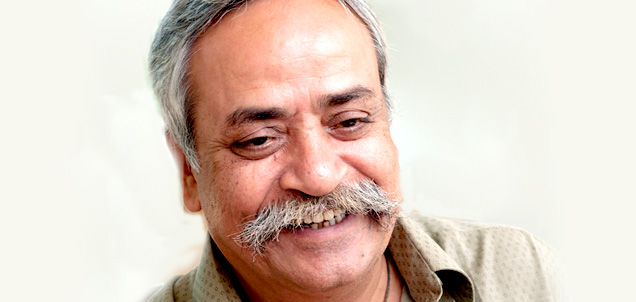
    It has been a fantastic advertising career, to put it mildly, for the 56-year-young Piyush Pandey. Enough has been said about Ogilvy & Mather’s top dog and the Indian ad industry’s most celebrated player. So let’s just sneak in some yorkers and see if the bat still packs in the punch. It’s always a joy to meet the man because of his joie-de-vivre and the on-the-tap humour. Tonight it’s even more fun as we lounge by his sea-facing apartment off Shivaji Park, with Piyush downing vodka shots.


    Q: Don’t see you much in the media these days. Finally got fed up of the over-exposure?

    I have never approached any journalist ever in my life. And I have never said no to any journalist either. Actually, I have been travelling quite a bit these days. But I have never felt I am missing out on anything. And sometimes journalists call to ask about things one doesn’t know. Anything that happens, I get a call! (Laughs.) Also, in the earlier days, I used to attend parties but now I seldom go. I even avoid judging (ad competitions) these days because it takes away five days of my time.


    Q: You’ve spent a lifetime in the ad world. Still get the same buzz? Aren’t you bored?

    The day I stop getting excited about this business I will go. You don’t know what a kick I get out of this profession. Gratification comes to people from various things. Some get it by playing golf. Others by spending a day at the club. I get my kicks out of meeting people in my office, and out of the ideas. I have never thought of my job as a burden, I am having a ball.


    Q: Oh ok. After you built yourself that palace in Goa, I thought Piyush would disappear to the beaches.

    It’s a three-bedroom house, not a palace! And when I am in Goa, I look at my watch and say, “Oh! It’s only nine o’clock!”


    Q: O&M’s big boss, Shelley Lazarus, famously said you are the brightest mind in the network. And we all thought Piyush would take global charge of the agency.  

    It doesn’t make sense to the company and it doesn’t make sense to me. I do sit on the worldwide board, I have a view on the worldwide policies. But I will never re-locate myself. Also, I don’t believe in controlling the world, I enjoy being in India. I think we are still on a graph which is unfolding. And I love having Indians around me. So I can give all that I have learnt to the world, wherever relevant, but I don’t think that burden is mine. (Laughs.)


    Q: I suspect the key reason for your huge success is understanding the Indian culture and ethos. By extension, that means you will struggle in other nations.

    Markets don’t scare me, I do help if there’s a need somewhere. I go there and discuss the idea and then leave it to the locals to express it. What I once hated happening in the good old days, how can I do that to the others now that I am a worldwide board member? I will never do all those things which I disliked. Even when I discuss ideas with Pakistan, I tell them I don’t think I am capable of understanding their local nuances.


    Q: Ah, I get it. You don’t want to do what Neil French did to you. Which is to try and interfere in your work. I remember you told him this: “Neil, come help me, don’t f*** with me.”

    I did tell him that. Because he tried to (interfere). But he couldn’t do it. My first conversation with him was, “I will show you some work we have done for Cadbury’s and I don’t want your comment on it”. (Laughs.) I must share another incident with you. Many years later at a creative meet near Jodhpur, Neil saw the Hutch boy-and-dog film and tried to make fun of the song. And in the evening my boys went and got the Rajasthani musicians to sing the same song for him! (Laughs loudly.)


    Q: Your rival agency heads are pursuing other passions and enjoying a lot of success in those. Making movies, writing songs. You don’t feel the need to experiment?

    Those things come to you when you are bored of what you are doing. And I don’t think three hours is a greater achievement than one minute. I did it once, I wrote the script for the film ‘Dus’ for Mukul Anand but it never got completed because he passed away. But it (movies) never excited me. The kind of people who wanted me and Prasoon (Pandey) to write… from Yash Chopra to Subhash Ghai to Dev Anand… and I told all of them this is stuff I would do on a weekend or at night. That my first job is advertising. I can only handle one thing at a time.


    Q: New media is upon you in a big way. Ready for it? Honestly.

    One, we are investing heavily in the new media. There is no technology that we haven’t provided to our youngsters. And two, in my working life, things aren’t going to change. I see maximum activity in the mass media at least for the next five years. So the idea is to invest for the future. Which we are doing.


    Q: And you aren’t on Twitter or Facebook.

    I am not even on the internet. I don’t even know how to start a computer.


    Q: You are joking.

    I am not joking. I did not study all these years to become a typist. Every computer user is a fantastic typist. (Guffaws.)


    Q: So if a client wants to know how he can promote his brand on the digital media, you are in trouble.

    I will sit with him (the client) to assess the solution. And tell him that I have people on my side who will help him. To give you an analogy, I know what a good ball is, but I can’t bowl it. So I will get Kapil Dev to bowl it.

     

    Q: I think you are a test match player who now has to deal with the T20 format. And you don’t understand that game.

    I am saying to the client, I will put together a team that can satisfy his needs. I will not play the T20 match. But I will come and watch every match. I will hire the best T20 players. And I will cheerlead them.


    Q: There’s a flip side too. Does it worry you the excess use of tech may make the youngsters get disconnected from the real world? Which is where big ideas come from.

    I didn’t write the MP Tourism ad, the kids wrote it. Also the Asian Paints work featuring the two brothers. They wrote it. So I think the next generation is very savvy. They know that even in the digital space it is the idea that will win. The idea is to know the medium, but express the same kind of engagement that we have done all these years. But yes, about being buried in technology, there is a worry, and for the world at large, not just for Ogilvy. I say to the youngsters: go to Facebook, but don’t become faceless. That, interface is the greatest way to connect with people.


    Q: The one big challenge facing the ad world?

    We need better remuneration from clients to be able to hire interesting people in the industry. I don’t have the answer to this challenge right now. But before I leave this company, I will make every attempt to make sure this is solved. If we don’t pay people well, how will we get the best people into the industry? Every agency is under so much pressure, we are not negotiating properly with clients. Maybe clients are better negotiators than us. If other industries are taking our people away, then we have a problem.


    Q: Does it hurt when you nurture young guys, train them, and then they go and head rival agencies?

    Sometimes, yes. But not with guys who are leaving to do the same job that I am doing. That is a natural progression of life. I regret losing those people who had misconceptions about themselves and their abilities, and left to do it on their own. And then disappeared. And all that talent Ogilvy alone hasn’t lost, the industry has lost it. Because in the next job, if the guy is a failure, he simply disappears.


    Q: If Sonal Dabral and Prasoon Joshi wanted to return to O&M, and you had place only for one, who would you pick?

    None of them. Because our people have grown. And in the last five years, they’ve done work that’s the best in the industry. So why would I put anyone on top of them? Sometimes when you vacate a position, others grow into that position so fast, it becomes difficult for them to be brought back. If you missed three matches, and Vinod Kambli came and scored three double hundreds, how do you get Kambli out of there? It’s important for all of us to be at the right place at the right time. Suppose I decide, before my retirement, that I want to be in Goa and am going to write my book. Then somebody will obviously occupy my position here. Now if I want this position back two years later, and if that guy has done so well in the meanwhile, they’ll say ‘Sorry!’.


    Q: Are you planning to write a book?

    I will write one. But it will not be a prescriptive book. I will write something that people read between the lines. It will apply to life and not just advertising.


    Q: Any red hot-tips for youngsters?

    One, celebrate life. Don’t crib. Because if you crib four hours a day, you don’t approach anything with a positive mind. Two, if you are passionate about something, go ahead and do it. Don’t worry about society. You might actually become the role model for that. And three, in the world of communications, respect your environment. If you don’t think of the receiver, you will never make a good giver. For example, on your way to Jaisalmer, did you notice, in that 48 degrees heat, those guys who are tarring the roads, they are singing songs to distract themselves from the adversity? That is what will give you insights.


    Q: Your retirement is due in exactly two years. Will you actually leave?

    Maine aaj tak life plan nahin ki. Did you, in your younger years, ever hear from me that one day I want to be the Chairman of this company? You didn’t. I don’t make long-term plans, I only make plans for tomorrow. That I will wake up at five in the morning and go for my walk. And even that may not happen! (Laughs.)

  • Rise of the Indie

    By Tuhina Anand


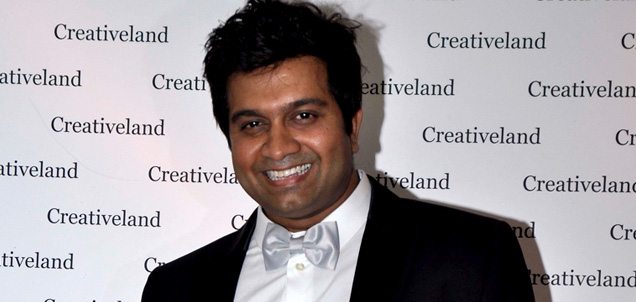
    Creativeland Asia literally began life at Mr Sajan Raj Kurup’s dining table, where he discussed it with his friends four years ago when he quit his job as Regional Creative Director at Grey Worldwide. And the independent agency’s time seems to have come.


    For those who need to break away from large networks where creativity sometimes yields to hierarchy, setting up their own agency is the answer. And it seems to be an answer that works. A recent example would be Creativeland Asia bagging the Independent Agency of the Year at Spikes Asia. This was the first year when this award was introduced, and it aims at encouraging the spirit of creative entrepreneurship that has helped forge outstanding companies.


    Mr Kurup’s venture has now grown to a strength of 8o people across two full-fledged offices in India and nine strategic offices in Asia.


    Creativeland Asia also brought home a Grand Prix in integrated media category for 3D Experience for its client Audi India, a business it bagged in July last year. This also was a campaign of Indian origin which for the first time Audi adapted and used across the globe. The agency also bagged a Bronze Spike in digital for Hippo’s Plan-T. In fact, it was invited by Twitter to make a presentation on Plan-T which basically is a Twitter-led campaign which has won them accolades for innovative thinking. The agency has also won awards and accolades at other platforms including D&AD, One Show, Adfest, Spikes Asia and Cannes, and our very own Goafest.


    On his win, Mr Kurup, Founder & Creative Chairman, Creativeland Asia, says, “Winning the ‘Independent Agency of the Year’ award is a proud moment for us. This win is also significant for all independent agencies in India. To bag the Grand Prix for real work and on a global brand like Audi underscores the creative culture at Creativeland. It goes to show that when you consistently create good and inspiring work, lady luck is bound to shine on you sooner or later.”


    The agency has also done some pathbreaking work for its client Frooti where the brand has been totally refreshed itself including a funky package design. It also launched recently Saint Juice beginning the exercise of naming the brand signifying purity and 100 per cent juice. Some of the other brands it has worked for include Café Coffee Day, Medimix, LMN and Appy Fizz among others. The common link among all the brands is that Mr Kurup when he started out had said he wanted the agency to focus on marketing to the youth, and largely the brands that Creativeland has worked on exude this approach in its work.


    So does the win at Spikes for Creativeland really signify that today is the time of the independents. Yes, one can say that the time is conducive for independents with talent, and who are big on ideas, to come to the fore. Like Taproot changing the way industry looks at small agencies with its work on Airtel which is a big client, and getting praise for its campaign “Hare ek friend zaroori hota hai.” It’s also a time when the client’s approach is changing, too, and they are willing to take risks especially in a cluttered market with an overdose of media vehicles where it becomes imperative to get your brand noticed with cutting-edge and “hat ke” ideas.


    In that sense Creativeland Asia’s win affirms this wind of change. And the might of independents cannot be undermined as they are ready to take the biggies and steadily increasing their strength by diversifying their portfolios. Just like Creativeland, which has been expanding its footprint with providing content for four television channels including two reality shows. In fact, the agency is also venturing into the film industry with their first production, Karmayogi.


  • The anchor: Naresh Gupta on 7 things research will never tell a marketer

    No self-respecting marketing executive can live without market research. Market research offers purposeful information to make plans, policies, programmes and procedures for any marketing activity. The market research industry is as old as the communications industry and, many would argue, more important than the mainstream communications industry. Yet there are pitfalls, and things that can’t be foretold. Here are seven things MR can rarely tell.


    #1 Reflect reality

    Market research is a post facto measurement of what had happened. The common belief is that research data reflects the current reality and hence can be used as a basis for predicting future. If that was the case then well researched brands would have never failed

    #2 Predict the future

    Research means placing human beings together in one place ask them their opinions and forming that as the basis for predicting the future. This is like saying that if you watch a lion in zoo, you will learn all about lions. The human zoo is no different from an animal zoo, and is rarely the right basis for prediction.

    #3 Is never free of bias

    Any form of research suffers from investigator bias and statistical errors. Research too is a classic case of stimulus response. The answers depend on what you ask, and that define the findings. Can research ever be free of bias?

    #4 Right answers depend on the right questions

    The new Coke is the stuff that is now a case study. While the new formulation tested well, scored on blind tastes and passed every test the research industry threw at it, it failed when launched. The consumer was not asked the most obvious question; will the formulation change the brand they love? Do they want the brand to change? The result was a massacre in the market.

    #5 No guarantee of success

    Testing a new commercial for predicting its success in market is a common practice. It is easy to score a commercial on emotional appeal, on message comprehension, on ability to create perception. Yet more commercials fail then succeed. We all know that, yet we are slaves to practice.

    #6 Does not replace experience and gut

    We need to remember that research is a tool, and not the decision. A marketer’s gut, experience, market reality are far more important than any amount of research data. Yet the tendency is to live more by research data and less by collective experience.

    #7 Quality matters

    We all know this.

    Right?

    Yet an average marketer rarely spends time on figuring out who will administer the stimulus for research. Will an average field executive be up to scratch? Will the average investigator strike the right balance of objectivity and expertise? Most researches are spoilt by simple overlooking of this crucial aspect. Next time, pay attention to field investigators.


    As a simple test try this, ban MR for a while, live by what you know as a marketer, trust your experience, trust your market feel, trust the hours you have spent in the field. Take the decisions that need to be taken, and use research almost as the last step to check gross negative. You just might speed up the process, learn a great deal more from mistakes, and possibly be more successful.

    Experience always triumphs over data.


    Naresh Gupta is Head – Brand Strategy, iYogi Technical Services