Category: RESEARCH

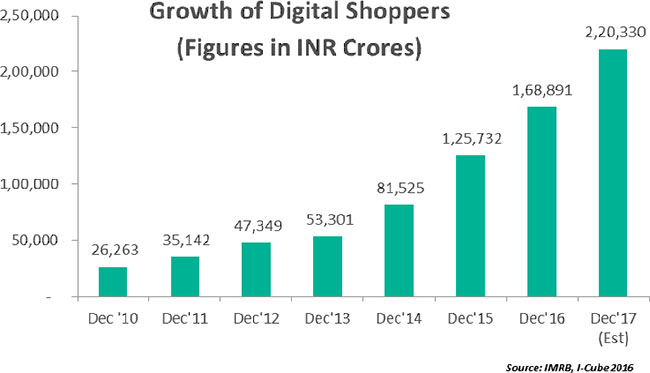
  • Digital Commerce to reach Rs 220,330 cr by Dec 2017: IAMAI-IMRB


    By A Correspondent


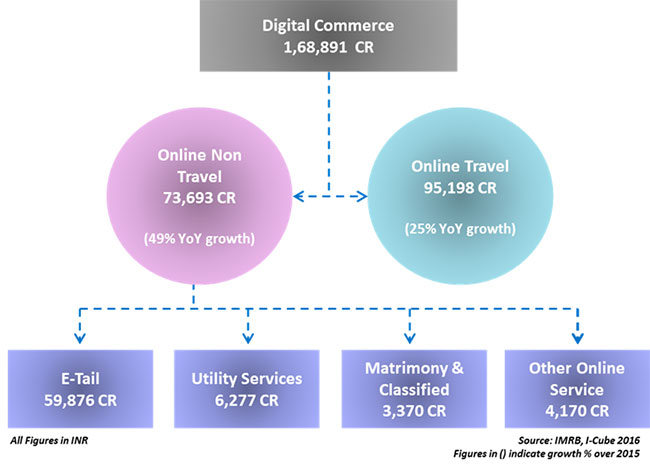
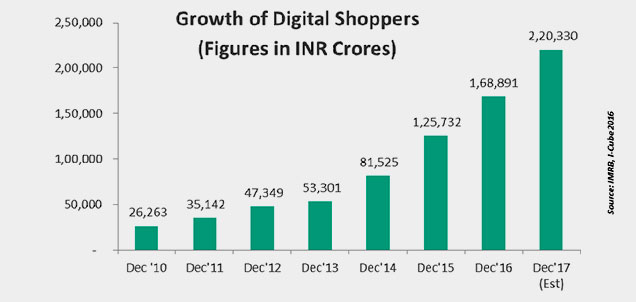
    The Digital Commerce Market has grown at a CAGR of 30 per cent, between December 2011 and December 2016 to reach INR 168,891 crores by the end of December 2016. It is estimated to reach INR 220,330 crores by December 2017, according to the Digital Commerce report 2016, published by the Internet and Mobile Association of India (IAMAI) and IMRB Kantar.


    The report finds that Online Travel industry continues to grow strongly with 56 per cent share while share of online non-travel has improved over the previous year to reach 44 per cent.


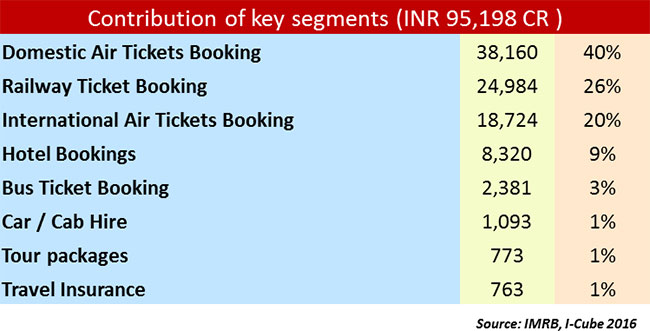
    Domestic air ticket and railways booking continue to be among top contributors to the Online Travel spends. These were the segments that were the top contributors in previous year also. Hotel Booking has seen a substantial growth of 60 per cent, from INR 5200 crore in December 2015 to INR 8320 crore in December 2016. Domestic Air Tickets Booking is the highest contributor in this segment and has grown 20 per cent from INR 31,619 crore to INR 38,160 crore in 2016. The online travel market is expected to reach close to INR 1, 18,598 crore by December 2017. The segment was valued at INR 95,198 crores in December 2016.


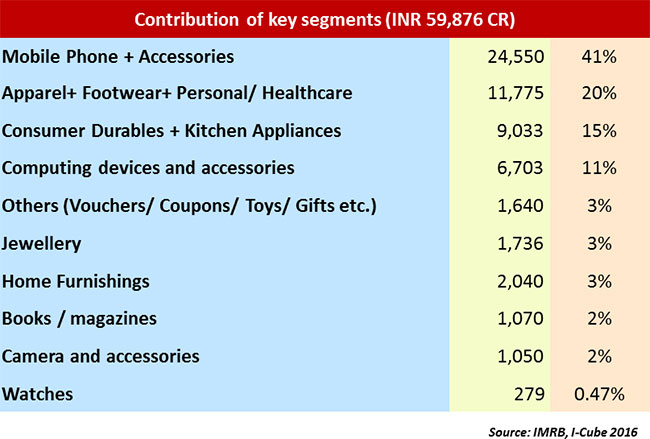
    The report also finds that E-Tailing maintained a strong performance with 59 per cent growth. In the E-Tail category, Mobile Phone and Mobile Accessories continue to be the top contributor to the overall pie. Another product category that has registered sharp growth is apparel, personal health care products and accessories. These two categories collectively account for 60 per cent of the overall spend in E- Tail segment. The E- Tail segment is expected to reach around INR 94,964 crores by December 2017. It was pegged at INR 59,876 crores in December 2016.


    The report also finds that Online utility services market (eg: payment for DTH/ Telephone Bills/ Electricity Bills etc) registered close to 20% growth between 2015 and 2016. The market reached close to INR 6277 crores in terms of overall online transactions as on December 16.  The segment is expected to reach INR 7,532 crore by December 2017.

    Other online service market that includes online bookings done for entertainment, online grocery and online food delivery, was pegged at INR 3823 crores in December 2015. In December 2016 the market reached close to INR 4,170 crores. Online food delivery is the top contributor within this segment with a market value of INR 2,040 crores. This growth is expected to continue in future and the market is expected to reach INR 4,587 crores by December 2017.


  • Smartphones driving website traffic for multiple brands, notes Adobe report


    By A Correspondent


    A new Adobe Digital Insights report, Best of the Best JAPAC, highlights the internet usage trends demonstrated by consumers in the developing countries and the role played by smartphones in driving new internet users.


    The report leverages Adobe Analytics to aggregate anonymous data from 100 billion visits to more than 3,000 websites in Asia, including 16 billion visits from India. It presents the average and top performing benchmarks across industries including Retail, Media and Entertainment, Travel and Hospitality, Financial Services, and High Tech and looks at parameters such as share of smartphone and desktop visits, stick rate, conversion rate and minutes per visit among users.


    “With the growing smartphones penetration, consumers are establishing their digital presence and gaining more opportunity to interact with brands. Brands that adopt mobile strategy and offer a compelling and consistent customer experience are driving better business results and will continue to maintain a lead over the competition,” said Becky Tasker, Senior Managing Analyst, Adobe Digital Insights, ‎Adobe. “India is on the verge of becoming a digital-first nation and as smartphone adoption levels increase. In times like these, where opportunities for digital success are in abundance, the need to constantly evolve or provide value has become vital for brands.” Added Tasker.


    Spotlight findings for India include:

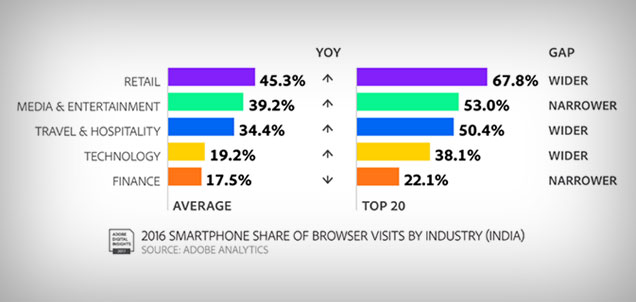
    [] Volume in smartphone traffic is growing in India across all industry sectors, but grew fastest in Retail with 45.3 per cent average year on year growth, followed by Media & Entertainment sector at 39.2 per cent and Travel & Hospitality at 34.4 per cent.

    [] Gaps in smartphone traffic widened dramatically between the best industry performers in the Finance sector as well as Media & Entertainment. Leaders are pulling away to capture higher share of traffic versus their competitors. In this respect, the best performers in Retail had the greatest gap between the best and the rest, with smartphone share totaling 67.8 per cent. Top performers in Media & Entertainment sat at 53.0 per cent. Top performers Finance recorded a much lower performance of 22.1 per cent, suggesting there’s still room for fast-moving and innovative players in this sector to attract customers post-demonetization phase in the country.

    [] Desktop share of visits were down YoY in every industry except for Finance, indicating consumers in India continue to access financial content on the desktop device. Desktop share of visits in Travel & Hospitality and Retail sector decreased the fastest in 2016.

    [] Mobile optimisation is playing a big role in helping consumers complete their digital needs faster, reducing their overall online time. This underscores the pressure on brands to get it right the first time, by driving innovative and personalised online engagements.

  • TAM AdEx monthly update for June 2017

    In a special arrangement with MxMIndia, the platform trusted by discerning advertising, media and marketing professionals, ​TAM AdEx, a division of TAM India, provides weekly scans of spends across television, print and radio.


    In addition, we also provide a monthly overview of the spends, like we are doing today. What you see below is the update for June 2017


    Read on and Enrich yourself.

  • 15- to 34-yr-olds captive for multiplexes & theaters: Interactive TV report


    By A Correspondent


    As cinema advertising gains momentum in the media mix, Interactive TV, the cinema advertising unit of GroupM India has released a report to track the urban cinema-going audience. The report, called ‘At a Theatre Near You’, is in collaboration with Kantar IMRB, also a part of the WPP group.


    ‘In a Theatre Near You’, notes a communiuqe, studies the urban cinema consumer and correlates their lifestyle and purchase habits with their film viewing habits. The report looks at audiences across eight cities in India, and buckets them into heavy, medium and light cinema goers.


    Speaking in the launch of the report, Ajay Mehta, Head, Interactive TV said, “The cinema medium had a lack of scientific data for planners and marketers. Being the leaders of cinema advertising in India, we are trying to make cinema advertising more transparent and accountable. This report is Interactive TV’s most ambitious initiative with the aim to down some measurement parameters for the medium and help brands understand and exploit the potential of this medium.”


    The report states that 57 per cent of the audience base watches a movie in the theatre at least once in six months, and of these 71 per cent are between the ages of 15 and 24. The gender gap is also decreasing with the urban cinema audience, as 53 per cent are women. Going to a movie in the theatre continues to be a social phenomenon as it ranks high as a family and social activity.


    Even though cinema advertising is a small part of the advertising expenditure in India, over the last few years it has been tremendous growth of over 20 per cent. Brands and marketers are realising the potential of the medium and its ability to work well with other media. 76 per cent of urban cinema goers own a smart phone and 45 per cent have the latest apps installed. This is a huge opportunity for marketers to creatively synchronise digital and in-cinema campaigns to maximize effectiveness of the both media.


    Another important point from an advertiser point of view is that 50 per cent of this audience is open and willing to consume advertisements before the start of the movie and during the intermission. Moreover, average consumers reach the movie hall 15 minutes before the show time, which allows enough and more branding opportunities for advertisers.


    At A Theatre Near You Summary


  • Patanjali is #4 in Ipsos’ India’s Most Influential Brands study


    By A Correspondent


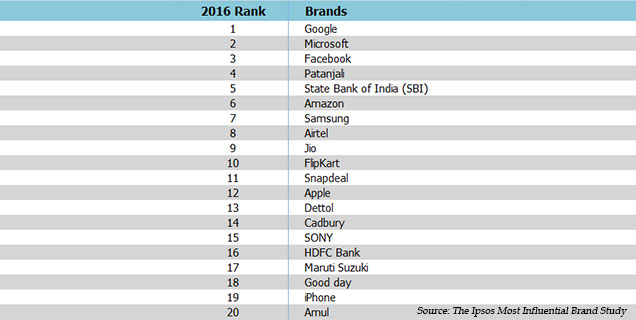
    Global research company Ipsos has unveiled its now annual Top 20 Most Influential Brands in India for 2016.  Google occupies the number one position followed by Microsoft and Facebook at number two and three respectively. Homegrown brands, Patanjali and Jio make an entry into the Top 10 ranked at fourth and ninth place respectively showing the enormous amount of influence that these brands wield in a short span of time. Both brands did not figure in the previous edition of the study.


    Among the Top 10 brands, Flipkart dropped three spots to take the tenth place while Amazon climbed a couple of steps to take the sixth place. Leading bank State Bank of India, which has been on a consolidation mode, move up four ranks to take the fifth place and is the only financial brand in the top 10.


    The Ipsos Most Influential Brand Study evaluates 100-plus brands across 21 countries and involved 36,600 interviews. In India the research covered more than 1,000 Indians online to assess 100+ brands.


    Said Parijat Chakraborty, Executive Director, Ipsos Public Affairs & Loyalty: “The Most Influential Brands are larger than life. They are aspirational. They enhance our lives – make it better. We trust these brands. We connect with them emotionally and cannot imagine our lives without them – they are influential”.


    The goal of the study, notes a communique, is to define and measure influence; to rank brands according to their influence within each country; rank brands according to their influence globally and identify what factors explain or drive the current level of influence for each of the brands at the country level and at the global level.


    Adds a communique:

    “It is important to note that the Ipsos study has measured the biggest, most well-known and/ or highest spending brands only. As a result, the Ipsos Most Influential Brand Study did not look at the entire market.

    “Interestingly, all brands that have featured in the Most Influential Brands List are those that consumer engages with on-a-daily-basis; a constant companion; an extension of consumer – Google, Microsoft, Facebook, Patanjali, State Bank of India, Amazon, Samsung, Airtel, Jio and Flipkart – if we look at the Top 10 list.

    “Next 10 – 11 to 20 too echoes the same story – these brands help the consumer define themselves better –  Snapdeal.com, Apple, Dettol, Cadbury, Sony, HDFC Bank, Maruti Suzuki, Good Day, iPhone and Amul.”

    “It’s impossible for consumers to imagine their lives without these brands.  The formula for success of Influence rides on those 5 pillars of trustworthy, engagement, leading edge, corporate citizenship and presence, “added Chakraborty.


    About the Ipsos Most Influential Brand Study (as per a communique):

    All data was collected via online panels by Ipsos across 21 countries and involved 36,600 interviews. In India the research covered 1,000 Indians online to assess 100+ brands.

    The sample is reflective of population where possible via online methodology. Within each country data is weighted back to either census population or the online age population where the representation of age groups online is skewed to younger population.

    At the Global level, countries are assigned a weight based on GDP, with higher GDP countries having a greater impact on the global influence score.

    A factor analysis was conducted using the 57 statements in the questionnaire and a total of six factors were revealed from this analysis. One of these factors contained 11 statements and was clearly the “Influence” factor. The average score across the 11 statements in the Influence factor was defined as the Influence Score for any given brand. The score was then converted to an index by dividing by the average Influence Score across all brands, multiplied by 100.

    The five remaining factors were used as attributes to help explain what makes each brand influential (as it varies from brand to brand). These five factors are: Leading Edge, Corporate Citizenship, Trustworthiness, Presence, and Engagement.


    What builds influence? How do some brands stand out from the rest? The Ipsos Most Influential Brands study shows there are five key factors that are the building blocks of influence.Trustworthy: Influential brands are trustworthy – consumers trust their message, proposition – that faith leads to consumption, patronage & relationship.

    Engagement: Influential brands engage with consumers across different consumer touchpoints. Consumers love them and want to stay connected. Brands stay relevant and constantly innovate to keep the relationship going.

    Leading Edge: They are model brands – iconic – they don’t toe the line, they are leaders – they stand out and define new paradigms – they grow the category – others emulate them and derive inspiration from them.

    Corporate Citizenship: Influential brands give back to society. Consumers patronize them as they are socially more responsible. It’s built in their ethos. Driven from the top.

    Presence:Influential brands play it big. They have astronomical marketing spends – are visible across consumer touch points with inspiring communications, visuals, adverts that are highly impactful, generating a strong consumer pull. It all hinges on placement, promotion and people.


  • M&E to touch $34.8bn by 2021: EY


    By A Correspondent


    The Indian Media and Entertainment industry is expected to touch USD 34.8 billion, witnessing a CAGR of 11.8% over 2016-21, according to a report titled ’Digital inflection point: Indian media and entertainment’, released at the FICCI-IIFA Global Business Forum in New York.


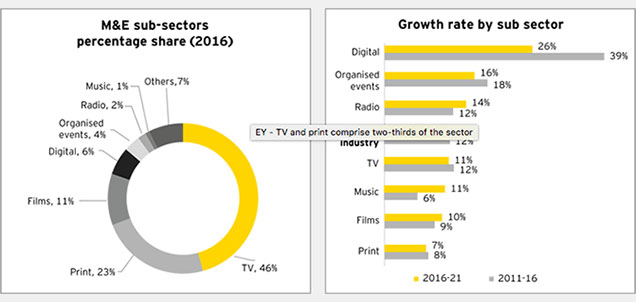
    Amongst the sub-sectors in the Media and Entertainment industry, Digital (which includes Digital advertising, advertising on mobile, OTT, etc.) is expected to register the highest growth at 26% CAGR in the 2016-2021 period. This is followed by organized sector (expected to grow at 16% CAGR), Radio (at 14% CAGR), TV (at 11% CAGR), Music (11% CAGR), films (at 10% CAGR) and Print (at 7% CAGR) respectively in the same period.


    Commenting on the report, Ashish Pherwani, Partner – Advisory, Media and Entertainment, EY said: “The Indian M&E sector is at a digital crossroads today. Every segment of the industry, including print, TV, radio, film, experiential marketing and OTT, is being impacted by digitisation, and is showing growth, consolidation and innovation. It presents an excellent opportunity for companies looking at establishing and expanding their presence in the country, and making the most of the India digital growth story”


    Added Leena Jaisani, Assistant Secretary General – FICCI: “India is home to one of the most vibrant, dynamic and differentiated M&E markets in the world. The Indian M&E industry has adapted and innovated its offerings to cater to the huge and varied demand in each segment of the industry, be it Films, Broadcast, Digital, Animation, Print or Live Events. The government has been imperative in boosting growth, investment opportunities & facilitating ease of doing business in the industry with initiatives such as single window clearance, favorable tax incentives, policies & regulations in place. Today definitely is the time to invest in Indian Media & Entertainment Industry.”


    According to the report, currently, television continues to dominate the M&E sector, with the segment accounting for 46% of the sector’s revenue share in 2016. Television, print (23%) and film (11%) segments together accounted for ~80% market share in 2016.Digital (6%), organized events (4%), Radio (2%), music (1%), and other segments (7%) constitute the other 20%.


    In 2016, total advertising spend across all segments in Indiastood at USD 8.18 billion which is estimated to reach USD 16.7billion in 2020.Print media and TV together accounted for 76.2% of the totalrevenue from advertising in 2016. Mobile advertising hasemerged as the third largest advertising medium in India afterTV and print, notes the report.


    The report also predicts the subscription market – pegged at USD 9.3 billion in 2016 – will grow to USD 15 billion by 2020.


    The report can be accessed at ey.com/in/InvestInMandE


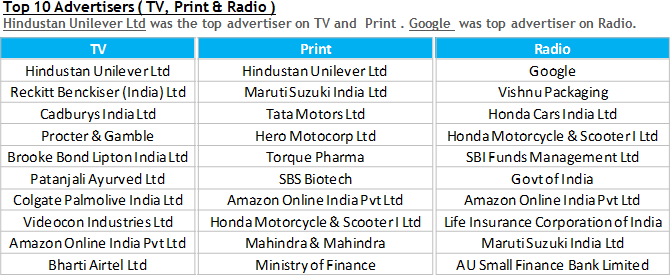
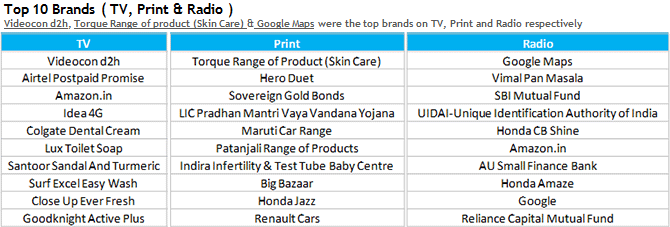
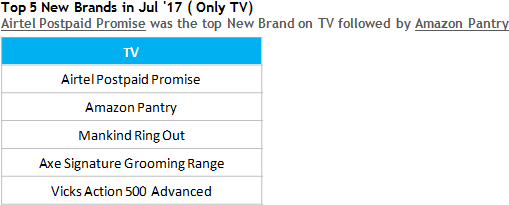
  • AdEx dips in July 2017


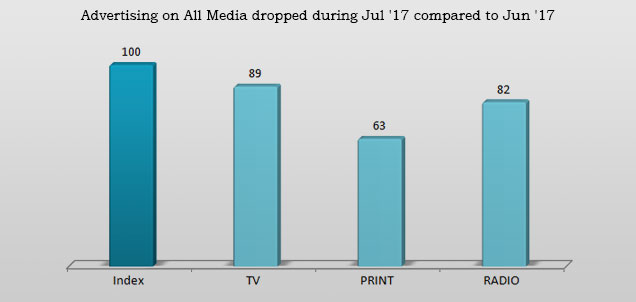
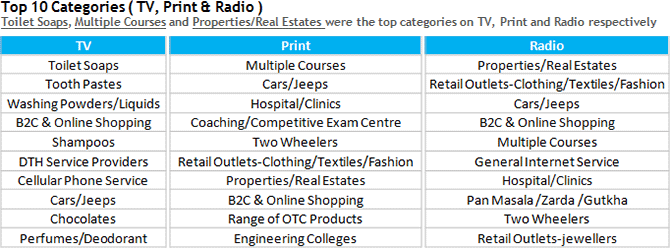
    In a special arrangement with MxMIndia, the platform trusted by discerning advertising, media and marketing professionals, ​TAM AdEx, a division of TAM India,  provides weekly scans of spends across television, print and radio.


    In addition, we also provide a monthly overview of the spends, like we are doing today. What you see below is the update for July 2017


    Read on and Enrich yourself.


  • Indian events and activations biz to cross 10k cr by 2020-21: EY


    By A Correspondent


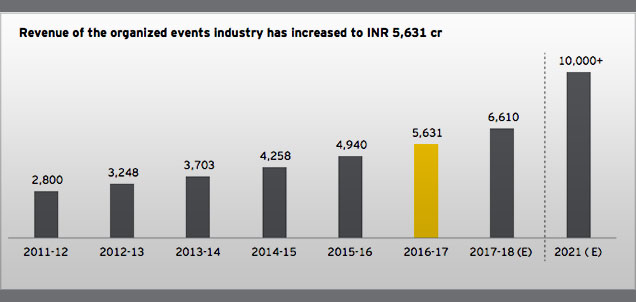
    The Events and Activations industry has grown at 16% in FY2016-17 and is expected cross INR 10,000 crore by FY2020-21 according to EY – EEMA (Event and Entertainment Management Association) report titled ‘#Experience_Next’. The key insights in the report suggests that average number of events are increasing across all formats, Government spending is expected to grow at 14% and sports is expected to grow at 18% over the next 5 years, wherein India attributes to 1% if the global sports market.


    Said Ashish Pherwani, Partner and Media & Entertainment Advisory Leader, EY India: “The Events and Activation industry is growing at a fast pace and is expected to further grow exponentially due to its ability to adapt and grow with innovative technology. With focus on newer avenues such as sports leagues, rural expansion, digital activations, increased Government marketing initiatives etc., we see events industry surpassing overall growth rate of M&E industry.”


    Added Sabbas Joseph, President, Event and Entertainment Management Association:“Event management has now transformed into experience creation with amalgamation of technology, innovative ideas and creative content. The Indian economy has undergone a lot of changes in the recent past and the Events and Activation industry has come out unscathed. This demonstrates the industry’s strength and ability to get things done under any circumstances.”


    According to the report which is based on a survey of 64 event management companies and 31 marketers, overall the events and activations industry is expected to grow from INR 5,631 cr in 2016-17 to INR 10,000+ cr in 2020-21. The organized events industry is growing faster than the 11% – 13% CAGR of the Indian M&E industry. The key growth drivers for the same are digital activation, sports leagues, rural expansion and government initiatives followed by IPs, personal events, product launches, expansion of mini-metros and BTL spends.


    Some more snapshots of the findings from the report on the current scenario:

    [] Managed events is still the largest segment, with around 90% of respondents providing these events

    [] Average IPs and activations per respondent have doubled since 2013-14, while average digital events per respondent have shown a 9x growth since 2013-14

    [] There is a fall in proportionate revenue generated by activations from 31% in 2015 to 22% in 2017, showing that there is a distinct move to digital activations

    [] More respondents are providing services internationally – up sharply from 8% in 2011 to 56% in 2017

    [] Around 75% of all respondents’ clients were corporates

    [] Technology, FMCG, auto, media and entertainment and telecom are the largest users of the Events & Activations industry

    [] An average of 26% of the total employees of the respondents consist of women employees


    And on opportunities for the industry:

    [] Digital is driving growth, as respondents felt that marketers spends on digital events would grow at 20% over the next two years

    [] Most respondents felt that sports would significantly grow at 18%

    [] Most respondents expected ticketed events to witness a moderate level of growth in the next 2-3 years

    [] 95% of the survey respondents agreed that rural events and activations would gain increased importance over next 2-3 years

    [] Over 85% of respondents plan to launch new products or properties in the next two years, and almost a fifth of respondents will launch 3 or more products

    [] 73% of marketers expected their BTL spends to grow during the next two years, with 43% expecting growth to be over 10% per annum

    [] Digital integration was either important or very important for the events of 90% of marketers


  • Hansa Research partners MSW-ARS for measurement service in India

    By A Correspondent


    Hansa Research and MSW-ARS have announced a partnership to launch a communication measurement services in India. A range of methodologies incorporates both System 1(Neuro, Bio) and System 2 (Cognitive) measures to obtain deeper insights and provide superior guidance to their clients.


    MSW-ARS is a specialised communications research firm headquartered in New York and operates in 40+ countries and works with marketers like Abbott, Beiersdorf, Diageo, Disney, Essilor, GSK, Intel, PepsiCo, P&G, LOréal, Merck, Sanofi, etc.


    Said Ashok Das, MD of Hansa Research Group: “We are extremely happy to announce our tie up with MSW-ARS of USA, the pioneers and world leaders in Communication testing, measurement and strategy.  With this tie up, we bring a significant range of services to the Indian market, thereby helping our clients optimize their multimedia communication from the idea stage to the final execution stage: and also measure and improve the ROI of marketing investments, says Ashok Das, MD of Hansa Research Group.”


    Added Steve Jagger, MD of MSW-ARS: “In Hansa Research we have found a solid and capable partner to serve the Indian market. Hansa brings to the table decades of understanding the Indian markets, best in the country field infrastructure and an extremely talented experienced research team. Our collaboration will work across the brand building continuum from strategic studies to measuring new creative ideas to in-market measurement.  Everything we do is focused on improving our clients financial return from branded activities.”


  • HDFC Bank stays #1 in BrandZ India study


    By A Correspondent


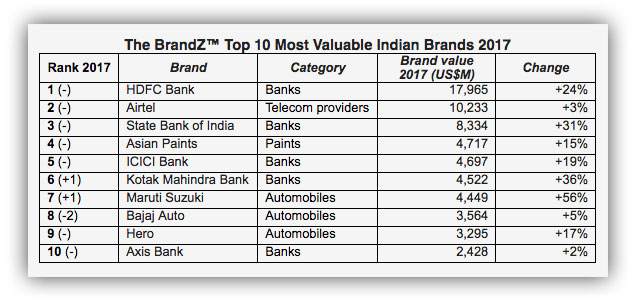
    India’s most valuable brands have increased their brand value by 21% to US$109.3 billion in the last year, according to the BrandZ Top 50 Most Valuable Indian Brands 2017 announced on Wednesday by WPP and Kantar Millward Brown. This compares with a 2% decline in 2016, and is well ahead of the 8% value increase of the BrandZ Top 100 Most Valuable Global Brands 2017.


    HDFC Bank (24%) is India’s most valuable brand for the fourth year running, almost doubling its brand value since the ranking started in 2014 from $9.4bn to $18.0bn. It has a strong purpose – to improve lives by bringing world class financial services to all sections of India – and demonstrates it through increased access to banking in rural areas, an expanded digital presence and leveraging the latest technology to simplify its offering for customers. BrandZ data shows that consumers perceive the bank as increasingly innovative.


    The BrandZ ranking and report highlights the success that many Indian companies have had in 2017 with managing their most important intangible asset: their brand. For many that has been driven by a rapid response to rising consumer optimism, and evolving to meet people’s needs as their financial circumstances, preferences and expectations change.


    Said David Roth, CEO EMEA and Asia, The Store WPP: “Indian consumers seek authenticity and value for money, and the meaning of those things is being constantly redefined. As consumers become wealthier, they look beyond price to factors like extra features, innovation and a personalised experience. As reflected in this year’s ranking the most agile Indian brands have recognised the complexity in the market, and achieved just the right balance between aspirational and affordable.”


    The automobile category, which also includes tyres, lubricants and motor fuels, grew 23% in value. Brands responded to the changing market with new models that combined smart pricing and functionality with style and power. Royal Enfield, Maruti Suzuki and TVS were among the Top 10 overall fastest risers. Royal Enfield (no.40, 59%) engaged with biker groups on social media, and marketed a range of accessories. Maruti Suzuki (no.7, 56%) extended the brand beyond its traditional appeal to the value segment of the market, while introducing new showrooms called NEXA to reach premium customers.


    According to a communique, the India Top 50 have faced successive disruptions in the last year, some global, some created by fast-growing competitors and others strategically imposed by the government – including demonetisation.


    The FMCG category, which includes alcohol, food and dairy, personal care and soft drinks, was significantly affected by these challenges but still managed to grow 6% in total value. Some brands achieved impressive value increases by accurately understanding and responding to Indian sensibilities. Noodle brand Maggi (no.32; 66%), the overall second-fastest riser, aligned itself with the trend for nostalgia. This helped it bounce back after a difficult couple of years; its rapid regrowth demonstrating how a strong brand can help a company weather a crisis and recover faster, although it is still some way below its peak brand value of $1.1bn in 2014. Health food brand Saffola (no.36; 24%), meanwhile, introduced oats in new localised flavours and expanded its range of oils into a new super premium sub-segment.


    The financial services category increased its value by 26%. The fastest rising banks were Punjab National Bank (no.39; 43%), which is highly customer-focused and more agile than some of its competitors, and Kotak Mahindra Bank (no.6; 36%), which has innovated in areas including digital banking. Both of these brands still have significant catching up to do, however, if they are to reach the top of the leader board.


    Other trends highlighted in this year’s BrandZ Top 50 Most Valuable Indian Brands include:

    :: There are seven newcomers to the ranking. Telecom provider Jio ranks at no.11 only months after its launch, having disrupted its category with free-data promotions. The others are newly listed retailer D-Mart (no.24), appliance brand Whirlpool (no.45), insurance brand Bajaj Allianz (no.49), Canara Bank (no.50) and entertainment brands Sun Direct (no.27) and Dish TV (no.47)


    :: The long-term growth curve of the Top 50 is positive, with the total brand value of the ranking up 57% since the study was first carried out in 2014, when it amounted to $69.6bn


    :: India experienced a resurgence in national pride, while also embracing globalization. This manifested in a desire for products and brands that best reflect Indian heritage, sensibilities and tastes, which benefited local brands and put pressure on multinationals to follow suit. Colgate (no 28; 2%) launched a toothpaste with Ayurvedic properties to meet this demand


    :: The top riser is insurance brand ICICI Prudential (no.35; 89%). It benefited from the ‘halo effect’ of other brands’ successful responses to rising consumer affluence, which led to an increase in sales of assets such as cars that need insurance protection


    Said Vishikh Talwar, Managing Director, Kantar Millward Brown, South Asia: “There are now ‘multiple Indias’. Consumers continue to love the brands they’ve loved for generations, while equally embracing the brands of the future. Brands must be completely in rhythm with the pulse of the market. Those that can accurately interpret Indian sensibilities, while ensuring smart pricing, are likely to be most successful. This is easier for local brands, but people will relate just as positively to a global brand if it uses insight to understand and meet their needs, and communicate in a way that builds trust.”


    According to a communique, for the first time, this year’s BrandZ Top 50 Most Valuable Indian Brands 2017 study incorporates new research from Y&R’s BAV Group into what it takes to build powerful nation brands. According to the 2017 Best Countries report, India stands out for its history, cultural influence, distinction and reputation for entrepreneurship; especially among the world’s business decision-makers. Because there is a strong relationship between how people perceive a country and how they view the brands associated with it, India’s reputation has a significant impact on the global power of its brands.


  • Digital infra will boost OTT: KPMG


    By A Correspondent


    KPMG in India brings this report at a crucial juncture when the era of on-demand content has reached a tipping point with consumption shifting to the mobile screens and going ‘mass’ – particularly on the back of a successful 4G roll out. OTT consumers will demand seamless access to services, compelling stories and value for money.  As the OTT landscape gets hyper competitive, organisations which are able to tick all the above boxes may stand a chance to emerge as the preferred platforms for consumers. To pivot from their traditional businesses, media organisations would need to commit zealously to an organisational transformation initiative, which aims to harness the collective energies of all stakeholders towards a single minded ‘Digital First’ cause.  Right from telling the digital story to the internal stakeholders to implementing the digital architecture on ground, each step in the digital transformation process holds the key to survival and potentially to success in the market.

    The report gives an insight into the key themes of the Indian OTT market, key pillars of success for an OTT platform, roadmap to a digital transformation journey divided into four significant phases from a digital vision and strategy, customer proposition, business design and execution planning. The report also delves into operationalisation of the actual pivot of a traditional technology organisation into a digital avatar, highlighting two nodal frameworks for digital enablement, strategy and architecture realisation. The last section highlights the critical considerations for implementation of digital initiatives.

    Commenting on the OTT evolution in India and road ahead for digital and digitising businesses in India, Girish Menon, Co-Head, Media and Entertainment at KPMG in India, said “OTT consumption in India has reached a tipping point, with the 4G rollout and related data wars which have resulted in a dramatic and rapid growth in internet penetration and video consumption.  This has also fundamentally altered the consumption demographics and patterns, with OTT viewership becoming more mass.  Organisations can no longer afford to take baby steps and will need to wholeheartedly commit to build out their digital businesses.  However, pivoting to a digital business requires a change in organisational DNA and a ’digital first’ mindset. Building a digital business is an evolving process and organisations would need to adopt a systematic approach balancing scalability and flexibility with speed to market and customer centricity.”


    The ‘Over the top’ (OTT) video consumption in India has rapidly evolved over the last year, given the advancements in digital infrastructure and efforts by platforms to create compelling content for consumers at price points which provide value.


    Market potential

    Growing internet penetration and data consumption is likely to help increase digital advertisement spends in India at 30.8 per cent CAGR between 2016 and 2021 with mobile advertisement spends and social media aided digital video advertisement spends expected to grow at 50.9 per cent and 40 per cent CAGR between 2016 and 2021 respectively.

    The OTT landscape in India is punctuated by the following key enablers, around which both the growth of the segment as well as potential success of platforms are woven.


    Digital infrastructure

    The mass launch of 4G services by Reliance Jio in H2, 2016 and subsequent launches by incumbents was an inflection point in India’s data story. This disruption led to a rapid surge in data usage on the back of promotional offers by all leading telecom operators.

    Further, other enablers such as Government of India’s ‘Digital India’ initiative, growing usage of affordable smartphones, rising internet penetration in rural India and rapid growth of digital payments has further strengthen India’s digital infrastructure. This has resulted in video dominating data consumption, which is expected to continue to grow in the near future.


    OTT content consumption and evolving trends

    The OTT content consumption is evolving from niche to mass based content and long form content is gathering traction. The increased popularity of large screens and investments in original content creation is further driving the consumption. Live streaming has emerged as a focus area for OTT players, with the sports genre especially attractive from a viewership and monetisation point of view.


    OTT distribution

    The OTT distribution landscape is dominated by own platform players, although social media platforms YouTube and Facebook still constitute a major chunk of video viewership in India. With telcos betting big on data, partnerships with telcos is also emerging as an important medium to reach a fairly large, and a mass user base.


    Monetisation models and associated challenges

    While Advertisement Video on Demand (AVOD) remains the primary source of monetisation for the OTT players in the country, the Subscription Video on Demand (SVOD) and Freemium models are seeing traction, largely on the back of compelling content, including sports. Sponsored content has also emerged as an important monetisation tool, with brands baking in the advertising messages into the content itself.

    The growth in monetisation though, is partially held back due to challenges around digital viewership measurement and rampant content piracy which must be addressed in order to realise the true potential of OTT platforms and build a sustainable model in the future.

    Further, digital video businesses require high investments, and returns are currently not commensurate given the still evolving business models. Media organisations are currently attempting to bridge the gap between market share acquisition and economic viability, as they attempt to build long term sustainable digital video businesses.


    Changing consumer demands mandate companies to transform digitally

    When users stream videos on their mobile phone through an OTT platform, little do they know the entire digital infrastructure that is set in motion to ensure that the content streams flawlessly. It is this internal infrastructure that defines the ‘OTT player of today’, and is a key ingredient for ensuring continue success in the competitive OTT landscape.

    The adoption of digital infrastructure has evolved from resistance towards digital technologies to their mass adoption. Success in the digital world is dependent on various factors such as time to market, customer experience and the will to constantly innovate and change with the relevant developments in the market. This requires OTT platforms to identify and design digital solutions comprising strategies to predict, influence and respond to customer behaviour.

    Building a successful digital video business in the long run requires sustained commitment to the digital transformation process and a ‘digital first’ mindset.


    Digital transformation rests on four pillars

    The path to digital transformation encompasses a holistic approach including; clearly defining the organisation’s digital vision and strategy, thorough understanding of the customer proposition, accurately assessing the business design and, finally, carefully designing the execution plan.


    Key drivers for successful digital transformation:

    :: Innovation focussed mind-set: Innovation has become hygiene for OTT players, given India’s crowded platform market. For a fruitful digital transformation, it is critical for the leadership to evaluate their business through a number of facets and set up in-house labs to drive both internal and consumer focused innovation. Companies could also look to set up incubation centres in the form of accelerator programmes, or partner with third-party innovation labs.

    :: Integration across organisational DNA: Digital transformation requires a holistic strategy that permeates across the entire organisation including front, middle and back offices. The OTT organisations should move past silos that have a traditional media (for eg: TV) bias and adopt a ‘Digital First’ mindset.

    :: Data analytics: Data has evolved in type, volume, and velocity with rapid uptake of digital technologies. It has become a new currency and key for OTT players to understand the consumers and decode their viewing patterns. Big data technologies along with advanced analytics help answer key content and engagement questions, enable quick reaction and draw meaningful and actionable insights to fuel the customer facing productivity and enhance overall performance of the platform.

    :: Data protection and IP security: With OTT business models inherently digital in nature, data and content security has become even more paramount. It is vital for the platforms to protect data and content across systems, devices and the cloud.


    A successful transformation needs a strong technology foundation

    A strong technology foundation acts as the backbone of any digital transformation initiative.

    The pivot from a traditional IT to ‘today’s’ digital function is underlined by an architecture that is agile, flexible, and is able to deploy technology frameworks to give quick insights for decision making around customer behaviour and content strategies.

    The ‘all-in’ commitment of the entire organisation to the cause is a non-negotiable and is a precursor to embarking upon the technology deployment.

    In conclusion, the digital transformation journey of a media company comprises a marked strategic shift, with customer centricity at the core, and an internal thinking process that needs to change the organisational DNA into ‘Digital First’ mind-set.
  • A wee bit of a rise in Sept 2017 AdEx


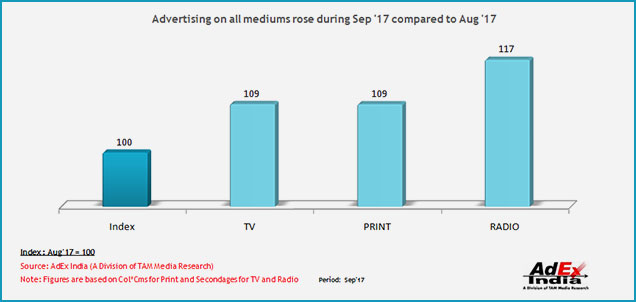
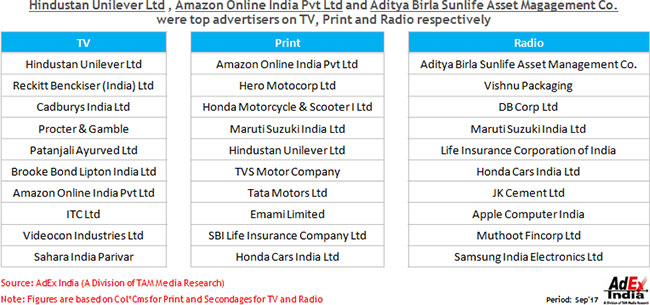
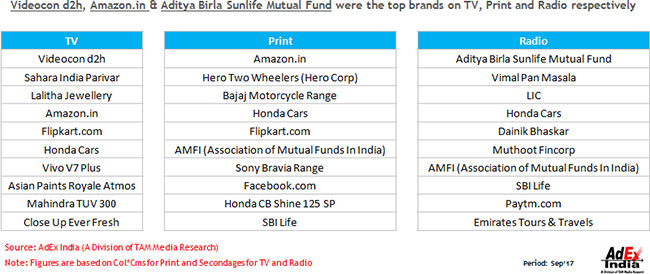
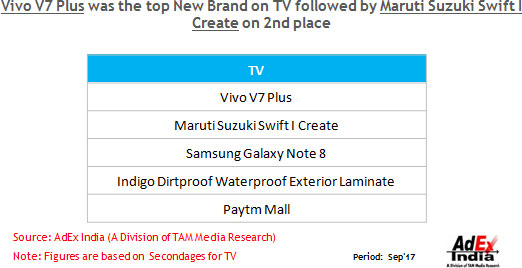
    The world knows this. In a special arrangement with MxMIndia, the platform trusted by discerning advertising, media and marketing professionals, ​TAM AdEx, a division of TAM India, has been providing weekly scans of spends across television, print and radio.


    Here we bring you the all-important early indicators of how festive spending has been in September 2017.


    Read on and Enrich yourself.