Category: RADIO

  • BIG FM among 100 most successful brands in Power Brands 2012

    By A Correspondent


    BIG FM has been named amongst the 100 most successful brands of the nation in Power Brands 2012. It is said to be the only radio network to get on the list this year. The brands were selected through one of the most extensive surveys conducted panIndiaover a research base of 20 centres and 5,000 respondents.


    In addition to BIG FM, the mega launch of the second edition of Power Brands saw brands like Apple, IPL, LUX, Sunsilk, Hero Motocorp, McDonalds, Airtel, HP and SBI Bank being honoured as part of the 100 Power Brands. The Power Brands Hall of Fame ceremony also took place, along with the book launch which salutes icons and leaders who have carved a niche for themselves with their remarkable strategies and vision.


    Rabe T Iyer, Business Head, 92.7 BIG FM said: “This recognition speaks volumes of the efforts put in by our associates across the country over the years in living the promise of ‘Life Banao’. This is the first time that a radio brand got into the power-brands, which highlights the power of the medium and its effectiveness. We are humbled by this honour and would like to thank Power Brands for this credit, as we stay committed to offering value to our stakeholders.”


    The second edition of Power Brands provides a bigger platform for the brands to stamp their authority. The ‘Power 100’ exemplifies the 100 most successful brands of the nation.


  • Vidyut Patra is Red FM’s new Station Head-Mumbai

    By A Correspondent


    Red FM has appointed Vidyut Patra as Station Head for its Mumbai station. At Red FM, Mr Patra will be responsible for strengthening the revenue stream and the brand for the Mumbai station. He will report to Nisha Narayanan, senior vice president, projects and programming, Red FM.


    Ms Narayanan said, “Vidyut Patra has extensive experience across revenue, brand and content domains and will add immense value to the station and the brand. We are delighted to have Vidyut on board and look forward to his work at Red FM.”


    On his role at Red FM, Mr Patra said: “I’m very excited to come on board and given RED FM Mumbai’s history of exceptional talent and genre-defining content, I look forward to further strengthening the ‘Bajate Raho’ proposition of the brand and  the exciting times which lie ahead.”


    Mr Patra comes from a strong broadcasting background. He spent his last 4 years at Viacom 18 handling various responsibilities for MTV, prior to which he has been with INX Media and Star India Pvt Ltd.


  • RadioCity celebrates eleventh anniversary

    By A Correspondent


    RadioCity started its operations in July 2001 in Bangalore. On July 3, the FM radio brand, promoted by Music Broadcast Private Limited (MBPL) celebrated its eleventh anniversary.


    At the same time RadioCity announced the launch of its new web radio station, ‘Freedom Radio’ on Planet RadioCity. Freedom Radio is said to be India’s first dedicated web radio for Indie music on Planet RadioCity.com.


    ‘Freedom Radio’ will showcase independent artists from across genres like dub-step, electronica, folk, rock, sufi who will express themselves in diverse languages like Assamese, Malayalam, Bengali , Punjabi apart from Hindi and English. It also attempts to be a platform that supports talent across the country.


    After the launch of IndiPop Radio and now Freedom Radio, Planet RadioCity aims to launch three or four more web radio stations this year. A devotional station will be one of the web radio stations in the pipeline.


    In addition to these developments, the Planet RadioCity.com website is also expected to undergo a revamp by next month or so. Speaking to MxMIndia, Ms Rachna Kanwar, SVP & Business Head- Digital Media and New Business said: “The revamp should happen by next month or so. The site will not only be more interactive but, will also have more web 2.0 features, for instance social media will be more integral to the website, more interesting apps will also be added and so on. There is a shift on how music is consumed today. We recognize this shift and are therefore making our online offering as robust as possible. There is a growing trend of people listening to music online in India as well and sooner than later it will become a primary source of listening.”


    Ms Apurva Purohit, CEO, Radio City said: “As thought leaders we had to give something really refreshing and new to the audience who have supported us for 11 years. India is blessed with diverse and rich repertoire of original music and sound. Lot of these brilliant musicians does not get the platform they deserve and therefore the music never reaches the connoisseurs. On the occasion of our 11th anniversary, we at RadioCity give these Indie artists a dedicated platform by launching ‘Freedom Radio’ on planet RadioCity .com. This web radio stream is a dedicated channel that offers original Indie music to Indians across the globe. We hope the young audiences who are on the lookout for fresh sound find our offering satiating their need.”


    ‘Freedom Radio’ was ushered in by celebrating the ‘Freedom Hour’ on July 3, 2012. Between 10am and 11am, RadioCity brought in ‘5 bands across 5 towns’ to perform simultaneously for the first time on Indian Radio to announce the launch of ‘Freedom Radio’.


    ‘Freedom hour’ had live performances by bands as diverse as Aks, Highway 61, Tatva Kundalini, Pratigya, Dedh Inch Upar and singers such as Kavita Seth, Akashdeep Gogoi, Sanjeev Thomas & Harsha Iyer. ‘Freedom Radio’ theme song ‘Hum Sab Hai Yahaan’, a collaborative composition of independent artists and bands set the perfect mood for the launch.


  • Slow and not-yet-steady…


    By Robin Thomas


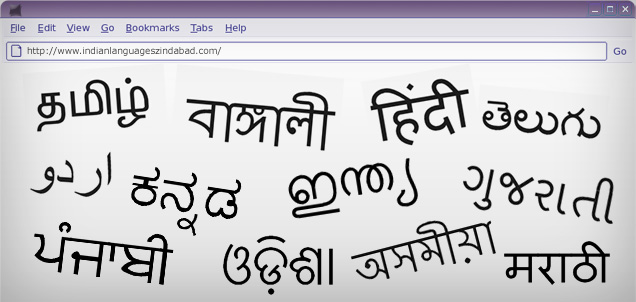
    India is a country where majority of the people don’t speak English and its media – print, television and radio, specifically – have a larger share of local language content. But the same cannot be said about the internet, at least now. The internet in India is still, by and large, dominated by the English language content. According to the ‘Internet World Stats’ 2010 report, after English, Chinese is the second widely used language on the internet followed by Spanish, Japanese, Portuguese and German. These results, perhaps, assure India that there is immense scope for Indian language content to not only flourish, but also increase user interactivity.


    Take for instance, i-Cube report 2011 by IAMAI-IMRB which states by December 2011, there were 121 million claimed Internet users. There are 90 million (70 mn in urban cities and 20 mn in rural villages) users that use Internet at least once a month (active Internet users). Of the active Internet users in urban cities, 26.3 million access Internet through their mobile phones. This has been the most recent change in the access behaviour and it is expected that this trend will continue to grow in the immediate future.

     

    BG Mahesh

    Mr BG Mahesh, Founder and MD, Oneindia.in observed: “Whatever is happening in print and TV will happen on the Internet. The language pie is far bigger than English in print and TV. English will also grow, but the language pie will be very large.”


    Even as the internet consumption rapidly grows, the Indian language content has also been evolving over the years. According to industry estimates, the search volume in Indian languages is less than 2 per cent of the total search that takes place online. The online growth of Indian language consumption is mainly said to be because of video consumptions.


    Hemant Jain

    Mr Hemant Jain, Senior Vice President, Hungama Mobile pointed out the need for relevant language content and the need for increasing access of language content to the consumers. “I believe that not only there is a need of content in local languages, but more importantly the content should have local context for it to be more relevant for the consumer. The challenge in increasing access to content in Indian language includes the standardization of fonts and internationalized domain names, an issue the Indian government is already working on. The two biggest challenges I foresee are bandwidth infrastructure to deliver ease of access and local language to drive mass adoption.”


    With online video touted as the next big thing for content consumption in Indian languages, there has been an increase in the Indian language video content found online, which may be due to the fact that video has more takers than written content.


    Some steps are said to be taken to increase local language content for instance, Raftaar, a Hindi language search engine developed by Delhi-based research firm Indicus Analytics, debuted earlier this year. Local language newspapers have gone online: webduniya.com offers content in Hindi, Tamil, Telugu and Malayalam. Malayala Manorama is another local language paper offering news online in Malayalam language.


    “There was a time when we saw 85 per cent of our traffic was from NRIs. Post 2007, we saw the page views increasing from India, now we get over 60 per cent of our traffic from India. The broadband penetration, mainly due to BSNL, has helped the growth of internet in non-urban India. Also, most schools have internet in their curriculum. So children lead the usage of internet at homes and other members have felt they might as well use the internet” added Mr Mahesh of Oneindia.


    As far as search in Indian languages is concerned, there have been efforts to localize the content. Google, for instance, in search has ‘transliteration’ which allows users to type Indian languages using Latin text. Google also has search options in the Indian languages and is said to be working proactively with the government as well as content companies in India to come out with a solution that would increase Indian language consumption on larger scale.


    Lalitesh Katragadda

    Mr Lalitesh Katragadda, Head of Products, India-Google, pointed out the need to solve the language consumption problem in order to increase the number of internet users. “We are going to rapidly run out of users if we don’t solve the language problem, which is making the internet work for Indic users. The challenge is that the Internet for the next 3 billion users will not be built by websites alone, or by monetary interests, which has driven the Internet for the first billion and a half. The Internet for the next 3 billion users will, by force, have to be built by the users themselves. For example, AdSense allowed a way for people to monetize their content, which got the content ecosystem to flourish and so on.”


    Mr Arpan Chatterjee, experienced online media professional and consultant with webdunia.com stated: “Lotof work is happening on this front, with Indian language search engines and Google having Search in major Indian languages. Major social networking sites are also now getting into Indian languages. But the availability of quality Indian language online content is still limited, except for some news portal of large Hindi or regional newspapers.”


    Arpan Chatterjee

    Also monetization of language content is a challenge today as there is not enough language content, and as a result, there is little or no language consumption online. There is a need to drive up language content in the online space. According to Mr Mahesh, not only is the government support crucial for this development, but the publishers too must take steps to help increase language consumption. “One needs a lot of patience and sustaining power to do well in the Indian language space. There are many opportunities in this space – ecommerce will be a reality in the language space in the coming years. With mobile internet becoming big one can think of providing various language services for the massive mobile user base in India,” he added.


    Nevertheless the growth of consumption of Indian language content may take some time as the broadband penetration in India is still very low. Another avenue, as pointed out by Mr Mahesh is, to look at is the mobile, as it is believed that the next phase of the internet explosion will come from mobile. Mobile, which is one of the highest penetrated devices in the country today, is expected to not only expand the internet usage, but also bring in more user participation which may result in the development of more Indian language content.


    Mr Chatterjee is of the view: “With more than 70 per cent penetration in mobile phone connections in India , and internet on mobile touching close to 100 million users, with more than 40 per cent being only mobile web users – only accessing the web through mobile. Mobile is the medium which can drive Indian language usage to a new level. Even in countries like Bangladesh, mobile payment solutions have helped get into interiors of the country.”


    With multiple devices now opening up opportunities – smart phones, tablets, and so on which are likely to spur language consumption online and mobile, government support is again is equally crucial, believe industry players. Access to mobile internet must be made at affordable rates especially with the arrival of 3G. “Mobile internet browsing is pathetically slow in India. 3G has arrived, but it is not affordable for majority of the users. Affordable, fast mobile internet plans and font support will change the mobile internet scene in India” said Mr Jain.


    Although the Indian language content in the online space has evolved over the years, it is said to be witnessing a slow adoption of its content especially from publishers mainly because of monetizing challenges. Digital players believe that like print, television and radio, Indian language consumption in the online space will also grow faster and soon have bigger share than the English language. One of the main reasons for this to happen is estimated to be because of the expansion of literacy rates and the increasing broadband and mobile penetration. ” India, with a much larger youth population, needs to put more focus on language online content and use mass channels like education portals, government services websites into multi lingual formats to drive language usage,” concluded Mr Chatterjee.

     

  • BIG FM hosts Twenty20 World Cup trophy display

    By A Correspondent


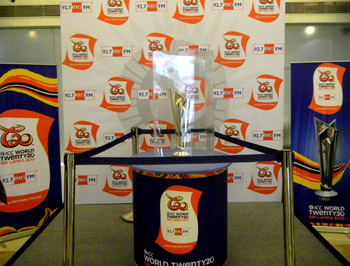
    Reliance Broadcast Network Ltd’s radio vertical 92.7 BIG FM announced its set up as the official FM Radio Partner for the fourth edition of the ICC World Twenty 20, Sri Lanka 2012 in Delhi. The announcement was made as they hosted an exclusive display of the prestigious trophy at an exclusive closed door preview at Maples Emerald, New Delhi.


     

    The elegant, glittering, 7.5 kg trophy was unveiled for key partners from advertising agencies and top clients across FMCG, retail, banking, pharma, manufacturing and other sectors.


    As the official FM Radio Partner for the ICC World Twenty 20, 92.7 BIG FM will get to display the trophy in Mumbai as well, which is scheduled to happen next week. It will also mean exclusive access for the station to players from India and abroad during the course of the tournament.


    Exclusive interviews and bytes from players and other match officials will be aired first only on 92.7 BIG FM. In order to promote the tournament on-ground, 92.7 BIG FM will conduct a number of T20 matches for listeners across cities, who will fight for the BIG T20 CUP, the winning team here will also get the rare opportunity to witness a match involving India in Sri Lanka.


    According to the latest RAM ratings, 92.7 BIG FM with a listenership of 1076 (age group 24yrs -34 yrs) in the 7am-11am time slot is the No. 1 FM radio station in New Delhi.


  • MIB starts Facebook page for community radio

    By A Correspondent


    In a bid to establish a direct communication between the Ministry of Information & Broadcasting and various stakeholders of community radio fraternity in the country, the ministry has launched a dedicated page on Facebook- ‘Community Radio India’.


    The objective of the page is to disseminate community radio information to a wider public and engage with over 134 operating community radio stations of the country and other stakeholders. The page will update the stakeholders on status of licences, screening committee meetings, permission agreements, clearances for new community radio station, consultations and events.


    This platform would also enable community radio stations to share information about their radio programmes, upcoming events, success stories, photographs and their challenges.


    ‘Community Radio India’ page also aims to encourage new and aspiring stakeholders of community radio by regularly updating them on CR policy, guidelines and by answering their queries. The information shared through ‘Wall’ posts will not only be helpful for them but would also inform individuals interested in community radio.


    The Facebook page on community radio not only portrays the vibrant history of community radio movement in the country using ‘Timeline’ feature but also hosts key documents related to policies. The page also carries frequently asked questions (FAQs), relevant documents and photo albums of key events. The ‘Wall’ on Facebook page would facilitate discussions while enabling a participatory communication channel on issues pertaining to community radio stations.


    The scheme has been identified as a core intervention during the XII Five Year Plan and it is expected that the Plan period would see a quantum jump in the number of Community Radio Stations set up in the country.


  • Brands go 360-deg with FM radio activations


    By Robin Thomas


    Brand activations or on-ground, on-air activations by FM radio stations is not a new phenomenon in this country. In fact, it could be said that most FM radio stations boast of having a dedicated unit to service the needs of their clients.


    Brands today realize the need for a 360-degree presence across mediums so that they can be where their consumers are and directly interact and engage with them. Hence the on-ground activations by radio stations give an added advantage to the brands as the activation is also hyped in the on-air programmes they execute.


    Take for instance the Asian Paints ‘Lift Kara De’ campaign executed by Radio City Connect. RadioCity Connect had tied up with the dabbawallas of Mumbai and placed around 15,000 sweet boxes inside the dabbas. The activity was spread across various restaurants and some Cinemax outlets in Mumbai.


    Apart from the Asian Paints’ campaign, Radio City Connect is also said to have executed a 12-city campaign for Renault Pulse and a 72-location activation plan that involved RWA, corporate park and mall activations. This campaign is said to have generated more than 6,000 leads for the client, along with 1,000 people who went for a test drive.


    The same has been the case with other stations as well, where categories such as Telecom, FMCG, BFSI, Cement, Automobiles, Retail, and others have been part of brand activations. According to industry estimates, brand activations on FM radio stations contribute around 12-15 per cent of the overall turnover and is estimated to go above 20 per cent in the near future.


    Sanjay Tripathy

    Sanjay Tripathy, Executive Vice President-Head Marketing and Direct Channels, HDFC Life explained: “On-ground activations through radio stations are indeed effective with the on-air ads and promos amplifying the activations without the need for an additional media buy. It helps the brands roll out a through-the-line approach with on-air ads and promos, creating awareness and drawing footfalls for the activation. The radio station-led activations are usually properties moulded into the brand’s requirements and help reach out to the specified TG. Also the radio stations help the brands to get easy access to venues, which some brands might not normally get.”


    Ashit Kukian

    Ashit Kukian, COO and President, RadioCity was of the view that clients these days are increasingly using radio activations to connect with their listeners. “Clients are not just looking for plain vanilla advertising. They are looking for something that is different and allows a 360 degree visibility. More than anything else, they require customization; an integrated approach that involves effective use of radio, on-ground and social media. Over the years, brand integration has played a vital role in traditional mediums like print and television and now brands are increasingly using radio activation to connect to their target audience.”


    B Surender

    According to B Surender, Senior Vice President, and National Sales Head, Red FM, “The on-ground activation business is extremely important, not just from the revenue point of view, but also from the angle of providing customer satisfaction through a 360 degree approach. Radio stations do have an edge over a direct BTL agency as they provide a 360 degree approach and are better placed to give value for money solutions.”


    He added: “Brands had a lot of unfulfilled needs when it came to activation in the form of nationwide reach, one-stop-solution and proactive ideation. Initially, there were hesitations amongst clients to accept a radio station as an activation service provider. However, after the arrival of Phase II and expansion of FM stations across the length and breadth of the country, radio stations have started fulfilling the need for integrated ATL and BTL solutions. The dynamic and innovative nature of radio as a medium has enhanced the quality of integrated solutions provided to the clients.”


    The road ahead

    Today brands want to engage and interact with their consumers – they want to approach them in a unique way to create high recall value for their brand. Brand activations through radio stations are said to have more impact as compared to other mediums because of high penetration of the medium; the 360 degree promotions the activation is given and the ability to highly engage and have a two-way communication with the consumers. But what needs to be questioned is whether brand activations on radio stations are an effective option when it comes to delivering high ROI?


    Mr Tripathy of HDFC Life said that the impact of brand activations is better with radio station-led activation as on-air promos help create incremental hype for the on-ground activations by leveraging an additional medium for communication. “The costs for solo activations through radio stations, however, tend to be very high owing to the air time cost added on to the activation cost which has to be borne by the advertiser. Usually most advertisers resort to associate or partner sponsors from brands, willing to reach out to a similar TG without any conflicting business interests, to share the cost of the activation. However, this sometime dilutes the impact of the activation with multiple brands having to share the centrestage,” he added.


    FM phase III rollout is expected to add a new lease of life, not only radio stations, but for advertising options like activations on the medium. Phase III will not only further expand radio stations to newer towns and cities, particularly into tier III and IV towns but will also allow newer genres of FM radio stations, which may attract newer listeners to the medium.


    Mr Kukian of RadioCity said: “Radio activations involve a 360 degree format which ensures an all-round visibility for the client. An on-air activity when supported by on-ground activation becomes much more amplified and effective. To create an impact we need to look beyond vanilla-selling, thus activations is the segment to watch out for. Activation is going to assume greater importance in the radio space, as competition increases, the market becomes more saturated and advertisers look for unique and innovative ways to reach the target group.”


    Mr Surender of Red FM observed: “With phase III being discussed, private FM industry will get into Tier III and Tier IV cities in a big way. BTL activities in such places are being currently handled by the unorganised sector. Presence of radio players will definitely help improve the impact of experiential marketing efforts targeting semi-urban and rural areas.”


    Industry players are of the view that radio is not only an apt medium for brand activations, but in the long run, the importance of brand activations through the medium is also expected to grow. Phase III will not only bring more innovation and differentiation within the medium but, also increase the reach of the medium to tier III and IV cities and towns.


  • MIB looks ahead as Sectoral Innovation Council recommends embracing tech & new media

    By A Correspondent


    The Sectoral Innovation Council of the Ministry of Information & Broadcasting, under the Chairpersonship of Ms Asha Swarup, Retd Secretary, Government of India, on July 26 submitted its report to Minister for Information & Broadcasting, Ms Ambika Soni.  The primary objective was to design a policy ecosystem in which new ideas would be integrated into the mainstream and get converted into policy initiatives by the government.


    Ms Soni said that the issues deliberated upon by the Council would be looked into by the Ministry in the policy domain. The recommendations made by the Council in different Media and Entertainment sectors would act as a roadmap in the future. The Council, in its report, analysed the growth potential of the media & entertainment industry by recommending changes in critical areas such as broadcasting, print media, animation, gaming and VFX, Media education and films.


    The Council has made 64 recommendations in seven areas concerning the media and entertainment sector. Some of the key recommendations are:

    1. A comprehensive policy media policy that integrates all existing media segments and addresses the emergent issues. The council has recommended bringing out a National Media Policy that addresses the new media landscape.

    2. The government may look into the existing licensing procedures and requirements to ensure further liberalization and reforms in the broadcasting sector.

    3. Content innovation is required in the radio segment which would be possible only if the government comes up with a separate licensing model for niche channels.

    4. Ministry of I&B, as the policy head of public service broadcasting and community radio service could come out with a formal arrangement by which CRS could provide community based programme content to AIR and AIR could provide capacity building and training to CRS workers in content creation, management and operation of stations.

    5. The process of digitalization in DD and AIR was likely to release airwaves which after due utilization in house could be used for creating a public service broadcasting fund in line with USO fund of telecom sector. This fund could be utilized exclusively for public service broadcasting.

    6. In view of the potential in the films sector, the Council has recommended a National Film Policy that will address the role of the government vis-à-vis the private sector.

    7. Film Institutes in the country may be upgraded to ‘Centres of Excellence’. In the long term, these Centres of Excellence could become part of a Central University of Films, Broadcasting and Animation by an appropriate legislation.

    8. The government must have a National Policy for Animation, Gaming and VFX.

    9. The government should go for co-production treaties in the animation sector to ensure flow of international projects toIndia. Ministry could also consider giving responsibility to the Children’s Film Society and Doordarshan to produce animated content and create Indian IP.

    10. Reliable Single Source Data on all mediums of advertising should be made available by the government so that advertisers are able to take decisions on reliable data.

    11. Government should interact with key stakeholders and expedite a consensus on developing an alternative to TAM so that an appropriate mechanism is developed with industry participation to study audience viewing and listening behaviour and bring out reports on weekly basis.

    12. Government should regulate media education to ensure orderly growth of the discipline as part of higher education.

    13. Like medical education and technical education, Media Education to be regulated by a new organisation known as Media Education Council. The Media Education Council should be assigned the task of setting up curriculum for all levels, so that standardised curriculum with national accreditation becomes a possibility.

    14. There is need to make IIMC, FTII and SRFTI into real centres of excellence.

    15. The government should reformat the course curriculum, improve faculty of the institutes. These institutions could either be separate universities or become a part of one central university.

    16. National Awards for Innovation in different segments of M&E Sector be instituted by the ministry.

    17. New Media should be utilized for media campaigns by the government.

    E-mode transactions should be a priority for the functions of DAVP, RNI, CBFC and licensing activities of the Government for ensuring transparency.


    The Sectoral Innovation Council was set up on July 28, 2011 as part of the Government of India’s initiative of declaring 2010- 2020 as the Decade of Innovation. Accordingly, the Government set up a National Innovation Council with Mr Sam Pitroda as Chairman and 16 distinguished members. The members of the I&B Sectoral Innovation Council comprised of Chairperson, Ms Asha Swarup, retired Secretary, Government of India and 10 other distinguished members from the field of media and entertainment.


  • Rohan Chandran jons Big FM as Station Head in BLR

    By A Correspondent


    Big FM has announced the appointment of Rohan Chandran as the station head for its Bangalore station. In his new role, Mr Chandran will report to Mr Ashwin Padmanabhan, Regional Head – North and South, Big FM and will primarily be responsible for the overall running of the Bangalore station along with revenue generation.


    Mr Padmanabhan said: “We are very excited to have Rohan on board who comes with a pedigree of success from his previous professional stints and has sharp insights on the consumers in Bangalore and South. We are confident that with Rohan at the helm, 92.7 Big FM will further cement its position as the leading media brand in Bangalore and Karnataka.”


    An engineer by education, Mr Chandran brings with him over nine years of experience. After his MBA from Management Development Institute in 2003, he joined Maruti Suzuki India, as the Territory Manager (Sales) for Kerala. In 2007, he moved to Reebok India where he was the Regional Manager-South for Sales and Retail operations.


    Mr Chandran said: “I am very positive about the opportunities which lie ahead of us. The team in Bangalore is young, dynamic and focused and we will together be able to further fortify the standing in the market. I look forward to working with 92.7 BIG FM in the next phase of my professional journey.”


  • Red FM launches Crime Ki Keh Ke Lenge

    By A Correspondent


    This summer seems to belong to superheroes on screen and we loved seeing them beat up the bad guys. But on August 06, 93.5 Red FM will launch ‘Crime Ki Keh Ke Lenge’, which will introduce listeners to some real life heroes – ordinary people who have had the courage to stand up against crime in our capital city.


    This campaign will bring forth 15 heroic stories of men and women who have bravely stood up against crime. The basic premise is to highlight the immense amount of courage and resilience shown by these people to counter different criminal acts they were faced with. The content of the show is purposeful and interesting, and goes on to show that the common man or woman can handle these successfully.


    Red FM Delhi’s Morning RJs Peeyuush and Swati will feature one such instance on their show every day, with different people related to the story coming on-air along with the protagonist.


    ‘Crime Ki Keh Ke Lenge’ is yet another initiative by Red FM to take up matters of local importance, and present them in an entertaining, yet responsible manner. As elucidated by the Senior VP – Programming and Projects, Nisha Narayanan: “‘Crime’ is a new genre for radio, the relevance of which is even more in our capital city. The campaign thought for our prime-time show comes from an inherent responsibility to highlight what we think should be brought to the notice of our listeners. These heroes are also a part of our listening universe, and the deeds instill a sense of pride in their fellow citizens.


    A bold move by one the leading radio stations inIndia, Red FM means business when it says ‘Crime Ki Keh Ke Lenge’.”


  • Red FM partners with Chevrolet GiMA Awards 2012

    By A Correspondent


    93.5 Red FM has partnered with the Chevrolet Global Indian Music Academy (GiMA) Awards, the biggest annual celebration of Indian Music, for the third consecutive year. The awards are a pioneering effort to recognize Indian music, transcending genres in the country giving the music industry a unified platform to celebrate its talent.


    An initiative by Wizcraft International Entertainment, GiMA recognizes talent across various genres of Indian Music such as Bollywood, Classical, Ghazal, Devotional, Folk, Fusion, Carnatic and Contemporary.


    Nisha Narayanan, Senior VP – Projects & Programming, Red FM said: “GiMA stands for excellence and honours the best talent in the music industry and Red FM is all about playing the most contemporary super hit music. There is an unparalleled synergy between the two and we are delighted to be partnering each other for three years in a row.”


    “This time RED has decided to present issues to listeners musically with the on-going ‘Gaa ke Bajaa’. GiMA-nominated stars sang for Mumbaikars a unique song every day for their daily woes on ‘Mumbai Local’ hosted by RJ Rishi Kapoor and will be aired from Monday to Saturday between 5-9pm,” she added.


    “Today, GiMA has evolved into a major platform for the Indian Music Industry and brings together the entire fraternity, to honour and celebrate musical talent across various genres. This year, there is an interesting mix of nominees and I congratulate GiMA as they embark upon yet another musical journey,” said Javed Akhtar, noted poet-lyricist and Advisory Board Member of GiMA.


    Sabbas Joseph, Director, Wizcraft International Entertainment said: “We are glad to have Red FM as our radio partner once again, for the third edition of the GiMA. It has been a great association and we look forward to yet another spectacular celebration with them this year.”


    GiMA is the only Music Awards platform with a voting process based on peer-to-peer recognition. Nominees are selected by a jury panel of over 30 eminent members from the music & film industry and later presented to the GiMAAcademy for the final voting.


    The Academy’s votes are tabulated by KPMG, the process auditors for GiMA who determine the winners. To ensure a fair and unbiased evaluation, the Academy follows a thorough and meticulous voting process.


    While the country’s best talent comprises of the jury, as per a mandate by KPMG, all jurors do not adjudicate on categories/genres in which they are in contention. The illustrious Advisory Board members include Dr L Subramaniam, Hariharan, Javed Akhtar, Mukesh Bhatt, Prasoon Joshi, Pt. Shiv Kumar Sharma Rakeysh Omprakash Mehra, Resul Pookutty, Shankar Mahadevan, Shubha Mudgal, Vishal Bhardwaj among others.


    The Academy comprises over 300 members from the music & film industry encompassing industry stalwarts, music directors, producers, lyricists, singers, technicians, composers and leaders in the music business.


  • Big FM makes two new appointments

    By a Correspondent


    Rabe T Iyer

    Reliance Broadcast Network Ltd. (RBNL) announced the appointments of two business heads at BIG FM. Pankaj Vassal has been appointed as Vice President (Regional Business Head – West and East) and will report to Rabe T Iyer, Business Head, BIG FM. He will be responsible for business growth and overall P&L for the business vertical. Working closely with him will be Neeti Virmani, Station Head, Mumbai and helping ensure revenue targets are met. The duo as a team are all set to ensure the targets are met and floor is set to usher phase III of the radio revolution.


    Rabe T Iyer, Business Head, BIG FM said: “In our continuing quest to constantly bring more of the “Outside” In, we are happy to have two very talented associates join us in critical positions. Both Vassal and Virmani come with vast experience in driving revenue, operations and execution in different but relevant ecosystems. Their depth and width of business understanding will not only build better ROI, but also build a higher listener affinity for our large network of stations.  I wish them the very best.”


    Mr Vassal’s key focus area will be to grow the radio business – expanding the West and East Zones of the network from the revenue point of view. He is said to bring with him close to 15 years of experience. Mr Vassal has worked across organizations like Amway, Motorola, Asian Paints and Essel Packaging wherein he is said to have been instrumental in growing the business and leading improvements in areas such as gross margins and profitability while growing new markets.


    Pankaj Vassal said: “I feel incredibly proud and excited to have joined a growing and vibrant organization like RBNL at a time when it is transitioning into a media giant. I respect the vision and culture of the organization, and look forward to taking on new challenges and to contributing towards helping RBNL reach greater heights.”


    Working closely with Vassal will be Neeti Virmani, who joins as Station Head for Mumbai, who brings close to 14 years of varied experience across General Management, Marketing and Sales at Mass Consumer focused organizations like Aircel, Pepsi, Airtel, Aptech and STG Ltd. As Station Head, her role will involve – managing overall business and operations of the Mumbai Station while managing the P&L, by driving functions including sales, programming, and marketing. Her key forte is said to include driving growth and share blueprint through market insights and in driving business through large teams.


    Neeti Virmani said: “I am delighted to have joined the dynamic RBNL family. The world of multi-media entertainment has fascinated me and I am eager to the take up this challenging role, and learn and contribute to the best of my ability.”