 By Indrani Sen
English, the undisputed King of all languages for business and commercial transactions in India, seems to be fighting a losing battle when it comes to the language of communication and entertainment in India. It is estimated that only around 10% of our total population speaks in English, though we are supposed to be the world’s second-largest English-speaking country. Recently, research after research has been showing the hunger for content in Indic among the Indian audience.
IRS 2017 published earlier this year showed us that from 2014 to 2017 most of the regional languages dailies have grown more than the growth of English dailies. Except Times of India, all the newspapers featuring in the list of Top 20 newspapers in India were regional newspapers in vernaculars.
Film and television in India have been thriving on Indic content for many decades. Regional TV channels in different languages have been delivering much better than National Hindi channels in their respective markets. FM radio stations rely heavily on content in Indic and interact with their listeners in their mother tongues which are getting them rich dividends, both in terms of audience and advertising revenue.
New media is also trending in the same way. ‘Internet in India 2017’, published jointly by the Internet and Mobile Association of India (IAMAI) and Kantar IMRB in March 2018, estimated that there are 205 million internet non-users who are likely to embrace internet if the service is provided in a language of their choice. According to the report usage of Indic in Urban India is strictly restricted to various forms of infotainment like news, music/ video streaming and other forms of entertainment, the average of all such activities work out as70% of total usage of internet in Indic.On the other hand, critical services like online banking, job search or ticket booking still reflects very low local content usage (less than 20%). The survey reveals that internet in Indic, not just content but the entire digital ecosystemwill be a key factor for achieving the dream of a “Digital Indiaâ€.
Media groups are using different strategies to encash the growth opportunities in the regional markets; the latest strategic move by Star TV is to broadcast cricket commentary Vivo IPL for in four regional languages, Tamil, Telegu, Kannada and Bengali apart from English and Hindi.  Star India announced in December 2017 its telecast plan for IPL 2018 covering six languages, 10 channels and live streaming on Hotstar service. In 2017, the cumulative reach of IPL 10 on Hotstar for the months of April and May across the 60 matches played was 130 million while the reach on TV was 410 million. In 2018, Star India is aiming to reach over 700 million people and they are relying on cricket commentary in Indic to achieve that target.
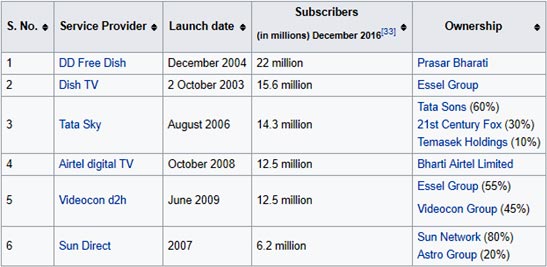
The latest announcement of the agreement between Prasar Bharati and Star India, allowing a 60minute delayed broadcast over DD channels and equal sharing of advertising revenue generated by Doordarshan, will ensure maximise viewership of cricket commentary in Hindi, particularly if the feed is also available for DD’S free Dish TV users. It is not clear if Star India will share the cricket commentary in the other four regional languages with DD.
Jaideep Vaidya, Desk Editor, Sports, Scroll In,published an interesting analysis in last February (https://scroll.in/field/869789/how-hindi-and-tamil-are-taking-over-cricket-commentary-in-india) where he analysed BARC data to show that viewership of Star Sports 1 in Hindi was much higher than the viewership of Star Sports in English for the India vs. Australia ODIs and T20s during the period September16 to October 13 last year. Vaidya also showed a comparison of viewership between Sony 10 3 (Hindi) and Sony 10 1 (Tamil) for the India vs. South Africa Tests during the period January 6 to 26 this year to highlight the neck to neck race between the impressions in millions between the two languages.
So, the last bastion of English broadcast content i.e. cricket commentary in English, is also crumbling before the onslaught of the regional language commentaries. It appears we are developing an indigenous style of cricket commentary in vernaculars mixed with “desi†humours and filmy dialogues which is different from the straight jacketed professional cricket commentary in English. Whatever is the style; the audience is lapping it up and showing distinct preference for channels providing cricket commentary in Indic over cricket commentary in English.