
Category: Opinion – Archives

  • Indrani Sen: Radio Rumblings & Selling without Currency

    By Indrani Sen


    Currently radio is the fastest growing traditional medium in India. Why the Radio Industry is not feeling the need for a valid media currency after investing a whopping Rs 3,000 crore (including the migration fees) in the Phase III of FM Radio expansion? Why is RAM, our only syndicated radio listenership study, limited to only four cities since 2007 when six years back in 2009 (after the Phase II auction), 91 cities formed our Private FM Radio Network? How can the Radio channels be so indifferent to RAM that some of them have stopped subscribing to it? As per the FICCI KPMG 2015 report, radio revenue will increase from Rs 1,960 crore in 2015 to Rs 3,950 crore in 2019. Are the advertisers buying radio time blindfold or is there a hidden card which is helping radio stations to sell effectively without the help of a regular currency?


    What is ailing our Radio Audience Measurement studies?  We had a good start in radio research in late 1990s. The advertising industry felt the need of radio listenership measurement even before the advent of private FM channels and the pressure which mounted on AIR resulted in Audience Research Unit starting its Radio Programme Listenership (RPL) ratings in 1998. In early 2000, MRUC started Indian Listenership Track (ILT) in partnership with AC Nielsen ORG- MARG based on yesterday’s listenership (YDL) which is also referred as Day After Recall (DAR).  MRUC commissioned a research to evaluate which of the two radio research methodologies (between DAR and Diary) was the most robust in Indian context and the Diary Method scored above DAR.  ILT was discontinued after 2006 as TAM announced the launch of RAM from 2007.


    A joint service between IMRB International and Nielsen Media Research, RAM is an independent division of TAM Media Research and provides listenership data based on the Diary Method on a weekly basis. RAM started with a lot of promise in Mumbai, Delhi and Bengaluru in 2007. Kolkata was soon added as the fourth city. The panel size of 600-plus individuals each in Bengaluru, Delhi, Mumbai and Kolkata has been static over the years though new listening devices have been included in the diaries.


    RAM was criticised soon after the first ratings were released for using the 2005 NRS universe estimate without proper corrective measures. The universe estimate was finally corrected in 2011 (two years after Phase II auction) showing huge growth in population in all the four cities. Certain demographic distributions based on the new universe estimates and other findings were also challenged by radio industry experts. Large FM radio organisations found that they had to invest in independent research to understand the behaviour of the listeners in the markets beyond the four RAM cities. They chose to rely on their own research across all markets and began unsubscribing to RAM. The limitations of RAM drove some of the advertisers to conduct their own research to understand the efficacy of radio as a medium for their target audience and they stopped using RAM.  It became a Catch-22 situation.


    The exodus of FM Channels from RAM resulted in lack of financial support to the syndicated research. Apathy of the radio industry is the reason for RAM getting stuck to only four cities over eight years though they announced periodically their intention to add on more cities. It is probably too late now to revive and revamp the syndicated radio listenership research in its present format.  A new audience metrics needs to be set up in India based on a proper sampling structure for covering the entire FM Radio network (AIR and Private) and providing useful information to the radio and advertising industry.


    The Association of Radio Operators in India (AROI) should collaborate with BARC for setting up the structure of the radio audience research. BARC has been set up with the intention of providing measurement of “Broadcast Audience” including both TV and Radio. After setting up the TV audience measurement system successfully, BARC needs to focus on radio audience measurement system.  AROI would have to ensure complete support by the radio industry to the new avatar of the syndicated listenership study.


    The question which needs to be addressed is can the radio industry afford a large scale sophisticated radio listenership study based on audio meters? As per the FICCI-KPMG 2015 report, against industry size of 543.2 INR billion for TV and 284.5 INR billion for Print, the size of the radio industry is miniscule at only 19.6 INR billion. It is obvious that unless advertisers and media agencies actively support the syndicated research on radio listenership study, it would not be financially feasible.


    A number of media planners are now using IRS data for preliminary analysis of penetration of FM Radio in their target audience and selection of radio channels. However, the analysis often cannot be conducted due to inadequate sample size in the selected target audience. While MRUC is planning the new IRS, can they examine the scope of providing additional information on penetration of FM radio as a medium?


    Meantime, regardless of the coverage provided by RAM, the FM radio industry continues to thrive and grow at a compound annual growth rate of 18% (FICCI-KPMG Report, 2015). What is the secret of the success of this medium? Radio operators in India are today selling radio time based on a 360 degree approach which is helping in the growth of radio advertising.  No deal happens without ground activation and digital support through mobile texts and social media interactions. Often TV or Print or OOH support from the same media house is also solicited through FM Channels.


    The advertisers are satisfied as they have an indirect measure of the radio listenership through social media sites and the success of activation programmes are reflected in the sales graph. Recently, in a media seminar conducted by Calcutta Media Institute in Kolkata on October 9 and 10, 2015, Jimmy Tangree of 91.9 Friends FM said “We also do radio” while moderating a panel discussion.  He explained that no radio show happens today without the digital/ social connection. This is the hidden card behind the success of the medium and explains how the radio industry is successfully marketing radio time without the support of a regular media currency.

     

  • Indrani Sen: Outreaching by Outdoor: From Static to Interactive

    By Indrani Sen


    Global Industry Analyst, Inc (GIA) in its report on “The Global Outdoor Advertising Market” in January 2015, talked about the growing popularity of digital platforms for out of home advertising. According to that report “Asia Pacific represents the largest market worldwide. The region is also forecast to emerge as the fastest growing market with a CAGR of 8.6% over the analysis period, led by the retail boom in countries such as China, Singapore, Malaysia, Thailand, Hong Kong and India.” (http://www.strategyr.com/MarketResearch/Outdoor_Advertising_Market_Trends.asp) In a press release dated February 10, 2015, GIA spoke about technology development and replacement of traditional static billboards and posters with digital signage as the prime drivers of the growth in outdoor industry and predicted rise in oversized digital billboards/ large screen digital displays.


    Compared to the global trend, how has our Outdoor Advertising Industry been faring over the recent years? FICCI-KPMG reports have been predicting healthy CAGRs over the last five years. In the last two reports, a CAGR of 9.2% over 2013-2018 was posted in 2014, followed by a marginally higher CAGR of 9.8% over 2014-2019 in 2015. We have also been talking about digital OOH driving the growth, but our usage of digital OOH have been limited to place-based networks in cafes, restaurants, health clubs, educational institutes, sports arenas, malls, some public spaces like airports. In spite of the predictions of the global industry experts, our use of DOOH (digital out of home) has been limited to small screens, interactive kiosks, jukeboxes and jumbotrons. Large standalone screens/ billboards with digital content which needs larger investment in the infrastructure have still not arrived in India.


    Annie Rickard, the Global CEO of Posterscope, spoke about pioneering dynamic real-time content on OOH screens and the challenge of implementing the same due to infrastructural constraints in an interview during her recent visit to India. Speaking about the relevance of outdoor medium in a digital world, she said: “The whole world of OOH has shifted. There was a time when OOH was only about awareness and impact. But now you can have a conversation with consumers.” She also pointed out the need for consolidation on the media owners’ side and the need for all players to work together backed by a valuable insight- “What we have seen everywhere else in the world is that when you have less players, the investment goes up. When you have lots of small players, they actually invest less collectively in the medium. You also get more collaboration when you have a smaller number of players.” (http://www.exchange4media.com/outofhome/our-focus-will-be-on-continued-investment-to-make-the-ooh–medium-accountableannie-rickard_62497).


    Is our outdoor industry ready for consolidation and collaboration? Apart from a few mergers and acquisitions at the top and networking and trading of sites across the width and breadth of the industry, there has not been any serious attempt at any consolidation. In August, 2015 AAAI (Advertising Agencies Association of India) and IOAA (Indian Outdoor Advertising Association) signed an agreement to better regulate outdoor advertising in India and there was no reference to consolidation in that agreement. Their focus will be on regulating and disciplining advertiser behaviour in matters concerning outdoor trade, agency remuneration, corporate governance and adherence to payment deadlines (http://www.campaignindia.in/Article/397183,aaai-and-ioaa-join-hands-to-channel-ooh-advertising-growth.aspx) Ideally it should have been a tri- party agreement between AAAI, IOAA and ISA (Indian Advertisers Association). The absence of ISA has raised some doubts about the long term success of the efforts.


    While making announcement about the joint agreement, N D Mehta, President of IOAA, mentioned about outdoor research and a census of billboards/ hoarding across all major cities. IOAA has been involved for a while in an ambitious project of conducting viewership research on OOH, starting with major cities. However, we do not have any indication regarding the timeline or progress of the research project. The first Indian Outdoor Survey (IOS) was spearheaded by MRUC (Market Research Users Council) and conducted by Hansa Research in Mumbai in 2008. The report was released in June 2009 by MRUC with a promise of extending the research to other cities. Due to lack of financial support from the outdoor Industry, MRUC had to abandon its plans. Since then, no syndicated research has been conducted in this space, though various outdoor advertising agencies have carried out their own research. Market research organizations like IMRB have developed outdoor research models which the advertisers can commission. Does IOAA have enough muscle power to bring outdoor industry under one umbrella for supporting syndicated research on outdoor on a regular basis? Can IOAA and AAAI generate the required funds of outdoor research without active support from ISA?


    The advertising Industry will welcome the move of conducting a census of 100% of sites and identifying them with unique ID number in major cities. But, the IOAA will have to conduct a health check of the sites first. A search on the IOAA site (http://www.ioaa.co.in/ news on facebook) shows various news items related to removal of illegal hoardings. A news item dated October 7, 2015 talks about a survey conducted by the Bruhat Bengaluru Mahanagara Palike (BBMP) ascertaining that out of 6,119 hoardings within city limits of Bengaluru, only around 2,000 had legal permissions! Paradoxically, the size of our country, which is the foundation of the structure of the current developments in our media industry, is the biggest roadblock for organised development of our outdoor industry.


    Outdoor regulations are mostly governed by the local authorities/ civic bodies and various state governments and there is a lack of uniform structure. Can the Ministry of Information & Broadcasting instruct TRAI to create a template for the outdoor rules and regulations which can be adopted locally in each state? It is probably wishful thinking as there are many political under currents when it comes to the relationship between Central Government and State Governments regarding formulation of rules and regulations related to matters under state control and jurisdiction. Alternatively, is it possible for IOAA to develop such a uniform guideline for outdoor rules and regulations and solicit for the support of all state governments?


    Indian advertisers have not yet come to grasp with the concept of interactive outdoor with real time content. Outdoor industry leaders need to resolve many issues before visualising a roadmap for evolving towards the digital future. In the meantime, shall we just sit back and watch the rest of the countries in the Asia Pacific region passing us by in the race towards the digital future? Can we create a model city where all outdoor sites will be legal with unique ID numbers, where a large number of static hoardings will be converted to oversized digital billboards with real-time content having conversations with consumers, where research will be measuring the impact of the new avatar of outdoor on a regular basis? Needless to mention, the model city experiment cannot be conducted in a metro where the scale of operation will be too huge. So, it will have to be a Tier-2 city with strong growth in retail sector. Outdoor Industry will need active support from the local government for conducting the experiment. If all the stakeholders in the industry join hands together to make such a plan successful, that example will automatically propel the growth of our outdoor industry into the digital future. Amen!


    Indrani Sen is a veteran media agency and marketing services professional. She is currently an Independent Consultant and Adjunct Faculty, Media Management at Symbiosis Institute of Media & Communication, Pune. This column MediaSENse will appear fortnightly. The views expressed here are her own.


  • Indrani Sen: Destroy the Demon

    By Indrani Sen


    Advertising Standards Council of India (ASCI) greeted the Indian Advertising Industry this year with ‪@#‎HappyDussehra  Destroy the demon of misleading ads! Dassera, the time when the entire country celebrates the triumph of good over evil, is probably the right time to introspect how we have fared in the area of self-regulations over the last 30 years.


    Founded in 1985 with support of three main constituents of our advertising industry, viz. advertisers, advertising agencies and media owners along with other professional /ancillary services connected with advertising practice, ASCI has come a long way in three decades. The Cable Television Network Rules 1994 included ASCI’s Code for Self-Regulation in Advertising in the Advertising Code under Cable TV Act’s Rules. The 2007 amendment of Cable and TV Network Rules reconfirmed it. For some time, ASCI have been taking part in all committees working on advertising content in every Ministry of the Government of India. Many misleading ads are short lived, thanks to ASCI’s rulings.


    Yet, we find that at times rulings by ASCI are not followed by the parties concerned. Last year, an advisory issued to all TV channels by the Ministry of Information & Broadcasting on August 21, 2014 spoke about violation of ASCI’s rulings by some TV channels and advised not to carry ads found ‘violative’ by ASCI. In 2014-15, 80% of the advertisers agreed to accept ASCI’s rulings and agreed to withdraw the misleading ads while 20% did not.  It is more common to find that advertisers, agencies drag their feet before they finally withdraw the offending ad from the market. The media houses very rarely take the onus on themselves and do not refuse any ad even when there is a clear ruling given by ASCI against it. So, the demon of misleading ads continues to haunt our advertising industry with many organisations turning a blind eye.


    Can we collectively take some steps to strengthen ASCI’s hands for destroying this demon? Can the various industry bodies like ISA, AAAI, IBF, INS etc. take some positive steps to ensure that all their members abide by ASCI’s rulings? Can our law-makers help ASCI by introducing specific penalty for violation of ASCI’s rulings? I would humbly like to propose a few suggestions to all concerned.


    Extend Membership of ASCI

    Currently, the membership of ASCI is voluntary and therefore optional. While ASCI cannot enforce the advertisers, agencies and media houses to become their members, the various industry associations can consider making it compulsory for all their members to become a member of ASCI. This would help to spread the awareness about ASCI which currently in many non-member organizations rest on the back burner.


    Support Funding of ASCI

    As an independent NGO funded by its members, ASCI is not very cash-rich. An extended membership pool will help to increase its resources. In this context, our industry and our law-makers may like to review the system of funding Advertising Standards Authority (ASA) in UK which is funded mostly by the advertisers through a remote control mechanism. There is a 0.1% levy on the cost of buying advertising space/time and the 0.2% levy on direct mail which are collected by the Advertising Standards Board of Finance (Asbof) and the Broadcast Advertising Standards Board of Finance (Basbof) for funding the ASA. Advertisers in UK can choose to pay the levy, but they cannot choose to comply with the Advertising Codes or the ASA’s rulings.


    Introduce Penalty for Disobeying ASCI’s Rulings

    The Advertising Standard Authority (ASA) in UK , which is a part of the European Advertising Standards Alliance (EASA), ensures primarily obedience by broadcasters to their rulings – “Broadcasters are obliged by a condition of their broadcast licences to enforce ASA rulings.  If they persistently run ads that breach the Codes broadcasters risk being referred by the ASA to Ofcom, which can impose fines and even withdraw their licence to broadcast.” (https://www.asa.org.uk/Industry-advertisers/Sanctions/Broadcast.aspx) ASCI have an associate membership of the European Advertising Standard Alliance, but the obligation to comply with ASCI’s rulings rest primarily with the advertisers and agencies in India. Would it be possible for our law-makers to impose fines and withdrawal of licences on Broadcasters/ Newspapers for disobeying the rulings of ASCI? Can IBF and INS who are very strict with advertisers and agencies when it comes to credit control, introduce some such disciplinary measures for their members for disobeying rulings of ASCI?


    Introduce Pre-clearance of Ads

    Currently, there is no system to ensure that no ad is misleading before it is released. “Some countries’ eg France have pre clearance of ad by self regulatory body requirement, UK TV channels also pre clear advertisements just like DD does it in India”(http://ascionline.org/index.php/faqs.html).The broadcasters in the UK have established and funded two pre-clearance centres: (i) Clearcast for television commercials and (ii) Radiocentre for radio ads. Considering that most of the ads that the consumers complain against in 2014-15 were from TV media, would it be possible for IBF to introduce a similar system of pre-clearance of all TV commercials in India?


    Make ASCI Certifications compulsory in Agencies

    ASCI’s new websites has introduced an E- Learning Portal offering 14 modules of self learning courses with certifications at a nominal cost. Agencies should make it compulsory for their creative people to take these courses. I am sure that ASCI would be willing to consider discounts against bulk enrolment, particularly from their member agencies.


    Promote ASCI through Corporate Social Responsibility Projects

    The aim of ASCI is to maintain and enhance the public’s confidence in advertising. Their mandate is that all advertising material must be truthful, legal and honest, decent and not objectify women, safe for consumers, especially children and last but not the least, fair to their competitors. In 2010, ASCI launched a national campaign against dishonest, misleading ads. Advertisers, who have to spend on Corporate Social Responsibility, may like to consider promoting the aims of ASCI through similar campaigns to public at large and through specific activities to various industry constituents.


    Let good sense prevail on each one of us in the industry! Let all of us join hands to support ASCI in destroying this demon of misleading ads!!


  • MediaSENse by Indrani Sen: To cap it all

    By Indrani Sen


    During the last month, the News Broadcasters Association (NBA) and others sought adjournment of the court case challenging the advertising cap of 12 minutes per hour twice in the Delhi High Court. The hearing scheduled on September 8 was first adjourned to September 23 on the ground that lawyers were on strike, which again got adjourned to November 27 on the ground that the matter was under discussion with the Information and Broadcasting Ministry (I&B). The earlier order by Supreme Court that the Telecom Regulatory Authority of India (TRAI) will not take any legal action against any channel violating the norms will stay put till the Delhi High Court case is heard and resolved. As per the reports published by the TRAI on a quarterly basis, very few channels are adhering to the limits set by TRAI.

    Based on consumer complaints, TRAI has been trying to regulate the quantity of commercials on TV channels since 2012. When the regulation on Ad Cap was announced in 2013, ( http://www.thehindu.com/   August 18, 2013).  Manish Tewari, I&B Minister in the UPA government said in an interview “TRAI should introspect and reconsider its current stance till carriage fees don’t mitigate further and subscriber revenue doesn’t stabilize for the sake of the healthy growth of the industry.”  Subsequently, Prakash Javadekar, the first I&B Minister in the BJP Government  indicated to media that the government was considering an amendment that free-to-air (FTA) channels should be exempt from the restriction of the 12 minutes ad-cap, while for pay channels the existing limit of 12 minutes per hour of advertisements would continue. (http://www.livemint.com/ October 8, 2014). After Arun Jaitley took over as I&B Minister, he made a statement that there should be no ad cap in the print or electronic media, but did not give any such instruction to the Ministry. (http://www.indiantelevision.com/ )

    While the I&B Ministry and TRAI are mulling over the issue, it would be informative to do a quick look around the world and survey the norms related to ‘TV Ad Caps’ practised in developed countries. In Europe, the Audiovisual Media Services (AVMS) sets the regulatory framework setting a limit for all channels of 12 minutes on the amount of advertising shown in one hour.  The similar rules which apply in the UK, are set out in the Code on the Scheduling and Amount of Advertising (COSTA) prepared by Ofcom, Independent regulator and competition authority for the UK communications industries. With our colonial hangover, we seem to have adopted the regulation prevailing in UK.

    The Australian model is very interesting. The Australian Communication and Media Authority (ACMA) categorises the time bands into two slots and stipulates that on the main channels, commercial television licensees may schedule

    1) Average 13 minutes per hour of non-programme matter between 6pm and midnight; and

    2) Average 15 minutes per hour on non-programme matter at other times.

    However, the maximum that can be scheduled in any given hour is:

    1) 15 minutes from 6pm to midnight – with no more than 14 minutes scheduled in any four of those hours; and

    2) 16 Minutes at other times.

    The definition of non-programme matter includes paid advertising but excludes short programme promotions and pop-up programme promotions in the middle of programmes. Additional allowance is given during election periods to accommodate the broadcast of ‘political matter’. Since 2014, the leading channels have been lobbying with the government for raising the bar to 20 minutes of non-programme matter every hour. The pros and cons of the same are still being debated.

    Canada had the stipulation of ad cap of 12 minutes per hour based on individual licence agreements till 2007. In May, 2007, CTRC (Canadian Radio-television and Telecommunications Commission) announced a phased relaxation of the rule bringing the free to air conventional TV channels more closely in line with their counterparts in US. So, from 2009, there is no cap on the quantity of commercials per hour on the free to air Canadian channels while the specialty pay channels are still subject to the ad cap of 12 minutes per hour.

    American TV hour-long programmes typically run for 42 to 43 minutes, leaving 17 to 18 minutes per hour for commercials. Federal Communications Commission (FCC) has a special regulation for controlling loud commercials, but has not introduced any cap on the quantity of time used for the commercials per hour. In 2014, a new study from Nielsen, the ratings measurement firm of US, showed that the number of commercials had grown steadily over 2009 to 2013. In 2009, the broadcast networks averaged 13 minutes and 25 seconds of commercial time per hour which grew to 14 minutes and 15 seconds in 2013. The growth was more significant on cable television. A typical American home had 189 channels to choose from yet only watched 17.5 on a regular basis. That figure was the same in 2009, when the average home received 129 channels. According to Nielsen, use of shorter commercials became more common (http://www.latimes.com/entertainment   May 16, 2014). Recently, I read online that Viacom is planning to find out if they can get more value for TV commercials by running fewer them on the network. (http://variety.com/2015/tv/news/viacom-primetime-tv-advertising-cuts-1201598646/  September 21, 2015).

    Ad clutter has been a major hindrance for TV viewing over many years. To cap it all, now an exodus of consumers from TV to streaming video, mobile devices, etc. have started across the world. On TV, appointment viewing has been changing to scattered delayed viewing. Our TV channels, who are fighting against the TRAI regulation on ad cap for protecting their revenue, should remember that their ratings followed by revenue may be better protected with less time devoted to ad breaks.

    The  I&B Ministry and TRAI should consider the scope of adopting the Australian model with variable options across different time bands including additional allowance during Central and State elections. As we have almost 50 percent of our licensed channels in the news genre, the news and non-news can also be put in two different buckets apart from the FTA and Pay channels. In my view, we need to come out of the practice of holding UK as the role model and look around for better alternatives while framing our media rules and regulations.

    Indrani Sen is a veteran media agency and marketing services professional. She is currently an Independent Consultant and Adjunct Faculty, Media Management at Symbiosis Institute of Media & Communication, Pune. This column MediaSENse will appear fortnightly. The views expressed here are her own.


  • Indrani Sen: English vs. Vernacular: The Language Anomaly

    By Indrani Sen


    Recently an interesting discussion was held in Mumbai on localisation of language on digital media and if the same will become a game changer for brands. The discussion focused on the two separate India with different language orientation and different habits of media consumption and hence the need for developing digital media in vernacular languages. The participants debated if it is worthwhile to take the effort of designing marketing communication for targeting vernacular language speakers and felt that the individual brands will have to take the call “after reviewing the cost of acquisition or lead and whether it then seems worthwhile” (http://www.exchange4media.com/marketing/the-growing-importance-of-vernacular-content-in-digital-advertising_62721). While reading the report of the event, I contemplated again on the language anomaly in India between English and vernacular languages.


    There has been an overwhelming craze for English medium education across India which was reflected in the statistics published by NUEPA (National University of Education, Planning and Administration) in 2012. The report showed a growth of 274% in the number of children studying in English-medium schools between 2003 and 2011.  According to the same report in 2011, over 20 million Indian children were studying on English medium schools reflecting the growing aspirations of the Indian middle class. It is generally felt by parents that studying in an English medium school will offer better employment opportunities to their children. Our policy-makers also seem to feel that the English language advantage will set the country on its desired path of growth as they are allowing unplanned and haphazard development of education in English medium. In the absence of a National Language Policy, each state has been taking its own call regarding the medium of education at primary and secondary school levels at the whim of the political party in power.


    Are we doing the correct thing by pushing for English medium education at school level? What is the global view on school level education in a language which is different from the child’s mother tongue? In an article published on September 2, 2015 in Scroll, Anjali Mody, a freelance journalist and researcher, wrote “Yet across the world, and in India, there is a consensus among educators, educationists and linguists that children learn most effectively in their mother tongues. Research collated by UNESCO shows that ‘children who begin their education in their mother tongue make a better start, and continue to perform better, than those for whom school starts with a new language’” (http://scroll.in/article/750187/).


    Our policy-makers and educationists have to resolve certain basic issues related to education policy. They can also debate and decide on the medium of education at school and college levels.  As a media practitioner, my concern evolves from a different angle. What is the media consumption pattern of these English medium educated children and youth and how the same is different from their counter parts educated in vernacular medium? Unfortunately, the syndicated research carried out in our country only collects data on the education level and does not try to probe further into the medium of education of the respondents. By studying the general pattern of media consumption as well as advertising communication we can make some observations related to this issue.


    Year after year, the Indian Readership Survey has been showing the supremacy of the vernacular publications. In IRS 2014, among the top ten dailies, nine are in the vernacular and only one (Times of India) is in English. Similarly among top ten magazines, only one (India Today) is in English. It is interesting to note that India Today Hindi edition with a readership of 1.36 million was breathing down the neck of the India Today English edition with a readership of 1.63 million. If we have started producing more and more of English medium educated youth, then why their readership preferences are not skewed towards English? Why their preference for the medium of education is not getting reflected in the growth of readership of English newspapers and magazines? Vanita Kohli Khaderkar pointed out in her book Indian Media Business, that between 2006 to 2011 circulations of English newspapers increased by 70% but the readership increased by only 2% and the time spent on English newspapers dropped by 6.5%!


    Even if we argue that the youth is shifting away from print to digital, what about the television programmes, which are still the main source of entertainment in all middle class households? The viewership of Hindi and other language GECs are on the growing comfortably, but there is no similar growth in viewership of English TV channels across different genres. Bollywood blockbusters in Hindi keep on drawing movie goers across social strata. Regional film industries in East and South are also showing good score cards.  Most of the content of FM radio stations is also in Hindi or in other regional languages. We can reach out to the affluent upwardly mobile consumers through all these traditional media. It can be safely concluded that our English medium educated consumers (youth and above) are regularly consuming media content related to information and entertainment in vernacular instead of English.


    When it comes to designing advertising content, we design original content in vernacular for TV and radio, but show a preference for English when it comes to creating content for print. English publications command a premium over vernacular publications in advertising rates and are considered to be better positioned for reaching out to consumers in higher socio-economic brackets. We need to probe more deeply into the media consumption habit of our English medium educated consumers to understand the effect of the education on their media consumption habit.


    The question which our policy-makers and educationists need to grapple with is can the formal education in English medium be complete without continuously supplementing it through additional exposure in English through mass media?  What kind of hybrid citizens we are producing in India who get educated in English medium, but depend on vernacular media for news, infotainment and entertainment? The digital media can perhaps put an end to this controversy if the English medium educated consumers embrace digital and social media platforms in English and start consuming more English audio and video content through the internet. In such a situation, the divide between the two separate India will get sharper. However, the sheer numbers of the other India educated in vernacular medium will compel the marketing and advertising industry to design content and communication in different languages for digital media.


    Indrani Sen is a veteran media agency and marketing services professional. She is currently an Independent Consultant and Adjunct Professor, Media Management at Symbiosis Institute of Media & Communication, Pune. This column MediaSENse will appear fortnightly. The views expressed here are her own.


  • Indrani Sen: A New Year’s wish for an Indian Chapter of the Internet Society

    By Indrani Sen


    This New Year let our marketing, advertising and media (traditional and new) industries join hands to create an Indian Chapter of the Internet Society and help the Ministry of Information and Broadcasting and TRAI form rules and regulations for governing the development of internet and digital media in India. The active netizens of India should also be allowed to participate in the chapter as individual members.


    By now, the readers of this column will be familiar with the debate on “net neutrality” which hit the Indian media in April 2015 after TRAI came out with a consultation paper March 2015 on the growth of Over-the-top (OTT) players like WhatsApp or Skype and exploring a regulatory framework for these apps. Among the various articles which I read at that time, I found the two in Indian Express by Shruti Dhapola in April 2015 quoting from various other sources to be quite informative and would like to share the link with those who might have missed it-  http://indianexpress.com/article/technology/social/net-neutrality-in-india-debate-zuckerberg-to-flipkart-to-aib-who-said-what/ and http://indianexpress.com/article/technology/social/net-neutrality-in-india-licensing-to-zero-ratings-its-a-complicated-debate/ . Around that time, Pavan Duggal, Advocate, Supreme Court of India and India’s leading expert on Cyberlaw and Mobile Law, wrote an excellent article on tech.firstpost.com cautioning our lawmakers -http://tech.firstpost.com/news-analysis/net-neutrality-in-india-heres-why-india-shouldnt-jump-the-gun-on-net-neutrality-263311.html.


    Recently, the topic of Net Neutrality again exploded in December, 2015 when TRAI reportedly requested RCom to impose a temporary ban on Free Basics. We saw the volunteer-led group savetheinternet.in who had earlier mobilized responses supporting net neutrality to spring into action again with “Save Free Basics” campaign. Face Book reacted strongly with an aggressive  full-page ads in English and vernacular newspapers across the country. Among the various articles which flooded the online media, Sunil Abraham, Executive Director of the Centre for Internet and Society wrote in www.firstpost.com supporting strongly TRAI’s decision- http://www.firstpost.com/india/the-net-neutrality-debate-trai-has-a-point-in-imposing-temporary-ban-on-free-basics-2558884.html. I found the article of Jay Vikram Bakshi on www.linkedin.com very interesting as he suggested an alternative route for resolving the debate around net neutrality in his article- https://www.linkedin.com/pulse/free-basics-vs-net-neutrality-jay-vikram-bakshi . Bakshi ended his article with a statement “After all, if it’s for common good, let all the stakeholders in, and allow all citizens equal and rightful access to services, which are based on their common assets (land, airwaves, energy, and water)” which I really applaud.


    The leaders of our marketing, advertising and media industries can contribute positively to the forming of Internet Regulations by forming an Indian Chapter of the Internet Society, which does not have a strong presence in India though it has an APAC Bureau which works across the region http://www.internetsociety.org/what-we-do/where-we-work/asia/south-asia. Internet Society is a member of the International Telecommunication Union (ITU) who is the custodian of the International Telecommunication Regulations (ITRs) Treaty. The last ITRs Treaty was developed after the World Administrative Telegraph and Telephone Conference (WATTC-88) held in Melbourne in 1988. In December 2012, a World Conference on International Telecommunications (WCIT) was held in Dubai, but it did not result in development of a new ITRs Treaty.


    Internet Society is working actively with International Telecommunications Union (ITU) on the formulation of a new International Telecommunication (ITRS) Treaty.  Ultimately, our internet rules and regulations will have to fall in line with the international guidelines. By taking a proactive step in 2016, our industry leaders can contribute effectively to India’s digital future.


    Indrani Sen is a veteran media agency and marketing services professional. She is currently an Independent Consultant and Adjunct Professor, Media Management at Symbiosis Institute of Media & Communication, Pune. This column MediaSENse appears fortnightly. The views expressed here are her own.


  • Indrani Sen: Changing Cultural Capital

    By Indrani Sen


    Mass media in India is omnipresent in our life today through print, cinema, television, radio, and internet. I often wonder what role mass media is playing in India in uplifting and promoting our traditional culture. The relationship between culture and mass media is well-known, well-researched and documented by academics. The sociologists and academics across the world have warned about the effects of media capitalism on developing countries. However, proper study and documentation of how Indians are changing culturally after globalisation and which culture theory these changes conform to is yet to happen. The cultural capital of Indians as a nation has been changing rapidly under the influence of mass media since 1990s and has accelerated in the 21st century after we got access to World Wide Web and internet.


    The mission statement of Ministry of Culture includes “Promotion of literary, visual and performing arts” among its other objectives. Performing arts seem to have virtually disappeared from the content of Indian television channels and films. A review of dance, drama and various forms of visual arts still find mentions in our newspapers, but the space devoted to them are shrinking in the most newspapers, where the “page 3’ culture is dominating. FM radio stations rely mostly on filmy music for their content and classical music has no place in their programming. The content of our mass media is making the Government’s cultural policy related to promotion of performing arts virtually redundant.


    Folk music is an essential part of our cultural heritage. Traditionally, it served as a medium of communication as the lyrics of the songs often reflected recent events, political and cultural changes as well as religious sentiments uniting people from the same ethnic group. Folk music along with classical music and classical dance forms were present in Indian cinema till 1970s, but the trend started changing from 1980s after commercialization of Doordarshan. Today, they are almost missing from the content of our films. Doordarshan still continues to devote time slots to such performing arts, but they are conspicuously absent from other popular private television channels. The various reality shows across national and regional television channels at times give us glimpses of our rich tradition of performing arts, especially during the initial selection process. Subsequently, when the candidates are tutored for performing in the competitions by the experts appointed by the channels, the original style of the candidates’ performance is often lost, particularly in the dance shows. The growing popularity of various mass media across India is creating a new Indian culture, which is also fanned by live shows and events, but the cultural identity of Indians is becoming vague and our cultural capital is transforming radically.


    The Wikipedia definition of cultural capital says “The term cultural capital refers to non-financial social assets that promote social mobility beyond economic means”.   Article 51 A (F) of our Constitution indirectly refers to the concept of cultural capital when it says “It shall be the duty of every citizen of India to value and preserve the rich heritage of our composite culture”.  Sociologists need to conduct series of surveys among youth to understand their perception of about the “heritage of our composite culture”. Parallely, they should interview the leaders of the media and advertising industry to explore their understanding of cultural capital which they are promoting through their media content and advertisements.


    The influence of mass media has a lasting impact on various cultural attributes and reshapes and remodels society and nation. Technological advancements make the changes the mass media inevitable and also affect the role of mass media plays on individuals and on society at large. Whether the current collective impact of Indian mass media is helping to develop a ‘culturally’ sustainable India is the crucial issue which needs to be investigated. Whether any corrective action is needed to correct the course of events can only be determined after examining the pros and cons of the issue. It will be extremely sad if academics of future generation write a new culture theory to explain how a rich cultural heritage can die a slow death through onslaught of mass media in a country using India as a case study.


    Indrani Sen is a veteran media agency and marketing services professional. She is currently an Independent Consultant and Adjunct Faculty, Media Management at Symbiosis Institute of Media & Communication, Pune. This column will appear fortnightly. The views expressed here are her own.


  • Indrani Sen: The Seismic Shift

    By Indrani Sen


    On January 22, 2016, an announcement by the I&B Ministry hit the news media announcing a new policy effective from December 31, 2015 to streamline the business practices of its Publication Division. The headlines in newspapers and websites happily screamed that Centre plans to promote online readership.  The official statement stated “One of the key highlights of the policy includes promoting online readership by pricing the digital version of the publication at 75 per cent of the price of printed version. This would ensure that 25 per cent discount is passed on to the readers”.


    It appears that the I&B Ministry is either blissfully unaware about the current market practices followed by most leading newspapers for promotion and retention of their print circulation or has chosen to turn a blind eye to the same. As readers are already enjoying more than 25% discount on the cover price against long-term subscription of copies in print, a 25% discount will be hardly any incentive for shifting to online subscription.

    As most Indian newspapers are currently offering their online edition free-of-cost, it would be an uphill marketing task to convert the free online readership to paid online readership. So far, the metered subscription model that allows a certain number of free visits before requiring users to pay for online newspaper has proved to be most successful in getting online subscription of newspapers globally.  This model is a far cry from offering a flat 25% discount on cover price of print editions.


    This attempt by I&B Ministry to promote online readership is perhaps a timely reminder to our newspaper industry that they need to review their policies related to combined print and online circulation revenue which was a hot topic in the last World News Media Congress. The annual World Press Trends Survey released on June 1, 2015 by the World Association of Newspapers and News Publishers (WAN-IFRA) showed that newspaper audience of print and digital combined are increasing globally. The study claimed that global newspaper circulation revenue had crossed global newspaper advertising revenue in 2014 (http://www.wan-ifra.org/wpt.). I have borrowed the title of this article from a statement made by Larry Kilman, Secretary General of WAN- IFRA at the World News Media Congress “This is a seismic shift from a strong business-to-business emphasis – publishers to advertisers – to a growing business-to-consumer emphasis, publishers to audiences”.


    In 2013, the New York Times was the first newspaper to report that its circulation revenue exceeded its advertising revenue following its initiative of two-year-old digital subscription program. A study on Newspapers by PEW Research Centre in 2013, stated “After years of an almost theological debate about whether digital content should be free, the newspaper industry may have reached a tipping point in 2012.” The study citied various examples of paid digital content subscription or pay wall plans adopted by newspapers and alerted about the titanic shift in the newspaper business revenues.

    The PwC Global Entertainment Media Outlook published in 2015, showed the global newspaper adverting revenue was marginally higher than global newspaper circulation revenue in 2014. However, PWC also predicted convergence of the two revenues over the next five years due to continuous decline of advertising revenue – “From 54.4% in 2010 and 52.6% in 2014, total newspaper advertising revenue will account for just 50.7% of total newspaper revenue in 2019.” (http://www.pwc.com/gx/en/global-entertainment-media-outlook/segment-insights/assets/PDF/newspaper-publishing-key-insights-at-a-glance.pdf). According to PwC, total newspaper circulation revenue would continue to grow despite the fall in circulation of print copies due to the increase in online subscription from a wave of subscription offerings.


    It is evident from the various studies and live examples that a new newspaper business model is emerging in which the mix between advertising and circulation revenue would be reverse to the current mix. In India 70% to 85% of the newspaper revenue still comes from advertising in print and the online editions’ subscriptions are yet to be monetized. PwC described India and China as the growth engines of the world newspaper industry and predicted that the two countries combined share in global average daily unit of print circulation will rise to 57.3% in 2019 from 57.3% in 2014. I suspect this growth may be partially due to the shift in circulation from print to online in developed countries.


    The writings on the wall are quite clear; the younger generations who have stopped reading newspaper in print can only be lured back through online offerings. Our newspaper industry needs to quickly revamp their online editions before promoting/monetising the online subscription. The seismic shift in newspaper business models can hardly be reversed in India where already half the country’s population is under 25 years of age and 60% of internet users access internet through their mobile phones.


    Indrani Sen is a veteran media agency and marketing services professional. She is currently an Independent Consultant and Adjunct Faculty, Media Management at Symbiosis Institute of Media & Communication, Pune. The views expressed here are her own.


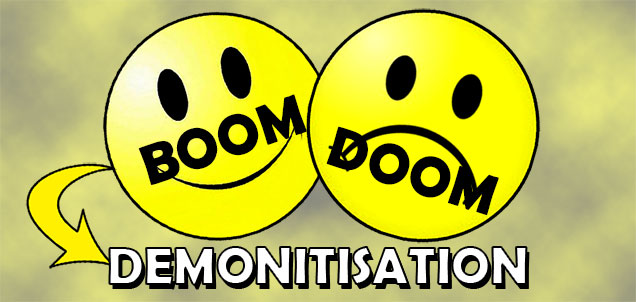
  • Post-demonitisation, it’s boom to doom for adspends…


    By Indrani Sen


    The media and advertising industry in India began 2016 on a high note. The Pitch Madison Advertising Report gave a forecast of 16.8% growth in 2016 with an increase of Rs 7300 crores plus in business. The total size of the market was supposed to cross the Rs 50,000 crores mark with a comfortable margin. After high growth in last two years – 2014 (16.5%) and 2015 (17.6%) – it seemed the boomtime in media will continue in 2016. The mid-year review by Pitch Madison dampened the spirit of growth by lowering the overall growth rate from 16.8% to 13.2%.  A slowdown in TV advertising in the first half of the current year mainly due to reduced advertising spend by e-commerce sector, downgraded the original projection for TV and consequently for the entire advertising industry. Is the recent demonetisation move by the government changing the ‘boomtime’ to ‘doomtime’ for media and ad industry?


    On November 18, an article in Brand Equity reported that the demonetisation will adversely affect the profits of industries. The article quoted from a report ‘Demonetisation: Feedback from the Ground Zero’ by domestic brokerage firm Motilal Oswal Securities, “with a low circulation of money, household consumption has taken a hit and caused business across sectors to decline in the range of 30-80% within the first five days of the Demonetisation move”. (http://brandequity.economictimes.indiatimes.com/ news/business-of-brands/india-incs earnings-to-get-affected-post-demonetisation-move-report/55488383) The article citied many other observations from the report including “We believe autos, FMCG, retail, consumer durables, mid-caps, cement, telecom and NBFCs could see earnings downgrades for 2016-17”. Traditionally, when profit of any organisation is adversely affected, advertising expenditure bears the first brunt of it.


    It appears that the high consumer spends during the festive season covering the first month of the third quarter, would not be enough to offset the effects of demonetisation on consumer spends in the next two months. In the last two weeks, not only cash circulation has slowed down in the market, but domestic consumption is also being largely controlled and moderated by thrifty housewives. There are jokes circulating in the social media about how in one stroke, Modiji succeeded in emptying the hidden coffers of housewives. Only time will tell if Modiji has been able to cure this age old habit of saving cash secretly by Indian housewives or are they already planning to replenish their savings.


    The media has been reporting about the hardships faced by the common people in the cities and the perils of farmers in the rural areas. Politicians and opinion leaders are debating the pros and cons of the move in Parliament and social media. Industry leaders have been cautious with their comments on demonetisation. Brand Equity in the article citied above, quoted again from the ‘Demonetisation: Feedback from the Ground Zero’ report: “Observing positive long-term implications, it said corporates broadly agree that a combination of Demonetisation and GST will aid the shift from the unorganised to the organised segment in several consumer-oriented categories.” However, the process of this shift from unorganised sector to organised sector is going to be slow and painful in an economy used to cash based transactions with its roots in agriculture.


    For the country’s FMCG market, traditional trade or local grocers account for around 70% of overall sales and rural areas account for 35% of overall sales. Nielsen, who conducts a retail audit in both urban and rural areas, has done a quick check on the impact of demonetisation and has reported that smalltowns and rural areas have been hit harder than the large towns and metros as the distributors and wholesalers are not reaching out to service these markets due to the present cash crunch.  It is wellknown that the network of wholesalers and retailers used to operate mostly with cash in both urban and rural market. It is difficult to predict how quickly the whole system will be able to adopt cashless measures of transaction leading to revival of FMCG sales.


    The more organised retail sector has also been hit by demonetisation with people spending only on buying necessities and hoarding the limited cash available for emergency. Apparently, there has been a shift from large packs to small packs in many categories. Non-essential items and luxury brands have hardly moved from shelves during the last two weeks. Automobiles industry has also been talking about an expected dip in sales with the two-wheeler companies being more vocal. Sale of smartphones has slowed down affecting the growth of mobile broadband users. There was a spurt of advertising from e-commerce industry during the festive season with a long tail which is still visible on some channels. Currently, there are contradictory comments on the effect of demonetisation on e-commerce industry. Brand Equity wrote on November 17 that Flipcart’s Sachin Bansal believes that demonetisation has hit online business. (http://brandequity.economictimes.indiatimes.com/news/ business-of-brands/flipkarts-sachin-bansal-believes-demonetisation-has-hit-online-biz/55469052). On the other hand Facebbok’s Umang Bedi said “Demonetisation is a great step for Indian e-commerce market” at the Global Mobile Internet Conference 2016.


    The four categories which account for 70% of total TV advertising are FMCG, retail, telecom and e-commerce with FMCG having the highest share. TV accounts for around 40% of the total advertising pie and is a quick barometer of the spending mood of the advertising industry. We already know courtesy IBF that TV schedules are being cancelled by advertisers and agencies. IBF cannot expect advertisers to continue with TV advertising if the consumers are not purchasing and will have to negotiate for a solution. http://www.exchange4media.com/advertising/ibf-issues-letter-to-advertisers-to-honour-deals-after-several-cancellations-following-demonetisation_66718.html.


    To sum up, demonetisation has affected advertising as consumers are not in a mood to spend. The ‘boomtime’ in the beginning of the year is changing to ‘doomtime’ in the last two months of the year for media and advertising industry. If we go by the fiscal year, it is unlikely that industry will experience a turnaround in the last quarter of 2016-17. Sudden and forced reduction of economic activity in market place in one quarter affects consumer behaviour which may not recover immediately in the next quarter even when the constraints are removed.


    Indrani Sen is a media services veteran, having worked with JWT, later Mindshare and then with Emami. In recent years, she is an independent consultant and academic. She is Adjunct Professor in charge of the Media Management programme at the Symbiosis Institute of Media & Communication, Pune. The views expressed here are her own.


  • Looking ahead @ 2017


    By Indrani Sen


    2016 will go down in the media history as the year when globally mobile traffic overtook desktop and laptop traffic on the web. Google is writing a new mobile first web index to help mobile users. Mobile manufacturers and service providers are working against time, trying to make the mobile experience better than before. For media planners it is going to translate to putting mobile advertising first rather than also optimising for mobile advertising in 2017.


    As we bade goodbye to 2016, most media experts around the world have been busy forecasting the trends in social media and online media marketing during 2017. I read a few interesting articles on www.forbes.com . One by Tom Ward spoke about  fivesocial media trends that will change the game in 2017 (http://www.forbes.com/sites/tomward/2016/11/22/5-social-media-trends-that-will-change-the-game-in-2017/#6336568d1d99) and listed Live Video Streaming, Messaging Apps, Social Commerce, Virtual Reality and Evolving Social Channels as the gamechangers. In addition to the five trends, we can expect ‘Pay to Play’ to continue on the social.


    Another article by Jeson Demers described the seven online marketing trends that will dominate in 2017 (http://www.forbes.com/sites/jaysondemers/2016/11/14/7-online-marketing-trends-that-will-dominate-2017/2/#583e3aed11cc) and listed the Rise of Augmented Reality ushered in by Pokeman Go, Live Video Streaming, the Rising Need for Data Visualisation and Data Visualisation Tools, Explosion of Native Advertising, Niche Targeting by Brands, Rise of Immersive Experience Content Marketing and ‘Dense Content’ for cutting through the clutter of content advertising.


    Some experts have highlighted‘Expiring Content’ and ‘Increased Personalisation’ while forecasting on development of content marketing and others have emphasised on need for artificial intelligence or Digital Assistants /Chatbots for success of content marketing.  As consumers think of new content and innovative ways of sharing them on social media, the platforms will grow steadily. We can expect an accelerated move towards standardization of the platforms through creating and sharing of video content and news. Social Media Analytics will play an increasingly important role for driving marketing and advertising decisions.


    How will all the above global trends affect media scene in India? As per the last report published by Internet and Mobile Association of India, out of 257 million internet users in India, 56% or 143 million are social media users. The penetration goes up to 66% in urban India and goes down to 33% in rural India. We have still a long way to go before online advertising can dethrone TV advertising as the largest component of our total advertising pie. However, at the top end of the media market, we can expect to see manifestation of all the global trends discussed above. Indian digital advertising will continue to grow at the highest rate and will capture a higher share of the advertising pie in 2017 than 2016.


    As far traditional media are concerned, print advertising seems to have suffered less than television advertising in the aftermath of Demonetisation in the last two months of 2016. Riding on the Phase III licensing of FM, radio also have managed to come out unscathed, but outdoor was not so fortunate. It is difficult to predict the media trends in 2017 as it is dependent on how long it takes the India Inc to tide over the so-called ‘short-term effects’ of Demonetisation. In another few weeks, we will have the estimates for media industry’s overall performance in 2016. I sympathise with the experts who are currently trying to work out the forecast for2017. The dream of Indian media and advertising industry crossing the Rs50,000 core mark  will probably remain unfulfilled even in 2017.


    Indrani Sen is a media services veteran, having worked with JWT, later Mindshare and then with Emami. In recent years, she is an independent consultant and academic. She is Adjunct Professor in charge of the Media Management programme at the Symbiosis Institute of Media & Communication, Pune. The views expressed here are her own.


  • Devil’s Advocate: Introducing a new no-holds-barred column by Jaideep Shergill

    By Jaideep Shergill


    This is what Umberto Eco (who sadly passed away recently) had to say about lists:

    The list is the origin of culture. It’s part of the history of art and literature. What does culture want? To make infinity comprehensible. It also wants to create order — not always, but often. And how, as a human being, does one face infinity? How does one attempt to grasp the incomprehensible? Through lists, through catalogs, through collections in museums and through encyclopedias and dictionaries. There is an allure to enumerating how many women Don Giovanni slept with: It was 2,063, at least according to Mozart’s librettist, Lorenzo da Ponte. We also have completely practical lists — the shopping list, the will, the menu — that are also cultural achievements in their own right.


    AdWeek recently released the ubiquitous Power List 2016: The Top 100 Leaders in Marketing, Media and Tech. What a great list. Such depth and insightful commentary and more importantly covering a broad spectrum of leaders, ranging from tech CEOs to media moguls to CEOs of Fortune 500 companies to Marketing Directors and head honchos of large marketing services (ouch, was I supposed to say advertising) holding companies. Sadly, like we do every year when such lists get released, we scour every listing only to see the disappointment grow manifold by the time we reach #100 and as always the predestined result follows our disappointment. We never (rarely ever) have any leaders directly representing the PR/communication fraternity.


    I did notice one “outlier”, Harris Diamond, CEO, chairman, McCannWorld group who comes in at #76 on the list. Having said this, the last time Mr Diamond was in a role in the PR industry was back in 2012. So that’s that as far as the PR and communication industry goes. Nada, zilch, Zero!


    Of course the holding company chiefs on the list can also claim to have something to do with the PR business but we all know how little they care or mean to do for the PR fraternity barring the lip service of course.


    A completely different list, the GQ magazine 100 most connected men in Britain 2016 has a great list with very different criterion for one to appear on it, however, this list at least has a handful of leaders from the PR industry on it including Matthew Freud, Chairman, Freud Communications, Paddy Harverson and DJ Collins, Co-founders, Milltown Partners, Simon Kelner, Chief executive, Seven Dials PR, Benjamin Webb, Founder, Deliberate PR and James Chapman, Director of communications for George Osborne. More importantly I didn’t see many of those “lip-service” folks listed!


    Looking at the latter, there is hope yet!


    Now coming to some of our very own homegrown lists which I have been reading with a great amount of amazement and consternation.  Invariably, we end up with list which are too skewed towards the following types:

    1. Advertising CEOs

    2. Men

    3. Old men


    While this applies to some of the large marketing media and so-called industry leading titles who create these lists, the PR-specific lists are equally lopsided and represent “the old school” definition of Public Relations and Communication. Unusually, only those from the “establishment” make it to these lists.


    I personally believe that these lists need to be expounded a lot more and comprise a much wider constitution and deeper thinking needs to go into curating them rather than providing the standard, dull fare to readers. Let’s give our brothers and sisters more credit for their intellect.


    Within the world of lists, the PR industry and our representation on these lists is like the innermost and smallest doll of the Matryoshka doll (Russian doll)


    Sorry, Mr. Eco, we have a long way to go yet!


    Jaideep Shergill, Co-Founder, Pitchfork Partners Strategic Consulting LLP is a PR and communicationas veteran and has always been contrarian about most things, drawing extraordinary amounts of irk and ire from industry peers. He can be reached at jaideep.shergill@pitchforkpartners.com.


  • Jaideep Shergill: Three sides to every story: Yours, mine and the truth!

    By Jaideep Shergill


    One of my favourite pastimes as a long time practitioner of the craft is reading about how we as PR firms position ourselves and put ourselves “out” there. I am using “our” to describe us rather than “them” since I am still within the fringes of the profession even though it may only be the very outside fringes.


    Somewhere deep down, we have been taught to couch facts and represent ourselves in such strange ways that being untruthful has become an art form deeply entrenches within our culture code and this manifests itself in the way we represent ourselves to the world outside.


    Of course I understand the challenges. We are pretty much at the bottom of the food chain in the marketing system. At the very best we are remoras to the big sharks (our advertising brethren). But this shouldn’t allow us to demean ourselves and our profession.


    Here are some of my pet peeves (in no particular order):

    1. New business win releases/announcements:

    – Most often the releases are sent out with very wide berth of latitude. Friends, including projects, and also including wins from the previous year do not and should not count unless I have something wrong. I recently saw a release of a PR firm which had more than half a dozen names repeated from a release the same firm had sent out a year prior


    – Please do not send new win releases 6-7-8 months after the win as it sounds terribly posthumous and feels like an afterthought


    Note to friends in the trade media: Please do your homework and ask intelligent questions rather than just print what comes into your mailboxes.

    1. Representation of clients+senior talent in credentials decks and websites:

    This is such a tragedy and has been a practice for time immemorial but needs to be called out as a blatant lie. So many firms misrepresent the clients they work for. Please, please do not put past clients on your current client roster. It’s shameful and eventually your lies will be caught out. Same goes for your talent. One of my funniest experiences at pitches was when we showed our client roster and the client would look at it and say “how many firms handle Brand X?” since the three firms before us had also shown the same client on their client roster. I would then have to explain that they may have worked with the client in the past but we do in the present!


    Friends, please do segment your past clients from the present ones. It doesn’t make any of you look less competent. Trust me, clients would be more appreciative of the honesty.


    One of the top five global networks still shows (even as of this morning) at least a dozen senior talent who have left the firm or aren’t on the rolls but merely consulting on their website under their talent section. Such a farce!


    Of course, the easiest way out for most firms (when asked) is that the slides and websites need to be updated. Easy answer but we know it doesn’t really make us look good after all does it?


    Friends, we really need to get our heads out of the ground a la ostriches and fly with our wings spread wide and heads held high. Remember, our time will come if it hasn’t already and that’s when we will need to tell the truth and nothing but the truth! Because only the truth will set us free.


    Jaideep Shergill, Co-Founder, Pitchfork Partners Strategic Consulting LLP, is a PR and communications veteran and has always been contrarian about most things, drawing extraordinary amounts of irk and ire from industry peers. He can be reached on jaideep.shergill@pitchforkpartners.com.