Category: NEWS

  • [LOOKBACK 2011] Middle India on overdrive

    By A Correspondent


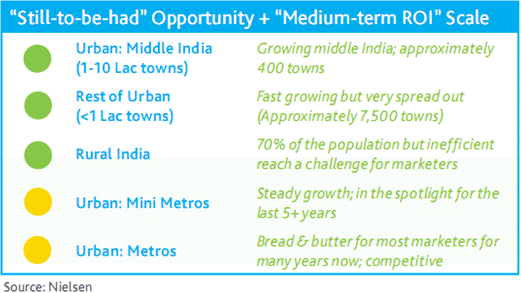
    While metros and mini metros are the flavour of the season for marketers on one side, and rural on the other, it is Middle India that is growing the fastest as far as consumerism is concerned, as per the Middle India Gold Rush, a study released by Nielsen India in December 2011.


    To define Middle India, it comprises 400 towns of population between one to 10 lakh per town. Put together these towns have an approximate populace of 100 million.


    Interestingly, the study states that Middle India would benefit disproportionately from consumerism of middle class (classified as strivers – annual household income of Rs 500,000, and seekers – annual household income of at least Rs 200,000). The reason is simple, a large percentage of the middle class resides in Middle India.


    In these towns, the markets benefit from the fact that they are easier to penetrate than metros due to sparse competition, and also easier to penetrate than rural areas due to better infrastructure.


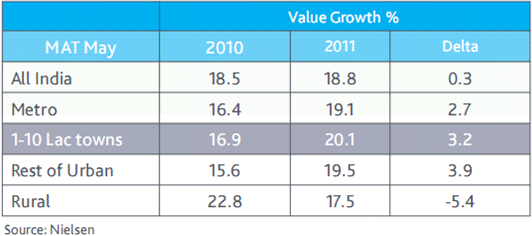
    Nielsen tracks 81 FMCG categories, and in early 2011, 49 saw faster growth in Middle India. As per the study, Middle India is showing strong value growth and as per MAT May 2011, it has moved from 16.9 per cent to 20.1 per cent growth, while for metros, the growth has moved from 16.4 per cent to 19.1 per cent, and on All India level, from 18.5 per cent to 18.8 per cent.


    Middle India is growing at a much faster pace vis-a-vis all India. From the year 2002 to 2010, Middle India saw 3.5 times growth in FMCG sector, vis-a-vis 3.2 of All India. Per Capita FMCG consumption too is much higher in Middle India as compared to All India. In the year 2010, both stood at Rs2,800 and Rs1,200 respectively.


    FMCG players, obviously, are not oblivious to these growth numbers. Top FMCG players have added Rs35.8 billion from these 400 towns in the last two years. As of May 2011, FMCG per dealer off take increased to 14+ per cent in Middle India, up 2.7 points as compared to 1.5 points of metros.


    This, in turn, led to increase in number of FMCG stores in these 400 towns, at an average, 250 stores were added per town in the last three years. The total number of stores in these towns increased from 8,23,000 in June 2008 to 9,26,000 in May 2011.


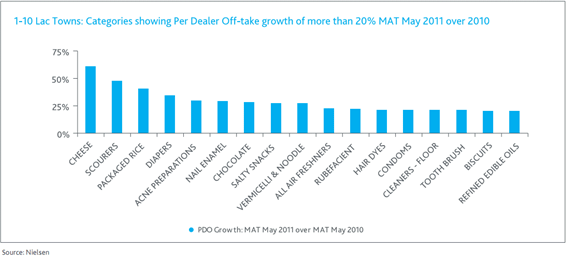
    The growth story becomes even more interesting, if one looks at the subsection of 350 towns with population of 1 to 5 lakh. These towns are growing at over 20% and 56 of 81 FMCG categories outperformed All India growth rates.


    Marketers, thus, ignore Middle India at their own peril, because people residing there want to check out all the categories from potato chips to skin care and from shampoos to fragrances. They do not only want options in categories they have been using, but newer categories as well.


    Click here to download the complete report.

    http://nielsen.com/us/en/insights/reports-downloads/2011/managing-the-middle-india-gold-rush.html

  • Kamal Basu to head marketing @ Skoda

    By Shubhangi Mehta


    Not long after quitting Saatchi & Saatchi as CEO, Kamal Basu is now said to be joining Skoda. Though no official confirmation could be attained at the time of this report, sources close to the development have confirmed the news to MxM India.


    Mr Basu was unavailable for comment. He had put in his papers in November 2011 at Saatchi & Saatchi where, as India CEO, he oversaw the agency’s Mumbai, Delhi and Bengaluru offices. Mr Basu had been with Saatchi & Saatchi India for nearly eight years after spending close to 14 years in agencies including O&M, DY&R and BBDO. He has been involved with multiple consumer categories and a rich set of global and local brands


  • Life OK’s gr8 start with 87 GRPs (report + analysis by Stratagem)

    By Rishi Vora


    While it may be still early days to declare Star India’s new channel Life OK as a success story in the Hindi GEC market, there is no doubt that it has delivered on the network’s goal No 1, which was to make an impact on the industry.


    The primary objective, as cited by a few industry observers, is to compete with the Sony and SAB TV combo, so that Star as a network could have a commanding position in a market which is now seen as hyper-competitive.


    So Life OK has clocked 87 GRPs in its first week, surpassing Colors’ 81 GRP launch back in July 2008. It may be recalled that Colors had left no stone unturned for the launch. The strategy was to start with the big-ticket show Khatron Ke Khiladi (with film star Akshay Kumar in a way giving a solid push to the channel), aggressive marketing, fiction shows, mythology, so on and so forth.


    One may argue that Colors was launched as the flagship channel of a joint venture company of two broadcast majors – Viacom and Network 18. Life OK in that sense is Star India’s second offering in the Hindi GEC sector. But, that has very little to do with what the channel has achieved in the first week as Star officials say that the idea is to compete with every channel in the market, it doesn’t matter if it means competing with elder sibling and No 1 channel Star Plus.


    An interesting observation: Imagine and 9x were launched in the same year (2008) and registered 55 and 21 GRPs respectively. Both the channels gradually grew in GRP terms, but as the market became competitive, the going for both channels became tough. While Imagine is still around (currently placed at No 7 with 67 GRPs), 9x may be on air, but even though it has been acquired by Zee, it has failed to create an impact . Of course there are several reasons attached to why the channel tasted early success and witnessed one of the most dramatic and talked-about downfalls.


    As for Life OK, its success at this stage can be attributed to the following: A sensible approach to launch the channel with a unique philosophy, marketing blitzkrieg (it is reported that Star India made an investment upwards of Rs 700 crore to launch the channel. The campaign, which is in full swing now, saw a three-day roadblock across Star India’s network, an outdoor plan reaching 100 towns, a week-long digital engagement programme which included an eight-hour-long concert, and of course getting Madhuri Dixit as the Sutradhar (storyteller). Plus, the fact that the channel did not bank on one particular show to deliver, and rather offered viewers a package of differentiated programming, the strategy to cut down on advertising inventory – all these factors put together have produced rich dividends.


    Official comments from the senior members of Star India and Life OK could not be obtained at the time of this report. However, industry observers believe that Life OK has what it takes to be a serious contender in the Hindi GEC market.


    Ashish Bhasin, Chairman India and CEO South East Asia, Aegis Media, observed, “Life OK as a channel has great potential.  However, the true test of a channel is after it has settled down for a few months. It is sometimes easy to get content for a short period but sustaining it on an on-going basis becomes a challenge. Ultimately, in my view, content drives the fate of any channel. If Life OK is able to sustain good quality content on an on-going basis for two or three years, it can definitely become a serious player. On the other hand, if the quality of the content starts to drop after the initial launch, then it’ll have a struggle ahead for itself.”


    Havas Media CEO – India and South Asia Anita Nayyar said, “With the kind of marketing backup and hype, the opening seems good and certainly a hike from the Star One deliveries. However, two-three weeks of sampling will continue and the actual stability will start setting in after a few weeks. Coming from the Star Network, the programming quality is very good.”


    On whether it will pose a challenge to the top players – Star Plus, Sony, Colors and Zee, she said, “It will be a strong competition in the GEC category for the No 3, 4 and 5 slots. Not sure about whether it will be another success story as big as Colors, as it had the advantage of differentiated content on the social platform when it launched. The content is interesting and should help stabilise around 60-70 GRPs from here.”


    In an earlier interview to MxM India, Star India COO Sanjay Gupta had mentioned that the No 4 position in the GEC line-up (currently held by Zee) would be a first good milestone to look at. In week 52, Zee is at 208 GRPs. Though he did not put a timeframe, going by what experts have to say, the channel will need to pick up on its early momentum and get there by bringing differentiated content – something Colors did very successfully.


    While Imagine has slipped to No 7 position and SAB is at No 5 with 122 GRPs, it looks like a serious battle from here on.


    An analysis by Stratagem Media Pvt Ltd on the launch of Life OK.Background 

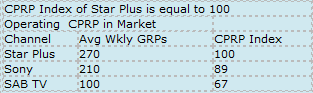
    It is a jungle out there in the media business. If you win the battle, you still have to worry about losing the war. Recently the Star Network launched another GEC called Life OK. Probably in the wake of competition from the Sony and SAB TV combo.The table 1, below depicts that the Sony and SAB combo was just about edging out Star Plus from the top GEC position, especially if it came at a more attractive rate (CPRP), as estimated in the table below.So, the not-so-hidden agenda of the Star network for Life OK would be to combine it with Star Plus and thereby fend against the Sony + SAB offensive, but without devaluing their trump card (i.e. Star Plus itself). Therefore, how would the new channel Life OK have to price itself, to overcome the Sony + SAB threat?


    Stratagem Media has undertaken a simple exercise to answer this question, for different levels of performance of Life OK.


    Objective of the exercise: To derive the CPRP Index of Life Ok @ different level of GRPs, if the CPRP of Star Plus is 100?


    Methodology: If the CPRP of Star Plus is 100, then what should the CPRP of Life OK be, if they have to match the CPRP of the Sony + SAB combo at different GRP ratios between the 2 channels.


    In the exercise below, the ratio of GRPs purchased between Life OK and Star Plus is assumed to improve in favour of Life OK, as its performance improves.


    *At these CPRPs, the Star Plus and Life OK combo will be as cost-effective as SET and SAB combo.


  • Chris Thomas: BBDO India’s performance has been fantastic

    By Tuhina Anand, Video-Shruti Pushkarna

     

    Chris Thomas, Chairman and CEO of BBDO in Asia, Middle East and Africa and Chairman of Proximity Worldwide, has spent over 25 years in the communications industry, and the majority of his time working for BBDO. In an exclusive interview with MxM India, Mr Thomas shares his views on the network and his view on BBDO’s performance in India and the road map ahead.


    Q: Are you satisfied with the way BBDO brands are performing in India?

    I think we’ve seen tremendous developments in the BBDO brand in the last three years. Our partnership with RK Swamy BBDO has been a tremendous success and continues to grow and develop. BBDO India has been ranked as one of the most creative and the most effective networks in India.


    Chris Thomas on BBDO expansion plans

    You measure their performance at Cannes, by winning the first Indian effectiveness awards at Cannes; there has been tremendous progress.


    BBDO India’s performance has been fantastic. We’ve gone from nothing in BBDO India to an agency that punches well above its weight in terms of size, is winning on the world stage, is developing our multinational clients’ businesses and brands in a way that’s highly compelling and effective.


    Q: With the recent development of Mudra, would it in any way also affect the scheme of things for BBDO?

    Well, that is a tremendous commitment and recognition of the importance of the Indian market. For Omnicom, there’s been a long standing relationship with Mudra. Obviously from the BBDO perspective, Omnicom’s continued commitment to the Indian market is very important and supportive.


    Chris Thomas on Omnicom Mudra acquisition

    Q: Are you looking at expanding your footprint any further? If yes, where would it be?

    The only thing I’m looking at expanding is quality. What I’m always interested in, is doing great work that’s talked about and moving consumers in the Indian market. If we have specific needs to be addressed in specific geographies, then we develop those needs. But the most important thing to expand is to make sure that we are doing the best work in the market and expansion comes after that, not before.


    Q: So if you were to define BBDO, would you say it’s small, mid-sized or big?

    BBDO is a network around the world, so obviously it’s enormous. But it’s not what we focus on, what we focus on is on being good. BBDO is defined by what we call the work, the work, the work, producing the best and the most compelling commercial content on behalf of our clients.


    So in this market, we absolutely live up to and deliver on that promise, and that’s why it’s been fantastic for our clients.


    Q: In the current times, what are the two challenges that you are facing?

    The challenge… it’s true in all of the Asian markets, it’s around the world, I think. But I think particularly in India and China, the key for all of our networks is to make sure that we are attracting the best people into the industry, we are retaining them and we are developing and growing them. So for me, I spend a huge amount of my time on attracting talent, developing our talent, and making sure that we have got an unfair share of great talent.


    Chris Thomas on current challenges

    Q: So what is your formula for attracting talent?

    Well we have a phrase, ‘culture eats strategy for breakfast’, and what we mean by that is, it’s about the power of the brand and the power of the culture. The fact that we are indisputably the most creative network in the world, the fact that this year we’ve been ranked as the No. 1 effectiveness network in the world means that we have a very powerful culture, we are aligned around a set of beliefs and what we care about, and that tends to attract good people. And that’s what we preserve and protect at all cost. So culture ahead of anything else.


    Q: We’ve been hearing about a talent crunch but there’s also the issue of being paid well. Is that an issue or is it being blown out of proportion?

    I think there’s a difference between accountability and effectiveness, and I think as an industry, we are spending quite a lot of time thinking about accountability. There are things we can count, like the cost of production, cost of media and so on. And we need to be concentrating a lot more on effectiveness and the value we add as a business to our client’s business. If you do that and you can demonstrate that case and that value, then you can command a premium. But it’s for the clients to see value and that’s about generating effectiveness and effective work. And I think if you can get that right, then the remuneration conversation can follow from there.


    Chris Thomas on his formula for attracting talent

    Q: Can you tell us about Proximity in India?

    We launched Proximity about a year ago now. Obviously as a network, it’s a rapidly growing direct CRM and digital network. I think there’s been a huge amount of conversation around social media, digital CRM, and we are seeing good growth in that business and I think that will continue in India as digital media, broadband penetration, use of mobile – which is enormous in this country – continues to grow, there are tremendous opportunities ahead.


  • Registered papers in India is 82,237, Hindi & Eng lead in no of print entities

    By A Correspondent


    The press registrar, T Jayaraj, Registrar of Newspapers for India (RNI), presented the 55th annual report ‘Press in India’ 2010-11 to Uday Kumar Varma, Secretary, Ministry of Information & Broadcasting (I&B).


    Speaking on the occasion, Mr Varma said that the annual report was a compendium of interesting data containing status of print media in the country. He also suggested that based on the previous years’ trends, a comparative analysis of different newspapers in circulation, their growth over a period of time and further comparative statements could be presented through graphs in the next year’s annual report. This would add value to the report, thereby becoming an important reference point for key stakeholders in the industry.


    The Annual Report highlighted key trends for the Indian press in 2010-11. The analysis provided a broad overview about the general trend of the Indian press based on the number and claimed circulation of newspapers.


    The total number of registered newspapers stood at 82,237. The number of new newspapers registered during 2010-11 stood at 4853. The percentage of growth for registered publications over the previous year was 6.25 per cent.


    The RNI approved 13,229 titles for the year 2010. The largest number of newspapers and periodicals registered in any Indian language was in Hindi at 32,793. English had the second largest number of newspapers and periodicals which was 11,478. The total circulation of newspapers stood at 32,92,04,841 as against 30,88,16,563 copies in 2009-10. The number of annual statements received in RNI for the year 2010-11 was 14,508 against 13,134 in 2009-10 registering an increase of 10.46 per cent.


    As per data from the annual statements, the highest number of newspapers were published in Hindi (7,910), followed by English (1,406), Urdu (938), Gujarati (761), Telugu (603), Marathi (521), Bengali (472), Tamil (272), Oriya (245), Kannada (200) and Malayalam (192).


    In terms of circulation, Hindi newspapers continued to lead with 15,54,94,770 copies followed by English with 5,53,70,184 copies. Urdu press had a figure of 2,16,39,230 copies.


    The report is a statutory requirement under Section 19 G of the PRB Act, 1867. It is an analysis of the Indian Press which focuses mainly on circulation as claimed by the newspapers. It also carries different chapters viz ownership of newspapers, analysis of daily newspapers, language wise study of the press and analysis of registered newspapers. The source of information of the report is the annual statements submitted by the publishers of newspapers and periodicals in accordance with 19 D of the Act.


  • We’ll be back in the new year…

    MxMIndia wishes you greetings in advance for the new year. Have a great time bringing in 2012.

     

    Party responsibly. Please, please don’t drink and drive. We’ll be back on Monday, Jan 2.


  • NBT launches NCR edition with hyper-local pullouts

    By Akash Raha


    Navbharat Times (NBT), the Hindi daily from Times Group, is launching its special NCR edition in order to further strengthen its position in Delhi-NCR. There will be no change in the pricing and it will remain Rs2.50 per day. Understanding the latent need and growing popularity of regional content amongst its readers, Navbharat Times decided to tailor its offering accordingly.


    Ranjeet Kate, Director Languages- Bennett Coleman & Co. Ltd said, “Of late, media buying behaviour has seen a lot of change. Advertisers see language dailies as a medium providing valuable and sizable reach in key markets like NCR. While on the other hand, ‘readers’ of such fast-paced cosmopolitan cities see newspapers as a trustworthy guide. We can deliver value in such a scenario with a customized NCR edition for both our readers as well as the advertisers.”


    For most of the advertisers, NCR is an important territory. Advertisers who are advertising inDelhican takeDelhi+NCR package at a nominal add-on cost.


    The NCR edition will not only retain its special Delhi and national content but will also offer a complete coverage of the state-level news in UP and Haryana. This special NBT-NCR edition will be available in all the five suburbs (Ghaziabad,Faridabad, Gurgaon, Greater Noida and Noida).


    Readers in these areas will also get the hyper local city pullouts in their respective regions, along with the main issue. Regionalizing the main issue will make the product offering appear more promising and customized for its NCR readers.


    Aman Nayar, Brand Manager- Navbharat Times said, “Most advertisers who advertise in Delhi would also want NCR and giving the minimal add-on rate, NBT intends to add most of its NBT Delhi advertisers to the NCR edition. The sizable local advertising, of course, will be done separately.”


    NCR has always been a booming vibrant market. It has been witnessing huge growth in job opportunities, increased urban migration, increased housing projects and huge investments in the transport infrastructure.


    From the advertising point of view, tapping the NCR market has always been an area of interest for all advertisers, as they always look out for mediums which have deeper engagement levels with their audiences. NBT, which aims to be seen as a value provider for its readers as well as advertisers, intends to keep experimenting and expanding in newer and relevant territories.


  • [PR Channel] The digital revolution: Opportunities for PR

    By Luna Biswas


    It would be incorrect to say that traditional media is losing its sheen from the perspective of news vis-a-vis the digital media. While the latter is gaining ground, it is imperative to understand how the internet can be effectively used to position communication from PR perspective. In today’s day and age, web provides the platform to create and publicise content without waiting for a newspaper to print the same. Every individual has the power to write/upload about anything, be it good, bad or ugly without being vetted.


    The problem that comes to the fore is the legitimacy. While online versions of newspapers and portals have the credibility factor, it is the individual who can – through blogs and social media – impact a brand, for that individual has a captive audience who trusts him more than they trust a news item. and this is where the difference between traditional and online media is for the PR community. a potent tool that has to be integrated and monitored for reaching out to the key target audience.


    Where, then, is the solution? For PR agencies it is impossible to overlook the digital world. Every available tool counts to create an effective public relations campaign. The paradigm shift, or at least partial shift, has to be from depending on social networking sites and moving towards creating online mastheads for clients. Social media or social networking sites have to be used as tools and not the end means to reach out to the target audience. The problem with social media is that it doesn’t engage customers with brands after a point in time but actually takes users from brands.


    Integrated communication agencies need to advise clients, and create for them a strong masthead by sourcing their audience from the social media spaces. Unless a digital campaign encompasses the “own” space for audience to engage with a company/brand, the campaign will not be successful. a platform has to be created where the audience can engage with the brands in terms of proactive interaction.


    Dell and apple are two great examples that have created platforms to communicate with customers and vice versa. What they have ensured is that the audience uses “that own” space to interact, vent their ire and communicate requirements. From a digital campaign perspective, it is something that needs to be deeply looked into. The mechanism used by these companies has resulted in keeping the audience on one platform, without them using another platform to complain or run down the brand.


    a successful online PR campaign has to be evolved keeping in mind how best the consumer can be attracted and kept within the precincts of the brand for which the communication has been devised.


    For this to take place, communication agencies need to make two elementary changes in their outlook towards the digital space. First, they need to recognise the need to build unique spaces because they are the mastheads of the digital world, not simply search tags or social media ‘like’. For each brand and company, the agency has to build different grand strategy of owning the constituents and making their masthead the most powerful gathering point for the brand.


    The planning of these spaces has to be unique for each brand, and based upon content power that drives conversations around the brand. Like advertising, which has learnt that the most effective way to build memorable brands is by creating cultural connects, the chore for integrated communication managers will be to create new spaces where the audience is offered the entire gamut of experience that he would experience from a newspaper. The current approach of engagement with social media is dangerously short-sighted because the brand is engaging in a conversation with the audience.


    Luna Biswas is Vice President, Member-Leadership Team, Hanmer MSL Communications Pvt. Limited. a part of the MSLGROUP


  • M-commerce is the way to go in 2012

    By Rishi Vora


    The Q3 report for 2011, which was released in December 2011 by BuzzCity, a global company which serves advertisers and publishers of mobile internet sites, augurs high growth prospects for mobile commerce (m-commerce) , which grew by 30 percent from the second quarter in 2011, in India.


    According to the report, a major portion of the growth came from mobile content players, but there were a few financial services brands that also ran promotions.


    BuzzCity, headquartered in Singapore specialises in mobile internet advertising and India tops its priority list among emerging nations. BuzzCity has served more than three billion ads in India alone – it tops the list of ads served by a company in the Asia Pacific region.


    BuzzCity’s India operations were started four years ago when the Mumbai office was set up, at a time when mobile internet, as a medium, had just begun to gain momentum.


    K F Lai, co-founder and CEO, BuzzCity said, “India is one of the most important markets for us. It contributes a significant chunk of revenue to our global network. Though the market is still small in size, it is beginning to open up and 2012 should see many advertisers and content players invest in the medium.”


    The report also stated that while Indian market was heavily male-dominated as far as usage of mobile internet was concerned, the sheer size of the market still gave advertisers reach into a substantial demographic of over 14 million unique users.


    Sharing his view on the Indian market, Mr Lai said, “There are about 150 million mobile internet users in India, these numbers are bigger than internet numbers, thanks to the mobile penetration and the decreasing price-points of smart-phones, 3G services and so on. We will also see increase in the number of mobile internet users, with tablets becoming popular, it means better user experience, opportunity for brands and for publishers – it means serious business.”


    Mr Lai believes that 2012 will be a year where m-commerce will evolve in a big way. India has already seen unprecedented growth in e-commerce. The key for the industry, however, is to maintain high levels of trust among consumers and transparent dealings. If proper care is taken, it is a medium which can pay rich dividends to brands in India.


    The report also revealed that in 2011 Nokia was the most popular handset brand for internet access (64.81 percent), followed by Samsung (11.85 percent). The generic mobile phones, known as ‘white-box handsets’, cumulatively accounted for a marginally higher share than Samsung at 11.95 per cent.

  • Media & Adland Wishlist 2012


    By Anil Thakraney


    The Indian media, in general, has got a number of things right. It puts serious pressure on the ruling government and sometimes the judiciary, so that the right things happen, and they happen fast. This crusading spirit is important in a slow- moving, chaotic nation like ours, so kudos on that front.


    However, there are a number of things that are not so right with our media, especially the mass media, and here’s hoping we get to see some course correction in the coming years. Here’s my Top Ten wish list.


    1. Radiagate was a wakeup call for all journalists. When access to the rich and powerful gets too close, one needs to quickly draw a line and back off. Some didn’t, and are lucky to still have their jobs. The scandal brought immense disrepute to the profession, and credibility will be hard to restore completely. Here’s hoping in the future the Indian media remains free of any such nonsense. We can’t afford it.


    2. The Broadcast Editors’ Association put out a 10-point code of conduct for news channels on how they should cover the Bachchan baby birth. And the very private family event passed off very privately without the channels breathing down their necks. What one would like to see in the coming year is that this practice becomes standard operating procedure during private celeb moments, and there is no need for codes any more. This would also delight Shri Katju.


    3. While it did change to a certain extent as the year closed, most editors behaved like Anna Hazare’s cheerleaders all through the year 2011. This is not just unfair, it’s against the fundamental principles of journalism. Here’s looking forward to less bias and more balance in the year 2012.


    4. It’s very clear that our media houses have aligned themselves with various political parties, and their respective biases keep becoming apparent even to the layman. This must change for sure, starting from 2012. Media without objectivity is like Rakhi Sawant without silicone. No one wants that.


    5. No more paid news. Repeat after me children… no more paid news. Repeat after me children… no more paid news.


    6. Here’s hoping all those TV anchors who indulge in hysteria and drama are promptly transported to the Bigg Boss house in the coming year. And are not allowed to enter newsrooms again. The junta wants news and views. Not nautanki.


    7. No more front half-pagers in the coming year. Where advertisers demand that the front page be vertically slashed. A fatwa needs to be declared against proprietors who agree to this criminal practice.


    8. Would like to see some kickass innovations in the print media this year. Both, newspapers and magazines. The digital media threatens big-time, it’s like a wolf at the door, and our old-world editors continue to pretend nothing’s happening, as they dish out the same tired stuff. I am also hoping editors who refuse to re-invent are shown the door before 2012 closes.


    9. Really wish that in the year 2012 the maha excitable radio jocks shut the eff up and play the effing music. Even if all the radio stations play the same ten songs at the same time.


    10. All the girls in the TV newsrooms need to glam up. I noticed the nails are becoming brightly coloured these days, but I want to see more. I mean, if I am stuck with the likes of Abhishek Singhvi, Chandan Mitra and Mani Shankar Ayer discussing the same tosh night after night, I need some joy to come from somewhere.


    Ad World 2012

    The Indian ad world, though it gives many awards to itself, hasn’t really set the world on fire. Okay, so we do score the odd international award now and then, but clearly we have a long way to go. Aside from that, our ad guys will face many serious challenges in the coming years, and quite frankly, I am not sure the industry leaders are ready as yet. I still get a sense of complacency and self-satisfaction when I meet agency bigwigs.


    Here are ten changes I would like to see in 2012.

    1. Once and for all, ad agencies must set aside their rivalries and egos, and must come together to work out a fee structure. It’s obvious the agencies are underpaid by their clients, and this puts serious pressure on their resources. This is also a common complaint I hear from agency heads. Well, grumbling won’t solve the problem. Start the New Year with many beers, and figure a way out!


    2. I think hot shops are back with a bang in the ad world, and in the coming year they will put real pressure on the large networks. Aggie and Padhi are just one example, but I predict more people will quit large agencies and set up their own boutiques. Since their rates will be lower, many clients will be tempted to defect from the traditional agencies. And I think this is a good development as it will result in superior work overall.


    3. Experts in TV media continue to head ad agencies, and I am hoping at least a few agencies will smash this system and promote young creative chaps skilled in the new media. Because old-world creative directors generally don’t understand the digital space, and they need to make way for the young geeks. Sooner the better.


    4. Simultaneously, I wish in the year 2012, youngsters in the ad agencies get off the internet (and that includes Facebook) and spend some time in the villages and small towns. There is a dire need for agency staffers to be well rounded in their skills. This is not Singapore. This is India, and a whole lot of people are still looking to buy their first colour TV.


    5. I wish ad agencies would bring back the lost pride into their strategic planning function. The number one reason many suits quit the business to join the world of marketing is the lack of brand planning within ad agencies. Ad agencies have become creative sweatshops, and this leaves no work for managers but to be good executors. Starting 2012, I am hoping this changes, because it’s bleeding the ad world of its talent.


    6. Dear Creative Director, please, please, please do at least ONE nice press ad in the year 2012. I beg of you. People still read newspapers in this nation. Puleeeeaze!


    7. I know the media buying function is now completely divorced from advertising. And it is my belief that this has badly affected media innovations. I recall those days when the three of us – the account executive, the media planner and the creative director – would lunch together and crack ad ideas. I hope at least once in the year 2012, Balki, Lynn and their client servicing person share a drink and discuss brands.


    8. No fake ads in 2012. Repeat after me, children. No fake ads in 2012. Repeat after me, children. No fake ads in 2012. Repeat after me, children.


    9. No noisy TV commercials in 2012. People don’t buy from shriekers. Repeat after me, children. No noisy commercials in 2012. People don’t buy from shriekers. Repeat after me, children.


    10. I am hoping at least one brand will show all of us how to exploit viral magic on the internet in 2012. At least one brand will become the Kolaveri of 2012.


    Cheers!


    Anil Thakraney has worn various hats in advertising and as a journalist for around 25 years. He is editor-at-large, MxMIndia. The views expressed here are his own.

    Visual: Rafiq


  • Zee zeal comes to the fore


    By Rishi Vora


    The year 2012 promises to be a memorable one for Zee TV, with a celebration to mark the channel’s completing 20 years of being in the broadcast business.


    Besides completing 20 years of being in the broadcast business, the channel is expecting to climb the GRP ladder and look to attain leadership position. The road has been patchy at times, competition has stifled its growth and the channel has not quite delivered as per expectations. But, in all certainty, one can say that Zee is one channel which has stuck with the idea of being a family entertainment channel, one that does not believe in spending millions on celebrities, and one that is known to be profitable in the business.


    The company is planning to celebrate its 20 years with a campaign that’ll communicate the brand’s philosophy. Though finer details of the campaign are not known, it is learnt that the channel is looking to work more towards the channel brand Zee besides regular marketing campaigns to promote fiction and non-fiction shows.


    Akash Chawla

    Marketing Head of the group’s national channels, Akash Chawla admits that Zee has in the past few months taken a beating as far as ratings are concerned. But, at the same time he is of the opinion that 2012 is the year where they will look to change their ranking, where the idea is to be the No 1 player in the next 12 months.


    “We will go step-by-step in achieving that goal,” he said. He also mentioned that the first goal will be to reach the No 2 position in the next four months.


    Content will play a major role and as a part of the strategy, Zee will look to bring international formats, something which they haven’t tried their hands at in the past. While that is true, the channel will continue to launch home-grown formats too. Recently, the channel launched a couple of fiction shows and is looking to promote them on the back of reality show – Dance India Dance 3 (DID 3), a reality dance format show which Zee is betting big on.


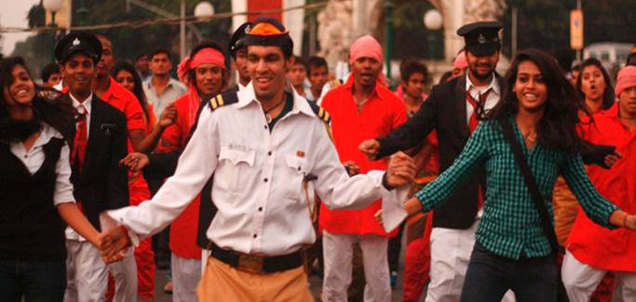
    A lot of work has gone in the new media initiatives, promoting DID 3. The channel recently organised a flash mob with the idea to promote the concept of ‘dance’ among viewers (see photograph). Besides that, contests on Facebook, hoarding, press, TV spots supporting the mega campaign. “The idea is to have a dialogue with the viewers. Even in the case of our press ads, we have tried to make a dialogue with our viewers, explained Chawla. “He further added, “We also did a flash mob because we thought it was a great idea. We were launching the show at a peak of a season where people tend to move out a lot. Also we did this when it was a holiday season, so footfalls in public places are likely to be more. If at the end of the day, I can make people dance along with Dance India Dance, the message is there, the engagement is there. The recall value increases.”


    Zee Cine Awards will happen in Macau on January 21 and be aired on the network on February 5. The show is promoted across all countries where Zee operates; however, marketing activities are being carried out country wise, where there will be different ideas, contests and marketing plans for different countries. Ditto with sponsorships, where each country will have a different presenting sponsor. For India, the channel has got on board Pan Bahar as the presenting sponsor.


    The campaign will cut across outdoor, print, radio, on-air promotions and interactive contests. It will also widely explore the digital space including social media, mobile-based apps and forge strategic tie-ups in every region to ensure a 360* connect with Indian as well as international audiences. This coming together of Zee’s global marketing teams will see more than 30,000 promos running across its global network in 168 countries.


    The story doesn’t end here for both Chawla and Zee Group for that matter. From a network point of view, there is a renewed thrust on Zee Classic. One of the three channels that were launched to be on the digital platforms initially. Zee Premier and Zee Action being the remaining two. Having defined a niche for Zee Classic and the fact that the channel has already about 500-odd movies to engage the audience with, the task at hand for Chawla and team is to market the channel more aggressively to that specific niche. The channel launched a new show called Classic Legends, presented by Javed Akhtar.


    Digitisation will help boost channel’s profits. It also opens up a whole new channel for marketing. Dish TV being a sister company, and reported to be the largest among DTH players, Chawla says it makes more sense to leverage that platform and generate as much traction from there in promoting the channels shows, particularly reality shows – DID 3 in this case.


    So a lot happening. DID 3, Zee Cine Awards, the new media thrust, the plan to be No 2 in four months and No 1 in a year’s time. The task is mammoth as Sony and Colors too are eyeing the No 1 spot. So these are testing times for Zee. Will the pressure of expectations defeat the channel’s ambitious moves? Or will it come out victorious?