Category: NEWS

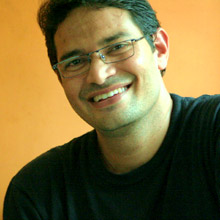
  • Vipin Dhyani: We create ads that our TG appreciates

    By Shubhangi Mehta


    Thoughtshop is a 360-degree advertising and communication agency started by Vipin Dhyani. With more than a decade of experience in advertising, Mr Dhyani has the unique distinction of working for a diverse portfolio of brands and being involved in more than 120 ad films over the last couple of years.


    Thoughtshop has conceptualised and created communication films for various products for Parle which include Hide and Seek, Hide and Seek Bourbon, Milano, MonacoSmart Chips, Mango Bite, Krackjack. It has also created the TVCs for Nirma Washing powder, D-Cold Total amongst others.


    In the recent past Thoughtshop bagged three awards in the Big Bang Awards 2011 in Bangalore. One gold for Krackjack radio spot titled ‘Ladies tailor’, a bronze for another radio spot, ‘marriage councillor’ for the same and another bronze in TVC category for Parle Milano featuring Hrithik Roshan. In 2010, the agency has also won silver in Goa Festival for its Nirma washing powder TVC titled as ‘Splash’.


    Prior to this, Mr Dhyani has worked with Everest Brand Solutions and Mudra as Creative Director. He has also had stints with Lowe Lintas and Grey Worldwide in Mumbai.


    Q: What makes Thoughtshop Advertising different from the other advertising agencies? Why does a client choose Thoughtshop over other agencies?

    Our in-depth understanding of consumer insights, sound creative and a real good turnaround time. We are not selling ideas we like. We are not even selling ideas liked by our clients. We create ads that our TG appreciates. Pure honesty, sincerity and a very no-nonsense approach helps us whenever we approach a new client.


    Q: How satisfied are you with the progress of Thoughtshop Advertising since its inception? Has the outcome matched your expectations?

    I am very satisfied with the way things are shaping up. Initially it took me some time to figure out how to go about it. On one side, there was that sense of calmness which you crave in your own place and on the other side you need that aggression which is required to win business. Fortunately I could acquire both. And I am more than happy to achieve that unattainable balance. Overall, it was a plunge worth taking.


    The outcome has been very fruitful, I should say, but expectations are higher than what we have achieved so far. The hunger for good creative work is never ending and never satisfying in our field.


    Q: You have worked with some of the biggest agencies in India and then started one on your own. Could you highlight some pros and cons of working with a bigger agency and starting something on your own?

    When you are part of a big atmosphere, all you need to worry about your brand and its creative standards. You don’t actually think about the business and the ‘survival’ part of it. But when you run your own set up, you are not just responsible for your survival but for the whole team.


    In simple words, with bigger outfits I felt like a civilian, while on my own, it’s like an army man on a border, always on my toes, alert and responsible.


    Q: How much importance do you give to winning awards? Do you think that awards justify the measurement of creativity?

    I would say it is very important to win awards. If we belong to the creative fraternity, we have our moments of escalation, moments of getting admirations and moments of being known. Fair enough. But the sad part of the business is that sometimes an award-winning entry could be completely plagiarized and a genuinely beautiful work may go unnoticed at the same time.


    Q: These days awards focus on not only creativity but effectiveness as well. According to you which out of the two is a focus point while creating a brand communication?

    Efficacy awards basically talk about the real strategy transforming to a sound creative that is being liked and owned by the real end consumer. It is like performing a play in front of the real audience who can appreciate or completely disown you, depending on your performance. On the other hand, a creative show ‘primarily’ prefers and promotes a disruptive and innovative entry whether it is from mainstream product or a service or not. That’s where it creates a separation line.


    I think if we believe in creating a brand and not just one-off clever ads, we can create genuine work worth celebrating at both levels.


    Q: Could you throw some light on the brands you are working on?

    We are doing two new launches for Parle this year. The communication package is ready. Apart from Parle, we will be working for Nirma for at least one project while for Bayer CropScience, we are going to launch two projects (Decis & ECB) very soon. Then there is one property we have created for 9xM channel. It is going to be the first female animated character. We have got one more account recently, GET Punjabi channel. After a huge success in US andCanada, they are launchingIndia’s first GEC in Punjabi. Ekta Kapoor is going to be the producer for them in terms of providing content and we will be looking after the advertising and promotions.


    Q: Independent agencies are doing fairly well these days and competing with the larger agencies. What are your views about this?

    Actually it is not about smaller agencies versus bigger agencies. It has always been about a sound, feasible and appropriate idea or strategy. If a client finds an idea sensible, he will appreciate it in whichever case, whether it comes from a small agency or a bigger one.


    Q: What is your growth strategy for the coming year?

    Apart from 360-degree creative services, we are expanding to fulltime production and direction services both for our existing clients as well as for new ones. Expansion with one more branch is also on the cards.
     

  • Recent deals point to consolidation in media, say experts

    By Ravi Teja Sharma & Meenakshi Verma Ambwani


    Purveyors of news are rarely objects of news themselves, but India’s splintered media landscape has made news in the past two weeks. A flurry of deals or talk of more similar transactions have stirred up the sector in recent days, putting the spotlight on the possible motivations and some crystal ball gazing on what lies ahead.


    Last week saw a little-known chemical and fertiliser company Oswal Green Tech buying a 14.17per cent shareholding in New Delhi Television (NDTV) through two block stock market deals. Media reports said Mukesh Ambani-controlled Reliance was looking at buying into Network18, which runs CNBC India. Before him, younger brother Anil’s firm Reliance Capital increased its shareholding in UTV News, which runs Bloomberg TV, by buying out UTV founder Ronnie Screwvala’s 66 per cent stake.


    Industry executives and experts believe the consolidation trend will pick up momentum in 2012, separating the men from the boys in this highly splintered sector that is being increasingly hobbled by cost pressures and revenue challenges in a slowing economy.


    With more than 700 television channels in India and only few making money, experts believe consolidation in the industry is inevitable.


    “Consolidation has to happen. It is required,” said Mr Haresh Chawla, who recently announced his resignation as group chief executive officer of Network18 and Viacom18 after leading the company for more than a decade.


    One major problem for the industry is that it has been too dependent on advertising revenues, while subscription revenues have been elusive.


    Analysts say some signs of consolidation are already visible, as media companies cobble together bouquets of channels.


    “It is already starting to happen and going forward, media companies will look at building a portfolio of broadcast assets across genres, geographies and languages to create a national setup,” said Mr Jehil Thakkar, head of the media and entertainment practice at KPMG.


    The move towards regional channels, spread across geographies and genres, is triggered by the high growth in advertising revenues in the segment. Growth in advertising revenues in big cities has been around 12-13 per cent even in good times because of an inventory overhang, while regional advertising has been growing at more than 20 per cent for the last few years, say analysts.


    Analysts say this could explain why Network18 may be looking at Eenadu TV. “Network18 does not have any regional channels in its portfolio. This move will give them an entry into the fast growing regional market,” said one analyst. Buying Eenadu TV could give Network18 a bouquet of 11 regional channels.


    What may also be attracting new investors such as the Ambanis and foreign media companies such as Walt Disney is the promise of higher revenues and growth as the full benefits of digitalization kicks in. Collateral benefits of media ownership include access to content sources to power non-media business and potentially even some influence.


    In the case of Reliance Industries, which is setting up a national 4G broadband service, ownership of a media company will give it an edge over competition, with access to exclusive content from a bouquet of channels as well as web properties.


    The Cable Television Network (Regulation) Amendment Act, enacted two weeks ago, could help subscriptions finally become a good source of revenues for media companies, reducing their dependence on advertising. Today, a viewer pays as little as 50 paise to watch an hour of TV. Even this revenue does not reach the channels completely because of under-reporting by local cable operators.


    “This (the digitalisation law) will be a game-changer for the television business if well executed,” said Mr Sunil Lulla, managing director and chief executive officer of Times Television Network, which runs Times Now, ET Now and Movies Now channels.


    Meanwhile, some deals have already happened in the non-news segment, in anticipation of large changes in the sector. In July this year, Walt Disney Co said it is buying out rest of the 49.56 per cent stake in UTV Software Communications that it does not own from public shareholders and other promoters of the company for Rs 2,000 crore.


    “There is clearly a need for sellers to look at strategic investors. For the buyers, in the long term there is value in Indian media,” said Mr Nikhil Vora, managing director and head of research at IDFC Securities.


    India’s entertainment and media industry is estimated to grow at a compounded annual rate of 13 per cent to Rs 1,19,890 crore in 2015 from Rs 64,600 crore in 2010, PwC’s India Entertainment and Media Outlook for 2011 revealed earlier this year.


    The sector’s woes, notably because of high costs and low subscription revenues, coupled with the general weakness in the markets have cast a dark shadow over media stocks. The market value of NDTV stood at Rs 171 crore on December 21, 2011, the day Oswal Green Tech, formerly Oswal Chemicals & Fertiliser, acquired its stake for around Rs 24 crore.


    The company was worth Rs 215.66 crore on January 3, 2012, Rs 552.5 crore at the beginning of 2011 and Rs 3,300 crore at its peak in January 2008. Network18’s market value has dropped from Rs 1,540.7 crore on January 1, 2011, to Rs 535 crore as on January 3, 2012, while that of TV18 has dropped from Rs 2,122.4 crore to Rs 1,220.13 crore in the same period.


    The sector trades at price earnings multiple of 18.3 compared with nearly 19 for the telecom sector or 21.43 for the technology sector.


    While digitalisation will help increase subscription revenues and remove capacity constraints, it will also aid the process of consolidation in the sector by forcing smaller regional channels into the embrace of larger, pan-India players. Smaller regional channels are enjoying better advertising growth today, but after digitalisation they could face problems in getting themselves well placed in the line up of channels and may feel the need to be aligned with larger players either by selling out or through a distribution deal.


    “Larger players with a bouquet of channels will have more bargaining power with cable operators. Smaller channels will find it difficult to get into prime tiers,” said Mr Chawla.


    With valuations low, experts feel now may be the time for consolidation. “The overall multiples for media companies have been low for a while. This is a good time to buy. Broadcasting does present a good opportunity,” said Mr Thakkar.


    Source: The Economic Times

    Copyright © 2012, Bennett, Coleman & Co. Ltd. All Rights Reserved

  • Airtel’s HFZ campaign goes viral

    Bharti Airtel, a leading global telecommunications company with operations in 19 countries across Asia and Africa, after the success of its ‘Har Friend Zaroori Hai, Yaar’ (HFZ) campaign, has extended this brand idea with the launch of an all new online viral campaign on its YouTube channel (www.youtube.com/airtel).


    Created by Taproot, these 20 videos are inspired by interesting ‘friend types’ or tags created by the online audience on Facebook (www.facebook.com/airtelindia) during an outreach programme which had been initiated by Airtel earlier.


    Over the coming weeks, the company will periodically release a total of 20 videos on the web and use the concept of ‘Gamification’ to excite viewers to unlock, access and share them.


    An interesting trend that depicts the way the current generation consumes and accesses information, Gamification is an infusion of gaming techniques and unique story telling that makes discovery content more fun and engaging. As part of this Gamification-led initiative by Airtel, everyone keen on watching these videos will need to visit www.youtube.com/airtel and will be provided interesting cues, by responding correctly to which they will be able to ‘unlock’ video levels and gradually move ahead.


    Commenting on the launch of the new HFZ viral campaign, Bharat Bambawale, Director – Global Brand, Bharti Airtel, said, “The youthful rendition of Airtel’s ‘Har Friend Zaroori Hai, Yaar’ campaign and its accompanying foot-tapping friendship anthem have resonated well with people of all age groups and backgrounds – much like the brand itself. Given the theme itself, focusing on the discerning online audience was a natural choice for us. With this in mind, Airtel launched an online campaign that encouraged everyone to create unique friend types on Facebook which received 65,000 entries in a span of days. We have now chosen the most interesting friend tags like ‘Status Update fried, Activist Friend, Dhinchak friend’, ‘Filmi Friend’, ‘Chipkoo Friend’ and ‘Proxy Friend’ to create new HFZ online viral videos. These videos will follow the increasingly popular global trend of ‘Gamification’ to encourage viewers to spread the word on these evocative videos that bring alive ways in which friends touch different aspect of our lives.”


    Tagging others and sharing these videos on social networks like Facebook, Twitter and Google+ will allow viewers to gather points on the leaderboard. And then finally one can upload their own friend type video in order to win a Nokia Lumia 800 and a trip toIbiza,Spainas the grand prize.


    A complete deviation from traditional media strategy, Airtel will release these videos on the web starting January 4.


    The original HFZ soundtrack is now also available through new interpretations in laavni, bhangra, hip-hop, folk etc.


  • Bajaj Allianz: ‘Not keen on chasing numbers’

    With the current economic crisis casting a dent on the prospects of certain industries, it is turning out to be a testing phase for many players. Not the one to be spared, the insurance sector too has been jolted by the sudden turn of events. Adding to its woes is the recent shift in policy decisions that have been issued by the government in streamlining the industry, but the industry players are responding positively to the new diktat as it would ultimately mean netting in more customers. One of the players who is doing everything right to face the future is Bajaj Allianz.
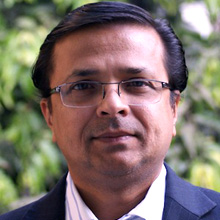
     

    As Head-Product Development and Market Management, Bajaj Allianz Life Insurance, Rituraj Bhattacharya is taking the onus on himself in adding new customers but not without doing enough ground work and coming up with solutions tailored to meet the needs of the customers. In conversation with MXM India’s Johnson Napier, Mr Bhattacharya shares the reasons behind launching new schemes and why ULIPs would be a suitable investment option for most customers, especially those from the tier 2 & 3 towns and cities, in the future. Excerpts:


    Q: As Head of Product Development & Market Management what are your key responsibilities at Bajaj Allianz?

    It is relatively a difficult time for the industry at large. The new regulation that has come in is customer-centric and has resulted in insurers reassessing their business models. Some of the basic practices that were being followed by retail insurers are being revisited. So it is a period for a lot of consolidation in terms of business models, where players will be forced to develop long-term practices in the organization. A lot of emphasis in our organization has gone in training our work force and preparing them for the future. Once this entire process of training and consolidation is over, we expect better results to come out of the exercise.


    Q: How have the insurance players responded to the sudden shake-up in systems and practices?

    The industry is still in a learning phase and therefore the regulations as a practice will also have to keep evolving. It’s part of the ecosystem. I don’t think it’s only the regulator that is to be blamed; there is some amount of uncertainties in the consumer’s mind. Inflation, fuel prices, etc have taken its toll on the consumer. And where the insurance players are concerned, they too have not been able to replenish their product basket. This has led to consumers being exposed to lesser product offerings from the players. All these factors put together have contributed to the current situation.


    Q: Despite the decibels, insurance is still perceived as a ‘fragile’ investment option. Why are customers still apprehensive about opting for an insurance policy?

    I don’t think that’s the case. If you see, globally, insurance has been a successful offering. It has survived two world wars and other natural calamities where Allianz has settled so many claims. In India, most insurance players like us are financially very stable. Our capital is high, we have a higher solvency than what the guidelines prescribe, etc. So the issue is not about financial stability, it is about the current economic situation that affects different practices as well. It’s just a matter of time before we overcome this crisis.


    Q: What are the investment trends you foresee from the tier 2 and tier 3 towns across India?

    One thing that can be said with certainty is that the insurance penetration is definitely high. Recent studies conducted by IRDA reveal that the awareness levels around insurance products are on the up. People see insurance as a tool, device, instrument that helps them diversify their risks, assets and at the same time get adequate coverage for life. In fact, insurance is the only device which a person with a low disposable income can use to diversify his portfolio. If you see a person with low income around Rs 10-15,000 he finds it difficult to manage his assets around so many different instruments; but he finds it easy to do that within various offerings of a single insurance company.

    In Bajaj Allianz we are happy to cater to the tier 2 and 3 cities. Around 75 per cent of the business comes from these two segments. That’s because we have been able to develop a personal relationship with the consumers from these belts.


    Q: Could you share the growth pattern that has been observed at Bajaj Allianz?

    We have consistently added new customers to our portfolio. In the last financial year, we have issued around 2.2 million policies. We have a total customer base of 8 million insurers. We currently occupy a market share of around 2.8 per cent.


    Q: Could you elaborate on the objective and need for launching new ULIP schemes recently?

    GMIP is a completely new offering from us. We are trying to cater these offerings to certain new growth pockets where we are trying to offer solutions that suit these segments of the population. As a company, we are keen in doing a more stable business. We are not keen in chasing numbers; we hope to deliver quality products with emphasis on strong customer satisfaction.


    Q: What do the newly unveiled commercials seek to propose to the customer?

    If you look at our current communication campaign including the one around GMIP – I think we are more keen on what we as a brand want to deliver to the customer. We want to tell the customer what is the very essence or the insight behind our products that we offer. It is about learning facets about the customer and offering him products tailored to meet their needs. Our latest GMIP commercial talks about uncertain situations that we face in our lives and how we can overcome the same. Given the uncertainties that exist today, is the common man willing to go back to traditional ways of investing? We don’t think so. He is aware of the complex regulatory policies and is therefore on the lookout for products that are simple and address his needs. That’s what we seek to address through our communication.


    Q: Apart from regulations, what are the other challenges facing the industry?

    Changes in regulations are not a challenge as such; it is ultimately being done for the betterment of the industry. It has come as a jolt in the short term because that will mean change in systems and processes. The real challenge is not regulations, it is about how we do our business and develop products for our customers.


    Q: With the coming of several new private players, do you see the dominance of the country’s largest insurance player LIC on the wane?

    LIC is and will continue to be one of the strongest players. We are very small compared to them but customers have opened up and are keen to try out other insurers as well. Most of the customers who have tried us have an LIC policy also, but they are also satisfied with what we have to offer.


    Q: What would be your core focus areas for 2012?

    Over a period of time, I see ULIP getting more preference amongst customers especially those with lower incomes as it promises them more options to save and manage their money. If you see Bajaj Allianz, we have already lined up many products under ULIP. That’s because our focus as an organization is to cater to the masses. So the plan is to increase our portfolio of ULIPs while at the same time we will keep our portfolio of divisional products equally prominent. This will be our key focus in coming years.


  • Samir Kale: ‘We are specialists, not generalists’

    With Enron for its first client, the journey for the just-formed CMCG India in 1994 was clearly not an easy one. Anyone would know the agony that the AoR would have to face having to back a client with questionable leanings. But that was then. Today, CMCG India has made steady and progressive headway and is being seen as an agency of choice for many clients. The credit for this turnaround goes to Founder and Managing Director Samir Kale, under whose leadership the agency has grown to great heights in the communications world.
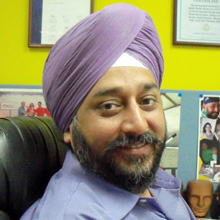
     

    In conversation with Johnson Napier, Mr Kale strolls down memory lane and analyzes how 2011 was a good year for the agency, how education would be a sector to look forward to and why it is important for clients to give agencies their due by way of increased premiums. Excerpts:


    Q: The year 2011 was a one that had its fair share of highs but it was the lows that had the industry on its toes. How would you define the year for CMCG India?

    In terms of our growth this year, I would say we have performed reasonably well. Typically if you observe, globally, whenever there is a downturn what gets slashed are the big advertising budgets. And then people start looking for value – what can you deliver that can get me as much value from spending as little as possible? And that’s what PR as a practice actually provides. So economic downturns actually help the PR industry; that’s how it should be. We have to be able to sell it to the clients that now is the time to look at PR. The thing to be noted here is that India is still a growing economy – whether 6 or 9 percent, it is growing. And therefore the demand for our services will keep on growing in a growing economy.

    So to put it positively, it has been a good year for us.


    Q: Have you outlined a vision for 2012? What are the immediate objectives for the team?

    What is happening today is that PR business as such is getting segmented – PR agencies are offering different services across different segments and different levels of services. In this scenario, we have to identify what is going to be the positioning for us in this matrix. Traditionally as an agency, we are more towards value proposition – we charge more but we give you more value. You have agencies which offer standard services, which I call ‘call centre’ services and we know what they have to offer. I am not saying that it is bad or good; our DNA has been towards value proposition. So we already have a positioning where value is concerned now the focus would be to get the call centre side of the business right.


    Q: What was different in the way you went about netting clients in 2011? Any stand-out clients that you were particularly excited about?

    Disney was one such client but I would say that the important thing for us last year was the setting up of Campus PR, a division that caters to the educational sector. I think we are the only players doing that right now. We have a good response to the product from some of the leading players in the education space. We would be increasing our focus around education in 2012 and I feel that offering segmented services would be key going forward.


    Q: Apart from education, how have the other specialized offerings performed for CMCG?

    We have done well across our other offerings as well and if you ask me am I satisfied with what we have achieved, I would say yes.


    Q: Given the hue and cry around digital, specifically social media, how have you increased your emphasis around the medium?

    Digital today has become a bit of a fashion. Also, today there are a lot of media agencies who focus on providing technological expertise. But we have focused on tapping the digital platform to communicate with the media. A case in point is IPCC, where we were dealing with journalists across the UK, US, Australia, New Zealand sitting here in India and trying to push the message across. That’s what we have being doing because the journalists are also on the internet and we don’t want to go and do things which we are not capable of. Our focus is how can we capture the attention of the media on the digital platform?


    I think what happens is it’s not the method, it’s the message we look at. Today it is digital but tomorrow it may be mobile. So what you want to say and communicate is more important and then the medium you want to do that on follows next. It’s content that will drive the way, not technology.


    Q: How is CMCG placed in the PR pecking order? What is the market share you seek to achieve in 2012?

    All I will say is that we are a mid-sized agency. We are specialists, we are not generalists for sure.


    Q: How would you rate your contemporaries?

    I can’t rate them as I have not been tracking them closely. But if it is said that they are offering differentiated services then it is good for the industry as such as it would help it achieve greater heights.


    Q: How do you see foreign players changing the fortunes of the PR industry in India? Is it beneficial having them increase their base on our shores?

    It’s a good thing for the industry. We have always had tie-ups with many international players. The industry has witnessed the buying out of many Indian agencies in the past few years. Having said that, we at CMCG already work with most international clients. They see the value that we bring to the table and they are willing to pay for that value. It is important for international agencies to build a good understanding of the country, regions, politics, etc; be able to offer that level of service that the client expects in the developed world. They need to be able to develop strong local capabilities to be able to work with their local clients in India. Otherwise it is not worth it. So while coming in is a welcome step, developing and understanding the market is a bigger challenge.


    Q: Are you still being chased by foreign agencies for a JV?

    If there is a good deal I will certainly consider it. As I said in terms of value proposition we deliver it well, what we need is to build our capabilities at the low-end or basic strata of the business. And doing that across geographies in India is what we will look at. So if my partner has a similar vision then it could be a win-win situation for both.


    Q: Consolidation would be the order of the day for the industry going forward. Would it help steer the industry in getting more organized?

    Typically, consolidation happens when you offer mass services to a large number of customers. But the thing about PR is that anyone can go ahead and start his own business, including a single individual himself. I think consolidation will help the top 10-15 players but beyond that it’s unclear what role it would essay as there are many small players too.


    Q: What are challenges facing the industry?

    I think we need to attract good talent in this industry. And that will come only if we pay better money, which will only come if clients pay us well. The thing is that the clients must pay the agency for every single activity that they do. Why should they expect everything in one fee? Does that happen in any other profession? I don’t think so. Today PR is still the last mile for the client; that perception has to change.


    Q: What would be your key focus areas for 2012?

    We will have a clearer idea in terms of how we can grow apart from the value-added services, the base services and how we can add on the expertise across verticals. These would be our key focus areas going forward.


  • DDB Mudra Mumbai appoints Louella Rebello as ECD

    By A Correspondent


    DDB, one of the three branded agencies under the DDB Mudra Group, has recently appointed Louella Rebello as Executive Creative Director. Her appointment will be effective from the first week of February 2012.


    She will move from OgilvyIndia, where she is currently serving as Senior Creative Director.  Louella will be a part of Rajeev Raja’s team and her immediate mandate will be to head the creative team at DDB Mumbai.


    Commenting on her appointment, Louella Rebello said: “It’s been a glorious nine years at Ogilvy, where I worked on some of the best brands, did some fun campaigns, worked with some fine people, and more importantly, made friends for life. But, I feel that it’s time to try something new. DDB Mudra seems like the right fit in terms of brands, the people, and their vision for the place.”


    Rajeev Raja, a consultant with DDB Mudra said: “Rebello has created some of the finest automobile communications in the country for Tata Motors. I have worked with her in the past and have seen her evolve over the last decade or so into one of the country’s leading creative talents. I look forward to work with her to make DDB Mudra an agency to reckon with in 2012.”


    Rajiv Sabnis, President, DDB India, called Rebello a bright, young talent waiting to explode on the big scene. “Her coming on board gives her a larger role and canvas to paint on. She has infectious enthusiasm and energy, and some path-breaking work in the automobile, financial, and FMCG categories,” he said.


    Ms Rebello has more than 14 years of experience in advertising. A post-graduate in Social Communications Media from Sophia Polytechnic, Rebello began her career in Pressman Advertising and Marketing as a copywriter in January 1998. After spending about two years at the agency, she joined Triton Communications in 1999 as senior copywriter. She joined Bates as copy supervisor in 2001. In January 2003, Rebello joined OgilvyIndiaas creative supervisor and held the post for about four-and-half years before she was promoted as associate creative director in 2007. In April 2011, she was designated senior creative director.


    DDB Mudra Group isIndia’s largest integrated marketing communications and services network. Its customized and collaborative approach helps its clients build valuable and enduring brands. With over 1,100 employees and 26 offices, they offer direct contact across 1,75,000 villages, 4000 towns, 3500 schools and nearly 7 million students. They wereIndia’s most awarded agency network at Cannes 2011.


  • Nestle India rolls out the Nescafe Plan

    By A Correspondent


    Nestle India has announced the implementation of the Nescafe Plan in India. Nescafe Plan is a global initiative by Nestle S.A. to bring under one umbrella the company’s commitment on coffee farming, production and consumption which will help Nestle to further optimize its coffee supply chain.


    To start the roll out of the Nescafe Plan in India, the first Nescafe coffee demo farm and training centre was inaugurated in Kodagu District of Karnataka by Mr. Jawaid Akhtar, I.A.S, Chairman, Coffee Board of India, Mr. Nandu Nandkishore, Nestle executive Vice President and Zone Director for Asia, Oceania, Africa and the Middle east, and Mr. Antonio Helio Waszyk, Chairman & Managing Director, Nestle India.


    This first coffee ‘demonstration’ farm in India will help farmers improve quality, productivity and sustainability. The company is assisting coffee farmers in the states of Karnataka, Kerala and Tamil Nadu to develop their agricultural practices as demand for soluble coffee grows in the country. Furthermore, Nestle research and development teams aim to provide farmers with high-yielding, disease resistant plantlets suitable for Indian conditions.


    Through the initiative, the company seeks to source coffee sustainably by working closely with Indian coffee farmers and ensuring competitive prices, transparency and traceability.


    Mr. Jawaid Akhtar, I.A.S, Chairman of the Coffee Board of India, said: “I am happy that the nescafe Plan is being launched in India. It will provide coffee farmers with technology and best practices for sustainable production of high quality coffee and also benefit them with improved access to markets.”


    During the event, a group of 20 farmers who have been trained under the Nescafe Plan were felicitated. While releasing the training manual ‘Nescafe Better Training Practices’, Mr. Nandkishore, Nestle executive Vice President and Zone Director for Asia, Oceania, Africa and the Middle east, said: “Nescafe is the world’s leading coffee brand. The Nescafe Plan demonstrates our commitment to working with thousands of farmers around the world, including in India, to provide training and technical assistance.”


    In recent years Nestle India has been doing extensive work to improve penetration of its Nescafe instant coffee amongst consumers and expand the market. The Nescafe Plan is important to ensure that the business is sustainable and that the coffee farmers also benefit. It reflects Nestle’s business philosophy that it must create value for its shareholders as well as the communities where it operates.


    Mr. A Helio Waszyk, Chairman and Managing Director, Nestle India said: “Indian coffee is currently amongst the best in the world and we would like to use our own expertise in coffee to help it retain its excellence in the future as well. In the Nescafe Plan our team will work with coffee farmers as well as other experts to combine the traditional wisdom with the benefits of modern science to make coffee farming more sustainable.”


    Currently The Coffee Board of India assists in research, development, extension, quality checks, market information and the domestic and external promotion of coffee from India. Nestle India agronomists will also work with coffee farmers and train them on how they can further improve the productivity and quality of coffee in a sustainable and efficient manner.

  • Mandeep Malhotra is President & Head, Mudra Max

    By A Correspondent


    Mandeep Malhotra has recently been elevated as President & Head at Mudra Max. He will be in-charge of the Mudra Max offerings comprising of experiential businesses (Kidstuff, Celsius, Terra and Concrea) and retail cluster which include Prime Retail, Prime Consult, Prime Wayfinding, Multiplier and Pratham.


    Mr Malhotra will handle these responsibilities in addition to his current role as Head, OOH. He will be reporting to Pratap Bose.


    Commenting on his appointment, Mr Malhotra said: “I am proud to be part of Mudra Max, a specialist agency that offers its clients an integrated approach to brand and business solutions. The agency is a great place to work as it provides a supportive and enabling environment that helps people realize their full potential. I look forward to taking charge of this mandate and leading my team in achieving new highs for our clients.”


    Pratap Bose, COO Mudra Group said: “Over the last 3 years, Mandeep has done a commendable job in driving the growth and profitability of our OOH businesses and also in creating the finest Outdoor team in the country. That apart his charm, confidence and ‘never say die’ spirit, which has always been his biggest asset, has been extremely endearing and infectious.”


    With a Masters in Business Advertising fromMelbourne, Mr Malhotra has over 12 years of professional experience in outdoor media. Prior to this appointment, he has worked with Clear ChannelIndia, Rediffusion DY&R,141 Wall Street (the OOH arm of Bates 141), Asian Age, Pioneer and Total Media Melbourne.


    He has managed brands such as Tata Indicom, Airtel, Reebok, Discovery, CNN-IBN and Nokia among others. He has won 4 One Show awards, 3 Pencil Awards and a few dozens Outdoor Advertising Awards (OAA).


    He was a part of the Gold Lion team atCannes and has also received an award as ‘The Entrepreneur of the Year’, along with bagging ‘The Suit of the Year’ twice at Ogilvy & rmg. He is the brain behind the recent successful launches of Aircel, Pepsi, Reebok, HT, Jet Airways, Reliance Capital, Micromax, Amway among others.


    The DDB Mudra Group isIndia’s largest integrated marketing communications and services network. The group’s customized and collaborative approach has helped its clients build valuable and enduring brands. With over 1,100 employees and 26 offices, they offer direct contact across 1,75,000 villages, 4000 towns, 3500 schools and nearly 7 million students. They wereIndia’s most awarded agency network at Cannes 2011.


  • Should ‘RJ Mentions’ be regulated?


    By Robin Thomas


    Long relegated as being the poor cousin of other vibrant forms of media – namely television, print and digital – on the popularity and ROI front, radio today is increasingly engaging in an exercise that is alleged to be aiding the medium in reviving its dwindling fortunes. Though one may argue that this exercise was being pursued since the birth of the medium in the country, it is the ubiquitous manner in which it is being persisted upon by radio stations that is a cause of worry.


    RJ Mentions, a term that is becoming synonymous as an alternative form of advertising by the radio players and clients alike, is a phenomenon that has taken the industry by force. While the practice seems to be a fair one for the radio stations, who see it as just another way of promoting a message or cause for a client, questions are being raised on the misuse of the popularity of the RJs, who are known to influence the buying patterns of the listeners.


    Adding to the worry is the fact that radio stations fail to put a disclaimer along with the promotional message, leading many to term the move as being a “paid news” initiative. That leads one to the moot question: while the print and television players face flak over flashing “paid” news, how could a high-decibel medium like radio go scot-free in delivering the same?


    Is it because the medium is so under-valued that authorities are failing to take notice or is it that there are no clear-cut rules that define what is permissible and what is not leading to the players engaging in the “questionable” exercise unhindered?


    Agreeing to the use, or rather abuse, of RJs for promoting a brand, a source from a leading radio station, requesting anonymity, said that it is a practice that is being pursued by most players. “RJ Mentions play an important role in the radio business as it brings in more revenues to the station. Radio stations usually charge 4-5 times more than the regular radio ads for RJ Mentions, depending upon the cities and the RAM and IRS figures.”


    Another senior industry official, again requesting anonymity, agreed that while the practice is being followed, it is important for players to issue “statutory warnings or some kind of disclaimer, particularly on sensitive issues like health and insurance. “Radio stations must indicate ‘RJ Mention’ as advertisement and treat it as such otherwise it is deception. If the RJ does not know what he is testifying is right or wrong, then it is an act of irresponsibility by the RJ and the radio station and therefore, it is unethical.”


    As an industry veteran and having donned advisory hats across mediums, Paranjoy Guha Thakurta seems unconvinced of the tactical advertising route being adopted by the radio players. “The issue of credibility is very important and if that credibility is damaged, it becomes very difficult to regain the trust of the listeners.” When asked whether it was right for radio stations to charge exorbitant fees for such an exercise, he asserted: “If radio stations take money for RJ Mentions then it is completely unethical because it is as corrupt a practice as any other corrupt practices.”


    But amidst all the brouhaha over what is right and what is not, it is important to understand the perspective of the marketer, as ultimately it is they who benefit from this practice, however dubious. And given the fact that they do not approach the medium with as much vigour as they do the others, it is even more noteworthy to question whether it is an effort worth the trial for them?


    Sanjay Tripathy, Executive Vice President-Head Marketing and Direct Channels, HDFC Life feels that the choice between RJ Mentions on radio and radio ads depend upon the objective of the communication activity. “While radio ads are effective when the goal is to just disseminate information, RJ mentions are useful when the brand needs to engage the listeners,” he suggests.


    For Sandip Tarkas, President (Customer Strategy) and CEO Future Media and T24, radio is seen as a less serious medium, unlike print which is more about news and such. “Since radio is more of an entertainment medium, I have no moral dilemma about RJ Mentions. As a practice, I feel RJ Mentions are very effective as RJs have a huge following and listeners can relate to what the RJ speaks. However, if it is overdone, it may become less effective,” he quips.


    Lending support to the views endorsed by Mr Tarkas, a few media agency players feel that RJ mentions is a growing trend and most brands today want to be part of this trend. According to them, the success of the brand plug depends heavily upon how the RJ carries it forward to the listeners.


    Rajneesh Chaturvedi, National Director, MEC Access observed: “RJ Mentions have a high brand recall. It is a form of branded content, therefore, brand recall is more than the regular radio spots. It is another way of communicating brand proposition, and certainly not misleading.”


    Echoing similar thoughts, R Venkata Subramanian, Senior Director-Investments, MPG India noted: “RJ Mentions are very effective for brands, as the brand definitely has a higher brand recall value.”


    Ajay Rao, Vice President, Dentsu expressed a similar feeling: “It depends on the RJ and the manner in which he plugs the brand. If done in a relatable way, it could establish the benefit which the brand strives to deliver.”


    In this confused scenario, where neither the client nor the player wants to let go of the enterprising opportunity, it would require the intervention of an industry body to decide what would be the ethical way to go about doing business. On being asked, Uday Chawla, Secretary General, Association of Radio Operators for India (AROI) informed that AROI is working on a Content Code for radio. Mr Chawla stated that listeners should be made aware whether any recommendation is a sponsorship or advertisement and if not, it should be clearly stated that this is a personal view of the presenter or the RJ. “Sponsorship and advertising are the main revenue models for any media vehicle. Hence sponsorship, if stated clearly as such, is fine. However, surrogate advertising and recommendation is an issue, and clear ethical guidelines for journalism and presenters need to be defined, which should be applicable for all media, including radio which should not be singled out,” he stated.


    Mr Chawla’s stance probably sums up what the radio industry needs to do on the future around RJ Mentions. It is only a matter of time before rules are formulated to define the practical from the unethical.

  • Suresh Balakrishna to join LMG, Premjeet Sodhi likely to replace NP Sathyamurthy (who is joining Mudra)

    By A Correspondent


    Senior mediaperson and former chief operating officer of Mail Today, Suresh Balakrishnan is getting back to the Lintas Media Group fold. He is likely to be CEO of one of the agency’s arms and will report to LMG chairperson Lynn de Souza.


    Confirming the news to MxMIndia, Mr Balakrishnan said he’s looking forward to returning to LMG after a gap of nearly a decade.


    In his 25-plus year career, Mr Balakrishnan started his career in publishing with The Times of India group and spent a fair amount of media agency business at Initiative Media. After he quit Mail Today last year, he took a sabbatical and taught media management at the Symbiosis Institute of Mass Communications amongst others.


    Meanwhile, as reported by MxMIndia on December 15, N P Sathyamurthy is moving to Mudra. He is likely to be replaced by Premjeet Sodhi who is currently with LMG as president, The Collaborative. Yesterday, LMG also announced the elevation of Deputy CEO Sudha Natrajan to CEO of Lintas Initiative Media.


    Image courtesy: Stratagem Media


  • Mediaah!: RIP, Bal Mundkur

    By Pradyuman Maheshwari


    I was sad to learn of Bal Mundkur’s passing on Saturday. I got in touch with Mundkur thanks to my colleague Vidya Heble (her tribute @).

    We were doing a cover feature on 50 years of Ulka for Impact, and while we had interviewed the new captains, we couldn’t have done the story without speaking to the man who started it all: Bal Mundkur.


    Vidya and Rishi Vora met him for the story and since we didn’t get him photographed here in Mumbai, I asked former colleague and editor of O Herald O in Goa Sujay Gupta to do a quid pro quo. We would give him the story and he gets us the pictures. Mundkur wasn’t too happy with the story appearing in the Herald, I figured later.


    He had wanted to speak to me about the book project that he had undertaken. He also wanted to subscribe to Impact, and sent in a cheque for the subscription as well as wanted some 20 copies of the issue that carried the article.


    We would’ve done it without the cheque, but Mundkur insisted.

    Speaking to him on phone meant investing at least half an hour, because you had to hear him out and convince him about what your point of view.


    I met him on a Saturday morning at the Orchid. He gave me his room number a week in advance, and the first question I asked him when I met him was how did he know which room he was going to be in. “Because, young man, this is my room,” he said. And he then regaled with me with a countless stories, each of which threw light on a different facet of his personality.


    On how we was a naval officer, an aviator, a music enthusiast… how he got into advertising, his pet peeves and the projects back in Goa. I spent some three hours with him. Possibly three-and-a-half. I could’ve spent an entire day soaking in the old stories. But there was a lunch to be at and Mundkur too had a meeting to head to.


    The room at Orchid (near the domestic terminal of Mumbai airport) was given to him by hotelier Vithal Kamat who Mundkur said he had helped financially ages ago (note: info not verified).


    He spoke about his book, and how it was meant to be a volume on Ulka. But he firmly believed that no such historical account could go without talking of the other greats of the time (note: info not verified). He insisted on it and chose to get on to the Ad Katha project and finally succeeded in launching it at Ad Asia.


    I didn’t really stay in touch with him, though tried calling him after his book Ad Katha’s release. I also wanted to speak to him about MxM and seek his blessings.


    I also wanted a personally autographed copy of the book. I guess I’ll never get that. I am happy of course that I could spend some time with him.

    Perhaps we should request Vidya to write a biography on the great man. Am sure it will be an uputdownable account.


    Amartya Sen on what’s wrong with the Indian media

    Nobel laureate and Bharat Ratna Amartya Sen writes a loooong 2000-plus-word review of the Indian media and what’s wrong with it (@http://www.thehindu.com/opinion/op-ed/article2781128.ece).


    The last para of the piece sums up his argument:

    If the first problem I referred to, that of accuracy, is one of improving the performance of the news media through better quality control, the second, transcending class bias, concerns the media’s role in reporting and discussing the problems of the country in a balanced way. The media can greatly help in the functioning of Indian democracy and the search for a better route to progress including all the people – and not just the more fortunate part of Indian society. What is central to the functioning of the news media in Indian democracy is the combination of accuracy with the avoidance of bias. The two problems, thus, complement each other.


    It took me a second read to get a grip on what he was trying to say.

    While being told about the inaccurate reportage is embarrassing, I don’t agree with his second view on class bias. More on that some other day… you don’t want another 2000 words on the issue, do you?


    Vij is back at afaqs

    Guess we know why only afaqs carries the story about Sandeep Vij, co-founder of afaqs.com, quitting DDB Mudra. He is all set to do so, the story informs. And where’s he going? Well, to get back to Banyan Netfaqs! Private Limited (BNPL) which runs! and The Mobile Indian. “He plans to help usher BNPL into its next phase of growth in the online media space,” the report says.


    Should we be getting worried?


    Buzz me if you have a story to tell and gossip to share. Confidentiality assured. Andar ki baat will stay under. There are various ways you can reach me: pradyumanm[at]mxmindia.com, BBM @ 23050B5D, Whatsapp/Gtalk pradyumanm[at]gmail.com, @pmahesh, 98338 76278.


    Disclaimer: Although Pradyuman Maheshwari is CEO of MxMIndia other than being editor-in-chief, he chucks those hats while writing Mediaah! So, the views expressed here are entirely his own and not those of the website and the team that runs it (especially the National Sales Head!).


  • Obituary – Bal Mundkur: Slogans, spice and a bite of ‘song’

    By Vidya Heble


    “Bal Mundkur has passed away.” It seemed an impossible thing to believe, but the fell hand had indeed taken him, on the morning of January 7, 2012.


    It was on a winter day many years ago when I first met Bal Mundkur at his home, Surya, on the banks of the river Mandovi in Goa. He was, of course, a legend and I trembled inwardly at actually meeting him, albeit in a personal capacity.


    His career as a naval officer and aviator had been followed by an illustrious innings in advertising, which he had famously given up to retire in Goa. ‘Retire’ was only figurative, because he proceeded to put his unrelenting energy into designing and building his house, and then lending his prodigious talent to projects which he felt would benefit society, including restoration of a fort and setting up of a museum. He even found his way into an offbeat little film (http://wn.com/rare_indie_goa,_ma_cherie_part_1) which is quintessentially ‘Bal’.


    “For the Royal Society for Asian Affairs, where he contributed an article on ‘Incredible India: The Inconvenient Truth’, he described himself “as neither an activist nor a frustrated journalist but as a dispassionate commentator”.


    People in Goa looked on him with awe, and he was known as a man of exacting standards and uncompromising expectations. Even my “Hello”, I felt, would be subjected to scrutiny. But he was delighted to meet a fellow Konkani, and dwelt pleasurably on the joys of Konkani food, much of which he was not allowed to eat by then. Pickle, chutney and spicy food was out of bounds, but Uncle Bal, as I called him, managed to sneak teekha stuff onto his plate now and then. When he discovered that I can cook, he extracted from me a solemn promise to make him some standard Konkani dishes, among them potato ‘song’ – a simple dish of cubed potatoes cooked in well-sauteed onions, tamarind and a lot of chilli. I made a mental note to tone down the chilli for Uncle Bal, who of course read my mind and said, “Don’t forget, lots of chilli!”


    But Uncle Bal had so much else on his plate that he never did find the time to come over for a Konkani meal. With time and circumstances, I didn’t meet him again for some years. But being in the business of media news meant, inevitably, that our paths would cross professionally. When I rang him up after a long interval, to ask for an interview on Ulka’s anniversary, he remembered the long-promised ‘song’, and once again we assured each other that I would cook and he would eat, one day.


    As always, however, Uncle Bal had too much going on in his life. One never knew where he would be next – dashing between Goa and Mumbai, scooting off to Europe or South-East Asia or somewhere else – or what project he would take up. Perhaps fittingly, his last offering was the history of Indian advertising, Ad Katha, which was released at Ad Asia 2011 in New Delhi.


    But those who know him, know that he would not have rested after this. That fertile brain would have been working on something else, and he would have been ringing people up with exhortations to participate, to donate, to sponsor. His zeal was unwavering and his passion, perpetual. Somewhere he might even have found time to stop for a bite of ‘song’.


    We will all remember Bal Mundkur in different ways. I’ll recollect him with a dash of spice.