Category: NEWS

  • Kulfi Collective appoints Divya Karani as Chairperson and ED of its Board

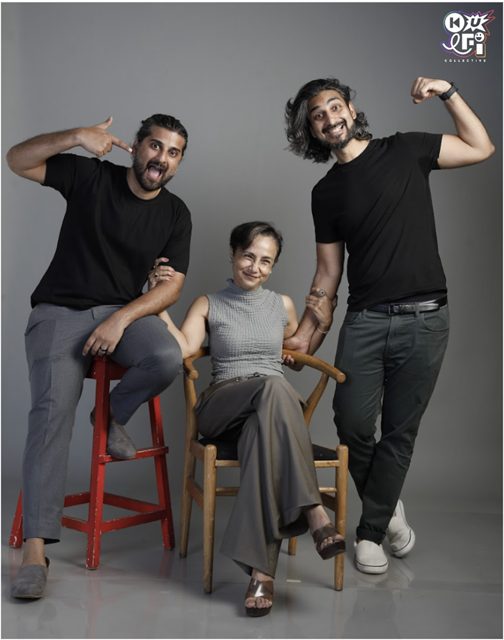
    Kulfi Collective has announced the appointment of senior adperson Divya Karani as Chairperson and Executive Director of its Board. Most recently, Karni was the CEO of Dentsu Media, South Asia, where she led the agency for over 12 years.

    Kulfi Collective, through its three divisions, Supari Studios, Post Office and Keeda Media, has partnered leading brands and platforms such as Spotify, Red Bull, Netflix, Lego, Flipkart and Zomato to deliver content, experiences and IPs that shape culture.

    Said Advait Gupt, Co-Founder & CEO of Kulfi Collective:”Divya joining the board will help us build the right governance frameworks as we scale globally. Further, her deep expertise will help us build upstream capabilities to bring brands closer to communities and subcultures in music, sports, gaming, entertainment and lifestyle.”

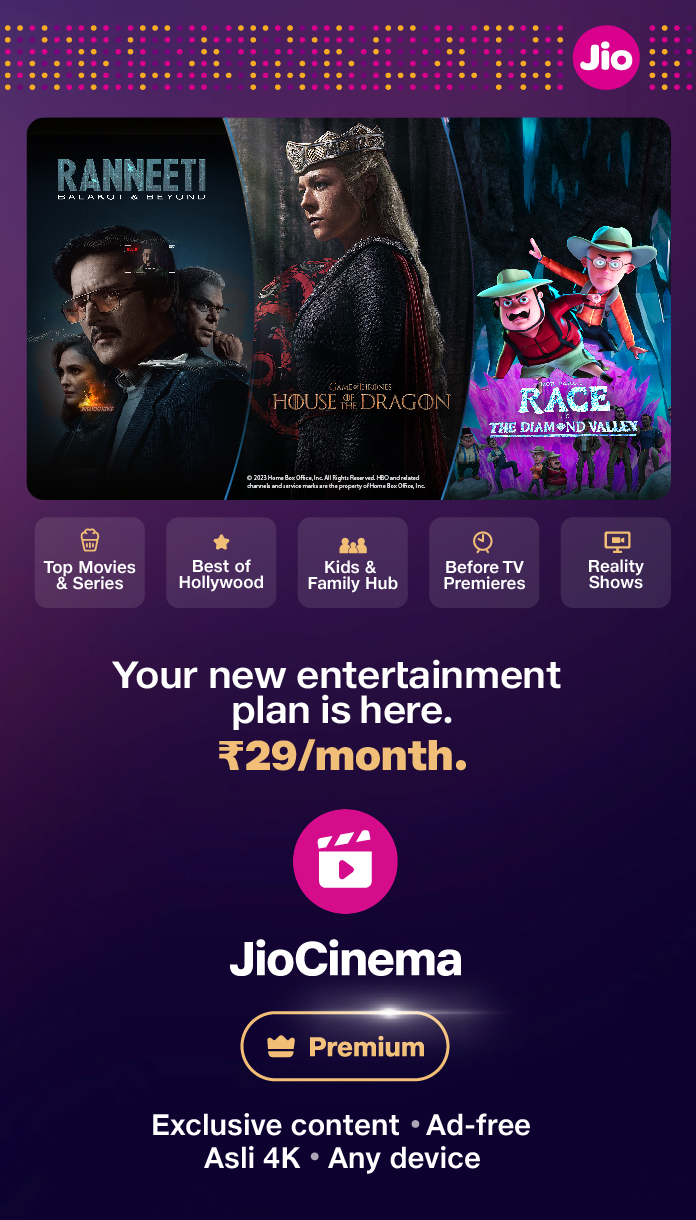
  • JioCinema goes premium at Rs 29/month

    JioCinema has announced its new subscription offering, ‘JioCinema Premium’, with a market-disrupting Rs 29 per month subscription offer. A ‘Family’ plan was also announced at Rs 89 per month which offers the additional benefit of four simultaneous screens access. Existing JioCinema Premium members will now enjoy all the additional benefits of the ‘Family’ plan at no extra cost. The ongoing Indian Premier League  will continue to be available for Free as part of its Ad-Supported offering.IPL

    Speaking on the launch of JioCinema Premium, Kiran Mani, CEO, Viacom18 Digital said: “Creating and building an entertainment ecosystem with a product that is made for every Indian household, is not just a business strategy, but a vision to empower our country and users with an unmatched entertainment experience. JioCinema Premium aims to redefine the narrative of premium entertainment for every Indian while building a daily viewing habit.” adding: “The introduction of JioCinema Premium breaks the numerous cost and quality barriers that exist in accessing premium entertainment. With 4K streaming, best-in-class audio, offline viewing and no device restriction all at a customer-centric pricing is sure to democratise access to quality entertainment for all of India.”

  • Indiatimes 2.0 redefines digital storytelling for modern youth

    Indiatimes, a publication from Times Internet, has announced embarking on a new content creation journey with Indiatimes 2.0. From the latest trends to timeless classics, the brand, informs that it curates diverse content reflecting the preferences of today’s youth.

    Said Abhijeet Anand, Business Head of Indiatimes: “As the premier lifestyle platform under Times Internet, Indiatimes has always been at the forefront of creating trendsetting narratives that resonate with the nation’s youth. This metamorphosis marks our most thrilling chapter yet, as we strive to set new trends with unprecedented vigor to engage with our audience like never before. As we embark on the journey for Indiatimes 2.0, we have a robust pipeline of IPs (Intellectual Properties) centred around themes such as “Make in India” (showcasing India’s rich cultural heritage and innovation on a global scale), education and personal finance.”

  • AI market burgeoning: Kantar research

    According to Kantar’s Icube data, Artificial Intelligence (AI) is already touching the lives of 9 in 10 internet users in India, “powered by the enormous computing capabilities on their phones, connectivity, and cloud infrastructure”,

    As per Kantar, the current AI user base of the country stands at 724 million and poised to grow YoY at 6%. These are users who have used any of the AI features like image filters, personalised recommendations, smart devices, etc till now.

    Kantar also found that ‘fitness’ and ‘social media’ apps are driving AI adoption with an average of 2.3 AI led features embedded in these applications. ‘Entertainment’ apps are a close second, standing at 2.0 AI features on average. AI is also touching ‘digital commerce’ and ‘pharmacy apps’ at an average of 1.8 AI features each. Kantar also anticipates that many more digital commerce & entertainment apps will adopt AI features to enhance quality of customer experience and stay in line with the emerging trends. Adoption however is slower in the ‘BFSI’, ‘job search’ and ‘short video’ apps segments, at an average of 1.2 features each.

    As per Kantar, adoption of AI among users is currently high for popular features while enhanced AI functionalities are catching up. Incidence among AI users in 2023:

    1. 88 % consumers used AI based algorithms which analysed their preferences, behaviours, and interests to create personalized recommendations for tailored experiences. This segment grew at 6 % YoY.
    2. 88% consumer also automated various tasks and streamlined routines to enhance efficiency and productivity in their daily lives using AI. This segment grew at 6 % YoY.
    3. 86% used ‘image enhancement filters’ so that the resulting image is improved in terms of sharpness, contrast, brightness or with other features. This segment grew at 5% YoY.
    4. At 21%, ‘smart home automation’ is a smaller segment but growing at 25% YoY.
    5. 15% consumers enhanced their ‘user experience through virtual assistants’. This segment is the fastest growing at 27% YoY.

    While AI technologies are touching most internet users of India today, their usage is expectedly higher among the youth (19–24-year-olds) at 92% and interestingly, at a high 81% for the older (45+ year old) age bracket as well.

    Speaking about AI and addressing the marketers, Soumya Mohanty, Managing Director & Chief Client Officer- South Asia, Insights Division, Kantar said: “AI is inevitable. Historically, technology adoption has always been a dominant determinant of a brand’s trajectory. We at Kantar feel that it is important to help marketers humanize AI to innovate successfully, help activate AI to predict future performance, maximize ROI and use AI strategies to build competitive advantage for sustainable growth. We have created a range of offerings which will benefit marketers and consumers by extension. LINK AI is one such solution, which helps evaluate creative effectiveness at scale and has helped uncover new insights into creating better video ads on YouTube which has a proven track record of growth, following Google’s ABCD framework. Similarly, we have introduced best in class offerings like LIFT ROI, Trend AI and NeedScope AI for various stages of brand growth as well.”

    Added Puneet Avasthi, Senior Executive Director, South Asia, Insights Division, Kantar: “Generative AI is set to become a $1.3T market by 2034 with a possible 42% CAGR growth over the next 10 years. We are sitting at a point of inflection where the next few years will enable a competitive edge between businesses who adopt early and others. As the usage of AI grows rapidly, it is critical for marketers to not use AI in isolation and as a gimmicky fad, but weave in consumer behavioural data into it to remove biases, continue to focus on building equity and not just to run activations. Kantar is at the forefront of this AI revolution and is assisting brand builders to strengthen creative testing, innovation using it’s AI based solutions.”

  • Republic expands top deck

    Republic Media Network has expanded its top management team. Objective: “solidifying” its position for a “mega growth journey ahead”.

    Here are the higlights:

    • Arun Rawat takes over as the Nation Head for Republic Bharat
    • Satabadi Sharma Pathak takes over as the Head of Republic Kannada
    • Purnasha Sharraf takes over as the National Head of Republic Bangla
    • Abhinav Sharma takes over as the Head of Republic TV
    • Sanjukta Kapoor takes a leadership role in Business Branded Content
    • Joy Michael Dsouza takes a leadership role in Government Business

    Commenting on the appointments, Hersh Bhandari, CEO (Broadcast Business) of Republic Media Network said: “I am delighted today and wish the leaders all the very best on their new roles. We know they’re going to deliver exceptionally and take Republic Media Network to heights yet to be reached in Indian media. What’s particularly satisfying to me today is that Republic cultivates talent and unleashes them in positions of top decision-making. At a time that the Network is on the brink of a mega wave of expansion, we are confident that this team will shoulder the business objectives with passion, aggression, and innovation.”

  • Radio City launches on JioTV

    Radio City launches on JioTV, introduces 24×7 video channel under the banner of RC Studio.

    Through this association, Radio City will be able to reach out to JioTV’s massive audience base across the country. The JioTV mobile app – which has over 1,000 channels in more than 16 languages and 12 genres from over 200 broadcasters is available to all the Jio subscribes across the country.

    Ashit Kukian, CEO of Radio City, expressing his excitement, said: “In this exciting juncture of innovation and expansion, I am thrilled to announce the launch of our pioneering channel, RC Studio, on JioTV and JioTV+. The launch marks a historic point in our journey, reflecting our brand’s evolution and commitment to ‘Radigitalization’. Our RC Studio’s tagline, ‘Mast Raho’, encapsulates our dedication to crafting a comprehensive digital experience that caters to our existing and new audiences. Radio City has always been a frontrunner when it comes to innovative concepts, and with this launch on JioTV, we are forging the future of entertainment by providing a platform that ignites excitement and engages viewers and brands alike in ways like never before!”

  • Manish Anandani speaks at IAA & ISA’s Retrospect and Prospects

    The India Chapter of the International Advertising Association (IAA) together with The Indian Society of Advertisers (ISA) hosted the IAA & ISA Retrospect and Prospects with Manish Anandani, Managing Director – India, Kenvue (eka Johnson & Johnson Consumer Health) on April 24 in Mumbai.

    In his address, Anandani said: “The Indian FMCG industry has been a key driver contributing to India’s buoyant economy. There have been many factors like a young dynamic India, increasing urbanisation and a rising middle class which are presenting tremendous opportunities for the industry to pivot and scale. Today, we are seeing ‘Many India’s’ with many consumer cohorts, making it imperative for brands to design personalised, customised and immersive campaigns to better engage with these audiences. We are also seeing big shifts in consumer behaviour, with sustainability, purpose, and transparency being prioritised by the conscious consumer . These aspects will continue to shape the marketing agenda. We are excited about these opportunities and what it presents for our iconic brands such as Johnson’s Baby, Stayfree, Neutrogena.”

    Added Avinash Pandey, President, IAA India Chapter and CEO, ABP Network: “IAA has always been at the forefront of activities that benefit the marcom industry. Whether it be the leadership awards which are for the marketers, to having an all advertising jury for our successful creative awards called IndIAA to having an annual programme named the Retrospect & Prospects where a leading marketer gives a perspective of the high and lows of the last year and some crystal ball gazing about the year ahead, we have always done path-breaking initiatives.  And so, in that spirit we have also saluted collaborations and cooperation and had the first IAA and ISA program. I am sure this model will be appreciated and emulated in other programs as well.”

    Said Sunil Kataria, Chairman, The India Society of Advertisers and CEO of Raymond’s Lifestyle Business: “An insightful presentation by Manish Anandani in retospect and prospect session , dwelling  into macro and micro opportunities of the India growth story driven by GDP, demographics, customer sentiments, rapid digitalization, evolving shopping &  consumption behaviors has thrown interesting light on the possibilities ahead. I am confident that our audience from IAA and ISA would have immensely benefited from the session today towards gearing up for the future.”

  • AbhiBus rolls our new campaign

    AbhiBus, an online bus-ticketing platform, has launched a new ad campaign featuring Tollywood superstar Mahesh Babu and comedian Rajendra Prasad. The ad highlights the last-minute booking that AbhiBus offers.

    Said Rohit Sharma, COO of AbhiBus: “We are thrilled to collaborate with the iconic Mahesh Babu who has been a long-standing brand ambassador of AbhiBus for the past eight years, and the immensely talented Rajendra Prasad for our new brand campaign. While RP is a legend with close to 50 years in the film industry, Mahesh is a household name and a star. The duo has created magic on screens every time they have appeared together and it is this chemistry and humorous energy that we have drawn on in our upcoming series of ads.  Their immense popularity and relatability make them perfect ambassadors to convey our message of celebrating travel and togetherness with your loved ones. Through this campaign, we aim to connect with our audience on a deeper level and reinforce our commitment to providing seamless and joyful travel experiences.”

  • Omaxe Chowk launches ‘Filmy’ campaign

    Omaxe Chowk, the wholesale and retail hub, has released a ‘film dialogue-based’ marketing campaign, which highlights the modern shopping experience in Delhi’s medieval heart, Chandni Chowk.

    Said Jatin Goel, Managing Director, Omaxe Group: “Through this campaign, we aim to highlight the fusion of modern shopping experiences in Delhi’s traditional heart, Chandni Chowk. Through Omaxe Chowk, we aim to re-ignite the magic that Chandni Chowk is known for while imparting it with modern flourish. The eye-catching headlines in the backdrop of uncluttered red background aim to reinforce Omaxe Chowk’s strengths and its relevance for the present and future generations.”

  • Two Types of News Media: A Tale of Two Indias?

    Two Types of News Media: A Tale of Two Indias?

    Shailesh KapoorThe divide between linear TV and digital (OTT/ streaming) in India is well established now. IPL perhaps is the easiest way to explain it. Both in terms of viewership and revenue, linear and digital are in the 40-60% share bracket. This near-equal split aptly tells the story of two media.

    But in examples like the IPL, the story is primarily about audience size and monetisation, but never about the content. Because the content is essentially the same, barring some paraphernalia. This is also true for catch-up television, where digital may be generating 20-30% of audience size, but the content is again the same.

    But there’s one category where the divide is fundamental in nature, and extends to content: News. It’s election season, and news is the genre of the season, apart from the IPL. Till a few weeks ago, this election was being called a no-contest. But no election is, even if many feel the result is a foregone conclusion. Things have heated up, and not always in a good way. We are still another five weeks away from the results, and we can expect more fireworks, to use a mild word.

    If you watch news on TV channels (or their YouTube feeds/ channels), you will see a certain kind of coverage. But if you follow the elections in digital media, including YouTube, you will see something very different. It’s a tale of two Indias, so to speak.

    Last week, PM Modi made a highly controversial speech in Rajasthan, where he specifically singled out a religious community, and quite uncharitably so. The way this story has shaped up in linear TV news channels and digital media is remarkably different. The digital coverage is more analytical and evidence-based in nature, while that on TV is more dramatic and confrontational. Of course, it also means very different political stances on the speech, in the two media.

    And that’s true for all political news, in general, today. It’s not just the content, but even the tone, tenor, and treatment are poles apart. This segmentation of the news genre is compelling, but also tricky, because it means that the nature of the media is deciding the discourse!

    Digital news is nowhere close to linear TV news on monetisation. Almost all of it is free, and YouTube monetisation is hard to come by, unless you have big numbers. Some digital news platforms do not take advertising to make the larger point about free media. Relying on subscriber support can be hard, especially in a category where there are too many options available. But it’s a fundamental stance these platforms have taken.

    Hence, unlike the IPL, the share of viewership or monetisation is not in the 40-60% range, but closer to 20-80% or even 10-90%. If the content was the same, digital news would have been on the fringes, battling irrelevance. But because of the content contrast, it manages to breathe. At least for the moment.

  • IPL ads: Entertaining or Philosophising?

    IPL ads: Entertaining or Philosophising?

    With apologies to none at all

    By Vikas Mehta

    Vikas MehtaA friend last week commented about the Indian Premier League (IPL) last week in a WhatsApp group. He likened the matches to the Roman colosseum where gladiators entertained thousands of cheering spectators to some gory spectacle. I was amused at the description and when I see the likes of Head, Abhishek, Salt demolish the bowlers, I feel for the bowlers who seem to be like the fodder served up for the kill, so that the spectators enjoy them being torn apart.

    And I feel the same when I see the ads on IPL. I visualise the various brand teams saying, ah! The gladiator season is here. We have an opportunity. Tens of crores of Indians will be watching the gladiators from the comfort of their homes. One opportunity to catch maximum number of Indians for 7-8 weeks. So, let’s make ads. We have 15-20 second slots. These are breaks in between the gladiator entertainment. Let’s give them some philosophy in the breaks. They are saturated with entertainment so let’s make the ads philosophical. These will stand out in all that entertainment gore.

    That is how, my dear readers, we see ads with such deep philosophical messages. I mean, how do you explain a brand like Pepsi, which all about irreverence, being a rebel, thinking out of the box, who use a Bollywood celebrity like Ranveer Singh, whose personality fits the personality of the brand to a T, suddenly spout lines like jitna bhi loud ho duniya ka shor, sunen sirf dil ki. Kyonki yeh dil mange more. There is nothing else, just the beleaguered celebrity spouting these lines on a mobike. Seriously, is that what’s Pepsi is about? Is Pepsi happy giving this speech to the Gen Z?

    Or take Parle. It tries to be funny in its execution, sorry, not funny, but slapstick. But the message it is giving is that Parle is about quality. Parle is about variety. Parle is about bharosa. Parle is about kuch naya. Parle is about sabki pasand. I seriously think they should have a contest asking viewers writing in and suggesting some more attributes that can be stuck to Parle. Here is my contribution. Parle is boring. Parle is unexciting. Parle is a yawn. Parle puts me to sleep….

    And then we have category which I think excites Gen Z the most. Financial apps which help you invest and make money. Actually, this category scares me too. Since I interact regularly with MBA students across the country and also with MBA aspirants, I have been noticing that a huge majority of these students invest in capital markets. To understand this better, I did some simple research. Between mid of January to end-March I was in touch with 315 such students. A staggering 263 out of these boasted of investing in stocks, derivatives and in options. That’s more than 80%. And these were not just kids from big cities but were from towns like Bheemavaram, Jhansi, Siliguri, Erode, Jhalawar, Latur etc also.

    The interesting part was that many of these were not from any financial background. But YouTube Videos and financial influencers had enticed them into making a quick buck. They did not understand any financial terms. Many could not differentiate between asset and liability or debit and credit. And yet they were following graphs and charts on you tube. Suggestions and tips from influencers. And most of them were happy that they had made good money on amounts ranging from fifteen thousand to a lakh.

    So, tell me, will an app like Groww not be wanting to rope in such students who will soon be earning and who may want proper financial guidance? And what does Groww tell them? Jo Groww karte hain woh life mein grow karte hain. Doosron ki nazar mein bade ho jate hain. Khud ke pairon pe khade ho jate hain. (Those who use Groww, grow in life. Become big in the eyes of others. They stand on their own legs) Nice philosophy. Nice emotion too. But is that good enough? Is capital market investment just feeding into your ego of coming to age only. And isn’t that what all financial apps and YouTubers and influencers want you to think. Upstox, on the other hand. does not spout philosophy but makes a bold statement (catches the attention of Gen Z, I say old chap) Kit kit hatiye. Stop the chatter, invest in mutual funds through Upstox. Sorry to pick up on the line from Sholay, but what did they think. Gen Z khush ho jayega, shabashi dega aur Upstox mein invest karega?

    If a brand like Pepsi was disappointing another brand which didn’t disappoint but actually shocked was Cadbury’s Dairy Milk. A brand which changed the way Indians looked at and consumed chocolates. A brand which gave us the hugely entertaining kya swad hai zindagi mein. A brand which made us include chocolates as a part of our sweet tooth habit with kuch meetha ho jaye (a popular idiom which means let’s have dessert). A brand which took CSR to another level with use of technology during Diwali in the last 3-4 years with Kuch meetha ho jaye, kuch accha ho jaya. That brand made such a flat, uninspiring and philosophical ad like #Thankyoufirstcaoch. The idea is not bad but the execution is very unlike Cadbury.

    Please, someone also explain to me what does the sound of India means? Jindal Steel has an ad which shows the various use of steel. From big to small. But then comes the philosophy of sound of India. The steel of India. Let me guess. Sound of India is construction happening all over India? India’s infrastructural boom? That makes sense but the ad shows even small things like hair clip or a nail or even a dancer’s headgear. So, what’s the sound of India? Philosophical nationalism for the sake of nationalism. I would any day still swear by Tata Steel’s We also make Steel or SAIL India’s There is a little bit of SAIL in Everybody’s Life. Not seen these? Watch here.

    And this philosophy mania has rubbed on some old advertisements being re telecasted during IPL too. Even the much-reviled apology of the pan masala ad featuring Sehwag and Gavaskar now spouts a line at the end which says har generation ka alag hai andaaz lekin sabke anokhe swad ka ek hai rang. Loosely translated: Every generation has a different style but in terms of taste it has the same colour.

    Am sure by now you are done with my pessimism. But it’s not all gloom and doom. I have already mentioned in the past about the Dream11 ads. I was also impressed with Rupay UPI Link credit card as well as the Make My Trip ads. These not only continue to entertain but have distinct messaging. You haven’t seen these yet? Go watch. And then of course, don’t miss the new Cred ad too, starring Warner with Rajamouli

    Thank God for some advertisers wanting to still give some gladiatorial entertainment and not spouting philosophy.
  • JSW Paints unveils digital campaign

    JSW Paints has unveiled a digital-first campaign to celebrate “crickets’ colourful spirit resonating across the country”. JSW Paints has partnered with six teams across the Indian Premier League (IPL) and its Women’s Premier League (WPL) franchisee.

    Said AS Sundaresan, Joint MD & CEO of JSW Paints: “Cricket is a sport that’s the heartbeat of India; it’s a way of life, a celebration of colours. By partnering with renowned teams in both the IPL and WPL, we not only expand our brand presence but also wish to be integral to the sport’s legacy. The JSW Paints anthem is our tribute to the way colours come together to make Cricket Spectacular – Rango ka Khel hai, Rangon ka Mel hai.”

    Govind Pandey, CEO, TBWA\India added: “The Anthem celebrates the unity in passion and love for the game of cricket in the diversity of the colours of fans and players of IPL and WPL. All colours are equal. Yet another beautiful thought from JSW Paints.”

    “Our anthem’s lyrics encapsulate the kaleidoscopic spirit of cricket, mirroring the vibrant range of JSW Paints. Just as cricket brings together players and fans of different teams, each having their unique colours, our diverse range of colours unites homes across India, infusing them with vibrancy and life. It’s a beautiful synergy that reflects the essence of both cricket and JSW Paints.” Russell Barrett, CCExpO, TBWA\India.