ABP News has launched a campaign ‘Jeetna Aapka Zaroori Hai’ aimed at reinforcing the significance of the nation’s voters in shaping the course of democracy – the power of the people.
Said Avinash Pandey, CEO of ABP Network: “Democracy thrives on the power of the people, by the people and for the people. Elections serve as a grand celebration of this fundamental principle, where each vote holds the potential to shape India’s destiny. Through our ‘Jeetna Aapka Zaroori Hai’ initiative, ABP News is steadfastly committed to reminding every Indian that their vote, their choice, constitutes the true victory to be achieved in this election above all else. We are rallying the nation to exercise their invaluable franchise and amplify their voices through the ballot.”
Concept Public Relations has won the PR mandate for the Fashion Entrepreneur Fund (FEF), a venture studio that supports entrepreneurial ideas of the fashion industry.
Said Ashish Jalan, Managing Director of Concept PR: “Concept PR is truly honoured to be entrusted with the PR mandate for the Fashion Entrepreneur Fund. This partnership not only reflects our steadfast dedication to fostering success in fashion and entrepreneurship but also underscores the exceptional concept behind FEF. As a venture studio, FEF is committed to nurturing innovative ideas within the fashion industry and fostering a collaborative ecosystem. With FEF inviting fashion entrepreneurs to showcase their visionary business ideas, we are eager to leverage our expertise and creativity to enhance the brand presence of this prestigious venture. Together, we look forward to turning dreams into reality.”
Added Sanjay Nigam, Founder of FEF India Fashion Awards and Fashion Entrepreneur Fund: “Selecting a PR partner is a critical decision, and Concept PR’s stellar industry reputation, coupled with their history of successful campaigns, made them the clear choice. I have full belief in the team’s ability to authentically convey the essence and vision of the Fashion Entrepreneur Fund.”
Bombay Sapphire brings its global campaign ‘Saw This, Made This’, by introducing city-inspired crafted cocktail experiences to imbibers in India on World Creativity Day.
Said Mahesh Kanchan, Marketing Director at Bacardi India: “What I’ve found surprising is that so many things that could be quite ordinary until someone shows what it could be turned into. For us at Bombay Sapphire, we’ve seen how bartenders have crafted their cocktails because they saw something in these cities that they’ve fallen in love with. The campaign is something that a lot of bartenders have taken to heart. We’ve heard so many stories from bartenders about how they’ve had a new love for their craft, and discover this renewed, creative energy and inspiration.”
MasterChow, the homegrown Indian brand specialising in ready-to-cook Asian staples, has partnered with Chef Ranveer Brar as its brand ambassador. Studio Fry has been instrumental in shaping and executing the creative and production aspects of the campaign.
Said MasterChow founder Vidur Kataria: “Ranveer Brar epitomizes everything we stand for – authenticity, innovation, and a relentless pursuit of culinary excellence. With his unparalleled expertise and passion for good food, he is a stark reflection of MasterChow’s brand ethos, and together, we’re ready to take on the industry. We’re not just offering a product, we’re offering an experience – one that promises unparalleled taste and quality with every bite. With Ranveer by our side, we’re all set to revolutionise the way people experience Chinese food at home.”
I’ve suddenly become very popular with India’s public relations companies. This is astounding to me because I have not worked in a newsroom since 2010. This means for 14 years I have not held a position of mild influence, let alone any kind of importance.
And yet, my inbox is flooded with press releases and various kinds of offers to collaborate with me, help me with inputs and give me “exclusive authored content/articles” which it has taken me ages to decipher as a readymade article written by a PR person which I am then supposed to carry in my publication. I still have not figured whether I use my own name or the name of the PR person as the byline.
The range of products and services which I am being urged to promote is wide. Several make no sense to me – these are usually to do with gaming, AI and some kind of internet-related things. Then there is anything from health to education to films to TV to real estate to corporate stuff. At a huge risk to my claims to modesty, I googled myself (gosh, google does not even require a capital G according to Microsoft Word’s spellcheck!) to find out if I have ever written about any of these things for the past 14 years. Or as long as internet searches can go back. In case my memory had dimmed. The answer was a dismal “no”. Any regular readers of this column know that I usually bang on about the cowardice of the media in the face of a fascist onslaught. However no press release relates to this aspect of my work.
If I set aside my annoyance (and block all these senders), I have to consider what this onslaught tells me about the relationship between journalism and PR since I stopped working in a newsroom. And it is glaringly obvious: that the laziness of some journalists is through the roof. A PR company, I would posit, will only offer “exclusive authored” content, if such articles are regularly used. So also with all these inputs, the offered guidance and the constant bombardment.
It is not that PR companies are not needed or not useful. Often, they are your only recourse, as a journalist, to get information, especially from those who are wary/chary about sharing information. The glamour world has long hidden itself from journalists. So no option there, unless you are old enough to have made your own personal contacts.
I have interacted with some great PR people, some of whom became friends. But these were consummate professionals, who knew who you were, what sort of information you wanted and understood that praise or a positive story was not a given. And they had always done their homework.
What I see now is no homework and this speaks unprofessionalism to me. The outcome however, professional or not, as it stands today still means that I will mark all such messages as spam. I write my own “content”, I rant by myself without outside assistance, I don’t interview film people (I can count them on my fingers, pretty much, the ones I have), I don’t write for a living about films or TV, or real estate, or gaming, or bitcoin. Funnily, I do review books but I get very little from the publishing world!
And aren’t you glad that I didn’t do my normal rant?
Happy Voting everyone. I did that by myself too, minus any exclusive authored help…
Ranjona Banerji is a senior journalist and commentator based in Dehradun. She writes on MxMIndia on Tuesdays and Fridays. Her views here are personal.
Media.Monks India has announced the appointment of Shouvik Roy as the leader spearheading business transformation. Roy will be working closely with Robert Godinho, Managing Director at Media.Monks India, who was promoted to drive the company’s renewed focus on growth in the Indian market.
Said Robert Godinho, Managing Director at Media.Monks India, underscores the strategic significance of Shouvik’s role and said: “Transformative growth isn’t merely a choice but a necessity and Shouvik’s strategic foresight and innovative mindset resonate deeply with our vision for Media.Monks India. Shouvik’s seasoned expertise in fostering boardroom relationships and his proficiency in harnessing data-driven insights tied in with our legacy strengths of Tech and innovations will shape creative solutions and fortify our journey with our clients.”
Added Matthew Godfrey, EVP, Head of Content, APAC: “In the ever-evolving digital realm, Media.Monks India acknowledges the critical significance of addressing the nuanced requirements of high-value clientele, whose multifaceted demands necessitate tailor-made solutions. Through a concerted focus on this segment, Media.Monks endeavors to reinforce its stature as a top-tier collaborator for brands aspiring to amplify their digital footprint and achieve tangible business objectives. As we further integrate India into the global Monks ecosystem, leveraging the transformative AI capabilities of Flow.Monks and Persona.Flow, we are poised to deliver unparalleled value and innovation on both regional and global scales.”
The U.S. government moved closer to banning the video social media app TikTok after the House of Representatives attached the measure to an emergency spending bill on Apr. 17, 2024. The House voted on each of the four components of the bill, and the one affecting TikTok passed 360-58 on Apr. 20, 2024. The packaging is likely to improve the bill’s chances in the Senate, and President Joe Biden has indicated that he will sign the bill if it reaches his desk.
The bill would force ByteDance, the Chinese company that owns TikTok, to either sell its American holdings to a U.S. company or face a ban in the country. The company has said it will fight any effort to force a sale.
The proposed legislation was motivated by a set of national security concerns. For one, ByteDance can be required to assist the Chinese Communist Party in gathering intelligence, according to the Chinese National Intelligence Law. In other words, the data TikTok collects can, in theory, be used by the Chinese government.
Furthermore, TikTok’s popularity in the United States, and the fact that many young people get their news from the platform – one-third of Americans under the age of 30 – turns it into a potent instrument for Chinese political influence.
Indeed, the U.S. Office of the Director of National Intelligence recently claimed that TikTok accounts run by a Chinese propaganda arm of the government targeted candidates from both political parties during the U.S. midterm election cycle in 2022, and the Chinese Communist Party might attempt to influence the U.S. elections in 2024 in order to sideline critics of China and magnify U.S. social divisions.
To these worries, proponents of the legislation have appended two more arguments: It’s only right to curtail TikTok because China bans most U.S.-based social media networks from operating there, and there would be nothing new in such a ban, since the U.S. already restricts the foreign ownership of important media networks.
Some of these arguments are stronger than others.
China doesn’t need TikTok to collect data about Americans. The Chinese government can buy all the data it wants from data brokers because the U.S. has no federal data privacy laws to speak of. The fact that China, a country that Americans criticise for its authoritarian practices, bans social media platforms is hardly a reason for the U.S. to do the same.
The debate about banning TikTok tends to miss the larger picture of social media literacy.
I believe the cumulative force of these claims is substantial and the legislation, on balance, is plausible. But banning the app is also a red herring.
In the past few years, my colleagues and I at UMass Boston’s Applied Ethics Center have been studying the impact of AI systems on how people understand themselves. Here’s why I think the recent move against TikTok misses the larger point: Americans’ sources of information have declined in quality and the problem goes beyond any one social media platform.
The deeper problem
Perhaps the most compelling argument for banning TikTok is that the app’s ubiquity and the fact that so many young Americans get their news from it turns it into an effective tool for political influence. But the proposed solution of switching to American ownership of the app ignores an even more fundamental threat.
The deeper problem is not that the Chinese government can easily manipulate content on the app. It is, rather, that people think it is OK to get their news from social media in the first place. In other words, the real national security vulnerability is that people have acquiesced to informing themselves through social media.
Social media is not made to inform people. It is designed to capture consumer attention for the sake of advertisers. With slight variations, that’s the business model of all platforms. That’s why a lot of the content people encounter on social media is violent, divisive and disturbing. Controversial posts that generate strong feelings literally capture users’ notice, hold their gaze for longer, and provide advertisers with improved opportunities to monetise engagement.
There’s an important difference between actively consuming serious, well-vetted information and being manipulated to spend as much time as possible on a platform. The former is the lifeblood of democratic citizenship because being a citizen who participates in political decision-making requires having reliable information on the issues of the day. The latter amounts to letting your attention get hijacked for someone else’s financial gain.
If TikTok is banned, many of its users are likely to migrate to Instagram and YouTube. This would benefit Meta and Google, their parent companies, but it wouldn’t benefit national security. People would still be exposed to as much junk news as before, and experience shows that these social media platforms could be vulnerable to manipulation as well. After all, the Russians primarily used Facebook and Twitter to meddle in the 2016 election.
Media literacy is especially critical in the age of social media.
Media and technology literacy
That Americans have settled on getting their information from outlets that are uninterested in informing them undermines the very requirement of serious political participation, namely educated decision-making. This problem is not going to be solved by restricting access to foreign apps.
Research suggests that it will only be alleviated by inculcating media and technology literacy habits from an early age. This involves teaching young people how social media companies make money, how algorithms shape what they see on their phones, and how different types of content affect them psychologically.
My colleagues and I have just launched a pilot programme to boost digital media literacy with the Boston Mayor’s Youth Council. We are talking to Boston’s youth leaders about how the technologies they use everyday undermine their privacy, about the role of algorithms in shaping everything from their taste in music to their political sympathies, and about how generative AI is going to influence their ability to think and write clearly and even who they count as friends.
We are planning to present them with evidence about the adverse effects of excessive social media use on their mental health. We are going to talk to them about taking time away from their phones and developing a healthy skepticism towards what they see on social media.
Protecting people’s capacity for critical thinking is a challenge that calls for bipartisan attention. Some of these measures to boost media and technology literacy might not be popular among tech users and tech companies. But I believe they are necessary for raising thoughtful citizens rather than passive social media consumers who have surrendered their attention to commercial and political actors who do not have their interests at heart.
This article was updated to indicate that the U.S. House passed the TikTok measure on Apr. 20, 2024. Nir Eisikovits, Professor of Philosophy and Director, Applied Ethics Center, UMass Boston. This article is republished from The Conversation under a Creative Commons license. Read the original article
Onads and StrategiQ, a UK-based digital marketing company, have formed an alliance to offer Digital Transformation Services to Indian companies.
Said Jignesh Maniar, Founder of Onads said: “While India is heralding in to the digital revolution, we notice that many Indian legacy companies are yet to up their ante on Digital Marketing Transformation. Both Onads and StrategiQ are part of Amin worldwide and when I saw the impact of the fantastic work by Andy and his team, I realised that it is time to offer Indian companies truly the best in class digital transformation services.”
Andy Smith, Founder of StrategiQ added: “While we are working with many global opportunities, it is truly recognised now that this century belongs to India. Onads, led by Jignesh, has done some truly remarkable work and Jignesh in his career through his work, has developed some landmark marketing campaigns with deep understanding of the Indian consumers. We are very excited about this partnership.”
Havas, the creative agency of Havas India, has strengthened its creative team with the appointment of Arjun Jetly, Neharika Awal, Ajitesh Verma, and Monish Gupta as Executive Creative Directors.
Based out of Gurugram, all four will report to Anupama Ramaswamy, Chief Creative Officer of Havas Worldwide India, and will be responsible for further strengthening the creative offering of the agency.
Speaking about the appointments, Anupama Ramaswamy, Chief Creative Officer, Havas Worldwide India, said:“Now is the time for our work to shine. And I can’t think of a better team to lead this than Neharika, Monish, Arjun and Ajitesh. I’m delighted to welcome them into the Havas family. They are a dynamic bunch, brimming with new ideas, each having their own individual strengths, which will not just help the brands we work on but also the teams. I believe in their capabilities and mindset to take Havas Worldwide India to newer heights.”
Bandhan Life, formerly known as Aegon Life Insurance, has announced its new identity along with a fresh tagline ‘Bharat Ki Udaan, Bandhan Se’.
Said Akhil Almeida, Head of Marketing, Bandhan Life: “The launch of our new brand identity is a pivotal moment in how we communicate the value of life insurance. Moving away from traditional narratives that focus solely on life’s uncertainties, we choose to celebrate and elevate the aspirations of Bharat. We envision an India where every individual feels empowered to secure their future and pursue their aspirations. This vision is encapsulated in our new tagline, “Bharat Ki Udaan, Bandhan Se.”, which promises to lift the nation through strengthened relationships. The new logo features a budding flower, symbolizing potential, and new beginnings. The choice of colours was carefully considered – while the red is adopted from the Bandhan Group conveying commitment and a sense of protection. The blues convey stability, trust, and dependability and together these make an ideal combination for a new life insurance brand.”
Added Satishwar B., MD and CEO of Bandhan Life: “This transition sets the stage for an amazing new chapter for us. Looking ahead, our vision for the next five years is set: transforming Bandhan Life into a leading multi-channel insurance company. We will be expanding our presence across all relevant product categories. We believe that the strength of a bond can propel one to greater heights— As we fortify the bonds of trust with our customers, our collective ambitions soar. Bandhan Life will enable all stakeholders to soar higher, because we believe that every dream fortified by Bandhan is a flight towards a brighter tomorrow.”
Air India Express, the low-cost sibling of Air India, has launched its #VoteAsYouAre campaign, an initiative aimed at “empowering and encouraging the nation’s youth”.
Speaking about the campaign, Siddhartha Butalia, Chief Marketing Officer, Air India Express, said: “As a brand that champions connectivity and inclusivity, Air India Express is committed to empowering the youth and fostering active citizenship. With a fifth of the world’s youth demographic, India’s demographic dividend can also be the world’s democratic dividend. The fact that #VoteAsYouAre trended organically across India on the eve of the first phase of the world’s largest democratic exercise ever, in the midst of a myriad topical conversations, is a tremendously gratifying validation of the movement capturing the imagination of an aspiring India seeking a voice of representation and the power of their collective voice.”
Dabur has launched a campaign for its Chyawanprash brand. The ad focussed on its commitment towards some of the fastest-growing sports in India, with the “AndarSeStrong” refrain.
Conceptualised by The Bridge, the campaign features a variety of top athletes from kabaddi, athletics, hockey and boxing were a part of this campaign, sharing their lives and routines while Dabur Chyawanprash was integrated seamlessly to emphasise the theme of “AndarSeStrong”.
Said Rakesh Tahiliani, AGM Marketing – Health Supplements, Dabur India Limited: “We are committed to supporting the aspirations of Indian athletes at all levels. The ‘AndarSeStrong’ campaign, featuring Olympic athletes and Pro Kabaddi League players is a testament to our belief in the power of inner strength and resilience. By bringing organisations like One Thousand Hockey Legs and Bridges of Sports Foundation into the spotlight, we aim to inspire individuals to unleash their potential and pursue their passion for sports.”
Added Arshi Yasin, Founder & CEO, of The Bridge: “We are proud to conceive & execute this campaign that aims to celebrate diverse sports like Kabaddi, Hockey, Athletics, Boxing, etc. As a responsible media house, we must educate the masses & raise awareness by bringing out such stories to the forefront. There wouldn’t have been a better brand than Dabur to collaborate with on this idea. Since this is an Olympic year, it becomes imperative for us to strengthen such storytelling to garner interest & engagement among the audience.”
 I’ve suddenly become very popular with India’s public relations companies. This is astounding to me because I have not worked in a newsroom since 2010. This means for 14 years I have not held a position of mild influence, let alone any kind of importance.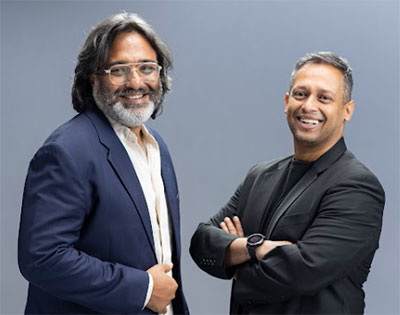

 Nir Eisikovits, Professor of Philosophy and Director, Applied Ethics Center, UMass Boston. This article is republished from The Conversation under a Creative Commons license. Read the original article