Category: MxM JOURNALISM REVIEW

  • Reviewing the Reviews: Mostly 2.5-3 stars for Bhaag Milkha Bhaag

    By Deepa Gahlot


    In our films, the actors often rise above the material. But once in a while there comes a performance that takes a film onto a different plane altogether– and Farhan Akhtar’s turn as Milkha Singh in Rakeysh Omprakash Mehra’s Bhaag Milkha Bhaag is stupendous.


    Most mainline critics, however, found the film too long, melodramatic, unfocussed and fake. Even though the subject of the film is living and participated in the making of the film, it hits so many false notes. It turned the protagonist into a demi-god, but how accurate was the portrayal?


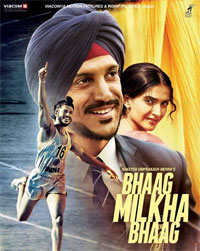
    Bhaag Milkha Bhaag

    (Released: July 12, 2013)


    Key Credits

    Producers:

    Rakeysh Omprakash Mehra, Viacom18 Motion Pictures               


    Director:

    Rakeysh Omprakash Mehra                     


    Writer and Lyricist:

    Prasoon Joshi                  


    Key Cast:

    Farhan Akhtar (Milkha Singh)

    Sonam Kapoor (Nirmal Kaur)

    Rebecca Breeds (Stella)

    Dalip Tahil (Jawaharlal Nehru)


    Music:

    Shankar Mahadevan, Loy Mendonsa, Ehsaan Noorani                


    Cinematography:

    Binod Pradhan                


    Editor:

    P S Bharathi


    Full credits at IMDB: http://www.imdb.com/title/tt2356180/


    The ratings were 2.5 to 3 stars, though the RJ and blogger kind of reviewers gushed unabashedly, one going the whole hog with a 5-star review. How seriously these writers are taken is the question.


    Rajeev Masand of IBNLive.com used the dreaded B word– boring. “The problem with adoring, reverential portraits of real people is that they tend to lack objectivity and quickly become boring. It’s true of Rang De Basanti director Rakeysh Omprakash Mehra’s Bhaag Milkha Bhaag, an ambitious account of the first 27 years or so of celebrated Indian sprinter Milkha Singh’s roller-coaster life….There are moments of great pathos here, and an inspiring lesson on the importance of perseverance and hard work. But it all moves at a snail’s pace, even as the drama of Milkha’s rise on the race track is punctured routinely by too many songs, overlong romantic tracks, and the kind of ‘commercial-movie trappings’ that are counterproductive to a film of this nature.”


    Sukanya Verma of rediff.com commented, “Bhaag Milkha Bhaag fails to achieve that level of clarity or coherence, primarily because of Prasoon Joshi’s faulty screenplay and sleepy editing by P Bharti, which appears both overwhelmed and clueless about putting together the many chapters of a sportsman’s eventful existence. So Bhaag Milkha Bhaag adopts the contrived route wherein everyone competing with the titular hero is entirely nefarious and out to break his legs or bully him like those Rajput dudes in Jo Jeeta Wohi Sikander and everything Pakistan implies hostile like those arrogant tyrants in every second jingoistic Bollywood flick.  Moreover, this indecision to project Bhaag Milkha Bhaag as either a) a man dealing with the painful memories of his childhood in partition era, b) the blossoming of a happy-go-lucky army man into a superstar athlete or c) why an individual doesn’t want to visit Pakistan overlaps too often in this three-hour plus, flashback-within-flashback drama to ruin a potentially promising premise. The last point, especially, makes no sense.”


    Shubhra Gupta of The Indian Express  found it tiresome. “Carefully skirting the tag of a bio-pic, Bhaag Milkha Bhaag manages to tell the story of Milkha Singh, as enacted by Farhan Akhtar, while giving us, tiresomely, all the familiar bells and whistles of a Bollywood entertainer with the naach-gaana, and the rona-dhona.  The story of Milkha Singh is inspirational, doubtless. And Mehra leaves, literally, not one stone unturned (and adds a few of his own, doubtless) in this three hour and some saga…”


    Sanjukta Sharma of Mint wrote, “It is a marathon trudge from cradle to national glory following a win in Pakistan against a Pakistani athlete, who incidentally has an aggressive coach, the film’s only villain. The long narrative rallies around the event that carries emotional charge for Milkha Singh and its details are painstakingly overemphasized. So Joshi hooks Milkha Singh’s story out of the context of Indian sports at the time and puts it under an isolating, personal microscope—an interesting approach if not taken to an extreme, clearly against the tradition of the biopic as a chronology of milestones.”


    Saibal Chatterjee of NDTV.com ranted, “The overlong Bhaag Milkha Bhaag seeks to achieve a dramatic heightening of the effect of a champion athlete’s rousing struggle to break free from the traumas of the past and turn adversity to opportunity.  In the bargain, it reduces the human saga to a loud, melodramatic and over-wrought tale that overstays its welcome.  It is amply clear by the end of the three hours of the film’s running time that the song-and-dance Bollywood form does not lend itself to the simple dynamics of a sporting biopic. Scenarist Prasoon Joshi and producer-director Mehra attempt to squeeze every ounce of emotion out of the real-life Milkha story. Unfortunately, it is reality that seems to be the biggest casualty in this deeply flawed endeavour.”


    Sudhish Kamath of The Hindu nailed the reason why the film may have failed as a biopic, but not as a commercial film. “No, Bhaag Milkha Bhaag is not a boring biopic or a detail-obsessed docudrama on one of India’s greatest sporting legends. It is an old-fashioned Bollywood film that caters to mainstream Hindi audiences. It would be more accurate to call this a tribute film inspired by the life of Milkha Singh than refer to this as a history lesson. The film acknowledges this when it ends with a disclaimer: “Inspired by a true life”.  And yes, it’s a complete sell-out of a film. But no complaints there because the best way to honour a legend is to make a film that a majority of India would watch. In an idiom that they prefer, even if it means exaggeration, melodrama and creative liberties with the hero’s love life. And Rakeysh Omprakash Mehra deserves that artistic licence considering that Milkha did indeed face extreme struggle, rose from abject poverty and had to make peace with his painful past.”


    Deepa Gahlot is an award-winning film critic and one of the seniormost journalists tracking films and entertainment in the country. The views expressed here are her own and the featuring of reviews is not MxMIndia’s endorsement of the views expressed therein.

     

  • Ranjona Banerji: Modi mania in the media

    By Ranjona Banerji


    The big media sensation in India these days is definitely Narendra Modi. Ever since he was made the chairman of the BJP’s election committee – seen as heir presumptive of his party – if the Gujarat chief minister so much as sneezes, it’s time for a political debate on TV and a dissection of the symbolism of a sneeze on opinion-based websites.


    Modi himself – or his publicity machinery – adds fuel to the fire. One day, he is supposed to have almost single-handedly rescued 15,000 Gujaratis from the floods of Uttarakhand, soon after he claims to have felt as bad as a person sitting in a car which runs over the son (or daughter) of a dog – an elliptical reference to the victims of the Gujarat riots. This interview to Reuters spread like wildfire across social media and what is now called mainstream media (acronymed to MSM which does sound like some disease you don’t particularly want). The words used by Modi were translated as “puppy” and the merry-go-round started again.


    Two things are clear from this. One, Modi’s publicity machine is trying too hard. And, two, the media’s focused attention is a double-edged sword, as Anna Hazare, Arvind Kejriwal and the organisers of the anti-corruption movement found out to their horror. Modi now cannot take a step without someone watching, someone tearing it apart and someone else explaining what he meant in excruciating detail.


    Tied to the Modi-in-the-media story is that of the intelligence agencies, people killed in fake encounters and the Gujarat government. The death of Mumbai teenager Ishrat Jahan in 2004 has now overshadowed that of her companions and also exposed a divide in India’s various investigative and intelligence agencies. The media, rather than look at the issues involved objectively, has sided with one or the other investigative agency.


    The problem here is a little different from the “for or against” Modi camps in the media. For years, editors have allowed reporters working on intelligence and police beats to become mouthpieces for those agencies. The logic is that you pick up on inside stories and the senior edit team works out the kinks caused by bias. But life and a newsroom never work that way and the result is that print journals and to some extent news channels just become conduits for intelligence agency politics. Print prides itself on having more filters than TV but as the various headlines, allegations, fights and quite frankly bogus information masquerading as news has shown recently, the filters have been playing hookie.


    I must make my own bias clear here: I lived in Gujarat before and during the 2002 riots. There is little doubt in my mind about state government complicity, whether active or passive. However, that does not mean that everything that happens in Gujarat has to be vilified. It cannot be a “for us or against us” case for the media at least. Modi is a chief minister with a sordid past. But he’s just a chief minister of one state. He is not a superhuman being sent either to destroy or redeem us. Myth-making is a long organic process. It is unlikely that a media with chronic short-term memory loss can be successful at it.


    **


    In the rest of the world, news has had a sort of similar focus. The US has been concerned with the acquittal of George Zimmerman in the murder of Trayvon Martin last year. Zimmerman shot the teenager assuming him to be hostile while on his rounds as part of a neighbourhood watch scheme. Martin, 17, has no weapon on him and his two biggest crimes appeared to be wearing a hoodie and being black.


    As the US grapples with the consequences of this verdict, Britain where I am now, is waiting for the arrival of the “royal baby”. The “due date” (last Saturday) has come and gone and the breathless media has to concentrate on this event. Babies as we all know can be tremendously uncooperative in such matters. But the stories must continue. A special reclining chair for daddy in the hospital suite, also champagne and luxury toiletries, father William playing polo, mummy Kate “putting her feet up” at her parents, the sun shining, no clouds, step-mother letting slip the new due date might be this weekend and other such trivialities occupy the national press.


    Who says the media is different anywhere else?


    Ranjona Banerji is a senior journalist and commentator based in Mumbai. She is also Contributing Editor, MxMIndia. She can be reached via Twitter at @ranjona. The views here are her own


  • Ranjona Banerji: Disappointing Prasoon Joshi

    By Ranjona Banerji


    Do people invite Shaina NC to their shows only to take issue with her or ignore her or humiliate her? I am no fan of this member of the Bharatiya Janata Party but I cannot understand why she is invited as a guest to studio discussions only for her views to be pooh-poohed. It is true that her views are usually extremely silly – in which case, why ask her to share them unless you want to expose her? There are many other foolish people in all parties who regularly express their equally daft views without being treated with similar contempt.


    On Arnab Goswami’s show last week, Shaina NC tried the impossible task of trying to defend RSS chief Mohan Bhagwat’s India versus Bharat remarks regarding rape. There were other Sangh Parivar worthies like Subramaniam Swamy and GVL Narasimha Rao on the show who also did their bit but Shaina NC got the most flak. There were times when she looked on the verge of tears. On the Best of the Big Fight on NDTV, Shaina NC got the same treatment from Vikram Chandra and other guests like Madhu Kishwar for her somewhat confused remarks about how India was a fully spiritual nation (as in no sex please). Please note that this was seen as a “best” bit.


    The other question of course is: why does Shaina NC want to get treated like this? There is a theory is that she is the most personable face that the BJP has, which is why she is sent out to defend the cause. There is another sexist theory that she has a pleasant face. And a somewhat nasty theory is that she is one of the more stylish members of the BJP, especially since she belongs to India and not Bharat (by Mohan Bhagwat’s definitions, not mine). Plus there’s a cynical theory that her father Nana Chudasama was hedging his bets by making one daughter join the BJP. Whatever the reason, it is unfortunate that she is such a sucker for punishment.


    I can safely say this much: Shaina NC is not the sort of person edit pages of newspapers would or should invite to write opinion pieces.


    **


    Prasoon Joshi

    Have to say that I was most disappointed with Prasoon Joshi’s appearance on CNBC’s Storyboard show with Anuradha Sengupta. For someone who has used his advertising experience to craft himself as a sort of Renaissance man, one would have expected some better responses on a show about how the media can become more gender sensitive. There was Joshi at protest venues after the Delhi gangrape reading out emotional and meaningful poems. And there he was on CNBC saying well, advertisers are marketers after all and we just try to sell products.


    The “too bad if you don’t like it” attitude was attempted to be ameliorated by some anodyne remarks about how gender sensitivity as important but it was mere tokenism at best. Unfortunately, there was no Arnab Goswami to call him out. However, the hypocrisy was exposed one way or another.


    I suppose the problem comes from wearing too many hats and sometimes you forget when you’re a sensitive poet and when you’re a hard-hearted purveyor of rubbish.


    **


    The Indian media has stuck to the rape story and the treatment of women in India for over three weeks now, showing incredible tenacity. India TV, often not the most credible but always entertaining, had a brilliant sting operation last week which exposed how women in India are harassed for the simple crime of just standing by the road.
    The media has of course been helped by sheer idiocy of remarks spewed forth by politicians and so-called spiritual and societal leaders.


    **


    A pat on the back to the media for sticking to the law and not revealing the rape victim’s name, even though the father has apparently given it to the UK Mirror. The Hindu had a front page note from editor Siddharth Vardarajan explaining just how the law worked as far as India is concerned


    The news agency ANI has apparently taken action against a stringer for taking remarks by RSS chief Mohan Bhagwat about a woman’s place being in the kitchen out of context. Bhagwat was it seems explaining how marriage worked in the western system unlike in India where it is a spiritual union. Sadly, a woman’s place remains in the kitchen here as well, judging from how our worthies feel about women in public places!


    Ranjona Banerji is a senior journalist and commentator. She is also Contributing Editor, MxMIndia. The views here are his own


  • Freaking News: How the media covered 10 years of Gujarat riots

    By Ranjona Banerji


    Interesting to see that Hindustan Times has gone for all out coverage of 10 years of the devastating riots in Gujarat, while The Times of India has played it down. This is particularly intriguing because at the time, TOI quite beat all other papers when it came to covering the Godhra train attack and the subsequent riots. Disclosure: I was deputy resident editor of the Ahmedabad edition of The Times of India at the time.


    Of course, it must also be pointed out that Hindustan Times does not have an edition in Gujarat, only a bureau and as Sujata Anandan, political editor for HT, then Mumbai bureau chief, pointed out in a related piece, she had to send people from Mumbai to cover the terrible events. It is possible however that the Delhi edition of TOI has not picked up the relevant stories, which is even odder because 10 years ago it was TOI Mumbai which shied away from riot-related stories and opinions. Apparently the resident editor at the time did not think it was relevant.


    On Tuesday, in the Hindustan Times, Harsh Mander, former IAS officer now social worker who works with Gujarat riot victims, hopes that there will be, well, hope soon. The day before Ashok Malik had asked whether it is time to forgive and forget. I wonder about that and our ability in India to behave as justice is an on and off system which we press when it suits us.


    Television, in particular CNN-IBN and NDTV, did focus on the riots and their aftermath: after all both their main faces Rajdeep Sardesai and Barkha Dutt did cover the riots extensively, perhaps for the same channel at the time, my memory fails me here. As a print journalist however, the strident hysteria of TV reporters and anchors, especially at such critical times, can often be more of a hindrance than help and so it was 10 years ago in Gujarat. Provocative people may make for good television but sometimes it can lead to irresponsible journalism.


    * * *


    Having spent a few days in Delhi, or more correctly Gurgaon, it is fascinating to see how crime dominates the papers. Is this because crime dominates events here or because local journalists look out for it?


    * * *


    On TV land on Monday night, Arvind Kejriwal’s remarks about Parliament being full of robbers, rapists and murderers got some play (see what I mean about TV promoting people just to create good television?). Karan Thapar on CNN-IBN wanted to know whether everyone agreed with Kejriwal and the Election Commission’s intent to tweak existing laws to bar people accused of severe crimes for contesting elections, within a certain time limit.


    The normally rambunctious Chandam Mitra of the BJP, normally quick to have hysterics was abnormally quiet as he hummed and hawed and said a debate was necessary and suppose the accused was later proven to be innocent? (Incidentally, this problem of later being proved innocent never bothers the BJP where Muslims accused of terrorism as concerned!).  An activist pointed out that the proposal was seven years old and surely that was enough time to debate the matter.


    Prashant Bhushan, who defended Kejriwal, said a few innocent people suffering was a small price to pay to keep criminals out.


    The Times of India, in its second editorial, slammed Kejriwal and Team Anna for swinging their “bludgeon in all directions while assuming partisan and authoritarian overtones”, which can only lead to the movement floundering.


    * * *


    On NDTV, Congress leader Renuka Chowdhury got into a made-for-TV fight with an anti-nuclear activist. This was more interesting than the issue itself – foreign-funded NGOs – which got nowhere.

  • Ranjona Banerji: Childish, hysterical, inane News TV

    By Ranjona Banerji


    The sheer childishness of Indian television news hits you like a gale force wind when you switch on after a break. This phenomenon is compounded by the fact that my newspaper vendor appears to be sulking with me! I have been surfing through all the news channels at our disposal and am hard-pressed to find one that I can stick with.


    The most amusing I could find was – nothing new here – Times Now. The little headlines for their poll on the next general elections (Jayalalitha juggernaut, Jagan blockbuster debut and so on) are reminiscent of the work of newspaper subs from the 1980s who have had to come up with a barrage of headlines while working on a special issue close to deadline. Anything goes. Of course, what was fun in the 1980s is just some fuddy-duddy stuff in 2013.


    The time warp that Indian TV is lost in however just relates to the written matter. No Wren and Martin or any other grammar books may be in evidence but the writing is arcane. But when it comes to the representation of news, then the sheer inanity of what is on offer is pure 21st century India. Skims the surface, minus depth and just careens from one hysterical breathless breaking bit of nothing to another.


    How about a comparison with the British TV coverage of the birth of the royal baby? They took a fairly trivial if engaging event and attempted to give it gravitas, sometimes with hilarious consequences. We take grave events and then try to make them as trivial as possible. It is an art which is quite commendable, if you look at it minus bias.


    The very strange personal squabble between two (great?) economists Amartya Sen and Jagdish Bhagwati is a good example. Usually, such worthies would have quarrelled in some inaccessible scholarly journal in suitably erudite jargon (one hopes…). Instead, they took each other on in the mainstream media and even more incredibly in the broadcast media. So you had Bhagwati saying that he had done everything first long before Sen, then you had Sen saying he was hurt by the personal attacks people made on him. This spilled over in their newspaper writings and interviews. The result was that their scholarly stars dimmed and their economic theories remained opaque. It is a worthy knack of the media to take intelligent academics and make them sound like gibbering fools.


    **


    Trying to understand the news through the social media is even funnier than television, it has to be admitted. Social media operates between derision and outrage which means that all events get skewed and it is impossible to make sense of anything. Yet, for all that, social media is an excellent aggregator of news and you can browse through a vast variety of articles and opinions from across the world which may not have otherwise come your way.


    **


    The fight in the media as far as the next Indian general elections are concerned has been between Narendra Modi and Rahul Gandhi. But one might suggest that the Indian electorate is given to complexity in its reactions and this simple two-horse race might just be a chimera that entertains but amounts to little more than a distraction from more substantial issues. (If I was a 21st century person, I would have used the erroneous substantive here and got away with it! Alas…)


    **


    Is it just me or do other people reach for the remote when news channels try to give us “positive” news? I knew it. Just me.


    Ranjona Banerji is a senior journalist and commentator based in Mumbai. She is also Contributing Editor, MxMIndia. She can be reached via Twitter at @ranjona. The views here are her own


  • Ranjona Banerji: Trashy Times & how media houses fail in human relations

    By Ranjona Banerji


    The Outlook Group has had to shut down three magazines, all of which were foreign franchises – People, Marie Claire and Geo. Any profit-making organisation is well within its rights to close down a business which is doing badly. But media houses seem to be severely short of any kind of human relations with their employees. Inevitably, employees are told at the last minute and shunted out immediately. We have seen it recently with Mid-Day closing down centres in Delhi and Bangalore and with NDTV Profit in Mumbai. The callousness can usually be attributed to managements or the corporate side of the journalism business.


    In the case of the three Outlook Group magazines, most editorial employees apparently found through a tweet by a writer not connected to the group. It also appears that the management sections of the magazines had been given prior warning. There is something disquieting – apart from distressing for those concerned – in the cavalier way in which media managements treat editorial staff. This trend has remained unchanged even though Admin and Personnel departments now have fancy names like “Human resources”. As anyone who has interacted with them will vouch for, there is little that is human about them.


    A labour court in Bandra has stayed the termination of services of 17 editorial staff of People magazine. The writer who revealed the closures on Twitter has written an article for newslaundry.com explaining her case and the attitude of the management. http://www.newslaundry.com/2013/07/a-bleak-outlook/ In this, Rajyasree Sen raises some pertinent points. One which stands out is the silence on the matter by Krishna Prasad, editor of the group’s flagship magazine, Outlook. Prasad has a very successful blog called churumuri, which often comments on media matters. It has been harsh – and rightly so – on the sacking of senior editorial staff of Forbes magazine. Sen questions churumuri’s silence when it comes to Outlook’s treatment of its staff in his blog: http://churumuri.wordpress.com/. I could not find any references to this issue on churumuri either.


    The problem however is obvious and it is also why journalists rarely come together in unity for causes any more. There are innumerable clichés I could use but they all boil down to one thing: money. No one is going a rock a boat that they’re perched on. As long as the salary lands in your bank account every month, it is better to remain silent about management behaviour and transgressions. I do not know how much clout editors have with their owners and senior managers any more. Earlier, there were some signs of support, of editors fighting for their staff or showing solidarity. Now solidarity within the profession seems to be in short supply. More than three years outside a newspaper organisation has taught me this much: journalism is now a cut-throat dog-eat-dog business. Perhaps if any of us were the editor of Outlook (!), we would also be silent on this matter no matter how much venom we poured on other media groups for their misbehaviour! But the corollary is that if you cannot bite the hand that feeds you, can you be considered fair when you criticise other media groups?


    **


    The Times of India sometimes manages to surprise even hardened cynics. Because of a little storm on Twitter, India’s largest read English newspaper has been exposed for carrying the most unprintable bilge on its website. Under its lifestyle section, masquerading as gender relations, the website has been carrying a series of articles about how to have sex, positions women like and so on.


    They appeared to have been written by the same person and are not only badly written and in bad taste but also have little journalistic reason for being there. It is like a monkey trying to imitate the Cosmopolitan style of 57 ways to suck your man’s toes and so on. If you found the Cosmo articles silly, you cannot imagine how the TOI website versions would upset you. I have to use the past tense because the articles have been removed from the website after the criticism. It makes you wonder if there had been no editorial control so far on what this young person had been writing. I am loath to name him or her but the name is doing the rounds on the social media. It is also evident that whoever wrote these appeared not just to be misogynistic (women do not bathe often and are smelly are two popular themes) but also not very experienced in sexual matters.


    This comment on the TOI website by Huffington Post encapsulates the disgust and scorn that has been apparent on social media for the last couple of days: http://www.huffingtonpost.ca/2013/07/30/times-of-india-women-facts_n_3677378.html? utm_hp_ref=fb&src=sp&comm_ref=false&utm_content=buffer266a7&utm_source= buffer&utm_medium=twitter&utm_campaign=Buffer


    Without being moralistic about it, why should a reputed newspaper’s website have to resort this kind of bordering-on-bad-porn writing? The articles had no corroborations or quotes or access to surveys. They were not funny or even sexy. The writer appeared to have no qualifications to hold forth on the ‘5 sex positions that women die for’. It was like someone senior said, “Let’s have some writing on sex” and someone junior was put on the job.


    I have been told that most newspapers have similar kinds of “stories” on their websites. True?


    Ranjona Banerji is a senior journalist and commentator based in Mumbai. She is also Contributing Editor, MxMIndia. She can be reached via Twitter at @ranjona. The views here are her own


  • Ranjona Banerji: More questions, less answers on Durga Nagpal

    By Ranjona Banerji


    I wouldn’t want to be in Durga Shakti Nagpal’s shoes right now. The IAS officer from Uttar Pradesh is being held up as a beacon of bravery and honesty by the media and by political parties trying to get mileage out of just about anything. Television seeks to sensationalize because it feels that’s what it needs to stay relevant. And print gasps along behind, trying to catch up.


    The more the media calls Nagpal “the brave officer” and “an honest officer”, the more frightened the brave and honest officer should feel. Whenever you are set up too high, those that set you up will ensure that your fall is as dramatic and certainly more painful.


    The curious thing is, that the reason why Nagpal is being projected as brave and honest is somewhat obscured. Was it because she took on illegal sand miners? Was it because she demolished a wall of a mosque? Or was the mosque an excuse to prevent her interference in sand minding? Did the villagers object to her demolishing the wall of the mosque to did they ask her to wait until after Ramzan? Was there an intelligence report about the tensions in the village and the chance of a communal flare-up or not? Was she brave and honest or just arrogant?


    There are no clear answers to any of these questions. There are conflicting reports in different media. And there is nothing from the IAS officer herself. There is speculation about how her parents named her most aptly after a goddess in warrior form and strength particularly female strength in the Hindu context. There are campaigns to protect brave and honest officers from evil politicians. There are opinion pieces on how the bureaucracy is stymied by political interference.


    The turnaround when it comes will reverse all these questions. We will find out how the bureaucracy is an evil money-grubbing enterprise, Machiavellian in its spirit as it hoodwinks the people and politicians. Brave and honest will cease to mean anything (if they mean anything now) and become jokey references about dishonest people. TV will quickly move on to something else because this story will have lost its traction.


    The media is what the media is. But there are some notable points. The first is that this campaign seems to have started without sufficient background work. How are we to form a reasonable opinion on what happened without adequate facts? And secondly, why start a campaign that is so open-ended and ridiculous. Tweets and online polls – let’s push the issue – might get the charge sheets against Nagpal dropped. But how will all this make any substantial difference to the way bureaucrats and politicians run this country?


    The attention around the India Against Corruption movement and the ignoring thereafter and the rise and fall of Anna Hazare must send shivers down Nagpal’s spine. Perhaps that is why she has been silent. And no intrepid (brave and honest?) reporter has managed so far to convey her take on the matter so far.


    If I was her, I would run as far and as fast as I could!


    Ranjona Banerji is a senior journalist and commentator based in Mumbai. She is also Contributing Editor, MxMIndia. She can be reached via Twitter at @ranjona. The views here are her own


  • Ranjona Banerji: Hysteria and hypocrisy rule news media

    By Ranjona Banerji


    Was the news that the Supreme Court refused to stay the Bombay High Court order that the BCCI constitute another panel to probe into spot-fixing and betting in the IPL not important enough to make Page 1? The Hindustan Times obviously thought it did but strangely The Times of India directed the news to the sports pages.


    The imminent war with Pakistan as desired by our news channels and the fight over the wording of the statement about the killing of five Indian soldiers got Page 1 prominence. That is understandable, except that the infiltration into Indian territory by Pakistanis – terrorists or soldiers or both – has practically been forgotten in the shouting matches on TV and in print. The words used by the Indian defence minister and how and why he used those words and where he got them from is now of paramount importance.


    Given media’s poor understanding of geopolitics and its predilection to outright sentimental hysteria whenever soldiers are mentioned, it may be wiser for the future of the neighbourhood if the media’s focus remains on cricket rather than war. We can still blame Pakistan – Dawood Ibrahim the lynchpin of all crime in India still lives there happily – but we can perhaps avoid imminent destruction.


    Sarcasm apart, the lack of distinction between yellow and sensationalist journalism and more serious or at any rate thoughtful journalism in India is beginning to hurt us now. The race to reach the lowest common denominator cannot be healthy in the long run.


    **


    The Supreme Court has commented that the contents of the Radia tapes are more dangerous than the 2G scam. This is a remark which has to be taken very seriously. There can be little doubt that the amount of money lost to the exchequer in the sale of bandwidth to telecom companies, as estimated by the Comptroller and Auditor General, was terrifying. But there was much more that the taped conversations of Niira Radia, boss of a public relations company revealed. There was the nexus between journalists, business houses and politicians. There was the influence that corporates wielded in all spheres of official decision-making. There were the journalists who agreed to act as brokers or spokespersons for political parties and corporate houses.


    The tapes in fact showed the world the shady wheeling-dealing that runs India. The impact on the media at the time was substantial but fleeting. Barkha Dutt continued with NDTV in spite of fairly damning phone calls and Vir Sanghvi lost his much-looked-forward to political column in Hindustan Times but retained his food column for the same group. He suffered more and even tendered an apology. Dutt did not appear to suffer – at least not publicly – and also refused to apologise.


    The dent to Indian journalism however has not gone away. Even if members of the public did not necessarily understand what had happened and even if the media has not been affected in terms of revenue or reader or viewership loss, we know that our credibility has taken a beating. Even worse, we know that we do not trust each other. If the Supreme Court reopens discussion into the Radia tapes, can we afford to brush them under the carpet a second time?


    Ranjona Banerji is a senior journalist and commentator based in Mumbai. She is also Contributing Editor, MxMIndia. She can be reached via Twitter at @ranjona. The views here are her own


  • Reviewing the Reviews: Chennai Express gets 2-2.5 stars

    By Deepa Gahlot


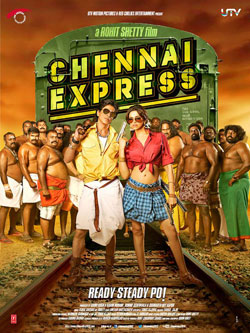
    Chennai Express

    Director: Rohit Shetty

    Starring: Shah Rukh Khan, Deepika Padukone, Satyaraj and others:


    This is the kind of film that even the media agrees is critic-proof. No matter how awful a Rohit Shetty film may be, his success rate and Shah Rukh Khan’s stardom is enough to guarantee a massive opening. Add to the aggressive marketing and huge number of prints released, and it would take a miracle of another kind to lose on a gamble this big.


    Still, reviews were scathing, 2 and 2.5 star ratings, except for a couple of regulars prone to flattery. Deepika Padukone was the one who came out smelling of roses, and she was universally appreciated– faux accent and all.


    Anupama Chopra of Hindustan Times wrote, “Chennai Express plays neither to Rohit’s strengths nor to Shah Rukh’s. It’s a strangely sloppy mishmash of cheesy humour, half-hearted romance, half-baked emotion and head-banging action. The film is filled with gigantic men whose size functions as a punch line. Yes, some of it is funny. The locations are beautiful. And I enjoyed watching Deepika Padukone as Meena, the don’s daughter with the thick accent, who meets Rahul on Chennai Express and turns his life upside down. Padukone’s spirited performance – she even makes that accent attractive – helps to lift the film.


    But, mostly, Chennai Express is a slog. Rohit’s movies have never been about plot or character or performances. His films have only one function: to entertain you by whatever means necessary. But sadly a film specifically designed not to bore does exactly that.”


    Rajeev Masand of CNN-IBN rightly called it a bloated vanity project. “Some films are hard to make sense of. Others are just nonsense. Chennai Express, directed by Rohit Shetty, ticks both boxes. More than a quarter of the film is in Tamil, and hence incomprehensible if you’re unfamiliar with the language. The rest is a stew of puerile humor, lazy stereotypes, and way-over-the-top acting from a star who appears to be trying too hard.Shah Rukh Khan, who’s provided enough evidence to convince us that he can do comedy effortlessly (remember Kabhi Haan Kabhi Naa, DDLJ, and Main Hoon Na?), spends a chunk of this film referencing his earlier hits, and bouncing off the walls like the Energizer bunny. Could he possibly be overworking himself to compensate for the film’s tired writing? Because it’s clear from Chennai Express that Shetty has launched an elaborate expedition with a plot so thin, it could give a paper dosa a run for its money.”


    Sukanya Verma of rediff.com tried to be kind to SRK. “What stays put through and through is SRK’s incredible charisma and gusto as he lightens the screen with his unabashed buffoonery, visibly enjoying his role as entertainer while lampooning it just the same.  His effervescence is met with dazzling reciprocation in Deepika Padukone’s ‘Meena Washing Powder Meena’ who gets top billing in the opening credits. There’s so much control in the stunner’s performances since the last couple of films. And her dynamic comic timing even against faulty sensibilities is part of that evolution. Finally, did I get my ten laughs? Well, I came *this* close. By the time the count had reached seven, Chennai Express decided to shift tracks from droll comedy to dreadful drama.”


    Shubhra Gupta of Indian Express commented, “This could have been a good caper, in which madcap characters race around the countryside with other madcap characters in hot pursuit. Especially when Shah Rukh Khan is so willingly sending himself up as only he can, with such a knowing nudge-and-wink that you smile despite yourself. “Rahul”, he introduces himself to Meenamaa (Padukone): “naam toh nahin suna hoga”. You know you are being set up, and yet you can’t help being amused. The amusement lasts only momentarily, and you are left feeling sorry at the waste.”


    Nandini Ramnath of Mint gave it more thought that it deserved. “Social observation isn’t Shetty’s forte, to be sure, and is nigh impossible in a movie whose dialogue writers are the impoverished punsters Sajid-Farhad. Shetty does work hard to be true to the story setting. He packs the movie with a largely Tamilian cast, drawn from a pool of extras and television talent, although he squanders the potential of a seasoned actor like Sathyaraj. Tamil folk and film music influences can be heard on the soundtrack, while the choreography attempts to replicate the energy of song-and-dance sequences in Tamil movies. There’s even a “lungi dance” at the end to name-check Bollywood’s tribute to the reigning god of Tamil cinema, Rajinikanth, but the entire endeavour proves to be as ersatz as Padukone’s Tamil accent.”


    Karan Anshuman of Mumbai Mirror wrote, “3500 local prints. 700 overseas prints. The widest Indian release ever. Production budget a shade under 100 crores. 6.75 crore paid preview collections on a Thursday, the highest ever. 100 crore over the weekend? 200+ crore lifetime? 2nd place for 3 Idiots? It’s troubling that, forget the producers, even the audience is interested in attending a math class rather than watch a movie for what it is.  An individual opinion in such critic-proof films is like a smashed up secondary car in a Rohit Shetty convoy: it amuses momentarily. Still, when you watch Chennai Express (and you will – because you like SRK, or liked Golmaal and Singham, or simply think it’ll make for a clever Facebook update), no harm in being prepared.”


    Saibal Chatterjee of NDTV.com gave it a surprising 3 stars. “It’s a somewhat long ride that occasionally teeters on the edge of tedium, but it certainly isn’t all wrong. Parts of Chennai Express, propelled by a spirit of inspired lunacy that holds the no-holds-barred action comedy in good stead, is markedly better than the sum total of the film. If only it had enough steam to sustain its momentum all the way to the very end, it would probably have been far more fun to watch. But do hop aboard. This Express is designed for quite a crazy carousel. If you hang in there and do not allow the many distractions and diversions along the way throw you off track, you might actually find yourself getting into the swing of things, especially in the first half. Some of the stops en route might seem rather unnecessary and overstretched. In fact, not all the platforms that Chennai Express chugs into are uniformly inviting. But the thunderous rhythm of the voyage does generate some genuinely funny gags.  Chennai Express warms up pretty quickly and delivers exactly what you would expect from a Rohit Shetty film: runaway entertainment.”


  • Ranjona Banerji: How not watching news TV has helped reduce my BP

    By Ranjona Banerji


    Any dinner party conversation in a particular part of India somehow veers towards the difficulty of watching TV news. Where it was once a compulsion for English-speaking India to cancel all engagements to watch the nightly “debate” on TV, people now discuss the methods they have for staying away. Some people say they have stopped watching TV altogether and rediscovered books. Others have just switched to entertainment channels. Some stare into space and have a little peaceful navel-gazing. And perhaps some people have even revived that archaic practice of talking to each other between 8.30 and 10.30 pm.


    Regardless of whether the ratings show this or not, our yelling matches are reaching an end. Their entertainment value is now showing diminished returns and they have little marginal utility. Besides, everyone knows what the usual participants are going to say. The line of argument as far as each channel is concerned is also predictable. Headlines Today and Times Now will be hysterically jingoistic and in a state of quivering outrage. News X will try to be rational but will be hampered by its low star power and the difficulty in deciphering its anchors. NDTV will take a slightly different less hysterical line but will not always succeed. And CNN-IBN will sit on the fence, tending this way and that depending on the issue.


    Lok Sabha TV and Rajya Sabha TV both remain civilised and more intelligent but it is unlikely that they make much difference yet. At least until the scourge of tamasha has been scrubbed out of our minds.


    From a personal point of view, I have avoided primetime news for two months now and my doctor is really happy with my drop in blood pressure. Ill-informed anchors, half-baked stories from reporters, politicians who have their voices set at maximum volume, the same experts telling us about everything from which chocolate biscuit is better to whether we should go to war with Pakistan – how stupid do they think we are? I take that back. We know how stupid we are.


    **


    And bring a bunch of old journalists together and you know the story. As tears fall into glasses of Old Monk, they weep about things were better in their days and wish they had a little money to start a newspaper which was not so corporatised, not so rubbish-driven, had more imagination, had more perspective and had greater understanding of news.


    This is a pipe dream. Or should it be so. Perhaps it shows an even greater lack of imagination that journalists cannot indeed come up with alternatives to what passes for news today. The internet provides an ideal platform and needs to be exploited. What? What are you waiting for? Don’t stand there staring at me!


    **


    BBC News carried a well-choreographed discussion on cyber-bullying on their World Have Your Say segment this week. The peg was the suicide of a British teenager who had been attacked on ask.fm. The teenagers in the show – from all over the world – provided interesting perspectives of what passes for “fun” in the adolescent mind. The anchor was intrigued but not condescending. No one had tantrums or talked over the other or screamed when there was disagreement. Incredible. Maybe it was a show from another planet?


    Ranjona Banerji is a senior journalist and commentator based in Mumbai. She is also Contributing Editor, MxMIndia. She can be reached via Twitter at @ranjona. The views here are her own


  • Ranjona Banerji: I-Day Blues

    By Ranjona Banerji


    Has marking Independence Day become a ritualistic exercise for today’s media? Both newspapers and news television showed a remarkable reliance on clichés. Long ago, Sunday Mid-Day’s logo used to be “Expect the Unexpected”. Now with the media in India, it’s more like “expect the expected”. A shout out to Forbes magazine however for its essays on the concept of freedom: Variations on a theme with some intelligent thought.


    Meanwhile, Independence Day in the media was consumed by discussion of the speeches of Prime Minister Manmohan Singh and Gujarat Chief Minister Narendra Modi. This shows how little depth we are now happy with in the media.


    Interesting that the deaths of 18 sailors in the fires of the submarine INS Sindhurakshak inspired much less love for “martyrs” than the deaths of five soldiers along the LOC. Was this just media fatigue at maintaining high-pitched jingoism or was it because the sailors were not killed by enemy fire? The Times of India now suggests – in what seems slightly irresponsible journalism – that the fires may not have been accidents or caused by human error. If the “enemy” waltzed once more into Mumbai harbour by the sea and blew up a submarine, then we have far bigger problems on our hands than the pre-election shenanigans of Modi. And we want more than the slivers of suggestions in the TOI story.


    As a side note, the use of the word “martyrs” for all armed forces personnel who die is possibly a mis-translation of the word “shaheed”. Both may be similar but they are not the same.


    **


    The government is planning to take up the menace of paid news by making amendments to the Press and Registration of Books Act. This is a serious issue which cannot be ignored by the media. There is nothing worse than government interference in the running of the media because it impinges directly on the freedom of expression. However, if the media does not combat paid news, then someone else will do it and that someone else will invariably be the government. Some thought required here but has thought become too expensive a commodity for the media to rely on? http://articles.timesofindia.indiatimes.com/2013-08-15/india/41412682_1_paid-news-electronic-media-amendments


    **


    CNN-IBN has apparently laid off some 200 people with a total of 500 to go, according to rumours. The TV18 group has already had a little public relations problem with the sacking of senior people in Forbes. NDTV has been “downsizing” and the Outlook Group closed down three magazines which meant at least 100 people out of jobs. Outlook first treated its staff very badly, then some staff went to the labour court and then magically everyone reached an “amicable” solution.


    Immediate prospects in the media look bleak as everywhere jobs are frozen and managements are looking at cutting costs. DNA however now has a new editor, CP Surendran and many are looking hopefully in that direction. It remains to be seen whether this newspaper, once second in Mumbai and once able to give market leader Times of India a run for its money, can get back into the race.


    **


    I have to confess that I have cut back seriously on my TV time and for three months have not watched those ridiculous prime time “debates”. But I do check in on news channels through the day just to find out what’s happening. I would be interested to know from readers which news channels they trust the most and which they instinctively turn to (both may not be the same).


    Ranjona Banerji is a senior journalist and commentator based in Mumbai. She is also Contributing Editor, MxMIndia. She can be reached via Twitter at @ranjona. The views here are her own


  • Reviewing the Reviews: 1.5-2 stars for OUATIMD

    By Deepa Gahlot


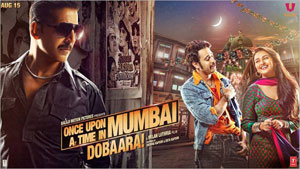
    Director: Milan Luthria

    Starring: Akshay Kumar, Imran Khan, Sonakshi Sinha


    At least the Mumbai is spelt correctly this time, even if the ‘a’ becomes ‘ay’. Numerlogical predictions, probably. The sequel to Once Upon A Time in Mumbaai and Milan Luthria gets a battering this time, not just for glorifying a gangster to absurd heights, but for its weak plotting and overwrought dialogue.


    Akshay Kumar gets way because he plays the don with the required swagger, but Imran Khan is not made to play a Dongri boy-he can’t get rid of his urbane personality.


    The film got 1.5 to 2.5 stars, with the Times of India coming up with the expected 3.5. Even Taran Adarsh’s generous count stopped at 2.5.


    Karan Anshuman of the Mumbai Mirror commented, “The Milan Luthria/Rajat Arora director-writer combo is back; this time with an even more baffling titled film: Once Upon Ay Time in Mumbai Dobaara. Stare at that for a moment and see if it makes sense on its own and then in context with the film. If it ain’t broken, don’t fix it. This mantra is entirely understandable from a producer’s point-ofview, but one wonders how many identical looking films can a creative mind keep cranking out. Unlike in Hollywood, where a franchise is usually handed over to another director while the original creator moves on, our filmmakers are content repeating themselves for most part.”


    Rajeev Masand of IBNLive slaughtered it. “This disappointing sequel to 2010’s Ajay Devgan-Emran Hashmi starrer is constructed around the premise of a love triangle…the laziest love triangle you could possibly imagine. Shoaib (Akshay Kumar) is a mob boss. Aslam (Imran Khan) is his loyal protégé. Both men develop feelings for struggling actress Jasmine (Sonakshi Sinha), who is close to Shoaib and Aslam. But Jasmin doesn’t know that Shoaib is a don, or that Aslam works for him, or even that Shoaib has designs on her. Shoaib and Aslam, meanwhile, are unaware that they’re both in love with the same girl. That’s way too many clueless people in one film!”


    Aniruddha Guha of Time Out was not kind either. “The sequel to the awkwardly spelt but rather enjoyable Once Upon a Time in Mumbaai was initially called Once Upon a Time in Mumbaai Again, before the “Again” was replaced with “Dobaara”. A closer look at the film’s poster will reveal that a “y” has been added to the “a” lately, and the name currently stands at Once Upon ay Time in Mumbai Dobaara. You could brandish a dictionary in revolt, or hold that Wren & Martin close to your chest and weep, but the idiotic title makes complete sense once you’ve watched the film. If anything, it reflects the mindset of its makers perfectly. The sequel’s a confused, botched-up attempt at reworking the formula of the first film, one that hurtles from point A to B without any sort of focus. The title is its least unintelligent feature.”


    Shubhra Gupta of the Indian Express wrote, “What did you expect from the sequel of Once Upon A Time In Mumbaai which came out in 2010? Given that its director and writer are the same, I knew that the clunkily-titled-and-spelt Once Upon Ay Time in Mumbai Dobaara! would tread the same territory: gangsters- muscle-flexing-in-Mumbai-which-used-to-be-Bombay, non-stop rat-a-tat of ’70s style dialogue-baazi, loud background music, and a plot riddled with predictabilities from beginning to end. What I wasn’t prepared for was just how similar it would be, despite the change in leads (Ajay Devgn and Emran Hashmi have been replaced by Akshay Kumar and Imran Khan, and instead of Kangna Ranaut, there is Sonakshi Sinha), and after a point, just how listless it would turn out to be.”


    Rediff’s Sukanya Verma panned it too calling it a “complete drag, unintentionally comical and painfully verbose unlike the prequel which hit quite a few right notes with its slick take on the anti-hero against the half-hearted immorality of the 1970s. Rivalry makes way for romance in the follow-up but for a film set against the mafia, the predominant action is the yak yak coming out of Akshay Kumar’s mouth. Though the actor, saddled with an absurd script against a gaudy set in a jaded love triangle, is a treat though conveying an extravagant personality and remorseless menace as the underworld kingpin.”


    Sanjukta Sharma of Mint was equally scathing. “The Dawood prototype in Milan Luthria’s new film, mindlessly titled Once Upon Ay Time in Mumbai Dobaara!, is a raunchy playboy who transforms into a wrathful and obsessive lover. Not a diabolical underworld don by miles. There is something incongruous about a Dawood remotely akin to Rahul in Darr. That Akshay Kumar plays the role with a lot of relish does not really help. The ersatz, 1970s-style dialogue-baazi, many notches worse than those in Once Upon a Time in Mumbaai (2010), combined with Kumar’s hammy, monotone performance-his tricks for the role include craning his neck to the left and a swagger that works only in slow motion-add to the banal claptrap that it is.”


    Saibal Chatterjee of NDTV.com was mild in comparison. “Stylishly mounted, Once Upon Ay Time in Mumbai Dobaara! is shot in muted hues, which captures both the street-level dread and the soaring sparkle of 1980s Bombay with consistent sharpness. What robs the film of genuine traction is that the action seems to unfold in a disinfected bubble that is out of bounds for the urban realities of the era.


    Moreover, there is very little chemistry between Sonakshi and the two male leads. The only time sparks actually fly is when Jasmine and Aslam lie under a small rail bridge and watch the wheels of a running train as it races by, generating electro-magnetic flickers in the darkness.  What makes matters worse is a overly sterilised narrative that presents every hint of passion between the girl and the two men only as flights of the febrile male imagination running riot to the accompaniment of ‘romantic’ songs.”