
Category: MxM JOURNALISM REVIEW

  • Ranjona Banerji: All eyes on cricket’s royal mess

    By Ranjona Banerji


    Cricket is under the scanner once more and the media is understandably all over it. Did I just say “understandably”? Ever since Anna Hazare and Arvind Kejriwal started on their anti-corruption journey a couple of years ago, politics had become India’s biggest spectator sport leaving the usual suspects – cricket and cinema – to play second-fiddle.


    Three IPL players suspended for spot-fixing, all belonging to the Rajasthan Royals team, the team captained by the upright and universally admired Rahul Dravid and the one of the three suspected cheats being the controversial Sreesanth – it’s hardly surprising that this consumed everything else including the Tehelka expose on how Varun Gandhi manipulated people and evidence to get acquitted in his hate speech case.


    The Indian Premier League has always carried controversy around like a proud badge but cheating perhaps crosses a limit that it will have to work hard to recover from. The Times of India perhaps wins the headline contest with ‘A billion betrayed for lakhs’; quite aptly summing up the effect which this latest spot-fixing mess will have on cricket. However, perhaps the paper could have done better than asking Boria Majumdar to write its edit page piece on the subject – whatever his knowledge of the game, his writing style is wanting.


    Hindustan Times since it has long replaced edit page analyses with fixed columns had an edit on the subject. Indian Express had an excellent story on how Rahul Dravid allowed his teammates to let off steam against the three Rajasthan Royals players under arrest. Mid-Day gave us an account of the thrilling chase down Bandra’s Carter Road that led to Sreesanth’s arrest.


    Have to confess that I was on an aeroplane at primetime so missed all the drama on TV. By the time I got home, I found John Abraham giving us grooming or hair tips or something and so gave up. This morning, he was still there but there was lots of cricket, some Cannes and little else.


    People on Twitter however were extremely sarcastic about the spot-fixing scandal and Sreesanth. His father’s allegations that some India captain Mahendra Singh Dhoni and spinner-slapper Harbhajan Singh were responsible for what happened to his son got scathing flak. The towel used as the signal for a spot of fixing was also the target of several jokes. Others were equally sarcastic about how Varun Gandhi had to be grateful to Sreesanth for overshadowing the Tehelka story on him.


    **


    There was other news too – film star and Bombay bomb blasts convict Sanjay Dutt finally surrendering with all the details about his breakfast, lunch and dinner menus in jail. He was roughed up by fans, he looked sad, he was accompanied by his entire extended family – a prerogative denied to other convicts – was all there.


    **


    The fact that Hindustan Times has launched its own version of Medianet called Brand Promotions has also flown under the media radar. When The Times of India introduced the despised (understandably and this time I mean it) Medianet, senior editorial worthies including Vir Sanghvi who was then editor of Hindustan Times tore shreds off TOI for destroying editorial credibility. Since then of course, many editorial mighties have fallen and now as we all know, some form of Medianet exists almost everywhere. More fool us.
     

  • Reviewing the Reviews: Aurangzeb

    Aurangzeb

    Key Cast: Arjun Kapoor, Sasha Agha

    Written & Directed By: Atul Sabharwal

    Produced By: Aditya Chopra


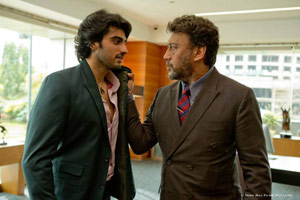
    This film from the Yashraj Films stable seems to have been made to give post-Ishaqzaade Arjun Kapoor something worthwhile to do – a double role so early in his career, though he was incapable of creating two distinct characters.


    Atul Sabharwal made his film debut with an eighties style melodrama, updated with current references to the real estate driven growth of a hamlet Gurgaon into a city of malls and highrises. But after setting up an intriguing premise the script tied itself up in knots. The film got an average of 2.5 stars, but the reviews were not scathing – most felt underwhelmed. Opening day reports said response of the audience was “lukewarm.”


    Sukanya Verma of rediff.com enjoyed the film. “Deeply derivative of the traditional Hindi film narrative where blood-ties gain precedence over individual turbulence, Aurangzeb works even in its inept form. Because, one, Sabharwal constructs a compelling, intricate conspiracy of deceit and motive around predominantly grey characters, where chances are anyone can turn a volte face, for better or worse. And because Aurangzeb’s momentum is steady and swift, the loopholes are skilfully minimised even if only temporarily. So, sure, you do wonder about the loosely established relationships, convenient set-ups and undisclosed footage of significant reactions, but much later.”


    Shubhra Gupta of The Indian Express commented, “Somewhere in the too-complicated strands of Aurangzeb is a film struggling to cohere. This is what we have: too many subplots with threads hanging, criss-crossing a main plot that is over baked and undercooked….The trouble with Aurangzeb is not that it isn’t ambitious. It is, and that’s good. Because after a long time there’s a film which invites you to work on unraveling the threads. But right from its too-crowded epilogue, where information about the characters comes flying out at you, to its curiously impact-less lead player who sparks to life on occasion, to its long-drawn scenes where sometimes you feel the lines are being said only for effect and not because they have organically grown out of the conversation, Aurangzeb is trying for too much. This makes the film dense and uneven: some parts have power, the others are inert.”


    Karan Anshuman of Mumbai Mirror praised it, but expressed reservations. “And while the movie succeeds at a thematic level, it falters with the details. Critical plot points are weakly executed. The crisis upfront that forces a Don-like potentially dangerous exchange of twins separated in their youth (I say these words without irony) is justified almost offhandedly – to restore a dead man’s honour. In the climax too, equations change faster than you can say “traitor” because a mobile phone voice message mistakenly records a critical exchange leading to murder. Feeble, for a story with such ambition.”


    Nandini Ramnath of The Mint wrote, “The title is supposed to work as a metaphor, in the same way as the Hollywood film Chinatown (1974) and Shanghai (2012) are about abstract ideas (falsehood and aspiration respectively) rather than actual places. Aurangzeb is about inheritance, and it initially seems that Sabharwal might be able to bring new ideas to the cliche that blood is thicker than water. His movie is spilling over with characters that conform to the popular stereotype of Mughal emperor Aurangzeb – a ruthless and power-hungry maniac whose path to the throne is littered with the bodies of family members and acquaintances. The battleground is transported into a boardroom, and a bottomed-out war chest becomes a loss-making balance sheet. This is a movie that aspires to be about the mini-empires that exist within – and often work against – the Indian republic, but it scuttles its own ambitions midway through. It becomes yet another movie about twins separated by circumstance and brought together by Hindi cinema.”


    Anuj Kumar of The Hindu was appreciative too. “The intricacies of land grabbing and the manipulations that go with it are deftly handled. Atul is talking about an India where only two types of people hold sway: the politicians with power or the corporations with money, and everybody wants to pick a side. But the way conscience spirals in the second half, you start feeling even for the villains of the piece. In the 1970s and ’80s, melodrama was not such a bad word because it emanated from reasons that demanded unbridled commotion. Here you feel such turmoil all over again. Even before you begin to find a loophole, Atul addresses it and comes up with logic. It may not be convincing all the time but you go home with a feeling of watching an honest effort.”


    Shubha Shetty Saha of Mid-day was quite critical. “Story offers no novelty. In fact, at one point the story reminded me of an innocent story called Do Phool, which had Neetu Kapoor play twins, one left with the mother and the other with the father. Well, this is just to emphasise how old the story line is. But a better treatment, a more sharply edited film and this story could have been turned into a thrilling fare. But unfortunately, the movie moves at such a meandering and self-indulgent pace that after a point you stop caring if it moves forward or sideways.”


  • Ranjona Banerji: Time to be less gullible, dear sports journalist?

    By Ranjona Banerji


    When the cricket match-fixing scandal broke in 2000, I was in Delhi assisting with the launch of a cricket magazine. I was therefore surrounded by eminent cricket writers and experts, established sports journalists and budding sports writers some of whom are well on their way to eminence today. Former cricketers were also a common commodity in the magazine’s offices. Not one of them had a clue about the horrors of match-fixing and how far it had contaminated the sport. This is in spite of the exposes by Anniruddha Bahal in Outlook magazine in the 1990s and the dramatic Tehelka expose with Manoj Prabhakar in 1999 (which ended dramatically with Kapil Dev weeping copious tears to Karan Thapar on live television).


    Since then, allegations of match-fixing have given way to spot-fixing. Various Pakistani players have been exposed, especially by the British media. But the general sense of disbelief in the past week is nothing short of astounding. I have read some columns this week claiming that the writers knew what was going on in the IPL but I say that’s a load of crock. Or rather, if they knew so much why on earth didn’t they write about it before? I cannot remember a single substantial story or opinion piece about the influence of bookies in the IPL and players being corrupted by betting greed. Have you read any?


    All this knowledge after the fact is not just pitiful posturing, it is shameful. The job of the journalist is to sniff out wrongdoing. But sports journalists have fallen short here. Every time, it has been general reporter who has found out exactly what’s happening in the world of sport. This shortfall is also seen with business journalists who cannot see – or report – on anything shady going on in their domain. Every CEO is the greatest and every business house is the best – this lasts even when said businessman is well-known as a dope and when some government agency reveals fraud. Of these speciality journalists, I would say the best informed are the film ones. They may not be able to tell the truth in print because their managements are so enamoured of the glamour world but they certainly know all the gossip.


    Sports journalists have maximum access and it is about time they dumped their rose-tinted spectacles for some eyewear that is a bit less gullible.


    **


    Having said all that (my favourite bumptious phrase), Indian news television was boringly predictable. There was Rajdeep Sardesai being earnest, Arnab Goswami being judge, jury, executioner, Rahul Kanwal being so serious, Jujjhar Singh trying to be reasonable and NDTV bucking the trend by talking about China. You know: that country close by that keeps wandering into our territory.


    The usual BCCI bashing is now on and it will come to nothing. TV channels cannot do more than call the same old people who say the same old things. There are some who are preserved in mothballs in TV studios and brought out when anti-BCCI comments are required. I surfed my way through them all and decided discretion is the better part of valour. Anyone else out there watching Grey’s Anatomy?


    **


    The Times of India did a nice little favour to tennis fans by having former great Boris Becker as guest sports editor which include a long Q & A with him. This was marred by the TOI’s formidable sports reporters not knowing how many Grand Slam titles Roger Federer and Rafael Nadal have won so far. And, by what is far worse, some too-clever-by-half  (my conjecture) dimwit, declaring to Becker than serve and volley as a technique was a dying practice in Becker’s day. Becker put the questioner in his place and how shameful is that?


  • Ranjona Banerji: Pointless debates on News TV

    By Ranjona Banerji


    I have some suggestions for primetime debate topics for Indian news channels. Should the sun start rising in the West? Should women exist? Should we start to talk sense every night? Should the human species reverse its steps on the evolutionary ladder? O wait, maybe our news channels have already started that process…


    The spot-fixing scandal around the Indian Premier League may or may not have captured the public imagination – people still seem to be watching it – but it has certainly consumed our news channels. I just heard this morning on Times Now that this spot-fixing episode is cricket’s worst crisis. Far be it from me to contradict our worthies (but I’m going to do it anyway) but surely the match-fixing scandal of 2000 was the biggest in recent time, where two much revered and successful captains of international teams lost their jobs? But what do I know, eh?


    Right now, all that the investigation has shown is that Sreesanth and two other cricketers belonging to the Rajasthan Royals team took money from bookies to give away runs in particular overs which they bowled. The rest has been a whole lot of speculation and moralistic posturing. Journalists have twigged on to the fact that the Delhi and Mumbai police are at loggerheads. But instead of investigating what that means for this case, we decide to have a debate instead: “Are the Mumbai and Delhi police at loggerheads”. It’s hard to see what purpose such a debate serves. Give the viewer/reader the story and move on.


    The moralistic posturing, especially by journalists is even funnier. The issue, as far as I can see, is that three cricketers at least cheated – cheated cricket itself, cheated cricket fans and cheated their franchise owners. Whether they met escort girls or bought Blackberry phones is extraneous to the cheating allegations. The cheating is bad enough by itself. By diverting attention to the fact that bookies exist, the media is diluting the crisis.


    I would have expected a greater call for legalising betting but apparently logic and reasoning are in short supply at times like this. Instead, we have the ridiculous hysteria over a photograph of Indian captain MS Dhoni’s wife next to Vindoo Dara Singh who has been accused of knowing bookies. The connections here are tenuous – if they exist at all – and this is nothing but sensationalising.


    The police are quite happy to focus on bookies and try and point in the direction of Dawood Ibrahim which means that their job is over since there’s nothing they can do. Spot-fixing – which is extremely serious and needs to be taken seriously – has been buried under parties, bookies, escort girls, clothes from Diesel, pictures of models in email inboxes and Blackberry phones. I would conjecture that it is possible to never go to parties and still be a cheat.


    If the media did not get distracted, it could play a vital role in the unravelling of this menace – as indeed Outlook and Tehelka attempted in the past through the efforts of Annirudha Bahal and others. Instead, the media seems to have jumped on to some improbable moralistic crusade and left the real crisis behind.


    Meanwhile, preparations for the Champions League are on…


    **


    The bizarre and brutal attack on a British soldier in mufti in Woolwich by two men ostensibly in the name of Islam has badly shaken up the Western world. Glenn Greenwald asks some difficult questions and raises some interesting points about terrorism in this opinion piece in the Guardian: http://www.guardian.co.uk/commentisfree/2013/may/23/woolwich-attack-terrorism-blowback


    **


    Why have the riots in Sweden, on for five days now, not caught international media attention?


    **


    And, Roger Federer finally joins twitter: @rogerfederer.

    (I’m @ranjona by the way!)


  • Speaking of Which | Turn of Phrase

    By Vidya Heble


    Speaking of Which doesn’t only pay attention to the printed word. Even television is not exempt. For example, the very cute Vaseline lotion ad with mother and daughter playing a hand-clapping game ends with the word Smiles misspelt as Smlies. Airing after airing. Perhaps no one from the client, agency or channel pays attention to it? With the amount of money being splashed out on TVCs, they can afford to get details right. Or maybe the money makes details irrelevant?


    In any case, in between my steady diet of English crime shows, now and then I switch to Comedy Central if I’m in the zone to catch Dharma and Greg, or even Everybody Loves Raymond if I’m desperate in the slot before The Mentalist comes on. I’ve noticed Comedy Central airing a promo that asks whether your life is as dull as dishwater (or something to that effect). Actually, aside from the question of your life, dishwater isn’t dull so much as yuck-tasting. It is full of bouncy suds, sometimes it has bits of dried food floating in it – it’s interesting, at the least. What is dull is ditchwater. In Idiomland, that is.


    Idiomland is that quaint old era we used to inhabit in our school days. I don’t know if anyone has “idioms and phrases” in school any more (or even if anyone goes to school any more, they all seem to drop out and become geniuses or startup wizards).  In Idiomland, it is assumed that you have either gone to school or have read enough to make school redundant. Trouble is that these days, reading is confined to – and confused with – SMS messages. Or, if we’re lucky, Facebook and Twitter messages. Try fitting a “proper” idiom into those. It’ll be like trying to pass a camel through the eye of a needle. Why anyone tried to do that in the first place, beats me; but it’s such an entertaining phrase that it’s worth remembering.


    So, how do you remember that ditchwater refers to lack of sparkle, and dishwater to bad cooking? It may help if you associate dishes with cooking. Another food-related idiom that is often misused is “The proof of the pudding”. Americans, with their penchant for upping food portions and shortening everything else, have turned this into “The proof is in the pudding”, which is not correct. You just have to ask, “Proof of what?” The proof of the pudding itself, of course. The actual phrase is “The proof of the pudding is in the eating (of it).”


    Enough sermons and soda-water; we can return to gastronomic idioms in another edition, and till then hope we don’t have to eat our words!


  • Reviewing the Reviews: Kinder critics give Ishkq In Paris 2 stars

    By Deepa Gahlot


    It’s hard to accept failure in the film industry, and any attempt to fight it is judged more harshly if done by an actress. Male stars can have any number of ‘comebacks’ but it is much tougher for an actress in her thirties.


    Predictably, Ishkq In Paris became a bash Preity Zinta dart board, and she, kind of, asked for it, as producer, writer and lead star of a film that would perhaps have suited her a decade ago.


    The kinder critics gave it two stars, but most went with 1 or 1.5.  Preity Zinta needs a spine of steel to survive reactions to this train-wreck of a movie.


    Says Karan Anshuman of Mumbai Mirror, “It is a lamentable moment for Priety Zinta, now in her twilight years as a lead actress in an ageist, unkind industry, that she has to choose a path of safety and ends up with a movie that needs a Salman Khan item. This film could’ve been so much more honest, real, gritty even. That would’ve been a worthy, valiant last stand. Meg Ryan – you could say she was Zinta’s Hollywood equivalent – tried such a thing in one of her last films, In the Cut.


    Zinta exclaims (more than once) “I love Bollywood”. It’s a plea really. Bollywood doesn’t seem to love her back anymore. And if the circus no longer has a spot to accommodate your act, by all means set up on the fringe, outside. But don’t show people what they’re going into the tent to see anyway. Be bold, change the act.”


    Nandini Ramnath of Live Mint is equally scathing, “Preity Zinta’s career started skidding off the rails in the mid-2000s, and she has struggled to get back on track since. Ishkq in Paris , which she has produced, co-written and starred in, is an attempt to gift herself the leading role that nobody wants to give her any more. Zinta’s trademark bubbliness has gone a bit flat, her late-30s body has filled out, and parts of her face look different, but she remains the liveliest presence in Ishkq in Paris. Her enthusiasm at being back in front of the camera is not curbed by her co-star, who struggles visibly to generate the spark and presence needed to boost his leading man credentials.”


    Raja Sen of rediff.com missed the PZ of Dil Se and commented, “ Tragically, she seems almost determined not to act. She straddles the line between French and Hindi clumsily, speaking in a bit of a supervillain accent.  Her eyes sparkle with the eagerness of a jumpy squirrel, even when they shouldn’t. (Really, should anybody’s?) There is a bit too much enthusiasm, too much bounce to her character, who shrugs all the time and nods rapidly and constantly, like a big Preity bobble-head.


    Without a cricketer in embracing range, Zinta doesn’t seem to know what to do with herself.”


    Aniruddha Guha of Time Out wrote,  “Prem Raj, who made his debut as filmmaker with the dumb Main Aur Mrs Khanna, gets dumber with his second film. For the first hour, the film follows the two protagonists over a night in Paris, as they party, dine, drink and talk. You may want to utter the words Before Sunrise, but that would be blasphemy. The couple here aren’t half as likable, the dialogues aren’t one-fourth as witty and the direction not even in the vicinity of what Richard Linklater achieved. This is merely a set-up – a gimmick, rather – one that goes nowhere.”


    Shubhra Gupta of Indian Express quipped, “A girl and a guy meet cute on a train going to Paris, spend a night wandering about the city, and come out on the other side with a status that’s complicated. This one line brief has resulted in so many engaging love stories, that I went in a tad hopeful. This was, after all, Paris and Preity, a city with magic and a girl with sparkle. Who knew what that combo may yield? Sadly, Ishkq In Paris comes off mostly derivative, and wholly predictable.”


    Rajeev Masand of IBNlive.com called it misguided. “Ishkq in Paris is the sort of film that inspires its director and its leading man to assume aliases so they might escape responsibility for subjecting us to this travesty they’ve committed to the screen. Leading lady Preity Zinta, unfortunately, is too well known to hide behind a fake name.”


  • Ranjona Banerji: The BCCI prez’s trial by media

    By Ranjona Banerji


    The fact that N Srinivasan, chairman of the Board for Control of Cricket in India, thinks that his main adversary in the IPL mess is the media shows how much news television has changed the discourse. Us journalists have always existed, but on the periphery of everyday life, an early morning or mid-afternoon fix that rarely lasted beyond an hour if that long. Now, the “media” is a 24-hour experience and whether it’s being silly or serious, it cannot be ignored.


    The BCCI chairman however is railing against the wrong enemy. The media may be annoying – to him at least in this instance – but what the BCCI has done or not done for cricket has to be scrutinised. Whether Srinivasan likes it or not, the revelations that IPL players have been caught spot-fixing, that bookies have full access to cricketers and that his son-in-law is somehow involved cannot be ignored. Srinivasan is lucky that the conflict of interest in the Board chairman owning an IPL team has not come under greater scrutiny in the past.


    Monday night on TV, our worthies who have made journalism such a contender were torn between the IPL saga and the Naxal attack in Chattisgarh. The problem here is that the Naxal problem is complex and complexity and television are natural enemies. To just start jumping and advocating “war” on Naxals is not just irresponsible, it is foolish. I did not expect to hear a sensible discussion on Salwa Judum or the civilian militia created to fight Naxals on TV and I was not proved wrong. However, Rajdeep Sardesai (CNN-IBN), Nidhi Razdan (NDTV) and Arnab Goswami (Times Now) all tried to discuss Naxalism? Does one get any marks for trying? Only in Junior KG I think.


    IPL then was a much safer bet. Except for the fact that Rahul Mehra (the man who exists to hate the BCCI) was on two channels at the same time, a trick he learnt from Ravi Shankar Prasad and both can teach that to Chris Angel. Anyway, if Srinivasan thought that the media was against him on Sunday, he couldn’t have imagined the horrors of Monday. He had handed himself over as a target and the media, quite rightly, could not look the other way. (Actually Barkha Dutt did appear to look the other way or maybe that was an old issue of that talk show she does being replayed, which was on the food security bill. Or maybe it was just bucking the trend.)


    The trial by media was on full swing and even though Sunil Gavaskar tried to defend his friend Ravi Shastri for being part of the inquiry commission and frowned upon a witch hunt, everyone else was less charitable to the BCCI. Which is only to be expected, given the brazenness of Srinivasan’s response. The fact that the BJP and the Congress – both well-represented on the cricket board – are on the same page was not missed by the media. If only they could show the same spirit of bipartisan cooperation in Parliament as well said one studio guest sarcastically. The BJP, which wants a resignation every time the wind changes, is not so sure about Srinivasan, leading to a little spat between Rahul Kanwal and Shaina NC on Headlines Today. Why does Shaina NC come on TV at all? No one is ever nice to her.


    Newspapers are no kinder and the Asian Age called Srinivasan’s attitude, “Shameful!” while The Times of India called him “combative”. The fact that Indian and Chennai captain MS Dhoni has been avoiding the media was not missed either.


    Srinivasan has made mistakes not just by changing the by-laws to own a team, giving his son-in-law free access, pretending that nothing is wrong, appointing an inquiry commission that reports to him, being caught with whole-scale cheating on his watch, annoying Sharad Pawar, but also blaming the media. Ha ha. This will not end well.


    Ranjona Banerji is a senior journalist and commentator based in Mumbai. She is also Contributing Editor, MxMIndia. She can be reached via Twitter at @ranjona. The views here are her own


  • Ranjona Banerji: Who cares about the Maoists’ attack & the PM in Japan?

    By Ranjona Banerji


    There is a feeling that the media is spending too much time on the IPL scandal and trying to sack BCCI president N Srinivasan and thus ignoring other news. The prime minister has increased ties with Japan which has economic and geopolitical implications. Maoists have launched a brutal attack against a Congress convoy and more importantly against the Indian state in Chhattisgarh. Drought and a heat wave have killed thousands and killed many. Life is not all about cricket, say some.


    That may well be true but this criticism is also only partly true. Newspapers have been carrying articles and opinions on all these other subjects – and more. The PM in Japan has been first or second lead on most front pages this week. But news TV is severely hampered by its nature. Focusing on ties with Japan will make TV news sound like those old Films Division documentaries of yore (all right, all those born after 1977, you can wake up now). Further, TV journalism is not equipped to handle geopolitics in India yet – neither the editors nor the reporters have the depth of knowledge or understanding to tackle it. Better to give it a wide berth.


    Then you reach the Maoist problem. TV journalism has crafted for itself a character where everything is seen through the nationalistic/ patriotic/ jingoistic prism. Therefore any issue with nuance is impossible for it to handle. There is a background to the issue of this insurgency against the state and without comprehension of that background you cannot provide clarity to the viewer. Many news channels did try to tackle the Maoist issue but it is too complicated for most reporters and the standard of debate on Indian news television has become so low that the importance of the subject was lost in the now expected yelling and screaming.


    It might be advisable on subjects like this to stick to interviews with experts one at a time. This gives the viewer the chance to assimilate the facts and assess varying opinions for themselves. Watching Chandan Mitra and Nandini Sundar trading charges no longer makes for entertaining television.


    That leaves the BCCI. This story is by far more exciting as far as the nature of TV goes. There is drama, intrigue and the requisite touches of sleaze. You can chase the BCCI president and his son-in-law Gurunath Meiyappan across the country. You can look for bookies and the “honey traps” they provide for susceptible cricketers. You have people surviving on the edge of the glamour industry providing a bit of cheap tinsel. You have competing police forces. You can thrown in gratuitous references to Dawood Ibrahim (if you work hard enough at this you can write a book and Anurag Kashyap may make a film about it). You have India’s cricket captain and the captain of the Chennai Super Kings MS Dhoni refusing to speak to the media (the temerity of the man!).


    Simply put: the cricket scandal was made for television. It allows TV’s best minds to work together and give you reporting, investigating abilities and editorialising all in one go. No print journalist can match it. Print can stick to ties with Japan, Maoists and all the rest of it!


    Footnote: For a perspective on the cricket crisis, here’s Ayaz Memon on The Times of India edit page: http://articles.timesofindia.indiatimes.com/2013-05-30/edit- page/39602856_1_indian-premier-league-ipl-indian-cricket


    And for the Maoist issue, here’s Ramachandra Guha in The Hindu: http://www.thehindu.com/opinion/lead/the-continuing-tragedy-of-the-adivasis/article4756954.ece


    Ranjona Banerji is a senior journalist and commentator based in Mumbai. She is also Contributing Editor, MxMIndia. She can be reached via Twitter at @ranjona. The views here are her own


  • Reviewing the Reviews: Yeh Jawani Hai Deewani

    Yeh Jawani Hai Deewani
    Key Cast: Ranbir Kapoor, Deepika Padukone, Aditya Roy Kapur, Kalki Koechlin

    Written & Directed By: Ayan Mukherji

    Produced By: Hiroo Yash Johar, Karan Johar


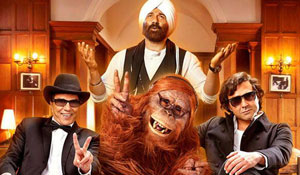
    After quite a while comes a movie that gets critics divided – what is called “mixed reviews”. The film got ratings ranging from 2 to 4, which is a wide span, and had some loving it, and some blah-ing it with a ‘so what’s new?’


    It is a Dharma production, so it is lavishly funded with production values that say gleam. Ayan Mukerji’s second after the universally liked Wake Up Sid is more Bollywood romcom formula than the earlier one, but performances, music and dialogue (by newbie Hussain Dalal) lift it up several notches. The target audience of teens have already given it a big thumbs up, and Ranbir Kapoor has got his Big Opener.


    Rajeev Masand of IBNlive grumbled, “It’s a pity the treatment has a been-there-seen-that feel to it because there are some modern ideas hidden underneath all that fluff. Part of what makes Yeh Jawaani Hai Deewani warm and fuzzy is the friendship that Bunny and his die-hard buddies Aditi and Avi share, despite their shifting dynamics over eight years. Mukerji understands and nicely puts across the bittersweet qualities that friendships go through, and more often than once I found myself misty-eyed. Even love is viewed rather practically by the four key characters here – it’s nice if you’ve found someone, but it needn’t be the end of the world if you’re not in a relationship. It’s refreshing also that Mukerji doesn’t tie up all the loose ends in the movie; not everyone gets the perfect happy ending.”


    Sukanya Verma of rediff.com loved it. “‘You can’t have it all. You will miss out on some things. So why not enjoy what’s in hand?’ recommends Naina enjoying the gorgeous view from a vantage point of a grand fort, just few minutes short of witnessing a breathtaking sunset. Bunny, the recipient of her suggestion, reluctantly agrees. They have a good evening. Director Ayan Mukerji’s second endeavour, Yeh Jawaani Hai Deewani works exactly like this scene from the movie. You know that content smile you return with after spending time in fond company over effortless laughter and magical connections? That.”


    The same site’s other critic Raja Sen was not as impressed. “For this is a very good-looking film. It is a film with almost exclusively pretty people, each primped up and glossed and shot at their most flattering, and every time Pritam’s songs burst through the speakers, Ayan Mukerji’s film gallops into gear like the run-rate when the bowler has a towel tucked into his pants. There’s a zingy energy to the uptempo proceedings, the lead actors are at their most electrifying, and the sheer, heady enthusiasm is deliriously grand. Even the greatest heroine in all the land merrily shakes her caboose. It’s huge fun. What should have been a breeze turns into a pained plod, and while things still look all glossy, the songless part of the movie – the story, we dare say? – remains dismally predictable and awfully contrived, eventually becoming quite a bore. When the songs aren’t playing, however, this is a daftly childish film, one where most actors act half their age and the narrative stumbles forward inanely and gracelessly.”


    Shubhra Gupta of the Indian Express was lukewarm too, “It’s been a few minutes since I stepped out of Yeh Jawaani Hai Deewani, and I’m finding it hard to remember what I’ve just seen. This is not the sort of amnesia that you have to force yourself into after a bad, blah film. This is because I’ve seen this brand new film, and its characters so many, many times before. Yeh Jawaani Hai Deewani is a been-here, seen-this, much-too-long glossy creature, and not much else.”


    Sanjukta Sharma of Live Mint commented, “Ayan Mukerji’s Yeh Jawaani Hai Deewani runs on an unmistakable, foolproof formula: The story is secondary; the song, dance, costumes and stars are supreme. When executed cleverly and with good actors, this formula blurs the difference between trash and art. We, unapologetic Bollywood lovers, willingly suspend disbelief and surrender, let Bollywood transport us from the dull funk of life.”


    Saibal Chatterjee of NDTV wrote, “Yeh Jawaani Hai Deewani is a bright, breezy and brassy film designed for easy consumption. What it certainly is not is ballsy. For all the big ideas about life and the dilemmas of youth that it tosses up in the air over a runtime that’s 20 minutes shy of three hours, it always opts to play safe, vacillating between thoughts of rebellion and acts of conformity. The characters spout familiar platitudes to each other: live your dream, get a life and move on, stop pitying yourself and learn to love thyself…We have seen and heard it all before.”


    Shubha Shetty-Saha of Mid-day was not upbeat either. “At two hours and 40 minutes, the movie is a tad too long but while the snail-walk pace irks at places, it works on other occasions. What really bothers is the cliches that the filmmaker indulges in at times. To cite one instance, why does a ‘good’ girl in a Hindi film always have to prove her worthiness by burning the gas stove and cooking parathas for an entire army of strangers even when she is supposed to be holidaying? The characters are no novelty, they have been seen umpteen times earlier. But it is the treatment that makes it ‘alag’ and the credit must go to the director with a mature, sorted head on his young shoulders. Watch this at least once. It feels like a slow dive into the depths of emotions, at times fulfilling and at times uncomfortable.”


    Karan Anshuman of Mumbai Mirror was disappointed too. “The film itself doesn’t move ahead except for a time jump between the halves. It stays within the quadrangle of its leads and the characters in their orbits. Often there is more to the philosophy of the film than what meets the eye, but it is often masked or nullified by booming Bollywood elements. It is only in the second half that a plot kicks in and the real conflict finally takes shape about 15 minutes from the end. It’s too late to touch you in a way it could’ve.”


  • Ranjona Banerji: When the BCCI didn’t heed advice of the channels

    By Ranjona Banerji


    Hell hath no fury like news channels scorned. The fortnight-long campaign carried out against BCCI chief N Srinivasan reached a head on Sunday afternoon, when the BCCI dared to reveal its compromise formula which went against everything news channels had been recommending. The temerity of the Board of Control for Cricket in India to allow Srinivasan to “step aside” and make his buddy Jagmohan Dalmiya the interim president!


    Srinivasan, as we all know, should have been frog-marched out by his collar, never to be allowed to darken the doorsteps of Indian cricket again.
    Alas!


    And this is why there is very little other news worth discussing in the nation or indeed the world (except for Indian children in the US consistently winning spelling competitions, truly an earth-shattering occurrence when you consider that when in India, children cannot spell at all). A poll on CNN-IBN apparently said that 90 per cent of the people were disillusioned with cricket or words to that effect. Whether that is 90 per cent of entire population of1.2 billion or 90 per cent of the six people who answered an online poll, I don’t know. But even the worst sceptic would concede that the wishes of 90 per cent of a polled people cannot be ignored.


    Arnab Goswami of Times Now was the most upset if only because he had been the most vociferous against Srinivasan together with his shrieking pet panellist Boria Majumdar. Headlines Today was determinedly resigned as they shook their heads and reminded us that Dalmiya was no crusading angel. NDTV had Sreenivasan Jain trying to look ponderous and sounding lightweight pompous. Maybe it was the outfit. Rajdeep Sardesai revealed his home decor or one lamp at any rate.


    The upshot of all this is that the BCCI meeting was a sham and the cricket-loving public (90 per cent of it anyway) had been fooled. The downturn is for the BJP because it was Arun Jaitley, beloved of all Delhi journalists (though not as much as the late Pramod Mahajan) who apparently proposed Dalmiya’s name. This made the BJP an immediate target, which now includes the fact that Narendra Modi, president of the Gujarat Cricket Association hath not said a word against Srinivasan and has extended to the usual confused statements that senior party leaders make against or for Narendra Modi.


    Indian captain MS Dhoni has been another media target because he is also the captain of the Chennai Super Kings and is a vice-president of India Cements, Srinivasan’s company. The cricket scandal overshadowed the self-righteous proclamations of outgoing CAG Vinod Rai who was all over NDTV (and one of Karan Thapar’s programmes on CNN-IBN) explaining the impossibly dull innards of accounting practices to us commoners.


    The cricket administration will continue to be a target unless, one guesses, India does well at the ongoing Champion’s Trophy series in the UK.


    **


    I absolutely adore The Week That Wasn’t, with its satirical (or farcical) view of the news as well as the take-offs on famous people or common stereotypes by Kunal Vijaykar and the others.


    However, it seems of late that the TWTW is unable to take on political satire. Or rather, the jokes reflect a schoolboy’s perspective on politics, with a sort of India Against Corruption type of self-righteousness underlining them. Maybe it’s just me…


    Having said that, Cyrus Broacha was just superb as Krishnamachari Srikkanth this week.


    **


    Small tip: Vinod Dua as a foodie is an interesting change from whatever’s going on: Zaika India Ka, NDTV.


    Ranjona Banerji is a senior journalist and commentator based in Mumbai. She is also Contributing Editor, MxMIndia. She can be reached via Twitter at @ranjona. The views here are her own


  • Reviewing the Reviews: Yamla Pagla Deewana 2 exasperates all around

    Yamla Pagla Deewana 2


    Key Cast: Dharmendra, Sunny Deol, Bobby Deol

    Directed By: Sangeeth Sivan

    Written By: Jasvinder Bath

    Produced By: YPD Films and Sunny Sounds


    The exasperation was evident in every review. The waste of the Deol pater et fils combined stardom for a movie as stupid as Yamla Pagla Deewana 2, which actually had some feeling nostalgic for the original, since Part 2 had even less merit. A filmmaker should worry if the best thing about his film is a man in a monkey suit. It takes a kind of talent to make a film so bad and the promote it proudly as if it were the best thing ever made, and then complain that the Deols never got their due because they are not good at marketing themselves.


    If a critic was kind – Dharmendra has the power to invoke nostalgia – the film got 2.5 stars, otherwise 1.5 was the standard.


    Shubhra Gupta of the Indian Express commented, “The Yamla Pagla Deewana gang is back with a sequel, with more of the same. Papa Bear Dharmendra doing his senior conman act, Sonny Bear Sunny doing the good guy with macho muscles and soft heart, and Baby Bear Bobby doing what Bobby does. A plot that should shame a wafer by its thinness. Random characters popping in and out. And the only thing one can say in its favour is that it is not as terrible as the first.”


    Sudhish Kamath of The Hindu ranted, “Yamla Pagla Deewana seems like a script that could have been written by that drunken monkey from the film in sheer defiance of art. We know that the Deols can be really funny. If the first part was somewhat passable, it was because it packaged Dharmendra nostalgia and the feel-good factor of the casting. Here, the idea of manufacturing nostalgia involves Dharam singing ‘Yeh Dosti’ with a monkey. It instantly makes us sad to see a veteran actor of his calibre reduced to this caricature of a man he used to be. So when Johnny Lever does a Don spoof in the same film, we realize that the joke is not on Sholay but on Dharmendra, just like the joke was not on Don but on Johnny Lever.”


    Anupama Chopra of The Hindustan Times was scathing. “Even the collective charm of the Deols can’t make this drivel palatable. It’s exhausting, loud and so cheerfully moronic that it hurts.”


    Saibal Chatterjee of NDTV.com panned the film saying, “Those that have been through the first round of the Yamla Pagla Deewana shock treatment might be forgiven for thinking that it couldn’t get any worse. Think again. The sequel is double the pain. It scrapes the very bottom of the barrel. Yamla Pagla Deewana 2 is much worse than brain-numbing. The screenplay jumbles up a few songs, some action scenes and a string of vapid comic gags and then dumps it all into a messy mix that makes about as much sense as Garam Dharam’s pow-wows with the mute ape. You’ve got to be yamla, pagla or deewana, preferably all three, to grasp what is going on.”


    Sukanya Verma of rediff.com all but gnashed her teeth in rage. “Calling Yamla Pagla Deewana 2 a joke would amount to a compliment. And I am in no mood to extend such courtesy. The purported comedy with a little less than half a dozen Deols on board – Dharmendra, sons Sunny and Bobby, daughter-in-law Lynda (it’s her story) and grandson Karan (as assistant director) is a 155-minute long giant bore. It’s not like the first one in the series was paradigmatic of Deol togetherness but at least it had *some* storyline and camaraderie. Also, the humour, which mocks their individual images or takes light-hearted digs at the Santa-Banta/Canada milieu provided the Sameer Karnik version genuine hilarity. But the sequel, directed by Sangeeth Sivan, is unimaginably insipid and tedious. And no orangutan, dragon, unicorn or dinosaur can rescue a mess like this.”


    Shubha Shetty-Saha of Mid-day was relatively mild. “This string of a script, tried to be accessorized by largely heard-before gags and two orangutans, doesn’t really work. The Deols, Dharmendra especially, are endearing as usual. But they or to some extent even the director, Sangeeth Sivan couldn’t do much with the clear lack of thrill or funnies in the script.”


    Tushar Joshi of DNA wrote, “The Deols madeYamla Pagla Deewana watchable because we bought their tomfoolery and goofiness that seemed enjoyable and natural. But the second part is laced with so many ridiculous moments, dialogues, sketchy characters and unflattering camera angles that you hope the family has a better hold of the franchise the next time around.”


    Rajeev Masand of IBNLive.com was not too harsh. “Directed by Sangeeth Sivan, ‘Yamla Pagla Deewana 2’ isn’t all bad, but at 2 hours and 35 minutes it’s overlong and repetitive, and doesn’t offer anything particularly original or inventive in terms of comedy. It’s a pity the jokes run out faster than your popcorn does.”


  • Ranjona Banerji: Advani resig stumps media-savvy BJP

    By Ranjona Banerji


    Is the Bharatiya Janata Party hoping for some more salacious recommendations about cricket in India? Because it is clearly uncomfortable with the media focus on the BJP, especially since its most senior leader, LK Advani, has not allowed the party to celebrate the elevation of Gujarat chief minister to the post of election campaign boss.


    If I may, in an aside, what’s with the use of the word “anoint” to replace appoint. In my lexicon or any that I have consulted, anoint has to do with rubbing various unguents on someone in a religious ritual, as an act of consecration or as a sign of divine intervention or to choose a successor (in a dynastic kind of way). Is that what has happened with Modi? Is he on his way to sainthood? Or does the choice of word have something to do with the BJP’s chosen path of Hindutva supremacy? I ask this question because Indian news TV is largely irony-free so I am forced therefore to take the use of the word “anoint” seriously. Perhaps that is what TV journalists think have happened here… Modi is about to become one with god or even become god himself. Maybe I should have used a capital ‘G’?


    At any rate, Modi is on his way to sainthood one day and no famous TV anchor is allowed an afternoon nap on a Sunday. Then Advani throws the mother of all tantrums and all the TV channels smell blood. The anointing ceremony has been somewhat sullied by a sulk. So Monday is another day altogether and one where the knives, sniggers and suspicions are out in the open. I actually felt sorry for BJP spokespersons like Nirmala Seetharaman and Meenakshi Lekhi, being forced to venture into shark-infested waters to explain what was happening in their party.


    The media is by nature fickle but this is a lesson which few politicians or media beneficiaries will ever learn because they take the spotlight so seriously. The extreme arrogance of the Congress allows them not to court the media but the BJP is usually feted for being “media savvy”. It did not work on Monday evening as Advani’s resignation letter was everywhere and every tweet put out by Modi was being sat on a couch and psycho-analysed.


    **


    The newspapers meanwhile had all written edits for Monday morning discussing the Modi appointment (should I succumb to his impending sanctification?) and what it meant for the BJP and how the BJP was changing. Tuesday morning showed that all edit writers had gone back to the drawing board to now factor in the Advani response – resignation from all party posts bar that of the convenor of the National Democratic Alliance – and what that meant for the party he had nurtured.


    However, I would have liked to have read more insights into what was happening, with some insider information on the Advani camp and who was assisting/ advising him, as well as what was happening in Modiland. The best response here was from the Indian Express, which offered a little more as well as Hindustan Times which went beyond the plain vanilla coverage provided by The Times of India.


    The better discussions were of course on Rajya Sabha TV, in both English and Hindi, where the anchors do not allow high-pitched hysteria and the guests do not seem so inclined either. It was business as usual on the other channels.


    **


    The space given to the suicide of starlet Jiah Khan has been intriguing. Sad as her suicide was, what has warranted full coverage of her funeral as well as sustained front page reports? Is this our obsession with Bollywood going too far or just some inability to distinguish between sad and significant?


    Ranjona Banerji is a senior journalist and commentator based in Mumbai. She is also Contributing Editor, MxMIndia. She can be reached via Twitter at @ranjona. The views here are her own