Category: MxM JOURNALISM REVIEW

  • Speaking of Which | The Importance of Being Coherent

    By Vidya Heble


    This is the story of a press release. Once upon a time someone wanted to send out an announcement. This can be done in various ways – fact-efficient and to the point; or laden with company info and logos in headers and footers but with enough information that the copy editor can relatively easily pull out a story after hacking away the extra foliage.


    Sometimes however, one sees releases that quite simply boggle the mind. There is one from an outdoor agency, which gives us nothing more than a handful of opinions and a sort of teaser to a story. One can do nothing with this.


    Then there was one that turned up and gripped my consciousness to the extent that only speaking about it in Speaking of Which can provide relief. Copy editors are used to prising out facts deeply buried under verbiage, but here the main fact, the story itself, wasn’t even there. We had to surmise what it was. The whole thing, even after three reads, sounded like inebriated thoughts that someone had, “creatively” perhaps, jotted down.


    We should not name the organization or any of the people – so I have given them generic names; the people are called by standard character names from Hindi films. This is how the release began, and how it ended, verbatim. Only the proper names have been changed, and identifying words replaced in square brackets. Read every word, and vow never to write like this.


    START

    “The definition of advertising and marketing is changing , o is the definition of mediums be it tvc, print or design, they have to blend in very well to push the brand in the new age market, each medium is depended on the other for the impact of the brand, that’s the reality today where design have started playing a major in India as well.


    Design is relatively new compared to other mediums in our country, brands have discovered the need of great design at every consumer interface, There is a great need of design and aesthetics while keeping the brand philosophy in mind in a clutter and massive market like ours.


    Company So-and-So has grown to be one of the upcoming [organizations] in India today, For last one year or so we have been toying around and have been taking good amount of [certain] projects and clients on board, only when we felt we are ready today to launch a new vertical we have decided to announced,  we have a great set up right sets of people from [one function] and [another function] as well,


    Raj who has recently joined Company So-and-So as [designation], will be involved in Company So-and-So’s Baby as well, as he has spend some time in [other functions] as well This will be fronted by Amit and Vijay along with Raj who will take care of the [Raj’s function].


    Like the philosophy of Company So-and-So in design too, Two or at least one, out of Three senior guys will be directly involved in the each and every thing that comes out of this unit.


    Company So-and-So’s Baby, a brand consultancy focused on multiplying your brand & business growth. Because what we define should keep your brand alive for years to come. Give your brand enough opportunities to leverage. With an eclectic mix of exciting experiences, nurture a loyal audience.


    From defining a path to growth to creating a name, nomenclature, verbal & visual language, packaging, tangible retail engagement and viral content for the virtual world. Company So-and-So’s Baby combines intuitive force to achieve objective growth. Applies behavioral insight to create a world of meaningful brand rituals. Grooms consumer communities for cultural action.


    Over the last few months of undercover existence; Company So-and-So’s Baby, has squared with strengths of [various brands and clients – one whose name was misspelled].”

    END


    The first two paragraphs sound like quotes that should be attributed to someone. What the actual announcement is, is never stated. All the sentences are disjointed, often incoherent. Two paragraphs from the end, it sounds like a pitch to a client instead of a news release.


    We don’t know what went wrong, but we hope something did. We hope this is not what the organization thinks is a press release.

     

  • Ranjona Banerji: How everyone loves to bash journos

    By Ranjona Banerji


    The media is now one of the top topics of conversation in India. I took part yesterday in a Google Hangout organised by the website Halabol to allow Amnesty India to present their current and future projects to some of Halabol’s bloggers. The minute the floor was open to questions, the conversation veered towards the media and its real and imagined transgressions. Luckily, someone steered everyone back to the subject under discussion. But the danger was very real.


    The internet has of course made journalists out of everybody and television has made journalism enter everyone’s homes. This combination has not just smashed and toppled the ivory towers of old but it has also eroded at the basis of journalism itself. And definitely at its credibility. Wild accusations are made against journalists and the media houses they work for without any evidence. Expressions like “paid news” are flung around without most having an idea of what it means or stands for. Political polarisation means that any hint of a lack of criticism by a journalist or even too much criticism is seen as a sign as taking sides. People who were earlier oblivious now look out for signs of collusion and often even innocent mistakes are seen as part of some grand media conspiracy to destabilise someone or the other.


    How dangerous or difficult does this make life for journalists? There is no denying that there serious problems in the media and that many of those have not been effectively addressed. It is also true that unfortunately TV’s manipulations and lack of depth are both visible quite frequently. But that does not mean that every journalist is corrupt or that no media house ever does its job. But a blanket attack on credibility and integrity cannot help in the long run.


    A common refrain is that there are not enough websites or any other media tracking journalism. However, this is not true. The Hoot has been doing an excellent job for years. The Press Institute of India brings out Vidura which focuses on media issues. Shailaja Bajpai’s column in The Indian Express is a must read as was Ajit Bhattacharjee. I do remember Mihir Sharma writing regularly on the media. The Hindu has an ombudsman. I’m sorry if I have left anyone out. There are also innumerable blogs which discuss the media. And we at mxmindia.com do what we can to hold up a mirror to the media.


    However perhaps there is an argument for more mainstream effort in critiquing journalism so that the reading and viewing public are in the loop if not playing an active part. And for somehow including television news in the mix since that is where much of the public anger stems from.


    Anyone have any ideas of how it can be done?


    **


    Firstpost.com which started out so well with its platform for opinionaters is now being accused of being too kneejerk in its responses. This accusation is not without its merits. Often, opinion pieces will be written before the full facts (or even half the facts) of a case are known. And no apologies are made later. Given the seniority and experience of the people running the show, I am a bit surprised by this shoot and run policy, the possible consequences of which are that it will lose traction or become a laughing stock.


    I can understand the compulsions under which firstpost.com bought the satirical site Faking News and why Faking News sold itself, but wonder how free fake news will now be allowed to be…


    **


    Since there is evidently no stopping the Jiah Khan life and death juggernaut, I give up.


    Ranjona Banerji is a senior journalist and commentator based in Mumbai. She is also Contributing Editor, MxMIndia. She can be reached via Twitter at @ranjona. The views here are her own


  • Ranjona Banerji: No Sunday R&R for journalists

    By Ranjona Banerji


    Life has been tough for journalists looking forward to a little Sunday R&R for over a month now. Between the IPL, the BCCI, the BJP, JD(U) and the NDA (an epidemic of acronyms?), every weekend has been big breaking news time. For television especially, life has been tough. Editors have been yanked out of their weekend plans and all the stalwarts who fight through battling panellist on weeknights had to repeat the exercise on Saturday and Sunday afternoons. The other casualty has been incessant Bollywood programming.


    This Sunday’s prize has to go to Rahul Kanwal of Headlines Today for dumping his studio in Delhi and conducting discussions and monitoring news from Patna, as the Janata Dal (United) formalised its split from the National Democratic Alliance. In fact, Kanwal is a sober and sensible moderator (compared to many of his shriller compatriots on other news channels). However, when it is the armed forces that are under discussion, jingoism trumps journalism even for him.


    Newspaper editors probably had an easier time monitoring events from their drawing rooms as no one knows if they come to work on weekends or not! The Editors’ Guild can though put up a request to political parties, the police and other government, quasi-government and non-government organisations to avoid going through divorces or making revelatory announcements on the weekend!


    **


    Which reminds me: where is Markandey Katju, our intrepid chairman of the Press Council of India? We have not heard anything from him in a while.


    **


    The reshuffle in the Cabinet by the UPA/Congress possibly got less attention than it would have because of the split in the NDA. But even so, most newspapers seemed more bothered about the age of the ministers than anything else. It’s bad enough that today’s journalists think that everyone over the age of 50 is “elderly’ but to see all news through the prism of age is short-sighted and foolish.


    **


    The Twitter world saw its worst side come through this week. Former head of R&AW and security analyst B Raman died this week He was a prolific tweeter who talked about his ongoing battle with cancer, the country’s foreign policy and his disquiet about Gujarat chief minister Narendra Modi. This led to his death being celebrated by pro-Modi tweeters. That the anonymity provided by social media gives people more licence than they have in real life is not a point for debate any more. But the baser side of human nature is always distressing whenever it is revealed.


    **


    The oddly intrusive nature of today’s world and the dilemmas those pose were outlined in a newspaper story about celebrity TV cook Nigella Lawson and her husband, advertising maven Charles Saatchi. The UK newspaper Sunday People published pictures of Lawson and Saatchi involved in a fight at a London restaurant, with Saatchi gripping Lawson’s throat with one and then both hands and Lawson looking obviously distraught. The link: http://www.mirror.co.uk/news/uk-news/nigella-lawson-attacked-husband-see-1955564


    People who saw it at the restaurant evidently did nothing or little. The couple left, the story was published a week later and the police had to look into it after comments on Twitter cooked up a storm. Finally an explanation of sorts was delivered by Saatchi: http://www.guardian.co.uk/media/greenslade/2013/jun/17/nigellalawson-thepeople?CMP=twt_gu


    The upshot of all this is the “media” in all its entirety is now a constant in our lives. Journalists as we know no longer have to be around to peep and pry. The technology to do so is available to everyone. Social media may not be the voice of God but it is the voice of some of the people and cannot be ignored. And if the people are not peeking where they shouldn’t, governments are doing it. The only recourse for those interested in increased privacy is to get really thick curtains, but one doubts even that will help. Forget Big Brother, everyone’s watching.


    Ranjona Banerji is a senior journalist and commentator based in Mumbai. She is also Contributing Editor, MxMIndia. She can be reached via Twitter at @ranjona. The views here are her own


  • Reviewing the Reviews: Raanjhanaa wins them over

    Raanjhanaa

    Key Cast: Dhanush, Sonam Kapoor, Abhay Deol

    Written By: Himanshu Sharma

    Directed By: Aanand L Rai

    Produced By: Krishika Lulla


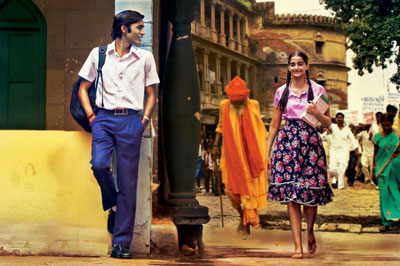
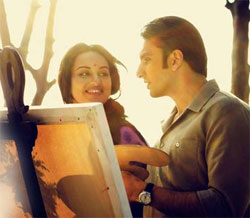
    Southern star Dhanush has bowled critics over with his powerful performance as an obsessed lover. His casting was undoubtedly a coup. The film by Tanu Weds Manu director Aanand L Rai has won accolades for its technical excellence and astute portrayal of small-town society.


    It has also been criticized for the naive picture of youth politics in the second half – the two halves look like they belong to different films.


    Female critics have also been somewhat spooked by the protagonist being a stalker – more so at a time when crimes against women have become a serious concern. Still, it earned 3 to 3.5 star ratings across the board, and a decent word of mouth too.


    Shubhra Gupta of the Indian Express wrote, “‘Say you love me, or I will slit my wrists’, Kundan threatens Zoya, and we know instantly that he means business. He is not saying this for a lark. Nor for a nudge-and-wink. He is saying this as if he means it. We know instantly that Raanjhanaa is a no-holds-barred love story, not your half-hearted romcom that passes for a romance these days in Bollywood. The riveting first half of the film lives up to its old-fashioned title, with a young lover whose chief driver is passion, the innocent young girl who is the object of his adoration, and the problems that keep them apart. Post interval, it comes unstuck, and squanders its gains. If Raanjhanaa had kept its tone intact, it would have been a great love story.”


    Meena Iyer of the Times of India raved, “Director Aanand Rai should be credited for drawing a superlative performance from the National Award-winner Tamil superstar, Dhanush, who makes his Hindi cinema debut here. His Kundan is a gem (pun intended). Sonam Kapoor is in top form giving Zoya several shades from giggly to grey. Unfortunately, she gets covered more for her fashion than her true mettle as an actor.

    Note: You may not like this film if you cannot digest brooding love stories.”


    Saibal Chatterjee of NDTV.com was appreciative too. “Raanjhanaa, director Aanand L Rai’s second film, not only averts the curse that often befalls a sophomore effort, it also actually turns out to be an improvement on the well-received Tanu Weds Manu. Raanjhanaa, scripted by Tanu Weds Manu writer Himanshu Sharma, is a love story with a huge difference that benefits no end from a clutch of exceptional performances. The film defies the expectations of the audience at several crucial junctures and holds out absolutely no apologies for springing abrupt surprises. It builds the drama at a gentle pace, taking care to create the right kind of physical and psychological spaces for the characters to breathe and evolve in.”


    Karan Anshuman of Mumbai Mirror gushed, “The first thirty minutes of Raanjhanaa is absolutely riveting. Well, riveting might be the wrong word but the searing strides of a romance that covers decades in fast forward leaves you having to remember to breathe. It is impossible to tear your eyes off the screen as two factors work their magic: Dhanush’s madly infectious enthusiasm as the young Kundan and the signature tune that plays every time his heart beats for the love of his life, Zoya. You want to grab on to these moments, pin them down so you can stare at them on your time with the same elation as Kundan’s eyes have for Zoya. And you wonder if director Aanand Rai is going to tell his tale all so quickly – is this film going to end all too soon?”


    Sanjukta Sharma of Live Mint was not completely sold on it. “There’s a lot happening in Raanjhanaa although not all of it neatly collates on screen. Rai’s treatment is lyrical and his ingredients are that of a sweeping Bollywood drama: a story charged with emotions, A. R. Rahman’s staple lilts, the camera’s busy, colourful frames and a tempo accentuated by the background music. The unlikely hero’s remarkable arc is the events and lives which surround him not quite forming a seamless ring. As much as Sonam Kapoor’s stilted histrionics try to derail the already overburdened plot, Dhanush keeps the film buoyant and watchable till the last scene.”


    Sukanya Verma of rediff.com praised Dhanush to the skies. “In Raanjhanaa, a guy from Benares tests his owns limits to the extent he’ll go for the girl he’s been besotted by ever since he was a little boy. Endeavours that begin this early have a way of getting out of hand and exasperating. But Rai has Dhanush – wonderful, tangible, indefatigable Dhanush, and the actor in his first Hindi film holds fort from start to finish. This is his story – complicated but transparent, one that you may be inclined to feel judgemental about but one that you’ll see from his perspective. Eventually.”


    Rajeev Masand found much to like. “Tanu Weds Manu director Anand Rai exploits the vibrancy of the holy city, and yet gives us a lived-in feel of Benares, rather than taking the typical travel-brochure approach. He banks as much on the unmistakable charm of his leading man to deliver a terrific first hour that breezes by with plenty comic moments and some genuinely heartfelt scenes. Kundan’s obsessive pursuit of Zoya is nothing short of stalking. Equally disconcerting is the idea that the filmmakers would endorse slashing one’s wrists as a way to profess love. Yet, truth is, these scenes don’t necessarily ring untrue in the film’s spot-on depiction of small-town India and its Bollywood-bred youth. The script unfortunately goes off the rails in the film’s second half, when the story shifts to the JNU campus in Delhi, where our protagonists put romance on the backburner and busy themselves with active politics.”


    Anupama Chopra of Hindustan Times wrote, “This love story is fantastical but these are characters we could know. Their emotions move us – so much so that when Kundan finally breaks down and cries, I wept too. But this is where Raanjhanaa gets frustrating. Rai hits a false note as soon as the story shifts to Zoya’s romance with her college friend, Akram, played by Abhay Deol. And post-interval, when we leave Benares for New Delhi, the film derails considerably. The actors still move us – including Sonam who looks effortlessly beautiful and gives her career’s best performance – but the plot becomes more and more convoluted. You are neither immersed in the film nor removed from it.”


    Shubha Shetty-Saha of Mid-day was impressed too, “There is this unique energy in Aanand L Rai’s films, the earlier one being ‘Tanu Weds Manu’ and now ‘Raanjhanaa’. Colourful and vibrant, but laidback and subtle. It was Kanpur in ‘Tanu Weds Manu’ and in ‘Raanjhanaa’, Varanasi gets lucky. In this film, Varanasi is captured beautifully. But interestingly, it is the backdrop to the characters and never the ‘please look at my landscapes and get awestruck’ kind of way (cinematography by Natarajan Subramaniam and Vishal Sinha). In a way, that makes this film more beautiful. And in a way, that also reflects in the most interesting character of this film, the unassuming but fiercely passionate Kundan, the beauty of whose character is not in your face but subtle and endearing, nevertheless.”


  • Ranjona Banerji: Tablets & tabloids – shape of news to come

    By Ranjona Banerji


    Having spent too long in a newsroom bossing about, I’d almost forgotten the cliquish little world that reporters live in, especially same-beat reporters. But one day of covering the Wimbledon tournament for Mid-Day and I feel that I am ready to write a thesis on the tribal customs of travelling tennis journalists.


    I had the same feeling years ago when I covered – just one, mind you – a film shooting for fun once. (Thanks actually to the founder editor of this website). All the habitual film journos hung around together and demanded entertainment from the PR guys who had organised the trip. They paid no attention to the shooting or the stars. Because it was a novel experience for me, I hung around the set – interminably boring – and interviewed one of the two main stars. The other never emerged from her room.


    In the same way, the Wimbledon press centre remained full of people watching TV and filing while I the wide-eyed rookie ran around the place. Great fun. However, more seriously, it seems that in spite of the fact that there were some women about, the media is the preserve of what NGOs call “male, pale and stale”. That is, sports journalists tend to be old white men! I tried to take aphotograph of the press enclosure on Centre Court to prove my point but apparently journalists in the press enclosure are not allowed to take photographs. Go figure.


    **


    There seems to be a lot of anger against the television media in India for its coverage of the Uttarakhand floods. It is impossible to know what went wrong from so far away but I can conjecture that as usual Indian TV went into “blame mode” rather than reporting mode and this meant that the issue became a school-playground level debate between opposing yellers and screamers. How this is of any help to anyone is a pointless question however since TV editors evidently cannot think beyond “discussion journalism”.


    But one story was intriguing and that was The Times of India report that Gujarat chief minister Narendra Modi travelled to Uttarakhand and rescued 15,000 Gujaratis. It was not made clear in the story how exactly the Gujarat state administration left behind the other people or how in extreme weather conditions they identified who was who. A petition on change.org (http://www.change.org/en-GB/petitions/chairperson-press-council-of-india-inquire-into-serious-violation-of-media-ethics-by-times-of-india?utm_campaign=share_button_action_box) has asked some questions about violation of ethics. The implication in the petition is that the story was a PR exercise for the Gujarat chief minister to show how efficient he is. But the underlying feeling is a bit of holocaust-type politics where you save only one kind of person (depending on ethnicity) and abandon the rest. Which is pretty bad PR if you think about it…


    **


    Meanwhile, here in the UK, once again you notice how news dissemination is no longer what it was. Newspaper subscription on tablet devices is winning the battle against paper. And on the tube, tabloid newspapers are common, free or otherwise. Some lessons which India will have to pick up on sooner or later. Sooner for the media industry’s own good but who knows.


    Ranjona Banerji is a senior journalist and commentator based in Mumbai. She is also Contributing Editor, MxMIndia. She can be reached via Twitter at @ranjona. The views here are her own


  • Speaking of Which | Break Time

    By Vidya Heble


    Speaking of Which is taking a break for a while, going on what is known as a hiatus. The dictionary describes it as a noun meaning “A pause or gap in a sequence, series, or process.” And the synonyms for it include the word “chasm”. Which is what one feels like leaping into, overwhelmed by the inexorable advance of bad grammar and the incomprehensible word arrangements that pass for sentences. Kidding; we’ll be back, so keep your eyes on MxMIndia.com.


    This is probably the appropriate time to dwell on the column’s name. Specifically, the use of “which” versus “that”. It is true that the two words are interchanged at times, and there are even occasions when it is not incorrect to do so (usually the occasion involves a gun pointing at one’s head), but the fact is that there is a specific rule governing the use of “which” as opposed to “that”. And the rule involves an instrument of torture known as a restrictive clause. It’s explained in this Writer’s Digest article: http://www.writersdigest.com/online-editor/which-vs-that and, even more entertainingly, by Grammar Girl: http://grammar.quickanddirtytips.com/which-versus-that.aspx


    I couldn’t do better, so I’ll leave you with those links.


    PS: If there is one recommendation I can give, it is this: Look It Up. Even if sounds right, just look it up anyway. I do, often, sometimes more than once. And I’ve been at it for 25 years. So don’t ever feel that looking it up is beneath you. Be it a fact, a word, a phrase, a name… with ever-increasing ways to check, there is no reason not to. If nothing, it’ll serve to avoid howlers like this one from a recent press release: “…welcomes its visitors with appeasing colors.”


    And a point to note is that mistakes happen. Nobody’s perfect, and you shouldn’t let a mistake be the end of the world for you. But don’t make it a habit, either!


  • Ranjona Banerji: Inexplicable Times

    By Ranjona Banerji


    It is hard to make sense of The Times of India’s stories and comments about Narendra Modi, especially from far away. Or indeed the way the Indian media appears to have focused half their attention away from a terrible humanitarian and ecological disaster on to the chief minister of Gujarat.


    Even assuming Modi swooped into Uttarakhand with his extraordinary Gujarat Special Ops team and managed to identify 15,000 Gujaratis and whisk them off to safety, the story had to be on the people of Uttarakhand and the visitors to that state. These are the accusation against the media, from what I can gather.


    For one, there’s the Modi PR exercise which now has the piquant problem of the newspaper which publicised Modi slamming the media for publicising Modi. The Times of India can sometimes be most inexplicable. It’s one thing to be all things to all people. But it is quite another to lose all sense of coordination and contradict yourself in public.


    This is the time when the newspaper should come out with an explanation as to its conflicting policies about Modi or about news items versus columns or indeed about half-baked apparently PR-driven stories. On the off-chance that all these conjectures are untrue, this would also be a good time for this or any other news organisation to clear its name. But alas, such ivory towers sometimes are less impregnable than Saruman’s Isengard.


    The other horror from Uttarakhand that I have noticed is a TV reporter who did his report sitting on the shoulders of a flood victim who was standing in chest-deep water. I really do not know what to make of this. I read an explanation given to Newslaundry where the reporter said he was wrong but still managed to blame the cameraman for revealing that he was on the man’s shoulders! Words fail me, to be honest.


    The only thing I can give thanks for is that I am spared the nightly hysteria on Indian television as people who know nothing fight with each other in ferocious effort to obfuscate the real issue. I defy anyone on TV to read that last sentence out loud!


    **


    I am assured by a friend, tennis expert and former colleague who is covering Wimbledon for her newspaper that it is the Grand Slam tour that is particularly weighted heavily by male reporters/tennis experts, journalism stars. The rest of the tour apparently has a good proportion of women reporters, almost equal she says and quite clearly dominant especially in the noise department. Good to hear. Right now, all the white hair on display rivals mine. Which is quite an experience, given that the average age of a newsroom in India is now about nine and a half.


    One gentleman in about my age category (but he has it seems removed all evidence of grey hair on head by removing all hair) has sat next to me at Centre Court three days running. But he is barely interested in the tennis. Instead, he scans the crowd carefully for celebrities, has whispered confabulations with his colleague and then scoots off. It is thanks to his audible whispers that I learnt that British Olympic marathon star Mo Farah was in the Royal Box!


    Ranjona Banerji is a senior journalist and commentator based in Mumbai. She is also Contributing Editor, MxMIndia. She can be reached via Twitter at @ranjona. The views here are her own


  • Reviewing the Reviews: Ghanchakkar fails to spin

    Ghanchakkar

    Key Cast: Emraan Hashmi, Vidya Balan

    Written By: Parvez Sheikh, Raj Kumar Gupta

    Directed By: Raj Kumar Gupta

    Produced By: Ronnie Screwvala, Siddharth Roy Kapur


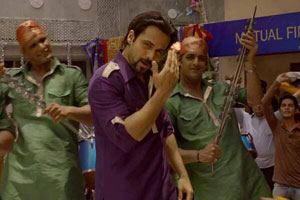
    So much promotion – Emraan Hashmi in red polka-dotted ‘night-suit’ and Vidya Balan in ghastly Lokhandwala costumes went everywhere. They must have believed in the film to do this, but critics were not so impressed. More so because director Raj Kumar Gupta’s earlier films, Aamir and No One Killed Jessica were such zingers.


    Mostly 2 or 2.5 stars, and a common refrain… starts off well and goes downhill.


    Shubhra Gupta of The Indian Express quipped, “Horny woman who doesn’t bother hiding it plus dour man with a secret, has the potential to be a humdinger. Ghanchakkar sets up trying-to-go-straight safe-breaker Sanju, and his blowsy trying-to-be fashion-forward wife Neetu, and a couple of rogues, around a bank heist, and lets them loose. This could have been a hoot, but the execution lets down the premise, and the film remains one of those that could have been edgier and funnier.”


    Rajeev Masand of IBNLive.com sounded almost disgusted. “The mystery in Ghanchakkar involves the whereabouts of a suitcase containing stolen cash. Yet, a harder puzzle to crack is figuring out just how so many talented people could make such a disappointing film. No One Killed Jessica director Raj Kumar Gupta recruits a competent cast, but flounders with a half-cooked script that doesn’t know where to go after setting up its delicious premise.


    Karan Anshuman of Mumbai Mirror wrote, “Gupta paints himself into a corner with no out and ends up botching the third act. He meanders, wastes time visualizing the obvious, and refuses to get a move on by throwing in situation after situation that only serve to widen, not propel the premise. Perhaps he could’ve started with more characters to play with rather than the four we’re focused on, for the majority of the time based in one apartment. Sure, Gupta eventually takes the story to a place you don’t expect, but is this a satisfying end? I didn’t think so. Because this entire construct, this choice of subject, hinges more on the destination rather than the journey, the sense of loss is even greater. And if there’s a deeper layer to this film, I’m missing it.”


    Raja Sen of rediff.com commented, “The finest, most fascinating mysteries are the ones where we find the red herrings stashed away in plain sight all along. In Raj Kumar Gupta’s Ghanchakkar, the true clue to the proceedings is barely hidden. It’s in the song playing in every trailer, the song over the opening credits of the film: it’s fiendishly smart to say Lazy Lad and make us assume the filmmakers are talking about the protagonist when in reality they mean the screenwriter. For this is a confoundingly half-written film. What is exasperating is how good it is right up to the third act, right up to the point when the people plotting this clever and twisty story decided not to type out any more ideas and let the film remain an almighty mess.”


    Nandini Ramnath of Live Mint sagely commented, “It helps to keep expectations low while watching Ghanchakkar, which isn’t as madcap as the title promises. Gupta opts for a mix of deadpan and mental, slowing down the movie ever so often to let a joke play out, and then speeding it up in order to reach the next humour zone.”


    Saibal Chatterjee of NDTV.com ranted, “The odd-couple pairing of Emraan Hashmi and Vidya Balan apart, this madcap whirligig has little on offer by way of innate allure. The fundamental concept of Ghanchakkar is intriguing all right, but it simply isn’t sturdy enough to bear the weight of an entire two hour-plus film. It presses a 1980s plot device into the service of what is meant to be a new age comic thriller and inevitably comes a cropper. Three guys pull off a bank heist, one of the robbers suffers a memory loss, and the booty goes missing. The pace of this black comedy is so somnolent that all the characters, and not just the ‘lazy lad’ of the film’s quirky opening song, appear to be sleepwalking through it all. What makes the film worse is that none of the handful of players is a rounded figure that the audience can relate to.This film about a man’s lost yaadasht and the complications that it sparks off seems destined to be quickly forgotten.”


    Aniruddha Guha of Time Out wrote,”Ghanchakkar’s best moments come in the latter half, when a bewildered Sanju (Emraan Hashmi) struggles to fathom everything that’s going wrong in his life. He can’t remember where he left a suitcase full of cash, two men threaten to end his life, and he’s unsure about where his wife’s loyalties lie. He runs helter-skelter, trying to piece together fragmented memories, waiting for a clear picture to emerge. These moments, shot on the streets of Mumbai, remind you of director Rajkumar Gupta’s first film, Aamir, which also involved a harrowed man and a suitcase.”


    Meena Iyer of The Times of India tried to be kind with 3 stars, but it doesn’t quite reflect in the review. “Director Raj Kumar Gupta is an ‘inspired’ writer/filmmaker. He draws liberally either from other cinematic material or from headlines. His first film Aamir had many similarities to the Filipino film Cavite. His No One Killed Jessica was quite obviously taken from the Jessica Lal murder case. In his third movie outing, Ghanchakkar, the director is ‘inspired’ by innumerable Hollywood and UK black humour flicks.”


  • Ranjona Banerji: Time for mainstream press to comment on media

    By Ranjona Banerji


    There are a few things we need to learn from the British media and one of them is for our newspapers to start clearly identifying their political leanings. This seems more and more necessary in the politically aware and digitally alert India, with the middle classes taking a tiny bit more interest in proceedings than before. As India develops further, it will follow a more or less established pattern of development and surely it cannot hurt the media to think ahead of the curve. I suppose one should include television news in this as well, seeing how influential television has become. There is plenty of confusion as to which side of the political spectrum various news channels and newspapers fall with ample accusations flying around.


    The current brouhaha in the Times of India stable over the article about Narendra  Modi’s daring rescue of Gujaratis from Uttarakhand, followed by a demolition of the article in an opinion piece followed by a half-baked explanation and digs at desk-bound columnists in a blog by the original writer… In any other world, the newspaper would (and should?) have offered some explanation to its readers about what was going on. In this instance, a “we cover everything” excuse sounds more like a cover up!


    For instance, the Times has every right to be pro-BJP if it wants but if its reporters are going to act like publicity agents for Gujarat chief minister Narendra Modi, then someone should please inform its senior editors and opinion writers. This will help to not confuse the reader, if nothing else. It’s bad enough that she or he has to negotiate between which bit of printed glamour gossip is PR masquerading as news without adding this political confusion to the equation. I suppose the fact that Chetan Bhagat is a best-selling writer justifies his getting edit page space in TOI, but why not stick his columns in some children’s section given the depth of his thoughts?


    **


    More Indian newspapers might also pick up on The Guardian’s idea of having a media page. Yes, Mint does it and The Hindu covers the media closely. Websites like The Hoot, Newslaundry.com and this one also track media happenings. But we need more mainstream newspapers to keep an eye and comment on media as well.


    Monday’s Guardian has a critique of the re-launch of Rupert Murdoch’s News International as News UK. It also has a very funny account of how scriptwriters are treated by the BBC as well as a feature on an internet TV service. The Reader’s Editor talked about the newspaper’s run-in with a government department. This provides a fair overall coverage to the reader about media events – all of which affect the reader, lest we forget.


    **


    I will not bother to mention that art, the performing arts and literature get space and prominence in British newspapers. Having heard variously insulting and demeaning descriptions of the average Indian for years from marketing departments in several news organisations I now accept that Indians cannot think beyond Bollywood and the rubbish it churns out week after week!


    **


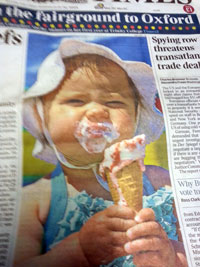
    I take back my complaints about the Indian media being obsessed with pictures of children with chocolate and ice-cream inelegantly smeared all over their faces mistakenly thinking that this is cute. Must know acknowledge that this misconception is global as this picture on the front page of The Times, London demonstrates.
     

    Ranjona Banerji is a senior journalist and commentator based in Mumbai. She is also Contributing Editor, MxMIndia. She can be reached via Twitter at @ranjona. The views here are her own


  • Ranjona Banerji: Lessons from the Murdoch saga for journalists

    By Ranjona Banerji


    Rupert Murdoch had been heard on tape supporting his journalists under investigation in Britain and raging that the allegations of corruption have been blown out of proportion. News Corp did promise to cooperate with the official investigation after the phone-hacking scandal blew up a couple of years ago, leading to the closure of News of the World. Since then, senior editorial staff members – like Rebekah Brooks – have been jailed and face various charges in the on-going case.


    On the tapes, Murdoch speaks up for his journalists and feels that the police have been incompetent in the probe. The humility which he showed during his questioning by Members of Parliament is evidently gone, replaced by the arrogance he is known for. He also, intriguingly, elliptically refers to his son Lachlan as his successor, where earlier that mantle appeared to have been handed to James.


    The Murdoch saga is far from over and even if it now flies under the radar there are implications for media houses and journalists everywhere. Like the Radia tapes revealed in India, there is some behaviour by media houses and journalists which is unacceptable. Even if such behaviour is condoned and ignored – or especially if it is condoned and ignored – serious damage is done to the institution.


    (For more on Murdoch: http://www.channel4.com/news/murdoch-rupert-tape-police-the-sun-journalists)

    In Britain, the Leveson report into press ethics and the judge’s suggestions about a regulatory have hit a stone wall. In India, the Radia tapes have been quickly forgotten. Unfortunately, this reflects very badly on the media itself given that we all pay the price by every transgression by one of ours.


    Tragically, the chairman of the Press Council of India’s early blustering has been exposed as Shakespearean sound and fury: signifying nothing. The rest of us are happy to carry on as long as that monthly pay cheque comes in.


    **


    The story behind the suicide of former journalist Charudatta Deshpande is distressing and frightening. Deshpande, who recently quit as head of Corporate Communications at Tata Steel. Deshpande had been blamed apparently for a story on Tata Steel that appeared in Forbes magazine. He has practically placed under house arrest in Jamshedpur and threatened. He told friends about a “mafia” within Tata Steel.


    The company also tried to spread the word that Deshpande had died of a heart attack to cover up his suicide, using its PR network. Deshpande’s case has been brought into the public domain and the Mumbai Press Club, for instance, has taken up the matter with the Tatas. K Ramkumar, an executive director with ICICI bank has also gone public on the appalling way Deshpande was treated.


    Along with all the other problems with such a case, there is cause here perhaps for business journalists to consider how they portray certain companies and add to their public myths. The essence of journalism has to be disbelief. But instead, we fall for some popular line and perpetuate ideas about corporations and their leaders happily ignoring their shortcomings. It’s not only about succumbing to marketing pressure either. Even worse, I think it’s about access and that glorious feeling of rubbing shoulders with the high and mighty. But whatever the reasons, the effects are disastrous.


    One only hopes that some justice can be found for Charudatta.


    **


    One of the joys of being in London is reading the Big Issue, the magazine set up in “1991 to provide homeless and vulnerably housed people with the opportunity to earn a legitimate income”. The magazine costs pounds 2.50 and the vendor gets pounds 1.25 for every copy sold. The reader gets a well-conceived magazine with the required mix of news, features and opinion. Politics, art, culture, cinema, music, popular culture, sport and human interest are all covered.


    A lesson of some sort here, not to make a big issue of it…


    Ranjona Banerji is a senior journalist and commentator based in Mumbai. She is also Contributing Editor, MxMIndia. She can be reached via Twitter at @ranjona. The views here are her own


  • Reviewing the Reviews: Mixed praise for ‘Lootera’

    By Deepa Gahlot


    Vikramaditya Motwane’s second film after Udaan, seems to have driven some critics into paroxysms of praise, including one rare 5 star rating, by rediff.com’s Raja Sen.


    Words like poetic, lyrical, awe-inspiring studded most reviews, though hardly anyone mentioned the tradition of filmmaking from Bengal that Lootera is inspired by. As some of the not-so-positive reviews pointed out, the slow pace is a problem, and just because it is a sumptuous-looking period piece, does not automatically make it a masterpiece.


    All this left the audience quite bewildered. How to figure out whether the film is worth 2/5 stars or 5? It may be said that at a time when gangster films and crude comedies get the box-office, the best that can be said about Lootera, is that it does not pander to the lowest common denominator.


    Deepanjana Pal, writing in Firstpost.com commented, “Lootera is heartbreaking in many ways, but the most crushing is the realisation that the smartest filmmakers of Bollywood coming together – Motwane’s long-time champion Anurag Kashyap wrote the dialogues and is one of the producers – doesn’t necessarily make a good film. Worse, it can result in a film that begins with promise and ends up as flat-out boring.”


    Shubhra Gupta of Indian Express was let down too. “I should have watched Lootera backwards, because it finishes with an almost unbearable loveliness. The ache in the heart comes as a welcome relief, but a little too late. The journey towards the end is shot through with beauty, one painterly frame after another evoking admiration, but it did not touch me. And that is where Vikramaditya Motwane’s film becomes a disappointing second act, after his magnificent debut Udaan.”


    Sudhish Kamath of The Hindu wrote, “Short stories work best as short films. There is a certain brevity and inherent pace that must not be tampered with. Especially, if the source material relies on an O Henry ending. O Henry’s short stories, especially The Last Leaf, that Lootera is based on, have the structure of a joke. It’s all about the punchline. You need to say it with all the detail you can, keep your audience wondering and before they know it, deliver that last line with sweet timing and get out of there. The good news is that Vikramaditya Motwane’s Lootera delivers that last line with perfection. If only the makers had kept the rest of the storytelling equally tight and gripping.”


    Karan Anshuman of Mumbai Mirror was mildly critical, “An O Henry short story is the spark that ignites a cinematic interpretation that undoubtedly would leave even the celebrated writer dazzled, if unaffected. Director Vikramaditya Motawane has constructed an elaborate experiment of a film. A big-budget visual delight starring A-list actors, Lootera’s story is simplistic; it’s telling self-consciously un-Bollywood, and one that aspires for artistic glory.”


    Then there were the 4 star raves:

    Rajeev Masand of IBNLive.com recommended dropping everything to watch it. “There is attention to the smallest details in ‘Lootera’, like the art direction, the lighting, and particularly Mahendra Shetty’s intuitive camera that knows just how to capture the lovely landscapes as well as the somber mood of later scenes. Amit Trivedi’s beautiful songs and background score add another layer of feeling to the aching love story here. Yet it’s hard to resign yourself to some convenient coincidences in the plot, or even the naivete that filters in towards the end. In a film so close to perfection, the small lapses are hard to hide.”


    Raja Sen gushed, “Motwane’s direction is so assured and confident that this scarcely feels like his second feature. The script is clearly one he believes in, and the film is resultantly free of false-notes. Even the few moments that feel like narrative missteps turn out to be masterstrokes. And, as exemplified by a breathtaking chase sequence that could result in any number of outcomes, Motwane sides with his story, not with any one of his characters. A film, then, about life, love and leaves. And in the end it comes down to the sort of snow-surrounded tree that you can draw even if you’ve always had trouble drawing leaves. Magnificent.”


    Meena Iyer of the Times of India gave it the expected rave, but with a rider, “In his second outing, post-the critically acclaimed Udaan(2010), Motwane definitely shows an upward graph. He transports you to the ’50s effortlessly with his vintage cars, opulent havelis, authentic costumes and terrific performances from his lead cast. Every frame is a picture postcard. Sonakshi, Barun Chanda and Ranveer need special mention. However, be suitably warned; the old-world aura and the languid pace are not for the young and restless. Note: You may find this film boring if state-of-the-art, slow romance is not your idea of a movie outing.”


    Saibal Chatterjee was hugely impressed. “An epic canvas, a quiet love story, a cops-and-robbers drama and an impressively sophisticated storytelling style: Lootera has all this and much more. Vikramaditya Motwane, who earned his spurs with the critically acclaimed Udaan in 2010, works here with a completely different cinematic easel. What he has carved out of the raw material at his disposal can only bolster his reputation as a filmmaker who knows exactly how not to be run of the mill. He fills the Lootera frame with fable, history, art, literature, poetry, occasional nods to classic Hindi cinema and music, and loads of passion, beauty and magic. In short, Lootera is a Bollywood miracle – a rare Mumbai film that is mounted on a lavish scale and yet dares not to play by the established norms of the marketplace.”


  • Ranjona Banerji: Social prejudices rule in Britain on Murray win

    By Ranjona Banerji


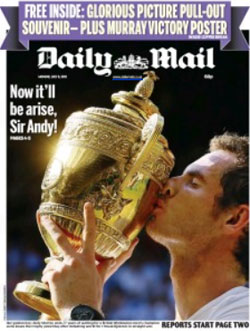
    Andy Murray’s win at Wimbledon has been celebrated across Britain. The Times, London called him “The History Boy”, The Guardian, The Independent and The Scotsman all went with the simple but evocative “Champion”, The Daily Express said he was “Magical Murray”. Some said a knighthood was on its way, “At Last, “Wimbledone”, “Yes!” and “Golden Boy” were some of the others.


    But where there is media, can controversy be far away? It started in fact on Saturday, July 6, just before the ladies singles final was to be played. John Inverdale, a BBC radio commentator had this to say about Marion Bartoli who went on to become the champion, “‘I just wonder if her dad, because he has obviously been the most influential person in her life, did say to her when she was 12, 13, 14 maybe, “listen, you are never going to be, you know, a looker.


    “You are never going to be somebody like a (Maria) Sharapova, you’re never going to be 5ft 11in, you’re never going to be somebody with long legs, so you have to compensate for that.”


    Bartoli is undoubtedly a quirky player with some tennis court rituals that are out of the ordinary (though perhaps Rafael Nadal wins that one). But what her physical beauty has to do with her tennis playing skills was not made clear by Inverdale or anyone else who thinks that female tennis players must be good-looking before they pick up a racquet.


    Inverdale’s sexist comments are part of an almost accepted form of conversation as far as the women’s game is concerned. It is possible that he even thought he was being funny, as this is how he explained his remarks: “She is an incredible role model for people who aren’t born with all the attributes of natural athletes.”


    His apology included these remarks: “The point I was trying to make, in a rather ham-fisted kind of way, was that in a world where the public perception of tennis players is that they’re all 6ft tall Amazonian athletes, Marion – who is the Wimbledon champion – bucks that trend.”


    It is unclear however whether these are Inverdale’s thoughts – that all female tennis players ought to be 6 ft tall blondes – or whether indeed, this is true. Of course, the Williams sisters spring to mind seeing as how they have been the most dominant of recent times.


    But if Inverdale’s sexism was bad, things were about to get a lot worse. In the hysteria of excitement at Andy Murray’s victory, the British press sort of forgot that Murray was the first man to win a Wimbledon singles title in 77 years. Since Fred Perry’s victory in 1936, four women have been Wimbledon singles champions. Virginia Wade, who won in 1977, is a prominent commentator and columnist, even if the other three have been forgotten.


    Tennis is the only sport in the world where women play at the same level, in the same tournaments and get paid the same amount of money as men. It is a shame therefore that social prejudices should be reflected so thoroughly in the media which ought to know better. Yes, there is no doubt that in the men’s game, Andy Murray has made a massive breakthrough. But there is surely no need to disrespect the women who have achieved exactly what he has. Yet both The Times and The Telegraph have similar headlines about the end to a 77-year wait for a British win.


    This link from The Guardian makes it clear: http://www.guardian.co.uk/sport/shortcuts/2013/jul/08/virginia-wade-wimbledon-champion-tennis


    Ranjona Banerji is a senior journalist and commentator based in Mumbai. She is also Contributing Editor, MxMIndia. She can be reached via Twitter at @ranjona. The views here are her own