Category: PRINT MEDIA

  • Claims, counter-claims rule IRS again


    By A Correspondent


    It’s ironic. Mumbai is where most of the biggie media agencies exist. Some of the largest spenders are headquartered here. Still, publications pull out all stops to make crazy claims.


    Okay, they aren’t incorrect and the initiated amongst them can obviously see through the claims, but those who don’t – the lay reader, the young homemaker or the senior citizen who is not in the know – is sure to wonder what the truth. And if he/she subscribes to more than one paper, we are sure there will be some confusion.


    Obviously, the belief is that the reader is an ass. But this is a policy that can backfire terribly.


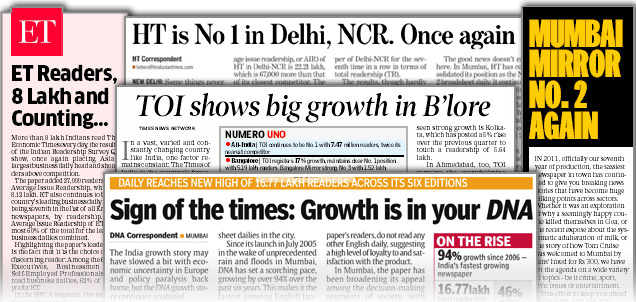
    But the confusion in a city like Mumbai is thanks to the two types of data that MRUC throws up in its IRSes – Average Issue Readership (AIR) and Total Readership (TR). Publications put up the data which throws them in better light. Also, newspaper X is a compact (tabloid- like-sized) newspaper while Y is a broadsheet. So one may be the #2 overall, another may be #2 broadsheet. Z may be #2 by TR and Y may be #2 by AIR.


    Fact is AIR is the accepted currency and there is a section which believes that a newspaper that comes free with another paper shouldn’t be taken for review. But there is a section which says that if a newspaper is able to attract revenues separately, that’s decidedly the best yardstick for the product’s utility. Perceived or otherwise.


    Sadly, the conferences which the Market Research Users Council and Hansa Research Group would conduct to release every round of the Indian Readership Survey have been done away with. The detailed dump is no longer handed out to the trade media. All of this charade of X, Y, Z could’ve been avoided had we got city and region-wise numbers from the MRUC (or via Hansa), but that’s not to be.


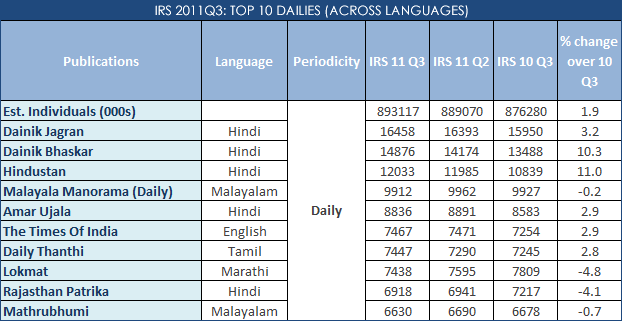
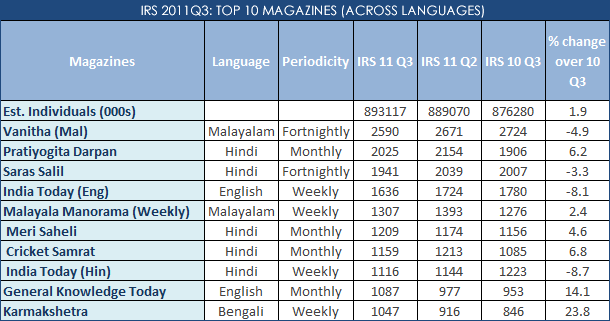
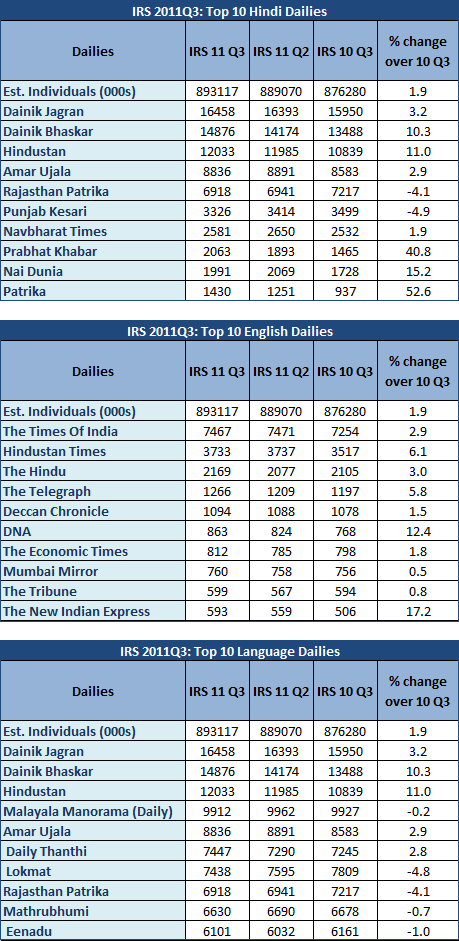
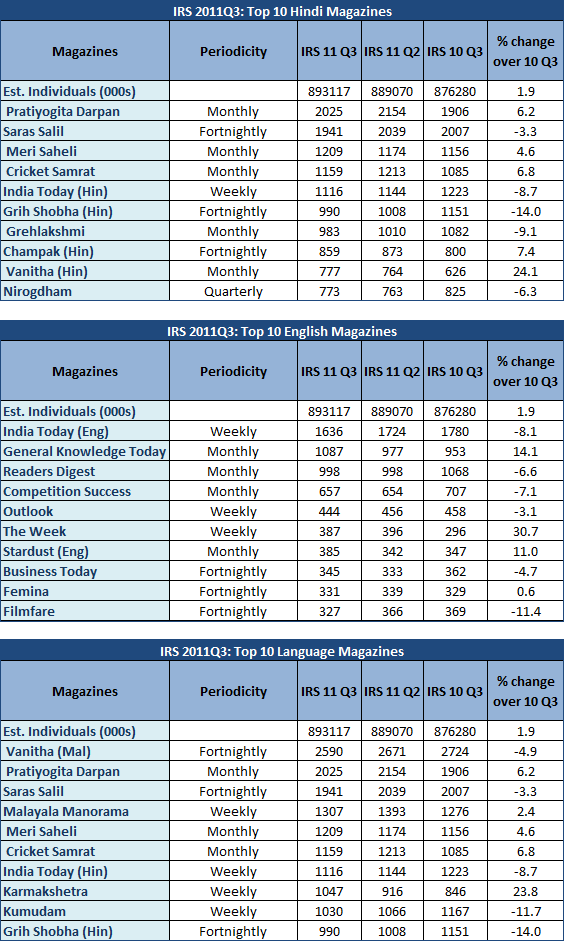
    Let’s look at the tables in detail (that we have based on the toplines publicly available).


    There’s no need of words. The growth or degrowth percentages tell the story. Some spectacular successes. Others not so.

  • Registered papers in India is 82,237, Hindi & Eng lead in no of print entities

    By A Correspondent


    The press registrar, T Jayaraj, Registrar of Newspapers for India (RNI), presented the 55th annual report ‘Press in India’ 2010-11 to Uday Kumar Varma, Secretary, Ministry of Information & Broadcasting (I&B).


    Speaking on the occasion, Mr Varma said that the annual report was a compendium of interesting data containing status of print media in the country. He also suggested that based on the previous years’ trends, a comparative analysis of different newspapers in circulation, their growth over a period of time and further comparative statements could be presented through graphs in the next year’s annual report. This would add value to the report, thereby becoming an important reference point for key stakeholders in the industry.


    The Annual Report highlighted key trends for the Indian press in 2010-11. The analysis provided a broad overview about the general trend of the Indian press based on the number and claimed circulation of newspapers.


    The total number of registered newspapers stood at 82,237. The number of new newspapers registered during 2010-11 stood at 4853. The percentage of growth for registered publications over the previous year was 6.25 per cent.


    The RNI approved 13,229 titles for the year 2010. The largest number of newspapers and periodicals registered in any Indian language was in Hindi at 32,793. English had the second largest number of newspapers and periodicals which was 11,478. The total circulation of newspapers stood at 32,92,04,841 as against 30,88,16,563 copies in 2009-10. The number of annual statements received in RNI for the year 2010-11 was 14,508 against 13,134 in 2009-10 registering an increase of 10.46 per cent.


    As per data from the annual statements, the highest number of newspapers were published in Hindi (7,910), followed by English (1,406), Urdu (938), Gujarati (761), Telugu (603), Marathi (521), Bengali (472), Tamil (272), Oriya (245), Kannada (200) and Malayalam (192).


    In terms of circulation, Hindi newspapers continued to lead with 15,54,94,770 copies followed by English with 5,53,70,184 copies. Urdu press had a figure of 2,16,39,230 copies.


    The report is a statutory requirement under Section 19 G of the PRB Act, 1867. It is an analysis of the Indian Press which focuses mainly on circulation as claimed by the newspapers. It also carries different chapters viz ownership of newspapers, analysis of daily newspapers, language wise study of the press and analysis of registered newspapers. The source of information of the report is the annual statements submitted by the publishers of newspapers and periodicals in accordance with 19 D of the Act.


  • The Year in the News Media


    By Ranjona Banerji


    This year started with a hangover – like all New Years should. But unlike the pleasant pain that goes with the knowledge of a party that may have meant over-indulgence but was fun just the same, the media started 2011 with one of those truly mammoth unpleasant hangovers.


    The outcome of the Radia tapes was, at best, a loss of reputation for a few well-known journalists but at worst, a loss of faith in the media as an institution. Public knowledge about the somewhat questionable dealings between journalists and publicist Niira Radia meant that the media could no longer hide in those famous ivory towers. Even more unfortunate was that the finger of suspicion was pointed at all journalists because of the transgressions of a few. It did not help matters that although Vir Sanghvi lost or surrendered his influential column Counterpoint in the Hindustan Times, Barkha Dutt did not just continue with NDTV, but went from strength to strength.


    So it was a somewhat cautious Indian media which initially tackled the phone-hacking scandal in the UK and the closure of the Rupert Murdoch-owned News of the World. Here was journalistic excess in order to get a story taken to a whole other degree – criminality. The tabloid press and the British public and celebrities have historically had an interesting and confrontational relationship. But the desire to delve into every aspect of the lives of the rich and famous – without the reverence shown in our part of the world – made for big sales and bigger profits. The readers loved the sleaze and watching the powerful cringe.


    But this scandal was something else. It was newspapers hiring investigators to pry into the private lives of ordinary citizens and using dubious methods like hacking into voicemail messages to gain information. One reporter lost his job for spying on British royals; but what was the punishment for breaking into the cell phone of a murdered teenager, deleting her messages and not only giving hope to her family that she was still alive but also materially distorting a police investigation into her disappearance?


    As it turned out, the reprisal was fierce and final: a newspaper which was over 150 years old was shut down and the British parliament had a public questioning of the owners and editor of News of the World – Rupert Murdoch and his son James and Rebekkah Brooks.


    The world’s media watched shocked as skeleton after skeleton popped out of the News of the World and NewsCorp cupboards. But surely there was no room for complacency here in India. After all, the problem was not just the Radia tapes; it was also the elephant in the room – paid news. Media houses – without or without the collusion of journalists – had been selling editorial space to political parties. The reader or viewer, of course, was left in the dark and assumed s/he was reading or watching real news stories.


    In the midst of all these depressing signs that some media introspection was required, we had all the uncomfortable revelations by Wikileaks, which turned international diplomacy on its head and exposed lies about the US role in the Iraq war and the black money held by European banks. The subsequent arrest of Wikileaks editor Julian Assange in the UK, on an old sexual assault charges filed in Sweden added to the drama. Was Assange really guilty as charged or was this an international conspiracy to get him extradited to Sweden and from there to the US to punish him for publishing secret cables and other information on the internet? The jury’s still out on that one.


    Wikileaks, though, emphasised once more how the internet was changing journalism and anyone who ignored it, did it at their own peril. Social media is playing the role of a catalyst in creating public opinion outside of the traditional media. The traditional media may not be destroyed but it will be damaged if it does not pay attention.


    Back in India, though, we still had a couple of dramas to play out. The new chairman of the Press Council of India, retired judge Markandey Katju, decided that he didn’t want to be head of a toothless body that was limited to the print media. He proceeded to write a series of articles attacking journalists, calling them frivolous, badly educated and shallow. He listed the sort of news that should be carried and slammed the choices made. He also said that the Press Council’s ambit had to be increased to include television.


    Katju may have been wrong and he may have been right in his opinions, but unfortunately for him, the Press Council remains toothless. And besides, instructing newspapers and TV channels on what aspects of news should and should not be carried impinges directly on the freedom of the press. No one spared Katju and so he quickly backtracked a little.


    Then, perhaps just to prove Katju right, media coverage of the Anna Hazare-led anti-corruption agitation proceeded on just those shallow, one-sided and breathless lines that the former judge had bemoaned. This protest was covered as if it was the only one the country had ever seen. Numbers were inflated or exaggerated. Those who questioned aspects of the Jan Lokpal Bill were shouted down as enemies of the people. As is inevitable, the print media could not sustain its adoration of this movement and started asking uncomfortable questions. TV however continued with its happy path of supporting this “national movement” at all costs until, slowly, a bit of reason leaked into the emotion.


    The doubts had crept into TV studios after the standing committee submitted its version of the bill but the Anna Hazare movement remained adamant on its own stand. But it was really the indifference shown to the movement by the people of Mumbai which ended that love affair. Rather than focus their cameras on 4,000 people pretending they were 40,000, TV cameras panned empty grounds showing us how low the turnout was.


    In journalism, as in life, there are no absolute truths. But there are facts. In 2011, the facts have shown that the people are watching the media. And there’s hardly any place to run or hide. Like we’re forcing politicians and government servants to come clean on their dealings, a little bit of spring cleaning by the media would not be amiss in 2012.


  • NBT launches NCR edition with hyper-local pullouts

    By Akash Raha


    Navbharat Times (NBT), the Hindi daily from Times Group, is launching its special NCR edition in order to further strengthen its position in Delhi-NCR. There will be no change in the pricing and it will remain Rs2.50 per day. Understanding the latent need and growing popularity of regional content amongst its readers, Navbharat Times decided to tailor its offering accordingly.


    Ranjeet Kate, Director Languages- Bennett Coleman & Co. Ltd said, “Of late, media buying behaviour has seen a lot of change. Advertisers see language dailies as a medium providing valuable and sizable reach in key markets like NCR. While on the other hand, ‘readers’ of such fast-paced cosmopolitan cities see newspapers as a trustworthy guide. We can deliver value in such a scenario with a customized NCR edition for both our readers as well as the advertisers.”


    For most of the advertisers, NCR is an important territory. Advertisers who are advertising inDelhican takeDelhi+NCR package at a nominal add-on cost.


    The NCR edition will not only retain its special Delhi and national content but will also offer a complete coverage of the state-level news in UP and Haryana. This special NBT-NCR edition will be available in all the five suburbs (Ghaziabad,Faridabad, Gurgaon, Greater Noida and Noida).


    Readers in these areas will also get the hyper local city pullouts in their respective regions, along with the main issue. Regionalizing the main issue will make the product offering appear more promising and customized for its NCR readers.


    Aman Nayar, Brand Manager- Navbharat Times said, “Most advertisers who advertise in Delhi would also want NCR and giving the minimal add-on rate, NBT intends to add most of its NBT Delhi advertisers to the NCR edition. The sizable local advertising, of course, will be done separately.”


    NCR has always been a booming vibrant market. It has been witnessing huge growth in job opportunities, increased urban migration, increased housing projects and huge investments in the transport infrastructure.


    From the advertising point of view, tapping the NCR market has always been an area of interest for all advertisers, as they always look out for mediums which have deeper engagement levels with their audiences. NBT, which aims to be seen as a value provider for its readers as well as advertisers, intends to keep experimenting and expanding in newer and relevant territories.


  • No discretionary quotas for journalists please

    By Ranjona Banerji


    The story of the day, on Tuesday, January 3, as far as the media is concerned is the front page expose by The Indian Express, headlined: “Meant for ‘distressed’, Orissa plot quota goes to babus, judges, journalists”. The strap below reads: “Row leads to CM scrapping discretionary land or house allotments last month”.


    The upshot is that a system of patronage was established in 1985 by the JB Patnaik government to allot houses or land for “the dependent of a person who has made a supreme sacrifice for the nation, but has not been properly rehabilitated so far; member of a family who has been a victim of unforeseen circumstances (terrorist attack, earthquake, flood etc); physically handicapped person…” The categories go on to include police, military, paramilitary and government employees permanently disabled on duty, the families of those who lost their lives in abnormal circumstances as well as eminent professionals, sportspeople, artists, literary figures and women of “high achievement in distress’ and individual cases of extreme hardship.


    After this, the beneficiaries appear to have been ministers, bureaucrats, judges and journalists. A scandal where a minister okayed the allotment of two houses to the family of another led Naveen Patnaik to abolish this discretionary quota.


    The story, does not tell us how many distressed, disabled people in extreme hardship actually got any land or houses, but it does list the journalists who benefited.

    http://www.indianexpress.com/news/meant-for-distressed-orissa-plot-quota-goes-to-babus-judges-journalists/895060/


    This raises a very serious question for journalists everywhere, many of whom have profited under similar schemes elsewhere in the country. The Express story, while naming benefiting politicians and so on has broken the covenant of silence on journalistic transgressions by printing the names of the lucky journalists and the minister under whose discretion they got so lucky. The names belong to several media houses and some are familiar.


    One journalist has defended his allotment, pointing out that when he got his plot in 1997, the scheme was legal. He also said that other journalists had lied that they had no other properties – a requirement of this lucky dip system.


    The question here is of something else. To what extent can journalists be objective in their reporting/covering/editing/commenting on government affairs if they benefit from government schemes and awards? Does acceptance of such largesse come under the tag of corruption or just luck? Is objecting to such acceptance an expression of self-righteousness or sour grapes?


    The profession of journalism has been under the scanner recently for a number of not very salubrious reasons. This is one more criticism which ought to stick. Paid news campaigns as orchestrated by media houses is totally reprehensible. But so is the custom of individual journalists accepting what cannot be called gifts but will have to be seen as bribes which compromise not only their integrity but that of all their fellows.


    The Indian Express has done the profession a great service by printing the names of journalists who are beneficiaries. If we are to fight both media corruption and paid news, then the only way is for us to become each other’s watchdogs. We cannot be sanctimonious about everyone else but ignore our own transgressions.


    The way The Hindu exposed the Hindustan Times on its story on infant gender changes in Indore or The Guardian has been relentlessly attacking News of the World and others on phone-hacking, is it time for Indian journalists to stop applying the discretionary quota to each other?

  • New English daily in Pune from Aaj ka Anand group

    By Akash Raha


    Pune is all set to welcome a new English daily. The 40-year-old Aaj ka Anand group is set to bring out the newspaper in a joint venture with  content firm Media Next Private Limited .  Aaj ka Anand publishes a Hindi morning daily, Aaj ka Anand and a Marathi eveninger, Sandhya Anand and has interests in real estate and also runs a budget hotel in the city.


    Media Next is a multimedia content service provider whose Chairman is senior Pune-based journalist Mr Anand Agashe. The managing editor of the newspaper will be Mr Agashe, and Ms Vinita Deshmukh, also a veteran Pune journalist and RTI activist, has been appointed as the editor.


    Speaking on this development Mr Agashe said, “Pune is becoming a cosmopolitan city and its demographics are changing, with the rise of middle class and upper middle class, whose preferred language for communication is English. The Aaj ka Anand group thought it was necessary to have a English daily which would complement its Hindi and Marathi newspapers.”


    While Aaj ka Anand will own the newspaper, the content will belong to Media Next. The application for the newspaper is currently being processed and the name of the English daily is hence still under wraps. According to Mr Agashe, the English newspaper is all set to be launched in the next two to three months.


    While Marathi dailies are the dominant players, Pune is already crowded with several established players like The Times of India, Indian Express, DNA and Sakaal Times in the English space. Mid-Day too has a Pune edition. The entire print revenue generated in Pune is said to be between Rs 500-525 crore.


    Speaking on this development, Jaisurya Das, Managing Director of Xanadu Consulting Group and a veteran on the Pune market said, “I admire their guts to come out with a English daily, because to get a product differentiated is going to be very difficult and they are not known as market leaders. Aaj ka Anand is a fairly low profile group, which has been active only in the Hindi and Marathi market catering to a B1, B2 or C1, C2 kind of an audience.”


    Mr Das feels that there are a couple of issue the group has to work on. “The first thing is, it is not a marketing savvy group, unless they are going to bring a whiz kid. The second is that they have to come up with excellent and differentiated content. I am not saying that there is no room in the Pune market for a newspaper. If you bring in a daily with highly localized local content, it might work. It’s a tough call and unless the group delivers differentiated content and comes up with an aggressive marketing strategy, there is going to be a lot of bloodshed ,” he added.


  • Dog days for pet mags

    By Archita Wagle


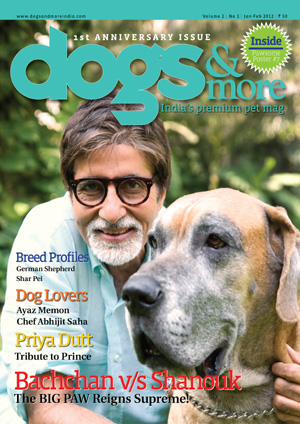
    From the Queen of England downwards, celebrities and their equally famous dogs are almost a cliche. Paris Hilton is frequently seen carrying her pet chihuahua Tinkerbell, who has a book called The Tinkerbell Hilton Diaries: My Life Tailing Paris Hilton to her credit. Closer home Gul Panag’s beagle Milo has a Twitter account. Amitabh Bachchan posed with his Piranna Dane, Shanouk, for the cover of Dogs & More anniversary issue, which was launched recently.


    It’s not just celebs, though, even ordinary people are increasingly getting pets to be a part of their families and participating in their activities. It should logically follow that these owners would be in need of news, views and information resources for their four-legged friends.


    But the pet magazine market is, albeit niche, also extremely small, especially when compared with the growing interest in pet parenting.


    As Shivani Darshan, publisher-editor of the now defunct Furs, Fins and Feathers said, “The pet industry is still a mom & pop kind of industry in India. Abroad, the industry has seen a growth of around 30-40 percent, but in India it is still at a very nascent stage.”


    Veteran journalist and dog lover Ayaz Memon concurs: “The idea of having a pet magazine in India is not fully fleshed out. Even the idea of having pets is not familiar inIndia, it is just growing.”


    The pet industry, though not very big, is dominated by dogs, as can be seen from the fact that most of the magazines in the market are predominantly for dog owners.


    Shweta Khurana, editor of Dogs & Pups said, “When we conducted our survey before launching our dog magazine, we found that dogs constituted the maximum number of pets. Also I am a dog lover; the magazine was just a way of turning my passion into a profession.”


    Dogs & More was started by Farzana Contractor, who is also the editor of the magazine. The idea for launching Dogs & More came to Ms Contractor when she realised that dogs teach us a lot about loyalty, patience and ability to love without question. Ms Contractor’s love affair with dogs started seven years ago. “I adopted a dog seven years ago, after a friend suggested it to me as a solution for the depression I was experiencing after losing my husband 10 years ago. I adopted a furry little black Lhasa Apso, and my life changed.”


    Magazines such as Dogs & More or the Delhi-based Dogs & Pups are effort to influence the people to get pets. These magazines, mostly bi-monthly, are reasonably priced and offered at a monthly subscription to the readers. But even then the concept is not taking off. “Considering the expenses related to taking care of a dog, this subscription fee is pretty reasonable. The content is nicely balanced,” said Ms Contractor.


    But a common grouse is that the revenues being generated are not enough. “Unlike a Cosmopolitan, which gets plenty of advertisers, we don’t get so many advertisers. The content is not a challenge but getting revenues is… that’s why we are still a bi-monthly. The content is not a problem,” said Ms Khurana.


    But Jaisurya Das, media professional and dog lover, disagrees: “The marketing strategy adopted by the pet magazines is not right. First, their advertising is not done right. They tend to approach only those connected to the pet businesses like vets, groomers, trainers and so on for advertising in the magazines. What is stopping them from advertising FMCG products? The reader who picks up a dog magazine will also consume the FMCG product. They should think of the end audience while going for advertisements, not the advertiser.”


    Ms Darshan however has a different point: “The industry we function in is still very unorganised, the advertisers we approached want free ads. I was bearing most of the cost of printing and distribution. In the end, we had to take a call and decided to stop printing the magazine.” The anniversary issue of Furs, Fins and Feathers on March 2011, which featured Paris Hilton and Tinkerbell on the cover, was the last one.


    Mr Das also points out that one more reason for bare minimum survival of the dog magazines in India is the visibility factor. “The pet lovers are not going to go out and seek out dog or pet magazines. These magazines should be available at the vets, pet shops, dog groomers and so on. The magazines should have tie-up offers with dog products to hook in the readers. Right now, they are surviving mostly on subscription.”


    Mr Memon agrees: “The information given in these magazines is very basic. It is good for those who have just got their first pet. If I need more in-depth information it is readily available on the internet. I feel that there is a lot of scope for dog magazines to grow.”


  • N Ram to call it a day at Hindu

    By a Correspondent


    It is learnt from sources close to the development that N Ram, Editor-in-Chief of The Hindu, Business Line, Frontline and Sportstar has informed via a letter (a copy of which is with MxMIndia) to the Board of Directors, Kasturi & Sons Ltd his decision to step down. His last day at work would be January 19, 2012. He has spent eight years in his role as Editor-in-Chief. However, he will continue as full time director at Kasturi & Sons Ltd.


    He has also suggested that the Board may pass the necessary resolutions declaring, with effect from January 19, 2012, Mr Siddharth Varadarajan, who is the Editor of The Hindu to take responsibility as the Editor of The Hindu (inclusive of the annual publications, The Hindu Survey Of Indian Industry; The Hindu Survey Of Indian Agriculture; and The Hindu Survey Of the Environment). He will be responsible for selection of news under the PRB Act. Mr D Sampathkumar, the Editor of Business Line, Mr R Vijayasankar, Editor of Frontline and Mr Nirmal Shekar, the Editor of Sportstar have been named as the respective editors of their newspapers and magazines and will be also responsible for selection of news under the PRB Act.


    The letter also states that since Mr Ram will also cease to being the publisher of the above mentioned titles, the board may pass resolution to name Mr K Balaji, the MD at KSL as the publisher and printer. This will be an interim role until the group gets a CEO who will take over these roles as applicable.


  • Inext, the youth-centric newspaper launches its website

    By Akash Raha


    Inext, the youth-centric newspaper launched its website on January 3, and is currently running the campaign ‘Iktara’. MxM got in touch with Alok Sanwal, COO and Project Head, Inext to know more.


    Speaking about the response of the advertisers towards the newly launched site, Mr Sanwal said: “In less than seven days of the launch of inextlive.com, we have received tremendous response from the business fraternity. We are receiving a lot of offers for grabbing a space on this youth hangout portal. We are, however, looking for advertisers that espouse youth-centric sentiments and resonate with Inext’s business philosophy.”


    To complement the launch of the online campaign, ‘Iktara’, which gives a platform to local folk singers to perform and make it big, was launched recently. According to Inext, the campaign has done very well in the first week. The audience has responded positively and the site has received many recorded CDs and DVDs, the best of which will be showcased on the site.


    Inext is now trying to focus on the resurgence of folk tradition inIndiaand capitalize on it in order to build a successful consumer connect in the four states it is present in - Uttar Pradesh, Uttaranchal,Biharand Jharkhand.


    Inext had an expansive campaign, with radio, digital and print initiatives, to promote their newly launched site. While Radio Mantra has been giving them radio coverage, Mudra Max and Vermillion have handled their digital and print initiatives respectively.


    Inext, the compact daily, primarily focuses on youth and is published by Jagaran Prakashan Ltd. Currently, it is available in 12 cities across four states. The paper and its newly launched website targets youths in mini metros in the age group of 13-25.


  • I don’t read rival newspapers: Bhaskar Das


    By Anil Thakraney


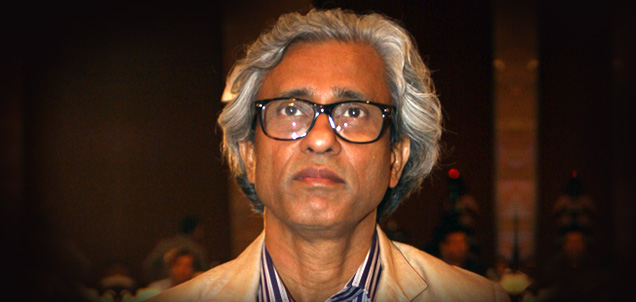
    I have met Bhaskar Das on and off. (I once even secretly freelanced for him in my advertising days.) During my stint with Mumbai Mirror, I got to know him a little better. He has always come across as a cool, calculating and sharp business manager… but someone who’s smart enough not to build his own image over that of his company. In a long conversation inside his plush corner office (previously occupied by Pradeep Guha), Bennett Coleman’s president answers searching questions on his long career with the Times, the group’s ideologies and sometimes controversial practices.


    The one new thing I discovered about Bhaskar during this discussion is that he’s a deeply spiritual person, and often, as he himself said to me, uses learnings from The Gita to ‘sanitise’ his various marketing strategies. Wonder what Lord Krishna would have to say on Media Net.


    But I must say the man who heads the nation’s largest newspaper house retained his composure even when facing tough queries. Spirituality at work, I suppose.


    Boss, when do you retire? You are 58.

    See, retirement has two different connotations. For me, it’s ‘Retyrement’. Like re-treading tyres. And that means adding new capabilities. Coming specifically to Bennett, I have a flexible retirement plan. As per the company’s desire, I should stay as long as I am mentally, physically and intellectually fit. But I must add that I live by the day. So I am only bothered about the now.


    You’ve been with the company for 32 years. Never got bored of the same place?

    Boredom only happens when you don’t love your job. I have continuously rediscovered and redefined my space, so the journey has always been very exploratory. I don’t know whether the excitement would have been there if I had worked in a bank or in some other financial company. Newspaper is a 360 day product. Because of my personal liking for content, I have always been involved in it in some form or the other. Honestly, for me, 32 years feels like 32 days.


    The flip side is some people would say Bhaskar is risk averse.

    It’s not the question of being risk averse. By that logic if you continue in a marriage you are risk averse! I don’t believe in changing jobs for the heck of it. People use it as a spring board for becoming financially more solvent, and that has never occurred to me. For me, a job is a gateway to learning and it’s not for pay slips. Also, even if I have worked in the same company, I have done multiple roles in multiple markets. Our shareholders have always been great teachers. So, I have updated myself continuously, and I can challenge anyone in terms of my cognitive bandwidth on various industries.


    Your biggest achievement in all these years?

    I am proud of having been a part of the company when it re-invented itself. The process started post-1985, when our Vice Chairman took over the reigns of the company and subsequently the Managing Director. And finally, in the last six years, I have been able to drive the ambitions of the company to such great lengths, that today the company is the biggest media house in terms of both, turnover and profitability.


    Bhaskar, the real challenge lies in turning around failed, small brands. Anyone can build on success.

    That’s the classical model. For me, taking a giant brand and making it bigger and taking it to a different level also requires equal guts. And even for a loss making brand, we have done that. Mumbai Mirror, when we started, was making losses.


    Today it is a Rs200 crore brand. This has become possible over a period of six years. And I have to add that I have taken many risks, in terms of launching new brands and making them successful. A number of big groups have also folded up, they screwed up. Success is its biggest enemy. When you are No 1, there’s only place for one person. To stay there requires more energy than reaching there.


    How many years do you give newspapers to survive in India?

    I am very optimistic about news per se. Today, we are leveraging the core and also investing in the embryonic and the emerging media, in terms of a news channel, websites, and so on. We are seeing ourselves as a complementary option as opposed to a substitutive option. Point is, TOI of 1830 and TOI of 1990 and TOI of 2020 will be a very different paper. We are constantly re-inventing to develop the complementary utility of the brand. We have become very futuristic, we are creating more and more niches. As for the newspaper itself, it is a matter of conjecture. I think in the Indian context, there’s a peculiarity, which is that English language is a big deal. Let me explain. To think of India as one nation is a mistake. There is a developing India, there is a developed India and there is an under-developed India. The developed India’s behaviour is more or less like the West, so there might be some erosion of the newspaper in this segment as they shift to Iphones and Ipads. But for the other two Indias, newspapers will continue to prosper for some time. For them, English is a gateway to career and growth.


    Coming back to your question, I am not an astrologer, but I do agree with the gentleman who said that in 2040, the last copy of a newspaper will get printed.

    Having said that, I do not suffer from format myopia, because that would kill a corporation. I think of news as a genre, not as a format.


    There’s been some buzz of an IPO from your group. True?

    This can always be on the agenda of any corporation, including ours. But as of now, nothing has been decided. I am not saying it will never happen, but not in the near future.


    Do you admit that competition has been good for the TOI as a newspaper? Pre HT and DNA, the TOI in Mumbai had lost its edit focus. Now, the news coverage is remarkably superior.

    I have always believed competition is good. Obviously, one has to respond, not react. If, while responding, the quality of the product improves, then that’s damn good. But it’s a part of the re-invention process. In Calcutta, we are the dominant force now. Or for that matter in Bangalore and Delhi, where we became the competition. But not all market leaders have responded positively. We are a dynamic group; it’s in our genetic core to re-invent.


    What are the innovations Bhaskar Das has masterminded in the last five years?

    I have not, it’s all a team effort. ‘I’ as a word does not exist in my dictionary. In our group we all work as a team. No individual is bigger than the team.


    Private treaties, for which your group has been both, admired and dissed… it hasn’t eventually paid off, right?

    It’s thriving; it’s a part of our deep strategy. We didn’t want to make money on these.


    Whoa, the whole idea is to do a space and equity barter for revenue. And to encash on the acquired equity.

    If we wanted to encash on the equity we would have gone to the stock market. Our strategic intent has not been understood, and we want it to remain not understood. It’s a demand-side innovation, and nothing else. Private treaties are now called Brand Capital out here, we have re-invented it and it’s doing extremely well.


    Is Pradeep Guha your mentor?

    I have had many mentors in my life, and he is one of them. He has been a great teacher for me.


    Some years ago, in this very room, Guha said to me that for the group, the target audience is the advertiser. Do you agree with this ideology?

    This kind of question cannot be answered with ‘one size fits all’ sort of a thing.

    We have two customers: Readers and advertisers. Agreed, that our business model is so skewed that we are dependent on advertisers, but we have never forgotten that the reader is the franchise that leads to advertising revenue. The point is to get ad relevant audience… which means people who are culturally and financially solvent enough to engage with the advertisers. But for getting that also you need interesting content. So it’s both, Lakshmi and Saraswati.


    In 2004, you were about to buy Mid Day. What went wrong?

    Nothing went wrong. We wanted to buy and even Mid Day wanted to sell, but in any such deal both the partners have to have a buy-in on terms and conditions. That didn’t happen.


    Regret losing out on Mid Day?

    Now that Mirror has come, Mid Day is not required.


    It’s generally believed Reponse calls all the shots in your group. True?

    There’s no truth in this. I worked in Response for 30 years, and I have never seen any semblance of power. Only thing is, because of the business model, which is that advertising gives us 90 percent of our revenues, it’s perceived to be the most powerful. Every division plays its part. We have no say in the content. If that had been the case, the TOI wouldn’t face the maximum ban from clients (amongst newspapers). We have the Chinese wall, though we do Brand Capital. The editorial is completely independent.


    Cross your heart and tell me. You have never gone to one of your editors to ask him or her to plug an advertiser?

    I have never done it.


    That’s very hard to believe.

    Trust me. I cross my heart. When clients approach us, we ask them to approach the editorial director. Because it will never work if it goes through us.


    Funny that happens in a media company that runs Media Net.

    That’s because people haven’t understood Media Net. Others do it secretly, we are very clear we do it only for the entertainment publications, and with clearly defined protocols. Others do it as legitimate coverage.


    Truth is, Media Net sowed the seeds of paid journalism in this country.

    I don’t think so. There have been enough examples in the past, where, for financial and public issue ads, journalists always got a bad name. I would say it is much more transparent and protocolised out here.


    Are you proud of MediaNet?

    (Slight hesitation.) See, it’s not the question of being proud of it. Life is not black and white. It’s a part of the strategic process we have done. I feel what used to happen previously was more unethical, where, if you knew a journalist, you could get a plug. And we have openly announced these are promotional supplements.


    You’ve kept a very low profile. Looks like you don’t want to repeat Guha’s mistake.

    (Smiles widely) No individual can be like another person. I can’t be what I am not. I don’t think Mr Guha was high-profile; the job is such that you get noticed. Now, maybe there’s nothing noticeable in me! I always say that ultimately it’s the corporation that gives you the halo. And I have no personal halo.


    I think you have decided to be clever about it.

    That’s your conclusion. I did exactly what I believed in. That my work is to serve the company, which I do.


    An Indian editor you admire. Someone not from your group.

    Unfortunately, I can’t comment because I have not worked with them. Also, I don’t read competitive products.


    You don’t read rival newspapers?

    I don’t.


    Don’t you want to know what the competition is doing?

    For that my MIS reports are there. My brand team is keeping an eye on the competition, I don’t have to do it. I don’t have the time to read everything, it’s better to read a few publications in-depth.


    Vir Sanghvi said to me that even if it was the last job in the world, he would still not work at the TOI.

    It’s a democratic country, we respect individual opinion. These things don’t affect me at all. I am a spiritual person.


    When did you become spiritual?

    I have always been spiritual, it’s a journey. We are all expressions of god. And so you must love everyone and not be judgmental of others. When you are spiritual, you love everyone.


    I think the Jain family’s spiritual beliefs have rubbed off on you.

    It would have happened anyway, even if I had worked in any other corporation.


    Photograph: Fotocorp
     

  • HT Media Limited launches HT Mini for people on the move

    By Akash Raha


    HT Media Limited (HTML) launched a new product from its stables on January 14 called HT Mini. HT Mini, half the size of a tabloid, is designed exclusively for people on the move and will have daily editions from Monday to Saturday. During the launch period, it will be available in select areas of Delhi-NCR and will be sampled heavily outside Metro stations.


    HT Mini has been designed keeping in mind the needs of people on the move. The size (smaller than an A4) makes it perfectly suited to be read in a crowded Metro. It packs 24 pages of light, snippety content ranging from the top news stories to city news, sports, entertainment and lifestyle. It. Currently the newspaper is being circulated free of cost.


    The Outdoor campaign is being handled by Mudra Max while Lowe Lintas is doing the creatives. The campaign has been in full swing since January 16, and radio spots too are being used to push HT Mini further. The campaign also includes engagement building measures, such as ongoing ‘character of the day’, with the target audience, the metro commuters.


    Shantanu Bhanja, Vice President – Marketing, HTML said: “The needs of people on the move are quite different from those reading the newspaper at home. They want something to pass time while traveling which they are able to pick up on their regular route, and hence their need is for something portable, conveniently-sized, with light, entertaining content. With the introduction of the Delhi Metro in the last decade, such travelers have grown exponentially. According to our research, over 60 per cent of Metro travelers would like to spend their commute reading something, but nothing was readily available to fit their requirements. We have customized HT Mini to cater to such people. We are very excited about the launch of HT Mini and are certain it will address a major need in our readers’ lives.”


    Vasantha Angamuthu, HT special projects editor, said: “HT Mini is a reflection of HT Media’s practice of keeping the consumer at the heart of all our initiatives. The words ‘daily commute’ conjure up images of crowded trains, cramped spaces and the drudgeries of repetition. Until now, there was nothing to look forward to on Metro rides but the launch of HT Mini is sure to inject some fun and entertainment into the daily commute.”


  • Ramnath Goenka Awards presented, heated debate on journalists’ intellect ensues

    By Akash Raha


    The Ramnath Goenka Memorial Foundation hosted The Ramnath Goenka Excellence in Journalism Awards, one of the most prestigious awards that acknowledge excellence in all forms of journalism, print and broadcast, in all languages on January 16 in New Delhi.


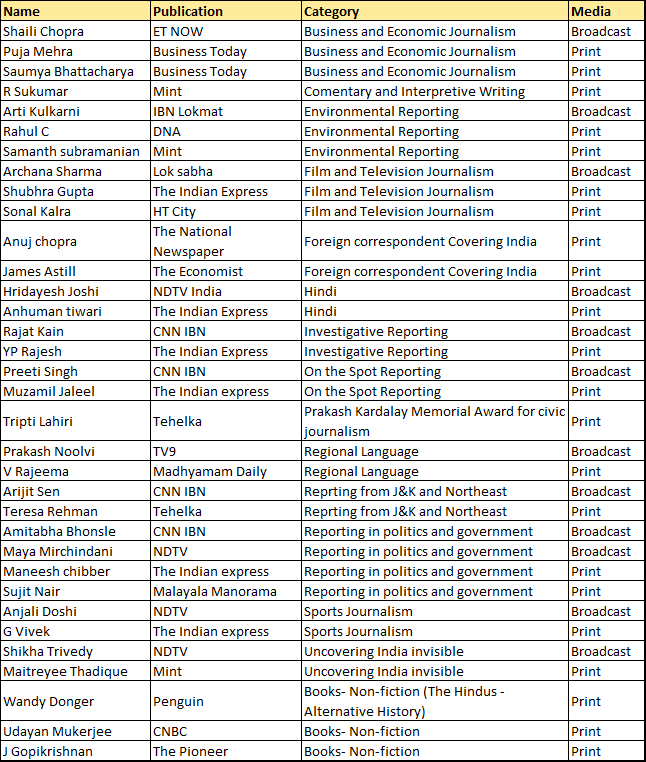
    The awardees for the year 2012 are as follows.


    Like every year, the award ceremony was followed by a panel discussion. This year, the subject based on the Press Council of India chairman Justice Markandey Katju’s observation: “The majority of media people are of poor intellectual level.”


    Justice Markandey Katju was present during the award ceremony and the discussion that followed. There were several politicians, journalists and academicians present, amongst the audience and the panel, who spoke on the topic and ensured that the discussion and debate was at a fever pitch with their war of words.


    Speaking on the issue, panelist Mr Digvijay Singh of Congress party said that there are black sheep in all works of life and the same holds true for the media as well, but to generalize and say that all of them have low intellectual level would be wrong. However, fellow politician and panel member Mr Sharad Yadav of JDU said that times have changed and with that the standards of journalism have fallen too, illustrating his argument by pointing towards the TV channels, who “invest too much in irrelevant news”. He also pointed at the issue of paid news which has tarnished the image of journalists and media houses alike. He said that the proliferation of media has caused the standards of news to fall.


    Furthermore, he said: “the media industry has to be accountable… If the Prime Minister of India is accountable for his deeds, so shall be the media.”


    Some panel members also raised the question whether it was important for journalists to be intellectually strong. According to some, journalism is of two kinds, hard news and opinion – and in the former, one does not need intellect, only moral integrity. LK Advani, who was the part of the audience said: “I don’t think that journalism has failed the democracy. However, there have been a few shortcomings off late. Yet, I will not say that they have low intellectual levels.”


    Digvijay Singh stated that intellect is required in the whole profession of journalism, be it opinion or reporting. However, he added that with the kind of expansion media has seen lately, it is possible that the training of young and budding journalists remains incomplete. He also advocated for accountability and self regulation in media.


    Union HRD minister Kapil Sibal agreed with Sibal: “Putting out information as soon as possible has become the need of the hour for those in visual media. At such times, news which needs to be evaluated is often not evaluated and is broadcasted without any checks. It is not the fault of the journalist, but that of the medium itself.”


    Pratap Bhanu Mehta, an academician, and a member of the panel said that when a state dictates terms as to what is to be broadcasted or not, it creates insecurity. He made his point when he censured Katju’s stand on Dev Anand’s demise, when he said that the news should not have been on the front page of all newspapers.


    Senior journalist and columnist Tavleen Singh engaged in a war of words with Katju when she questioned the credentials of judiciary. Katju evaded the question by asking her to “please confine yourself to the topic at hand… there will be other days for discussion on the judiciary,” but she persisted with her attacks on Katju and his authoritarian comments on media. She went on to say that PCI has to be more active in the future to regulate media, as judiciary is too incompetent to do so.


    Senior journalist Nalini Singh thought it important that journalists and media houses, especially the visual media, should introspect as to what kind of news stories they are doing. She said that usually only 5-6 big stories are followed on and so many news stories are ignored every day. Udayan Mukherjee of CNBC agreed: “A lot of our media are not up to the mark… and I don’t feel resentful of the idea that there is something wrong with the media.”


    When Shekhar Gupta of The Indian Express group was asked how he feels about visual media and the pace at which news is disseminated today he said: “Everybody with a camera is not a journalist, he is only a transmitter of raw unchecked data.” Editorial intimidation is very important and one has to ensure that the news published is factual, in public interest and of public interest.”


    The panel discussion was brought to an end by Mr Katju where he congratulated all the awardees.