Category: PRINT MEDIA

  • Dainik Bhaskar takes off in Bhagalpur, Bihar

    By A Correspondent


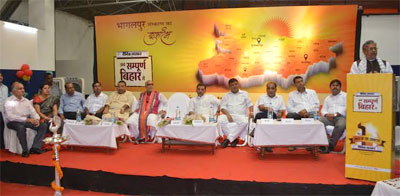
    Dainik Bhaskar, Divya Bhaskar and Divya Marathi announced the launch of Dainik Bhaskar’s new edition from Bhagalpur in Bihar. With this launch, DB Corp Ltd reinforces its presences in Bihar – a region which is of high strategic importance for the company where Dainik Bhaskar has already established a very strong brand equity and a leadership position through the launch of its edition in Patna in January 2014. Dainik Bhaskar now publishes six newspapers with 39 editions in 14 states across India.

     

    Over the next 20 days, Dainik Bhaskar is also set to launch two other main editions from Muzaffarpur and Gaya in August Beginning, with, in between launch of 7 district editions in Hajipur, Purnea, Biharsharif / Nalanda, Arrah, Chhapra, Samastipur and Darbhanga. This will complete Dainik Bhaskar’s full foray in Bihar.


    The Bhagalpur launch was implemented along a similar strategy as that of Patna driven by a well – strategized research and reader-centric survey that was also supported by an aggressive marketing and sales campaign which has once again proved its exceptional execution strength. A region with formidable peers, the Bhagalpur launch success was led by Dainik Bhaskar’s most differentiated content quality, its credibility and a highly un-biased approach as India’s leading media conglomerate.


    Commenting on the launch, Sudhir Agarwal, Managing Director, DB Corp Limited, “We are very encouraged with the overwhelming response to our launch in Bhagalpur. We have been studying the Bihar market for long and while we sensed and explored high market potential in Patna, we were also excited with the economic potential of Bhagalpur. Over the next few weeks we are set to complete our full roll-out in two other main editions and 7 district editions to accomplish our Bihar foray which will make a strong impact on our ability to provide a much deeper reach to advertisers and readers.”


    “Our growth strategy is well aligned to the exciting prospects we find in Bhagalpur where we could establish a leadership position and create a marked impact in terms of readership and circulation. We are very encouraged by the fact that even in a much demanding environment our readers across diverse categories in this region have received the product with great appreciation and confidence. Trust and integrity are uncompromising principles for us and we are fully committed to deliver a superlative product to our readers in Bhagalpur addressing their local news needs as well as emerge as a vehicle of choice for the State’s growth.”


  • DB Corp completes multiple edition roll-outs in Bihar

    By A Correspondent


    D B Corp (Dainik Bhaskar Group) has successfully completed its roll-out in Bihar. The publication launched the Muzaffarpur edition on August 8th and Gaya edition on August 4th alongside the simultaneous launch of 7 district editions in Hajipur, Purnea, Biharsharif / Nalanda, Arrah, Chhapra, Samastipur and Darbhanga.


    In Bihar, Dainik Bhaskar now has presence in Patna, Bhagalpur, Gaya and Muzaffarpur. With these launches, Dainik Bhaskar Group now publishes 6 newspapers with 61 editions in 14 states across India.


    A similar launch strategy was adopted for the Muzaffarpur and Gaya as followed in Bhagalpur and Patna. The success of both launches hinged on the intensive pre-launch personal contact campaign implemented to achieve target circulation that also directed the launch marketing strategies to create high-impact brand recall and visibility amongst local readers.


    For Muzaffarpur, a total of 165,643 commercial establishments and households in Muzaffarpur were contacted through the personal contact programme which was the first phase. This was critical in setting the momentum of the launch by understanding core insights of readership behavior, preferences, needs, while also highlighting the Dainik Bhaskar brand values and strengths and utilising the opportunity to build strong reader connect.


    Key inputs of the personal contact program in Muzaffarpur, have been distilled to create the Muzaffarpur edition of Dainik Bhaskar that addresses actual reader’s needs through issues they have identified as core and significant to the development of the local region and State. Some of these issues span urgent need to stem corruption, bring strict law and order control, better focus on hyper-local news and issues like consistent challenges of water-logging and growing traffic impediments, in addition to better coverage of national news and quality political analysis. The survey also revealed issues preferred by women readers who spend quality time reading the papers in the afternoon and weekends – with demand for better quality supplements covering parenting challenges, international news on education and overall well-being.


  • Sambad hosts cyclothon to highlight need for a healthy heart

    By A correspondent


    Leading Odia daily ‘Sambad’ played host to a cyclothon on Sunday ahead of the World Heart Day being observed on Tuesday (Sep 29).


    Participants from across various walks of life and age groups participated in the event held in Bhubaneswar along with hundreds of students of various schools and the ‘We Ride Bicycle Organisation’. The 12km distance was covered in about an hour. The cyclothon was held in association with Solid HD Cement.


    Speaking on the occasion, Chief Guest and State Health Minister Atanu Sabyasachi Nayak highlighted the need of a healthy heart. “It is better to be fit enough than being sick and a burden on someone else. One needs a healthy heart for a healthy mind and for a healthy heart, exercise is extremely important,” he said.


    While Managing Director of Eastern Media Monica Nayar Patnaik presented the welcome address, Executive Director Tanaya Patnaik presented the vote of thanks.


  • Apurva Purohit elevated to President – Jagran Group

    By A Correspondent


    Apurva Purohit

    Apurva Purohit, CEO of Radio City, which was acquired by Jagran Prakashan Ltd recently is joining the parent company as President – Jagran Group.


    In her new role she will be working with top management in overseeing the entire business operations and functioning of Midday, Inext, Jagran online and other print and non-print businesses besides Radio City and shall also participate in strategic decision making for the group. In addition, overseeing certain functional areas of the core business of Dainik Jagran shall also be part of scope of her work.


    Apurva brings with her 25 years of media experience ranging across partnering private equity players in building superior organizations and creating valuable businesses, and handling media businesses and brands. Prior to her entry into radio she has been part of the television space where she worked with BCCL & Zee Telefilms. She has launched successful TV brands like Zoom, India’s first lifestyle channel, fashioned the re-launch strategy for Zee TV and launched one of the largest media buying agencies in the country, Lodestar.


    Over the past 10 years she spectacularly led Radio City through a cycle of ‘Build-Grow-Consolidate’. Radio City, today, is a leader in many of the markets it operates in, and is among the top 25 Great Places to Work across industries.


    Commenting on this development Apurva said, “The Jagran group today stands at the threshold of a historic leap as it expands its footprint to access audiences across various demographics, geographies and distribution technologies. I am very happy to be part of this momentous journey.”


    Shailesh Gupta, Director JPL said “Apurva brings with her a wealth of experience in the media industry. She joins us at a time when the  Jagran group readies itself  to build further on its existing core businesses, and capitalize on the opportunities that are lie ahead in a media environment that’s being supercharged with digital, data and technology.”


  • Indian Express Group announces investments in emerging companies

    By A Correspondent


    The Indian Express Group has announced a undisclosed round of investments in emerging companies such as Envoged, PayMango India Private Limited, Mister Homecare Services Private Limited and Spiral Content Solutions Private Limited. The group believes that investing on growing platforms is a natural extension of its strategic business model.


    Anant Goenka, Director, The Indian Express (P) Limited, says: “Our first investment was in Chaldal – Bangladesh’s largest online grocery delivery company. Today, after tasting success in our own digital growth story, we at the Express are excited to be associated with such brilliant ideas and passionate entrepreneurs. These digital initiatives are promising and we believe they just need a little support to grow to their full potential.”


    Gurgaon-based startup PayMango was founded by two IIT Delhi graduates in June and has already raised upwards of Rs 1 crore. Founders Gajinder Singh & Ram Singla had earlier launched a couple of mobile and marketplace plays.


    “In the transformation of #DigitalIndia, The Indian Express is playing a pivotal role. The Indian Express through its quality coverage has become the most shared voice amongst the youth on various social networks. PayMango shares the same vision of Digital Empowerment of the Local Commerce by providing local stores an m-commerce platform to satisfy the demand of the consumers,” says Gajinder Singh, Founder & CEO PayMango.


    “For the country to reap benefits of internet we need a Yumist, Groffer or UrbanClap in each locality. That’s how PayMango is providing local commerce wings to fly,” adds Goenka.


    Mister Homecare Services Private Limited is a professional on-demand maintenance services organisation for consumers and businesses alike. “The Mr. Homecare family is very happy to have Indian Express on board as one of our investors. We look forward to engaging & working closely with the group as we look to build out a strong backend to service the aggregators in the on-demand home services space,” said Rushabh Vora Co- Founder & CEO.


    Brothers Rushabh Vora and Sahil Vora launched the on-demand Home Services Company catering initially to Mumbai, Pune and Bangalore. Mr. Homecare is going to expand its operations to Delhi and other markets in the country soon.


    Envoged is a “re-commerce” platform that allows owners of luxury goods like handbags, footwear and accessories to easily sell items that they no longer need. The platform takes care of collecting the items, consigning them, checking for authenticity, determining the ideal resale price and then finally helping sell them online.


    “Envoged makes luxury fashion affordable for the aspirational consumers in India. It is a pleasure to have The Indian Express Group invest in us given their reach and connect with a huge class of Indian population aspiring to own luxury in their closets. We’re excited to learn how they’ve achieved their exponential and sustained digital growth over the past few years,” says founder Anandita Singh.


    “India hasn’t even scratched the surface of the online luxury fashion market. We’re impressed with the passion and focus that this very young team brings to the table,” says Goenka.


    Spiral Content Solutions Private Limited is a content marketplace that curates Indian and international content and makes it available for brands to use on social media and other digital platforms.


    Rajan Srinivasan, Founder & CEO, said he was very excited about the strategic investment by The Indian Express Group. “Our goal is to build tools and platforms to help brands become publishers. This relationship adds tremendous heft to us as we power ahead to build out a content marketplace of the highest quality,” he said.


  • Mumbai edition of The Hindu takes off

    By A Correspondent


    The launch of the Mumbai edition of The Hindu was announced by Kasturi & Sons Limited on November 28, 2015. The Mumbai edition will add to 40 editions of The Hindu that are already published from 17 major Indian cities across India.


    Announcing the edition, The Hindu Editor Dr. Malini Parthasarathy said: “We realise our core brand strength is the credibility and integrity of our reporting. This brings authenticity to our perspective. At the same time, we acknowledge Mumbai’s great transformation into an upwardly rising global city. Our edition has eight pages uniquely catering to Mumbai. We hope to capture both the buoyant and the poignant stories emanating from here.”


    The concept of the Mumbai edition is unique, incorporating special pages on each aspect of India’s ‘Maximum city’, as the financial and corporate headquarters of the country, as well as a film and fashion hub. The Mumbai edition marks many firsts for The Hindu, which is credited with breaking some of India’s biggest news stories, and at the same time its in-depth coverage of developments and issues otherwise ignored in the mainstream press. At 137 years, The Hindu is one of India’s oldest newspapers, with a net paid daily circulation approaching 1.5 million copies.


  • ‘This is the best time for innovations’


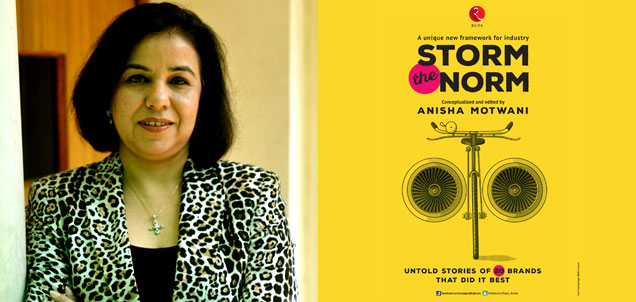
    Drawing from her rich experience with brands in India, marketing consultant Anisha Motwani has written and edited a book of 20 stories of brands that have been successes in more ways than one.  With a foreword by insight specialist Santosh Desai and an afterword by innovation specialist Ranjan Malik, Anisha Motwani speaks to Pradyuman Maheshwari as ‘Storm the Norm’ makes its way to leading bookstores and e-commerce sites. Read on…


    Your book cover says that it carries the ‘untold stories of 20 brands that did it best’. Many of these stories, or case studies, are known in the industry; some even discussed in B-schools. So how are these ‘untold’ stories?

    These are known brands [but with] partially-known stories and some completely untold details. The brief to the business owners — and my subsequent interactions with them — led to certain revelations that you won’t find in whatever has been shared till now. The stories are as much about strategic manoeuvres as they are about human endeavour: Stories about ordinary people pursuing extraordinary dreams and achieving them. It has details of not just what they did, but also why and how.


    We have 20 stories in the book… any brands that you would’ve liked to look at, but weren’t able to?

    These 20 stories are the final set that went into publishing. I did also want to look at brands like BookMyShow, Himalaya and Maggi.


    Having studied the 20 brands and various more while shortlisting these, would you say there’s anything common to all of them and their success stories?

    After having written these stories, Ranjan Malik and I decided to take a perspective-building step back and noticed something really interesting. There was a pattern in the way these brands had gone about ‘storming the norms’ of their respective industries.  So if there’s one truth that these success stories prove beyond doubt, it is that industry ‘storms’ aren’t purely accidental. They can be made to happen by design and, perhaps, at will. There is a method to the magic.


    While researching the success stories, we discovered a factor that economists have known for long but businesses don’t: The issue of Total Surplus. One big secret behind most business successes is the stormer’s ability to spot the invisible, sub-optimal in the industry, and conceive a breakthrough that unlocks new total surplus.


    Tell us more about the ‘unique new framework for the industry’ that your book promises…

    Most organisations just go from one project to the next, or are too busy celebrating their success to pause and look at what lead to that success. We’ve did just that, across 20 brands. And hindsight offers some amazing insights. We’ve tried to decode the method in retrospect, and to help organisations apply it by design in their most high-challenge projects. We have outlined a five-stage methodology called the Storm the Norm Framework.


    Clearly innovation and thinking out-of-the-box is something everyone wants to do, but is it easier said than done?

    This is the best time for innovation. We will see more innovations in the next decade than we did in the last century. And there are two reasons for it.


    First, we have hindsight so we now know what has helped organisations succeed with innovation in the past. Thanks to these learnings, the strike rate of innovation in the future will be much better than it has ever been in the past. Our reason for developing the Storm the Norm Framework was just that, to develop a methodology after studying different kinds of organisations: legacy, challenger and entrepreneur


    Second, every sector has evolved well and has developed amazing technologies. There is enough cross-industry inspiration available. Today you simply have to imagine a fantastic scenario, and someone somewhere has already cracked the solutions needed to realise it. You often only need to create creative combinations. Organisations often don’t look beyond their own industries. Our aim with this book is to trigger cross-industry learnings and inspiration.


    Do you think global giants find it tougher to be nimble and adapt to the times because they have to follow a certain way of doing things compared to homegrown players who are less rigid?

    Both kinds of organisations have their own strengths and their own ways of succeeding with innovation. Constraints aren’t always bad; they force you to unlock new value within the defined boundaries. We have included both kinds of organisations in the book. Every organisation must find its own unique way. That’s why this book – to get a more nuanced understanding of what stormers do differently, and initiate your own storm the norm strategy.


    If you had to identify one brand (from among the 20) that has achieved more than the others, which one would that be?

    Each brand in the book has had its unique context and unique challenges. Each one of them has been amazing in its own way. They achieved the extraordinary and ended up surprising, not just the world but their own selves too. I can’t pick just one.


    This interview first appeared in dna of brands on January 18, 2016


    The Story of Success


    Extracts from ‘Storm the Norm’, a new book that recounts the ‘untold’ stories of 20 leading brands


    By Anisha Motwani


    A diverse assortment of stories that give insight into what kind of levers can be used to create a winner brand. Take for example chocolate maker and market leader, Cadbury. Everyone has savoured the taste of Cadbury Dairy Milk, and nearly every marketer worth his/her salt would be aware of the brand’s successful integration into the traditional-sweet-eating habit of Indians. But what strategies and actions went into achieving this? The Cadbury story documents how it all began with a big shift in thinking about business and growth. It is a lesson at many levels: a lesson on how a large and potent target audience can slowly become a roadblock for future business; a reminder that the path to growth need not always be through growing market share; a story of how it is possible for a foreign brand to become part of the cultural fabric without localizing the product too much. Equally the story showcases the magic that ensued when the brand adapted itself and created new codes that fitted more seamlessly with category and culture.


    Let’s change gears to a challenger brand now. When you think of great products, bathing soap is hardly the first thing that comes to mind. However, that is exactly what the Indian Tobacco Company (ITC) aimed to do, when it decided to penetrate the category with Fiama Di Wills. A really late entrant into one of the oldest categories in the country, the brand was clear that its foremost intent was to challenge the typical soap and create a sensational new product–one that was differentiated not merely by form, colour or fragrance, but also a concoction of ingredients and technology that Indians had never witnessed before. The Fiama di Wills story illustrates how some companies are clear that first it is critical to create a hero product. The bells and whistles and propositions and campaigns can come much later. In its endeavour to deliver a new, unmatched experience to consumers, there were so many stumbling blocks that the Fiama team had to face, so many occasions when it could have given up and created a me-too product and just used the ITC muscle to push sales. But it didn’t. It persisted every time it was tested, to ultimately emerge with a winner.


    Moving to another league of brands altogether–the young entrepreneurial businesses. While there are plenty of such success stories in India today, I have selected a few that have made a mark in more ways than one. These are businesses whose success is not simply measured in terms of business valuation or the fact that they are media darlings, but those whose start-to-date journeys hold vital lessons in doing business for everyone. For instance, Make My Trip. This is an extraordinary story of pursuing the dream of forever changing the way Indians researched, planned and booked their travel. From the days where vacation planning was a tedious project and life without travel agents and long ticketing queues unthinkable, to now, when online travel planning and purchasing is common practice, this brand has had a pioneering role in shaping the change. By riding emerging trends, taking sensible decisions when a large bulk of the market was not ready for their dream and fostering deep relationships with allied partners, Deep Kalra and his team strategised their way to success. Like a great movie, the journey had several twists and turns and a few occasions when the founder was tempted to sell or shut shop but chose to keep faith instead. What adds to the excitement is that the Make My Trip story is packed with not one or two but so many innovations across product offerings, service standards, technology, marketing and operations that one is constantly looking out for what next they did differently!


    Such remarkable lessons continue across other entrepreneurial brands as well. What these kinds of brands do best is to open up refreshing ways of thinking and going about their business, so they naturally offer many valuable lessons along the way. Like PVR, where Ajay Bijli turned the whole expectation from cinema theatre upside down. Until the 1990s, cinema theatres were mostly just a destination, and movies were the real deal. The theatre itself was just a venue for stories to unfold. But he changed all that. Not only did he introduce the country to the multiplex, he created a new era in movie watching, where choice, comfort, luxury and entertainment all came together to take the movie-goer’s experience to a new high.


    There are several more examples of such category transformation. Radio Mirchi, for instance, is a story of a turnaround of the radio medium itself; of how a boring medium from which expectations had remained unchanged for decades, turned cool and irreverent; and how entertainment found a new source. It is also a great lesson on how you can win many fans by experimenting all the way through.


    Many of you may not know this, but Raymond’s ‘The Complete Man’ broke the conventions of fashion advertising in its time. Then there is Honda two wheelers–a fabulous story of storming the norm in scooters and making Activa a resounding success, and then of how it carried with it its winning strategies post its joint venture with Hero coming to an end. On a completely different note is the story of Sprite, a brand built on communication, on strongly marrying youth insights with product truth, of turning an absolutely niche lime category into a mass brand.


    Similarly, there are Ford Ecosport, Axis Bank, Kissan, MTR Foods, Saffola, Real Juices, Sensodyne, Tata Tea and Mahindra XUV500. Each of their growth stories provides insights into creating a storm in their respective categories and achieving outstanding results. Some successes are based on distribution, some on product, some on communication, while others are based on core business models. There are stories of reinvention, of strategies on market expansion, and some even of using weaker siblings in the brand portfolio to fortify overall business. 


    Published with the permission of the Author/Editor

    Storm the Norm: Untold Stories of 20 Brands that Did it Best

    Written and Edited By Anisha Motwani

    Hardcover, 320 pages

    Published by Rupa Publications India


  • Sandeep Khosla joins Mid-day as CEO

    By A Correspondent


    Sandeep Khosla has joined as CEO, Mid-day. Sandeep brings with him over 28 years of media industry experience, across various mandates at Network 18 & the Indian Express Group. Apart from being acclaimed for his leadership role in the business publications division, Sandeep is also widely acknowledged for his management skills.


    In his new role, he will report into Apurva Purohit – President, Jagran Group & Shailesh Gupta – Director, Jagran Group.


    Confirming the news, Apurva Purohit, President Jagran Group announced, “With Sandeep joining the Mid-day team, I am confident that we have found the right person to lead the company. He not only brings with him a vast experience from the publishing background but also his impeccable leadership qualities. His proven abilities to strategize, drive innovation & growth will certainly deliver results & take the business a notch higher.”


    Elaborating further, Shailesh Gupta, Director Jagran Group citied, “Sandeep brings with him an outstanding ability to work with highly motivated teams and his understanding about the print media will definitely help Mid-Day reach newer heights. Carrying the wealth of experience to his new role we are positive that, his acumen and proficiency about the business and the industry, will definitely add value to our Jagran Group.”


    Commenting further, Sandeep Khosla added, “I am delighted at the opportunity of being a part of an extremely exciting brand which in so many ways defines Mumbai. Have been an ardent admirer of Mid-Day right from its launch. I am sure the talented team at Mid-day will redefine publishing with the guidance & backing of the powerful Jagran Group. I look forward to contributing to the group’s vision of making Mid-Day the most admired brand within the Indian media industry.”


  • Sakal & Lokmat lock horns on being #1 in Pune

    By A Correspondent


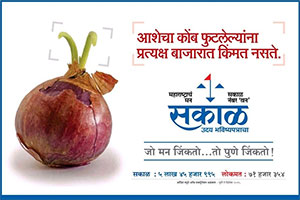
    The Lokmat billboard creative and right (circled): the Page 1 news item in Lokmat

    Leading newspapers Lokmat and Sakal have taken their battle to the streets or homes or wherever their topselling dailies are read.

    Lokmat is the numero uno Marathi daily in Maharashtra and Sakal, the undisputed #1 in the all-important business and education hub of Pune. However, over the years, Sakal has spread its tentacles across Maharashtra and Lokmat has been growing its circulation in Pune.

    In the last decade-odd, the marketplace was impacted by the entry of the Dainik Bhaskar group-owned Divya Marathi, but the competition between the traditional rivals stays.

    The current war of words started with Lokmat taking over a hundred-odd billboards in Pune proclaiming that it’s the #1. And on Thursday, Sakal responded with a front-page lead report pooh-poohing Lokmat’s claim. The headline is aggressive and uses the Lokmat name in it (see image).


    Sakal hits back at Lokmat
    The creative of an ad in Friday's Sakal

    So what’s the truth of the matter? While Sakal quotes Audit Bureau of Circulations numbers, there are no recent IRS numbers to support the publication’s numbers. ABC numbers may be quoted by publications, but they aren’t recognised as standard benchmarks (or ‘currency’) by media agencies and advertisers. Meanwhile, Lokmat’s claim is based on research work done by Hansa Research. Now, while this study has been commissioned by the Lokmat group and hence may not be considered credible aver independent industry observers, it may be remembered that Hansa Research bears a stamp of quality and was firm entrusted with the IRS for many years, until the unified readership survey contract was awarded to Nielsen in 2012.

    According to an industry observer, while Sakal has been facing some heat from competition in recent years, it is still recognised as the leader in the Pune market and attracts maximum advertising. “It should’ve just ignored the Lokmat claims rather than giving competition free publicity on the front-page.”  In fact a report on the issue in the Sakal group’s English daily SakalTimes notes: “For Sakal, there is no need to take a note of the efforts made by Lokmat to falsely claim highest circulation.”

    Rugwed Deshpande

    Said Rugwed Deshpande, Director of Setu Advertising, a Pune-based creative and media agency: “When it comes to numbers, Pune thinks emotionally. It’s always Data vs Emotions for decision-making. Sakal enjoys great brand loyalty and affection from readers where as Lokmat has been trying their best to make its own space. Sakal has been far more active with their offline events and people connect initiatives.” And what is the view from advertisers, we asked Deshpande. “As far as local advertisers are concerned, they don’t believe in numbers be it circulation or readership. Most of them rely on their past experiences and the response that these publications have been delivering.” So will the war of words between the Big Two have an impact? “”The current campaign war doesn’t make any difference to the traditional advertisers. Nationally, numbers are more reliable source of information hence the impact of these research numbers would be probably different. Authenticity of official sources will ignite a bigger debate. As a Punekar, we don’t enjoy this war and believe in substance and content. No.1 is someone who understands us and speaks our language.”

    Newspapers, especially in traditional cities like Pune, have an emotional connect with citizens so it’s Advantage Sakal in Pune for now. Lokmat’s  tactic of taking on the leader met with much success in Kolhapur in South West Maharashtra where it took on Pudhari, the leading daily in the city. While Pudhari continues to be #1, it Lokmat has established itself in public as the #2.

    Meanwhile, on Friday (today), Lokmat has frontpaged a short news item on being #1 on the back of the Hansa Research findings.  Sakal too has carried an ad mocking at Lokmat’s claim and declaring that it is the #1 as per ABC data (on Page 5).

  • DNA gets a makeover in Mumbai; while Delhi gets a new edition

    By A Correspondent


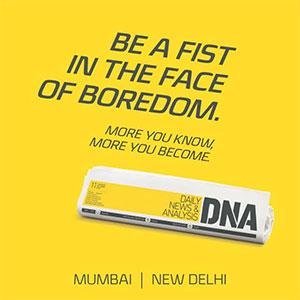
    Leading English daily DNA unveiled a new brand identity in Mumbai and launched in New Delhi as well on the occasion of Dassera.


    The 32-page edition includes four pages of DNA of Money as a separate pull-out. Apart from cutting edge reporting, DNA will service a long tail of interests ranging from environment to education, faith to faunatics aka animals (their rights and yours), all the way up to what’s trending socially and much more.


    Rohit Gandhi, Editor-in-Chief of DNA, said, “Most modern news formats are nimble and are continuously upgrading themselves to remain relevant. It is unfortunate that newspapers choose to remain in slumber inspite of rapid development and tectonic shifts in all spheres of life. We have built an integrated newsroom to deliver news content across multiple formats with a focus on digital platforms across web, mobile and social. Our news platform promises that we as your news provider will never dilute our honesty in delivering unbiased and uncompromised coverage of any story. Also, our journalists are not sold to interest groups. That’s a promise.”


    Added Shreyasi Goenka, Content Advisor – DNA: “The world might be changing, but the news you get every morning is not. There is a clear opportunity to create a vibrant and premium newspaper that resonates with the ambition and the mindset of the metro-urbanite. It was about time to be a fist in the face of boredom and as one of India’s youngest newspaper brands, we readily accepted the challenge. Thus, the clutter-busting approach of adopting an interest-based segmentation as opposed to the traditional geography-based segmentation.”


    The launch in New Delhi and restaging in Mumbai has been amplified with a 360-degree marketing campaign. Meanwhile, the DNA editions in Ahmedabad and Jaipur which are franchised to the Dainik Bhaskar group carry the old identity of the paper, though a large part of the content is the same as the Delhi and Mumbai editions.


  • Dainik Bhaskar emerges second largest digital media group in India

    By A Correspondent


    DB Corp Limited (DBCL) announced that according to ComScoreratings of November 2016, DB Digital is now the second largest digital media group in India. Bhaskar Group sites at the second place, dominates the position with 1.02 billion page views which stands with a wide lead of around three times to the media house at the third place.


    Across all digital properties demonstrating steady growth, unique visitors has risen by 124 per cent YOY to 33.4 million in November 2016 from 14.9 million in November 2015 and page views grew by 228per centYOY to 1.02 billion for the month of November 2016 from 312 million in November 2015. DB Digital’s improving operational performance driven by various advertising monetisation efforts, hyper-local news and content coverage and exciting audience activation are also translating into better revenue growth for the business.


    Commenting on the launch, Pawan Agarwal, Deputy Managing Director, D B Corp Ltd said “There could not have been a better start to the new year. DB Digital’s acknowledgement as the second largest digital group is a reflection of our total commitment to our vision to create the most preferred destination for content by leveraging the digital revolution taking place in India. Our strategy has centred on ensuring that our digital content and all our platforms are consistently evolving to ensure stronger audience engagement through news coverage across over 800 cities. We are also working hard to create efficient monetization models to boost our profitability structures. Our mobile focus since the past two years has yielded very encouraging results and we believe that through DB Digital’s differentiated WAP and web enabled properties, there’s tremendous potential to be capitalised, considering that the digital market in India is still at a nascent stage.”


  • India Today Group revamps flagship mag India Today

    By A Correspondent


    India Today Group is re-launching its 41-year-old flagship English news magazine India Today in a completely new avatar.


    The new changes – effective the issue that will be out today (Jan 27) – will enhance the magazine’s core values of clarity, credibility and relevance and provide insights, knowledge and perspectives on a range of contemporary issues to its readers, notes a communique.


    Commenting on the reinvention of the magazine, Aroon Purie, Chairman and Editor-in-Chief, India Today Group, said, “We live in a time where we are flooded with news 24×7 about anyone, anywhere, anytime. But it remains important to know what is significant and what is the truth. In all the noise that surrounds us, truth has become an endangered species. India Today magazine has always striven to get you the truth without any agenda, and an understanding of contemporary issues that really matters.”