Category: PRINT MEDIA

  • DDB Mudra West launches new campaign for Femina

    By A Correspondent


    DDB Mudra West launched Femina’s new positioning and tagline “Be Unstoppable” through a unique and disruptive marketing approach. First in a series of initiatives, Femina unveiled their new positioning and tagline through a powerful and provocative cover  for their July issue titled ‘My Body, My Rules’, with cover girl Huma Qureshi.


    The objective was to engage with the millennial woman of today while driving connect with brand Femina.


    The creative process followed was to choose a unique and disruptive marketing approach by creating interventions that bring alive the ‘Unstoppable Mantra’ and drive engagement. The cover which is the brand’s most valuable space was used as a platform to communicate “Be Unstoppable”.


    The first issue ‘My Body, My Rules’ exemplified the brand positioning, saluting women who’ve chosen to go beyond conventions and refuse to be boxed into someone else’s definition of perfection. Using a striking visual of Huma Qureshi juxtaposed with the ‘ideal’ body form of a mannequin the issue makes a powerful point about body image. The issue campaign encouraged women to embrace their bodies – perfections and imperfections alike.


    A differentiated approach to traditional brand campaigns, Femina intends to roll out a series of interventions throughout the year to bring alive its ‘unstoppable’ message.


    Going forward, Femina will also be playing up the brand thought of ‘Be Unstoppable’ through a thematic campaign across Print and Digital mediums as well as B2B ads. The thematic campaign brings alive the brands unstoppable mantra as poster ads for the new woman of today. The ads cover a range of topics like career, relationships, beauty, fashion etc.

     

    Tarun Rai

    Elaborating on how Femina has changed the game in the last five decades, Tarun Rai, CEO, Worldwide Media says, “Over the last five decades Femina itself has been unstoppable. It has always been progressive, always championed the modern Indian woman, always inspired her to achieve more and celebrated her successes. And Femina has succeeded and grown in stature because it has continuously changed itself and stayed relevant to its readers. In a sense Femina epitomises the journey of the modern Indian woman in the last five decades. Our new tag line – Be Unstoppable – captures Femina’s belief that modern Indian women have the confidence today to live their lives on their terms and achieve more.”
     

  • Jagran unveils ‘The Cultural Legacy of Lucknow’

    By A Correspondent


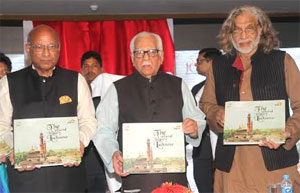
    Dainik Jagran released its Coffee Table Book titled ‘The Cultural Legacy of Lucknow’. The book was unveiled by honourable Governor of UP, Shri Ram Naik at a gala function in Lucknow last week. The launch function took place at the vintage Clark Awadh hotel of the capital and was replete with prominent bureaucrats and top Jagran Group brass, including the CMD Shri Mahendra Mohan Gupta.
     

    15th in the line of JCTBs, ‘The Cultural Legacy of Lucknow’ in the line of JCTB series, showcases exclusive pictorial details of the significant monuments, art & craft, tradition and music, which are the cultural heritage of the city. This coffee table book documents contemporary Lucknow, which is known for its cosmopolitan lifestyle, modern infrastructure, shopping and tourist destinations that embellish the city. Well researched narratives in the book illuminate the historical and contemporary perspectives that speak volumes about the understandable exclusivity of the city.


    Shri Mahendra Mohan Gupta said, “Jagran Prakashan Ltd. is publishing coffee table books for last six years. I am proud that time and again we come up with such illuminating books on different genres.”


    Editor and COO of i-Next & Project Head of Jagran Coffee Table Book – Alok Sanwal said, “Jagran Prakashan Ltd wishes to contribute to bringing alive the glory of the city of Nawabs to the world through this unique Coffee Table Book, which unfurls the unsung glory of this wonderful city. I thank Sharmishtha Sharma, author, and the entire research, editorial and marketing teams for their outstanding and extensive support throughout.”


    Priced at Rs. 1500, this 210-page book is available on Flipkart and Infibeam portal for sale.


  • dna to publish weekly window to ad & marketing business with ‘dna of brands’

    By A Correspondent


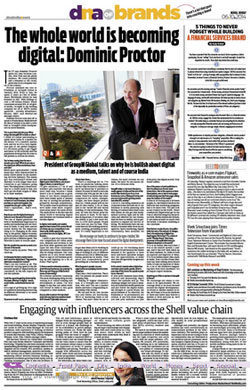
    Leading English daily dna has announced the launch of a weekly window to advertising, media and marketing. The special section – to be called dna of brands — will start publication with effect from Monday, October 6 and will be published on all Mondays thereafter.


     

    ‘dna of brands’ will start as a one-pager, but will expand to multiple offerings, including a significant presence in the digital media.This new page serves as a perfect platform for the industry big wigs to share insights , learnings, forecast trends, discuss new launches and interact. dna of brands provides an interesting outlet for the makers of Brands and the entire fraternity to interact with readers.dna has appointed Pradyuman Maheshwari as consulting editor for this special page – dna of brands​ (* See Disclosure).​


    ​”dna is the only news daily that has been covering the advertising and marketing fraternity since its launch in July 2005.  There is much reader interest in these stories, and it’s good to have news and views on the business of brands move to the mainstream media,” said Mr Maheshwari.​


    ​* Disclosure​: Pradyuman Maheshwari is Editor-in-Chief and CEO, MxMIndia.


  • mid-day bids goodbye to Pune edition

    By Sandeep Puraname


    Mumbai daily mid-day has stopped publishing from Pune. Friday, November 28 was the last day when the Pune edition of the daily was printed. A front-page announcement signed by ‘Team mid-day’ reasoned: “It was clear that our earnings were not quite matching up to the investments we have made, and the costs we put in every day to bring you a top-quality product.”


    This isn’t the first time mid-day has tried an edition in the city that’s grown beyond being a pensioner’s paradise. In the 1990s too, mid-day (then written: Mid-Day) had commenced and suspended an edition in the two-wheeler town.


    The front-page announcement in Mid-Day Pune announcing the edition's closure


    The announcement added: “Today is the final issue of mid-day, and it is with a heavy heart that we bid farewell. We hope that Pune will continue to remain as vibrant as it is right now, and grow to be a city to reckon with internationally. Actually, we know it will.”


    The note ends with a “Until we meet again” leaving behind a glimmer of hope that the paper may return if the good times are back.


    mid-day’s exit happens a few months after dna also bid goodbye to the city. The Jagran Prakashan Limited-owned mid-day had shuttered its New Delhi and Bengaluru editions in December 2011.


    When asked why newspapers haven’t been successful in the city, a senior media planner requesting anonymity said: “It’s not that there’s no scope for a new English daily, but, yes, there is a huge entry barrier with The Times of India ruling in the city. Sakal of course dominates the market, but that’s in the Marathi space.”


    Meanwhile, it is rumoured that Lokmat may consider entering the city with its English daily Lokmat Times now that the market is less cluttered. For the growing number of media professionals in the city, and a large number passing out from the scores of media and business schools in and around the city, this could well be good news.


  • Ogilvy to handle creative communications for Brand Bhaskar

    By A Correspondent


    Dainik Bhaskar has awarded Ogilvy the creative duties for its brand Dainik Bhaskar. With a single state presence till the year 1997, the brand has aggressively expanded its footprint across 14 states in India since then; the most recent launch being in the state of Bihar in January 2014. Today, Brand Bhaskar is a leader in print readership operating in the highest growth markets in India, being an integral part of daily lives of 19.8 million readers.


    As the new partner, the creative agency will be responsible for all creative communications which will be rolled out under the brand. Ogilvy will focus significantly on building strategic pillars for the brand’s communication and articulating it’s positioning to Brand Bhaskar’s relevant audiences across the country.


    Girish Agarwal

    On aligning with Ogilvy as the brand’s creative partner, Girish Agarwal, Director, Dainik Bhaskar commented “Brand Bhaskar has come a long way and we constantly ask ourselves ‘what next and where do we take the organisation and the brand’. We welcome Ogilvy on board as they bring with them their expertise and strong repute of building sustainable brands. The Bhaskar way of journalism has always believed in ‘kendra  mein pathak – putting the reader first’ and is highly trusted for its unbiased, objective coverage. As our partners the Ogilvy team plays an immensely significant role in integrating our values and philosophy in their creative approach that will resonate with our audiences in a way that they continue to take pride in associating with the Bhaskar Brand.”


  • Radio City is now a Jagran company


    By Sandeep Puraname


    It was an Ispat group and  Star India-funded station. And then private equity player India Value Fund Advisors bought a controlling stake in radio station network Radio City. But PE companies normally do not have much of a long-term emotional tuning with their investments. So, after ensuring that Radio City delivers with some success, they’ve sold the station and allied ventures to Jagran Prakashan.


    Subject to government approvals, Radio City will be a Jagran Prakash Limited subsidiary. Music Broadcast Private Limtied (MBPL), the company that owns Radio City, will be run independently by its board, and for the now, it’s business as usual.  More importantly, Apurva Purohit will stay as CEO.


    With reason: Radio City has demonstrated good revenue growth combined with a strong operating performance, current EBITDA margins of 28% approx will positively impact JPL’s operating margins, according to a communiqué.


    Radio City is a leader in the FM radio sector with a presence in 14 of the top 16 advertising revenue generating markets of the country. It has 20 stations across seven states. MBPL’s FY14 revenues were Rs 161.8 crore and the H1-FY15 (unaudited) revenues exhibit healthy growth of 28% in ad revenues.


    Although it’s being touted as JPL’s entry into radio, the fact is that the promoters of the Jagran group made an entry into radio with stations in Tier 2 and Tier 3 India way back in 2007. Radio Mantra has a presence in eight markets, and will be merged into MBPL eventually, in fact in this financial year itself.


    The acquisition, which happened through an all-cash deal, is expected to provide strong return on JPL’s invested capital. The foray into the high growth radio media segment which is increasing its share of advertising expenditures in India. This ensures that save news television, a sector it exited after it sold most of its stake to Network 18 some years back, Jagran Prakashan Limited has an exposure to all media domains.  According to a senior executive, there are no plans to invest in News TV, as it continues to feel that it is an unprofitable investement.


    On Tuesday, the board of Jagran Prakashan Limited (JPL) approved the entry of the company into the radio industry via acquisition of Music Broadcast Private Limited (MBPL). The acquisition is subject to regulatory approvals, including from Ministry of Information and Broadcasting, and execution of binding agreements. As part of acquisition the company is acquiring MBPL’s holding company and fellow subsidiary that provides activations.


    Said Mahendra Mohan Gupta, CMD, Jagran Prakashan Limited: “The radio business has witnessed significant growth in recent past and is expected to grow at more that 18% CAGR in the coming years, per KPMG FICCI, This deal will catapult JPL into a leadership position in the radio industry and enable the company to benefit from the rapid growth in radio advertising. Acquisition of Radio City further consolidates our position as India’s leading Media and Communication Group. The radio business will complement our print, outdoor, activation and digital businesses and enable deeper inroads with advertisers both at national and local level.”


    Talking on the announcement, Apurva Purohit – CEO, Radio City 91.1 FM said, “JThis augurs well for all stakeholders. Both Jagran and Radio City have been pioneers and leaders in their respective space and this partnership will help augment the growth aspirations of the brand. We look forward to exciting times ahead.”


    As part of acquisition the company is acquiring MBPL’s holding company and fellow subsidiary that provides activations. The acquisition will primarily be funded from internal accruals and investments. This acquisition will not impair the company’s ability to distribute dividends.


  • Shailesh Amonkar is now COO at Sakal

    By A Correspondent


    Shailesh Amonkar

    Shailesh Amonkar, Chief Marketing Officer, Sakal Media Group has been elevated to the role of Chief Operating Officer – New Businesses.


    He will report to Abhijit Pawar, Managing Director of the group. This is effective April 1, 2015. For the present, Mr Amonkar will help in the transition to Jwalant Swaroop who took charge as Chief Executive Officer of the media business on January 1. As CEO, Mr Swaroop is overseeing four functions in the company – editorial, sales, marketing and circulation. As was reported, Mr Swaroop will report to Mr Pawar and work closely with Bobby Nimbalkar, Head Strategic Council of Sakal Media.


  • What our columnists say on Bezos’ buy of WaPo


    Ranjona Banerji: Wake up and smell the coffee! What’s Bezos’s trip?
     

    By Ranjona Banerji


    There has been both astonishment and hand-wringing over Jeff Bezos’s purchase of the Washington Post for $250 million. The venerable newspaper – most famous to the rest of the world for breaking the Watergate story – has belonged to the same family for some years and Katharine Graham was a formidable name in the publishing industry. Now the newspaper belongs to the founder of Amazon, the internet bookseller that revolutionised online buying and the selling of books.


    The jokes have been many – Bezos added Washington Post to his shopping cart by mistake, his wife asked him to bring him a newspaper so he just bought the whole company and more. But below the humour is some sort of fear that someone from this dreaded new internet world has infringed into some respected old heritage property. The intentions may not be evil says this thinking but the outcome certainly will be.


    Well, wake up and smell the coffee. The internet is everywhere and like every human invention it can be good and it can be bad. As far as print journalism is concerned, the internet is a better friend than television which really hurt its revenues and its reach. Reserve falling into the depths of depression over paper being replaced by electronic tablets for about 10 minutes in the morning and use the rest of your free minutes to just consider how much time people today spend online, whether on phones, tablets or computers.


    Many media houses which are not owned by internet whizzes have destroyed their intellectual properties and ruined their staff all by themselves. The New York Times for instance sold the Boston Globe – which it acquired some 20 years ago – to the owner of an American baseball team for $ 70 million, less than what they bought it for. Is that more or less frightening than Bezos buying the Washington Post?


    India is full of all kinds of cross-media ownership with industrial houses with vested interests popping up all over the place. No one spends sleepless nights over that. And for all we know, once the handwringing has stopped, Washington Post might be able to use Amazon’s internet experience to mark out a path for all newspapers to follow in this digital world.


    By Anil Thakraney
     

    Why on earth would a tech expert, an internet king, a man with a scientific bent of mind (he dreams of building amusement parks and hotels in the space!) buy himself an old world thingy? That too a newspaper, a product category that’s clearly on a brisk walk into the sunset, at least in the developed world. It’s quite intriguing.


    There can be two possibilities: One, Jeff Bezos has hot new tricks up his sleeve for the Washington Post. Perhaps he has killer ideas on how to change the fortunes of a brand that’s on the decline, perhaps he’ll show other newspaper barons how an akbaar should be run profitably in the age of the internet. Perhaps a bored Bezos has taken on a brand new challenge for himself. If this is the case, good luck to him. It’s quite possible with his visionary ideas and innovative thinking, Bezos will be able to reverse the newspaper clock. If indeed this is the plan, all eyes will be on the Washington Post from here on.


    Two, Bezos has done what many industrialists with extra cash do across the world, most certainly in India. Which is to buy a media brand with a simple agenda: To promote other products from the enterprise and more importantly, use it as a lever in negotiations with those in power. If this is the case, it will be a real pity. As a staffer of the Washington Post, I would carry my resignation letter typed and ready in my left hip pocket. Since the tycoon has bought the newspaper with his own ‘pocket money’ (Amazon has nothing to do with it), I am afraid the second possibility sounds very real.


    However, to be fair to the man, we will have to wait and watch where the Washington Post goes from here. It will either be packed with advertorials and plugs and biased reports. Or we’ll read about another Watergate scandal. Or Bezos will create a brand new way of making a daily newspaper. Any which way, interesting times ahead.


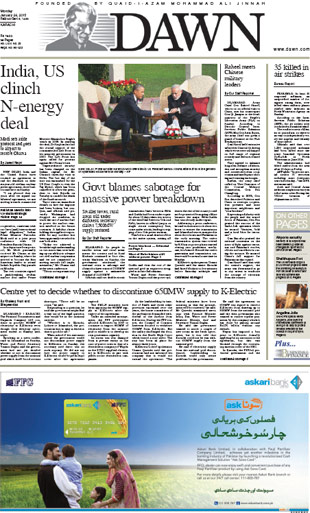
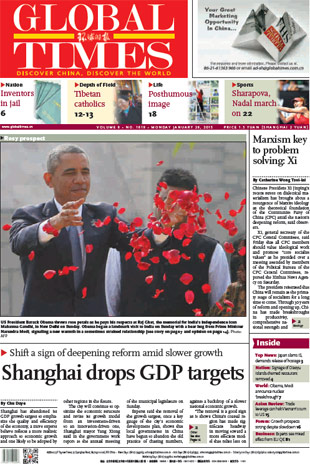
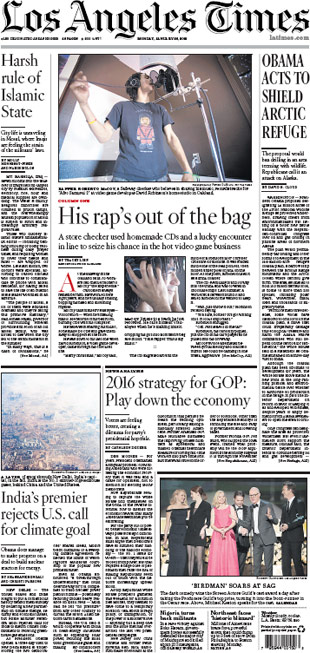
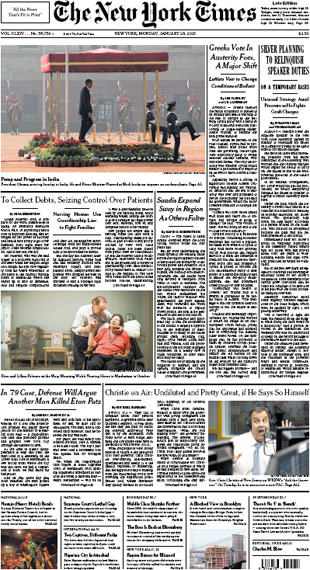
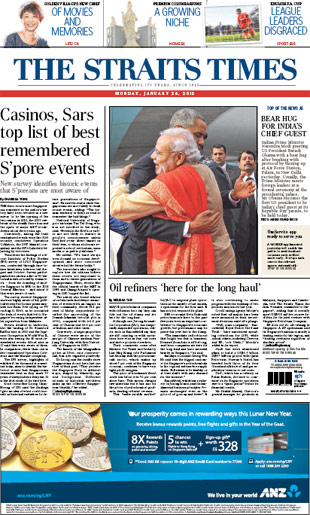
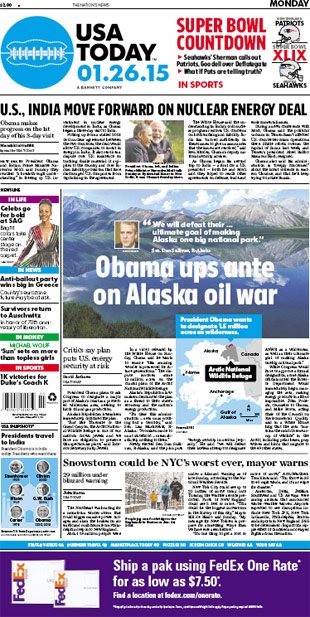
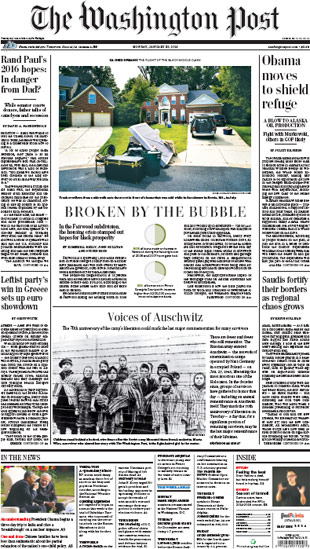
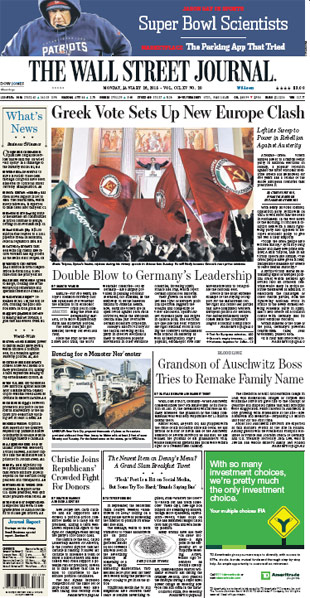
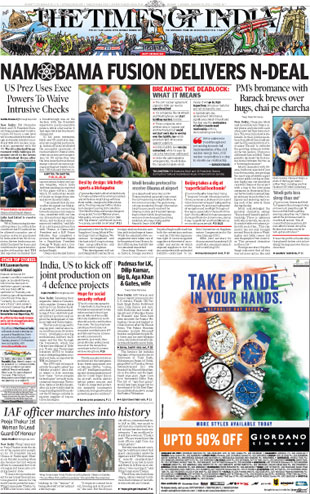
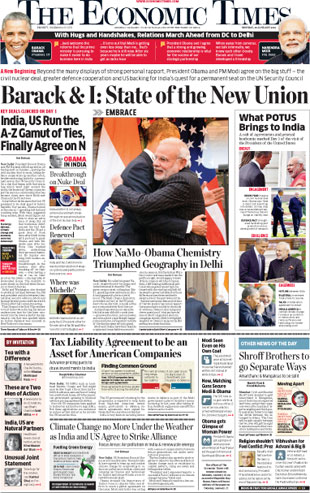
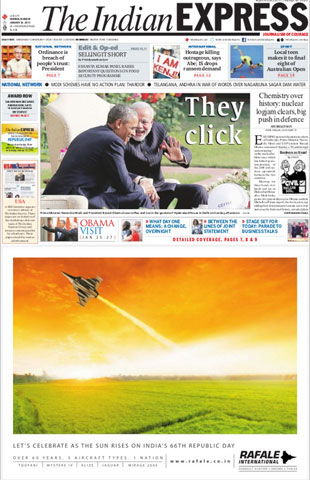
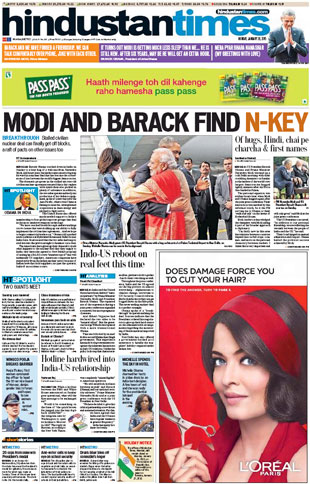
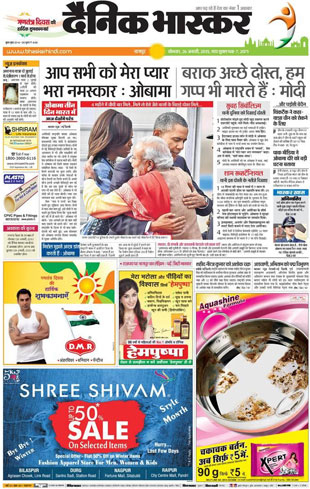
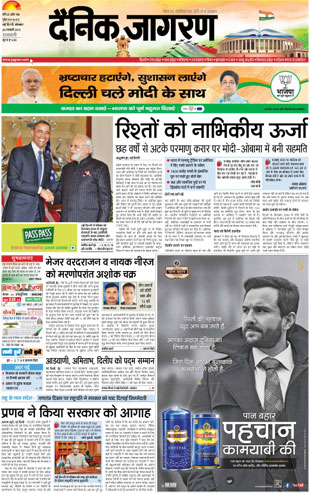
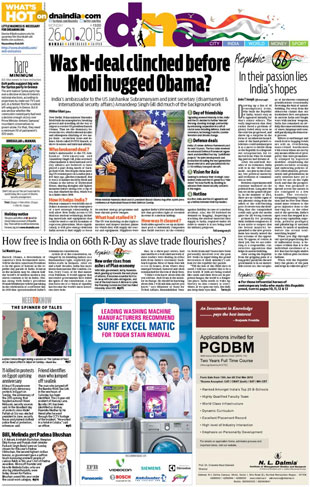
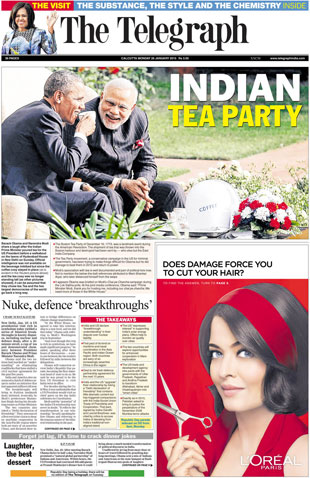
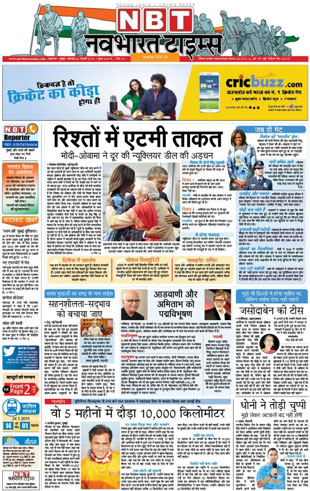
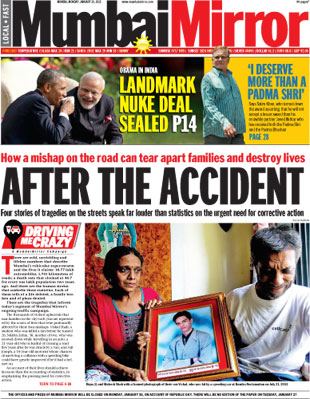
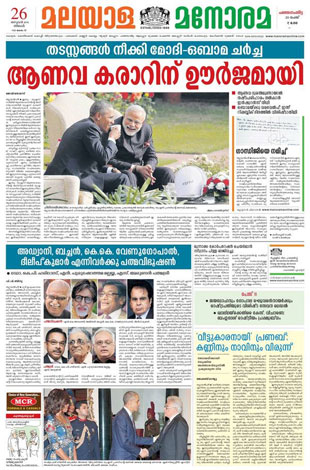
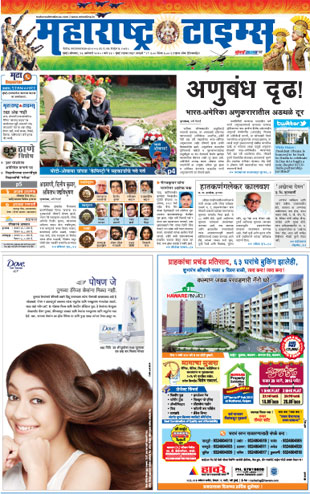
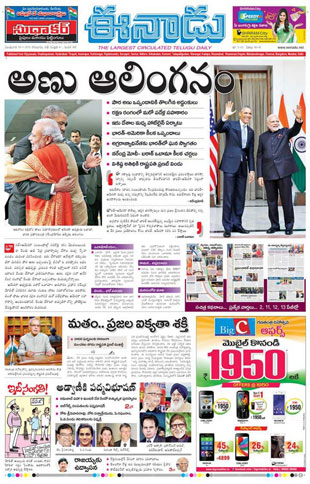
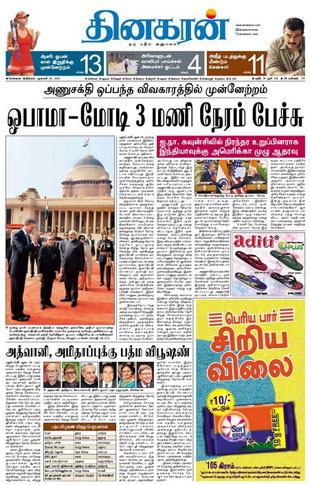
  • NewsStand 1: How Indian newspapers covered the Obama visit


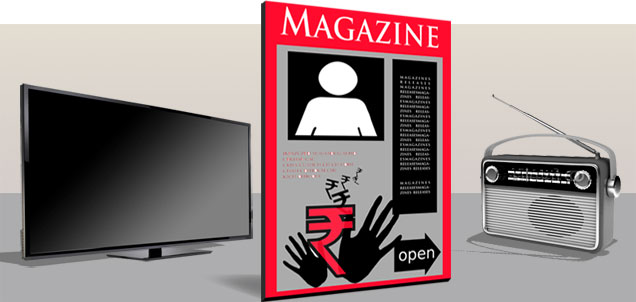
  • Mags 2x more engaging than Radio & TV


    By A Correspondent


    The Association of Indian Magazines (AIM), the apex body of magazine publishers in India, commissioned leading market research firm IMRB in 2010 to conduct a large survey, covering a sample size of 3,600 over 10 cities. The study released at the Indian Magazine Congress held in Chennai on February 23 and 24, has shown high engagement scores for magazines on all key parameters like ad avoidance, information seeking, purchase intent and such.


    Mitrajit Bhattacharya

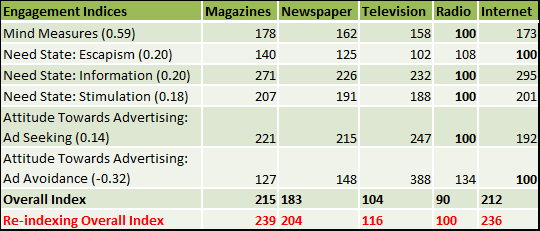
    Industry leaders urged AIM to take these findings forward and create an index as a composite score, which would clearly demonstrate the extent to which magazines are engaging, vis-a-vis other media. “That’s exactly what we did,” says AIM President Mitrajit Bhattacharya, adding: “We ran a regression analysis on the same data and came out with weights for individual indices like Mind Measures (weight .59), Ad Avoidance (-.32) etc. and then we created a Composite Index.”


    A two-step process was followed to create the Engagement Index. The first step entailed running a regression on a key dependent variable and evaluating the hierarchy of each of the partial engagement indices. The second step required evaluating each medium on the partial engagement indices and arriving at a final Engagement Index.


    The study demonstrates that magazines are twice as engaging as television and radio (239 indexed to 100 of Radio).


    The Engagement Index Findings


    Statements which constitute Mind Measures (Weight: 0.59):This medium matches my personal interests/ personality

    This medium shows how I can approach problems

    This medium is trustworthy and reliable

    This medium helps me stand out and create an impression

    This medium is like an undemanding companion


    Statements which constitute Escapism (Weight: 0.20):

    This medium is relaxing and a good escape

    I can consume this medium anywhere and at any time


    Statements which constitute Information (Weight: 0.20):

    I am always discovering something new with this medium

    This medium keeps me updated with latest styles and trends

    This medium helps me in expanding my knowledge 


    Statements which constitute Stimulation (Weight: 0.18):

    This medium helps me understand the opinions of others

    This medium touches and inspires me

    This medium helps in better social interaction 


    Statements which constitute Ad Seeking (Weight: 0.14): 

    Ads provide useful information new products/ services

    Ads add to the experience of consuming the medium

    Pay more attention to ads as I find them more useful


    Statements which constitute Ad Avoidance (Weight: -0.32): 

    Ads appear at inconvenient moments in this medium

    Ads in this medium should be eliminated


  • Vinod Mehta: When I became an editor, I started to learn (Video Report)


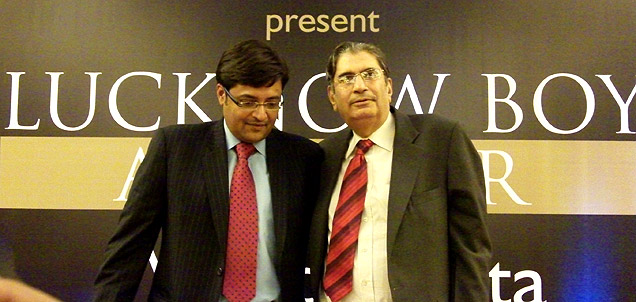
    In our tribute package to Vinod Mehta, we thought we should replay a video report of the launch of ‘Lucknow Boy’ where the late editor answered questions posed by Arnab Goswami. Read on… 


    By Shruti Pushkarna


    I used to be terrified at my ignorance, I knew absolutely nothing… when I became an editor, I started to learn.”

    It was as candid as it could get. Addressing an elite gathering of politicians, journalists, close friends and family, Vinod Mehta, Editor-in-Chief, Outlook, was at his ‘truthful’ best, as he shared his life experiences and views. It was at the release of his memoirs, ‘Lucknow Boy’ in New Delhi yesterday that Mr Mehta confessed, “We journalists have the best seats in the tournament, but some of us, editors particularly, think that we are players. “

    The book launch ceremony began with Mr Suhel Seth, Managing Partner of Counselage India, reading a few excerpts to an eager audience.


    Editor-in-Chief of Times Now, Mr Arnab Goswami was then invited to moderate a short discussion with the author. Mr Goswami admitted that to him, Mr Mehta was like, ‘the god of journalism, whom I admire the most.” Adding further, he related an incident from the previous night when he posed two choices to Mr Mehta, asking him which work out of the two was he more proud of, Debonair centrespread or the last page of Outlook. The reply, said Mr Goswami was in line with his habit of being upfront when very easily he chose the last page of Outlook, his own work.


    What followed was a candid one-on-one between the ‘king of television news’ as Suhel Seth billed Mr Goswami him, and one of the most ‘Independent’ editors of our times. Ranging from the reasons behind writing this book, to the greatest risks undertaken, to why a journalist and a politician can never be friends, Mr Mehta answered all questions posed by Mr Goswami. When asked if he were 35, would he do television, Mr Mehta, without mincing words, said, ‘Television does not interest me”.


    On why he wrote his memoirs
    [youtube width=”450″ height=”250″]http://www.youtube.com/watch?v=srM-E8i6wKI[/youtube]
    On why he doesn’t want to do Television
    [youtube width=”450″ height=”250″]http://www.youtube.com/watch?v=p2gxTDo_eFE[/youtube]
    On the need for editors to be able to ‘smell’ the news
    [youtube width=”450″ height=”250″]http://www.youtube.com/watch?v=RvuDgAPjIIQ[/youtube]
    On why politicians and journalists can never be friends
    [youtube width=”450″ height=”250″]http://www.youtube.com/watch?v=aZOKWWHH6uw[/youtube]
    On how does it feel to look back
    [youtube width=”450″ height=”250″]http://www.youtube.com/watch?v=ftm_IeG-zds[/youtube]
    On the best thing that has happened in journalism in the last 40 years
    [youtube width=”450″ height=”250″]http://www.youtube.com/watch?v=sBb7OzUOL8s[/youtube]
    And a reasonably fair attendance from the political world did not deter him from admitting that the one thing that he has hated all his life is to ask a politician a favour. Mr Mehta is of the strong opinion that politicians and journalists can never be friends. He said, “We follow two different vocations. Politicians are in the business of embellishment, spin, emphasis when emphasis is not necessary and sometimes they are in the business of telling lies. We as journalists on the other hand, with all our imperfections, are in the business of trying to get at the truth.”


    On a lighter note, Mr Mehta also shared some bits of his journey as an editor, as a student and above all, as a person.


    To recount some faces present at the gathering, first up politicians: MoS for Commerce & Industry Jyotiraditya Scindia, Union Urban Development Minister Kamal Nath, Union Petroleum Minister Jaipal Reddy, BJP MP Tarun Vijay, Chief Election Commissioner SY Qureshi, CPI National Secretary D Raja, Lok Sabha MP Jay Panda, MP and Chairman of IPL Governing Council, Rajiv Shukla and Former Minister of External Affairs, Natwar Singh. The media was represented by senior editors Tarun Tejpal, Saeed Naqvi and Paranjoy Guha Thakurta. Also, author Gurcharan Das and Indrajit Hazra of Hindustan Times, and of course the Outlook team.