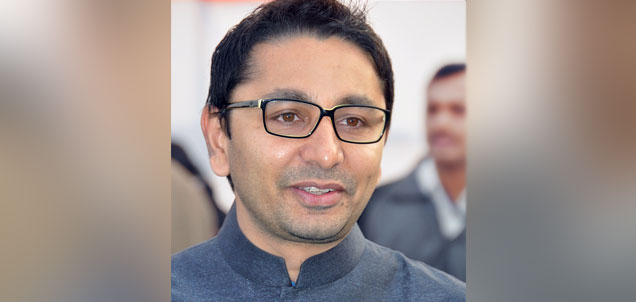
Rishi Darda, Editorial and Joint Managing Director of the Lokmat Group, comes from a family that has been in public life for over four decades. But he’s determined never to let his family’s political leanings impact the media business of the Lokmat Group. Darda also has a lot of aces up his sleeve – a digital venture that’s set to grow and acquisitions, if there’s an opportunity. But most of all, to cement the newspaper’s leadership position in Pune. Excerpts from a freewheeling chat with Pradyuman Maheshwari…
You and others in your generation don’t speak to the trade media much. Your uncle Vijay Darda has of course been a well-known public figure.
That’s how it’s always been. Vijay Uncle, the Chairman, has been a political figure, as has my father. And both of them have been extremely ‘out there’ in public life. But we, the newer generation, have preferred to take a backseat and let our teams and products speak.
It’s normally the other way around, isn’t it? The younger guys are more aggressive…
Yes, but don’t make the mistake of thinking we’re not active. We’re very, very active — but a little in the backseat, actually. All of us are very involved with Lokmat, the media company, but just not ‘out there’.
So how is the paper doing?
I think overall, in the newspaper industry, regional still has a major scope to grow. Regional newspapers have continuously seen growth. First, because of the literacy rate. Then, the penetration of the newspaper is not as high in Maharashtra as, say, in Rajasthan. So I think there’s still a lot of scope for us to grow. And advertising has been good, except for the months of demonetisation.
Given the fact that Maharashtra is more industrialised than other states, and the affinity towards English is more, do you still see as much of an appetite for growth as elsewhere?
Growth for a newspaper would not depend so much on the language, but on the content. Mumbai, the metro, is more English-speaking. With Maharashtrians who understand Marathi – and may feel that they’re missing out on something the English-language papers provide by way of content – may cause a language shift. But I think if I’m able to give them content that they want, in their language, I don’t think there’ll be a shift.
That’s what Lokmat‘s been able to do, quite successfully for some time. Outside Mumbai – in places like Nagpur, Aurangabad or Pune, the largest market is Marathi, and by a big margin.
But in pockets of Vidarbha, for instance, Hindi has very large play too.
Like I mentioned, if a person doesn’t understand Marathi, s/he’s going to look for other options. And Vidarbha borders Madhya Pradesh and Chhattisgarh, and there’s a lot of movement of population between these areas. But even if you look at Vidarbha, the largest newspaper over there is Lokmat Samachar and not Lokmat. So even in Hindi, we are still No. 1 in Vidarbha.
As a strategy, in centres besides Mumbai, whatever language whatever mode people would want us to reach in, we would do that, whether its digital or print, Hindi or Marathi. In places like Aurangabad and Nashik, we saw a rise in English, so we’ve come up with our own. Lokmat Times is there and it’s been a ‘bold’ newspaper in both these places.
In Mumbai though you’re there but you’ll are not No 1. What is the mix of the market like, and what is the future for that?
Maharashtra is one of the most fragmented markets. So places like Khandesh, Vidarbha and Marathwada belong to Lokmat; Pune is with Sakal; Kolhapur, with Pudhari, and Bombay has Loksatta. Five years ago, we realised that if we looked at only Pune and Kolhapur as a market, it was equivalent to a Madhya Pradesh. If you look at Mumbai and Pune together, then it’s equal to three or four states of a Hindi newspaper. We realised the potential of Maharashtra itself was huge, and was not tapped by Lokmat. So in the last three or three-and-a-half years, we’ve made inroads into Pune and now are the largest newspaper there. As per the Hansa report, we are also No 1 in Kolhapur. Mumbai is the focus area, so for about a year-and-a-half, we’ve been focusing a lot of time and energy in Mumbai, and we’ve become No 1 in Thane. You’ve only got a certain amount of resources, so you need to start prioritising. So we’ve taken the Thane and New Bombay markets and been focusing on our Marathi newspaper [there].
Are you’re looking at getting into Mumbai in a big way?
We’ve already been there
So getting into Mumbai through Thane and the outskirts?
Yes, the dominant Marathi-speaking population is on the outskirts rather than in Mumbai, so over a period of time…
Are you focussing on a certain socio-economic strata of society to grow the readership, or are you going to cater to the Sec A class?
So the focus has always been on getting the highest readership among the Sec A and Sec B in Maharashtra, in every centre. The Hansa report in Pune shows us as No. 1 in Sec A and Sec B in PCMC. And even in the newer markets that we’ve focused on. Similarly in Mumbai, the focus will be a lot on Sec A and Sec B, and over a period of time, we’ll also get Sec C. I think there are advertisers for each of the categories.
But there is a perception that Lokmat is essentially Sec B and Sec C…
Yes, but that’s not true. I don’t know how this perception emerged, and in what quarters, but if you look at the numbers, every major advertiser — whether e-commerce companies or luxury cars – who’s looking at spending in a particular market, [has advertised with] Lokmat. Even the high-end real estate segment advertises with Lokmat in all the markets we are in. If the market is there, Lokmat has always been a part of it. If you look at IRS 2012, Sec A and the younger population have always been with Lokmat. And not just as a percentage, but in terms of actual numbers
To get back to Pune, in a big ‘hoarding war’ last year, you claimed to be No. 1, which was disputed by Sakal. And then Maharashtra Times came up with a campaign saying they are the No. 1. So what’s the ground reality?
On our part, we will not respond to any statements our competitors make. We’ve got a strategy that we’ll go ahead with, and let others respond to it. About three years ago, despite Lokmat being dominant in Pune, we were not N. 1. When we began to our focus on Pune, we found there was a huge vacuum and the need for an unbiased newspaper; a newspaper that was very aggressive in reporting. Pune, for almost 50 years, was used to goody-goody [papers]. But it was an international city which was going through a lot of issues, and editorially Lokmat was one of the first to bring all that out. We also ran the ‘Aata Bas’ campaign which was very successful.
When you say unbiased, you obviously mean [in relation to] Sakal…
The reference is to Sakal, I think for all the right reasons. There was nobody else to compete with them, so there was complacency in their product, and that’s where Lokmat saw an opportunity. Our distribution strategy, where we explained what Lokmat is all about, worked extremely well. Till a few years ago, you looked at a certain market and went there with invitation pricing to increase the numbers. In Pune, we mapped each and every area of but only picked some where we would focus our energies and increase our market share.
Dainik Bhaskar did that with some success with Gujarati and even Marathi
Yes, so this was where we went out. Divya Marathi has done it, HT has done it, a couple of them have been successful and few haven’t been successful…
But there are charges that Hansa report is not accurate?
If you do not get [a corroborating] response in Pune, I’m ready to give a year’s advertisement for free. If someone goes out and meets the hawkers, and they don’t say Lokmat is the No. 1 newspaper in Pune, I’m ready to give out a year’s free advertisement and free subscription to that person. That’s the conviction we have in our brand in Pune today.
The reason for quoting Hansa is that we’ve all been having some teething problems with the IRS that we’re expecting in December would give out clear numbers where Lokmat is No. 1 in Pune but you know, while it’s not there for all these years for the newer IRS to come so, and it’s also where you want it not only for the advertiser but also for yourself to find out whether you are really doing all the right things; Every market leader [in Sec C] including Sakal, has used Hansa.
People I spoke to say Lokmat has become very aggressive, has increased considerably in sales and reach, but it may still not be the No. 1 that Hansa says it is…
You’re fighting a brand which is actually 80 years old in that market. So perception-wise, it will take us a little time [to emerge as No 1]. But it’s definitely response-wise; advertisers who were spending hundred rupees with us, are now spending two hundred.
How critical is the Pune market for you?
Pune is the largest market of Maharashtra outside of Mumbai, so it’s extremely critical. If you look at all the markets, Pune is nearly the size of Rajasthan, so it is a very, very important market for us. The [biggest] Marathi advertising market is Pune.
So what do you think went right for you, and wrong for Sakal, in Pune?
I don’t know what went wrong with Sakal — I think somebody outside Lokmat, an independent person, might be able to tell you what went wrong with them. I think Lokmat has done a fantastic job, whenever we’ve created teams anywhere. Creating entrepreneurs within Lokmat has been a key strength for the company, and everybody who works in Lokmat feels like s/he belongs here and feels that it is his company. The passion with which each and every team member works in the market, is the response. The number of activation events Sakal does in a year, we do in a quarter. Our direct reach to readers is huge; our teams are not sitting in an ivory tower, speaking to readers. They’re on the ground, meeting with them, and trying to understand the pressing issues in Pune.
They [Sakal] have had a CEO who is ex-Lokmat…
They’ve had a lot of people who have been ex-Lokmat and there’ve been lot of people who’ve been from Lokmat who want to come back to Lokmat as well.
Having become a dominant player in Pune, would you say you’ve reached the point you wanted to reach in the print sector?
I’m greedy. It would be tough to say that I’ve reached…
So what’s the final frontier?
The media is an industry that is continuously flowing and evolving. You want to be part of something big every time, and you want to keep creating benchmarks, which should get tougher. But Pune was very important for us, from the revenue, perception and readership points of view. It was critical for us to get it right, and I’m glad we did it. Something that really worked for us was also the Sakhi Manch. Having so many brand ambassadors talk about Lokmat, gave us more strength and perception.
You’ve been a late entrant to the digital world but now you’ve got into it in a big way. So how key is digital for the group?
I’d be kidding myself if I say that digital is just a passing phase. I think digital is going to be extremely dominant, along with print and other mediums. So the way we look at it is this: There’s a certain percentage that’s coming out of print, which is nearly 90-95 per cent of our revenue today. So how do you make sure that print becomes 50 per cent of your business, and 50 per cent of the revenue comes from all the other mediums — events, activations, digital? That’s a very important piece.
Are you looking to orchestrate digital with print in a particular way?
If you look at the top-end news sites in the US and remove the tech companies, the Googles and Yahoos of the world, nine out of the top 10 are brick-and-mortar companies that are in print and television, like CNN and the Times. Huffington Post is the only digital company, otherwise all of them are brick-and-mortar. We would be spending a lot of resources [on this] that’s why we wanted someone like Hemant Jain, an entrepreneur, to come in and set this up. It’s a different beast altogether.
And how is that going? Sakal is or was leading in digital…
While growing up, if you were reading Times of India, the first news site that you would go to is TimesofIndia.com, whether or not it’s a good site. In Maharashtra, today, 80 per cent of your digital traffic comes only from Mumbai and Pune, and those were two markets where Lokmat was not leading. So the advantage would have obviously gone to all the people who were No 1 in these two markets at that point. But, finally, it is your product that you can depend on, and I think the product that we are able to provide today, our Lokmat 2.0, should be out soon. And I can assure you that it is a far superior product than others in the competition. If the content and product are right, readers and advertisers will come.
But advertising in digital is not as high as print…
It takes time. If you look at India, print is [worth] about Rs 20,000 crore and digital is [worth] Rs 5,000 crore. So there’s still a major gap.
You also have interests in television, with IBN Lokmat, right? So will you try to sync digital with that, or will it be totally separate?
IBN Lokmat has its own website, but I think you need an independent, digital-thinking organisation. If you try to take a few things from print, a few things from television, it would not work. You need somebody who thinks digital first, and then comes back and says, ‘okay, these are the pieces that I need from your older organisations to fit it in’.
Talking about community, how much of the success of Lokmat, the print product, has been because of community initiatives? I’m told it’s fairly big in pockets where you are strong, especially in Vidarbha and Aurangabad. So how much of a contributor is it, and what importance do you give to such initiatives?
It’s very, very important. I’ll divide it into three or four sections. One is the forums like Sakhi Manch, Yuva Next and Bal Vikas Manch; then there are the IPs that we create; and third, are the client-led activations that we do. It’s been about 15 years since we started Sakhi Manch — and at a time when nobody had forums like these. These are paid members and not people who join free of cost. Sakhi Manch is a platform for women to come and talk, enjoy themselves and be entertained, informed and educated. This gives us direct access to our readers, and in Pune, I think there was a disconnect between the readers and the product we were coming out with. With Sakhi Manch, Yuva Next or even Bal Vikas Manch, our people are out there in the field, talking to children, talking to teachers and such to understand what they like about Lokmat, what’s not working etc. It’s a direct access to your readers. Today, we have a base of about almost three-lakh paid members across the state, which is a big number. And we’ve been able to take that database and go to our clients for events, like we’ve done with Reliance, Colors and Star…
So they are paying you to be subjected to advertising?
They are paying us to reach out to them. Otherwise also you know I think television channels are one of the largest advertising industry for the print, you know for any language, they are the top five
What will be your next steps? You mentioned Pune, and Mumbai is big…
Print expansion, of course, and the focus on Mumbai and Pune will continue. But personally, Taplight and ClickStart — these are the two areas that we’ve been focusing a lot of our energies on, as well as events and activation, which is moving very fast for us
You’ve done quite a few events…
Yes, we’ve done ‘Maharashtra of the Year’, ‘Maharashtra’s Most Stylish’ and a lot of client-led events. It’s given clients that confidence that when they come to us for events in Pune, we are able to fill a hall of about 2,000 to 3,000 people – whether it’s a Colors, Star Plus, Reliance, Dabur or ITC event. It’s about Lokmat’s reach. Taplight is ideal for this, and ClickStart is also big for us. We’ve kept a corpus of about Rs 100 crore to invest in different companies. So while Lokmat can create in-house products, the idea is to go out and bag a lot of these digital companies and either bring them in, or provide them with support functions and let the entrepreneurs flourish in their own way with whatever they are doing.
With the IRS coming out soon, guess your next step will be to cement your position in Pune?
Locally, in terms of the number of advertisers, I think we’ve already exceeded Sakal, because local does not really wait for an ABC or IRS. The local person who is advertising, looks only for responses, and when he sees that coming out of Lokmat, the shift happens.
It’s often said that if a leader loses out on the dominant slot, it starts telling on the rest of the business as well. So do you anticipate any issues with your competitor?
From their point of view, they are only present in Pune and not really in any other, markets.
Apart from ClickStart, are you looking at anything else, like buying over any print publications and…
We are continuously speaking to companies, and Hemant’s very actively involved in speaking to them about one, whether we buy them out, and second, how we can guide the entrepreneur. So places where we come in and run the management, we’ll be able to take up faster. But places where we’ve found that we are not able to add a lot of value other than support — that’s where we go and invest and support the entrepreneur
Would you look at print acquisitions also?
I think nothing is available, as such. We’ve been open to an acquisition for a very long time. We’ve been speaking to few of them, but I don’t think there’s anything there. But if there’s something that fits our strategy, and makes sense for us… I would not do anything just for the glamour or sexiness of it. It has to make sense to my bottomlines.
A question which you may not answer, if you don’t wish to. There are things that you may have inherited and can’t do much about it… like the earlier generation of leadership being involved with politics. Doesn’t a politically-connected ownership impact the credibility of a print product?
My family has been a part of politics for about 45 years. My grandfather, who was a politician and founded Lokmat, was very clear, even at that time, that his politics should be separate from the paper. If we had mixed both, and become a mouthpiece of the party to which the family is attached, it’s would’ve been impossible to stay No. 1 for such a long time. We’ve been No. 1 for three decades now, so I think there’s something right that we’ve done right. We’ve been able to keep that balance right and been able to draw a line between politics and the newspaper. So while my grandfather was a minister, he was not involved in Lokmat. When my father became a part of the government, he was not involved in Lokmat at all, so I think we’ve been able to strike that balance. Also governments have changed; there have been Congress, BJP and Shiv Sena governments, and Lokmat’s still remained No. 1. If people saw us as favoring any one party, I think the shift would have happened.
 By Meena Menon
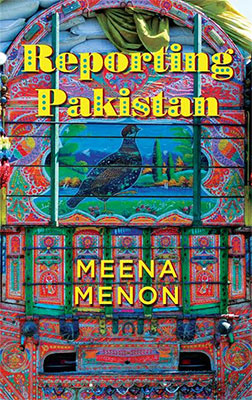 I felt they really didn’t want Indian correspondents unless westayed within some harmless plugs or press release writing limits.The officer hadn’t read the whole article except for the part where Qadeer denies he is a RAW agent as is popularly believed. All the portions which they found unwholesome were highlightedin bright yellow and thrust under my nose. The dialogue went on these lines: ‘Is this what you came here to write?’ He accused me of fudging the entire interview and he kept asking me for my notes or recording.
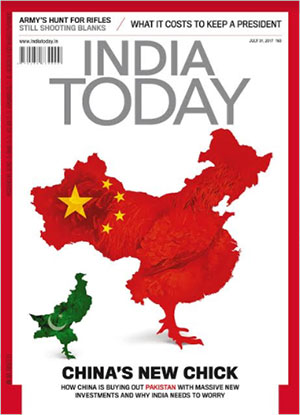 The cover of the July 31 issue of India Today magazine on the China–Pakistan issue has been selected as ‘The Cover of the Day’ by the Society of Publication Designers, New York.
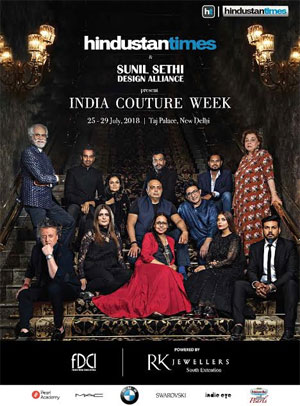 The Fashion Design Council of India (FDCI) has announced the dates for the ‘Hindustan Times and Sunil Sethi Design Alliance present India Couture Week 2018’. The event will be held from July 25 to 29 in New Delhi.
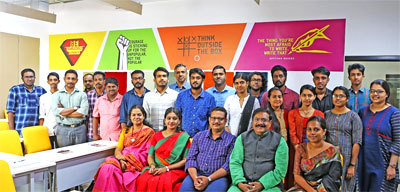 Media group Mathrubhumi launched its new venture, Mathrubhumi Media School in Kochi. The inauguration ceremony was attended by George Sebastian, Dean, Mathrubhumi Media School, Senior News Editor M V Jayakumar, PK Jayachandran, Bureau Chief, Ms P Sindhu Unit Manager, Mathrubhumi, and Naveen Sreenivasan, Cluster Head.