Category: PRINT MEDIA

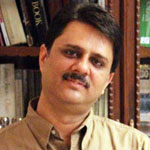
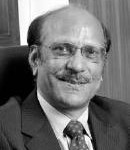
  • Manu Joseph quits Open, successor not yet named

    By A Correspondent


    The magazine meant to be a contemporary, not-necessarily-political newsmagazine, but the record on its editorial top deck has been mixed, one could even say troubled.


    While there have been rave reviews for Open’s content and packaging, there have been several controversies related to its editorial staffing since a little after it launched.


    First was the exit of CP Surendran, now editor-in-chief at dna. When he quit, he was quoted as saying: “I’m looking for a very good job at a sane place if one exists”. Later, in July 2010, Sandipan Deb had a controversial exit. A few months back there was Political Editor Hartosh Singh Bal’s sacking that made news and now comes the news of Manu Joseph quitting as Editor.


    He announced it on his Facebook page with the following post: “I have quit Open. Will continue as interim editor until a new editor is appointed or the end of March, whichever is sooner. Third novel, come to me fast.”


    Open magazine is part of the RP-Sanjiv Goenka group. There have been rumours that the group is also in discussions with People magazine, which was until recently published by Outlook group, to revive the India edition.

    Mr Bal, btw,  has written a comment on the resignation on Firstpost.com. It’s titled Manu Joseph’s resignation: The perils of editorial surrender.

  • Dainik Bhaskar starts work on 3rd edition of ‘Mosaic’

    By A Correspondent


    The Dainik Bhaskar group has been taking a lead on publishing the top creative work in advertising over the last few years. The third edition of the book called ‘Mosaic 2014′ is set to be published as the group is now commencing entry processes for the volume.


    The second edition of Mosaic showcased the best of print ads of 105 brands created by over 31 leading creative agencies in India, while the first edition featured over 70 brands of print campaigns by 25 leading agencies.


    Commenting on Mosaic’ third edition, Girish Agarwaal, Director, Dainik Bhaskar Group said: “This endeavor was launched by Dainik Bhaskar with the aim to showcase in a single collection, the great work being done in India in print advertising, while we have mostly referred to global compilations.”


    Added Sanjeev Kotnala, Vice President and National Head, Marcom, Dainik Bhaskar who is leading the effort: “It has been a real pleasure to see Mosaic establishing itself and growing to become a reference point for some of India’s best print creatives, and evolve from being more than just a celebration of the best print work. For us at Dainik Bhaskar, it is our significant endeavor to highlight the Indian talent within agencies and inspire them to do even better”.


  • Times gets gung-ho on Gujarat [Updated]


    By Shobhana Nair


    The cries of ‘Kai Po Chhe’ could be heard across the streets and skies of Ahmedabad yesterday. Kites of all hues – literally – dotted the sky as Amdavadis celebrated Uttarayan. Kites are popular across the world, but no where is it a religion like it’s in Gujarat’s premier city.


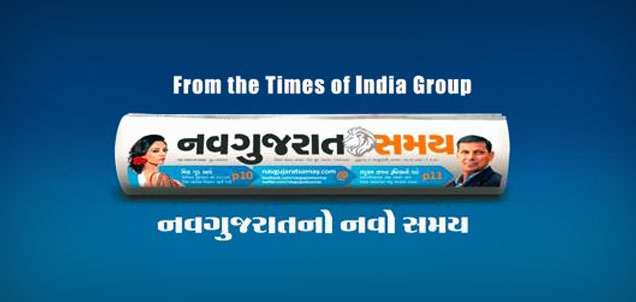
    But this Uttarayan – that’s yesterday (Tuesday, Jan 14) – there was reason for another form of excitement, at least amongst media circles. Two days later, on January 16 to be precise, the six million-odd populace of Ahmedabad will wake up to a new Gujarati newspaper from the Bennett, Coleman stable. Called ‘NavGujarat Samay’, the paper will complete with existing players like Gujarat Samachar, Divya Bhaskar and Sandesh which have a loyal readership. Says Suresh Balakrishnan, CEO of media agency network BPN: “It is going to be a bit challenging since it is a broadsheet though they have chosen the right market – Ahmedabad. I don’t know how successful it will be since there are intense competitors but it’s indeed good news for advertisers.”


    The general belief is that Gujarat is an untapped market and hence the decision of launching a regional newspaper would only mean that the pie will get expanded. In fact, there are some who believe that there’s scope for two more regional newspapers.  Says Bharat Kapadia, Founder of ideas@bharatkapadia.com who spearheaded Divya Bhaskar at the Dainik Bhaskar group and was editor and publisher of Chitralekha: “Henry Ford was once quoted saying that ‘The market never gets saturated for a good product but it can get saturated by a bad product. That means there is a scope when you come up with a good product.”


    NavGujarat Samay launched in Ahmedabad


    As a part of its strategy to aggressively extend footprint in languages, The Times of India Group has launched NavGujarat Samay in Ahmedabad.  This launch comes on the heels of a slew of launches like Ei Samay in Kolkata, seven new editions of Maharashtra Times (Pune, Aurangabad, Nagpur, Nasik, Kolhapur, Jalgaon and Ahmednagar) and one new edition of NavBharat Times (Lucknow) in the last couple of years.


    The paper is positioned as a new voice for a new Gujarat and focuses on the new age media, that are especially popular with the ‘under-40’ readers. For instance, it is the only Gujarati daily that launches alongwith a wide array of digital platforms – apps, a WAP site and a website (www.navgujaratsamay.com). Going forward, NavGujarat Samay will continue to engage readers via its print, digital and social media innovations and offerings.


    The paper will have a strong industry, business and SME focus with a highlight being two front pages, a “first ever innovation in any daily in Gujarat, that delivers double the value for our Gujarati newspaper readers”.


    Said Rahul Kansal, Executive President, The Times Group: “The Times Group is well-acknowledged as a thought leader in the English newspaper space as well as for its language brands – NavBharat Times, Maharashtra Times and Ei Samay. Now we are all geared up to achieve the same milestone in other languages as well.


    Added Ranjeet Kate, Director Response, BCCL “NavGujarat Samay will provide the right platform and context for the advertisers to creatively engage the Amdavadis in their own language. With a ‘print plus’ approach and a whole lot of brand activations planned over the whole of 2014, NavGujarat Samay will usher in a new era of newspapers in Ahmedabad, that will delight the readers and advertisers like.”


    The news of the launch appears to have made media agencies happy who are forever vying for prime positions for their clients at good rates. “The market size of advertising and promotions in Gujarat is Rs 3,500 crore which includes the total 360 degree activities of the clients. And hence everyone wants a prime position. This newspaper will add to our choice,” said Jalpa M Dave, Principal Consultant, View Finder, a Gujarat-based media buying agency.


    Welcoming the buzz in the marketplace, Krunal Amin, CEO, Saini Production, a local media and entertainment agency said: “Publicity may not have started in a big way but people are aware because of the brand.”


    There are some though who believe that the Gujarat urban market is becoming increasingly aspirational and the challenge would be to be look at growing despite a large number of readers going in for English. Mr Kapadia though feels Gujarati continues to be the dominant media, and the real challenge is about the product.”Production & distribution are not rocket science but the ultimate test is that of the brand.”


    This is of course not the first time Bennett, Coleman and Co getting into the Gujarati newspaper marketing. In 1993, it launched Times of India Gujarati but the paper was shut after a couple of years. In 2006, BCCL picked up a 12 percent stake in Gujarati daily Sandesh. BCCL and the publishers of Sandesh – The Sandesh Ltd had also signed a business cooperation and arrangement agreement for cooperation in advertising sales, marketing and printing. However, sometime around December 2012, the stake was sold.


    Gujarat is a value-conscious market, said an industry observer requesting anonymity. While smart subscription offers like the one NavGujarat Samay is offering will work, in the longer run what is desired is overall editorial quality and smart business strategies.  “The Times group is known for its strengths in both areas, and will use every rule in the book to ensure they outwit competition on both fronts.”


    The question then is who will suffer the ‘Kai Po Chhe’ first.


  • New IRS study findings to be released next week

    By A Correspondent

    The new Indian Readership Survey findings are scheduled to be released next week.

    It may be remembered that on the basis of a recommendation of  the Readership Studies Council of India (RSCI), the Media Research Users’ Council had awarded the IRS contract to Nielsen. The decision was arrived at after a comprehensive nine month process that began in November 2011, with the formation of the RSCI by its sponsors, the MRUC (Media Research Users’ Council), and ABC (Audit Bureau of Circulation). The RSCI was mandated by the industry to oversee the conduct of a unified Indian Readership Study (IRS), billed as the world’s largest continuous readership study.

    The Technical Committee meeting was held yesterday (Jan 22) and the first findings of the study are scheduled to be released before the month ends, and in all probability on January 28.

    (See also: http://www.mxmindia.com/2013/03/new-improved-irs-hailed-by-industry/)

  • Padma Shri for Sakal chairman Pratap Pawar

    By A Correspondent

    Pratap Pawar


    There weren’t any names specifically marked ‘media’ or ‘journalism’  in the list of ‘Padma’ awardees released on Saturday. Even Pratap Pawar, Chairman of the Sakal Media Group, has been listed under ‘Trade and Industry’.

    Mr Pawar, a veteran mediaperson, becomes the fourth Padma awardee fromthe Sakal group, as per a report in the group’s Sakaal Times newspaper. Other than Sakal founder-editor Nanasaheb Parulekar being awarded the Padma Bhushan in 1969, Dr Banu Coyaji, a well-known doctor, social worker and director, was a Padma Bhushan recipient in 1989. Scientist Dr Raghunath Mashelkar who has been awarded the Padma Vibhushan this year (and earlier the Padma Bhushan and the Padma Shri), is also a director with Sakal.

    “Thousands of workers are working in organisations which I am associated with. I have been honoured due to their efforts,” Mr Pawar was quoted in the paper. “If the potential of the country is properly utilised, this country will progress. If every citizen does his duty, there is a bright future for the country,” he said.

    Though this year’s list did not have any names directly associated with the media, there were several names from films and a few who have written in publications (like Ruskin Bond who started out as a journalist) or a few others like Prof Ashok Chakradhar who have been regulars on television.

    Padma Awards, the country’s highest civilian awards, are conferred in three categories, namely, Padma Vibhushan, Padma Bhushan and Padma Shri. The awards are given in various disciplines/ fields of activities – art, social work, public affairs, science and engineering, trade and industry, medicine, literature and education, sports, civil service, etc. ‘Padma Vibhushan’ is awarded for exceptional and distinguished service; ‘Padma Bhushan’ for distinguished service of high order and ‘Padma Shri’ for distinguished service in any field. The awards are announced on the occasion of Republic Day every year and conferred by the President of India at a function held at Rashtrapati Bhawan sometime around March/ April.


    Picture: Sakal group corporate website

  • India Today group launches Discovery Channel Magazine

    By A Correspondent


    The Discovery Channel network has expanded its portfolio in India beyond television with the launch of Discovery Channel Magazine in association with the India Today group, who will be the publishers of the magazine in India.


    A three-time winner at the globally acclaimed Society of Publishers in Asia (SOPA) Awards for Editorial Excellence, Discovery Channel Magazine will cover a wide spectrum of engaging stories from India and around the world. Jamal Shaikh, who also edits a few other magazines from the India Today group, has been appointed Editor. The editorial board for the magazine in India from Discovery includes Rahul Johri and Rajiv Bakshi.


    Rahul Johri

    Said Rahul Johri, SVP and General Manager – South Asia and Head of Revenue, Pan-Regional Ad Sales and Southeast Asia, Discovery Networks Asia-Pacific: “The launch of Discovery Channel Magazine is a natural extension of our strategy to inform and entertain consumers with compelling content across platforms. We are delighted to partner with the India Today Group and are confident that we will be able to combine our strengths to satisfy the aspirational consumers. An insightful read on a wide range of subjects, the magazine will stand out for its energetic and exciting layout, distinct content and mesmerizing photographs.”


    Ashish Bagga, Group CEO, The India Today Group, added, “Discovery Channel Magazine will encompass the DNA of Discovery’s channels into a more in-depth look that only print medium can offer. It will also add a new dimension to the diverse portfolio of magazines already published by The India Today Group.”


    A monthly magazine in English, it will be available for sale on newsstands and leading book stores around the country at a cover price of Rs 150.  The magazine is available in other Asian markets like Singapore, Malaysia, Taiwan, the Philippines, Australia, Hong Kong, Macau and New Zealand.


  • Dainik Jagran is #1 daily in IRS, Hindustan is #2

    By A Correspondent


    The RSCI has released the findings of the readership study for 2013. While Dainik Jagran continues to be #1, Hindustan has climbed up to #2 position as Dainik Bhaskar is #3. Malayala Manorama is #4, Daily Thanthi at #5, Rajasthan Patrika at #6 followed by The Times of India at #7. Amar Ujala, Matrubhumi and Lokmat are at #7, #8 and #9.


    The Indian Readership Survey (IRS) is billed as the world’s largest continuous study tracking print and other media consumption, demographics, product ownership and usage, etc.

    IRS 2013 covered a sample of more than 235,000 households, across India. The sample was  spread across Urban India (~ 160,000 households) and Rural India (~ 75,000 households). The Nielsen Company conducted the extensive study.

    The key information areas covered being:

    -       Readership of print publications for a wide range of local, regional, and national newspapers and magazines.

    -       Reach and consumption of other media – Television, Radio, Digital and Cinema.

    -       Demographic profiling

    -       Consumer Durable Ownership and FMCG Usage.

    (Source: MRUC website – topline findings and release notes)

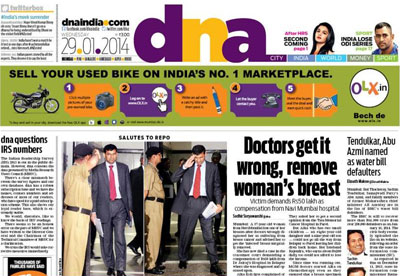
  • Knives out. dna questions new IRS numbers

    By A Correspondent


    Okay, it would be incorrect to suggest that a streetfight is on. But in what is decidedly not a common sight post the release of readership data, news daily dna, has put on a front-page unsigned note headlined: dna questions new IRS numbers.


    This is what the note says:

    “The Indian Readership Survey (IRS) 2013 is out in the public domain. However, dna contests the data presented by Media Research Users Council (MRUC).


    There’s a clear mismatch between the survey figures and our own database. dna has a robust subscription base and we have the names, contact numbers and addresses of most of our readers, who have opted for a paid subscription scheme. This also shows our loyal reader base, which is extremely stable.


    We would, therefore, like to know the basis of IRS’ readings. There seems to be an honest error on the part of MRUC and we have written to the Director-General and the Chairman of the Technical Committee of MRUC for a clarification.


    We trust the IRS would take corrective measures immediately”


    A senior media researcher who spoke to MxMIndia on anonymity said it was indeed unusual for a newspaper to frontpage its peeve on the readership numbers. “The stakes are high in a market like Mumbai, so dna could ill-afford a negative outlook.” But is the paper right in feeling aggrieved, we asked. “Everyone is right in feeling so. While there will be shifts in previous numbers when a research methodology changes, such a significant change is inexplicable.”


    Meanwhile, even though the fight hasn’t commenced, the knives are out for sure. And as we know from the past, the Zee group, of which dna is now an integral part, is known to put up a good fight.


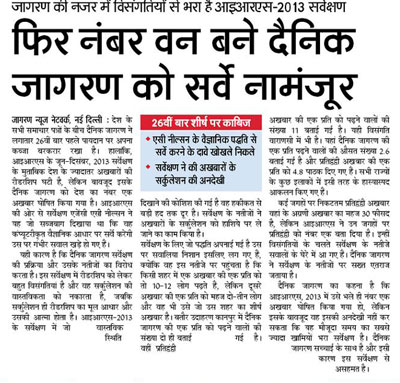
  • #1 daily Dainik Jagran damns IRS on its Page 1

    By A Correspondent


    When we wrote about dna’s questioning of the IRS findings, we had used the phrase ‘knives are out’ to describe the development. But now it appears newspapers are bracing themselves for the war.


    Leading news daily Dainik Jagran,  the numero uno daily in the  country as per the IRS 2013 study, has published a large front-page story say it doesn’t approve of the IRS findings. In fact it goes a step further and says the AC Nielsen’s claim of scientific method of surveying is ‘khokhla’ (Google translate: ~hollow, gossipy).


    Legal eagles are being consulted on how to combat the MRUC, RSCI and AC Nielsen in Court, but in the meantime those whose publications have gained much in the study or reflect favourably vis-à-vis competition are saying that it’s unfair to damn the readership study authorities.


    As reported by MxMIndia yesterday, some aggrieved dailies are considering collectively or individually filing law suits.  When alerted about this, a senior MRUC functionary told us that Court cases files by aggrieved members and newspaper groups after the publication of readership numbers is nothing new for the MRUC.


  • Jaldi 5 with Nitin Chaudhry, HT Media: More than just media sponsorship of the Kala Ghoda Festival

    It was a coup of sorts for Hindustan Times when it was awarded the title sponsorship of the the Kala Ghoda Festival. Built over the last few years as the leading festival of art and culture in Mumbai, the newspaper group has attempted to go beyond the role of a media sponsor and integrate with the events. MxMIndia spoke with Nitin Chaudhry,  Business Head – West and part of the HT Media leadership team on the Hindustan Times association with the Kala Ghoda Festival 


    01. How is the Hindustan Times Kala Ghoda Festival different from last year’s The Times of India Kala Ghoda Festival?

    Well, a few things on the programming side have changed. We have tried to make it bigger. We have international authors coming in for the first time, as compared to Indian authors only. We have bigger stars like Farhan Akhtar this time. More importantly, we have added a very Mumbai-specific vertical. Earlier it used to be all around art and culture, but we have Urban Architecture and Design. We have installations and panel discussions some of the issues that Mumbai as a metropolis faces – whether it is unplanned growth or traffic despite the fact that we have the best public transport system in the country.


    02. And how much of these changes are thanks to HT’s involvement?

    In fact, this is one big difference between previous Kala Ghoda festivals to this year’s edition. We have been very involved with the designing of the whole programme right from the beginning. Other than programming, we also looked at how do we make it more accessible and spread more awareness to people because the festival happens at multiple venues and people get overwhelmed with the schedules and how to get there. We have developed an app which does two things: one is at the tap of key it gives you the calendar of every day, of every vertical. You don’t have to download one big app from the internet, all have to do is scan the Kala Ghoda logo, which is available everywhere and the app downloads on you phone, whichever phone you have.


    Second thing is, if you go to kalaghoda.hindustantimes.com, the microsite syncs with your Outlook calendar and you can pick and choose events. Most of these changes have happened because both of us have been talking for the last few months, wanting to make it better and more accessible to everyone. The promotional campaign was not limited to the newspaper. We have created a full programme for radio and have a live studio at Rampart Row where people walk in and talk about their experience. On the social media, we have created a Facebook page, there is a Twitter contest and there is also a photography contest.

    There’s also this huge wall which displays the pictures our photographers have taken. So we tried to bring out the role of a newspaper in a far more integral way that rather than just supplying our ad columns for generating awareness.


    03. The one problem with associating with events which have had a long relationship with another publication or sponsor is that people still recall the old association. Like in the case of the Screen Awards, it was Star and in the case of the Kala Ghoda festival, The Times of India was the sponsor for many years. Did you factor that when you took this on?

    Yes, it had an association with The Times of India. But what we also figured was that the association was more in the minds of the media audience than that of readers or consumers. No one called it Times of India Kala Ghoda Festival, it was Kala Ghoda Festival. But yes, nevertheless the transfer of the association and the brand will have to be done, which is why the connect can be seen throughout the city, in all media. Because we want to make the transfer of the association and the brand as quickly as possible…


    And is this a five-year contract?

    To begin with, it’s a three-year contract. But the intention is to make it a life-time one.


    04. Since Kala Ghoda is located in South Bombay, people from the suburbs are hardly able to make it there to partake in the festivities. Have you thought of doing other festivals elsewhere or will it be only this one?

    I completely agree with you. Mumbai cannot be served by one event. We talk about the western suburbs, the central suburbs, Navi Mumbai and South Bombay separately, although I would still think, the decibel level created in the market has reached everywhere. But given the commute issue, the distances and the hectic lifestyle of people, it is very difficult for people to reach the venue and we should ideallty have multiple events in multiple geographies throughout the year. And we will also be working towards that. So, for example, last year, when we launched the Navi Mumbai edition and although the scale was smaller than that of Kala Ghoda, we had a mini-cultural event in Navi Mumbai over two weekends, where we called artistes, did plays, musical recitals, and concerts in Navi Mumbai.


    05. The worry is that when events such as the Kala Ghoda Festival which are all about culture, art and literature, have an association with a paper like Hindustan Times, the competition between various publications comes in the way of the coverage of the festival. And hence art and culture suffers.

    I completely agree with you. It is very unfortunate. If you look at the Hindustan Times of the last four, five or seven years, even though a rival publication was sponsoring it, we always published schedules, carried photographs of people having fun, of what is happening, and that is the spirit one should have. It is a festival of the city, ahead of it being a festival of The Times of India or Hindustan Times.

    If a small play were to happen at the NCPA or Rang Sharada, everyone covers it. Why then should we not cover an event where four or five lakh people come and have fun? It is unfortunate that the rivalry comes in the way, but that’s not how it should be.
     

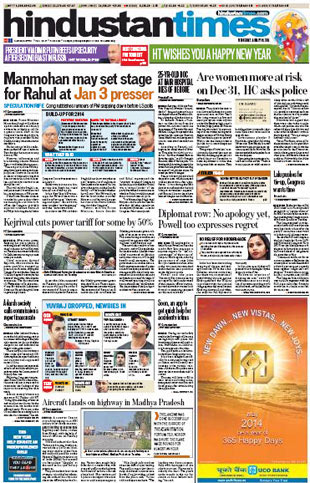
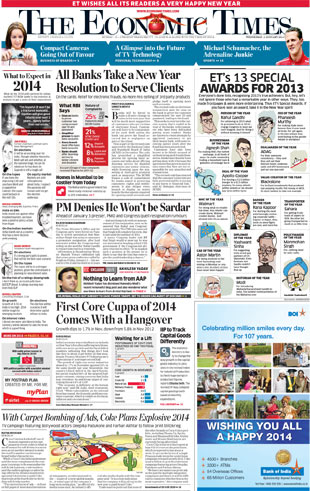
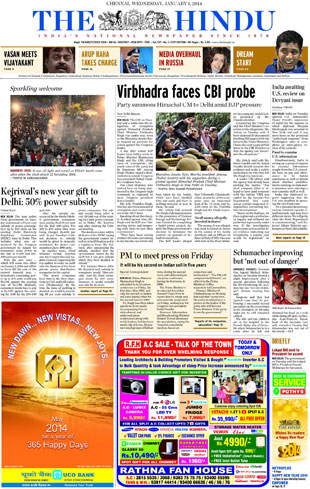
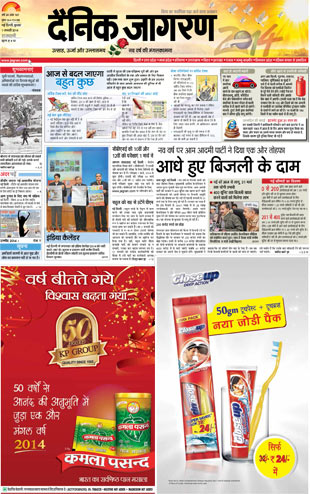
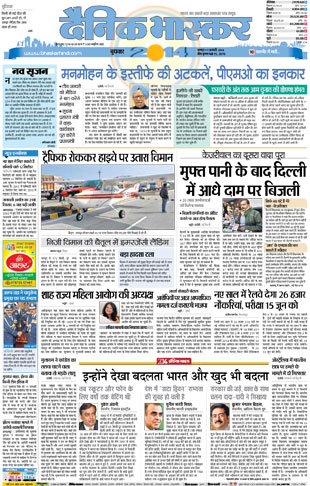
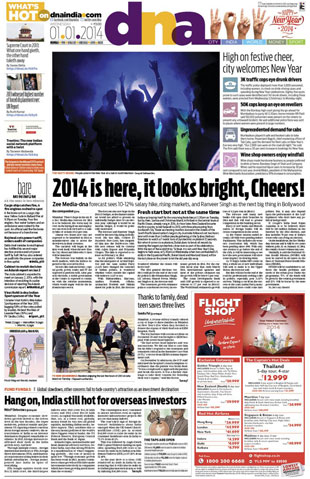
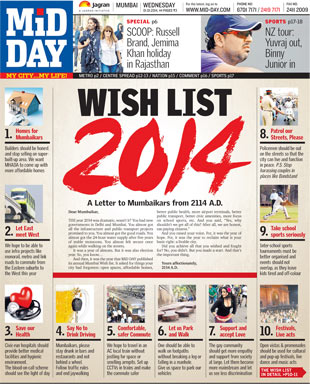
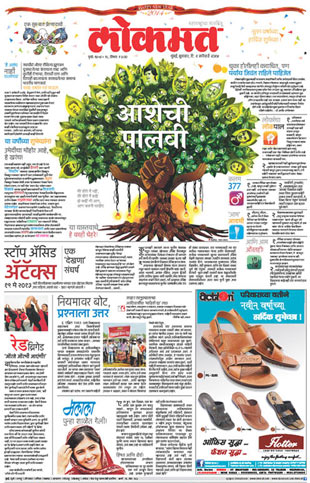
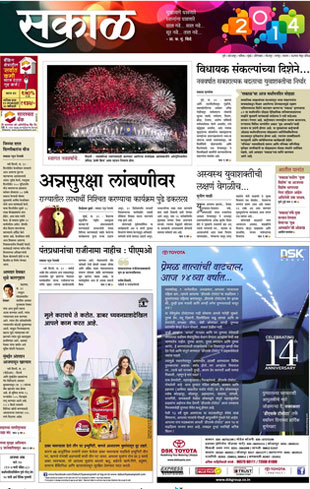
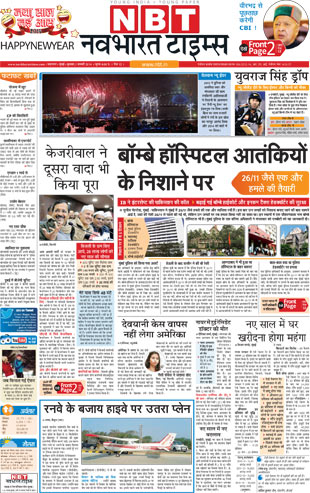
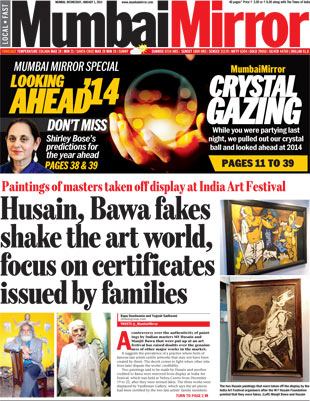
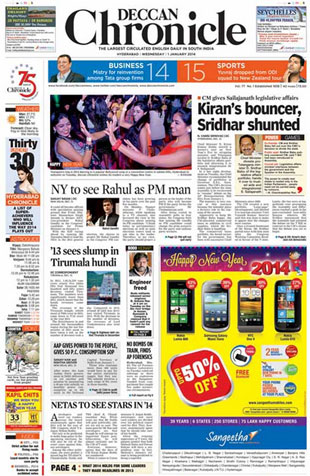
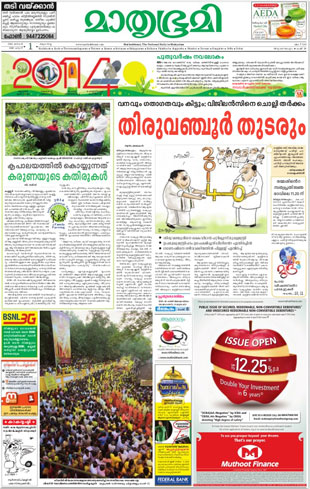
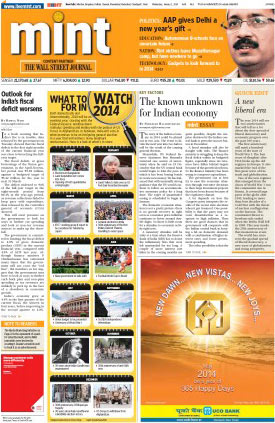
  • NewsStand: How the various Page1s looked on Jan 1, 2014


    A scan of the front pages of select national and regional dailies on January 1, 2014:


    The Times Of India

    Hindustan Times

    The Economic Times

    The Hindu

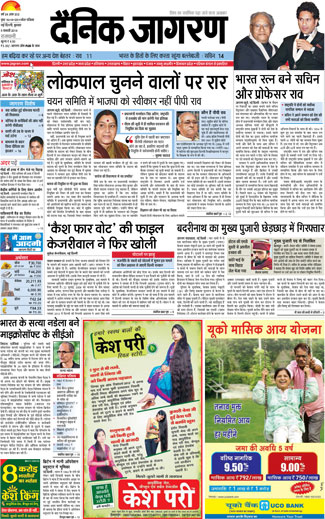
    Dainik Jagran

    Dainik Bhaskar

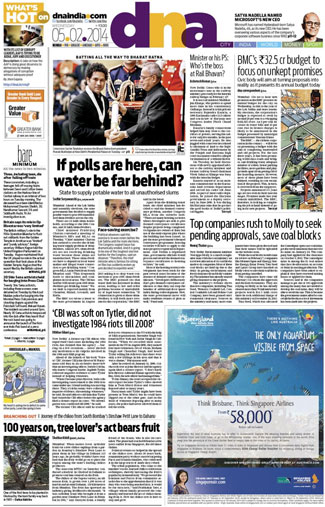
    dna

    Mid-Day

    Lokmat

    Sakal

    The Indian Express

    NBT

    Mumbai Mirror

    Deccan Chronicle

    Mathrubhumi

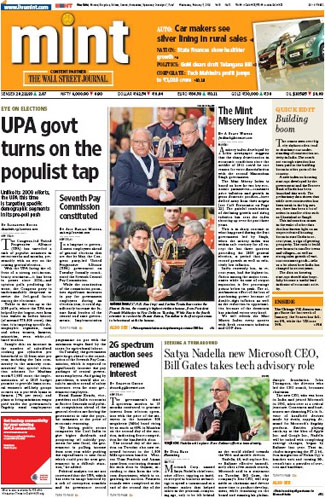
    Mint
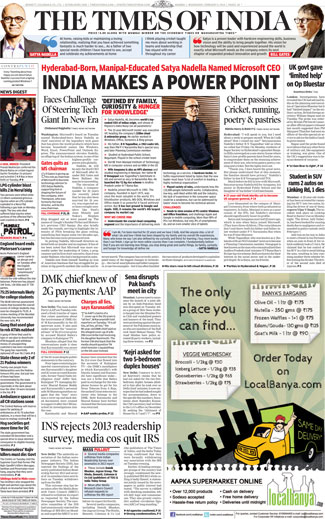
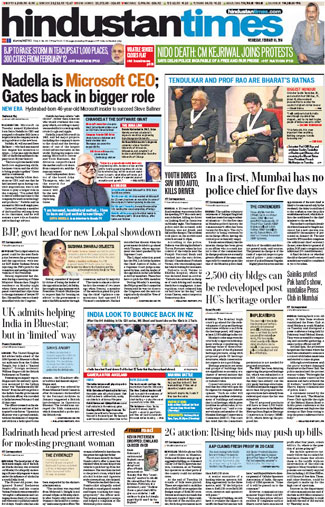
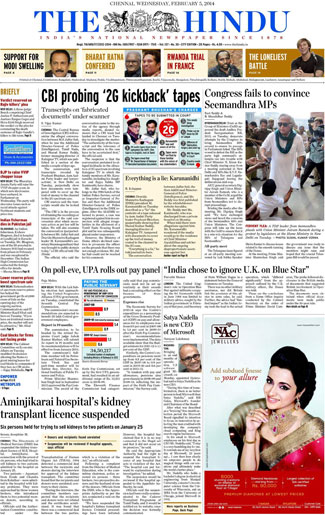
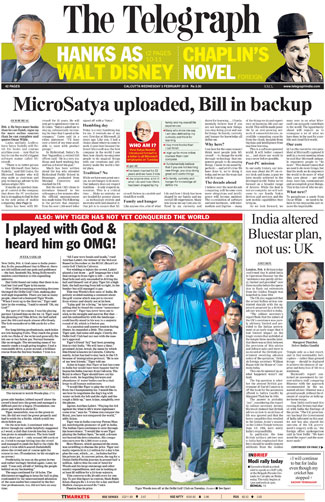
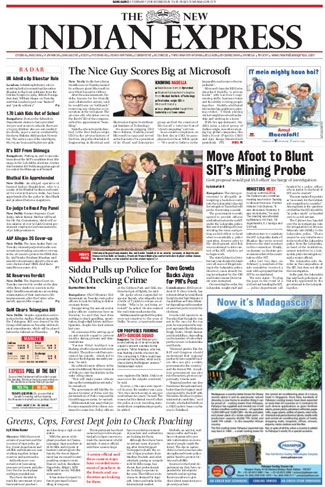
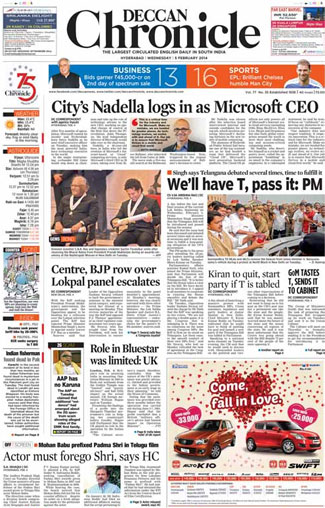
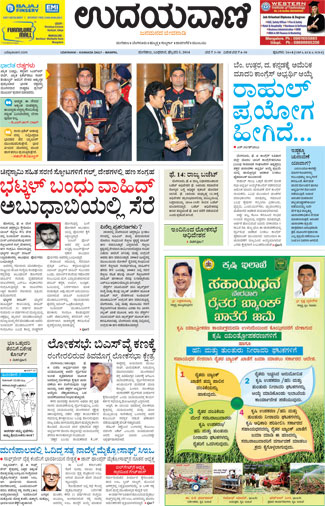
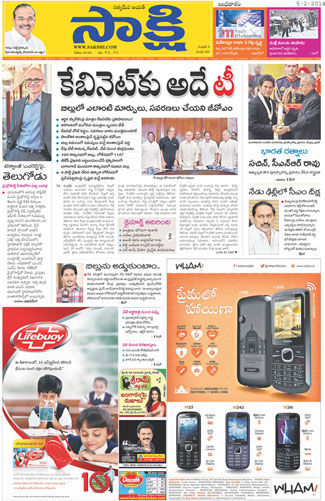
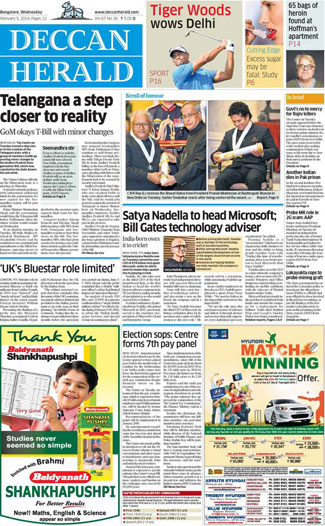
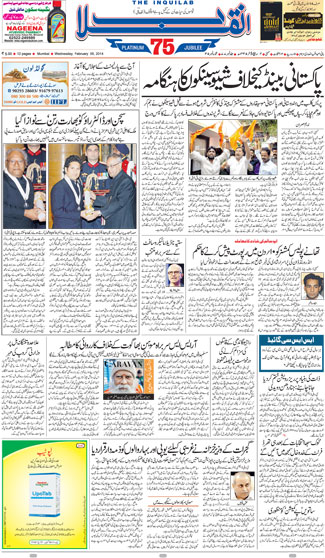
  • NewsStand: How our Page 1s covered Satya Nadella garu’s ascent

    NewsStand comes back after a long gap with the coverage of the news on the appointment of Hyderabad-boy Satyanarayana Nadella to the post of CEO of Microsoft Corp. We’ve brought in the Page 1s of some Telugu papers too as well as those from Karnataka (specifically Manipal where Nadella garu studied his engineering). PS: Garu, for those who aren’t familiar with the Telugu word, is an honorific suffixed to the name like the Hindi ‘ji’.


    The Times Of India

    Hindustan Times

    The Hindu

    The Telegraph

    Dainik Jagran

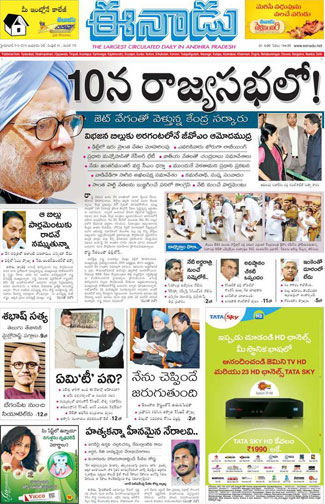
    Eenadu

    dna

    Mint

    The New Indian Express

    Deccan Chronicle

    Udayavani

    Sakshi

    Deccan Herald

    Inquilab