
Category: PRINT MEDIA

  • Sanjoy Narayan & Shantanu Bhanja on the ‘refreshed’ Hindustan Times: Taking ‘bad news’ head on

    Sanjoy Narayan & Shantanu Bhanja

    By A Correspondent


    Getting news media top brass to take questions on their product isn’t easy – either they don’t trust media websites or other news journalists or just don’t think it’s critical for them to speak to journalists even though expect their own staffers to chase news stories. MxMIndia though has been fortunate to get many of them to speak on their moves – especially those from the mainline dailies.


    Earlier this week, leading daily Hindustan Times introduced a refreshed look with some changes in the design, but most significantly an innovation in the form of a slim tearaway sheet on top of the Page 1 of the main paper called the ‘Page One Plus’.  To coincide with the refresh (created by the HT Design team led by Anup Gupta), a new multiple media brand campaign by Lowe Lintas, New Delhi was unveiled.


    In an extensive emailed interaction with Editor-in-Chief Sanjoy Narayan and Shantanu Bhanja, Business Head and Vice President – Marketing, the editor-marketer duo take questions on Page One Plus, the editorial direction and why paid content in the form of promotional features hasn’t gone away from the paper.


    01. We’ve been hearing about the changes that have been introduced, but one had expected it to happen after your new managing editor Nicholas Dawes had settled in?

    We have been working on the refresh for almost a year. No such big initiative is ever dependent on one individual; even here, it has been one big, multi-department project driven by the editorial, design and marketing teams. As for Nicholas, we are delighted to have him on board. His experience and expertise is going to further strengthen the product, as we seek to make continuous improvements day after day.


    02. The use of the tearaway, slim jacket as an editorial add-on is interesting. Since HT also carries full ad jackets and full page ads on Page 1, how will the ‘Page One Plus’ be configured in the pagination (given the various full-page ads)

    Page One Plus, which is an industry-first concept, is an integral part of the regular Page One, and research and preliminary findings point to very high likability because of the utility value. Ad jackets and full-page ads will continue the way they have been, giving advertisers the high impact they desire.


    Any size restrictions for ads on Page One Plus?

    We have put together a set of advertising norms for Page One Plus. The endeavour is to give readers sufficient news and information, while also giving the advertiser some additional premium advertising space which they have not had hitherto.


    03. Can you take us through (the investments in) production facilities that led you to introduce the ‘Page One Plus’?

    We have invested substantial amounts in our printing facility in Greater Noida, following on from our previous large investments in Mumbai printing facilities, to build significantly higher capacity both in terms of pagination and number of copies.


    04. We notice that the ‘Page One Plus’ has been introduced only in Mumbai and Delhi. What about the other editions which have also gone in for a new look? Will we see a Page One Plus-like innovation also in Hindustan or Mint?

    To begin with, Page One Plus has been launched in our Delhi-NCR and Mumbai editions. We are evaluating the option of taking it to other cities we are present in.  At the moment, there is no plan for incorporating it in Hindustan or Mint.


    05. Was the movement of business to the main paper in the Delhi edition caused by the addition of the ‘Page One Plus’?

    Not really. In Delhi, we moved HT Business to the main book following reader requests over the last few years. Research indicated that readers preferred business and industry news to be part of the main newspaper; incidentally, it also helps advertisers who have been keen addressing readers of the Business section within the Main-book environment.


    06. Could you give specifics on the new editorial features and columnists? Any new columns, any replaced/dropped?

    We’ve introduced a number of new features and columnists as part of this refresh and you’ll see them soon. We continuously evaluate our list of columnists and try to ensure we have an eclectic mix of writers. We’ve also introduced a community column. For instance, we had a Delhi-based Maharashtrian writer contribute to the Delhi edition on the occasion of Ganesh Chaturthi.


    07. Your last para notes: “…we want to change the depressing narrative of news around us. From corruption and inflation to crime against women, there’s so much negativity around us. Let’s come together to fight this”. What does the “change the depressing narrative of news around us” mean? On Day 1 of the new-look we’ve seen the Delhi edition leading with the UP story while Mumbai had Leander Paes taking pride of place on the top? So, will the new HT be a more, activisty paper in the civic sense rather than politics, corruption and government inefficiencies

    News today is full of negativity – from stories of strewn garbage to crime against women and deaths due to bad roads to the state of education that continues to plague a 21st century India. HT’s approach will be to take this ‘bad news’ head on. We will put the spotlight on these issues — both local and national — that affect our readers, cover them relentlessly, partner citizens and impact change. We will, together, make news better. The ‘Let’s Make News Better’ campaign is a statement of our vision, and is aimed at joining hands with our readers and impacting change around us.


    Therefore, HT will certainly focus on civic issues which impact readers, but also continue to report and follow up on all types of issues ranging from politics to corruption and government inefficiencies, which interest and affect the readers just as much.


    08. With the rising dollar rate, there’s been a pressure on newsprint and production costs. HT too has dropped some pages over the months (in Mumbai at least, unsure about Delhi). In the refreshed paper, do we see the return of any of the features done away?

    While the industry has been forced to cut columns, we have not dropped any special features, sections or columns. The refreshed paper will, in fact, see a few interesting additions.


    09. Will we see any revision of cover price in the near future?

    Price revisions will happen from time to time, depending on the economic situation, as indeed they have happened in the past when the cost increases necessitate that.


    10. While some editorial changes have been introduced, what stays unchanged is the ‘paid content’ or promotional features? Given that we don’t see too many paid-for features on the allocated pages in HT, why don’t you dispense with it altogether rather than bring disrepute to the entire newspaper? Although HT City and HT Café carry a disclaimer, the ‘sponsored’ features are not identified, making one wonder whether all the content is sponsored. Also, not including finer details on the events – the name of an outlet/venue/channel/programme – takes away from the reader experience. So why keep it?

    We have remained true to our editorial values, ensuring that we are carrying due disclaimers for our readers whenever there are promotional features in any section, and we will continue to do so.


  • The TOI Story & inside the mind of Samir Jain


    By Sangita P Menon Malhan


    Some interesting insights into Samir Jain’s personality emerge from the days when he was taking on the venerable editors of The Times Group. In many ways, it was also a decisive phase in that it laid the ground for the changes that happened later.


    He may have developed some dislike for journalists and the predominant position they enjoyed. He was uncomfortable with the fact that while the newspaper’s proprietor kept a low profi le, it was the editor, his employee, who was in the limelight. Politicians and bureaucrats pandered to the journalist while the proprietor was a mere bystander.


    There are yet others who concede that there may be a ‘hidden agenda’ against journalists, besides the imperatives for change. An editor, who worked closely with Samir Jain after the reorganization, but did not want to be named, admitted that Samir Jain did hold journalists in ‘deep disdain’ at that time.


    He recalled that sometime in 1986, The Times Group hosted a party in honour of Krishna Kumar, then a Union minister in Rajiv Gandhi’s government. When it was time for dinner and the guests were being ushered in, Krishna Kumar pulled a chair for Girilal Jain to sit. ‘I was standing close to Samir Jain,’ narrates the journalist; ‘he (Jain) said, “This party is thrown by the company and me. Is it not strange that the minister should pull the chair for the editorand not the owner of the paper?”‘


    So determined was Samir Jain to prove that he was superior to the journalists and to keep them in their place that he issued a directive that everyone be addressed by their designations. So, senior editors, who until then had been calling him by his fi rst name, had to switch to calling him JMD (joint managing director) and later, VC for vice chairman.


    When the government had taken control of BCCL for seven years, Samir Jain, then in his early twenties, believed that certain journalists of the paper had started it all by first making allegations of irregularities against the company to the government. It had been a difficult phase, and Samir Jain blamed the paper’s own journalists for creating the mess.


    ‘Samir carried the memory of those years. He thought the editors had to be shown their place,’ recalled Baljit Kapoor. ‘He thought they considered themselves too important. “After all,” he said, “the editor is just one of the employees of the company. He is just a processor of news.”‘


    Samir Jain wanted more control over the newspaper. Editors were taking their autonomy too far. Jain found that he could not appoint people of his choice; that it was tough to get something of his liking included in the paper, among other such ‘restrictions’. These stumbling blocks bothered him. In his early days, one of the top editors tried to belittle Samir Jain by treating him like a probationer. ‘Ladka theek hai. Lekin usey abhi padnaa hai, seekhnaa hai. The boy is okay but let him educate himself fi rst,’ he said. Samir Jain hated that. As a counter, he began circulating articles from The New York Times and other newspapers. He wanted it to be known that he was already educated, and contrary to the editor’s comments, well read.


    He began taking the editors head-on. At one interaction, he is believed to have said: ‘Please, all you editors listen. If you have an appointment with the prime minister, and if I call you, you must cancel the appointment and come to me.’ That quote has stuck. Although editors now make reference to it in a light-hearted way, it is unlikely that anyone violates that diktat even today. When the sensei says something, it is followed.


    He had trouble over the fact that while the goodwill generated by a newspaper accrued to the editor, the negative fallouts went over to the owners. ‘He would often say, “The balance of inconvenience is always with me.” He wanted his team to be completely on his side and fully with him, no matter what he did. And, when that did not happen, there was friction between the sides. Such situations bothered him, and they did not end well,’ recalled Pradeep Guha.


    Independent observers outside the organization have also corroborated Jain’s dislike for journalists. In his acclaimed book, Paper Tigers, Nicholas Coleridge writes: ‘Samir Jain views his editors and journalists as elements whose power needs to be constantly diffused (“those blue-blooded Brahmins of the editorial floor”). He takes pleasure in giving the best offices to his managers instead.’


    A rebellious streak, a certain amount of irreverence for convention and tradition – that constant and regular inverting of the pyramid persist even today. Does he go about it in an authoritarian, my-word-no-matter-what manner?


    Here again, there is no single or simple view. There are those who believe that in his single-mindedness, he brooks no resistance though his manner and approach may be understated. One of the edit page editors at the Times House said, ‘Samir Jain has established his own regime. His staff has to understand and accept him. The VC will not interfere in the day-to-day functioning of the newspapers.


    He is more the Puppet Master. He will throw an idea at you and have you fi gure it out. But you are expected to figure it out. ‘He likes high-quality discussions. He will never call a reporter for a discussion. It will mostly be editors or people on the edit page. He will size you up and treat you accordingly. But he is soft-spoken and gentle and will never give you a direct command. It will all be hints and subtle suggestions, and you will have to pick up cues.


    That makes him both interesting and difficult, depending on how much you are willing to invest in him.’ I asked this editor whether Samir Jain is temperamental, as is often alleged. ‘I have never seen him lose his temper. The VC likes equals. One would often see Swami (Swaminathan Aiyar, former editor-in-chief of The Economic Times, who continues to write a column for the paper and is a consulting editor) and the VC standing in the corridor and talking like old friends. When in a good mood, the VC will start his conversations with his Bengali editors with “Kaemon aachho?” (how are you?). ‘The problem is that most journalists don’t like to be given sermons, and certainly not by their publishers. They will not listen. And that becomes a point of confl ict,’ he said.


    Shubhrangshu Roy, editor of the Financial Chronicle, who earlier served at the ET, drew up a sketch in a matter-of-fact way. ‘Samir Jain is not the despot he is sometimes made out to be. He is not an anarchist. In fact, he is down-to-earth. I have never seen him lose his temper with anyone. He is actually a compassionate man. People have this terrible habit of demonizing him. One either hero-worships him, or tries to make a monster of him. ‘Samir Jain is an editor-publisher; he isn’t anti-journalist. He is, in fact, a better editor than most editors I’ve known; he knows his journalism. Samir Jain is the Holy Ghost of The Times of India – intelligent, intellectual,’ Roy added. He believed that editors have had trouble with him because of their own vested interests somewhere down the line. ‘Every editor who has worked with him has done so with a huge self-interest and an even huger ego,’ he argued.


    ‘In the contest between the publisher and the editor, the publisher wants to be the editor of the newspaper as much as the editor wishes to step into the publisher’s role. There is the classic confrontation between the two. But he tried to delink or demystify this. He transcended it. As an observer of journalism, I truly believe that Samir Jain is indeed a quintessential editor,’ Roy said.


    It is quite clear from talking to his editors that Samir Jain takes a keen interest in what gets carried in the editorial columns of his newspapers, even to this day. The intervention could be subtle – a gentle cue or a hint, sometimes leaving the editor to struggle with deciphering the full import and intent behind it. Or, given his fascination with good language, Samir Jain could actually get down to performing the task of a sub-editor. T.K. Arun, who was the edit page editor at ET when I met him, told me: ‘The VC is an excellent sub (sub-editor). Occasionally, he reads through articles published in the paper and goes about marking out superfluous words and expressions. He is very particular about the correct use of the definite article. In the old days, one thought that the lalas did not know anything about journalism, leave alone language. But he is exceptionally well read’.


    Abheek Barman, consulting editor at ET, seconded his colleague’s comment. He said: ‘The VC is a great one for semantics. He particularly likes interesting words and is very fond of neologisms. Once I used the word “zeitgeist” (German for the spirit of the times) in his presence, and he remarked: “No one uses words like this any more.” On the one hand, he wants the language in his newspapers to be simple and easily understood. But at a personal level, he likes using words that would make a person think’.


    Bal Mukund Sinha of the Navbharat Times said: ‘He pushes your boundaries. He will drop a hint, a clue, and you are encouraged to interpret it. If you get it wrong, he will gently tell you what he had envisaged. He will also often pretend that he knows little about the subject being discussed, and as you wax eloquently, he will listen patiently. Then, he will spring a “guru mantra” at you which will sum up the entire matter. His mind is so powerful…also…because he is so spiritual.’


    In many cases, the intervention initially leaves his editors aghast, until they come round. Samir Jain once came up with the line that it is alright to use words from the English language in the group’s Hindi newspaper. He believed that newspapers are not meant to nurture language. ‘”That is why in our English newspapers, we do not carry Shakespeare; we carry (author) Shobhaa De’s line which says, ‘That neighbourhood boy is very namkeen.‘ People understand this language and speak like this. And we must be able to relate to them,” he would say,’ said the editor from NBT.


    On another occasion, Samir Jain suggested that his Hindi daily do a story that English should be pursued by NBT readers for better career prospects. He wanted the newspaper to conduct a survey, asking readers whether their children studied in English-medium schools, and if so, why? “Expose the puritans,” he would say. “Be real; be practical.”‘ His suggestion wasn’t taken very well but the survey was undertaken. ‘We found out that he was right. Most NBT readers, who were questioned, did aspire for their children to be fluent in English. This is how he intervenes,’ Sinha explained.


    A member of the editorial team at ET said: ‘The VC is civilized and evolved. He will share his views with you. If you understand what he is saying, all the better for you…for you will have all the freedom you need to write your edits. And if he likes what you’ve written, you might even get a small note, with just an ‘S’ for a signoff, and a couple of points written almost illegibly.’Autocratic he may not be. But Samir Jain can be overbearing, like handing out diaries to all the editors, asking them to bring those to their meetings with him, take notes, and refer to them at subsequent interactions, and, being a little uncomfortable when the process isn’t followed by the oddball. Notebooks are promptly arranged for those who come to meetings without them. One is also supposed to write in them as he talks and shares his perspective.


    Here again, some parts of his speech could seem nebulous. ‘Trying to make sense of what he says could sometimes be an uphill task. That is true,’ said an editor at the Times House, without wanting to be identifi ed, of course. ‘He often cites some Vedic philosophy or complex analogies. His gyan (knowledge) monologue sessions are called “chemotherapy sessions” because it becomes very difficult to put up with them.’


    ‘When he doles out some religious funda, and sees that our eyes are glazed over, he would say, “I know you are non-religious people, if not atheists. Even so, you must read the Ashtavakra Gita, which was written as an atheists’ manifesto.” He loves it and knows it by heart. That is clearly his favourite book. But he will never insiston any point. He will generally suggest something like “Perhaps you could take a look at it, and see if you can write something,”‘ the editor said.


    ‘But the sessions with him have to be endured. Those are unstructured monologues. They could start with just two or three people. But if the conversation got interesting, he would keep calling more and more people. He would mention some names and say, “Unko bhi bulaa lijiyey” (Call them as well).’


    ‘And no matter what you are doing or are about to do, you are expected to just go upstairs, to the fourth floor,* equally perplexed, scribble pad in hand, of course, and listen to him basically talk to himself. But the sensitive part of all this is that he will never call you late in the afternoon or evening because he knows that that time is crucial for the edition to leave.’ (* The Fourth Floor is the Mount Olympus at the Times House, Delhi – a hallowed precinct that houses the offi ces of Chairman Indu Jain, Vice Chairman Samir Jain, Managing Director Vineet Jain and the top management of The Times Group. Visits to this part of the building are,more often than not, eventful. Special guests are entertained in the lunch room here. Entry is ‘by invitation only’).


    The editor went on: ‘One way to escape the gyan overdose is to feign a cough or perhaps sneeze in his presence. If you do that, he will immediately tell you, “You are not well. Perhaps you should leave.” By the way, he fusses over his health a lot, sometimes bordering on the hypochondriac. He has a sensitive throat. He is acutely averse to pungent smells and scents – perfumes, pickles and scented hair oils.’


    I was also told that Samir Jain has a time fetish. He will not be late. He usually comes in to office around 10.30 in the morning when the News Management Committee (NMC) meeting is supposed to start, and, if by any chance, it isn’t on, he is disposed to being rattled. On occasion s, he will mutter that they are ‘slackers’. ‘He doesn’t take very well to this lack of order and discipline,’ said one of the members of the NMC at the Times House The other thing about his morning ritual is that he will walk into the editorial side of the offi ce, put his head into a cabin and talk a bit with one of his editors. Or he may choose to ‘prevail upon’ the NMC. ‘He will sit and watch each and every one. Even if he is not directly looking at you, you better be aware that his eyes are on your every move,’ chuckled the man.


    There is a lighter side to Samir Jain, as emerged during a conversation with Gautam Adhikari. I met him in New Delhi in February 2002, the fi rst of three meetings. ‘One thing that most people do not know about Samir Jain is that he has a funny bone in him; he has a huge sense of humour; he can be an absolute imp. Sometimes during meetings with the staff, depending on what struck him as funny, particularly all the nodding and yesmanship, he would wink at me, and later, we would talk about it, and he would burst out laughing,’ he remembered. ‘There is so much to the man. He used to enjoy the comic, Asterix. Inspector Clouseau from the Pink Panther series was a character he was fond of. He liked Agatha Christie’s books and stories with suspense and wit. He has read every book written by P.G. Wodehouse and is very fond of Wodehousian words and sentences. Being from the same school, we spoke a similar, stylized language sometimes. So, we understood each other very well. He had also read enough Shakespeare to quote him back at me. Our conversations would be explosive,’ Adhikari reminisced.


    ‘He loved the stage, drama and musical comedies just as much as he loved the serious stuff. He would ask me to explain the central theme, the essence of a play to Meera (his wife), and then come up with his own interpretation,’ he recalled. ‘But very few people get to see that side of him. They think that he is either a radical innovator or a media mogul who fl oats in a sort of religious ether. But Samir Jain is far more interesting, far more intriguing,’ Adhikari maintained.


    Jug Suraiya is a raconteur with a sense of self-deprecating humour, who in his writings will take potshots at all things ‘sacred’ including The Times Group itself, always going for the ‘jugular’. Senior editors talk about the equation between Samir Jain and Suraiya, who could be the best of friends one moment and arguing animatedly the next. That makes Jug Suraiya one of the chosen few who can provide an incisive look into Samir Jain. I met this aloof, pensive, almost reclusive writer at the Times House when he was in charge of the edit page. He vaguely recognized me from my days at the paper, heard me out and proceeded to answer my questions dispassionately.


    ‘Samir Jain is a visionary,’ Suraiya said.14 ‘He wanted to cater to an entirely new readership. He did not want to listen to precepts,’ he added. ‘When Gorbachov (former president of the Soviet Union) was going to visit America, I wrote a singeing editorial which was supposed to be the third edit (the slot meant for light, off-beat editorials). But Samir liked it so much that he made it the fi rst edit, and said this is how editorials need to be written,’ he recalled. ‘He is a maverick genius. He likes to take risks. Money means nothing to him. Like a samurai, this is, for him, a game. It may even be a spiritual exercise,’ Suraiya surmised. ‘Samir Jain belongs to no one particular school of thought; he comes from the world of imagination.’


    Another person with a long association with Samir Jain, this time from the marketing team, had this to say: ‘Samir Jain is the Howard Hughes of India; a mystery man with an incredible mind. He has no material or worldly ambitions and that seems strange considering his focus on the business. He has no passion for sport, art or money in the raw sense of the word. He is, therefore, highly focused only on his goal.’


    Samir Jain is also mentioned as being empathetic and compassionate. But here again, there are sharp paradoxes to the man. He could swing between supreme unconcern, and an empathy that is so extreme as to be almost unnerving. Guha still cannot get over Samir Jain’s ‘acts of empathy and kindness’. When he spoke to me in August 2011, Guha remembered two instances with emotion. The first was when Guha’s father passed away. Samir Jain landed up at his home in Mumbai with homecooked meals in boxes, saying, ‘None of you must have eaten. Please have this.’ Samir Jain and Guha may no longer be as close as they once were. But the latter insisted he can never forget that gesture.


    ‘And on another occasion,’ Guha recalled, ‘he came back from a trip. He had bought shoes for me, and proceeded to fit my feet into them. He had an idea of the size and of the fit. How did he even do that? It was very surprising. ‘As a person, if he likes you and knows that you are with him fully in everything he does and that your interests – the greater good of the company – are aligned with his interests, then his is an association to cherish,’ Guha maintained. ‘He will look after your needs, your comfort – almost dote over you. He will let you be and allow you to take risks. And he will go all the way to support ideas that are aligned with the overall goal,’ Guha added.


    Several editors I met spoke of how the VC would personally serve food on to their plates at parties, or call for tea and proceed to make it for them. There have also been instances of a gentle reprimand at work, being followed by an invitation to dine at his home.


    Published with the permission of the publisher and writer


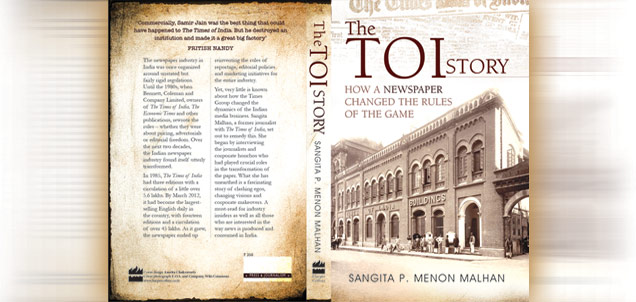
    The TOI Story

    (How a newspaper changed the rules of the game

    By Sangita P Menon Malhan

    HarperCollins Publishers India

    Cover price: Rs 350*

    Paperback, 261 pages

    (check amazon.in, flipkart.com for a lower price)
     

  • Mahabharat characters come alive thanks to DDB Mudramax OOH

    By A Correspondent


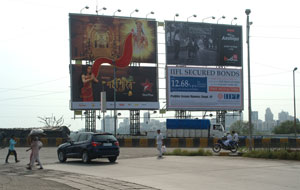
    Star Plus has partnered with DDB Mudramax OOH to create an awareness and buzz for the launch of its epic serial Mahabharat that starts today (Sep 16).

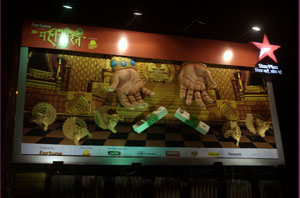
     

    A hi-decibel OOH campaign  has been executed across 100 plus towns in the country from metros to LC1 towns. The emphasis has been on innovation route to garner the desired eyeballs and buzz.


    Spencer Noronha

    Said Spencer Noronha, VP, DDB Mudramax OOH: “The brief was to create impact and buzz for Star Plus’ Mahabharat. We selected the most impactful media vehicles clubbed with three “first of its kind” innovations and ensured that the awareness and recall generated for the show launch is quick as well as lasting. The idea was to bring the billboards to life by recreating famous scenes from the epic on ground.


    The route we used was to put up large 3D sculptures on the billboards ranging from 17 to 22 ft in height emerging out of the billboards. The three innovations of Arjun, Shakuni and Draupadi look dominating and dwarf the conventional innovations done so far on the OOH platform.  These innovations have been entirely conceptualized and designed by our in-house OOH creative team.”





    Nikhil Madhok

    Nikhil Madhok, SVP Marketing added: “The work done for Mahabharat by DDBMudramax OOH has been outstanding. The innovations have been novel and the scale of execution has been a first of its kind in the country on the OOH platform. Star Plus always strives to disrupt and this execution is another example of our continued efforts in that direction.”


    Anirudha Pawar

    Anirudha Pawar, DGM, DDB Mudramax OOH explained: “We have installed large sculptures on strategically located high impact billboards in the city. We hired professional sculpture artists to ensure that the final output comes to life especially as it involved recreating human form. Getting all three sculptures ready and put up simultaneously at the start of the OOH campaign was a mammoth task and took detailed planning on our part.”


  • Hindustan goes ‘live’ in Ranchi

    By A Correspondent


    Hindustan launched a new offering ‘Ranchi Live’, a 6-page companion for readers of Ranchi.


    ‘Ranchi Live’ has dedicated sections like Local news, Career, Technology, and Entertainment, notes a communique adding: “There are special sections where news from campus is featured in a manner which is easy to consume and is of interest to youngsters. Technology, Gadget reviews, career tips are featured in dedicated sections on specific days of the week.”


    ‘Ranchi Live’ is circulated free-of-cost with the main paper.


  • ABP sells Businessworld to undisclosed investors

    By A Correspondent


    Anurag Batra

    Anurag Batra and Vikram Jhunjhunwala have bought the Businessworld business from ABP on behalf of some undisclosed investors, according to a communique issued by a PR agency representing Mr Batra.


    Mr D D Purkayastha, MD & CEO of ABP is quoted as saying: “We have divested Businessworld business. The brand and the publication will continue under the new owners with Prosenjit Datta as the Editor.”


    Prosenjit Datta

    Mr Prosenjit Datta, Editor Businessworld added: “I expect the magazine and the brand to scale newer heights.”


    Businessworld began publication in 1981 and is the second-oldest business magazine in the country. It has won many reporting awards in the past year and went fortnightly in February 2013 after nearly a decade as a weekly magazine.


  • Frontline goes beyond Bollywood in issue on 100 years of cinema

    By A Correspondent


    Frontline, the fortnightly news magazine from The Hindu publishers Kasturi & Sons Ltd has launched an issue that celebrates 100 years of Indian cinema. This issue of the magazine features interviews with eminent personalities such as Amitabh Bachchan, Gulzar and Mammooty along with articles on censorship, the evolution of film music, the fan club phenomenon and the portrayal of women in films.


    Well, this is not the first time a publication has looked at the issue. But what makes this stand out as the articles look beyond Bollywood and throws a spotlight on movie-making in the South and the North East.   The issue is is priced at Rs 50 and hit the stands yesterday (Oct 2)


  • Sold! Ashok Agarwal & fly’s 14% stake in Amar Ujala to founder Rajul Maheshwari for Rs 150cr

    By Arun Kumar


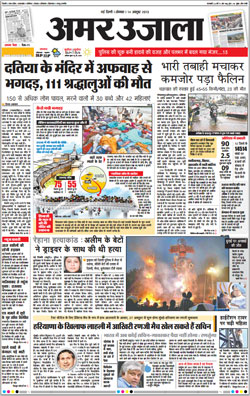
    Amar Ujala Publications founder Rajul Maheshwari along with his family will purchase the 14 per cent stake of the Ashok Agarwal and family for Rs 150 crore, two persons familiar with the development said, a move that will consolidate ownership in one family.


    The company publishes Hindi daily Amar Ujala in northern India.


    The deal, for which an agreement was signed recently, will be funded through internal accruals and personal debt by the promoters, one of the two persons said. Mr Maheshwari may sell shares back to the company in a buyback offer later to repay debt.


    The agreement is part of the settlement with the Ashok Agarwal and family, which had filed a complaint against its partner at the Company Law Board (CLB), alleging operational mismanagement. Rajul Maheshwari declined to comment.


    After purchasing the stake, the Maheshwaris are planning to reduce the company’s capital. “To reduce the paid up capital, the company will buy back its shares from its shareholders, which may either be extinguished or kept as treasury stocks that can be issued to the new set of investors in future,” said one of the persons cited above.


    In the open offer these group companies will have the option of selling the shares and generating cash. “All the parties with respect to the memorandum of understanding are present in court and they confirm that they have voluntarily entered into the settlement and the terms of the same are binding on them. The parties shall abide by the term of the MoU,” the October 8 CLB order said. “The company (Amar Ujala) shall have the liberty to approach the CLB in term of the prayer of the present application for seeking appropriate orders under Section 402 of the Act for consequent reduction in the share capital, in the event the company buys back the shares of the petitioners (Ashok Agarwal and family) under the MoU,” said the order.


    Last year, the Maheshwari group acquired American PE fund DE Shaw’s 18 per cent stake for about Rs 140 crore. DE Shaw was locked in a bitter battle with the promoters when it decided to divest its stake as part of its ‘exit right’ after the publisher failed to list within four years of its investment under an agreement. It asked the Indian promoters for a 25 per cent return on its investment, which was contested in the court.


    Source:The Economic Times

    Copyright © 2013, Bennett, Coleman & Co. Ltd. All Rights Reserved

    Licensed to republish


  • Sakal Media Group partners Malaysian PM’s nation/state transformation plan

    By A Correspondent


    The Pune-headquartered Sakal Media Group (SMG) has partnered with Pemandu ( Performance Management and Delivery Unit) of the Malaysian Prime Minister’s Office (PMO) to enable a transformation process which can help change a state or a nation in any and every sector within a short-time frame.


    This methodology has got global recognition from the likes of Harvard, Princeton, AT Kearney, World Bank and 14 countries who participated in the Big Fast Results (BFR) programme of the Malaysian government.


    Abhijit Pawar

    This is perhaps for the first time, that a private sector company like ours is actually partnering with a government entity in this particular field,” said Abhijit Pawar, Managing Director of the media group.


    Sakal Media Group’s ‘Delivering Change Programme’ has been endorsed by none other than the Planning Commission of India’s ‘India Backbone Implementation Network’ (IbIn), notes a communiqué. “IbIn has made special mention of Sakal Media Group’s successful, Pune Bus Day on its website, http://ibinmovement.in/   with endorsement for the ‘Delivering Change Programme’ also coming from India@75 (http://www.indiaat75.in/),” it adds.


    “The past one year, has seen the Sakal Media Group undertake several, socially oriented campaigns in Pune and Maharashatra starting with the Pune Bus Day, Tanishka Women’s Dignity Forum, Freedom from Drought, Tandurust Bandobast and culminating with the Delivering Change Programme,” added Mr Pawar.


    To coincide with this, a 12-pager is being distributed in today’s edition (Oct 30) with Sakal group newspapers across Maharahstra. “Over the last 45 days, the Sakal Media Group has through its initiative ‘Maharashtra’s Expectations’ tried to understand the expectations of the people of Maharashtra about development in different sectors. The discussions not only brought out the issues in various sectors, but also gave the hope that these can be addressed. It is the first attempt in the State and also the first attempt by the media to understand what the people want. While this brainstorming was on, many people wanted to know, ‘what next?’ At a time when everyone only talks about problems rather than solutions, this question is obvious. We will not stop here. Our focus is on finding solutions. We therefore bring you this special issue which talks about solutions and their implementation. It is our ‘Delivering Change Programme’ which will bring about this change. From brainstorming and public awareness, the Sakal Media Group is now moving towards action,” the communiqué signed by Mr Pawar explained.


  • [RECALL] Inside the Times 175 years’ celebrations


    It’s celebration times in Indian media as The Times of India completes 175 years of existence. The exercise was kicked off in right earnest last fortnight with much fanfare. We posed a few questions on the celebrations to Rahul Kansal, Executive President of BCCL. And since it was Mr Kansal who was giving us a low-down, we also spoken on branding issues and asked him for finer details… beyond what’s already carried in the announcements.

    A veteran adman (Deputy Managing, Leo Burnett – 2000-02; Exec Director, Mudra 1994-2000 and Exec Director, Ogilvy 1989-94), Mr Kansal has been with BCCL since 2007, initially as CMO and since last year as Exec President.


    Excerpts from an interaction of Mr Kansal with Pradyuman Maheshwari:


    Q. One still remembers the 150 years sesquicentennial celebrations of The Times of India. What can one expect from the 175 years’ celebration? We’ve been seeing a celebration in the paper in the form of culling the best of the last 175 years…. Could you share a few specifics?

    Well, we’ve started with celebrating India’s journey over the past 175 years, and of giving readers a glimpse of how we’ve helped lead the change in the country over this period. We’re doing daily editorial spreads mining the best material from our archives and presenting them in a contemporary context.


    We’re also doing seven books on various themes, covering the defining moments over the past 175 years in sports, cinema, society and politics. The books are being anchored by acclaimed journalists and authors like Bachi Karkaria, Jug Suraiya, Santosh Desai, Boria Majumdar, Sandipan Deb and others. The first, Sporting Times, authored by Boria is being launched on May 23 in Mumbai, by some of India’s sporting luminaries like Sachin, Abhinav Bindra and Mary Kom.


    In a few weeks from now we’ll get into the heart of the 175 years’ celebration: a powerful activation programme called ‘I Lead India’. Being launched on a scale bigger than any of our earlier such interventions, the programme is basically an exhortation to India’s youth to stop whining about all that’s going wrong in our society, and instead start doing something about it. It asks our youth to say: Enough of pointing fingers, of blaming the ‘system’, of wanting them to change. I must be the change I wish to see in the world. I (will) Lead India.


    ‘I Lead India’ will peak in early November. This will be followed by a round of celebrations covering 25-odd cities, including, hopefully, some marquee programmes in some of the larger cities.


    Q. It started on April 23…. Till when will it continue (given that the ‘birthday’ is in November).

    The ‘I Lead India’ programme will reach a crescendo on November 10 – the actual birth date. And then we’ll go into a month-and-a-half of celebrations (musical and other cultural events across various cities of India)


    Q. Other than the ads in TOI group publications, we see a Ranbir Kapoor TVC, hoardings across Mumbai . Could you share some details of what the playout is going to be? Any more TVCs being planned?

    For the 175 years’ celebration there are several print ads, the Ranbir Kapoor film, various radio and outdoor messages. Besides, we are developing seven books, some very interesting merchandise (t Shirts, mugs etc) and some other interactive ideas. There will also be a stamp from the Government of India.


    ‘I Lead India’ will have an extensive communication package including 3 TVCs and an intensive package of print, radio and outdoor advertising.


    Q. It was good to see a TOI 175 years’ celebration ad take the HT Delhi Page 1 solus (and HT granting that to TOI). Do we see similar ‘tie-ups’ elsewhere?

    HT and we always agree to take each others’ ads in our papers, so long as they are not directly competitive or denigrating the other’s brands


    Q. The sesquicentennial had in many ways seen The Times of India (the paper) take a quantum leap, turning into a modern-day newspaper publishing company. Do you wish the 175 years celebrations to help you achieve a similar transformation?

    In the past 25 years, the TOI has already become a very robust brand, at the cutting edge of technology and of modern journalistic and management practices. The 175 years’ celebration is more to dedicate ourselves to the future rather than wallow over the past. It will seek to further cement its position as ‘The Masthead of India’, and in particular, as the voice of young India.


    Q. The Times of India footprint (@150) has increased much in the last 25 years. Do we expect a nationwide celebration or restricted to the publishing centres?

    Well, our publishing centres are ‘nationwide’ now. We will have ‘I Lead India’ chapters as well as the subsequent celebrations in 26 centres around the country.


    Q. While at one level you will be obviously talking of the 175-year history and heritage and at the same time you want to portray an image of a young, dynamic, forward-looking newspaper… is there a problem doing that? How are you looking at achieving the best of both?

    To our mind, modernity and heritage must go hand in hand, if either of them is to be meaningful. A first-generation industrialist may be dismissed as nouveau riche; an aristocrat old patriarch as a bore. ‘Money’ needs ‘class’ to become a well-rounded whole; ‘success’ needs ‘breeding’. Neither is complete in itself.


    Our 175 years’ campaign looks ahead even more than it looks back. Our archival stories are presented with a contemporary context. Besides, the centrepiece of the programme ‘I Lead India’ is entirely forward-looking.


    Q. You are a brand specialist… if one were to build a brand personality for The Times of India brand, what would it be?

    a. Sachin Tendulkar: old (in sporting terms), yet young and agile
    b. Ranbir Kapoor: young, energetic, hardworking, flirtatious
    c. Virat Kohli: young, brash, aggressive, streetsmart, a wtf-attitude to life
    d. Any other


    – Sachin’s track record is unparalleled, but his age is taking him to the end of his illustrious career. The TOI will hopefully go on for another long, long time.

    – Virat is probably India’s brightest new cricketing star. But he still has some way to go to reach the stature of some of the greats that preceded him.


    Amongst the above three, Ranbir represents perhaps a more balanced mix of proven achievement, heritage and a promise that ‘the best is yet to come’. To that extent I’d say he represents the values of brand TOI a little more closely.


    Q. And lastly, some finer details:

    How many people from BCCL working on the 175 years project. How many full-time on this? And at what levels?

    The TOI Brand and Edit teams are anchoring the programme, but the whole company is actively involved. Each department is creating its own interventions and celebrations.


    We saw the print ad was crafted by Taproot. Any other agencies?

    Mainly Taproot. Shop (Freddy and Naved) will also do some bits later.


    Any agencies for activation/digital/social media/etc.

    Gopika Chowfla designs for our books, stamp and merchandise.


  • CVL Srinivas | What makes TOI a formidable media brand

    By CVL Srinivas


    The Times of India has had an amazing journey of 175 years. It occupies a very unique position in the Indian media landscape. I grew up reading The Times of India. In my later years, as a media planner and buyer I have actively dealt with the TOI group. From 2008-2010, I was an employee of the TOI group in its Private Treaties now called Brand Capital) division. Having worked in media agencies or consulted for startups for pretty much the rest of my 20-odd years in the industry, the only time I didn’t have to explain what I did for a living was when I was employed with the TOI group.


    I have always admired the way TOI has built its own brands which in turn helped build some of the country’s best known brands. No matter what the purists might say about its editorial style or whacky headlines, it is a media brand that has not just moved with the times, but has often defined it. If the greatest form of flattery is imitation, then TOI surely has been the leader. Most if not all of its practices have been followed by many of its competitors.


    Given the challenging times that lie ahead for print media in general and English print in particular, it will be interesting to see how TOI manages to keep its lead. The forays into language dailies and the increased thrust in digital will need to work. Given the group’s track record, there is every chance that we will see more innovation in the years to come as the transformation from a largely English dailies led media business to a more diversified media company takes place.


    As an employee of the Times group, I had the good fortune of working closely with some of the finest minds in the media business. Though I had a short stint of two years, it was incredible learning, especially seeing things from the media owner side as against from the advertiser/agency side.


    The first thing that struck me was the sheer scale of the business. And the many moving parts that all synchronized so well day after day as if some magical glue had them all bound together. Despite being a very large organization things seem to happen very smoothly. It has a culture that encourages great ideas, big ideas and the machinery and discipline to execute flawlessly.


    For advertisers and agencies, The Times of India isn’t just a strong medium to connect with a powerful, youthful target audience, it is a media brand that adds colour, fizz and hype to a media campaign. A front page ad (or now a days the jacket) in the TOI gets a lot of attention and ends up becoming the topic of discussion for the day. The many innovations, be it in size, shape or placement of the ad, that TOI introduced have had a big role in ensuring print advertising stays relevant and top of mind. By combining digital apps with print ads, TOI is smartly riding the digital wave instead of drowning in it.


    The next 10 years in our industry will be much more dramatic than the past 175. Media consumption patterns will change as will business models. I am sure TOI will not just stay relevant but shape the times.


    CVL Srinivas is CEO, Group M South Asia


    (For the benefit of some our journalist readers who may not be in the know, Group M is billings-wise the largest media management agency in the world. Advertisers use various media agencies some of which are part of Group M – like Mindshare and Maxus – to plan their adspends and place their ads in print/ electronic/ digital/ outdoor/ others. Group M agencies represent the interests of large advertisers like Hindustan Lever)


  • Sidharth Bhatia | Times have changed, so has the Times

    By Sidharth Bhatia


    For most readers of the English language media, the Times of India is not just a newspaper, it is a habit that goes back generations. At least in Bombay, where the paper was founded, there must be families who have got the Times every morning for decades. In my own home, I recall reading it as a schoolboy, a college student and ever since. I have a personal connect too-I worked for its sister concern in the same building.


    But I speak of it not as a journalist, nor a former employee of sorts. My relationship with the Times is that of a reader and a Mumbai resident. And, as it turns 175 years, I must confess it is a relationship that has remained strong but one that has seen a few ups and downs.


    Ask any old time reader and they will tell you that the Times is no longer the paper it was. This is usually the response of those who love the good old days and feel the paper has given up on many of its earlier values-its journalism is often poor, the language is casual and full of mistakes, and its story selection too leaves a lot to be desired. (Too much entertainment and fluff is what they will say.)


    Of course the Times is not what it was, but that is because India is not what it was. India has changed tremendously in the last two to three decades-how exactly is not the point of this piece. But what is to be noted is that as the country’s leading paper, the Times of India has kept in step with those changes. Some may even argue that it has led those changes. The much-maligned Page 3 for example is a reflection of the aspirations of a new class of people who want to be noticed and admired socially. They want to feel they have “arrived.” The Times was the first to understand this emerging trend and introduced a full page which would have pictures of parties, with prominent guests showing off their finery. The older, more conservative readers sniffed at this vulgar display of wealth and status, but it became a hit. Every newspaper has a similar page now. For some years, that section is now run as a paid supplement through “Medianet”, which works on a commercial basis, so it is more an ad than news.


    For the record, I do not read that section, and I may not even be its target audience. But the main paper, which I devour every morning for almost an hour, gives me all the news in the city, the nation and the world. It offers cogent and high quality commentary on the edit page. (full disclosure-I occasionally write for it.) The business coverage is flimsy, since the paper no doubt thinks interested readers also buy the Economic Times, but the sports pages are comprehensive. It is the first paper that one picks up and it keeps one engaged over the morning cuppa.


    But of course, there is some merit in the statement – allegation? – that the Times of today is no longer the Times of yesterday. A few years ago it was noticed that the news pages of the Times were getting frivolous and devoted a lot of real estate to silly issues. By that people usually mean Bollywood. In recent years, gradually, filmstars have been nudged back into the supplements, though it is also a fact that they have now assumed a larger than life dimension in our daily lives.


    Perhaps what is more of a concern is that the paper – and this unfortunately applies to the mainstream media in general too – now speaks to and speaks of almost exclusively about the middle classes. The needs and demands of the middle class have now become most important. At one time, newspapers in India spoke up for the under privileged and the indigent, focusing on their problems and bringing these to the attention of the power structure. In the post-liberalisation era, the mainstream media has become a spokesman for the well off; the poor have been largely forgotten. In this, the media has abdicated a prime responsibility. This is obviously a generalization but one that has some merit. Ironically, the Times of India can be very feisty when it wants to be, and has been more activist than in earlier times. As the country’s leading paper, it needs to show the way through its coverage and articulate the voice of those who remain unheard and unseen.


    One hundred and seventy five years is not a small timespan. At a time when newspapers around the world are suffering, the Times of India has survived and thrived. It keeps opening new sections. The daily newspaper scene in India, with all its travails at the moment, is vibrant and robust and serves its purpose of bringing independent news to its readers. That is something to cherish.


    Sidharth Bhatia is a senior journalist, commentator and author. He can reached at @bombaywallah


  • Sangita P Menon Malhan | Re-discovering … The Times of India

    Sangita P Menon Malhan

    By Sangita P. Menon Malhan


    Whenever I revisited Michelangelo’s The Last Judgment or Altdorfer’s The Battle of Alexander, irrespective of how many times I had seen these art works before, I was always pleasantly surprised to stumble upon a rare detail, a hidden element that made me see these paintings in fresh light. The interpretations changed. There was a different message each time, and finally, it all converged to reveal the big picture. This is how I came to discover The Times of India, over the span of a decade when I researched for The TOI Story.


    Even as the newspaper celebrates its 175 years, it is ironic how little is known about it in the public space. Its first Indian owner was Ramkrishna Dalmia. He had built a fortune in jute and cotton, and bought this newspaper from its British owners in 1946. He was some sort of a critic of the government of the day (notably of Jawaharlal Nehru). Dalmia made a few bad speculative trading calls, and found himself in huge debt. The paper was transferred to his son-in-law and business partner Shanti Prasad Jain, and though “it remained in the family”, the Times of India effectively changed hands.


    When Shanti Prasad’s grandson, Samir Jain, came on the scene in the early 1980s, The Times of India was going through tough times. It had emerged from seven “zero years”, a period when the government had taken control after allegations of financial impropriety against the management. The industry was a in a traditional mould, with newspapers more levers of power and influence in a socialist set-up than genuine, viable businesses.


    The industry saw itself in the role of a nation builder, with erudite editors of the fourth estate expounding on government policy. Through the columns of the newspaper, they engaged in dialogue with the powers-that-be and the intelligentsia on the “issues” of the day. Besides, for Samir Jain, the other businesses of the family were in decline. Competition in the media industry was growing. India was seeing the first shoots of economic liberalization.


    With this context, the 1980s and ’90s became the defining period for the Indian media, with The Times of India at the centre of transformation. Samir Jain resolved that his newspapers will make money for him. Advertisers were required to pay much more, in accordance with the “value” that his papers were providing them. In turn, editorial content and design was made more lively, “relevant” and racy to appeal to the emerging urban consuming class. “Aggregating audience for the advertiser” became the credo of The Times of India.


    This was the seed for fundamental changes in the Indian media space. The advertiser, and by extension the audience that the advertiser was targeting, became the point of focus. This defined the new hierarchy of content. If this advertiser – and his target group – preferred local issues or more leisure, lifestyle and travel in the newspaper, so be it. If these readers wanted to quickly make sense of how policy announcements impacted their lives, write-ups were de jargonized and tailored to meet this need. Colour was introduced, first through glossy supplements and then across the board in the newspaper.


    To be sure, there was vehement resistance to these changes as they unfolded over a decade. Editors questioned the new paradigm where the entire organization would align with (or be subservient to) the advertiser. The newspaper was not to be treated as a commodity and the enterprise was not to be seen as a business. There was no scope for levity in content, declared the editorial cadre. They saw this as “trivialization”, “commercialization” and a “dumbing down” of the media.


    In a complex debate, both sides of the argument had their merits.  Over time, however, not only has The Times of India implemented most of what it set out to, its success has persuaded many leading rivals to follow suit and expand newspaper readership manifold.


    It may have gone overboard on occasions. People leading the change within the group admitted to me that in simplifying content for the reader, they may have erred into oversimplification of issues. Besides, there is always the conflict between news the reader “ought” to know versus news he “wants” to know. The Times of India may have neglected social and national issues in trying to stay relevant to the urban middle classes.


    They have tried to pull back and restore balance, not necessarily by changing the content in the newspaper. Rather, their social campaigns like Teach India and Lead India are meant to help the youth engage in social issues. The premise is that youngsters today prefer working constructively on problems, rather than only read and analyze them in newspaper columns.


    The Times of India, and its reclusive vice chairman (or VC) evoke extreme reactions. Without getting into judgments, I believe they have done away with the larger-than-life editor. The current editors who run the newspaper, brilliant they may be, but are barely known to their readers. We no longer have the signed editorials on the front page. They are well and truly aligned to the value system of the organization.


    The Times of India has also come in for flak for initiatives like Medianet. Shorn of frills, this means that space in the editorial columns of the paper’s supplements is available for a price. This is a tricky one. All one would wish for is that the disclosures are more visible and comprehensive, as is the norm for any self-respecting publication, though that would mean diluting the value proposition of Medianet.


    A clear positive for the newspaper is the way it has contributed to the state versus citizen discourse. It is clearly and deliberately on the side of the citizen, whether that has to do with the prioritization of news, the nature of issues taken up in its columns, the interpretation of policies and so on. It is not intimidating; it does not preach.


    Studying it over these years, I find this an innovation machine, forever balancing extremes.  It is, at times, the prima donna of the print medium – stylish, urban and uppity. At other times, it is the self-proclaimed ally of the citizen, comme Spiderman. To its competitors, it may have occasionally seemed like the dreadful Bhadrakali with her many arms. Journalists from the old school see it as the destroyer of the medium. Marketers hail its clever initiatives. The TOI manages to fit itself into several roles. It uses its plurality as a strategic weapon.


    For every Delhi Times – its advertorial, entertainment, promotional supplement – there is (was) a Crest. To offset the hype and hoopla around its glamour ventures – Miss India, Miss World, there is an Aman ki Asha, promoting Indo-Pak relations. It also gives voice to the drawing room angst of the middle class. It puts the spotlight on these issues, and is able to provide an outlet for the aspirations and often the collective indignation of the masses, even as it goes ahead and pushes its concept of Medianet.


    This X factor, with all its contortions, has become the hallmark of the newspaper. Its unpredictability and the rate at which it is willing to try something new keep it relevant and young. As the world around it becomes more and more turbulent, it is the innovation gene that will perhaps see it through in the future.


    New Delhi-based Sangita P. Menon Malhan is author of ‘The TOI Story’, a book on the Times of India, published by HarperCollins.

    The views expressed here are her own