Category: PRINT MEDIA

  • Guardian Editor Alan Rusbridger in Mumbai next week

    By A Correspondent


    Alan Rusbridger, Editor-in-chief of the British daily ‘The Guardian’, will give a presentation at the Press Club, Mumbai, on The Future of Journalism in a Digital Age, on March 19 at 5.15pm.


    The presentation will cover a wide gamut of issues from the changes wrought by technology to concerns about regulation and ethical standards in journalism.


    It will be followed by a Q & A session. Seating will be on a first-come-first-served basis, and reporters and local editors may cover the event.


    Mr Rusbridger, known for his fierce independence and his liberal views, has been the editor of The Guardian since 1995, having joined it as a reporter in 1979. He recently wrote the book ‘Play It Again’ about how he took a year off from news to rediscover himself as a pianist.


    The Guardian, known until 1959 as The Manchester Guardian (founded in 1821), has grown from a 19th-century local paper to a national paper with a wide web presence. It has a certified average daily circulation of over 200,000. The paper currently identifies with social liberalism.


  • New, improved IRS hailed by industry


    By Ritu Midha


    The Indian Readership Survey (IRS) has received industry applause for its new avatar, perhaps a first in the media industry. This, however, is after the curtain-raiser – and the real reactions may come when IRS 2013 is out in December this year. Having said that, the detailing that has gone into revamping and reinventing the IRS cannot be faulted – neither can the methodology and the scope it provides for in-depth analysis.

    The sample size for IRS now will be 235,007 users across 95 cities with 5 lakh+ population; 92 districts will be reported individually. And there will be zonal reporting for Delhi, Mumbai and Kolkata.
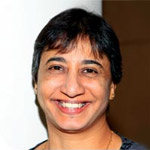
     

    Lynn de Souza

    Due diligence has been used in the entire process, right from the selection of the new research partner – Nielsen. Explains Lynn de Souza, Chairperson, RSCI, “The search for a partner began with an invitation for RFI (request for information) to research agencies on a global level – which, in itself, is a path-breaking initiative. We received seven responses, which ultimately led to Nielsen being selected based on various parameters.”

    While putting together the methodology for the new IRS, six key priorities were kept under consideration: accuracy, targeting, comprehensiveness, user-friendliness, engagement and granularity.

     

    Prashant Singh

    Said Prashant Singh, Managing Director, Media, Nielsen India, “The focus is not only on accuracy of data, but also on its usage and analysis, and on how easily the users are able to get information.”


    The Four Pillars:

    IRS has now been planned on the four pillars of simplicity, openness, integration and quality – the objective of course is in-depth data that will help in better understanding of the consumer – his/her readership and consumption habits, and beyond. “Shorter interview duration and Double screen CAPI will definitely make life simpler for respondent and interviewer. Intuitive analysis, meanwhile, will definitely work well for all IRS users,” Mr Singh said.

    Here is a closer look at each of the four pillars and the foundation on which these pillars are being built.


    Simplicity:

    Intuitive analytics with world class reporting platform

    Better respondent engagement with 30 minute interviews

    Superior speed and quality with Double Screen CAPI


    Openness:

    Transparent methodology: no black box

    Collaborative steering group

    Seamless incorporation of cross-platform data


    Integration:

    Augmented analytics through fusion

    Access to largest pool of global n local experts

    World class solutions by the world’s leading measurement organisations


    Quality:

    Real time tracking of interviewers for better quality

    Independent audits by 25 dedicated quality control specialists

    To make the process completely unbiased, data acquisition would be done through a rotation of staff every 18 months – completely avoiding the scenario where same people are interviewing same people over and over again.


    The interview process:

    Interviews would be conducted at individual and household level. While part one of the interview would be pertaining to print measurement. For the part two sample has been bifurcated in two parts: sample 2A would be asked questions on usage of TV and Internet in addition to product linkage, while 2B would asked questions on usage of radio and mobile in addition to product linkage.


    Demographic and behaviour hooks would be used for data fusion. The two-pronged approach has been adopted to keep the sample size within the reasonable limits without compromising on research quality.


    Mr Singh elucidated, “Key question on data profile are being asked to all respondents. As for category-specific data, whether it goes in personal interview or HH interview would depend on the product category – for instance a personal category like chocolates would go in personal interview and a category like detergents will go in household interviews.”


    The householder will be selected based on respondents’ responses to the questions, and cannot be selected by the interviewer.


    Publications, interestingly, will be shown on a random basis, and hence the scope of priority based on sequencing is gone.


    The interview process, to put it simply, seeks to get accurate data – and a key factor here is a smooth interview process which is not taxing for interviewer and respondent. Paritosh Joshi, member of the board of governors, MRUC, explains, “Even a bigger concern than respondent fatigue was interviewer fatigue – each interview is a pretty punishing thing, and after a few interviews, the interviewer was almost answering the questions before the respondent.”


    Another expectation from the new research methodology is that upmarket consumers, elusive till now, would be accessible now due to shorter duration interview and use of digital technology.


    Data Analysis:

    While Dual CAPI and tracking of the interviewer make the process sturdier, a key factor is the myriad data analysis options it opens up for users. Rich user interface facilitates the analysis that would definitely help media and marketers if the demo presented at the IRS 2013 Curtain Raiser yesterday are anything to go by.


    Transparency and credibility are two other factors that IRS 2013 has taken care of. Stated Mr Joshi, “A lot of flak that IRS received initially was because people were of the opinion that it was compromised. Security concerns to build an architecture that could not be compromised have been taken care of. Nasty surprises are in store for people who tried to compromise it earlier.”


    Easy-to-use software enables a number of permutations and combinations, leading to multi-level and multi data point analysis. Merging of data, and granular analysis are the buzzwords for publishers as of now – who believe that these would definitely enable them to understand their users and markets better, leading to better revenues.


    “All the non-sampling issues have been taken care of. The need for quasi-qualitative decisions we were taking earlier has been done away with. We are not losing anything that we had in previous IRS, in future if we want to add anymore thing, we can do it,” emphasised Mr Joshi.


    Ms de Souza summed it up: “Capture, storage and dissemination of date would be different – it is a bit like TV measurement moving from diary to people meter.” The key focus, of course, is on providing accurate and granular data through software that will make a much more in-depth analysis possible than in the past.


    Industry appreciation


    Shantanu Bhanja, Vice President – Marketing at Hindustan Times Media Ltd

    On the conceptual level, data fusion will make it really powerful. We will get a far better quality of data. It can also be analyzed along with data you get from other sources – which in turn will help in meeting your business needs better – instead of just one set of data.


    Use of technology will now enable IRS to reach high quality audiences – whom we were not able to reach earlier. New dual CAPI and the size of the survey being brought down to 30 minutes will definitely help in getting people who were earlier elusive due to methodology.


    Digital makes data administration easier – and there definitely is increased accountability as well as freedom from errors caused by surverys being conducted on papers.

    It is an interactive data module. We will be able to dip into data, and analyze it on user apps as they keep coming.


    As for what else is on my wish list, other formats of media and news consumption need to become part of the same integrated IRS. That, as is known, is already work in progress.


    Himanka Das, Senior Vice President – West, Carat Media Services

    It is a much-needed initiative – I am really excited and looking forward to the first set of data. It definitely looks interesting, to say the least, and promising if the curtain-raiser is anything to go by. I have witnessed many changes in industry – from INTAM to TAM, diary system to people meter-readership studies merger, and each change has proved to be for the better.


    Nielsen has enough exposure and knowhow across the globe, and hence any doubts about the robustness of the system are ruled out. I am sure enough thinking would have gone into data fusion.


    What I am keenly waiting to observe is how the new socio-economic classification will be handled, as it was not discussed at length in the session. New classification will go on in parallel with the old classification – and over a period of one year the old one would be phased out and rightly so. It will be interesting to watch how the new one will be used in IRS research, and its impact from the data fusion point of view.


    As for software for data dissemination and analysis, it appears to be very user friendly. Another commendable thing is user feedback they are seeking to make the system more robust.


    Monetizing it is a great idea, however, with a 2.5 to 3% commission structure, it remains to be seen if agencies can fund it.


    Ambika Subramanian, OMD

    The interface is definitely much better, and much easier to navigate. Data slicing too should be much better now. Unfortunately I missed the initial part of the curtain-raiser, and hence I would like to use the new IRs before I really comment on it.


    Navin Singh, Manager – Marketing, Sakal Media Group

    It is a step in the right direction. All the loopholes in the previous IRS have been plugged. We are really looking forward to using it. Data in the new IRS will be better obtained, and finer cut. It will enable us in exploiting our strength in specific markets.


    The most impressive things of course are the much needed change in interview methodology, and the new vistas opened for data analysis at multiple levels.


    Peter Suresh, Head – Strategy, Dainik Bhaskar Group

    The entire process is automated, and that is incredible. Attempt to report individually on a far larger number of geographical units is also very heartening. District cut too has increased – hence the data can be analyzed at a far more granular level.


    Bulk of action of late has been in rest of India, beyond six metros and hence granular cut is extremely important. Data slicing at a deeper level, and multiple ways of presenting it, make far more sense. Readership numbers are the cornerstones of most media marketing and sales strategies – and the finer they can be cut, the more robust they are. And, of course, these will help in delivering better stories to the marketers.


    Sanjay Verma, West Head, Sandesh Ltd

    “It is a step in the right direction. So many options have been provided as far as data analysis is concerned. We now have an option to look at different TGs and SECs. What is more, one can merge data segments as required. Right data slicing is much needed. It definitely helps everyone to get more data permutations and combinations”.

     

  • Do journalists need to be qualified?


    By Ananya Saha and Meghna Sharma


    Press Council Chairman Justice Markandey Katju recently issued a press note that said, “Since the media has an important influence on the lives of the people, the time has now come when some qualification should be prescribed by law”. Justice Katju announced a committee mandated to “consider all aspects of the matter” and submit a report to him “suggesting the qualifications a person should have before he can be allowed to enter the profession of journalism”.


    The committee constituted by him, in addition to its mandate of recommending qualifications for journalists, will also recommend in what manner the Press Council can supervise and regulate the functioning of the institutions and departments of journalism in India so that high standards of imparting knowledge in journalism are maintained.


    MxMIndia spoke to senior journalists, academics and industry observers for their views on this (in alphabetical order of their last names).


    Prof Chandan Chatterjee, Director, Symbiosis Institute of Media & Communication

    The role of education in building a foundation for thinking as well as building an worldview is well-accepted. More so for professions that have an ability to shape the thinking and beliefs of a society


    Journalists are the scribes and opinion leaders of modern society and culture which can impact a nation’s destiny, or the adoption of a new way of doing things. Hence, journalists ought to have capabilities and skills of recording facts and events and also analyse and interpret their observations.


    The role of upgrading curriculum of post-graduate Journalism courses, to reflect the current trends and thinking becomes equally important. And, like most other professions, journalists too need to be re-skilled and upgraded in their specific areas, periodically.


    After all, every point of view has two sides. It takes a balanced and educated mind to get the breadth and depth of issues involved. Else, we will have to learn with just one point of view!


    Deepa Gahlot, Film Critic

    To be a journalist or a film critic one needs to have certain attributes – ability to write and passion for the medium. If one has aptitude for it then qualification only adds to it. Therefore, both training and education go hand-in-hand.


    Today, a lot of newspapers carry articles written by people who have nothing to do with journalism too. Having said that, I do believe that a degree will only help the person. Also, it depends on an organization, what are they looking for – someone with good skills but no degree or someone with a degree and good skills.


    I won’t say that Katju’s recommendations are harsh because even if one is passionate about law but he/she still can’t practice without a law degree, why not for journalism?


    Arati Jerath, Senior Journalist

    I think journalists need qualifications, which are not necessarily taught in journalism school. A good journalist should have the nose for news especially in a war or terrorist situation, extract right information, should be a sensitive human being when reporting on a rape case or terrorist attack. It cannot be taught in any institution. These are the values that they imbibe from their parents, schools, colleagues, mentors.


    Most media houses are very professional and hire talent based on their requirements. If the new hire does not perform, irrespective of their qualification, they are let go. A journalist needs to be a good reader, researcher but mostly, they learn on the job outside of the formalized structure.


    The Press Council’s role is of being an ombudsman and a watchdog in case media oversteps. Frankly, the council is trying to impose professional qualification on a person who wants to become a journalist.


    Chandramohan Puppala, Senior Journalist

    This is debatable. Yes, the basic qualification is necessary but not necessarily in journalism; it could be any basic qualification that would equip a person to make them capable of understanding situations or aspects. In my career, I have hired many new people as journalists who are far more knowledgeable and equipped than journalists who have spent years in journalism or have earned degrees in journalism. It is important, however, that a crime-beat reporter has orientation towards the subject. A reporter who covers economy will be more equipped if he has a degree in economics but it is not necessary that if they have a degree, they will turn out to be a good journalists!


    There are, in any case, very few specialized beats; journalists are all-rounders, and that happens over a period of time: during school, on field, the right sources, and is not dependent on a single qualification.


    Prof Dr Kiran Thakur, Journalist-turned media teacher
    Justice Markandey Katju’s plan to prescribe qualifications for journalists is absurd and Utopian. By his logic, politicians should be qualified in political science and NGO founders should be trained in social work. If he wants legal beat reporters to be law graduates, war correspondents will have to be trained in military science if not in warfare, health reporters in medicine, farm journalists in agriculture and so on.


    He will do well to realize that qualifications for reporters and sub-editors alone would not suffice. The owners of media houses, print and electronic, should also possess qualifications. The owners should be trained particularly in media ethics and their social responsibility. Justice Katju should recall the fate of the report of the Press Council committee on paid news. The representatives of owners in the Council opposed the committee and its recommendations.


    I do not understand why the PCI should be burdened with responsibilities to supervise and regulate media schools. There are bodies in the university system to look into these aspects. Let them discharge these responsibilities with efficiency. In the meantime, Justice Katju should find ways how the PCI can function effectively.


    Paranjoy Guha Thakurta, Independent Journalist and Educator
    The idea is ridiculous. It is like saying that if you want to become a politician, one must have a BA or a MA degree. The issue of lowering standards of journalism, values or journalism ethics becoming less important or declining quality is very separate. Mr Vinod Mehta himself said that he flunked his graduation exam, and look at him today. Pritish Nandy flunked his exams, and they were not even studying journalism, and look at them today. There is no dearth of examples of journalists who have succeeded without degrees much as journalists with degrees such as Dr Chandan Mitra. The ability to communicate, write or express articulately is nothing to do with a qualification in journalism.


    The Press Council should be concerned much more about its own role and duties than all of this.


  • R Jagannathan is Network18’s ed-in-chief for web & print

    By A Correspondent


    Network18 group has strengthened the editorial structure at its web and publishing arms by elevating veteran journalist R Jagannathan (“Jaggi”) as Editor-In-Chief. Mr Jagannathan will be responsible for leading editorial strategy and driving content synergies across a bouquet comprising some of the country’s leading news and special interest brands. This is part of the group’s progression towards an integrated publishing and digital editorial operation.


    This mandate includes Moneycontrol.com and Firstpost.com, Forbes India and Network18 Publishing, which spans a portfolio of 18 B2C and B2B titles such as Overdrive, Better Photography, Chip, T3, Entrepreneur, Search and Auto Monitor.


    Mr Jagannathan had taken charge of Moneycontrol.com and Firstpost.com at the time of joining Network18 in 2011. In this expanded role, he will be additionally responsible for Forbes India and Network18 Publishing. Editors at each of these brands will now report to him with immediate effect.


    With a career spanning over 36 years, Mr Jagannathan has been the editor of several print and digital publications across the general and business news space. Prior to joining Network18 Group in 2011, he was the Executive Editor at DNA. Earlier, he was the Executive Editor at Business Standard and he has also been the Editor at Financial Express, Indian Management and Business World. He was the founding Executive Editor of Business Today in the early 1990s and Business Editor of India Today before that. His first foray into the digital world came when he became Editor at Myiris.com at the height of the first dotcom boom.


    Raghav Bahl, Founder and Editor, Network18 said, “Platform neutrality in publishing is almost a truism now and as one of the country’s largest news and digital players, we’re best placed to lead this broadening trend. It’s critical that our brands access the best expertise across the group while they continue to fulfil their distinct content mandates and they do so through a structure which mirrors the new digital reality. We have entrusted the task of leading this effort in the able hands of Jaggi.”


    B Sai Kumar, Group CEO, Network18 said, “In Jaggi, we have one of the finest editorial minds in the industry with an unmatched breadth of experience and a proven track record, which includes the stellar performance of our digital brands under his command, Moneycontrol and Firstpost. We’re confident that in this expanded mandate, he will help us further enhance our editorial product and deepen audience engagement and market leadership.”


    Mr Jagannathan remarked, “Network18 has some of the country’s most loved brands which enjoy the highest levels of trust and credibility with audiences and each represents a unique editorial voice. I look forward to working with the teams to ensure that we strengthen our proposition across platforms.”


  • Industry, guardians & gurus discuss Net impact @ Google summit


    By Ananya Saha


    It is not every day that one witnesses a high-power conference like this; in fact it was being held in India for the very first time. The one-day Big Tent Activate Summit, organized by Google in association with The Guardian and MediaGuru saw Indian and international thought leaders focussed on issues relating to the Internet and its impact on economy, politics, culture and society in India.


    Kapil Sibal: Committed to Freedom of Expression

    While delivering the keynote address at the Google Big Tent Activate Summit, Kapil Sibal, Union Minister for Communications and IT made it a point to highlight that the government is committed to the cause of freedom of expression. “There should be no doubt that we are wedded to the freedom of expression,” he said. He underlined that the Internet is the most important and transformative forum as there are no borders on the net, he stated, “we must move slowly but surely towards making internet the equinet.”

    He underlined the three important points for making the internet a truly empowering, transformational and inclusive force. He said that from the point of view of the State, “we must have an enabling framework – rules and regulations must not come in the way of the growth of the net. Secondly, networks in terms of fibre-optics and also wireless must be developed to facilitate access to the net. Thirdly, affordable access devices are needed for a true inclusive transformational internet revolution.” Mr Sibal also said that it will be truly transformative, if through the internet, “we can reach people in their traditional languages.”


    Haves and Have-nots

    Deep Kalra, Founder & CEO, MakeMyTrip.com spoke about how according to a recent study “SME’s who invested in internet presence have grown by 10% and those who did not, have not grown by that much.” Giving the example of China-based e-Commerce giant Alibaba, he said that a single website has helped the entire economy by hand-holding the SMEs. Elizabeth Bramson-Boudreau, Director, Economist Intelligence Unit, reasoned, “Why don’t we have Indian Google or Indian Apple? Apart from talent probably, it is also about regulation. In our research, we have found that within Asia there are many challenges facing the SME and thus, global frontier is not a focus for them. They do not know what regulations are applicable to their internet presence, there of lack of clarity about content and third-party content services and policing of content.”


    Even as India witnesses increasing internet penetration, Anu Madgavkar, Senior Fellow, McKinsey Global Institute stated, “The urban and rural penetration ratio stand at 20:2 percent. Rural ecosystem will flourish provided there is equality.”


    The very Social media

    It is a fact that many big ticket announcements, and now even political statements, are made on social media platforms. Stephanie Cutter, Political Consultant, who was also the Deputy Campaign Manager for Barack Obama’s re-election campaign, spoke about how investing in social media helped them to communicate outside of the media filter, helped them to generate donations and organise online with offline actions. While saying that he is not a big fan of Section 66A, Shashi Tharoor, Minister of State for HRD stated that social media is usually used to create brand identity for the person. Even as Ms Cutter said that all US politicians are on social media, Omar Abdullah, Chief Minister, Jammu and Kashmir said, “Social media is now taken more seriously. And hence, I have to be more careful. I am reluctant on social media because it is now taken as statement of record.” Mr Tharoor concurred.


    On the question of media restriction in volatile J&K, Mr Abdullah said, “What we say on social media is picked by traditional media. People ask me that what they say on social media is deleted or blocked, and what I say is not. What I need them to know is that what I say on social media will not get people killed.”


    Narendra Modi, Chief Minister,Gujarat, joined in the Big Tent summit via Google Hangout. He said, “The internet has therefore truly empowered the citizen. It has forced the politician to perform, not just promise.” He focussed on how the internet has been a gamechanger in the realm of information-based decision making and has transformed the policy making process. He concluded, “Technology in itself is neither good nor bad. That depends on how it is harnessed. While technology in politics plays a crucial role, it would do us great good to stay away from letting politics into technology.”


    Google’s play

    Eric Schmidt, Executive Chairman, Google shared a fireside with Alan Rusbridger, Editor, The Guardian at the summit. Mr Schmidt began by saying that there are 600 million mobile phone users in India, 130 million Internet users and only about 20 million broadband users. “India is under-penetrated. Many of the next five billion users of internet will come from India, of course in many more languages.” Talking of non-English users, he said, “You want entrepreneurs to take risk but definitely not go to jail for it in India. Fearing the outcome, many Indians might not join the Internet.” He said that interconnectivity might help the telcos and intermediaries like Google to help the entrepreneurs. Talking about privacy issues on internet, he said, “We need to fight for our privacy. As technology becomes pervasive in Indian society, privacy issues need to be considered.”


    On Mr Rusbridger comment that Google is talking about privacy, Mr Schmidt said, “If Google was not even present, the privacy issues would still be there. There is no delete button on the internet. But of I would still say that the despite the negative like privacy issues, value of internet is profoundly positive.” Talking about how mobile can adapt to a profitable business model, Mr Schmidt said, “Mobileads need to be more valuable since it is more personal. Mobilegives more info where the consumer is, what is the consumer doing unlike other screens.” In the end, being asked about India and China, he said, “In short span, China gets all the attention, but the math favours India.”


    View from the industry

    Jeff Jarvis, Professor, CUNY Graduate School of Journalism; Raghav Bahl, Managing Director, Network18; Siddharth Varadarajan, Editor-in-Chief, The Hindu and Sanjay Salil, Managing Director, MediaGuru discussed how traditional media is adapting to online media and if online is proving to be a challenge to traditional media.


    Mr Jarvis said, “It is of course challenging to cannibalise yourself to new media.” Mr Varadarajan said that while print media in India is dependent on advertisements to get revenues, online media cannot yet capitalise of ads for revenues and neither would the readers pay more for online version of news. Mr Bahl said that while India did leapfrog the disruption, “as internet infrastructure catches on, the transition is going to be very fast,” even while adding later that India been a subject of bad regulation, especially internet.


    The panellists agreed that news has become platform-agnostic as Mr Jarvis argued “we should be seen as a service industry.”


    As Mr Bahl said that TV has made an easier migration to internet, compared to print media, Mr Varadarajan said, “Even today, when there is a breaking news situation, one turns to TV since it is centrally-curated product.” However, he insisted that The Hindu is getting ready for internet, “We ask our journalists to file two reports: one for print and one for internet. The only challenge is how to integrate different forms of narration: reading, listening and watching. No one has industrialised or scaled it.”


    Photograph: video grab from an NDTV.com webcast of the Q&A that Guardian editor-in-chief Alan Rusbridger had with Eric Schmidt, Executive Chairman, Google


  • Need for more wire news agencies: I&B Minister

    By A Correspondent


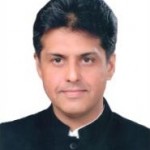
    Manish Tewari

    Minister for Information & Broadcasting Manish Tewari has said that taking into account the potential of the growing media sector and the flow of information in the news segment, there existed a case for more wire news agencies being established across the media landscape in the country.


    The potential was tremendous as these agencies facilitated information flow at the sub regional, regional and national level he said. The increase in number of news agencies would not only enable local based news being highlighted at the national level, it would also enable such agencies to balance news dissemination at the national and local level. Taking into account the diversity of information dissemination, such mechanisms would enable local issues to be highlighted as prominently as those at the national level. The minister was speaking at the 52nd anniversary celebrations of United News of India.


    Elaborating further, Mr Tewari said that there was an urgent need to outline sustainable revenue models. Quoting the instance of the digitization process the minister said it was an attempt to bring about transparency and a long-term sustainable process in the broadcasting sector which would help all stakeholders. The revenue models would also have to take into account the parameters that were addressing different audiences with the emergence of new media platforms and instant communication mechanisms.


  • Dainik Bhaskar to launch Mosaic 2012 ‘Best in Print’

    By A Correspondent


    Dainik Bhaskar Group is all set to launch the second edition of its best-in-print ads – Mosaic.


    The book will be unveiled on April 5 at the Dainik Bhaskar Group sponsored IAA debates in Goa. In recognition of the talent and massive creative potential that India has to offer, the group hopes that this book will be a reference point for all possibilities in the print category.


    Bigger than its previous edition, Mosaic 2012 features 121 print campaigns across 105 brands from 31 top agencies. The insights section features senior industry members sharing their reasons for picking the featured advertisements.


    This collector’s compilation is facilitated by afaqs! and supported by ABP News and Ad Club.


  • Vikatan launches premium offering Aval Kitchen

    By A Correspondent


    The Vikatan Group has launched a 128-page issue of special edition magazine Aval Kitchen. The first premium offering that Vikatan brought out was Aval Manamagal (wedding issue) in January 2013. For 2013-14 it will be a quarterly magazine.


    Aval Kitchen is the second premium offering from Vikatan, which already cultivates its readers with a 30-recipe booklet with every issue of Aval Vikatan. The special issue, besides offering readers dedicated content on food, restaurant reviews etc, also offers advertisers a niche platform to advertise at an attractive price point.


    Vikatan Group has a robust plan for promoting new products, with promotions across all their magazines, and poster campaigns at points of purchase across Tamil Nadu. Aval Kitchen is also being promoted via Vikatan.com, which has nearly 1 lakh paid subscribers and more than 10 lakh registered users, as well as Facebook with more than 2,00,000 fans.


  • Jagran launches coffee table book on Jharkhand temples

    By A Correspondent


    Jagran Prakashan Limited has come up with another new coffee table book on the temples of Jharkhand. Titled Devalaya Jharkhand, the book showcases some of the prominent devalayas (temples) of the state which are held in high religious esteem by local and trans-state devotees.


    It explores the glorious history and contemporary significance of 67 such temples through exclusive pictures and narratives. The book is the second in the ‘Devalaya’ series by the Jagran Coffee Table Book (JCTB) vertical. JPL had come out with Devalaya Bihar in November.


    Conceptualized by Anand Madhab and authored by Sharmishtha Sharma, Associate Editor, i next, the book is believed to serve as a ready reference material for the people who are inclined to know about the religious/spiritual past of Jharkhand. Inputs from renowned experts on temples have given this book extra shades of authenticity. Given the glorious religious history of Jharkhand, the book is a tribute to the spiritual sentiments of the region.


    Devalaya Jharkhand was released by Swami Avimukteshwaranand Saraswati, heir of Shankaracharya, Jyotish Peeth, at a function.


    Speaking on the occasion, Mr Madhab said, “Devalaya Jharkhand is not only a tribute to the religious ethos of Jharkhand but it also introduces the devotional facet of the state to a larger number of people in and outside the country.”


    He applauded the team effort that went into the book. “With the continuing support from the JCTB team, we shall keep coming up with more and more such books which influence and benefit a whole spectrum of people and fraternities, specially religious folk.”


    The book, which includes a specially compiled bhajan collection CD, is being sold pan-India through a wide network of over 400 retail book stores, as well as online on Flipkart and Infibeam. More details are available at www.jagrangems.com.

  • IRS Q4 2012: Most publications show degrowth

    By A Correspondent


    The last quarter of 2012 has not shown much promise for the print media inIndia, going by the recent IRS figures released by MRUC. Most of the categories have shown degrowth. While the Hindi daily, Dainik Jagran continues its leadership position in Top 10 publications, its AIR fell from 16,474 in Q3 to 16,370 in Q4 with the AIR gainers in the category being Dainik Bhaskar, Hindustan, Malayala Manorama, Rajasthan Patrika and Mathrubhumi.


    Eight of Top 10 magazines have lost readership numbers. According to the current survey numbers, Vanitha has lost 1,18,000 AIR; India Today 46,000 AIR; Saras Salil 39,000; Meri Saheli 47000; the weekly Bengali magazine Karmakshetra 78,000; Cricket Samrat 20,000; Malayala Manorama 45,000 AIR and English monthly General Knowledge Today 54,000 AIRs. Pratiyogita Darpan in the category of Top 10 Hindi Magazines has gained readership going from 18.94 lakh in Q3 of 2012 to 19.02 lakh in Q4. SamanyaGyan Darpan and India Today are the only two who have gained numbers here while Saras Salil, Meri Saheli, Cricket Samrat, Grih Shobha, GrehLakshmi, Champak and Vanitha have witnesses dip in their readership. Among Top 10 English Magazines, India Today maintains its leadership position but has shown a dip in readership going from 15.26 lakh AIR to 14.8 lakh AIR in Q4. General Knowledge Today, Readers Digest, Competition Success Review, Outlook, The Week, Stardust, Business Today, and Wisdom have registered a dip in their AIRs. The only magazine to have gained 14,000 AIRs is the monthly Pratiyogita Darpan.


    Nine of the Top 10 Language Magazines show degrowth. Malayalam weekly Mathrubhumi Thozhil Vartha has added 85,000 AIRs while the Bengali fortnightly Sananda has added 9,000 readers. In the Language dailies, Malayala Manorama, Eenadu, Sakshi and Daily Sakal have gained AIRs. The Times of India maintained leads the Top 10 English Dailies category but has registered negative growth and lost 38,000 AIRs: from 76.53 lakh in Q3 2012 to 76.15 lkah in Q4. On the second position, Hindustan Times has added 34,000 readers going from 37.86 lakh to 38.20 lakh readers. While the third daily in the category The Hindu has lost numbers, The Telegraph at fourth position has added AIRs. DNA, Mumbai Mirror and The Tribune have added AIRs while Deccan Chronicle, The Economic Times and The New Indian Express have seen a dip in readership.


    Of the Top 10 Hindi Dailies, six show a decline in readership. The publications that saw a dip in AIRs include Dainik Jagran (1.04 lakh AIRs), Dainik Bhaskar (75,000 AIR), Amar Ujala (1.02 lakh AIR), Punjab Kesari 41,000 (AIR), Navbharat Times (6,000 AIR) and Nai Dunia (1.95 lakh AIR).


  • DNA dons new look, brings back edit page

    By A Correspondent


    The six-edition English newspaper DNA, is sporting a new look from today. The newspaper has added the edit page and an oped page as well. Along with the newspaper, the website has also gone in for an overhaul.


    Informing the readers of the changes, Ravi S Joshi, Editor, DNA wrote in his communique, “Starting today, your DNA has changed. Because your needs and aspirations have changed. Because your reading habits have changed. Because you have changed. To address that change, we have made the new paper more navigable, readable and classier.” The redesign has been done inhouse by Design Editor Nitin Tuse


    He further added, “In our quest for the 2020 of news media, we’ve redesigned our website and made it responsive – it dynamically fits to screen of any device, be it your PC, phone or phablet. That’s a first for any newspaper website in India is also dynamic. And in the days to come, you’ll see a lot of innovations not only in the website, but also in the paper.”


    A readers’ page also also been added. With an aim to become more interactive, the stories in the newspaper would give out Twitter handles. DNA has also formed a Shadow Editorial Board, which is “college-going men and women regularly sit in our newsroom and tell us what they want us to do. You’ll find their contribution to this paper on Page 4.”


  • GoodHomes turns 5

    By A Correspondent


    GoodHomes, the interiors magazine published by Worldwide Media, completes five years this month. To celebrate this landmark, the magazine’s 5th anniversary issue is a 230-page ‘luxury special’. This mega issue focuses on the various avatars of indulgent home decor. The luxury theme has been chosen, keeping in mind consumer aspirations & the growing luxury home decor market (expected to grow at 25% per year, according to ET).


    GoodHomes Editor Ronitaa Italia-Dhanu said, “The 5th Anniversary issue looks at luxury as an experience; a way of life. It could be an object for some people, a feeling for others, or a setting for some others. Whatever it is, it is always aspirational. If I were to define ‘luxury’, I’d say it’s a state of mind. One where you feel so good, you’re always wanting it. And once you have it, you automatically and involuntarily aspire to another. This issue endeavours to address not so much the feeling itself, but the aspiration of it. This issue is all about aiming higher; about living well.”


    The promotional campaign includes print, outdoors, on-ground and digital. The print campaign will run across city dailies in the key metros, while the outdoor campaign would focus on Mumbai and Delhi. A pan-India on-ground push is a part of the plan as well. The digital campaign will be led by social media through contests and other engagement initiatives.


    Over the past year, the magazine has interpreted the ‘home’ space in new ways. Starting with a redesign of its issue last April, GoodHomes has also created an art week titled ‘GoodHomes for Art’ in Mumbai. Held between Oct 29 and November 4 last year, the aim of the art week was to educate, appreciate and understand art, to take art out of the galleries to as many people as possible. The week was filled with public art displays, workshops, artists’ meets and special showings. The art week will return to Mumbai this year during the same period.