Category: PRINT MEDIA

  • The Caravan completes three years

    By A Correspondent


    In January 2013, narrative journalism magazine The Caravan completed three years. The magazine, which was earlier in publication from 1940-88, was re-launched in 2010 as a long form narrative journalism magazine dedicated to politics, culture, art and literature.


    The third anniversary special, which came out in January 2013, had the theme of journeys signifying a sense of movement and experience – Howard W French on Hong Kong’s Chungking Mansions, that is at the centre of the global cell phone trade; Deborah Baker on the Auden brothers, one a poet and the other a mountaineer, during the twilight of Empire. The cover story was on Dibakar Banerjee, one of India’s most exciting and creative new directors.


    In the December issue of 2012, The Caravan came out with a Media Special that reflected on the state of the Indian media, noting its major transformations, possibilities and limitations, and the expectations of those who create and consume it.


    Since its re-launch in 2010, the magazine has tried to reach out to a different readership that looks for nuance and perspective in the stories: whether it is of Manmohan Singh’s precarious leadership, the story of the Hindu Right in the rise of Narendra Modi, or Samir Jain’s ordering of the print universe through Times of India. The Caravan’s 2012 story on the remains of the Sri Lankan war was awarded an award for humanitarian journalism by the International Committee of the Red Cross.


    The Caravan has seen increase in circulation from 15,000 to 45,000 in these three years. Over 175,000 unique visitors have viewed The Caravan’s new website since its October launch.


    The magazine has also been organising Caravan Conversations – literary forums, discussions and conversations across the country in an appreciation of arts, culture, literature and politics. These events are organized in bookstores, art galleries, cafes, and literary and cultural centers. Over the past three years, the magazine has organized more than two-dozen such Caravan Conversations.


    Recently The Caravan brought its unique narrative style to the world of fashion and lifestyle, with the richly produced Caravan Style and Living magazine. The inaugural issue of CSL came out in May 2012, and the second issue in November 2013. The third edition will be offered along with the March issue of The Caravan.


    In February, the magazine also launched a new science and technology magazine, Periscope. Periscope’s first cover story tells the story of Santhi Soundarajan, the Indian athlete stripped of her silver medal at the 2006 Asian Games at Doha thanks to a failed gender verification test. Other stories include a short evolutionary history of the human hand, an examination of the changes the technology of hidden cameras has unleashed on today’s society, and a report on the advances made in genetic research that would allow the duplication and manipulation of personal genetic blueprints. Both Periscope and Caravan Style & Living are being offered along with The Caravan.


    In January, The Caravan magazine also launched its new initiative to recognize the most vibrant cafes and bookstores in three cities in the country - Delhi, Mumbai and Bengaluru – and promote them as Caravan Quarters. The Caravan Quarters is an initiative to curate and identify hubs that define the cultural and literary character of a city. Towards this end, The Caravan has long-listed 150 cafes and bookstores in the three metros. Through a process of reader/consumer voting and jury evaluation, The Caravan will identify the most vibrant cafes and bookstores from within this long-list as the Caravan Quarters.

     

  • The Hindu’s Lit for Life festival begins

    By A Correspondent


    Lit for Life, a festival that celebrates literature in India, was kicked off by The Hindu Group of Publications in New Delhi on February 6. The Delhi segment featured a discussion on the book “Accidental India – A History of the Nation’s Passage Through Crisis and Change” by Shankar Aiyar. The speakers were Communist Party of India (Marxist) politburo member Brinda Karat, Union Minister of State for Environment and Forests Jayanthi Natarajan, economist and professor at the Centre for Policy Research, and columnist Bibek Debroy and editor of The Hindu, Siddharth Varadarajan. The event also featured a presentation of photographs by award-winning photographer Steve McCurry, famed for his picture of the “Afghan Girl” on the cover of National Geographic.


    The event saw the announcement of the shortlist for The Hindu Literary Prize, an award given to encourage Indian writers in English. The shortlist: Anjum Hasan for Difficult Pleasures, Easterine Kire for Bitter Wormwood, Jeet Thayil for Narcopolis, Jerry Pinto for Em and the Big Hoom, and Kiran Nagarkar for The Extras.


    Previous winners of The Hindu Literary Prize are Manu Joseph (2010) for ‘Serious Men’ and Rahul Bhattacharya (2011) for ‘The Sly Company of People who Care’. The conclave will now move to Chennai (February 16-17, 2013, at Sir Mutha Venkatasubbarao Auditorium) for two days of discussions, lectures and workshops by speakers such as Gopal Krishna Gandhi, Rahul Bose, Jeet Thayil and Sidin Vadukut. The winner of The Hindu Literary Prize 2012 will be announced in the Chennai segment of the festival on February 17.


    Suresh Srinivasan

    “For a publication respected for its English, credibility and authenticity, it’s not surprising that The Hindu Literary Prize has rapidly become the most coveted award in its genre in India,” said Suresh Srinivasan, VP, Advertisements, The Hindu. “Lit for Life is an opportunity for our readers to engage in conversations with leading world class authors and participate in the workshops and seminars of their interest.”


    The festival was conceptualised by Nirmala Lakshman, Director, Kasturi & Sons Ltd (publishers of The Hindu). “Lit for Life is a festival which will make the experience of books and reading more meaningful to readers. It is an opportunity for people to interact directly with many well-known authors,” said Ms Lakshman. “It is also a chance to engage with issues of contemporary interest through discussions and workshops that we hope will be of lasting value to them. Through The Hindu Literary Prize being given for the best published work of fiction this year, The Hindu recognizes, felicitates and supports excellence in writing in India.”


    Website: www.thehindulfl.com/www.thehindu.com/litforlife

    Facebook: www.facebook.com/TheHinduLitForLife

    Twitter: @hindulitforlife

    YouTube: www.thne.ws/playlist-lfl


  • MxM Mondays: Is magazine readership sliding?


    By Ananya Saha


    As magazine publishers are set to meet for the Indian Magazine Congress in Mumbai on February 14 and 15, the indifferent numbers posted by the latest findings of the Indian Readership Survey continue to mar what appears to be business as usual. According to the IRS 2012 Q3 figures, magazine readership is on the decline barring a few magazines that have gained AIR.


    Even as the Indian print industry continues to see new launches, the readership of magazines is sliding (including regional language, Hindi and English magazines), as recorded by the IRS. MxMIndia spoke to a cross-section of industry veterans about the Indian magazine industry, and the shape of things to come. In alphabetical order of their last names:


    Suresh Balakrishna, CEO, BPN

    Newspapers and television have taken over the space which was once occupied by magazines. Therefore, general news/interest magazines readership is on a decline. However, niche magazines which cater to a small but specific audience are doing well and will continue to do well. Even as we speak niche magazines on jewellery, garments, travel etc are being launched. And advertisers are interested in putting their money on them as they are leisure magazines and will get their message across to their target audience. Hence, the future of niche magazines is bright although other magazines will have to take a hit


    Mitrajit Bhattacharya, Publisher & President, Chitralekha Group

    A survey like IRS hardly does justice to a highly complex category like magazines. Magazines are heterogeneous in nature with skewed distribution, which is missed by a huge survey like IRS; or in simple words, IRS is not even designed to capture readership of magazines (particularly special interest or niche ones). There are concerns about certain genres of magazines facing difficulties in retaining loyalty among its audiences, but there is surely traction in the specialized space. How else can you justify launch of so many new titles every year? IRS is not a good measurement tool. It is a one-size-fits-all omnibus survey with no focus on skewed distribution of magazines.


    The industry is reorienting, specialised genres are doing great even if some traditional genres are threatened. Also the digital formats are doing well for all big magazine brands. I see further traction in this. Digital will complement the print formats in a great way and magazines will lead the space for their superior content and presentation.


    Varghese Chandy, Chief General Manager, Marketing Advertising Sales, Malayala Manorama

    The quarterly result or six-month readership data will not establish if readership is declining or not. The readership is dropping compared to a few years ago. What we need to understand is that the way a magazine is consumed or read is getting different. It is changing because online versions are available. The time will come that when you talk of magazine readership, you will actually have to add the online and offline (print) readership of the magazine, including tablets and mobile. That is what one should look at in the long run, whether you are able to retain readership through all possible formats. Unfortunately, we are not in position to capture this readership currently.


    The way readership is captured in India for the magazine is very newspaper-oriented. For the newspaper, the readership is concentrated is the catchment area that is near printing or publication centres. Magazines, on the other hand, are dispersed widely, and in most cases, nationally. Even the language magazines are dispersed beyond one geographical state where the language is read. Thus, the sample pickup for magazine and newspaper cannot be the same because of the wide dispersion. The present readership survey, and this is something all of us have been saying for some time, is not actually geared to capture the readership of the magazines; particularly the niche magazines and magazines that have specialized readership.


    That is why you see readership drop even in cases of English and general interest magazines. Some readership figures and drops should be seen as rationalization of numbers. There used to be a time when the readership of one copy was seen as 10 or 15, which is out of the question. Some of this rationalization is definitely happening.


    We need a much larger sample base for a magazine-focused readership survey.


    Ashish Pherwani, Partner, Advisory Services, M&E, Ernst & Young

    To measure the readership of magazines, a standard measure is used by IRS. It does not capture the online readership of magazines. Also, one needs to understand that readership is one of the ways that a magazine reaches the readers. The magazine is a brand that you (readers) believe in. The brand can reach their targeted audience via television, internet, tablet, event etc. Take the example of Femina: the brand is larger than a magazine and the database of customers that Femina is connected with is much bigger than its magazine readership. It is connected to readers via Facebook, social media, its website, events, and what not.


    IRS is the only currency, so it needs to be used. It does not measure the brand value. IRS is just one part of the brand and publishers need to take cognizance of that.


    Tarun Rai, CEO, World Wide Media and President, AIM
    Declining readership of magazines is a myth. Magazines like all media are going through dynamic changes. Yes, there are some genres of magazines which may be witnessing some decline but most others should actually be showing an increase. Our circulation numbers are going up. So many new magazines are being launched. That wouldn’t be the case if readership was going down.


    There are issues with the retail infrastructure of magazines. Getting our magazines to our readers is not easy and is expensive. However, our concern is more fair measurement. In its current form the IRS does not capture the reality of magazine readership. We have been in discussions with them and hope we will be able to get to a satisfactory solution soon.


    Rather than a decline, we see an increase in magazine readership, going forward. There are two reasons for this. On the one hand, with increasing disposable incomes and more choices, people are looking for quality content and expert advice which only magazines offer. On the other hand, digital devices are enabling magazines to take their content to a much larger number of people. And digital technology also allows magazine editors to enhance the reading experience. I believe that lifestyle and special interest magazines are the sunrise sector of Indian media.


  • Into the printed world of luxury


    By Johnson Napier


    Be it a shopping mall or a supermarket, one cannot help but notice some loud and in-your-face visuals that crave the consumer’s indulgence. In fact this practice is not just limited to malls and large stores where consumers flock in droves – these humongous posters seem to greet us everywhere.


    And they are familiar sights – one sees them not just outdoors but within the pages of glossy magazines as well. Most of these larger-than-life posters are for luxury brands. While out-of-home is generally the medium of choice for brands, it still doesn’t compare to what the medium of print has been delivering as it continues to rule the course where advertising of niche and lifestyle-centric brands are concerned. At least that’s what can be inferred from a survey released by Cogito Consulting.


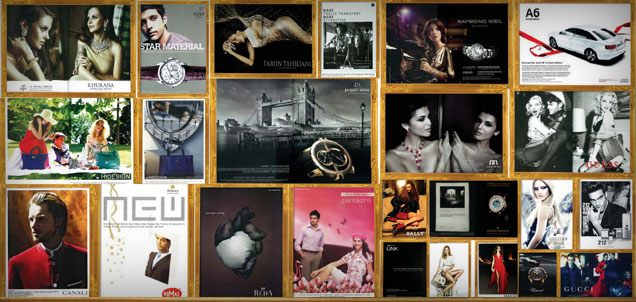
    In its report ‘An Analysis of Marketing Communication of Luxury Brands through the Lens of Luxury Magazines’, Cogito Consulting decided to do a deep dive into leading upmarket magazines carrying advertising for luxury brands to unearth key trends and semiotic codes of luxury advertising in India.


    The report is an analysis of some 511 advertisements in leading luxury magazines like Vogue, Verve, Time N Style, GQ, Harper’s Bazaar, MW and Cosmopolitan. All the ads were mapped quantitatively on various parameters and additionally, a qualitative analysis along with few expert interviews were done to arrive at some key learnings.


    Kinjal Medh

    Sharing his thoughts on the study, Kinjal Medh, COO, Cogito Consulting said, “The idea was to understand whether there were any patterns or codes that were common to most luxury brands. What we observed through our course of analysis over a six-month period is that a lot of luxury brands follow a similar pattern of advertising. We sampled over 500+ publications which typically feature advertising by luxury brands.” In fact according to Mr Medh, the unique trend that this study throws up is that “Luxury brands have grown perhaps more than the other brands in the market as they are not sensitive to economic conditions. As a result, people who can afford them can do so without being worried about what the economic climate in the country is. In fact my guess is that this sector will grow even faster and has a long way to go in India.”


    Composition of Ads

    According to the study, personal adornment brands feature the maximum number of ads in the magazines under study. On the other hand, products which do not directly enhance personality are advertised far lesser. For example: Apparel and watches which are a direct gateway to status elevation have the highest number of ads. While categories like real estate, home furnishing, hospitality etc. are relatively lesser.


    Affirms Mr Medh on the trend: “Where the composition of ads is concerned, it has remained somewhat the same. In fact it has not changed since the coming in of international brands in India. Before that there was not much of luxury brands who advertised; just a few jewellery brands. This was a trend prevalent almost about a decade ago. But that has now changed with the coming of international titles in India who brought with them the scope for luxury brands to associate with.”


    Another important trend that the study analyzed was the use or rather non-use of celebrities for luxury advertising. The study notes that only 12 percent of the ads studied, featured celebrities. Among the ads which featured celebrities, Watches, Jewellery, Perfumes and Apparel were the top categories using celebrities in their advertising. Further, of this 12 per cent, the majority (52 percent) were international celebrities while 48 percent featured Indian celebrities.


    Sharing his views on the trend, Mr Medh asserted, “One of the things happening in India is that there is a celebrity overplay. In fact there are instances where a same celebrity endorses high-end products and then also endorses hair oil, which is contrasting in a sense. As a result the level of exclusivity that luxury brands require is often not possible. This is not the case with international celebrities who are very selective in terms of the brands they accept to endorse.”


    Paradoxes of Luxury Advertising

    An important facet of the study or rather a paradox is the occurrence of luxury brands going increasingly local while mainstream Indian brands were going international. The study goes on to state that lot of Indian brands are trying to project an international imagery by using international models in the advertising. Approximately 14 percent of Indian brands advertised have used international models in their advertisements, it claims. “It is part of the experimentation that luxury brands do to discover new ways of marketing themselves. So while international brands tend to look inside India most Indian brands are looking outside to expand their base,” Mr Medh commented.


    Another interesting finding that the study highlights is that most of the brands advertised in the magazines have no body copy. About 60 percent of the ads analyzed did not have any copy, it noted. They featured only visuals and brand name. The ads project visuals which define the personality of the brand and along with visuals just the brand name. For those consumers well versed with the personality of the brand, only the name is enough and for the uninitiated, sharp visuals work in attracting them.


    Ironically, from the consumer’s point of view the financial investment in luxury brands is far higher than mass brands and the justification from the seller’s point of view is correspondingly far lesser. In other words, Mass brands’ advertising sell, Luxury brands’ advertising evoke Desire.


    The analysis revealed that primarily there are six key tenets that form the basis of most luxury brand advertising. These 6 codes include The Two Tone Code, The Exclusivity Code, The Sensuality Code, The Craftsmanship Code, The Origin Code and The Heritage Code. Of the whole lot, the study noted the Two Tones Code to be more effective. In its analysis of 511 ads, about 66% of brands that were advertised had black/white logo. On the other hand, in the case of mainstream Indian brands, logos do not necessarily follow a black and white pattern.


    Asserted Mr Medh about the popular Code, “I think that the Two Toned Code is the most interesting be it for its advertising or even the use of logo which mostly is black & white. I expect this trend to continue going forward as black and white tones do lend a certain amount of mystique and sophistication; unless certain brand advertising demands the use of colour I largely see two toned as the most popular form of advertising.”


    As for the Sensuality Code, the study observed that advertising for luxury brands is much more sensual than mass brands. Probably it is one of the ways to create a desirable personality and distance luxury brands from others brands. From perfumes to handbags to watches, sensuality is an integral part of luxury advertising, it noted.


    Where the Exclusivity Code was concerned, the study noted that luxury brands try and create an aura of uniqueness since it gives an assurance of being owned only by selected people. Over abundance and easy availability of a luxury brand can cause dilution of luxury character, hence many brands try to maintain the perception that the goods are scarce.


    Where the Craftsmanship Code is concerned, the study states that luxury brand advertising lays more emphasis on the craftsmanship and intricate mechanisms involved in the product. For example, an apparel ad shows the cut and fabric up close or a watch ad shows the mechanisms inside the watch.


    The study further notes that for the Origin Code, some luxury brands elucidate the luxury quotient of their brand by mentioning the country of origin of the brand. Going ahead, luxury marketers are taking a step further and using the city of origin and bringing in more credibility to the brand.


    As for the sixth code, the Heritage Code the study notes that the heritage of a brand builds an aura of several years of finesse and excellence in providing luxury products. It exemplifies the years of mastery or lineage to add a mystique to the brand. A mystique is generally built around the exceptional legendary founder character of the past, making up an integral part of the brand story and brand personality.


  • Discovery partners India Today to launch channel mag

    By A Correspondent


    Discovery Networks Asia-Pacific and the India Today Group have announced their partnership to launch the Discovery Channel Magazine in India. The magazine to be initially launched in English, will be launched towards the middle of the year. Mirroring the different genres featured on the Discovery Channel, the Discovery Channel Magazine will cover a wide spectrum of topics including nature, adventure, marvels, sci-tech, history, the universe, forensics, seekers, survival, info-tech, psychology and the environment.


    To be published monthly, Discovery Channel Magazine will have a contemporary design and feel and will stay true to the DNA of the Discovery brand. The editorial will deliver a compelling read, with strong injections of humour and emotion.


    Rahul Johri

    Rahul Johri, Senior Vice-President & General Manager – South Asia, Discovery Networks Asia-Pacific, said, “Discovery Channel Magazine will provide additional touch points for our viewers and will serve as an extension of Discovery Channel’s ability to satisfy their curiosity on a broad range of subjects. We are delighted to launch the magazine in partnership with the India Today Group – one of India’s leading and most respected media companies.”


    India Today Group’s CEO, Ashish Bagga, commented, “India’s growth and the exposure of the average Indian to the world have created a market for globally acclaimed quality knowledge products. Discovery Channel Magazine with its high quality content will fill the void in this space in the Indian market. We are excited to launch this magazine and feel strongly that this will add to the vast portfolio of diversified, market leading products of the India Today Group and will add to the depth of our relationship with our customers.”


    Discovery Channel Magazine is currently sold in Australia, Hong Kong, Indonesia, Malaysia, Taiwan, New Zealand, the Philippines, Singapore and Thailand at newsstands, and is also available for subscription sales in Bangladesh, Cambodia, China, Japan, Korea, Laos, Macau, Nepal, Pakistan, Papua New Guinea, Thailand, Taiwan and Vietnam.


    Discovery Channel Magazine recently won the Award for Excellence in Magazine Design, at the Society of Publishers in Asia (SOPA) 2012 Awards for Editorial Excellence.


  • Tinkle Special Digest for Hindi hinterland

    By A Correspondent


    Tinkle toons have learnt a new language – Hindi. Tinkle, from the house of ACK Media, is set to launch the latest extension of its massive franchise: Tinkle Special Digest in Hindi. 


    “One of children’s favourite comic brands for decades, Tinkle includes monthly magazines, digests, double digests and holiday specials. We are now extending its reach into the Hindi heartland by launching its latest offering, Tinkle Special Digest, in Hindi,” said Manas Mohan, COO, ACK Media, adding, “Tinkle has been in the market for more than 30 years and has gained a deep understanding of what it takes to educate children in the most entertaining manner. We decided to widen our reach, using this knowledge and expertise to leverage our entry into the world of Hindi comics – reaching out to more number of children all over the country.”


    “In Tinkle Special Digest, we have placed emphasis on the purity of language and content, making it a unique introduction to the Hindi comic genre. At the same time, we have stuck to the motto followed by our parent brand Tinkle – ‘Where Learning Meets Fun’. We are quite sure the Tinkle Special Digest will cater to the needs of our young readers, giving them education with entertainment,” said Priyamvada Rastogi, Editor, Tinkle Special Digest.


    The 80-page Tinkle Special Digest in Hindi will debut in March.


  • Comics are serious business at 2nd Comic Con India awards

    By A Correspondent


    The second Comic Con India Awards honoured and felicitated the best Indian comics and comics creators of 2012 on February 7 in New Delhi. Comic Con India Awards is an initiative of Comic Con India, which was established in 2011.


    The CCI Awards aim to recognize the work of the professionals in India’s comics industry, bring into focus the novelty of this art form and acknowledge the efforts of numerous writers, artists and publishers in this field.


    Jatin Varma, Founder, Comic Con India, said, “CCI Awards is where we honour and felicitate the best Indian comics and comics’ creators, and give them the recognition they deserve, among their peers.”


    Harsho Mohan Chattoraj is the winner of the Comic Con India grant for best unpublished work. He received a grant of Rs 75,000 and a publishing deal with Comic Con India.


    This year’s Lifetime Achievement Award was a posthumous award given to an iconic Indian cartoonist, the late Mario Miranda. Last year at the 1st CCI Awards, the lifetime award was given to R K Laxman.


    The jury consisting of Neelabh Banerjee (Author & Artist), Vaibhav Kumaresh (Artist Animator) and Abhishek Sharma (Writer & Filmmaker) went through the entries submitted, shortlisted them and eventually announced the winners.


    The nomination list and winners in each category:

    1. Best Web/Digital Comic:

    Sufi comics (www.suficomics.com), by Sufi Studios

    The Beast Legion Issue 6 Onwards (www.thebeastlegion.com), by Jazyl Homavazir.

    Old School (digital.level10comics.com), by Level 10 Comics. – (Winner)


    2. Best Graphic Novel/Comic Book of the Year:

    Jim Corbett – Friend Of The Wild, by ACK Media.

    Sudershan (Chimpanzee), by Hachette India.

    Tina’s Mouth, by Harper Collins India.

    Steve Jobs: Genius By Design, by Campfire Graphic Novels. (Winner)

    Draupadi: The Fire-Born Princess, by Campfire Graphic Novels.

    Agent Vinod: The Jungfrau Encounter, by Westland Ltd.


    3. Best Penciller/Inker/Penciller-Inker Team:

    Abhijeet Kini, for Angry Maushi. Published by Abhijeet Kini.

    Saumin Patel, for Agent Vinod: The Jungfrau Encounter. Published by Westland Ltd. (Winner)

    Meren Imchen, for Sudershan (Chimpanzee). Published by Hachette India.

    Abhishek Malsuni (Pencils), Sunil Paswan (Inks), for The Legends Of Aveon 9: The Train To Vexadus. Published by Rovolt Comics.

    Abhishek Malsuni (Pencils), Sunil Paswan & Jagdish Kumar (Inks) for The Legends Of Aveon 9: The Race To Revelations. Published by Rovolt Comics.

    Manu for Draupadi: The Fire-Born Princess. Published by Campfire Graphic Novels.

    Rajesh Nagulakonda for Krishna: Defender Of Dharma. Published by Campfire Graphic Novels.

    Naresh Kumar for Martin Luther King: Let Freedom Ring. Published by Campfire Graphic Novels.

    Deepak Sharma for Odayan – Issue 1-5. Published by Level 10 Comics.


    4. Best Colourist:

    Yogesh Pugaonkar for Ravanayan 06. Published by Holy Cow Entertainment.

    Neeraj Menon, Vikrant Shitole, Jignesh Gajjar for Jungfrau Encounter. Published by Westland Ltd.

    Balram Bannerjee for Batu Gaiden. Published by Level 10 Comics.

    Shashank Mishra for Legends of Aveon 9, Book 1 & 2. Published by Rovolt Comics.

    Sachin Nagar for Sundarkaand: Triumph Of Hanuman. Published by Campfire Graphic Novels. (Winner)

    Vijay Sharma & Pradeep Sherawat for Martin Luther King: Let Freedom Ring. Published by Campfire Graphic Novels.

    Anil C K for Abraham Lincoln: From The Log Cabin To The White House. Published by Campfire Graphic Novels.

    Kavita Singh Kale for My Facebook Friends. Published by Tulika Publishers.


    5. Best Cover:

    Aghori, Book 1, cover art by Vivek Goel. Published by Holy Cow Entertainment.

    This Book Makes No Sense, cover art by Priya Kurien. Published by Scholastic India.

    When Crows Are White, cover art by Garima Gupta. Published by Scholastic India. (Winner)

    Mad Maladies (Vol. 1, Issue 11), cover art by Somesh Kumar. Brainwave Magazine

    Tinkle Digest #247, cover art by Somnath Pal.

    Black Bread White Bear, cover art by PRABHA Mallya. Published by Harper Collins India.

    The Legends Of Aveon 9: The Train To Vexadus, cover art by Yin Yuming (Imaginary Friends Studios, Singapore). Published by Rovolt Comics.

    Steve Jobs: Genius By Design, cover art by Amit Tayal. Published by Campfire Graphic Novels.

    Draupadi: The Fire-Born Princess, cover art by Manu (Pencil/Ink), Anil C K (Color), Rajesh Nagulakonda (Design). Published by Campfire Graphic Novels.

    Shiva – The Legends Of The Immortal (Book ll), cover art by Amit Tayal. Published by Vimanika Comics.

    I am Kalki – The Red Book (Vol 2), cover art by Amit Tayal. Published by Vimanica Comics.


    6. Best Writer:

    Yogesh Chandekar for Agent Vinod: The Jungfrau Encounter. Published by Westland Ltd.

    Tripti Sah for Jim Cobett – Friend Of The Wild. Published by ACK Media.

    Rajesh Devraj for Sudershan (Chimpanzee). Published by Hachette India.

    Jason Quinn for Steve Jobs: Genius By Design. Published by Campfire Graphic Novels. (Winner)

    Mechael Teitelbaum &Lewis Helfand for Martin Luther King: Let Freedom Ring. Published by Campfire Graphic Novels.


    7. Best Continuing Graphic Series:

    Aghori by Holy Cow Entertainment.

    The Watchbearer, Tinkle Digest #248, 249.

    Those Mongol Barbarians! – Tinkle Digest #242, 243, 244 .

    The Legends Of Aveon 9: The Train To Vexadus – Book 1 of 7 by Rovolt Comics. (Winner)

    The Legends Of Aveon 9: The Race To Revelations Book 2 of 7 by Rovolt Comics. (Winner)


    8. Best Graphic Anthology:

    Sufi Comic: The Wise Fool Of Baghdad by Sufi Studios.

    The Obliterary Journal Vol. 1 by Westland/Blaft Publications.

    Tinkle Digest #250 .

    Tinkle #600 .

    PAO: The Anthology Of Comics 1 by Penguin Books India. (Winner)


    9. Best Children’s Illustrated Book (Ages 13 & below):

    Just Like A Bug, written by Anushka Ravishankar, illustrated by Shilo Shiv Suleman. Published by Scholastic India.

    Let’s Go Time Travelling, Life In India Through The Ages, written by Subhadra Sengupta, illustrated by Tapas Guha. Published by Puffin Books India. (Winner)

    Getting Granny’s Glasses, written by Ruskin Bond, illustrated by Sayantan Halder. Published by Puffin Books India.


    10. Best Publication for Children:

    The Blue Umbrella by Amar Chitra Katha Pvt Ltd. (Winner)

    Brainwave, Doomsday Alert (Vol. 1 Issue 12).

    Tinkle Digest #252 .

    Tinkle #600.

    The Deadly Royal Recipe, written by Ranjit Lal. Published by Duckbill Books.

    Oops the Mighty Gurgle, written by Ram G Vallath. Published by Duckbill Books.

    Sundarkaand: Triumph Of Hanuman by Campfire Graphic Novels.

    Martin Luther King: Let Freedom Ring by Campfire Graphic Novels.

    Tinkle Holiday Special #39.


    11. Best Children’s Writer:

    Anushka Ravishankar for Just Like A Bug. Published by Scholastic India.

    Jerry Pinto for When Crows Are White. Published by Scholastic India.

    Subhadra Sengupta for Lets Go Time Travelling, Life In India Through The Ages. Published by Penguin Books India. (Winner)

    Anoushka Ravishankar for Moin The Monster Songster. Published by Duckbill Books.

    Shyam Prakash for Sundarkaand: Triumph Of Hanuman. Published by Campfire Graphic Novels.


  • Growth mantras beckon @ IMC 2013


    By A Correspondent


    By the time you read this, the seventh edition of the Indian Magazine Congress (IMC) would have been be kicked off by AIM president Tarun Rai. The two-day conference has been organised by the Association of Indian Magazines (AIM) and is the most significant gathering of the magazine industry in India. The attendees include people from the Indian magazine fraternity including representatives from the Ministry of Information, Magazine Publishers, Media owners, Marketers and advertisers, Media planners and buyers, Magazine Editors, Brand Managers, Circulation specialists, Magazine Distributors, Researchers, Media and financial consultants and Industry analysts.


    Tarun Rai

    According to recent IRS figures, the magazine industry is definitely facing tough times. However, Mr Rai opined, “All media is facing tough times. In fact, as per the latest Madison Media Outlook, magazines have done better than projected by showing a growth of 4.5 percent over 2012. And yes, publishers do recognize that the economic environment of the country is tough and advertising spending will be more conservative.”


    The theme ‘Magazines: New Directions. New Opportunities’ will explore the digital opportunities for the magazine industry. Mr Rai said, “Digital is the big opportunity for magazines. We have now more vehicles to take our content to people. More easily. The challenge, though, is to quickly learn to repurpose our content for digital. To equip our people through training to best exploit the digital opportunities. To recruit new talent where needed.”


    The line-up of speakers is as impressive as the theme itself.


    “Yes, we do have a great line-up of speakers. We have very senior professionals from media, marketing and creative. We also have 15 international speakers who have flown down specially for the IMC. The delegates cannot afford to miss any session starting with the opening address of Nitin Paranjpe,” said Mr Rai.


    The speakers include names such as Chris Llewellyn, President and CEO, FIPP, UK; Peter A. Kreisky, Chairman, Kreisky Media Consultancy, USA; Andrew Duck, Managing Director, Audience Media, Vietnam; Fabrizio D’Angelo, MD, Hubert Burda Media, Germany; Mike Lovell, International Director, Meredith Corporation, USA; Sandra Gotelli, International Publisher and Head of Licensing, Mondadori, Italy; Torsten Klein, President, Gruner + Jahr International, Germany.


    MxM India brings to you the profile of the not-to-be-missed-speakers.


    Chris Llewellyn has been serving as Federation of the Periodical Press (FIPP) president and CEO in the organisation since 2009. He has been a member of the FIPP Management Board since 1999, and served as its chairman between 2005 and 2007. FIPP is the worldwide magazine media association that represents companies and individuals involved in the creation, publishing or distribution of quality content, in whatever form, by whatever channel, and in the most appropriate frequency, to defined audiences of interest.


    Peter Kreisky founded Kreisky Media after being at the helm of Mercer Management Consulting’s worldwide media and entertainment practice for 10 years, preceded by a career at McKinsey & Company and CBS Inc. His experience spans Europe and North America, in just about every sector of the media industry. The Kreisky Media Consultancy provides corporate strategy and management advisory services for top management, focused exclusively on the media and entertainment industry: magazine, book, and newspaper publishing, digital media, the Internet, television, music, motion pictures, information, advertising, media retailing.


    Audience Media is an innovative company offering the latest multi-media marketing and communication solutions to clients around the world, including Photo Review Australia, BBC Good Food and PrintNZ. The company was founded in 2011 by Andrew Duck, Rolf Rohwer and Mike Coker. Audience Media intends to stay at the forefront of developing technologies.


    Fabrizio D’Angelo, head of Hubert Burda International, has also served as FIPP’s Vice-Chairman. In February 2012, Hubert Burda Media pooled its international print activities in a new umbrella organization, Burda International (BI). It was then that Burda CEO Dr. Paul-Bernhard Kallen appointed Fabrizio d’Angelo as Managing Director. However, Mr. d’Angelo has been in charge of BHI since December 2008.


    Mike Lovell leads the licensing of Meredith’s leading consumer brands outside the U.S. Meredith is the leading media and marketing company serving American women. It is the industry leader in creating content in key consumer interest areas such as home, family, health and wellness and self-development and uses multiple distribution platforms – including print, television, online, mobile, tablets, and video – to give consumers content they desire and to deliver the messages of its advertising and marketing partners.


    Sandra Gotelli of Mondadori, Italy has been managing the International editions of Mondadori Magazines since 2006, which includes: 15 Grazia editions (7 weeklies, 1 fortnighly, 9 monthlies); Casaviva: 7 editions, Interniand Sale & Pepe. Mondadori is one of Europe’s top publishing companies.


    European Gruner + Jahr International (G+J) publishes close to 285 print titles and accompanying homepages in over 20 countries, has printing plants in Germany and the United States, and owns professional websites. In 2012, the group bought India-based startup SeventyNine, a mobile media distribution and analytics platform for Rs 38 crore. In January 1998, Torsten-Joern Klein joined G+J AG, where he was named Publishing Director of Berliner Zeitung and Berliner Kurier, published by Berlin Newspaper Publishing Group. From 2000 through the end of 2003, Torsten- Joern Klein was Managing Director of Berlin Newspaper Publishing Group, responsible for all of Gruner + Jahrs newspaper operations in Berlin. He was appointed member of the G+J Executive Board in January 2004. He is President of G+J International and has the responsibility for all magazines and online activities of Gruner + Jahr outside Germany.


    On the one hand we have BusinessWorld turning fortnightly, and on the other Discovery Channel Magazine announcing its entry into India. This may be the right time to take home received knowledge, and follow it to grow and progress.


  • IMC 2013: Editorial vs business: the debate rages on…

    By A Correspondent


    It’s been an oft- debated topic at most industry forums but one can be assured of a new twist to crop up each time the subject comes alive. It was no different at the Indian Magazine Congress where notable panellists from the fourth estate gathered to put forth their views on the topic ‘Church vs State: Has the wall between editorial and business breached?’


    Flagging off the discussion, Khozem Merchant, India Head at Pearson began by saying that the shape and tone of print media has undergone a drastic shift in recent years with the emergence of paid content. A concept that was pioneered by the Times of India, paid content has changed the way the business of newspapers operate while managing to reinforce the state of the advertisers in this country, he said. While on the one hand it has underpinned the economics of this industry on the other it has subjugated the craft of journalism. The good thing to have happened is that there has been a spurt in the rise of niche magazines; this on the back of the Indian print industry managing to do well in recent times, said Mr Merchant.


    Terming the debate an irrelevant one, Hormazd Sorabjee, editor, Autocar India said, “In my opinion, the debate is not a valid one. Where we are concerned, we are not influenced at all by the advertisers. We have moved to an era today of high cover pricing and still have audiences who read us. We will in way allow our practices to be compromised.”


    But while maintaining editorial integrity remains a priority, for Mr Sorabjee there was a need to reach out to the advertising community as well. “We need to offer advertising solutions that have a reading value. While we do need advertisers to sustain the business the editorial-advertising division cannot be breached.”


    Taking off from where Mr Sorabjee left, Krishna Prasad, editor-in-chief of Outlook said that according to him, the Church vs State wall had been breached the reason for that was due to content. While everybody was focusing on the business side of the trade, Mr Prasad highlighted that nobody cared to talk about the core of the business – training journalists in mastering the art. “The fact is that content and journalism are two key facets that we need to focus on. But in India, the market leaders have played a damaging role in getting the toothpaste out of the tube. It is essential that we do not continue to dabble in business beyond a certain limit.”


    According to Indrajit Gupta, editor, Forbes India his magazine has always tried to provide journalism that is respected. But he cautioned that it was necessary for editors to see business realities as well. “Before we launched our magazine we spent a fair amount of time researching and understanding what the market reality was. If the focus for magazines happens to be content, then you have to keep the consumer at the centre. The onus lies on both the editors as well as advertisers to make this a reality. But it is essential that instead of reach magazines should be sold via engagement,” reasoned Mr Gupta.


    Answering a question on whether editors needed to play multiple roles, Mr Sorabjee said that it was essential for editors to be seen as well-rounded figures. Where his magazine was concerned, it shared a close association with the advertisers as it was a niche offering. After all we are being measured by our readers, which is good but the business reality is that we need to have innovation to enhance value.”


    Mr Gupta said that most brands do not carry the conviction that is desired out of them. Adding he said: “While most editors are reluctant even business managers have failed to show creativity. This may lead one to be held ransom by the advertisers. This is the case especially with Events and other such offerings that lack differentiation. At the end, it has to be an editorial-driven activity.”


    Adding on to his earlier point, Mr Prasad stated that the troubling part with India’s media growth investment has been its investment in journalism that has been abysmal. “While it’s a fact that owners are making revenues they need to plough it back in the business.”


  • IMC 2013: Need to keep pace with digital: Nitin Paranjpe


    By A Correspondent


    The 7th edition of the Indian Magazine Congress lived up to its reputation of being a landmark event. The wait was worth it as stakeholders, marketers, industry captains and foreign dignitaries made their way to the venue at ITC Hotels for the start of procedural sessions, and the IMC 2013 kicked off with an inaugural address by the CEO of one of India’s hottest brands.


    Nitin Paranjpe

    Nitin Paranjpe, CEO & MD, HUL told a packed gathering about the need to do away with the old and be custodians of change for the betterment of the business. This, he reasoned, was possible only if one were to inculcate a reality that’s now become an indispensible part of the way we do business – namely digital.


    Cautioning the audience, especially advertisers, on the trends prevailing in the Indian marketplace, Mr Paranjpe said that the industry was seeing a tectonic shift in the television viewing habits of consumers today. “With an array of alternative streams available to communicate with the consumer, advertisers will find it challenging in the way they want to communicate with consumers,” he said.


    In a hard-hitting statement, Mr Paranjpe said that the 30-second commercial will no longer be as effective a form of advertising given that the consumer has an array of options before him to access content. Even media agencies and also media owners in some sense will have no say in telling consumers what to watch or not, he cautioned. “The issue today is that is that we are in a pretentious mode or are rather not willing to confront this reality. The sooner we wake up to this reality and stop pretending to not know the better prepared we will be for tomorrow. The core is: if digital is going to play a huge role going forward then we need to do things to help us stay relevant.”


    Advocating a way forward for the business community, Mr Paranjpe added that the topmost priority for most business houses will be digital capability and finding new business opportunities. “AT HUL, we have taken a huge first step towards familiarising our employees with the opportunities that arise from digital and are spending significant amount of time and money in training them to be future-ready.”


    In order to facilitate a smooth transition into the future that will largely digital, Mr Paranjpe disclosed that it will be essential for owners to ink tie-ups with specialists who can offer skill-sets in a manner befitting to the business. “We have to be realize that transformation and change need different forms of commitment and we have to be ready to facilitate that. I am not so much worried that we are still not doing enough for the business but what gives me sleepless nights is to see rapid changes transpire around us every single day, especially from digital.”


    Imploring business heads to rethink strategy, Mr Paranjpe said that that to be future-ready businesses will have to bring about a change in the business model. “A recent finding that I came across revealed that where the trust quotient was concerned, business houses and politicians were competing in the last rung. It is surprising but true that we are still not trust-worthy to be seen as beacons of change for our consumers. The thing is that we are judged by the outside world as having a self-serving attitude; this needs to change,” affirmed Mr Paranjpe.


    Sharing with the gathering another reality, Mr Paranjpe said that the truth is that we were forced by the government to include CSR as a mandatory practice but had we self-regulated ourselves earlier to this reality we wouldn’t have required an external source to impose guidelines for us. “What can be inferred is that the model of doing business tomorrow cannot be what we are doing today. This will be the mother of all changes.”


    On the implications that digital has brought about in the marketplace, Mr Paranjpe shared his own organisation’s example as he said: “Two years ago the decision that we took to make our employees digital-savvy was met with some scepticism but we’ve learnt a lot along the way and are better prepared to be agents of change of tomorrow. What is required is to have in place a mechanism to be future-ready. We are used to the mentality of ‘easier wrongs and harder rights’ but we will have to keep working on building our talent and skill sets.”


    Signing off, Mr Paranjpe said that it was important to see what would be the implications of these decisions on the revenue models of business firms. “At the end, that is what matters to every organisation. But then the good thing is that change offers opportunity. If we are change-ready we could achieve a lot more in 3-5 years than double that time it may have taken us to reach our goal.”


    Prior to Nitin Paranjpe’s keynote address, Association of Indian Magazines President Tarun Rai welcomed the delegates as he shared a few inspirational experiences confronting the magazine industry in India. Admitting that digital will drive the future for the industry, Mr Rai asserted, “The pace of change in technology has been humongous. This change has been a good thing to have happened for magazines especially with the launch of tablets about two years ago. It has been a huge area of opportunity for magazines as now magazine content can flow nicely onto the digital screens. The way the digital magazine market has been growing has been huge in India. Digital has been provided us a new revenue opportunity and a new reader reach to magazines and its content.”


    Elaborating, he said, “As India’s digital market is growing the way the market is growing and people’s aspirations are growing faster than the economy, and their disposable incomes there is going to be need for more magazines catering to the niche and lifestyle segment. Even in the traditional format, magazines are going to grow rapidly. Coupled with that is the added opportunity that comes from digital. This is the most exciting time to be in the magazine publishing business.”


    Tarun Rai

    The challenge for the business, Mr Rai said, is that there is a need to develop skill sets pretty quickly. “The learning curve has to be very steep and short because the editorial team led by the editor has to repurpose content. One just cannot go from a magazine to another platform in a simplistic way. Also, the ad sales has have to be able to monetize these platforms with advertisers. Right now, I do not think that in any parts of the developed world the right models of advertising monetization have happened on the digital devices.” Addressing another challenge, he said, “The third challenge is for the marketing team to be able to utilize the opportunity of the multi-platform brand that we have created. Earlier this opportunity was available only to an event. But all that has changed with digital gaining prominence over the past few years. Finally publishers have to make sure that there is a business model; you do not want a situation where resources are being diverted into multi-platform at the cost of printed magazines. We have to make sure that it makes business sense as well.


    “The good news is that it is finally a good time to be in the magazine business,” averred Mr Rai.


  • IMC 2013 Day 01: Print is in a vortex: Peter Kreisky

    By A Correspondent


    Peter A Kreisky

    Before sharing his experiences and know-how on the global state of the magazine industry, Peter A Kreisky, Chairman, Kreisky Media Consultancy preferred to begin by sounding an alert by announcing that the largest read publishing group Time Inc had been brought over by a relatively smaller player Meredith Corporation in the US. “This tells us what the future will unfold for the print marketplace especially with digital playing a key role in the transformation.”


    Stating that the print industry in the USA was around 3-5 years ahead of India, Mr Kreisky through his presentation on ‘Towards the new business model’ highlighted some hard facts surrounding the magazine industry. Backing up his claims through numbers, he pointed out that in 2007-09 the US magazine market witnessed a 35 per cent drop in number of ad pages, which was felt the most by news magazines that saw a decline of almost 65 per cent while newspapers were next reporting a decline of about 60 per cent. “This was the time when the industry as a whole was in a state of crisis but there was a remarkable turnaround that happened from June to September 2010 where top publishers went about hiring new leaders to run the reigns for companies. The thing about these leaders was that they were a younger lot than their predecessors and who were ready to take the plunge where future-readiness was concerned.”


    Admitting that the use of print/paper was on the decline, he said that the industry was in a state of vortex that was compounded with issues like extended recession, structural change in ad spends, rise of sophisticated mobile devices, decline in newsstand sales, evolution of powerful digital gatekeepers, etc. But based on the change that was being witnessed, according to Mr Kreisky the three facets that were core to the business were a trusted magazine brand, curated & valued content, and engaged communities.


    Mr Kreisky went on to present five new rules for Magazine Media that comprised the following: a) B2C model – from print publishers to being magazines everywhere, b) Portfolio model – From bigger is better to owning customer communities, c) Strategic control – multi-title aggregation to harnessing digital gatekeeper, d) Customer revenue – circulation dollars to branded commerce and e) B2B revenue – from ad sales to marketing sales.


    As for the first rule of B2C, Mr Kreisky highlighted that publishers need to move from being print-centric to brand-centric. He cited the example of the Meredith Publishing group that was the first player to adopt the ‘magazines everywhere’ approach. “Today the multi-platform strategies have evolved from porting the same print content to a clearly-defined role where content strategy and business models have gained much prominence.” Today, consumers are at a stage where they need to subscribe only once and they get access to all digital content unlimited, added Mr Kreisky.


    Next, Mr Kreisky went on to question the gathering on whether their brand was indispensable for an identifiable community. He cited the examples of brands such as ESPN, The Economist, Dwell, Bloomberg etc and suggested that the publishers had to make a choice whether their digital magazines would be a container or a connector where the role of containers would be to delegate editorial-aggregated content while connectors would be about bringing clusters of people together around well-defined interests.


    On the topic of harnessing digital gatekeepers, Mr Kreisky stated the examples of tech brands like Apple, Facebook, Twitter, Microsoft etc who were playing a huge role in being gatekeepers while also providing a scope to act as collaborators. He shared an important quote with the gathering as he said: “It’s become very clear that digital trumps print and that pure digital without any legacy costs massively trumps print.”


    On the next rule of circulation dollars to branded commerce, Mr Kreisky said that where paid content was concerned, avenues such as events, e-commerce, membership schemes etc would do well going forward. “Paid content models can peacefully co-exist with free models if they are clearly differentiated,” reasoned Mr Kreisky. As for the emergence of e-commerce as a model, Kresiky went on to present the example of Shop Bazaar that was leveraging its digital presence well by advertising and selling products only advertised in magazines. That provided the publishers a good revenue model and also enabled them t provide only exclusive stuff to their customers.


  • IMC 2013: Mags must cash in on change: panel on RoI

    By A Correspondent


    Sam Balsara

    In an atmosphere where the explosion of digital media is leading to questions about the relevance of magazines, Madison World Chairman and Managing Director Sam Balsara put forth what was probably the defining argument, when he summarized the question of magazines and their ROI.


    Leading the panel discussion on the second day of the Indian Magazine Congress, on ROI from Magazine Media, Mr Balsara said there was good news as well as bad. Underlining the continuing importance of magazines, he cited a Henley Centre study which found that nine basic needs are fulfilled by media, and magazines as a class, irrespective of genre, fulfilled most of these needs.


    The nine needs are split into two main classes: informational needs and cultural needs.


    Information needs:

    • Instrumental: information for daily life such as weather, transport, traffic, sales, opening and closing times, etc.
    • Analysis: to understand the world, form views, have opinions.
    • Enlightenment: keeping up with the world, national and local events; being and becoming informed.
    • Self-enhancement: bettering ourselves, knowledge for its own sake or for later application; acquisition of skills.


    Cultural needs:

    • Ritual: media use which frames daily routines, such as getting up, going to work, relaxing after work, accompanying domestic chores.
    • Default: absorbing media because it is there or because others within the social context are using it.
    • Relaxation: passive absorption of media, unwinding.
    • Entertainment: keeping ourselves amused, keeping others amused, having fun.
    • Escapism: frees the user mentally from the immediate constraints and/or dullness of daily life, enabling him/her to enter into new experiences vicariously.


    This wide range of needs creates a demand which magazines can meet because there is such a variety of them.


    Mr Balsara said that the other piece of good news is segmentation, which is sharper in magazines. This means good news for planners, as it means less waste, and they can target specific groups due to the proliferation of niche and special-interest magazines.


    The third piece of good news, Mr Balsara said, is that magazines have a longer half life than most other media. This means a longer lingering effect for advertisers, in sharp contrast to television which, although it did a good job of demolishing magazines in the 1980s, has a low half life.


    Moreover, from an engagement point of view reading magazines is an active activity, compared to something like watching TV which is passive. Therefore, intuitively, a combination of TV and magazines should be a potent medium for many brand plans, Mr Balsara said.


    TV advertising also becomes more effective when advertisers also spend on magazines, Mr Balsara said, highlighting that overlap scheduling doubles the impact. Though TV overwhelmed magazines in the 80s, the fact is that the effectiveness of TV comes down as the level of clutter increases.


    Multi-media is indeed ROI-accretive, Mr Balsara said, and those brand plans which use more than two or three channels of communication have an overall higher level of effectiveness. Multi-channel campaigns are more effective across the board than single-channel activity, he added.


    On the downside, however, is the fact that magazines contribute to just 4 percent of the total advertising pie, he said, and this is lower than the global average.  Plus, he observed that though literacy in India is going up, and this helps newspaper readership, it does not seem to be benefiting magazines. On the other hand, he said, though small, there is an increasing use of magazines online which, though not robust, is growing.


    Making some suggestions, Mr Balsara said that the Association of Indian Magazines should conduct studies on the impact of multi-media on different categories, to check accretive ROI. The next few years, there is going to be a strong movement for multi-media, specially from big brands. To meet the need for another medium in addition to television, magazines should be ready, he said. AIM, he said, should also develop case studies on the impact of use of magazine advertising on sales/purchase intent. His third suggestion was that magazines should exploit their content creation capabilities to open up new areas of growth.


    CVL Srinivas

    CVL Srinivas, CEO South Asia, GroupM, said that publishers and sellers needed to look at leveraging all the good news to convert it into revenues. Magazines are the best medium for building engagement, and score high on the trust factor, but this has not been translating into revenues, he said.


    A change of mindset is required from publishers and sellers, he said; the latter need to stop selling ads and start selling engagement. Magazines can form an engagement layer over media like television which are heavy on exposure. Moreover, a lot more relevant research is required; for example, what is the interplay between magazine consumption in different formats? More category-specific research is required, he said.


    Most important, magazines have to gear up to ride the digital wave, said Mr Srinivas, and had to move from being passive to becoming active communities, using digital interaction to its full advantage.


    Ambika Srivastava

    Ambika Srivastava, Chairperson, Zenith OptiMedia and Vivaki Exchange, said that the role of advocacy and recommendation is very big. It is clear that consumers value the content of magazines, and the role of magazines in guiding the consumer to a purchase needs to be measured. Advertisers need to look at content very carefully, she said, to go beyond the traditional formats and think about dynamic engagement.


    Ashish Bhasin

    Ashish Bhasin, Chairman India and CEO South East Asia, Aegis Group, said research had shown the highest level of engagement in any advertising is in magazines. But the conundrum is that revenue is not coming in at a commensurate level, and this needs to be addressed. Magazine spending had grown at a rate equal to or less than the overall ad pie when it should have grown more, he said.


    Magazines need to change the selling game, he said, and instead of focusing on figures and statistics, marketers need to sell engagement. Engagement is not being measured and is not being given the credit it deserves.


    He also said that magazines are the masters of innovation, and need to capitalize on this advantage. Technology is the friend of the marketer in this respect, and innovation and engagement naturally lie in magazines. Innovation is what will change the dynamics of the game, he said.


    Finally, considering that magazines have only 4 percent of the ad pie, individual titles need to practice coopetition, and need to get together to fight for the medium as a whole, instead of cutting each other down. Instead of fighting for the same dollar, coopetition can increase the number of dollars we are fighting for, Mr Bhasin said.


    The discussion was moderated by Worldwide Media CEO Tarun Rai.