Category: PRINT MEDIA

  • Free Press inks editorial tie-up with Outlook group

    By A Correspondent


    The Free Press Journal newspaper and the Outlook group have announced a collaboration under which the newspaper will carry select stories from the magazines Outlook Business and Outlook Money on the business pages of the daily.


    The collaboration will help the FPJ, as the newspaper is popularly called, expand its coverage, particularly in the BFSI sector, and as also help the Outlook magazines reach out to a wider target audience in Mumbai.


    The tie-up was effected last week as the Outlook magazine stories began appearing effective Friday, January 11


    Indranil Roy

    Said Indranil Roy, President of the Outlook group, “We have collaborated with the Free Press Journal newspaper to ensure that our content reaches out to a wider targeted readership base in Mumbai. The unique co-operation drives value by enlarging the target audience of Outlook Business and Outlook Money, taking our content and perspective right on to pages of a daily newspaper. In essence, the newspaper readers will now have the benefit of our perspective sitting next to the FPJ stories of the day on key sectors like banking and finance.”


    Abhishek Karnani

    Said Abhishek Karnani, Director of the Fress Press Journal: “The collaboration with the Outlook group is yet another step in our journey to expand coverage, lend new perspective and offer more value to our growing base of readers in Mumbai. Select stories from Outlook Business and Outlook Money will help us add to our growing coverage on the business pages of the newspaper. We will continue to invest in the newspaper as we build on our offerings to meet the changing aspirations of our readers in these times.”


  • Chernin Group’s CA Media invests in Graphic India

    By A Correspondent


    CA Media, LP, the Asian investment arm of The Chernin Group, LLC (TCG), has announced that it has acquired a large minority stake in Graphic India, a comic book and animation company focused on creating mythological and superhero characters, comics and stories for the Indian youth market, published across mobile and online platforms.


    Launched last year by media entrepreneurs Sharad Devarajan, Gotham Chopra and Suresh Seetharaman as a subsidiary of US comic book company Liquid Comics, Graphic India will now be jointly owned by Liquid Comics and CA Media. Mr Devarajan will be appointed CEO of Graphic India and remain Executive Chairman of Liquid Comics. As part of the transaction, Liquid Comics will contribute one of the world’s largest and highest-quality comic book libraries based on Indian characters to Graphic India. In addition to CA Media’s investment, it will partner with Graphic India to provide industry expertise and create iconic franchises for Graphic’s characters through multiple media within the Indian entertainment ecosystem.


    Rajesh Kamat, CEO of CA Media India, stated, “Following our successful entry into the traditional media space, we are very pleased that Graphic India marks our first investment in the digital space.CA Media’s aim is to create an ecosystem of diversified assets across media, where each asset not only unlocks its own value, but also adds to the rest of the portfolio. Graphic India is a valuable addition to this mix, especially in the youth segment. We look forward to working with the company to create heroes that inspire the next generation of Indian consumers.”


    Paul Aiello, CEO of CA Media, added, “CA Media is thrilled to be partnering with the talented Liquid Comics team, headed by Sharad Devarajan. We look forward to building the business with Sharad and his team, an amazingly gifted group of content creators and phenomenal operators.”


    Mr Devarajan said, “India is home to some of the most creative minds in the world, and we believe that the next Batman, Harry Potter, Pokemon or The Avengers, can come from this country. At Graphic India, we intend to find, nurture and promote a new generation of creators to transform the world with their stories. The team at The Chernin Group and CA Media bring an unparalleled level of experience in entertainment and we could not imagine a better partner to work with to launch this mission.”


  • Publish or perish: Indian Magazine Congress 2013 to discuss future of mags in digital era

    By Ananya Saha


    The digital era is turning up the heat on print publications, especially magazines. One of the most prominent of titles to succumb was probably Newsweek, which has gone digital-only. (More here: http://www.mxmindia.com/2012/10/could-indian-mags-go-the-newsweek-way/) For most publications, it is a choice between moving ahead with technology or perishing. ‘New Directions. New Opportunities’ is thus the theme for the 7th Indian Magazine Congress, which will be held in Mumbai on Feb 14-15.


    Maheshwer Peri

    Maheshwer Peri, Chairperson, Programme Committee, IMC and Chairman, Pathfinder Publishing, explained, “Increasingly, the tablet has made magazines earn revenue through digital also. Similarly, metrics have come up measuring circulation on the tablet, and hence lot of magazine publishers are also monetizing it for advertising. The revenue model supports zero-cost. This year’s congress will explore new opportunities that arise out of new media.”


    Mr Peri added, “Last year, we did not dwell too much on the tablet even though we focused on digital a lot. Now, we want on focus on the tablet revolution. There is a lot of research and groundwork that has happened where magazine publishers have monetized this medium.”


    The international list of speakers includes Andrew Duck, Managing Director, Audience Media; Arnaud de Saint Simon, CEO, Psychologies Magazine; Ashish Bhasin, Chairman India & CEO South East Asia, Aegis Group; Chris Llewellyn, President, FIPP; Fabrizio d’Angelo, Managing Director, Burda Holding International; Nicholas Brett, Deputy Managing Director and Group Editorial Director, BBC Magazines; Mike Lovell, International Director, Licensing, Meredith; Torsten-Joern Klein, President, Gruner + Jahr International, Germany; and Sandra Gotelli International Publisher and Head of Licensing, Mondadori, among others.


    The Indian delegate list includes: I&B Minister Manish Tewari; Ambika Srivastava, CEO, ZenithOptimedia; CVL Srinivas, CEO, South Asia, GroupM; Indrajit Gupta Editor, Forbes India; Rajan Anandan, Managing Director, India, Google; Satyaki Ghosh, Director, Consumer Products, L’Oreal India; and Umang Bedi, Managing Director, Adobe.


    “When I was putting in the content and structure for this conference, the underlying motive was to see what we can learn that we can implement in India. For me, it is all about what the speaker did and what I can learn. Speakers will shed light on distribution models, merchandising and branding as an added revenue stream, brain-mapping of readers that is not only scientific but also impressive, what India can learn from China from a person who is already present in that market and is about to enter India. We have a speaker to talk about multi-platform publishing and how to put and monetize content five times over. At the end of the two-day conference, if I implement even one of the things that are shared, it might be a turn-around for me as a publisher,” Mr Peri asserted.


    Provocative discussions, interesting topics and an impressive line-up of speakers: IMC 2013 promises a lot.


  • DB Corp posts robust revenue in Q3

    By A Correspondent


    DB Corp Limited (DBCL), print media company and home to flagship newspapers Dainik Bhaskar, Divya Bhaskar, Dainik Divya Marathi and Saurashtra Samachar, has announced its financial results for the third quarter and nine months ended December 31, 2012.


    • Consolidated Advertising Revenues grew by 5.2 percent to Rs. 9,100 million from Rs. 8,651 million in the period under review
    • DBCL achieved Consolidated EBIDTA Margins of 24.4 percent in 9M FY2013 at Rs. 2,943 million, as against Rs. 2,768 million in the last fiscal, demonstrating a growth of 6.3 percent
    • Consolidated PAT has expanded to Rs. 1,629 million (13.5 percent margin) , from Rs. 1,567 million (14.1 percent), up by 4 percent on a YOY basis


    In the radio business, it has been reported that advertising revenues have shown a robust growth of 22% to Rs. 191 million in Q3 of current period, against Rs. 157 million in Q3 of last fiscal. The EBIDTA stands at Rs. 73 million (38.3 percent margin), 68 percent YOY Growth. The PAT stood at Rs. 47 million (24.5 percent margin) in Q3 FY 2013, with 113 percent YOY growth.


    DB Corp’s digital business continued to register impressive growth with ad revenue touching almost 100% growth in Q3 YOY, on the strength of continuous impressive high volumes of unique visitors (UV) and page views per month while revenues from advertising reported a growth of 12 percent YOY to Rs. 3,412 million in current period from Rs. 3,059 million in Q3 of previous year.


    Commenting on the company’s financial performance, Sudhir Agarwal, Managing Director, DB Corp Ltd, said, “We are pleased to have once again delivered a satisfactory performance this quarter driven by several key factors. Following the past few quarters of sluggish economic growth and subdued sentiments, I believe this quarter heralds better tidings on the back of an improved economic environment that has also spurred the momentum of media ad spend over the last few months – a trend that may continue. We continue to strengthen our internal capacities and resources and remain optimistic about our progress in every region. Our efforts in consolidating pan-India readership growth especially in the recently launched areas of Jharkhand and Maharashtra that are emerging strongly, and persistent cost rationalisation – is reflected in this quarter’s performance. We are greatly encouraged by the positive feedback and the strong renewal of subscriptions of copies in Jalgaon. We are expending considerable time to conduct more focused consumer feedback, bringing in more innovation in content and further localizing it, connecting with the consumer in our emerging centres, to create differentiated products.


    “On an overall basis, the economic environment – on the back of positive measures such as policy changes, mega project clearances, a continuation of reform momentum and anticipated interest rate reduction, is poised to reflect healthier growth. We will continue in our endeavours to utilise our competitive strengths most productively, to strengthen our infrastructure, monetize our centres and thereby translate this growth to deliver greater value to all stakeholders,” he said.


  • Suppandi on your lunchbox soon?

    By A Correspondent


    Illustrated book specialist Amar Chitra Katha has announced the entry of its brand Tinkle into the back-to-school and stationery product categories.


    Tinkle’s popular characters Shikari Shambhu, Kalia the Crow and especially Suppandi are popular with children, teenagers and adults. Announcing the initiative, ACK CEO Vijay Sampath, “With Tinkle expanding its presence in television, feature films and digital products, the clamour for Tinkle products is growing. We are also flooded with requests from consumers during exhibitions and fairs for such products. We want children to experience the magic of Tinkle in a wholesome way. Through the Tinkle back-to-school programme, we will provide high-quality, competitively priced and child-friendly products, which are true to our values and extend the imaginations of children.”


    ACK Media Business Head Prakash Batna said, “The Tinkle franchise is a rare opportunity to participate in one of India’s most popular and fast growing consumer franchises. Leading distributors, business partners and manufacturers have evinced interest in the Tinkle franchise. We want to associate ourselves with the best partners in India and adjoining markets, to make Tinkle a market leader in this category.”


    The franchise is slated to hit the market in mid-2013.


  • 17 trends for newspaper journalism


    At the Newsroom Summit at the WAN-IFRA Conference 2012 in Pune, Eric Bjerager, president, World Editors Forum, Denmark, spoke about 17 trends to watch out for in journalism. While stressing that the forum aimed to work for press freedom, editorial excellence and quality journalism, he quoted Mahatma Gandhi: …man should understand the dignity of labour, and his work should be such that it advances interest in the community to which he belongs. “This is the heart of our profession,” Mr Bjerager said. Sashi Nair, Editor, Vidura picks highlights from the speech.


    Eric Bjerager

    1. Newsrooms are increasingly outsourced. This includes editorial functions considered journalism’s core. Australia’s Fairfax has moved subbing operations to New Zealand, as have several British newspapers (to Australia). Editors are looking for faster and flexible freelancers, journalists are finding it more effective to work in teams and make concerted efforts.


    2. Two-speed journalism is now a reality. Yes, social networks matter; to be first is no longer as important as to be relevant.


    3. Long-form journalism is now on the rise. It is making a comeback (the success of The Caravan is an example in India) and people are using iPads and mobile phones to access long-form journalism.


    4. Newsrooms come in many organizational models. The change has been faster in the past ten years than the previous 90 years combined. Keeping up with the pace of change is a huge challenge for editors all over the world. Newsrooms are organized in a variety of ways, there is no one single form as such. The creators report stories, the curators select, decide and produce the stories for every platform, and the team ensures that news reaches as many people as possible via social media. The challenge is to get readers interested in stories.


    5. Breaking news is digital. News lives on the Internet, on Twitter, on Facebook; breaking news on Twitter is faster than what radio or television can do. It makes the TV station look antiquated, but yes, speed prevails over accuracy.


    6. Data journalism is accepted as a discipline. People are increasingly getting interested in analysing data.


    7. Infographics dominate the web. From pictures to maps and illustrations, there’s an explosion of infographics on the web and that is driving the change in newspapers


    8. Barriers between print and broadcast are shrinking. Multimedia journalism is becoming the rule. However, it remains to be seen whether videos produced by newspapers and print journalists will dominate the living rooms in the future.


    9. Video is becoming a social affair. High-quality videos, live streaming of debates are attracting more people online. They are invited to give comments, expert comments are also invited via Skype, live, and thus, there is great interactivity.


    10. There is more momentum from mobile. You can reach your audiences no matter where they are. The challenge is of course to make the investment in the mobile platform viable.


    11. Social media enriches journalism. But there are many questions such as should the reporter use social media merely as a tool for research. And there are no easy answers.


    12. Social media talent will invigorate our editorial staff. A new team (breed) of reporters and editors are entering our newsrooms, using Twitter and Facebook. It helps you know where to move.


    13. Digital training is a necessity. Digital journalism is constantly developing; tools and methods are changing every day. Today’s reporters have only a fraction of the skills needed to survive in the modern newsroom. Digital storytelling is a must to survive in the long-run.


    14. Reporters are better curators than bloggers or aggregators. As the world gets bigger, people need more curation (selecting and summarising content, adding value). Newspaper reporters are good curators, they have professional insight and access to the right sources. We need curation to be aggregators.


    15. Journalism must be found. Headlines and lead paragraphs must be optimised for search engines. Finding a relevant article has become as important as writing a story.


    16. All-round newspapers are challenged online by big tabloids. The Daily Mail has become the most visited news site; it focuses on tabloid journalism. Indeed, the classic newspaper struggles for advertising.


    17. Ethics is all about going back to the basics. We must ensure readers trust us, we live on trust, this is our main asset, if our readers don’t trust us we don’t have a chance to survive. We must constantly remind ourselves that getting the story right is important.


    Eric Bjerager is editor-in-chief of Danish national newspaper Kristeligt Dagblad and president of the World Editors Forum. He spoke at the Newsroom Summit conducted at the WAN-IFRA Conference 2012 in Pune. This article was published in the January-March 2013 edition of Vidura. Published here  with permission of the Editor, Mr Sashi Nair


  • Gujarati writer-journalist Devendra Patel’s journey to the Padma Shri


    By Ananya Saha


    At 68, Devendra Patel reads 4-5 hours daily, which includes 25-30 newspapers. He watches television for two hours  and keeps himself updated with national and international news, ranging from Barack Obama and Manmohan Singh, to Bipasha Basu and Katrina Kaif. Mr Patel, Advisor to the Editor and columnist for Gujarati newspaper Sandesh, was recently awarded Padma Shri in the discipline of Literature & Education.


    “I was elated at the announcement. I am not a hypocrite to say that I did not feel good. Naturally, it feels good,” he said. Mr Patel who was born on October 20, 1945 in Gujarat, began his career as a journalist began in June 1967, when he joined Gujarat Samachar as a reporter. It was actually by accident that he chose this career. “I was to join the Intelligence Bureau, and could not go because of some reason. I was desperate to work, and joined this field. It was a dramatic incident,” he shared.


    Mr Patel maintains that he does not have any idols or role model in journalism that he followed, but he was impressed by Mahatma Gandhi and his journalistic efforts and launguage. “I was only influenced by Gandhiji indirectly, not as a journalist,” he clarified.


    Mr Patel has written “lots of stories”, but he gave prominence to human interest news stories. He recalled, “Some hardcore criminals of Dadva village inBhavnagargang raped one 19-year-old female, the young wife of atemplepujari(priest), burnt their house and shop and ultimately forced them to leave the village. The policed refused to lodge their complaint and the couple came to Ahmedabad to commit suicide in theKankariaLake. Before doing so, they came to Gujarat Samachar and told me the whole story.” Gujarat High Court took note of the story and sent a notice to the Gujarat government suo moto. The government had to act and more than 12 culprits were behind bars within 24 hours.


    The woman became the sarpanch of that village later. “Back then, I used the name of the woman and even her picture in the story I filed. The story created quite a stir. In those times, SC had not ordered yet that the victim’s name and identity cannot be revealed,” he said.


    Thirty years ago, Mr Patel through his articles alerted parents of girls against fraudulent US green card holders who used to cheat the cultured, educated Gujarati girls through marriage. “More than 50 cases came to me. I wrote every story. The same is happening inPunjabnow. But after I published my stories, the educated girls no longer got excited by the prospect of getting married to a green card holder. Now, parents are also cautious about NRI boys who want to get married to Gujarati girls,” he said.


    But the good work comes with various bad experiences as well. Mr Patel recalled, “In 1985, the students of the B.J.Medical College started ‘Anti-reservation movement’. The Madhav Singh Solanki government wanted to crush this movement aggressively. The police started torturing innocent people by baton charge and firing. I started a column ‘Wohi Raftar’ against this torture in Gujarat Samachar, which was the true reflection of the people’s mood in Gujarat. It became ‘the voice of Gujarat’ ultimately. This made some elements furious and irritated and as a result, they set Gujarat Samachar press on fire. However, the daily began again after 15 days and I wrote, ‘We will write from the ashes of Gujarat Samachar’. The Madhav Singh government desperately wanted to put me behind the bars and I had to go hiding with my family for 15 days. However, the Delhi high command had to take serious note of this and ultimately Madhav Singh was forced to resign as the chief minister of Gujarat.”


    It was in December 2007 that he joined Sandesh as the advisor to the Editor and column writer and very soon, became an integral part of the ‘Sandesh’ family. In his career spanning 42 years, Mr Patel has penned 40 books apart from two books in Gujarati on America’s war onIraqtitled ‘Gulf War’ and ‘Saddam Hussain’. His book ‘Israel: the land of the Bible’ received the Best Book award by Gujarat State Sahitya Akademi. In 2009, he got the Best Writer award by the Trans Media, Mumbai, for the TV serial ‘Kabhi Kabhi’ on Zee Gujarati.


    Mr Patel is confident that the young generation is going to take the cause of journalism more aggressively. He said, “I am really inspired by the new generation. We started the concept of fieldwork 45 years ago, but the new generation is more excited and intelligent. If they get to know of the issue, they take action and do good work. Every new generation is better than the previous generation. I see the youngsters and feel proud about the way they work and research.”


  • Hope even as some biggies degrow in Indian Readership Survey (IRS) Q3 2012


    By A Correspondent


    The third quarter results of 2012 for the Indian Readership Survey (IRS) are out, and going by the topline numbers, the overall print readership has seen a growth of 0.7%… a positive trend after the degrowth in the second quarter findings. The Top 10 Publications maintain positive growth momentum. Dainik Jagran continues its leadership position amongst dailies while Vanitha is the numero uno magazine.

    Even as the Hindi Dailies have shown healthy growth, Amar Ujala, Patrika and Nai Dunia have lost 72,000; 21,000 and 16,000 AIR (Average Issue Readership) respectively. The Top 10 English Dailies have registered decline in the AIR of The Telegraph, The Economic Times and The New Indian Express. The Times of India leads the chart as Hindustan Times and The Hindu follow in second and third position. The Hindu has gained 50,000 AIR this quarter.

    The publications in the Language Dailies category have registered decline in the AIR. Of the 10 publications, seven have lost AIRs including Daily Thanthi, Lokmat, Mathrubhumi, Ananda Bazar Patrika, Gujarat Samachar, Dinakaran, Daily Sakal. Malayala Manorama, Eenadu and Sakshi are the only gainers in the category.

    The magazines, however, have lost readership numbers barring the monthly SamanyaGyan Darpan, Hindi fortnightly Meri Saheli and Bengali weekly Karmakshetra. Vanitha, the Malayalam magazine from the house of Malayala Manorama continues to lead the chart but it has also lost readership.

    In the Top 10 Hindi Magazines category, only Pratiyogita Darpan, SamanyaGyan Darpan, Meri Saheli, Grih Shobha have gained AIRs according to the third quarter of IRS. Saris Salil has lost 197,000 AIRs but still holds on to the third position in the category. CricketSamrat,IndiaToday, Grehlakshmi, Champak and Vanitha have registered decline in the AIRs.

    Apart from Reader’s Digest, The Week, Stardust, all magazines in the Top 10 English Magazine category have shown decline in readership. India Today which leads the category has lost 28,000 AIR followed by General Knowledge Today that has registered a decline of 40,000. Outlook has registered a decline of 10,000 AIR in the third quarter.

    Malayalam magazines Vanitha, Malayala Manorama, Mathrubhumi Thozhil Vartha, Mathrubhumi Arogya Masika have lost numbers in the Top 10 Language Magazine category, except Balarama. Vanitha lost 82,000 AIR. In the second position is Bengali weekly Karmakshetra that has gained 15,000 AIR.

    After looking at the numbers, MxMIndia spoke to some senior media agency professionals for their views on the IRS Q3 2012 trend.


    PM Balakrishna

    PM Balakrishna, COO, Allied Media noted, “I am not surprised with the numbers that the magazines have been throwing up over the years. It is a well established fact that content today is being increasingly accessed across multiple platforms and the first victim of this trend will always be the magazines. It’s a fact that their circulation and overall readership base has been declining over the years. As for the dailies showing a growth, that again is on expected lines. The fact is that literacy levels in the country have been growing significantly coupled with the trend where a large number of youth are taking a liking to reading. While we are a predominantly Hindi speaking nation, English has been showing a huge spurt in terms of preference over other languages. This is a trend that can be seen in small towns and cities too. Going forward, I foresee penetration of English as a language of choice picking up in most markets across India. This will therefore lead to a comparative swell in readership of English dailies.”


    He further added, “Magazines are not topical unlike the dailies. Dailies are more topical, current, immediate and give a sense of instant gratification whereas magazines are more about features, analysis etc. The audience today wants everything on the go and instantly and that’s where dailies have an upper hand compared to magazines.”

     

    Suresh Balakrishnan

    Suresh Balakrishnan, CEO, BPN said, “Dailies have been showing growth over the past few months given the rise in literacy levels, etc. Also the past few months saw war (of words) break out between dailies especially in Kolkata. This has led them to make their marketing even more aggressive. We can still expect readership to grow in our country in the next 5-6 years.”


    Mr Balakrishnan added, “Magazines have been a let-down though I am a believer in magazines. But what is to be noted here that the top 6 or 7 magazines have shown degrowth, which is a trend that has been spotted. It means that readers are losing interest in general interest magazines. It is the niche magazines that are picking up like lifestyle, auto, etc. Though small, their readership base has been growing steadily.”


    Peter Suresh, Head- Strategy, DB Corp Ltd put forth his concerns regarding the IRS numbers, “The quarterly figures do not shift by much, especially in a medium that does not shift dramatically unlike TV. It is more important that one considers the annual trends. I have concerns regarding the methodology of the data collection, which does not match the ground realities not only me as a publisher but for a lot of publishers. I am also concerned with the fact that Q3 data was supposed to be out in the first week of January. We are not kept in loop as to when the data will be released.”


     

  • ACK Media launches NatGeo exhibitions in India

    By A Correspondent


    ACK Media, publisher of travel magazine National Geographic Traveller India, is launching the well-known National Geographic Exhibitions in India with the compilation ‘Simply Beautiful: Photographs from National Geographic’ on February 2, at Art Entrance Gallery, opposite Jehangir Art Gallery, Fort. The exhibition will be open to the public between 10am and 9pm from February 2 to 10, before moving on to Delhi, Bangalore and Pune.
     

    “It gives us immense pleasure to bring National Geographic Exhibitions to India. National Geographic Exhibitions are renowned the world over for their incredible displays, in-depth coverage of subjects and sheer quality of photographs and other materials. It gives us a great way to connect with our readers and provides an incredible platform for our advertisers. We intend to take this exhibition countrywide so that people all over can see the pictures that show the beauty of nature and human spirit,” said Manas Mohan, Publishing Director, National Geographic and National Geographic Traveller India Magazine and COO, ACK Media.


    Assembled by award-winning National Geographic photographer Annie Griffiths, the exhibition, Simply Beautiful, will include remarkable images from the Society’s core mission areas: exploration, wildlife, cultures, science, and nature. It also features the work of some of the most famous National Geographic photographers such as David Doubilet, Jodi Cobb, Michael Melford, Sisse Brimberg and Jim Blair, among others.


    “Annie Griffiths, the National Geographic Photographer who has assembled this exhibition, has dug deep into the archives and handpicked photographs which are a visual treat and deserve to be showcased to the world,” Mr Mohan added.


  • BusinessWorld turns fortnightly

    By Ananya Saha


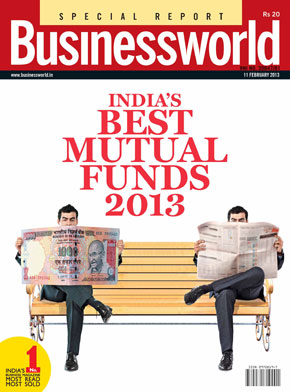
    BusinessWorld, the popular ABP Group business newsmagazine, is set to become a fornightly. The last issue in the weekly format is dated Feb 11, 2013. The fortnightly BW will see a change in its physical dimensions and its design. In a letter to the readers, Editor Prosenjit Datta said, “Based on feedback gathered over the past couple of years, we are adding many new sections and features to the magazine while also expanding existing sections and rethinking others.”

     

    BusinessWorld had turned weekly in 1999. Mr Datta explained the rationale of the decision: “In 1999, when we had turned weekly, there was a very clear need to do so. Twitter did not exist, and the internet contained largely static content when it came to news. There was just one business news channel and it focused mostly on stocks. There was a great need for a business newsweekly. Most of the newspapers concentrated on news, and not analysis. Even though there were feature pages in all newspapers, they were not enough to capture the full implications of the rapidly changing business environment. There was a crying need for a weekly publication that could analyse in detail the implications of the events taking place.


    Over time though, the world changed and so did BW’s core content. As the Internet matured, and more dedicated business channels were born, they took over the primary role of disseminating news. At the same time, BW itself evolved and began focusing increasingly on analysing changes that would throw up big business opportunities, or would reshape existing industries. We were also looking at the new generation of businesses and businessmen, and the long-term plans of established business houses. News became an increasingly small portion of what BW offered.”


    The editor, however, promises that BW is stepping out of the news genre to focus entirely on issues, events and trends that affect business and the economy, apart from greater analysis. BW will also be expanding its coverage to several areas based on readers’ feedback, which could not be created earlier because of the constraints of the weekly format.


  • Much to look forward @ Indian Mag Congress ’13

    By A Correspondent


    The Indian Magazine Congress, set to take place in Mumbai on Feb 14-15 (more here: http://www.mxmindia.com/2013/01/publish-or-perish-indian-magazine-congress-2013-to-discuss-future-of-mags-in-digital-era/), boasts of impressive line up of speakers. As Indian magazines and publishers re-look at their strategies (BusinessWorld decided to go fortnightly: http://www.mxmindia.com/2013/01/publish-or-perish-indian-magazine-congress-2013-to-discuss-future-of-mags-in-digital-era/), IMC 2013 will focus on the best practices from the magazine publishers from around-the-world.


    The 2013 edition of Indian Magazine Congress would focus on print magazines in the era of Tablets and multi-media platform readership. As magazine publishers try to work on sustainable and scalable models that will embrace new revenue streams, Peter Kresiky, Chairman, Kreisky Media Consultancy,USAwill share his thoughts on new business models and operating processes and how they may have a very positive impact on the bottom lines of magazine publishers. Arnaud Saint-Simon, CEO, Psychologies Group, France and Fabrizio d’Angelo, Managing Director, Burda Holding International will talk about how their magazine brands converted themselves to become multi-platform brands, leveraging their brand strength to gain revenues from multiple streams.


    Chris Llewellyn, President, FIPP, will be presenting the FIPP report which brought together data and case studies from more than 100 research projects from all around the world, proving how effective advertising with magazine media is. The report also includes, for the first time, studies of magazine brands’ digital editions and tablet apps.


    Sanoma Media, recently, used neuro-scientific research methods and fMRI scanning techniques for the research on magazine engagement, called Media Brain. Ingrid van der Werf,Sanoma Media,Netherlandswould present more on this at the congress.


    Case studies will form an important part of the Congress with Girish Ramdas, CEO & Co-Founder, Magzter and Michal Galin, E.V.P. Research, GfK Mediamark Research & Intelligence, LLC talkign of international trends in consumption of Tablet Editions and interesting case studies on promotion of Digital editions.With increasing innovation and newer business models emerging, Do licensors need to reinvent them selves from binding agreements, be flexible and ensure that the licensing relationship can montise newer bsiness models? Mike Greehan, COO at Cue Ball, LLC and Owner, Cue Ball, LLC, Sandra Gotelli, International Publisher and Head of Licensing, Mondadori will talk about it as Mala Sekhri, Chief Operating Officer, Lifestyle Magazines and Music Today, India Today and Indranil Roy, President, Outlook Group also take part in the panel discussion.


    Another interesting session would be: What India can learn fromChina. Torsten Klein, President, International Magazine Division, Gruner + Jahr International,Germany: the international publishers working in both the countries spills the beans on where we lack and how we can crack the Chinese code to our advantage. Increasingly, new merchandise sold under a magazine brand’s name is contributing to the revenues of magazine publishers. Take the case of international edition of Good Housekeeping, which also sells gardening tools. Mike Lovell, International Director, Licensing, Meredith will throw more light on the topic on the second day of the conference.


    Power CEO Session will see international and Indian publishers speak on the new challenges and opportunities with panelists such as Stefano De Aleessandri, Chairman and CEO, Mondadori International; Torsten Klein, President, International Magazine Division, Gruner + Jahr International, Germany; Ashish Bagga, Group CEO, India Today; Paresh Nath, Chairman, Delhi Press Group; and Chris Llewellyn, President, FIPP.


    The conference will also see the editors of Indian magazines debating on ‘Church vs. State- Has the wall between editorial and business breached’. This session will explore the new paradigm that is fast gaining currency in all media- the involvement of editors in running viable and profitable organizations has increased of late. Indrajit Gupta, Editor, Forbes; Hormazd Sorabjee, Editor, Autocar India and – Krishna Prasad, Editor-in-Chief, Outlook, will talk if collaborating with the advertisers and agencies to create newer areas to help advertisers reach out to the right audiences is happening at the cost of the integrity of the content.


    Did someone order a power-packed media conference? Here it is!


  • Of the Paper Tigress & Soap Queen


    By Alam Srinivas


    From Shobhana Bhartia: Paper Tigress

    “What did she learn at the Post? One of the most important learnings was that the look and feel of a newspaper matters a lot. These issues were almost irrelevant in India during the 1980s.


    ‘In those days, newspaper was a messy affair, and the black ink used to come off from the newsprint; one would have black hands by the time one had finished reading the paper. There were many manual interventions. Like the fact that column galleys had to be physically pasted before being printed. Sometimes, the galleys would be crooked, but no one would bother; the common reaction was “aaj thoda teda ho gaya and it would okay the next day”.’


    More than a woman…


    Any attempt to dig into the professional and the more challenging personal lives of celebrities takes quite some doing. And if the subject happens to be a woman – and an influential one at that – the task becomes that much more daunting.


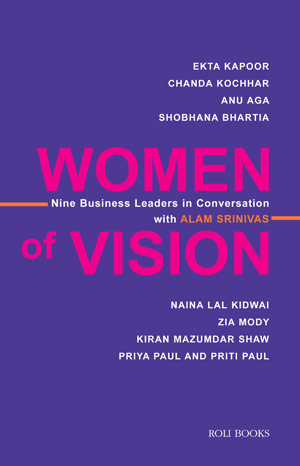
    With Women of Vision, author Alam Srinivas, who is a freelance journalist with over 25 years of experience, has managed to get up close and personal with nine of the most influential women business leaders, who have laid bare their personal and professional lives like never before. As Mr Srinivas says, “I was pretty surprised that each of the women leaders whom I met was so candid and transparent about any or every aspect of their lives.”


    In conversation with Johnson Napier of MxMIndia, Alam Srinivas tells of how in a face-to-face interview, each icon shares her journey of how she battled male-dominated hierarchies to shatter the glass ceiling and set up successful business empires through grit, determination, hard work and merit.


    How did the thought of profiling women business achievers come about?

    There were a few things that went into the whole process of putting together this book. Although there have been books on successful women in India they have been more inclined towards celebrities or people from art & culture, and have included some women from the business arena. But I cannot think of any book that has only focused on women business leaders. So that was one gap that we identified and which we thought ought to be fulfilled. Also if you observe the last twenty years, post-economic reforms a lot of women have done very well not just as entrepreneurs or business women but as business leaders, managers, CEOs…In fact there are enough Indian women leaders who’ve made a mark around the world as well. So there was a need to do such kind of a book and also the time was appropriate to do such a venture because there were enough people to talk to and also enough people who were aspiring to become managers, leaders, CEOs etc.


    Women, especially from the business sphere, have been a source of inspiration for authors to often chronicle and talk about. Right?

    When you talk about successful business women they are not just women who have inherited their family’s wealth or business, there were also women who were first generation entrepreneurs, there were women who have successfully become managers, CEOs, etc. So there was this whole spectrum of women who were doing well and in different ways. Even when you look at their SEC profiles they come from different backgrounds. There are some who hail from middle class families, there are some who come from well-to-do but not rich families, there were people who come from business families…yet again there was this whole spectrum of women who were doing well so I thought one needs to capture all this in a book format. Also the publishers had this idea of doing a book around business women and that’s how it all started.


    Was it a conscious decision to profile just nine women from across diverse fields? There have been quite a few influential names that have been missed out…

    I had made a list of about 40 women from across different age groups and sectors. But as I started going through the research work I realised that a book on 40 people would become very unwieldy, and also a lot of stories and issues were similar so that kind of made it seem repetitive. It’s then that I decided to narrow down to just ten women who encompassed every shade and contour that I need to put on paper. If you look at the current list, there are women from North, South, East and West. Also, in terms of age range, there is a person who is 30 years old and there is someone who is a grandmother. As I said, in terms of SEC there are people who are managers, first generation entrepreneurs, etc. So we had to capture all kinds of nuances and also not become too repetitive. If you read the articles in this book, they are not biographical in nature but rather consist of sketches of these people. So it was not the numbers game but trying to capture the whole idea.


    One is surprised to see the vast access you’ve managed to gain into the lives of each of the subjects. What was it that made them open up and get as candid with you about their personal and professional doings?

    I was pretty surprised that each of the people I met was so candid and transparent and open about any or every aspect of their lives. Like, for example, Ekta Kapoor, who says that there was a phase in her life where she was arrogant but that she is trying to change and be a better person. Similarly with Chanda Kochhar, it was her initiative to take ICICI into Retail Loans which kind of backfired as the global economy went down. So there are multiple such candid moments that have been shared by these women leaders. I am not sure if this has been the case before. Maybe women leaders are more sensitised to their surroundings etc…I was pretty surprised by the response that I got from each of them where they allowed me to get deep into their personal and professional lives.


    What has been the initial response that you’ve been receiving for your book?

    It’s too early to talk about the reception that my book has been receiving from all quarters but the initial reactions are that of surprise for the fact that they have allowed access inside their world so intimately and passionately. That’s been the general reaction as of now.
     

    Shobhana was amazed to find out that the Western media had given up manual technology years ago, and had embraced state-of-the-art systems and software.


    Another critical lesson was the manner in which a global media organization looked at the readers. It studied and figured who its readers were and targeted them. There was a synergy between the readers, the product and the platform that a newspaper provided for its customers.


    ‘This was something we would not think of in the 1980s. None of these insights went into our decision-making process. In addition, most of the Indian newspapers had little competition and were on their own trajectory. Even the Indian consumer never thought of the newspaper as a product. For her, it was more of a habit; she would wake up in the morning and carry the paper as a companion.’


    But, over the next decade or so, the Indian media changed. Along with technology and the rise of the middle class came the concepts of consumer satisfaction and choice. The consumer demanded certain things from her paper, which had to change.”


    From Ekta Kapoor: Queen of Soaps

    “Ekta was 20, and she was willing to slug it out. It took almost 5-6 years for her, and Balaji Telefilms, to break the TV barrier. Hum Paanch ran for five years on Zee; subsequent serials like Itihaas on DD and Kudumbum (Tamil) on Sun TV became huge hits.


    Part luck and part vision helped Ekta achieve initial success. Her entry into Hindi and regional serials coincided with the ongoing boom in cable television and private broadcasting. As the stranglehold of DD waned, a huge viewership was awaiting the launch of new serials, and Ekta was there at the right time to whet their appetite.


    Throughout the second half of the 1990s, while other production houses and broadcasters focused on Western-style soaps, mostly as copies (as even Ekta did with Hum Paanch), Balaji went a step further. Its research showed that the viewership of Hindi fiction-based soaps was 60 per cent, which appealed to a large number of women across regions and languages.


    ‘We were stable only by 2000,’ Ekta said. Her mother added that they continued to keep a strict control on expenditure, and worked out of a basement since the channel’s budgets for shows were low and the margins for the production houses were meagre. ‘We could not afford expensive office space in Mumbai; it was only after our IPO [Initial Public Offering in late 2000] that we moved into this plush office and did well in the TV entertainment business.’


    By 2000, Ekta had arrived. Balaji Telefilms launched seven shows in that year. The next year saw another 3-4 serials. All of them were lapped up by the audience.”


    *****


    “Ekta’s splash in the past two years has been in her achievements in Bollywood. In March 2010 came Love, Sex and Dhoka, followed by Once Upon a Time in Mumbai, and culminated in other hits like Ragini MMS. The final dhamaka came in the form of The Dirty Picture. The string of such films proved that Ekta had acquired a new creative edge, and there was a radical shift in her content strategy. For one, most of these movies were low budget ones. While some had well-known stars like Ajay Devgn and Vidya Balan, who won her first National Award for The Dirty Picture, the production and editing expenses were kept low. Many films had lesser-known actors.


    Two, they were made with a specific audience in mind. Ekta had long realized, in 2008, that the viewers had changed and were fragmented. In urban towns they were younger, urban, mostly liberal, ambitious, aggressive and confident about finding their feet in this dog-eat-dog world. Among them, the more affluent ones went to malls and PVRs to watch movies. Almost all the movies she produced in the 2010-12 period fell under the genre of the so-called PVR movies.


    More importantly, Ekta’s characters changed dramatically. While the K-serials portrayed women as conservative and traditional, those in LSD and The Dirty Picture were in-your-face individuals, who were willing to experiment with life and shed their conservatism. They were women of the 21st century, who rubbed shoulders with men and many times stood above them. They knew their minds and bodies, and they knew what they had to do and why.


    Women of Vision: Nine Business Leaders in Conversation with Alam Srinivas

    Excerpted with permission of the publisher, Roli Books

    Price Rs 140, 128 pages